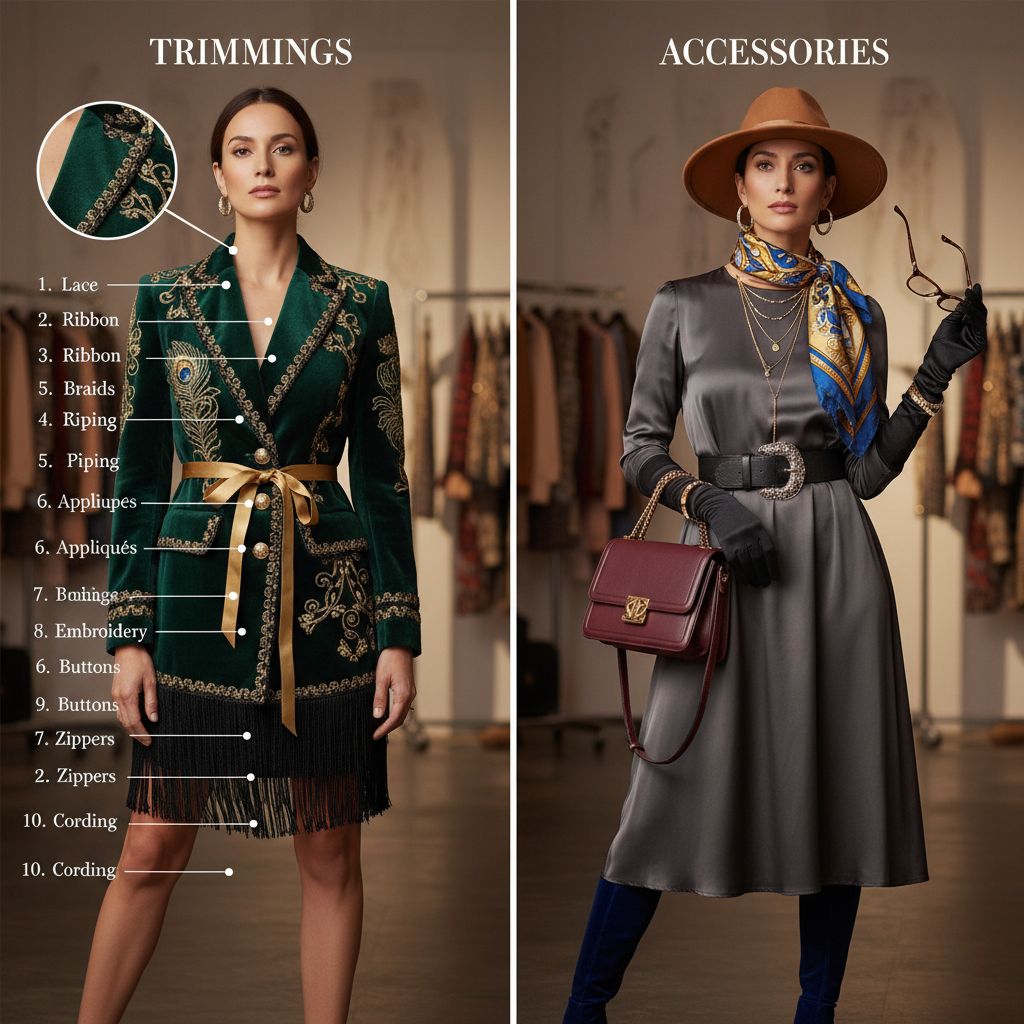

The apparel industry depends on much more than fabric alone. A finished garment needs many additional materials before it is ready for wearing, branding, packing, and shipment. These materials are generally known as trimmings and accessories.
Although the two terms are often used together, they do not mean exactly the same thing. In garment manufacturing, understanding the difference between trimmings and accessories is important for product development, sourcing, costing, quality control, and bulk production planning. This article explains the meaning of trimmings and accessories, their differences, and the most common types used in the apparel industry.
What Are Trimmings & Accessories in the Apparel Industry?
Trimmings:
Trimmings are materials that are attached to the garment during the manufacturing process. They may serve a functional purpose, a decorative purpose, or both. In simple terms, trimmings become part of the garment itself. They are usually sewn, fused, fixed, or attached to the clothing in order to improve performance, fit, structure, appearance, or durability.

For example, a zipper helps open and close a garment, while lace may be added mainly for visual appeal. This is why it is not fully correct to say that all trimmings are only functional. In real production, many trimmings combine function and decoration at the same time.


Accessories:
Accessories are materials that are not permanently attached to the garment body for wearing. They are mainly used for garment finishing, presentation, packing, transportation, identification, and retail display. In other words, accessories support the garment after production or during shipment and sale. They help protect the product, present brand information, maintain garment shape, or improve packaging efficiency.

For example, a polybag protects the garment from dust and moisture, and a hangtag provides product and branding information. These items are important, but they are not considered part of the garment that the customer wears.

Difference Between Trimmings and Accessories
The main difference is simple:
- Trimmings are attached to the garment and become part of the final product.
- Accessories are used for finishing, packing, labeling, presentation, or shipping, but are usually not worn as part of the garment.
However, in actual garment production, the line is not always perfectly strict. Some items may be classified differently depending on how they are used.


For example:
- A drawcord may be treated as a trimming if it is inserted into a hood or waistband and worn with the garment.
- A patch may also be considered a trimming if it is sewn onto the garment as a design or branding element.
- A buckle can be a trimming when attached to a belt or garment structure.
So, the correct classification often depends on end use, not just the item name.

Table:
| Basis | Trimmings | Accessories |
|---|---|---|
| Definition | Materials attached to the garment during manufacturing | Materials mainly used for finishing, packing, labeling, presentation, or shipment |
| Relation to garment | Become part of the garment itself | Usually do not become part of the garment worn by the end user |
| Main purpose | Function, structure, decoration, or a mix of these | Packing, protection, identification, branding, presentation, and retail support |
| Attachment | Usually sewn, fused, fixed, or permanently attached | Usually not permanently attached to the garment body |
| Use stage | Used during garment construction and assembly | Used mainly after garment production or during final finishing and packing |
| Effect on wear | Directly affects fit, comfort, closure, durability, or appearance while wearing | Usually does not affect how the garment is worn |
| Common examples | Sewing thread, button, zipper, elastic, interlining, lining, labels, lace, rivet, twill tape | Hangtag, polybag, carton, carton sticker, hanger, tissue paper, backboard, neck board, size sticker |
| Function type | Can be functional, decorative, or both | Usually supportive, informative, protective, or promotional |
| Production role | Helps complete and build the garment | Helps prepare the garment for storage, shipment, display, and sale |
| Removal by customer | Usually remains on the garment during use | Often removed before or after purchase |
| Classification note | Some items may still be decorative, not only functional | Some items may overlap depending on actual use |

Why Trimmings and Accessories Are Important in Garment Manufacturing
Trimmings and accessories play a major role in apparel production for several reasons.
- 1. They improve garment function: Many trims help the garment work properly. Zippers, buttons, elastics, hook-and-loop fasteners, and interlinings all support fit, closure, comfort, and structure.
- 2. They enhance garment appearance: Decorative trims such as lace, metal badges, ribbons, and special labels can improve the overall look of the product and make it more attractive to buyers.
- 3. They support branding and customer communication: Accessories such as hangtags, size stickers, care labels, barcode stickers, and packaging materials help communicate product identity and brand value.
- 4. They protect garments during shipment and storage: Polybags, tissue paper, cartons, collar supports, and backboards help garments arrive in good condition and maintain a neat presentation.
- 5. They affect garment cost and quality: Trimmings and accessories are part of garment costing. Poor-quality trims can lead to production defects, buyer claims, or customer complaints. That is why they must be selected carefully.

Common Types of Trimmings & Accessories Used in the Apparel Industry
Trimmings:
Below are the most common types of trimmings used in garments.
- Sewing Thread: Sewing thread is one of the most essential trimmings in garment manufacturing. It is used to join fabric parts and attach other trims to the garment. The thread must match the fabric in strength, color, and performance.
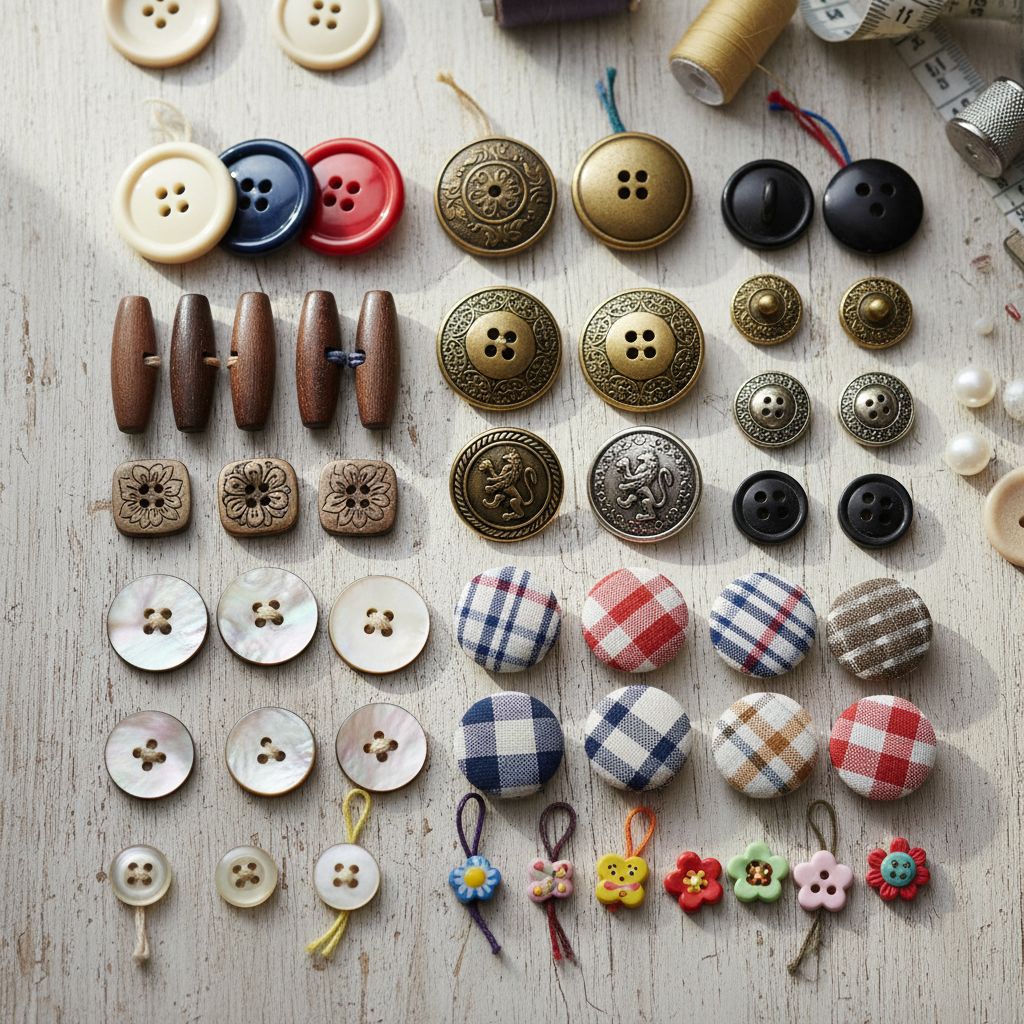
- Button: Buttons are widely used as fastening devices in shirts, blouses, trousers, jackets, and many other garments. They can be functional, decorative, or both.
- Zipper: Zippers are common in pants, jackets, dresses, skirts, and bags. They help open and close garments quickly and securely. Zippers come in many types, such as nylon coil, metal, and plastic molded zippers.
- Elastic: Elastic is used in waistbands, cuffs, underwear, sportswear, and children’s wear. It helps garments stretch and fit the body more comfortably.
- Interlining: Interlining is added between layers of fabric to provide shape, support, and stability. It is often used in collars, cuffs, waistbands, plackets, and front panels.
- Lining: Lining is an inner layer of fabric used inside garments such as jackets, coats, skirts, and dresses. It improves comfort, appearance, and durability while helping the garment drape better.
- Labels: Labels are important trimming items attached to garments. Common label types include: Main label, Size label, Care label, Brand label, Country of origin label. Some labels are mainly informative, while others also serve branding purposes.
- Hook and Loop Fastener: Hook and loop fasteners, often known by the brand name Velcro, are used in sportswear, uniforms, children’s wear, and technical garments. They allow quick opening and closing.
- Twill Tape: Twill tape is used for reinforcement, binding, stabilization, and decoration. It is often applied inside seams, waistbands, necklines, and plackets.
- Lace: Lace is mostly used for decorative purposes in women’s wear, lingerie, bridalwear, and fashion garments. It adds elegance and style to the design.
- Rivet: Rivets are small metal fasteners commonly used in jeans, denim jackets, and workwear to strengthen high-stress points such as pocket corners.
- Stopper: Stoppers are usually used together with drawcords in jackets, hoodies, and sportswear. They help control cord length and improve convenience.
- Shoulder Pad: Shoulder pads are inserted into garments such as blazers, coats, and dresses to create shape and structure in the shoulder area.
- Metal Badge or Decorative Trim: Metal badges, decorative patches, sequins, and other ornament trims are used to improve garment appearance and branding.

Accessories:
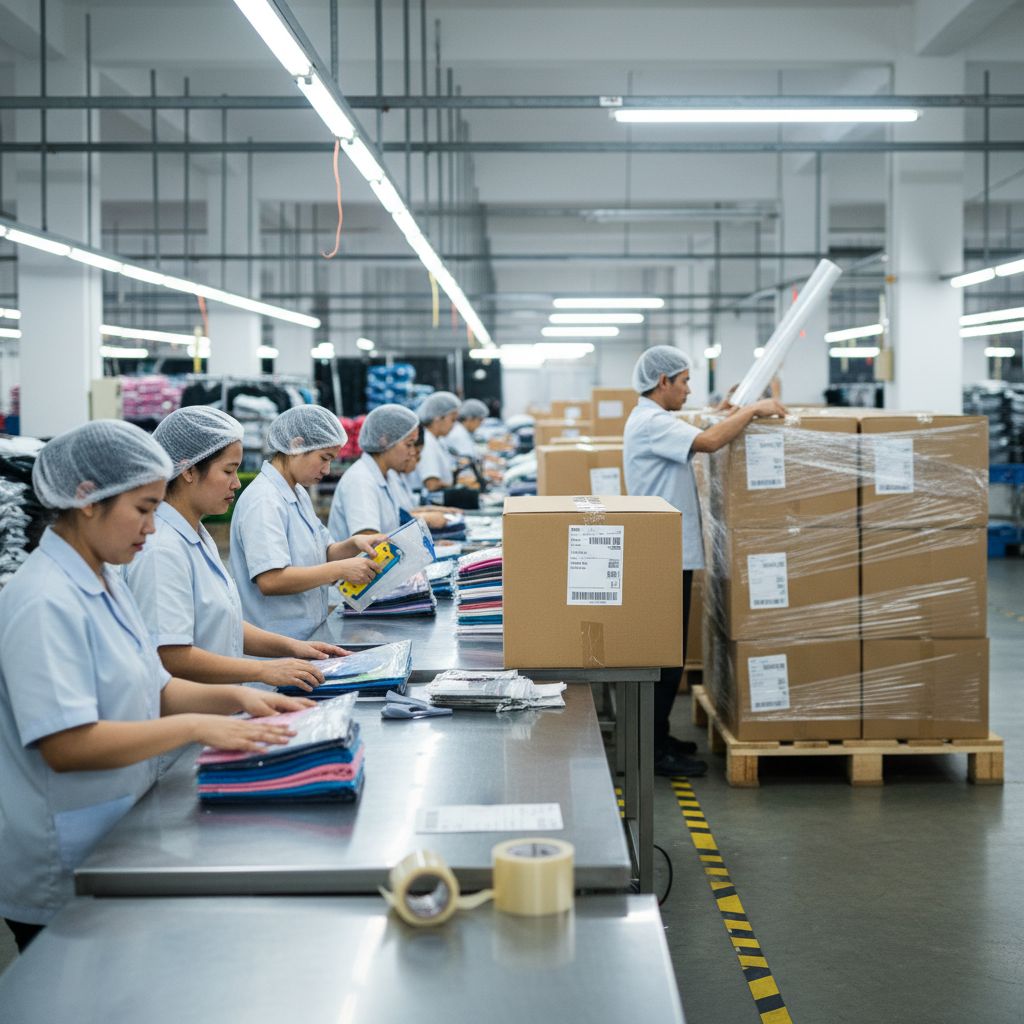
Accessories are mostly used for garment finishing, packing, storage, handling, and display. Below are some of the most common examples.
- Hangtag: A hangtag provides product information such as brand name, size, price, barcode, or promotional details. It is usually attached by a string or tag pin.
- Polybag: Polybags are used to pack individual garments and protect them from dust, moisture, and handling damage during transportation and storage.
- Carton: Cartons are used for bulk packing and shipment. They protect garments during transport from the factory to the warehouse or buyer.
- Carton Sticker: Carton stickers help identify shipment details such as style number, color, size ratio, quantity, destination, and carton number.
- Hanger: Hangers are used for garments that need to maintain shape or be displayed neatly, such as shirts, jackets, suits, and dresses.
- Tissue Paper: Tissue paper is used in packing to protect garments, reduce wrinkles, and improve presentation.
- Backboard: Backboards are inserted into folded shirts or similar garments to help them keep a flat and presentable shape inside packaging.
- Neck Board: Neck boards are often used inside collared garments to support the collar and maintain a neat appearance.
- Collar Stay: Collar stays help keep shirt collars sharp and properly shaped during packing and retail display.
- Price Ticket: Price tickets display retail pricing and are usually attached before products are sent to stores.
- Size Strip or Size Sticker: Size strips and stickers help identify garment size quickly during storage, shipment, or retail display.
- Safety Pin, Tag Pin, and Plastic Clip: These small accessories are used to attach tags, secure folded garments, or hold packaging elements in place.
- Gum Tape: Gum tape is used for carton sealing during final packing and shipment.
- Photo Inlay and Pocket Flasher: These are often used in retail presentation, especially for jeans, casualwear, and branded garments. They help communicate product image or selling points.
- P.P. Belt: P.P. belts are used in packaging to secure cartons or bundled products during transportation.

Items That May Be Classified as Either Trim or Accessory
This is where many articles get messy, and honestly, that is one of the biggest weaknesses in older garment definitions. Some items do not always belong to only one category.
Drawcord or String:
- If the drawcord is inserted into a hoodie, waistband, or hem and worn with the garment, it is usually a trimming.
- If it is used only for temporary packing or tying, it may be treated as an accessory.
Patch:
- A patch sewn onto the garment as branding or decoration is usually a trimming.
- A loose patch included separately in the package may be treated differently.

Buckle:
- A buckle attached to a belt or garment structure is usually a trimming.
- A buckle used for packaging or display could be treated as an accessory.
This is why merchandisers, buyers, and production teams should classify materials based on actual application in the product, not only by habit.

How to Select the Right Trimmings and Accessories
Choosing the correct trims and accessories is critical for both quality and production efficiency.
- Match the garment design: The selected items must support the style, function, and appearance of the garment.
- Consider buyer requirements: Many buyers have specific standards for approved trims, packaging format, labeling rules, testing, and restricted substances.
- Check quality and performance: Buttons, zippers, elastics, labels, and other trims should be tested for durability, colorfastness, wash performance, and safety.
- Ensure bulk availability: Even a well-designed garment can face delays if trims or packing materials are not available on time.
- Control cost carefully: Trimmings and accessories can significantly affect garment FOB cost. Costing teams must evaluate material use, MOQ, wastage, and supplier lead time.

Quality Control of Trimmings and Accessories
Quality control should not focus only on fabric and sewing. Trimmings and accessories must also be checked carefully.
Common inspection points include:
- Correct material and specification
- Color and shade matching
- Size and measurement
- Attachment strength
- Functional performance
- Print or label accuracy
- Barcode readability
- Packing quality
- Quantity accuracy
A defective zipper, weak button attachment, incorrect care label, or poor carton marking can all create serious problems for shipment and customer satisfaction.
Conclusion / Final Words
Trimmings and accessories are essential elements in the apparel industry. Trimmings become part of the garment and support function, structure, or decoration. Accessories mainly help with finishing, identification, packing, shipping, and retail presentation.
Although the difference seems simple, real garment production is more practical than theoretical. Some materials can be classified as either trims or accessories depending on how they are used. For this reason, manufacturers should always define them based on the actual product application. A clear understanding of trimmings and accessories helps garment factories improve costing accuracy, sourcing efficiency, production quality, and final product presentation.