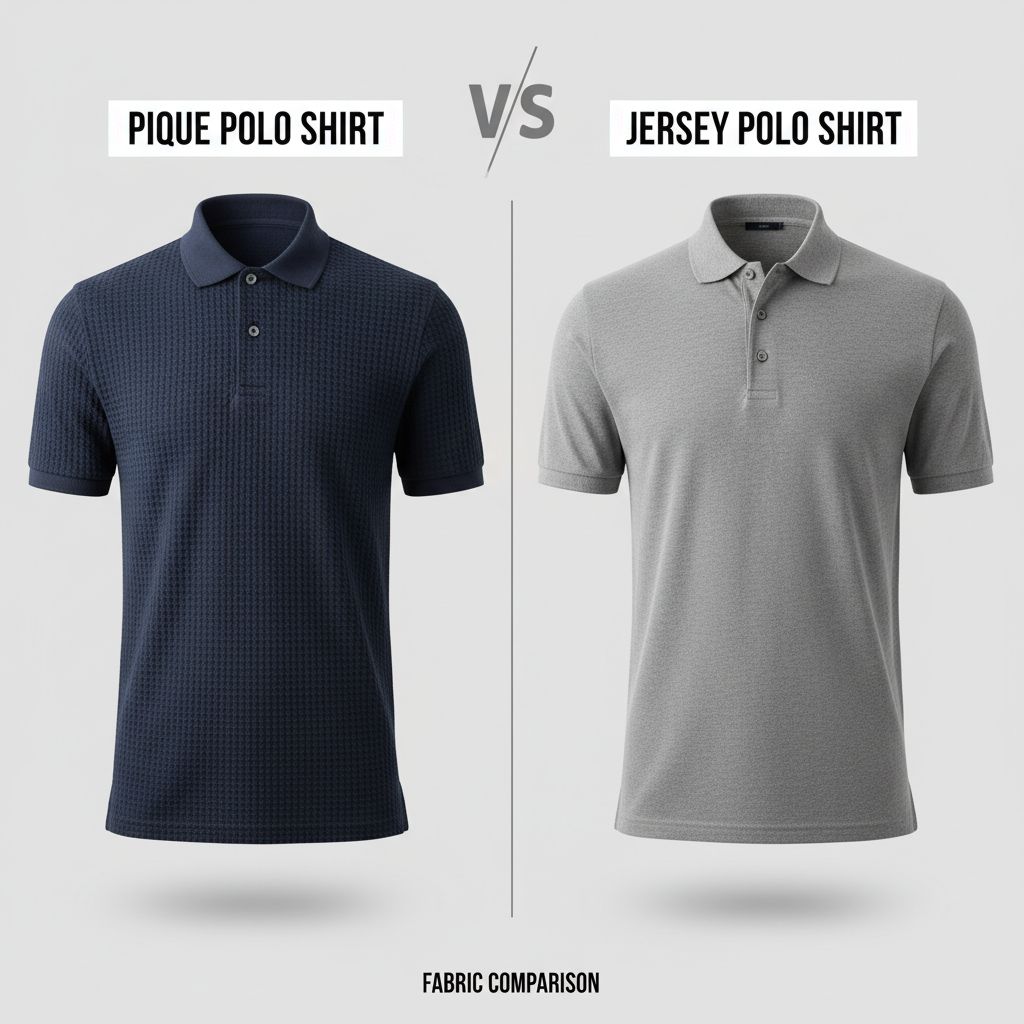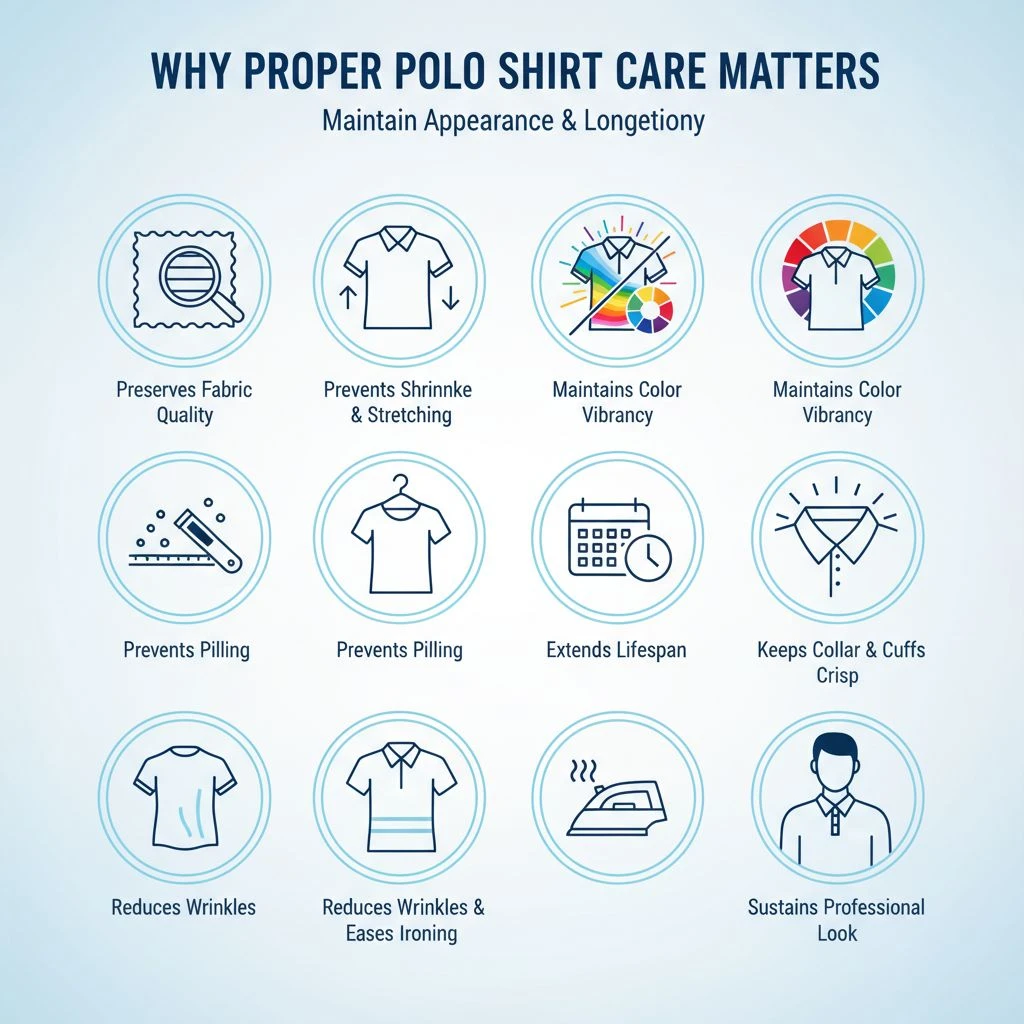


A polo shirt should look neat and sharp, but a curling collar can make the whole garment look worn out. While many think a curling collar means the polo is low quality, it is often caused by daily care habits. The way you wash, dry, and store your shirt affects its longevity. Below is a full guide to help you maintain a crisp, flat collar.
Why Do Polo Shirt Collars Curl?
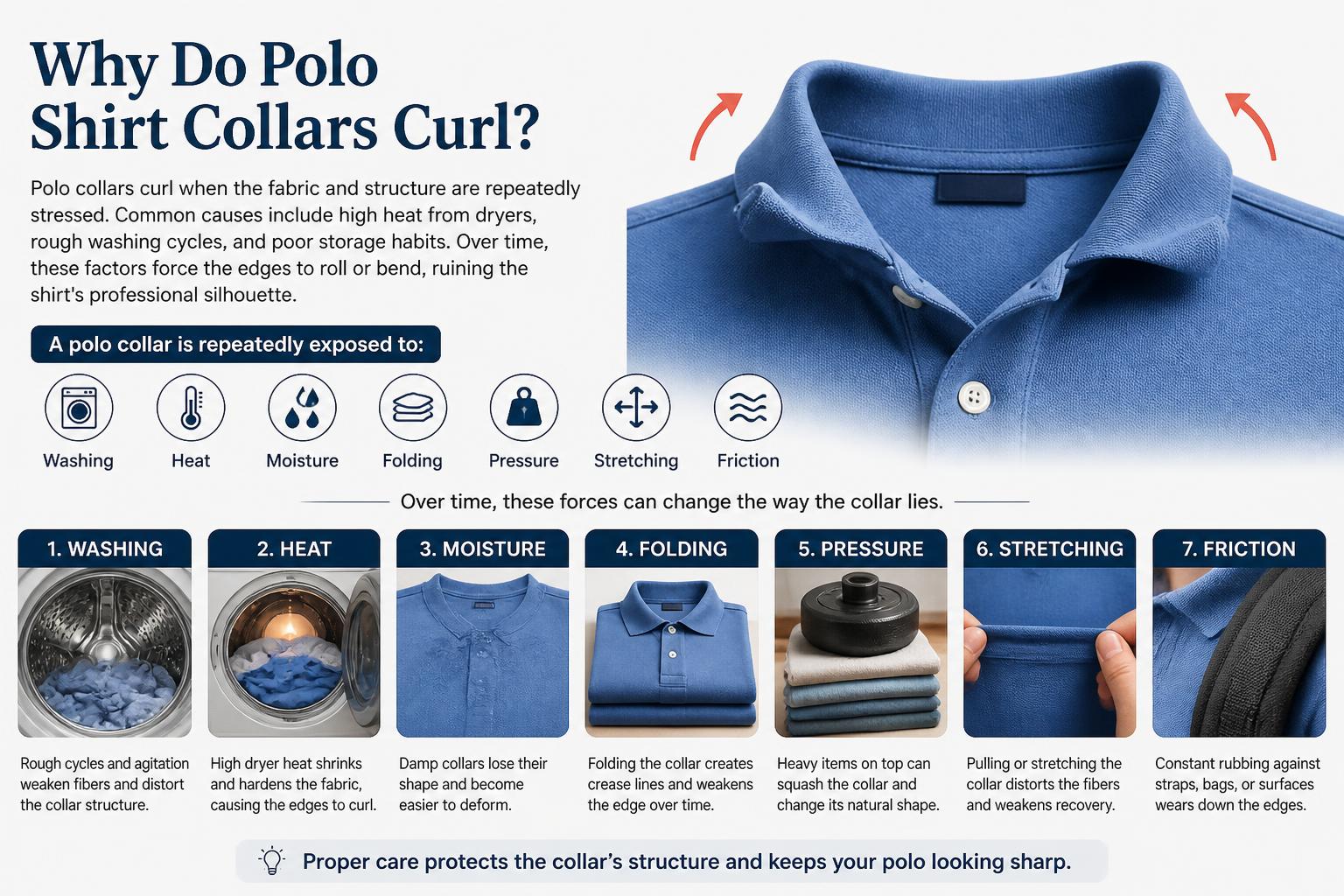
Polo collars curl when the fabric and structure are repeatedly stressed. Common causes include high heat from dryers, rough washing cycles, and poor storage habits. Over time, these factors force the edges to roll or bend, ruining the shirt’s professional silhouette. A polo collar is repeatedly exposed to:
- Washing
- Heat
- Moisture
- Folding
- Pressure
- Stretching
- Friction
Over time, these forces can change the way the collar lies.
1. High Heat
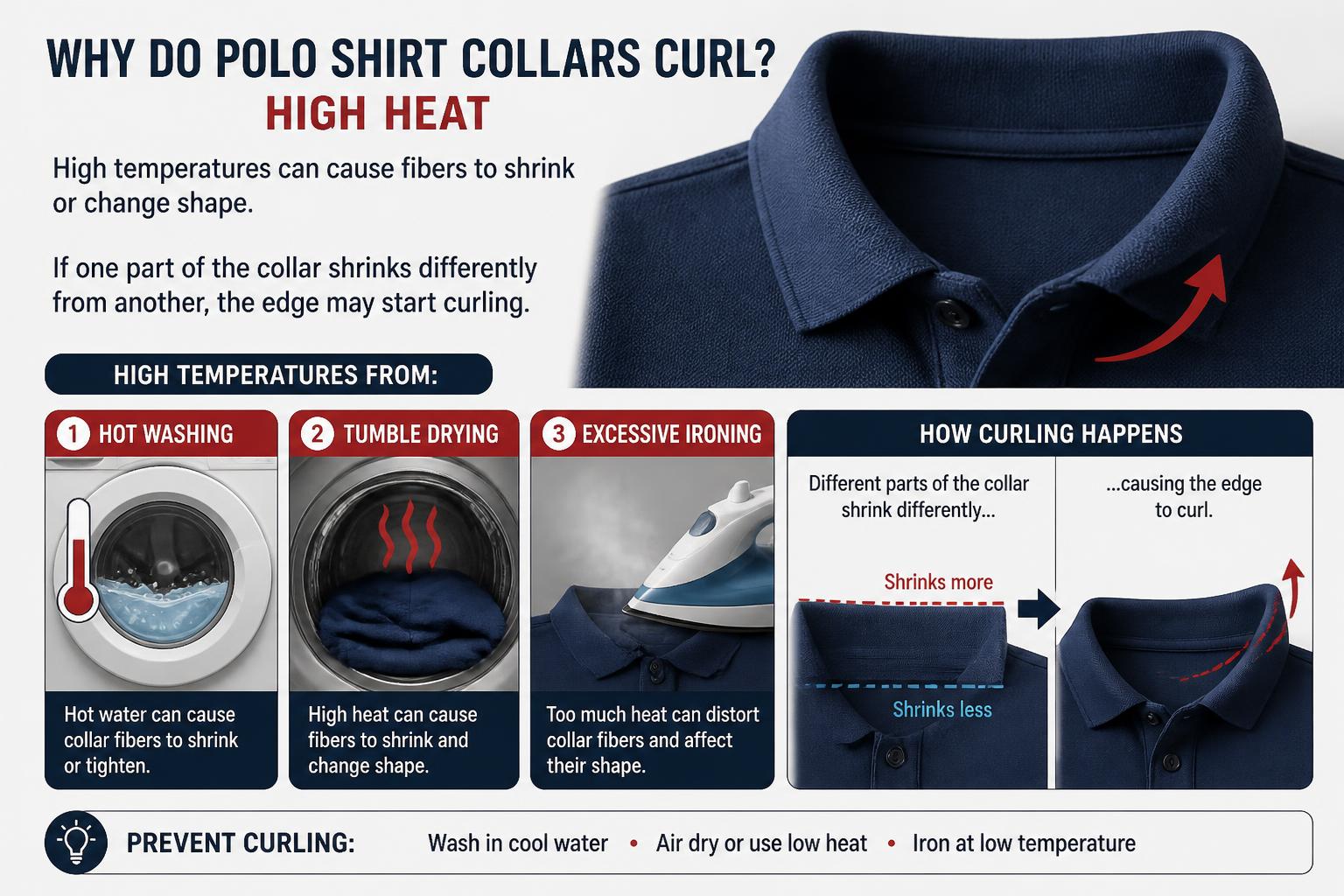
High temperatures from:
- Hot washing
- Tumble drying
- Excessive ironing
can cause fibers to shrink or change shape. If one part of the collar shrinks differently from another, the edge may start curling.

2. Rough Washing
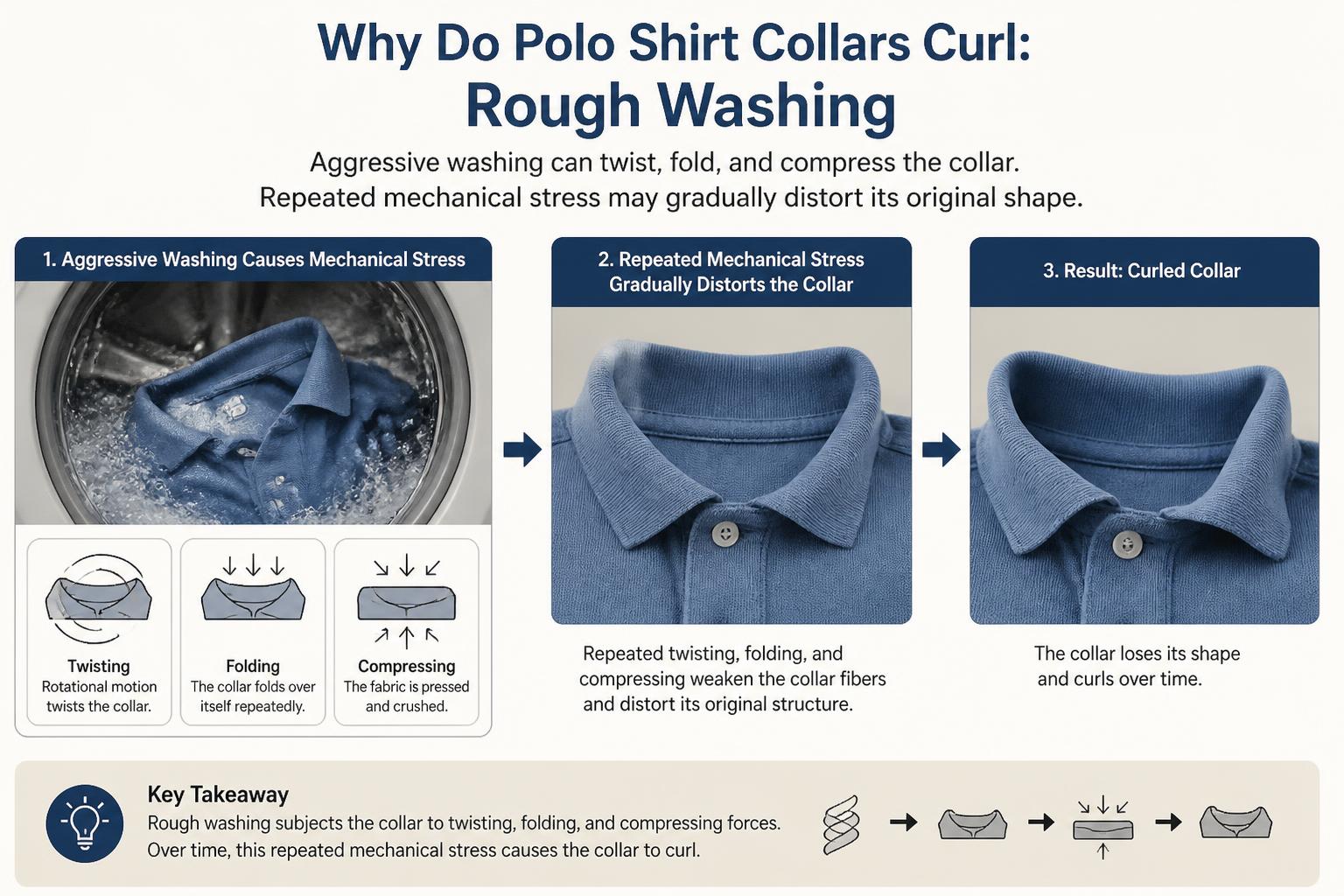
Aggressive washing can twist, fold, and compress the collar. Repeated mechanical stress may gradually distort its original shape.
3. Poor Drying Habits
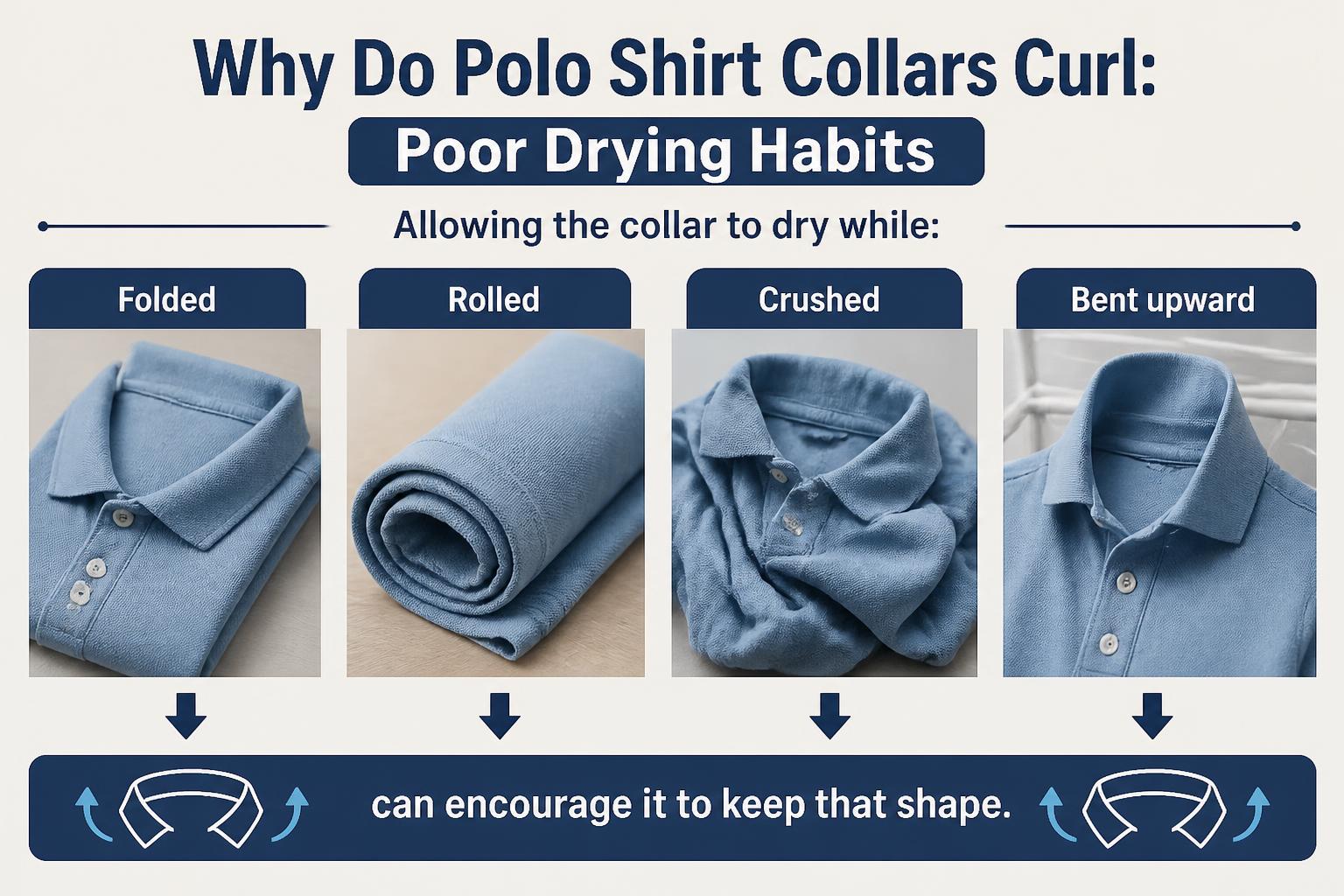
Allowing the collar to dry while:
- Folded
- Rolled
- Crushed
- Bent upward
can encourage it to keep that shape.
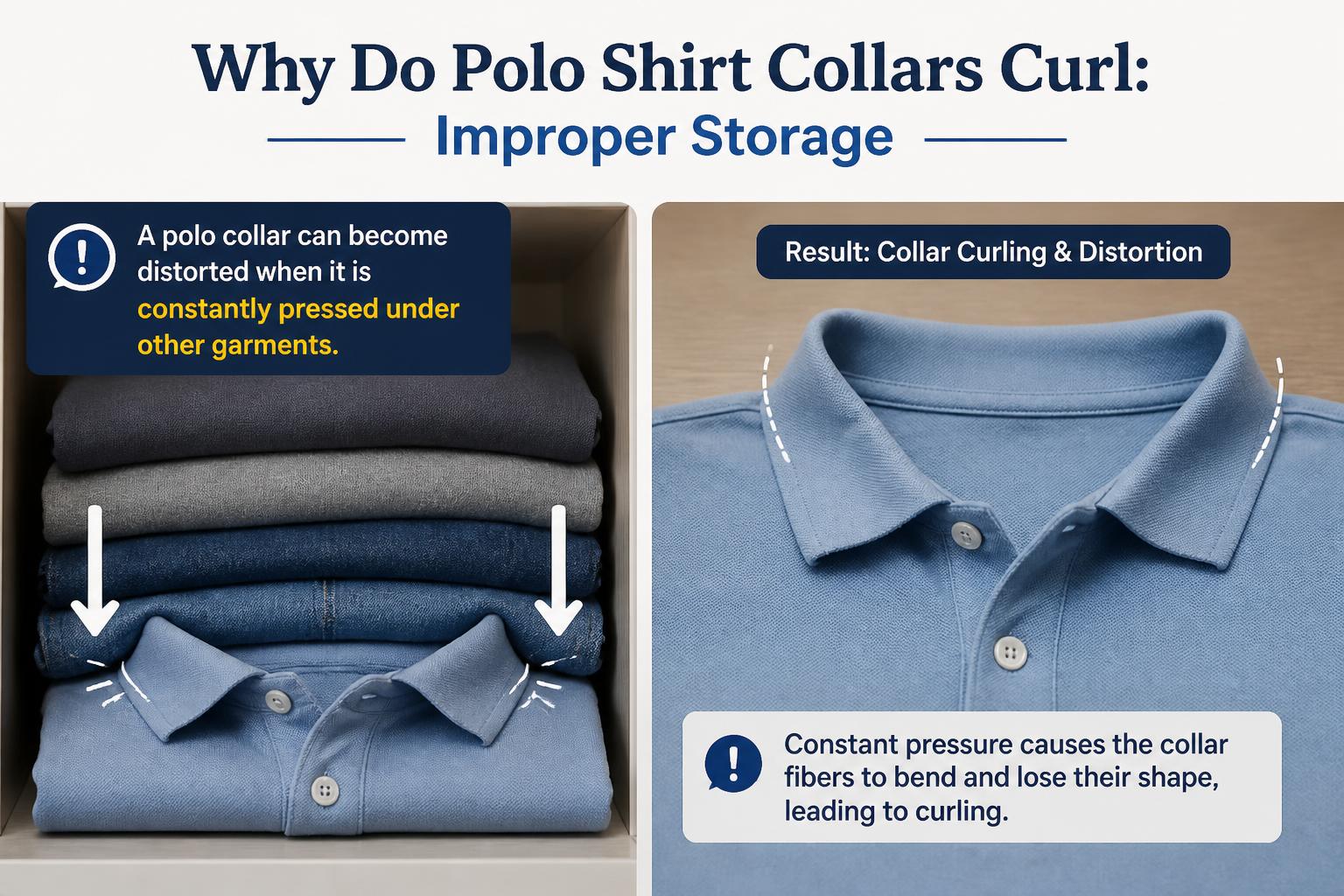
4. Improper Storage
A polo collar can become distorted when it is constantly pressed under other garments.
5. Collar Construction
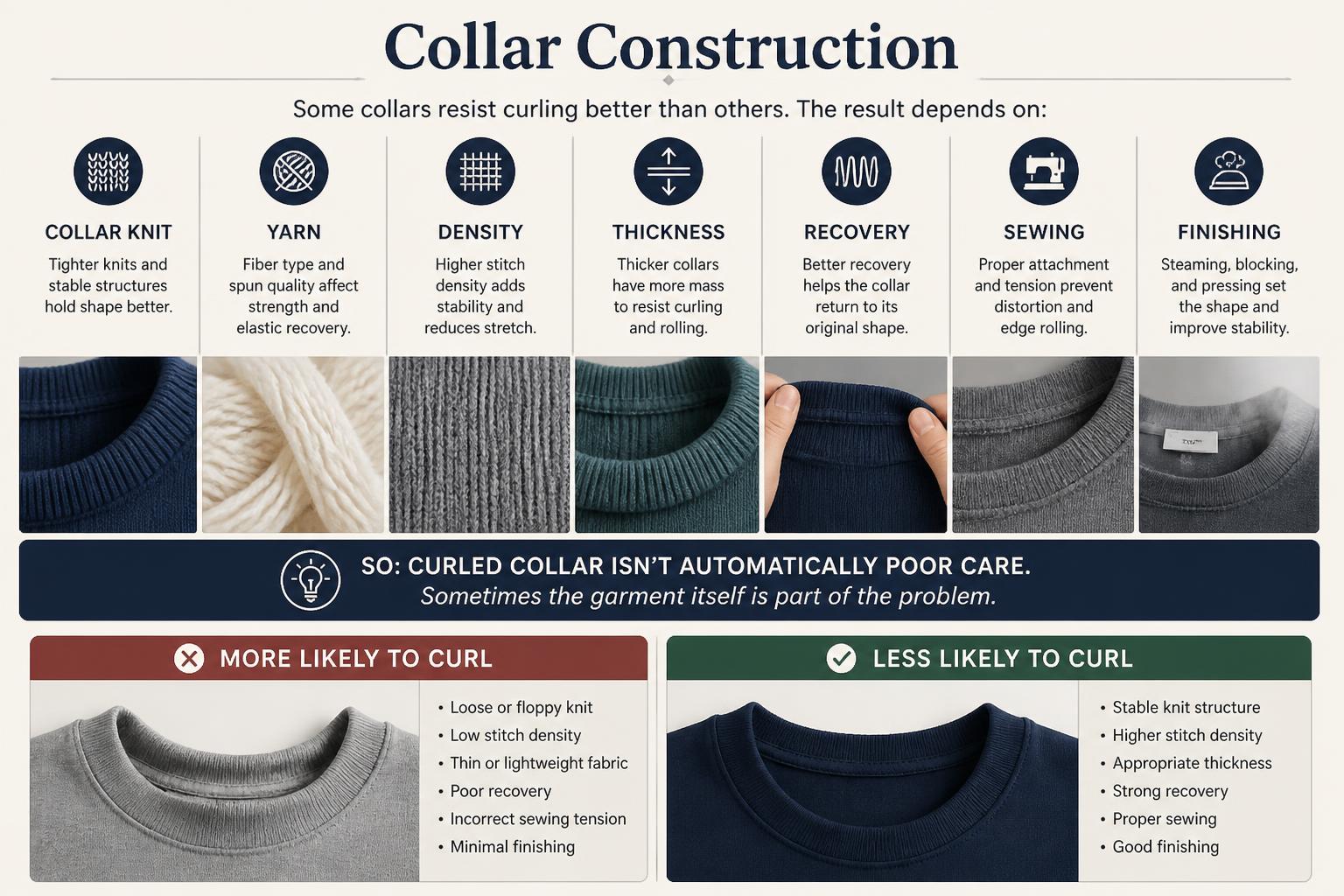
Some collars resist curling better than others. The result depends on:
- Collar knit
- Yarn
- Density
- Thickness
- Recovery
- Sewing
- Finishing
So: Curled Collar isn’t Automatically Poor Care. Sometimes the garment itself is part of the problem.
Effective Ways to Prevent Collar Curling
Wash Your Polo Shirt Gently
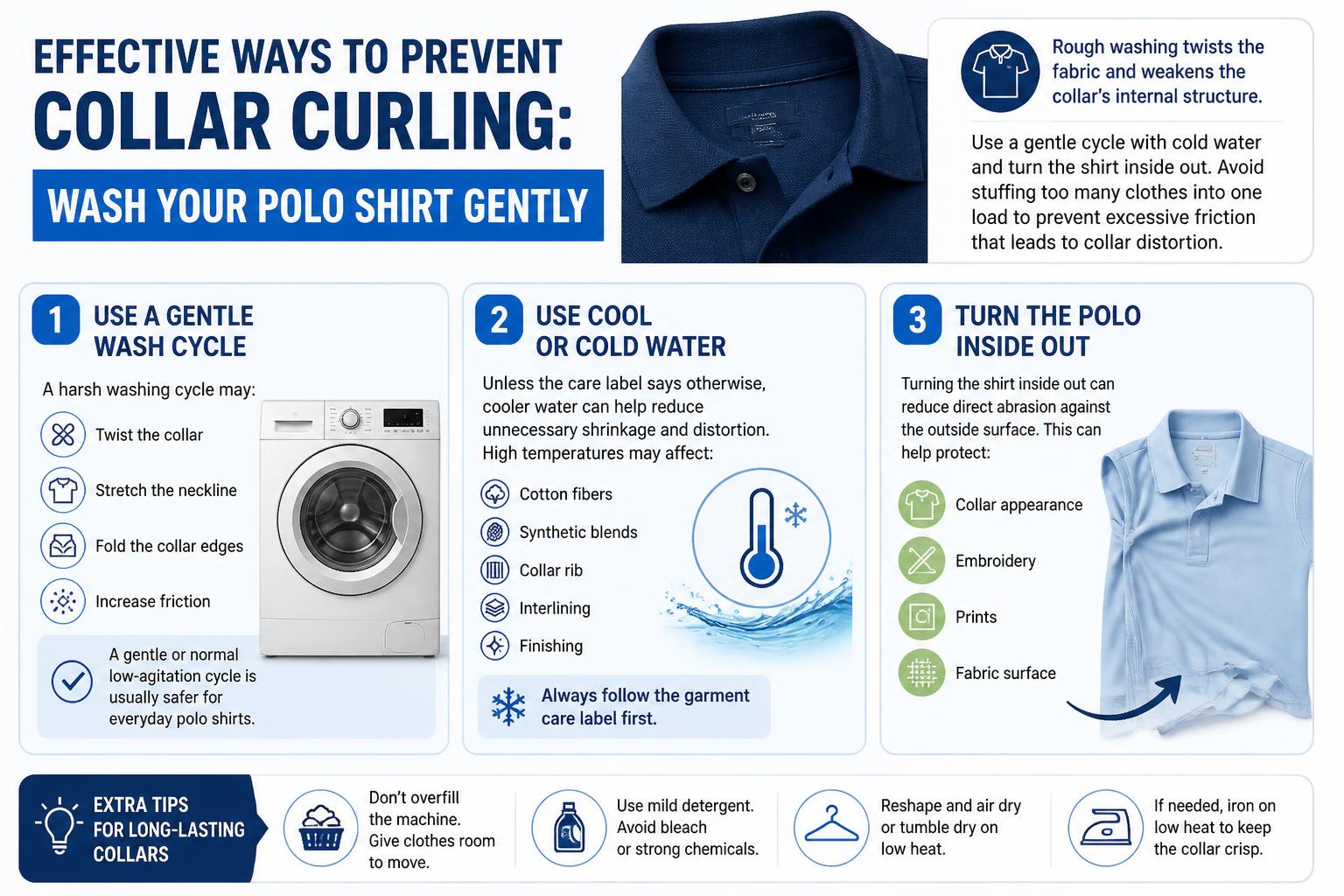
Rough washing twists the fabric and weakens the collar’s internal structure. Use a gentle cycle with cold water and turn the shirt inside out. Avoid stuffing too many clothes into one load to prevent excessive friction that leads to collar distortion.
Use a Gentle Wash Cycle
A harsh washing cycle may:
- Twist the collar
- Stretch the neckline
- Fold the collar edges
- Increase friction
A gentle or normal low-agitation cycle is usually safer for everyday polo shirts.
Use Cool or Cold Water
Unless the care label says otherwise, cooler water can help reduce unnecessary shrinkage and distortion. High temperatures may affect:
- Cotton fibers
- Synthetic blends
- Collar rib
- Interlining
- Finishing

Always follow the garment care label first.
Turn the Polo Inside Out
Turning the shirt inside out can reduce direct abrasion against the outside surface. This can help protect:
- Collar appearance
- Embroidery
- Prints
- Fabric surface
Do Not Overload the Washing Machine
An overloaded machine creates more compression and friction. The polo may become trapped between heavier garments, causing the collar to fold or twist repeatedly. A better approach is: Enough Space + Gentle Movement = Less Collar Distortion
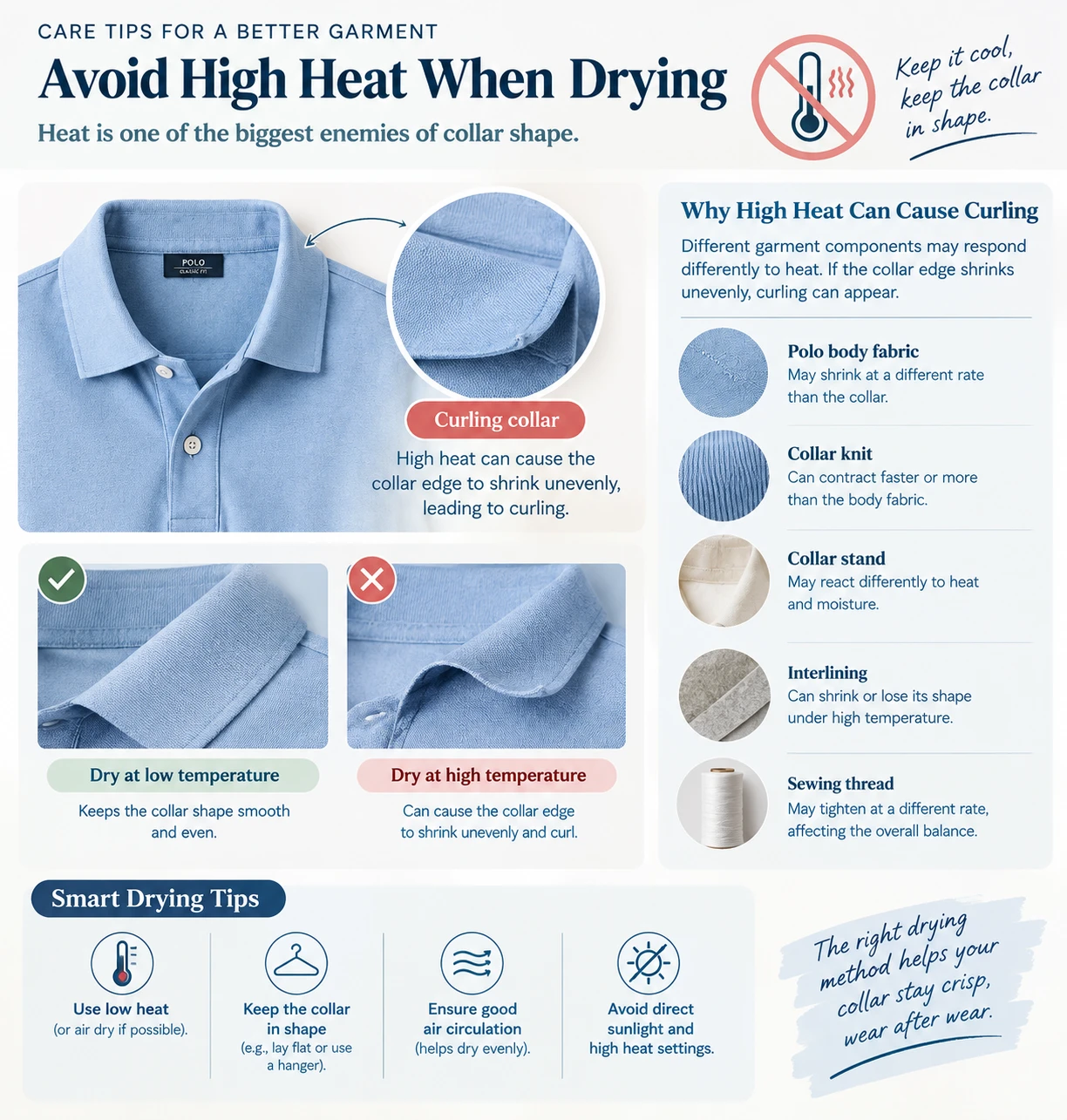
Avoid High Heat When Drying
Heat is one of the biggest enemies of collar shape.
Why High Heat Can Cause Curling
Different garment components may respond differently to heat. For example:
- Polo body fabric
- Collar knit
- Collar stand
- Interlining
- Sewing thread
may not shrink at exactly the same rate. If the collar edge shrinks unevenly, curling can appear.

Air Dry When Possible
Air drying is often a gentler option. After washing:
- Remove the polo promptly
- Shake it gently
- Smooth the body
- Reshape the collar
- Allow it to dry naturally
This reduces the chance of the collar drying in a twisted position.

High heat causes fibers to shrink unevenly, which is a primary trigger for curling. Air dry your polos whenever possible. A critical step many skip is reshaping the collar while it is damp. Smooth the collar with your hands and flatten the edges before letting it dry naturally to ensure it holds a neat shape.
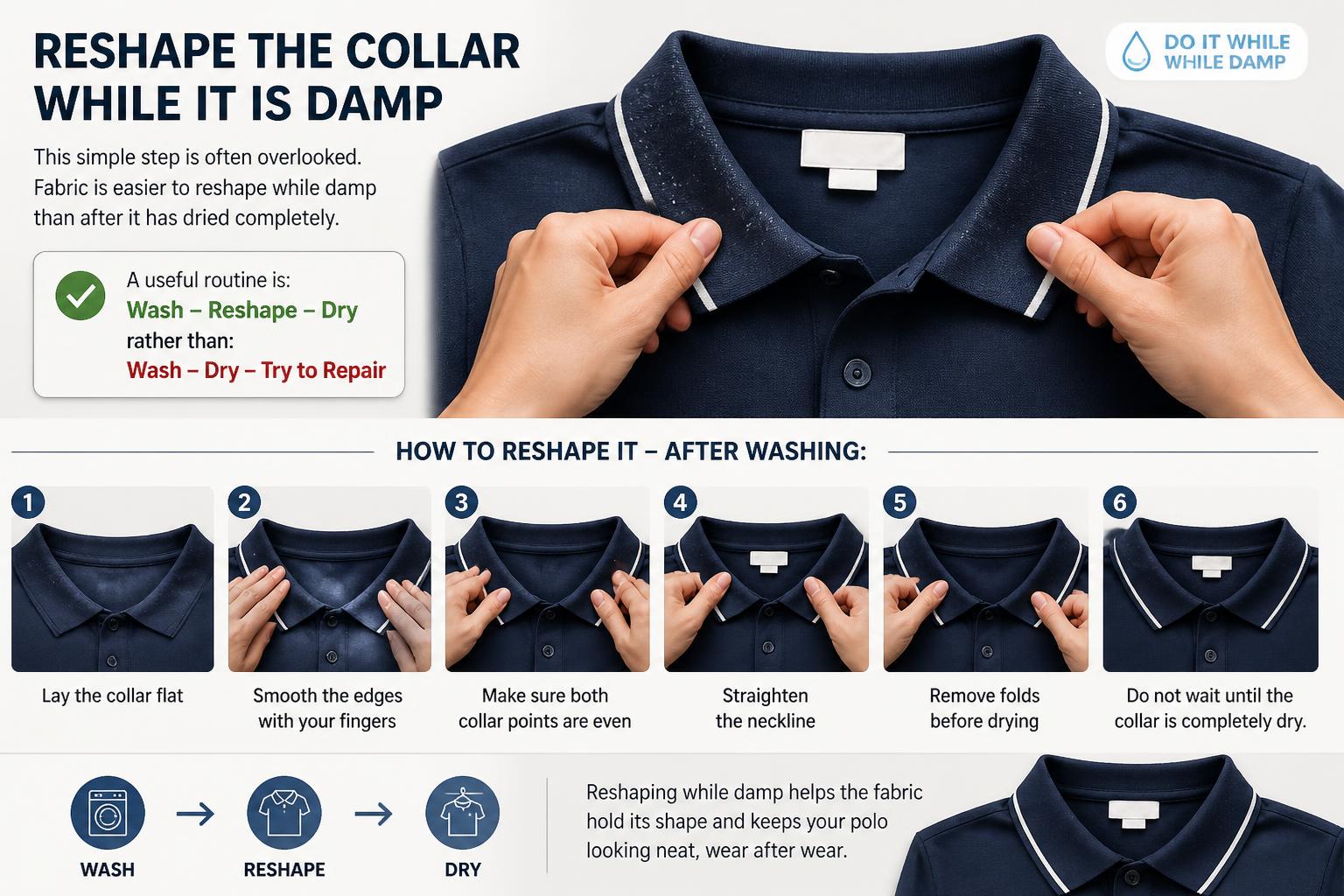
Reshape the Collar While It Is Damp
This simple step is often overlooked. Fabric is easier to reshape while damp than after it has dried completely.
How to Reshape It – After washing:
- Lay the collar flat
- Smooth the edges with your fingers
- Make sure both collar points are even
- Straighten the neckline
- Remove folds before drying
Do not wait until the collar is completely dry.
- A useful routine is: Wash – Reshape – Dry
- rather than: Wash – Dry – Try to Repair

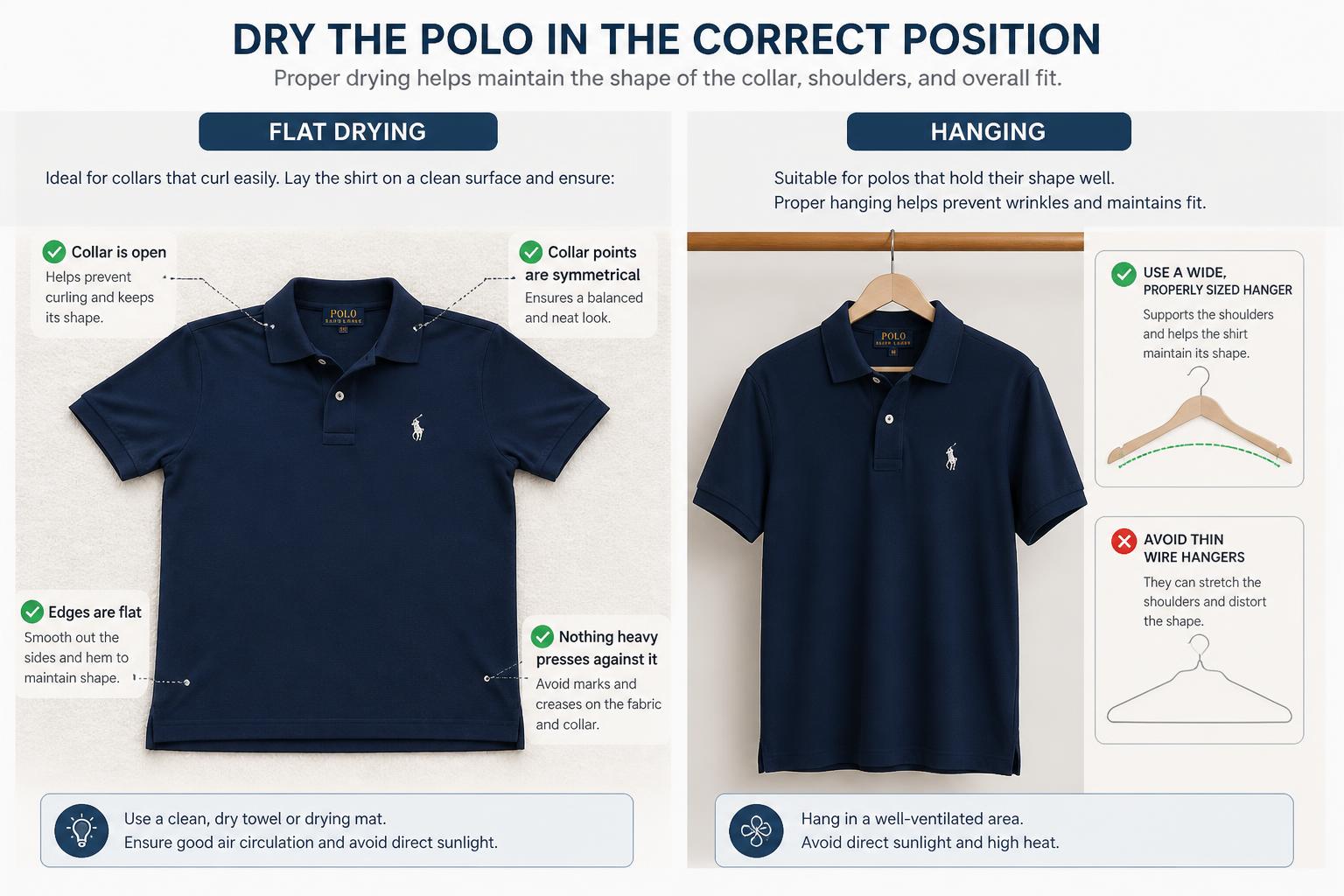
Dry the Polo in the Correct Position
The way a polo dries can influence the finished shape.
Flat Drying:
For collars that curl easily, flat drying can be useful. Lay the shirt on a clean surface and make sure:
- Collar is open
- Edges are flat
- Collar points are symmetrical
- Nothing heavy presses against it
Hanging:
Hanging can also work if the shirt is suitable for it. Make sure the hanger does not distort the shoulder. A wide, properly sized hanger is better than a thin wire hanger.
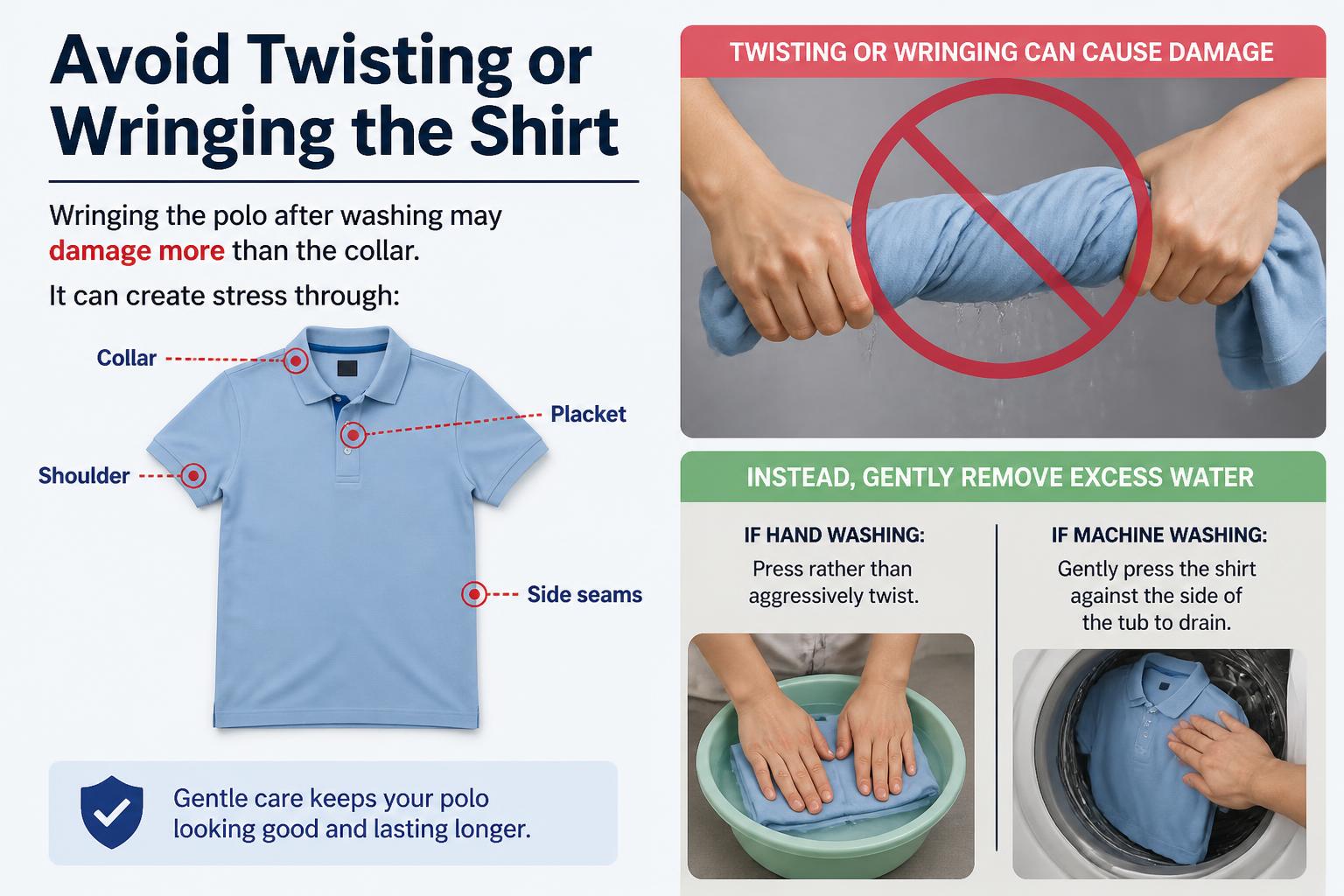
Avoid Twisting or Wringing the Shirt
Wringing the polo after washing may damage more than the collar. It can create stress through:
- Collar
- Placket
- Shoulder
- Side seams
Instead, gently remove excess water. If hand washing, press rather than aggressively twist.
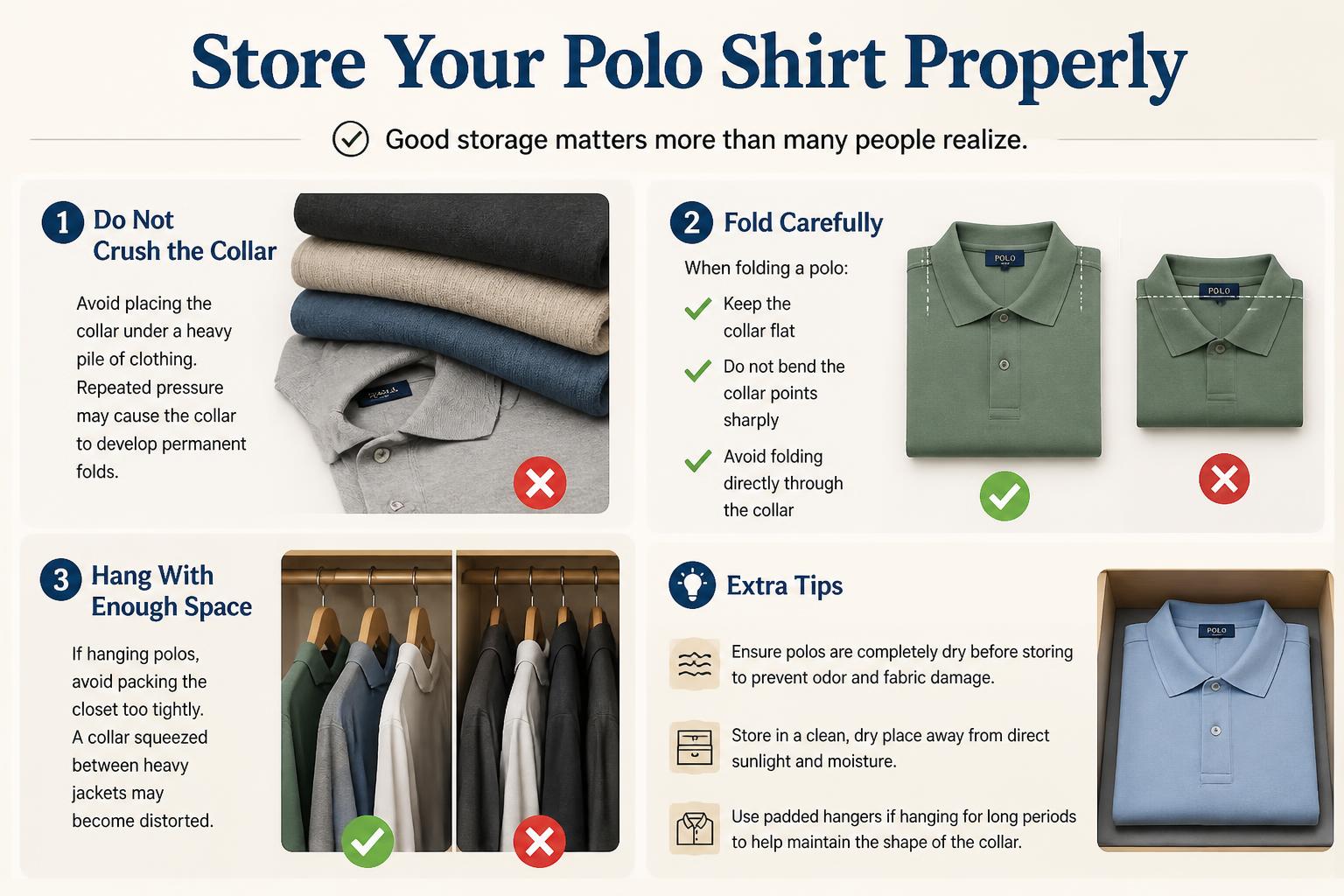
Store Your Polo Shirt Properly
Good storage matters more than many people realize.
Do Not Crush the Collar
Avoid placing the collar under a heavy pile of clothing. Repeated pressure may cause the collar to develop permanent folds.
Fold Carefully
When folding a polo:
- Keep the collar flat
- Do not bend the collar points sharply
- Avoid folding directly through the collar
Hang With Enough Space
If hanging polos, avoid packing the closet too tightly. A collar squeezed between heavy jackets may become distorted.
Quick Fix for Already Curled Collars
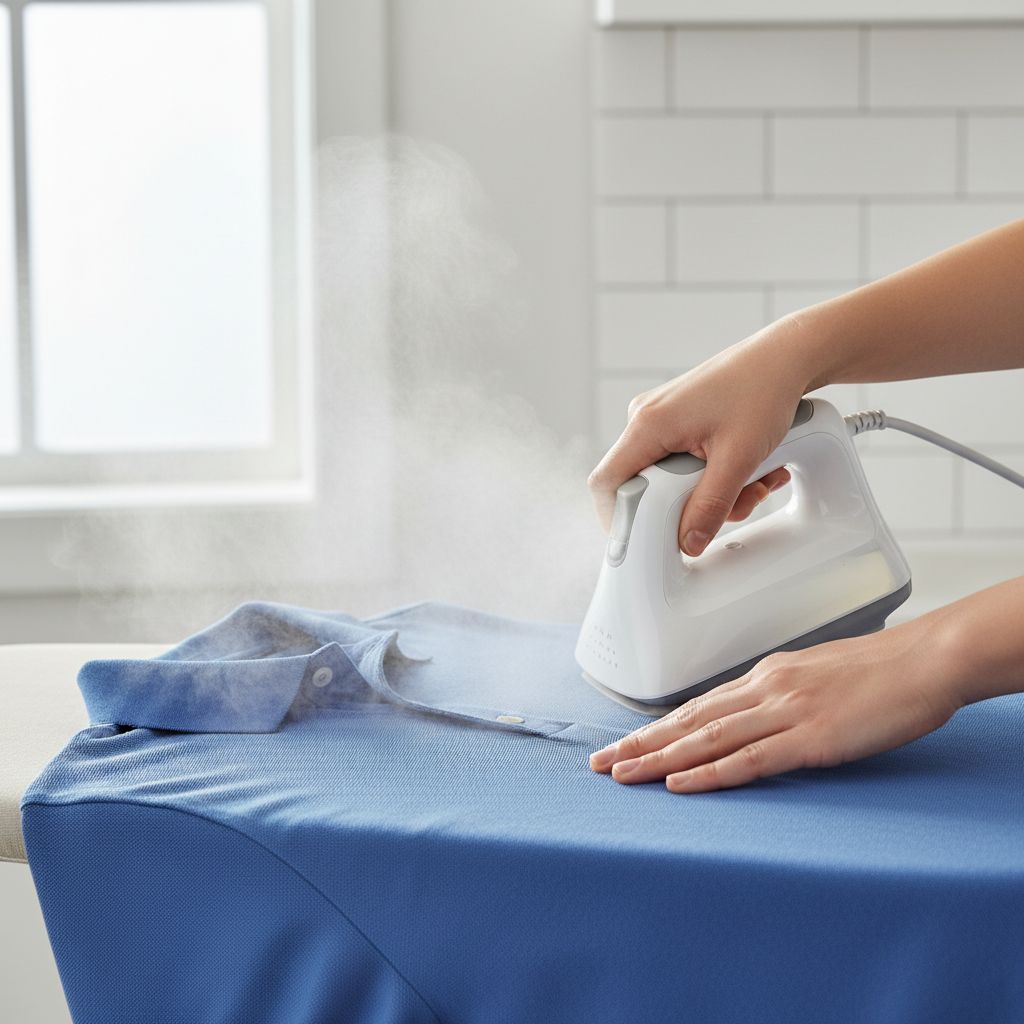
If the curl has already set in, lightly dampen the fabric, smooth it flat, and use a steamer or a low-heat iron with a pressing cloth. Early action prevents permanent damage to the fabric’s memory, keeping your modern polo looking sharp for years.
Conclusion / Final Words
A curling collar reacts to heat, pressure, and handling. By adopting gentle washing habits, air drying, and proper storage, you can keep your polo shirts looking professional. Take care of the small details, and your wardrobe will stay sharp, flat, and polished for much longer.

Frequently Asked Questions About Polo Shirt Collar Curling
1. Why Does My Polo Shirt Collar Keep Curling?
Polo shirt collars can curl because of repeated washing, excessive heat, improper drying, poor storage, or problems with collar construction. Uneven shrinkage, weak fabric recovery, and incorrect stitching may also cause the collar edges to roll upward. Both garment quality and care habits affect how well a polo collar maintains its shape.
2. How Can I Prevent My Polo Shirt Collar From Curling?
To help prevent collar curling, wash your polo shirt according to its care label, avoid excessive heat, and reshape the collar while it is still damp. Smooth both collar points before drying and store the shirt without crushing the collar. Choosing a well-constructed polo with a stable collar knit can also reduce the risk of curling.
3. Can You Fix a Polo Shirt Collar That Has Already Curled?
Yes, mild collar curling can often be improved. Lightly dampen the collar, gently reshape it with your fingers, and lay it flat. If the care label allows, use a suitable low-temperature iron with a pressing cloth or gentle steaming. However, severe distortion caused by permanent shrinkage, damaged fibers, or poor construction may not be fully reversible.
4. Does Washing a Polo Shirt Cause Collar Curling?
Washing can contribute to collar curling, especially when the shirt is exposed to excessive agitation, high temperatures, or strong mechanical friction. Different garment components may also shrink at different rates. Following the care label, using a suitable gentle cycle, and avoiding overloaded washing machines can help maintain collar shape.
5. Does Tumble Drying Make Polo Collars Curl?
High dryer temperatures can contribute to collar distortion by causing shrinkage or heat-related changes in the fabric. Collar knits, interlinings, and body fabrics may respond differently to heat. Air drying is often a gentler choice, especially for polos with collars that curl easily. If tumble drying is permitted, follow the recommended temperature setting.
6. Should I Iron My Polo Shirt Collar to Keep It Flat?
Ironing may help restore a flat appearance when the fabric can safely tolerate the selected temperature. Check the care label first, use a pressing cloth when appropriate, and gently shape the collar without stretching it. Avoid excessive heat or pressure, particularly on synthetic fibers, bonded materials, and delicate finishes.
7. Is Steaming Better Than Ironing for a Curled Polo Collar?
Steaming can help relax certain wrinkles and mild collar distortion without applying as much direct pressure as ironing. However, effectiveness depends on the fabric and the cause of curling. For some collars, gentle pressing produces a flatter finish. Always follow the garment care instructions and avoid excessive steam or heat on sensitive materials.
8. Should I Air-Dry My Polo Shirt Flat or Hang It Up?
Both methods can work, depending on the garment. Flat drying can be useful for heavier knitted polos or collars that lose their shape easily. Hanging may be suitable for lighter shirts when a properly sized hanger is used. In either case, smooth the collar, align both collar points, and avoid allowing the fabric to dry in a folded or twisted position.
9. Does Fabric Quality Affect Polo Shirt Collar Curling?
Yes. Collar performance depends on yarn quality, knit construction, fabric density, dimensional stability, stretch recovery, and finishing. A poorly stabilized collar may curl even when the shirt is washed carefully. However, a thicker collar is not automatically better. Good construction and appropriate testing matter more than thickness alone.
10. Are Cotton Polo Collars More Likely to Curl Than Polyester Collars?
Not necessarily. Cotton and polyester respond differently to moisture, washing, and heat, but collar curling depends on the complete fabric and garment construction. Cotton collars may change shape because of shrinkage, while polyester or blended collars may distort under unsuitable heat or finishing conditions. Neither fiber guarantees a curl-free collar.