Cowl Neck T-Shirts: Pros, Cons, and What Brands Must Know Before Using Them

Cowl neck T-shirts look simple. Soft folds. Relaxed neckline. A quiet sense of “premium.” That surface impression is exactly why many brands get them wrong. A cowl neck does not behave like a normal neckline. It doesn’t hide mistakes. It reveals them. Fabric choice, pattern skill, sewing control, even photography quality all show up immediately. For brand owners, this neckline is less about decoration and more about discipline. This article breaks down what a cowl neck T-shirt really is, where it works, where it fails, and whether it deserves a place in your collection.
=> Read More: T Shirts Manufacturing Vietnam | Mekong Garment Factory
What Is a Cowl Neck T-Shirt?
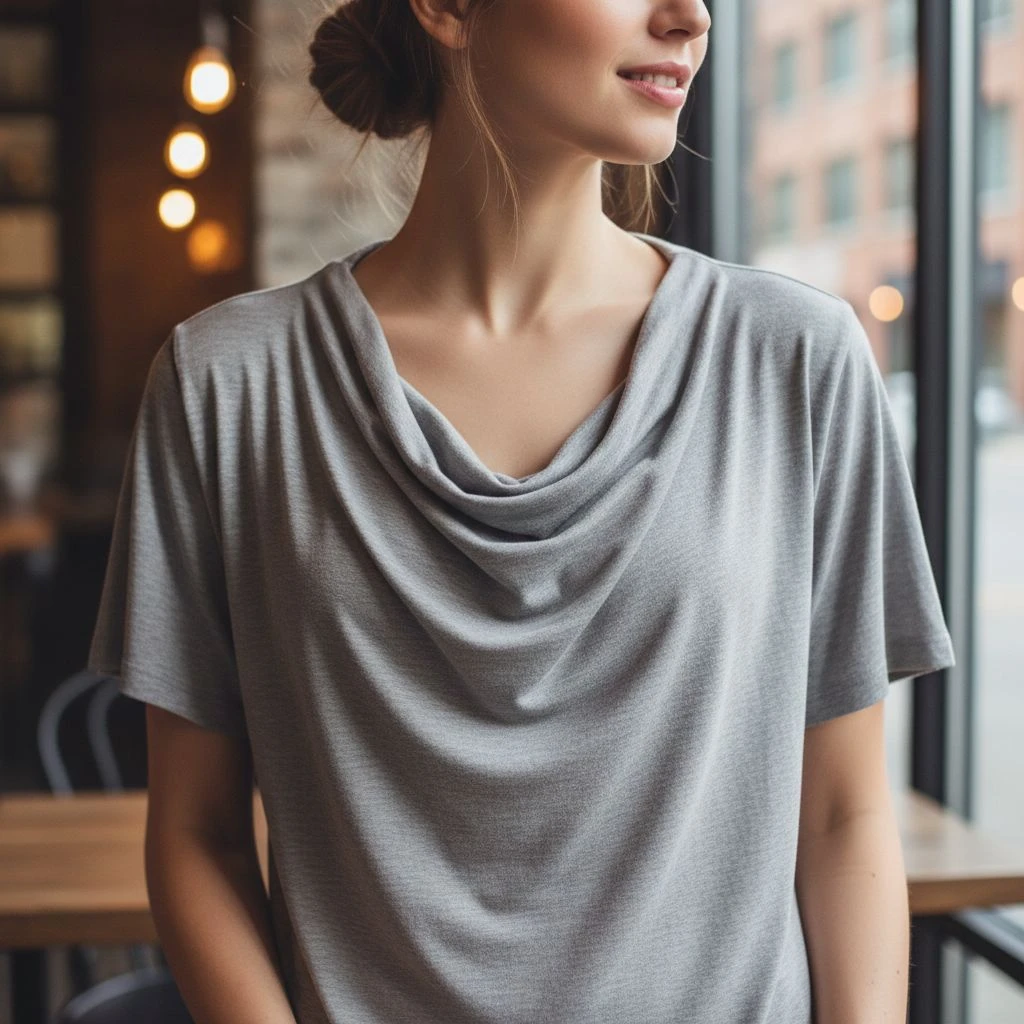
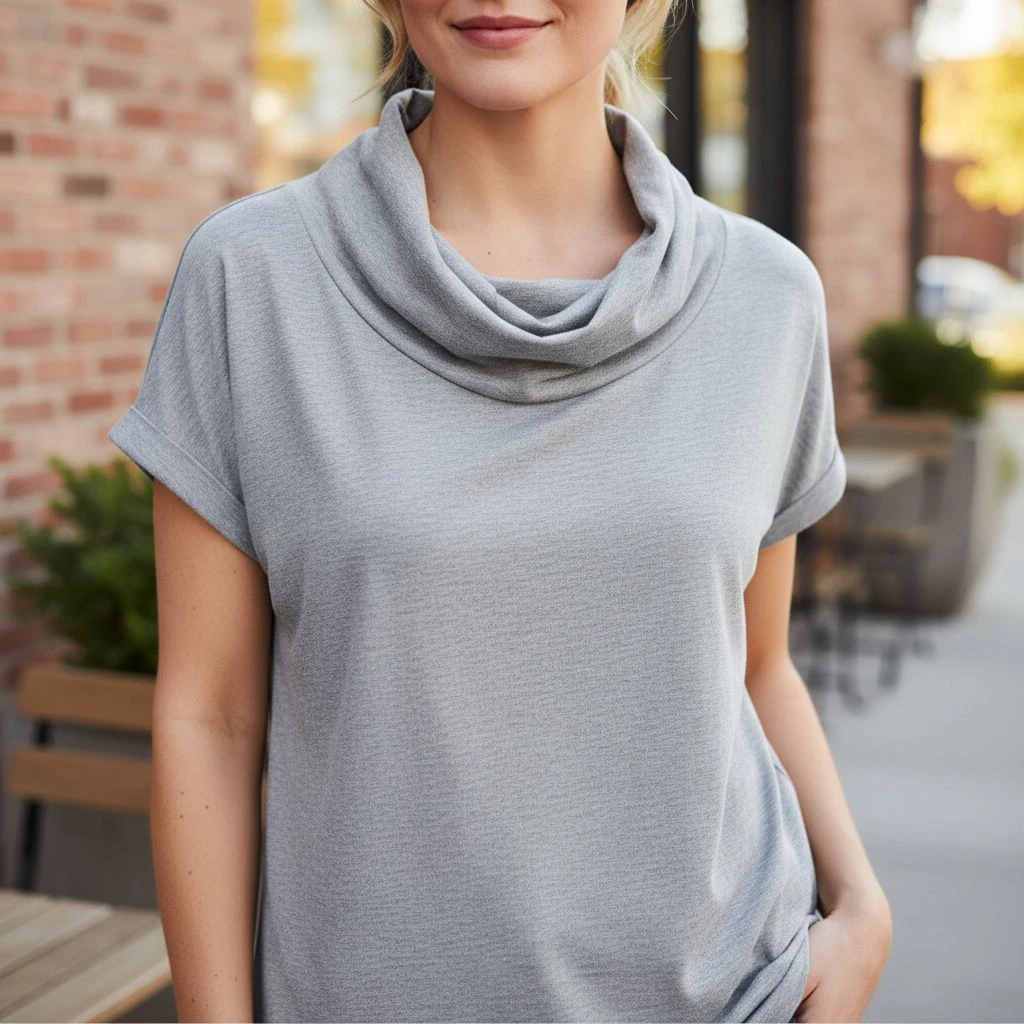
A cowl neck T-shirt is a knit top with additional fabric around the neckline that forms soft, hanging folds or drapes. Unlike a crew neck, where the neckline edge follows a relatively fixed shape around the neck, a cowl neckline intentionally contains extra volume. Gravity then helps this additional fabric fall into folds.
The result may look:
- Soft
- Relaxed
- Fluid
- Elegant
- Layered
depending on the pattern and fabric.
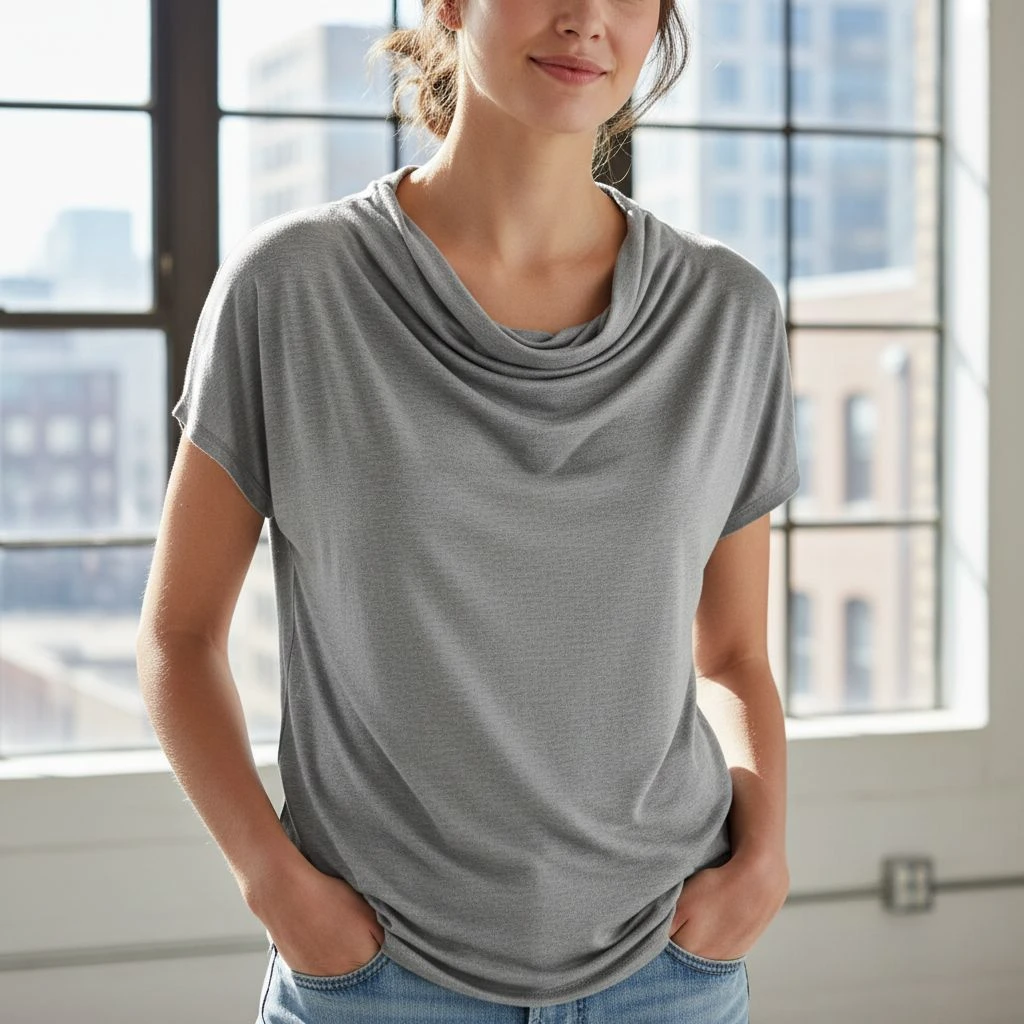
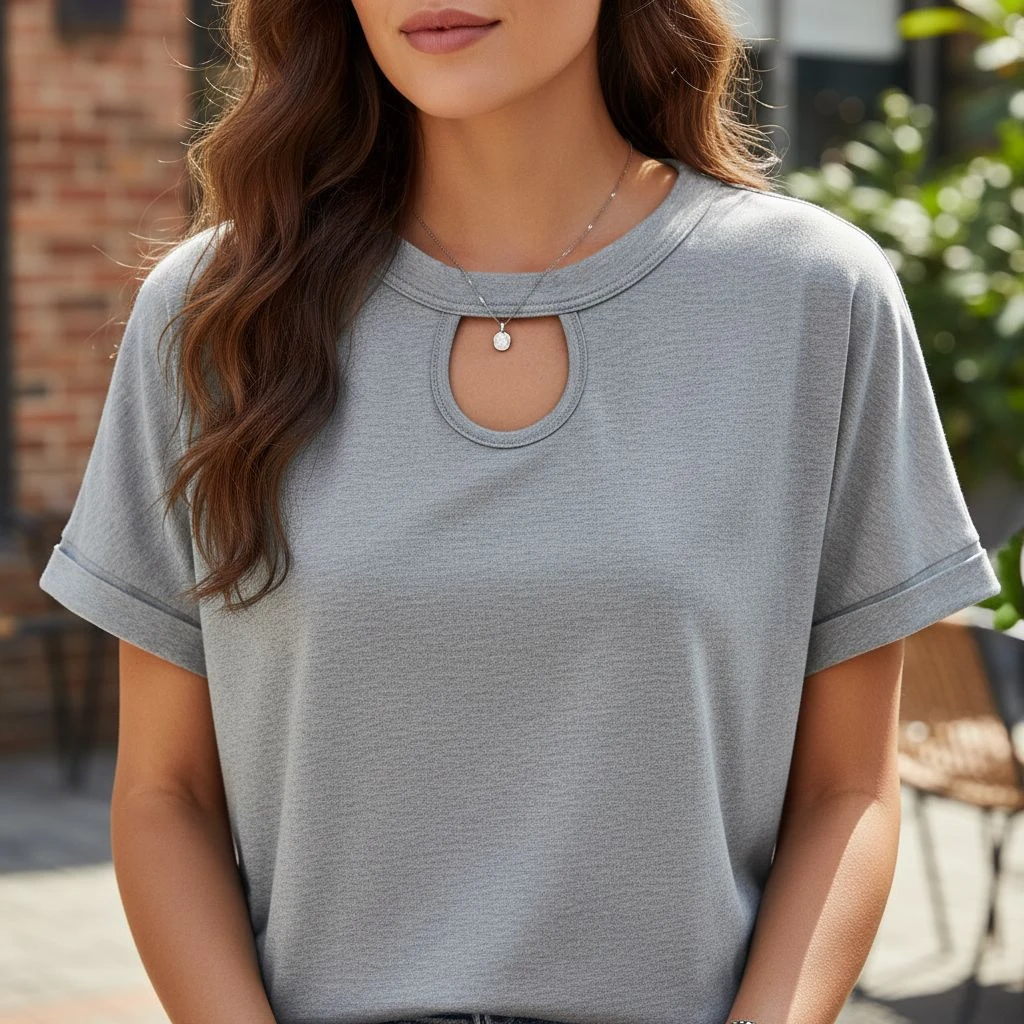
A cowl neck uses extra fabric at the neckline to create soft, draped folds instead of a fixed collar shape. The neckline is intentionally loose and relies on gravity and fabric behavior to form its final look. – Elegant cowl neck T-shirt with soft draped folds
What Makes a Cowl Neck Different From a Regular Neckline?
Most conventional T-shirt necklines are designed to stay relatively controlled.
Examples include:
- Crew neck
- V-neck
- Scoop neck
- Mock neck
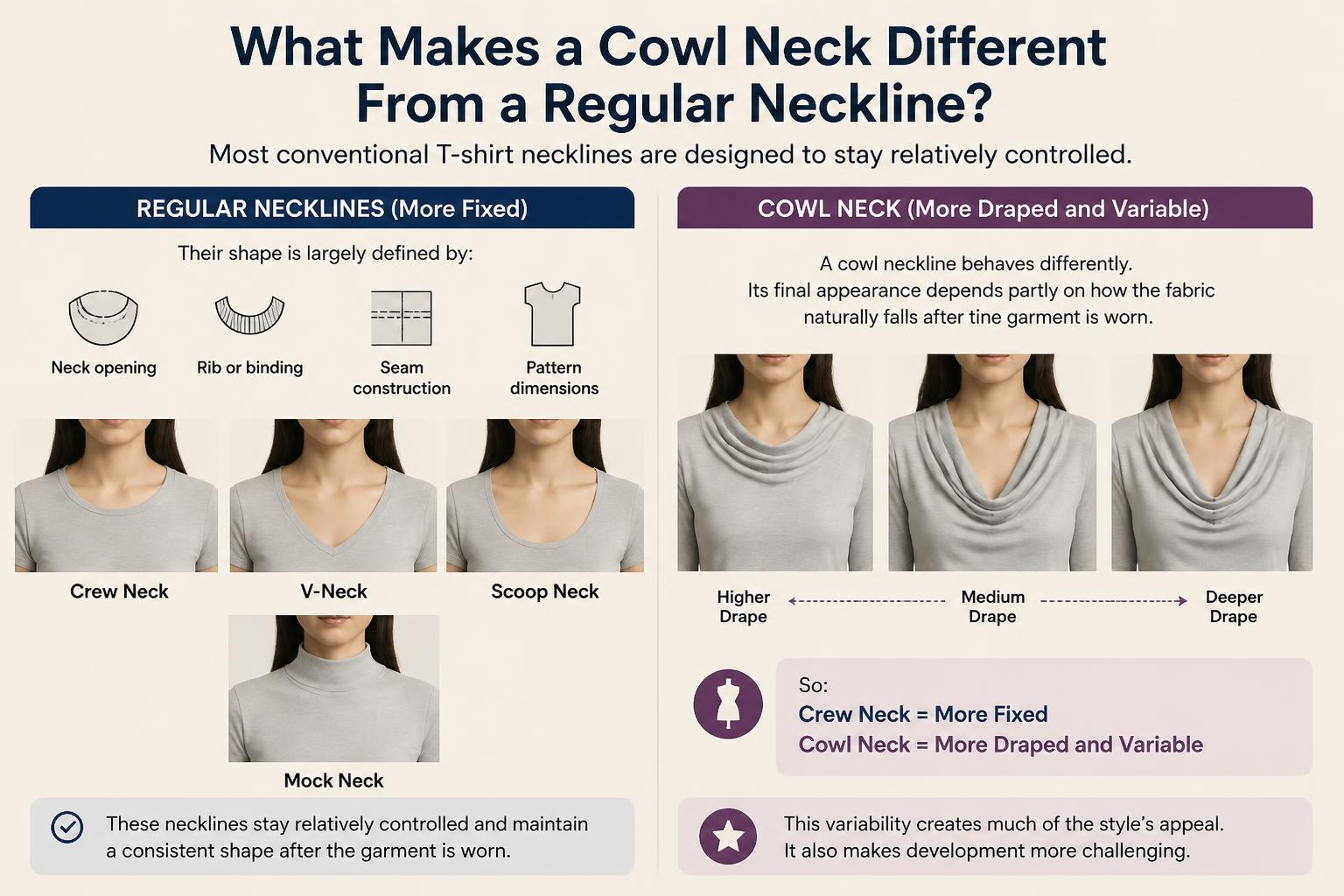
Their shape is largely defined by:
- Neck opening
- Rib or binding
- Seam construction
- Pattern dimensions
A cowl neckline behaves differently. Its final appearance depends partly on how the fabric naturally falls after the garment is worn.
So:
- Crew Neck = More Fixed
- Cowl Neck = More Draped and Variable
This variability creates much of the style’s appeal. It also makes development more challenging.
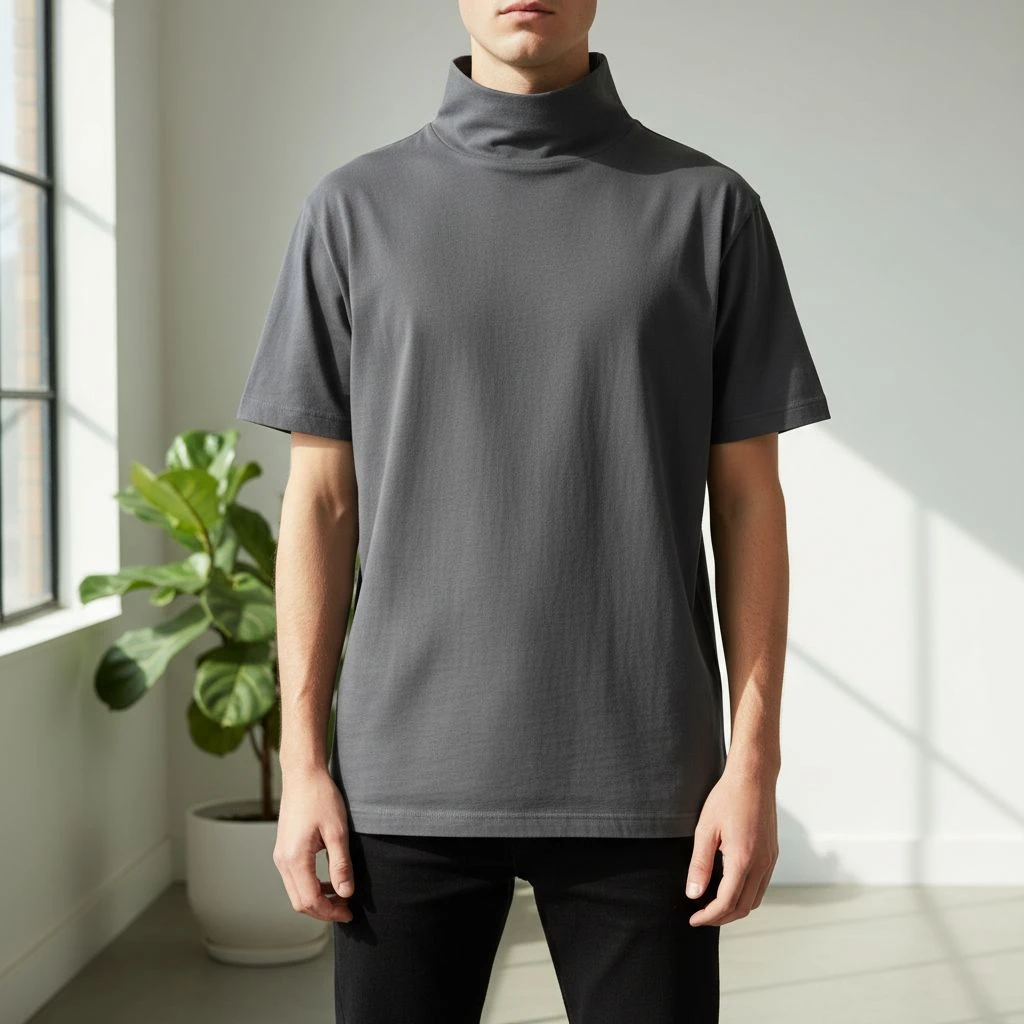
Is a Cowl Neck the Same as a Turtleneck?
No. These necklines can sometimes be confused because both may involve extra fabric near the neck.

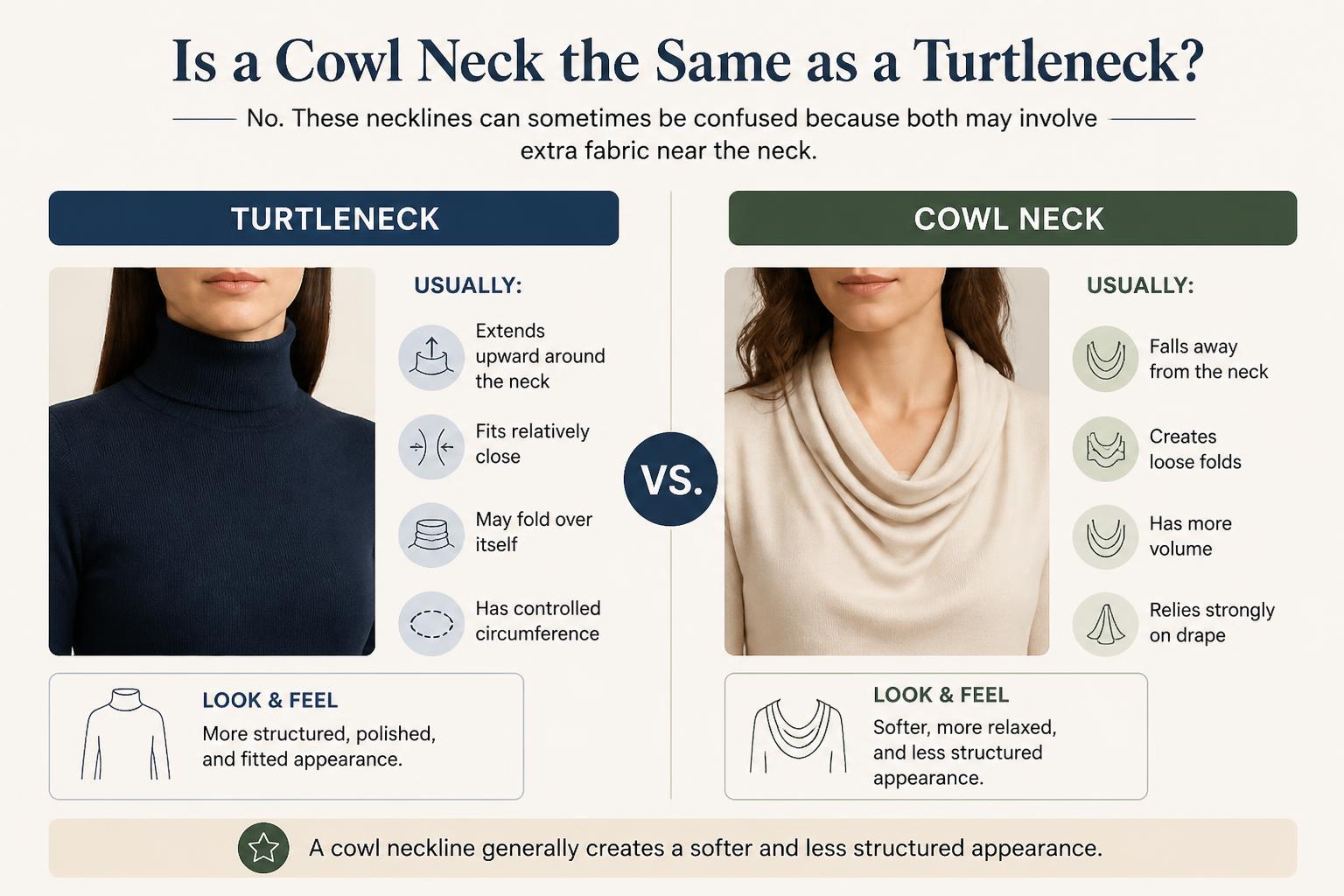
Turtleneck Usually:
- Extends upward around the neck
- Fits relatively close
- May fold over itself
- Has controlled circumference
Cowl Neck Usually:
- Falls away from the neck
- Creates loose folds
- Has more volume
- Relies strongly on drape
A cowl neckline generally creates a softer and less structured appearance.
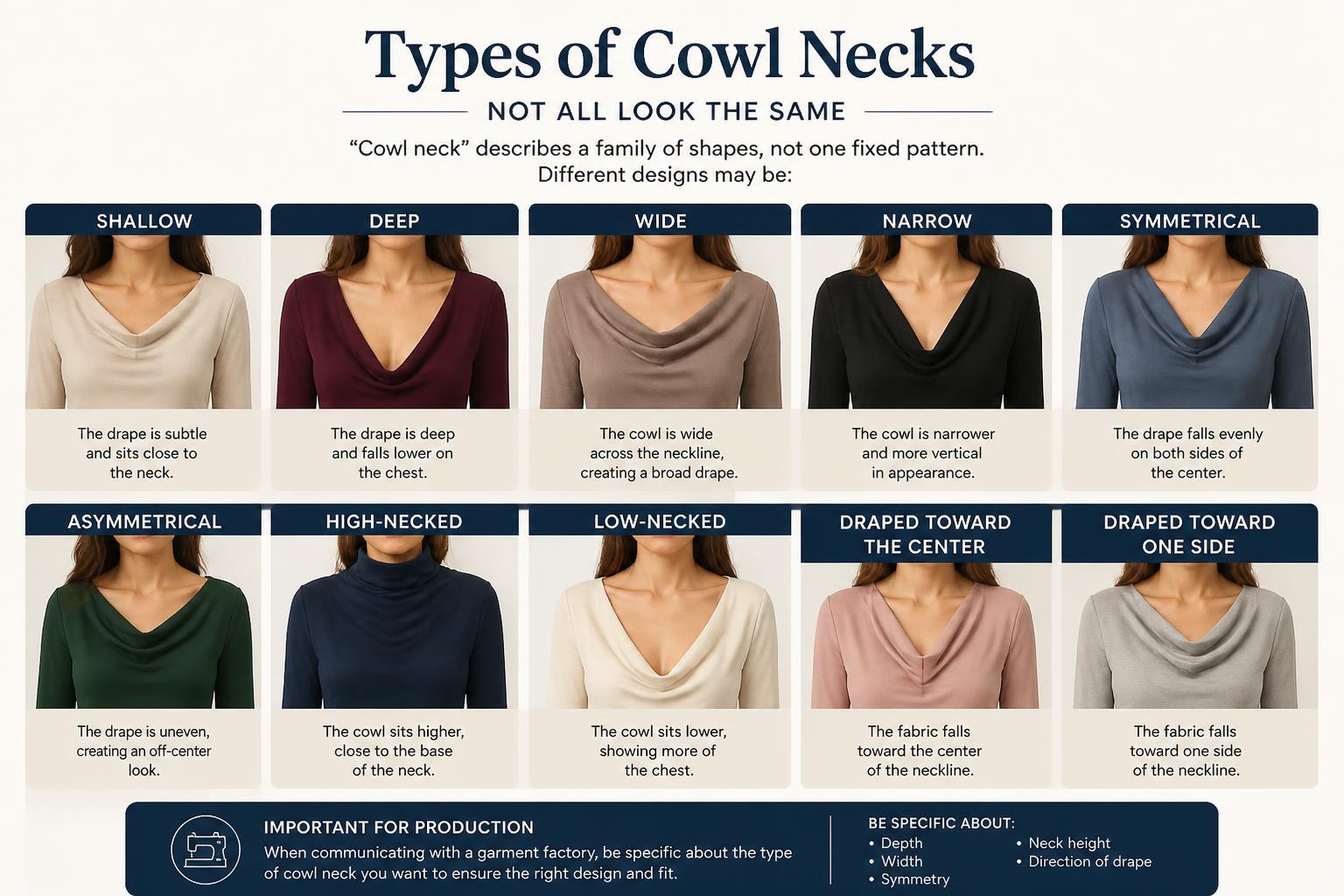
Types of Cowl Necks: Not All Look the Same
“Cowl neck” describes a family of shapes, not one fixed pattern. Different designs may be:
- Shallow
- Deep
- Wide
- Narrow
- Symmetrical
- Asymmetrical
- High-necked
- Low-necked
- Draped toward the center
- Draped toward one side
This is important when communicating with a garment factory.
Pros and Cons of Cowl Neck T-Shirts
That soft drape at the neckline adds movement and elegance without prints or heavy details. But fit, recovery, and even photography can change how the neckline falls. Weigh these pros and cons before committing to production.
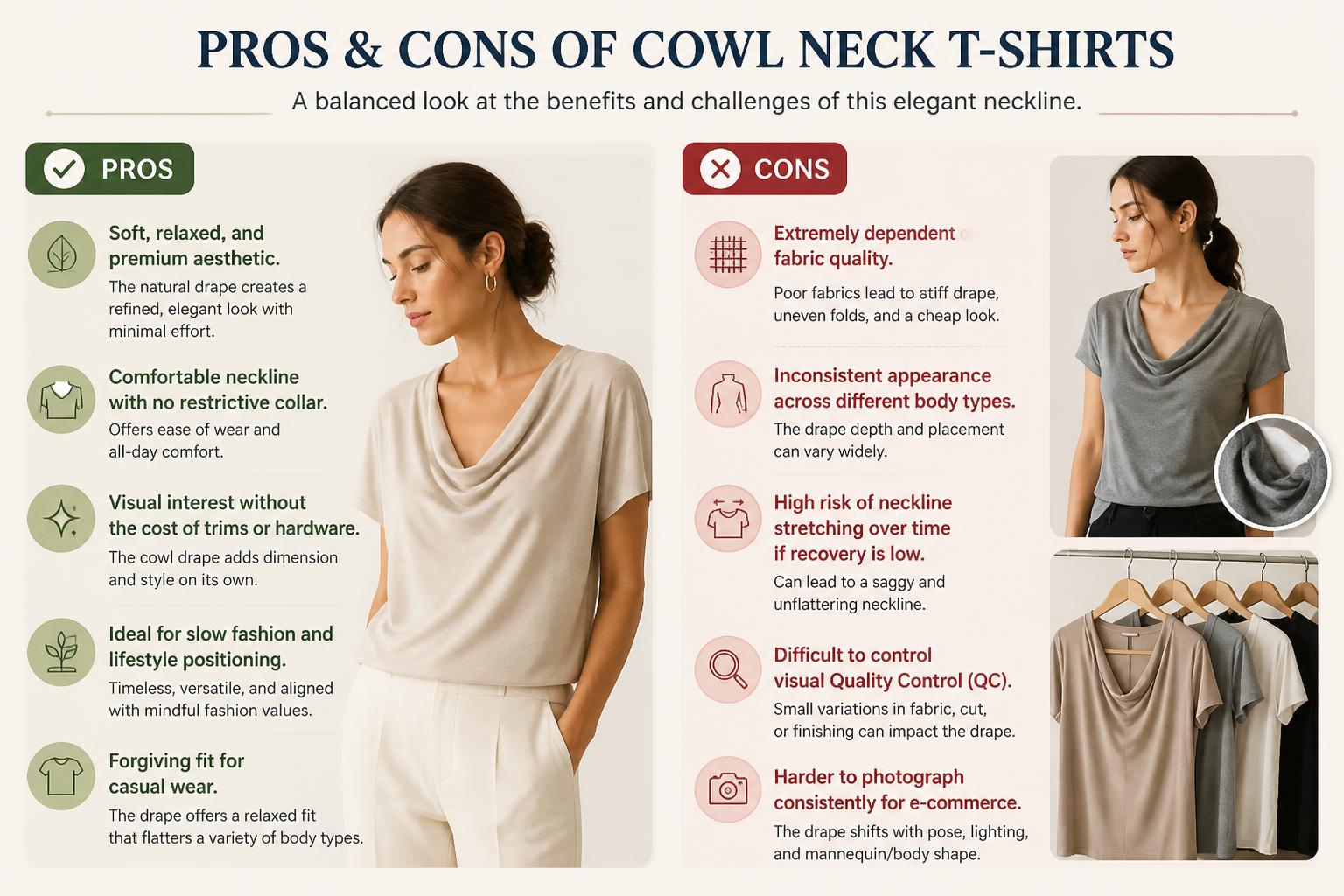
Pros:
- Soft, relaxed, and premium aesthetic.
- Comfortable neckline with no restrictive collar.
- Visual interest without the cost of trims or hardware.
- Ideal for slow fashion and lifestyle positioning.
- Forgiving fit for casual wear.
Cons:
- Extremely dependent on fabric quality.
- Inconsistent appearance across different body types.
- High risk of neckline stretching over time if recovery is low.
- Difficult to control visual Quality Control (QC).
- Harder to photograph consistently for e-commerce.
Fabric Matters More Than Design
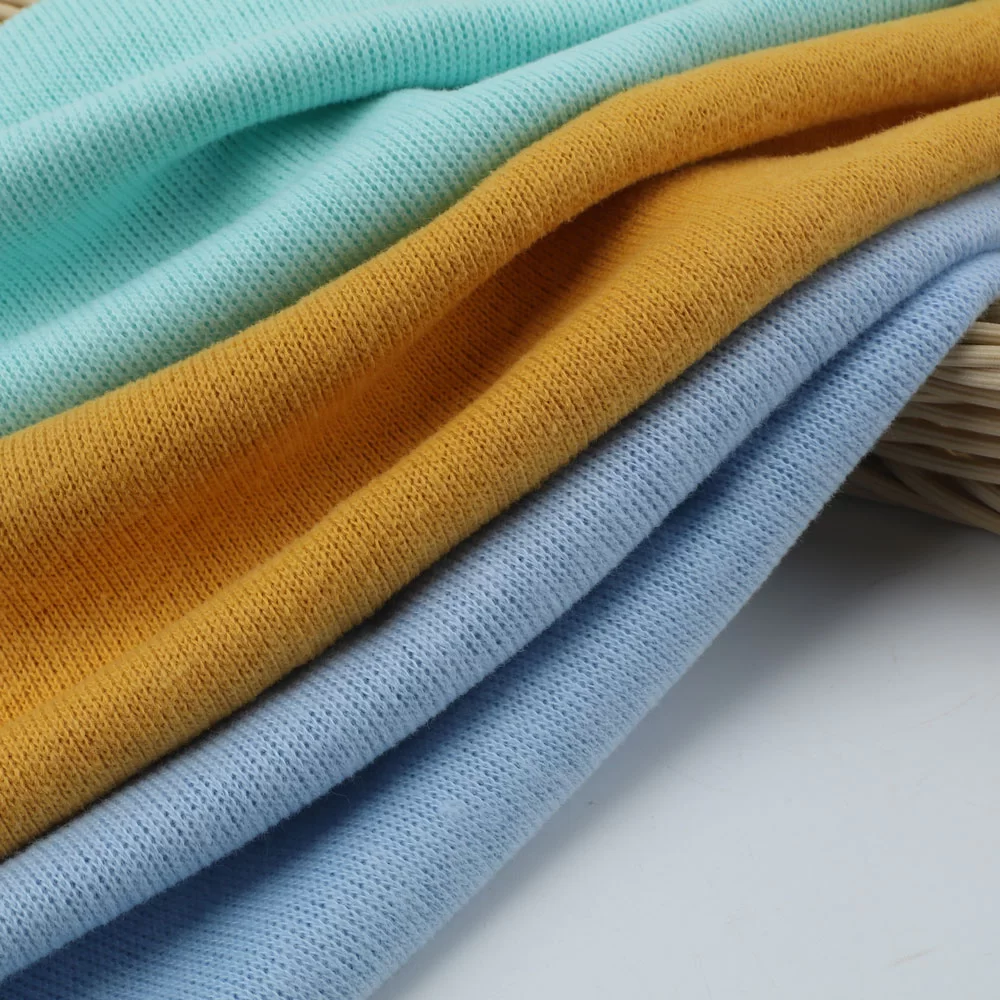
The real “design” happens when the fabric hangs on the body. A cowl neck relies on drape, weight, stretch, and most importantly recovery to form clean, soft folds. If the knit is too light, too stiff, or doesn’t bounce back after washing, the neckline can collapse, twist, or stretch out and look sloppy.
What works well:
- Medium-weight knits (roughly 180–240 GSM).
- Fabrics with strong stretch and recovery.
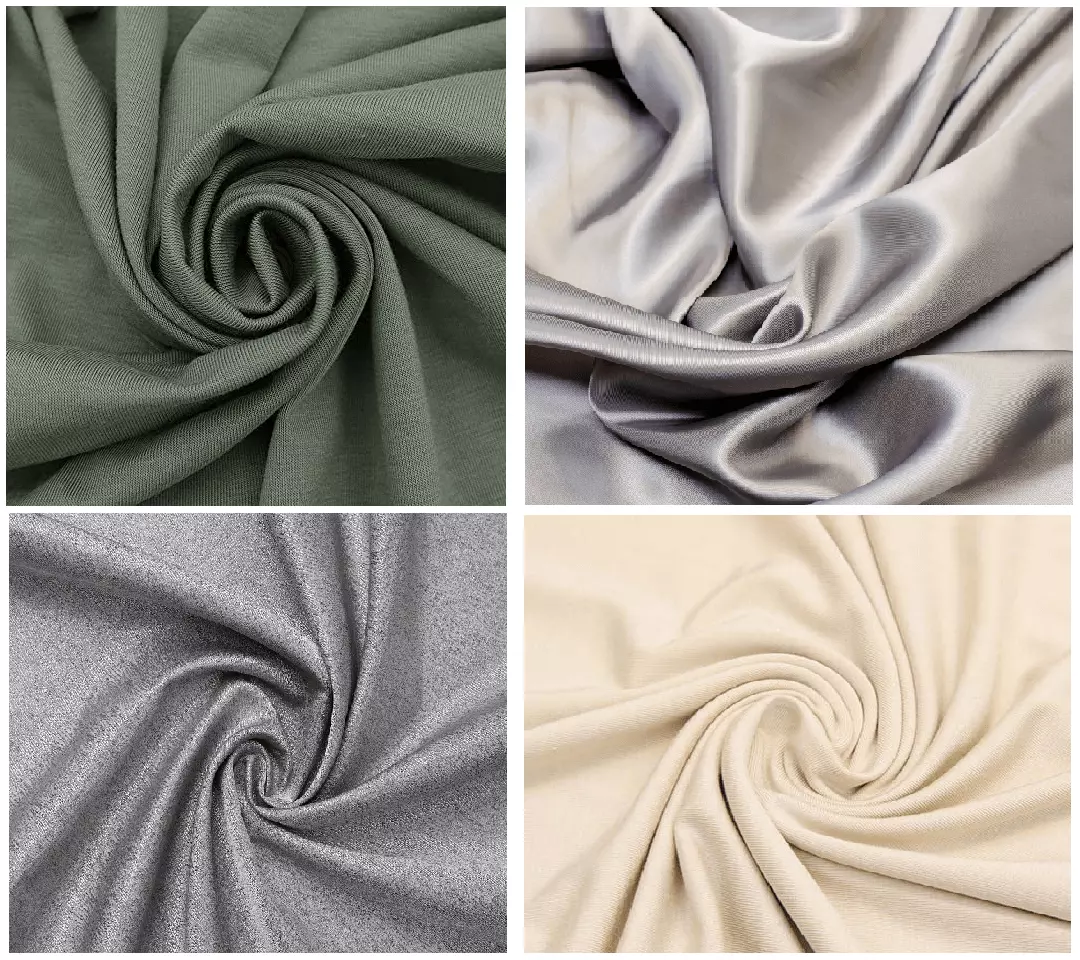
- Soft handfeel with some body (Modal, bamboo, viscose blends with elastane).
- Fine rib knits for controlled drape.
What Nots:
- Very lightweight jersey (collapses, clings).
- Stiff fabrics (bulky, awkward folds).
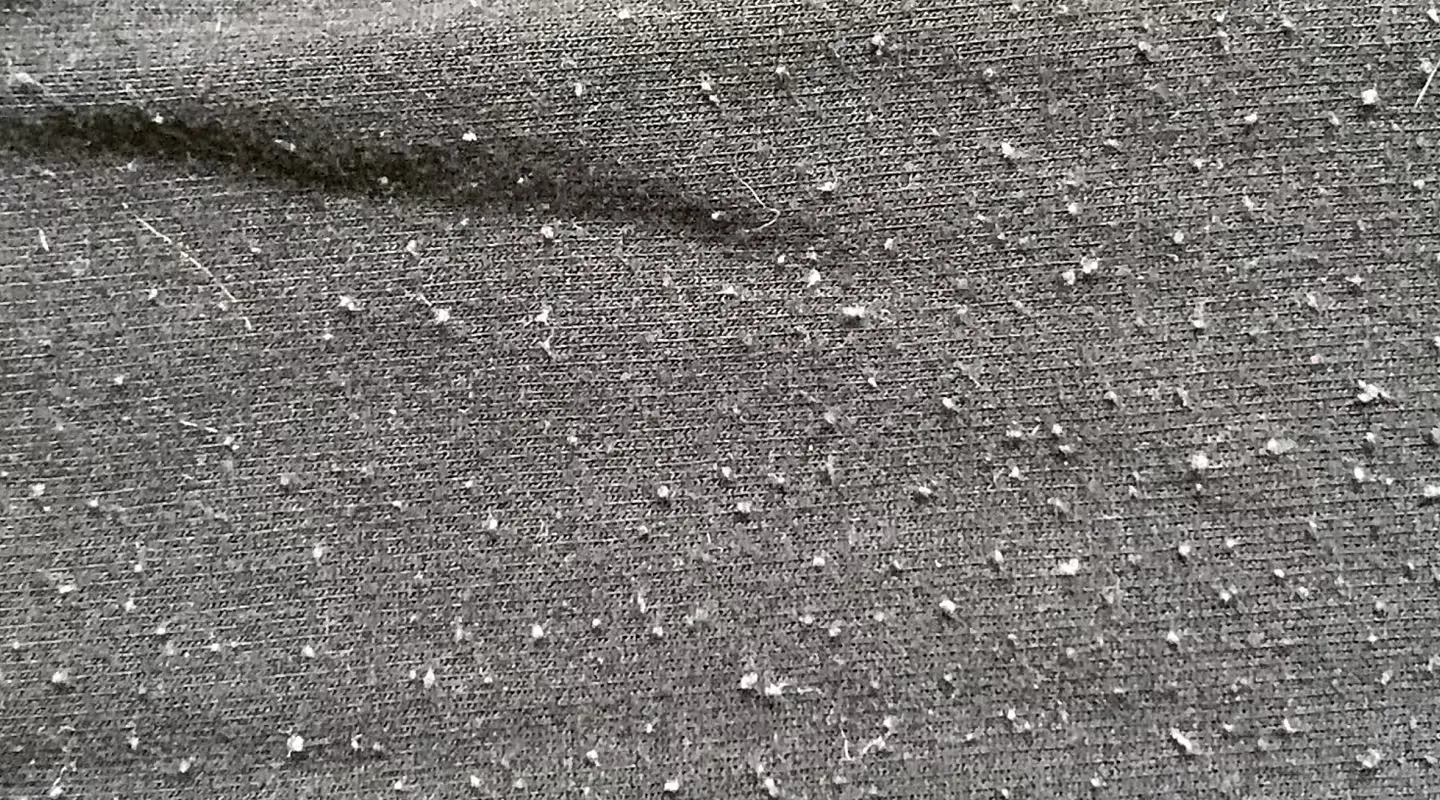
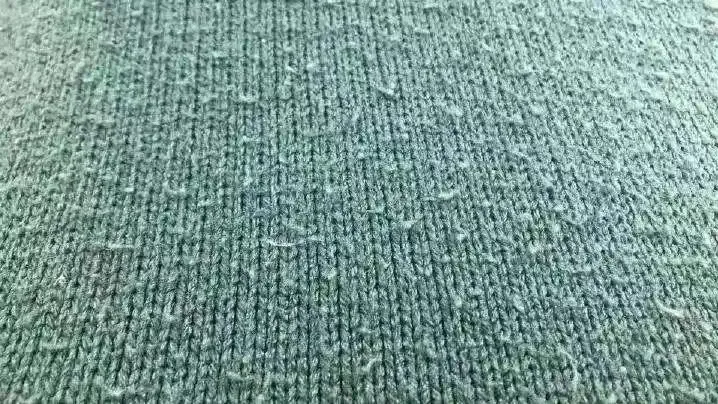
- Poor recovery knits (neckline stretches out after washing).
Modal for Cowl Neck T-Shirts
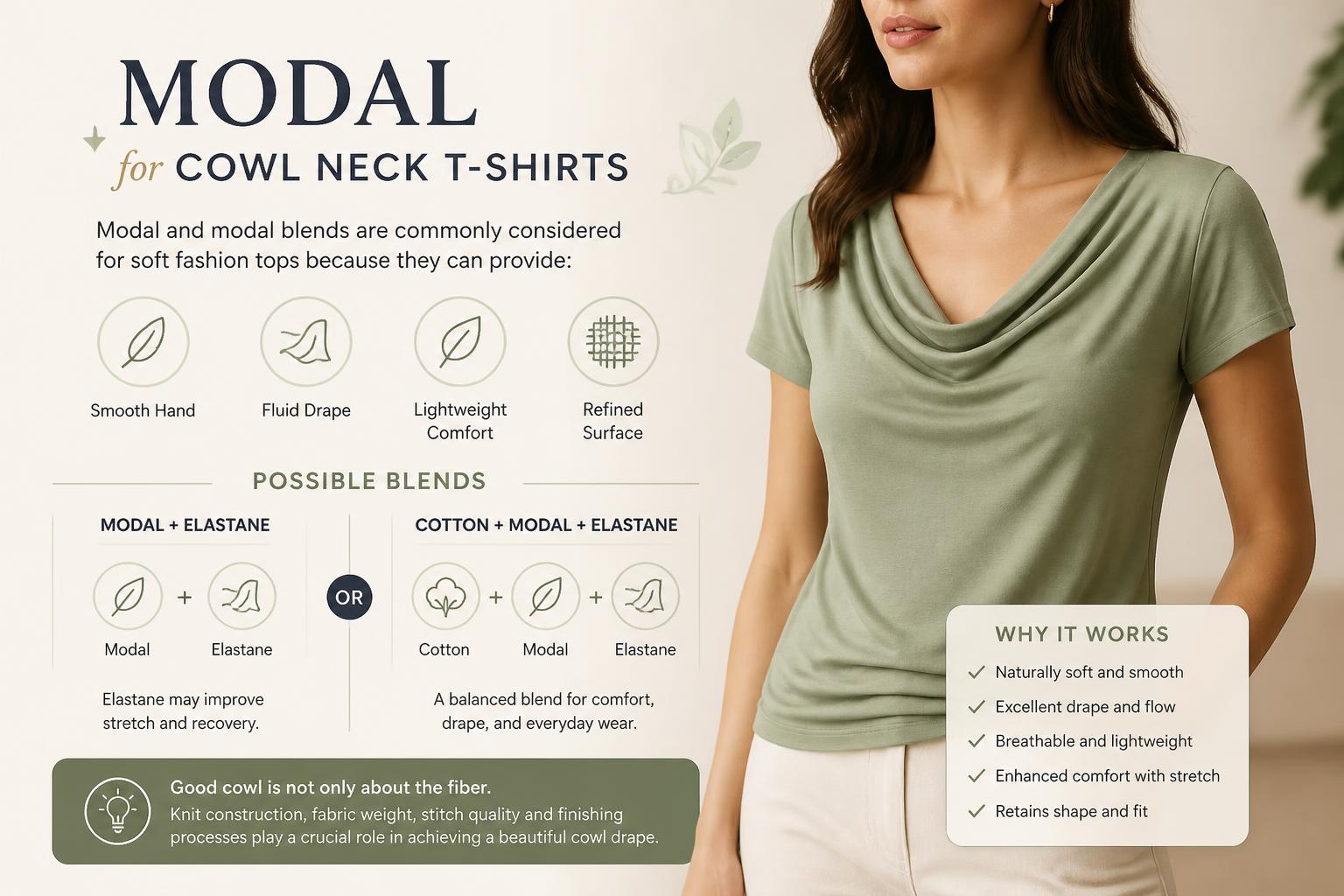
Modal and modal blends are commonly considered for soft fashion tops because they can provide:
- Smooth hand
- Fluid drape
- Lightweight comfort
- Refined surface
Possible blends include:
- Modal + Elastane
- or: Cotton + Modal + Elastane
The elastane component may improve stretch and recovery. But modal does not automatically guarantee a good cowl. The actual knit construction and finishing still matter.
Viscose / Rayon for Cowl Neck T-Shirts
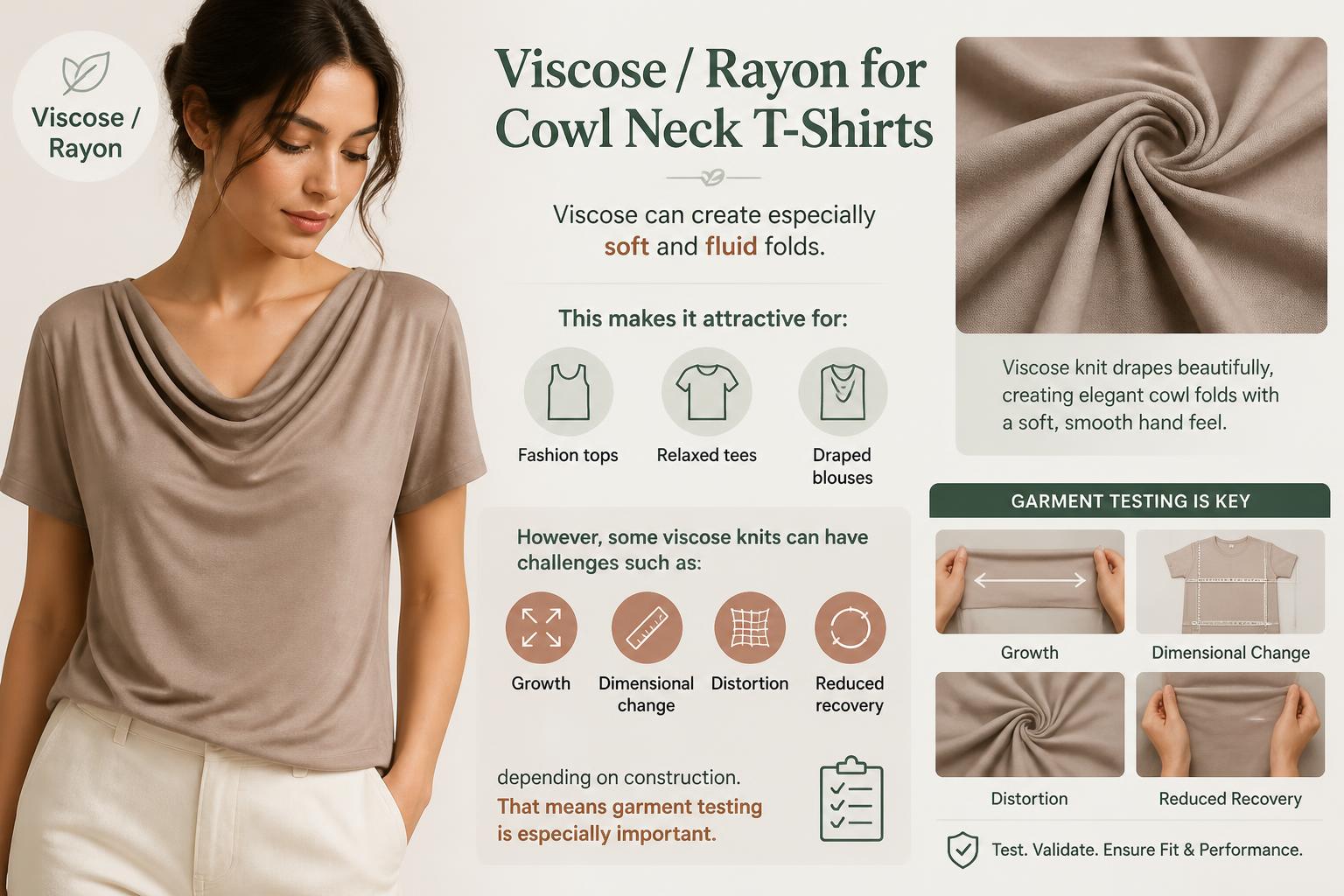
Viscose can create especially soft and fluid folds.

This makes it attractive for:
- Fashion tops
- Relaxed tees
- Draped blouses
However, some viscose knits can have challenges such as:
- Growth
- Dimensional change
- Distortion
- Reduced recovery
depending on construction. That means garment testing is especially important.
Cotton-Elastane for Cowl Neck T-Shirts
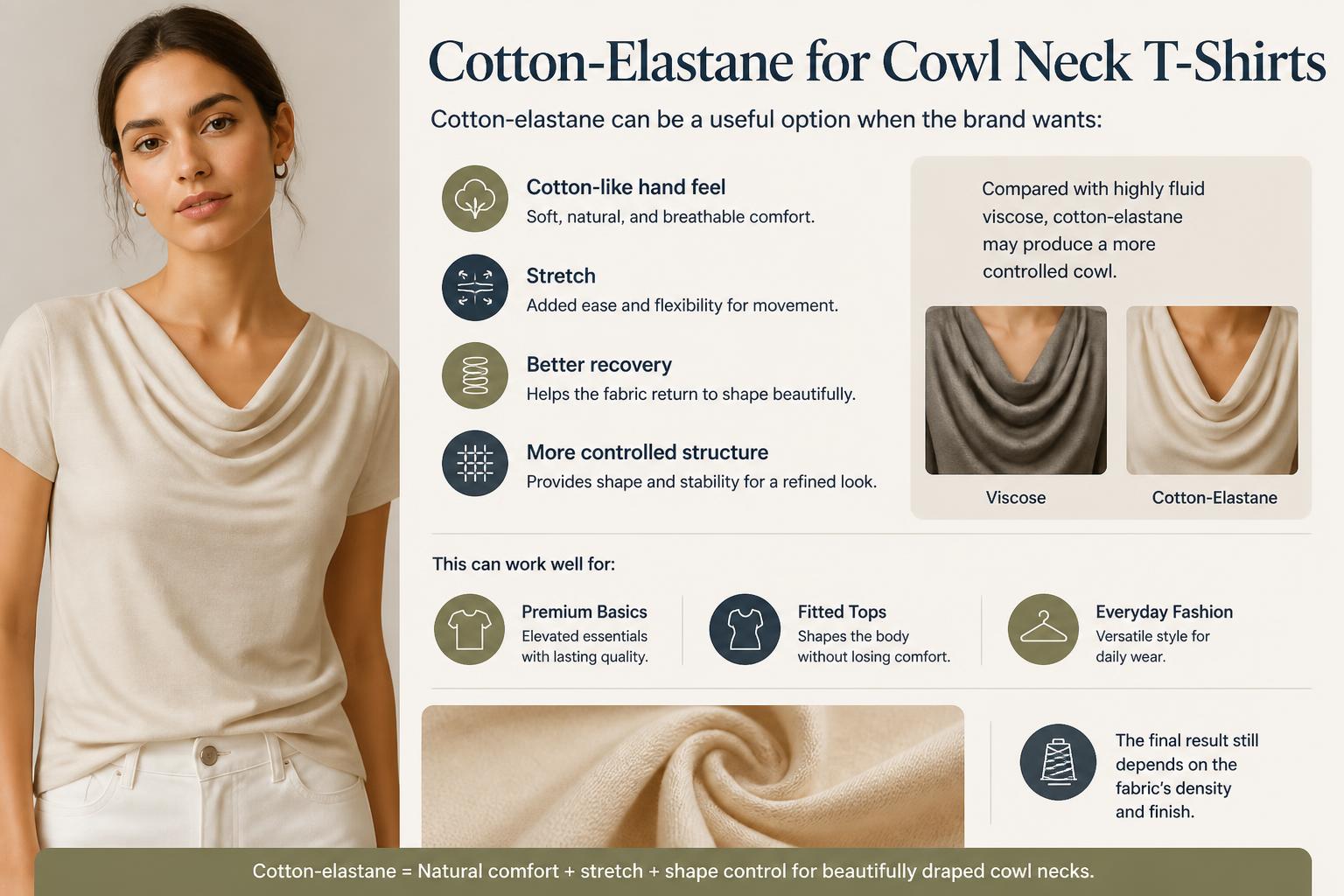
Cotton-elastane can be a useful option when the brand wants:
- Cotton-like hand feel
- Stretch
- Better recovery
- More controlled structure
Compared with highly fluid viscose, cotton-elastane may produce a more controlled cowl.
This can work well for:
- Premium basics
- Fitted tops
- Everyday fashion

The final result still depends on the fabric’s density and finish.
Rib Knit for Cowl Necks
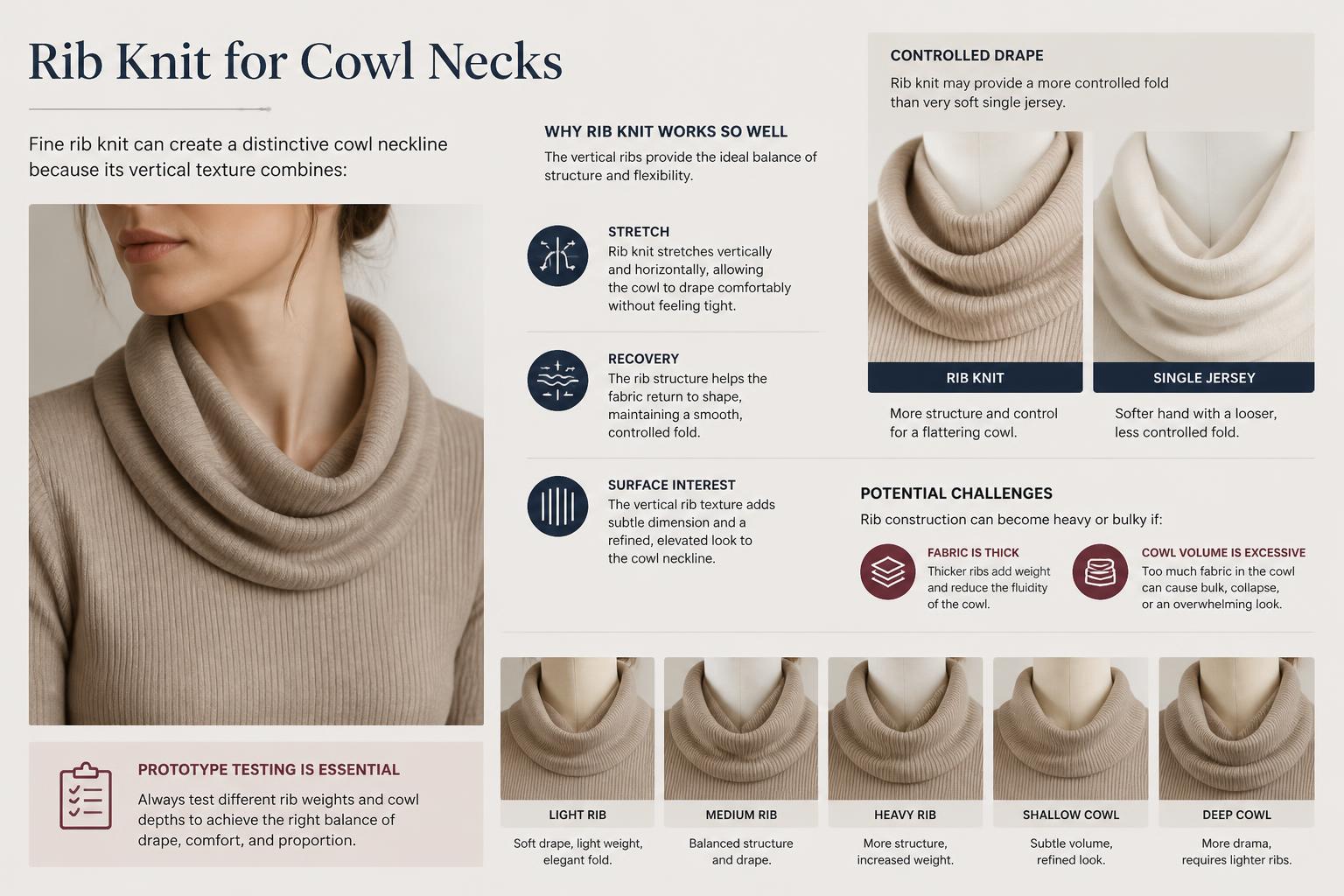
Fine rib knit can create a distinctive cowl neckline because its vertical texture combines:
- Stretch
- Recovery
- Surface interest
Rib may provide a more controlled fold than very soft single jersey.
However, rib construction can also become heavy or bulky if:
- Fabric is thick
- Cowl volume is excessive
For this reason, prototype testing is essential.
Bamboo Viscose Blends
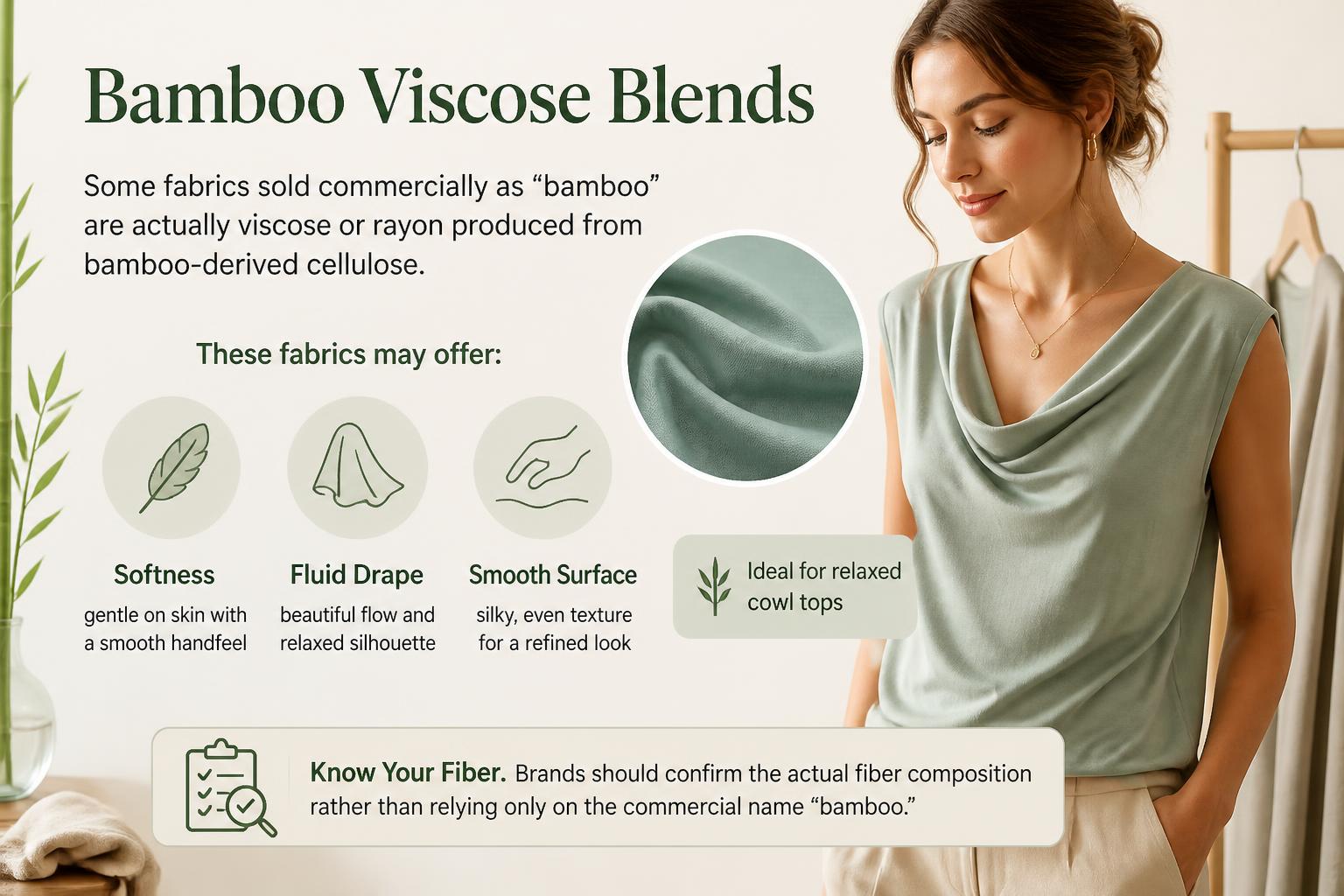
Some fabrics sold commercially as “bamboo” are actually viscose or rayon produced from bamboo-derived cellulose.
These fabrics may offer:
- Softness
- Fluid drape
- Smooth surface
and can work for relaxed cowl tops. But brands should confirm the actual fiber composition rather than relying only on the commercial name “bamboo.”
Best Use Cases
Cowl neck T-shirts work best when your product promise is comfort, softness, and an effortless look. If your brand needs sharp structure and consistent visuals across every size, a cowl neck can quickly become a headache.
- Strongest categories: Women’s fashion brands, loungewear and homewear lines, and premium comfort basics.
- Risky for: Mass-market basics, minimalist brands that promise perfect uniformity, or price-driven collections.
Cowl Neck T-Shirts for Women’s Fashion
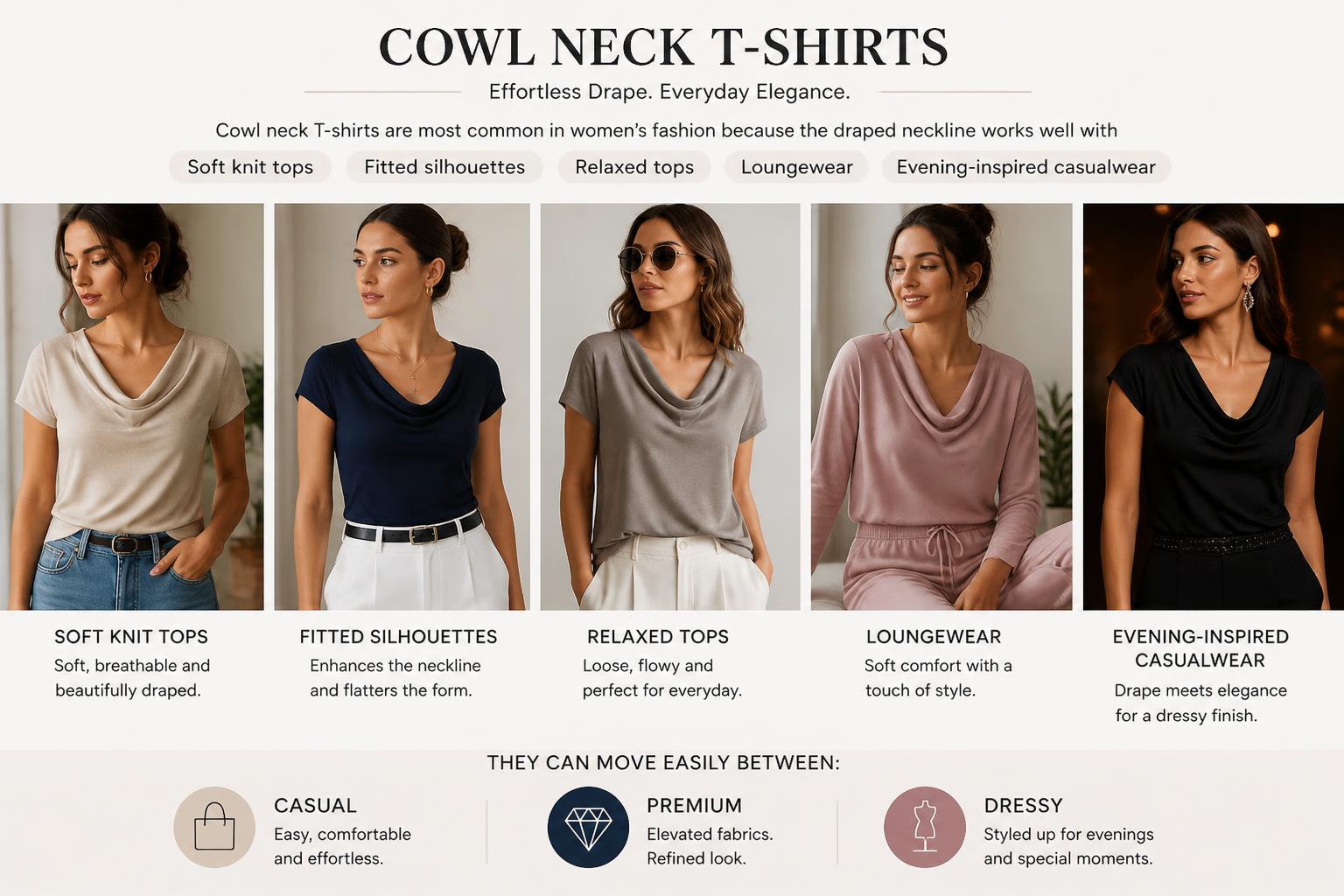
Cowl neck T-shirts are most common in women’s fashion because the draped neckline works well with:
- Soft knit tops
- Fitted silhouettes
- Relaxed tops
- Loungewear
- Evening-inspired casualwear
They can move easily between: Casual + Premium + Dressy, depending on fabric and styling.
Cowl Neck T-Shirts for Loungewear
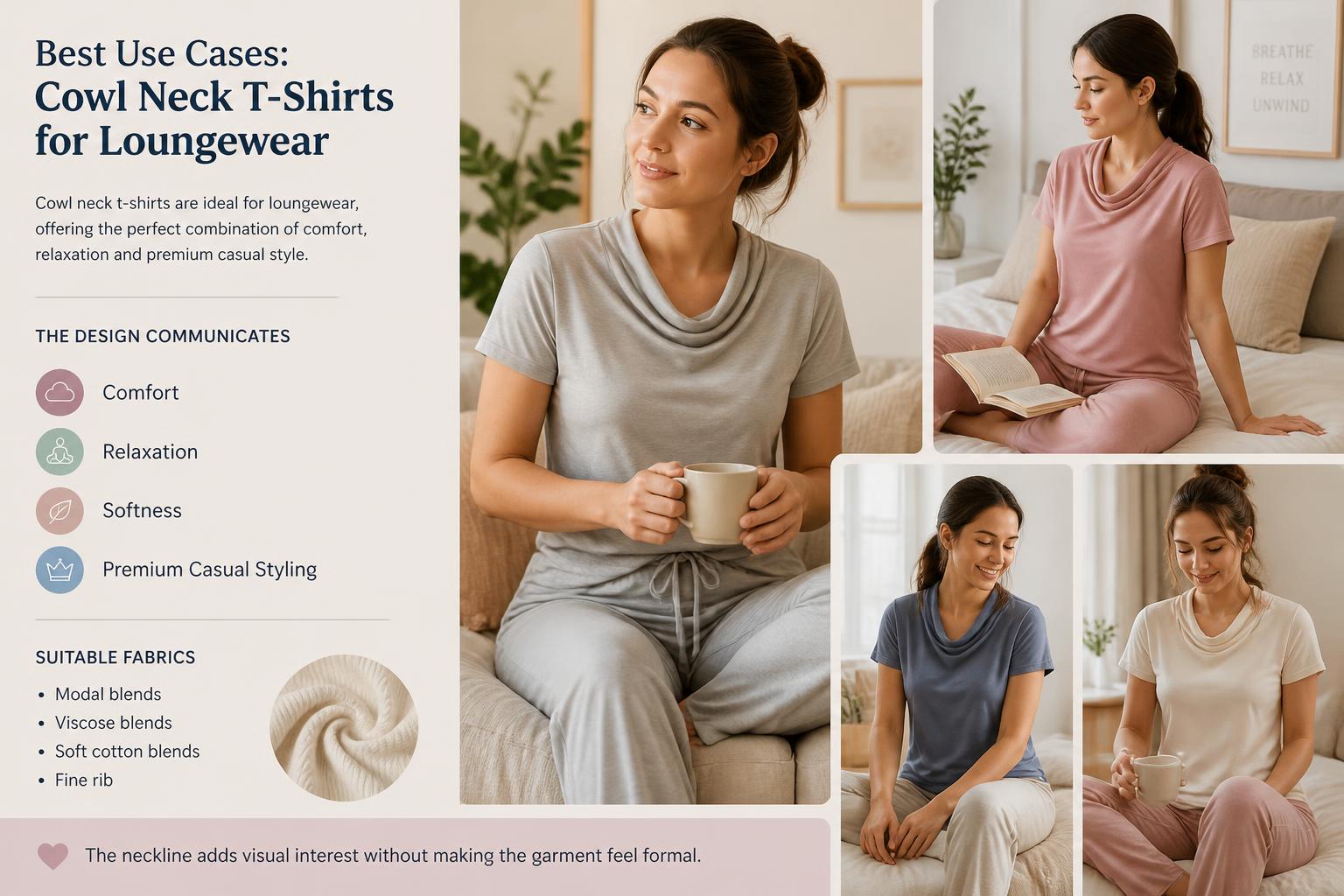
Loungewear is one of the strongest applications for a soft cowl neck.
The design can communicate:
- Comfort
- Relaxation
- Softness
- Premium casual styling
Suitable fabrics may include:
- Modal blends
- Viscose blends
- Soft cotton blends
- Fine rib
The neckline can add visual interest without making the garment feel formal.
Cowl Neck T-Shirts for Premium Basics
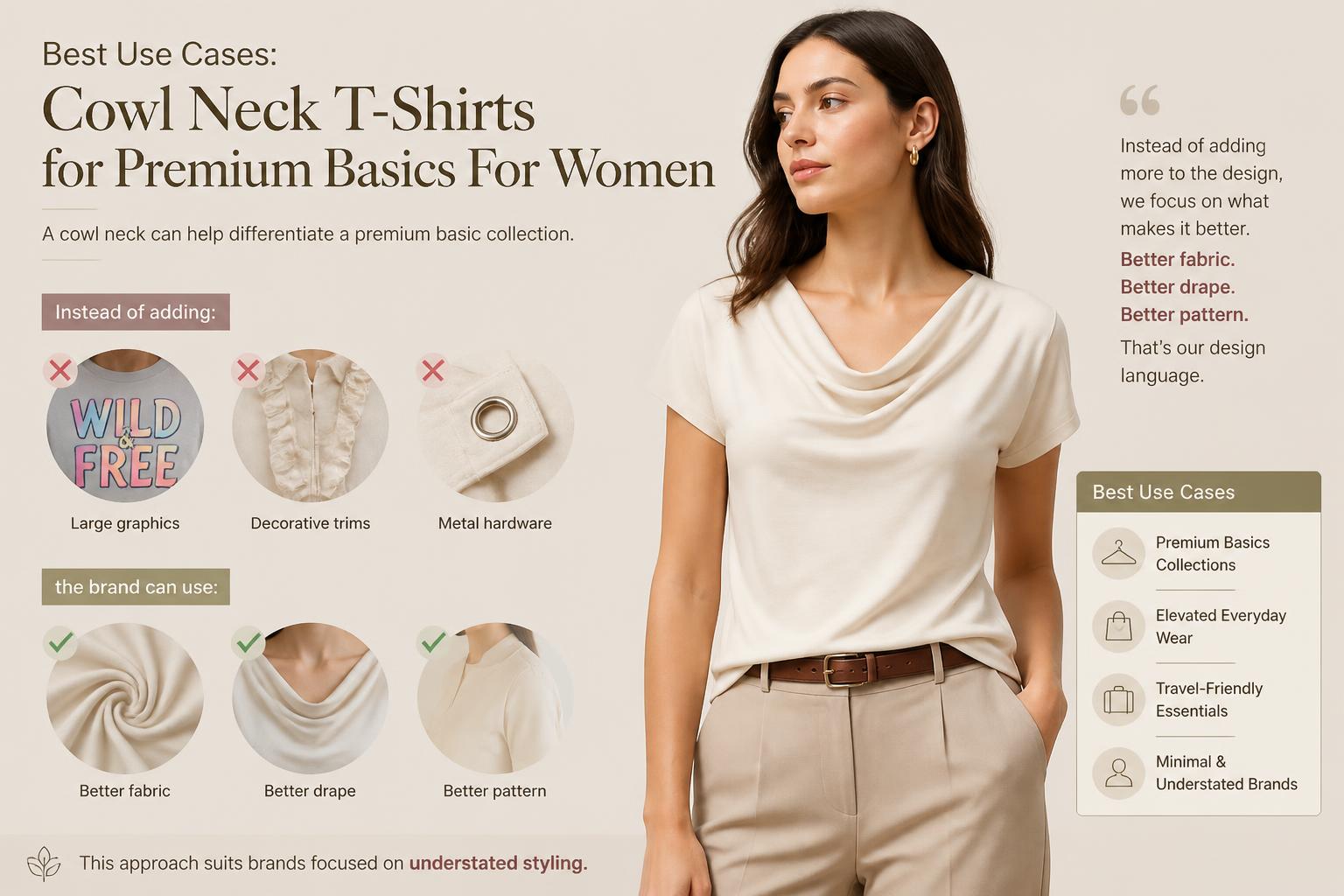
A cowl neck can help differentiate a premium basic collection.
Instead of adding:
- Large graphics
- Decorative trims
- Metal hardware
the brand can use:
- Better fabric
- Better drape
- Better pattern
as the design language.
This approach suits brands focused on understated styling.
Final Thoughts / Conclusion
A cowl neck T-shirt is a design that exposes everything underneath: fabric quality, pattern skill, and production control. If your brand values softness and organic variation, it feels effortless. If you value precision and structure, this neckline will fight you. Before adding it to your line, ask: Are we ready to control fabric behavior or are we hoping the drape hides our shortcuts?