
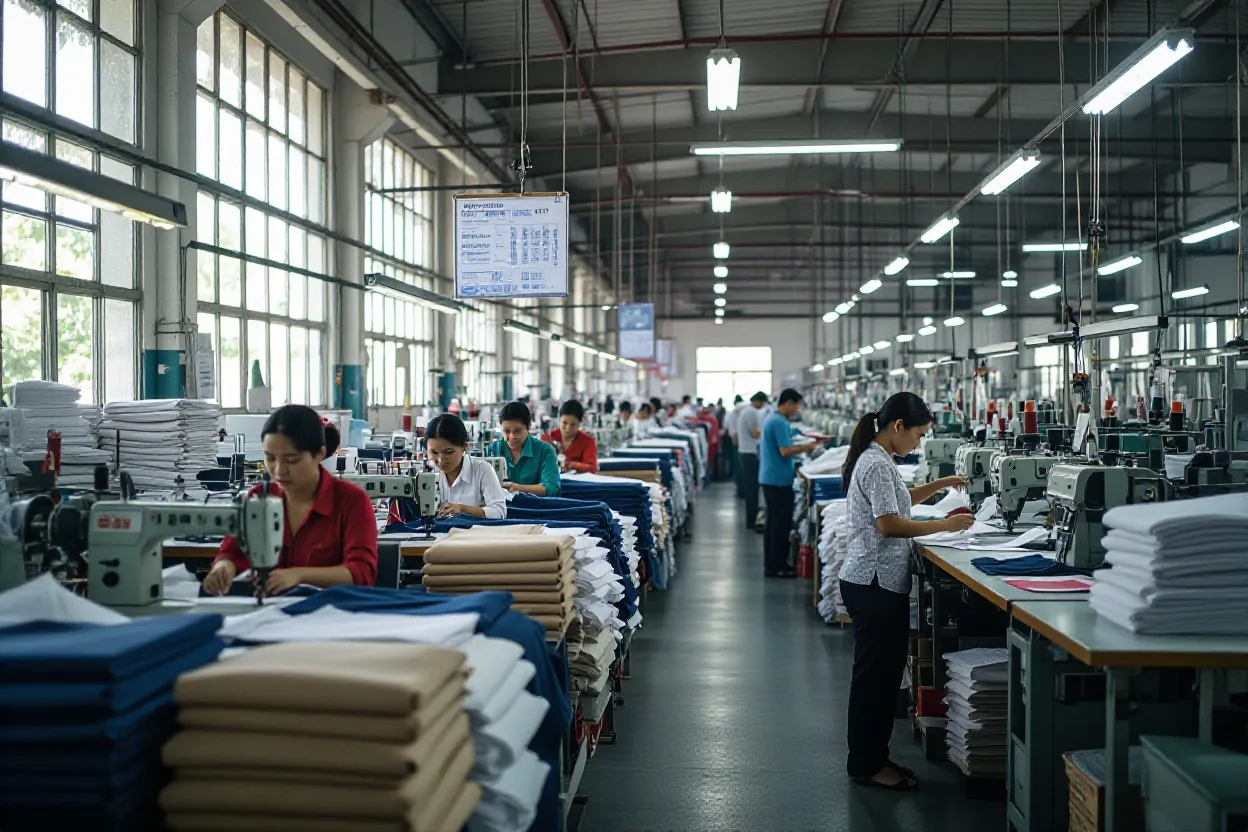
The garment production process is a series of carefully coordinated activities that transform a design idea into finished clothing ready for shipment. Although sewing is one of the most visible stages, successful garment manufacturing also depends on product development, pattern engineering, material sourcing, quality control, finishing, packing, and logistics. Each stage must be completed accurately and on schedule. A mistake in fabric selection, pattern making, cutting, or production planning can affect garment quality, manufacturing costs, and delivery time. For apparel brands, buyers, and sourcing professionals, understanding the complete garment production process makes it easier to communicate with manufacturers, monitor order progress, and reduce production risks. This guide explains how garments move from the initial design concept to final delivery.
What Is the Garment Production Process?
The garment production process is the complete workflow used to convert fabrics, trims, and design specifications into finished apparel. Depending on the product, the process may involve:
- Product design and technical development
- Pattern making and grading
- Sample development
- Fabric and trim sourcing
- Material inspection
- Marker planning and cutting
- Sewing and assembly
- Quality control
- Finishing and pressing
- Packing and shipment
The exact workflow may vary between factories, but most garment orders follow a similar production sequence.

Garment Production Process Flow Chart
A typical garment production workflow follows this sequence:

Design concept → Technical specifications → Fabric and trim selection → Pattern making → Grading → Sample approval → Production planning → Material sourcing → Fabric inspection → Marker planning → Spreading → Cutting → Bundling → Sewing → In-line inspection → End-line inspection → Finishing → Final inspection → Packing → Shipment → Delivery
Every stage is connected. Delays or mistakes in one department can affect the entire production schedule.
Production Timeline
| Production Phase | General Planning Window | Main Activities |
|---|---|---|
| Development | Weeks 1–4 | Tech pack, pattern, proto, fit, revisions |
| Pre-Production | Weeks 3–6 | PP sample, materials, grading, planning |
| Bulk Manufacturing | Weeks 5–12 | Cutting, sewing, finishing, QC |
| Final Inspection & Shipment Preparation | Weeks 10–16 | Final QC, packing, documentation, cargo handover |
Why a Well-Managed Production Process Matters
Garment manufacturing involves many departments working together. Designers, merchandisers, pattern makers, sourcing teams, cutting workers, sewing operators, quality inspectors, and logistics staff must follow the same technical requirements and production schedule. A well-managed process helps factories:
- Maintain consistent garment quality
- Reduce fabric waste and production defects
- Improve labor and machine utilization
- Control manufacturing costs
- Shorten production lead time
- Prevent unnecessary rework
- Meet shipment deadlines
- Improve buyer satisfaction
Poor coordination between departments can result in delays, incorrect measurements, material shortages, quality problems, and additional costs.
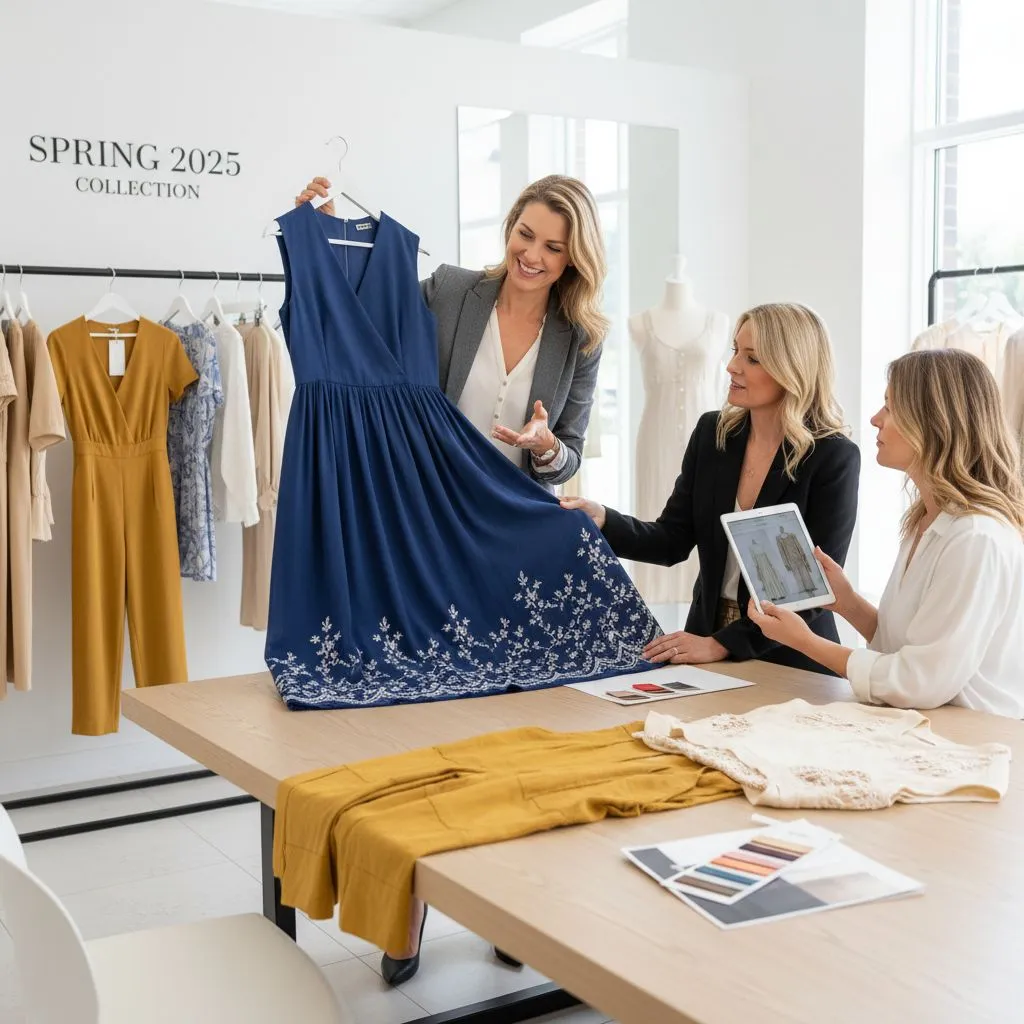
Phase 1: Product Design and Development (Weeks 1 – 4)
The first phase focuses on converting a creative concept into a garment that can be produced consistently.
1. Design Concept Creation
Garment production begins with a design idea. Designers develop concepts based on:
- Fashion trends
- Seasonal collections
- Target customers
- Brand identity
- Product function
- Buyer requirements
- Market demand
The initial design may begin as a hand-drawn sketch or digital illustration. It defines the garment silhouette, general appearance, color direction, and important style details. However, a creative sketch alone is not enough for manufacturing. The design must be translated into technical information that production teams can understand.

A fashion designer develops the initial garment concept through sketches, trend references, and creative ideas.
2. Technical Specification Development
After the initial design is selected, the technical team prepares a specification sheet or technical package. A typical technical package may include:
- Technical drawings
- Garment measurements
- Construction details
- Stitching requirements
- Fabric specifications
- Trim information
- Label placement
- Color standards
- Size range
- Packing instructions
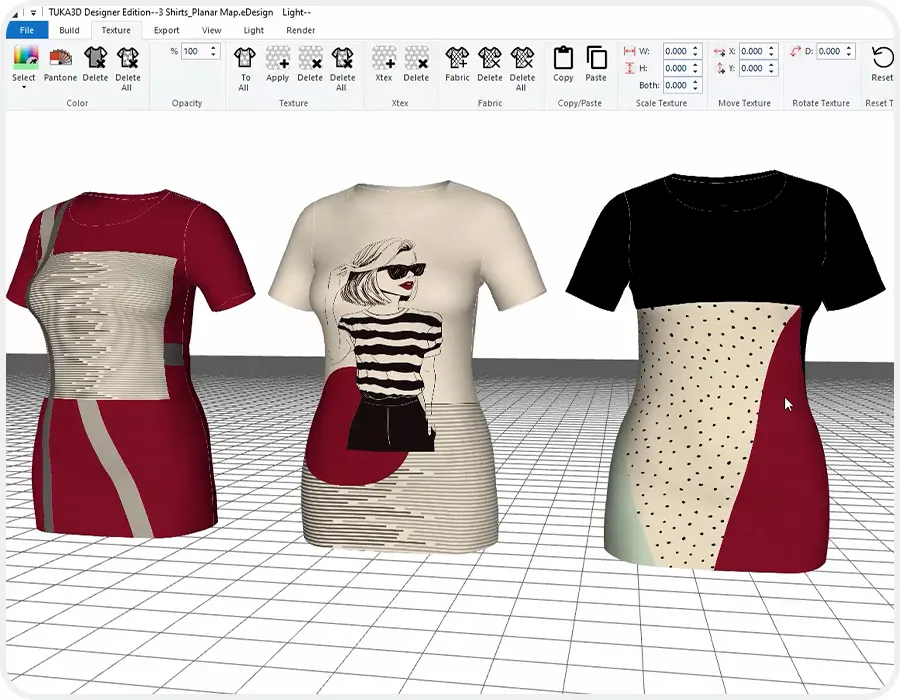
The technical package acts as the main reference document throughout product development and bulk production. Clear technical specifications reduce misunderstandings between buyers and manufacturers.
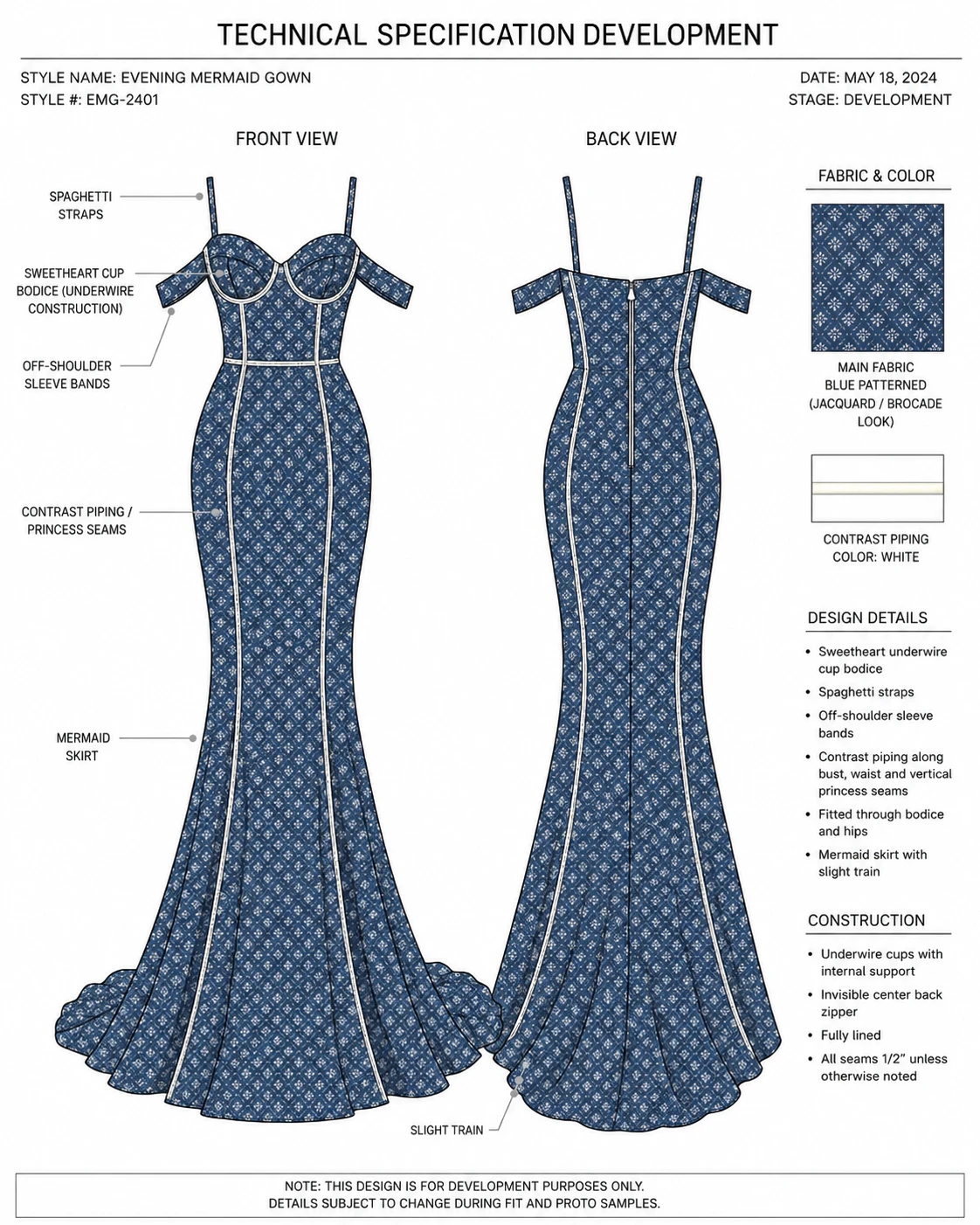
Technical drawings show the garment’s front and back views, construction details, fabric, color, and measurements.
3. Fabric and Trim Selection
The next step is selecting suitable materials for the garment. Fabric selection affects:
- Appearance
- Comfort
- Durability
- Fit
- Performance
- Production cost
- Sewing difficulty
- Care requirements
Common garment fabrics include cotton, polyester, linen, wool, silk, denim, nylon, rayon, and blended materials.
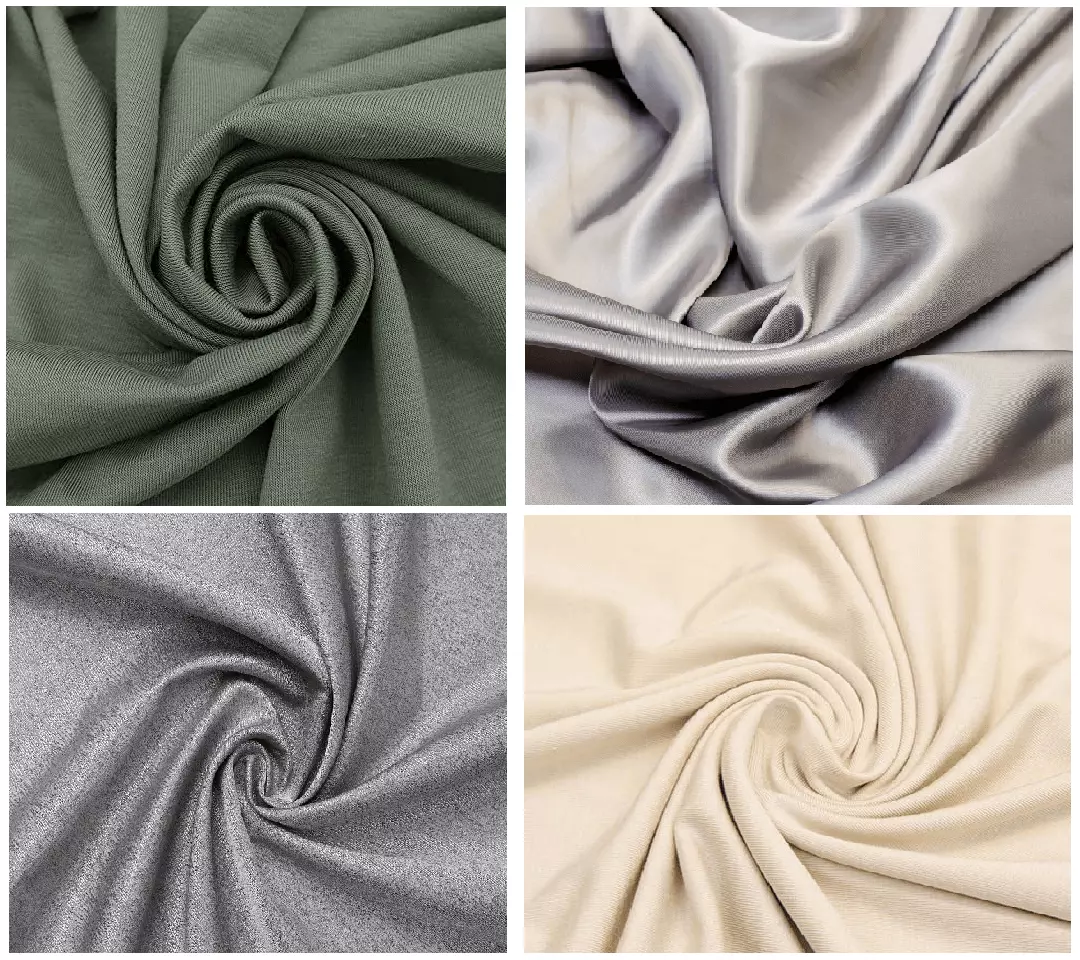
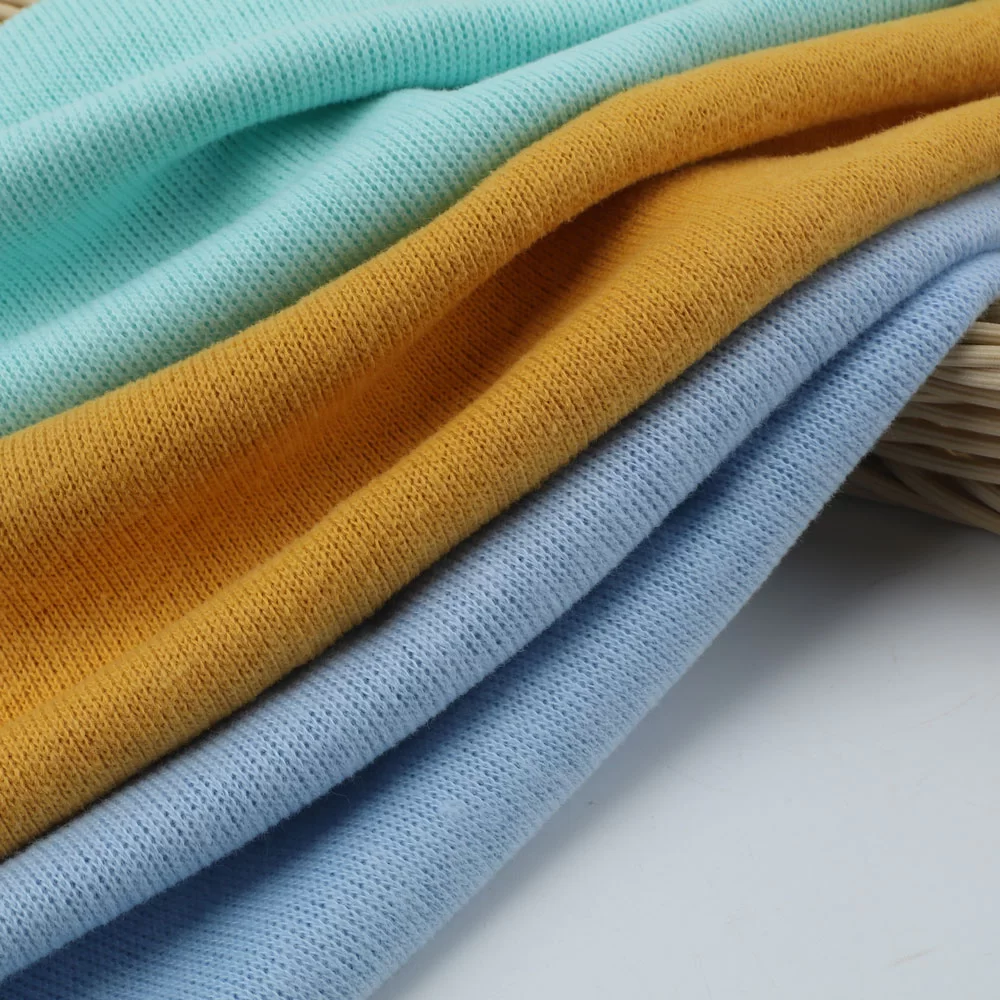
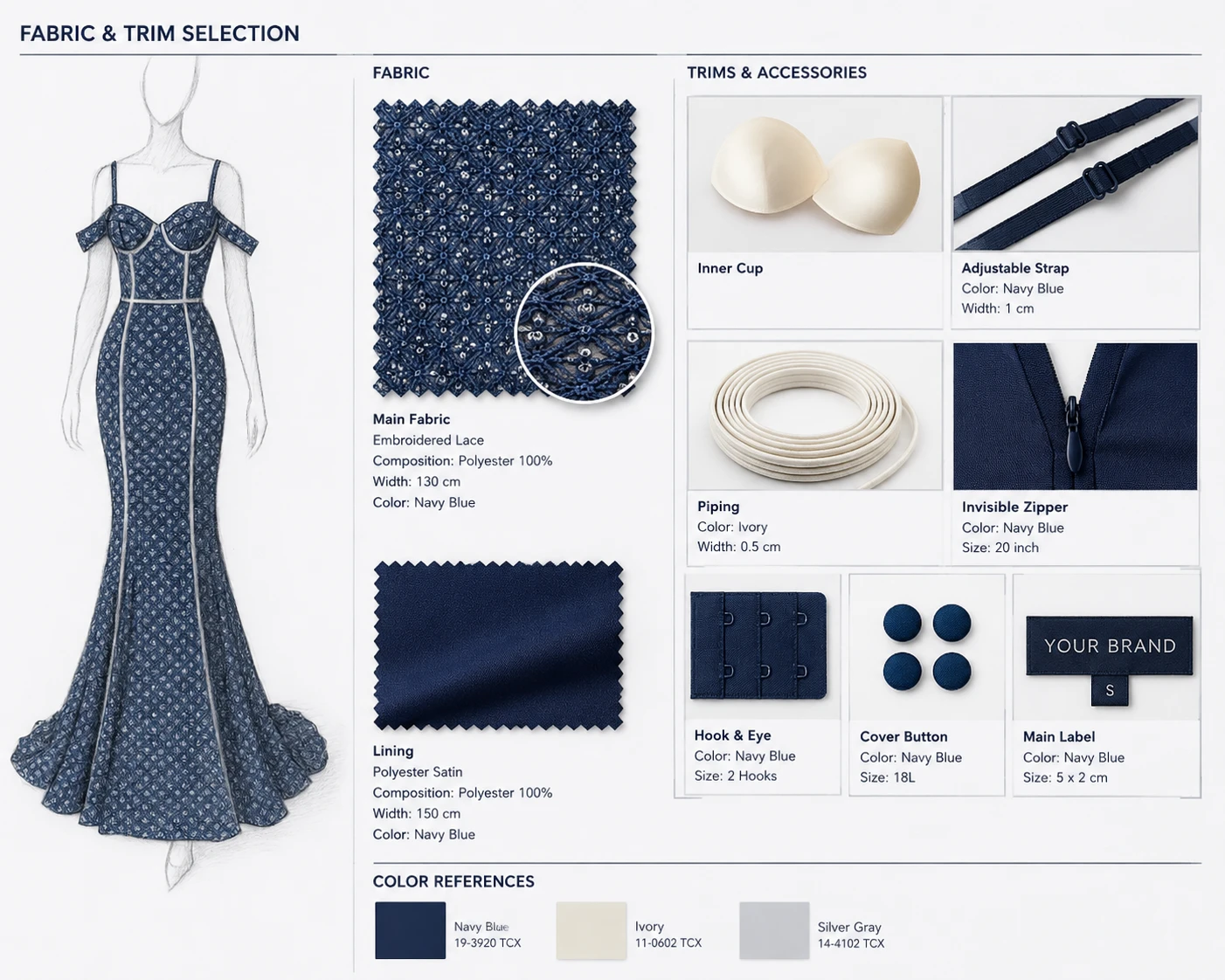
The design team selects suitable fabrics, lining, zippers, straps, piping, labels, and other accessories.
The development team also selects trims such as:
- Buttons
- Zippers
- Sewing thread
- Elastic
- Labels
- Interlining
- Drawcords
- Snaps
- Hook-and-loop fasteners
Materials must match the garment’s design, quality requirements, target price, and intended use.
4. Pattern Making
Once the design and measurements are confirmed, pattern makers create templates for each garment component. A pattern determines the shape and dimensions of pieces such as:
- Front body
- Back body
- Sleeves
- Collar
- Cuffs
- Pockets
- Waistband
- Facing
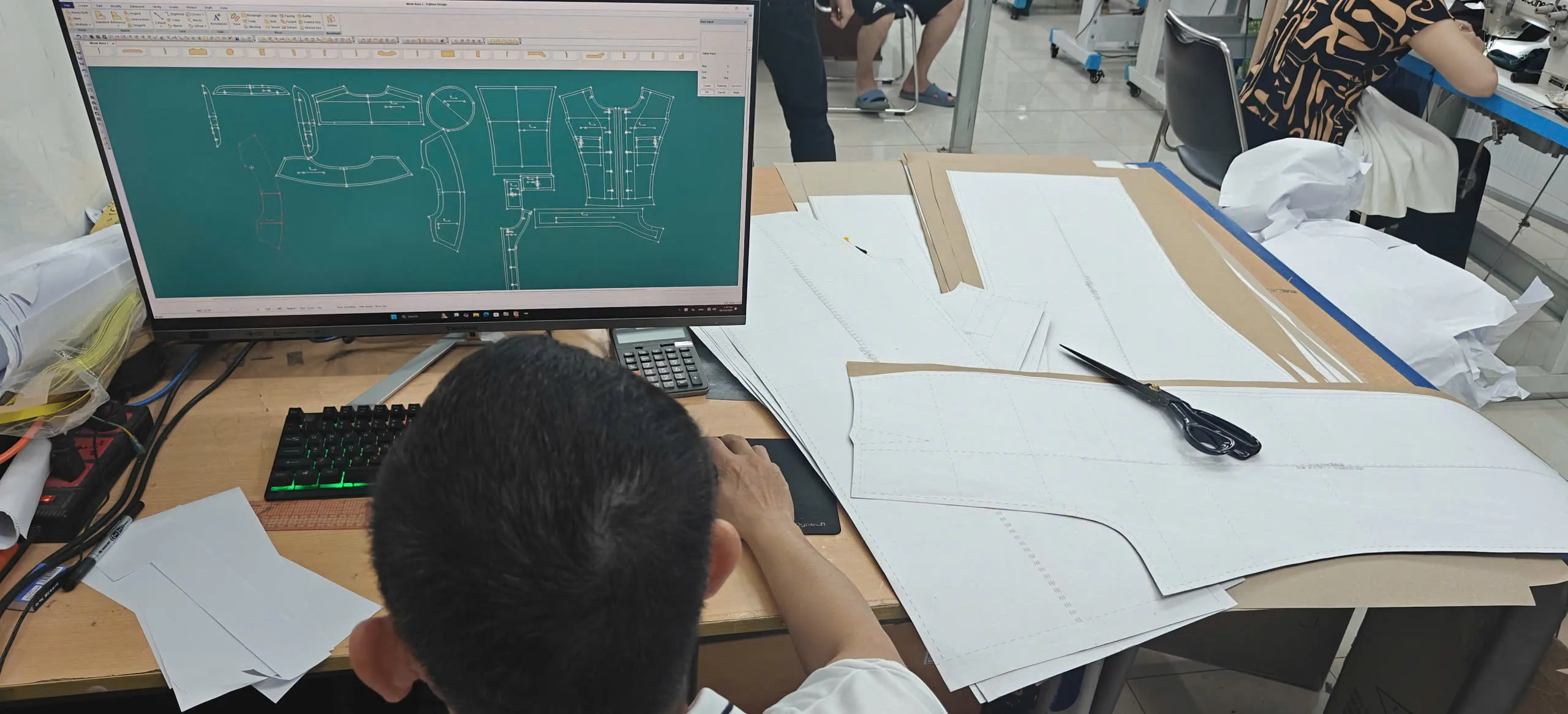
Patterns also include technical details such as seam allowances, grain lines, balance marks, and notches. Patterns may be created manually or with Computer-Aided Design software. Digital pattern systems allow manufacturers to modify measurements, store pattern files, and improve accuracy more efficiently.


A pattern maker creates precise templates for every garment component based on the approved specifications.
5. Pattern Grading
A base pattern is usually created in one sample size. Pattern grading is then used to develop the remaining sizes. For example, a medium-sized pattern may be graded into:
- Extra small
- Small
- Large
- Extra large
- Additional extended sizes
Grading must increase or decrease the pattern while preserving the garment’s proportions and design details. Incorrect grading can cause inconsistent fit between sizes, which may lead to buyer complaints or product returns.
The base garment pattern is adjusted into different sizes while preserving the original shape and proportions.
6. Sample Development and Approval
Before bulk manufacturing begins, the factory produces samples for review.
Different sample types may be required during development, including:
- Prototype sample
- Development sample
- Fit sample
- Size-set sample
- Sales sample
- Pre-production sample
- Shipment sample

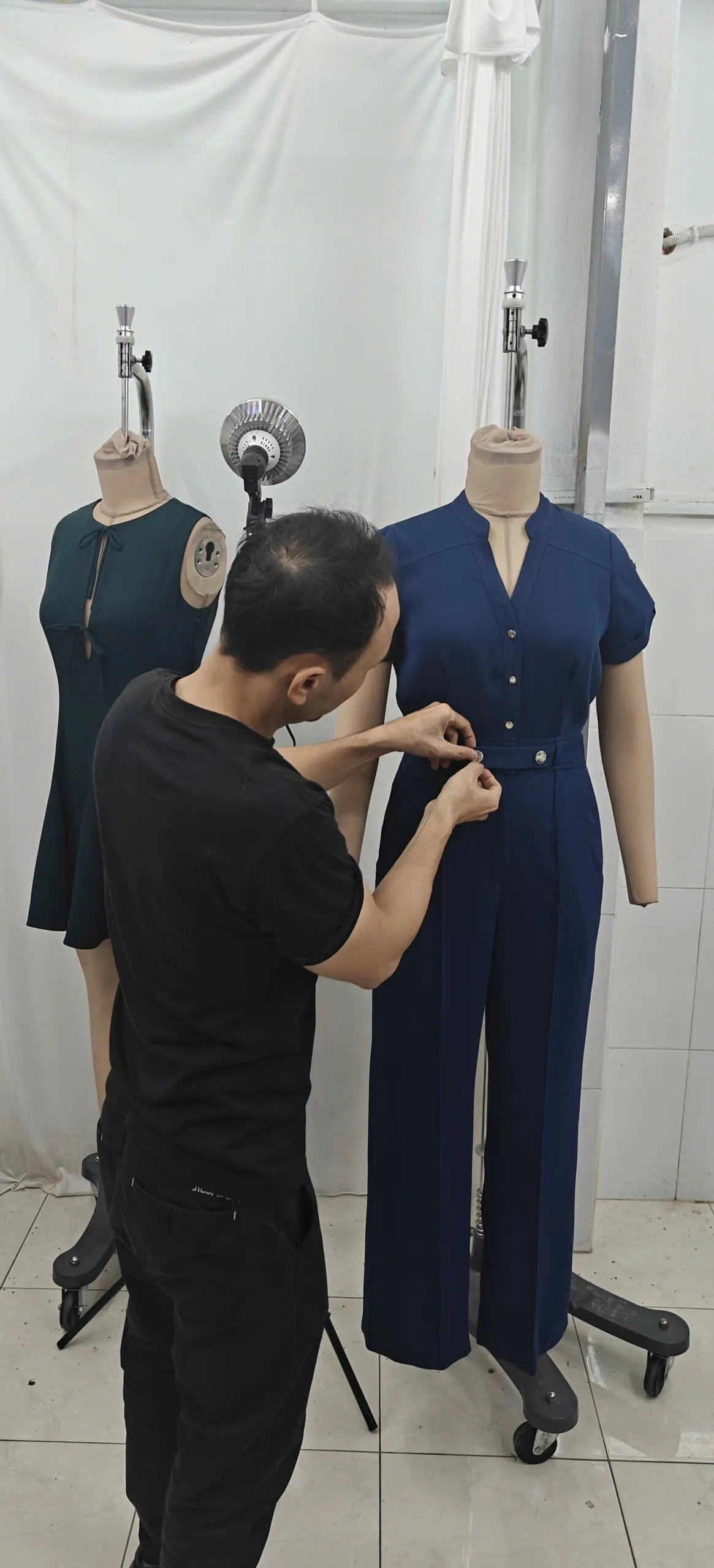
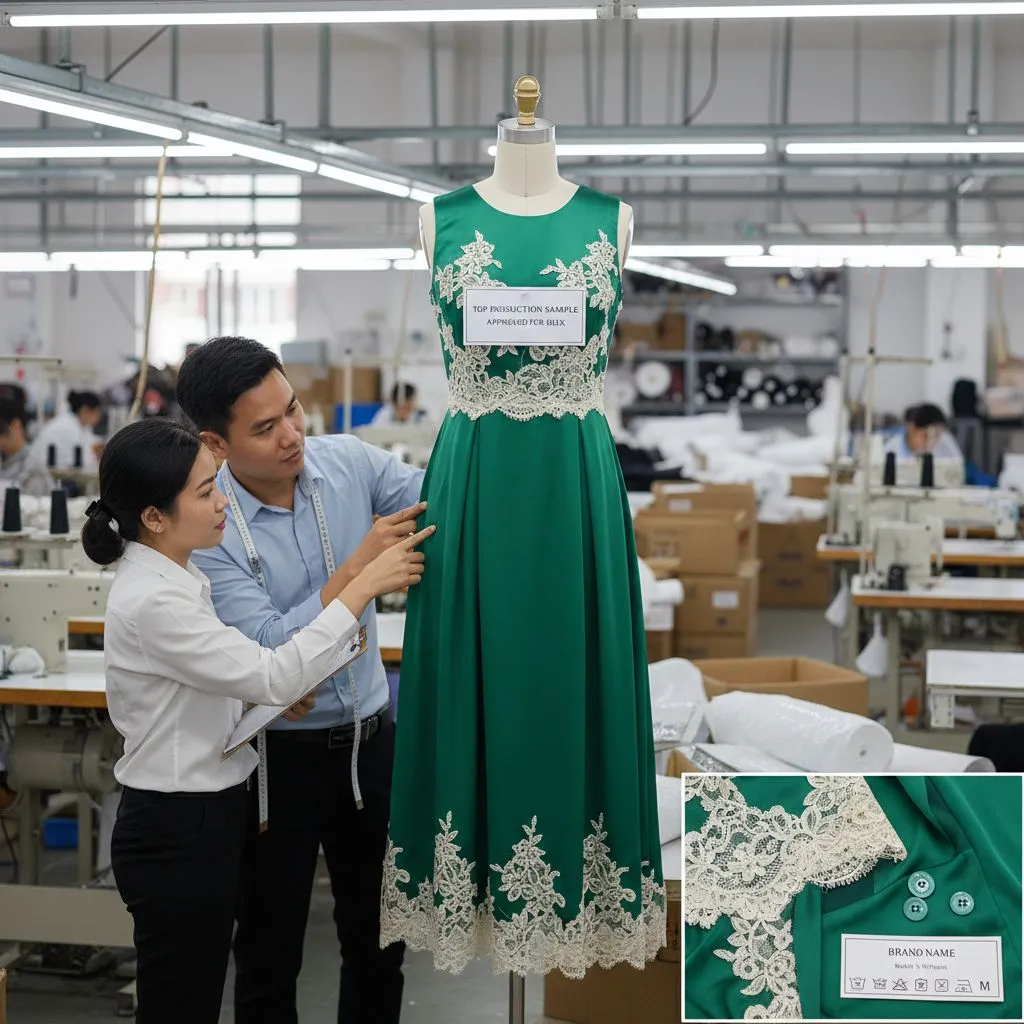
A sample garment is reviewed for fit, measurements, construction, materials, and overall appearance
The buyer or brand evaluates the sample for:
- Fit
- Measurements
- Construction
- Fabric
- Color
- Trims
- Workmanship
- Overall appearance
Comments are sent to the manufacturer, and the sample may be revised several times. Bulk production should begin only after the required sample, materials, and technical details have been approved.

Phase 2: Production Planning and Material Preparation (Weeks 3 – 6)
After product approval, the factory prepares materials, equipment, operators, and production documents.
7. Production Planning
The production planning team develops a manufacturing schedule based on:
- Order quantity
- Garment complexity
- Standard Allowed Minutes
- Available operators
- Sewing line capacity
- Machine requirements
- Material delivery
- Shipment date
The order may be divided among one or more sewing lines depending on factory capacity and delivery requirements. Careful planning helps prevent production bottlenecks and ensures that departments receive materials at the correct time.
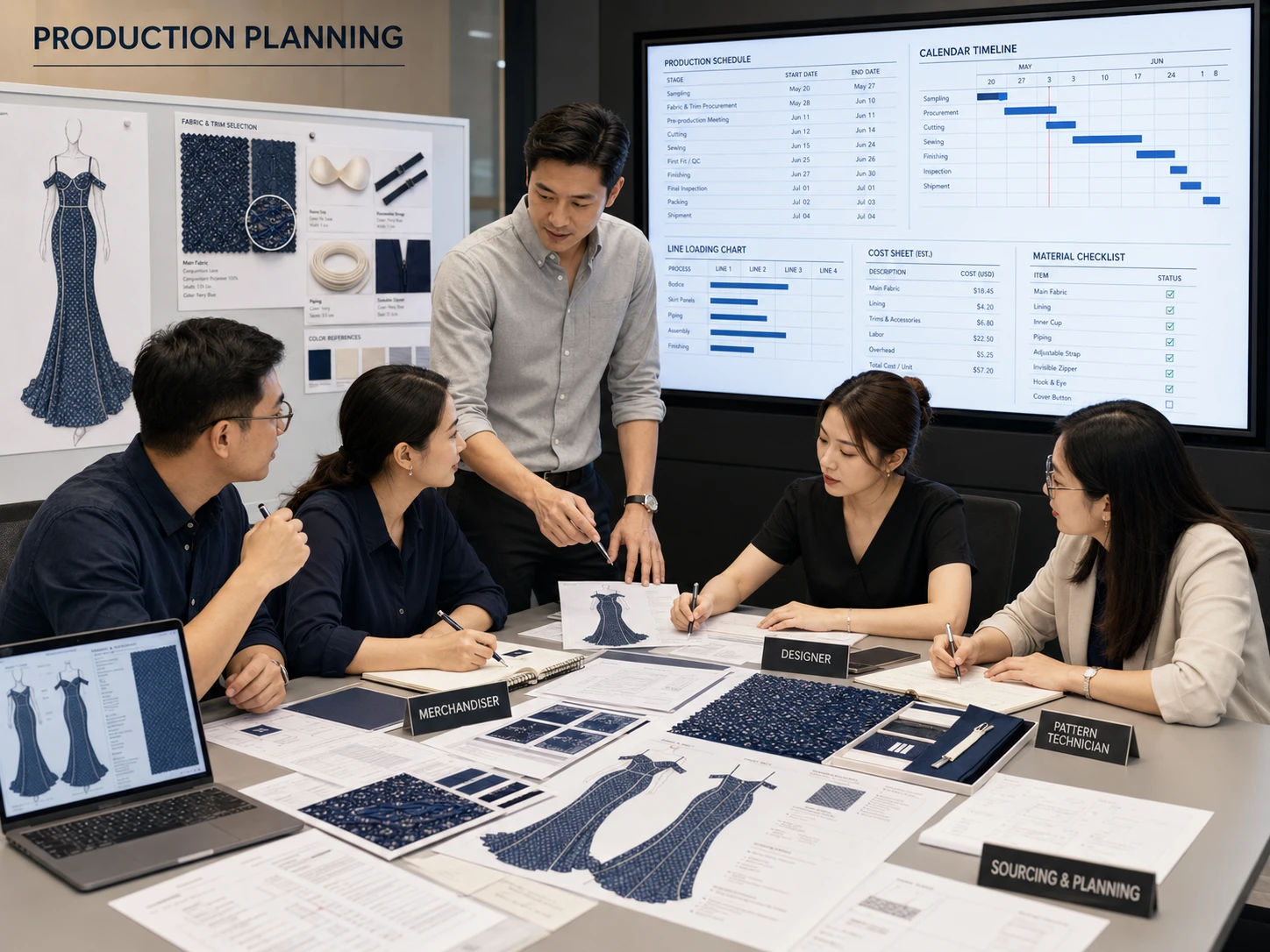
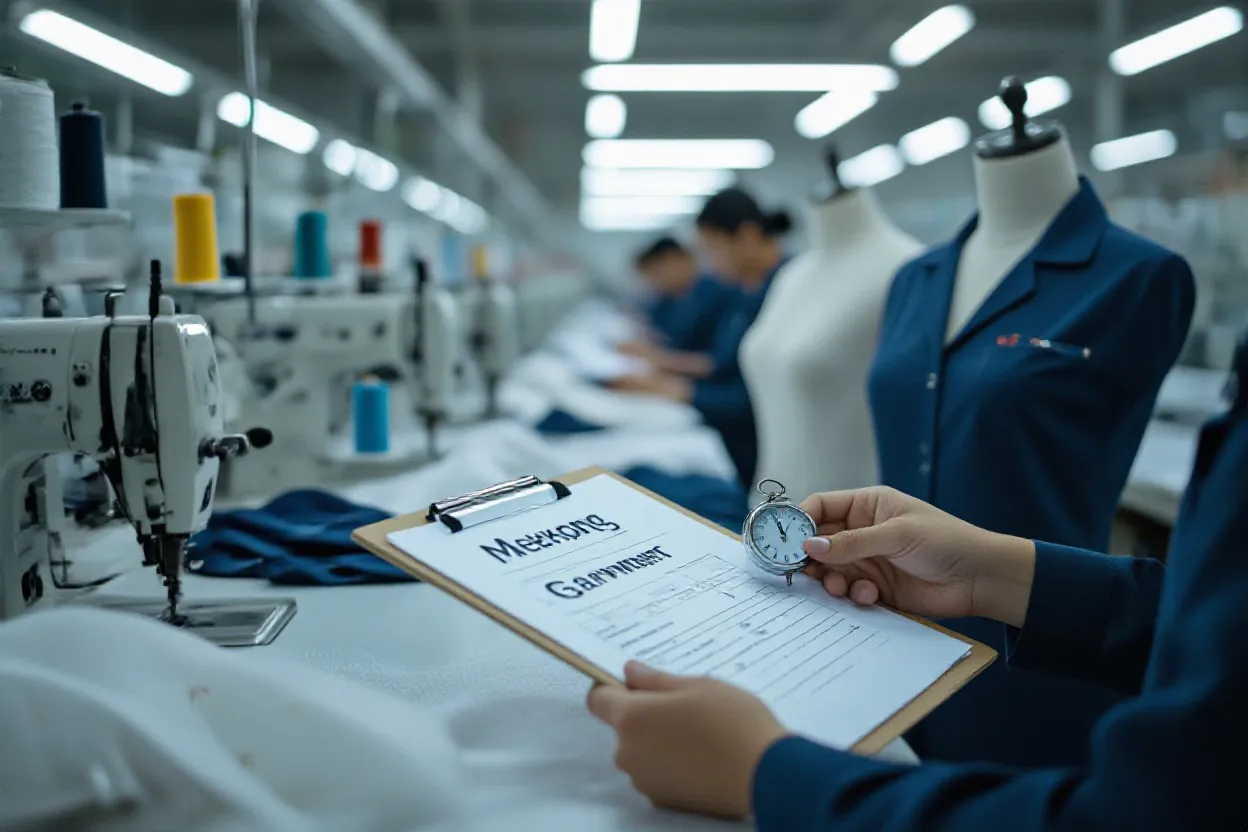
The production team reviews materials, costs, timelines, line capacity, and delivery requirements before manufacturing begins.
8. Bulk Material Sourcing
After approval, the sourcing or purchasing team orders bulk fabrics, trims, labels, and packing materials. The procurement schedule must be closely monitored because late materials can delay the entire production process.
Before confirming bulk orders, the manufacturer should verify:
- Material specifications
- Approved colors
- Required quantities
- Supplier lead time
- Minimum order quantity
- Testing requirements
- Delivery schedule
The factory should also include suitable allowances for fabric waste, shrinkage, defects, and production loss.
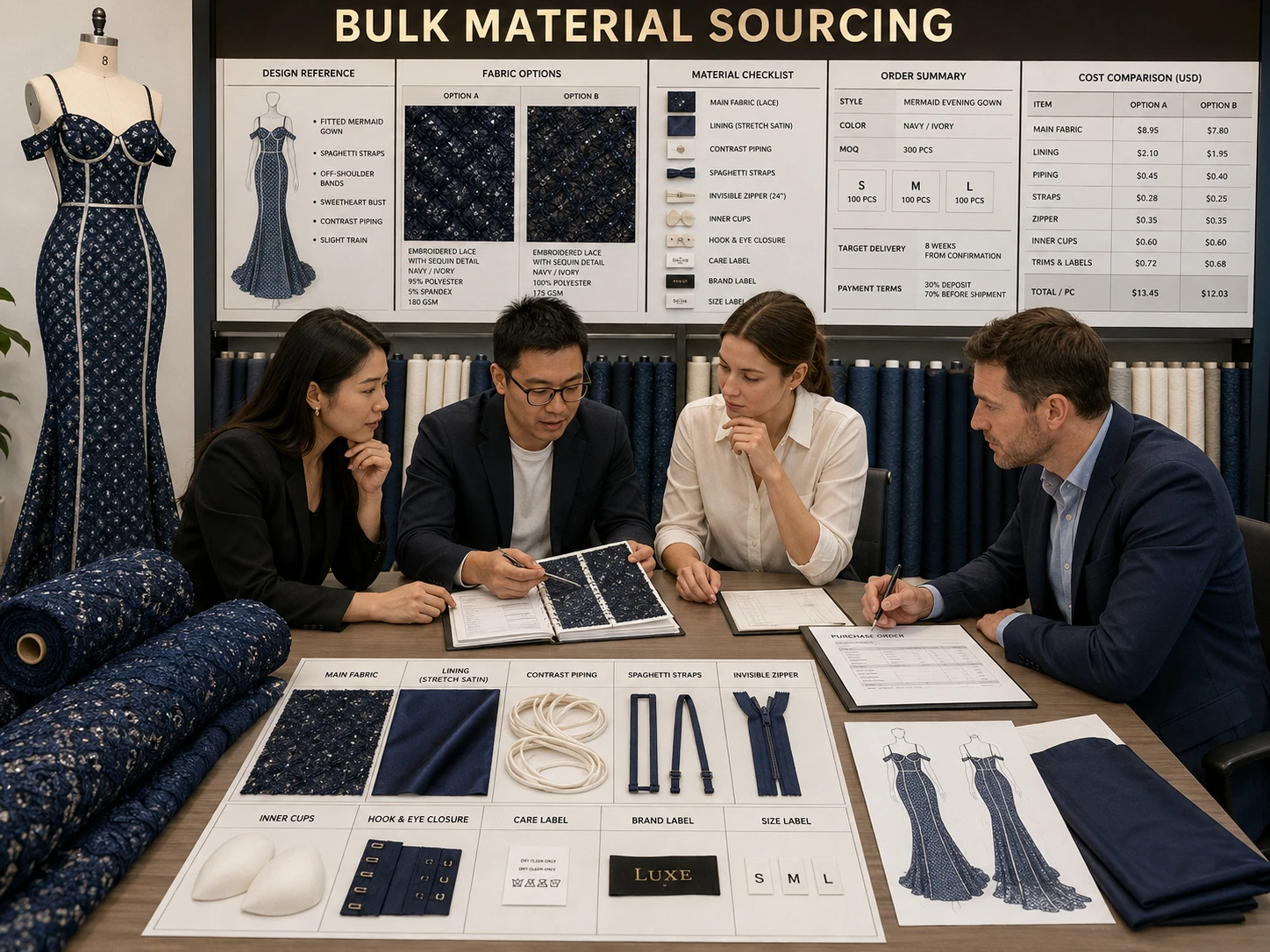
The sourcing team compares suppliers and orders the approved fabrics, trims, labels, and accessories in bulk quantities.
9. Fabric Testing and Inspection
Incoming fabric must be tested and inspected before cutting.
Common fabric tests include:
- Shrinkage testing
- Colorfastness testing
- Fabric weight verification
- Width measurement
- Dimensional stability testing
- Pilling testing
- Tensile strength testing
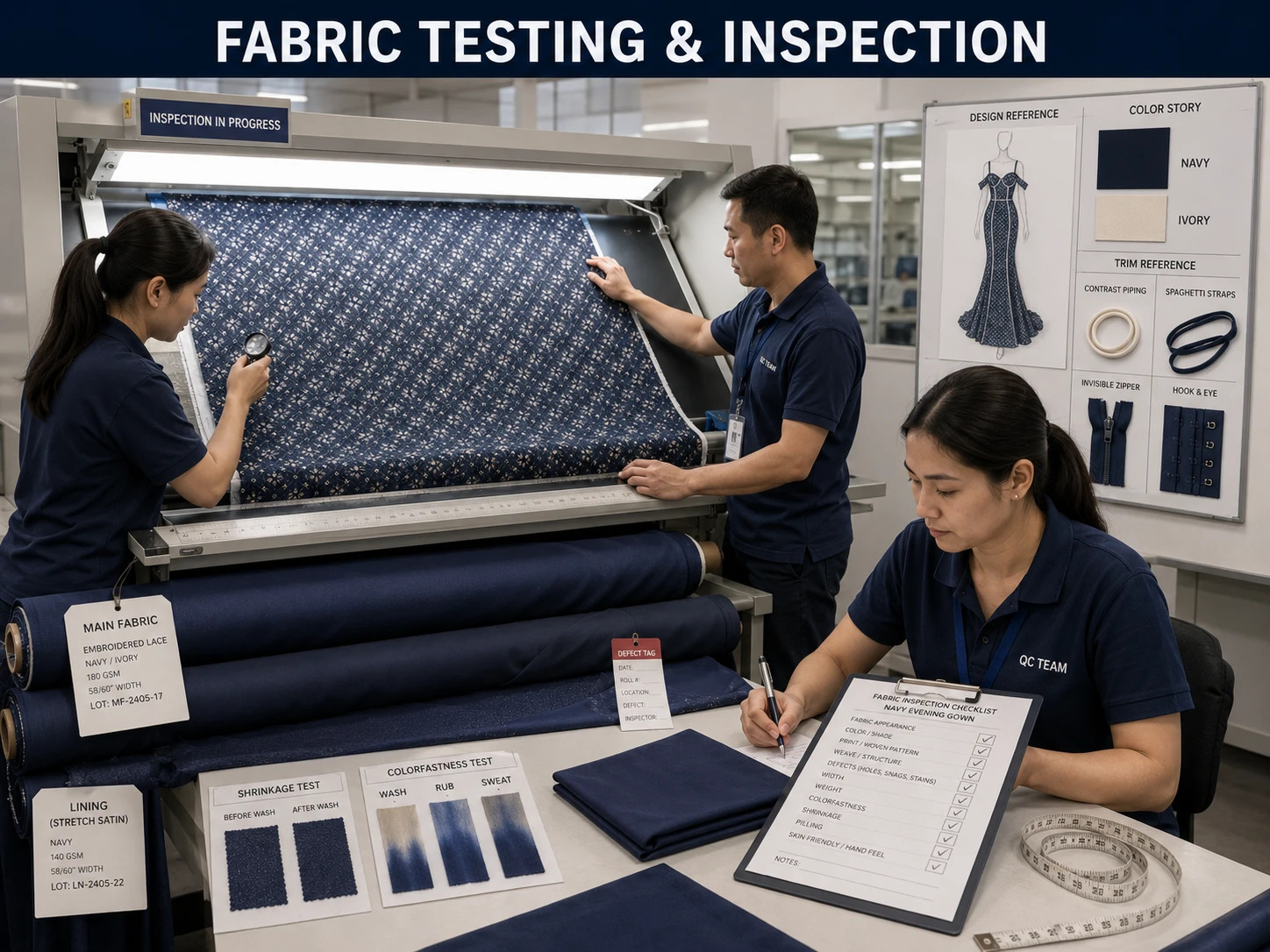
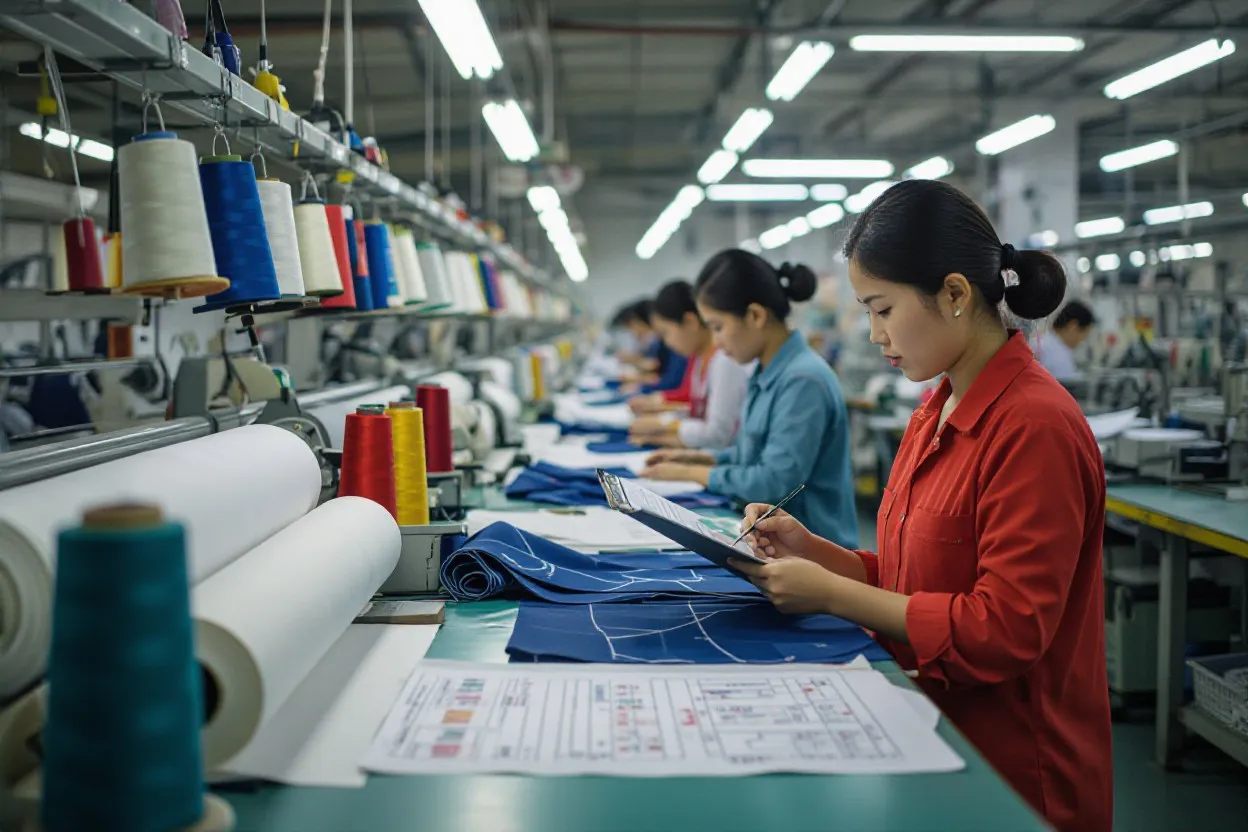
Quality inspectors check fabric appearance, shade, defects, width, shrinkage, and colorfastness before cutting.
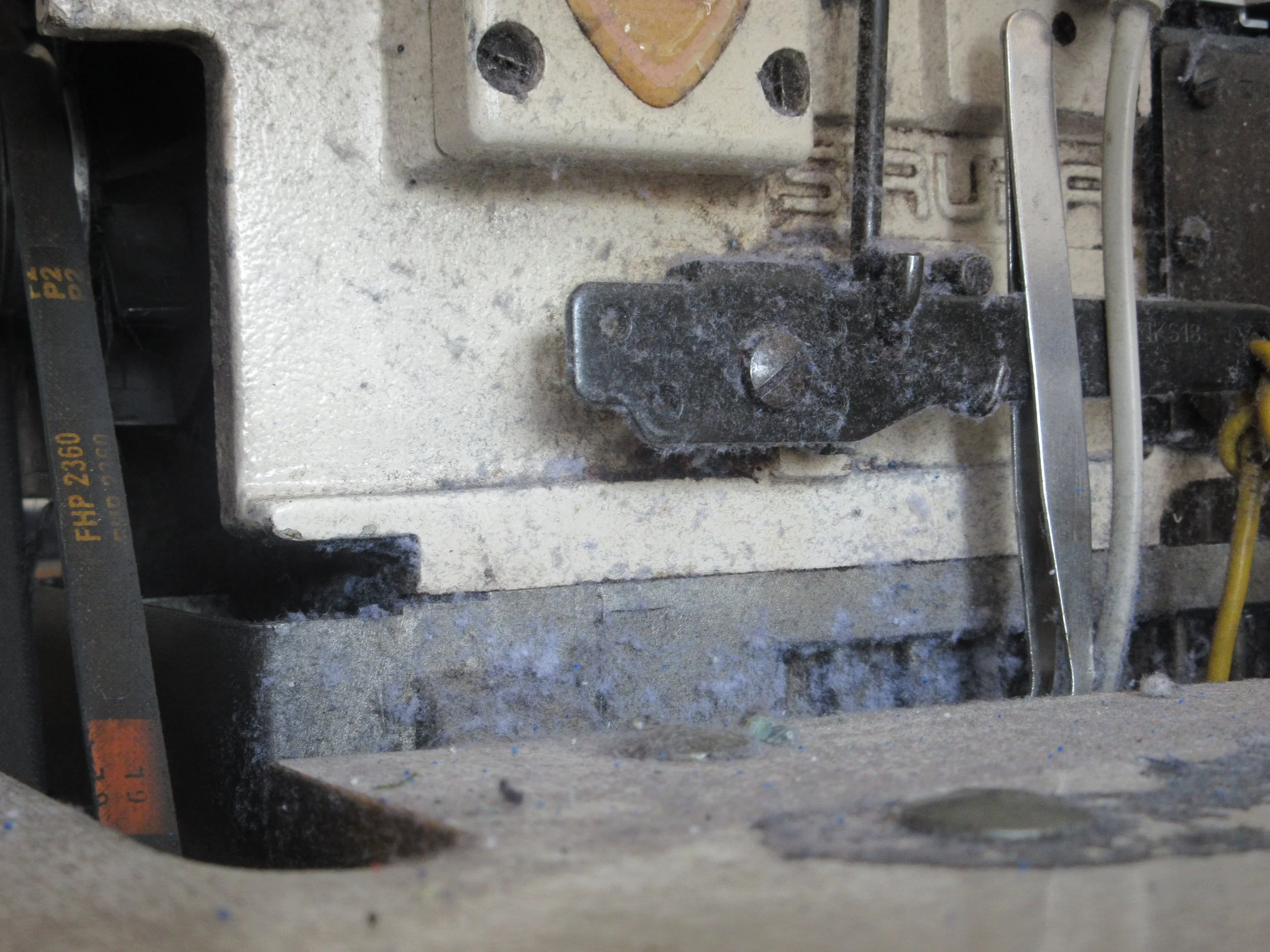
Fabric inspectors also check rolls for visible defects such as:
- Holes
- Stains
- Shade variation
- Broken yarns
- Weaving defects
- Surface damage
- Printing errors
Many factories use the Four-Point System to evaluate and classify fabric defects. Early fabric inspection prevents defective materials from entering bulk production.

10. Fabric Relaxation
Some fabrics must be relaxed before spreading and cutting. Fabric can stretch or contract during rolling, transportation, and storage. Relaxation allows internal tension to release so that the fabric returns closer to its natural dimensions.
Skipping this stage may cause:
- Size variation
- Distorted garment panels
- Shrinkage after sewing
- Measurement problems
- Uneven seams
The required relaxation time depends on the fabric type and construction.
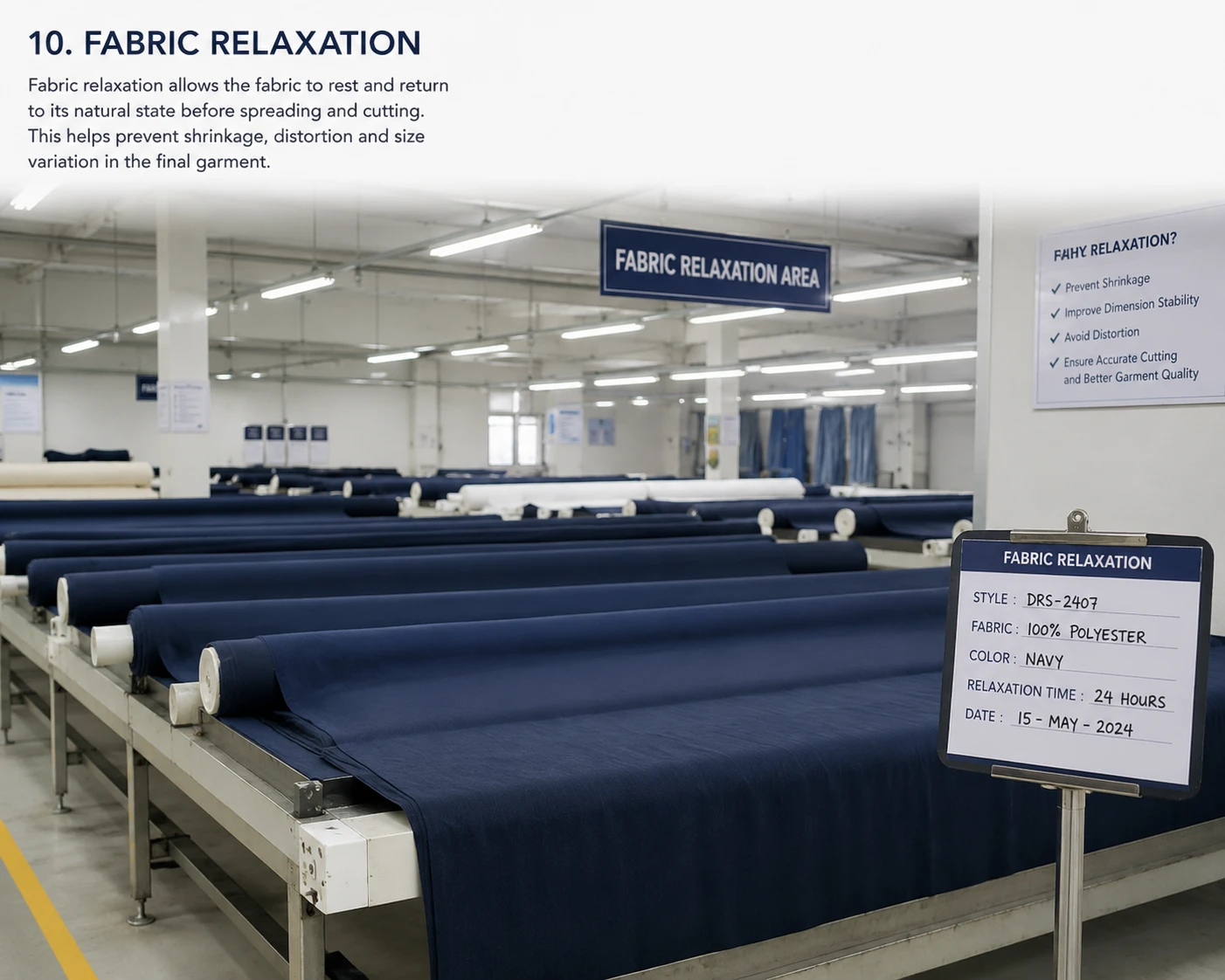
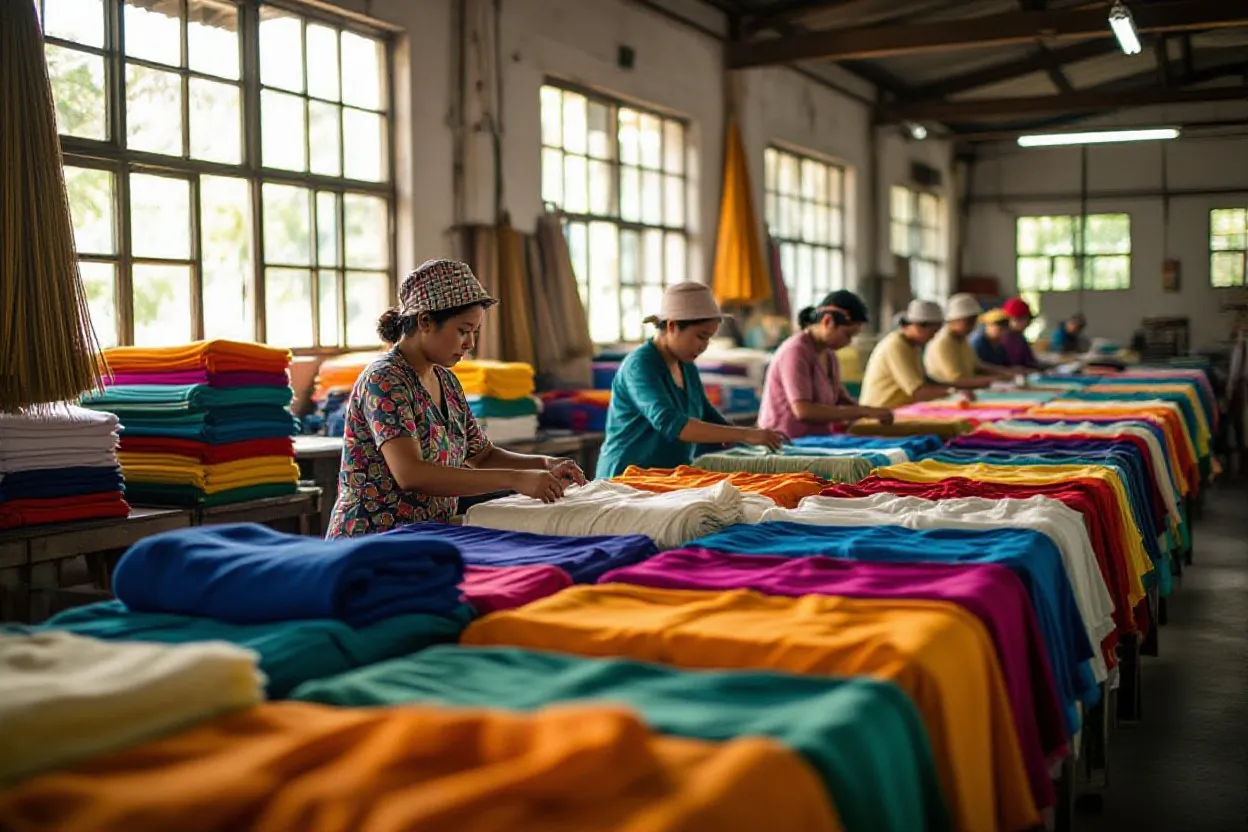
Fabric is laid flat and allowed to rest so internal tension is released before spreading and cutting.
11. Marker Planning
Marker planning involves arranging graded pattern pieces on the fabric width. The goal is to use as much fabric as possible while maintaining:
- Correct grain direction
- Size ratios
- Pattern orientation
- Matching requirements
- Cutting accuracy
Efficient marker planning reduces fabric waste and lowers garment cost. For striped, checked, printed, or directional fabrics, marker planning requires additional attention to pattern matching and fabric direction.
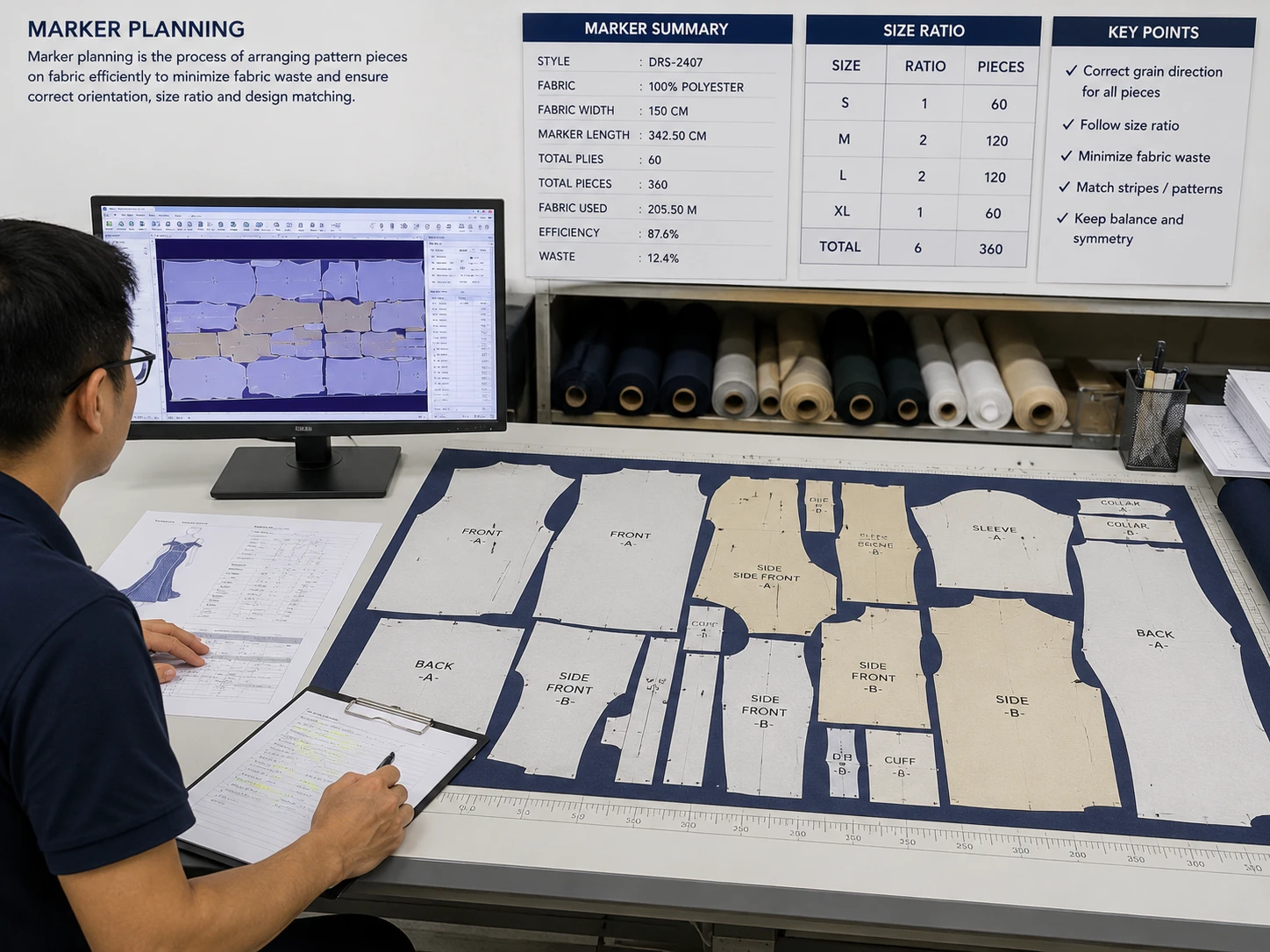
Pattern pieces are arranged efficiently within the fabric width to reduce waste and maintain the correct size ratio.
Phase 3: Bulk Garment Manufacturing (Weeks 5 – 12)
This phase transforms approved materials into finished garments.
12. Fabric Spreading
Fabric spreading prepares multiple layers for cutting. During spreading, workers or automatic machines place fabric layers evenly on a cutting table according to the marker length and production quantity.
The spreading team must control:
- Layer alignment
- Fabric tension
- Fabric direction
- Number of plies
- Edge alignment
- Wrinkles
- Shade grouping
Incorrect spreading can cause mismatched panels and inaccurate cutting.

Fabric layers are spread evenly on a long cutting table with controlled tension, alignment, and direction.
13. Fabric Cutting
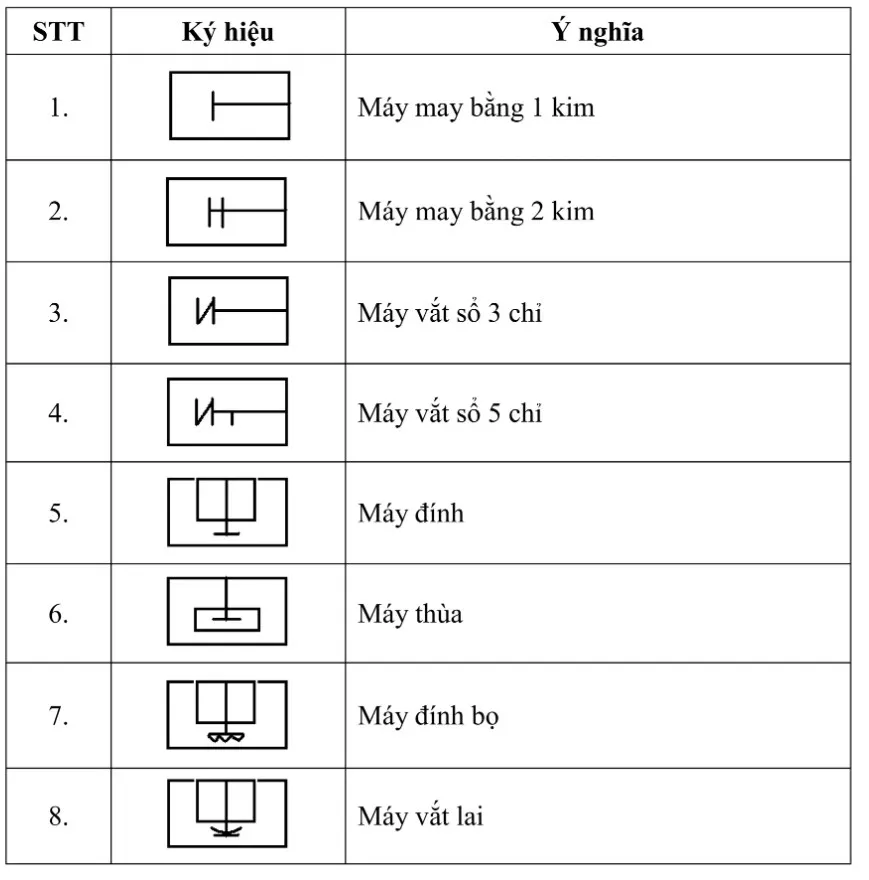
After spreading, garment components are cut according to the approved marker.
Factories may use:
- Straight knife machines
- Round knife machines
- Band knife machines
- Die-cutting equipment
- Automatic cutting systems
- Laser cutting machines
Cutting accuracy is essential because sewing operators cannot fully correct poorly cut components. After cutting, the pieces are inspected, numbered, sorted by size and color, and grouped into bundles.

Multiple fabric layers are cut accurately according to the approved marker and garment patterns.
14. Bundling and Preparation
Cut garment components are organized into production bundles before entering the sewing department.
A bundle may contain:
- Garment parts
- Size information
- Color information
- Bundle number
- Quantity
- Operation details
Numbering helps ensure that components from the same fabric layer remain together, reducing the risk of shade variation within one garment.

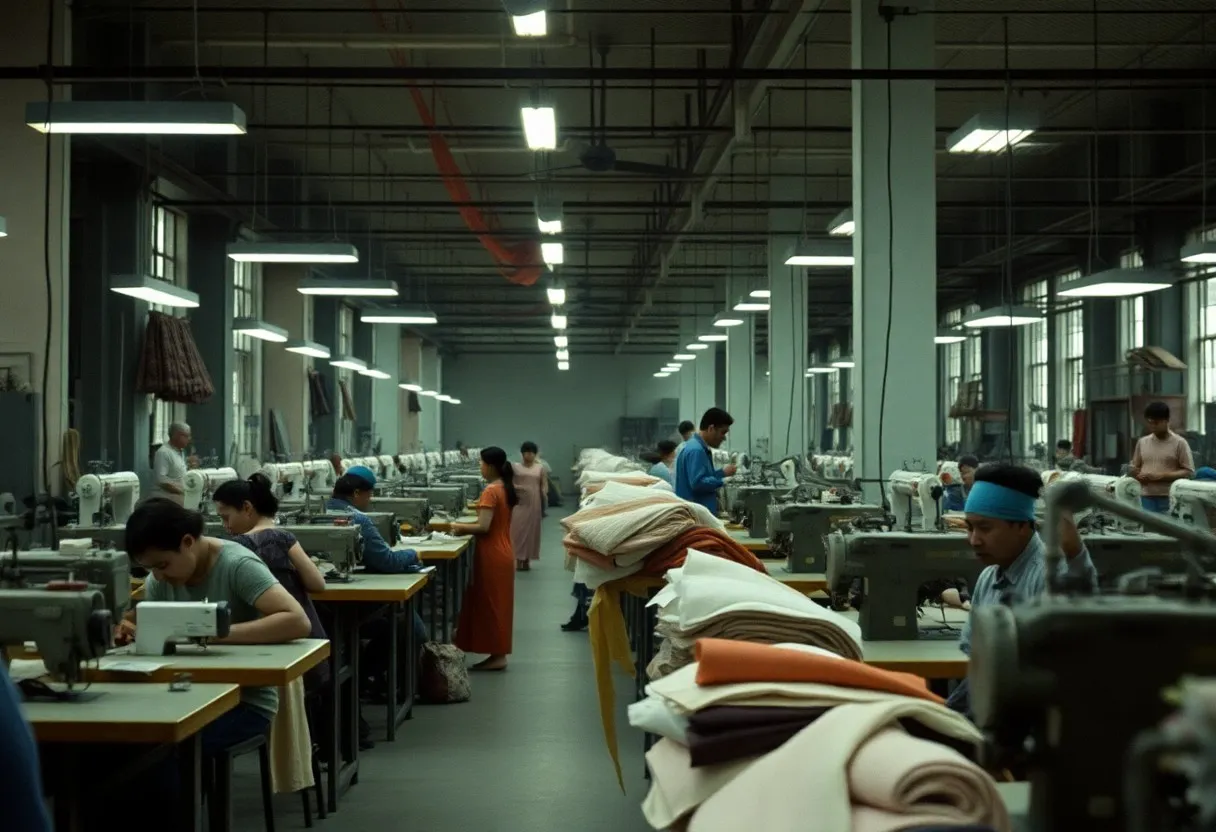
Cut garment components are numbered, sorted by size and color, and organized into production bundles.
Some components may also require preparation processes such as:
- Fusing
- Embroidery
- Printing
- Pleating
- Washing
- Panel decoration
These processes are completed before or during sewing, depending on the garment design.
15. Sewing and Assembly
The sewing stage assembles individual fabric components into complete garments. A garment is divided into multiple sewing operations, and each operator usually performs one or several specific tasks.
Typical operations include:
- Shoulder joining
- Side-seam sewing
- Sleeve attachment
- Collar preparation
- Cuff attachment
- Pocket sewing
- Zipper installation
- Waistband assembly
- Hemming
- Buttonholing
- Button attachment
- Bartacking
- Topstitching
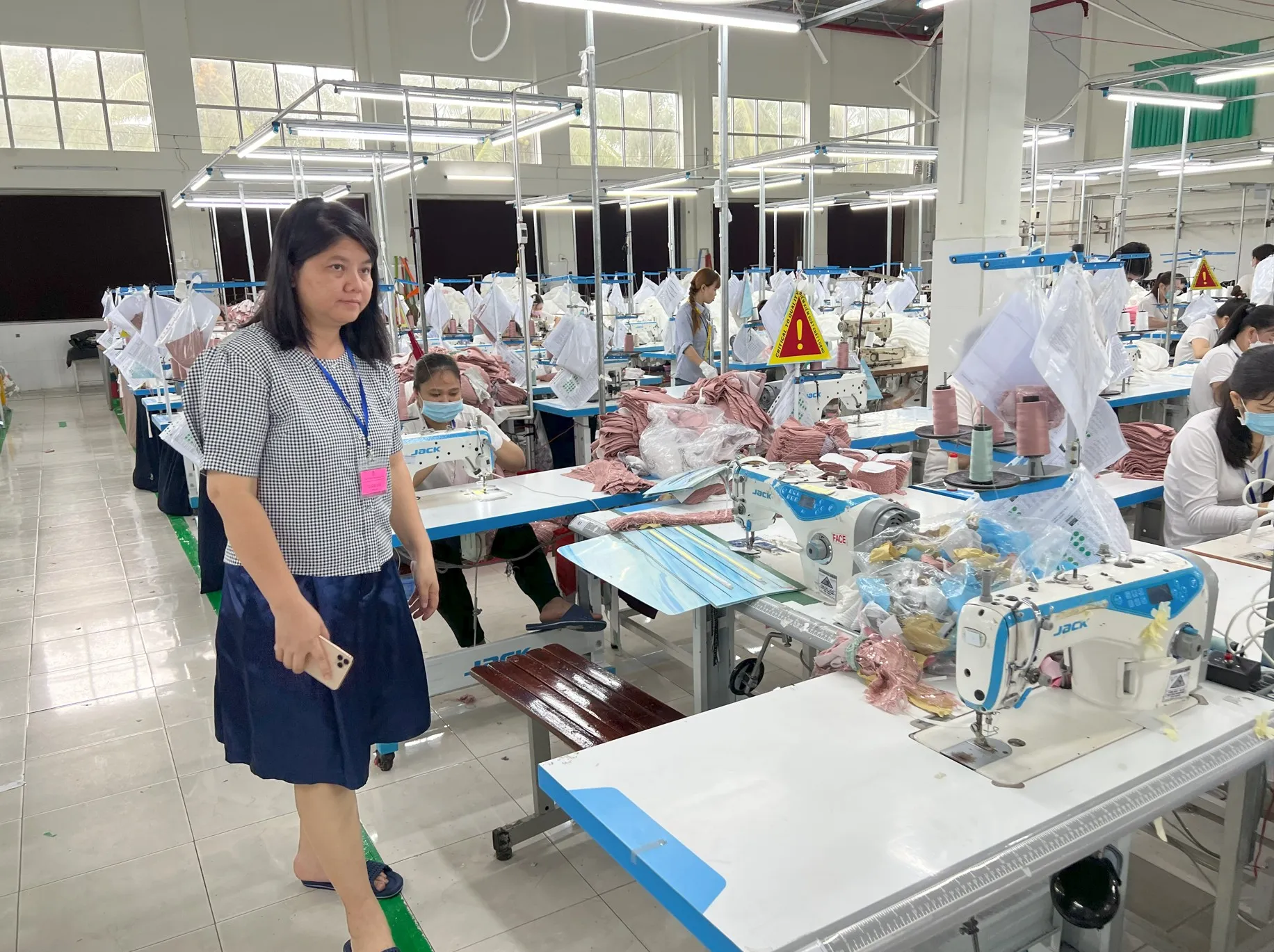
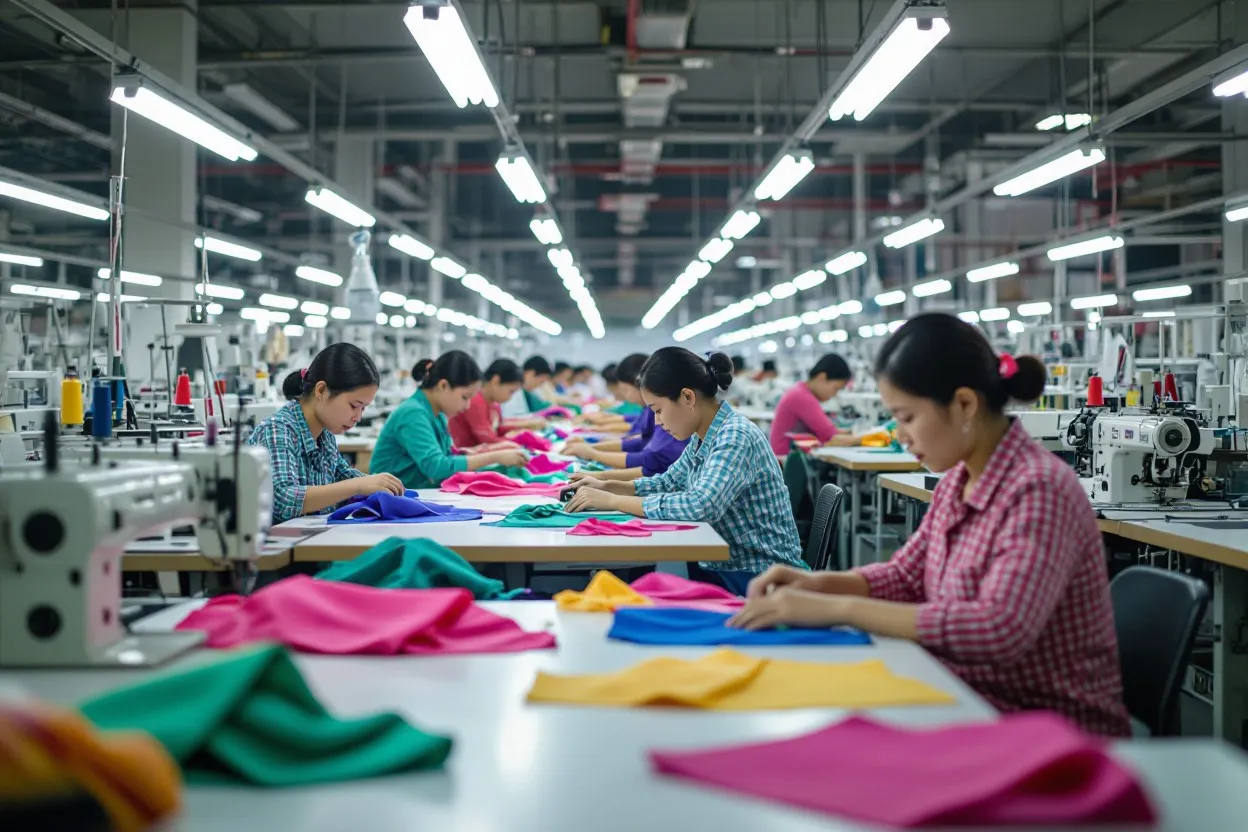
Production engineers arrange these operations in the most efficient sequence. A properly balanced sewing line reduces waiting time, controls work-in-progress, and improves daily output.

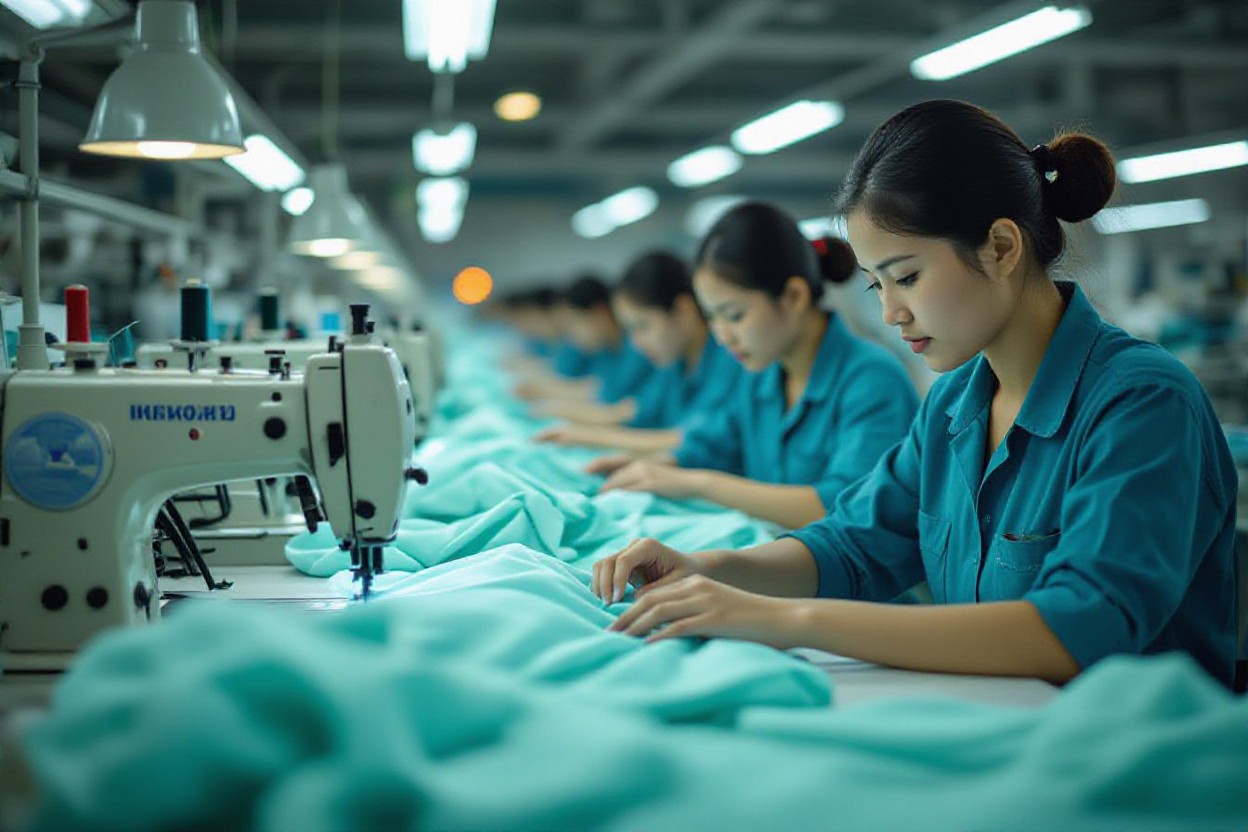
Sewing operators assemble individual fabric components into complete garments along a production line.
16. In-Line Quality Inspection
Quality should be checked while production is running, not only after garments are completed.
In-line quality inspectors monitor:
- Stitch appearance
- Seam strength
- Measurements
- Construction method
- Component placement
- Fabric defects
- Puckering
- Skipped stitches
- Broken stitches
- Label attachment
When a repeated defect is found, the quality team should identify the source and correct it immediately. Early defect detection prevents large quantities of defective garments from being produced.

Quality inspectors check stitching, seams, measurements, and construction while garments are being sewn.
17. End-Line Inspection
At the end of the sewing line, completed garments undergo another inspection. Inspectors check whether each garment meets the approved sample and technical specifications.
Common inspection points include:
- Garment measurements
- Sewing quality
- Shape and symmetry
- Pocket and label position
- Fastener function
- Visible defects
- Loose threads
- Overall workmanship
Garments that fail inspection are returned for repair or correction.

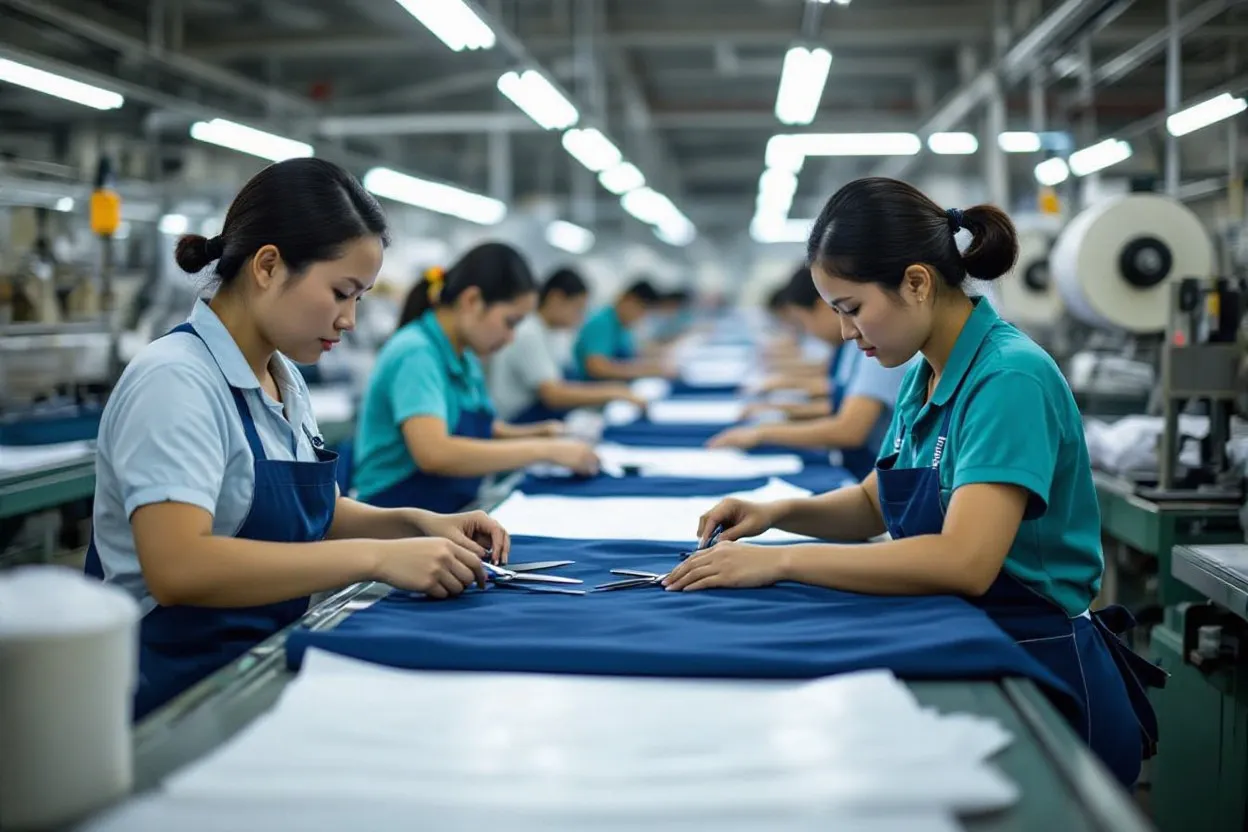
Completed garments are inspected at the end of the sewing line before entering the finishing department.
Phase 4: Finishing, Packing, and Delivery (Weeks 10 – 16)
The final phase prepares completed garments for customer acceptance and shipment.
18. Garment Finishing
Finishing improves the appearance and presentation of the garment.
Common finishing activities include:
- Thread trimming
- Spot cleaning
- Stain removal
- Garment washing
- Steam pressing
- Ironing
- Shape setting
- Button checking
- Measurement correction
Some products may require special finishing treatments such as stone washing, enzyme washing, softening, coating, or garment dyeing. The required finish depends on the product design and buyer specifications.
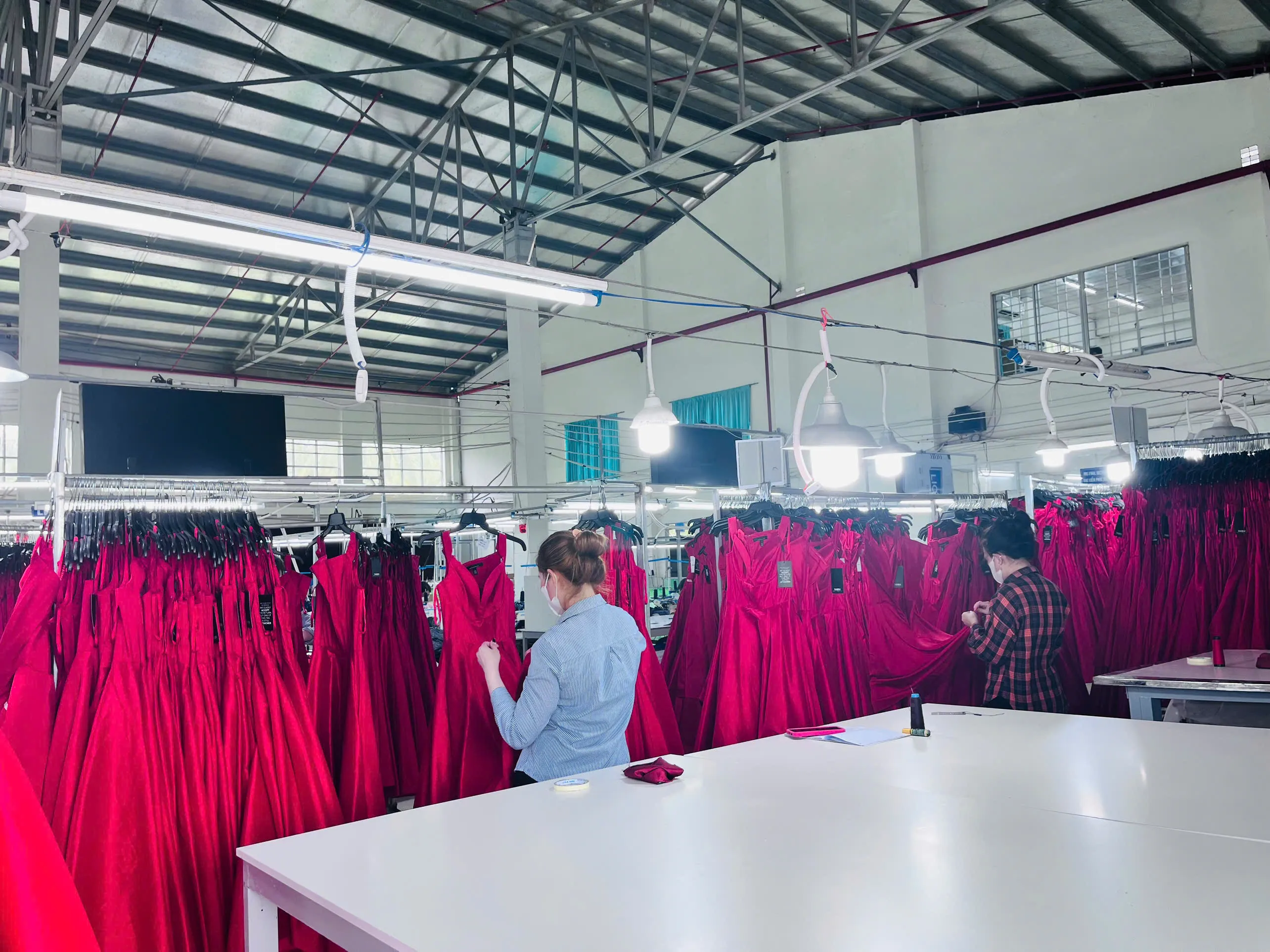
Finished garments undergo thread trimming, cleaning, pressing, ironing, and final appearance
19. Final Quality Inspection
After finishing, the order undergoes a final inspection.
The inspection may be conducted by:
- The factory quality team
- The buyer’s quality representative
- An independent inspection company
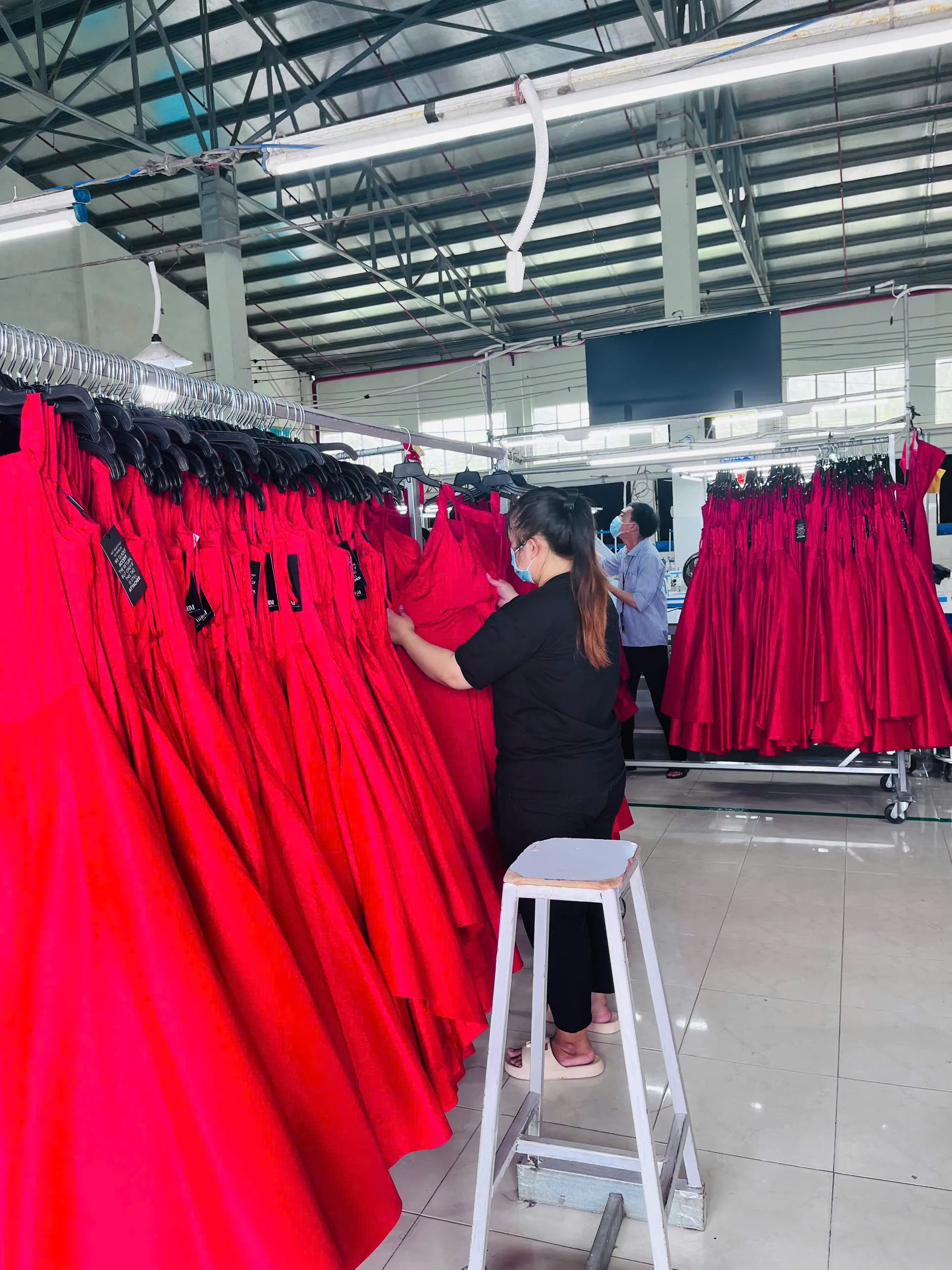
Inspectors verify workmanship, measurements, labels, colors, quantities, and overall garment quality.
Final inspection generally covers:
- Product appearance
- Measurements
- Workmanship
- Color and shade
- Fabric defects
- Labels and trims
- Packing method
- Order quantity
- Carton markings
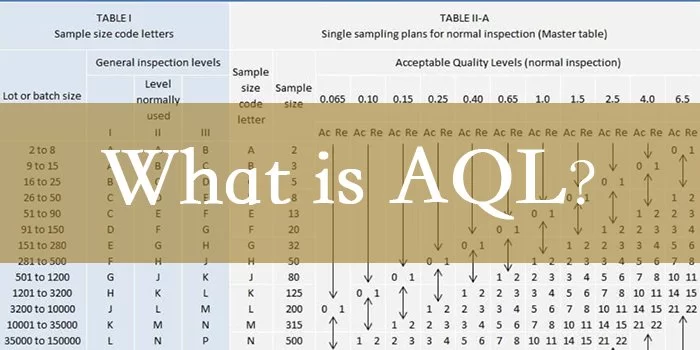
Many buyers use an Acceptable Quality Limit sampling system to determine whether the shipment meets their quality requirements. Only approved goods should proceed to shipment.

20. Folding and Packing
Garments are folded and packed according to the buyer’s instructions.
Packing requirements may include:
- Tissue paper
- Cardboard inserts
- Individual poly bags
- Size stickers
- Barcode labels
- Hang tags
- Assortment ratios
- Carton quantities
- Carton markings
Correct packing protects garments during storage and transportation. It also helps distribution centers identify, scan, and organize products efficiently.

Approved garments are folded, labeled, placed in poly bags, and packed according to buyer instructions.
21. Carton Inspection and Warehouse Storage
Before shipment, packed cartons should be checked for:
- Correct garment quantity
- Size and color assortment
- Carton dimensions
- Gross and net weight
- Shipping marks
- Barcode accuracy
- Carton condition
- Sealing quality
The cartons are then stored in the finished-goods warehouse until shipment. Warehouse teams must organize cartons carefully to avoid mixing orders, colors, sizes, or destinations.

Packed cartons are checked for quantities, assortments, barcodes, shipping marks, and carton condition.
22. Shipping Documentation
The manufacturer prepares the required shipping documents before dispatch.
Documents may include:
- Commercial invoice
- Packing list
- Bill of lading
- Certificate of origin
- Export declaration
- Inspection certificate
- Shipping instructions
- Insurance documents
Document requirements depend on the destination country, shipping method, buyer agreement, and trade terms. Incorrect documents can delay customs clearance even when the garments are ready on time.

The logistics team prepares invoices, packing lists, certificates, customs documents, and shipping instructions.
23. Shipment and Delivery
Finished garments may be transported by:
- Sea freight
- Air freight
- Road transport
- Rail transport
- Courier service
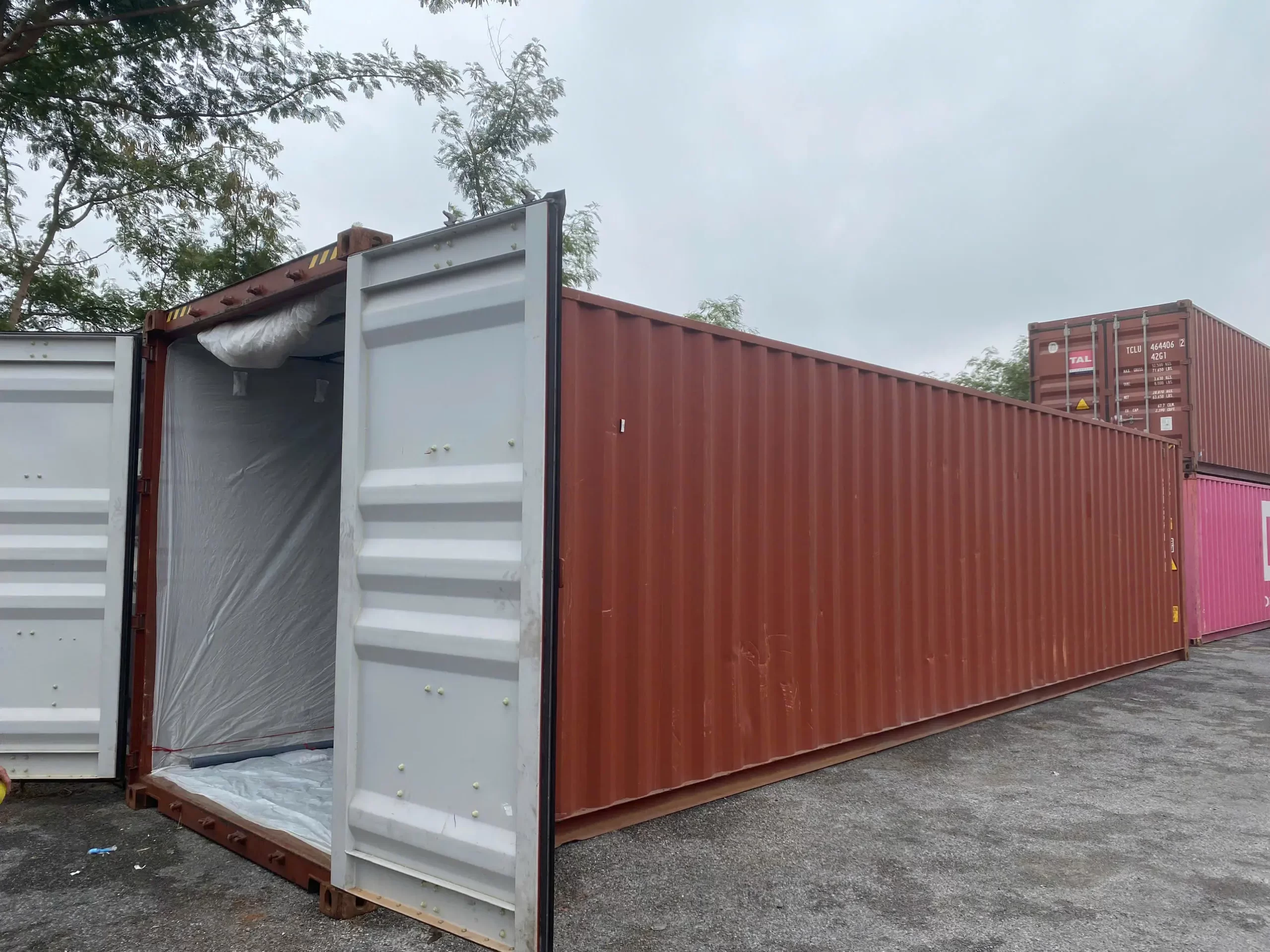
Sea freight is commonly used for large orders because it is more economical, while air freight is faster but more expensive. The logistics team tracks the shipment and coordinates with freight forwarders, customs agents, and the buyer until the goods reach their destination. The production process is complete only when the garments are delivered according to the agreed quantity, quality, and schedule.
Final Thoughts / Conclusion
The garment production process is a detailed journey that begins with a design concept and ends with the delivery of finished apparel. Each phase—including product development, production preparation, bulk manufacturing, quality control, packing, and logistics—plays an important role in the success of an order.
Efficient garment manufacturing requires more than skilled sewing. It depends on accurate patterns, approved materials, reliable suppliers, effective planning, trained workers, strong quality systems, and clear communication between departments. By understanding the complete garment production process from design to delivery, apparel brands and buyers can work more effectively with manufacturers, reduce production risks, improve product quality, and achieve more reliable shipment schedules.