Outfit Ideas for Apple-Shaped Body: Simple Styling Tips for Better Fit and Proportion

Outfit choices can transform an apple-shaped silhouette: focus on lengthening your torso, drawing the eye upward, and creating balance with structured bottoms. Avoid clingy tops and busy tummy details, and instead use vertical lines and face-framing accessories to showcase your best features.
=> Related Article: Fashion Guide: Dressing Right for Your Body Type
What Is an Apple-Shaped Body?
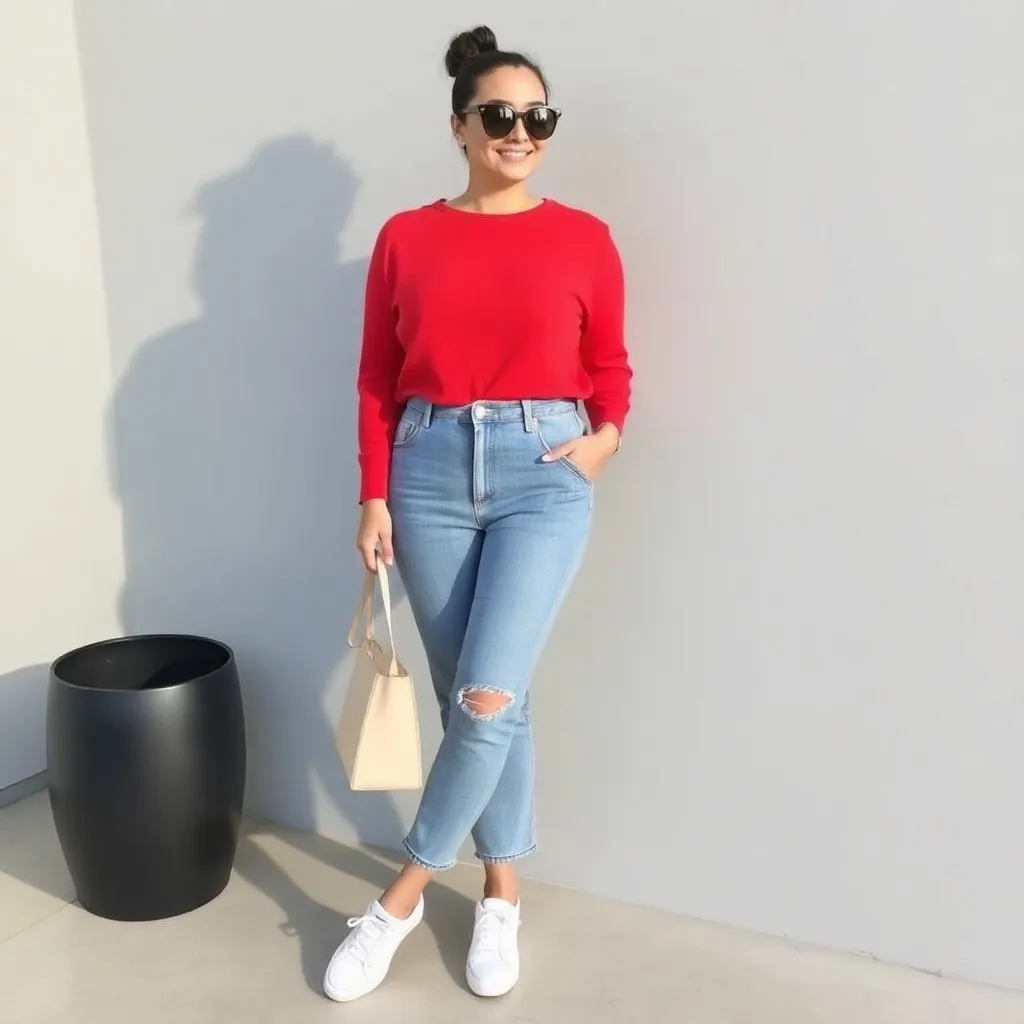
An apple-shaped body usually has:
- More visual fullness around the torso
- Shoulders or bust that may appear broader than the hips
- Less obvious waist definition
- Relatively slimmer legs
- A straighter or rounder midsection
Body shape is about proportion, not body size. So: Size is not Body Shape Two people can wear the same clothing size but have very different body proportions.
=> Related Article: Outfit Ideas for Inverted Hourglass-Shaped Body

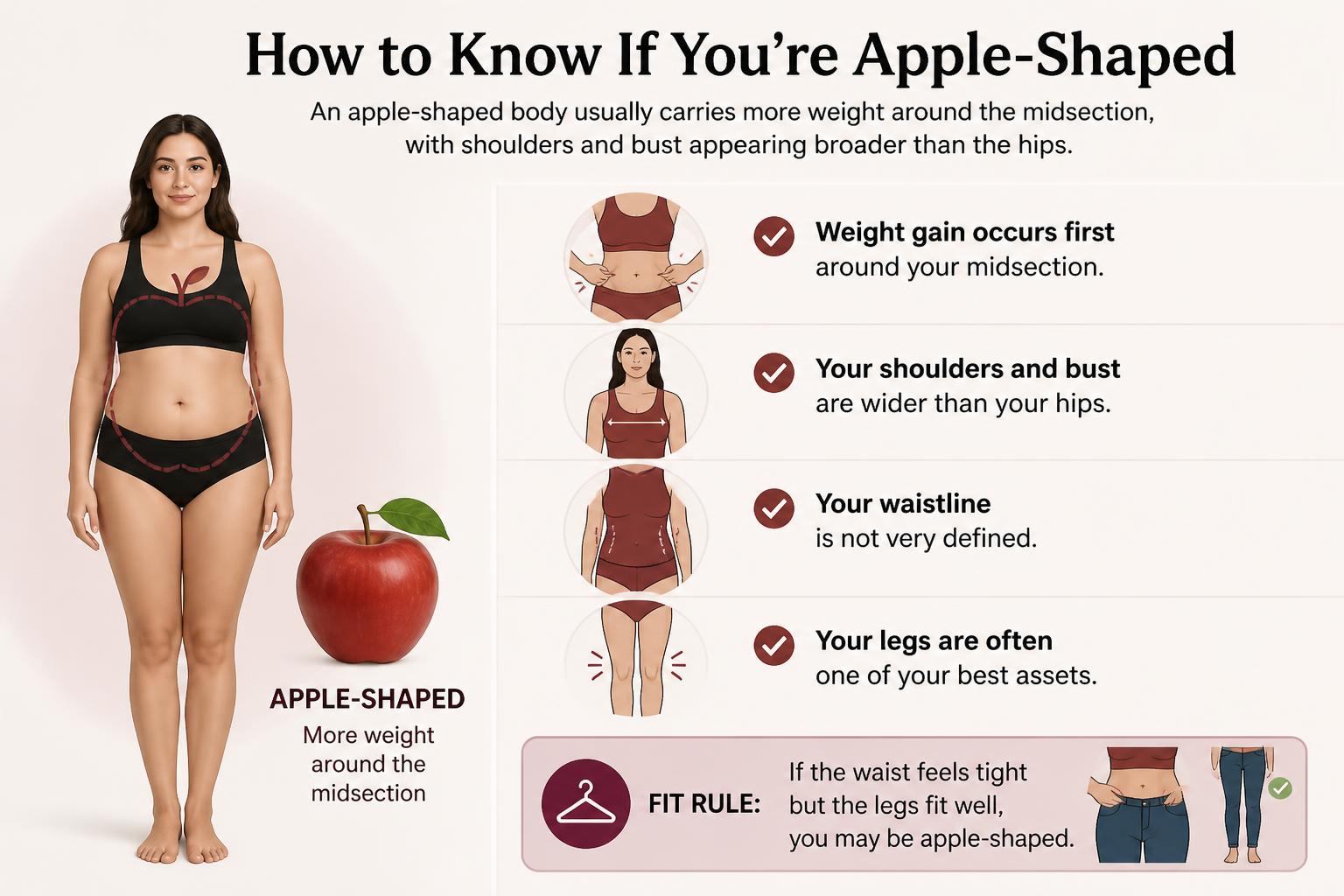
How to Know If You’re Apple-Shaped
An apple-shaped body usually carries more weight around the midsection, with shoulders and bust appearing broader than the hips.
- Weight gain occurs first around your midsection.
- Your shoulders and bust are wider than your hips.
- Your waistline is not very defined.
- Your legs are often one of your best assets.
=> Fit rule: If the waist feels tight but the legs fit well, you may be apple-shaped.
=> Related Article: Outfit Ideas for Inverted Triangle Body
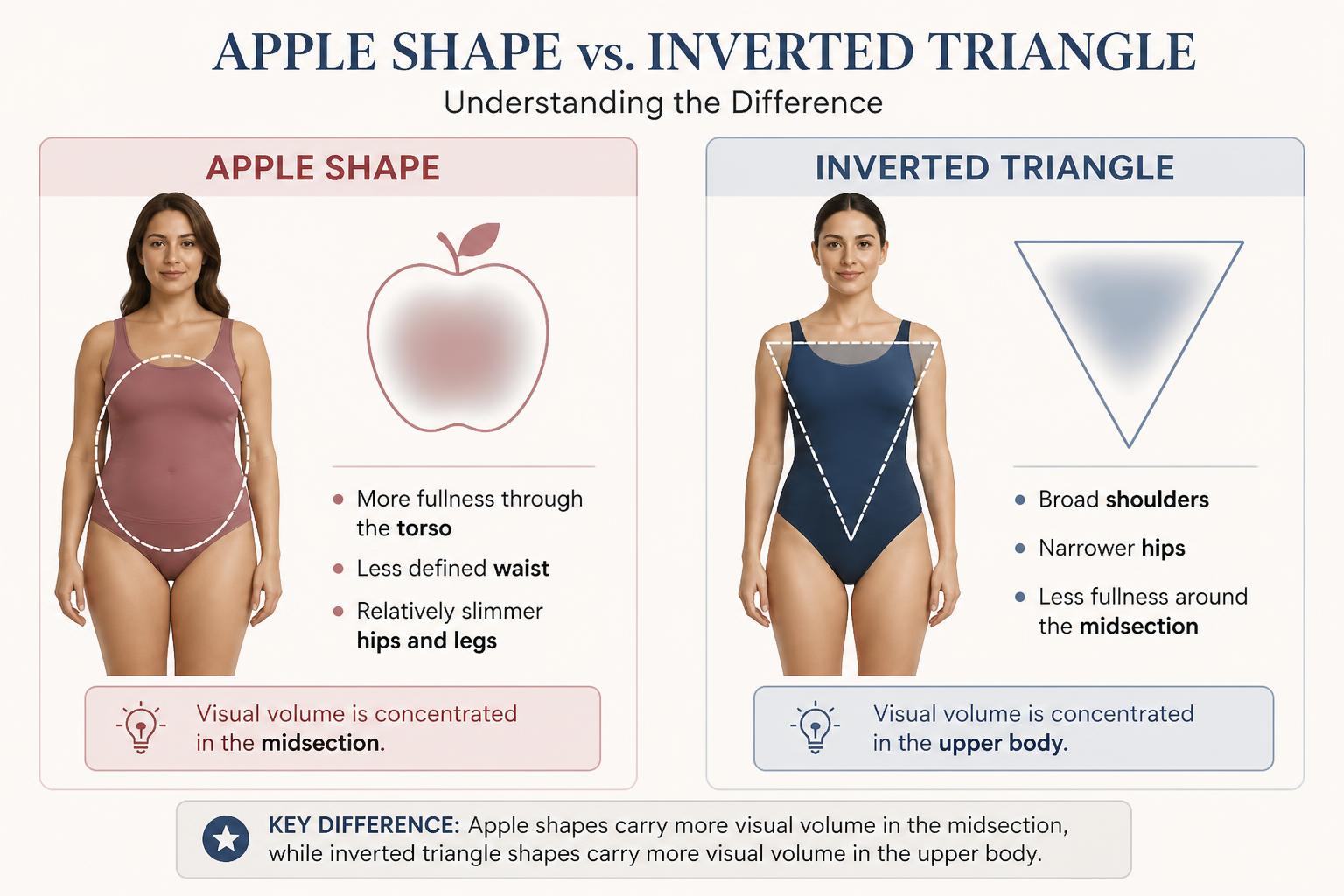
Apple Shape vs. Inverted Triangle
These two shapes can look similar because both may have a stronger upper body.
Apple Shape – Usually has:
- More fullness through the torso
- Less defined waist
- Relatively slimmer hips and legs

Inverted Triangle – Usually has:
- Broad shoulders
- Narrower hips
- Less fullness around the midsection
The main difference is usually where the visual volume is concentrated.
=> Related Article: Outfit Ideas for Rectangle-Shaped Body (Straight or Athletic)
Apple Shape Is About Proportion, Not Body Size
Apple-shaped does not automatically mean plus-size. A person may be:
- Petite and apple-shaped
- Tall and apple-shaped
- Slim and apple-shaped
- Athletic and apple-shaped
- Curvy and apple-shaped
- Plus-size and apple-shaped
Therefore: Body Shape isn’t Body Size and: Body Shape isn’t Clothing Size. Two people wearing the same clothing size may have completely different shoulder, bust, waist, hip, and leg proportions.
Core Styling Goals
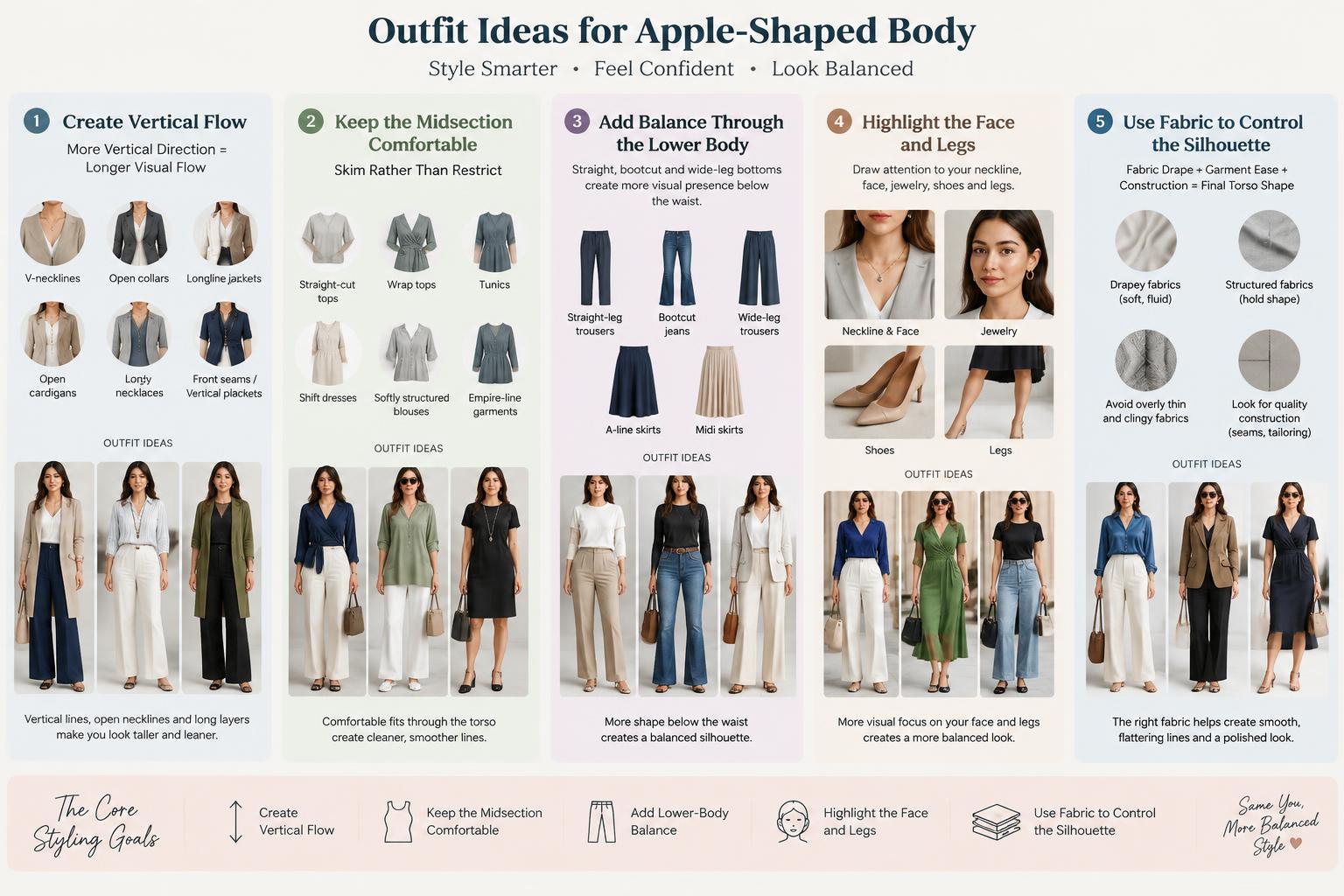
A practical starting point is: Create Vertical Flow + Keep the Midsection Comfortable + Add Lower-Body Balance. The secret is about enhancing your natural figure through visual flow:
- Open the neckline to elongate the upper body.
- Skim, don’t cling at the tummy.
- Add structure with seams and sharp layers.
- Balance the bottom with straight or wider legs.
- Highlight the face and legs.
=> Related Article: Outfit Ideas for Pear-Shaped Body: Easy Styling Guide for Better Balance and Confidence
1. Create Vertical Flow
Vertical lines can make the outfit feel longer and more continuous. Useful tools include:
- V-necklines
- Open shirt collars
- Longline jackets
- Open cardigans
- Long necklaces
- Front seams
- Vertical plackets
A simple principle is: More Vertical Direction = Longer Visual Flow
2. Keep the Midsection Comfortable
Clothing does not need to be tight to look polished.
For apple-shaped proportions, a comfortable fit through the torso can create cleaner lines.
Useful options include:
- Straight-cut tops
- Wrap tops
- Tunics
- Shift dresses
- Softly structured blouses
- Empire-line garments

The goal is: Skim Rather Than Restrict
3. Add Balance Through the Lower Body
Straight, bootcut, and wide-leg bottoms can create more visual presence below the waist. This can make the overall silhouette feel more balanced. Useful options include:
- Straight-leg trousers
- Bootcut jeans
- Wide-leg trousers
- A-line skirts
- Midi skirts
4. Highlight the Face and Legs
Apple-shaped proportions often work well with styling that directs attention toward:
- Neckline
- Face
- Jewelry
- Shoes
- Legs
This can create a more distributed visual focus across the outfit.
5. Use Fabric to Control the Silhouette
Fabric strongly affects how the torso looks. A fabric that is too thin and clingy may follow every contour. A fabric with more drape or soft structure may create smoother lines. A useful formula is: Fabric Drape + Garment Ease + Construction = Final Torso Shape
What to Wear (and Why)
| Clothing Area | Good Starting Point |
|---|---|
| Tops | V-neck, scoop, wrap, tunic |
| Necklines | Open and vertical |
| Dresses | A-line, wrap, shift |
| Pants | Straight, bootcut, wide-leg |
| Jeans | Mid- or high-rise |
| Skirts | A-line, straight, bias |
| Jackets | Structured, single-breasted, longline |
| Coats | Open-front, wrap, straight |
| Fabric | Drapey or softly structured |
| Details | Keep the midsection relatively clean |
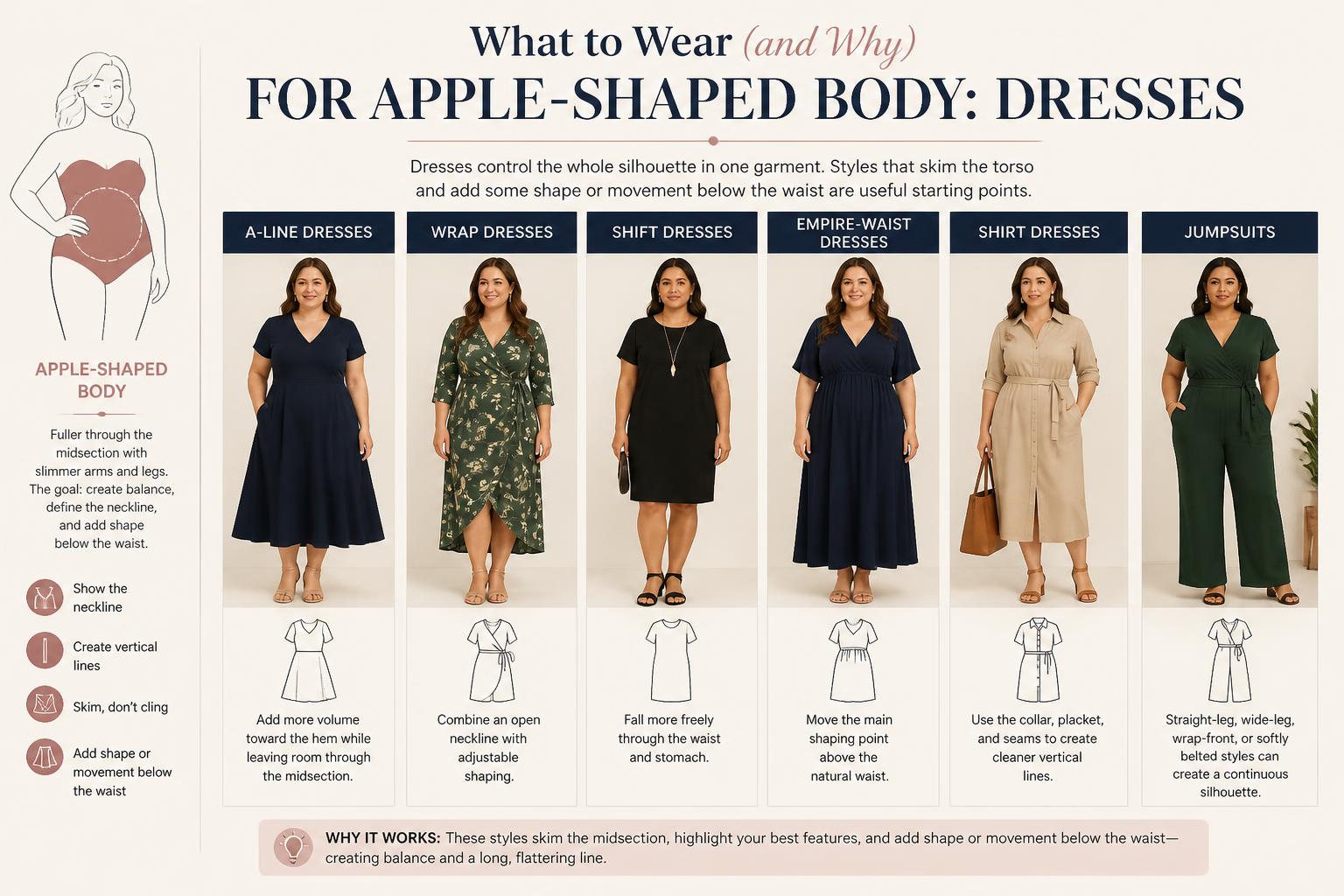
Tops
Tops strongly affect how the torso looks. Choose styles that skim the midsection instead of clinging tightly and create a clean line from the shoulders downward.
- V-neck tops: Open the neckline and create vertical direction.
- Scoop-neck tops: Give the chest a softer, more open appearance.
- Wrap tops: Add diagonal lines and gentle waist shaping.
- Surplice tops: Create a wrap-like V shape through the upper body.
- Empire-waist tops: Fit under the bust and provide more room through the stomach.
- Tunic tops: Add length and create a longer torso line.
- Peplum tops: Can add some shape around the lower torso.
- Straight-cut tops: Fall cleanly from the shoulders without needing a defined waist.
- Longer tops: Can avoid creating a strong visual break directly at the midsection.
=> Related Article: Outfit Ideas for Apple-Shaped Body

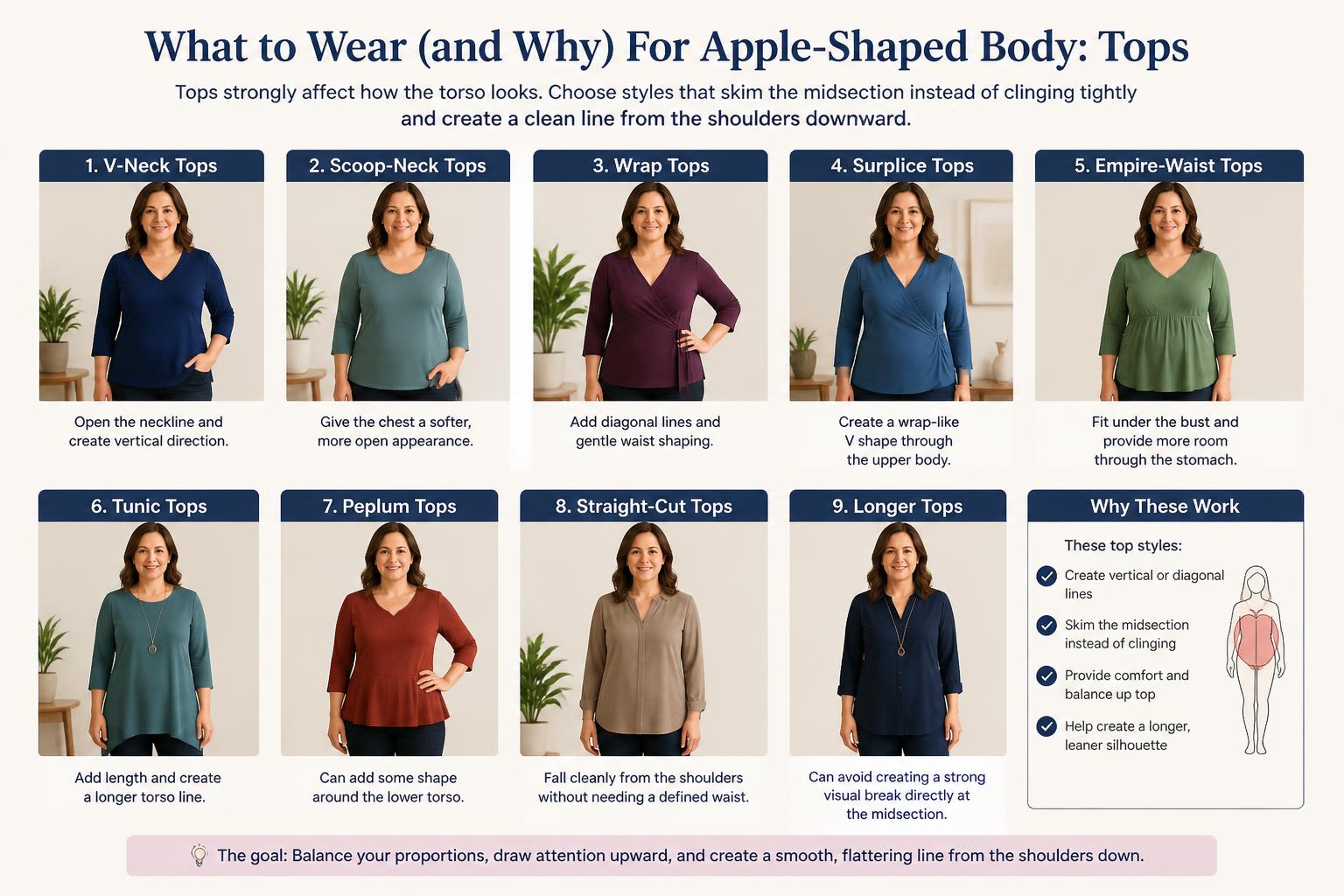
Necklines
Necklines can make the upper body look more open, enclosed, wide, or elongated. Open necklines are often an easy starting point for an apple-shaped body.
- V-neck: Creates strong diagonal and vertical direction.
- Scoop neck: Opens the chest with a softer curve.
- Open shirt collar: Creates a polished V-like opening.
- Square neck: Frames the upper chest while keeping it open.
- High neckline: Creates a more enclosed upper-body look.
- Boat neckline: Adds more horizontal emphasis across the shoulders.
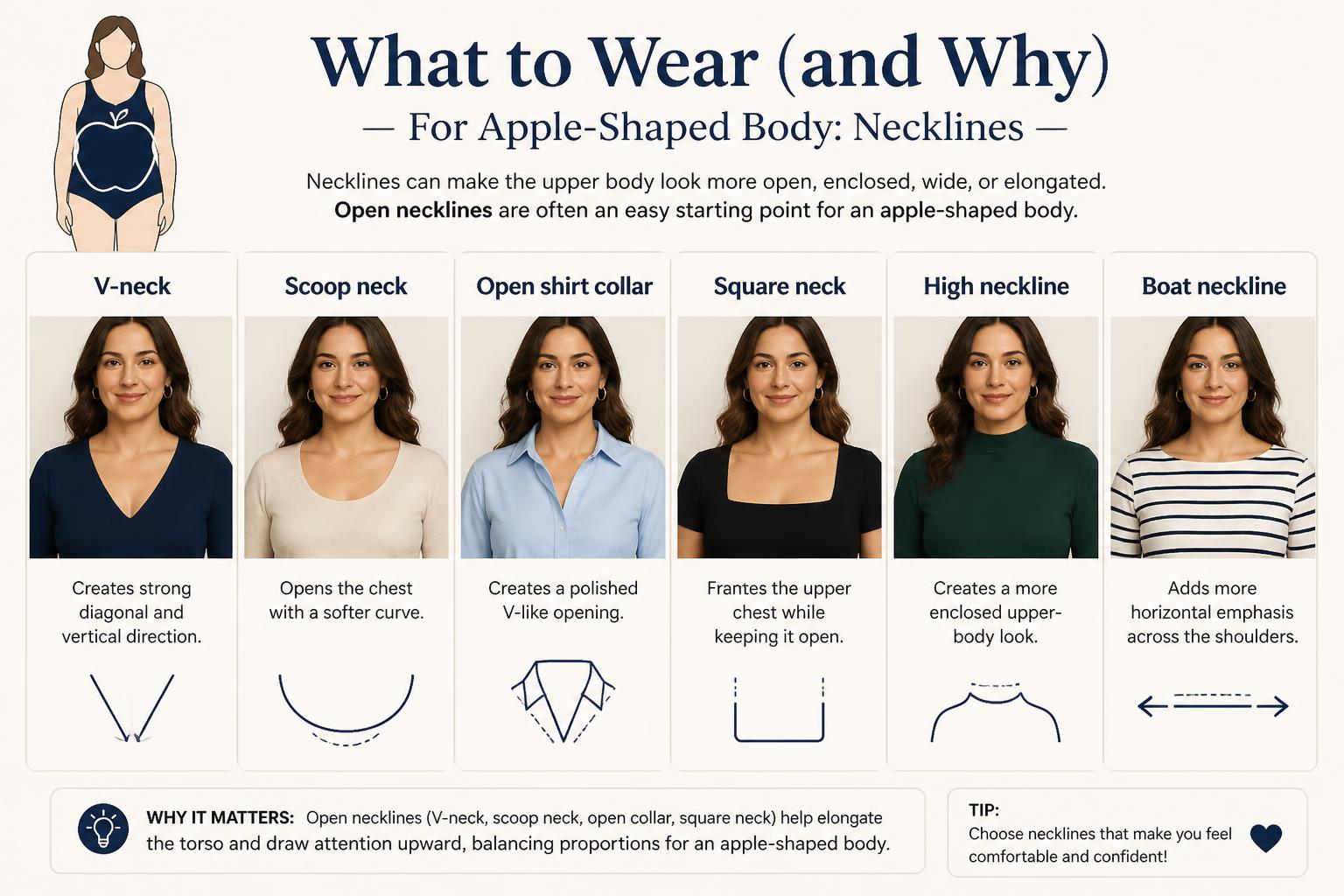
Sleeves
Sleeves can change how much visual volume appears around the shoulders and arms. Cleaner sleeve shapes usually create a simpler upper-body silhouette.
- Simple short sleeves: Keep the shoulder area neat.
- Three-quarter sleeves: Draw some attention toward the forearms and wrists.
- Raglan sleeves: Create softer diagonal lines around the shoulders.
- Statement sleeves: Puff or balloon sleeves add more upper-body volume and drama.
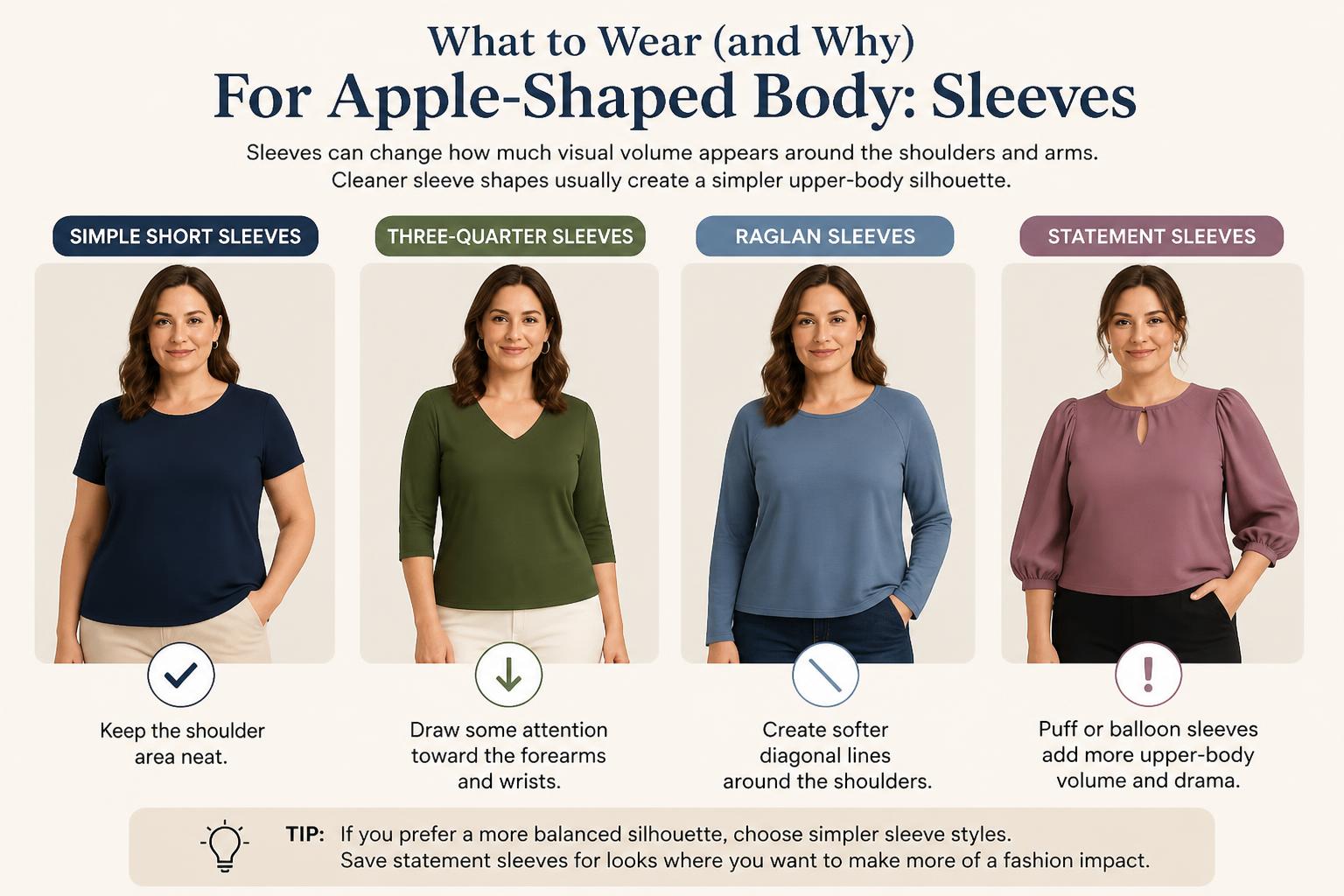
Dresses
Dresses control the whole silhouette in one garment. Styles that skim the torso and add some shape or movement below the waist are useful starting points.
- A-line dresses: Add more volume toward the hem while leaving room through the midsection.
- Wrap dresses: Combine an open neckline with adjustable shaping.
- Shift dresses: Fall more freely through the waist and stomach.
- Empire-waist dresses: Move the main shaping point above the natural waist.
- Shirt dresses: Use the collar, placket, and seams to create cleaner vertical lines.
- Jumpsuits: Straight-leg, wide-leg, wrap-front, or softly belted styles can create a continuous silhouette.
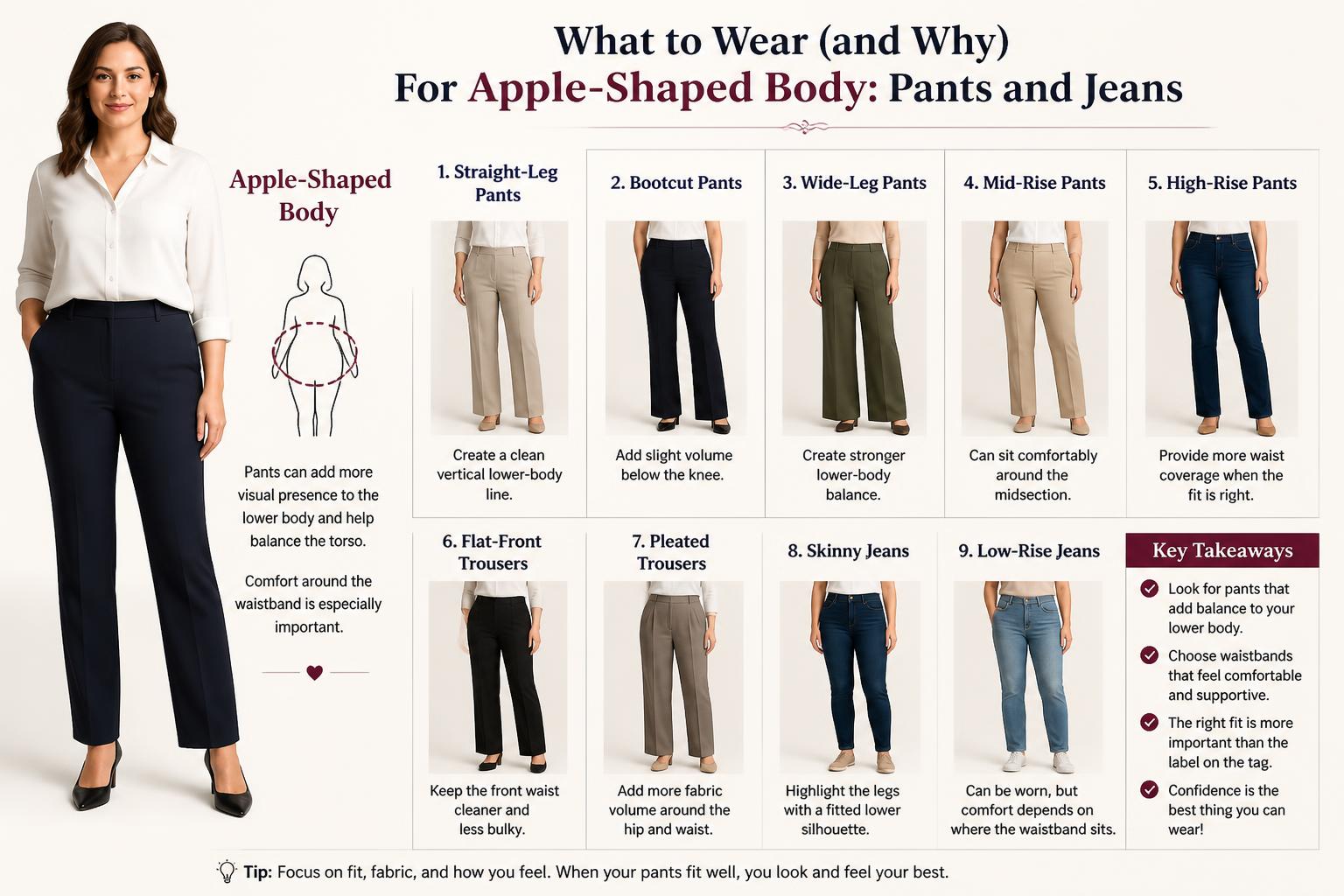
Pants and Jeans
Pants can add more visual presence to the lower body and help balance the torso. Comfort around the waistband is especially important.
- Straight-leg pants: Create a clean vertical lower-body line.
- Bootcut pants: Add slight volume below the knee.
- Wide-leg pants: Create stronger lower-body balance.
- Mid-rise pants: Can sit comfortably around the midsection.
- High-rise pants: Provide more waist coverage when the fit is right.
- Flat-front trousers: Keep the front waist cleaner and less bulky.
- Pleated trousers: Add more fabric volume around the hip and waist.
- Skinny jeans: Highlight the legs with a fitted lower silhouette.
- Low-rise jeans: Can be worn, but comfort depends on where the waistband sits.
Skirts
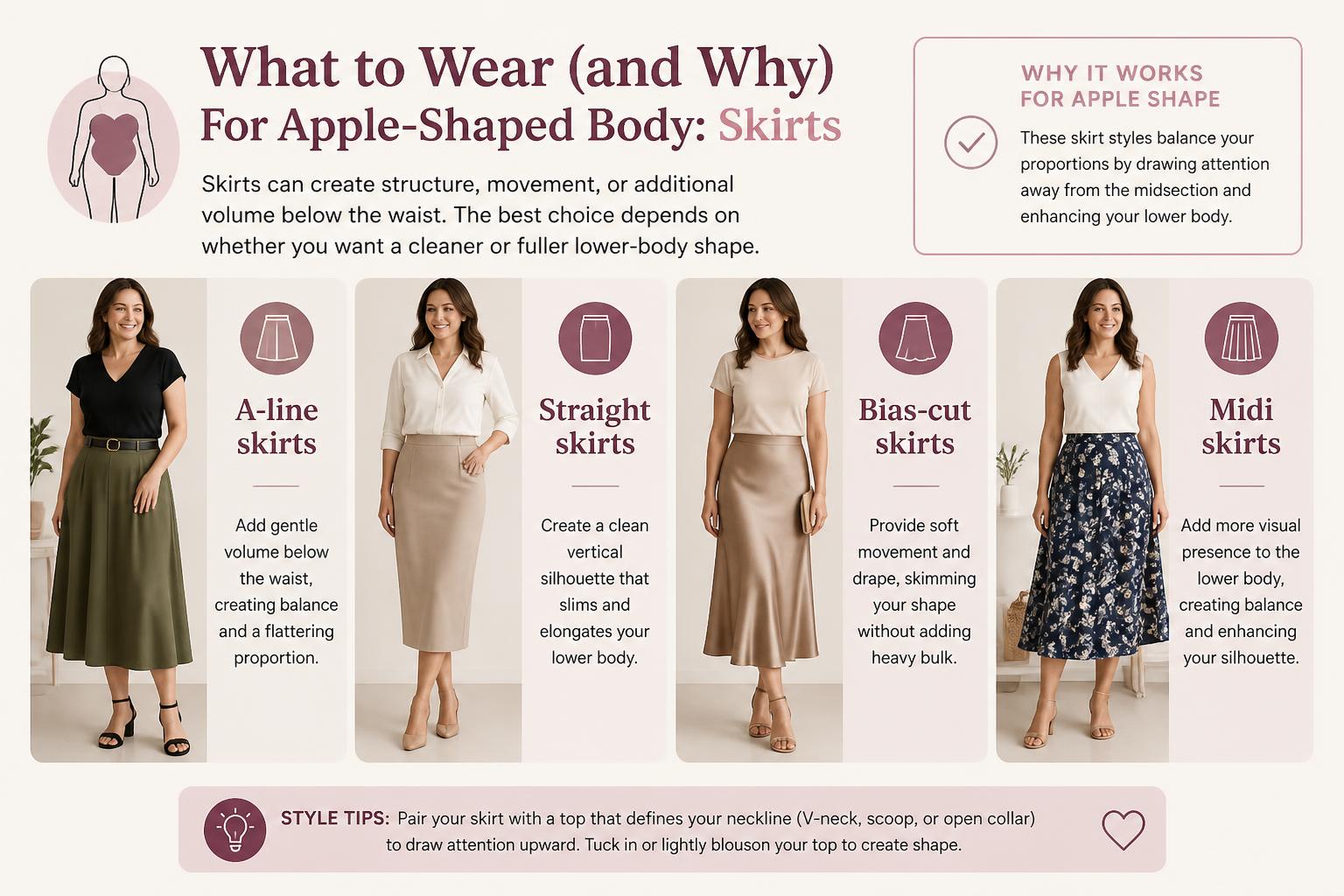
Skirts can create structure, movement, or additional volume below the waist. The best choice depends on whether you want a cleaner or fuller lower-body shape.
- A-line skirts: Add gentle volume below the waist.
- Straight skirts: Create a clean vertical silhouette.
- Bias-cut skirts: Provide soft movement without heavy bulk.
- Midi skirts: Add more visual presence to the lower body.
Jackets and Layers
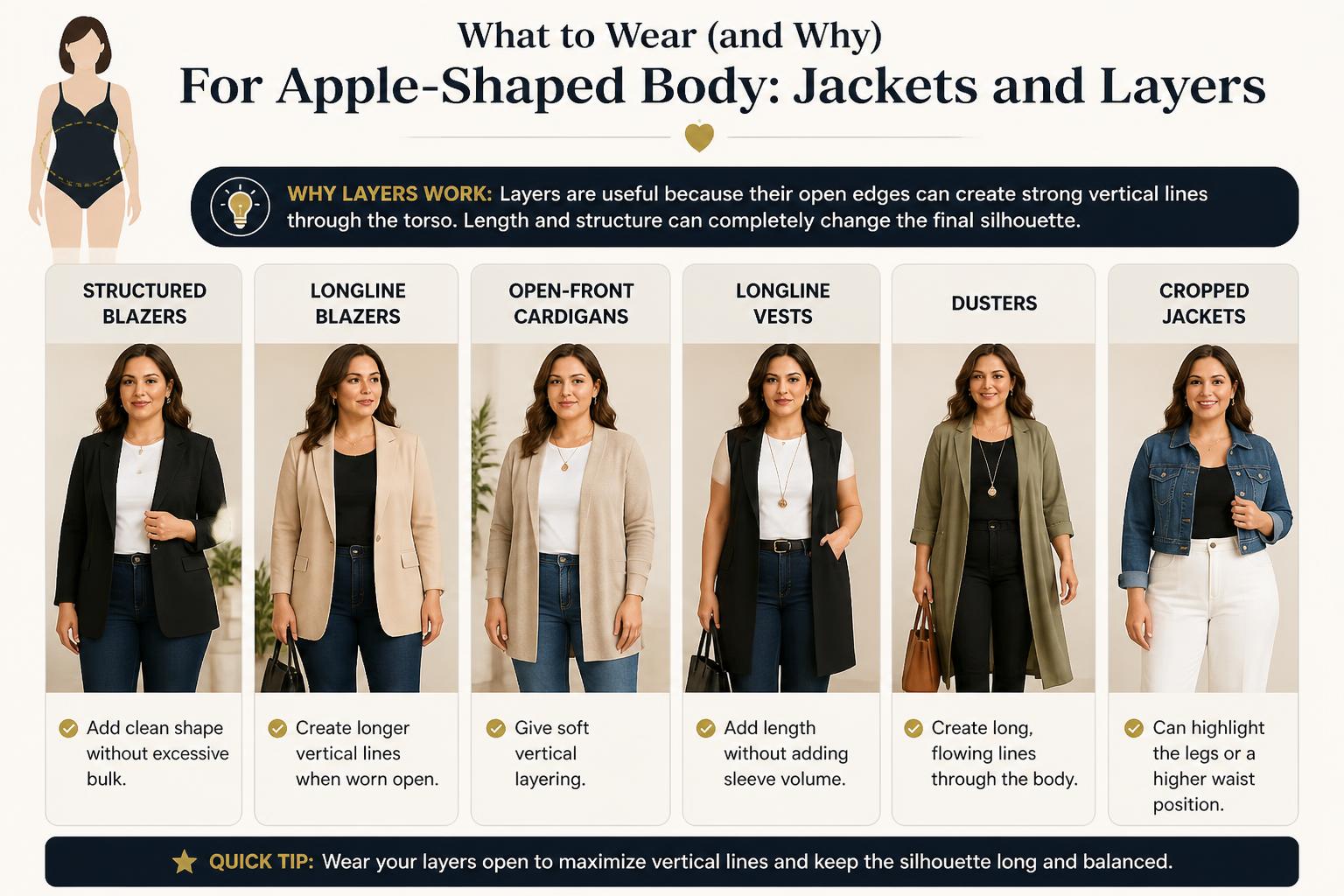
Layers are useful because their open edges can create strong vertical lines through the torso. Length and structure can completely change the final silhouette.
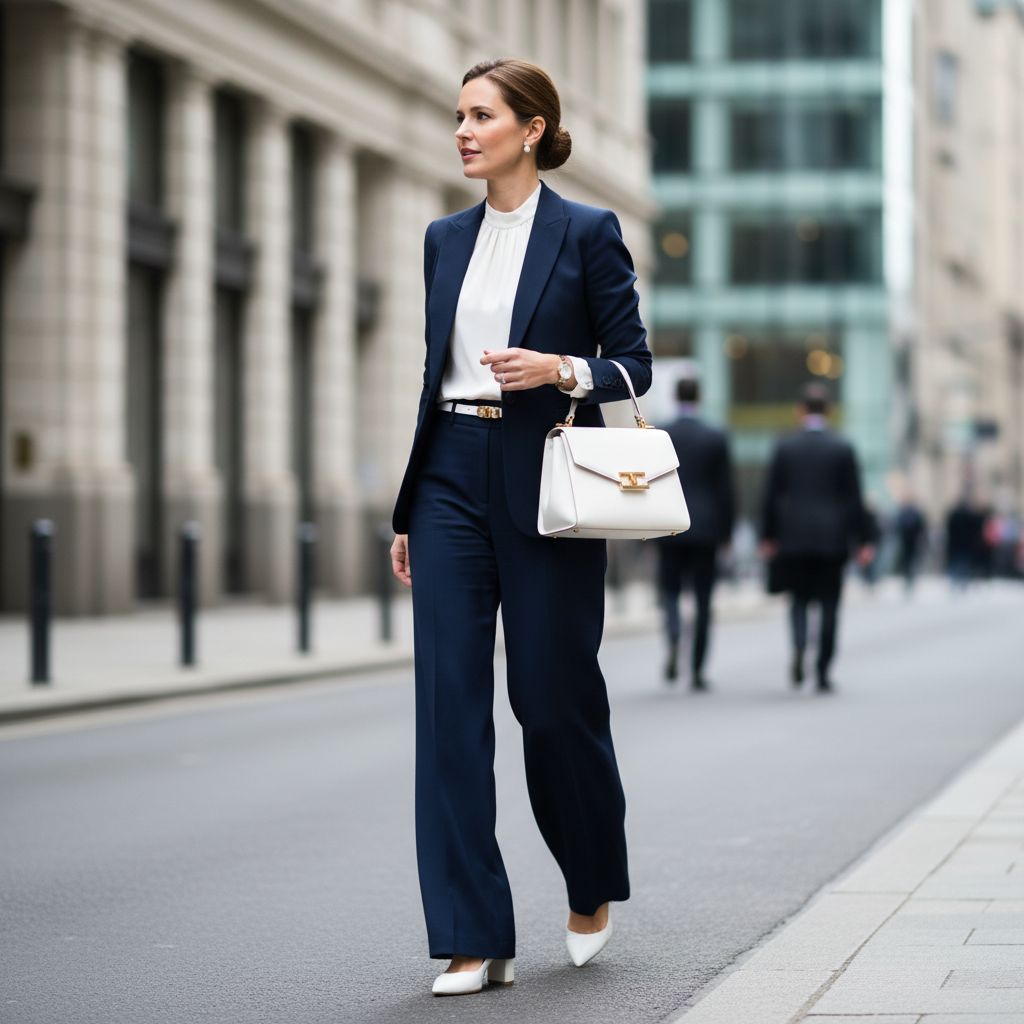
- Structured blazers: Add clean shape without excessive bulk.
- Longline blazers: Create longer vertical lines when worn open.
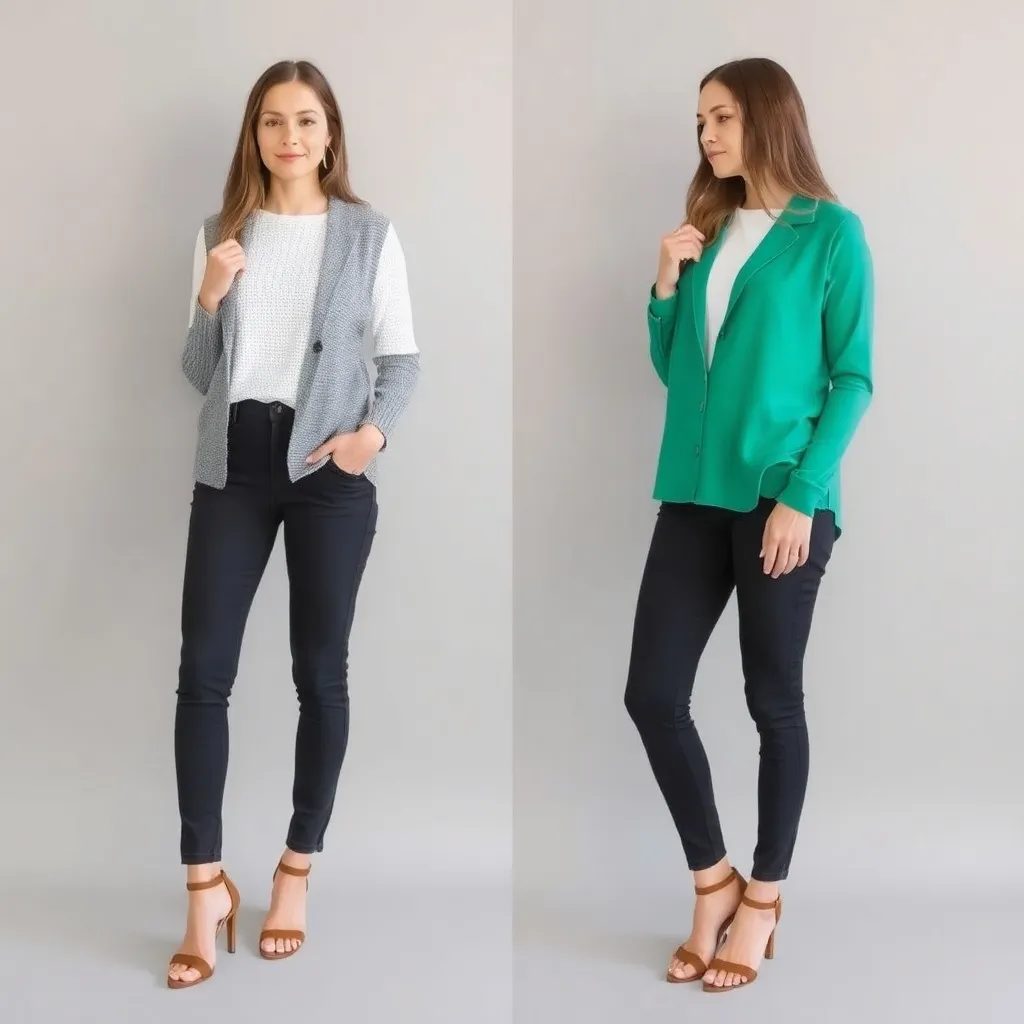
- Open-front cardigans: Give soft vertical layering.
- Longline vests: Add length without adding sleeve volume.
- Dusters: Create long, flowing lines through the body.
- Cropped jackets: Can highlight the legs or a higher waist position.
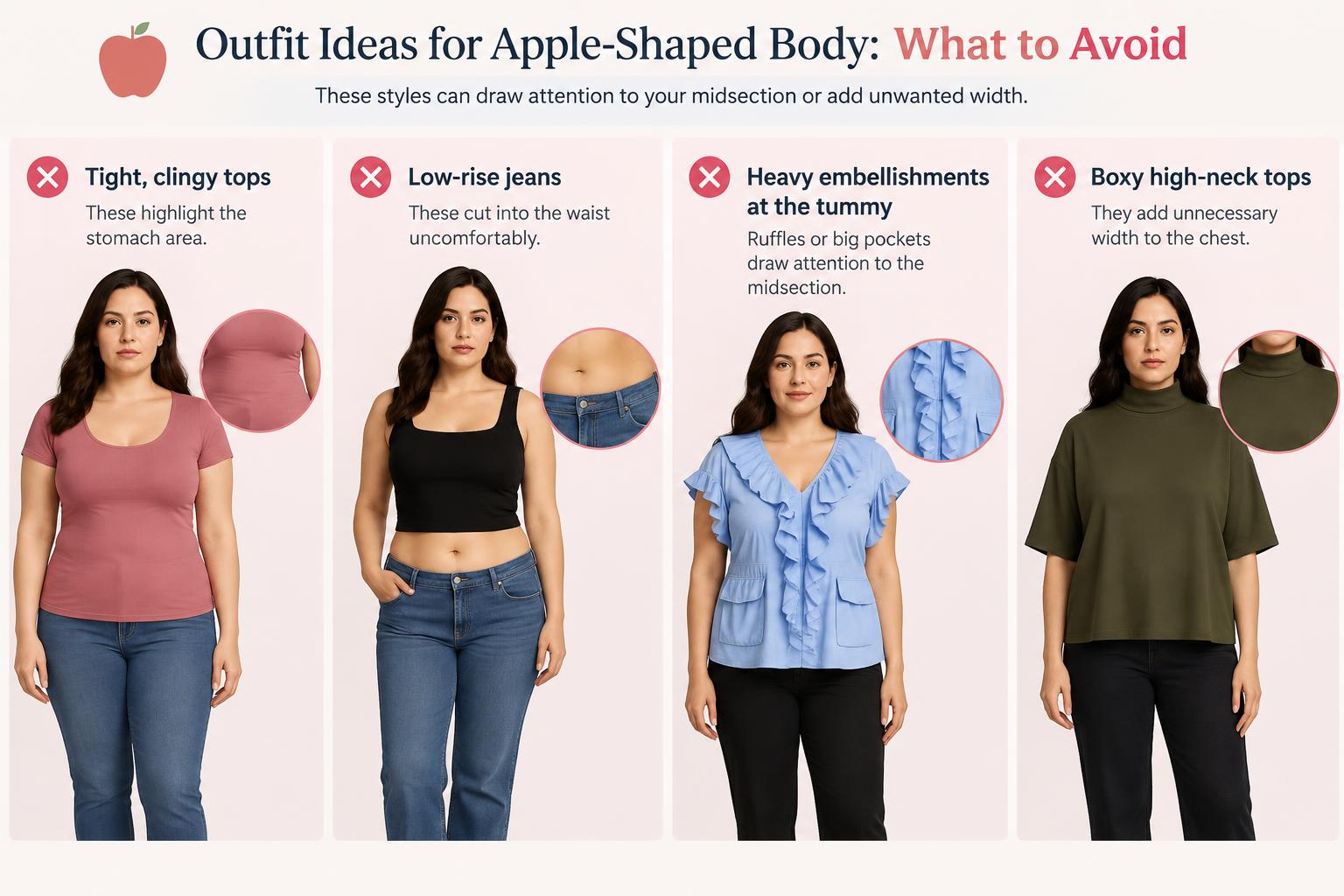
What to Avoid
- Tight, clingy tops: These highlight the stomach area.
- Low-rise jeans: These cut into the waist uncomfortably.
- Heavy embellishments at the tummy: Ruffles or big pockets draw attention to the midsection.
- Boxy high-neck tops: They add unnecessary width to the chest.
Ideal Fabric Choices
Choose fabrics that drape rather than cling: crepe, viscose blends, silk, and lightweight wool. For structured pieces, select fabrics with 2–5% elastane to retain shape while remaining comfortable through the waist.
Final Word / Conclusion
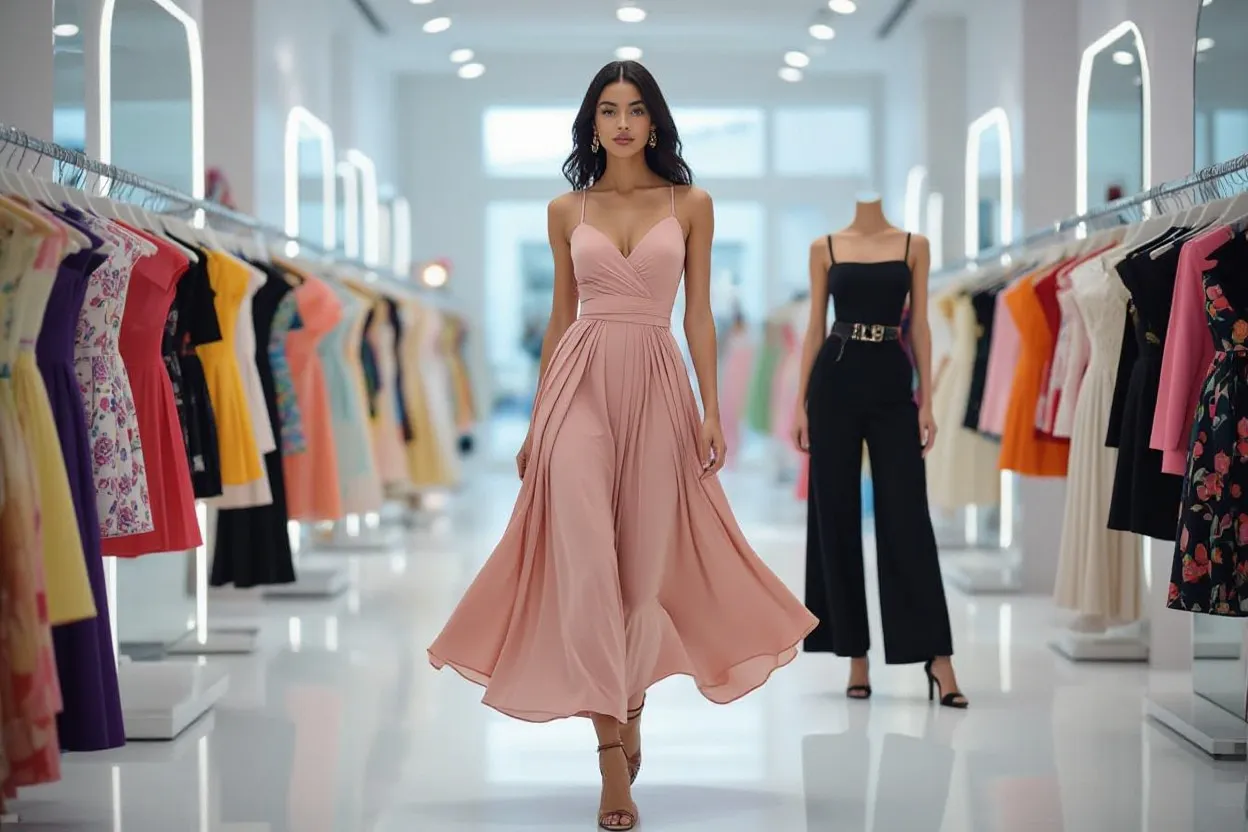
Apple-shaped styling is not about hiding the midsection or changing your body. It is about understanding how line, fabric, proportion, fit, neckline, and garment structure influence the final outfit. If your goal is a longer and more balanced visual effect, a useful approach is: Open Neckline + Vertical Flow + Comfortable Torso Fit + Balanced Lower Body.
But this is only one styling direction. You can also wear:
- Skinny jeans
- Cropped jackets
- Bright colors
- Belts
- High necklines
- Fitted dresses
depending on your personal style. The strongest outfit is usually the one that combines: Comfort + Good Fit + Personal Style + Intentional Proportion. For apparel brands and garment manufacturers, apple-shape styling also highlights an important technical lesson: Good Styling Starts with Good Pattern Fit.