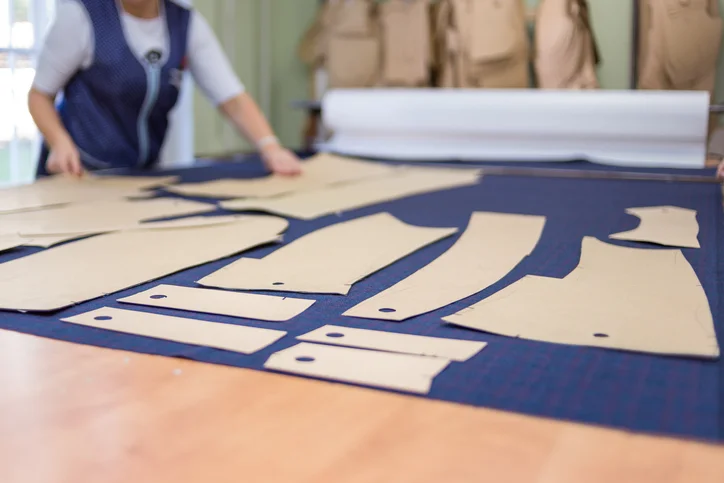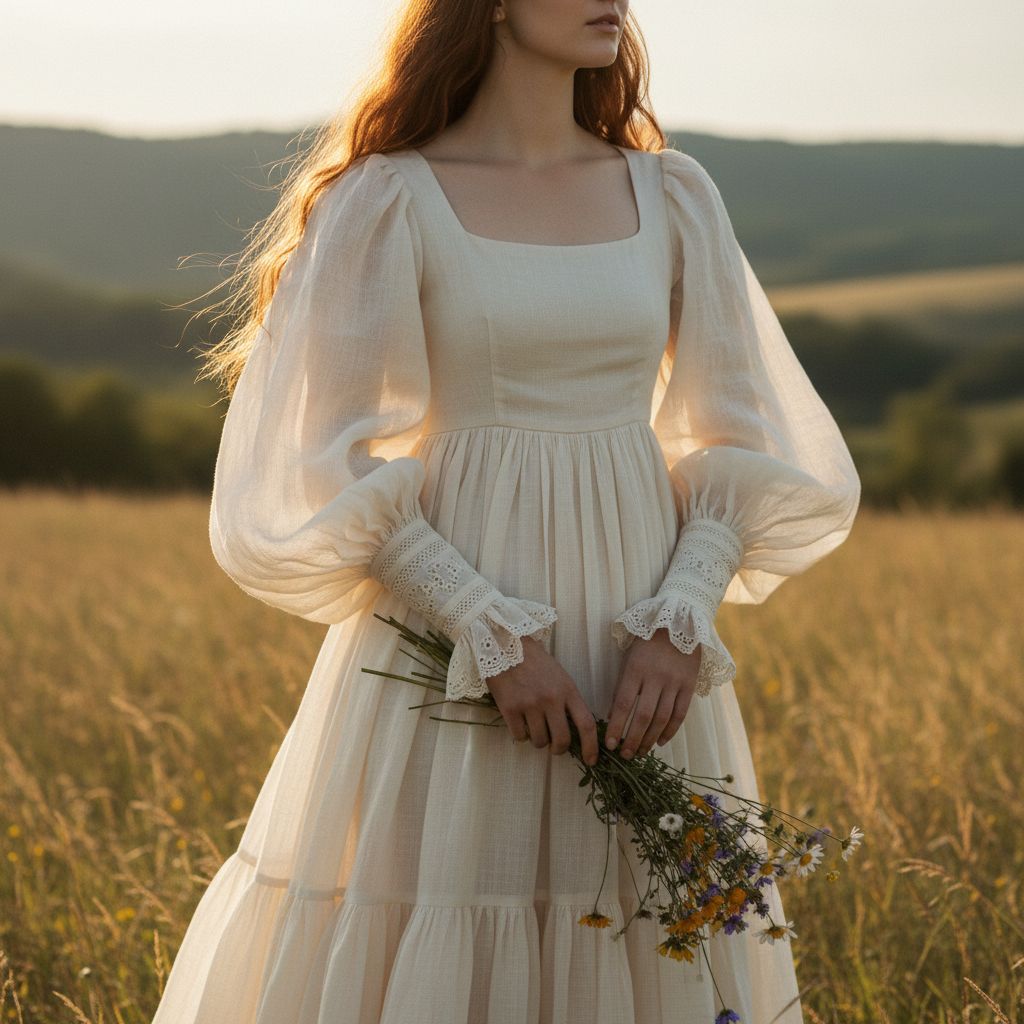
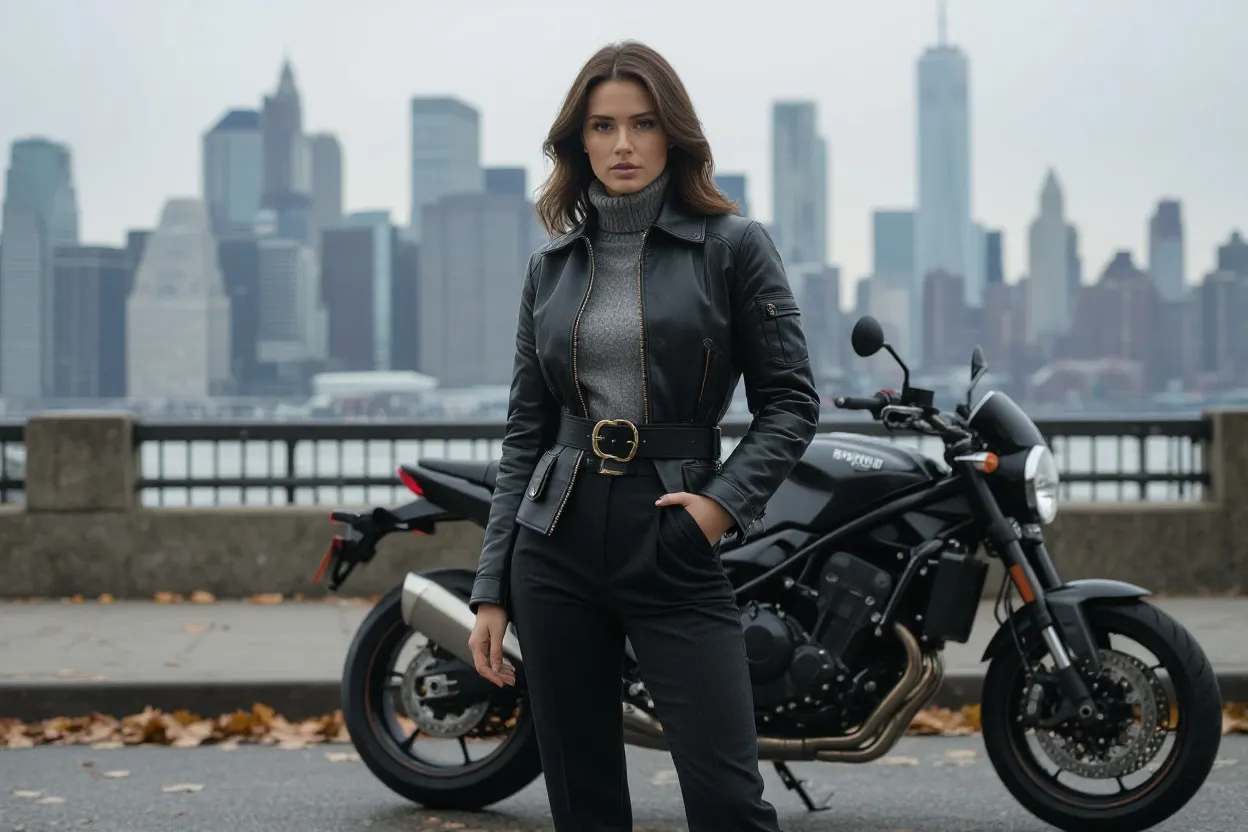

An inverted hourglass has a well-defined waist, with bust and hips close in width. The upper body may look a touch broader, yet your curves stay balanced. Your goal is simple: show the waist, follow your natural lines, and keep structure neat. Think classic shapes, clean seams, and fabrics that skim—not squeeze.
=> Related Article: Fashion Guide: Dressing Right for Your Body Type
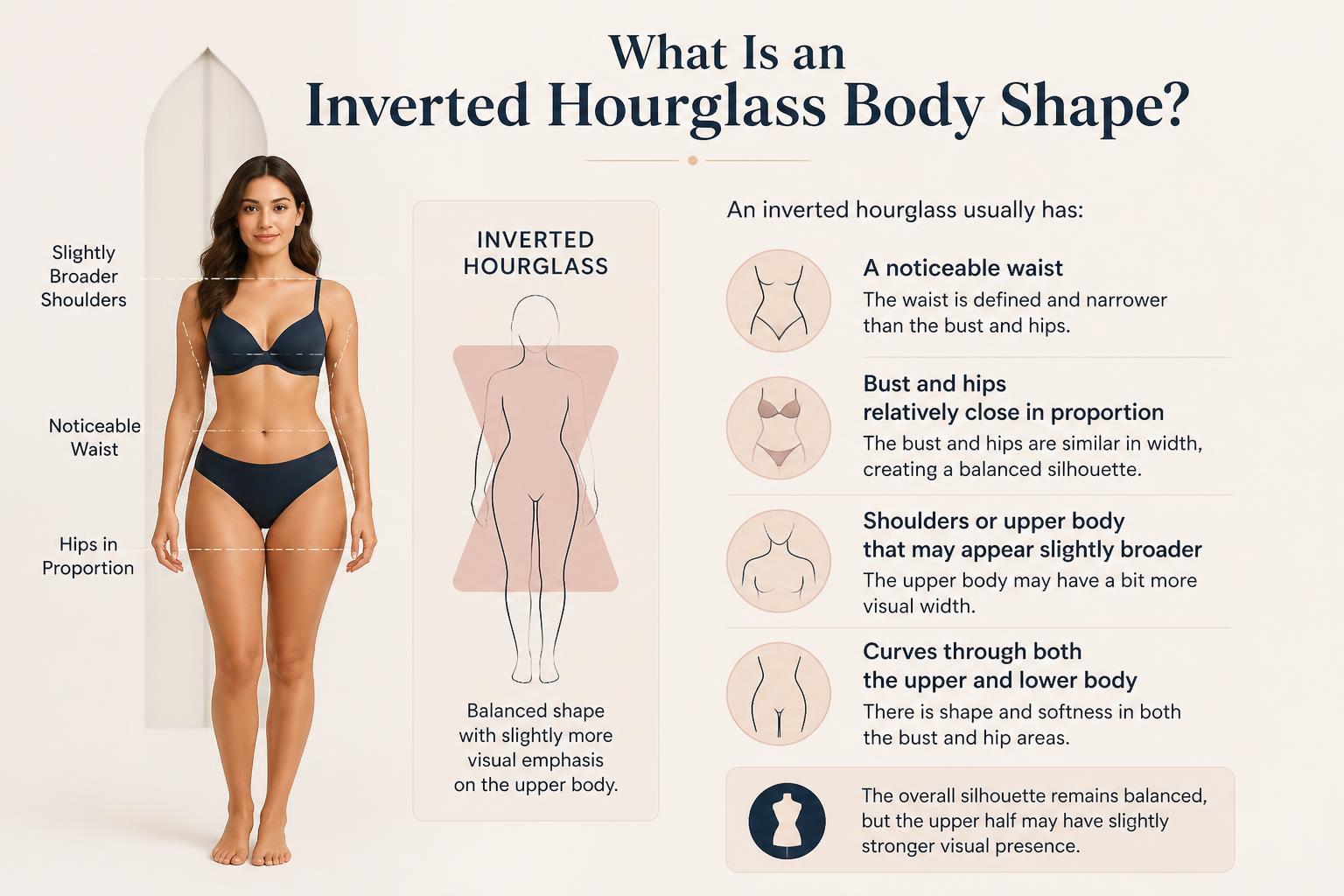
What Is an Inverted Hourglass Body Shape?
An inverted hourglass usually has:
- A noticeable waist
- Bust and hips relatively close in proportion
- Shoulders or upper body that may appear slightly broader
- Curves through both the upper and lower body
The overall silhouette remains balanced, but the upper half may have slightly stronger visual presence.
=> Related Article: Outfit Ideas for Inverted Hourglass-Shaped Body
Inverted Hourglass vs. Regular Hourglass
The two shapes are similar.
=> Related Article: Outfit Ideas for Apple-Shaped Body
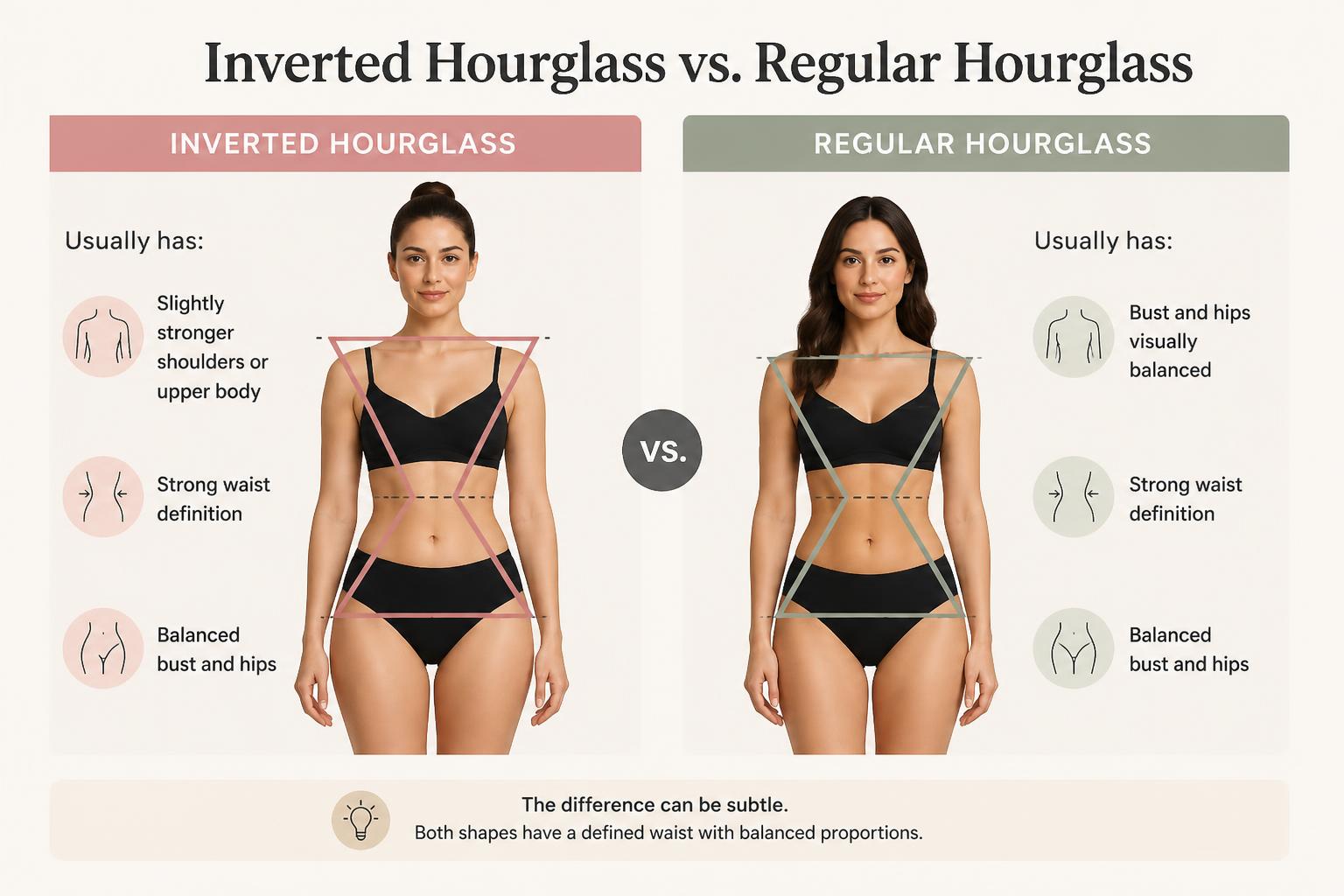
Hourglass
Usually has:
- Bust and hips visually balanced
- Strong waist definition
Inverted Hourglass
Usually has:
- Strong waist definition
- Balanced bust and hips
- Slightly stronger shoulders or upper body
The difference can be subtle.
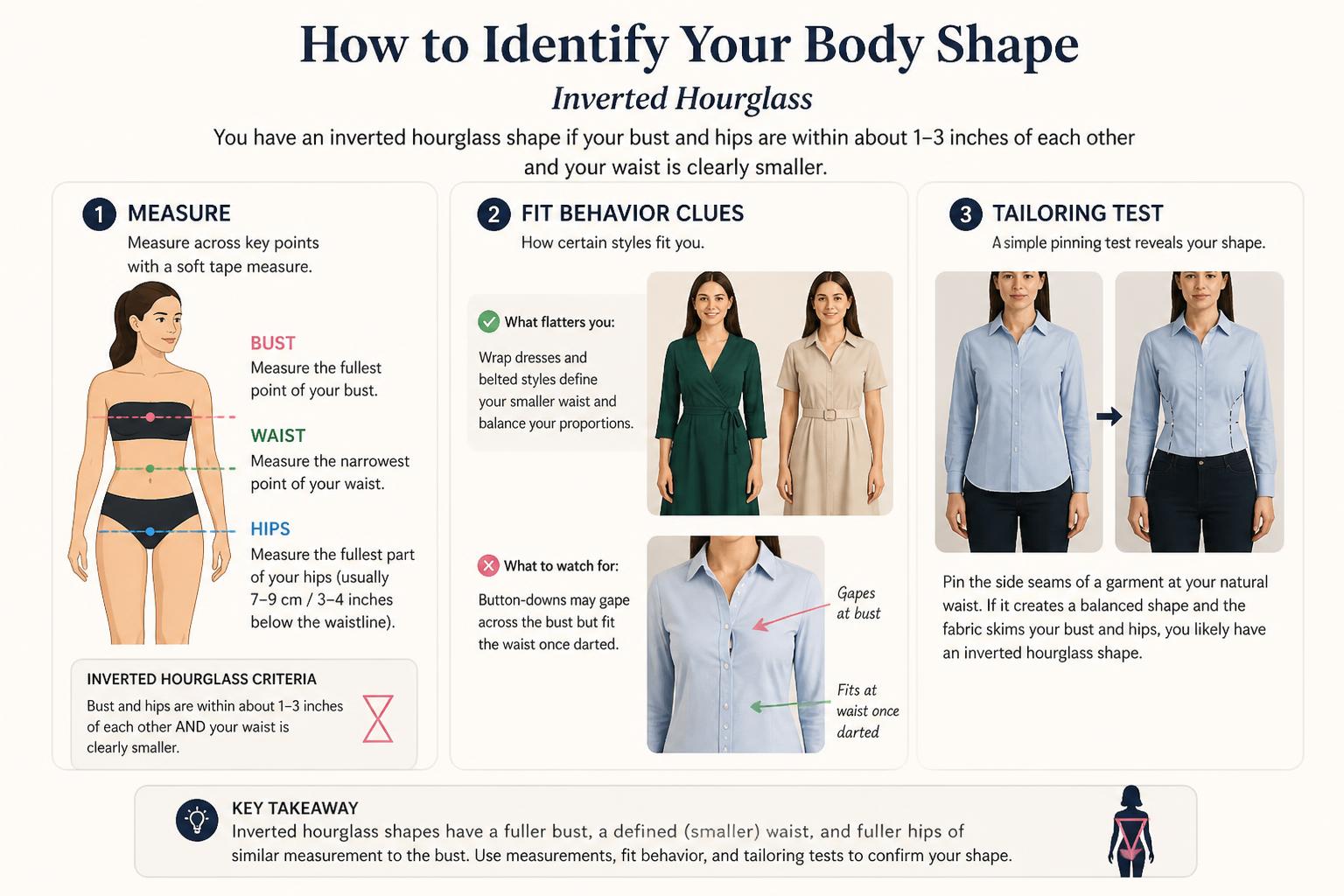
How to Identify Your Body Shape
Measure across the fullest point of your bust, the narrowest point of your waist, and the fullest part of your hips (usually 7–9 cm/3–4 inches below the waistline). If your bust and hips are within about 1–3 inches of each other and your waist is clearly smaller, you’re likely an inverted hourglass. Fit behavior gives practical confirmation: wrap dresses and belted styles consistently flatter your frame. If button-downs gape across the bust but sit well at the waist once darted, those are reliable signs. Tailoring tests like pinning side seams at the natural waist—help you see how garments will read on your frame.
=> Related Article: Outfit Ideas for Pear-Shaped Body: Easy Styling Guide for Better Balance and Confidence

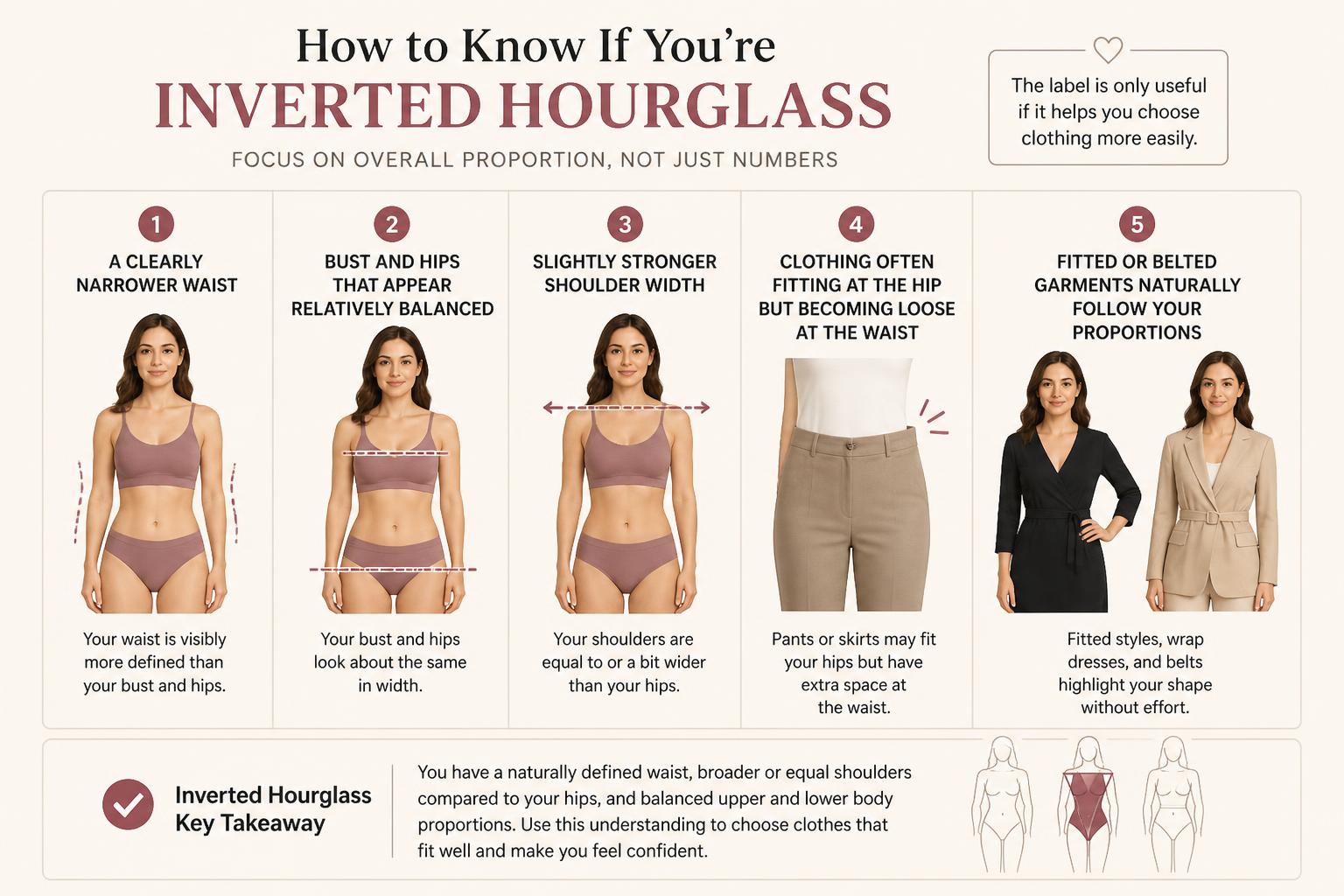
How to Know If You’re Inverted Hourglass:
Instead of relying only on measurements, look at overall proportion. You may notice:
- A clearly narrower waist
- Bust and hips that appear relatively balanced
- Slightly stronger shoulder width
- Clothing often fitting at the hip but becoming loose at the waist
- Fitted or belted garments naturally following your proportions
The label is only useful if it helps you choose clothing more easily.
=> Related Article: Outfit Ideas for Rectangle-Shaped Body (Straight or Athletic)
Main Core Styling Goals
Place belts and waist treatments at your natural waist—roughly 2–5 cm above the navel. Use built-in shaping like darts and princess seams to reduce gaping at the bust (typically by 1–2 cm) while preserving movement.
- Highlight the waist: Use belts, darts, and wrap shapes.
- Follow your curves: Use gentle tailoring to trace your natural lines.
- Keep it clean: Ensure shoulders are refined and hips look smooth.
- High-rise support: Use mid- to high-rise bottoms to support the waistline.

=> Related Article: Outfit Ideas for Inverted Hourglass-Shaped Body (
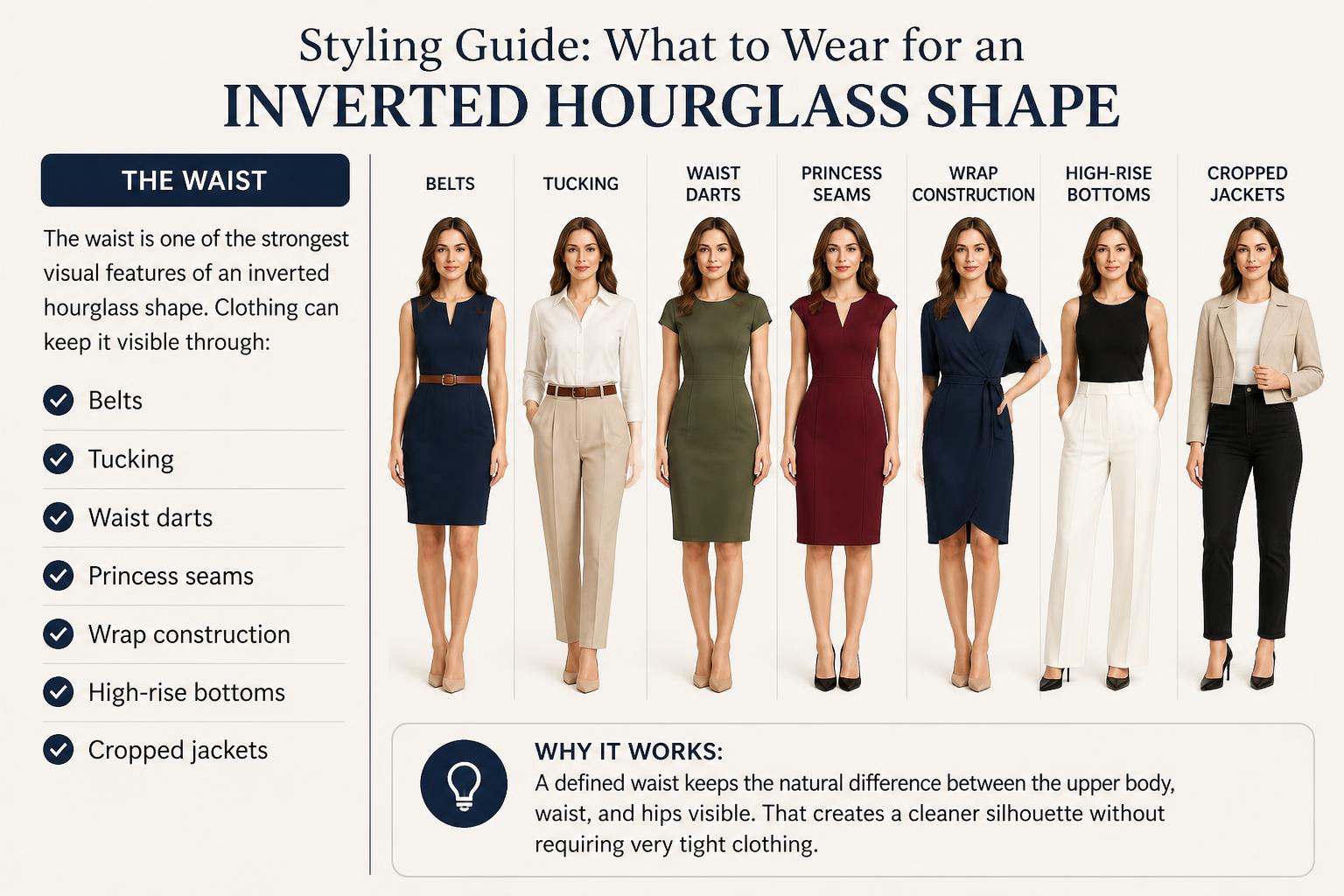
Styling Guide: What to Wear (and Why) For an Inverted Hourglass Shape
| Clothing Area | Useful Starting Point |
|---|---|
| Waist | Defined or gently emphasized |
| Necklines | V-neck, scoop, square |
| Tops | Fitted or softly shaped |
| Pants | Straight, bootcut, wide-leg |
| Jeans | Mid- or high-rise |
| Skirts | Pencil, A-line, straight |
| Dresses | Wrap, sheath, fit-and-flare |
| Jackets | Tailored, cropped, belted |
| Coats | Belted or softly shaped |
| Fabric | Drapey or moderately structured |
=> Related Article: How Shape Creates Optical Illusions in Clothing
Start With the Waist
The waist is one of the strongest visual features of an inverted hourglass shape. Clothing can keep it visible through:
- Belts
- Tucking
- Waist darts
- Princess seams
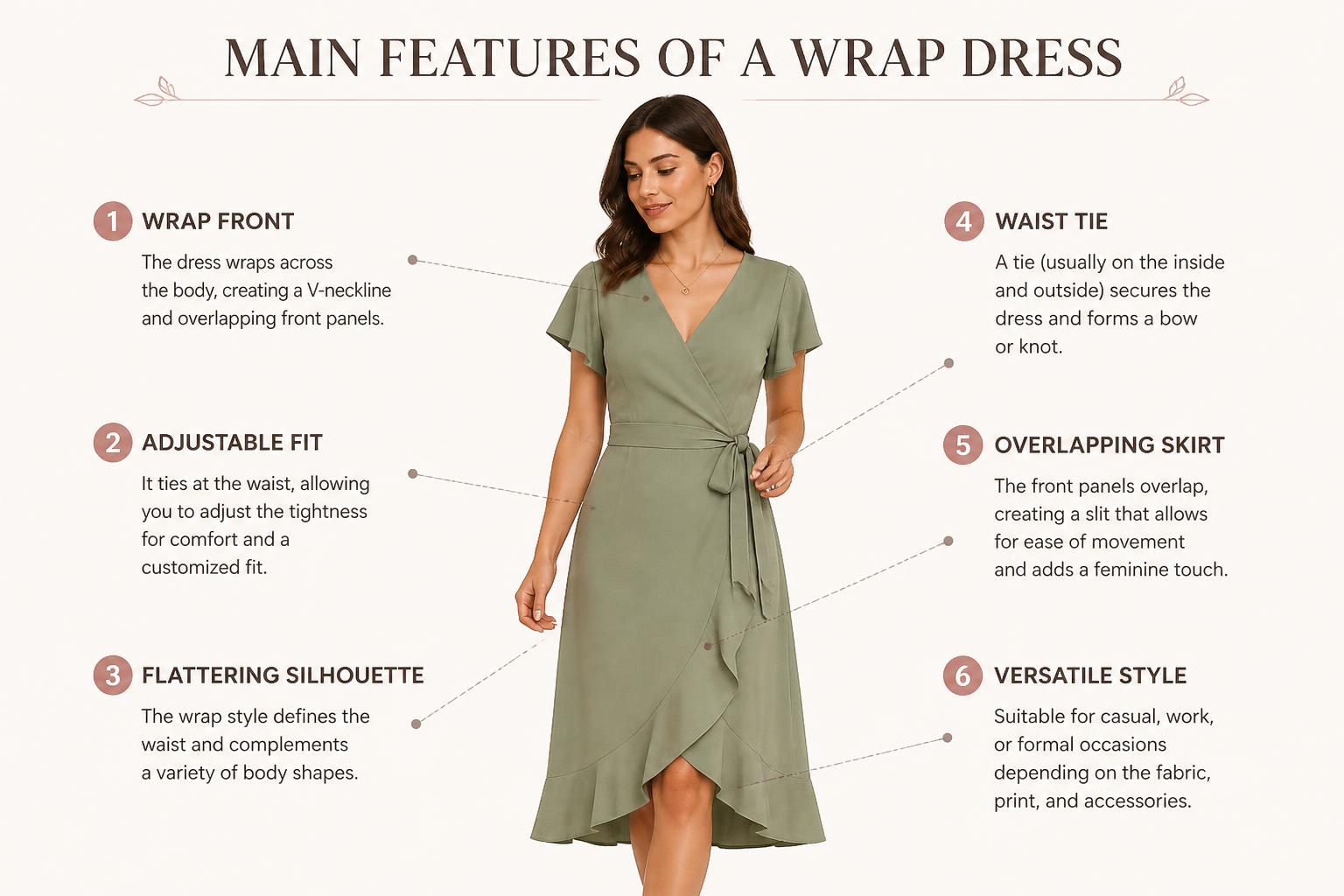
- Wrap construction
- High-rise bottoms
- Cropped jackets
=> Why It Works: A defined waist keeps the natural difference between the upper body, waist, and hips visible. That creates a cleaner silhouette without requiring very tight clothing.
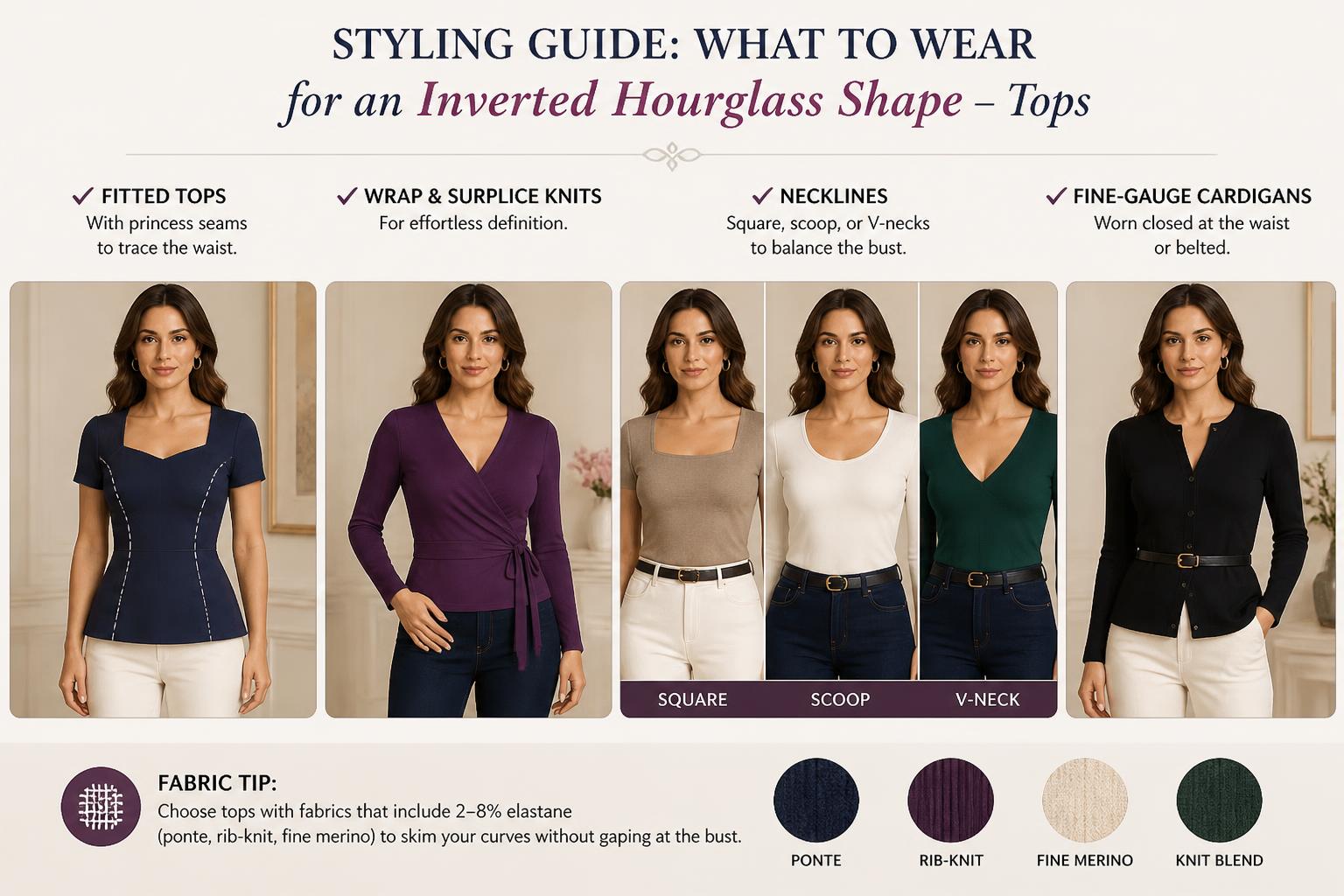
Tops
Choose tops with princess seams or a slight peplum. Fabrics with 2–8% elastane (ponte, rib-knit, fine merino) allow the garment to skim your curves without gaping at the bust.
- Fitted tops: With princess seams to trace the waist.
- Wrap & Surplice knits: For effortless definition.
- Necklines: Square, scoop, or V-necks to balance the bust.
- Fine-gauge cardigans: Worn closed at the waist or belted.

=> Related Article: The Allure of the Abaya: How Fabric and Style Shape True Elegance
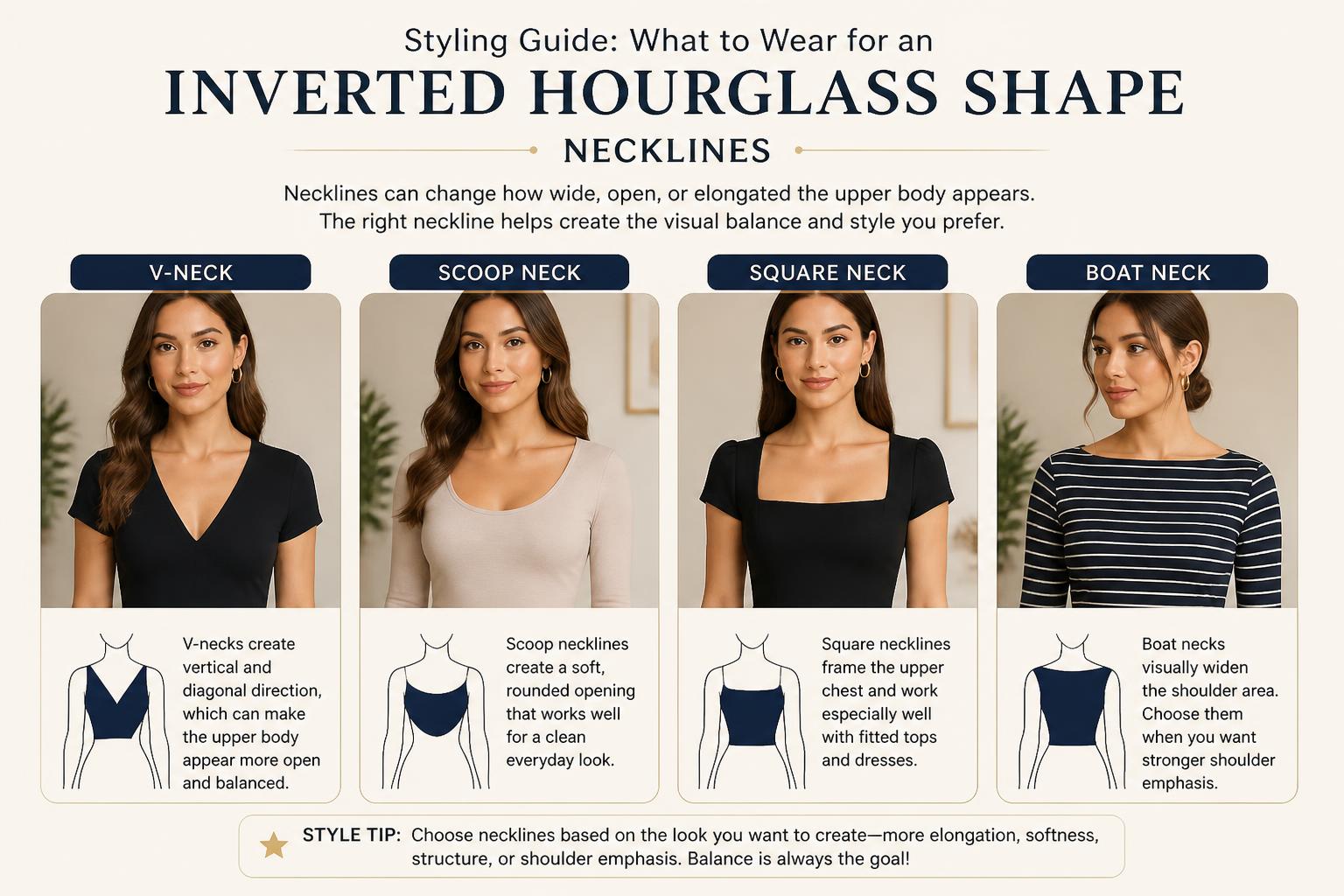
Necklines
Necklines can change how wide, open, or elongated the upper body appears. The right neckline helps create the visual balance and style you prefer.
- V-Neck: V-necks create vertical and diagonal direction, which can make the upper body appear more open and balanced.
- Scoop Neck: Scoop necklines create a soft, rounded opening that works well for a clean everyday look.
- Square Neck: Square necklines frame the upper chest and work especially well with fitted tops and dresses.
- Boat Neck: Boat necks visually widen the shoulder area. Choose them when you want stronger shoulder emphasis.
=> Related Article: The Art of Style: Shape The Silhouette of Style
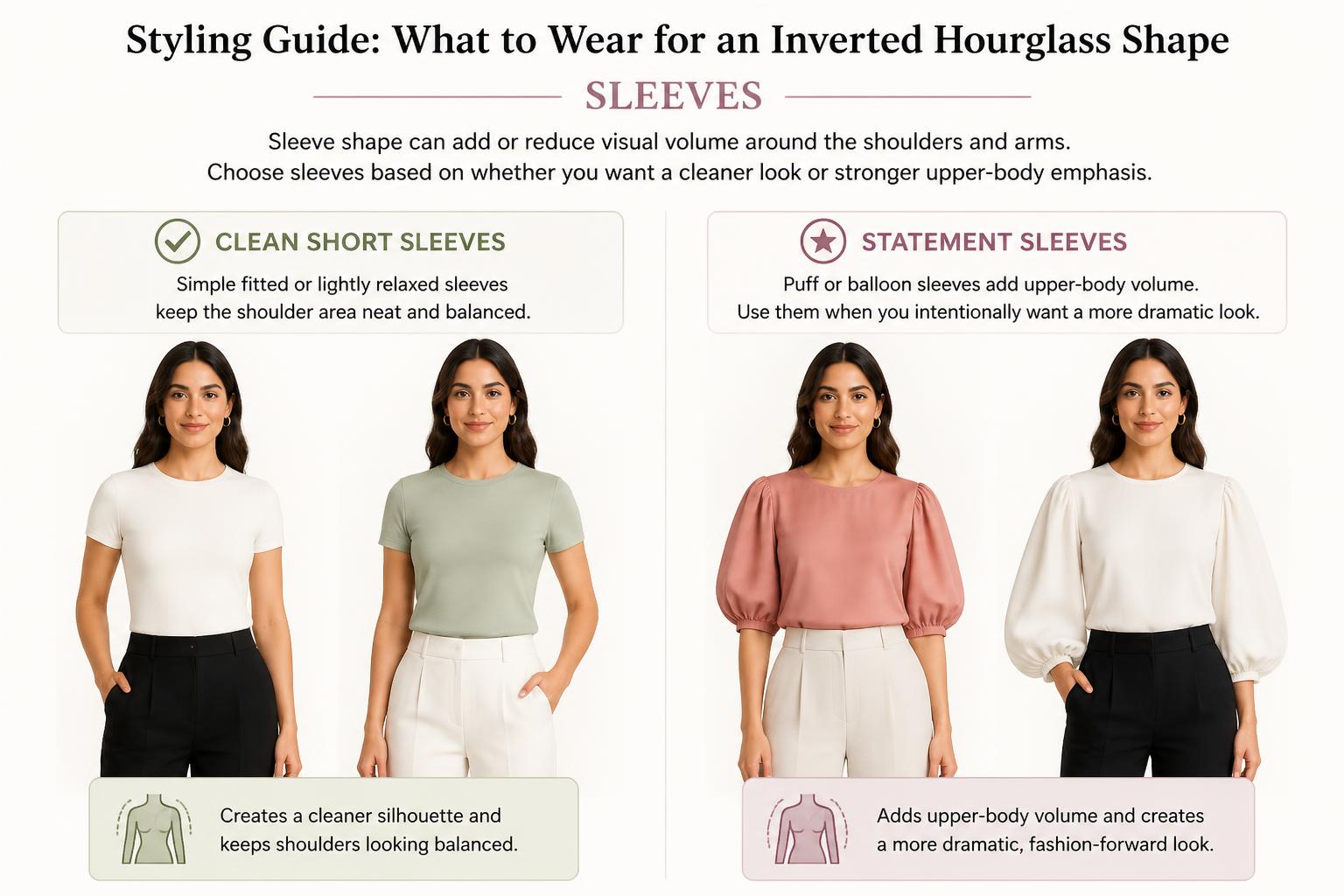
Sleeves
Sleeve shape can add or reduce visual volume around the shoulders and arms. Choose sleeves based on whether you want a cleaner look or stronger upper-body emphasis.
- Clean Short Sleeves: Simple fitted or lightly relaxed sleeves keep the shoulder area neat and balanced.
- Statement Sleeves: Puff or balloon sleeves add upper-body volume. Use them when you intentionally want a more dramatic look.
Dresses & Jumpsuits
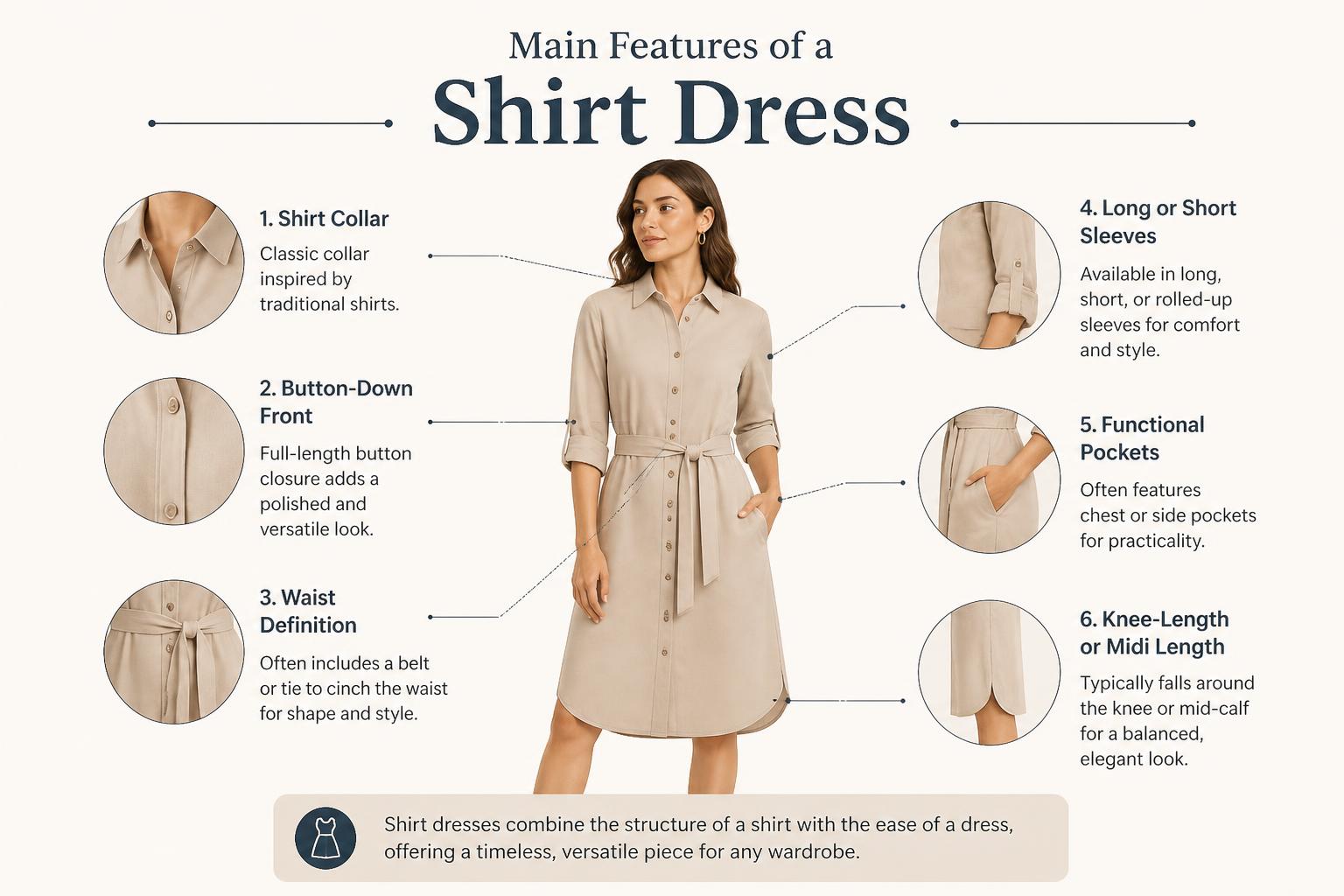
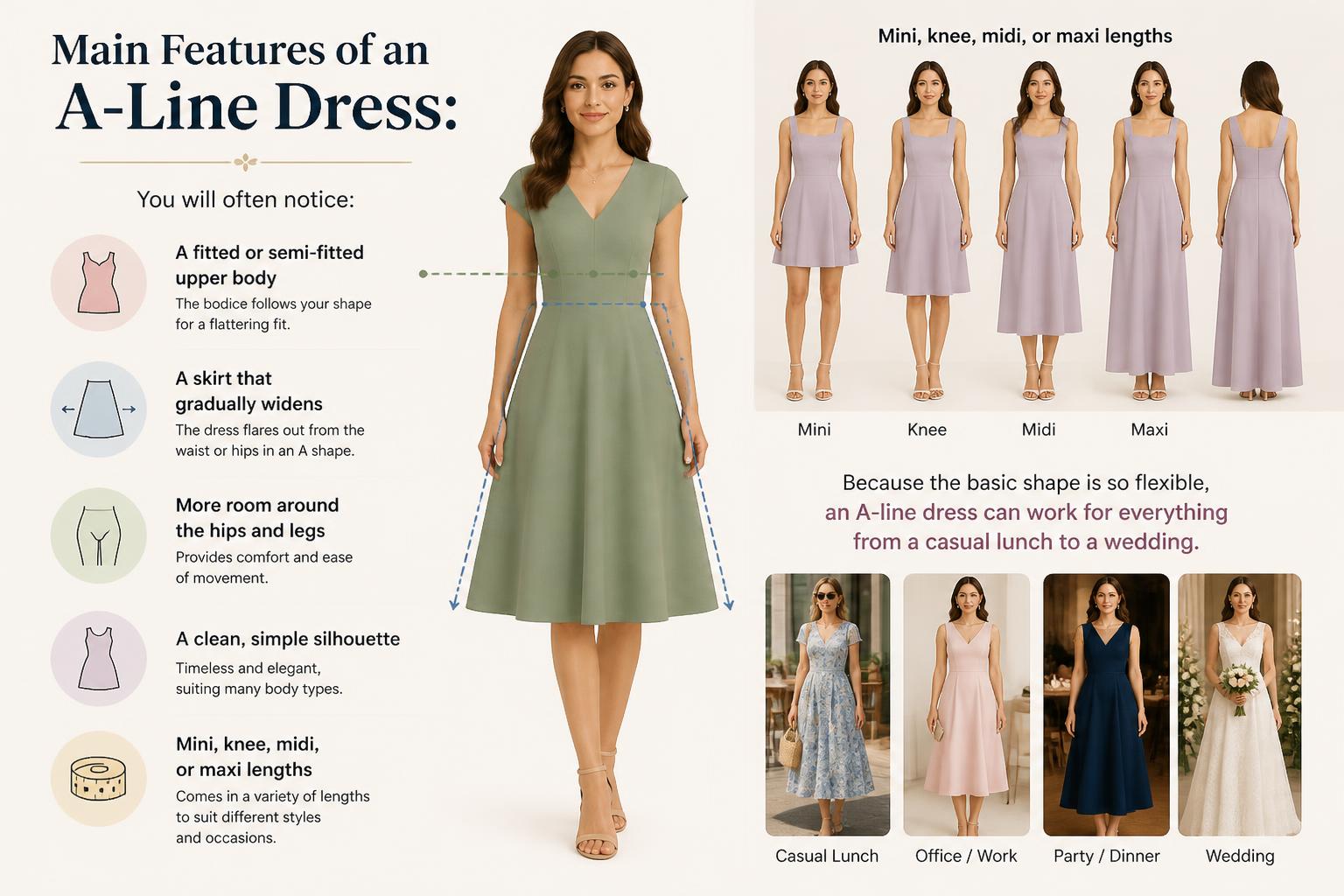
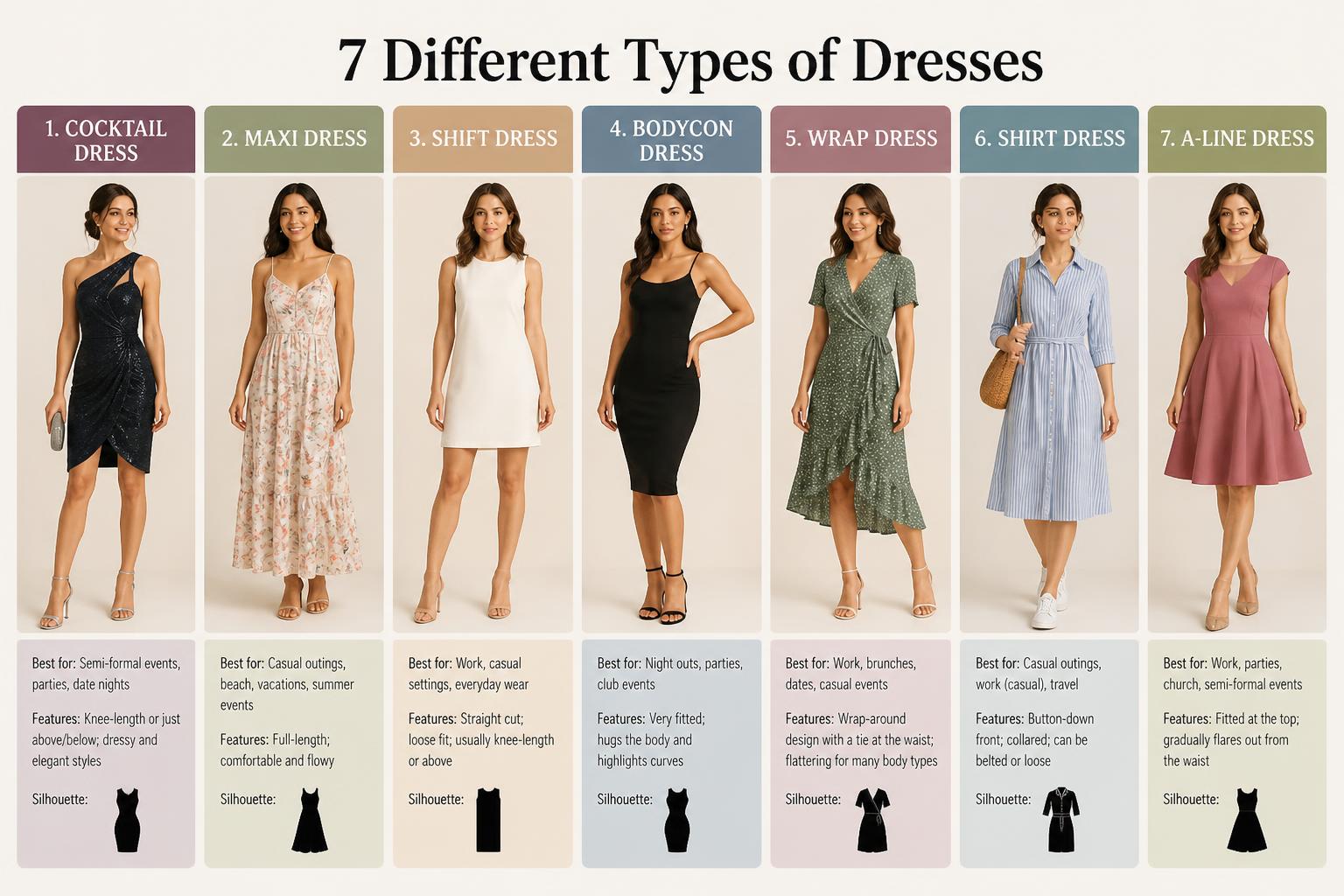
Dresses can work particularly well because they allow waist shaping and overall silhouette to be controlled in one garment. Useful options include:
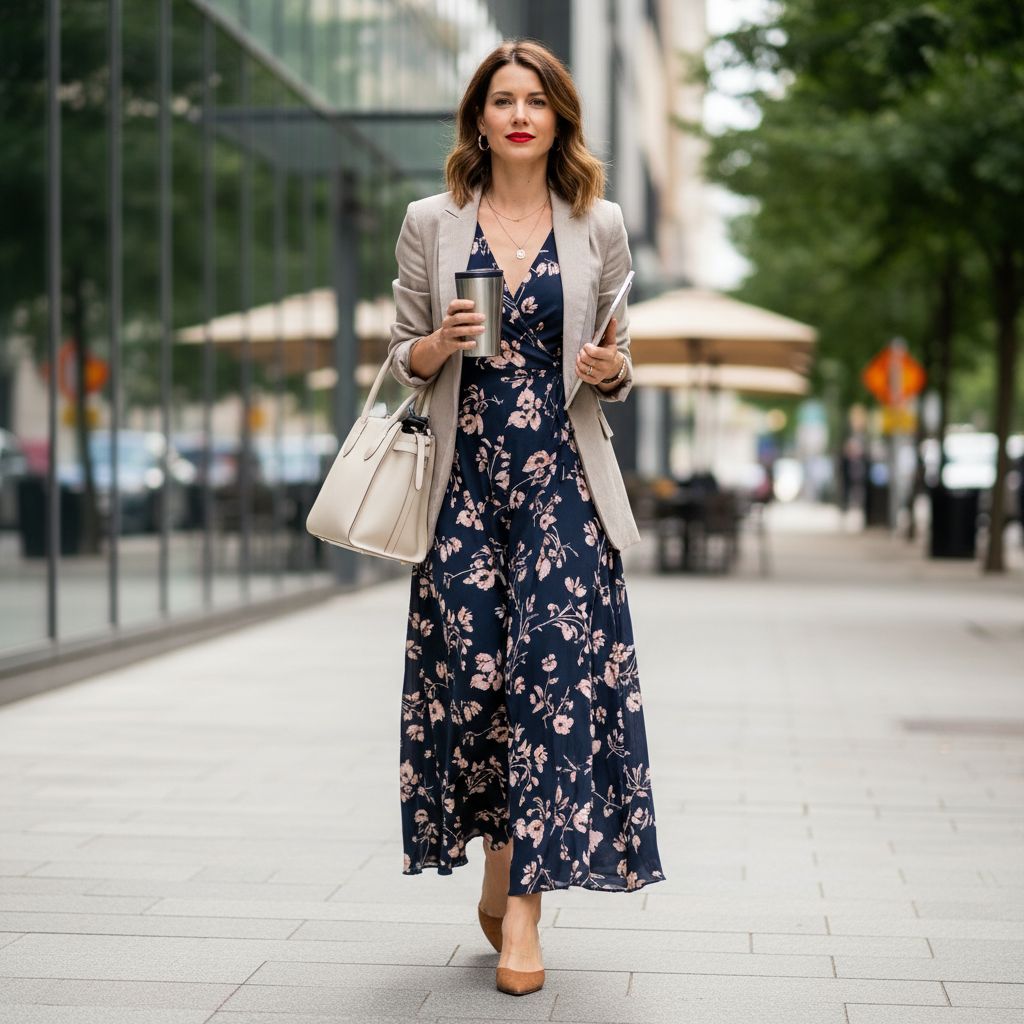
- Wrap dresses
- Sheath dresses
- Fit-and-flare dresses
- Belted dresses
- Shirt dresses
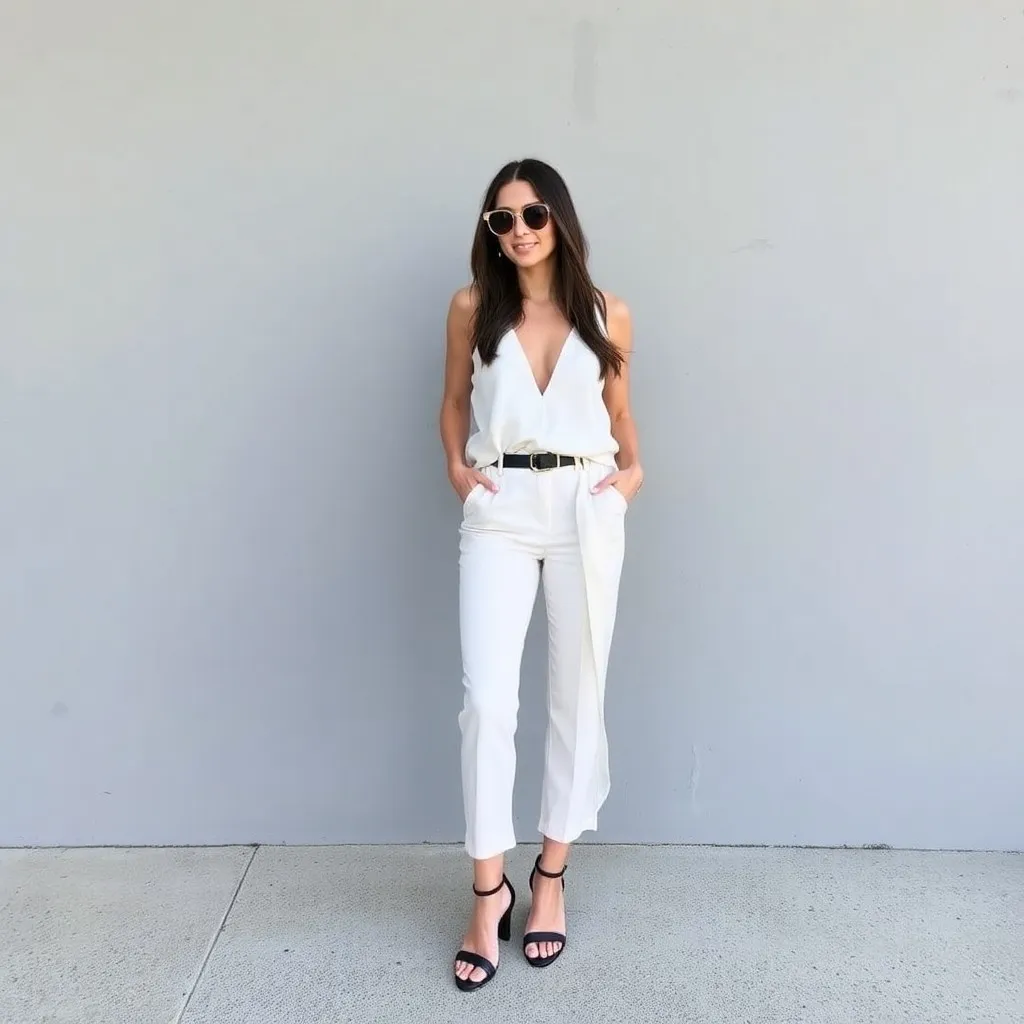
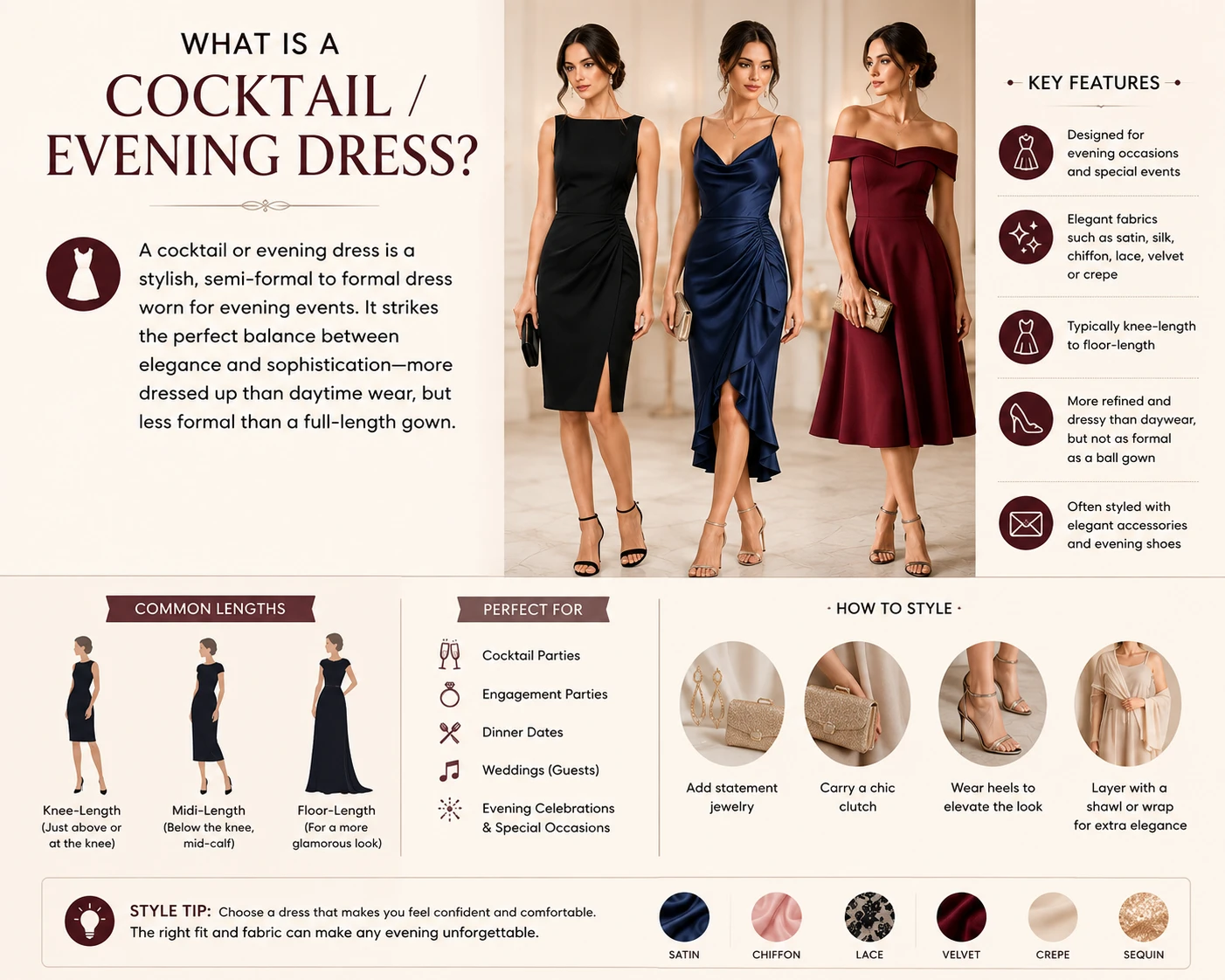
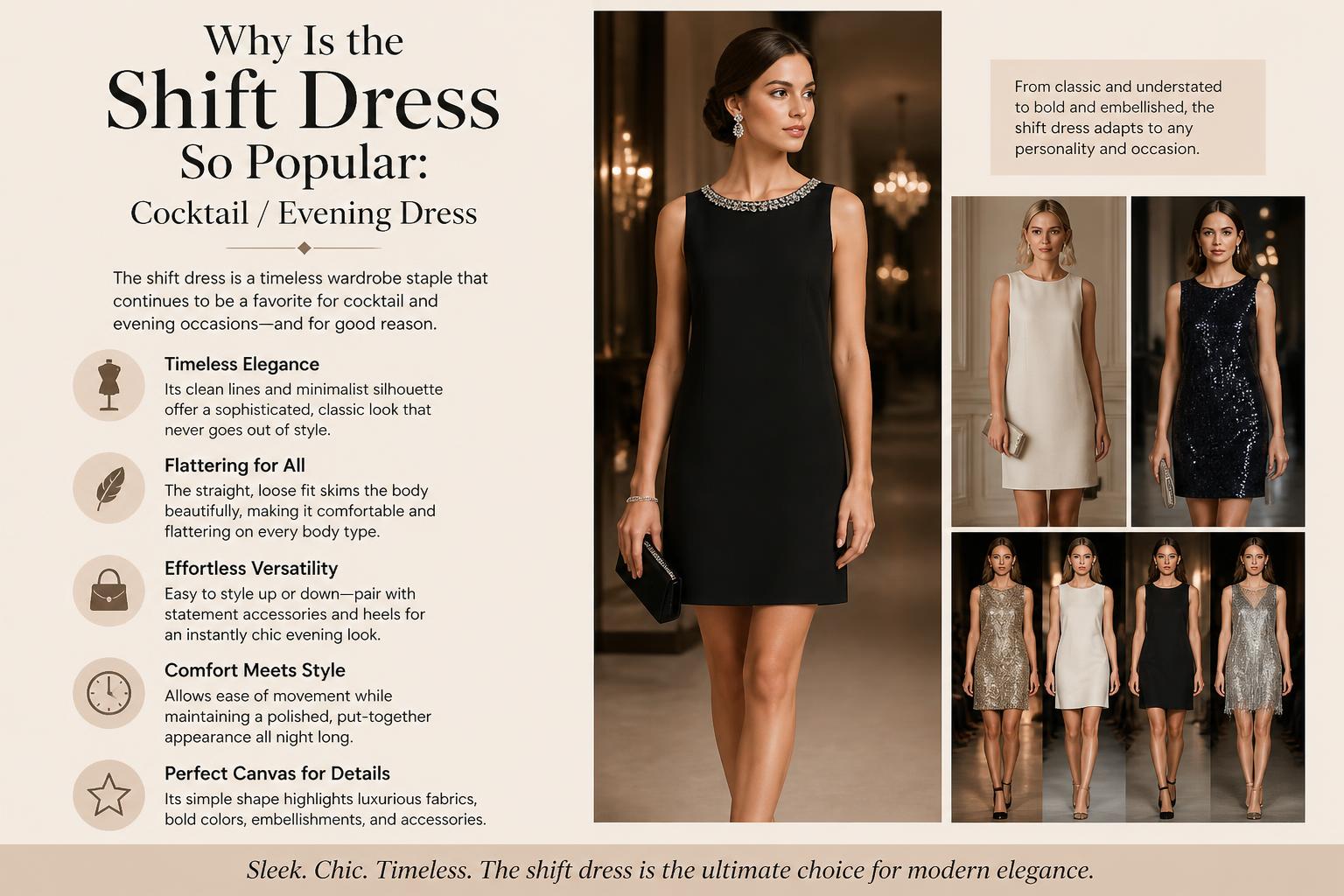
Wrap dresses and sheath dresses with shaping seams are your best friends. Opt for fabrics like crepe or ponte with 2–4% elastane so the dress skims—not squeezes—your curves.
Jackets & Layers
Outerwear can easily hide or emphasize the waist. Look at the length, shoulder structure, and waist shaping when choosing jackets and coats.
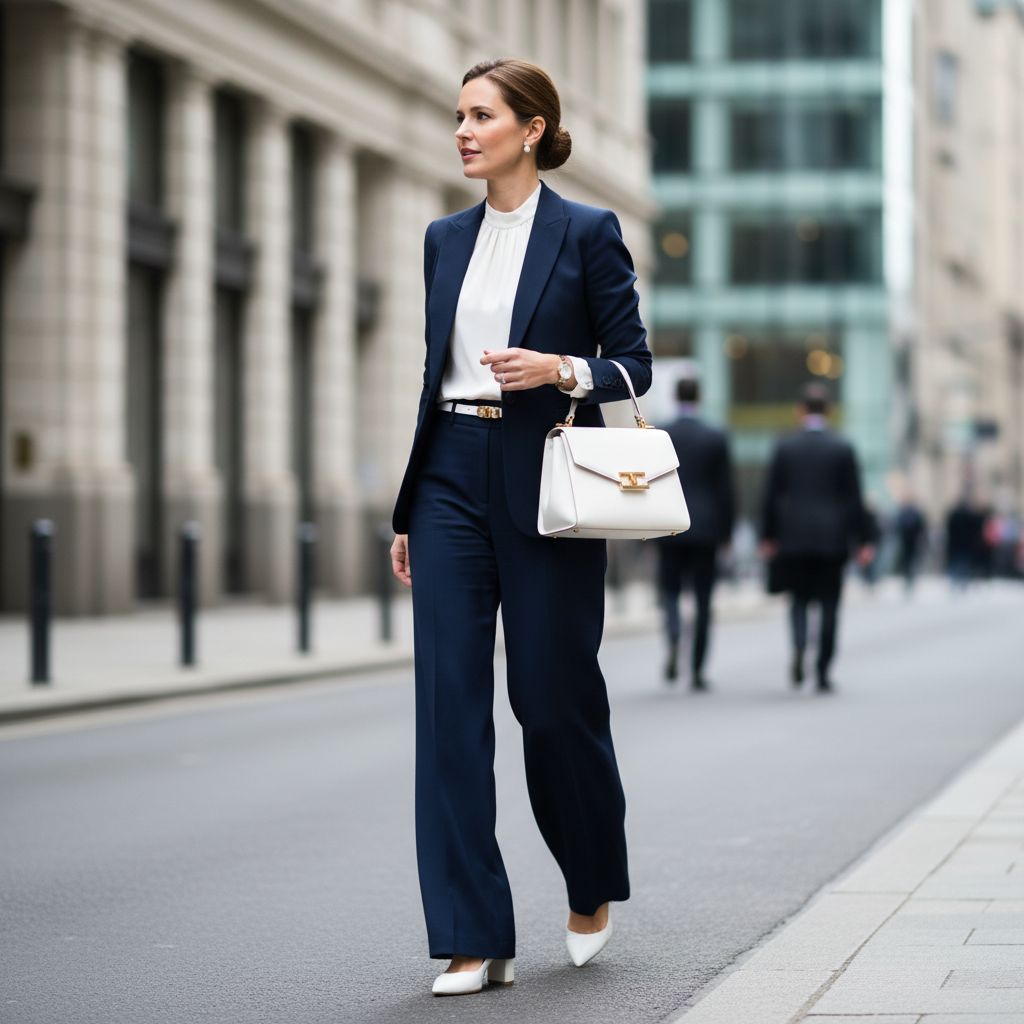
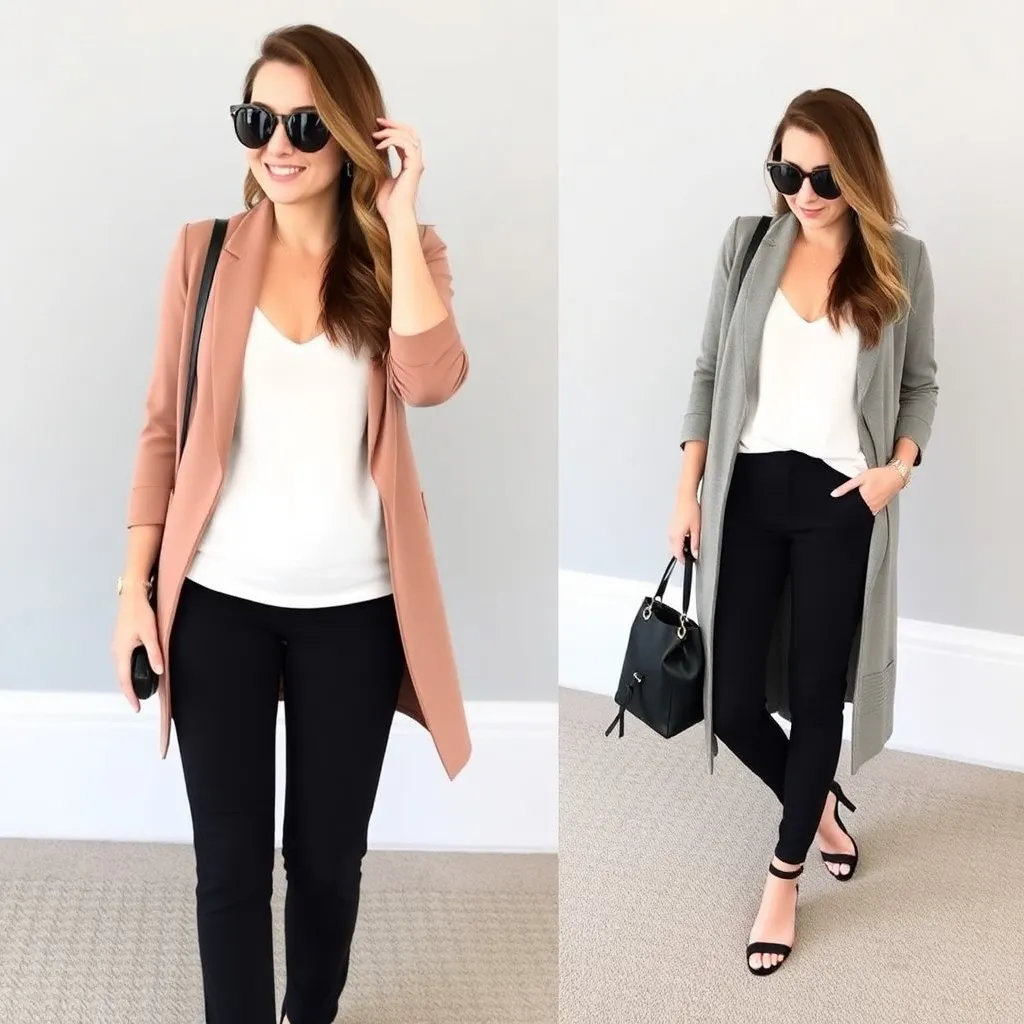
- Tailored blazers: Single-breasted with light shaping.
- Cropped jackets: Hitting at or just above the natural waist.
- Belted coats: To keep your curve line visible even in winter.
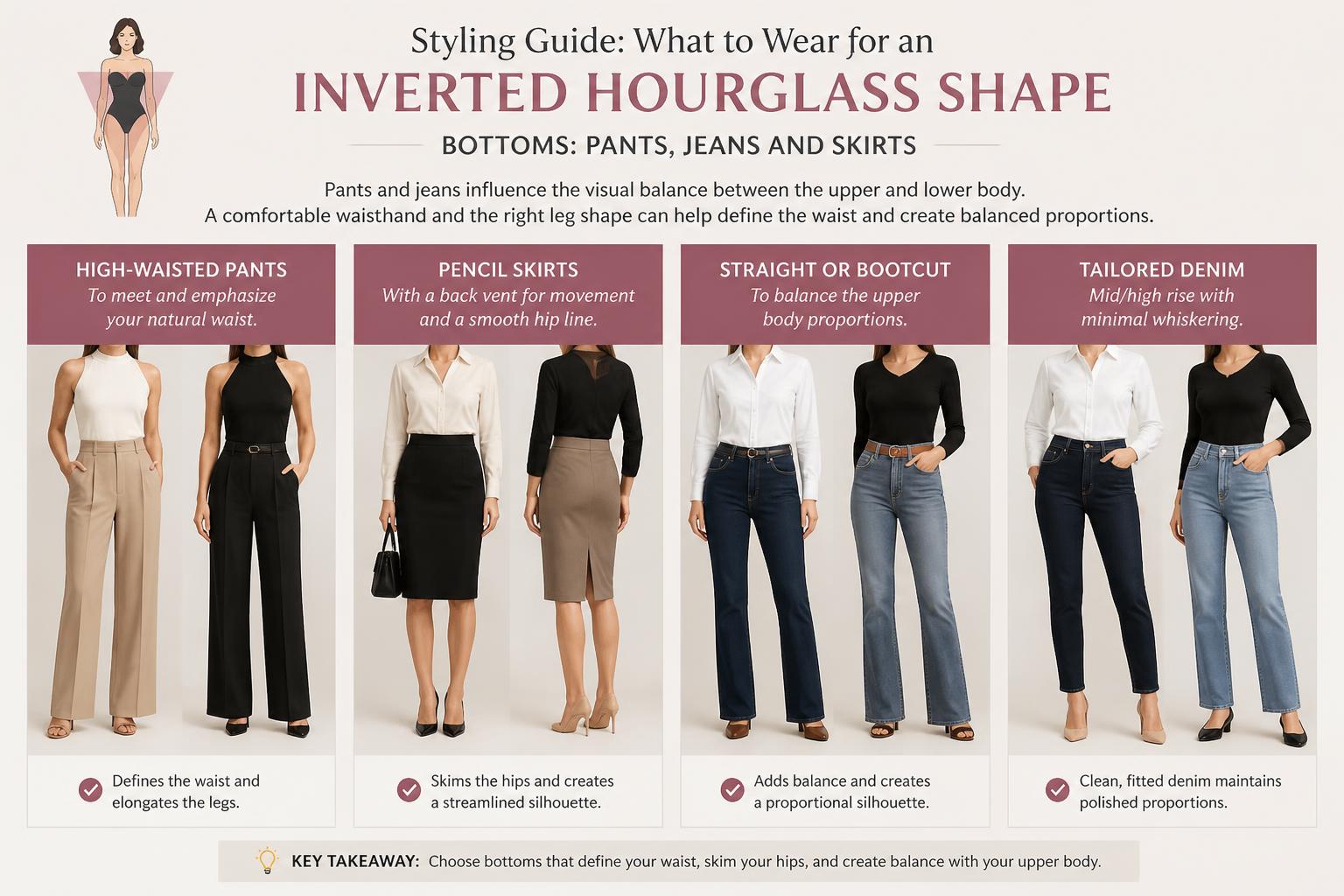
Bottoms: Pants, Jeans and Skirts
Pants and jeans influence the visual balance between the upper and lower body. A comfortable waistband and the right leg shape can help define the waist and create balanced proportions.
- High-waisted pants: To meet and emphasize your natural waist.
- Pencil skirts: With a back vent for movement and a smooth hip line.
- Straight or Bootcut: To balance the upper body proportions.
- Tailored denim: Mid/high rise with minimal whiskering.
What to Avoid
- Oversized, boxy pieces: These swallow your waist and hide your shape.
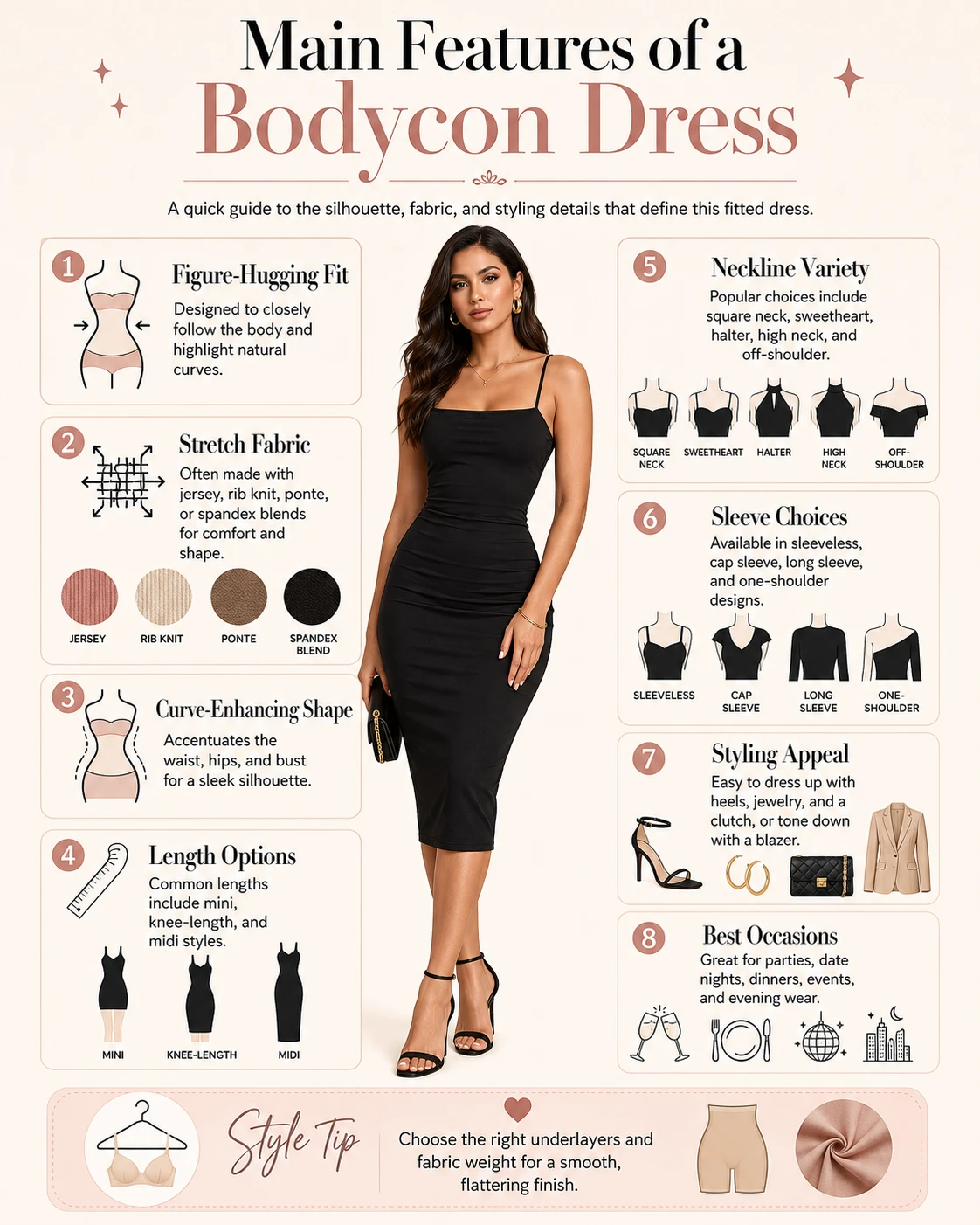
- Too-tight bodycon: That pulls at seams or rides up uncomfortably.
- Heavy shoulder padding: This throws off the natural balance of your frame.
- Low-rise bottoms: They shorten the midsection and obscure the waist.
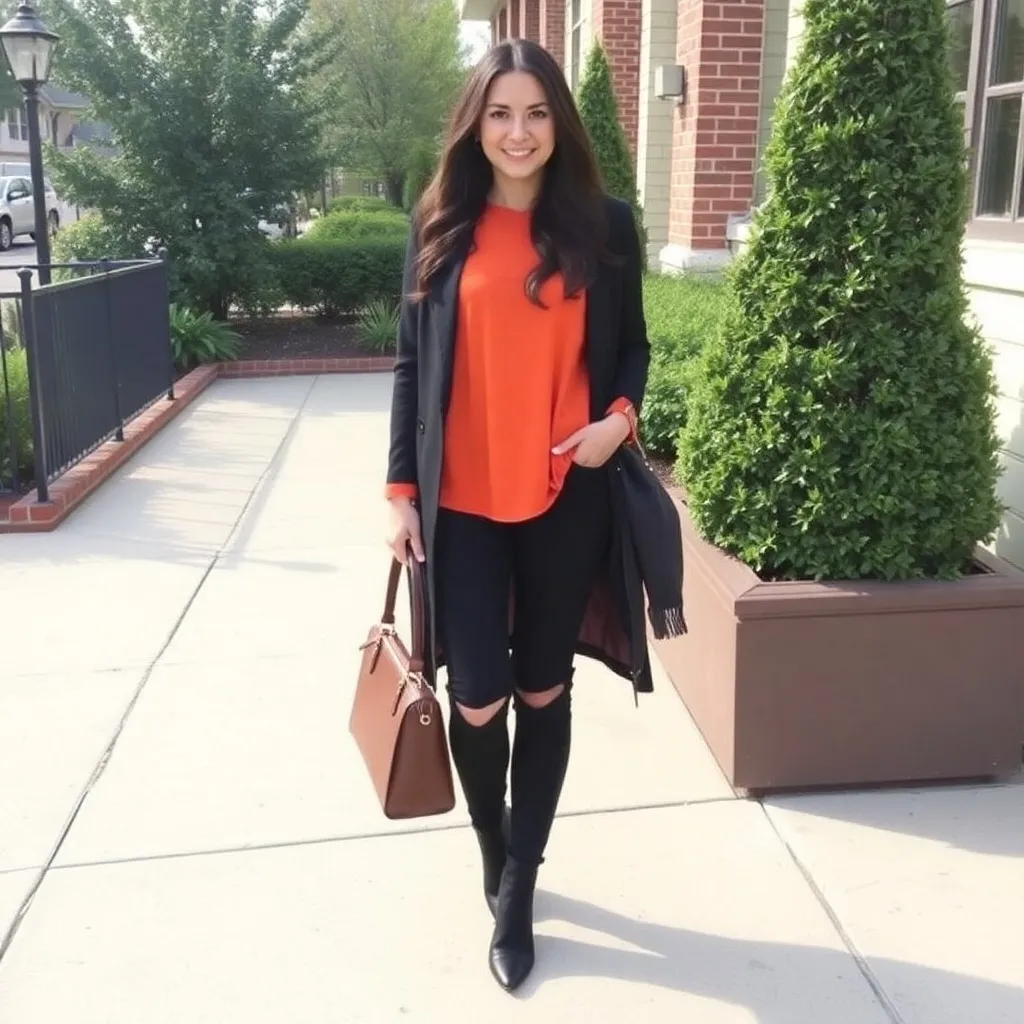
Final Word / Conlusion
An inverted hourglass body shape is mainly about proportion, not rules. If you want to highlight your natural shape, focus on clothing that fits comfortably through the bust and hips while keeping the waist visible. A useful formula is: Comfortable Fit + Defined Waist + Balanced Proportion + Suitable Fabric + Personal Style = Your Best Outfit