The Art of Style: Shape The Silhouette of Style

How silhouette makes a garment speak before anyone sees the details. When people look at an outfit, they read the outline first. That outline is shape, also called silhouette. Shape is the “big form” of the garment from a distance. It can feel sharp, soft, relaxed, bold, classic, or modern without using any color or print. But here’s the pushback: shape alone won’t save a design. If the fabric is wrong, or the fit is off, the silhouette collapses. Treat shape like a system, not a label.
=> Read More: T Shirts Manufacturing Vietnam | Mekong Garment Factory
What “Shape” Really Means (and what it does not mean)
Shape / silhouette is the outer contour of a garment. Think: what the garment looks like as a shadow. Shape is NOT the same as fit. It is the overall form: A-line, boxy, column, cocoon, hourglass… It is not the same as size; a garment can be oversized and still have a clear A-line or boxy shape.
- Fit = How close the garment sits on the body (tight, regular, oversized).
- Shape = The outline it creates (A-line, boxy, column, cocoon).
| Shape Family | Visual Test | Vibe | How to Build It |
|---|---|---|---|
| Column | Straight sides | Sleek, modern | Straight panels |
| A-line | Hem wider than top | Classic | Flare panels |
| Boxy | Width is obvious | Street, casual | Dropped shoulder |
| Cocoon | Rounded outline | Artsy, cozy | Volume in mid + taper |
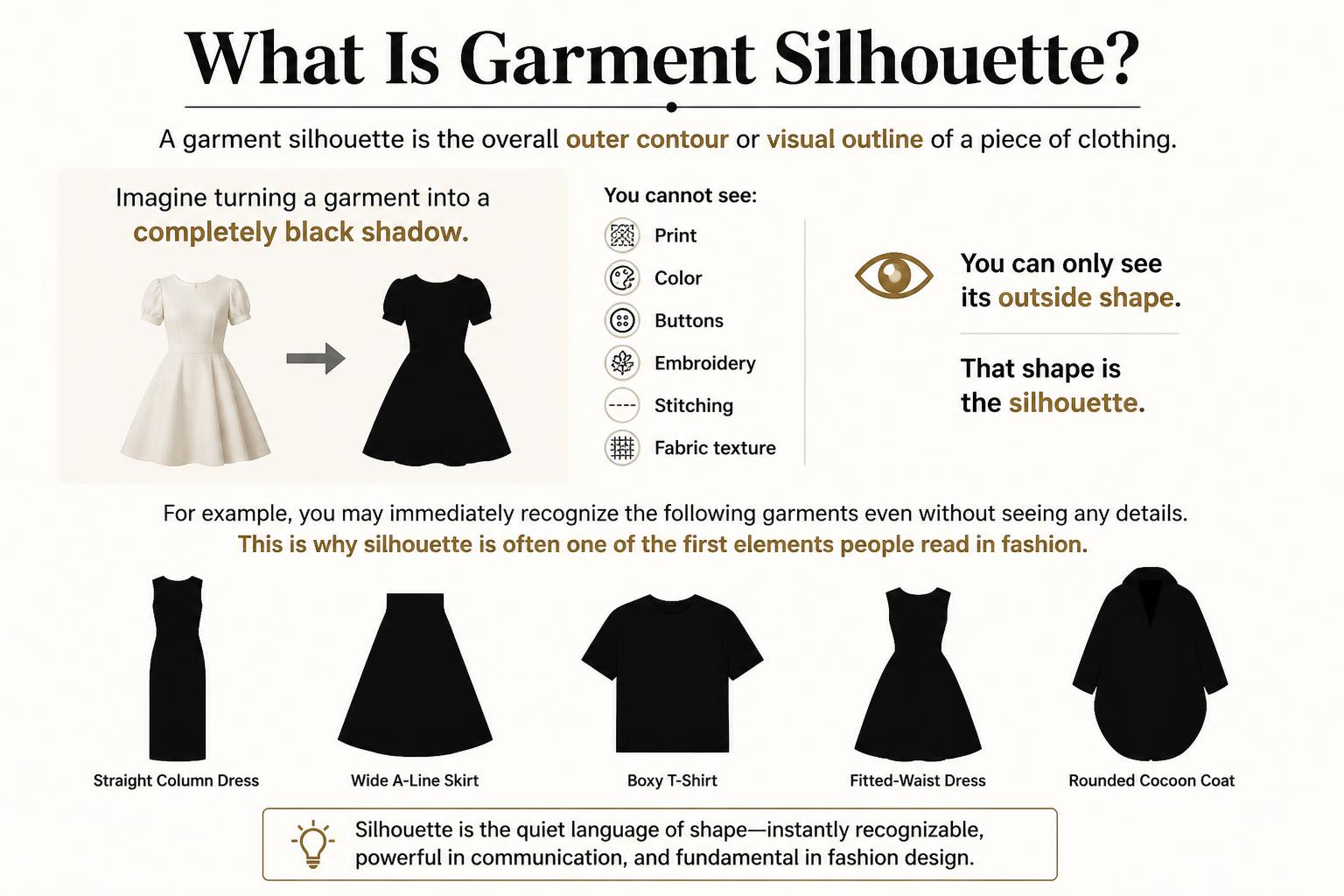
Imagine turning a garment into a completely black shadow.
You cannot see:
- Color
- Buttons
- Embroidery
- Stitching
- Fabric texture
You can only see its outside shape. That shape is the silhouette.
For example, you may immediately recognize:
- A straight column dress
- A wide A-line skirt
- A boxy T-shirt
- A fitted-waist dress
- A rounded cocoon coat
even without seeing any details.
This is why silhouette is often one of the first elements people read in fashion.
Why Silhouette Matters in Fashion
Silhouette creates the first visual message of a garment. A small change in outline can completely change the mood.
For example:
- Straight + Narrow = Clean / Minimal / Modern
- Wide + Relaxed = Casual / Comfortable
- Defined Waist + Wider Skirt = Romantic / Classic
- Strong Shoulder + Narrow Lower Body = Powerful / Dramatic
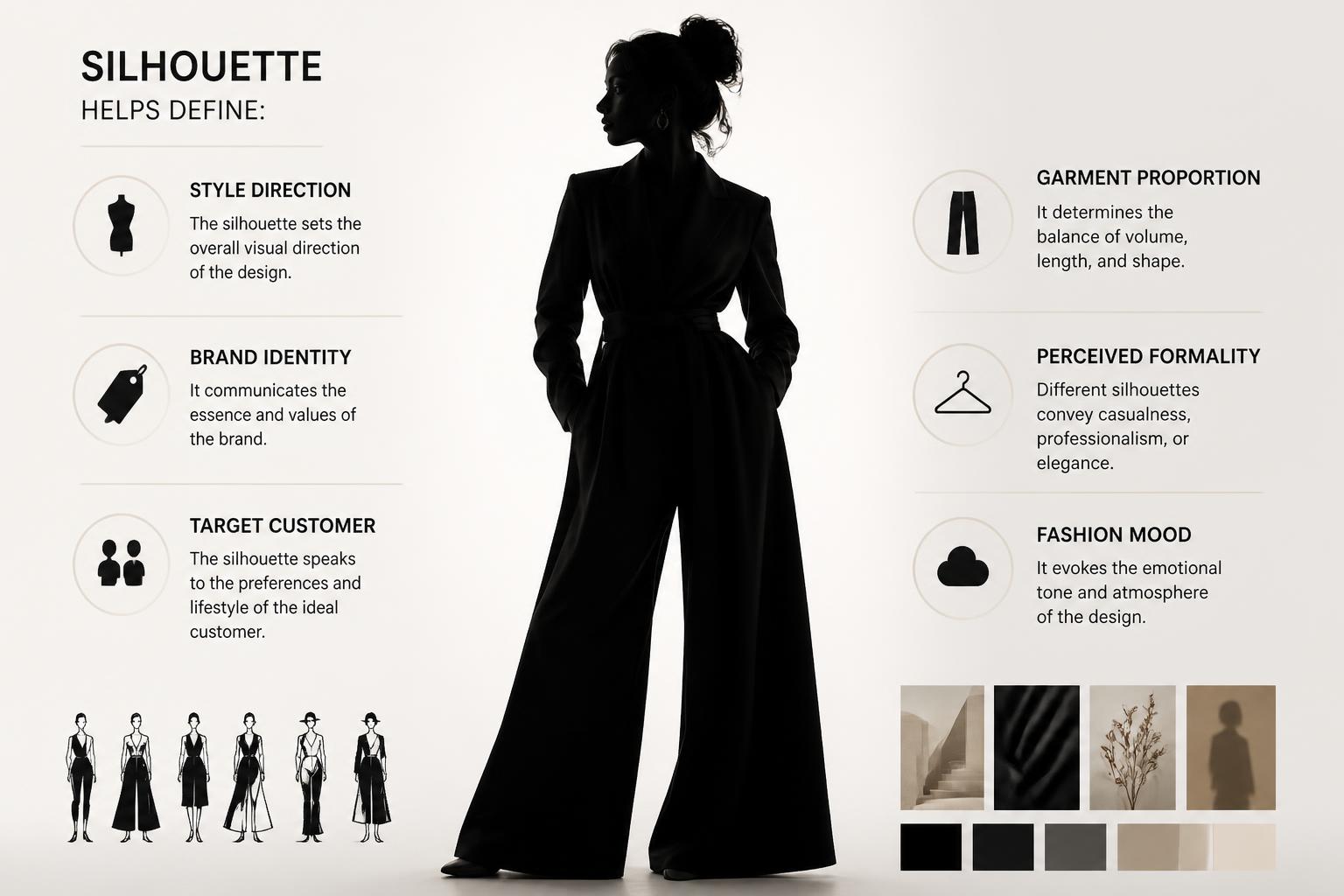

Silhouette helps define:
- Style direction
- Brand identity
- Target customer
- Garment proportion
- Perceived formality
- Fashion mood
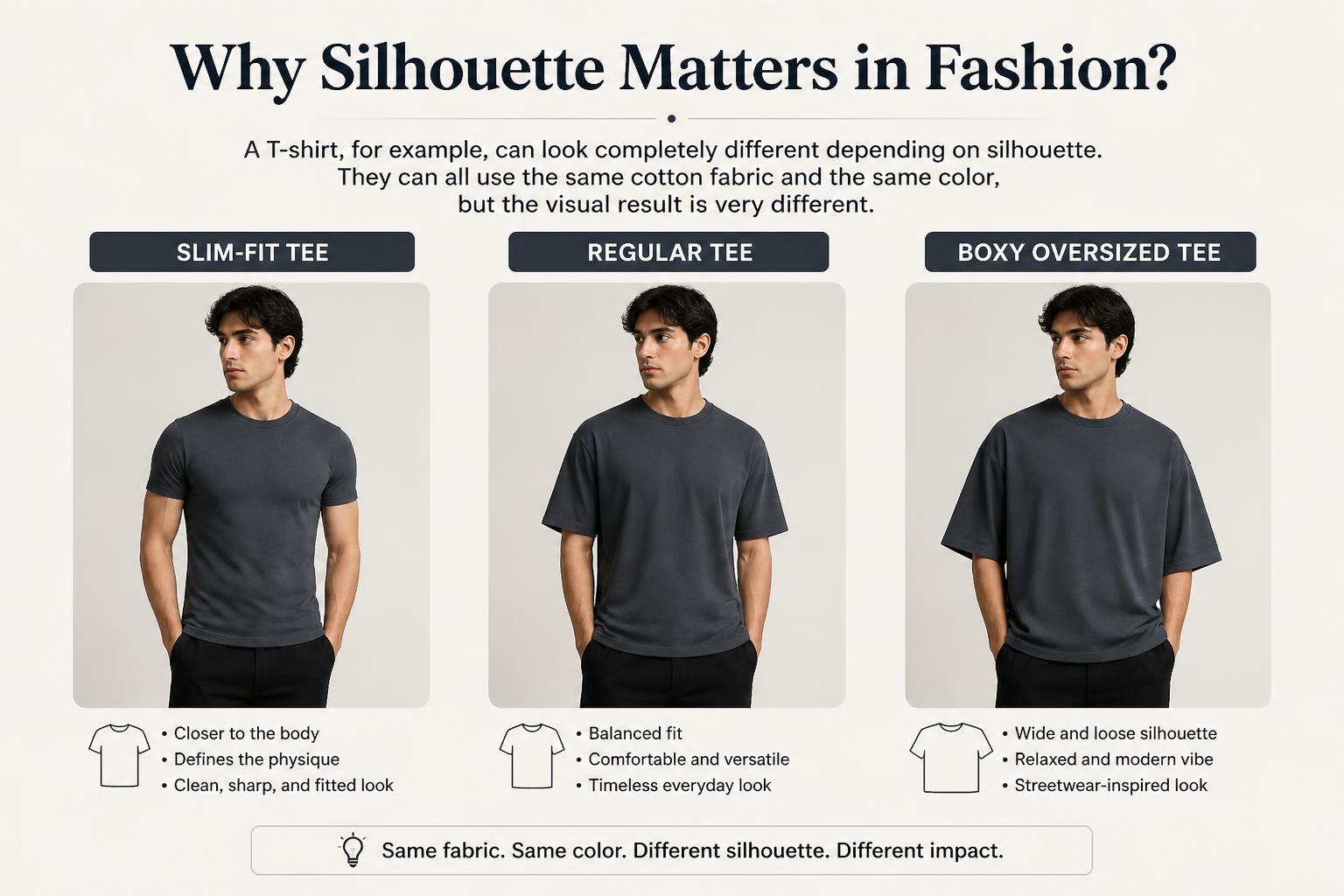
A T-shirt, for example, can look completely different depending on silhouette. Compare: Slim-Fit Tee
- with: Regular Tee
- with: Boxy Oversized Tee
They can all use the same cotton fabric and the same color, but the visual result is very different.
The Core Silhouette Families
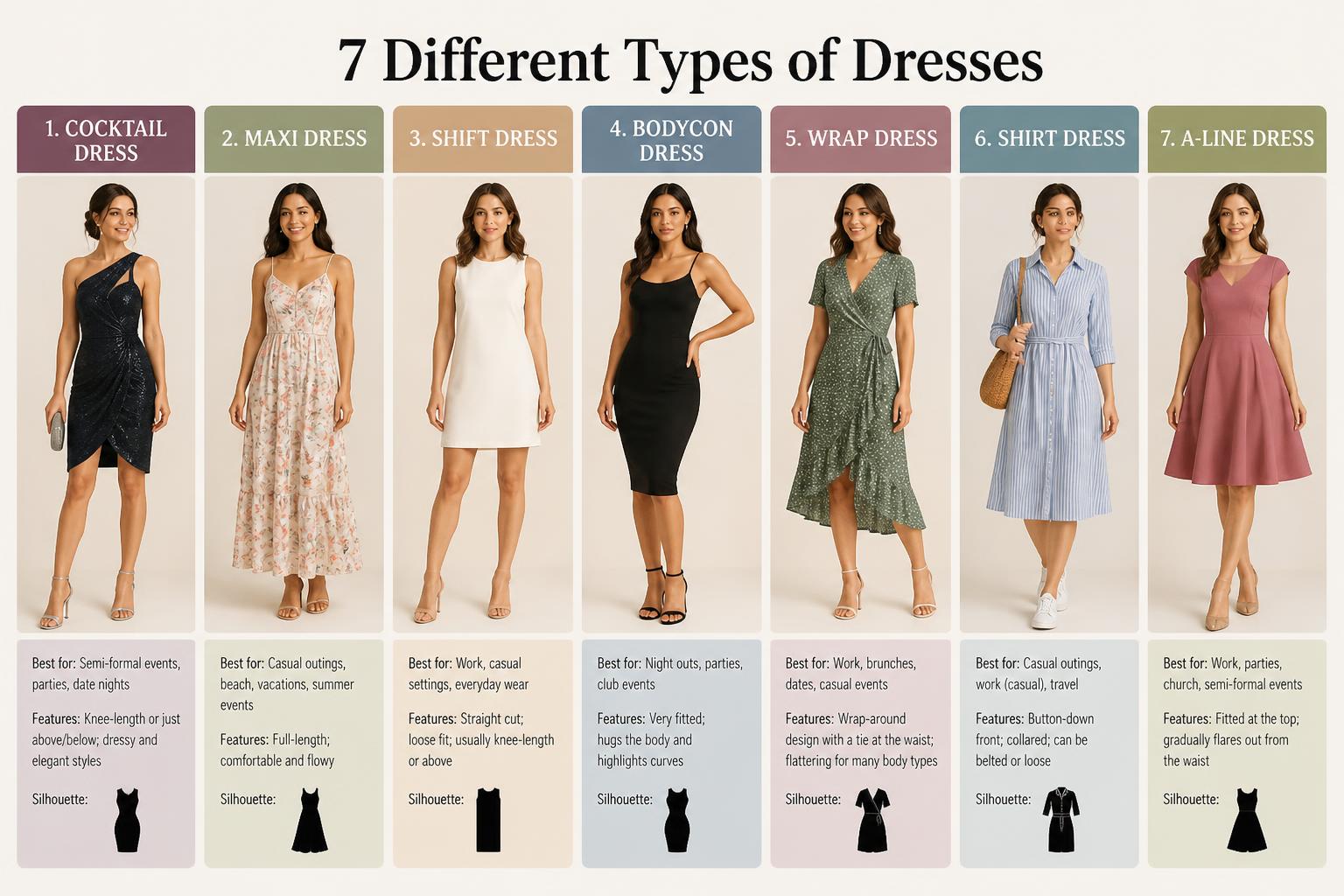
You don’t need 50 fashion terms. These 7 families cover most products in design and production.
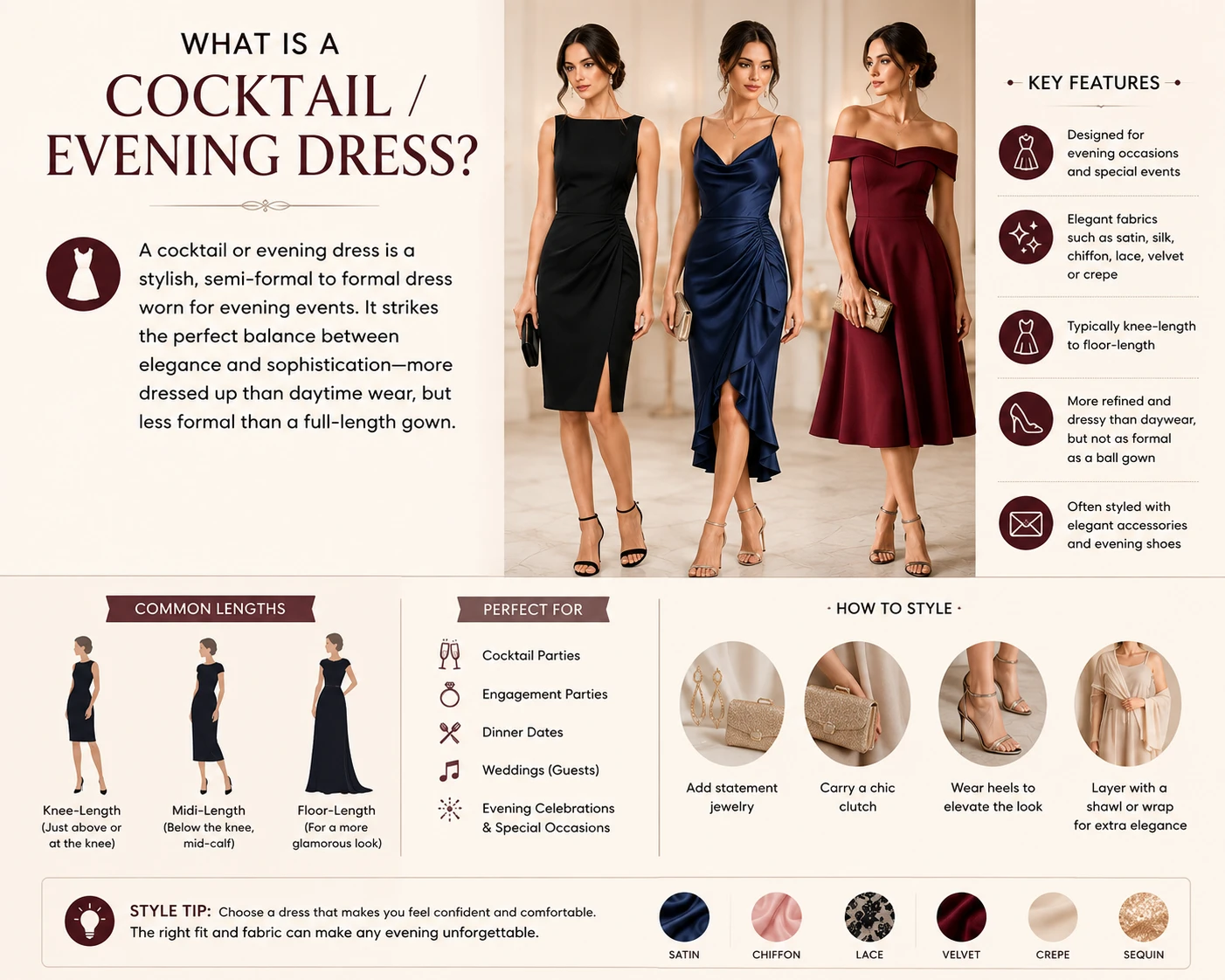
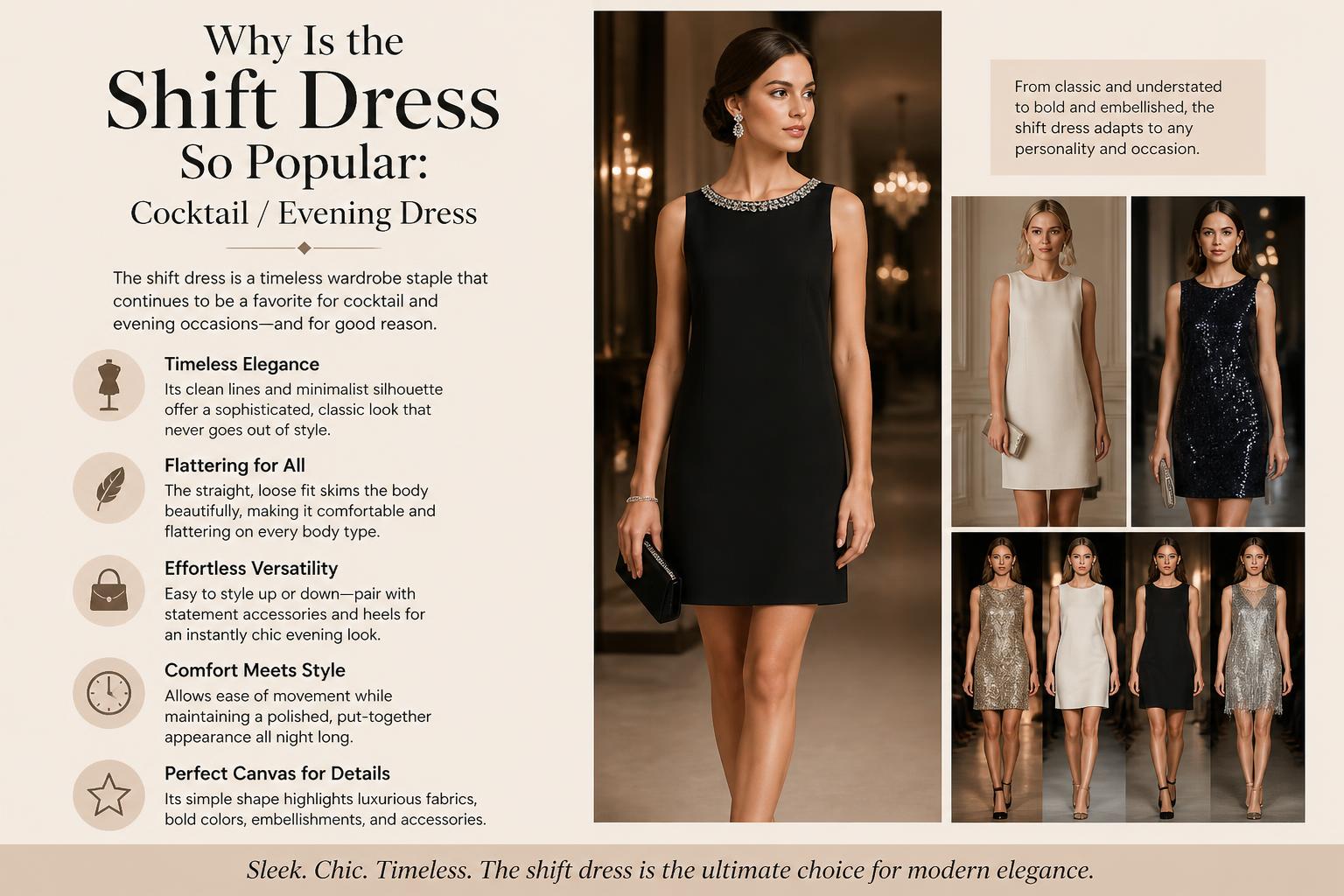
- A) Column: Straight sides. clean, minimal. (Pencil skirts, straight pants).
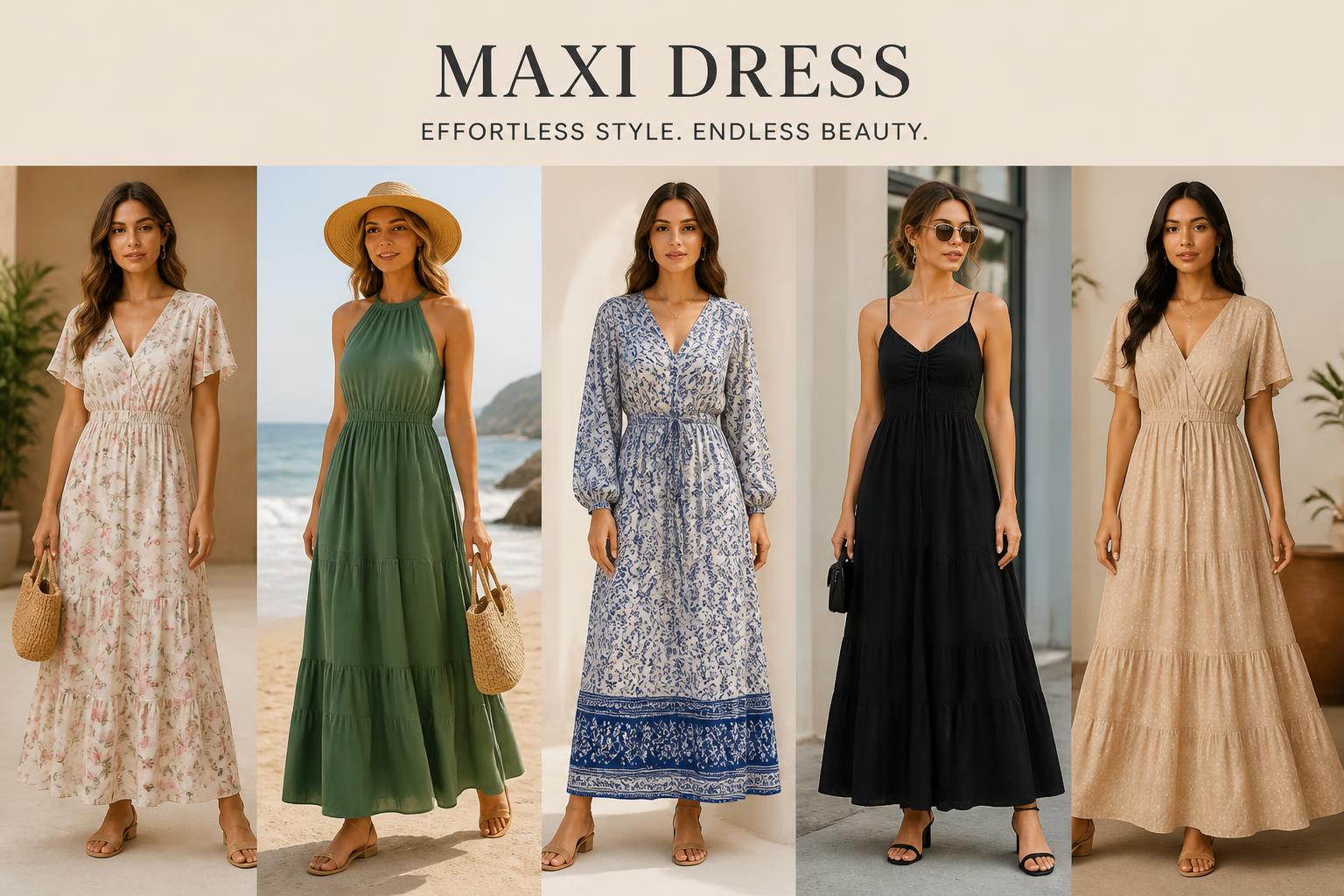
- B) A-line: Narrower top, wider hem. Balanced and classic.
- C) Fit-and-flare: Fitted top, flared bottom. Lively and feminine.
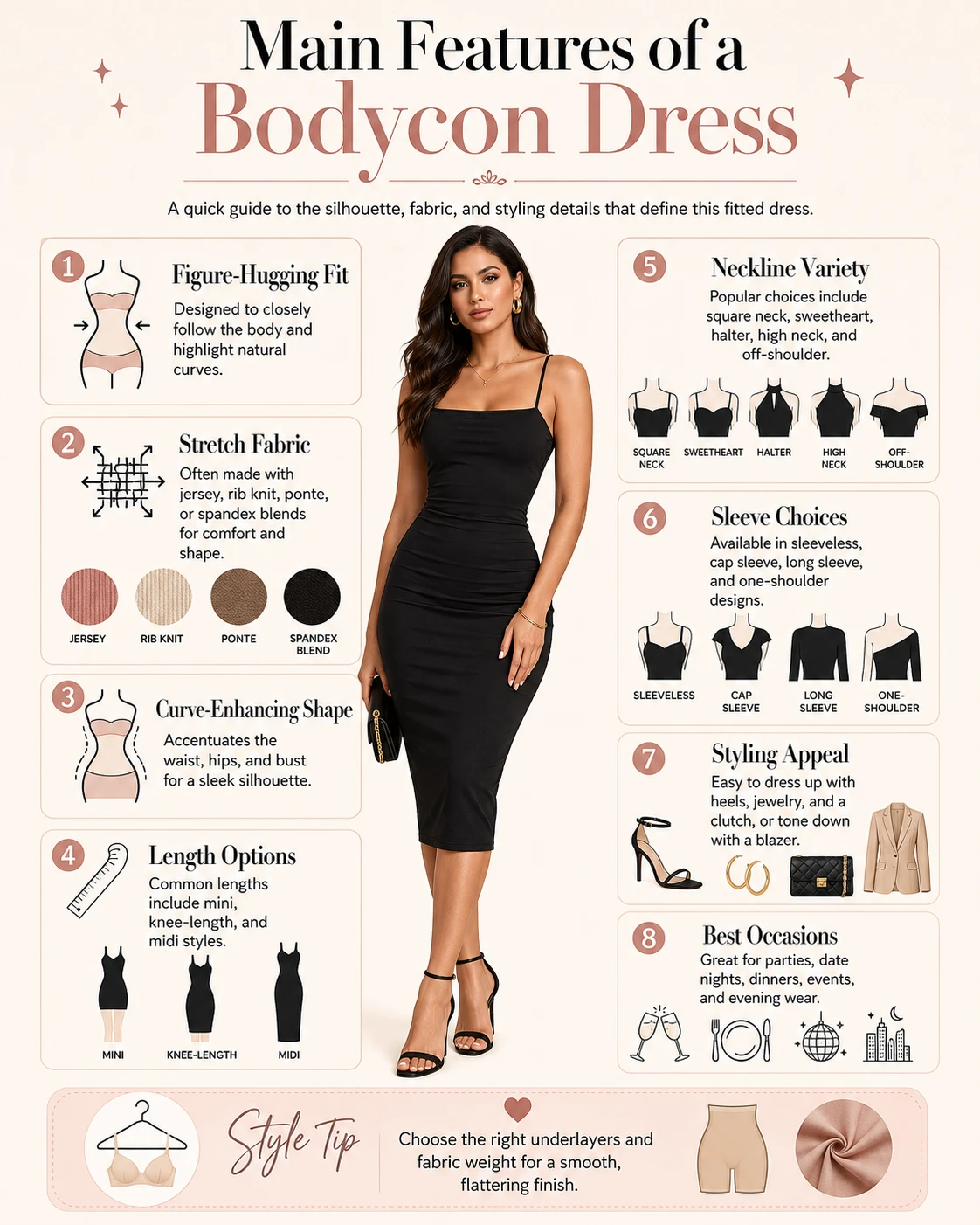
- D) Hourglass: Clear waist shape. Polished and tailored.
- E) Boxy / Square: Dropped shoulders, shorter body. Modern street vibe. (Boxy T-shirts).
- F) Cocoon / Oval: Rounded outside line. Bold and fashion-forward.
- G) Inverted Triangle: Strong shoulders, slim lower line. Sharp and powerful.
| Shape Family | Visual Character | Typical Mood | Common Products |
|---|---|---|---|
| Column | Straight vertical sides | Sleek, minimal | Dresses, skirts, pants |
| A-Line | Narrower top, wider hem | Classic, balanced | Dresses, skirts |
| Fit-and-Flare | Fitted upper body, fuller lower body | Romantic, lively | Dresses |
| Hourglass | Strong waist definition | Tailored, polished | Dresses, jackets |
| Boxy | Wide straight body | Modern, casual | T-shirts, jackets |
| Cocoon / Oval | Rounded middle, tapered ends | Artistic, fashion-forward | Coats, dresses |
| Inverted Triangle | Strong upper body, narrower lower line | Powerful, sharp | Jackets, dresses |
Fashion has many specialized terms, but most garments can be understood through a smaller number of core silhouette families. Learning these basic shapes makes both design and production communication much easier.
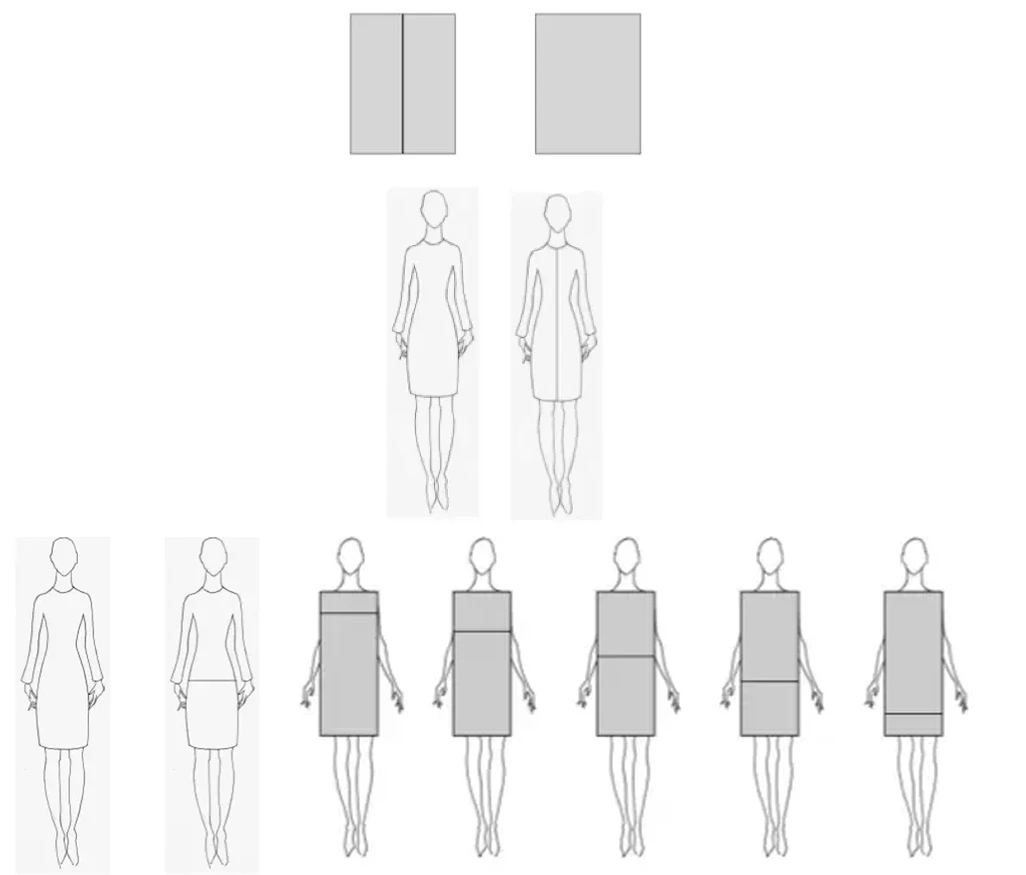
Column Silhouette
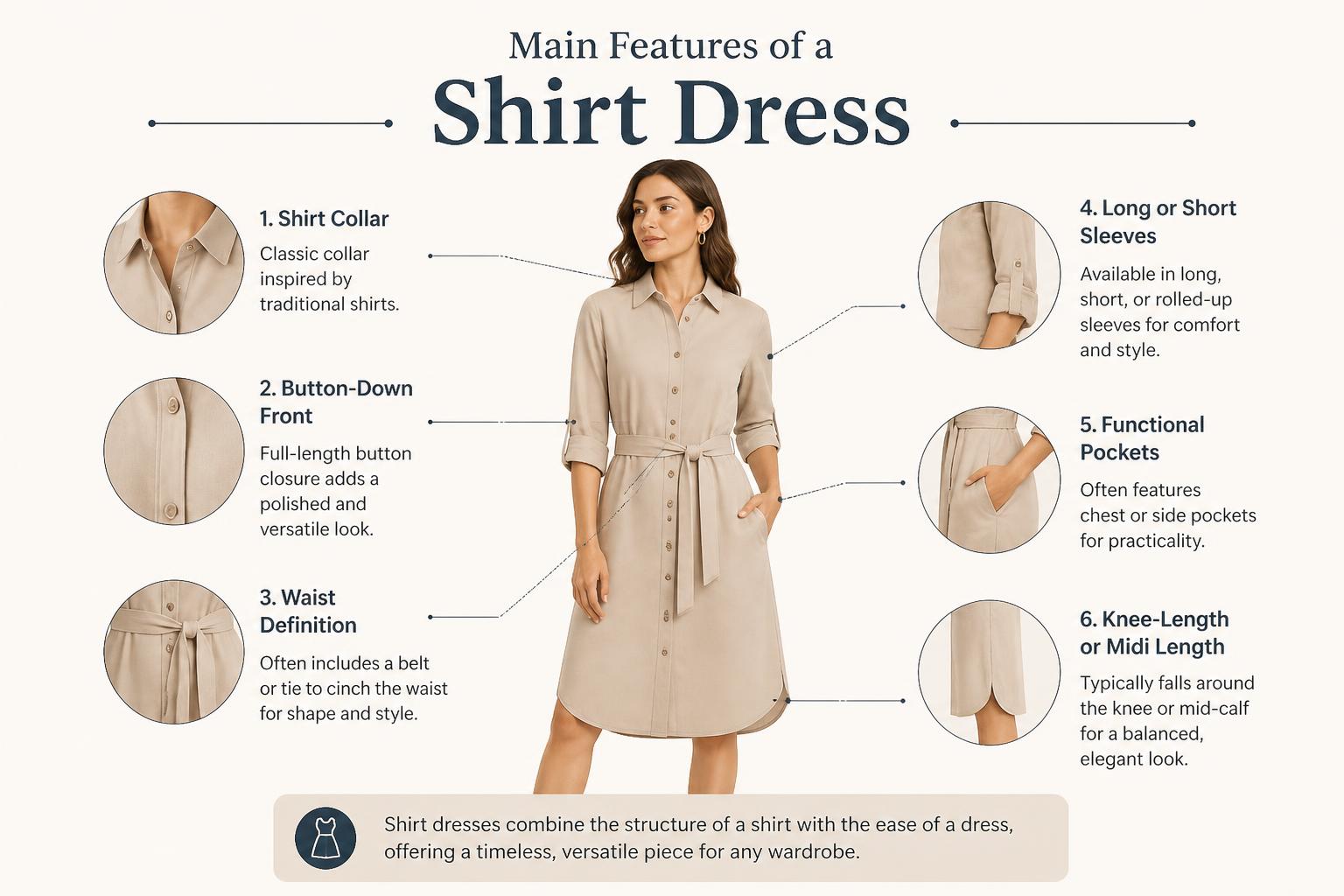
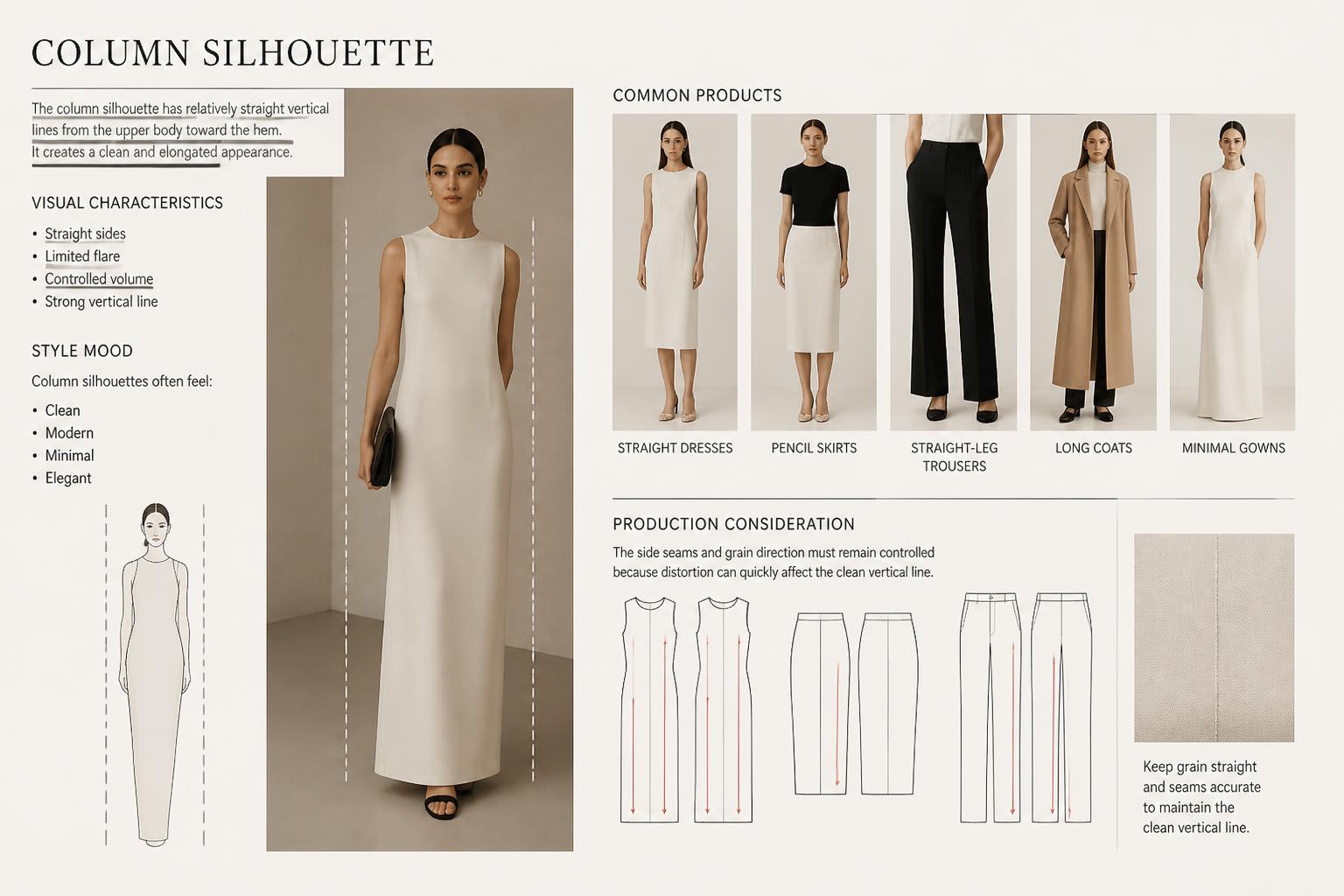
The column silhouette has relatively straight vertical lines from the upper body toward the hem. It creates a clean and elongated appearance.
Visual Characteristics
- Straight sides
- Limited flare
- Controlled volume
- Strong vertical line
Common Products
- Straight dresses
- Pencil skirts
- Straight-leg trousers
- Long coats
- Minimal gowns
Style Mood
Column silhouettes often feel:
- Clean
- Modern
- Minimal
- Elegant
Production Consideration
The side seams and grain direction must remain controlled because distortion can quickly affect the clean vertical line.
A-Line Silhouette
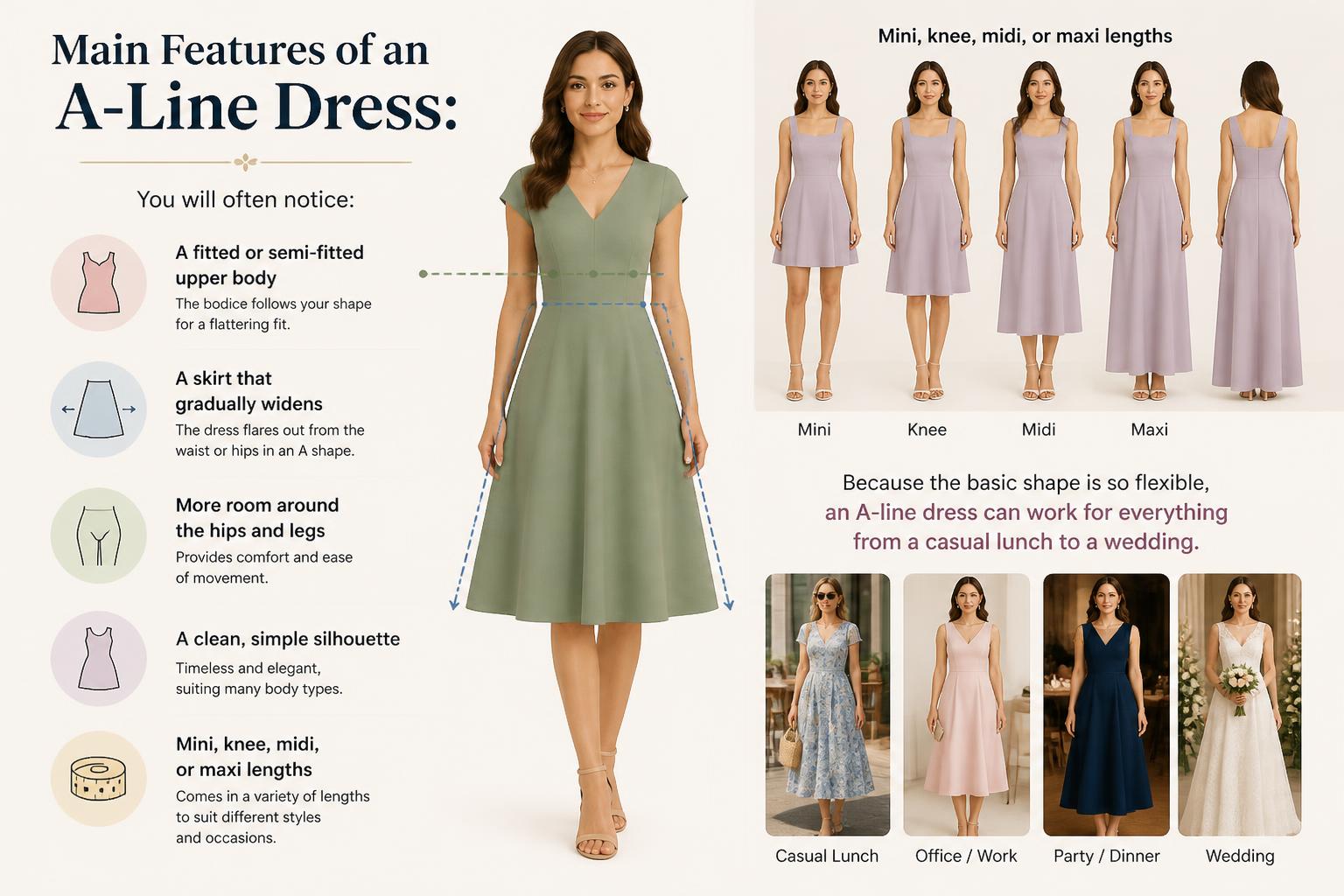
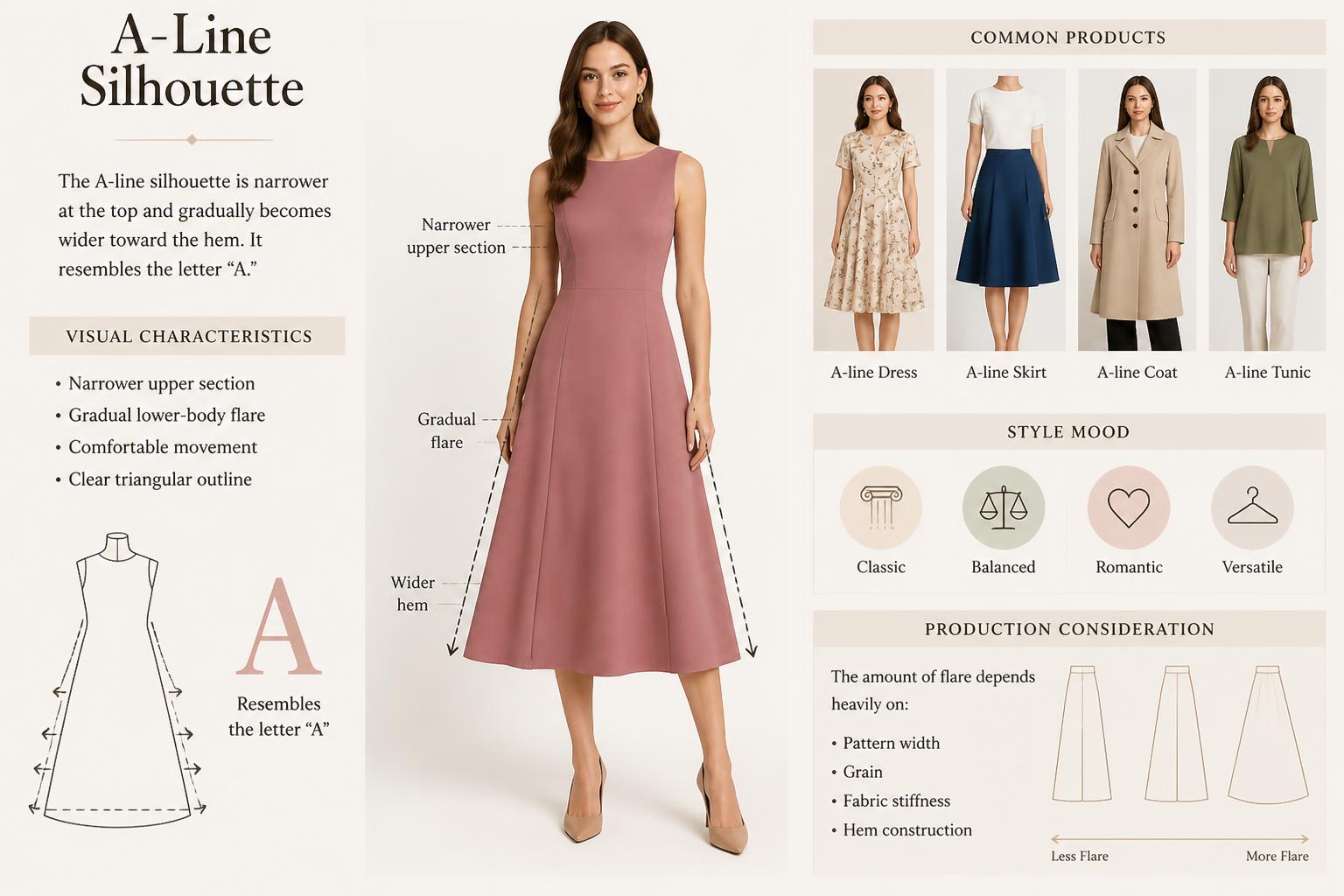
The A-line silhouette is narrower at the top and gradually becomes wider toward the hem. It resembles the letter “A.”
Visual Characteristics
- Narrower upper section
- Gradual lower-body flare
- Comfortable movement
- Clear triangular outline
Common Products
- A-line dresses
- Skirts
- Coats
- Tunics
Style Mood
A-line silhouettes can feel:
- Classic
- Balanced
- Romantic
- Versatile
Production Consideration
The amount of flare depends heavily on:
- Pattern width
- Grain
- Fabric stiffness
- Hem construction
Fit-and-Flare Silhouette
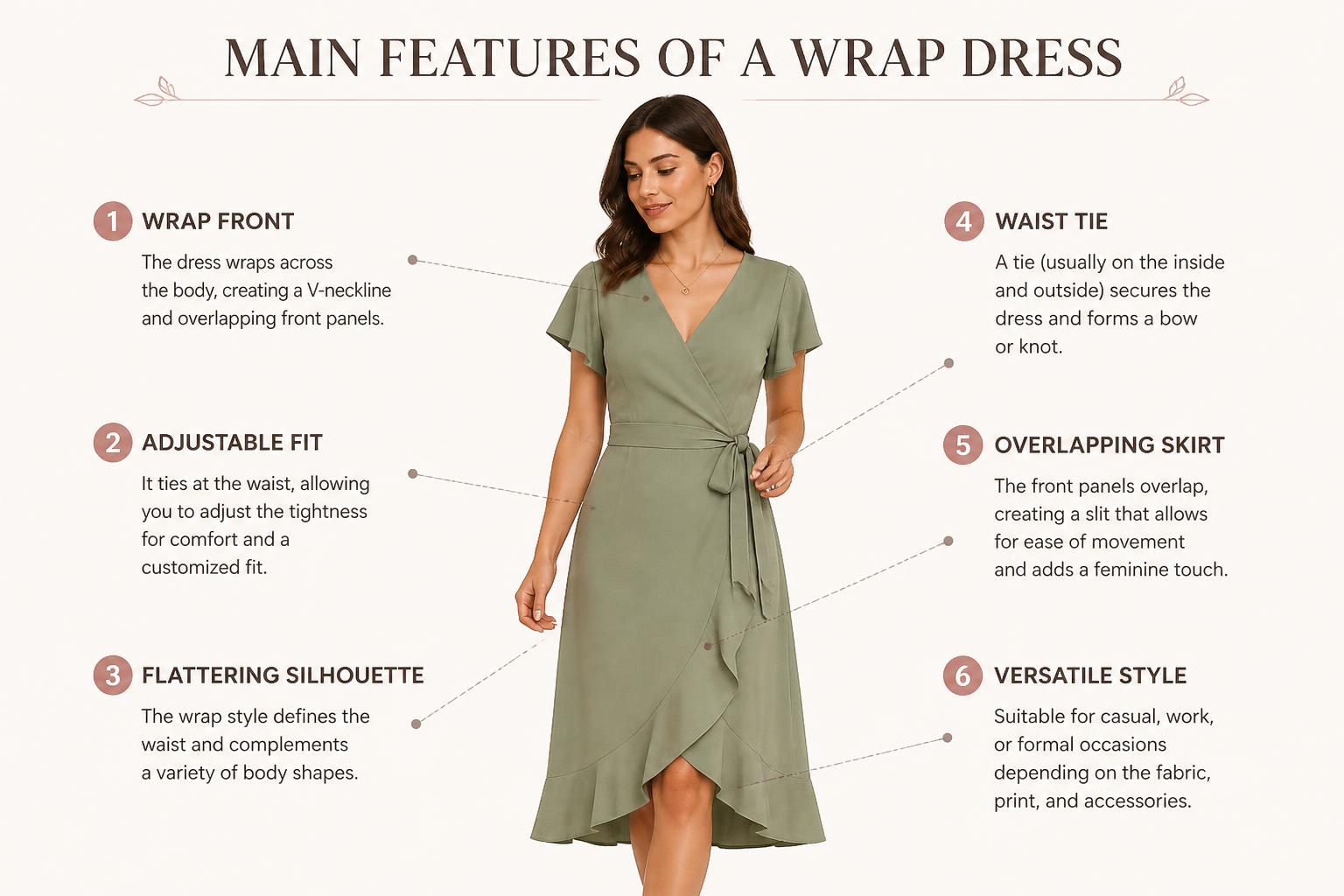
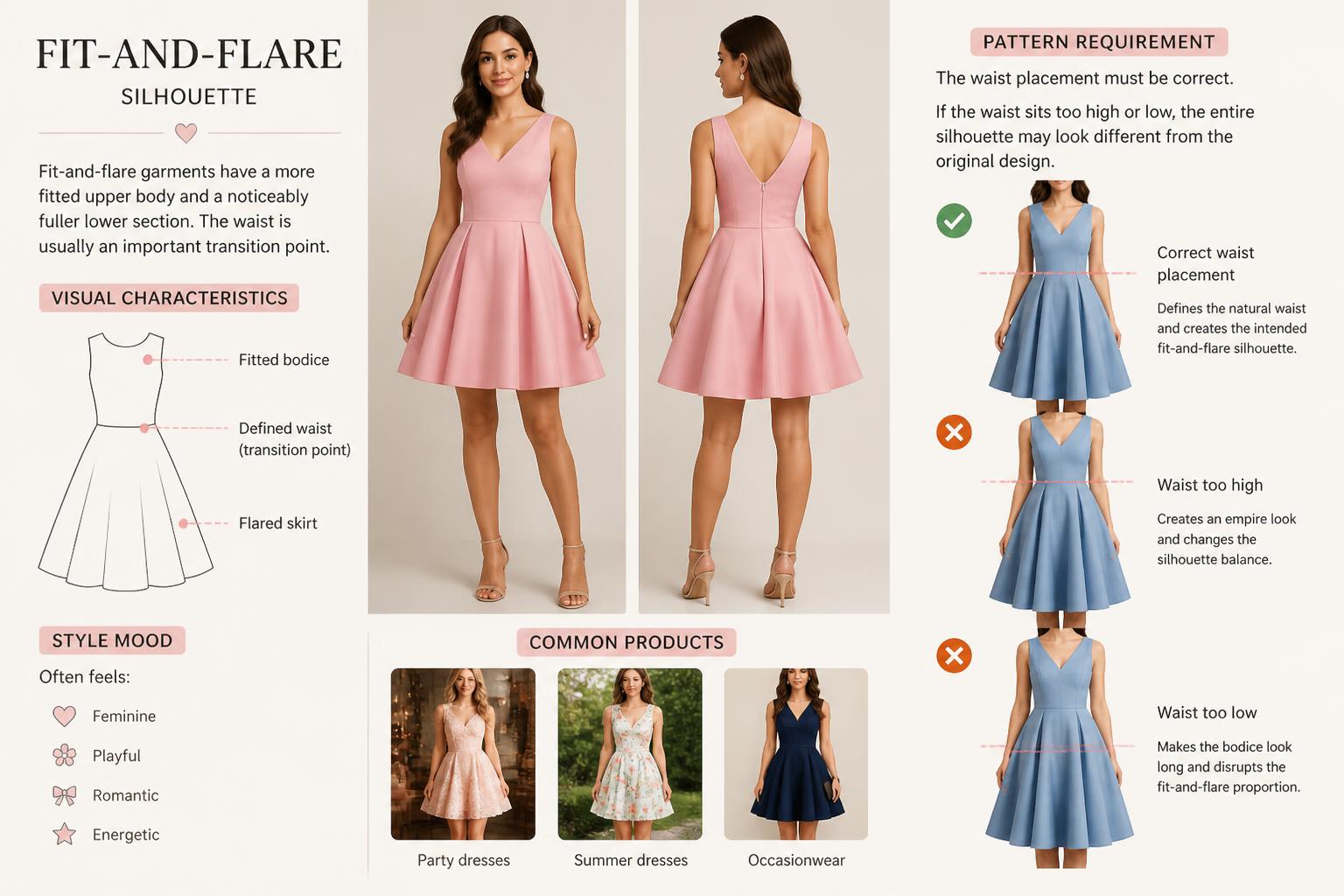
Fit-and-flare garments have a more fitted upper body and a noticeably fuller lower section. The waist is usually an important transition point.

Visual Characteristics
- Fitted bodice
- Defined waist
- Flared skirt
Common Products
- Party dresses
- Summer dresses
- Occasionwear
Style Mood
Often feels:
- Feminine
- Playful
- Romantic
- Energetic
Pattern Requirement
The waist placement must be correct.
If the waist sits too high or low, the entire silhouette may look different from the original design.
Hourglass Silhouette
The hourglass silhouette uses clear shaping around the waist. The upper and lower areas may have more visual volume relative to the middle.
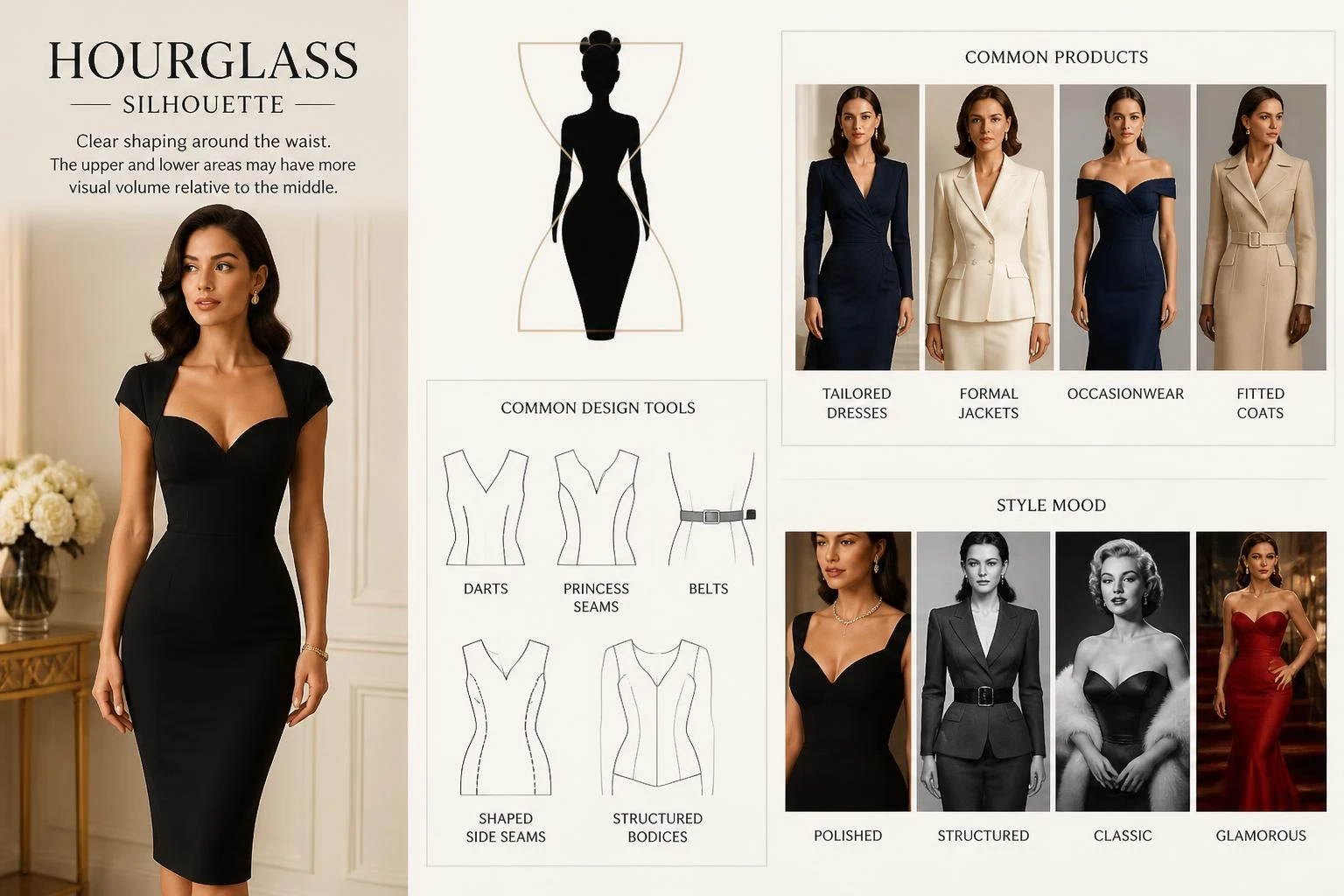
Common Design Tools
- Darts
- Princess seams
- Belts
- Shaped side seams
- Structured bodices
Common Products
- Tailored dresses
- Formal jackets
- Occasionwear
- Fitted coats
Style Mood
Can feel:
- Polished
- Structured
- Classic
- Glamorous
Boxy Silhouette
The boxy silhouette has a wider, straighter body with less obvious waist definition. It is especially important in modern casualwear and streetwear.

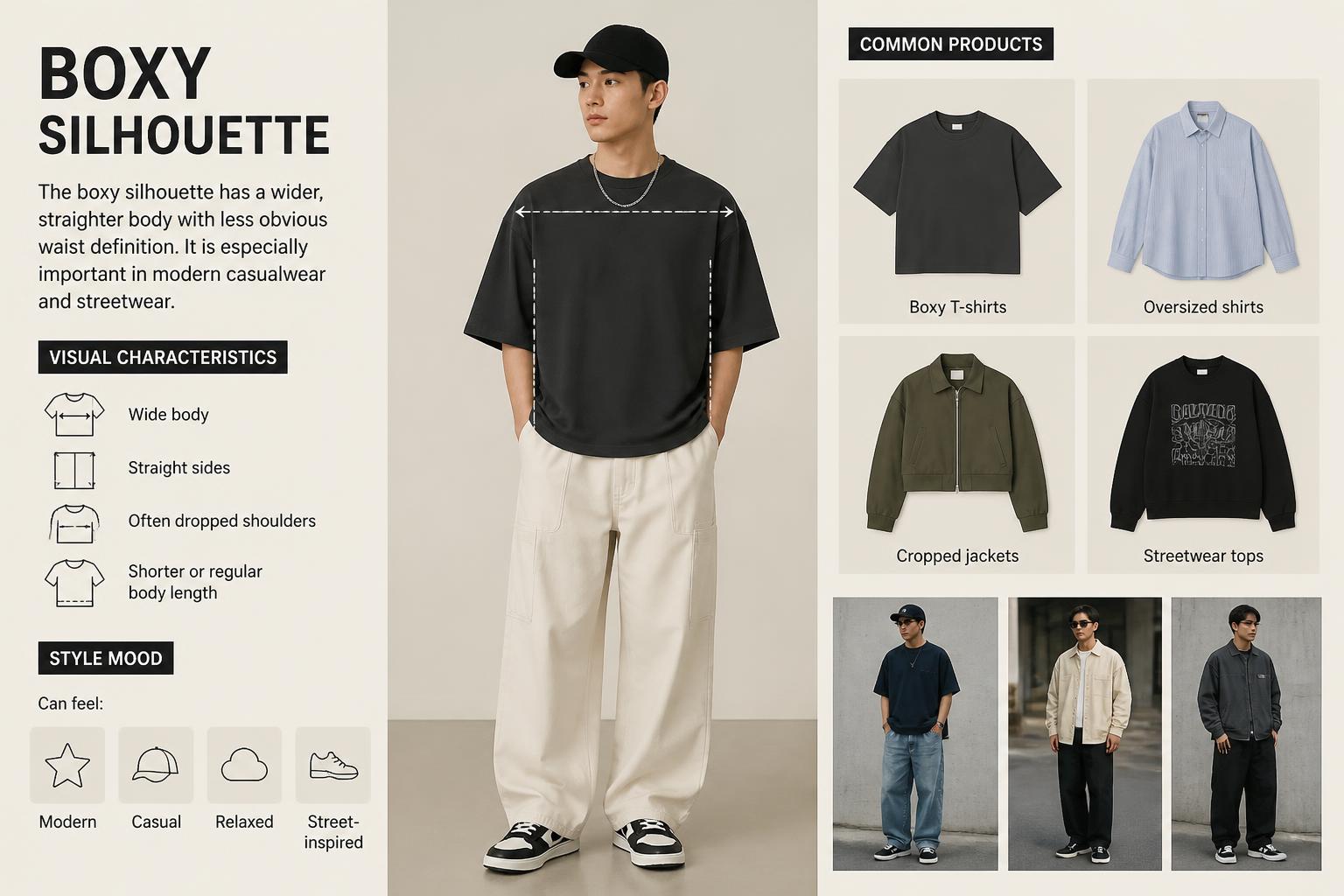
Visual Characteristics
- Wide body
- Straight sides
- Often dropped shoulders
- Shorter or regular body length
Common Products
- Boxy T-shirts
- Oversized shirts
- Cropped jackets
- Streetwear tops
Style Mood
Can feel:
- Modern
- Casual
- Relaxed
- Street-inspired
Cocoon / Oval Silhouette
The cocoon silhouette has more volume around the middle and gradually becomes narrower toward the edges. It creates a rounded outer shape.
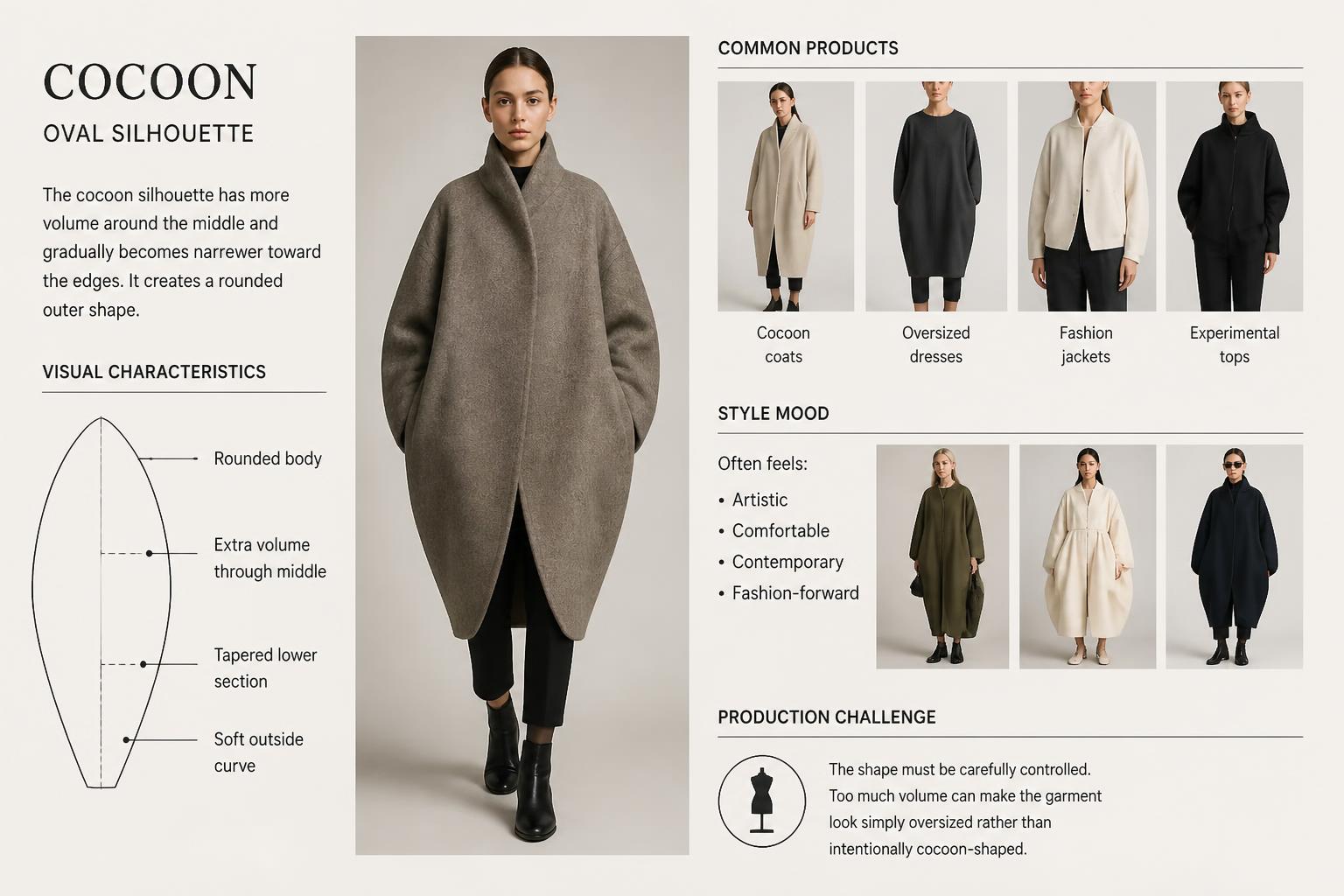
Visual Characteristics
- Rounded body
- Extra volume through middle
- Tapered lower section
- Soft outside curve
Common Products
- Cocoon coats
- Oversized dresses
- Fashion jackets
- Experimental tops
Style Mood
Often feels:
- Artistic
- Comfortable
- Contemporary
- Fashion-forward
Production Challenge
The shape must be carefully controlled. Too much volume can make the garment look simply oversized rather than intentionally cocoon-shaped.
Inverted Triangle Silhouette
The inverted-triangle silhouette places more visual emphasis on the upper body. The shoulder area appears wider while the lower section becomes narrower.
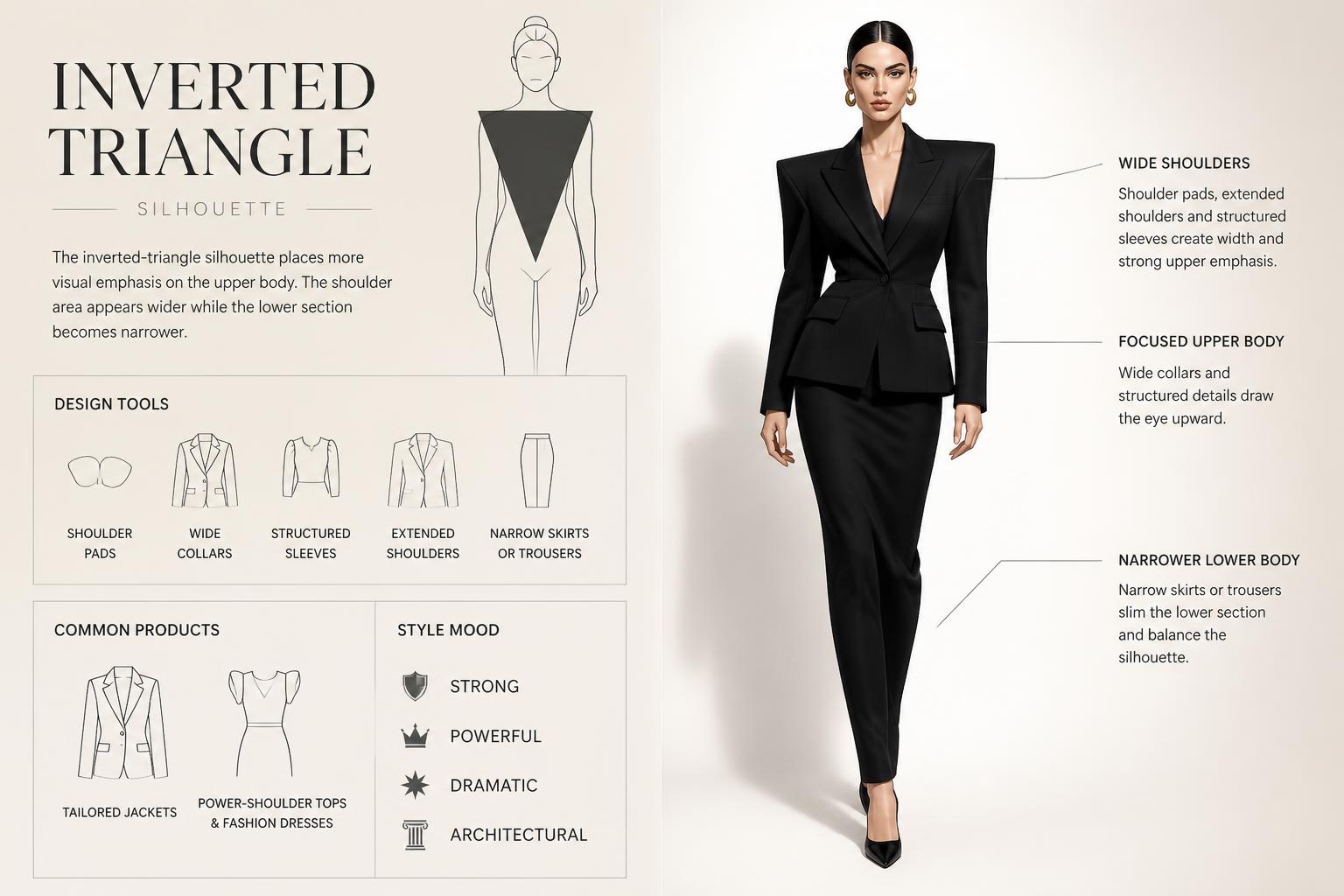
Design Tools
This can be created using:
- Shoulder pads
- Wide collars
- Structured sleeves
- Extended shoulders
- Narrow skirts or trousers
Common Products
- Tailored jackets
- Fashion dresses
- Power-shoulder tops
Style Mood
It can feel:
- Strong
- Powerful
- Dramatic
- Architectural
What Actually Creates a Garment Silhouette?
If your sample doesn’t look like your sketch, it is usually because one of these four levers was ignored.
1) Pattern: The Map of the Silhouette
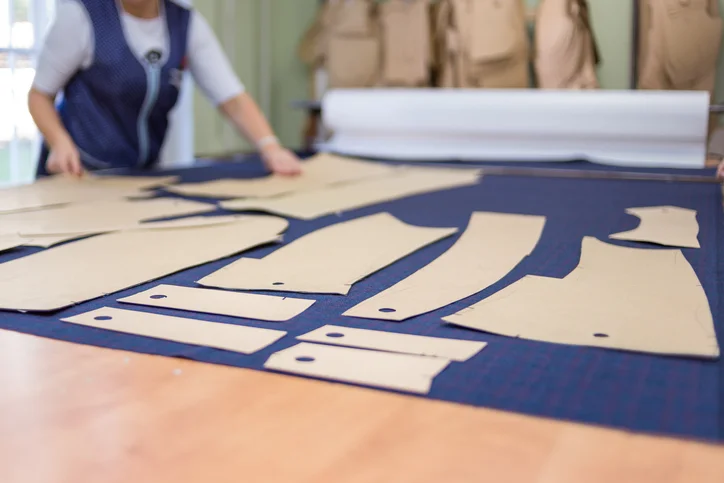
The pattern is the foundation of garment shape. Before fabric is cut, the pattern already determines much of the final outline.
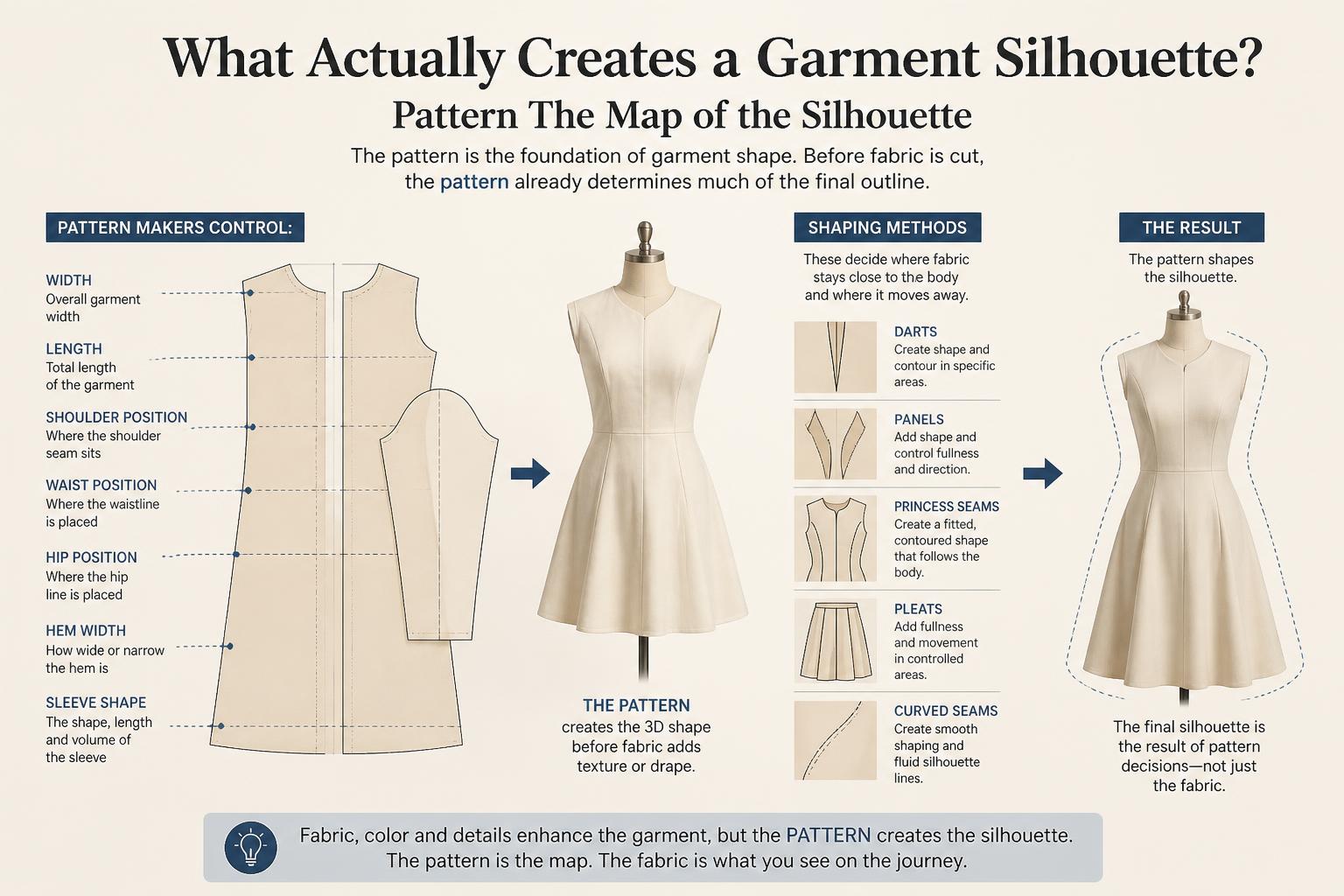
Pattern makers control:
- Width
- Length
- Shoulder position
- Waist position
- Hip position
- Hem width
- Sleeve shape
They also use shaping methods such as:
- Darts
- Panels
- Princess seams
- Pleats
- Curved seams
These decide where fabric stays close to the body and where it moves away.
A useful formula is: Pattern Shape → Fabric Position → Final Silhouette. Silhouette starts with the pattern. It decides where fabric sits close to the body and where it moves away. Shaping seams, panels, and darts sculpt the form.
2) Volume Control: Where Extra Fabric Is Placed
Volume creates space between the garment and body. But good volume is not random. It should have a clear location.
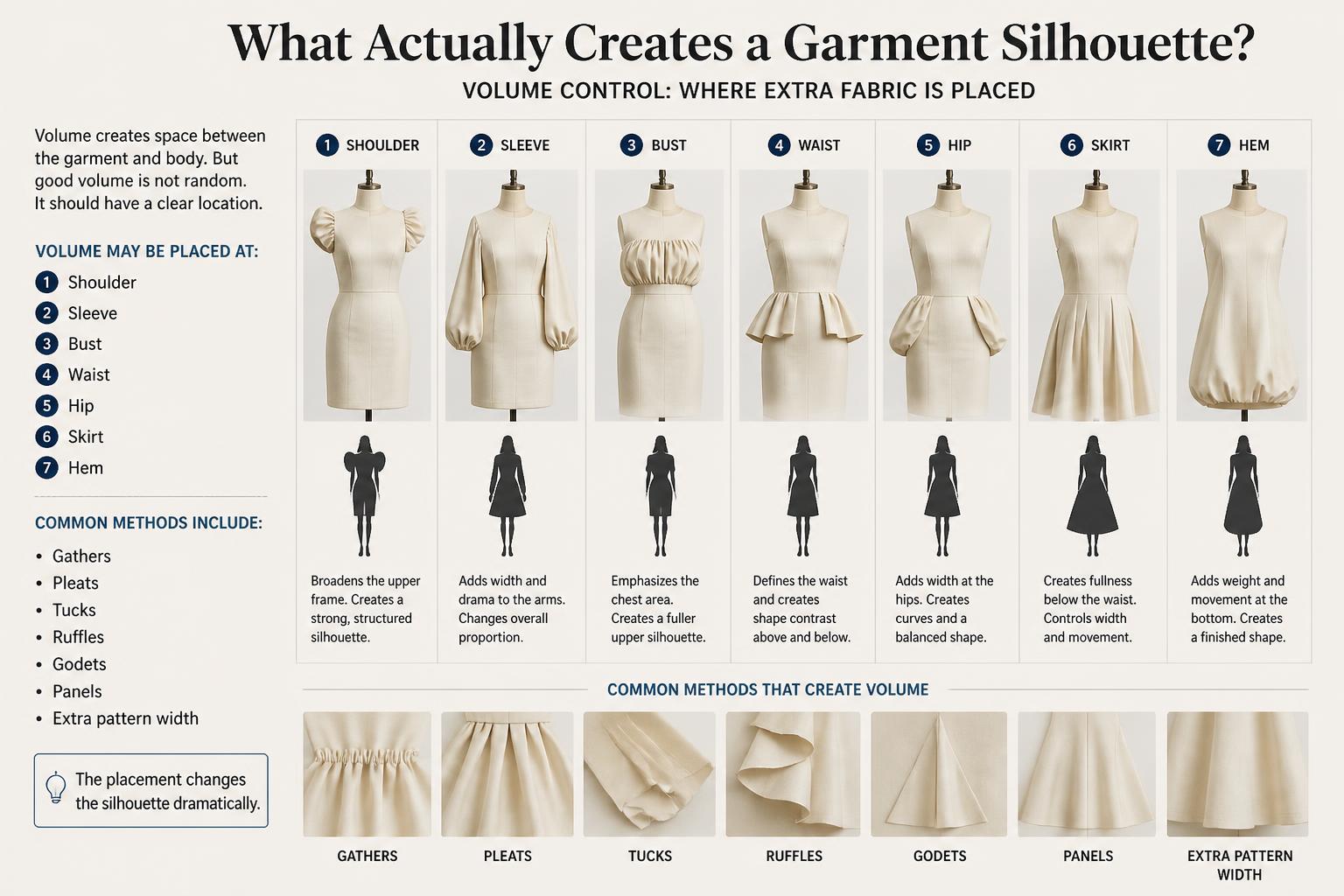
Volume may be placed at:
- Shoulder
- Sleeve
- Bust
- Waist
- Hip
- Skirt
- Hem
Common methods include:
- Gathers
- Pleats
- Tucks
- Ruffles
- Godets
- Panels
- Extra pattern width
The placement changes the silhouette dramatically.
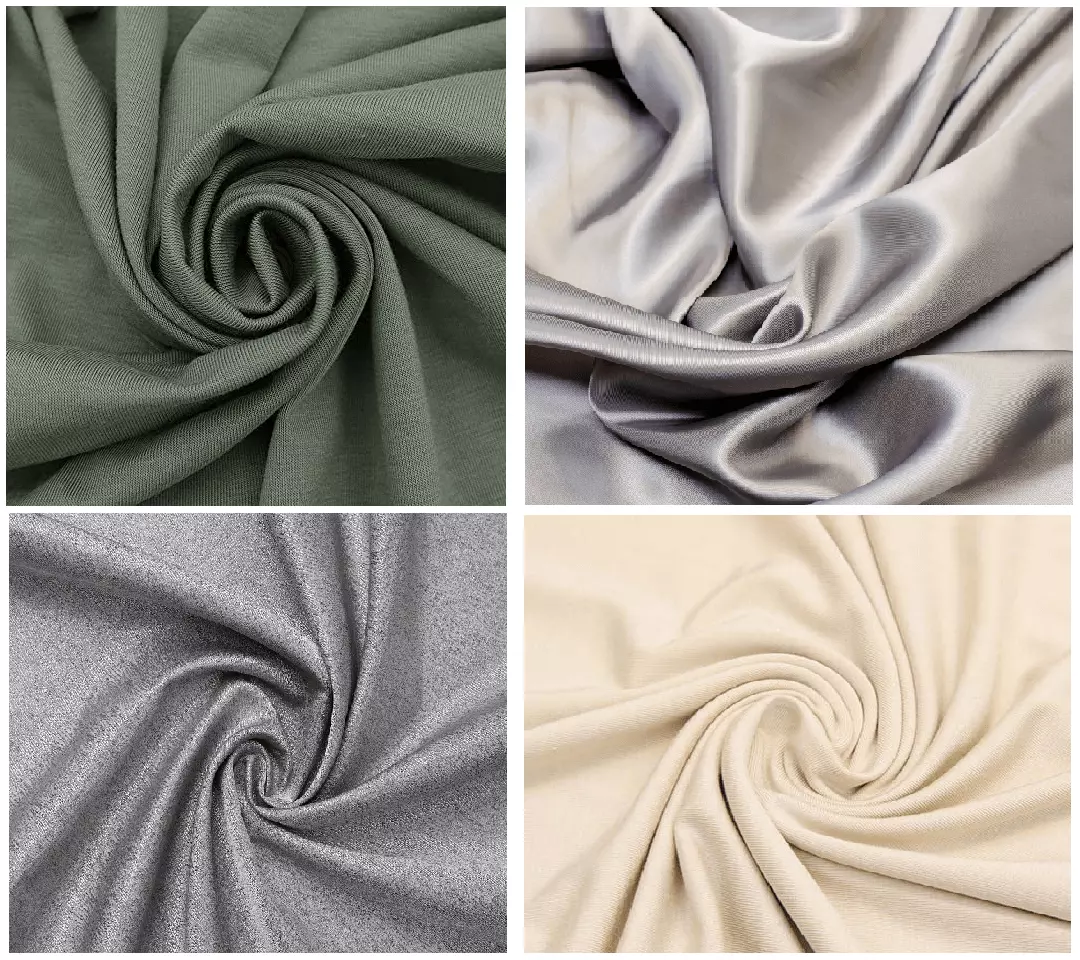
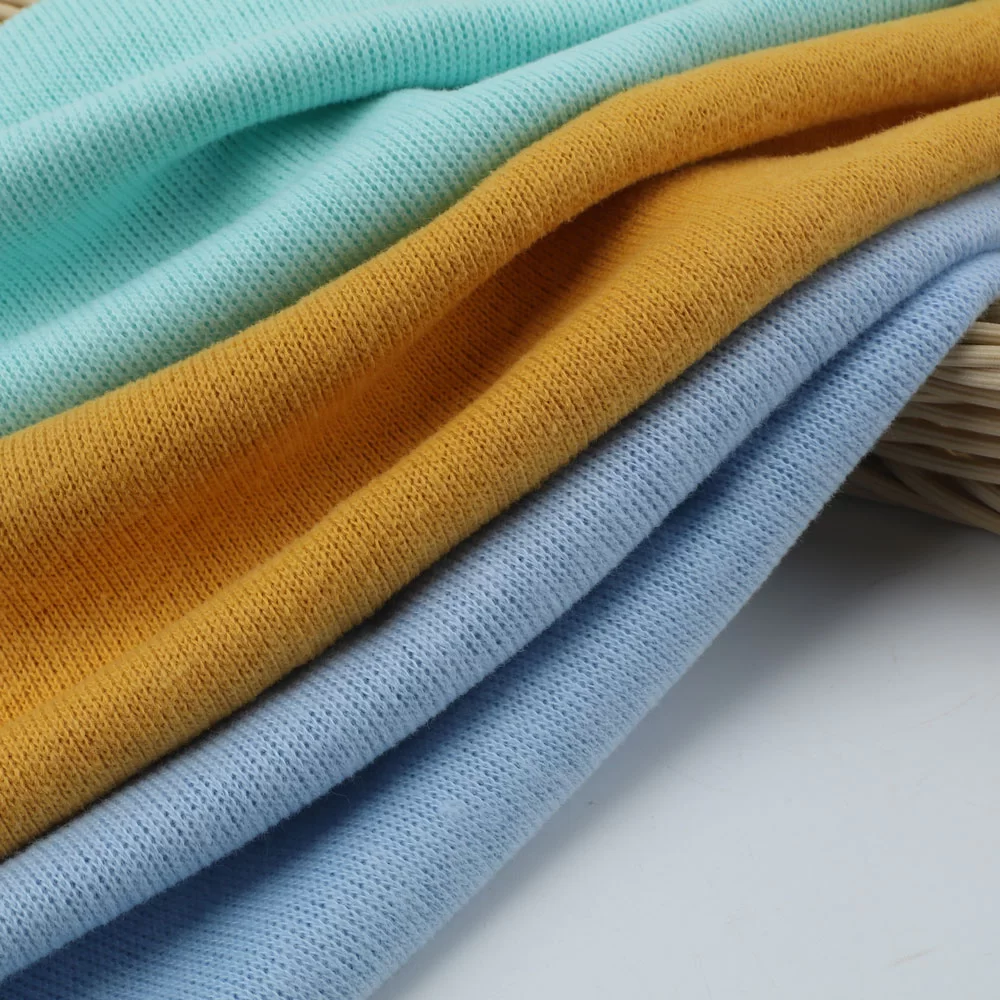
3) Fabric Behavior: The Shape-Changing Factor (Stiff vs. Soft)
Fabric is one of the biggest reasons a real sample may look different from a sketch. The same pattern can produce very different silhouettes in different fabrics.
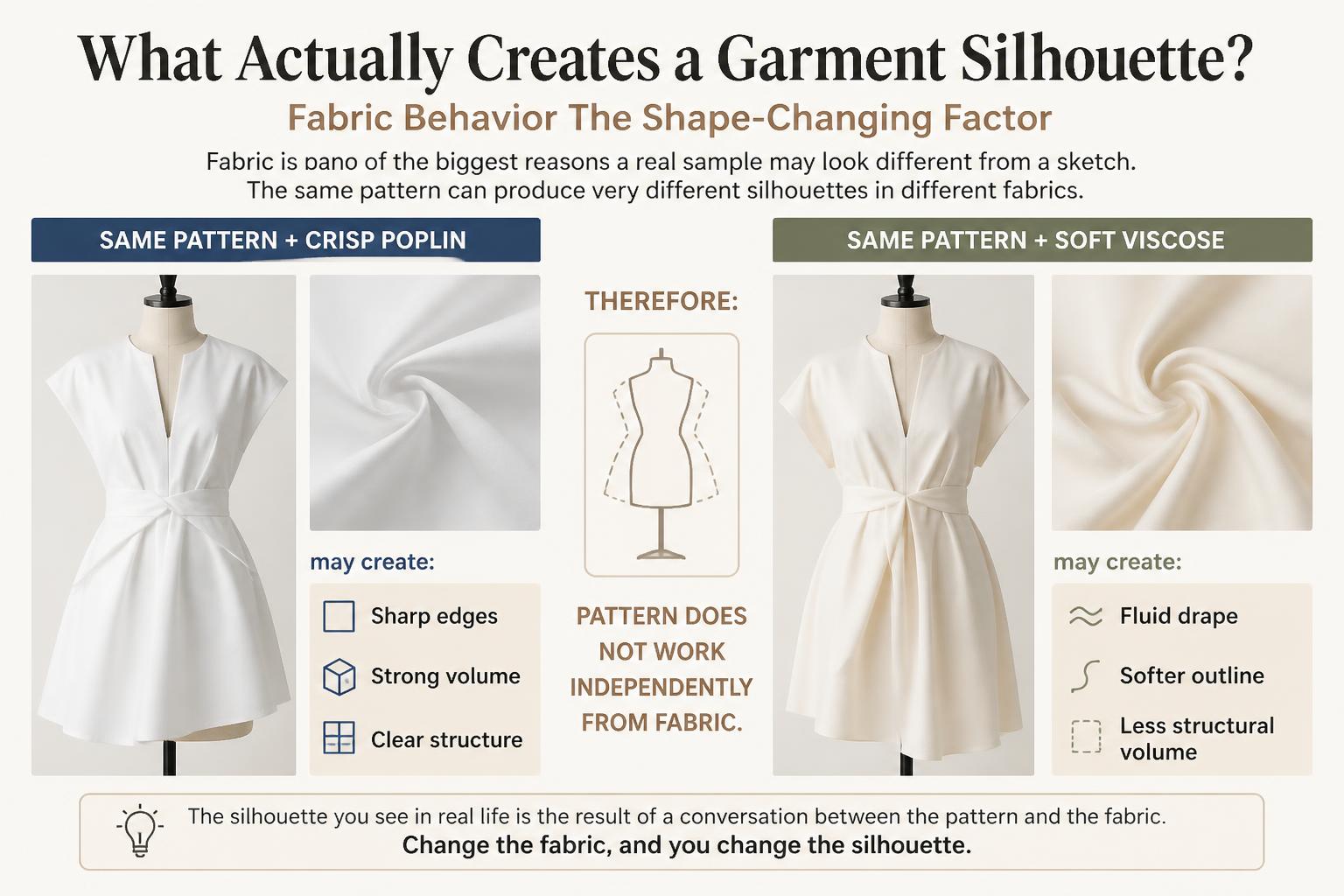
The same pattern can look sharp in a stiff fabric but droopy in a soft one. Stiff fabric holds edges, while soft fabric drapes and collapses.
For example: Same Pattern + Crisp Poplin
may create:
- Sharp edges
- Strong volume
- Clear structure
while: Same Pattern + Soft Viscose
may create:
- Fluid drape
- Softer outline
- Less structural volume
Therefore: Pattern Does Not Work Independently From Fabric
4) Hidden Structure (The Secret Engine)
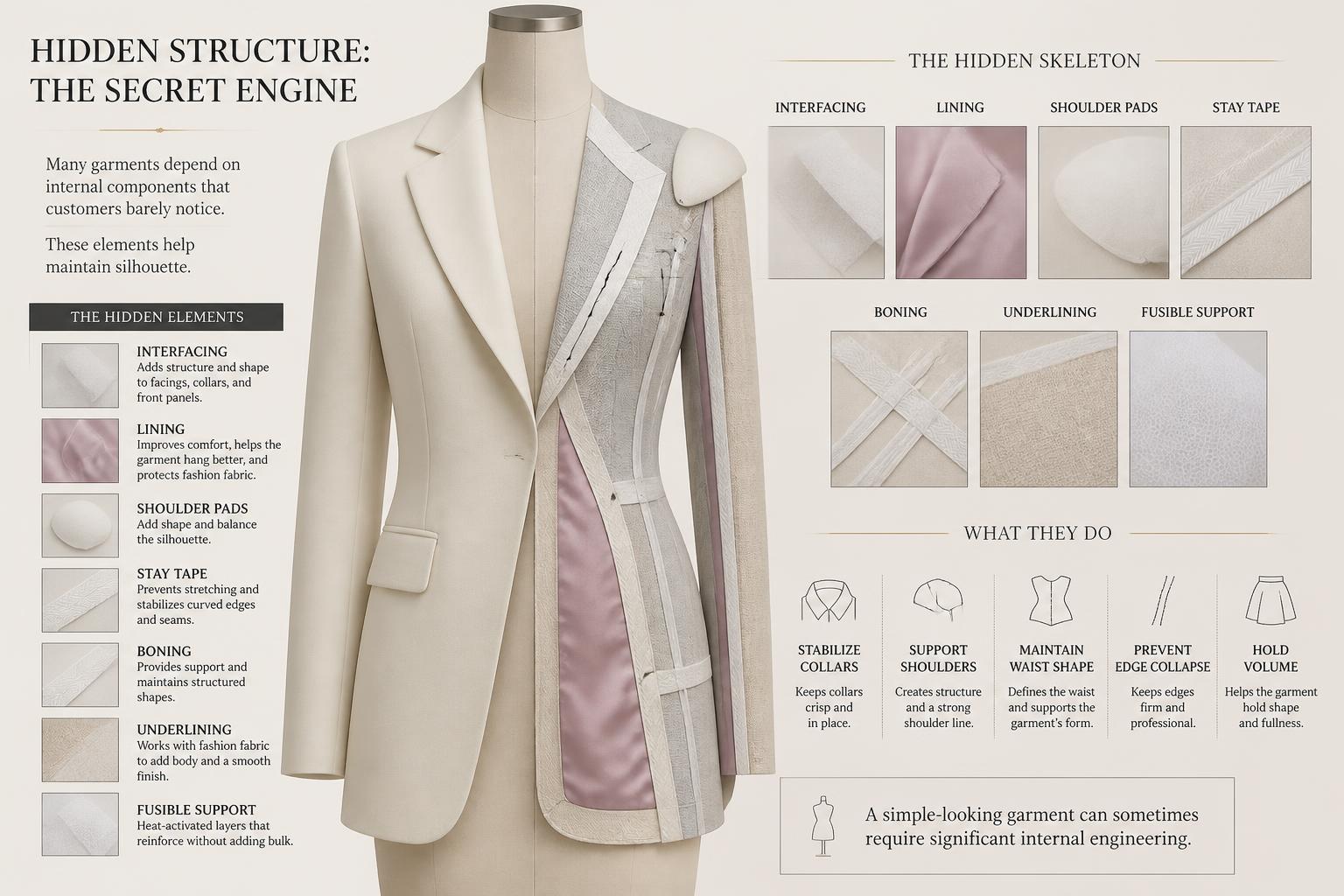
Many garments depend on internal components that customers barely notice. These elements help maintain silhouette.
They may include:
- Interfacing
- Lining
- Shoulder pads
- Stay tape
- Boning
- Underlining
- Fusible support
These materials work like a hidden skeleton.
Interfacing, lining, and stays act like a skeleton. They hold edges in place and stop silhouettes from collapsing. A “clean” silhouette often needs support to avoid looking tired after wear.
They can help:
- Stabilize collars
- Support shoulders
- Maintain waist shape
- Prevent edge collapse
- Hold volume
A simple-looking garment can sometimes require significant internal engineering.
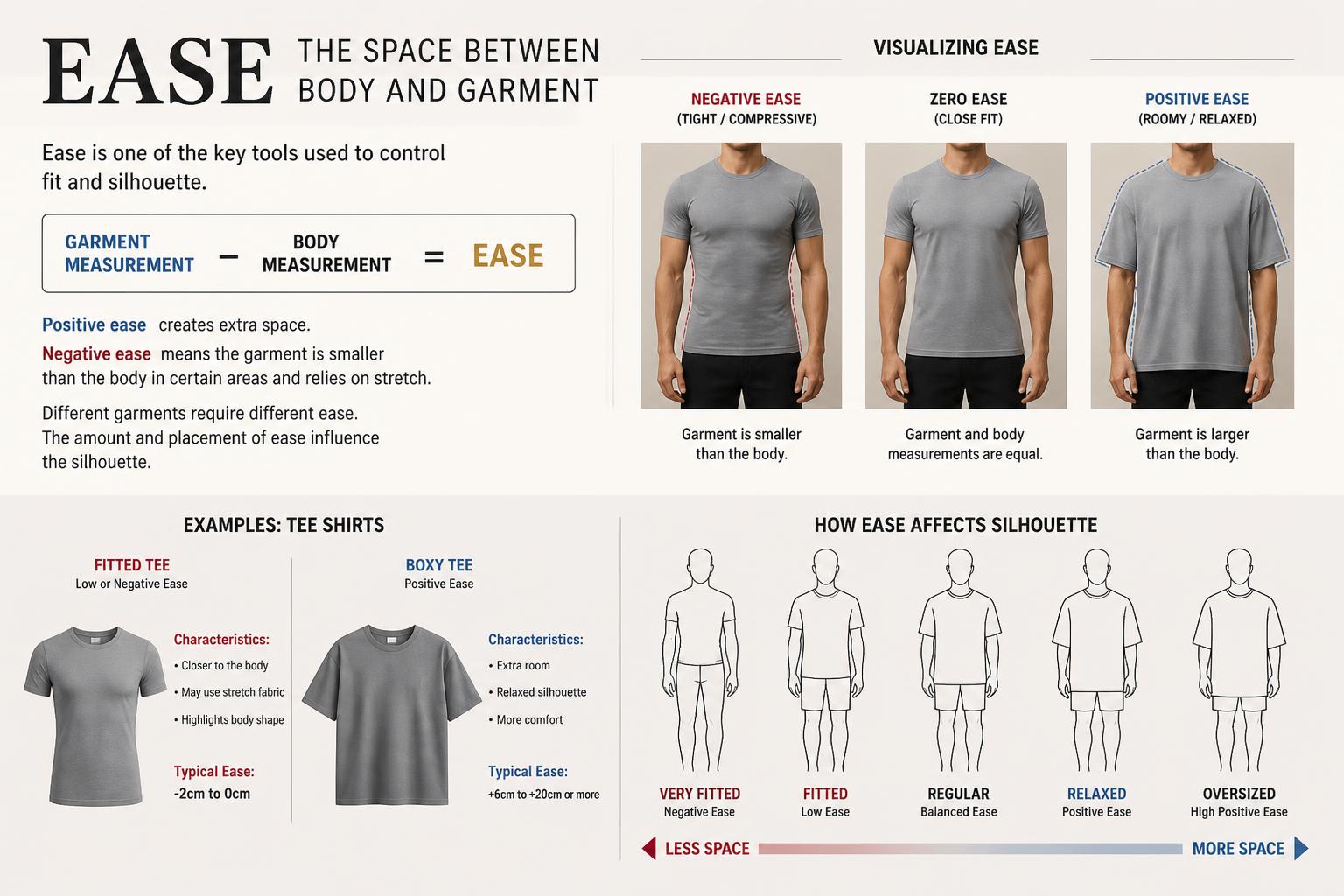
5) Ease: The Space Between Body and Garment
Ease is one of the key tools used to control fit and silhouette. In simple terms: Garment Measurement − Body Measurement = Ease Positive ease creates extra space. Negative ease means the garment is smaller than the body in certain areas and relies on stretch. Different garments require different ease. For example:
- A fitted tee may have low or negative ease.
- A boxy tee may have significant positive ease.
The amount and placement of ease influence the silhouette.
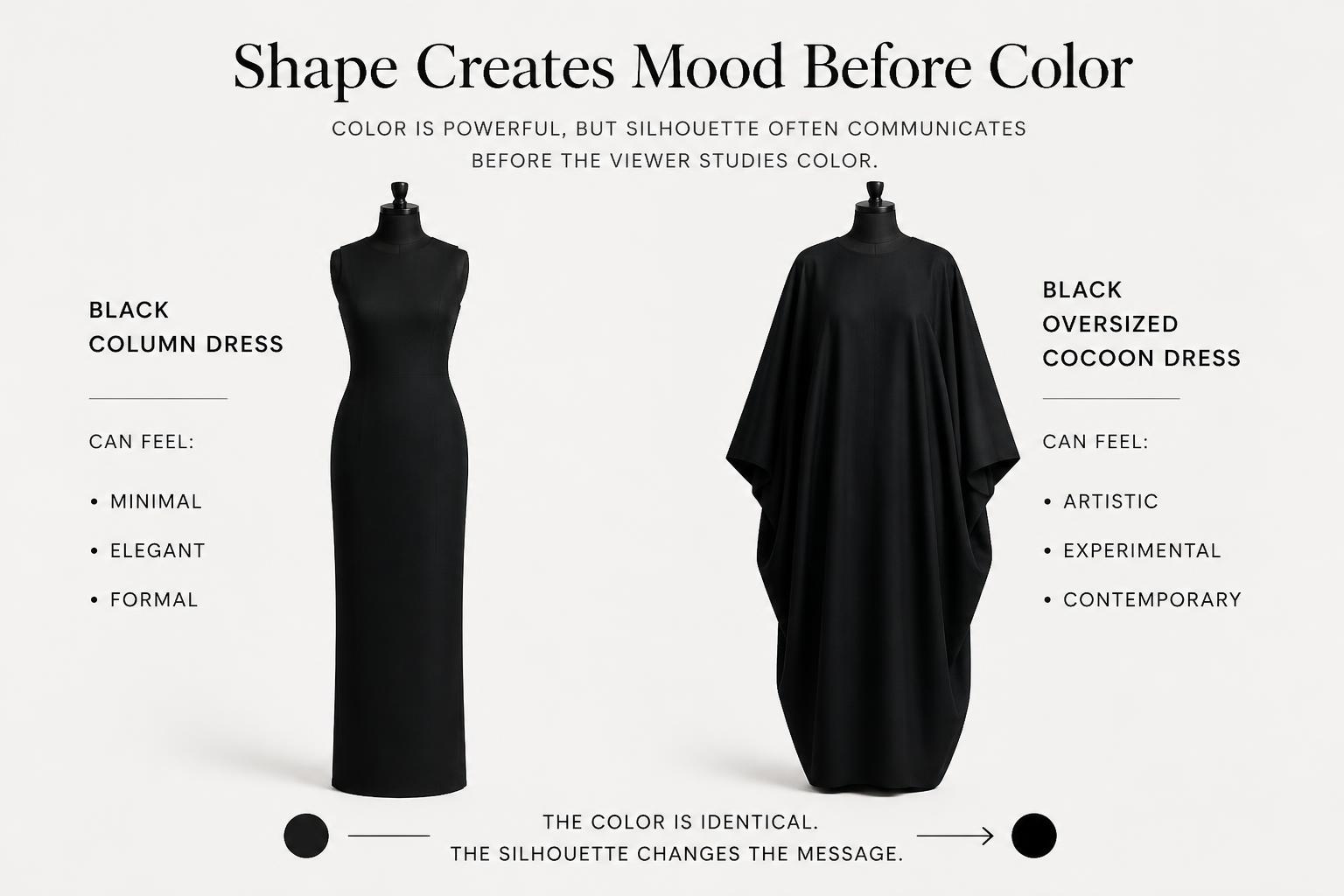
Shape Creates Mood Before Color
Color is powerful, but silhouette often communicates before the viewer studies color. Imagine two black garments.
- Black Column Dress
- Black Oversized Cocoon Dress
1. Black Column Dress
Can feel:
- Minimal
- Elegant
- Formal
2. Black Oversized Cocoon Dress
Can feel:
- Artistic
- Experimental
- Contemporary
The color is identical. The silhouette changes the message.
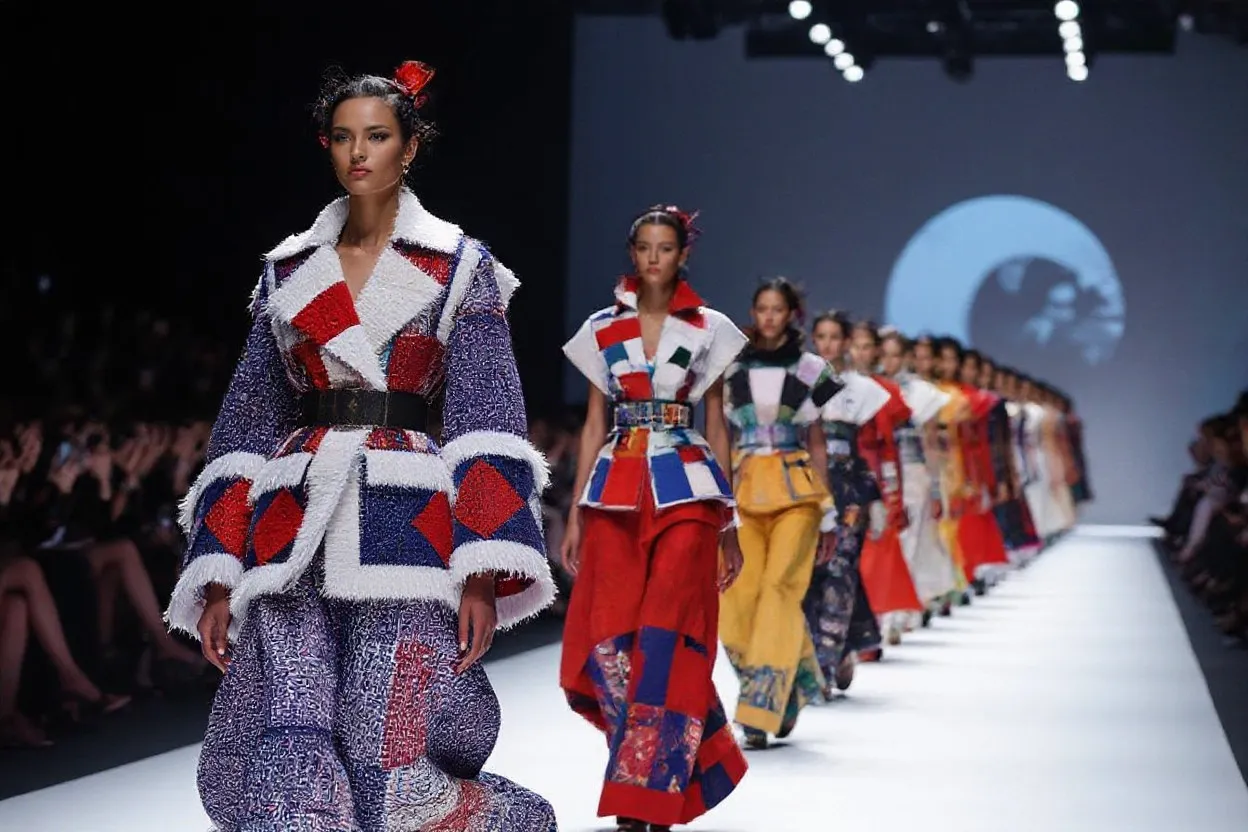
Silhouette sends a message fast, even before color is noticed. Two outfits in the same fabric can feel totally different based on their outline.
5 Common Silhouette Problems
Several problems frequently appear during sample development.
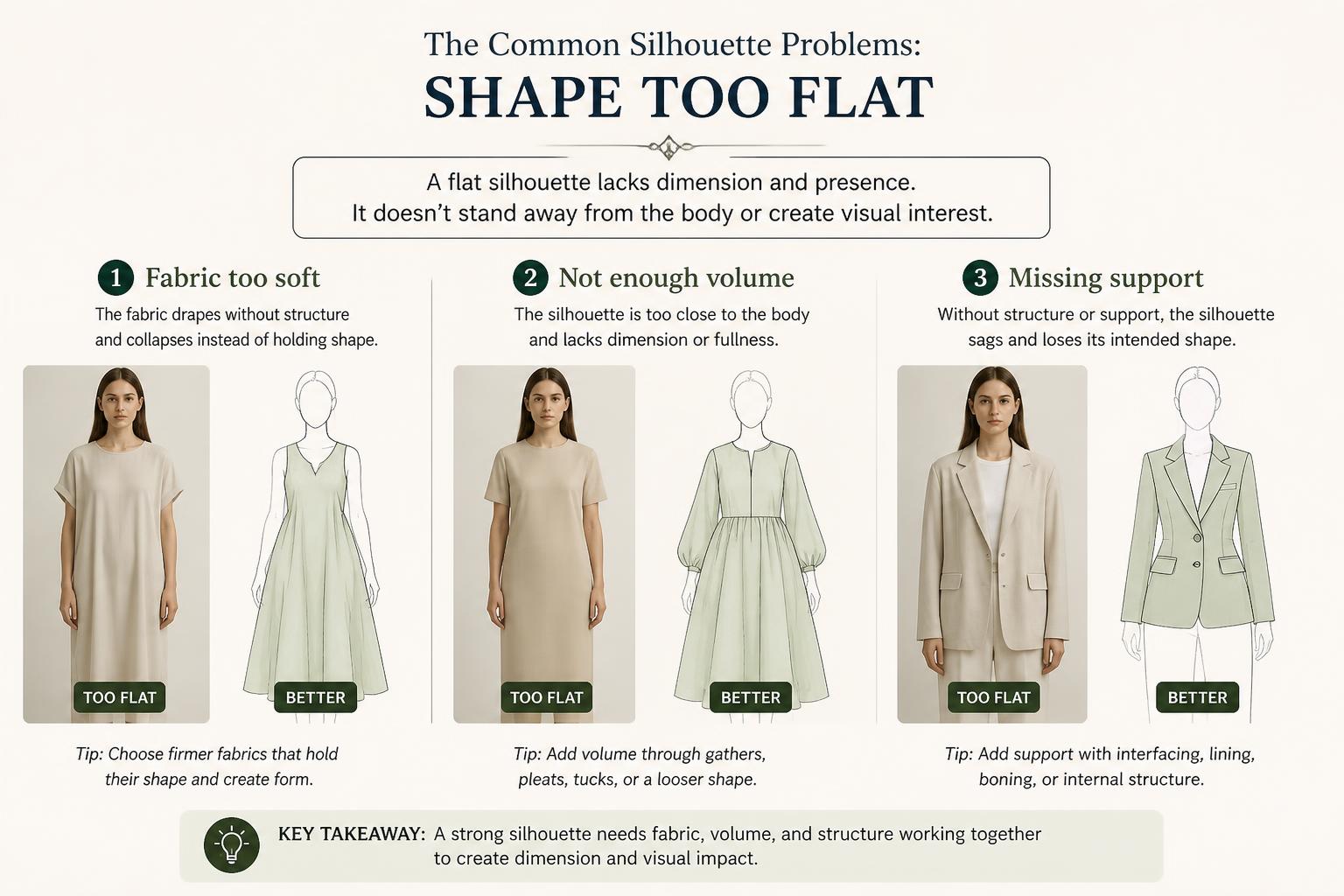
Shape Too Flat
Possible causes:
- Fabric too soft
- Not enough volume
- Missing support

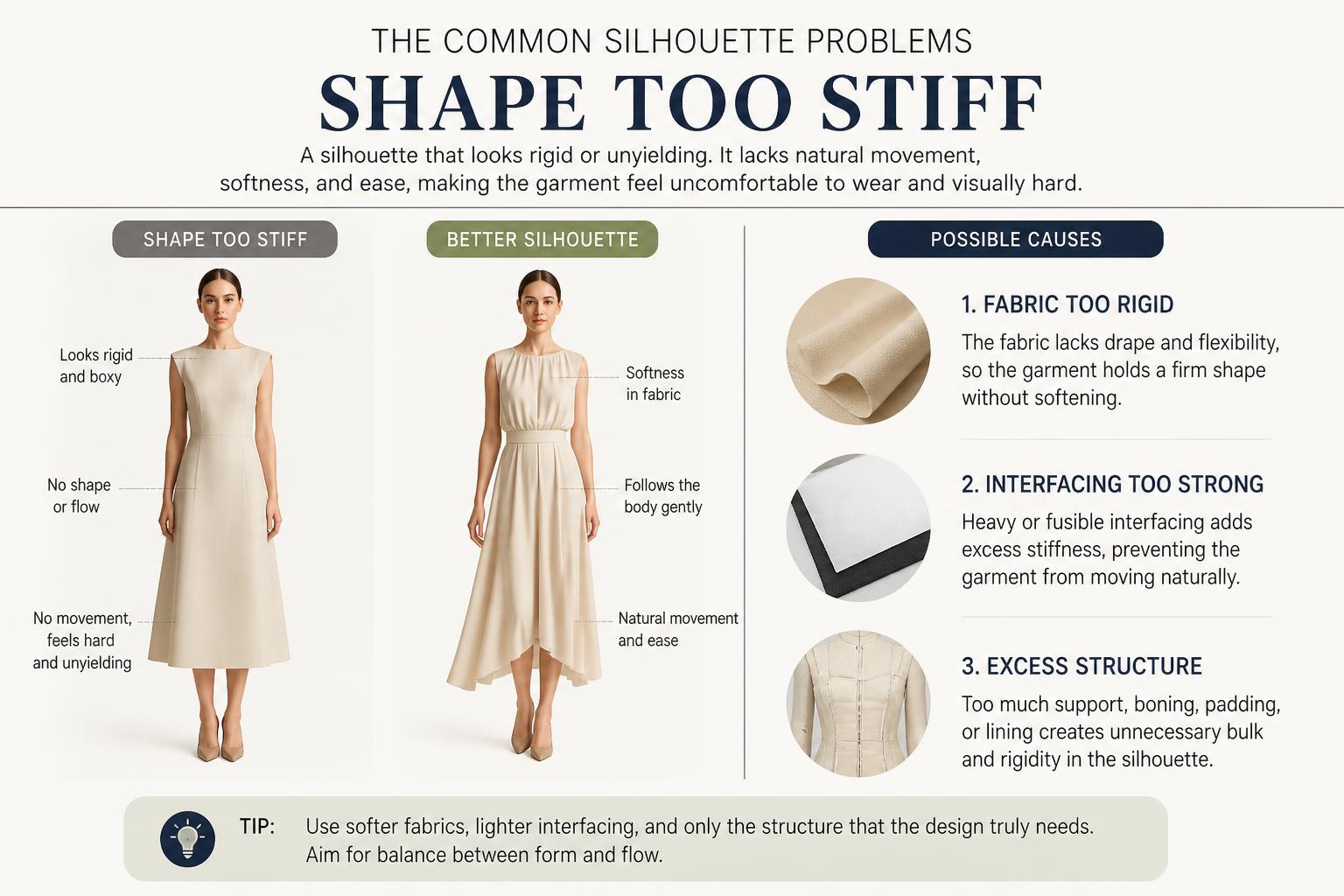
Shape Too Stiff
Possible causes:
- Fabric too rigid
- Interfacing too strong
- Excess structure
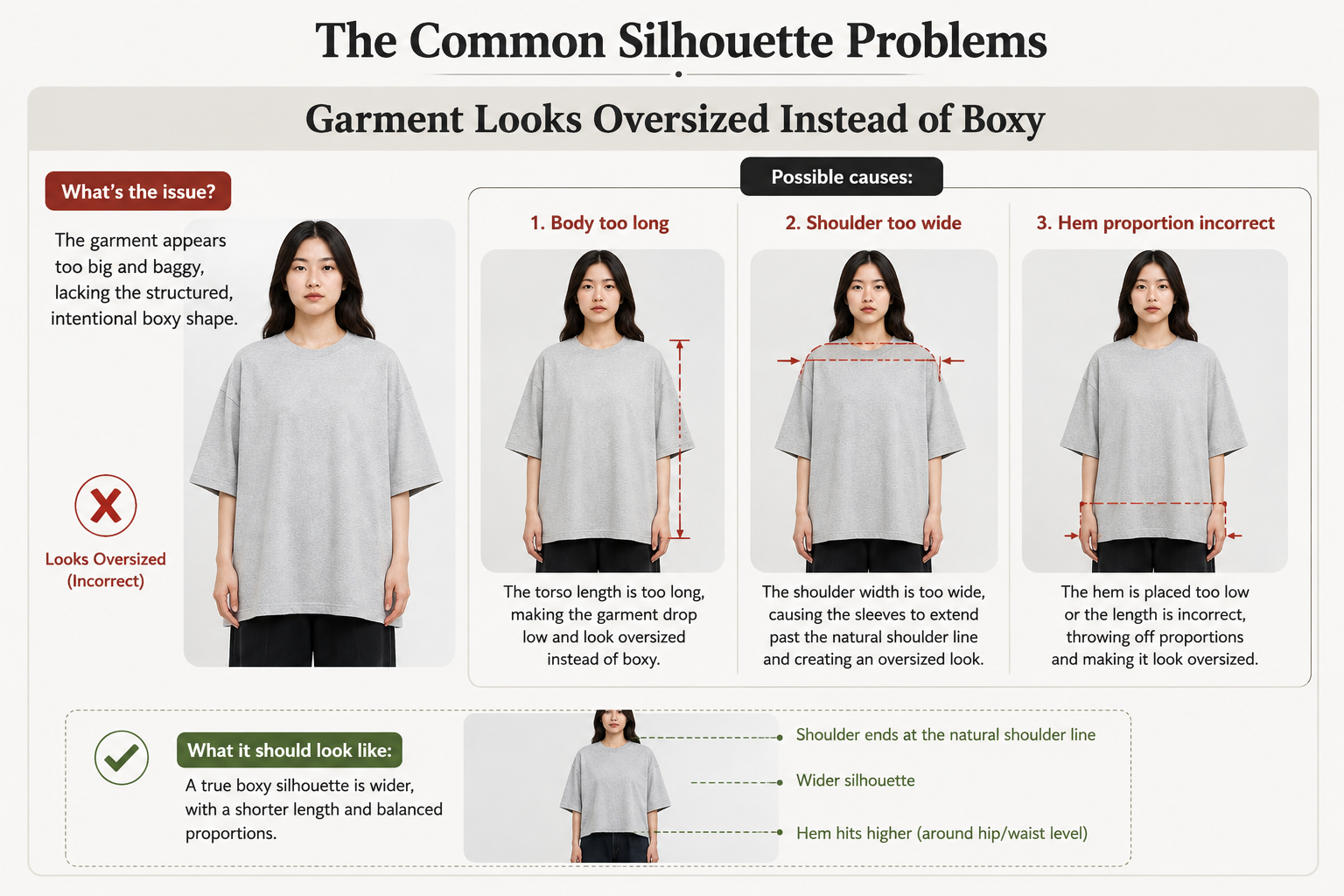
Garment Looks Oversized Instead of Boxy
Possible causes:
- Body too long
- Shoulder too wide
- Hem proportion incorrect
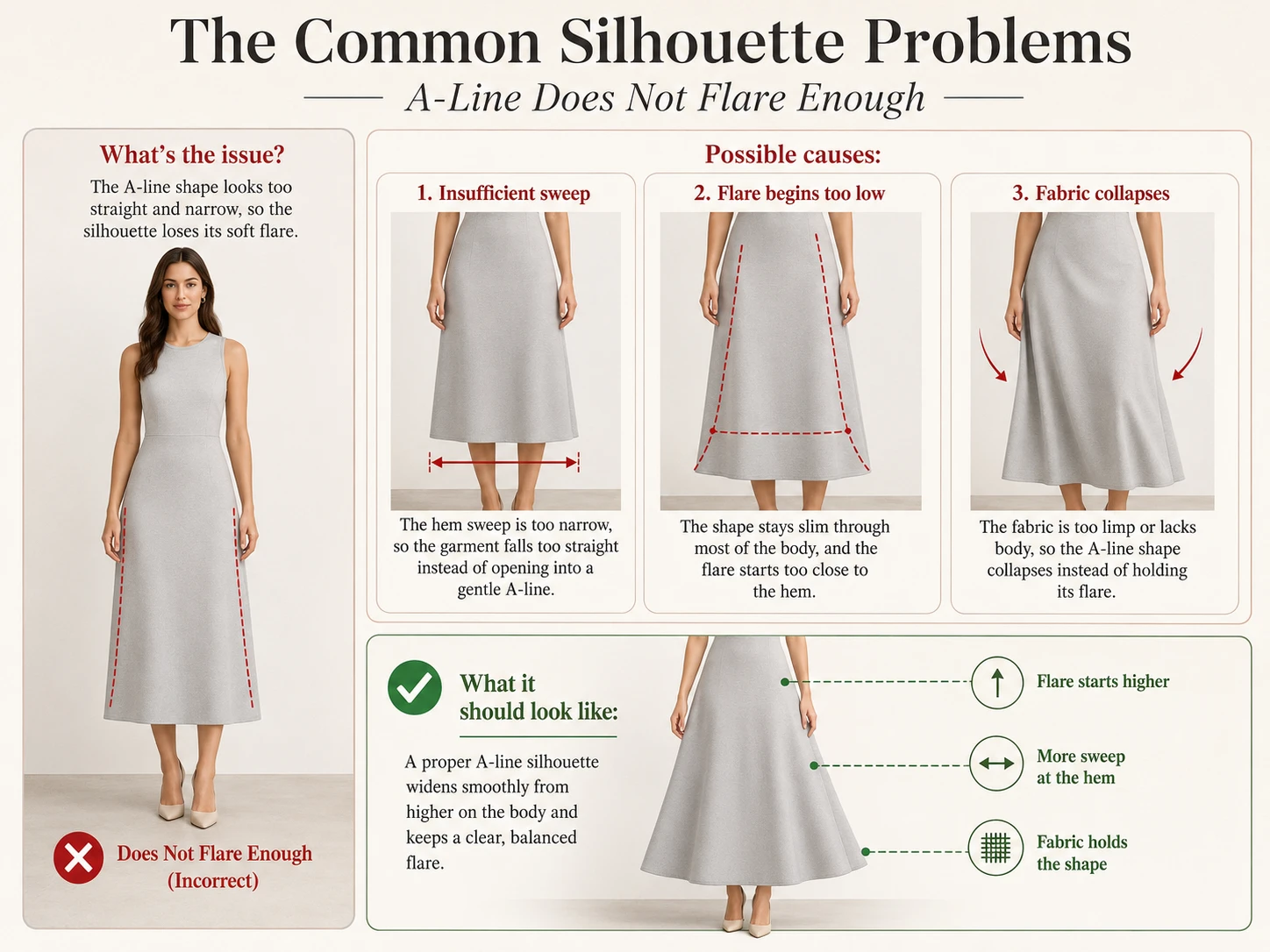
A-Line Does Not Flare Enough
Possible causes:
- Insufficient sweep
- Flare begins too low
- Fabric collapses
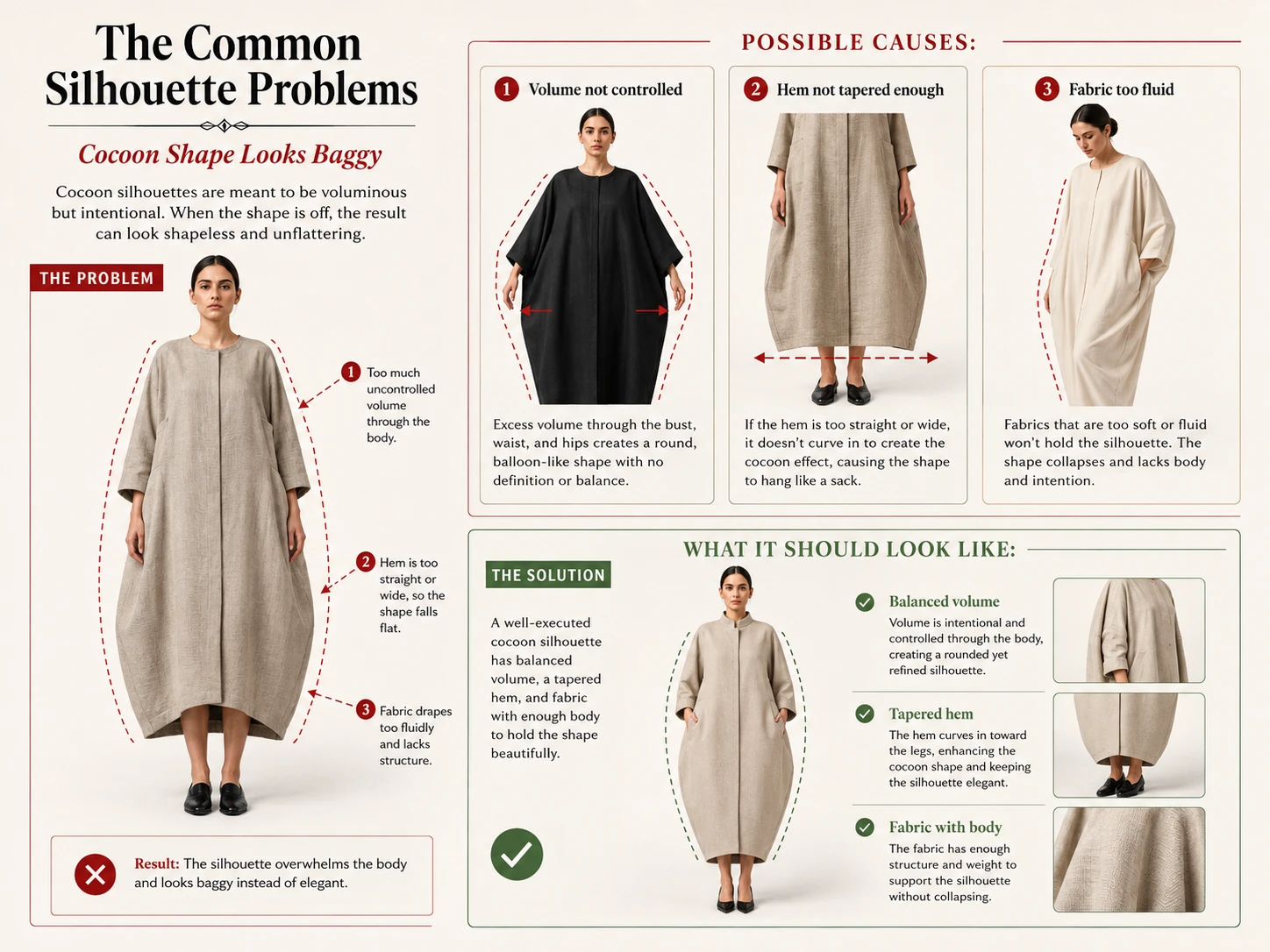
Cocoon Shape Looks Baggy
Possible causes:
- Volume not controlled
- Hem not tapered enough
- Fabric too fluid
Conclusion / Final Words
Silhouette is one of fashion’s strongest visual languages. Before people notice color, print, stitching, or branding, they often notice the overall shape first. A-line can feel classic. Boxy can feel modern. Cocoon can feel artistic. Strong shoulders can suggest power. But silhouette is not created by a name alone. The final shape depends on: Pattern + Volume + Fabric + Structure + Fit
When these elements work together, the garment looks clear and intentional. When they do not, even a good design can lose its character.
- During garment development, a useful question is: “What shape should this garment still have when viewed from several meters away?”
- A simple formula sums it up: Clear Shape + Correct Pattern + Suitable Fabric + Controlled Volume + Proper Structure = Strong Silhouette
Great style starts with a shape that communicates before the details do.