Cocktail / Evening Dress: Style, Fit for Every Body Type

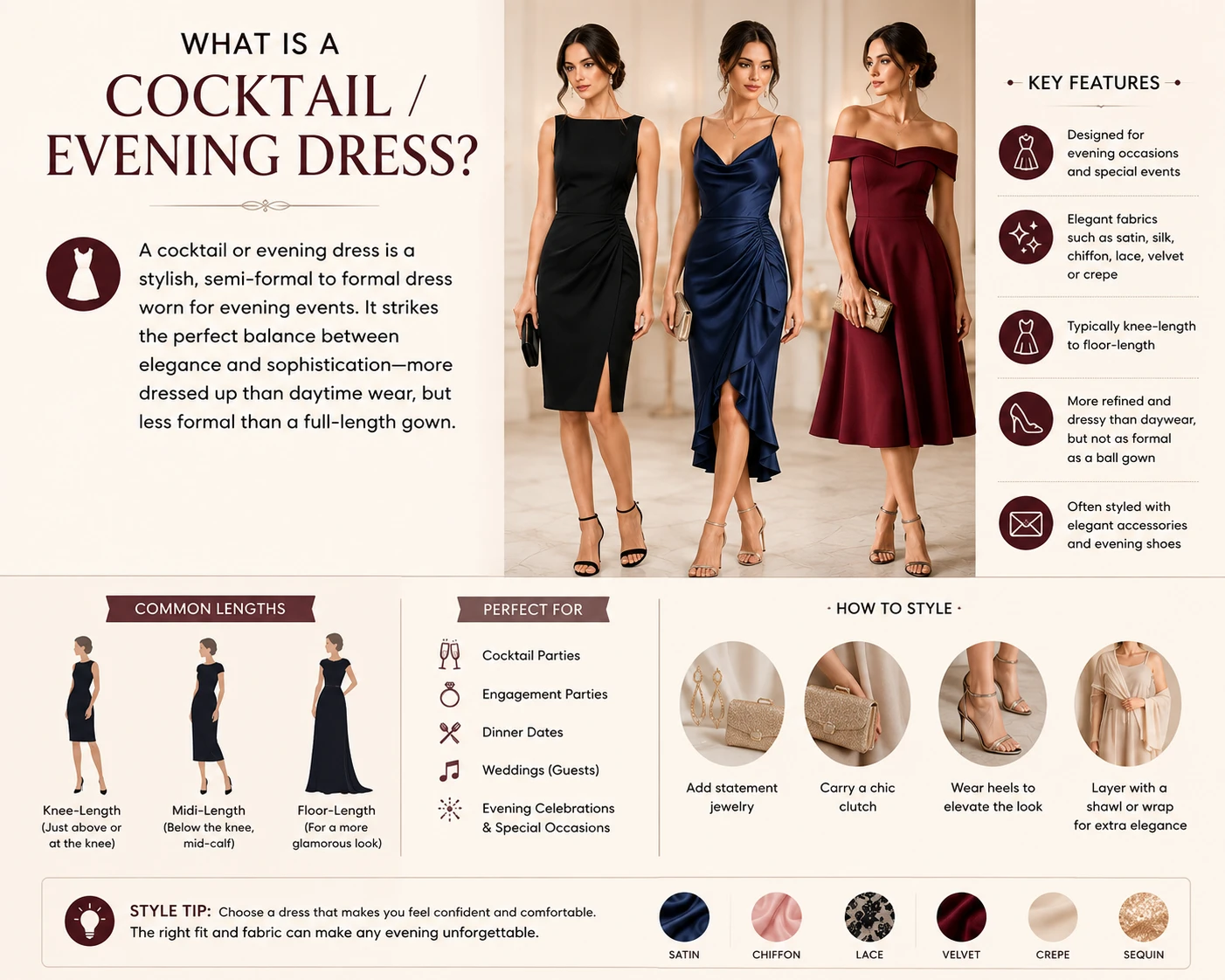
The cocktail or evening dress is one of the most expressive categories in women’s fashion. Unlike terms such as A-line, bodycon, or shift, “cocktail” and “evening” mainly describe the occasion and level of formality, not one specific silhouette.
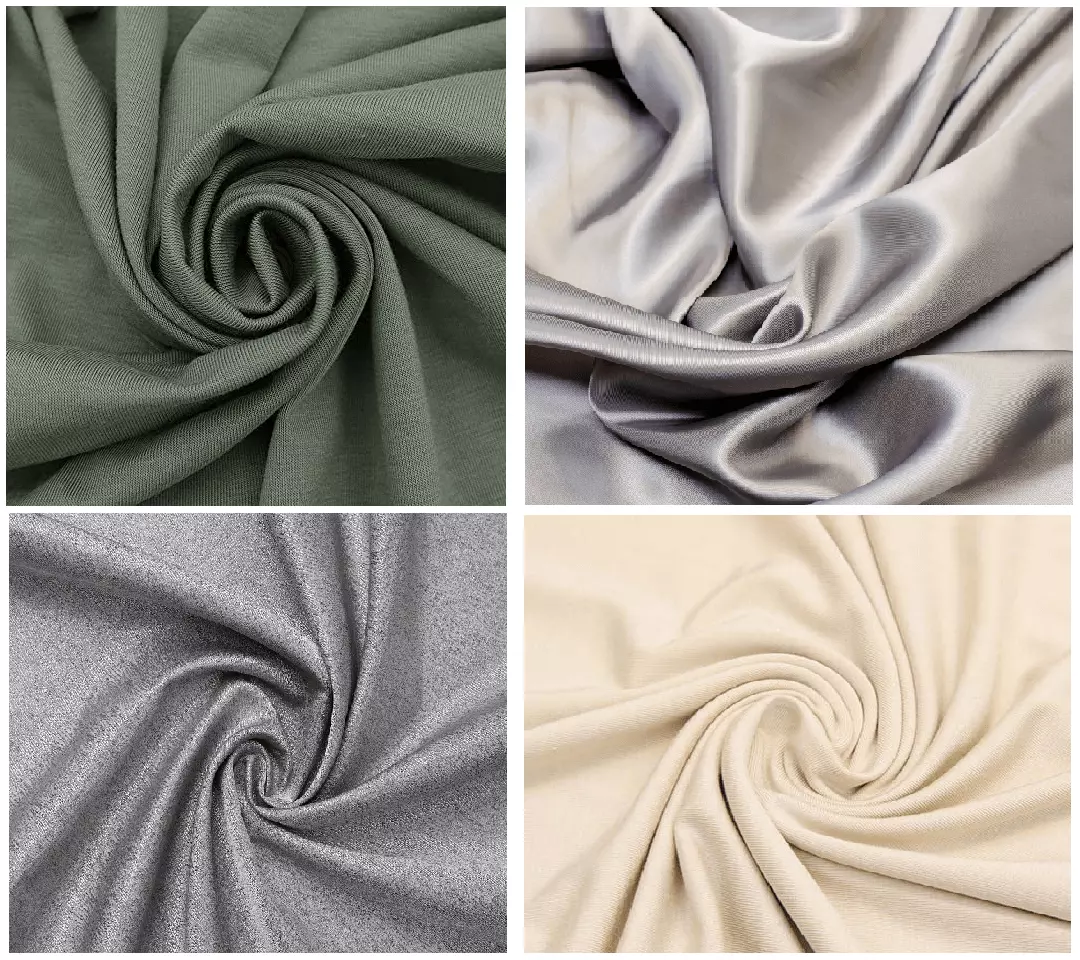
A cocktail dress is generally designed for semi-formal to dressy social occasions and is often mini, knee-length, or midi. An evening dress can be more formal and may include midi, ankle-length, or floor-length gowns. However, exact expectations depend on the event and its dress code. What makes cocktail and evening dresses so versatile is the enormous range of available designs. They can be fitted or flowing, minimal or embellished, sleeveless or long-sleeved, structured or soft. Fabrics such as crepe, satin, chiffon, lace, velvet, and sequined textiles can completely change the mood.
- There is also no single body type that is “supposed” to wear a particular evening silhouette. The better question is: Which silhouette, neckline, waist position, length, fabric, and level of structure make you feel comfortable and appropriate for the occasion?
- A useful fashion formula is: Right Dress Code + Comfortable Fit + Suitable Silhouette + Elegant Fabric + Personal Style = Your Best Cocktail / Evening Dress
What Is a Cocktail / Evening Dress?
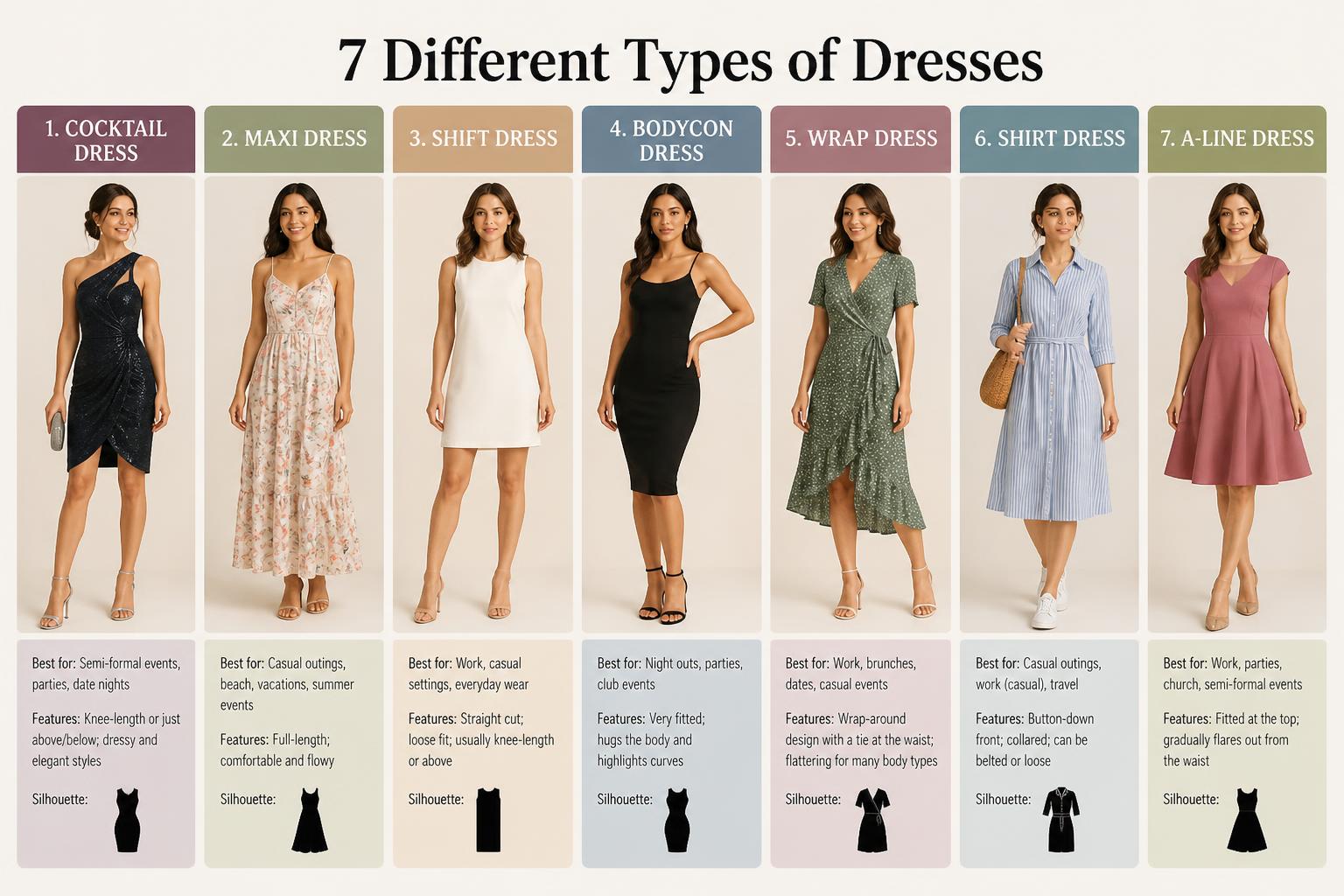
Before choosing a dress, it helps to understand the difference between cocktail and evening dressing. These terms describe how formal an outfit is expected to feel rather than specifying one exact shape. This means an A-line dress, wrap dress, bodycon dress, sheath dress, or maxi gown can all become cocktail or eveningwear when the fabric, construction, length, and styling suit the occasion.
What Is a Cocktail Dress?
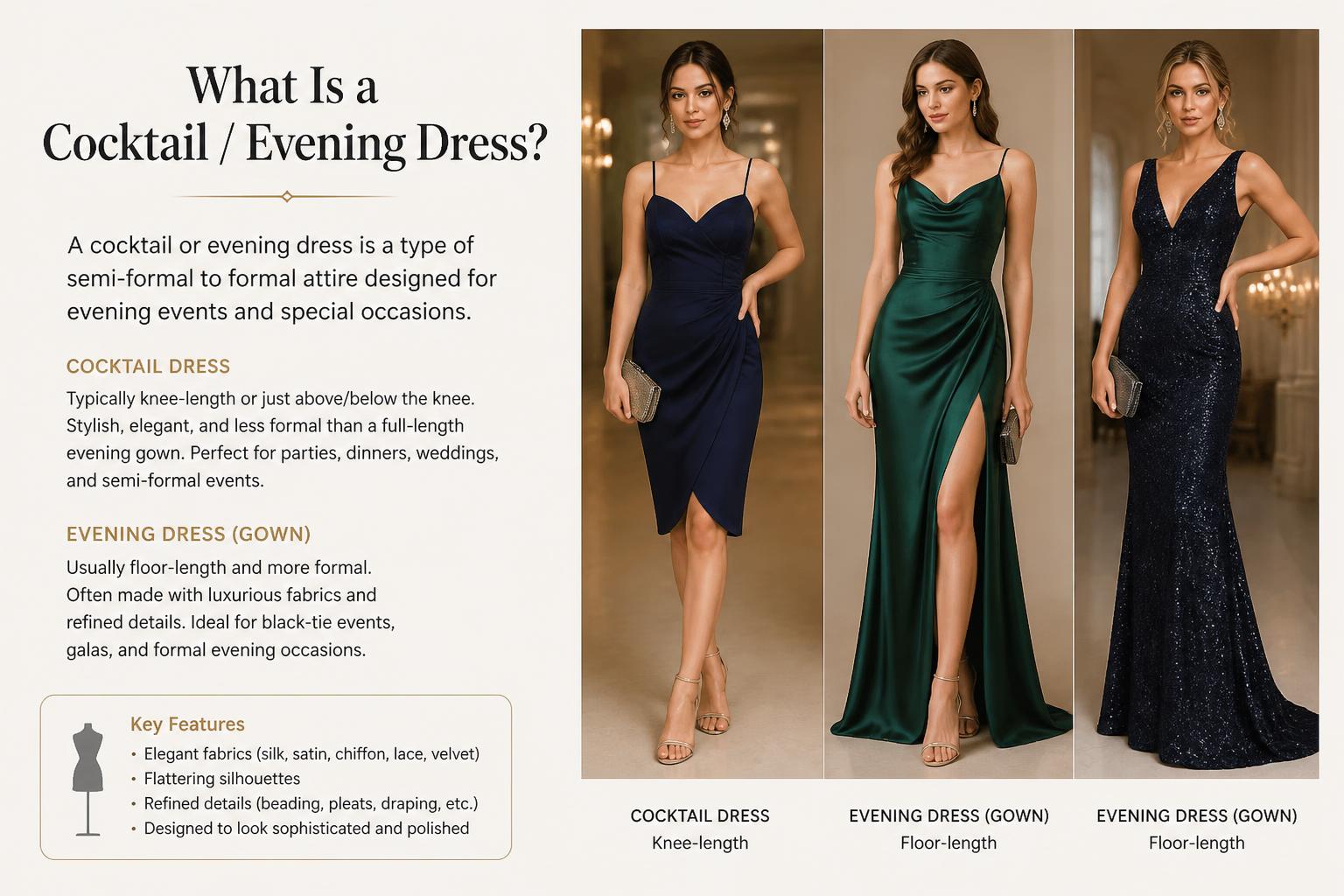
A cocktail dress is generally a dressy outfit worn for semi-formal or festive occasions.
Cocktail dresses are commonly:
- Mini
- Knee-length
- Tea-length
- Midi

They may use:
- Satin
- Crepe
- Lace
- Velvet
- Sequins
- Chiffon
A cocktail dress typically feels more polished than everyday clothing but less formal than a traditional floor-length evening gown.
What Is an Evening Dress?
An evening dress is generally designed for more formal dinners, celebrations, receptions, galas, or special events.
Evening dresses may be:
- Midi
- Ankle-length
- Floor-length
They may include:
- Draping
- Pleating
- Embroidery
- Beading
- Sequins
- Lace
- Structured bodices
- Long flowing skirts
Some evening dresses are minimal and sleek, while others are highly decorative.
Cocktail Dress vs. Evening Dress
The distinction is not always absolute because modern dress codes vary.

A simple way to think about it is:
- Cocktail = Dressy / Semi-Formal
- Evening = More Formal / Occasion-Oriented
The event invitation should always guide the final choice.
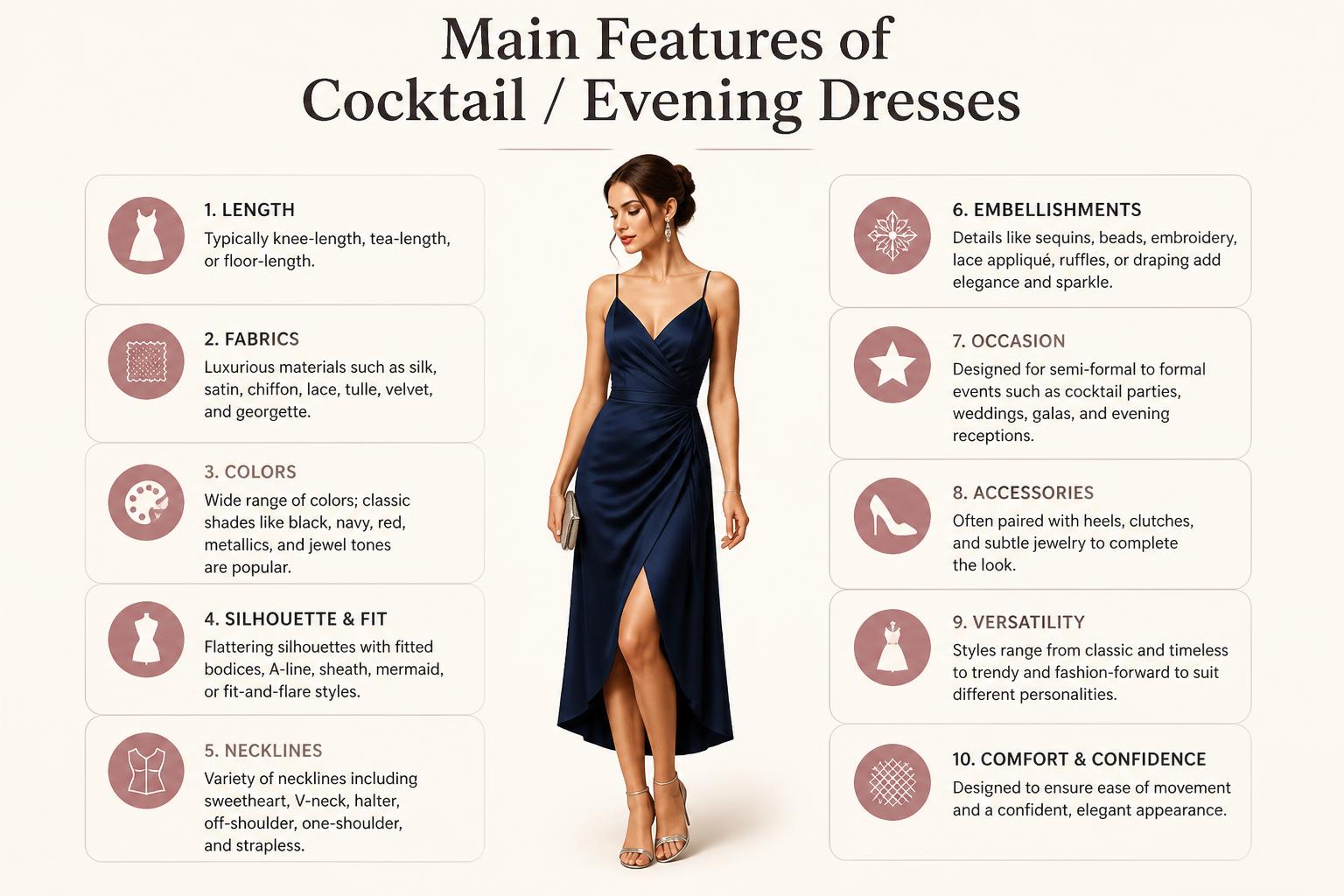
Main Features of Cocktail / Evening Dresses
Cocktail and evening dresses can look very different, but they often share several design elements that make them feel more polished than everyday dresses. The exact combination depends on the occasion and personal style.
Common features include:
- More refined fabric
- Carefully shaped silhouette
- Defined or intentionally relaxed waist
- Decorative neckline
- Mini, knee, midi, or maxi length
- Structured or flowing skirt
- Lining
- Zipper, buttons, hooks, or concealed closures
- Slits
- Draping
- Ruching
- Pleats
- Lace
- Embroidery
- Sequins
- Beading
More structured evening dresses may also include:
- Boning
- Bust cups
- Inner support
- Corset-inspired panels
- Multiple layers
- Interfacing
The important point is that eveningwear does not need to be uncomfortable. Good occasionwear should still allow you to sit, walk, dance, and move naturally.
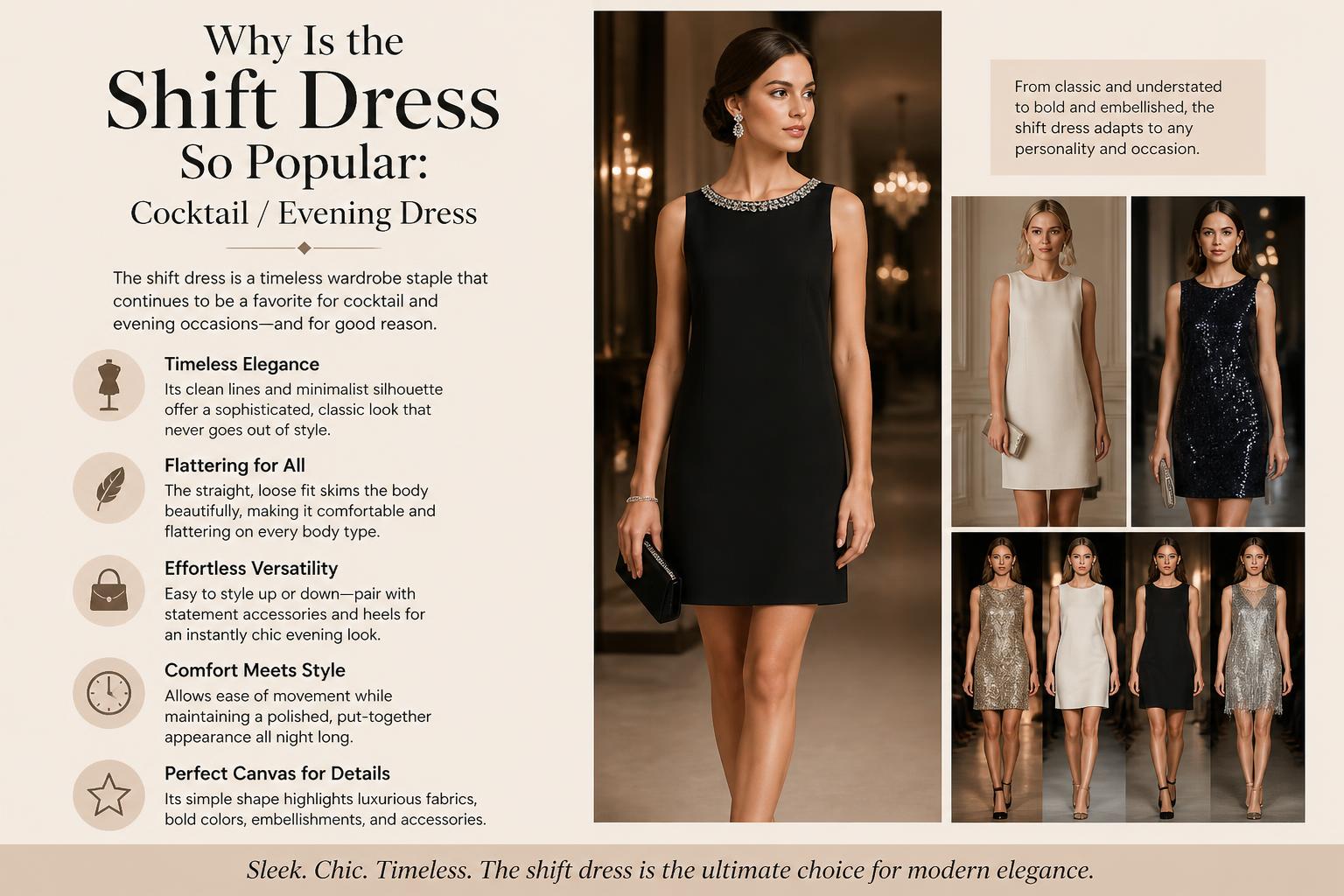
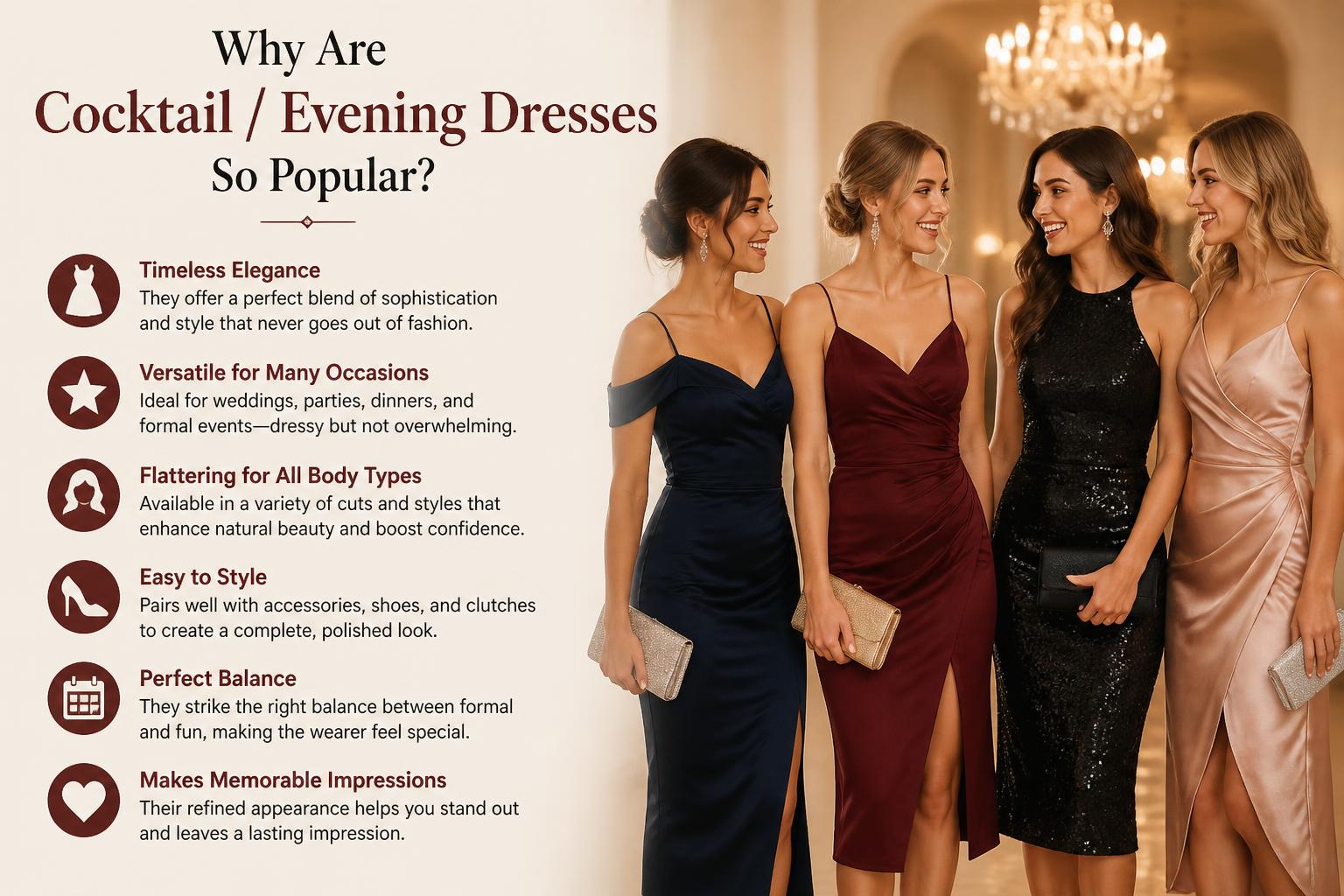
Why Are Cocktail / Evening Dresses So Popular?
Cocktail and evening dresses remain important because special occasions often call for clothing that feels different from an everyday outfit. These dresses allow fabric, silhouette, color, and detail to become more expressive.
They Create an Occasion-Ready Look
A polished dress can make an outfit feel immediately suitable for:
- Weddings
- Parties
- Cocktail receptions
- Formal dinners
- Galas
- Celebrations
- Holiday events
They Offer Huge Style Variety
Cocktail and evening dresses can feel:
- Minimal
- Romantic
- Glamorous
- Modern
- Classic
- Dramatic
- Playful
- Sophisticated
Accessories Can Completely Change the Look
A simple dress can become more formal through:
- Heels
- Jewelry
- Evening bag
- Shawl
- Blazer
- Elegant coat
This makes some evening dresses more versatile than they first appear.
Quick Cocktail / Evening Dress Style Guide
Because occasionwear comes in so many forms, this quick guide can help match a dress to the mood you want.
| If You Want… | Try… |
|---|---|
| Classic Cocktail Look | Knee or midi crepe dress + heels |
| Minimal Evening Look | Solid satin column dress |
| Romantic Style | Chiffon or lace A-line dress |
| Glamorous Look | Sequined or beaded dress |
| Defined Waist | Wrap, belted, or fit-and-flare dress |
| Sleek Look | Sheath or bodycon midi |
| More Movement | A-line, pleated, or chiffon skirt |
| Wedding Guest Look | Midi or maxi crepe/chiffon dress |
| Formal Evening Look | Floor-length gown |
| Modern Style | Asymmetric or one-shoulder dress |
| Cooler Weather | Velvet or long-sleeve evening dress |
| Statement Look | Metallic, embellished, or dramatic-sleeve dress |
Types of Cocktail / Evening Dress
Cocktail and evening dresses are not defined by one silhouette. Designers can combine different lengths, necklines, fabrics, and constructions to create completely different looks. Understanding the main styles can make shopping much easier.
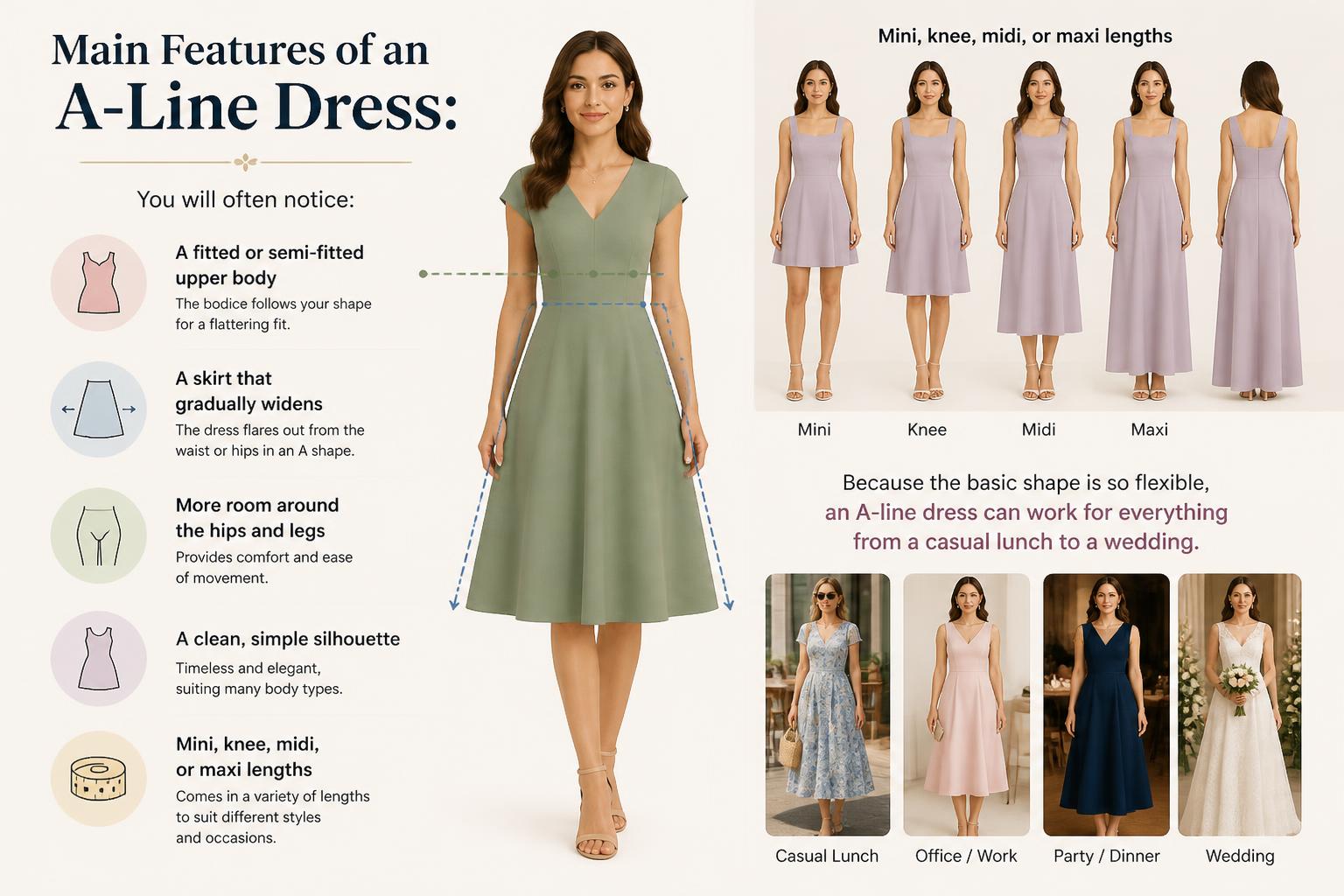
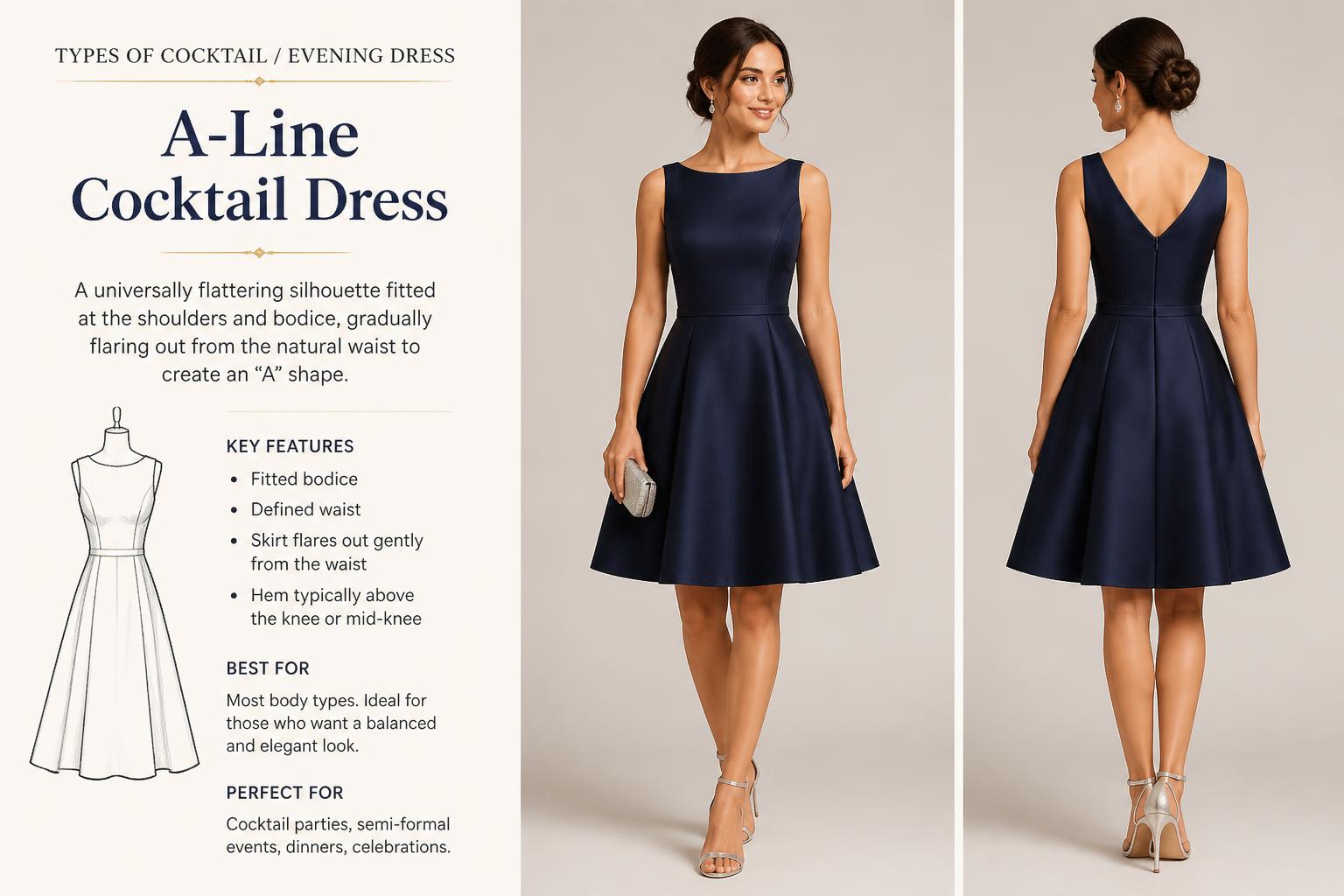
A-Line Cocktail Dress
An A-line cocktail dress fits more closely through the upper body and gradually widens toward the hem. This creates a balanced silhouette with comfortable lower-body movement.
Best For
- Weddings
- Cocktail parties
- Dinner
- Graduations
- Celebrations
Styling Idea
- A-Line Cocktail Dress + Heels + Small Clutch
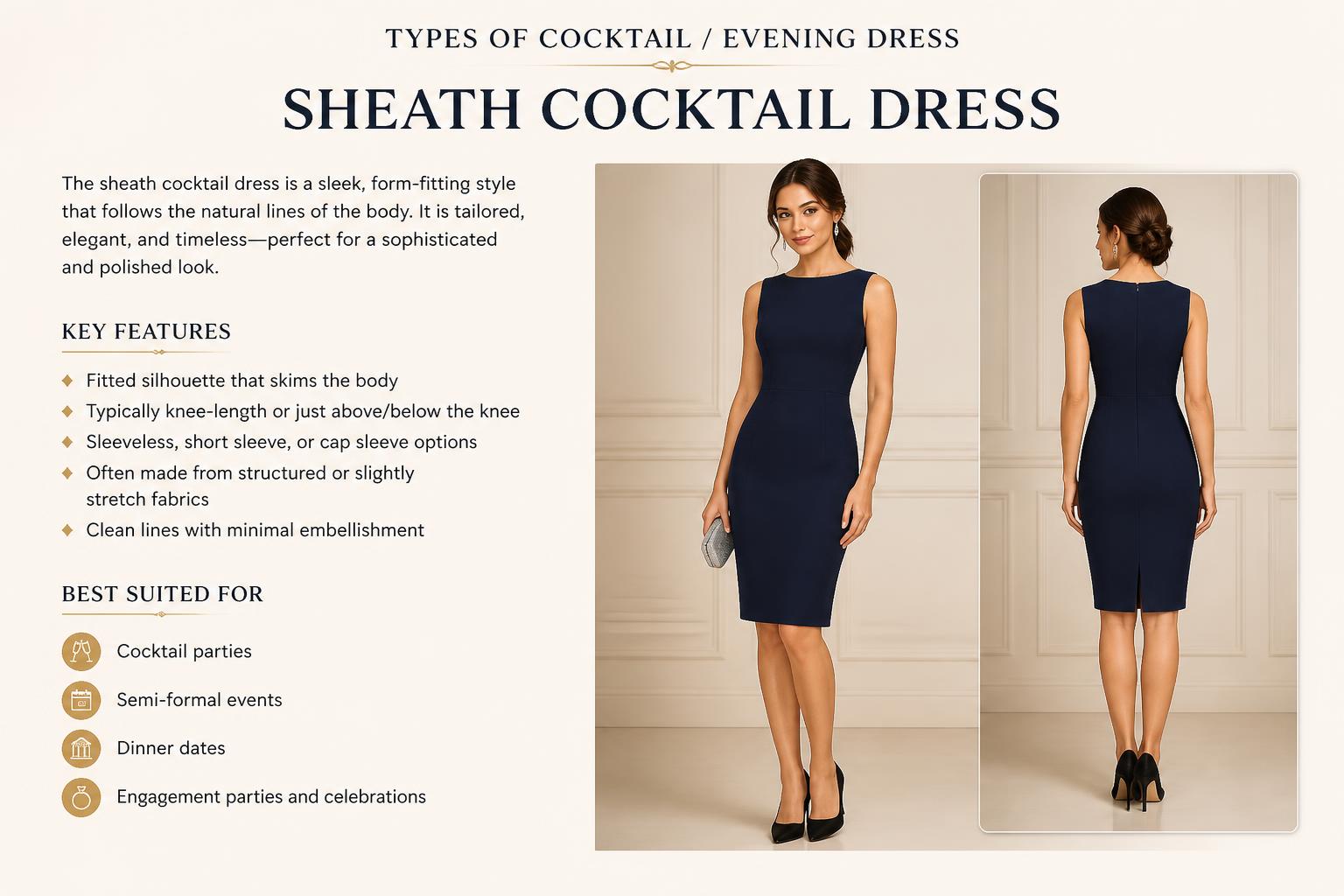
Sheath Cocktail Dress
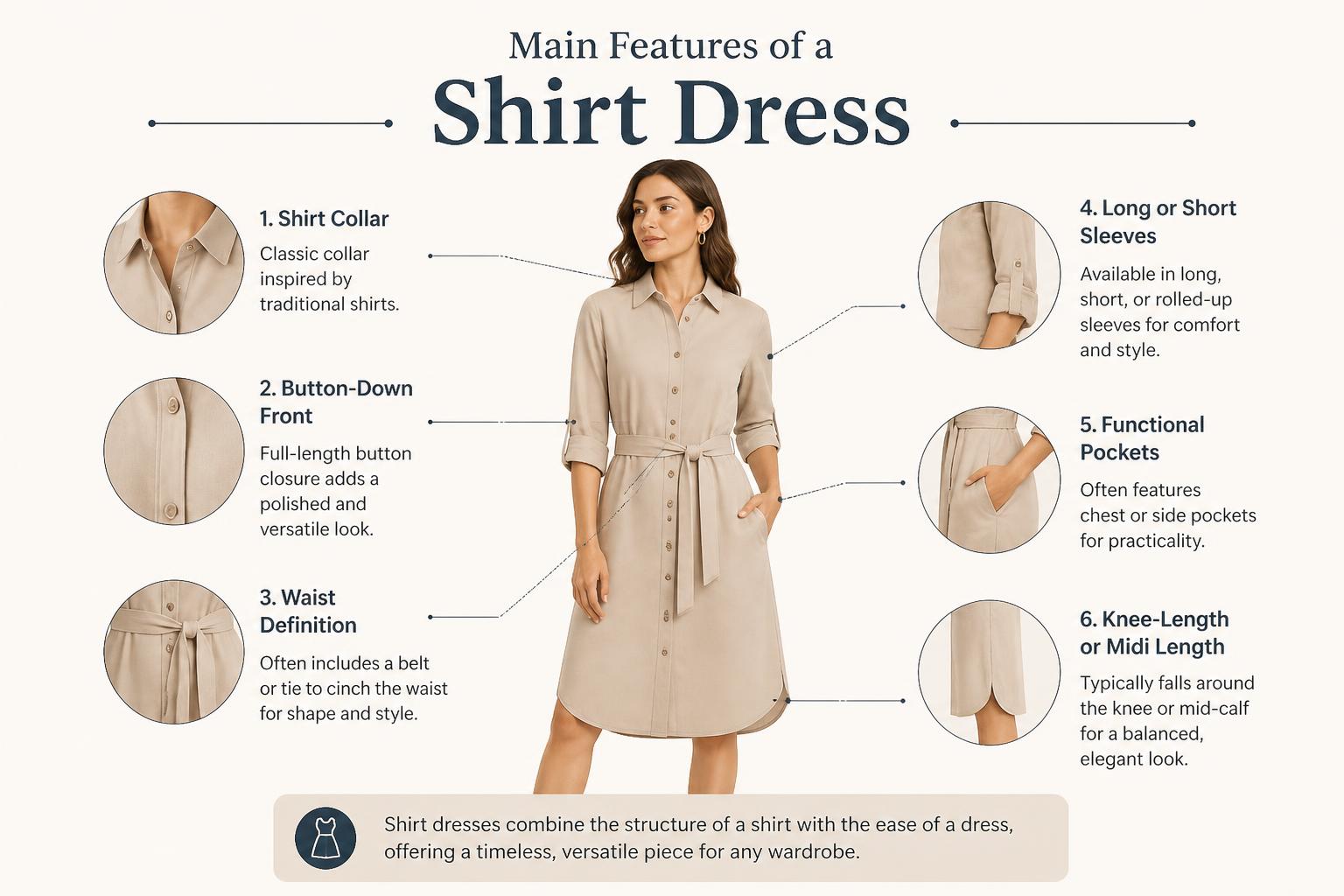
A sheath dress follows the body more closely than an A-line or shift dress but is usually more tailored than a very stretchy bodycon. Its clean silhouette can feel especially polished.
Best For
- Cocktail receptions
- Work-related evening events
- Dinner
- Formal celebrations
Styling Idea
- Sheath Dress + Pumps + Structured Evening Bag
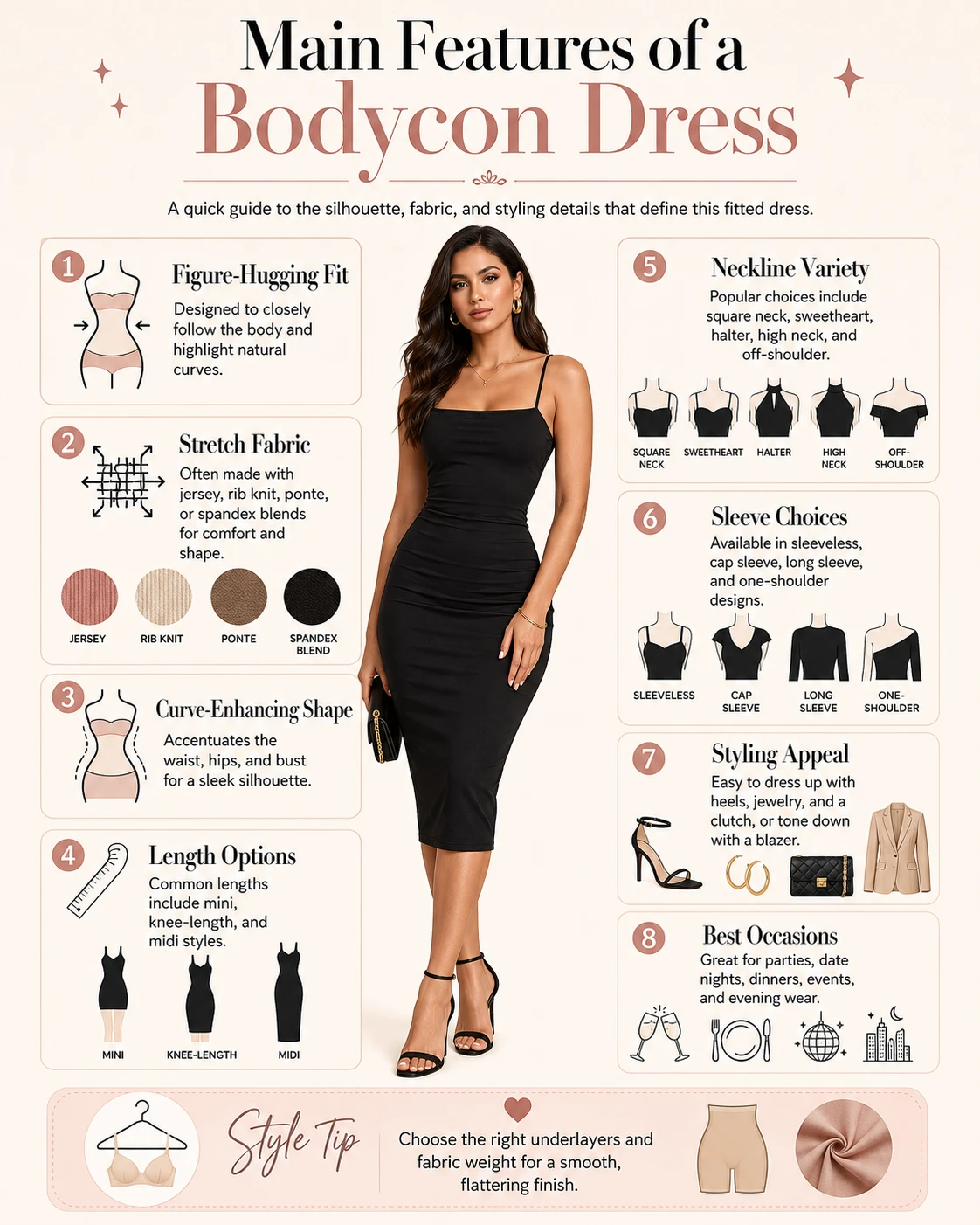
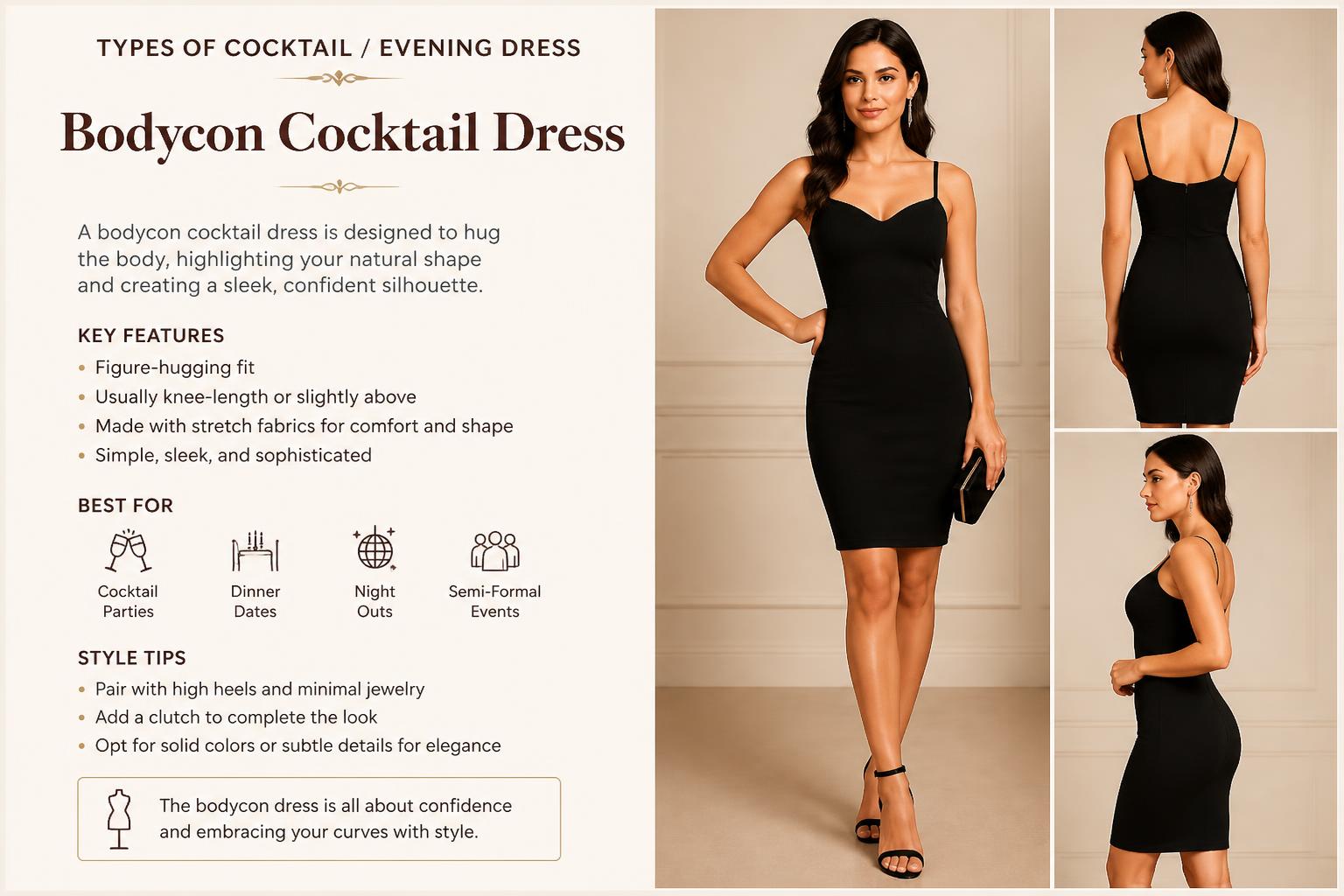
Bodycon Cocktail Dress
A bodycon cocktail dress creates a more fitted silhouette. The dress may use stretch fabric, ruching, or structured panels.
Best For
- Parties
- Dates
- Nightlife
- Evening celebrations
Fit Tip
Look for:
- Good stretch
- Recovery
- Opacity
- Comfortable movement
The dress should feel fitted without preventing you from sitting or walking comfortably.
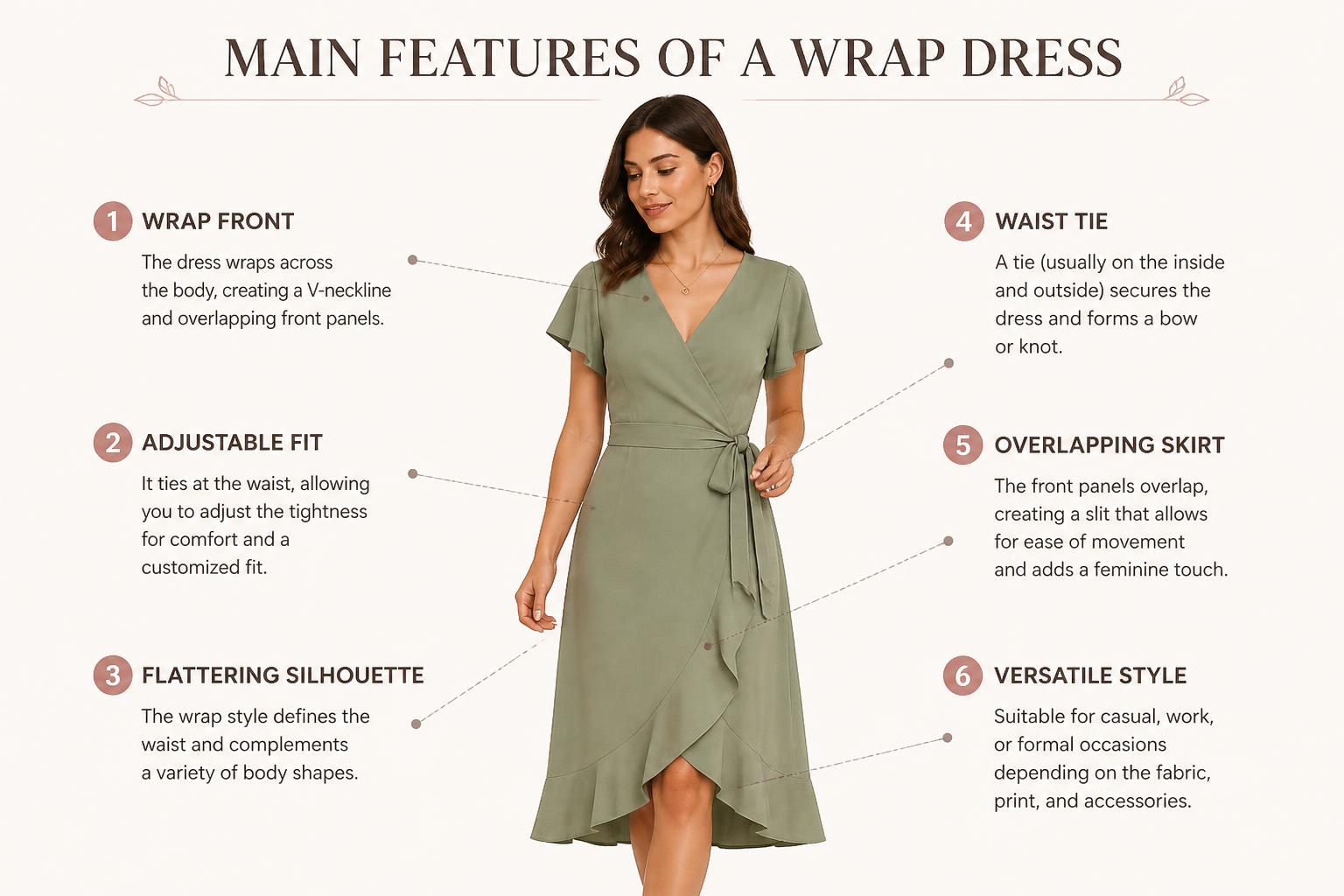
Wrap Cocktail Dress
A wrap cocktail dress combines a crossed-front neckline with a waist tie or wrap effect. It can feel elegant while still allowing some flexibility around the waist.
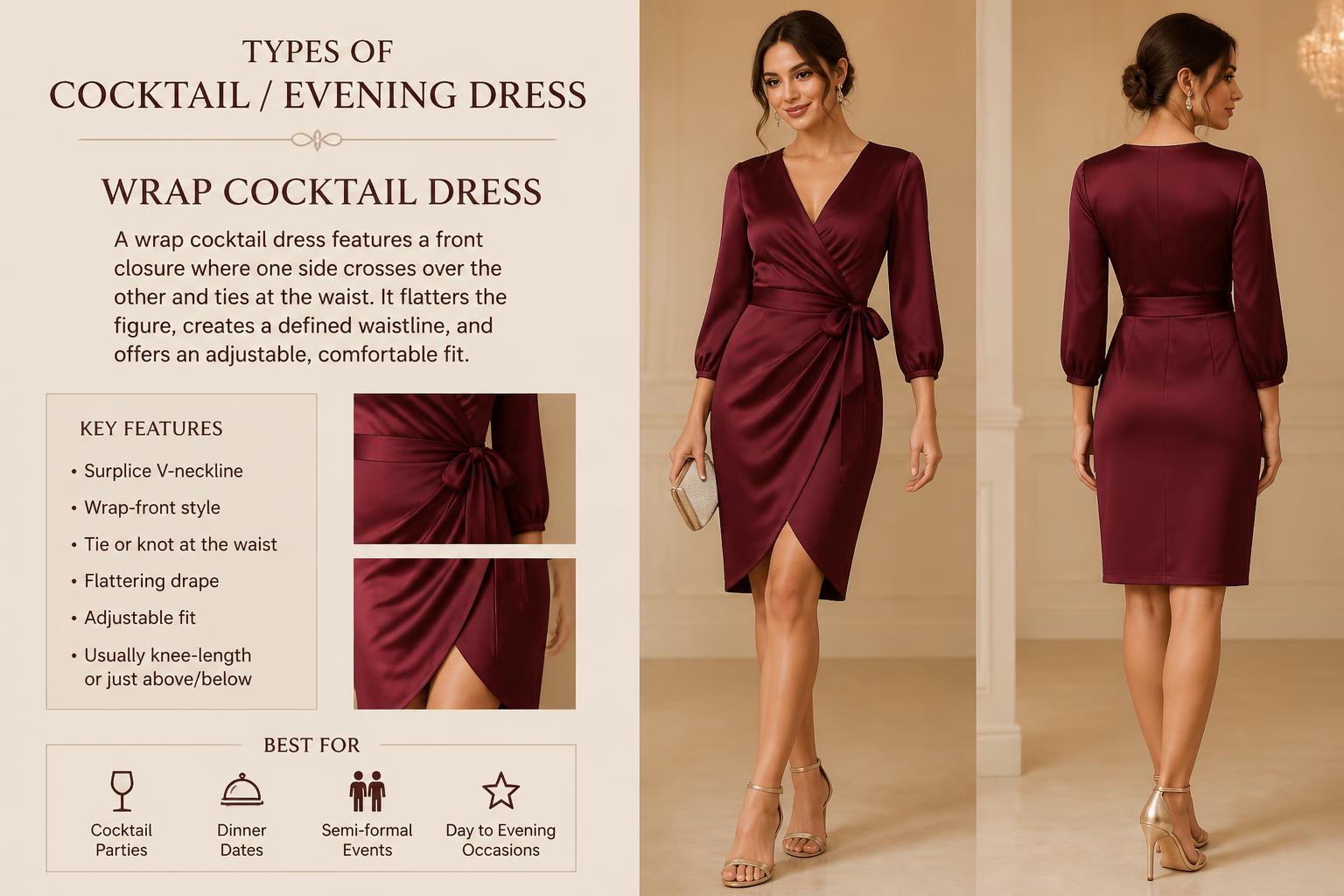
Best For
- Weddings
- Dinner
- Cocktail parties
- Smart evening events
Styling Idea
- Midi Wrap Dress + Heels + Simple Jewelry
Fit-and-Flare Cocktail Dress
A fit-and-flare dress has a more fitted bodice and a fuller skirt. Compared with a simple A-line, the change between waist and skirt may be more pronounced.
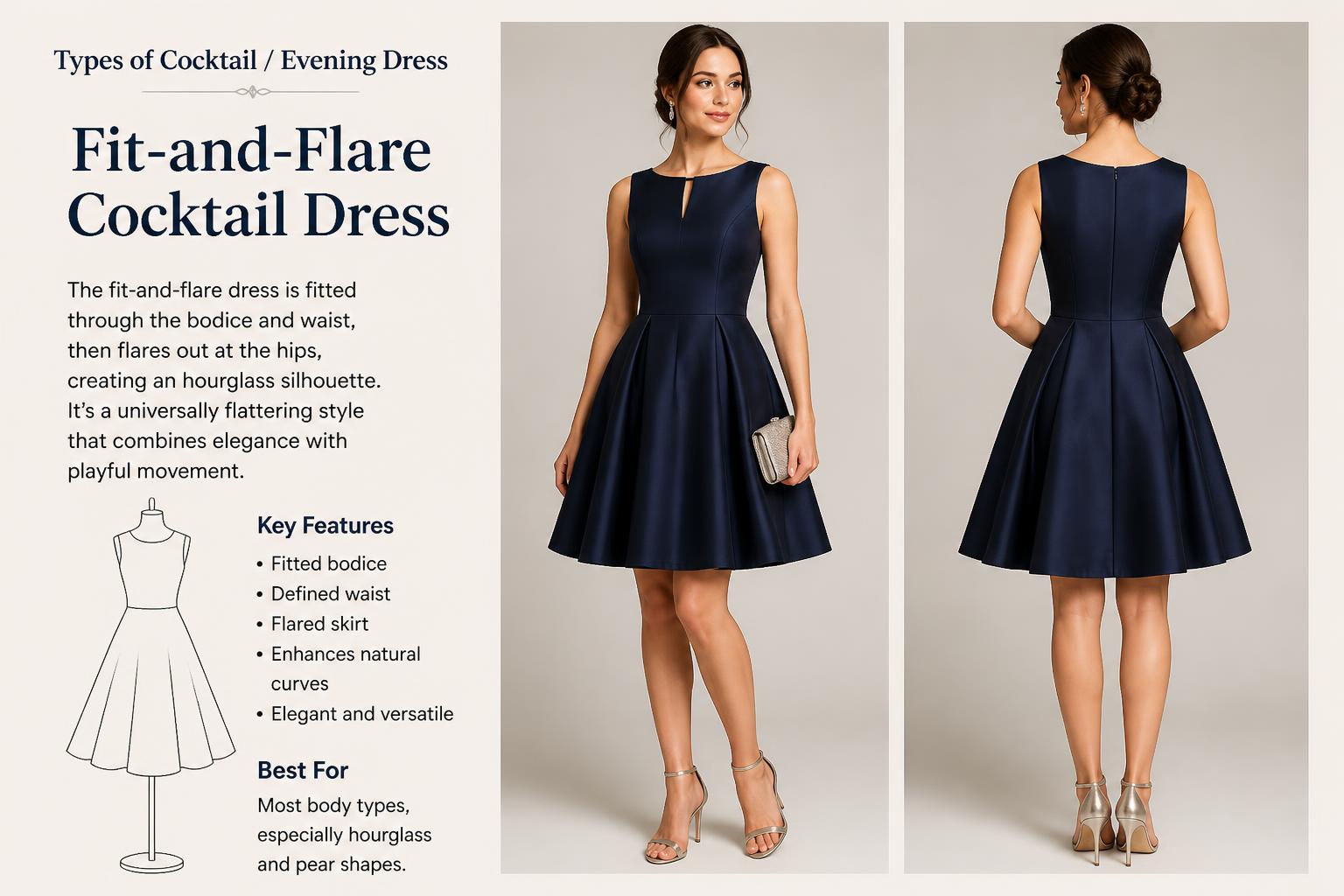
Best For
- Parties
- Weddings
- Dancing
- Romantic occasions
Why Choose It?
The fuller skirt can provide:
- Movement
- Volume
- A more playful or romantic shape
Satin Slip Evening Dress
A satin slip dress usually has a simple, fluid silhouette with narrow straps and minimal construction. Its elegance comes mainly from the smooth fabric and clean shape.
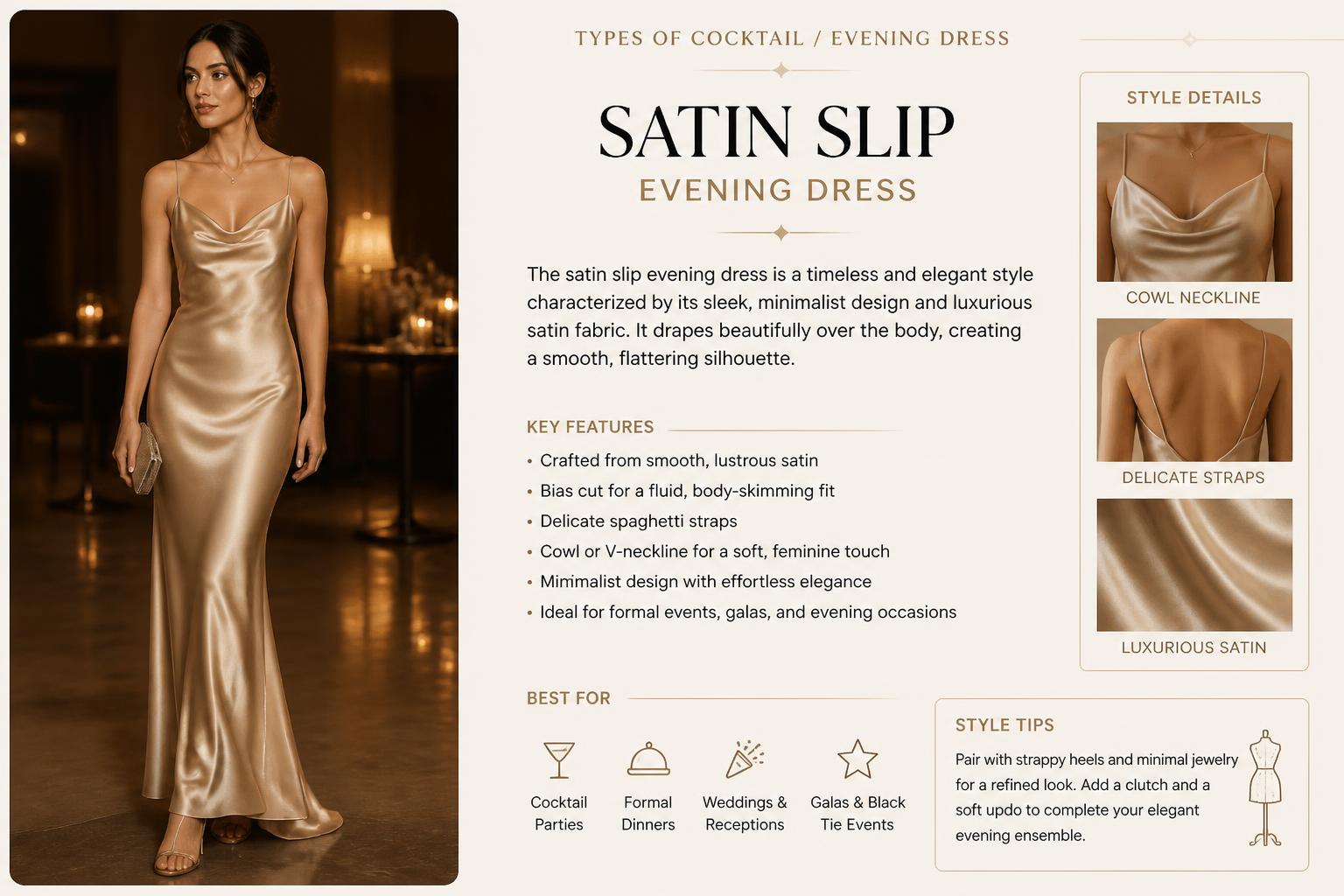
Best For
- Dinner
- Weddings
- Evening parties
- Formal celebrations
Styling Idea
- Satin Slip Dress + Minimal Heels + Delicate Jewelry
One-Shoulder Evening Dress
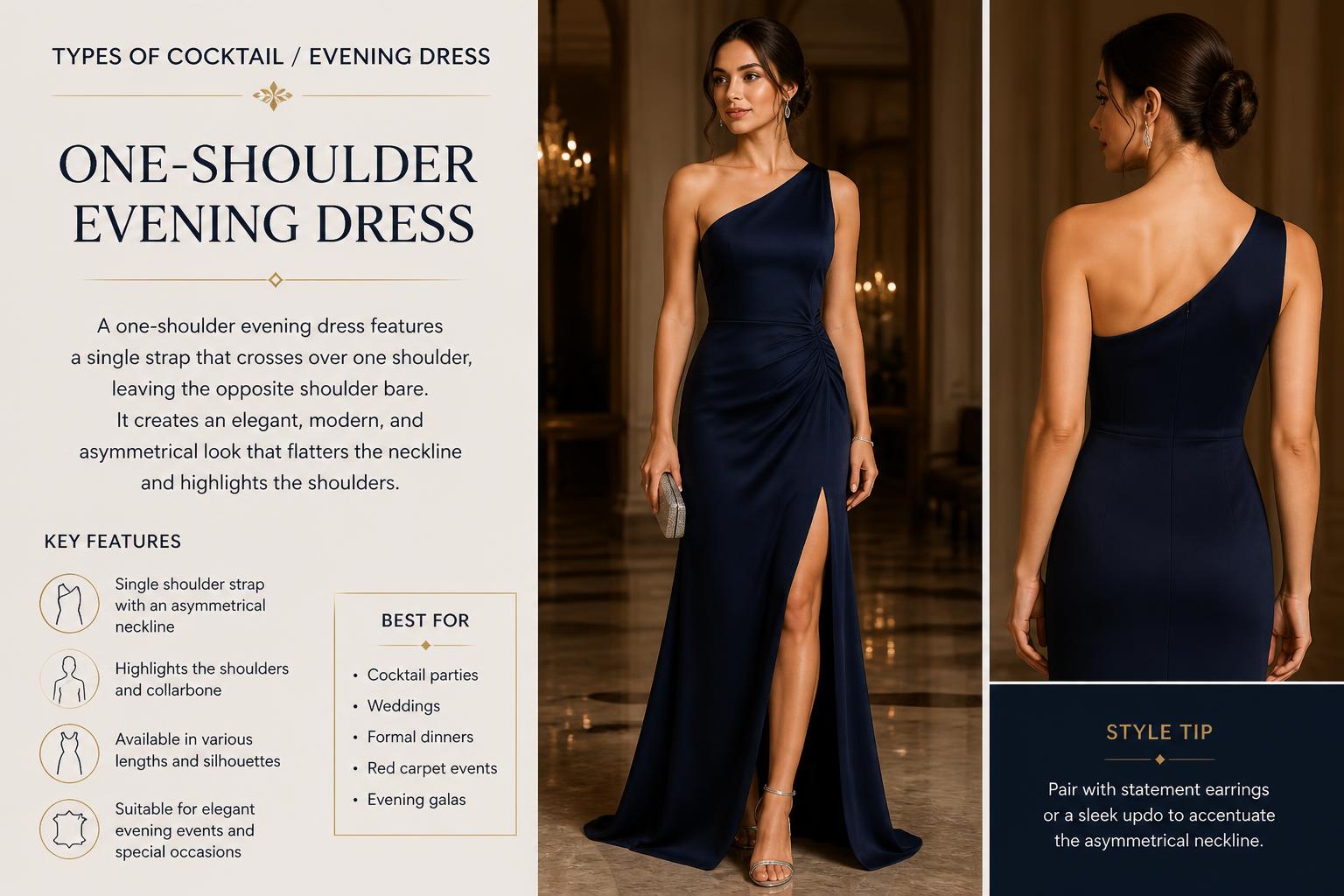
A one-shoulder dress creates an asymmetric neckline with one shoulder covered and the other more exposed. The design can make even a simple fabric feel more dramatic.
Best For
- Cocktail parties
- Weddings
- Formal dinners
- Evening events
Styling Tip
- Keep necklaces minimal or skip them if the neckline is already the focal point.
Off-Shoulder Evening Dress
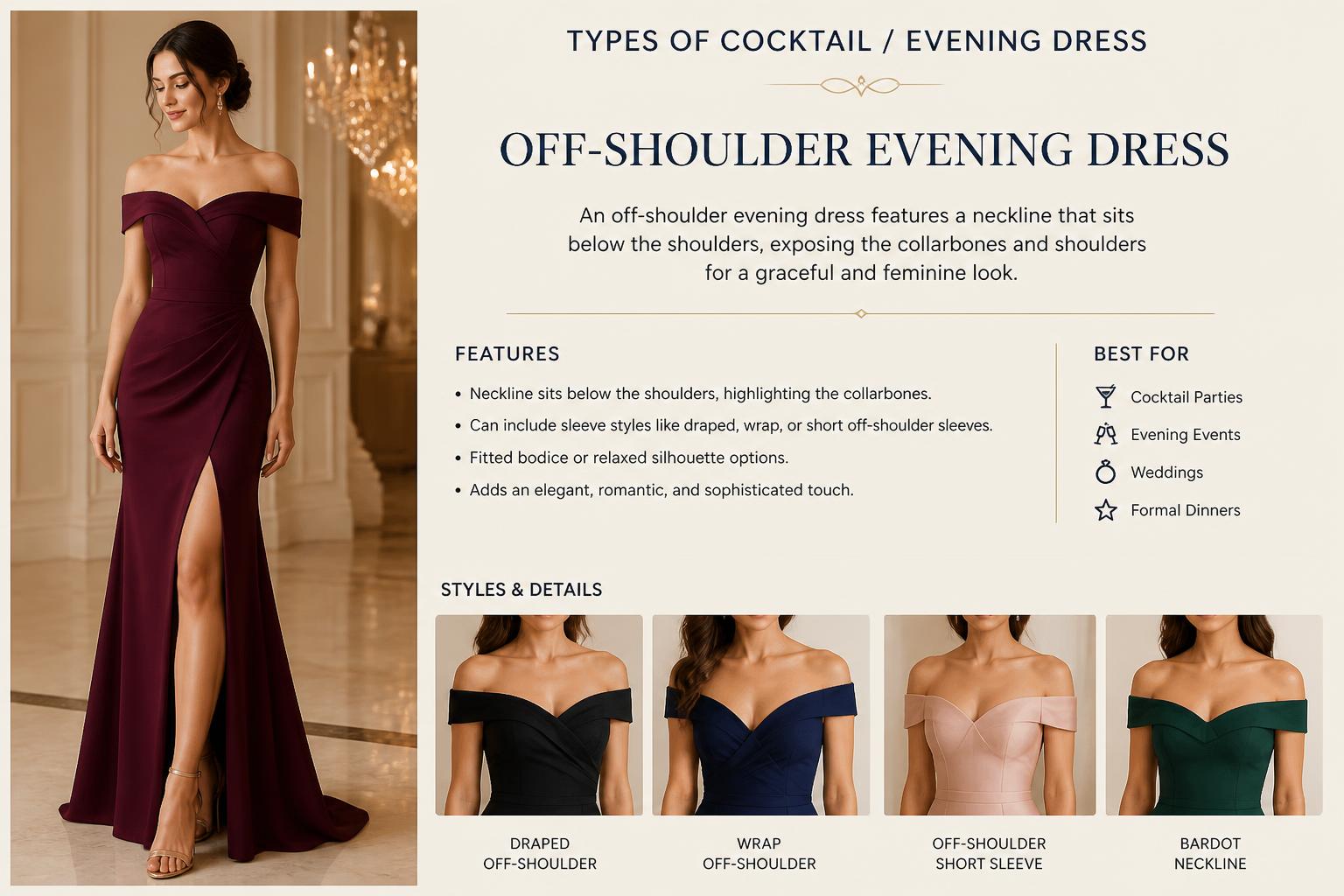
An off-shoulder dress highlights the shoulders and collarbone. It can be fitted, flowing, mini, midi, or full length.
Style Mood
It can feel:
- Romantic
- Glamorous
- Feminine
- Dramatic
Best For
- Weddings
- Formal celebrations
- Dinner
- Parties
Sequined Cocktail Dress
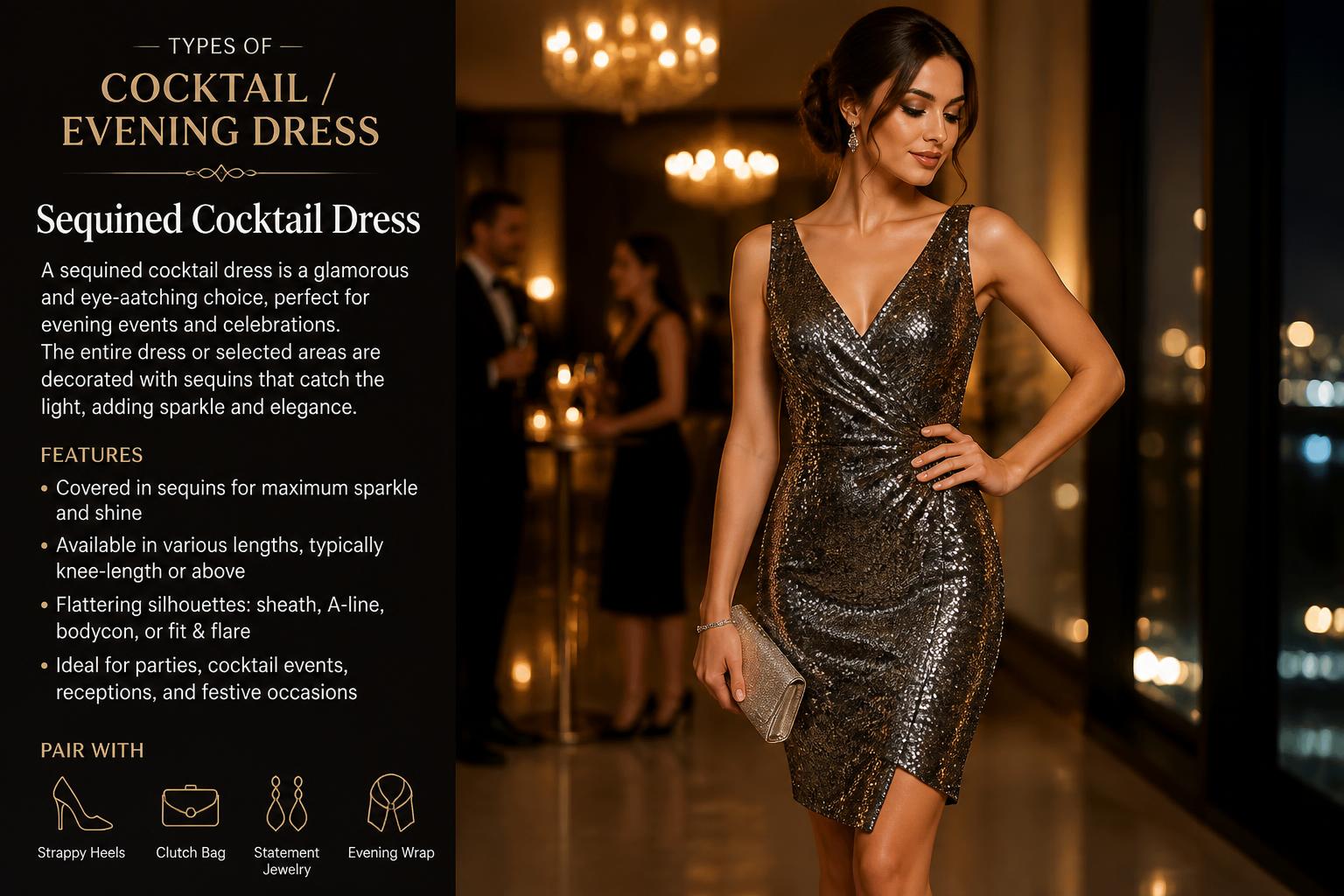
Sequins create immediate visual impact and are commonly associated with festive eveningwear. Because the surface itself is highly decorative, the silhouette can remain relatively simple.
Best For
- Parties
- New Year events
- Nightlife
- Celebrations
Styling Tip
- Let the dress be the statement. Sequined Dress + Simple Heels + Minimal Jewelry
Lace Cocktail Dress
Lace adds texture and decorative detail without necessarily requiring heavy embellishment. The appearance depends greatly on the lace pattern and lining color.
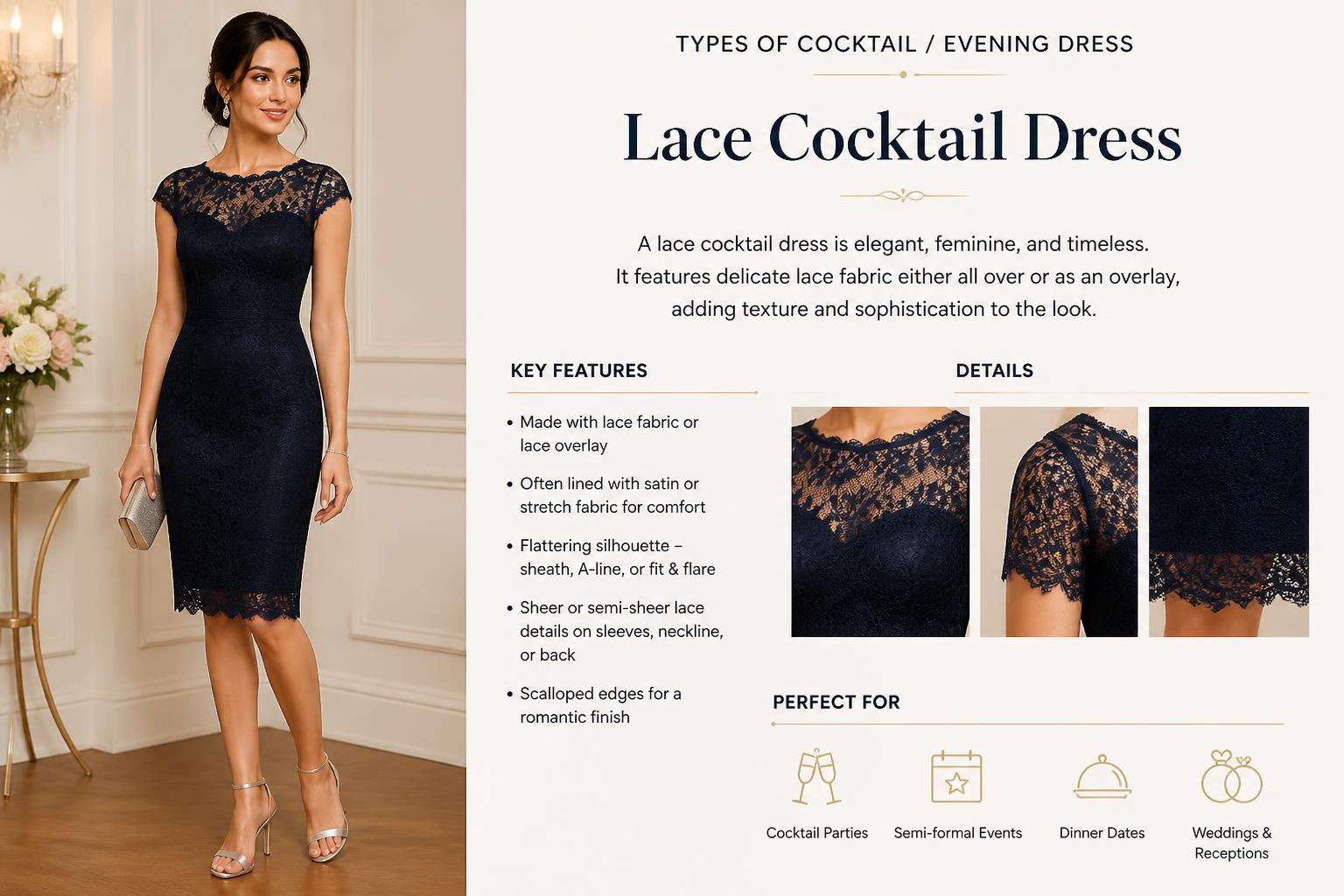
Best For
- Weddings
- Dinner
- Cocktail events
- Romantic occasions
Common Silhouettes
Lace works well with:
- A-line
- Sheath
- Fit-and-flare
- Midi dresses
Velvet Evening Dress
Velvet creates a richer, deeper surface and is particularly popular for cooler-weather eveningwear. The fabric catches light differently from satin or crepe, giving it a luxurious appearance.
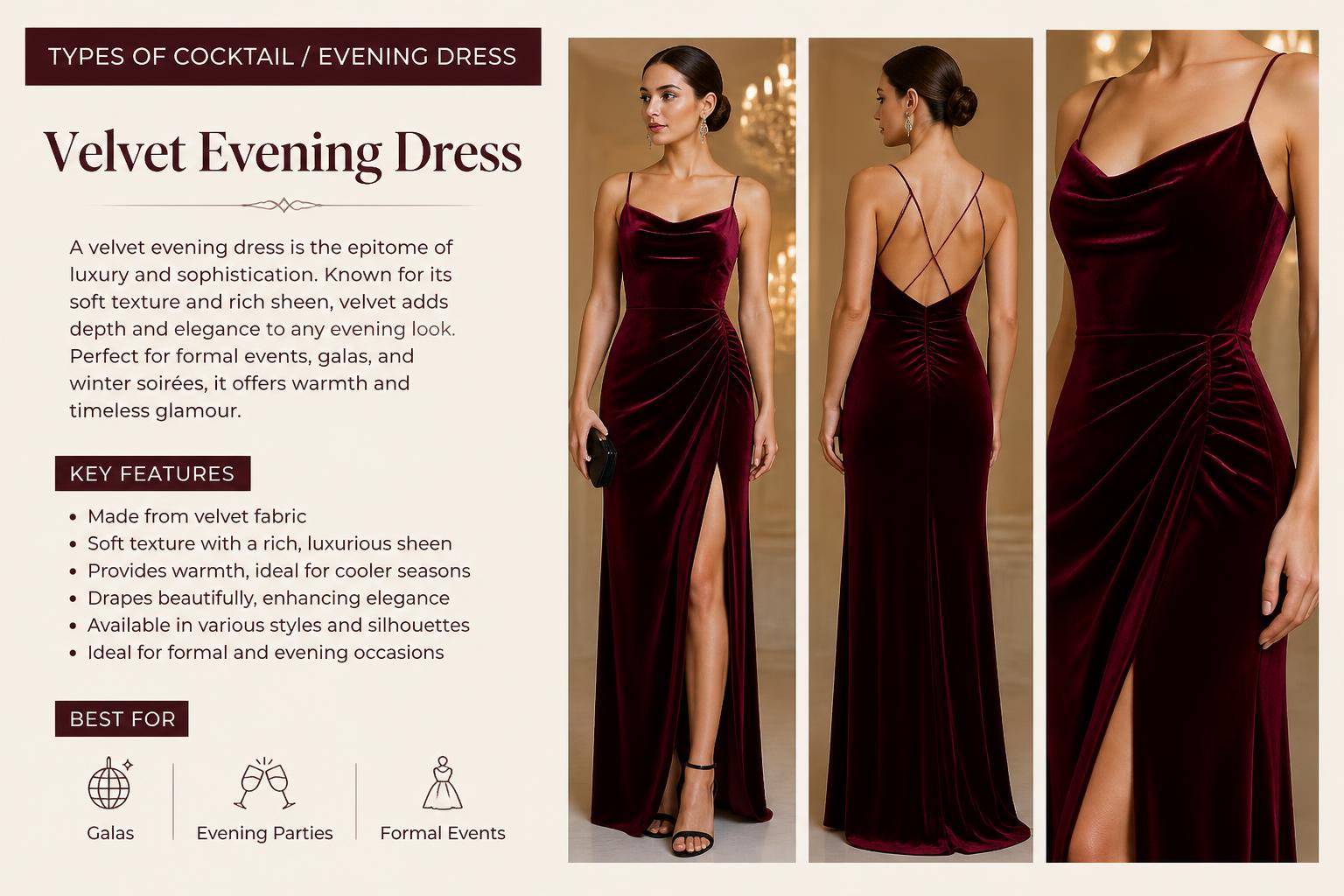
Best For
- Autumn
- Winter
- Holiday parties
- Formal dinners
Colors to Consider
Popular velvet colors include:
- Black
- Burgundy
- Emerald
- Navy
- Deep plum
Floor-Length Evening Gown
A floor-length gown is one of the most formal evening options.

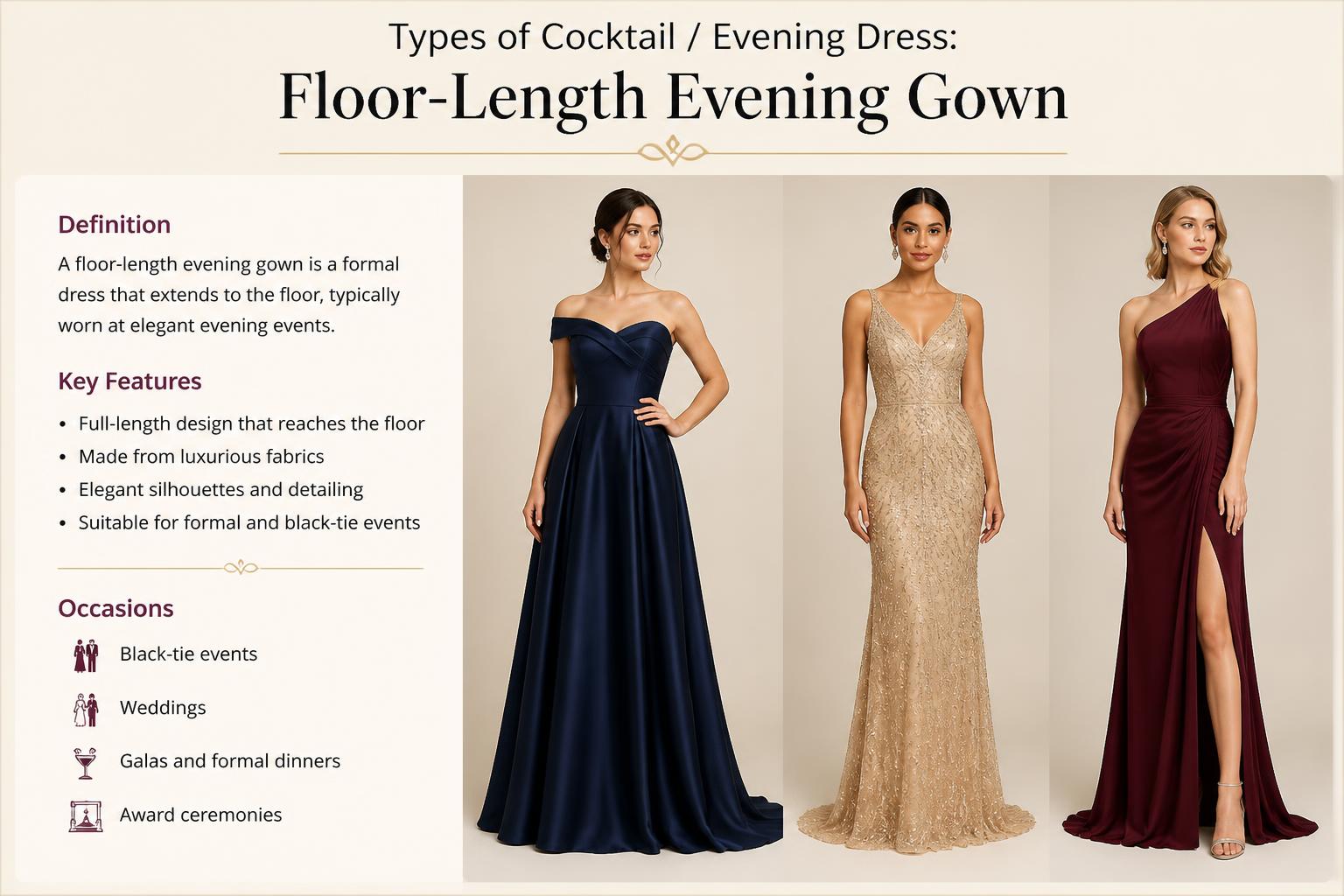
It may be:
- A-line
- Column
- Mermaid
- Empire-waist
- Ball gown-inspired
Best For
- Formal weddings
- Galas
- Black-tie events
- Formal receptions
Important Fit Areas
Pay attention to:
- Bodice fit
- Waist position
- Hem length
- Walking room
- Train length
- Shoe height
Cocktail / Evening Dress for Every Body Type
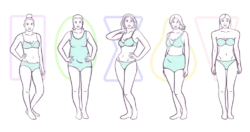
Occasionwear is sometimes surrounded by rigid “body shape rules,” but those rules are rarely necessary. A better approach is to understand how silhouette, neckline, waist position, fabric, and length affect proportion, then choose the combination you personally enjoy. No body type needs to be hidden, corrected, or disguised.
For Hourglass Shapes
Hourglass proportions generally describe a relatively balanced bust and hip line with a more defined waist. If you enjoy emphasizing the waist, many evening silhouettes make that easy.
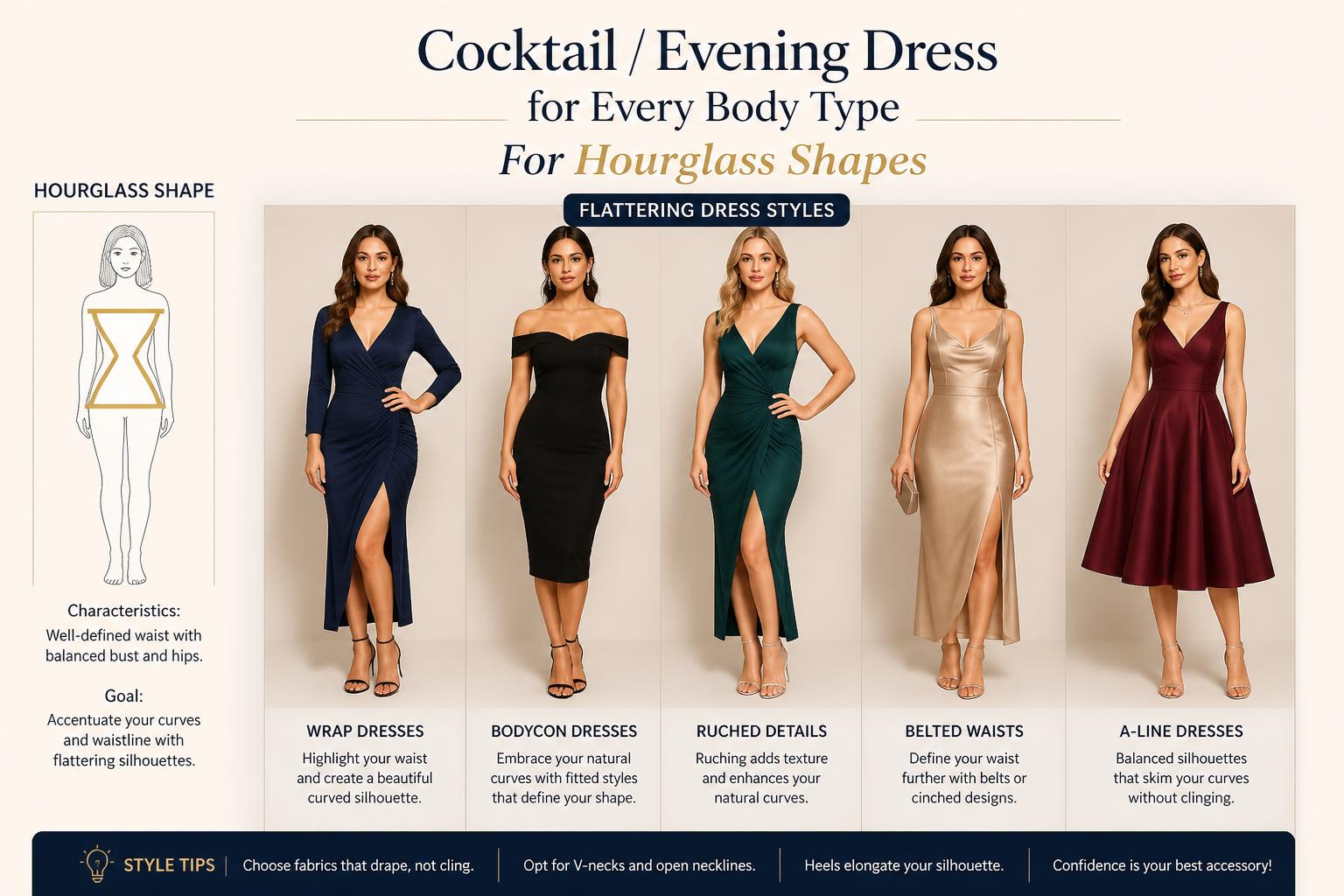
Styles to Try
- Wrap dress
- Sheath dress
- Fit-and-flare dress
- A-line dress
- Bodycon midi
Waist Options
Look for:
- Natural waist seam
- Belt
- Wrap tie
- Princess seams
Fabric Ideas
Consider:
- Crepe
- Satin
- Ponte
- Soft velvet
- Jersey
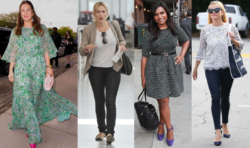
If you prefer a straighter silhouette, you do not need to emphasize the waist at all.
For Pear-Shaped
Pear-shaped proportions generally describe hips that are wider than the shoulders or bust. Cocktail and evening dresses offer plenty of options for either emphasizing those proportions or creating more visual balance.
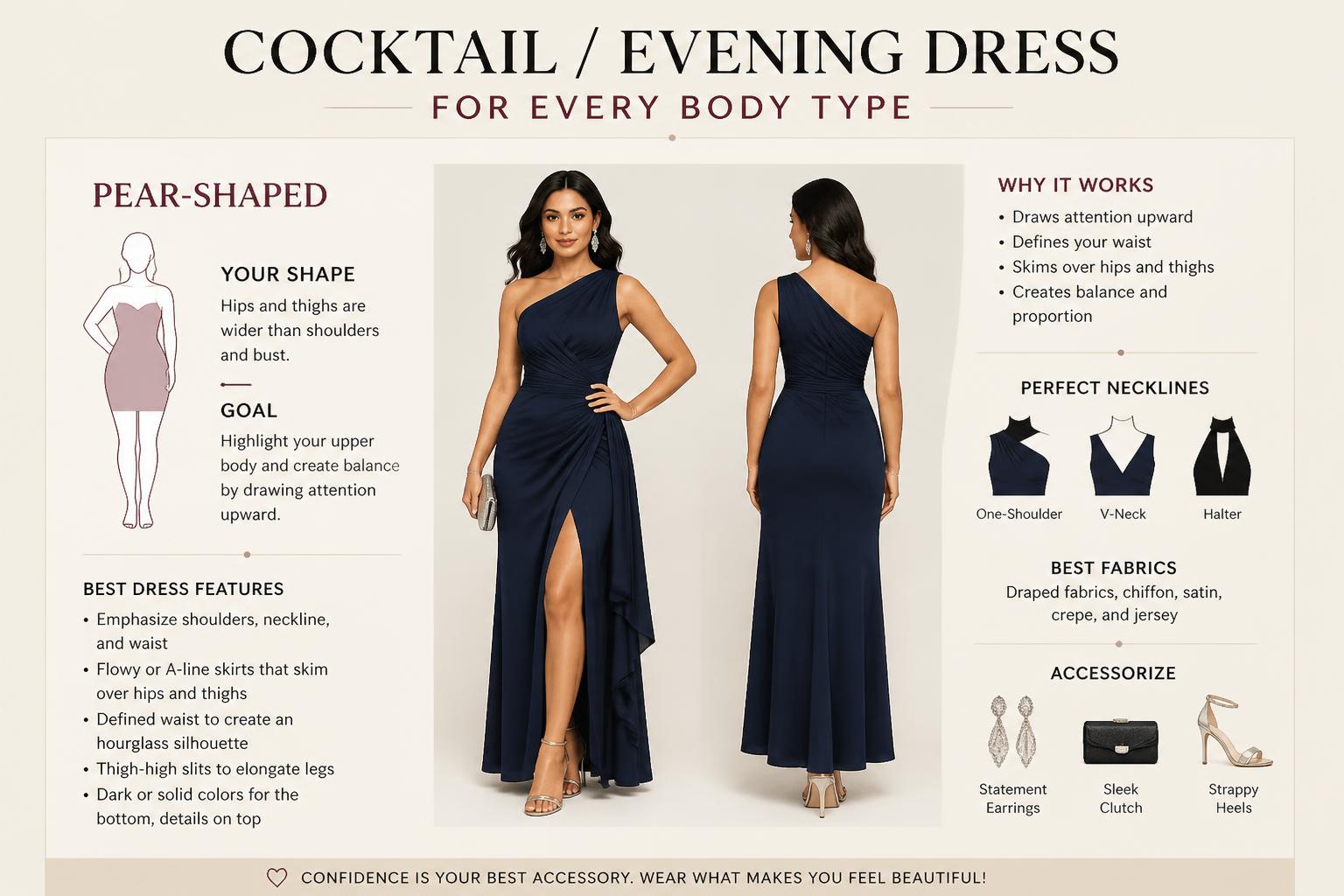
Styles to Try
- A-line cocktail dress
- Fit-and-flare dress
- Wrap midi
- Off-shoulder dress
- Puff-sleeve evening dress
Upper-Body Details
If you enjoy adding more visual interest above the waist, try:
- Statement neckline
- Decorative sleeves
- Embellished shoulders
- Off-shoulder neckline
- Brighter upper section
Fit Tip
The skirt should provide enough room through the hips without pulling or twisting. A good fit matters more than simply choosing a larger size.
For Inverted-Triangle Shapes
Inverted-triangle proportions generally describe shoulders that are wider than the hips. If you want more balance, you can create additional movement or volume below the waist.
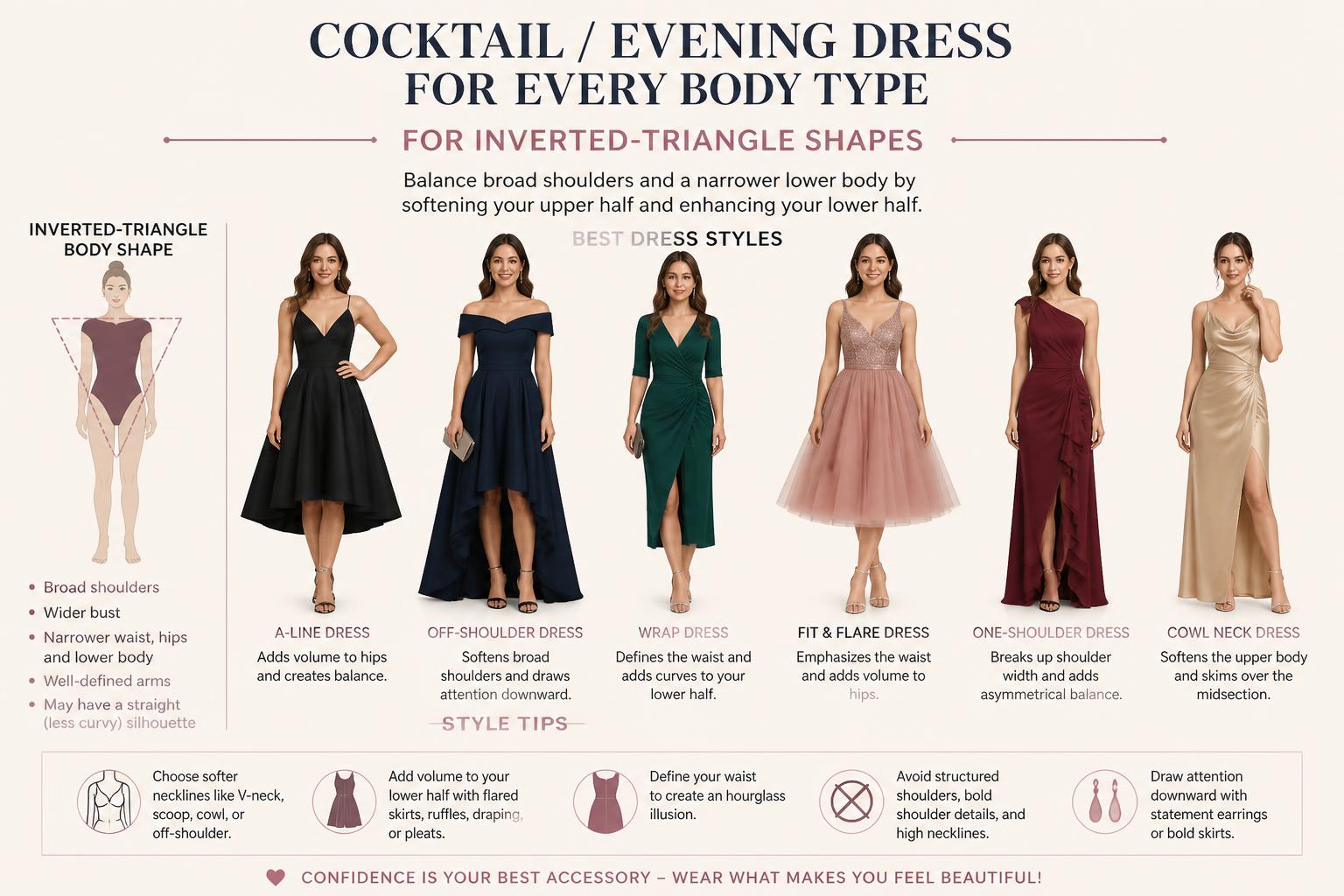
Styles to Try
- A-line dress
- Pleated skirt dress
- Fit-and-flare dress
- V-neck evening gown
- Fuller skirt midi
Lower-Body Details
You can add visual interest with:
- Pleats
- Ruffles
- Flare
- Side draping
- Fuller hems
Sleeve Options
If you prefer less emphasis around the shoulders, consider:
- Simple sleeveless designs
- Slim sleeves
- Clean V-necks
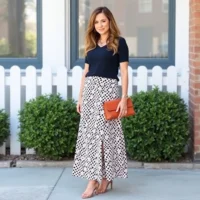
But dramatic shoulders can still look fantastic if that is the effect you want.
For Rectangle Shapes
Rectangle proportions generally describe bust, waist, and hips that are relatively similar in width. Eveningwear offers two very different styling directions: create more waist definition or embrace the naturally clean vertical line.
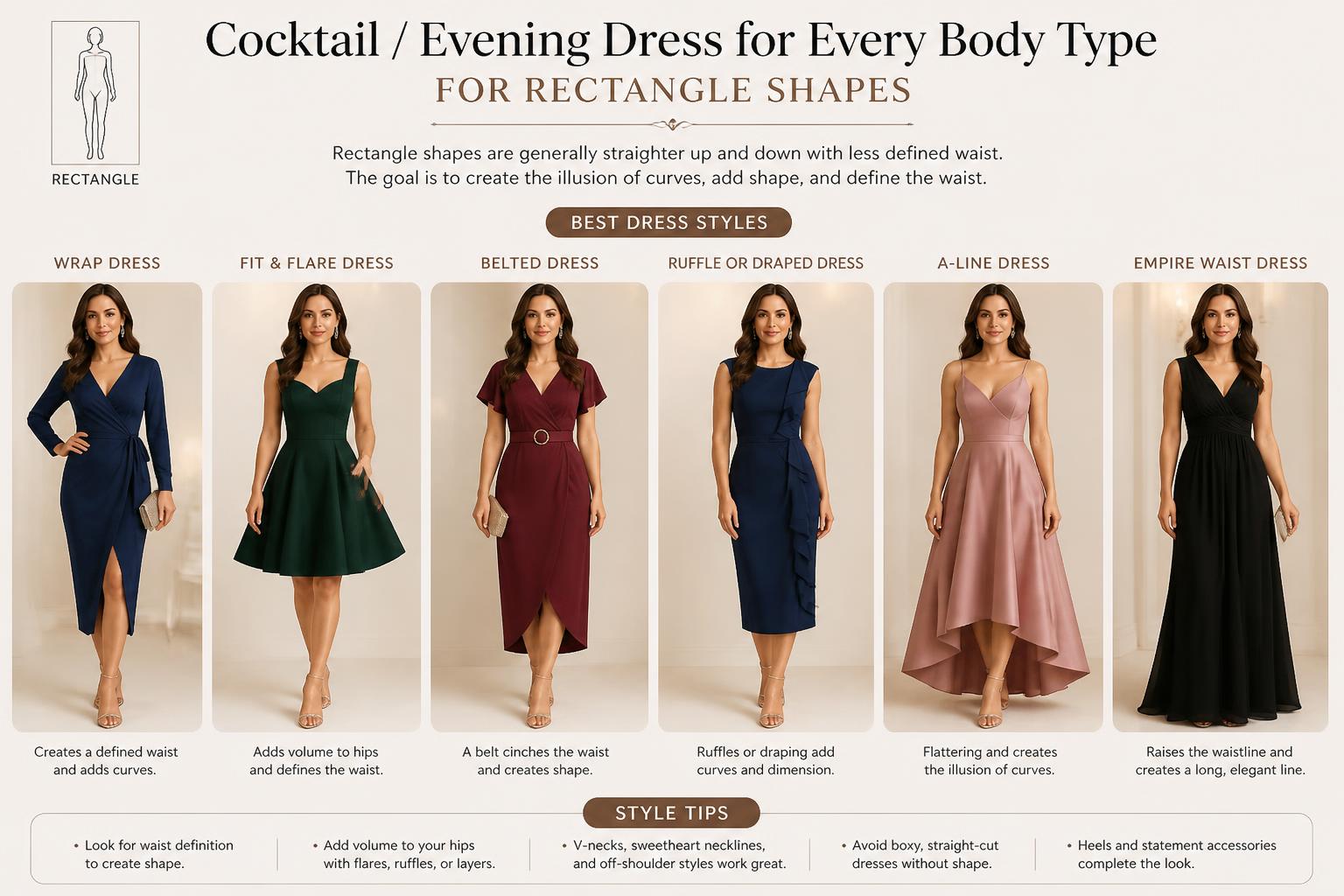
To Create More Shape
Try:
- Belted dress
- Wrap dress
- Fit-and-flare
- Ruched waist
- Color blocking
- Curved seams
For a Sleek Look
Try:
- Slip dress
- Column gown
- Straight sheath
- Minimal satin dress
Both approaches can create elegant evening outfits.
For a Fuller Midsection
If you prefer more ease through the waist or stomach, occasionwear offers many alternatives to a tightly fitted waistband. The goal is to find a silhouette that feels secure and comfortable rather than simply selecting the loosest dress available.
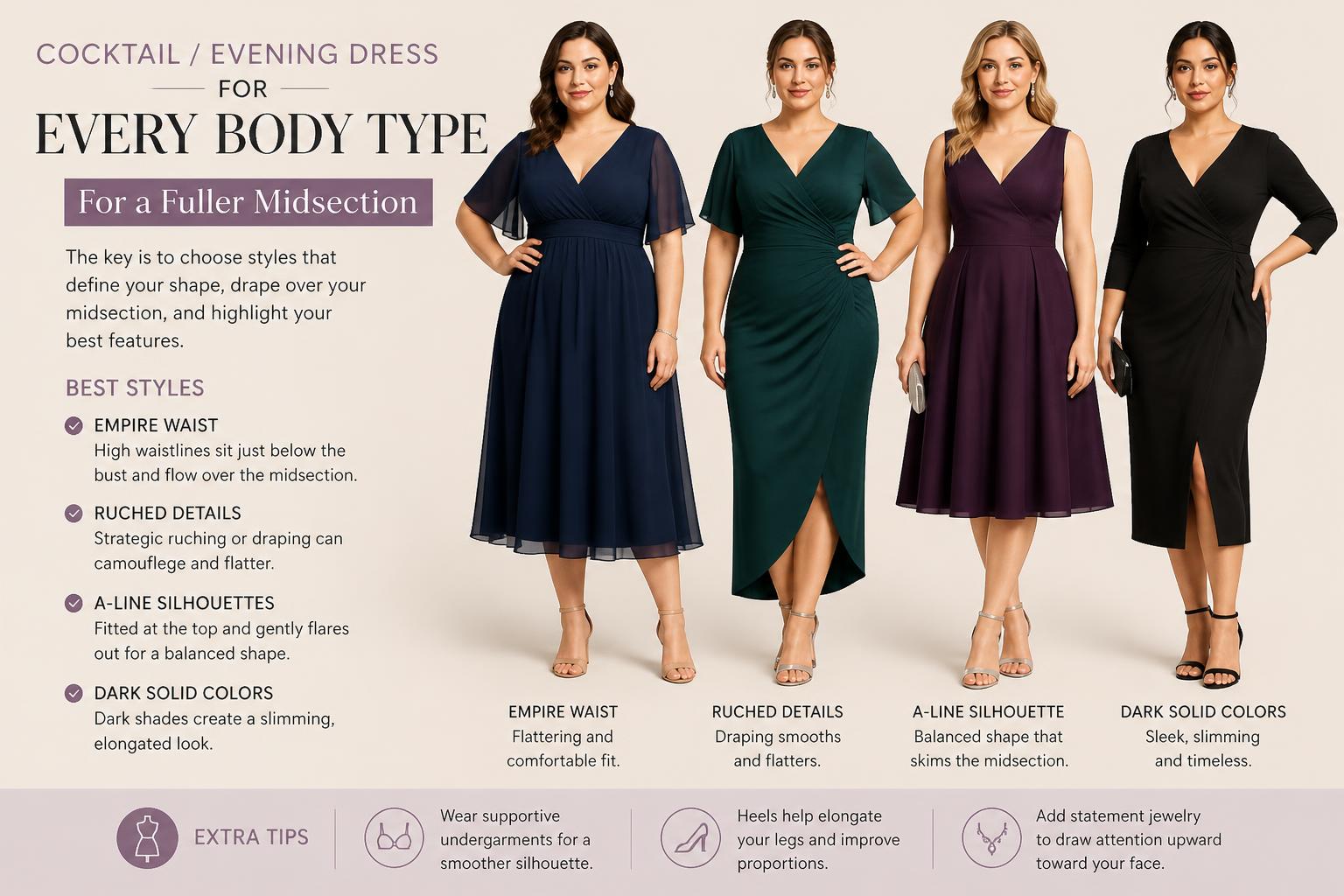
Styles to Try
- Empire-waist dress
- Soft A-line
- Faux-wrap dress
- Draped midi
- Relaxed column dress
Fabric Ideas
Look for fabrics with graceful movement, such as:
- Crepe
- Chiffon
- Soft jersey
- Viscose blends
- Draped satin
Styling Tip
Ruching or draping can add texture through the middle if you enjoy that look. Comfort should remain the priority.
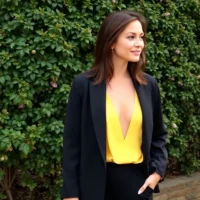
For Petite Women
Petite women can wear mini, midi, and full-length evening dresses. The main issue is proportion rather than avoiding any particular length.
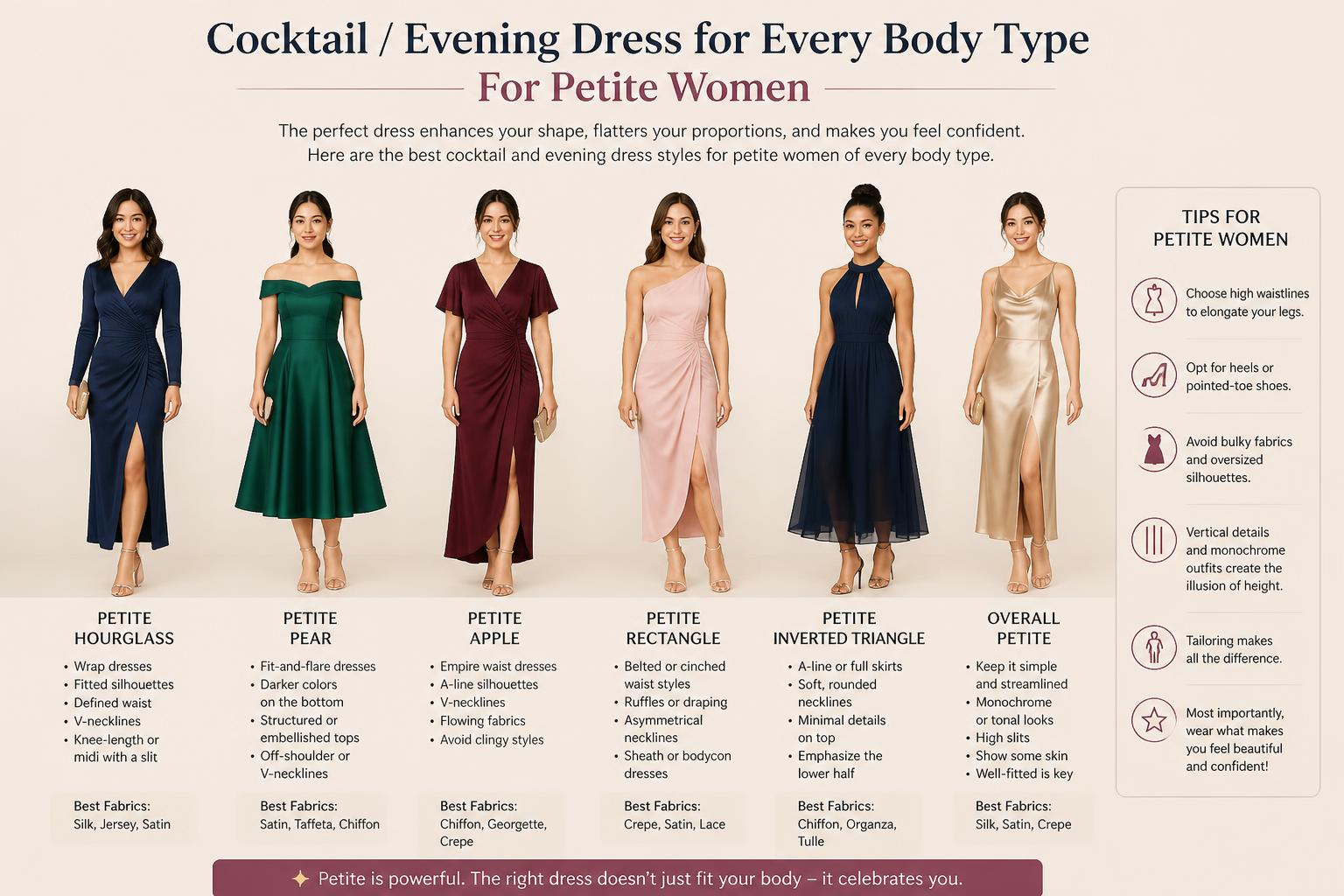
Styles to Try
- Mini cocktail dress
- Knee-length A-line
- Clean midi dress
- Empire-waist gown
- Slim column dress
Length Matters
For floor-length gowns, excessive fabric pooling can interrupt movement. Hem alteration can make a dramatic difference.
Detail Scale
If you prefer a cleaner visual balance, consider moderately sized:
- Ruffles
- Bows
- Sleeves
- Prints
- Embellishment
But oversized details can still work if they are intentionally part of the style.
For Tall Women
Tall women can work with almost every evening length, from mini cocktail dresses to floor-length gowns. Proper proportion is more important than simply adding extra hem length.
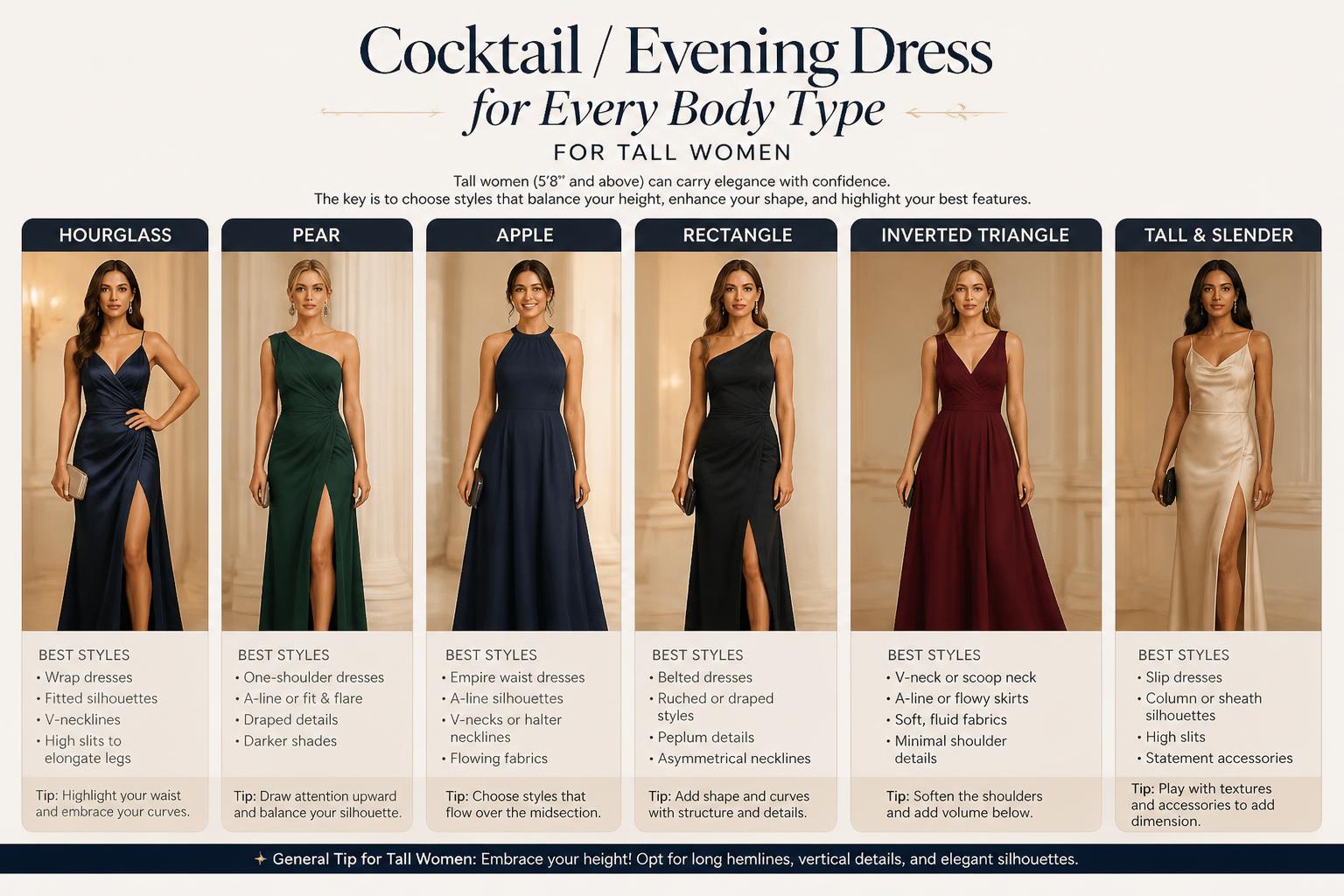
Styles to Try
- Midi cocktail dress
- Column gown
- Floor-length gown
- Long-sleeve evening dress
- High-slit maxi
- Bold printed gown
Fit Points to Check
Pay attention to:
- Bodice length
- Waist position
- Bust position
- Sleeve length
- Hem length
A regular gown may fit in width but still place the waist too high.
For Plus-Size Fashion
Cocktail and evening dresses can work beautifully across extended sizes. There is no requirement for plus-size occasionwear to be dark, oversized, or designed to hide the body.
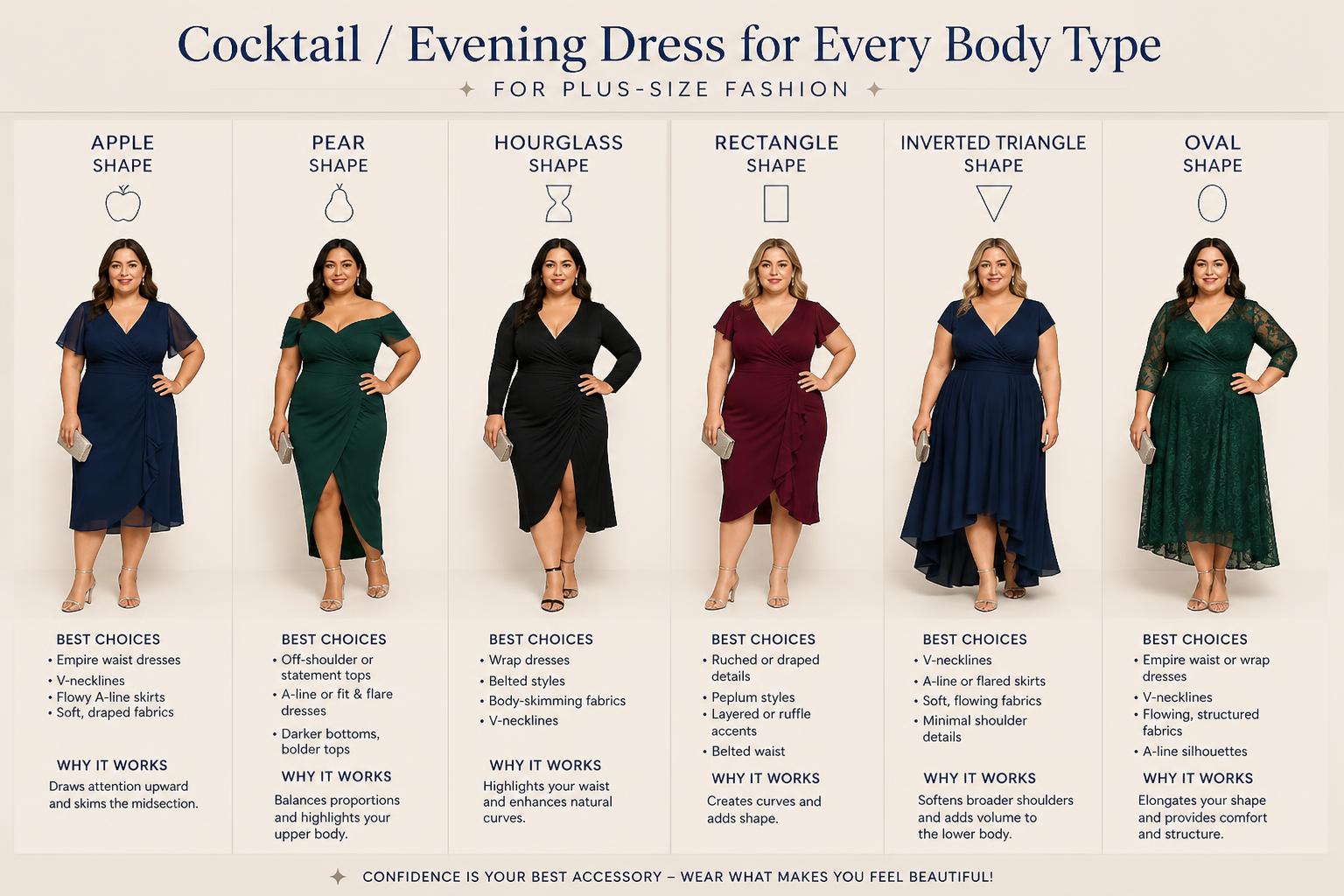
Styles to Explore
Try:
- Bodycon midi
- Wrap dress
- A-line gown
- Fit-and-flare cocktail dress
- Sequined dress
- Satin slip-inspired dress
- Empire-waist gown
Important Fit Areas
Check:
- Bust
- Shoulder
- Upper arms
- Waist
- Hips
- Zipper
- Lining
- Hem length
Structure and Support
Depending on the style, you may prefer:
- Built-in cups
- Wider straps
- Boning
- Double-layer fabric
- Supportive lining
These are fit options, not requirements.
Wear the Colors You Like
Plus-size eveningwear can include:
- Red
- White
- Metallics
- Pastels
- Bright colors
- Black
- Floral prints
- Sequins
Choose based on personal style rather than restrictive fashion rules.
How to Check Cocktail / Evening Dress Fit Before Buying
Occasionwear should be tested through movement before you commit to wearing it for several hours. A dress that looks good while standing still may behave differently when sitting or walking.
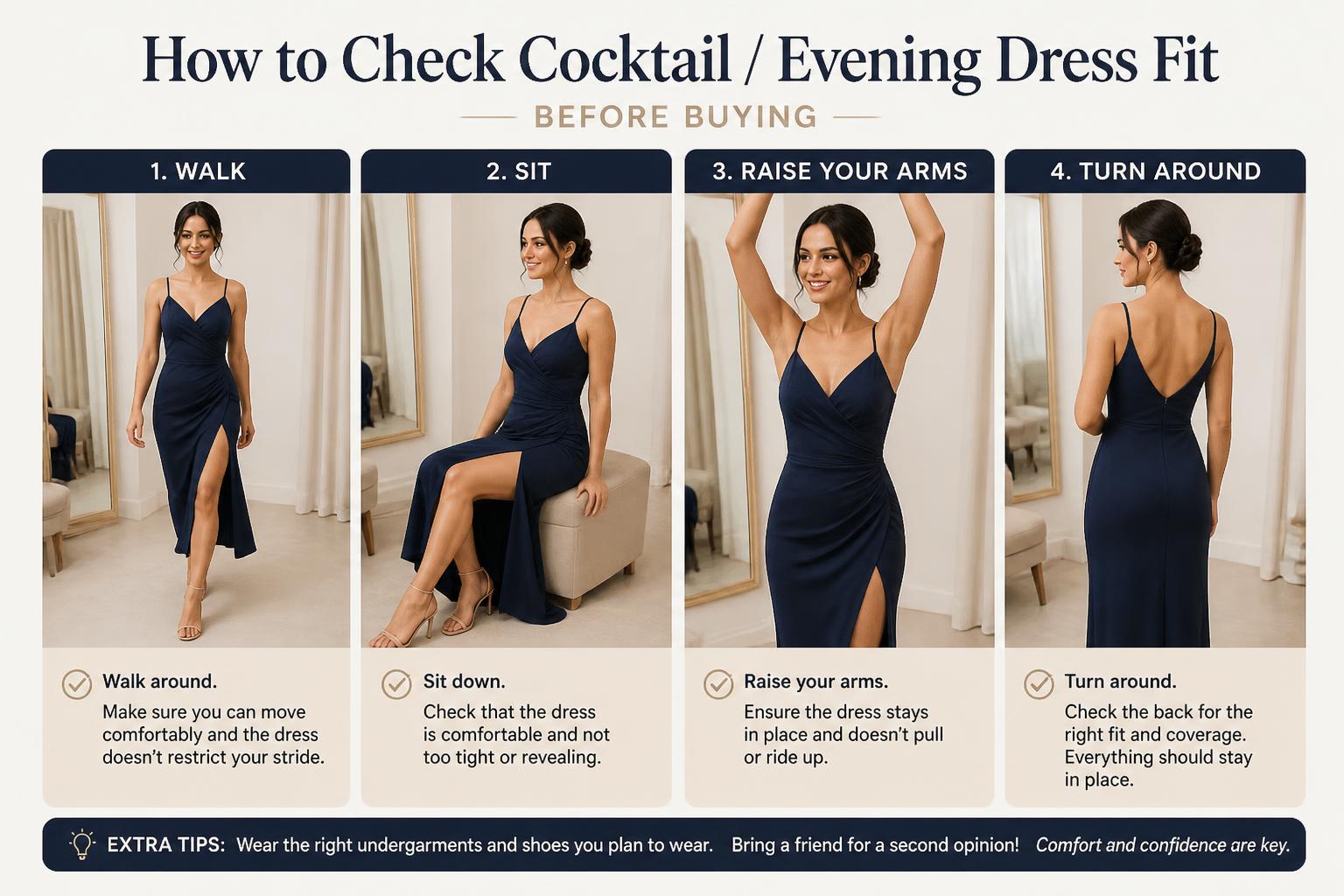
Walk
Check:
- Skirt movement
- Slit position
- Hem length
Sit
Make sure:
- Waist remains comfortable
- Bodice does not dig in
- Neckline stays secure
Raise Your Arms
Check:
- Armhole comfort
- Strap security
- Sleeve movement
Bend Slightly
Check:
- Neckline coverage
- Back fit
- Fabric movement
Turn Around
Look at the dress from:
- Front
- Side
- Back
Test With Your Shoes
For long dresses, wear the actual heel height you plan to use. This is especially important for floor-length gowns.
Final Words / Conclusion
The cocktail / evening dress is one of the most flexible categories in women’s fashion because it describes a level of occasion dressing rather than one single silhouette. A cocktail or evening dress can be: Mini or Floor-Length + Fitted or Flowing + Sleeveless or Long-Sleeve + Minimal or Embellished + Crepe or Satin and still create an appropriate occasion-ready look.
There is no single evening dress that works best for every body type. One person may feel great in a fitted black midi, while another prefers a flowing chiffon A-line. Someone else may choose a sequined mini for a party, a velvet long-sleeve dress for winter, or a satin floor-length gown for a formal event. What matters most is whether the dress fits comfortably through the bust, shoulders, waist, hips, arms, and hem, while matching the dress code and allowing you to move naturally.
Body-shape advice can help you explore silhouettes and proportions, but it should remain inspiration rather than a strict set of rules. A useful formula is:Your Proportions + Comfortable Fit + Appropriate Formality + Right Fabric + Your Personal Style = Your Best Cocktail / Evening Dress. Choose the dress that suits the event, feels comfortable for the hours you will actually wear it, and reflects the way you want to look.