Shirt Dress: Style, Fit for Every Body Type

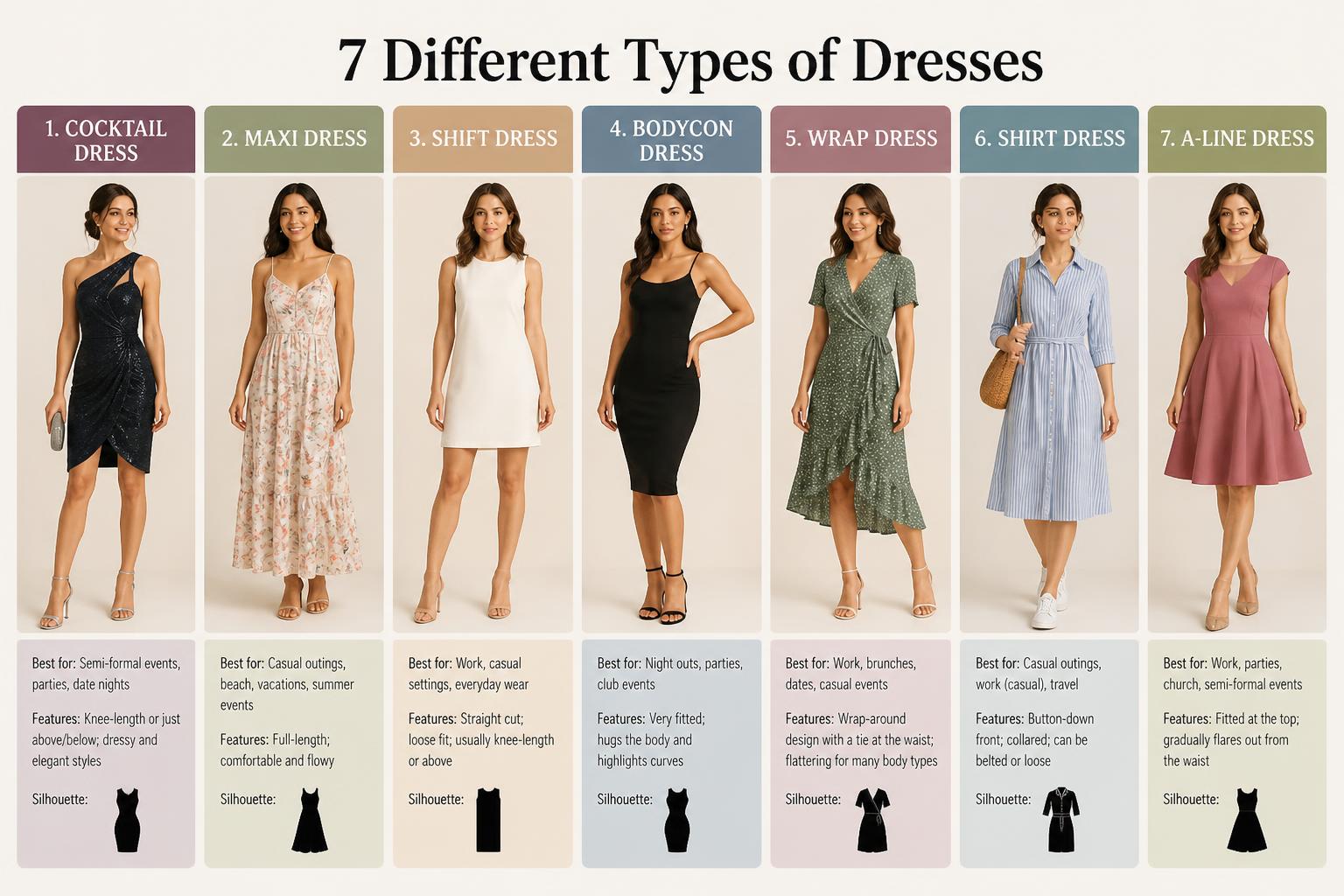
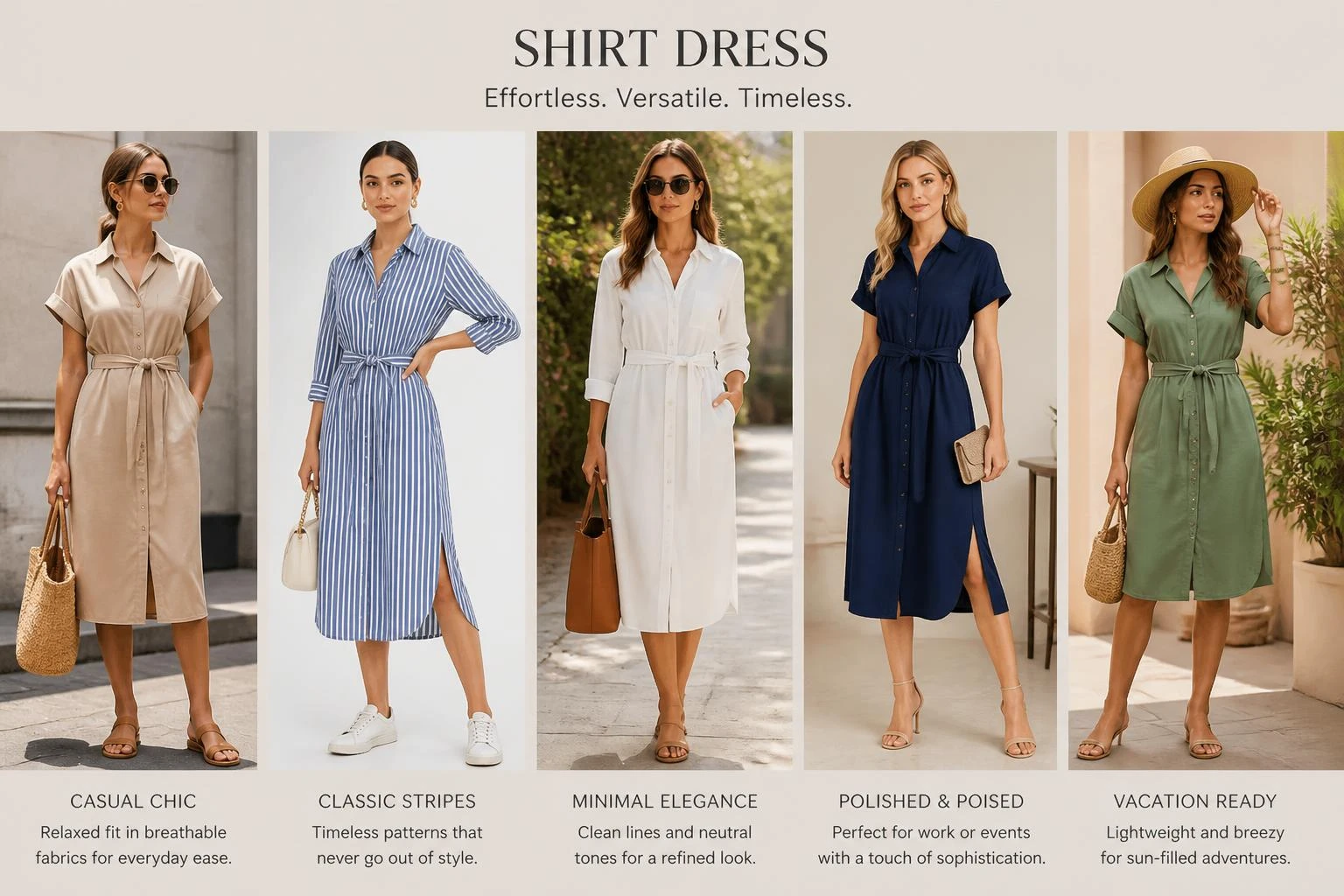
The shirt dress is one of the easiest pieces to recognize in women’s fashion. It takes familiar details from a classic shirt such as a collar, button front, cuffs, and pockets and turns them into a complete dress. Depending on the fabric and cut, a shirt dress can look polished, casual, feminine, minimal, or relaxed.
=> Our Service:
- Fashion Dress Manufacturing | Mekong Garment Factory
- Long Dress Manufacturing | Mekong Garment Factory
- Short Dress Manufacturing | Mekong Garment Factory
One reason the shirt dress has remained popular is its flexibility. You can wear a crisp cotton version to work, a loose linen style on vacation, a denim shirt dress on the weekend, or a flowing midi version for dinner. The same basic idea can be adapted to many different lifestyles and personal styles. Shirt dresses can also work with many body proportions because the length, waist position, sleeve shape, fabric, and overall fit can all be changed. Instead of treating body-type advice as a strict rule, it is more useful to think about which details create the comfort and look you personally prefer. A simple fashion formula is: Right Fit + Comfortable Fabric + Suitable Length + Personal Style = Your Best Shirt Dress.
What Is a Shirt Dress?
Before choosing a shirt dress, it helps to understand what makes this style different from other dresses. A shirt dress borrows the structure of a button-up shirt but extends it into a dress length, creating a versatile one-piece outfit. Some shirt dresses look almost like oversized shirts, while others are fitted at the waist and flare toward the hem. This flexibility is what makes the style so easy to adapt.
Main Features of a Shirt Dress
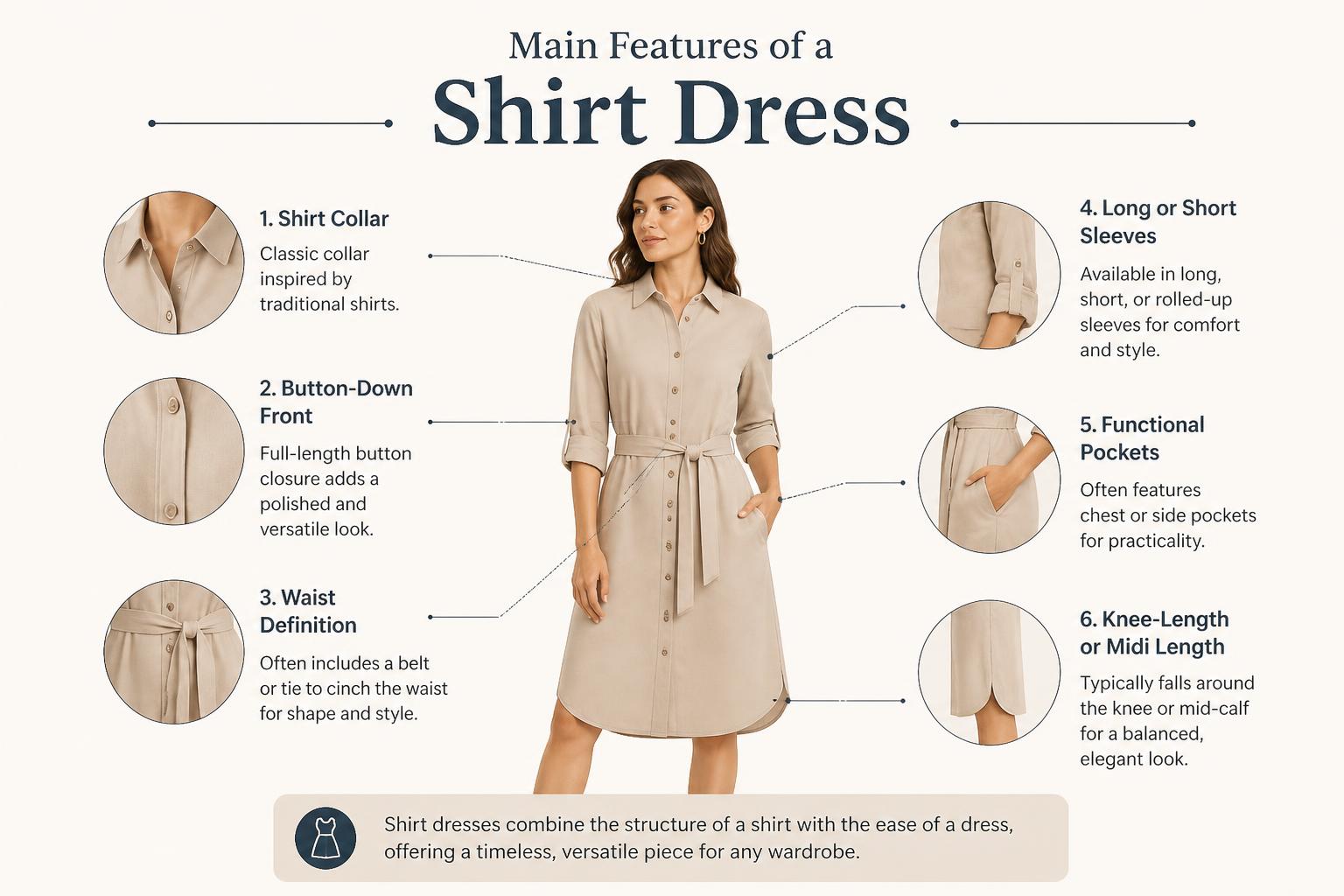
Although shirt dresses come in many forms, they usually share several recognizable details. These features give the garment its classic shirt-inspired character even when the silhouette changes.

Common features include:
- Shirt collar
- Button-front opening
- Short, long, or sleeveless design
- Cuffs or sleeve tabs
- Chest pockets
- Side pockets
- Straight or shaped body
- Optional belt
- Mini, knee, midi, or maxi length
Some designs may also include:
- Darts
- Princess seams
- Side slits
- Pleats
- Drawstring waist
- Utility pockets
- Oversized sleeves
The final look depends on how these details are combined.
Why Is the Shirt Dress So Popular?
The shirt dress remains a wardrobe favorite because it combines the polished look of a shirt with the convenience of a dress. You can create a complete outfit with one main garment, then change the mood simply by switching shoes, accessories, or a belt. It also works across many occasions, which makes it a practical investment for a wardrobe.
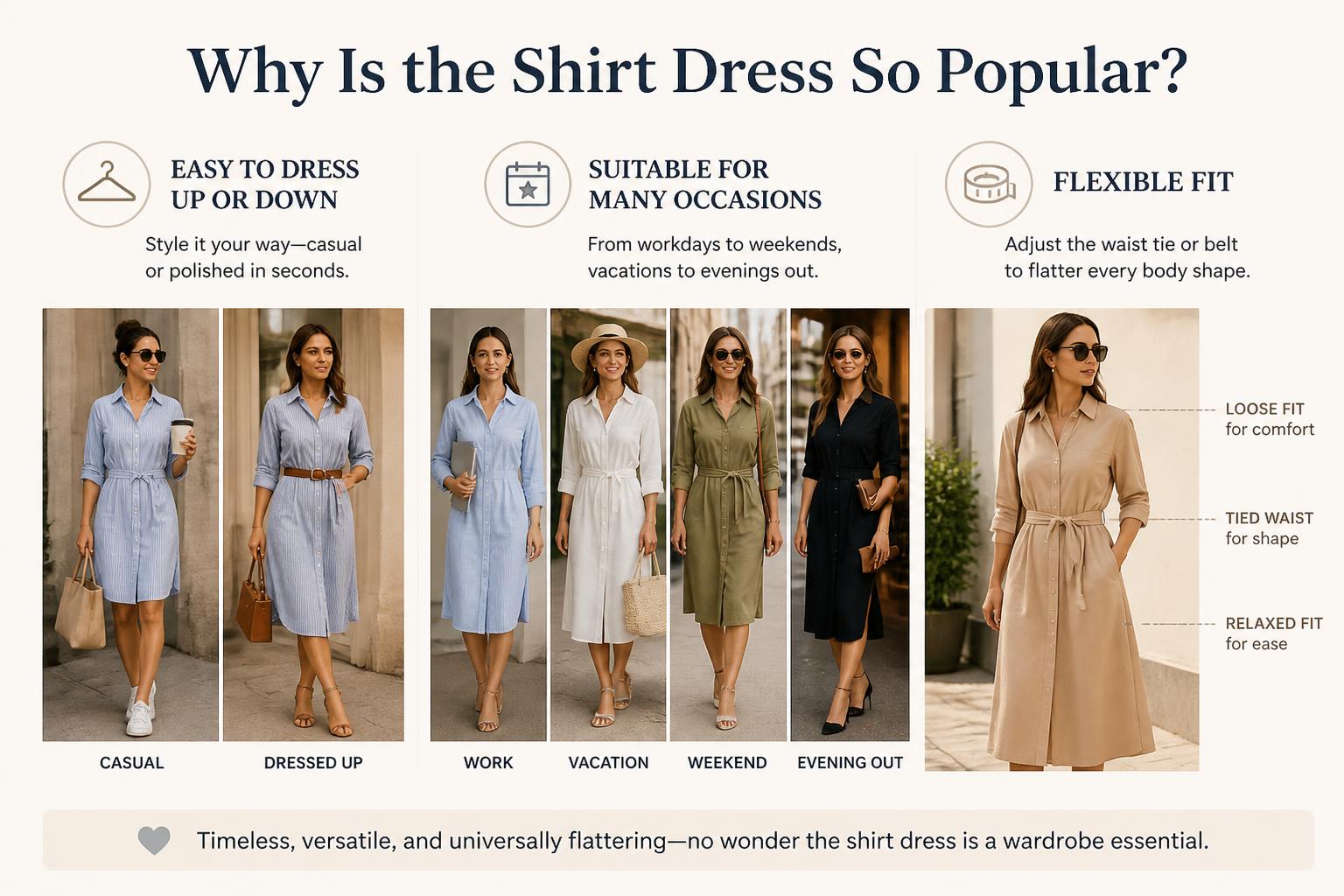
Easy to Dress Up or Down
A shirt dress can be paired with:
- Sneakers
- Sandals
- Ballet flats
- Loafers
- Boots
- Heels

A casual cotton dress with sneakers feels relaxed, while the same type of silhouette with heels and a structured bag can feel much more polished.
Suitable for Many Occasions
A shirt dress can work for:
- Work
- Shopping
- Travel
- Lunch
- Dates
- Weekends
- Vacations
- Smart-casual events
Flexible Fit
Depending on the design, it can be:
- Fitted
- Semi-fitted
- Straight
- Oversized
- Belted
- Drawstring-adjusted
This variety makes it easier to find a shirt dress that fits your personal style rather than following one fixed silhouette.
Quick Shirt Dress Style Guide
With so many shirt-dress variations available, it can be difficult to know where to start. This quick guide shows how different versions can create different fashion moods.
| If You Want… | Try… |
|---|---|
| Casual Look | Oversized cotton shirt dress + sneakers |
| Office Look | Belted midi shirt dress + loafers |
| Summer Outfit | Linen sleeveless shirt dress + sandals |
| Minimal Style | Solid-color straight shirt dress |
| Relaxed Weekend Look | Oversized shirt dress + flat sandals |
| Defined Waist | Belted or tie-waist shirt dress |
| Smart-Casual Look | Knee-length poplin shirt dress |
| Resort Style | Loose linen or viscose maxi shirt dress |
| Utility Look | Shirt dress with patch pockets |
| Denim Look | Denim shirt dress + boots |
| Evening Look | Fluid midi shirt dress + heels |
| Layered Outfit | Open shirt dress over a simple top and trousers |
12 Types and Styles of Shirt Dress
The shirt dress is not limited to one shape. Designers can change the length, waist, sleeves, fabric, and volume to create very different looks while keeping the recognizable shirt-inspired details. Understanding the main styles can make it easier to choose one that suits your wardrobe and occasion.
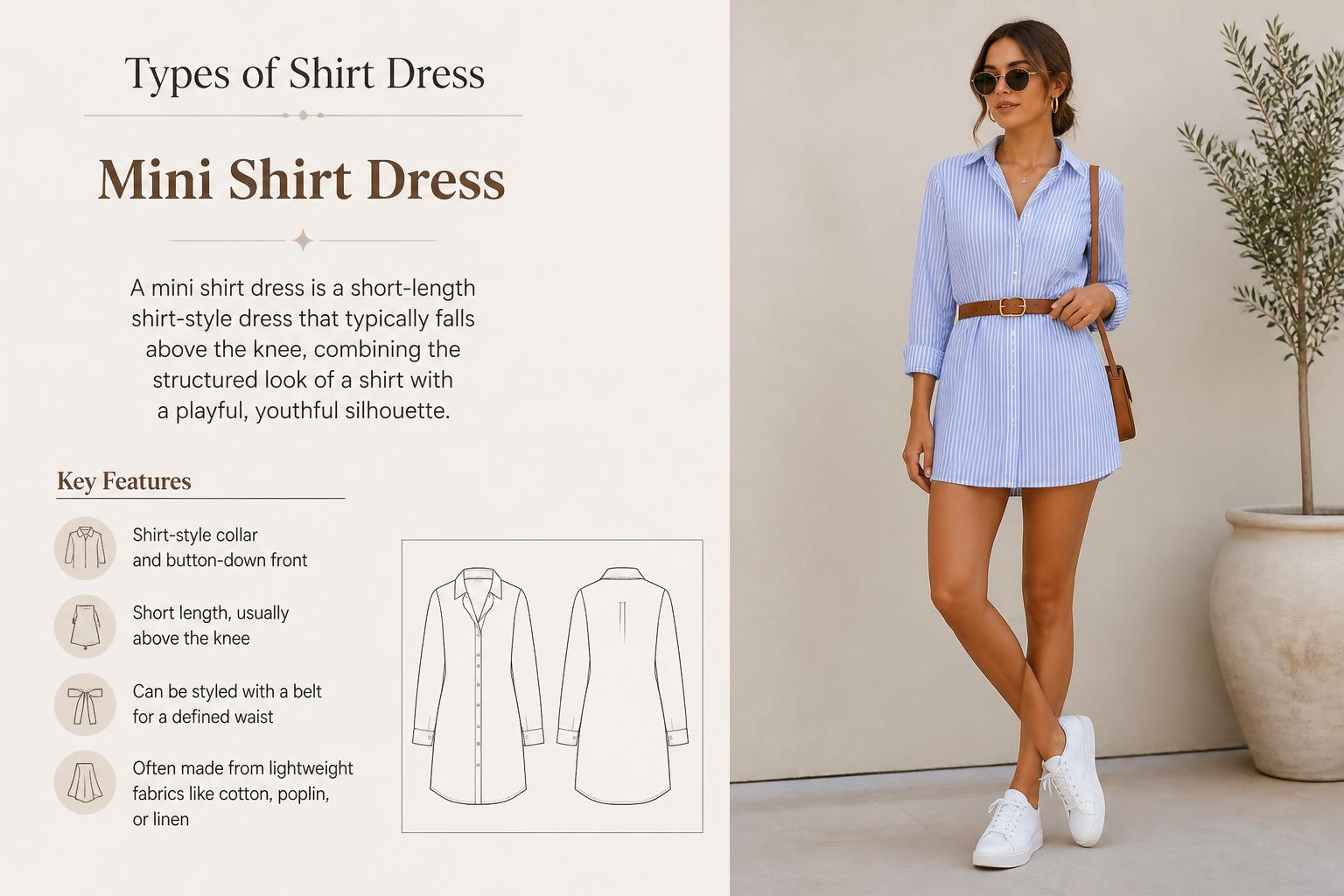
Mini Shirt Dress
A mini shirt dress brings a younger and more casual feeling to the classic shirt silhouette. Because the hem finishes above the knee, the overall look tends to feel lighter and more playful. Mini versions can be loose, fitted, or belted depending on the style.
Best For
- Casual outings
- Summer
- Parties
- Weekend wear
How to Style It
- Try: Mini Shirt Dress + Sneakers + Crossbody Bag
- For something slightly dressier: Mini Shirt Dress + Ankle Boots + Simple Jewelry
Knee-Length Shirt Dress
A knee-length shirt dress offers a useful balance between casual and polished. It provides more coverage than a mini while remaining easy to move in and simple to style.This length is particularly versatile for everyday and professional wardrobes.
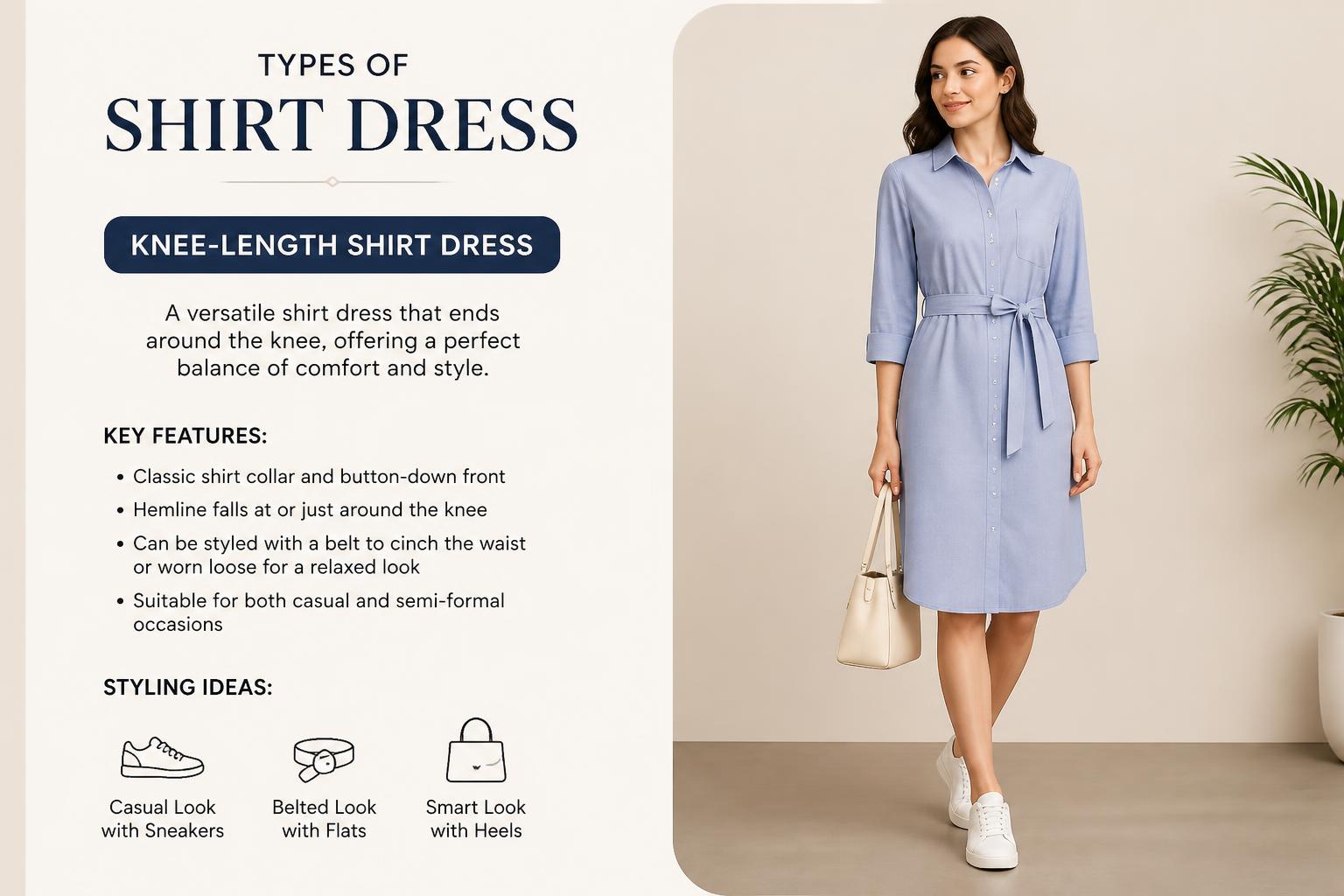
Best For
- Work
- Lunch
- Smart-casual events
- Everyday wear
Styling Idea
- Try: Knee-Length Shirt Dress + Loafers + Structured Bag
Midi Shirt Dress
The midi shirt dress is one of the most versatile modern versions. Its longer length gives the silhouette a clean, elegant line while still feeling practical enough for everyday wear. Depending on the fabric, a midi shirt dress can look professional, relaxed, romantic, or minimal.
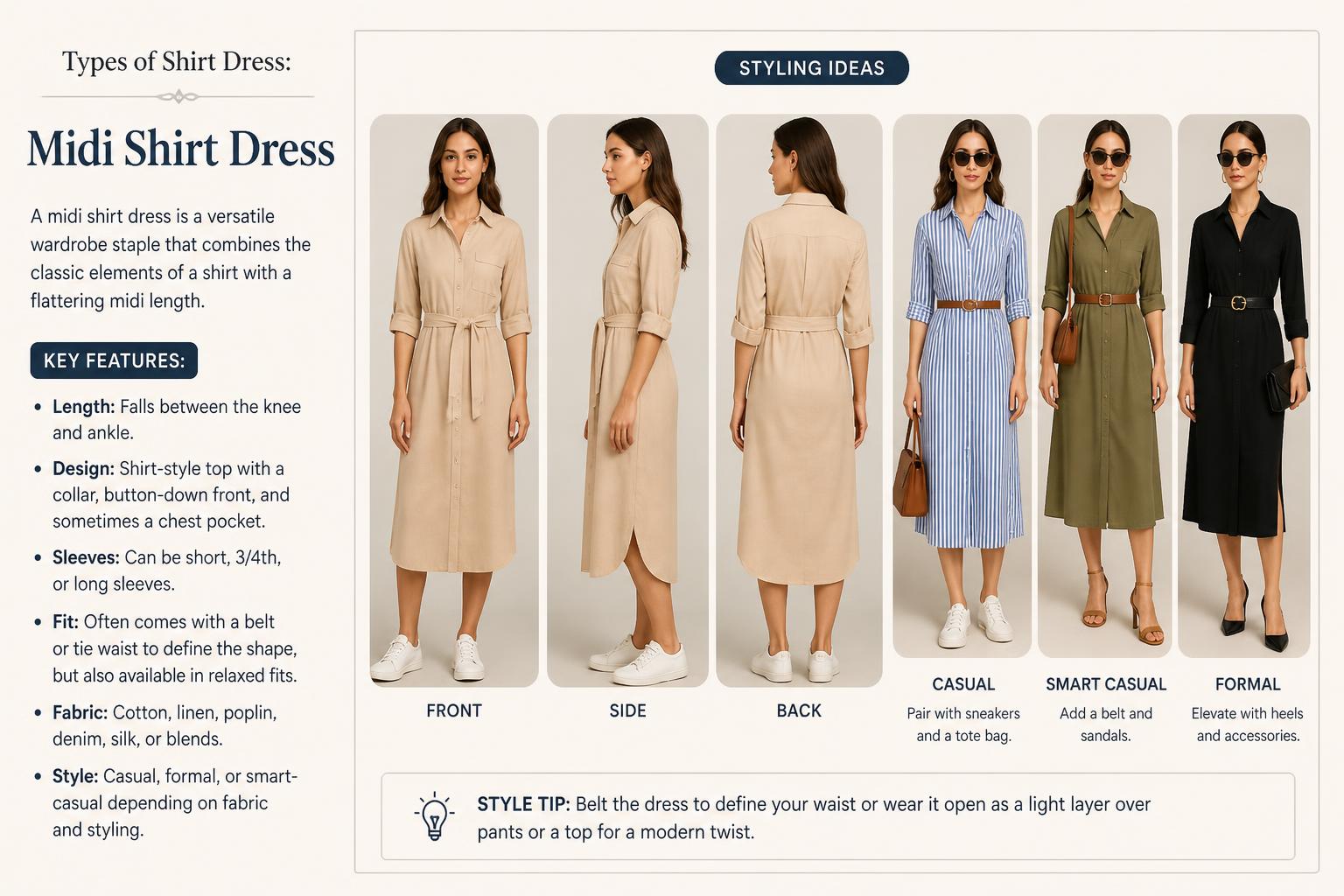
Best For
- Office wear
- Travel
- Dinner
- Smart-casual events
- Weekend outfits
Styling Idea
- Try: Midi Shirt Dress + Belt + Loafers
- or: Loose Midi Shirt Dress + Sneakers
Maxi Shirt Dress
A maxi shirt dress extends toward the ankle or floor, giving the classic shirt silhouette more movement and drama. It can feel relaxed in lightweight fabrics or elegant in softer, flowing materials. This style works especially well for longer, more fluid outfits.
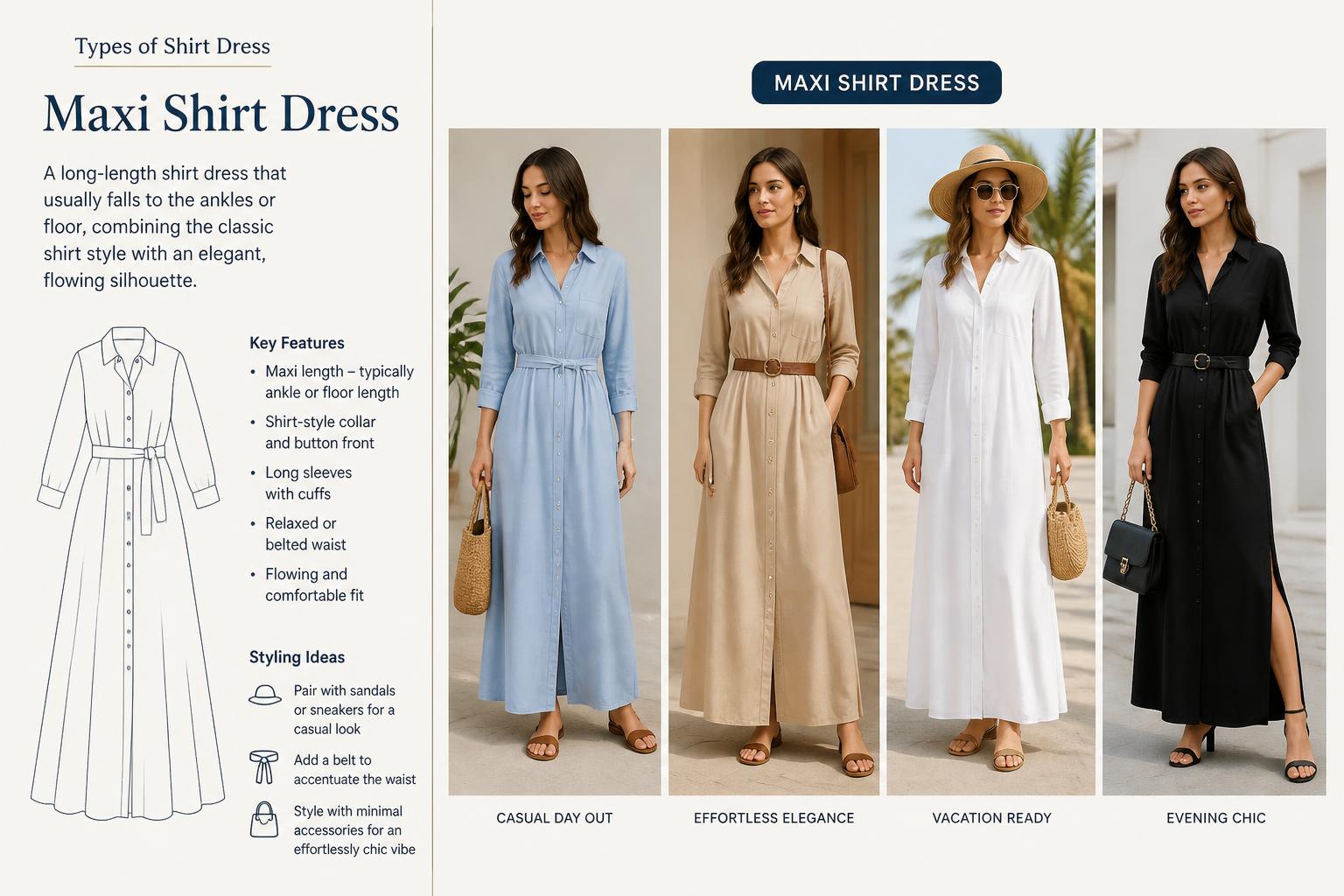
Casual Maxi
Choose fabrics such as:
- Cotton
- Linen
- Chambray
Softer Maxi
Consider:
- Viscose
- Rayon
- Lightweight crepe
Styling Idea
- Try: Maxi Shirt Dress + Sandals + Large Tote
Belted Shirt Dress
A belt is one of the easiest ways to change the shape of a shirt dress. It adds more definition around the waist and can make a straight or oversized dress feel more structured. The belt can also be removed when you want a looser look.
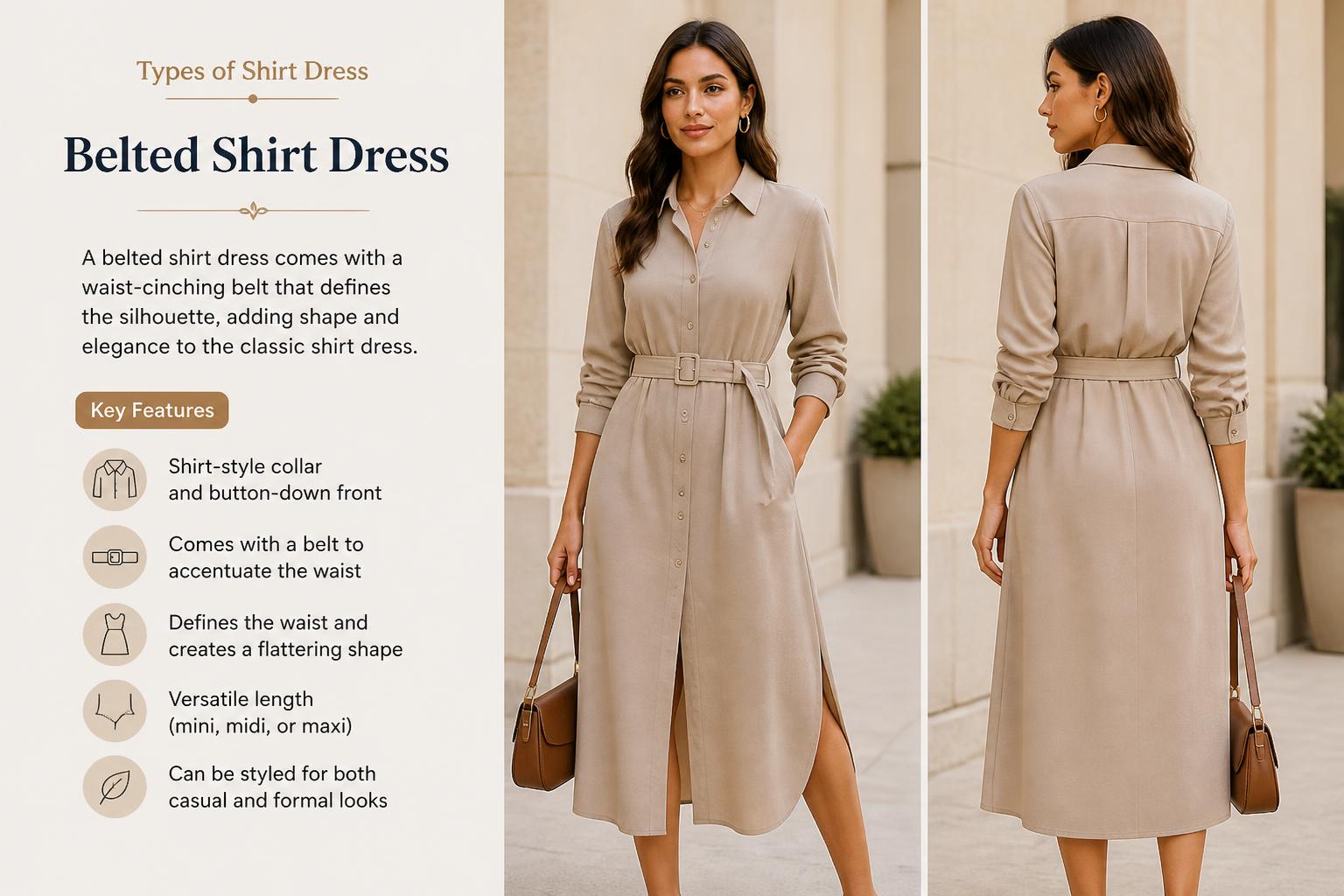
Why Choose a Belted Style?
A belted shirt dress can feel:
- Polished
- Feminine
- Structured
- Smart casual
Belt Options
The belt may be:
- Self-fabric
- Leather
- Rope
- Adjustable tie
A removable belt gives you more styling flexibility.
Oversized Shirt Dress
An oversized shirt dress is intentionally designed with more volume. Rather than following the body closely, it creates a relaxed shape through the shoulders, waist, and hips. The result can feel modern, effortless, and comfortable.
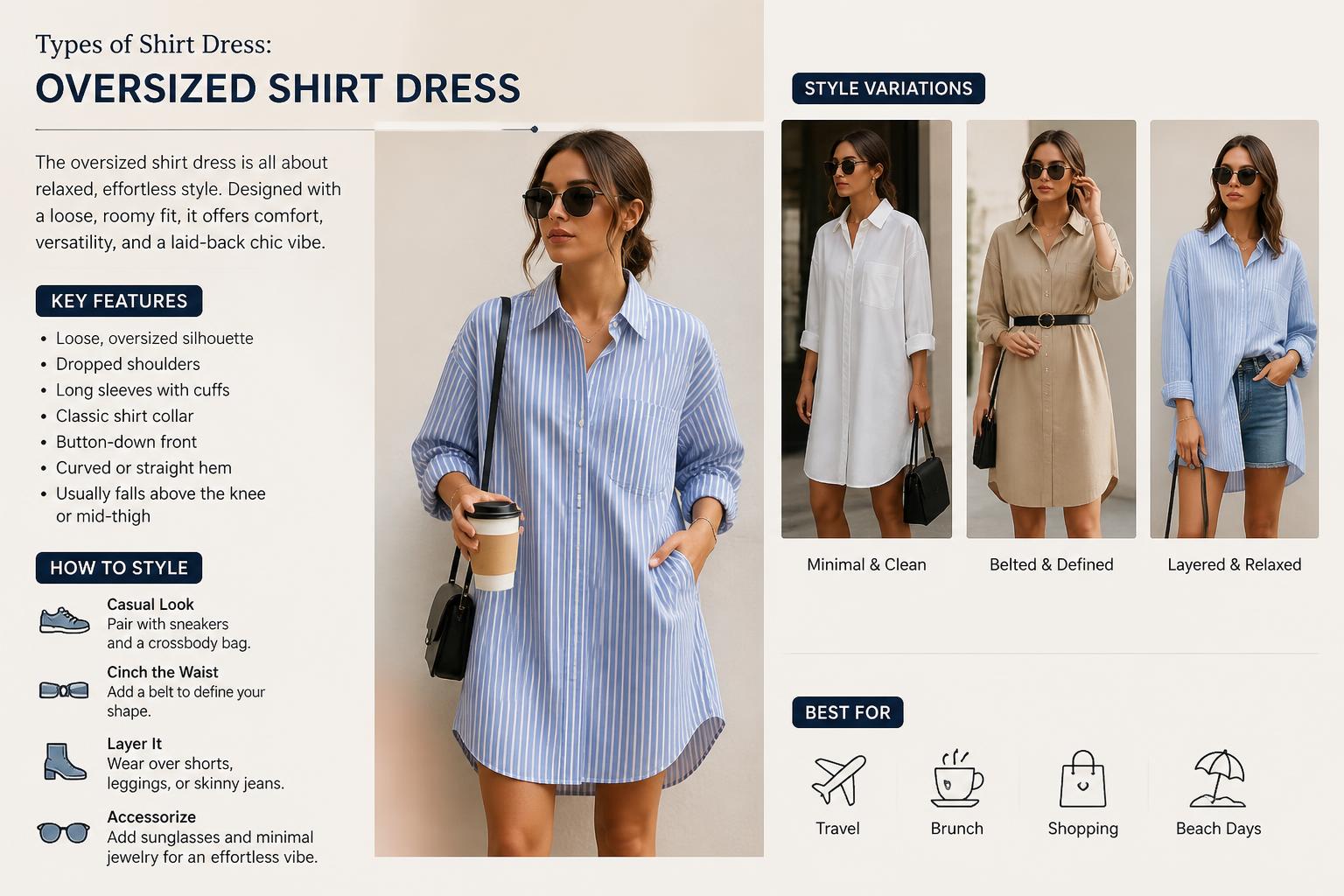
Common Features
An oversized shirt dress may include:
- Dropped shoulders
- Wide sleeves
- Relaxed body
- Longer shirt tail
- Minimal waist shaping
Best For
- Casual wear
- Travel
- Street style
- Minimal fashion
The important point is that oversized should look intentional, not simply like the dress is the wrong size.
Fitted Shirt Dress
A fitted shirt dress creates a more shaped and polished interpretation of the classic style. Instead of falling straight from the shoulders, it follows the upper body more closely. This style often uses construction details to create shape.
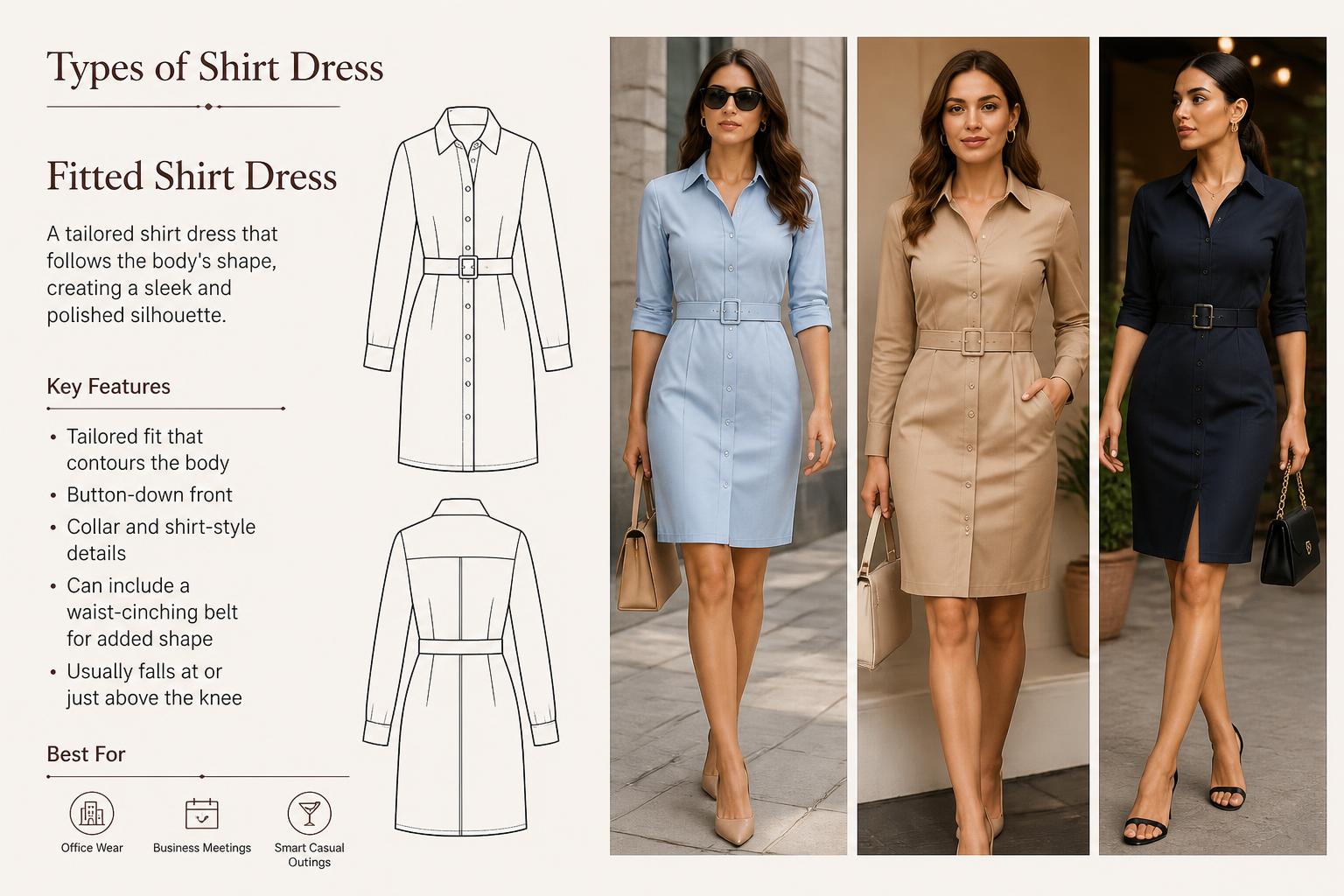
Common Details
Look for:
- Darts
- Princess seams
- Waist seams
- Belts
Best For
- Office wear
- Dinner
- Smart-casual events
The dress should still provide enough room for comfortable sitting and movement.
Sleeveless Shirt Dress
A sleeveless shirt dress keeps the collar and button-front details but removes the sleeves. This creates a cleaner and lighter silhouette that works especially well in warm weather. It is also easy to layer.
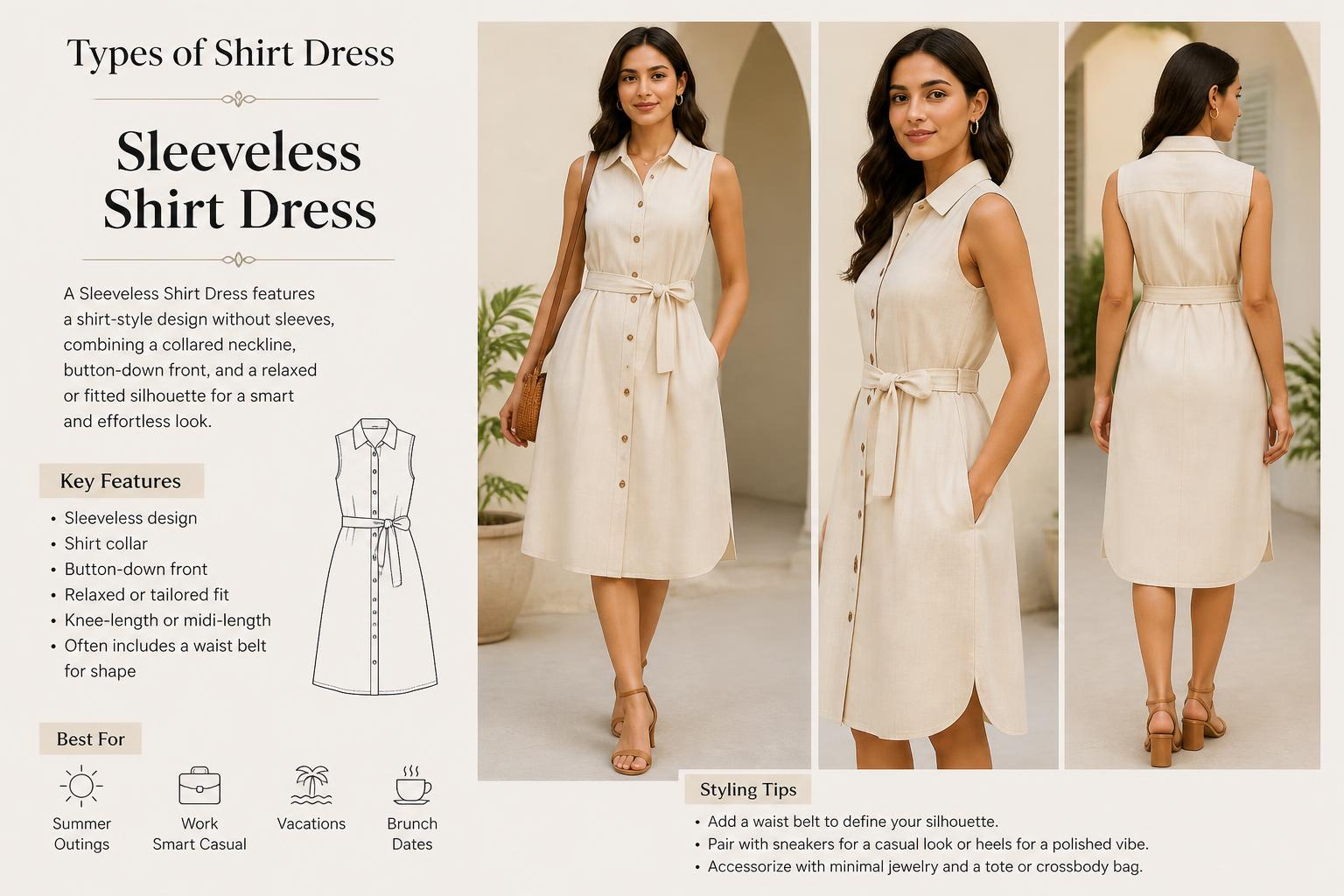
Best For
- Summer
- Warm climates
- Resort wear
- Layering
Styling Idea
- Try: Sleeveless Shirt Dress + Sandals + Tote
- For work, add: Blazer + Loafers
Short-Sleeve Shirt Dress
A short-sleeve shirt dress is a practical everyday option. It provides more coverage than a sleeveless version without feeling as heavy as long sleeves. This style works well across casual and smart-casual outfits.
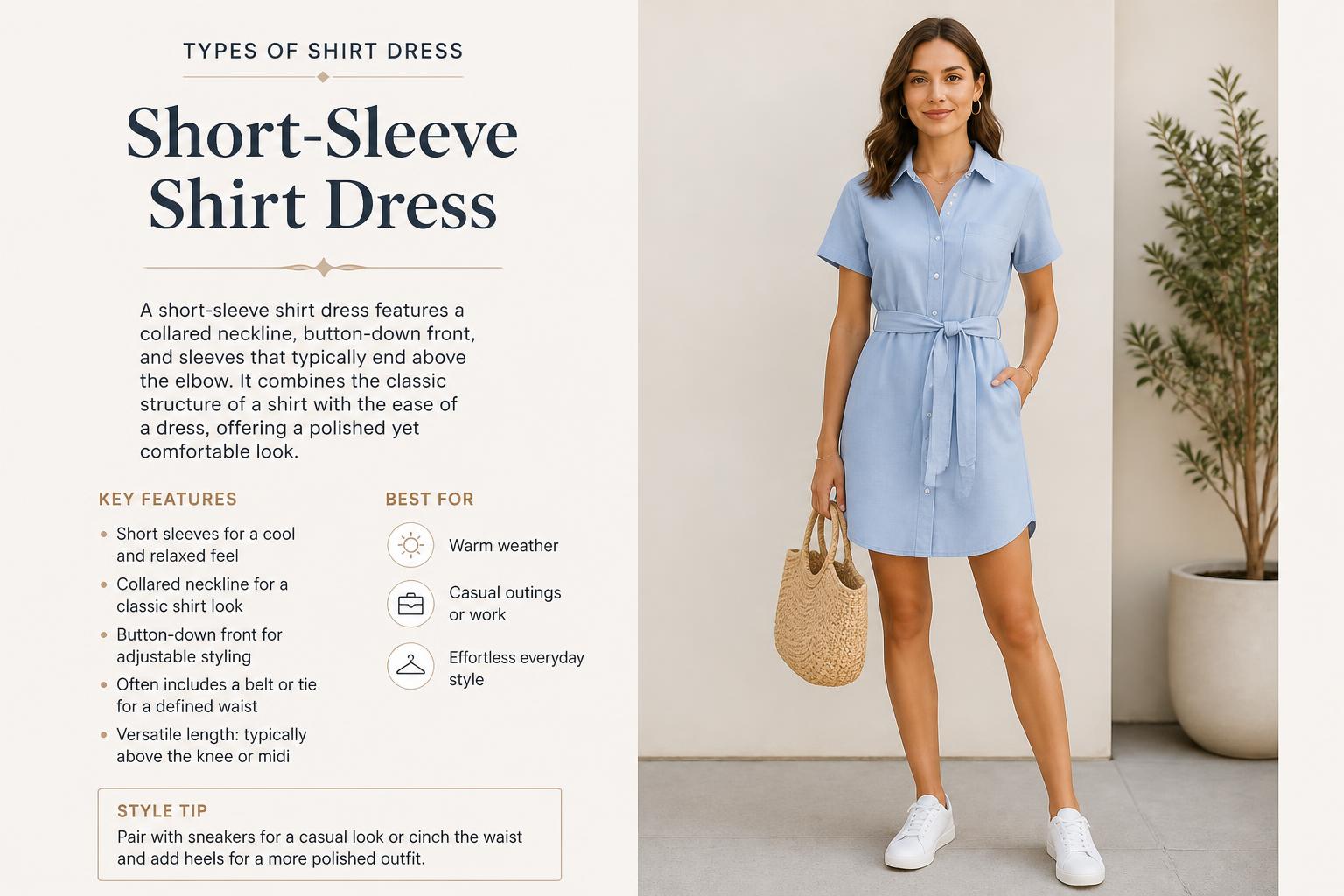
Sleeve Options
Short sleeves may be:
- Straight
- Cuffed
- Rolled
- Slightly puffed
Best For
- Work
- Travel
- Everyday outfits
- Warm-weather styling
Long-Sleeve Shirt Dress
Long sleeves give a shirt dress a more polished and seasonally flexible appearance. Depending on the fabric, it can work for both office outfits and casual autumn styling. The sleeves can also be styled in different ways.
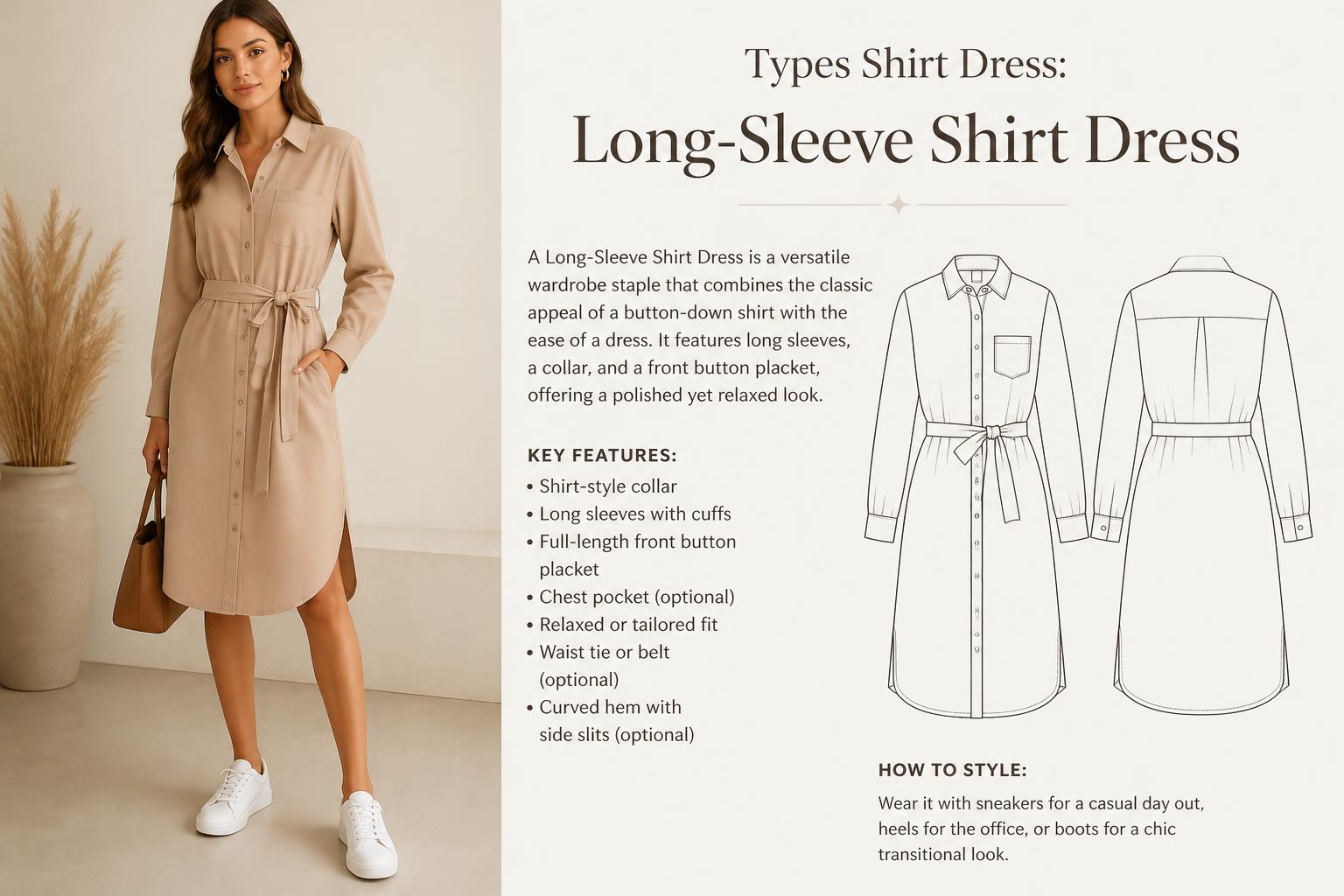
Wear the Sleeves
- Fully down for a polished look
- Rolled to the elbow for casual styling
- Pushed upward for a more relaxed outfit
Best For
- Office wear
- Autumn
- Cooler weather
- Smart-casual outfits
Denim Shirt Dress
A denim shirt dress combines the familiar shape of a shirt dress with the casual character of denim. It generally feels more structured than lightweight cotton or viscose styles. The exact look depends on the weight and wash of the denim.
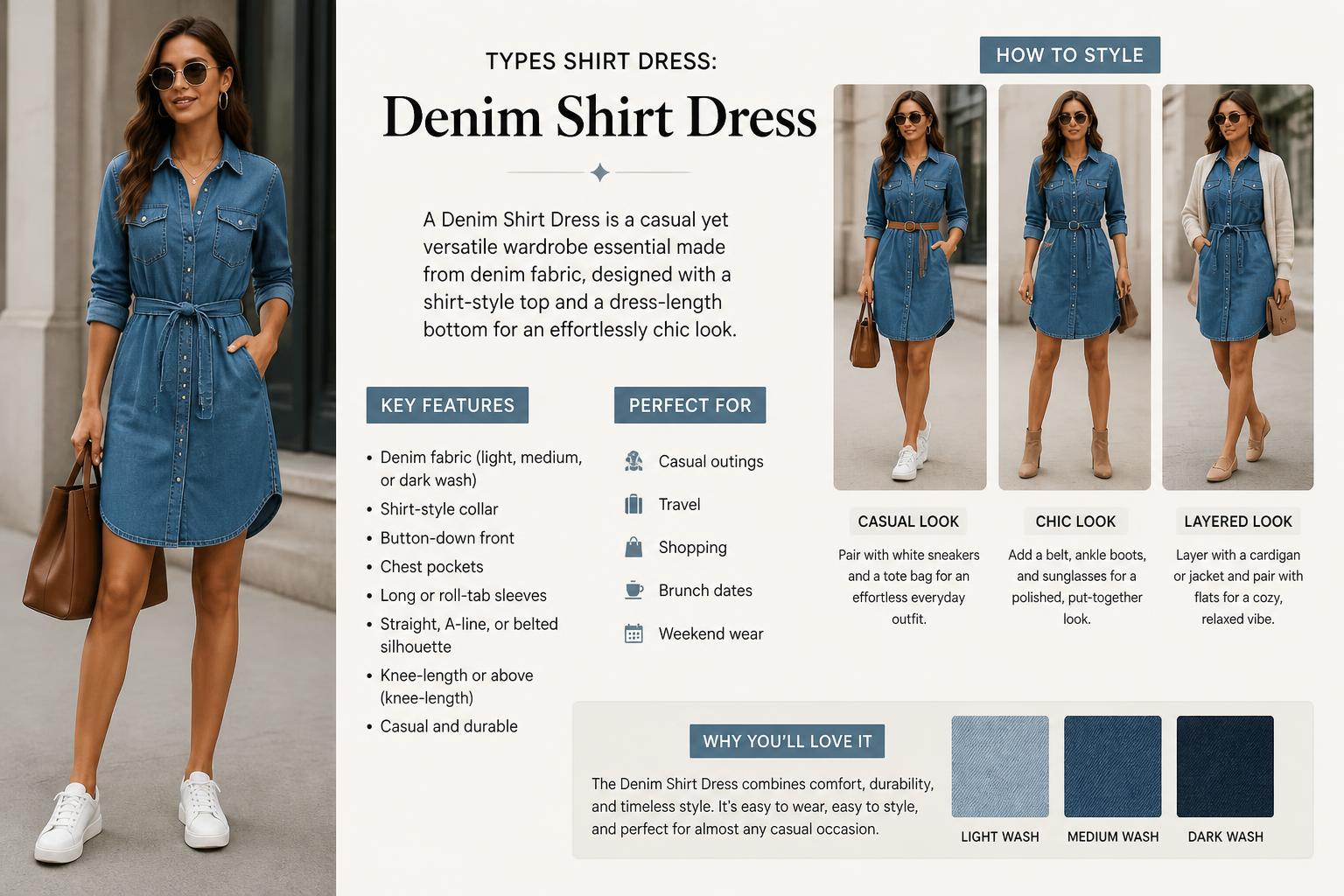
Common Details
Look for:
- Metal buttons
- Chest pockets
- Contrast stitching
- Belt
- Utility-inspired features
Shoes to Try
Pair it with:
- Sneakers
- Ankle boots
- Flat sandals
Lightweight denim or chambray creates a softer look, while heavier denim produces more structure.
Utility Shirt Dress
A utility shirt dress takes inspiration from workwear and practical clothing. It often includes larger pockets, adjustable sleeves, belts, and neutral colors. The result is usually casual, functional, and slightly rugged.
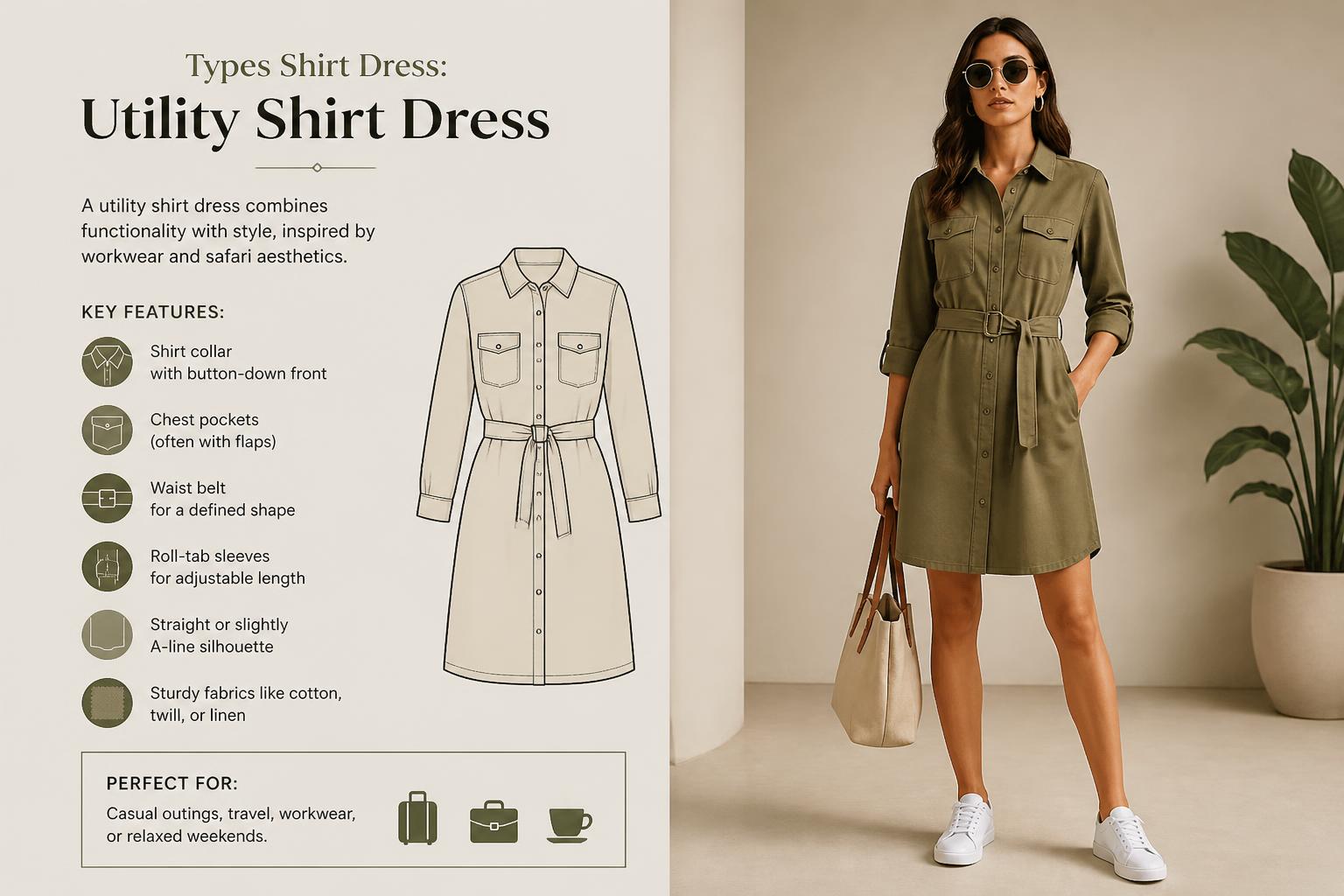
Common Details
Look for:
- Patch pockets
- Chest pockets
- Sleeve tabs
- Belts
- Military-inspired details
Popular Colors
Utility shirt dresses often appear in:
- Khaki
- Olive
- Beige
- Navy
- Black
Pair with sneakers, boots, or simple sandals depending on the season.
How a Shirt Dress Can Fit Every Body Type
The shirt dress is especially adaptable because the silhouette can be changed in many ways. The waist may be fitted or loose, the skirt can be straight or flared, and the sleeves and neckline can add or reduce visual emphasis in different areas. Body-shape categories can be useful for understanding proportion, but they should be treated as styling ideas rather than strict rules. The best shirt dress is the one that fits comfortably and creates the look you personally enjoy.
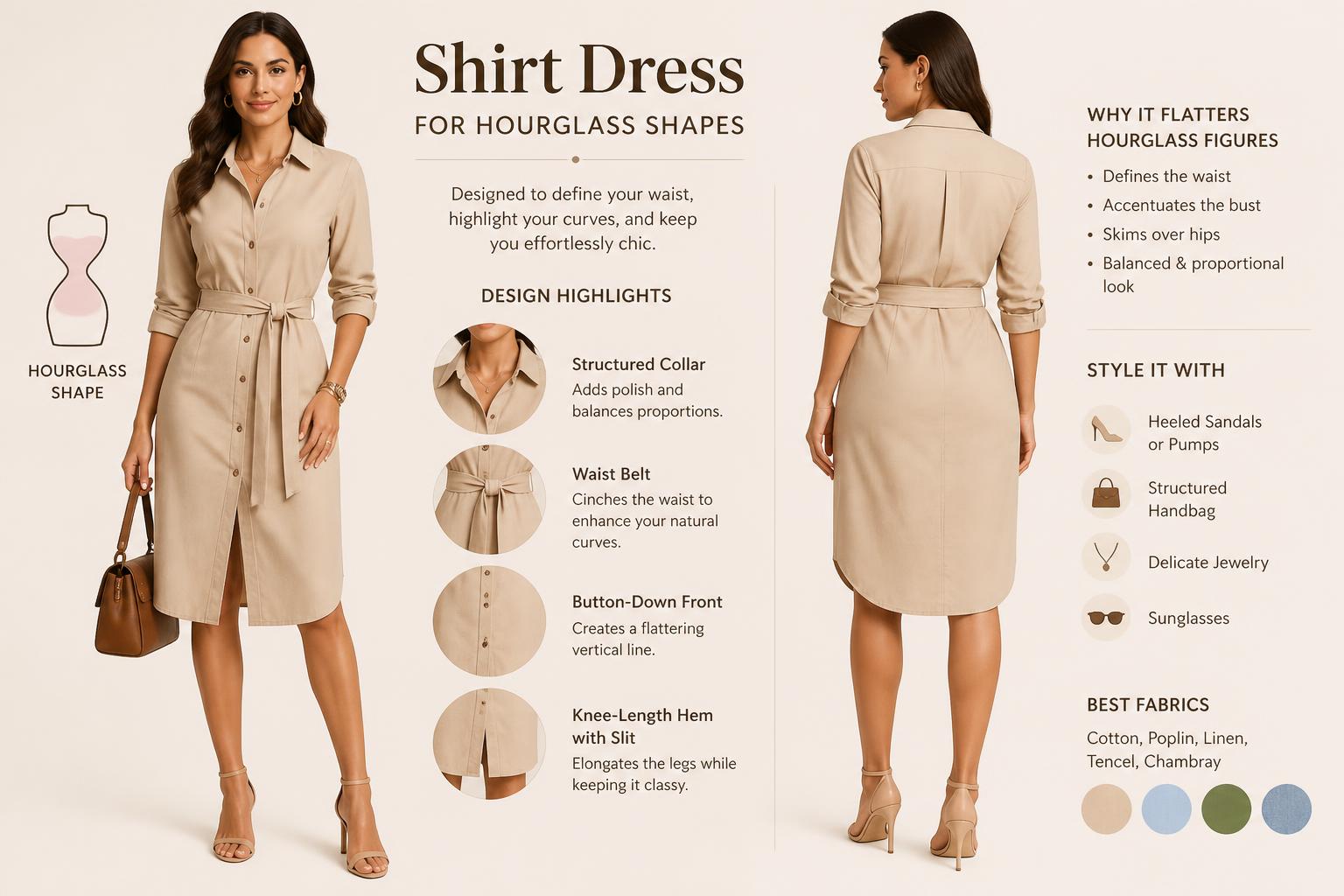
For Hourglass Shapes
Hourglass proportions generally describe a body where the bust and hips are relatively balanced and the waist is more defined. If you enjoy highlighting the waist, a shirt dress can do this easily through a belt or shaped construction.
Styles to Try
Consider:
- Belted shirt dresses
- Fitted midi styles
- Natural-waist designs
- V-neck button openings
- Soft A-line shirt dresses
Why They Can Work
A defined waist can maintain the body’s natural proportions while the lower part of the dress provides comfortable movement.
Fabric Ideas
Try:
- Cotton sateen
- Crepe
- Soft poplin
- Viscose
If you prefer a relaxed look, an oversized shirt dress can work just as well.
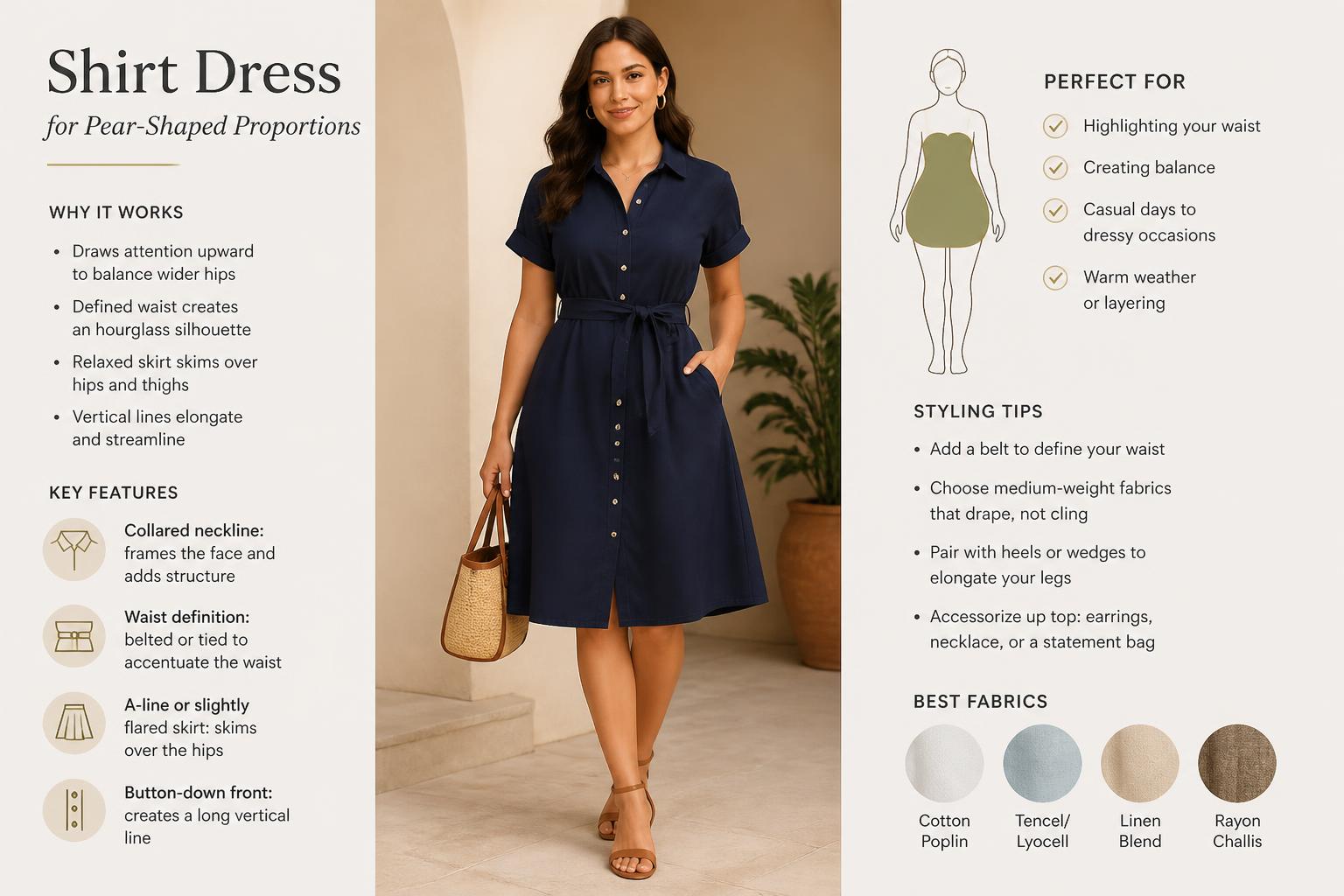
For Pear-Shaped Proportions
Pear-shaped proportions generally describe hips that are wider than the shoulders or bust. A shirt dress can be comfortable for this shape when it fits correctly through the upper body and has enough room through the lower body. A flared or A-line version can provide additional hip ease.
Styles to Try
Consider:
- A-line shirt dress
- Belted midi
- Puff-sleeve shirt dress
- Statement-collar style
- Flared shirt dress
Add Upper-Body Interest
If you enjoy creating more visual balance, try:
- Interesting collars
- Puff sleeves
- Shoulder details
- Chest pockets
- Brighter colors on top
Fit Tip
If a straight shirt dress pulls across the hips, try a style with more lower-body room rather than simply sizing up everywhere.
For Inverted-Triangle Shapes
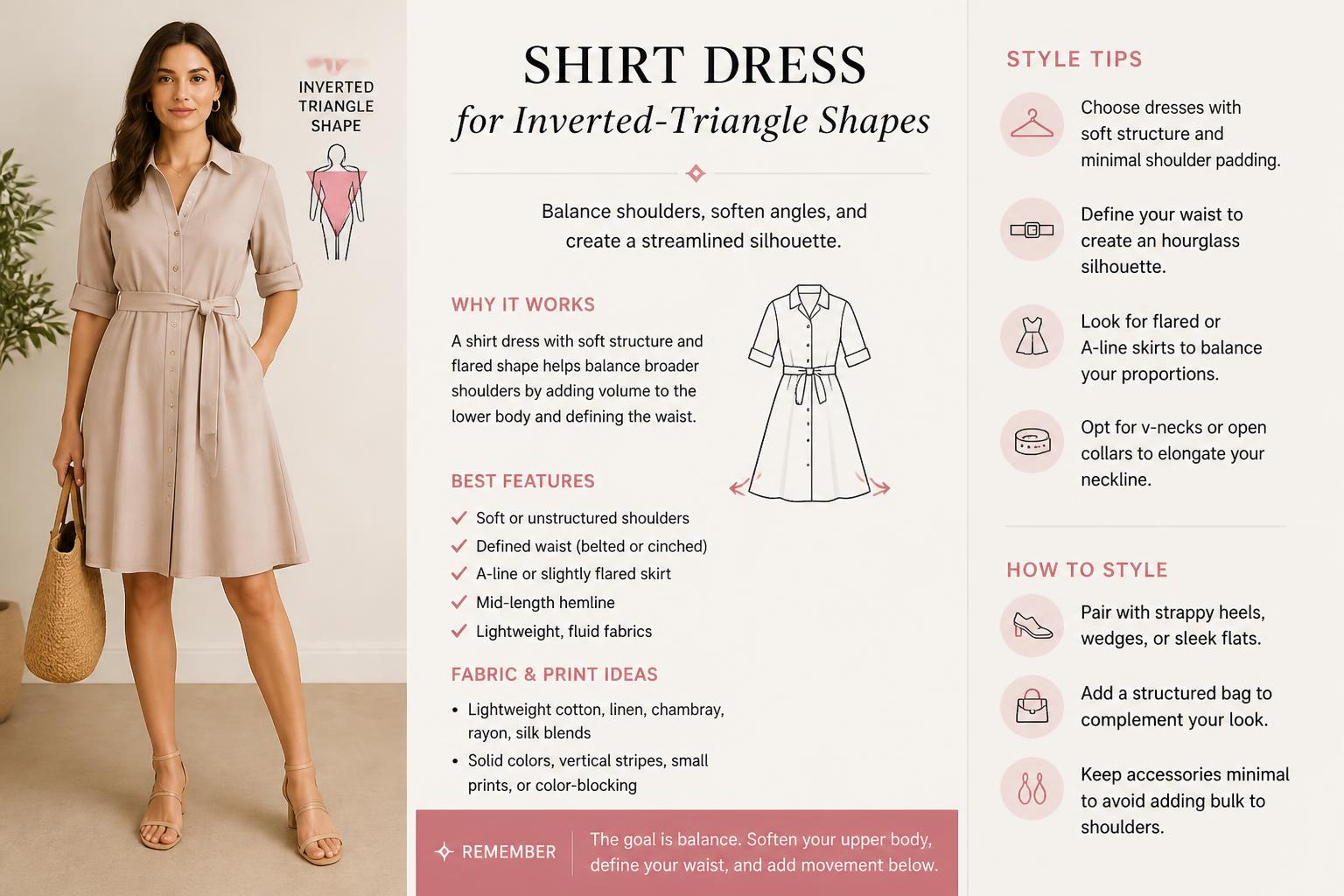
Inverted-triangle proportions generally describe shoulders that are wider than the hips. If you want to create more visual balance, a shirt dress with a cleaner upper body and additional movement below the waist can work well.
Styles to Try
Consider:
- A-line shirt dresses
- Belted styles
- Midi dresses
- Wider hems
Sleeve Options
If you prefer less emphasis around the shoulders, try:
- Sleeveless
- Simple short sleeves
- Straight long sleeves
Lower-Body Details
You can add visual interest through:
- Pleats
- Soft flare
- Pockets
- Fuller skirts
The aim is not to “correct” your body but to create the proportions you personally enjoy.
For Rectangle Shapes
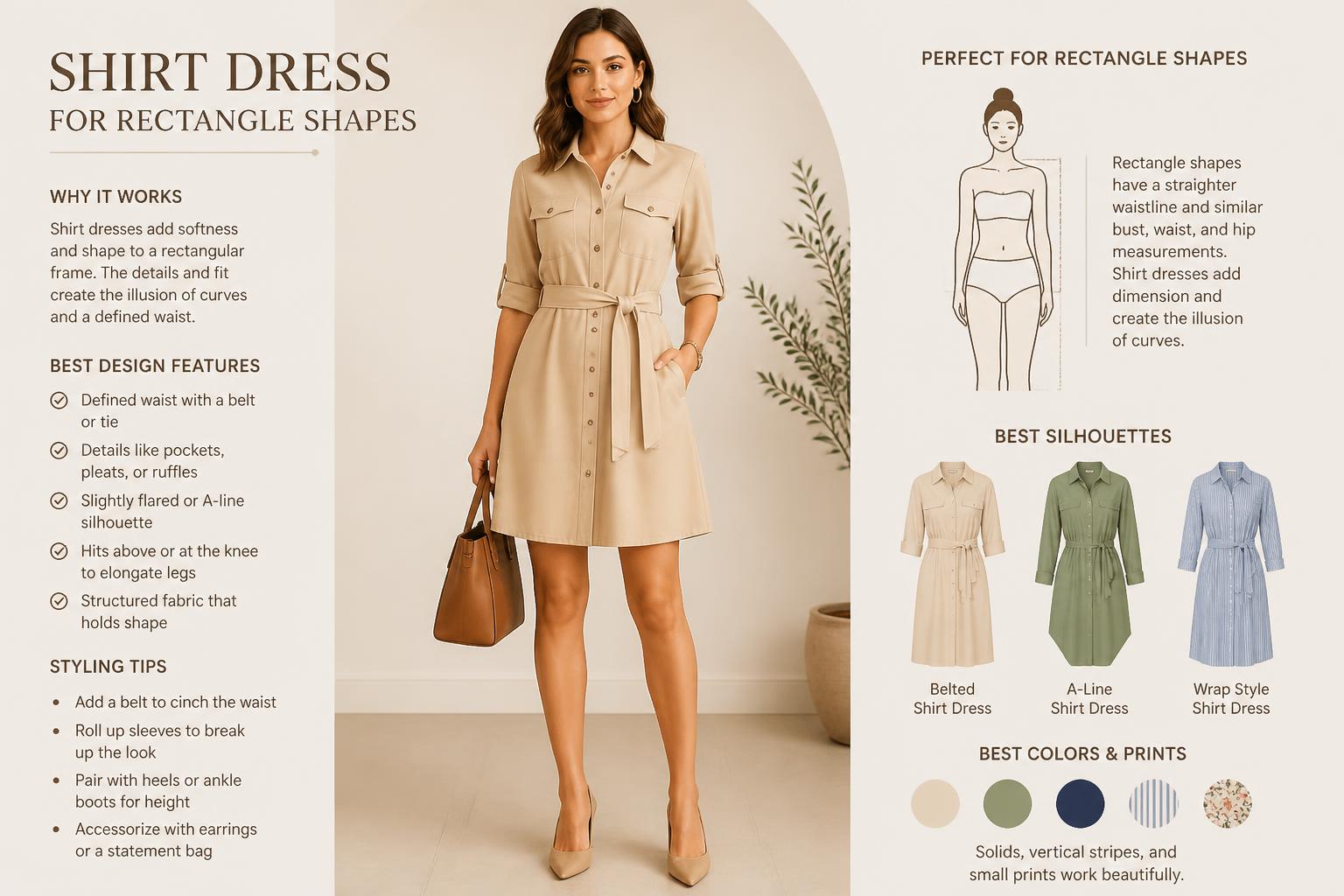
Rectangle proportions generally describe bust, waist, and hips that are relatively similar in width. A shirt dress gives you plenty of flexibility because you can either keep the naturally straight shape or create more waist definition.
To Create More Shape
Try:
- Belted shirt dress
- Tie-waist design
- Darted bodice
- Fit-and-flare shirt dress
For a Relaxed Look
Try:
- Oversized shirt dress
- Straight linen midi
- Long loose shirt dress
Both approaches can create stylish outfits.
For a Fuller Midsection
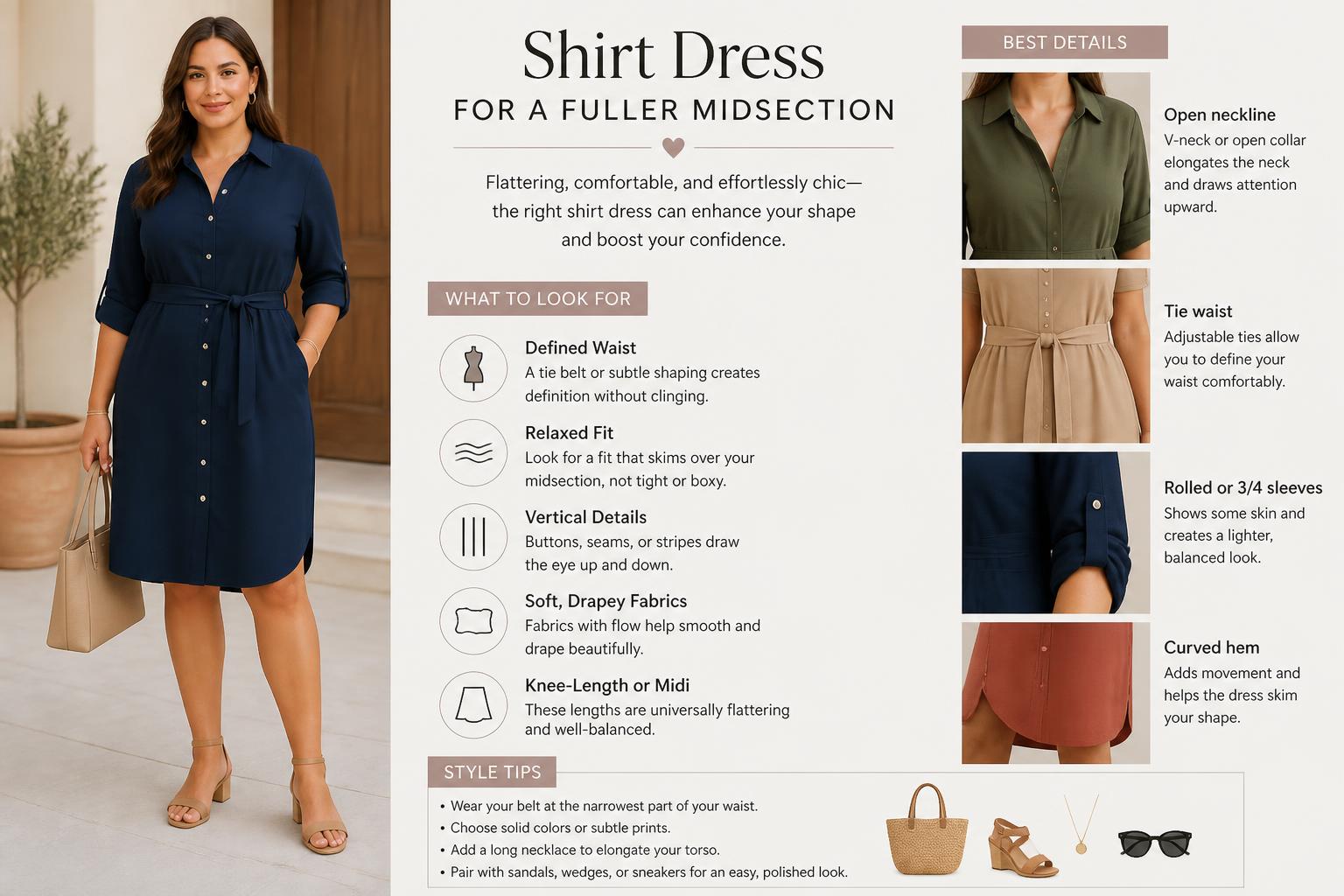
If you prefer more room around the waist or stomach, a shirt dress can provide a comfortable alternative to tightly fitted dresses. Straight, oversized, and soft A-line silhouettes can all provide more ease through the middle.
Styles to Try
Consider:
- Straight shirt dress
- Oversized shirt dress
- Soft A-line style
- High-waist version
- Optional-belt design
Fabric Ideas
Soft fabrics can create more movement.
Try:
- Viscose
- Rayon
- Lightweight cotton
- Linen blends
- Soft crepe
Styling Tip
A removable belt gives you options. Wear the dress loose when you want more ease, or add the belt when you want more waist definition.
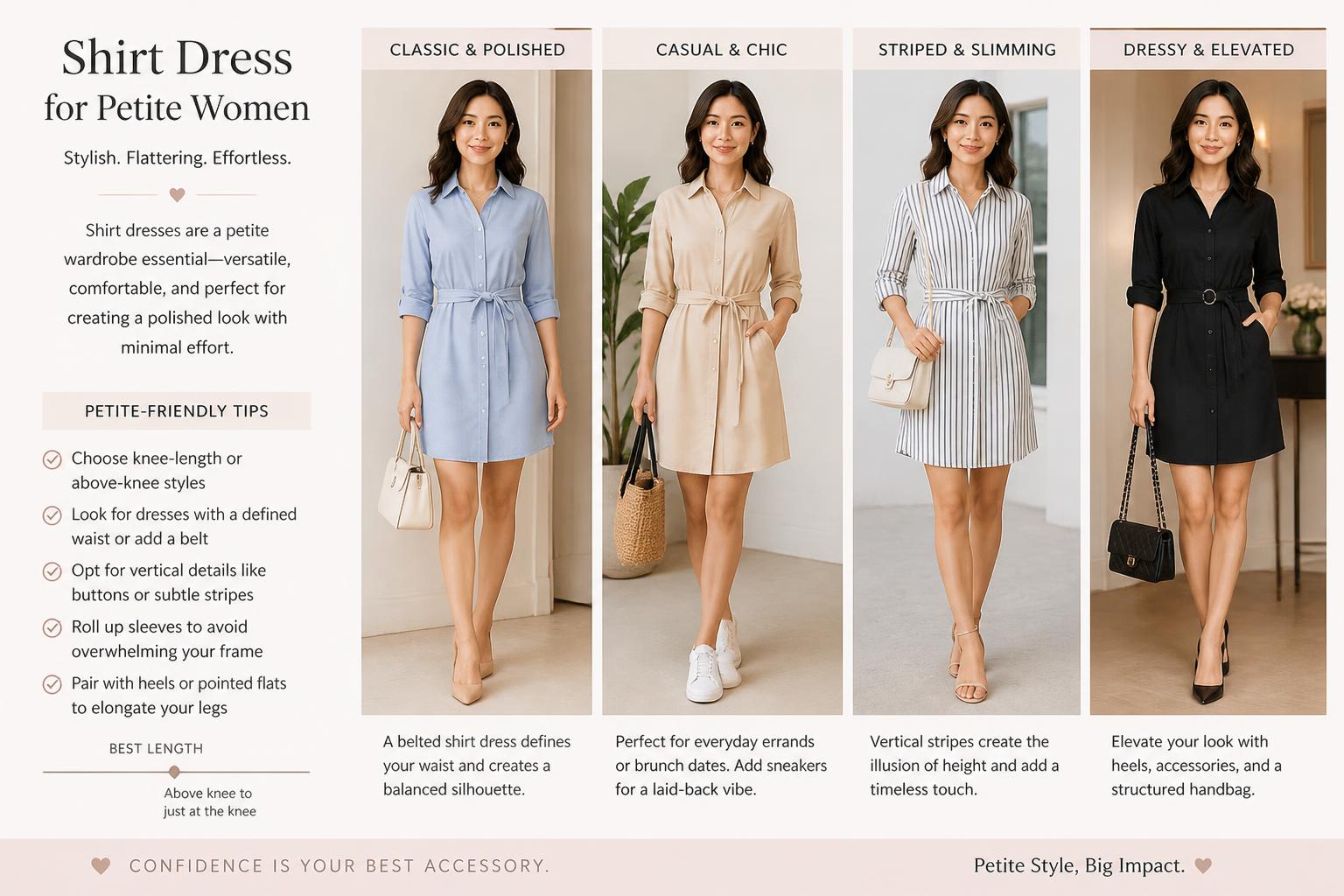
For Petite Women
For petite women, the main consideration is usually proportion rather than the shirt-dress silhouette itself. The size of the collar, pockets, sleeves, and overall length can all affect how balanced the dress looks on a shorter frame.
Styles to Try
Consider:
- Mini shirt dress
- Knee-length style
- Short-sleeve shirt dress
- Belted midi with a higher waist
Pay Attention to Scale
Very large details such as:
- Oversized collars
- Huge patch pockets
- Extremely wide sleeves
can create a stronger visual effect. If you prefer a cleaner proportion, look for more moderately sized details. Oversized fashion can still work beautifully if that is the look you want.
For Tall Women
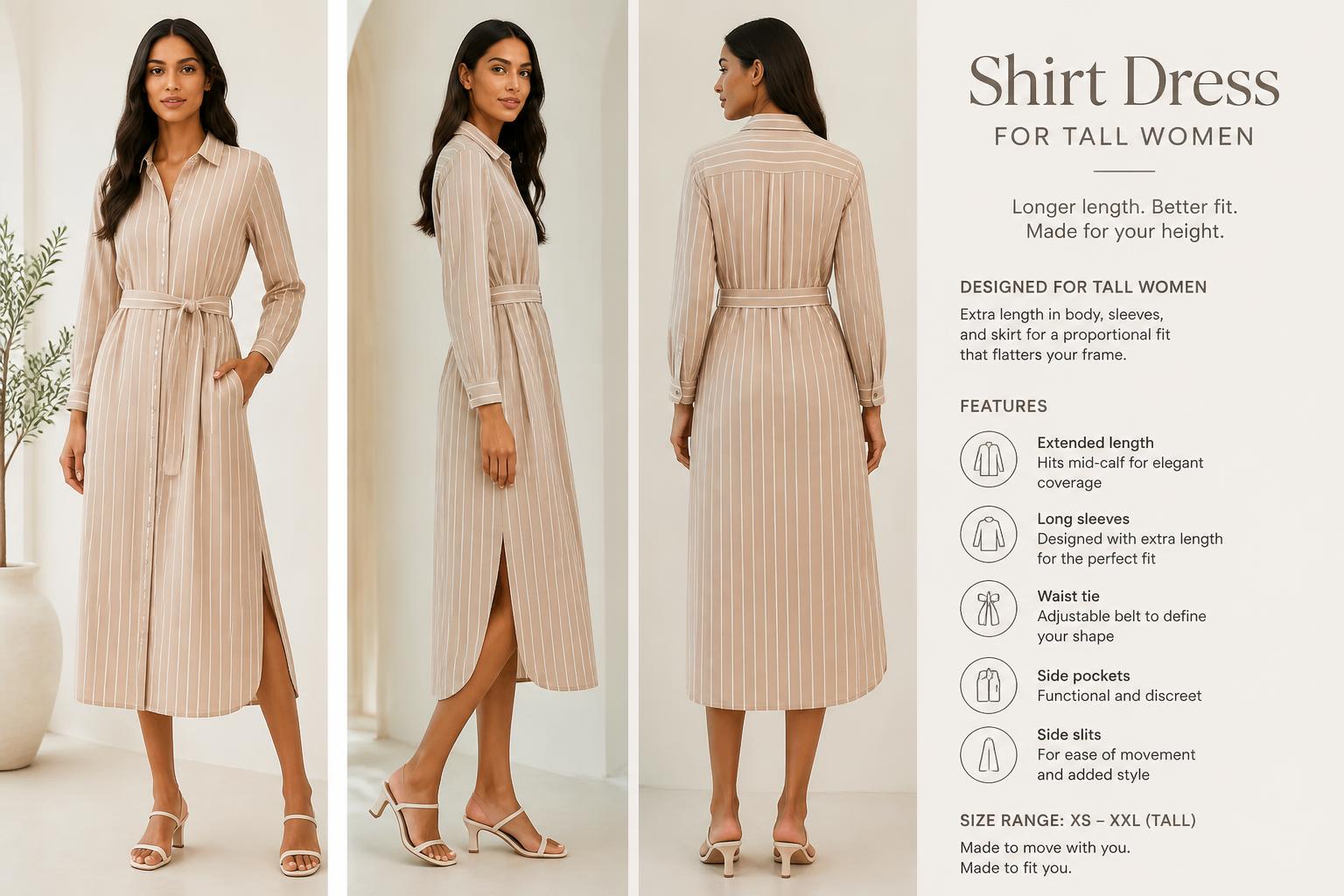
Tall women have plenty of options with shirt dresses because longer silhouettes such as midi and maxi styles can take advantage of a longer vertical line. The most important consideration is whether the garment is proportioned correctly.
Styles to Try
Consider:
- Long-sleeve midi shirt dress
- Maxi shirt dress
- Belted design
- Oversized style
- Bold prints
Check the Fit
Pay attention to:
- Waist position
- Sleeve length
- Shoulder placement
- Total dress length
Simply making the hem longer does not always create a properly proportioned tall fit.
For Plus-Size Fashion
Shirt dresses can work beautifully across extended sizes because there are so many ways to adjust the silhouette. The most important factor is good fit—not following a rule about what plus-size women “should” wear.
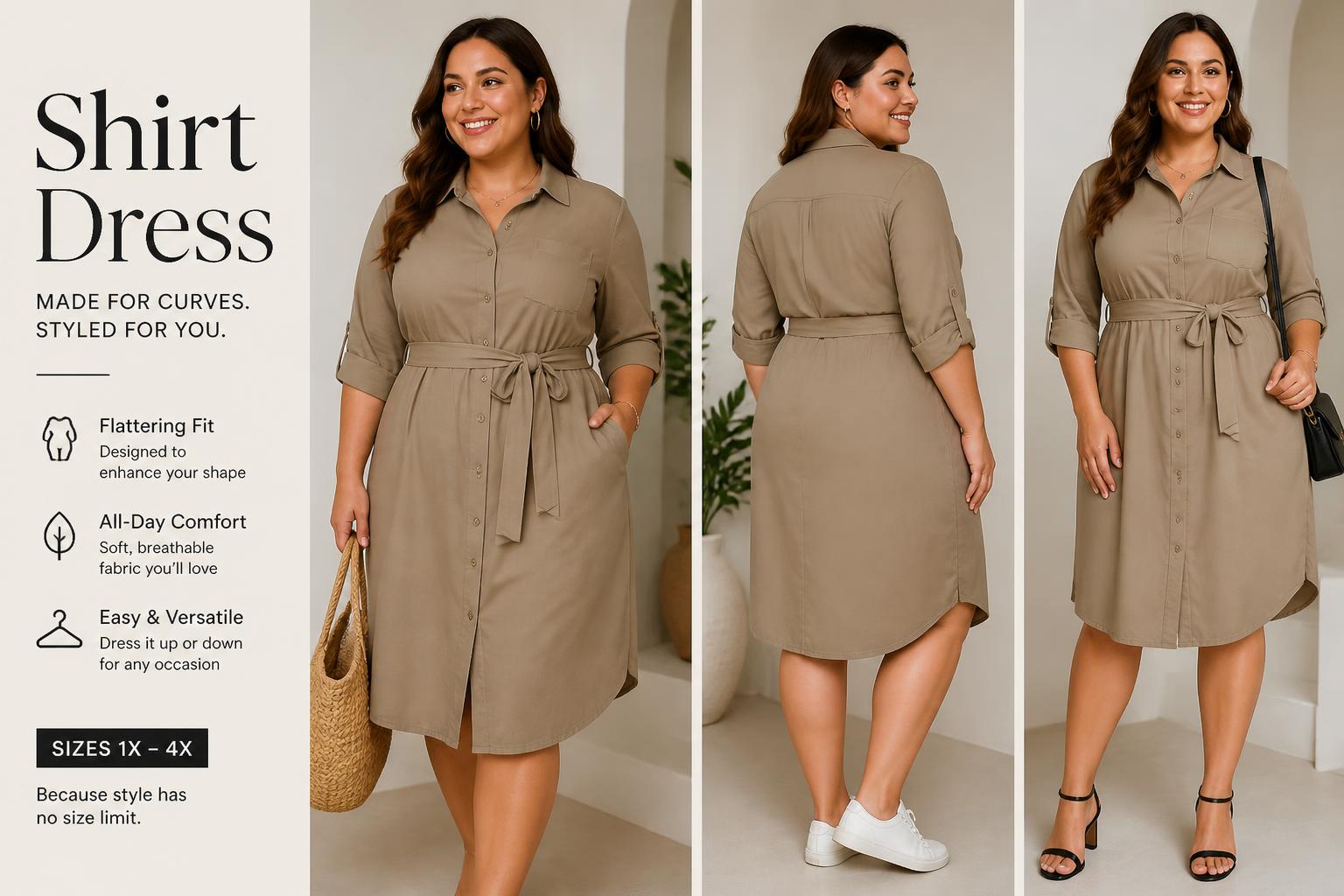
Styles to Explore
Try:
- Belted midi shirt dress
- Relaxed button-front dress
- A-line shirt dress
- Utility shirt dress
- Flowing maxi shirt dress
Important Fit Areas
Check:
- Bust
- Shoulder
- Upper arms
- Waist
- Hips
- Button placket
Watch for Button Gaping
If the placket pulls open between buttons around the bust, the fit may be too tight in that area. Instead of accepting the problem, try:
- A different size
- A different cut
- More bust room
- A different brand
Wear the Colors and Prints You Like
Plus-size fashion does not need to be limited to:
- Black
- Dark colors
- Small prints
Bright colors, stripes, floral prints, denim, and bold patterns can all work beautifully.
What Features Should I Look For in a Shirt Dress
For Work:
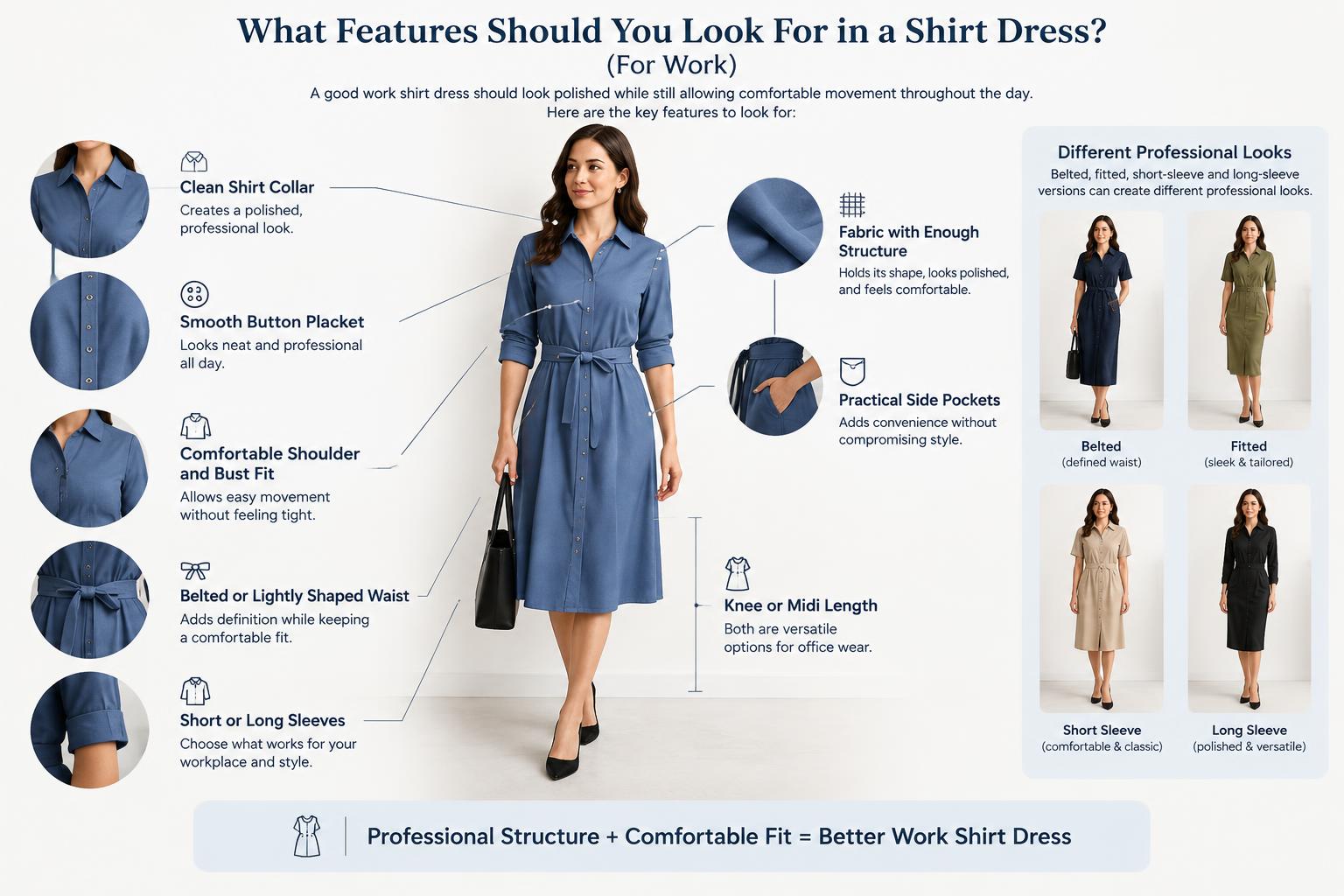
A good work shirt dress should look polished while still allowing comfortable movement throughout the day. Knee-length and midi styles are especially practical for office wear, while belted, fitted, short-sleeve, and long-sleeve versions can create different professional looks. For work, look for a shirt dress that feels polished without restricting movement. Useful features include:
- Knee or midi length
- Clean shirt collar
- Smooth button placket
- Comfortable shoulder and bust fit
- Belted or lightly shaped waist
- Short or long sleeves
- Fabric with enough structure
- Practical side pockets
Knee-length and midi shirt dresses are both identified as versatile options for office wear. Professional Structure + Comfortable Fit = Better Work Shirt Dress
For Summer:
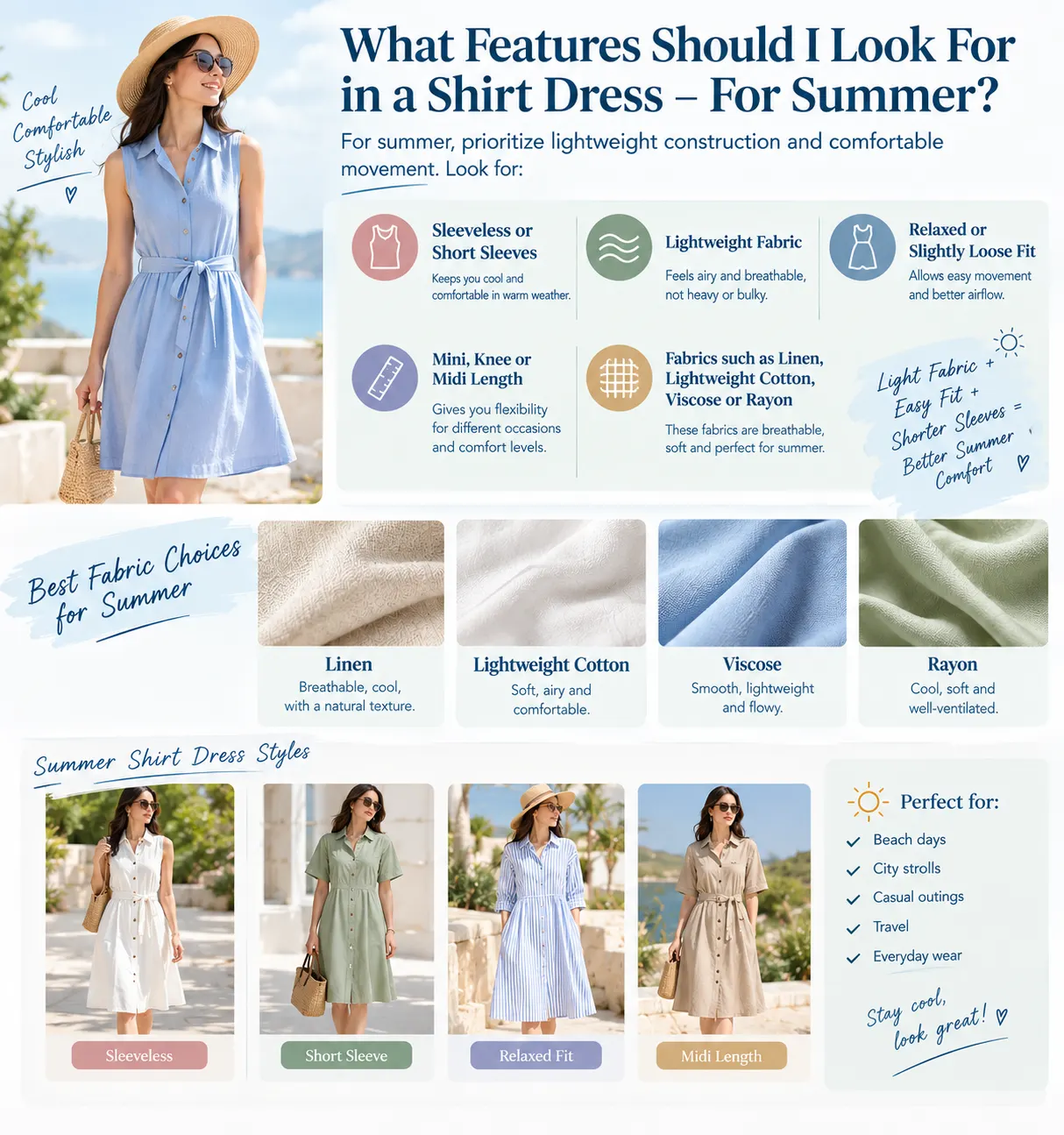
For summer, prioritize lightweight construction and comfortable movement. Look for:
- Sleeveless or short sleeves
- Lightweight fabric
- Relaxed or slightly loose fit
- Mini, knee, or midi length
- Fabrics such as linen, lightweight cotton, viscose, or rayon
The article specifically identifies sleeveless shirt dresses as useful for summer and warm climates. Light Fabric + Easy Fit + Shorter Sleeves = Better Summer Comfort
For Travel:
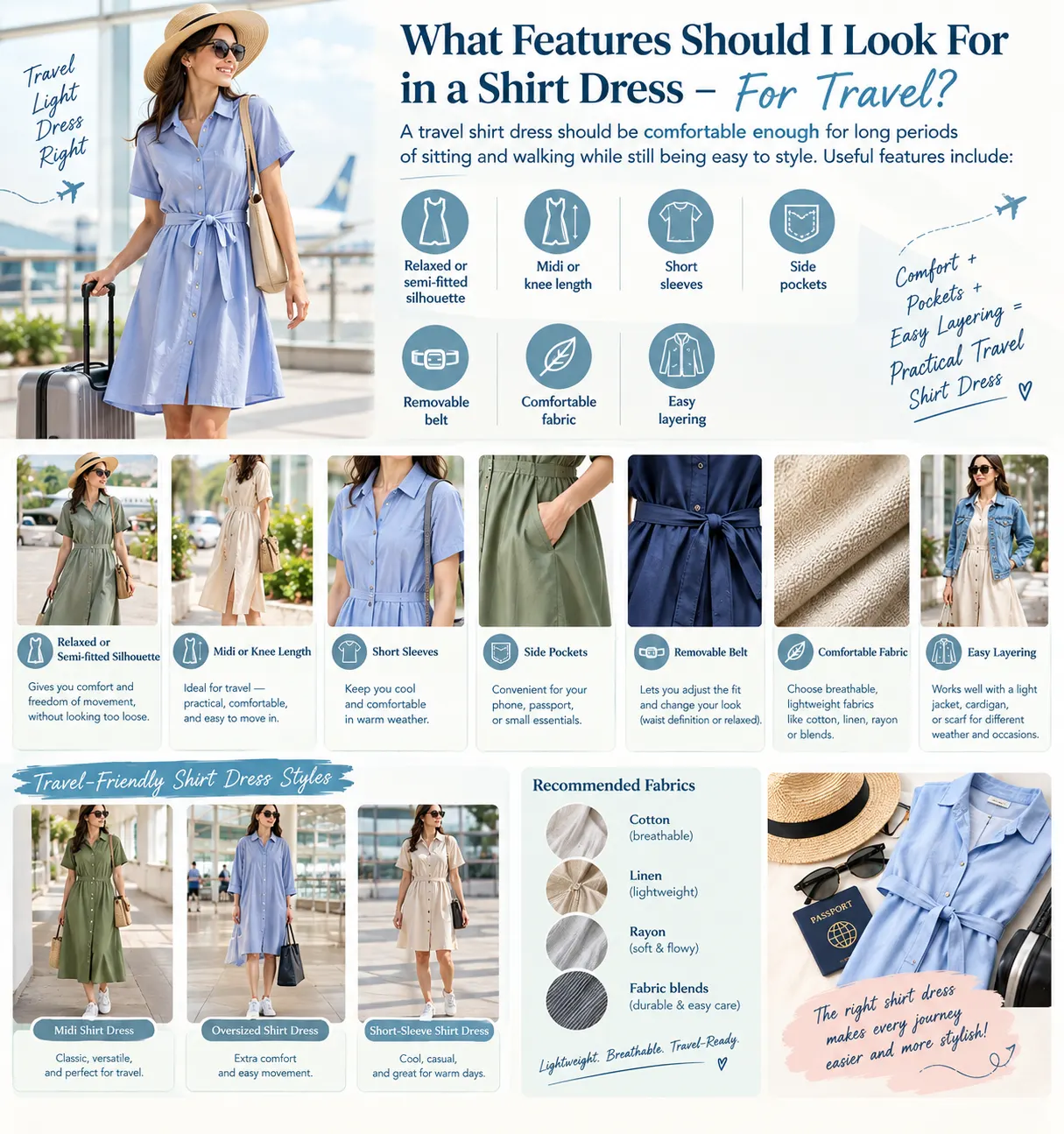
A travel shirt dress should be comfortable enough for long periods of sitting and walking while still being easy to style. Useful features include:
- Relaxed or semi-fitted silhouette
- Midi or knee length
- Short sleeves
- Side pockets
- Removable belt
- Comfortable fabric
- Easy layering
The article identifies midi, oversized, and short-sleeve shirt dresses as useful options for travel. Comfort + Pockets + Easy Layering = Practical Travel Shirt Dress
For Casual Wear:
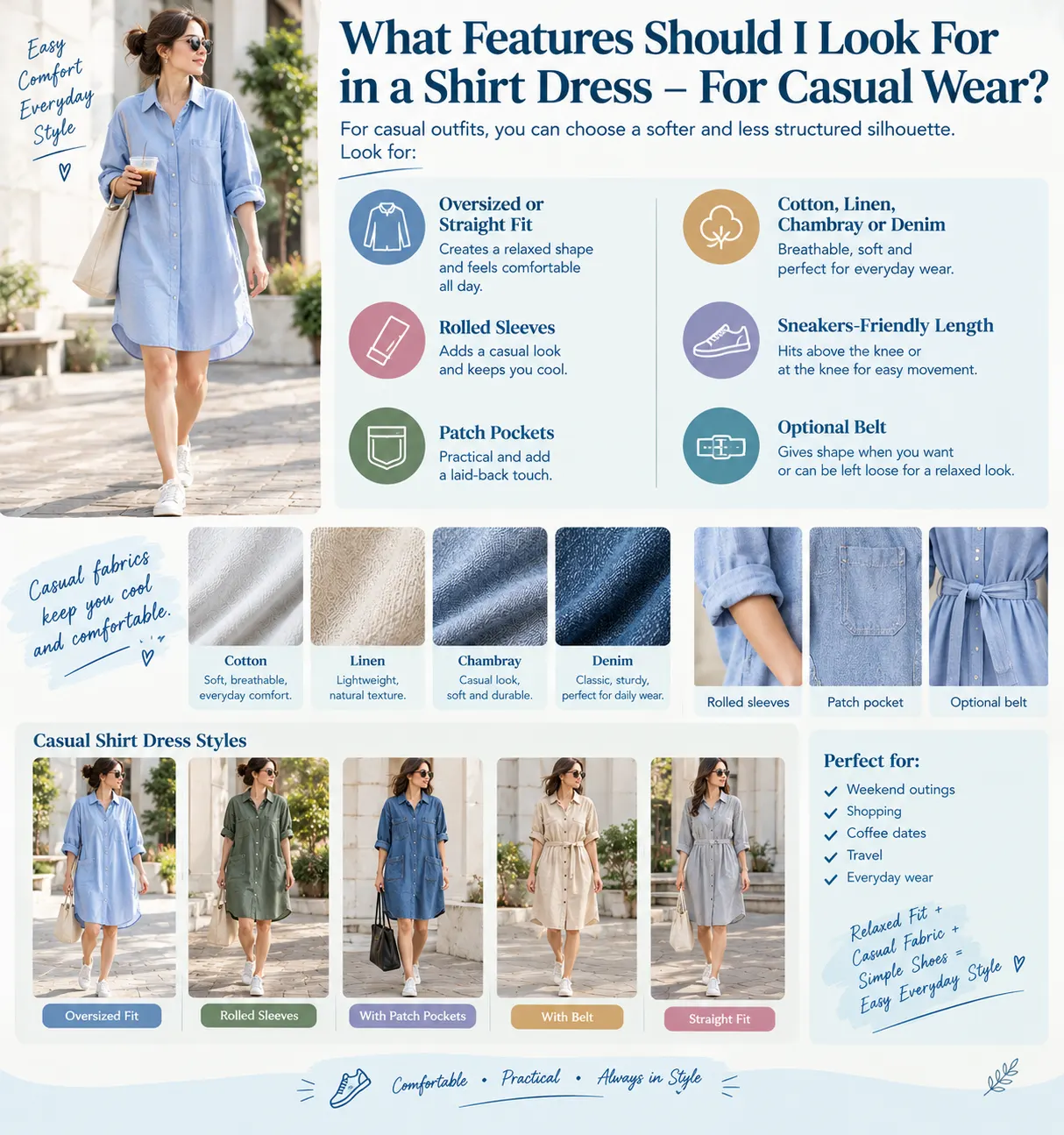
For casual outfits, you can choose a softer and less structured silhouette. Look for:
- Oversized or straight fit
- Rolled sleeves
- Cotton, linen, chambray, or denim
- Patch pockets
- Sneakers-friendly length
- Optional belt
Oversized shirt dresses create a relaxed shape through the shoulders, waist, and hips, making them particularly suitable for casual styling. Relaxed Fit + Casual Fabric + Simple Shoes = Easy Everyday Style
For the Office:
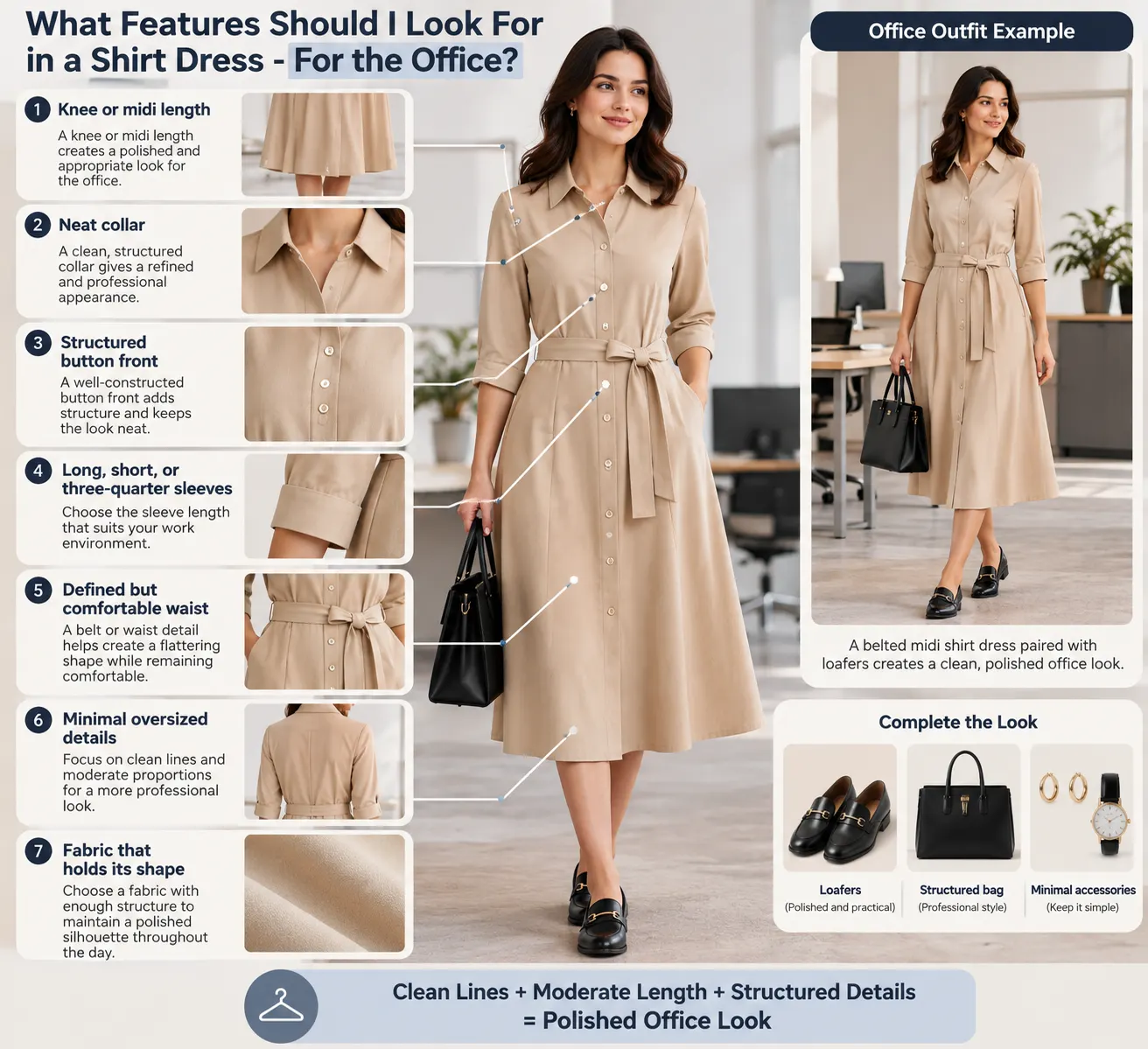
For a more traditional office environment, focus on clean construction and moderate proportions. Look for:
- Knee or midi length
- Neat collar
- Structured button front
- Long, short, or three-quarter sleeves
- Defined but comfortable waist
- Minimal oversized details
- Fabric that holds its shape
A belted midi shirt dress paired with loafers is specifically presented in the article as an office outfit. Clean Lines + Moderate Length + Structured Details = Polished Office Look.
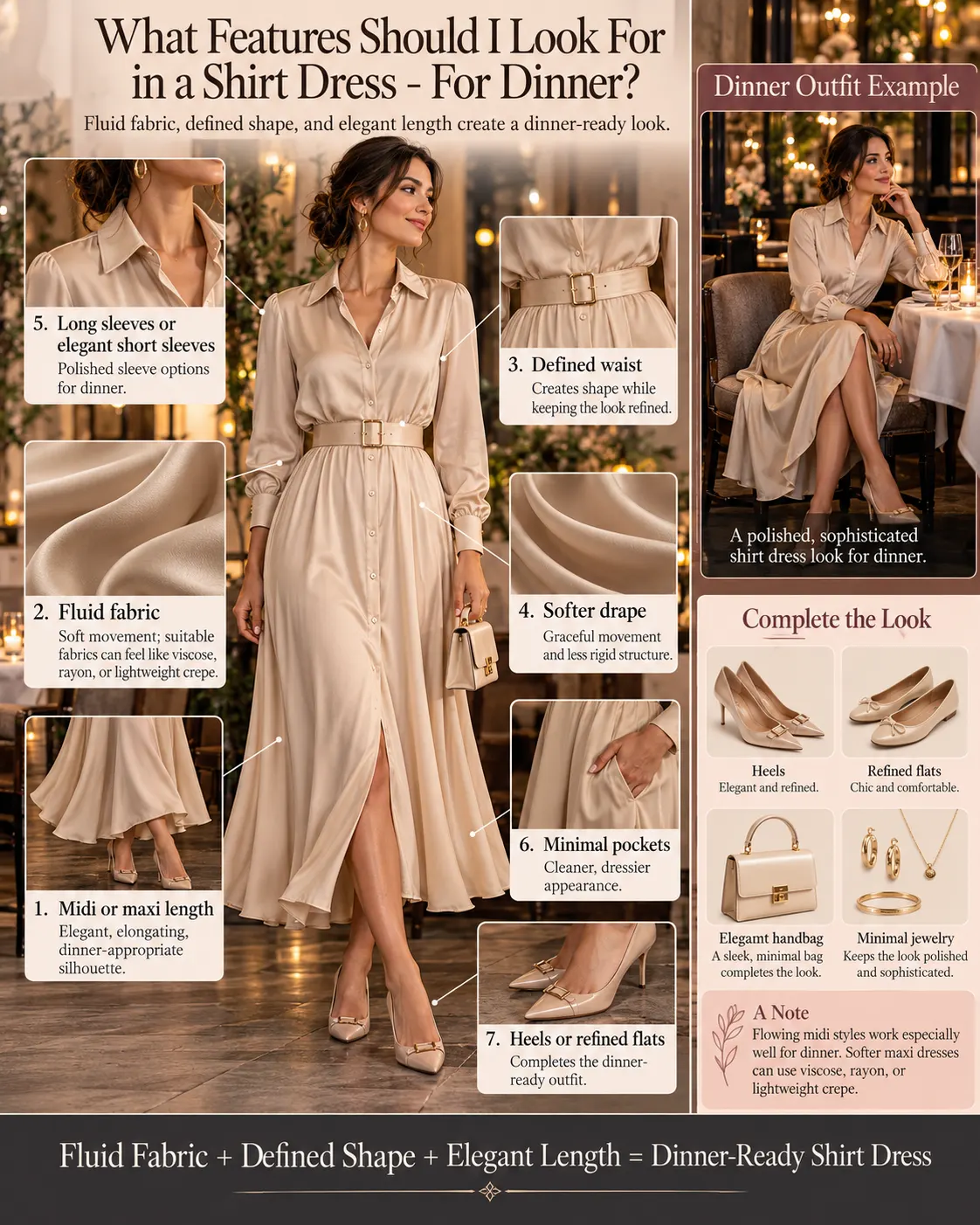
For Dinner:
For dinner, a softer or more elegant shirt dress can create a dressier appearance without losing the familiar shirt structure. Consider:
- Midi or maxi length
- Fluid fabric
- Defined waist
- Softer drape
- Long sleeves or elegant short sleeves
- Minimal pockets
- Heels or refined flats
The source identifies flowing midi styles as suitable for dinner and notes that softer maxi dresses can use viscose, rayon, or lightweight crepe. Fluid Fabric + Defined Shape + Elegant Length = Dinner-Ready Shirt Dress
For Vacation:
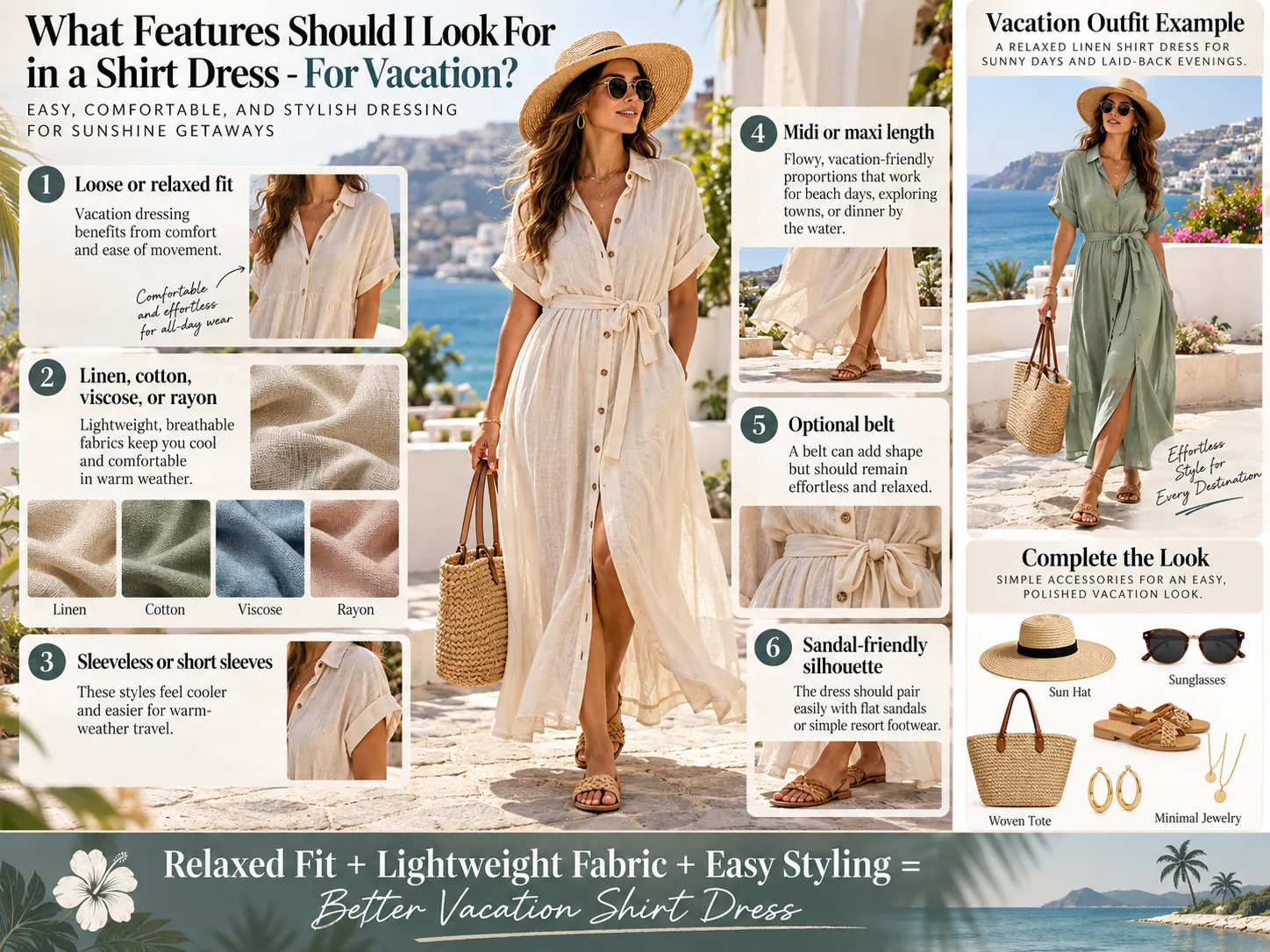
Vacation clothing usually benefits from comfort and easy styling. Look for:
- Loose or relaxed fit
- Linen, cotton, viscose, or rayon
- Sleeveless or short sleeves
- Midi or maxi length
- Optional belt
- Sandal-friendly silhouette
The article highlights loose linen or viscose maxi shirt dresses for resort styling and vacation-oriented outfits. Relaxed Fit + Lightweight Fabric + Easy Styling = Better Vacation Shirt Dress
For Smart-Casual Events:
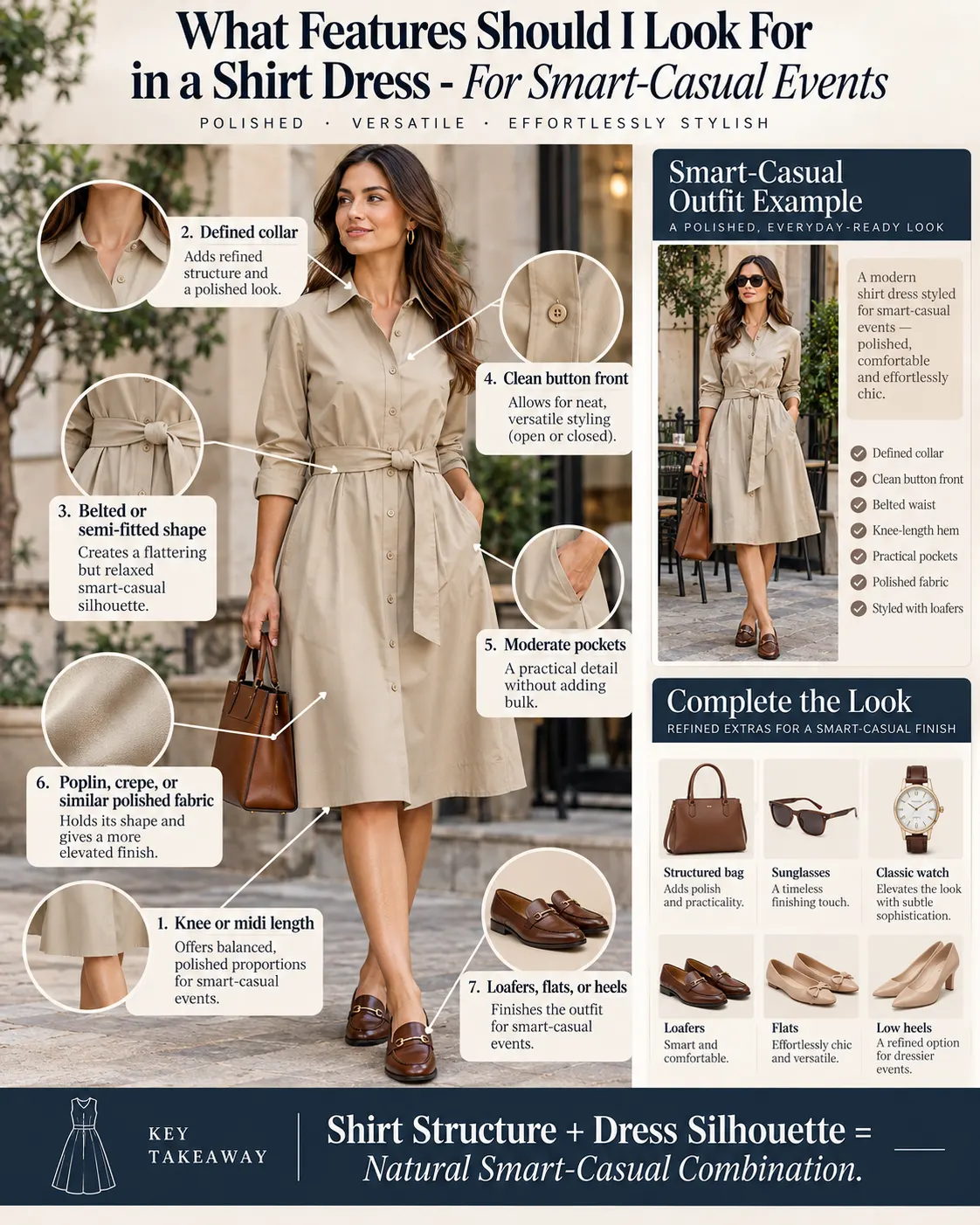
Smart-casual dressing sits between relaxed and formal, making the shirt dress especially useful. Look for:
- Knee or midi length
- Defined collar
- Belted or semi-fitted shape
- Clean button front
- Moderate pockets
- Poplin, crepe, or similar polished fabric
- Loafers, flats, or heels
The article specifically recommends a knee-length poplin shirt dress for a smart-casual look. Shirt Structure + Dress Silhouette = Natural Smart-Casual Combination.
For Warm Weather:
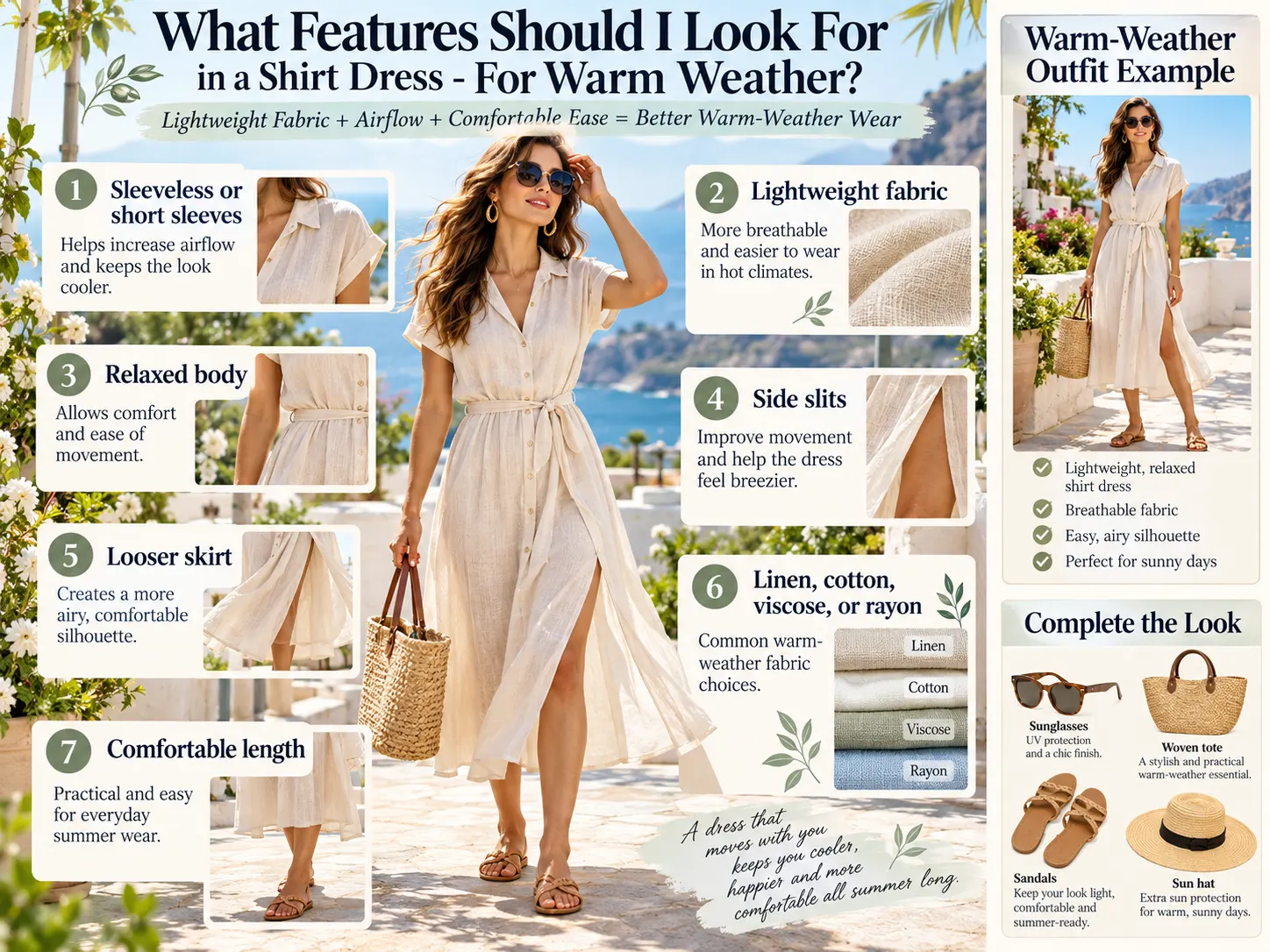
For warm climates, airflow and garment ease become especially important. Look for:
- Sleeveless or short sleeves
- Lightweight fabric
- Relaxed body
- Side slits
- Looser skirt
- Linen, cotton, viscose, or rayon
- Comfortable length
Sleeveless and short-sleeve shirt dresses are both presented as useful warm-weather options in the source. Lightweight Fabric + Airflow + Comfortable Ease = Better Warm-Weather Wear
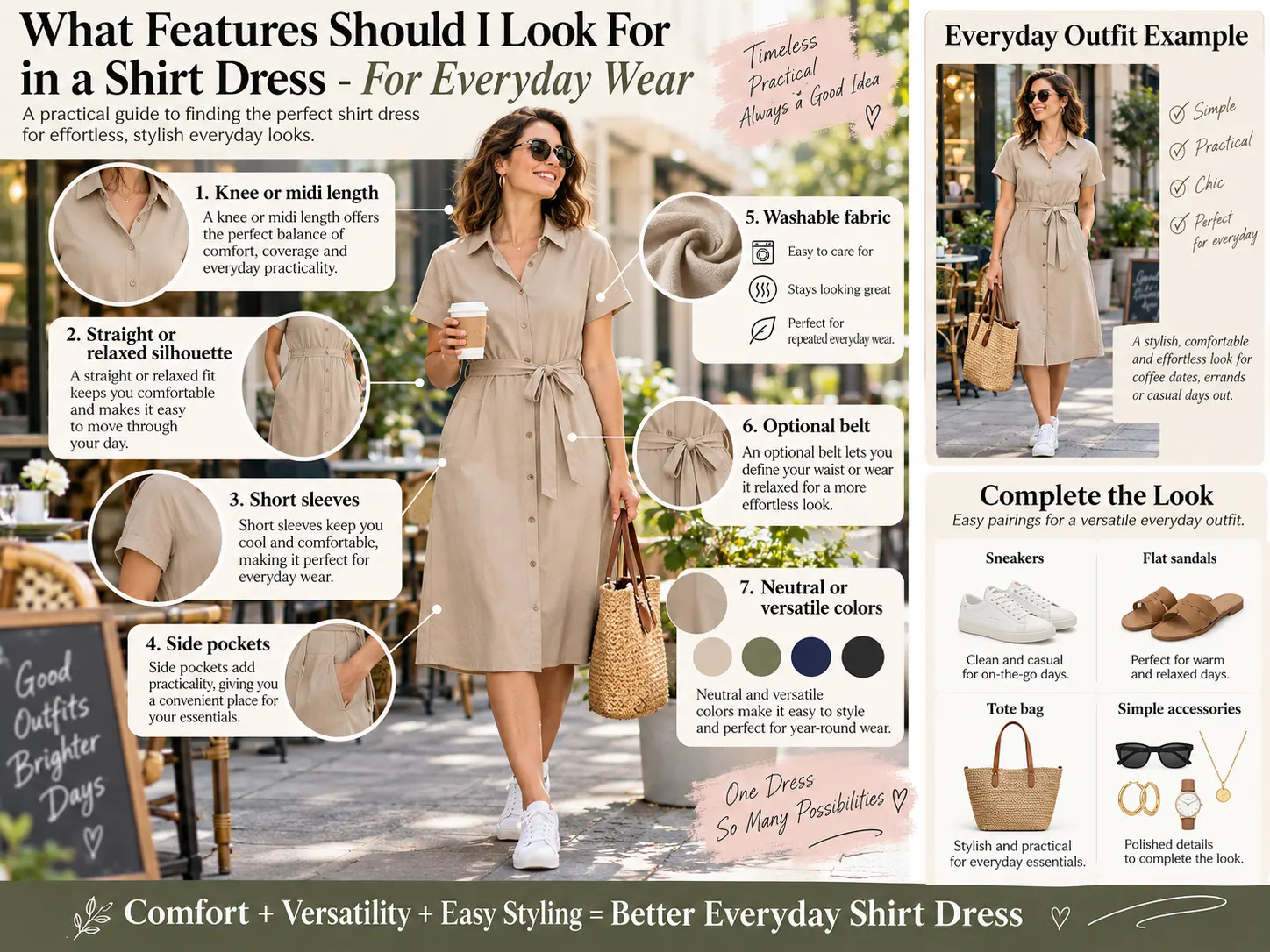
For Everyday Wear:
An everyday shirt dress should be easy to put on, easy to move in, and easy to combine with different shoes. Look for:
- Knee or midi length
- Straight or relaxed silhouette
- Short sleeves
- Side pockets
- Washable fabric
- Optional belt
- Neutral or versatile colors
The source describes knee-length and short-sleeve shirt dresses as particularly practical for everyday wear. Comfort + Versatility + Easy Styling = Better Everyday Shirt Dress
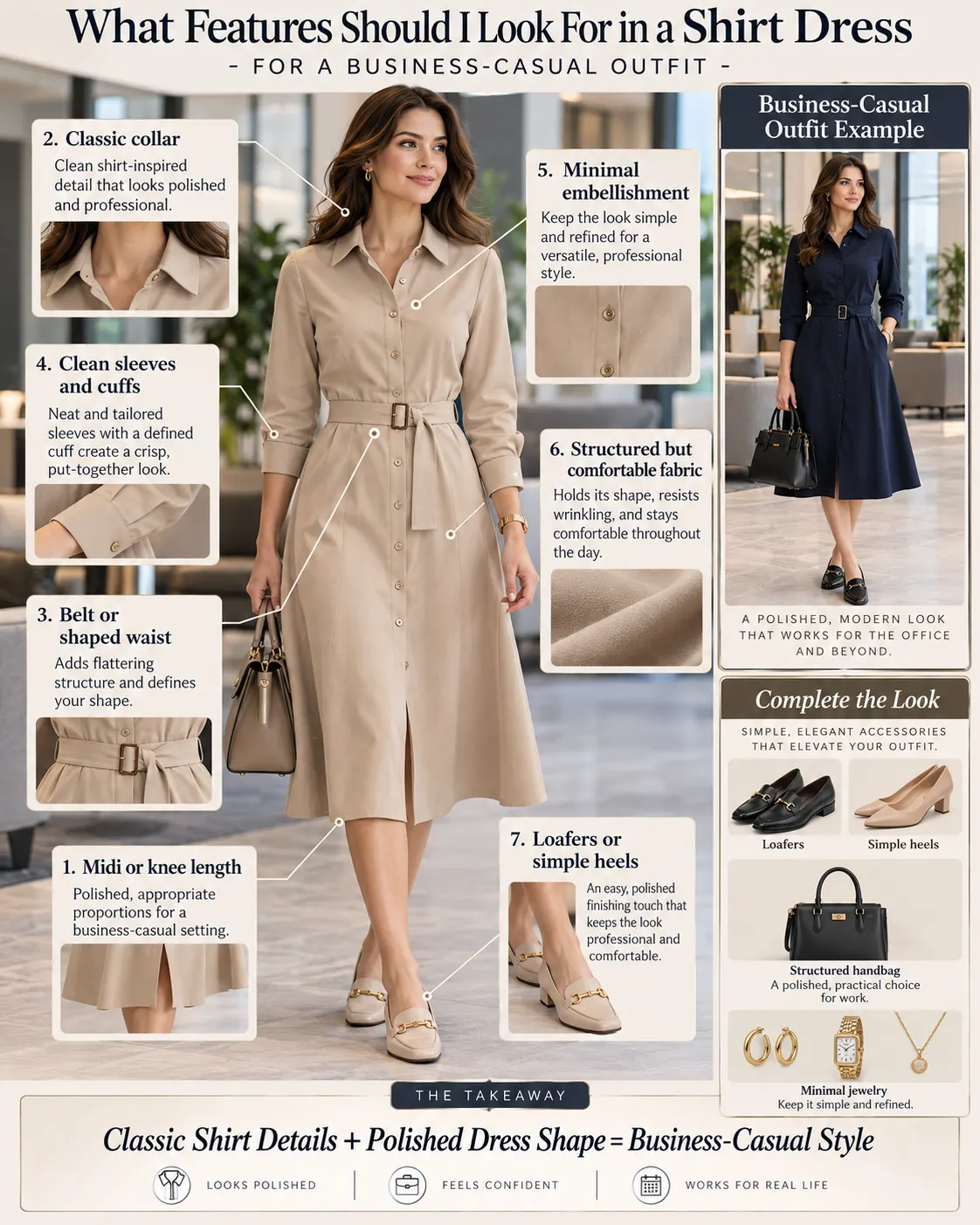
For a Business-Casual Outfit:
For business casual, choose something more structured than weekend clothing but less formal than traditional business dress. Useful features include:
- Midi or knee length
- Classic collar
- Belt or shaped waist
- Clean sleeves and cuffs
- Minimal embellishment
- Structured but comfortable fabric
- Loafers or simple heels
A shirt dress naturally works well for this dress code because it combines recognizable shirt details with a complete dress silhouette. Classic Shirt Details + Polished Dress Shape = Business-Casual Style
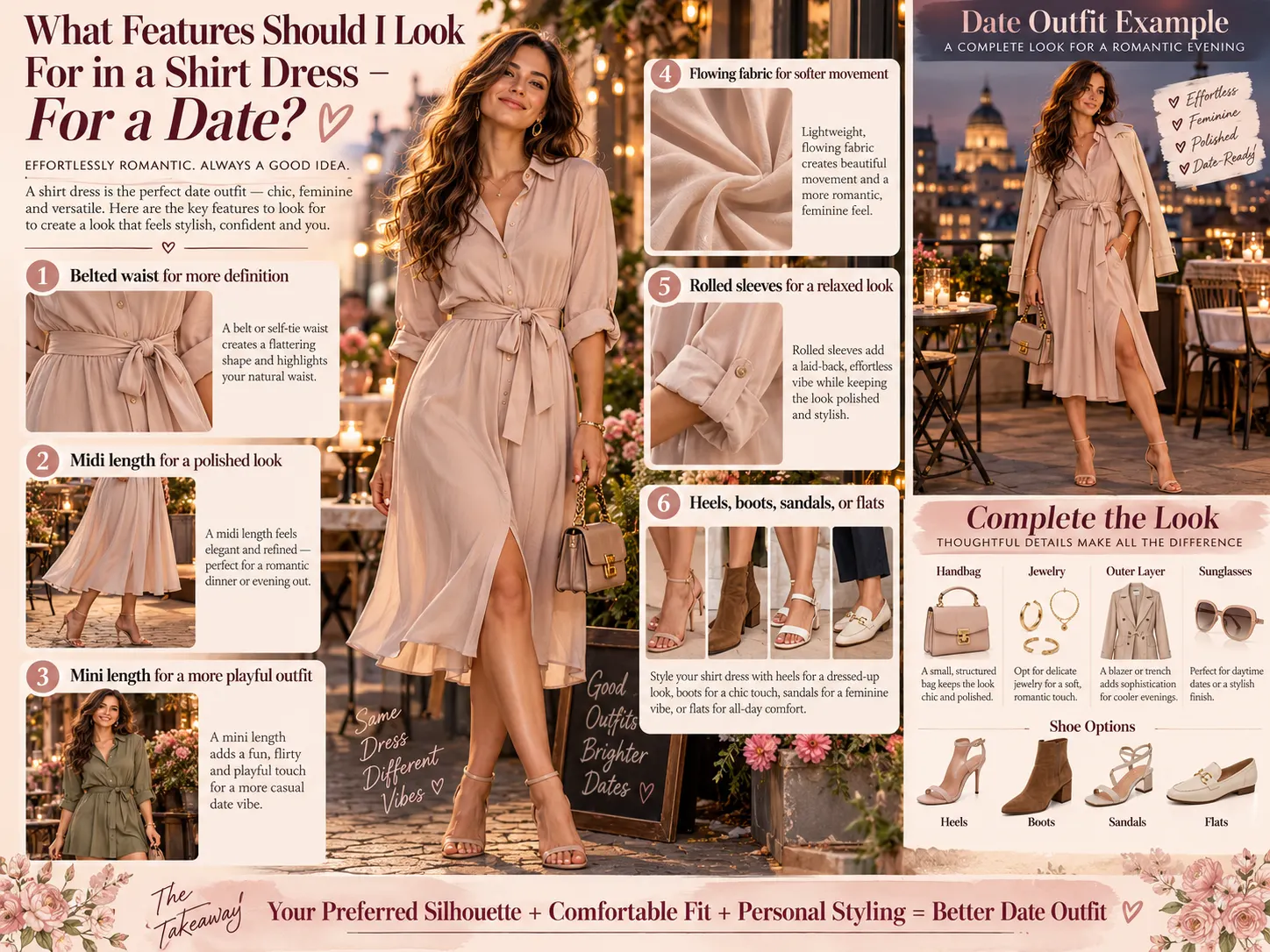
For a Date:
For a date, the best features depend on the mood you want to create. You might choose:
- Belted waist for more definition
- Midi length for a polished look
- Mini length for a more playful outfit
- Flowing fabric for softer movement
- Rolled sleeves for a relaxed look
- Heels, boots, sandals, or flats
The source notes that shirt dresses can work for dates and can easily be dressed up or down through shoes, accessories, and belts. Your Preferred Silhouette + Comfortable Fit + Personal Styling = Better Date Outfit
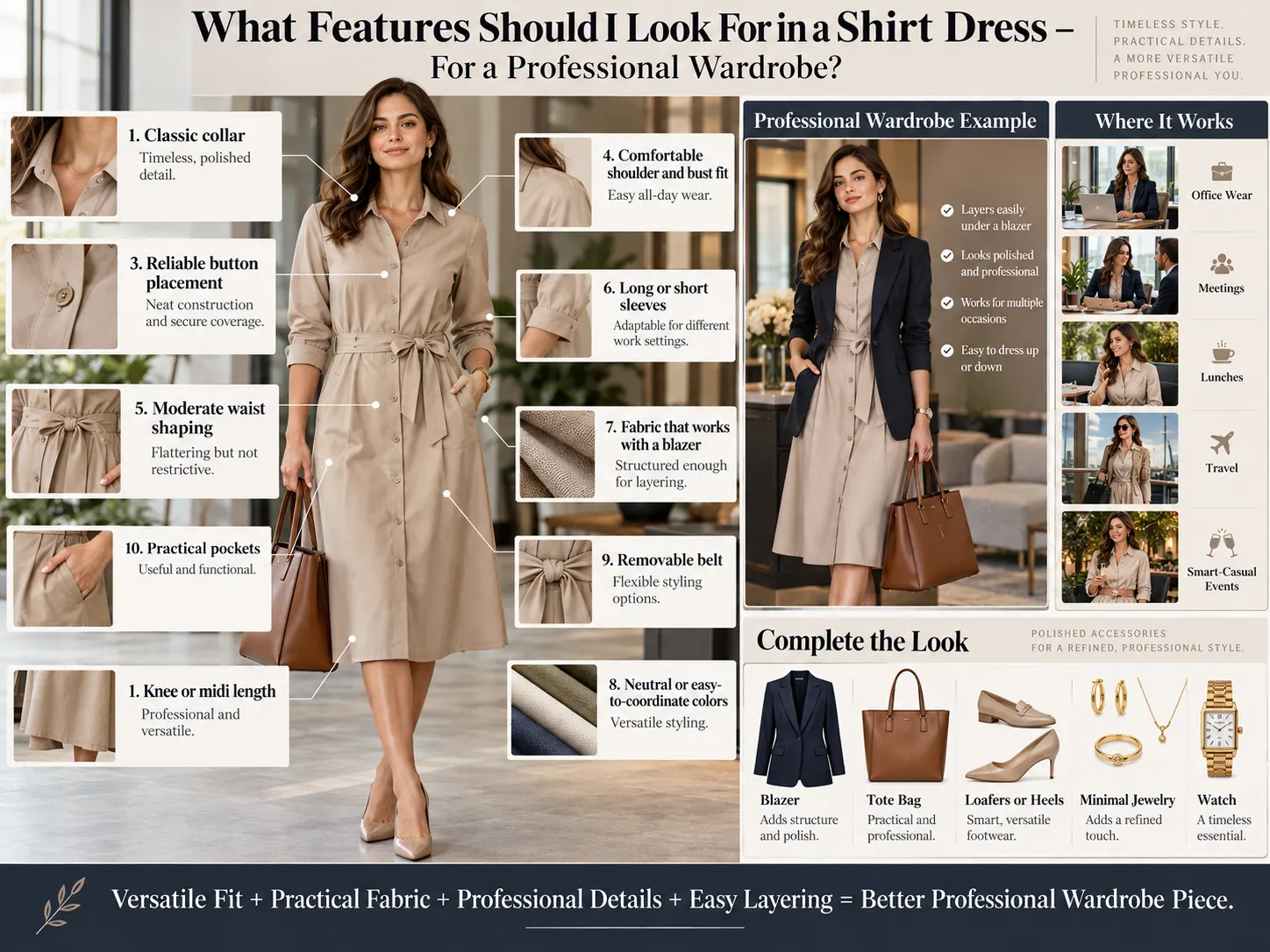
For a Professional Wardrobe:
For a long-term professional wardrobe, versatility matters more than choosing a dress for only one outfit. Look for:
- Knee or midi length
- Classic collar
- Reliable button placement
- Comfortable shoulder and bust fit
- Moderate waist shaping
- Long or short sleeves
- Fabric that works with a blazer
- Neutral or easy-to-coordinate colors
- Removable belt
- Practical pockets
A shirt dress that can move between office wear, meetings, lunches, travel, and smart-casual events gives you more styling flexibility. The source emphasizes that shirt dresses can shift between professional, casual, relaxed, and polished looks depending on their design and styling. Versatile Fit + Practical Fabric + Professional Details + Easy Layering = Better Professional Wardrobe Piece.
Final Words / Conclusion
The shirt dress remains a fashion favorite because it combines classic shirt details with the simplicity and versatility of a dress. It can move easily between casual, professional, relaxed, and polished outfits depending on how it is designed and styled. You can choose a shirt dress that is: Mini or Maxi + Fitted or Oversized + Belted or Loose + Cotton or Denim + Sleeveless or Long-Sleeve and create completely different looks while keeping the same basic shirt-inspired character.
There is also no single shirt dress that works best for every body type. One person may love a belted midi dress, while another feels more comfortable in an oversized linen style. Someone else may prefer a fitted denim mini, a flowing viscose maxi, or a simple knee-length shirt dress for work. Body-shape advice can help you understand proportions, but it should never become a strict set of fashion rules. Personal comfort and personal style matter just as much. A useful formula is: Your Proportions + Your Comfort + Your Lifestyle + Your Personal Style = Your Best Shirt Dress Choose a shirt dress that fits well, moves comfortably, and makes sense for the way you actually want to dress.