How to Control Outsourced Garment Orders: A Complete Guide to Quality and On-Time Delivery

Outsourcing garment production is essential for clothing brands as they scale. While it offers flexibility, it introduces significant risks such as unstable quality and delivery delays. Success in outsourced garment management depends on building a system that controls execution from start to finish. This article provides a structured, risk-controlled approach to managing outsourced apparel orders effectively.
What Is Outsourced Garment Production?
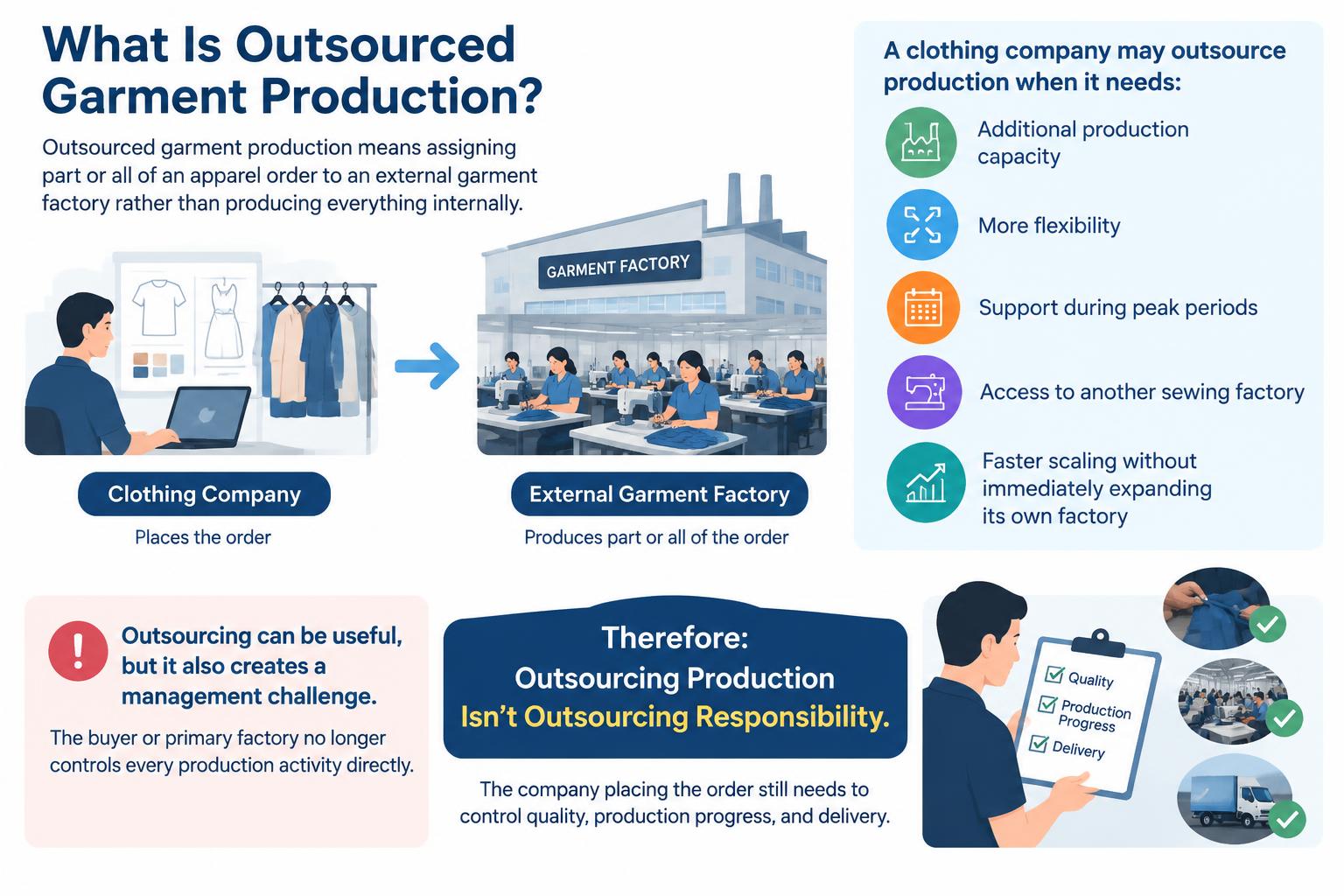
Outsourced garment production means assigning part or all of an apparel order to an external garment factory rather than producing everything internally. A clothing company may outsource production when it needs:
- Additional production capacity
- More flexibility
- Support during peak periods
- Access to another sewing factory
- Faster scaling without immediately expanding its own factory
Outsourcing can be useful, but it also creates a management challenge. The buyer or primary factory no longer controls every production activity directly. Therefore: Outsourcing Production isn,t Outsourcing Responsibility. The company placing the order still needs to control quality, production progress, and delivery.
Why Outsourced Garment Orders Are Difficult to Control
An outsourced order may look simple when the purchase order is issued, but production involves many connected activities. Problems in one area can quickly affect another. For example: Late Fabric + Delayed Cutting = Delayed Sewing or: Incorrect Sewing Standard + Late Detection = Large Rework Quantity. This is why outsourced production should be managed as a complete process rather than only checking the finished garments. Important control areas include:
- Factory selection
- Production standards
- Sampling
- Bulk approval
- Cutting
- Sewing
- Quality inspection
- Production reporting
- Delivery
- Customer changes
A. Finding and Selecting an Outsourcing Garment Factory
Set Clear and Uniform Production Standards
Before outsourcing, brands must define measurable production standards. A factory’s attractive price means nothing if they cannot meet your quality threshold.

Key standards must include:
- Quality levels (AQL or defect tolerance)
- Measurement tolerances and sewing construction
- Fabric and color consistency rules
- Responsibilities for rework and failed inspections
Visit the Garment Factory Personally
A personal factory visit is essential for risk reduction. These visits allow you to verify actual capacity beyond what is stated in a proposal. Focus on checking machine maintenance, current work-in-progress, and actual worker counts on the lines. During the visit, focus on practical evidence such as:
- Actual workers on production lines
- Current work-in-progress
- Machine condition
- Machine maintenance
- Available production capacity
The purpose is to compare what the factory says with what is actually happening. For example: Declared Capacity isn’t Automatically Available Capacity. A factory may have many machines but already have most of them committed to other orders.

Check Current Production, Not Only the Showroom
When evaluating an outsourcing factory, observing current production can provide more useful information than looking only at sample garments. Current work-in-progress can help reveal:
- How organized the production floor is
- Whether machines are being maintained
- How many operators are actually working
- Whether the factory appears overloaded
The goal is to understand whether the factory can realistically handle another order.
Avoid Middlemen and Be Cautious with New Partners
Reducing intermediaries increases transparency and prevents factories from cutting corners due to shrunk margins. When working with new factories, always start with small trial orders and simple styles before increasing volume based on proven performance.
B. Pre-Production Control: Locking the Bulk Standard
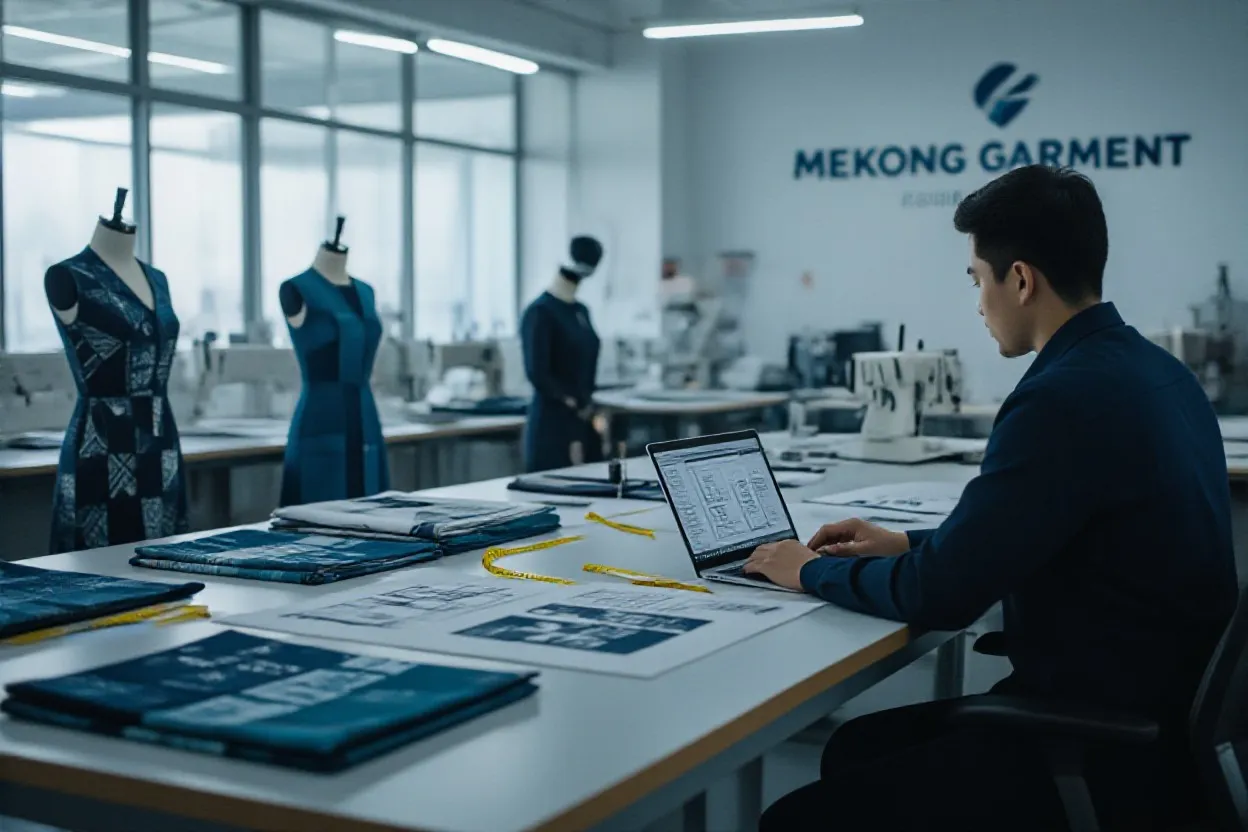
Many bulk production problems begin before sewing starts. If the sample, measurements, construction, or workmanship are not properly confirmed, different people may follow different interpretations during production. Pre-production control is therefore essential. The main goal is: Approve the Standard Before Producing the Quantity.
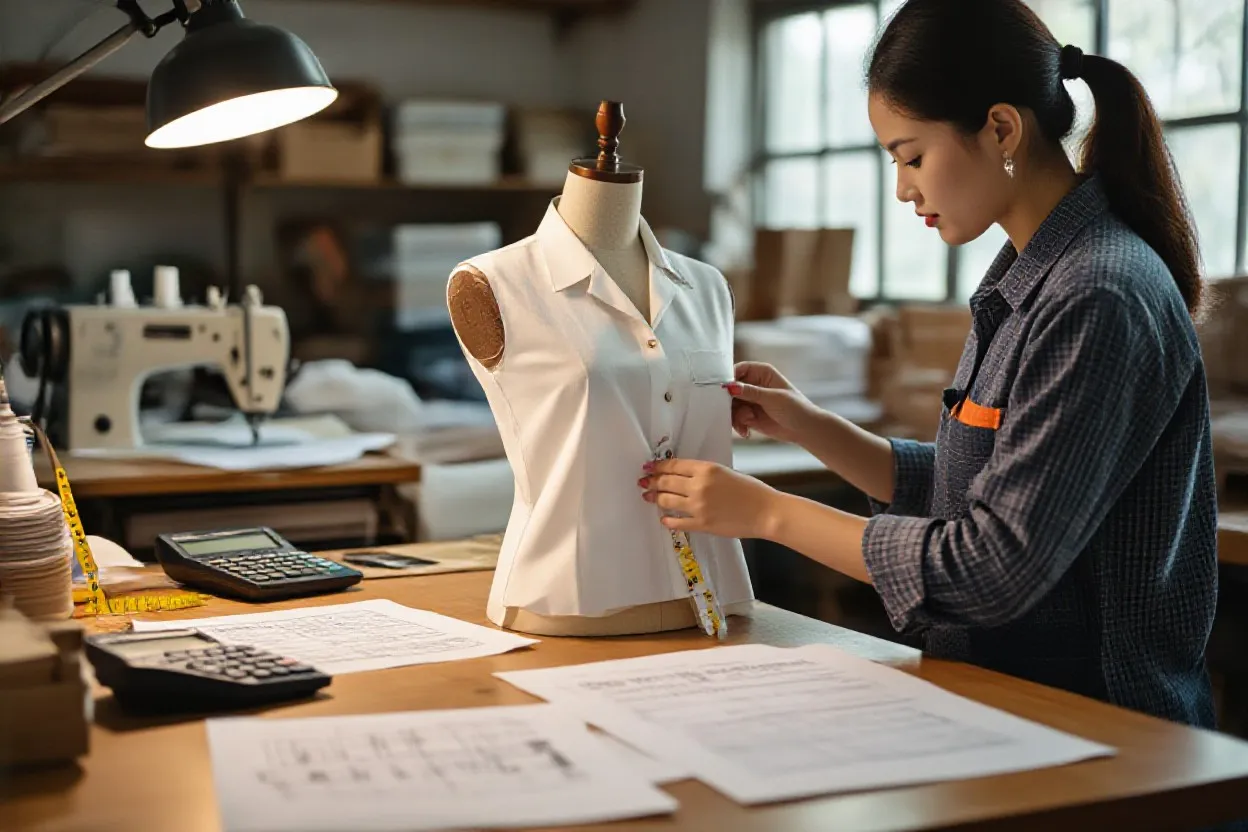
Skipping samples leads to bulk production chaos. Required samples include Fit samples, Size sets, and PP (Pre-production) samples made on the actual production line to confirm construction methods and measurements.
Require Fit Samples
A fit sample is used to confirm how the garment fits and whether the measurements and pattern are working as intended. Before bulk production, it helps identify issues that could otherwise affect the entire order. Fit approval should happen before the factory treats the garment as ready for bulk production.
Require Size Sets
A size set helps confirm the garment across the required size range. This is important because approving one size does not automatically confirm that every other size will work correctly. The size set provides another checkpoint before full production begins.
Require a PP Sample
The PP sample, or pre-production sample, is one of the most important control samples. According to the source, it should be made on the actual production line and should confirm:
- Construction method
- Measurements
Its purpose is to establish exactly what the factory is expected to reproduce during bulk production. A useful sequence is: Fit Sample => Size Set => PP Sample => Bulk Production. Skipping these steps can increase the risk of bulk problems.
C. Establish a Sealed Sample Standard
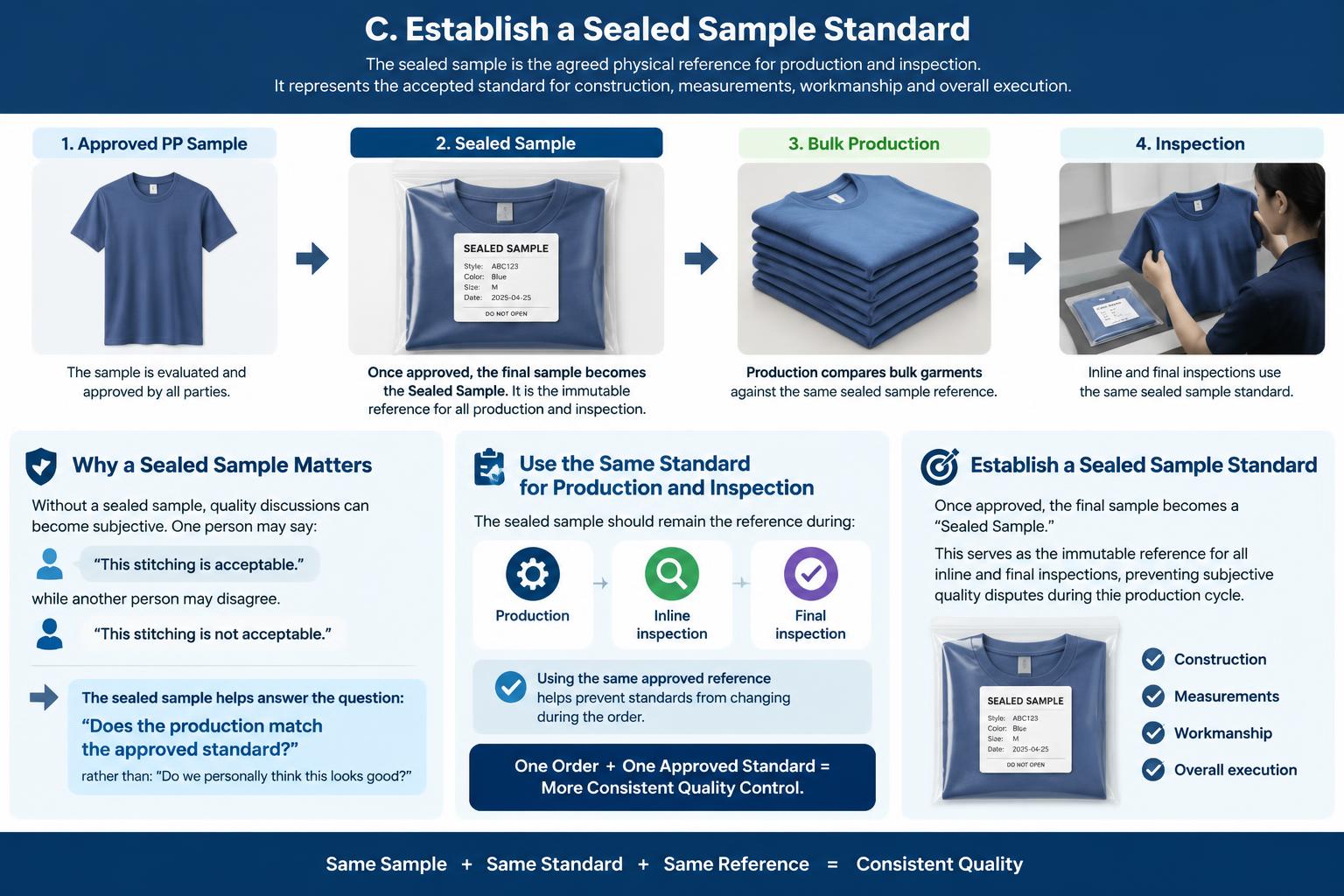
After the final sample is approved, it should become the Sealed Sample. The sealed sample is the agreed physical reference for production and inspection. It should represent the accepted standard for:
- Construction
- Measurements
- Workmanship
- Overall execution
The production and quality teams can then compare bulk garments against the same reference.
Why a Sealed Sample Matters
Without a sealed sample, quality discussions can become subjective. One person may say: “This stitching is acceptable.” while another person may disagree. The sealed sample helps answer the question: “Does the production match the approved standard?” rather than: “Do we personally think this looks good?” A useful formula is: Approved PP Sample => Sealed Sample => Bulk Production Reference.
Use the Same Standard for Production and Inspection
The sealed sample should remain the reference during:
- Production
- Inline inspection
- Final inspection
Using the same approved reference helps prevent standards from changing during the order. One Order + One Approved Standard = More Consistent Quality Control.
Establish a Sealed Sample Standard
Once approved, the final sample becomes a “Sealed Sample.” This serves as the immutable reference for all inline and final inspections, preventing subjective quality disputes during the production cycle.
D. Quality Control During Production
QC as the Eyes on the Factory Floor
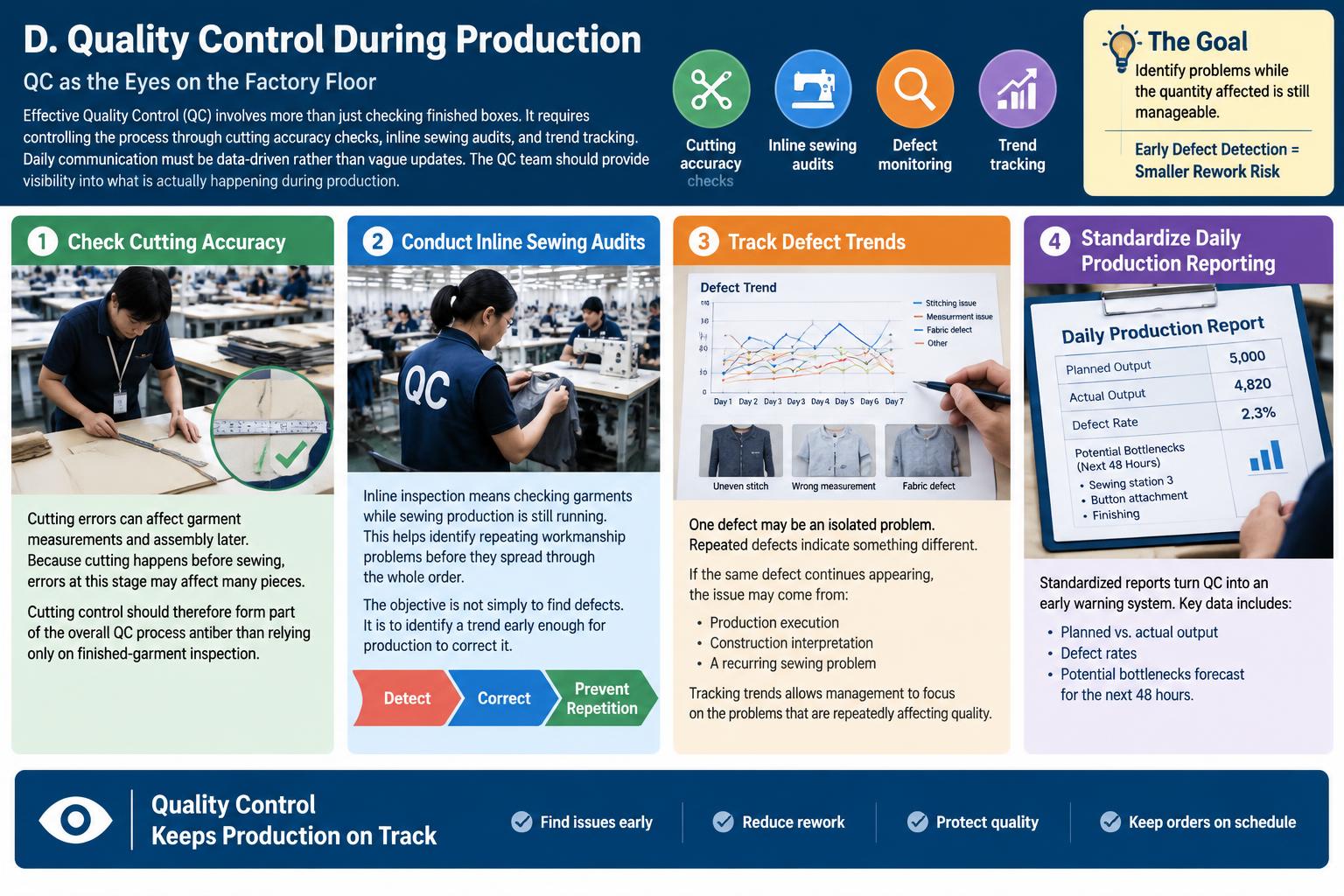
Effective Quality Control (QC) involves more than just checking finished boxes. It requires controlling the process through cutting accuracy checks, inline sewing audits, and trend tracking. Daily communication must be data-driven rather than vague updates. The QC team should provide visibility into what is actually happening during production. Important activities include:
- Cutting accuracy checks
- Inline sewing audits
- Defect monitoring
- Trend tracking
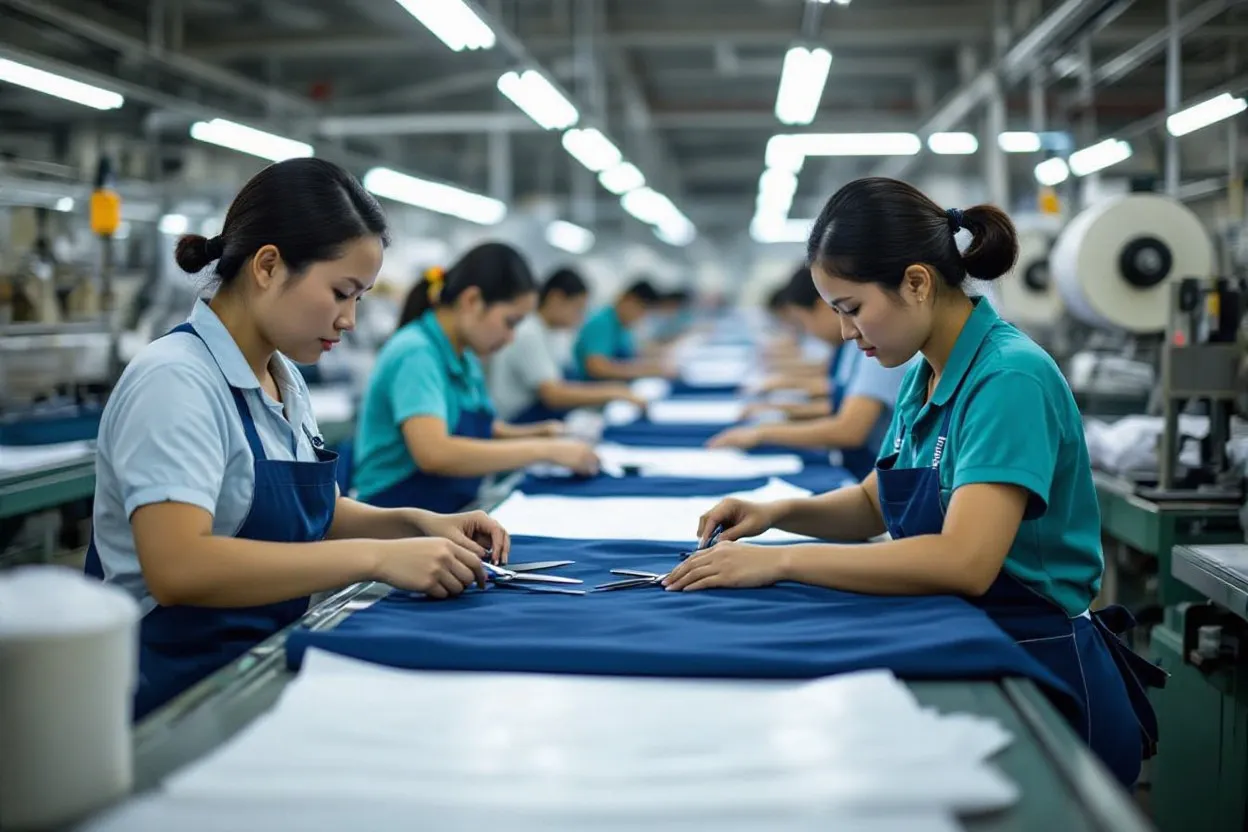
The purpose is to identify problems while the quantity affected is still manageable. A useful principle is: Early Defect Detection = Smaller Rework Risk
Standardize Daily Production Reporting
Standardized reports turn QC into an early warning system. Key data includes planned vs. actual output, defect rates, and potential bottlenecks forecast for the next 48 hours.
Check Cutting Accuracy
Cutting errors can affect garment measurements and assembly later. Because cutting happens before sewing, errors at this stage may affect many pieces. Cutting control should therefore form part of the overall QC process rather than relying only on finished-garment inspection.
Conduct Inline Sewing Audits
Inline inspection means checking garments while sewing production is still running. This helps identify repeating workmanship problems before they spread through the whole order. The objective is not simply to find defects. It is to identify a trend early enough for production to correct it. Detect => Correct => Prevent Repetition.
Track Defect Trends
One defect may be an isolated problem. Repeated defects indicate something different. If the same defect continues appearing, the issue may come from:
- Production execution
- Construction interpretation
- A recurring sewing problem
Tracking trends allows management to focus on the problems that are repeatedly affecting quality.
E. Standardize Daily Production Reporting
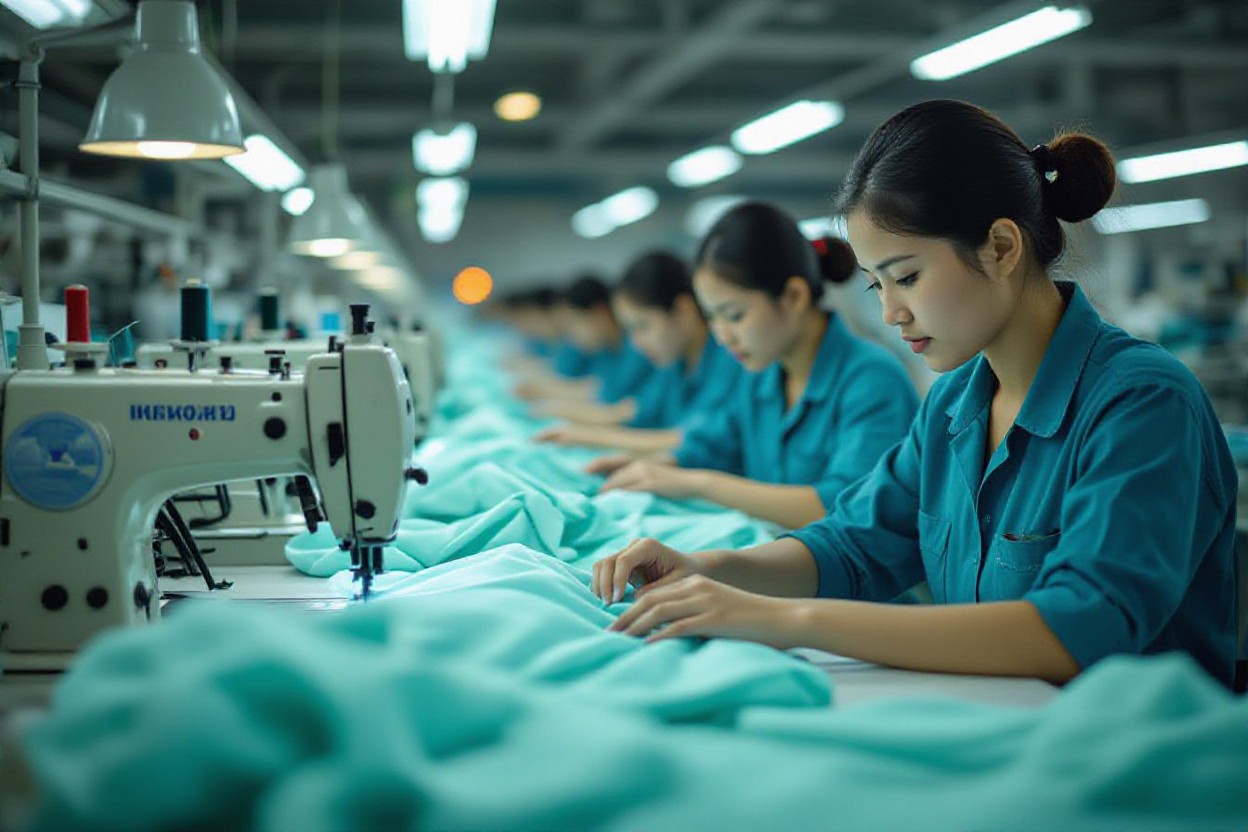
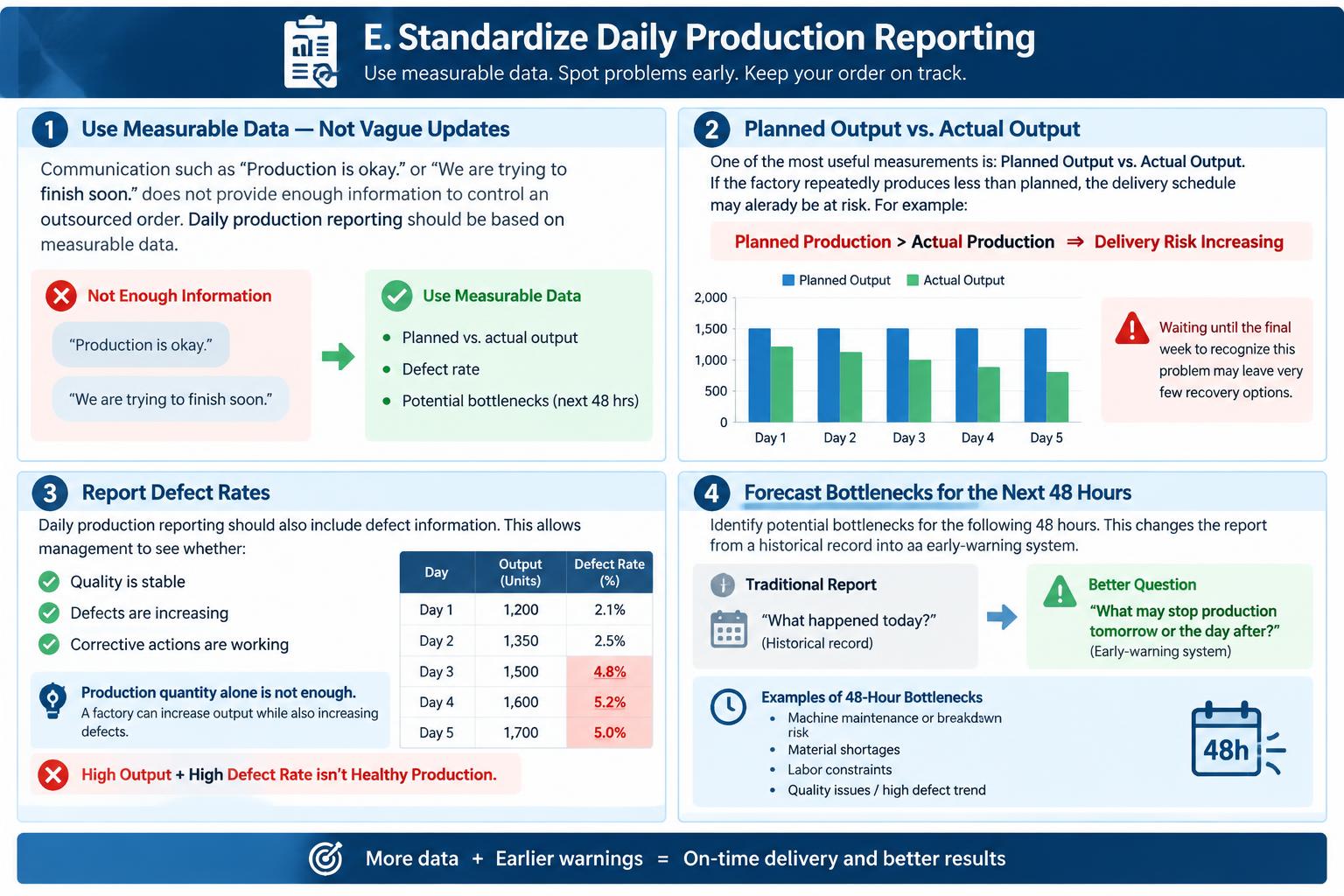
Communication such as: “Production is okay.” or: “We are trying to finish soon.” does not provide enough information to control an outsourced order. Daily production reporting should be based on measurable data.
Planned Output vs. Actual Output
One of the most useful measurements is: Planned Output vs. Actual Output If the factory repeatedly produces less than planned, the delivery schedule may already be at risk. For example: Planned Production > Actual Production => Delivery Risk Increasing. Waiting until the final week to recognize this problem may leave very few recovery options.
Report Defect Rates
Daily production reporting should also include defect information. This allows management to see whether:
- Quality is stable
- Defects are increasing
- Corrective actions are working
Production quantity alone is not enough. A factory can increase output while also increasing defects. Therefore: High Output + High Defect Rate isn’t Healthy Production.
Forecast Bottlenecks for the Next 48 Hours
The source recommends identifying potential bottlenecks for the following 48 hours. This changes the report from a historical record into an early-warning system. Instead of only asking: “What happened today?” management should also ask: “What may stop production tomorrow or the day after?” This gives the team more time to respond.
F. Turn QC Reporting Into an Early Warning System
A strong daily report should help management identify risks before they become major delays. Useful information includes:
- Planned production
- Actual production
- Defect rate
- Current bottlenecks
- Potential bottlenecks over the next 48 hours
The purpose is not simply to collect data. The purpose is to make decisions earlier. Production Data + Early Action = Better Delivery Control.
G. Control Quality Before Final Inspection
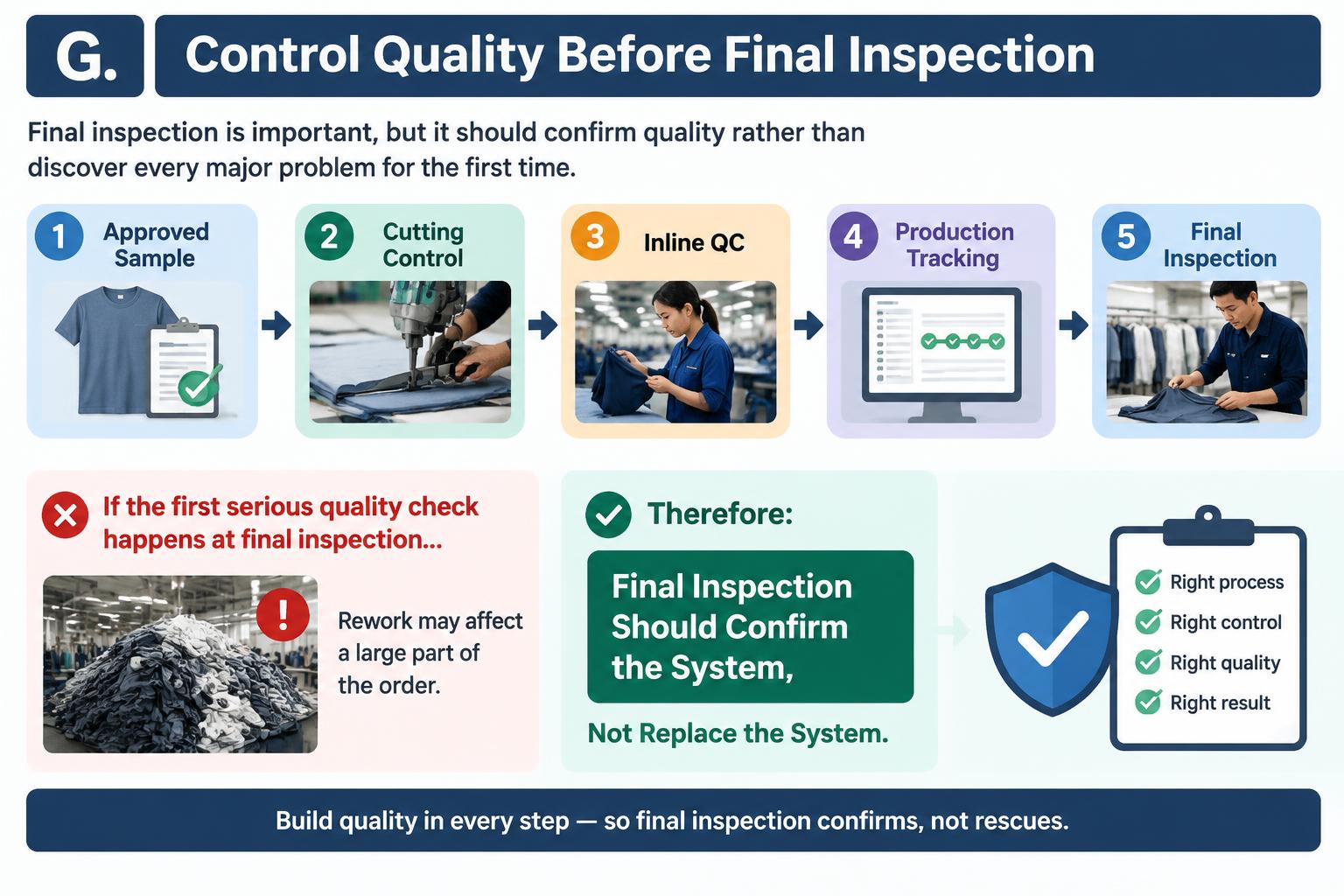
Final inspection is important, but it should confirm quality rather than discover every major problem for the first time. A stronger sequence is: Approved Sample => Cutting Control => Inline QC => Production Tracking => Final Inspection If the first serious quality check happens at final inspection, rework may affect a large part of the order. Therefore: Final Inspection Should Confirm the System, Not Replace the System.
H. Managing Outsourced Garment Delivery
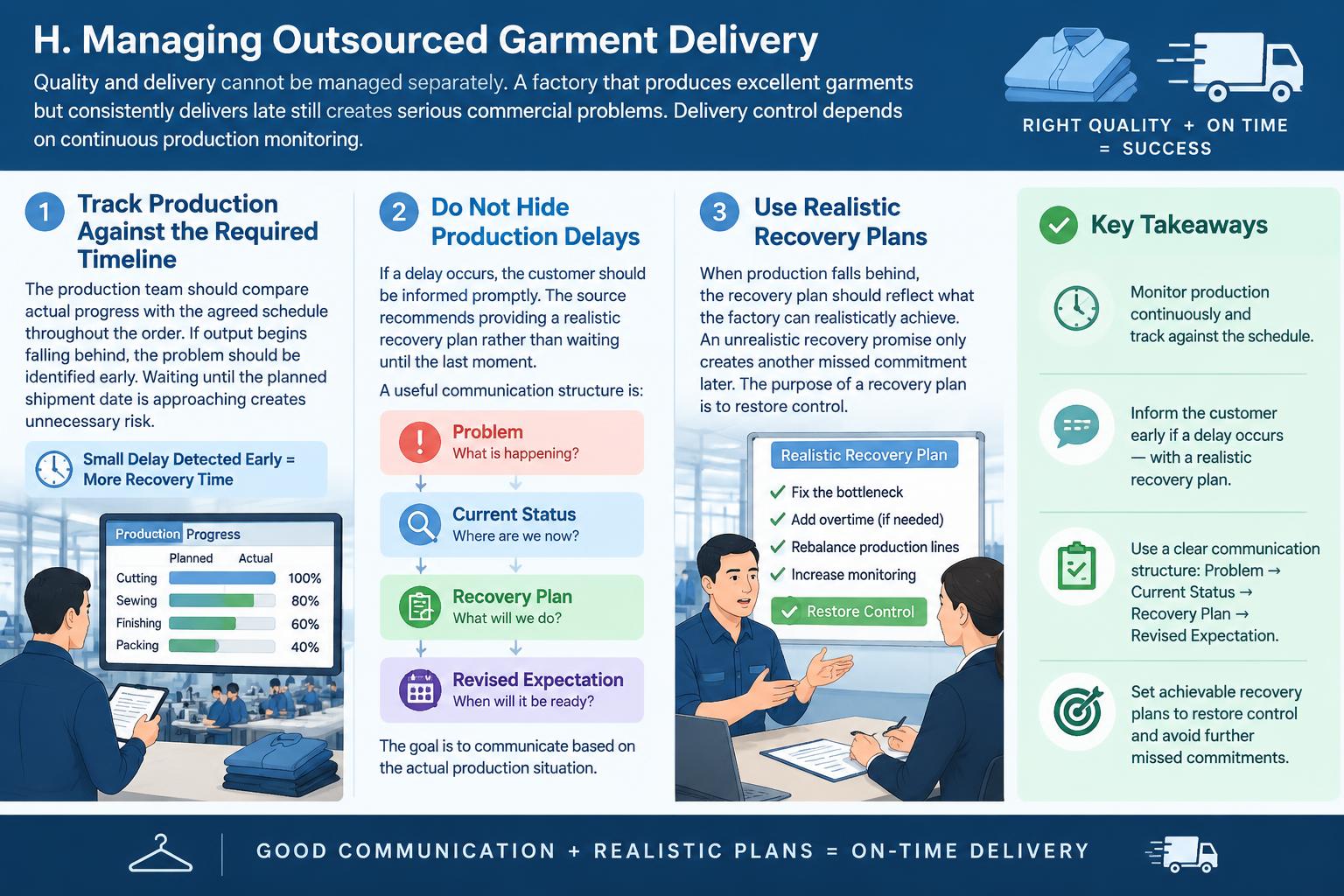
Quality and delivery cannot be managed separately. A factory that produces excellent garments but consistently delivers late still creates serious commercial problems. Delivery control depends on continuous production monitoring.
Track Production Against the Required Timeline
The production team should compare actual progress with the agreed schedule throughout the order. If output begins falling behind, the problem should be identified early. Waiting until the planned shipment date is approaching creates unnecessary risk. Small Delay Detected Early = More Recovery Time
Do Not Hide Production Delays
If a delay occurs, the customer should be informed promptly. The source recommends providing a realistic recovery plan rather than waiting until the last moment. A useful communication structure is: Problem => Current Status => Recovery Plan => Revised Expectation The goal is to communicate based on the actual production situation.
Use Realistic Recovery Plans
When production falls behind, the recovery plan should reflect what the factory can realistically achieve. An unrealistic recovery promise only creates another missed commitment later. The purpose of a recovery plan is to restore control.
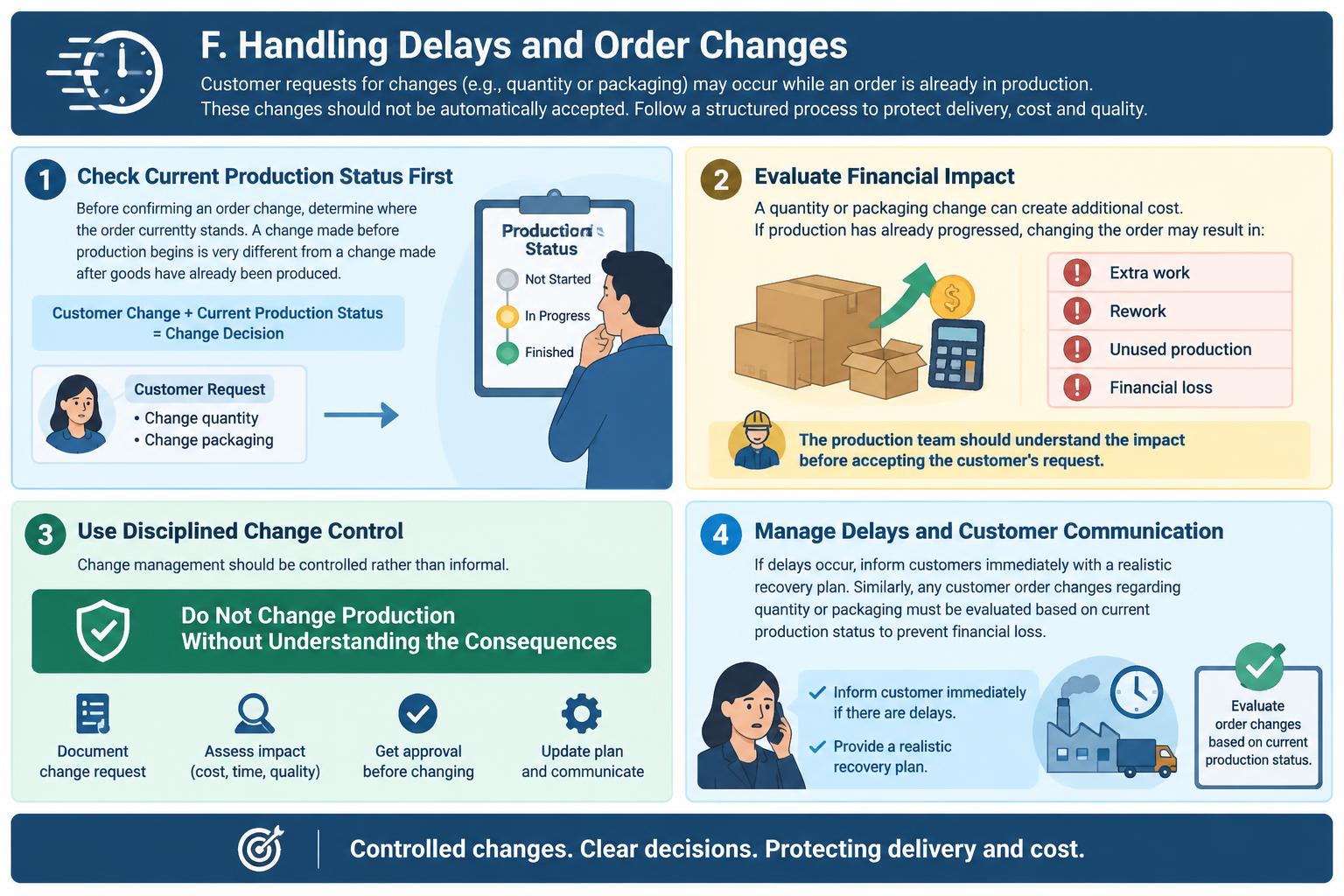
F. Handling Delays and Order Changes
Customers may request changes while an order is already in production. Examples in the source include changes to: Quantity, Packaging. These changes should not automatically be accepted without checking production status.
Check Current Production Status First
Before confirming an order change, determine where the order currently stands. A change made before production begins is very different from a change made after goods have already been produced. Therefore: Customer Change + Current Production Status = Change Decision.
Evaluate Financial Impact
A quantity or packaging change can create additional cost. If production has already progressed, changing the order may result in:
- Extra work
- Rework
- Unused production
- Financial loss
The production team should understand the impact before accepting the customer’s request.
Use Disciplined Change Control
Change management should be controlled rather than informal. The key principle is: Do Not Change Production Without Understanding the Consequences This protects both delivery and cost. Managing outsourced production requires disciplined change control. If delays occur, inform customers immediately with a realistic recovery plan. Similarly, any customer order changes regarding quantity or packaging must be evaluated based on current production status to prevent financial loss.
Conclusion / Final Words
Managing outsourced garment orders is about systematic control rather than luck. Clear standards, early sampling, structured QC, and real-time production tracking form the foundation of successful outsourcing. By following these professional steps, brands can protect quality, control costs, and meet delivery commitments consistently.