
Fabric GSM is one of the most important specifications used in garment manufacturing. It affects fabric weight, garment feel, costing, sewing performance, product consistency, and whether bulk fabric matches the quality approved by the buyer.
For merchandisers, fabric technicians, QA teams, and QC inspectors, knowing how to measure GSM correctly is a basic but very useful factory skill. One of the fastest and most practical methods is to use a GSM cutter together with a precision weighing balance. The cutter removes a fabric specimen of a known area, and the weight of that specimen is converted into grams per square meter.
This article explains what a GSM cutter is, how the calculation works, how many specimens should be checked, how to avoid common testing errors, and how garment factories can use GSM results during fabric inspection and production.
What is GSM?
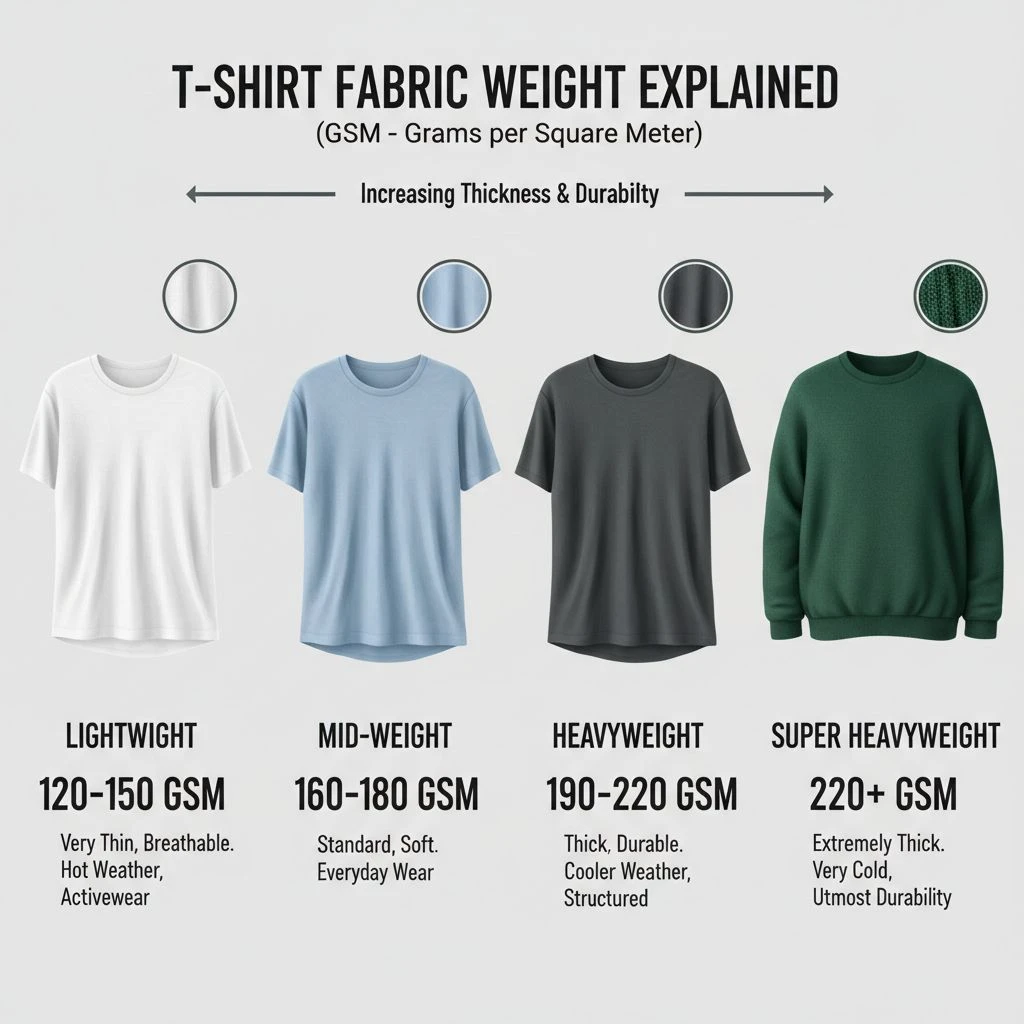
GSM stands for Grams per Square Meter (g/m²). It is the standard unit used to measure the weight and density of fabric. In simple terms:
- A higher GSM means the fabric is heavier and thicker.
- A lower GSM means the fabric is lighter and thinner.
A buyer may approve a particular fabric not only by color and composition but also by its weight. For example, a specification might state: 100% Cotton Single Jersey 180 GSM If bulk fabric arrives at only 155 GSM, the garment may feel lighter and less substantial than the approved sample.
What Is a GSM Cutter?
A GSM cutter is a specialized circular cutting tool designed to remove a fabric specimen of a fixed area.
- A very common GSM cutter produces a specimen measuring: 100 cm². Since: 1 m² = 10,000 cm² a 100 cm² specimen represents: 100 ÷ 10,000 = 1/100 of one square meter
- This is why the calculation is so convenient.If the sample weighs: 1.80 g. then: 1.80 × 100 = 180 GSM. So for a 100 cm² cutter: Fabric GSM = Sample Weight × 100
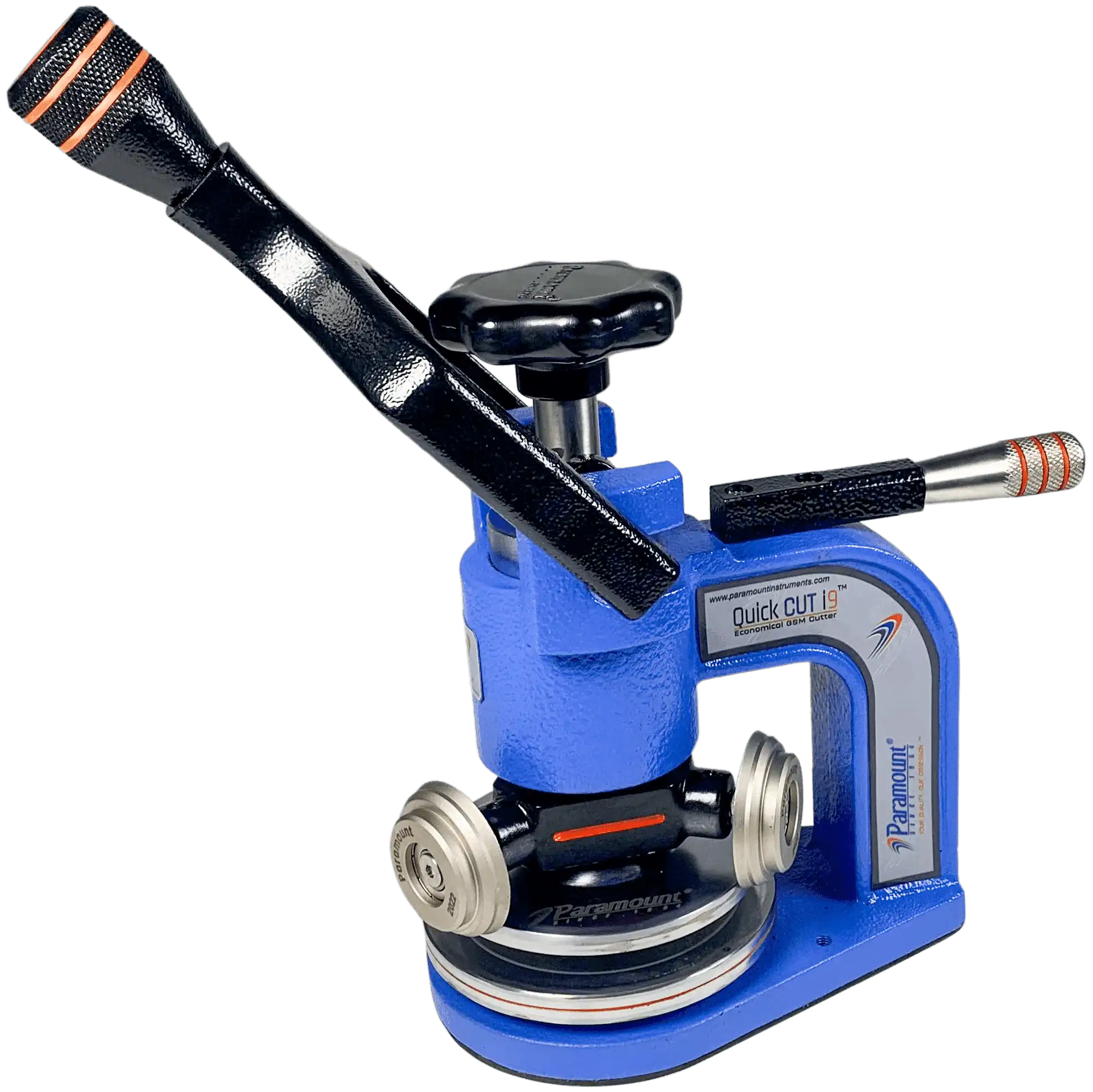

A GSM cutter is a circular cutting tool specifically designed to cut a fixed area of 1/100 of a square meter from a fabric swatch. Because the cut sample represents exactly 1% of a square meter, the weight of the sample must be multiplied by 100 to determine the total weight per full square meter (GSM).
Why Is a GSM Cutter Better Than Cutting Fabric by Hand?
GSM can also be calculated manually using a ruler and scissors, but the cutter provides several advantages. A GSM cutter:
- Produces a fixed specimen area
- Reduces measuring errors
- Creates more repeatable samples
- Makes testing faster
- Reduces operator variation
- Simplifies the calculation
Instead of measuring the length and width of every specimen, the operator only needs to cut, weigh, and convert. This makes the method especially convenient for routine fabric inspection.
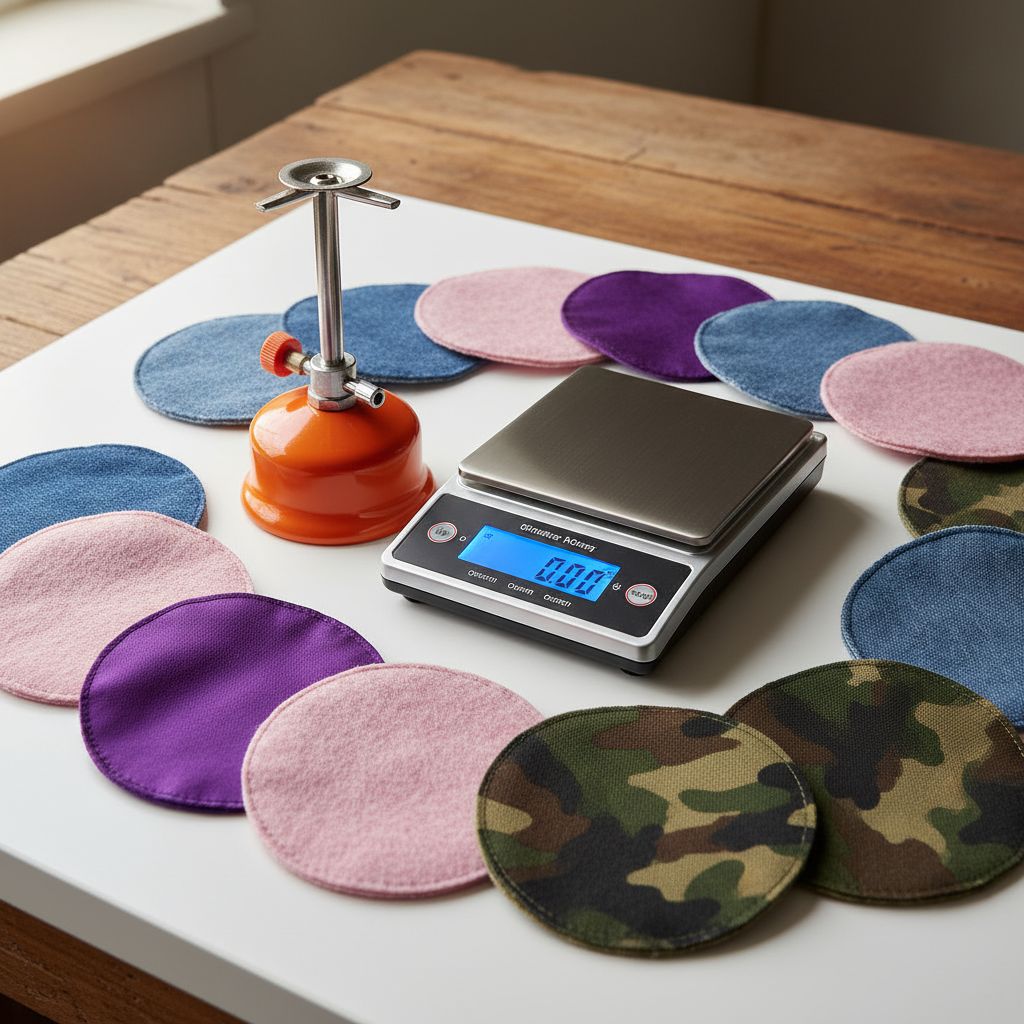
How to Calculate GSM Using a GSM Cutter
The basic procedure is simple: Cut → Weigh → Average → Convert
Step 1: Select Representative Fabric Areas
Do not automatically cut all specimens from the same location. Fabric mass can vary slightly across the roll because of:
- Knitting tension
- Weaving variation
- Finishing
- Compacting
- Coating
- Moisture
- Fabric width position
For a practical factory check, several specimens should be taken from representative areas. For example, you may check positions toward the:
- Left
- Center
- Right
and, where needed, different locations along the roll length. The exact sampling procedure should follow the buyer’s or factory’s agreed method.
Step 2: Place the Fabric on the Cutting Pad
Lay the fabric flat and relaxed on the cutting surface. Avoid:
- Folding the specimen
- Stretching knitted fabric
- Cutting over wrinkles
- Cutting damaged areas
- Cutting visibly wet areas
unless those areas are specifically being investigated.
Step 3: Cut the Specimen with the GSM Cutter
Position the cutter firmly on the fabric. Apply the cutter according to its operating instructions until the fabric is completely separated. The specimen should have a clean edge. A worn or damaged blade may:
- Fail to cut all fibers
- Pull the fabric
- Create irregular edges
- Increase testing variation
The cutter should therefore be maintained properly.
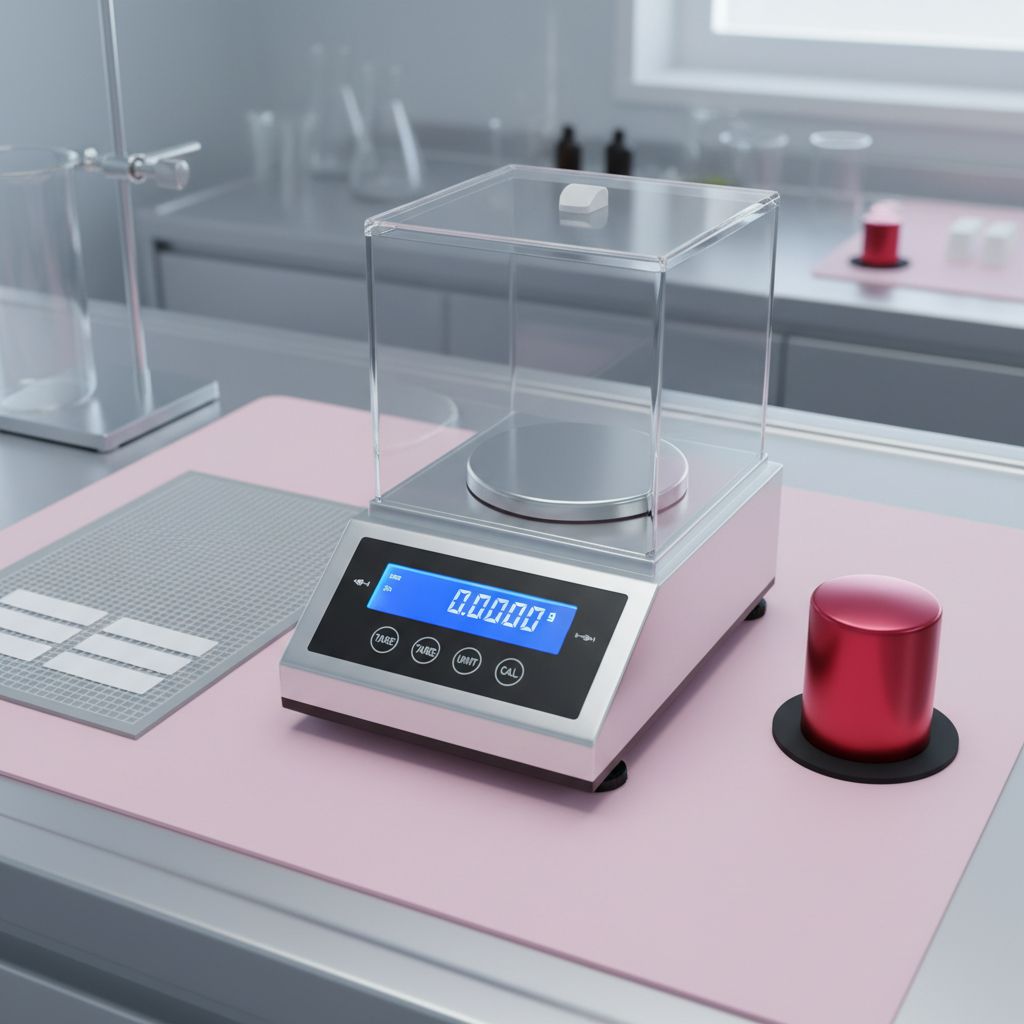
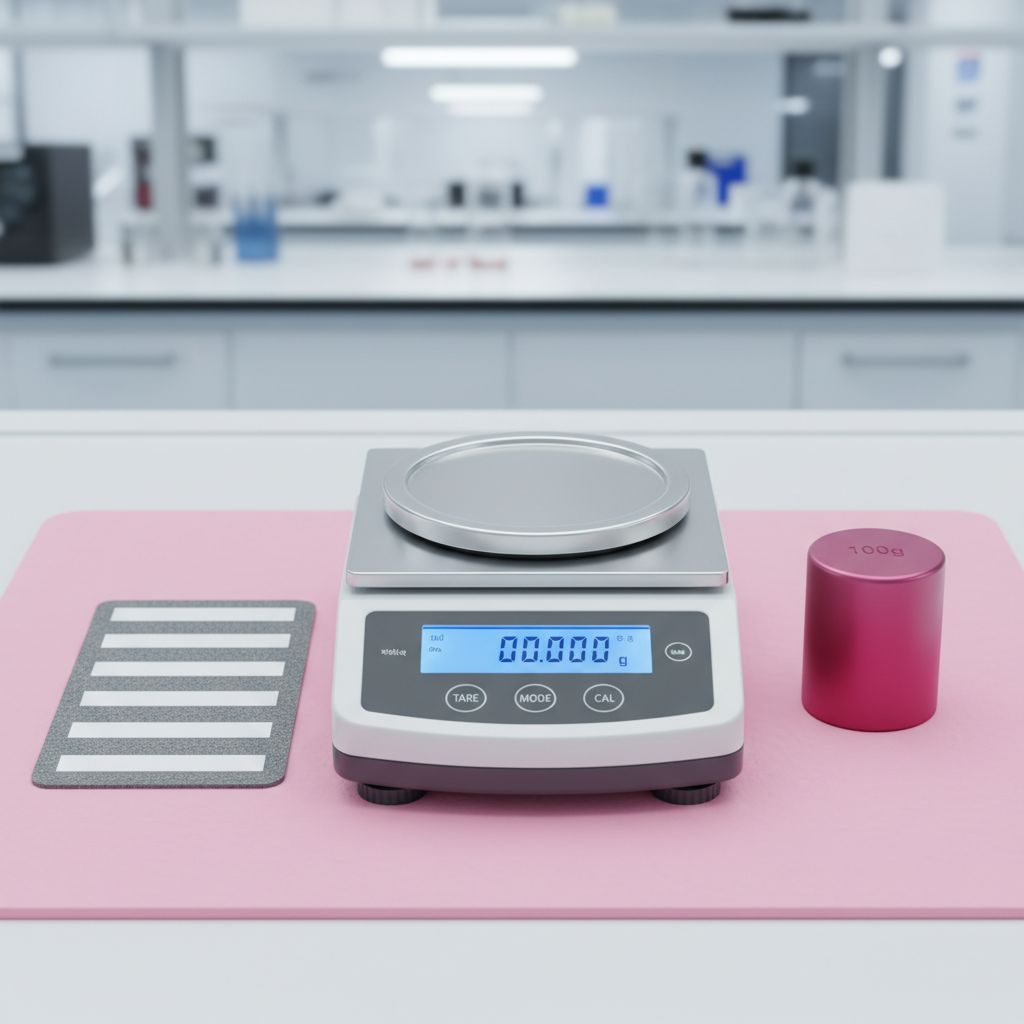
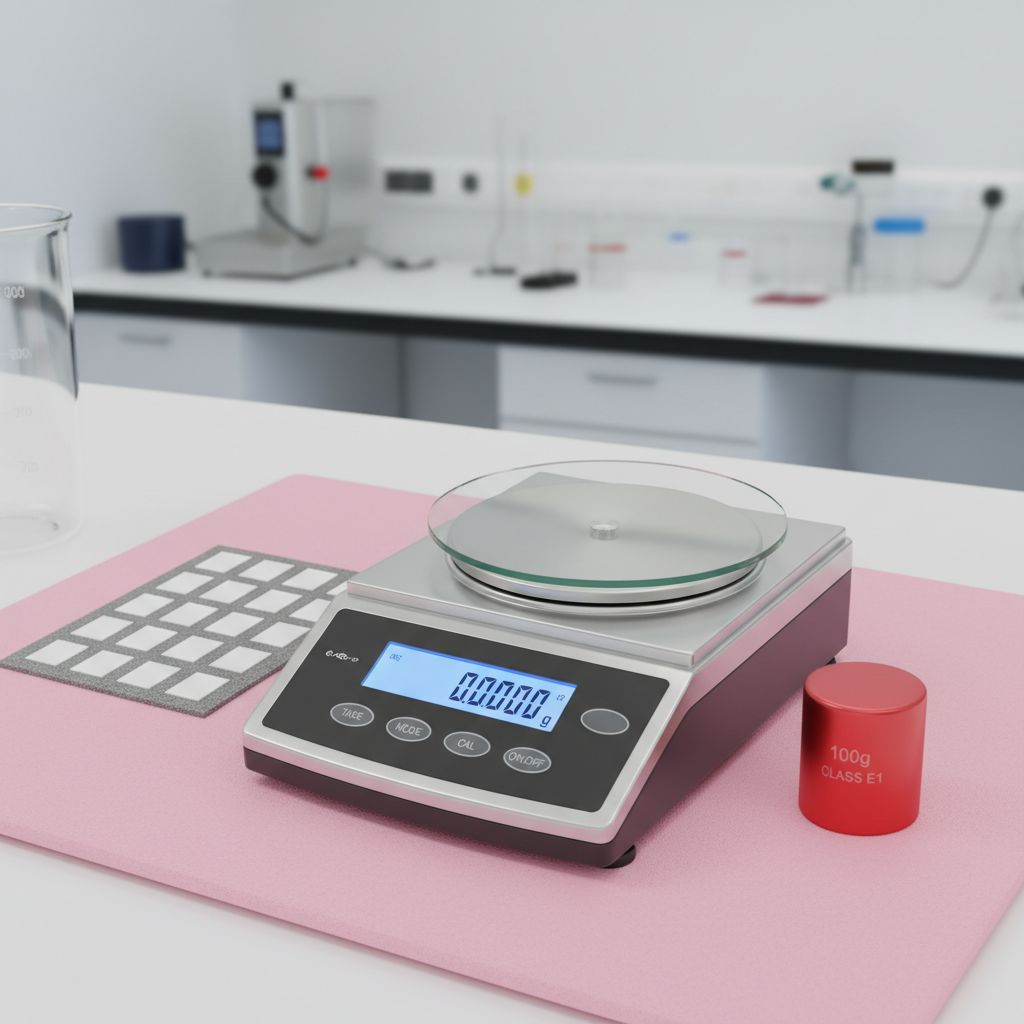
Step 4: Weigh Each Specimen
Place each cut specimen on the precision balance individually. Suppose five specimens give these results:
| Specimen | Weight |
|---|---|
| 1 | 1.20 g |
| 2 | 1.40 g |
| 3 | 1.30 g |
| 4 | 1.10 g |
| 5 | 1.50 g |

Record all results rather than selecting only the value closest to the expected specification.
Step 5: Calculate the Average Weight
Add all specimen weights: 1.20 + 1.40 + 1.30 + 1.10 + 1.50 = 6.50 g
Then divide by the number of specimens: 6.50 ÷ 5 = 1.30 g
Therefore: Average sample weight = 1.30 g
Step 6: Convert the Average Weight to GSM
If the GSM cutter area is 100 cm², multiply by 100:
- GSM = 1.30 × 100
- GSM = 130 g/m²
Therefore: Average fabric GSM = 130 GSM
Complete GSM Calculation Example
Suppose a buyer requires: 130 GSM fabric. Five specimens are cut using a 100 cm² GSM cutter. The sample weights are:
- 1.20 g
- 1.40 g
- 1.30 g
- 1.10 g
- 1.50 g

Total weight: 6.50 g
Average weight: 6.50 ÷ 5 = 1.30 g
Final GSM: 1.30 × 100 = 130 GSM
The measured average is therefore: 130 GSM. The result can then be compared with the buyer’s approved specification and tolerance.
Conclusion / Final Words
Using a GSM cutter is a fast and practical way to check fabric weight in garment production. For a 100 cm² GSM cutter, simply weigh the sample and multiply the result by 100: GSM = Sample Weight × 100 For reliable results, use representative samples, an accurate balance, a sharp cutter, and compare the final GSM with the approved buyer specification.