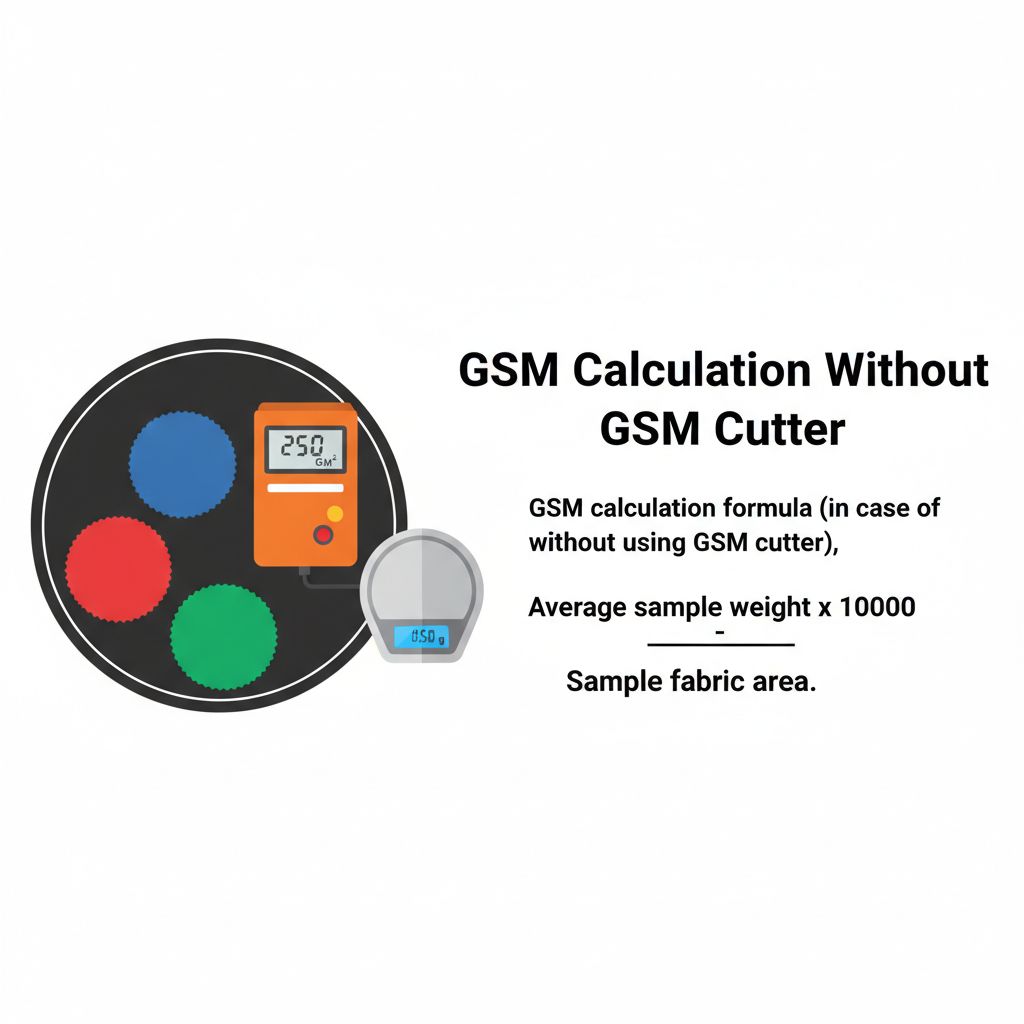

Fabric GSM is one of the most important technical measurements in garment manufacturing. It influences fabric consumption, garment feel, costing, performance, and whether bulk production matches the approved sample. Normally, factories use a GSM cutter and precision balance to check fabric weight. However, a GSM cutter may not always be available in the warehouse, sample room, sourcing office, or during an on-site supplier inspection. In that situation, fabric GSM can still be estimated accurately by cutting a sample of known dimensions, weighing it, calculating its area, and converting the result into grams per square meter. This manual method is particularly useful for:
- Merchandisers
- Fabric buyers
- QA and QC staff
- Production teams
- Sourcing teams
- Sample-room technicians
- Small garment factories
This guide explains how to calculate GSM without a GSM cutter, provides practical formulas and examples, and shows the common mistakes that can make manual GSM results inaccurate.
What Is GSM?
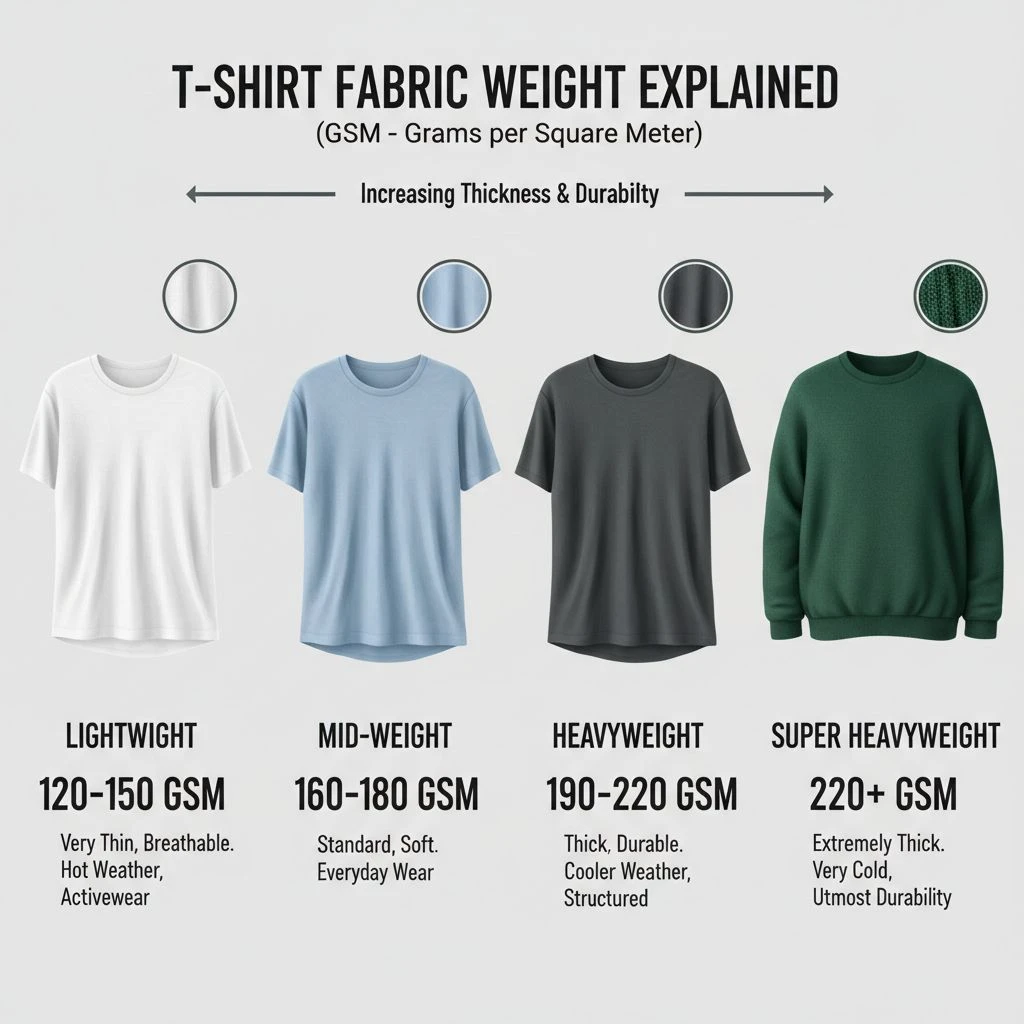
GSM stands for Grams per Square Meter (g/m²). It is the standard unit used to measure fabric weight, indicating how heavy a fabric is over a one-square-meter area. Higher GSM values indicate heavier, thicker fabrics (like winter fleece), while lower GSM values indicate lighter, thinner materials (like summer jersey). In garment manufacturing, GSM is the primary tool to ensure production matches the approved quality standard.
For example:
- 120 GSM = one square meter weighs approximately 120 grams
- 180 GSM = one square meter weighs approximately 180 grams
- 250 GSM = one square meter weighs approximately 250 grams
The basic concept is: Higher GSM = more fabric mass per unit area.
What Is a GSM Cutter?
A GSM cutter is a circular cutting tool that removes a fabric sample with a predetermined area. A commonly used cutter produces a sample of: 100 cm². Because one square meter equals 10,000 cm², a 100 cm² sample represents: 1/100 of one square meter The fabric sample is weighed and the result is multiplied by 100. For example:
- Sample weight = 1.80 g
- GSM = 1.80 × 100 = 180 GSM

This makes the calculation very convenient. But the same principle can be used without a GSM cutter.
=> Related Article: How to Calculate Fabric GSM Using a GSM Cutter
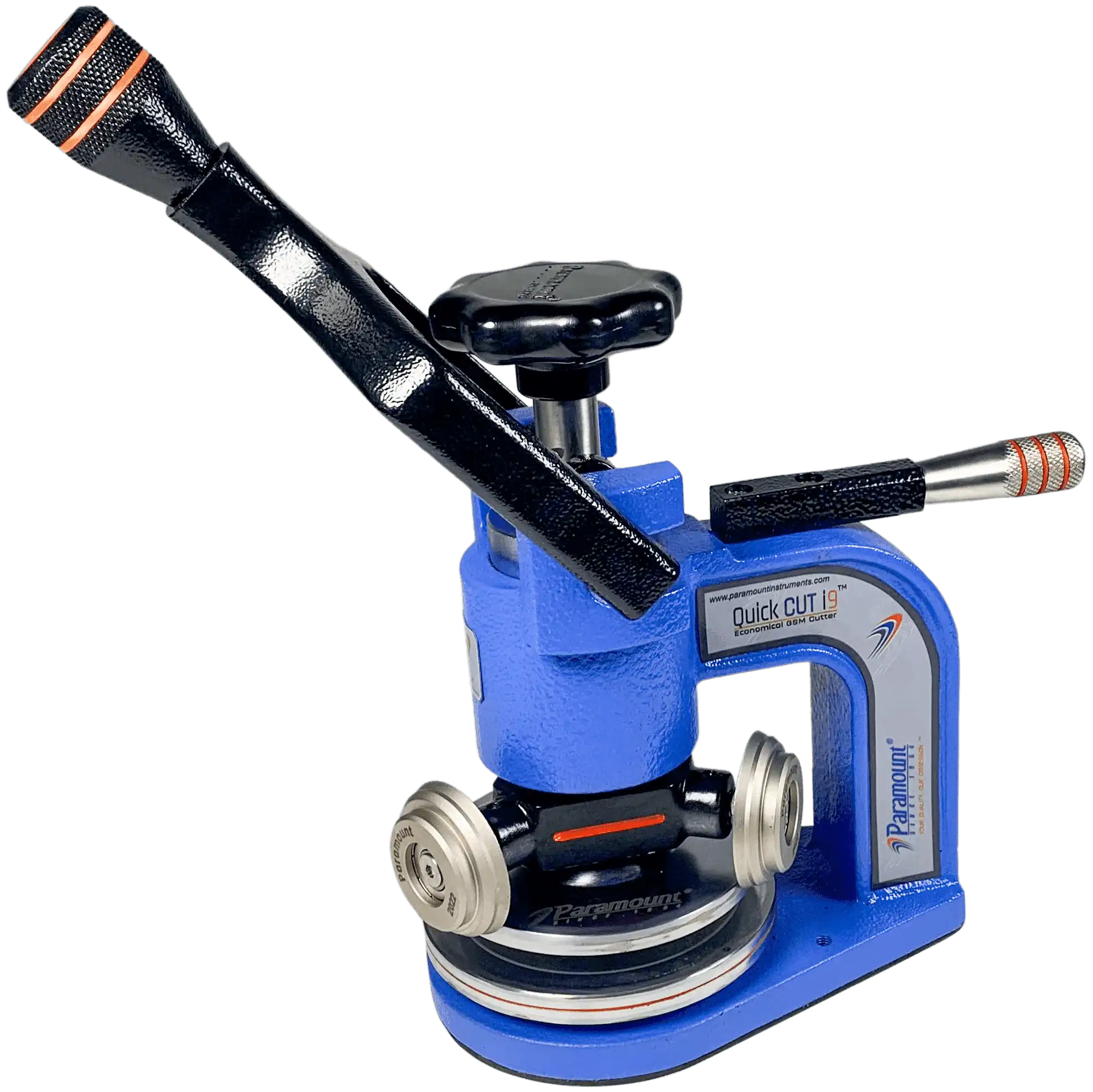
Why Calculate GSM Manually?
While a GSM cutter is convenient (cutting a fixed 1/100 square meter area), it isn’t always available at every inspection point. Manual calculation serves as a vital backup when:
- A GSM cutter is missing or unavailable.
- Quick on-site fabric verification is required.
- A merchandiser needs to cross-check supplier data during sourcing.
- Quality staff require an alternative checking method.
Can You Calculate GSM Without a GSM Cutter?
Yes. You only need three things:
- A fabric sample with accurately measured dimensions
- A reasonably precise weighing scale
- The GSM conversion formula
How to GSM Calculation Without Using a GSM Cutter
Tools Needed for Manual GSM Calculation
Before starting, prepare:
- Fabric scissors or rotary cutter
- Steel ruler
- Cutting mat or flat surface
- Fine marker or tailor’s chalk
- Precision weighing balance
- Calculator
- Fabric samples from several locations
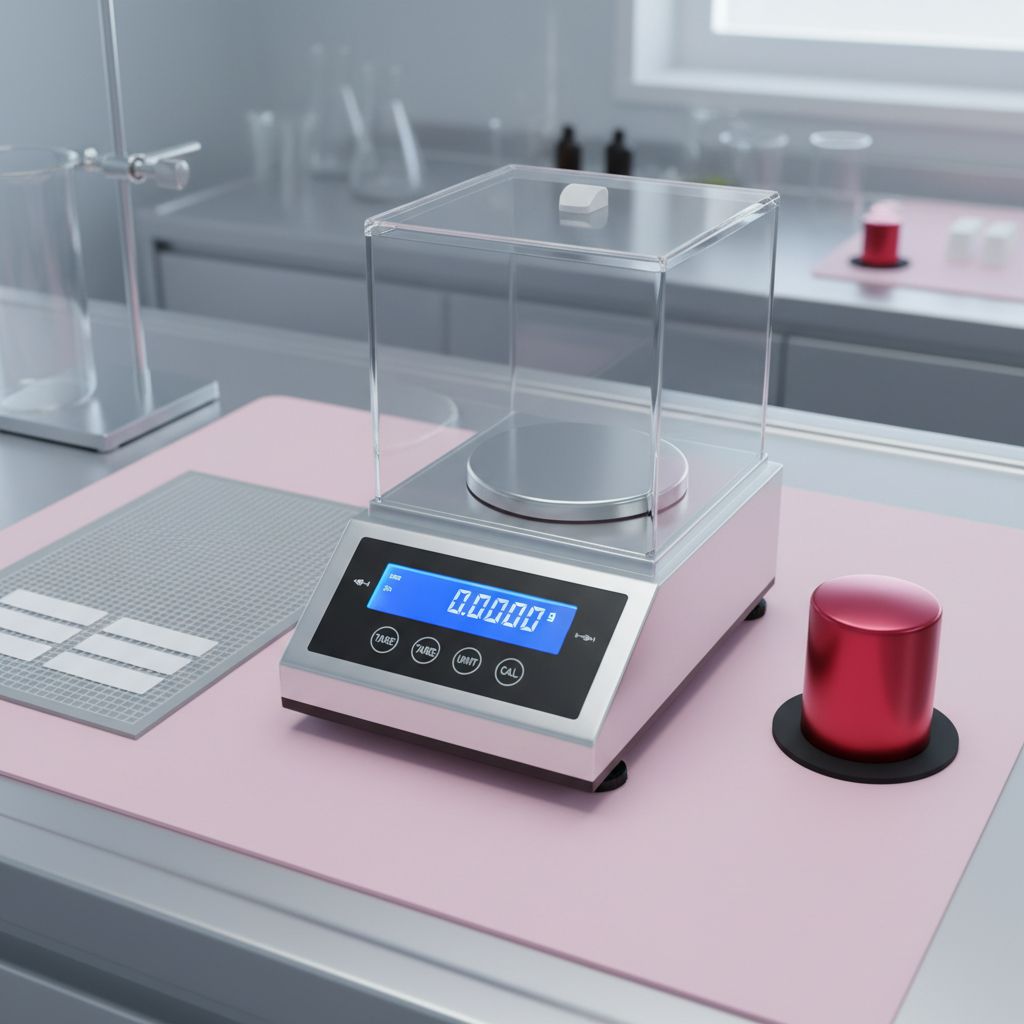
For better results, the weighing scale should be capable of measuring small differences in weight. A balance reading to 0.01 g is much more useful than a household scale that only displays whole grams.
GSM Calculation Formula Without a Cutter
If your sample is measured in centimeters: Fabric GSM = (Sample Weight × 10,000) ÷ Sample Area
Critical Accuracy Factors
Taking 5 samples instead of 1 is essential because fabric is rarely perfectly uniform. Variations can occur due to knitting tension, finishing differences, or moisture conditions. Averaging multiple points reduces the risk of making decisions based on an unusual spot in the roll. Note on Units: The formula above only works if the area is in cm². If you calculate the area in meters (m²) first, do not multiply by 10,000.
- Example: 144 cm² = 0.0144 m².
- GSM = 1.9 ÷ 0.0144 = 131.94 g/m².
Mixing these two unit systems is the most common error in manual calculation.
Steps by Steps for GSM Calculation Without a GSM Cutter
Step 1: Select Fabric Samples
Do not rely on only one small piece of fabric. Fabric weight can vary slightly across:
- Fabric width
- Fabric length
- Different rolls
- Different finishing zones
For a practical factory check, take several specimens from different areas.

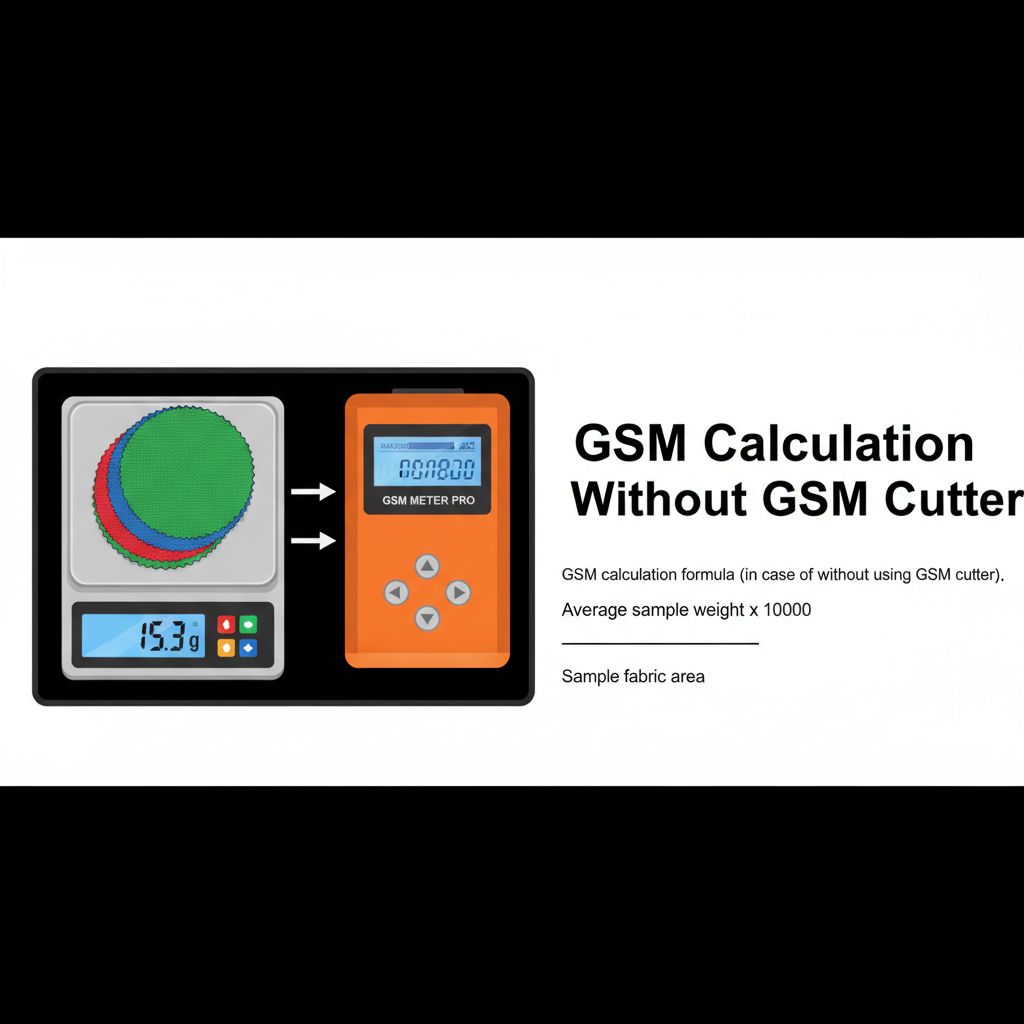
For example: 5 samples – Avoid selecting all samples from the same small section. Also avoid:
- Selvedges
- Obvious defects
- Creased areas
- Contaminated areas
- Wet spots
- Areas with unusual finishing
unless those areas are specifically being investigated.
Step 2: Cut Samples to an Exact Size
Suppose you choose: 12 cm × 12 cm. Each piece must be as close as possible to the intended dimensions. The area is: 12 × 12 = 144 cm². Cut all samples carefully. An inaccurate cut changes the area and therefore changes the calculated GSM. This is particularly important when using small samples because even a few millimeters of error can influence the final result.
Step 3: Weigh Each Fabric Sample
Use a precision balance. Suppose five 12 × 12 cm samples give:
- Sample 1 = 1.80 g
- Sample 2 = 2.00 g
- Sample 3 = 1.85 g
- Sample 4 = 1.90 g
- Sample 5 = 1.95 g
Record every result. Do not simply select the sample whose weight looks closest to the expected GSM. The purpose of multiple samples is to understand normal variation.
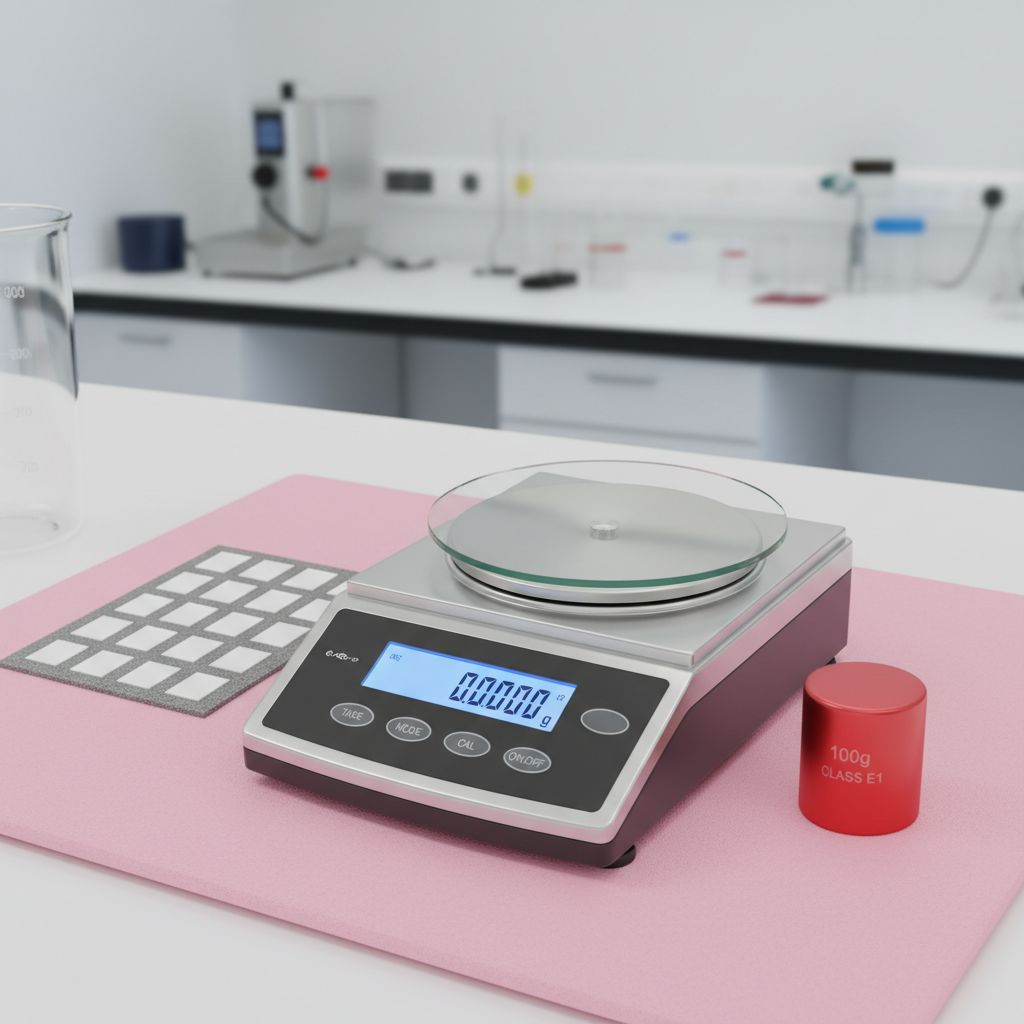
Step 4: Calculate the Average Weight
Add the weights: 1.80 + 2.00 + 1.85 + 1.90 + 1.95 = 9.50 g

Then divide by five:
- Average Weight = 9.50 ÷ 5
- Average Weight = 1.90 g
Using an average reduces the influence of one unusually heavy or light specimen.

Step 5: Convert the Result to GSM
The sample area is: 144 cm²
Average sample weight: 1.90 g
Apply the formula:
- GSM = (1.90 × 10,000) ÷ 144
- GSM = 19,000 ÷ 144
- GSM = 131.94 g/m²
The practical result can be reported as approximately: 132 GSM
Small Samples vs. Large Samples
Both can be used mathematically, but they have different practical advantages.
Small Samples
Advantages:
- Require little fabric
- Fast to cut
- Fast to weigh
- Useful during quick inspection
Disadvantages:
- More sensitive to cutting error
- More sensitive to scale precision
- Small local variation can affect the result
Larger Samples
Advantages:
- Better representation of a larger fabric area
- Less sensitive to very small cutting errors
- Often easier to weigh accurately

Disadvantages:
- Use more fabric
- Less convenient when only limited material is available
For quick factory checks, multiple accurately cut specimens are generally better than relying on one specimen.
How QA and QC Can Use Manual GSM Calculation
QA and QC teams can use manual GSM checks to compare:
- Approved sample vs. bulk fabric
- One roll vs. another roll
- Supplier report vs. received fabric
- Before-wash vs. after-wash fabric
- Different dye lots
If unusual variation is detected, the issue can be escalated for formal testing. This makes manual GSM checking an excellent screening and verification tool.
Conclusion / Final Words
A GSM cutter makes fabric-weight testing faster and more standardized, but the underlying calculation is simple.
- You need to know: The sample weight and The sample area.
- Then apply: GSM = Weight × 10,000 ÷ Area in cm²

For quick factory checks, take several accurately measured specimens, weigh them with a suitable precision balance, calculate their average, and compare the result with the approved specification. The most important factors are:
- Accurate cutting
- Accurate weighing
- Correct units
- Representative sampling
- Appropriate fabric conditioning
- Correct buyer tolerance
For merchandisers, QA teams, QC inspectors, and garment manufacturers, knowing this manual GSM calculation provides a useful backup when a GSM cutter is unavailable. More importantly, it helps teams identify fabric-weight problems before they become garment-quality problems. A simple GSM check at fabric inspection can prevent much more expensive problems after cutting, sewing, and shipment.