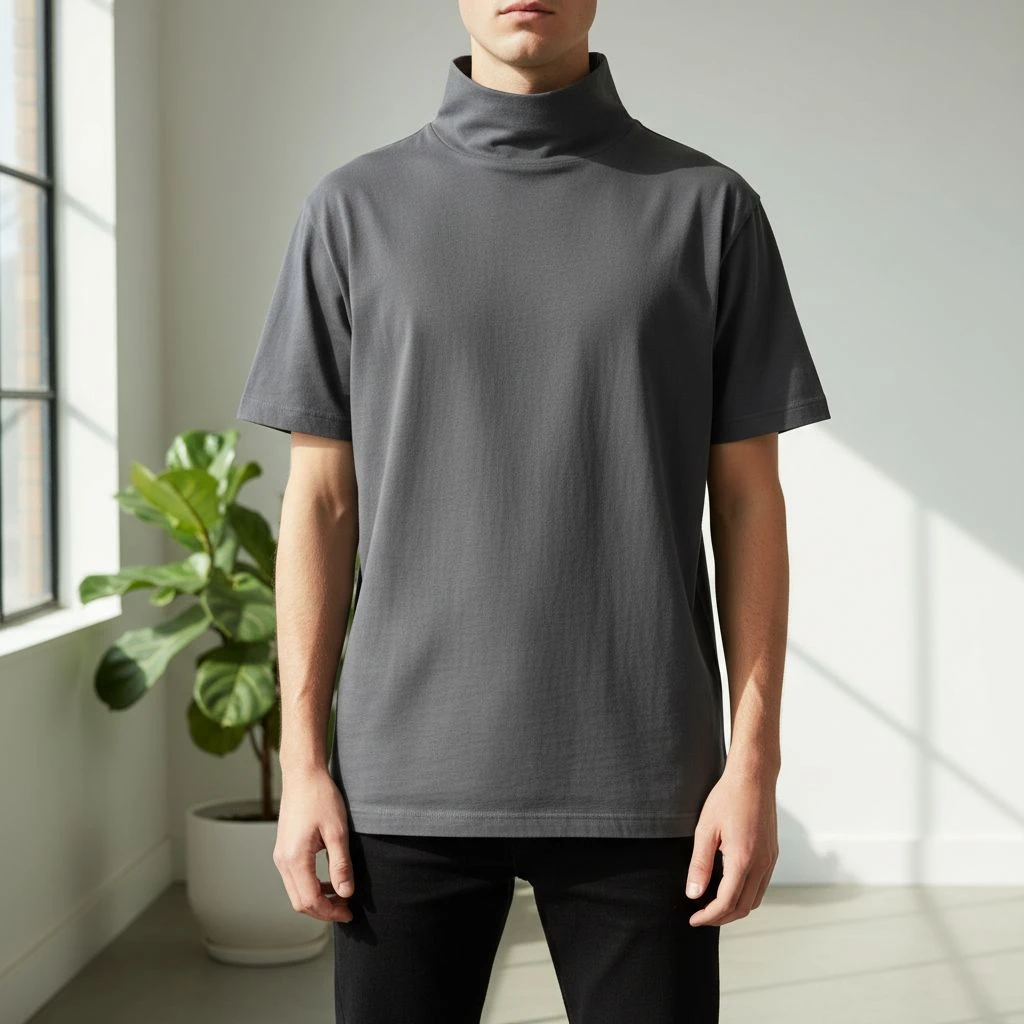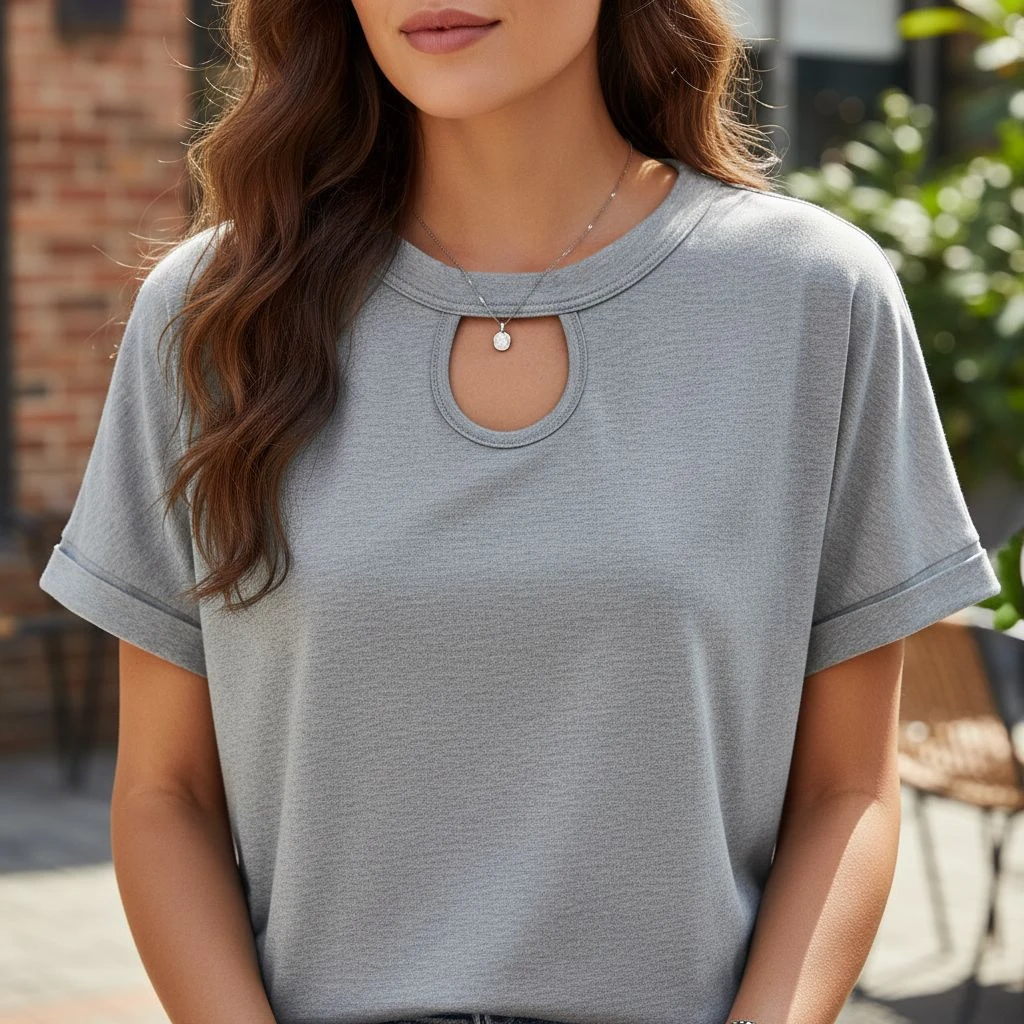

Let’s settle this right away. T-shirt weight is not a small detail. It shapes comfort, durability, print quality, price, and even brand perception. If you ignore it, you may end up with shirts that feel wrong, wear out fast, or fail your target market. But here’s the key: weight alone does not determine quality. It is one variable in a larger system. This article breaks down what T-shirt weight really means and how to choose it wisely.
=> Related Article: T Shirts Manufacturing Vietnam | Mekong Garment Factory
What Does T-Shirt Weight Mean?
T-shirt fabric weight is commonly expressed in GSM, or grams per square meter. In simple terms, GSM tells you how much one square meter of the fabric weighs. For example:
- 140 GSM fabric = 140 grams per square meter
- 180 GSM fabric = 180 grams per square meter
- 240 GSM fabric = 240 grams per square meter
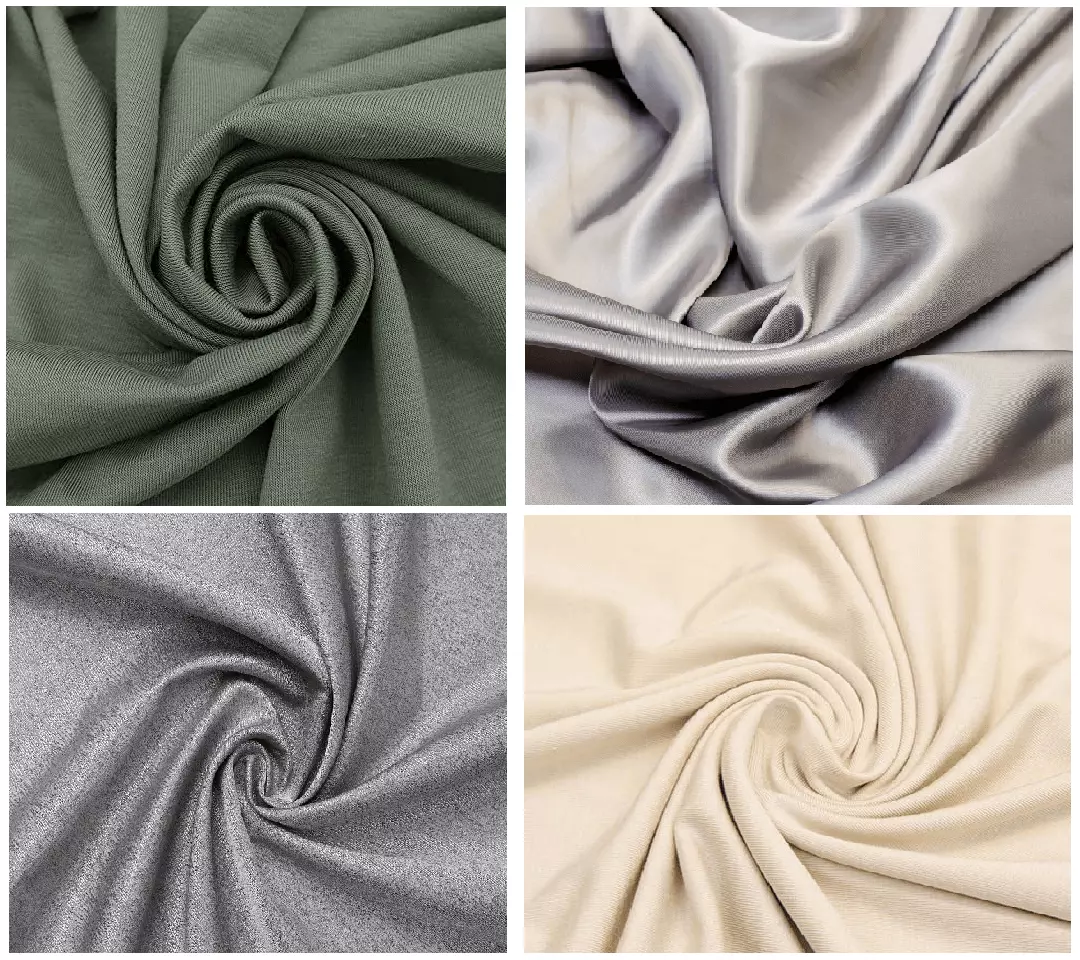
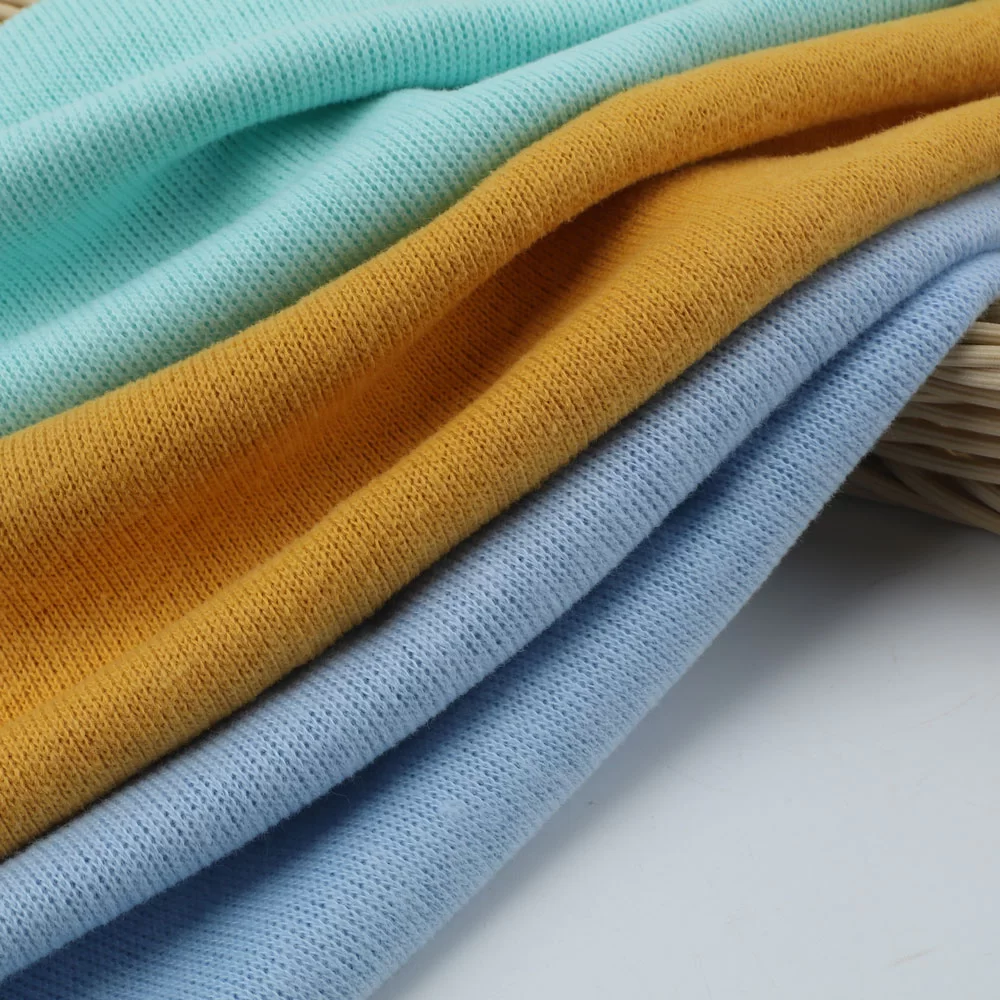
A higher GSM means there is more fabric mass in the same surface area. However, GSM does not tell you everything about the fabric. Two fabrics with the same GSM can still feel very different because of differences in:
- Fiber
- Yarn
- Knit construction
- Density
- Finishing
- Surface treatment
So: Same GSM isn’t Same Fabric
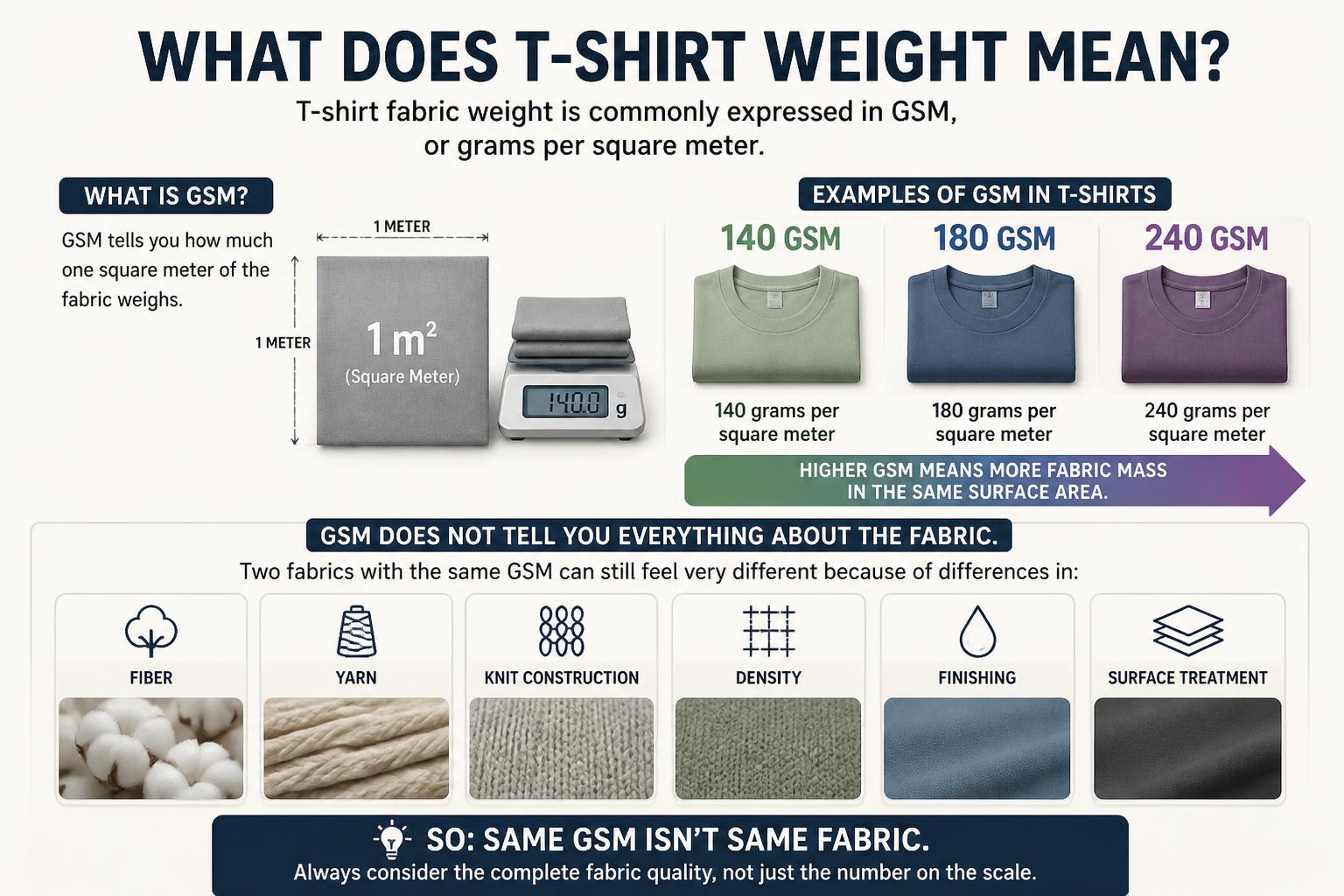
T-shirt weight refers to how dense the fabric is. It is usually measured in GSM (grams per square meter) or ounces per square yard (oz/yd²).
Common T-Shirt GSM Ranges
Here is a practical breakdown of how weight translates to feel:
| Category | GSM Range | Typical Feel |
|---|---|---|
| Ultra Lightweight | 120–140 GSM | Very thin, airy |
| Lightweight | 140–160 GSM | Soft, breathable |
| Midweight | 160–180 GSM | Balanced, everyday |
| Heavyweight | 180–220 GSM | Thick, structured |
| Premium Heavy | 220+ GSM | Dense, durable |

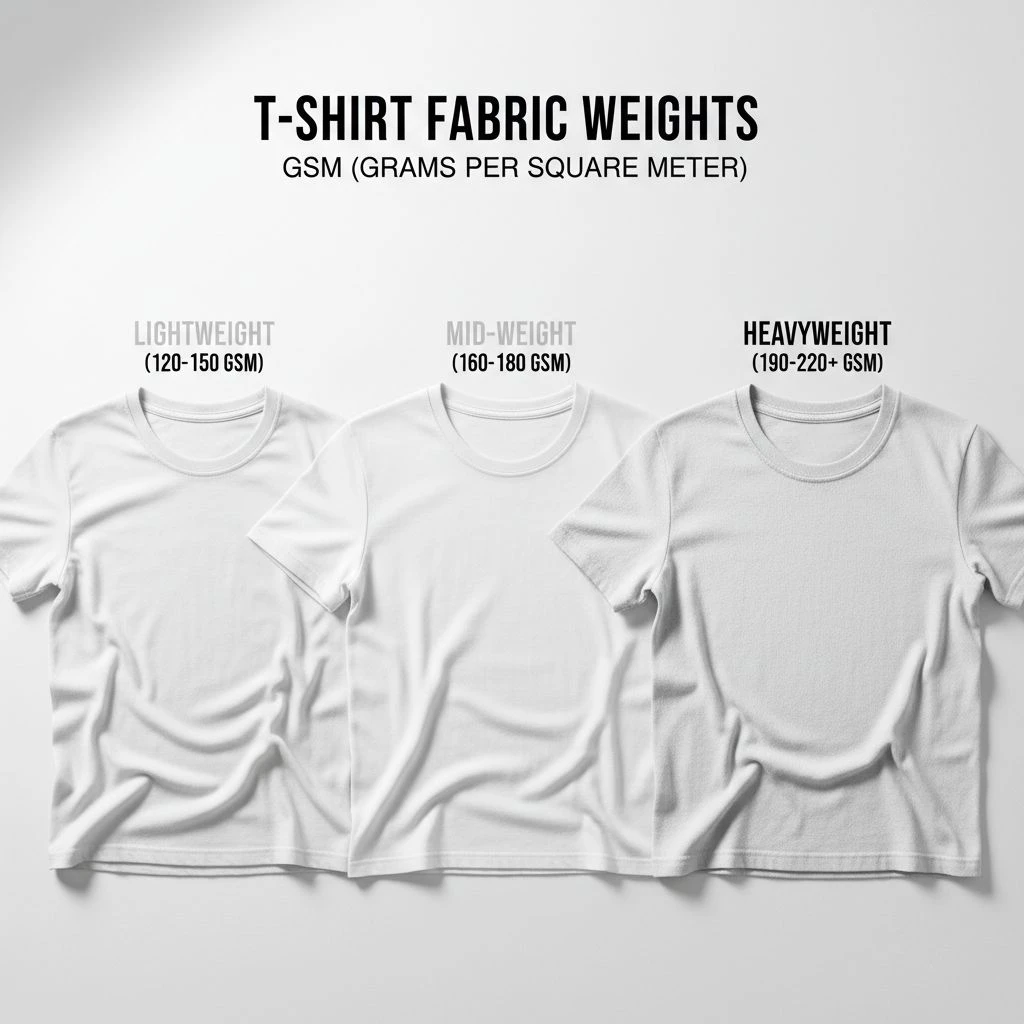
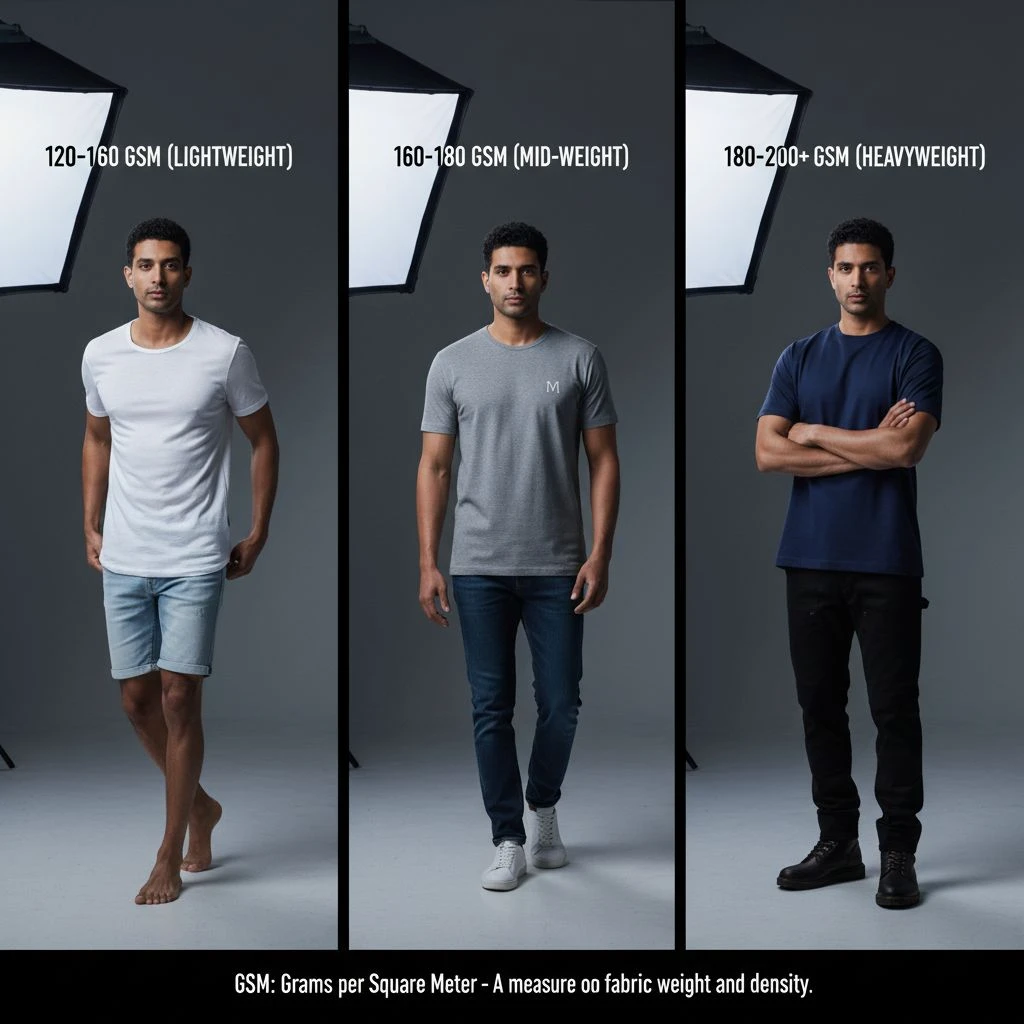
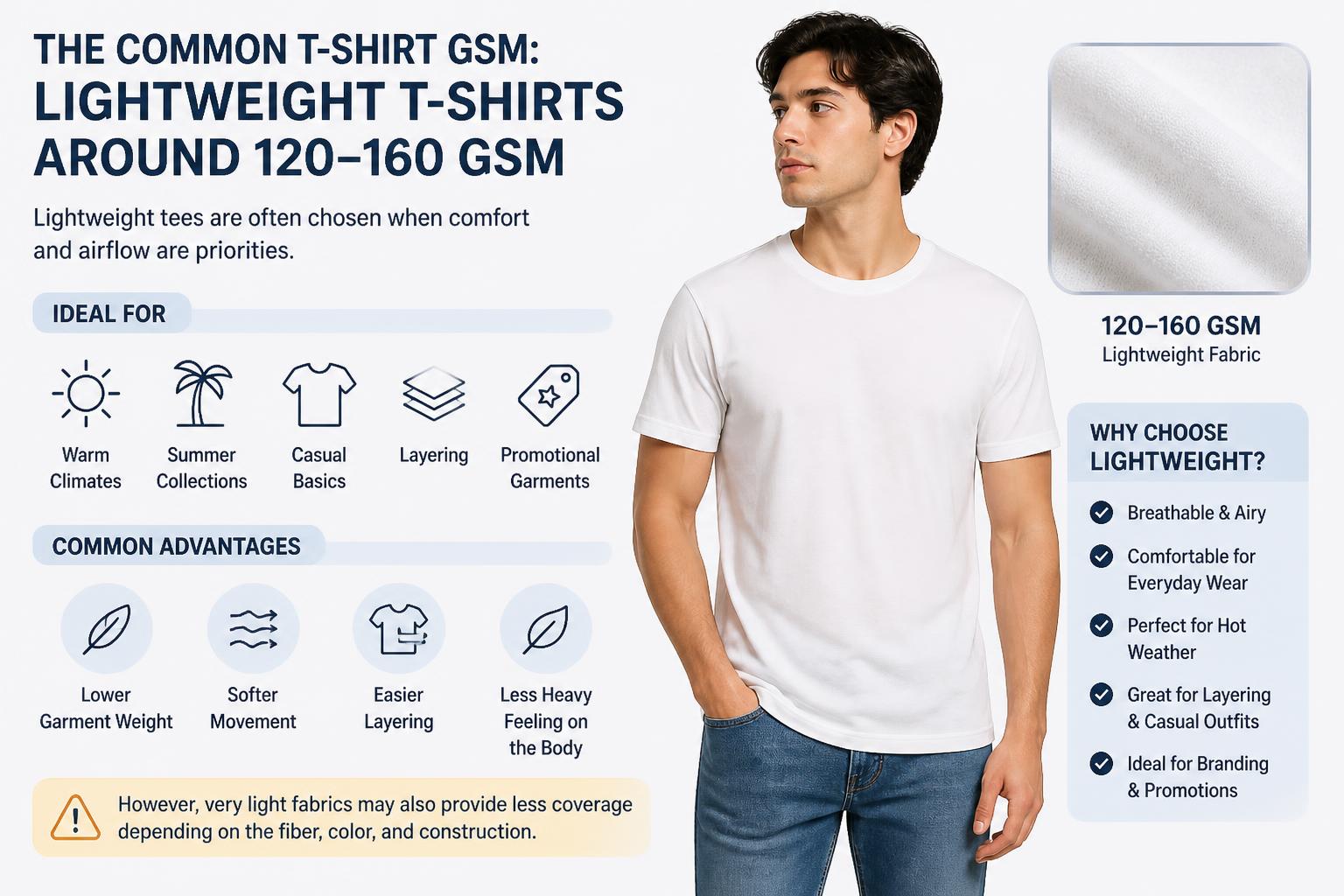
Lightweight T-Shirts: Around 120–160 GSM
Lightweight tees are often chosen when comfort and airflow are priorities.
They can work well for:
- Warm climates
- Summer collections
- Casual basics
- Layering
- Promotional garments
Common advantages include:
- Lower garment weight
- Softer movement
- Easier layering
- Less heavy feeling on the body
However, very light fabrics may also provide less coverage depending on the fiber, color, and construction.
Midweight T-Shirts: Around 160–180 GSM
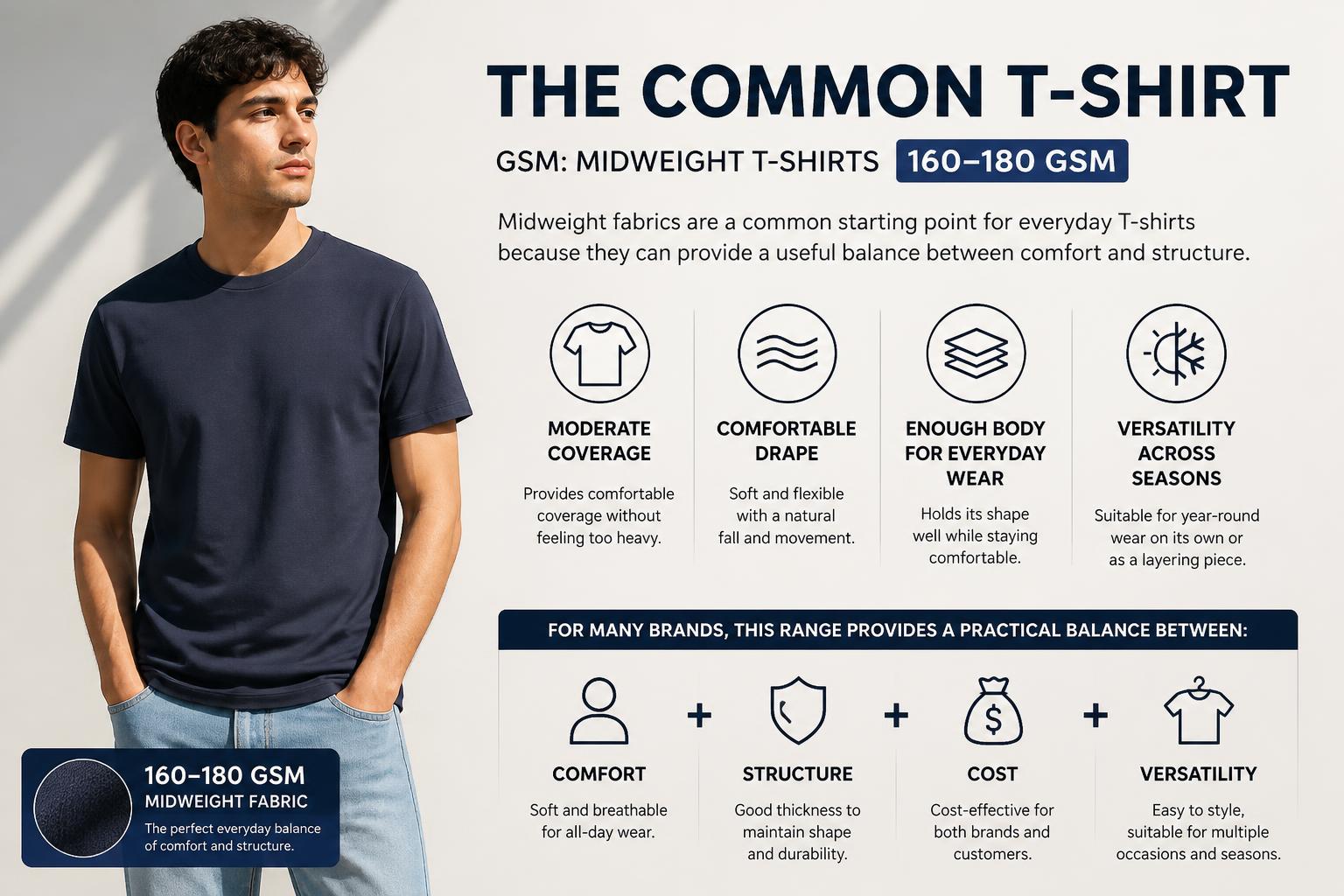
Midweight fabrics are a common starting point for everyday T-shirts because they can provide a useful balance between comfort and structure. They may offer:
- Moderate coverage
- Comfortable drape
- Enough body for everyday wear
- Versatility across seasons

For many brands, this range provides a practical balance between: Comfort + Structure + Cost + Versatility.
Heavyweight T-Shirts: Around 180–220 GSM
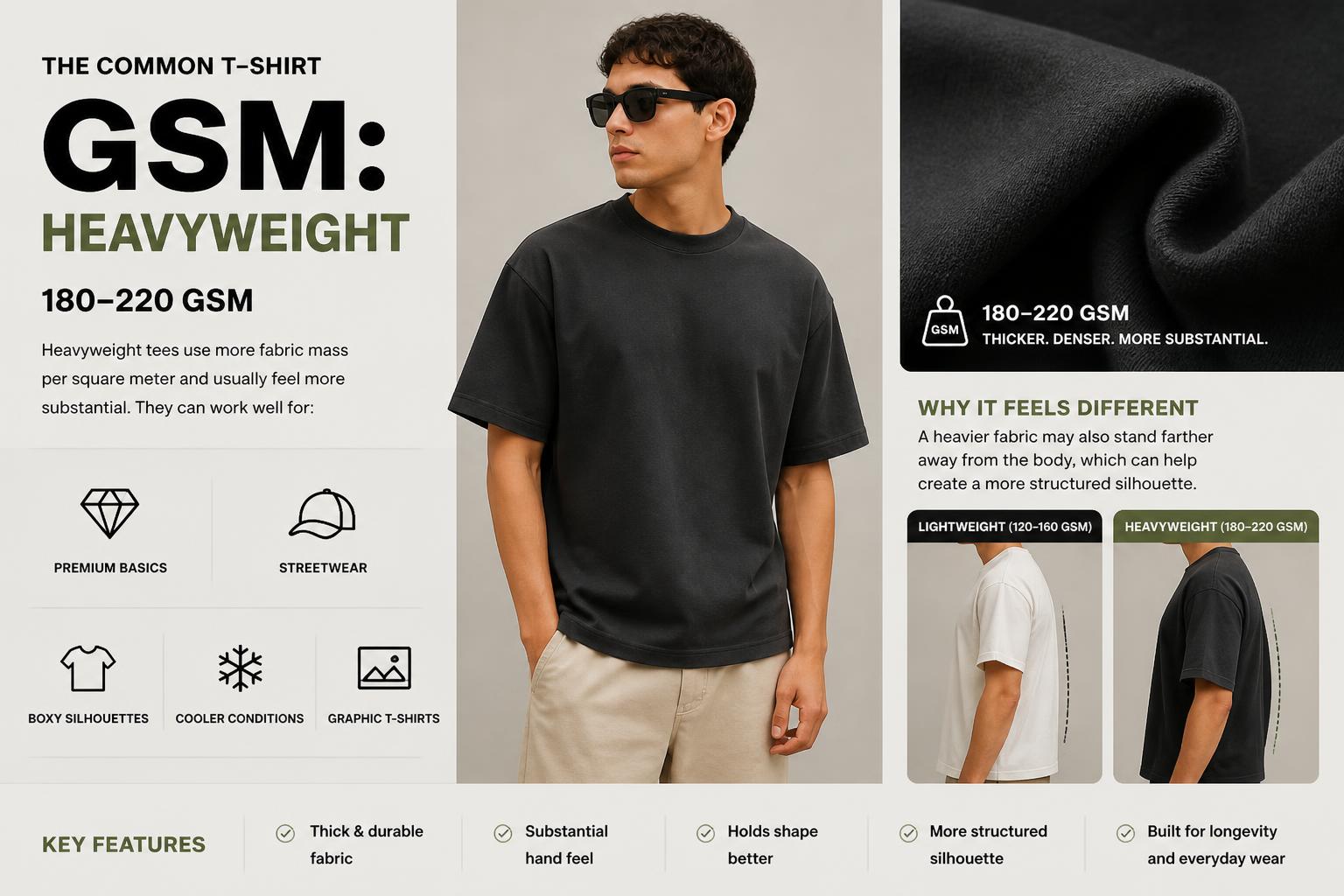
Heavyweight tees use more fabric mass per square meter and usually feel more substantial. They can work well for:
- Premium basics
- Streetwear
- Boxy silhouettes
- Cooler conditions
- Graphic T-shirts
A heavier fabric may also stand farther away from the body, which can help create a more structured silhouette.
Premium Heavyweight T-Shirts: 220 GSM and Above
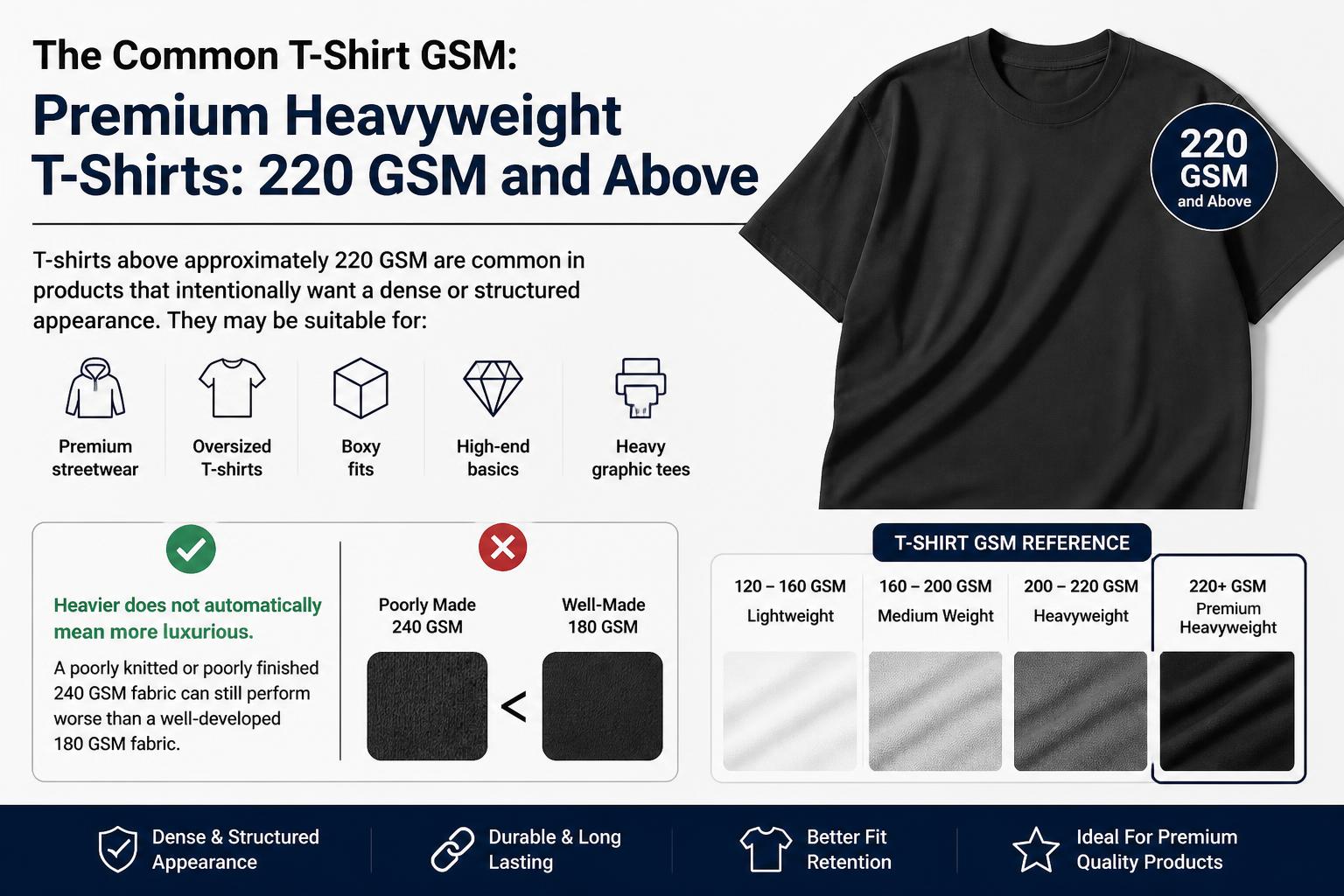
T-shirts above approximately 220 GSM are common in products that intentionally want a dense or structured appearance. They may be suitable for:
- Premium streetwear
- Oversized T-shirts
- Boxy fits
- High-end basics
- Heavy graphic tees
But heavier does not automatically mean more luxurious. A poorly knitted or poorly finished 240 GSM fabric can still perform worse than a well-developed 180 GSM fabric.

Comfort: The First Thing People Notice
Weight directly affects how a shirt feels on the body. Lightweight T-Shirts (140–160 GSM) are more breathable and ideal for hot weather. They feel light against the skin and are the practical choice for summer. In contrast, Heavyweight T-Shirts (180+ GSM) offer more structure and are less clingy, making them better for layering and cooler conditions.
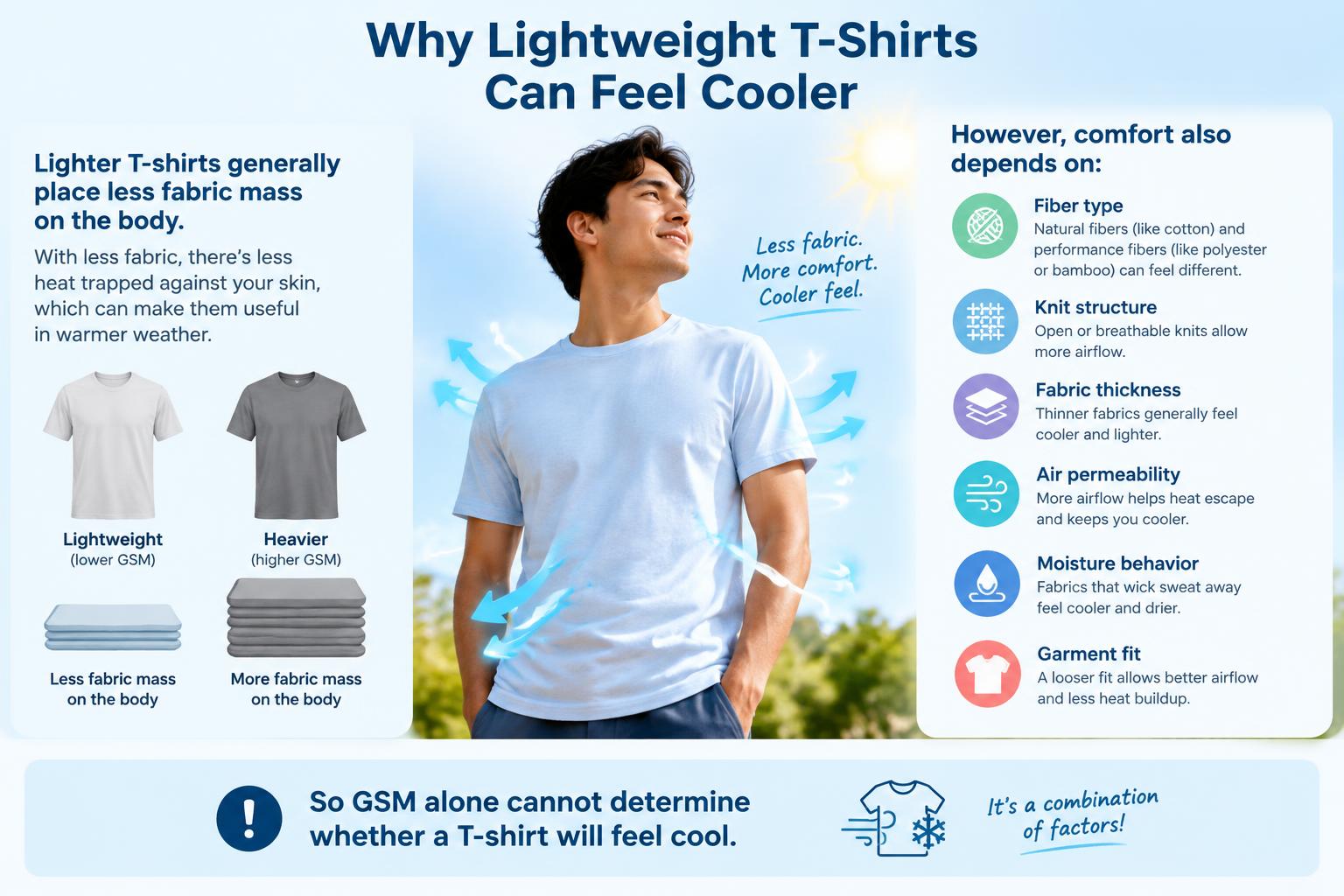
Why Lightweight T-Shirts Can Feel Cooler
Lighter T-shirts generally place less fabric mass on the body. This can make them useful in warmer weather. However, comfort also depends on:
- Fiber type
- Knit structure
- Fabric thickness
- Air permeability
- Moisture behavior
- Garment fit
So GSM alone cannot determine whether a T-shirt will feel cool.
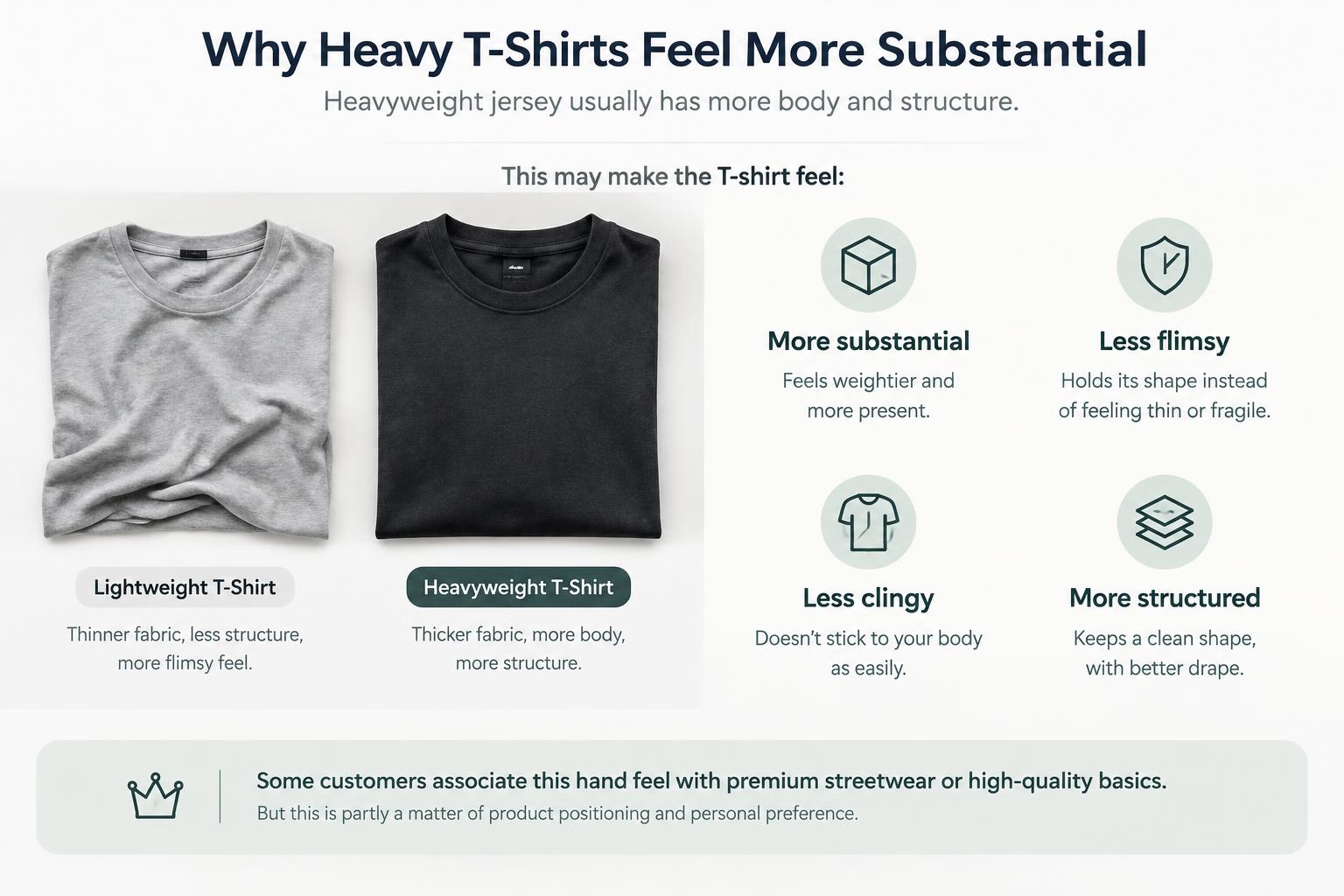
Why Heavy T-Shirts Feel More Substantial
Heavyweight jersey usually has more body and structure.

This may make the T-shirt feel:
- More substantial
- Less flimsy
- Less clingy
- More structured
Some customers associate this hand feel with premium streetwear or high-quality basics. But this is partly a matter of product positioning and personal preference.
Climate Should Influence GSM Choice
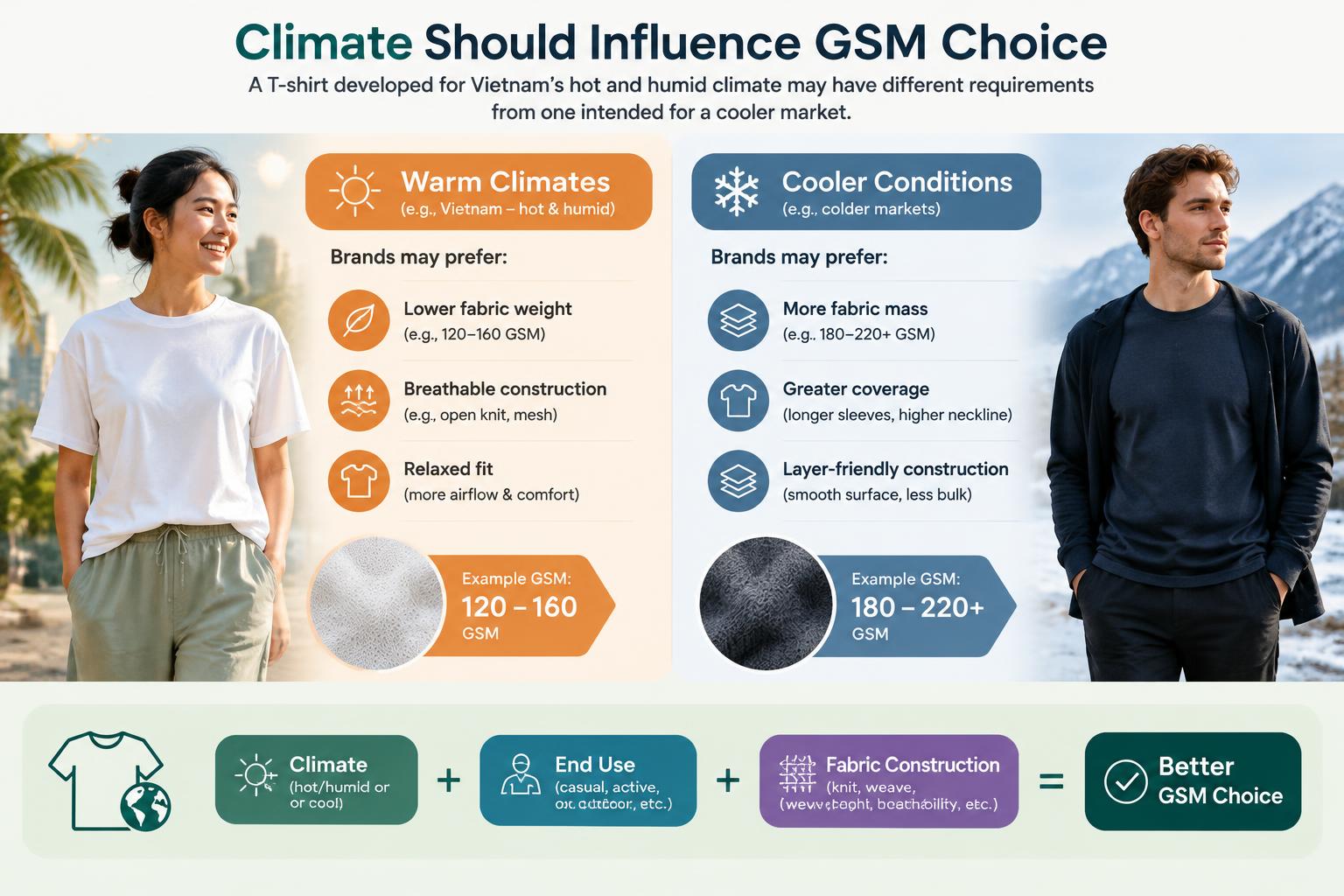
A T-shirt developed for Vietnam’s hot and humid climate may have different requirements from one intended for a cooler market.
For warm climates, brands may prefer:
- Lower fabric weight
- Breathable construction
- Relaxed fit
For cooler conditions, brands may prefer:
- More fabric mass
- Greater coverage
- Layer-friendly construction
A useful principle is: Climate + End Use + Fabric Construction = Better GSM Choice

Durability: Does Heavier Mean Stronger?
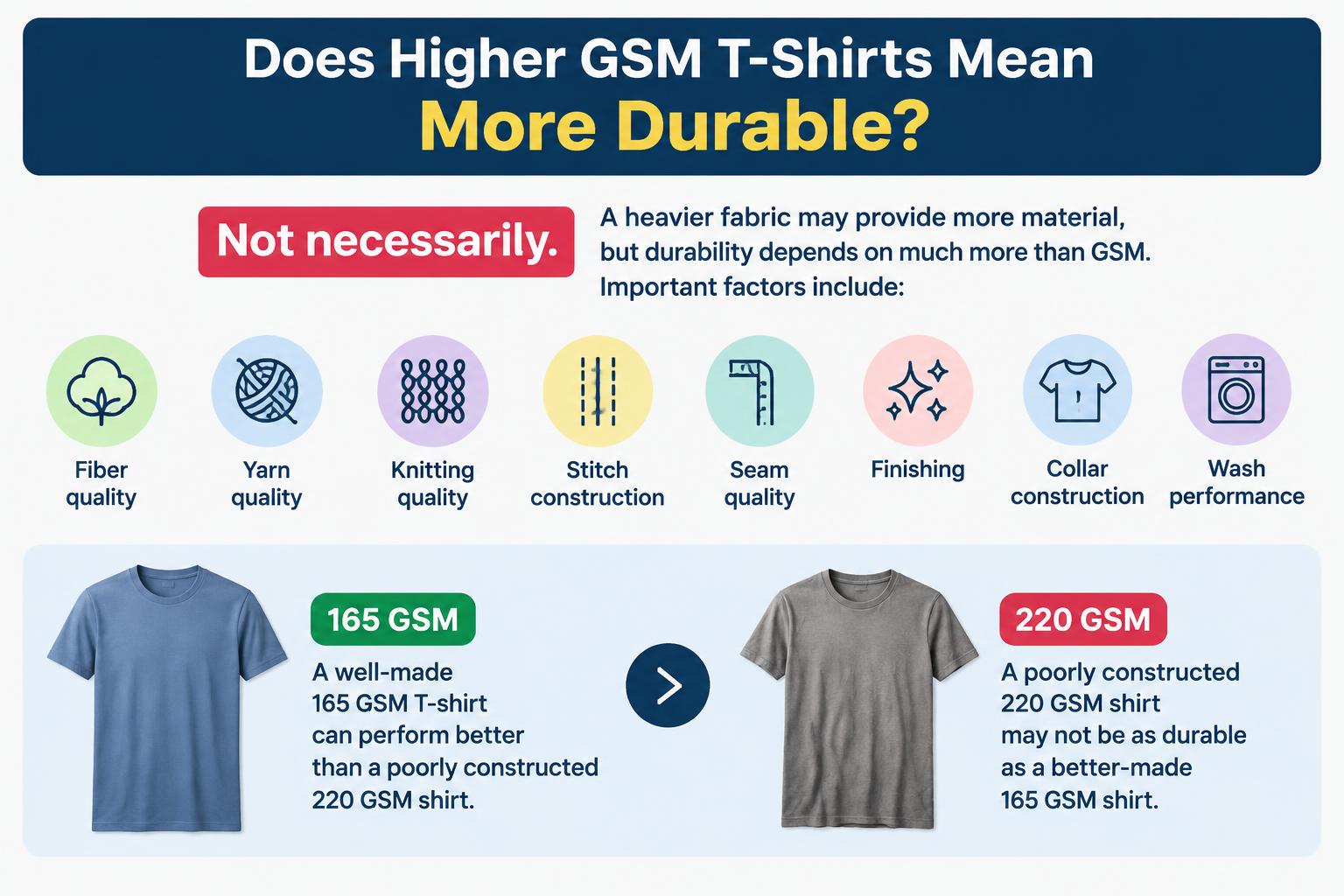
In general, heavier T-shirts resist stretching better and hold their shape longer. However, weight is not a guarantee of quality. Durability also depends on cotton grade (combed vs. carded), stitch density, and collar rib construction. A well-made 165 GSM shirt can outlast a poorly constructed 220 GSM shirt.
Does Higher GSM Mean More Durable?
Not necessarily. A heavier fabric may provide more material, but durability depends on much more than GSM. Important factors include:
- Fiber quality
- Yarn quality
- Knitting quality
- Stitch construction
- Seam quality
- Finishing
- Collar construction
- Wash performance
A well-made 165 GSM T-shirt can perform better than a poorly constructed 220 GSM shirt.
Yarn Quality Matters
Two fabrics can have similar GSM but very different performance because of the yarn. The yarn can affect:
- Surface smoothness
- Strength
- Pilling
- Softness
- Appearance
For example, a cleaner yarn may produce a smoother fabric surface than a rougher yarn at a similar fabric weight.
Knitting Quality Matters Too
GSM does not tell you whether the fabric has been knitted well. Knitting quality can influence:
- Fabric stability
- Spirality
- Surface appearance
- Stretch
- Recovery
This is why buyers should not approve fabric based on GSM alone.
Collar Durability Is Separate From Body GSM
A thick T-shirt can still have a poor collar. Collar performance depends on factors such as:
- Rib quality
- Stretch
- Recovery
- Rib width
- Neck opening
- Sewing
- Reinforcement
So: Heavy Body Fabric + Weak Neck Rib = Weak T-Shirt
Printing and Decoration Performance
If you plan to screen print or embroider, weight becomes even more important. Lightweight shirts offer a softer drape but light colors may show slight transparency. Heavyweight shirts provide better ink stability, a stronger base for embroidery, and that premium “streetwear” feel for high-end branding and graphic prints.

Why Fabric Weight Matters for Screen Printing
Screen printing places ink onto the garment surface. Fabric stability can influence how easily the print is controlled.
A more stable fabric may provide a useful base for:
- Large graphics
- Bold artwork
- Multiple print colors

However, print quality also depends heavily on:
- Surface smoothness
- Ink system
- Artwork
- Screen setup
- Curing
Lightweight T-Shirts and Printing
Lightweight fabric can still be printed successfully. Brands should pay attention to:
- Fabric movement
- Ink deposit
- Hand feel
- Opacity
- Heat exposure
A heavy print on a very light shirt can sometimes feel unbalanced.
Heavyweight T-Shirts and Printing
Heavyweight tees often work well for large graphic applications because the garment provides more structure. This is one reason they are popular for:
- Streetwear graphics
- Premium printed tees
- Large back prints
But: Heavy GSM isn’t Automatically Better Print Quality. The fabric surface and printing process still matter.
GSM and DTF Printing
DTF can be used across many T-shirt weights. However, brands should evaluate the relationship between:
- Transfer size
- Fabric weight
- Fabric stretch
- Hand feel
A large transfer on a very light shirt may feel much heavier than the surrounding fabric.
GSM and Embroidery
Embroidery adds thread and concentrated weight to a specific area. A more stable fabric can make embroidery easier to support. For lightweight T-shirts, additional stabilization may be needed depending on:
- Embroidery size
- Stitch density
- Placement
- Fabric stretch
The goal is to avoid distortion or excessive puckering.
Style, Silhouette, and Business Costs
Fabric weight changes how a shirt drapes. Modern streetwear brands often choose 220+ GSM because the fabric keeps a boxy shape. From a business perspective, heavier fabric means higher cost. This affects fabric price, shipping weight, and overall production margin. Choosing the right weight requires balancing performance and total production cost.
How Brand Owners Should Choose GSM (Step-by-Step)
Instead of asking “What GSM is best?”, ask these first:
- Who is my customer? Streetwear fan or everyday wearer?
- Where will they wear it? Hot city, air-conditioned office, winter climate?
- What fit am I selling? Slim, regular, boxy, oversized?
- What is my target price? Higher GSM = higher cost + higher shipping.
- Am I sampling or scaling? Some GSM levels require custom knitting and higher MOQ.
GSM vs Oz (For U.S. Buyers)
Some buyers still use oz/yd². Approximate conversions:
- 5.3 oz ≈ 180 gsm
- 6.5 oz ≈ 220 gsm
- 7.5 oz ≈ 255–270 gsm
- 9 oz ≈ 310–320 gsm
These are estimates, not exact values. Shrinkage and knit structure affect final weight.
Conclusion / Final Words
T-shirt weight is a strategic choice, not just a technical detail. For many brands, 160–180 GSM offers a safe balance between comfort and durability. The best weight is the one that aligns with your audience, climate, and printing method. Understand your goals, and your T-shirt will become much more than just a basic garment.