

What Are the Costs Associated With a Low MOQ Order?
Low MOQ (Minimum Order Quantity) orders sound simple: order fewer pieces, spend less money, test the market, then scale up. But the real cost story is more complex. A factory still needs to do most of the same setup work, even for a small run. Because those setup costs get divided across fewer units, your cost per piece often rises. Many new brands focus only on the quoted unit price. That is a mistake. Low MOQ orders can include extra development fees, higher material prices, and less efficient shipping. If you do not plan for these costs, your margins can shrink fast, even if your total order value is “small.” This article breaks down every major cost in low MOQ apparel production, explains why it happens, and shows practical ways to control it.
Understanding the “True Cost” of Low MOQ Orders
Before we go line-by-line, let’s challenge a common belief: Low MOQ does not always mean low risk. It lowers your upfront spending, yes. But it can raise your per-unit cost, increase surprise fees, and create quality consistency risks. If your selling price and reorder plan are not strong, low MOQ can become the expensive way to learn a lesson.
To see the real cost clearly, you need to split expenses into four buckets:
- Fixed costs (do not change much with quantity)
- Variable costs (increase per unit)
- Extra service fees (often triggered by revisions or complexity)
- Logistics and finance costs (shipping + payment costs)

What Are the Costs Associated With a Low MOQ Order?
1. Why Per-Unit Cost Increases With Lower MOQ
When you place a small order, the factory’s “startup work” still happens. Pattern making still takes time. Sampling still needs skilled labor. The production line still needs setup. These costs are not proportional to your quantity.
The simple cost math
- Total cost = Fixed costs + Variable costs
- Per-unit cost = (Fixed costs ÷ Units) + Variable cost per unit
So when units are low, fixed costs per piece get bigger.
What this means in real life
- 3,000 pieces can “dilute” setup costs nicely.
- 200 to 500 pieces cannot, so each item carries a heavier share.
If someone tells you “small orders are always overpriced,” push back. The truth depends on style complexity, materials, factory efficiency, and how many changes you make during development.

2. Fixed Costs in Apparel Manufacturing
Fixed costs are the first big reason low MOQ feels expensive. These are one-time costs tied to a new style, not the number of units. Fixed costs are the startup costs of a new style. They happen before bulk production really starts, and they stay similar whether you make 50 pieces or 500 pieces. This includes pattern making, technical setup, and sample development. Many new brands miss these costs because they focus only on unit price. If you understand fixed costs early, you can budget smarter and avoid surprises.
Technical Design Review and Pattern Making
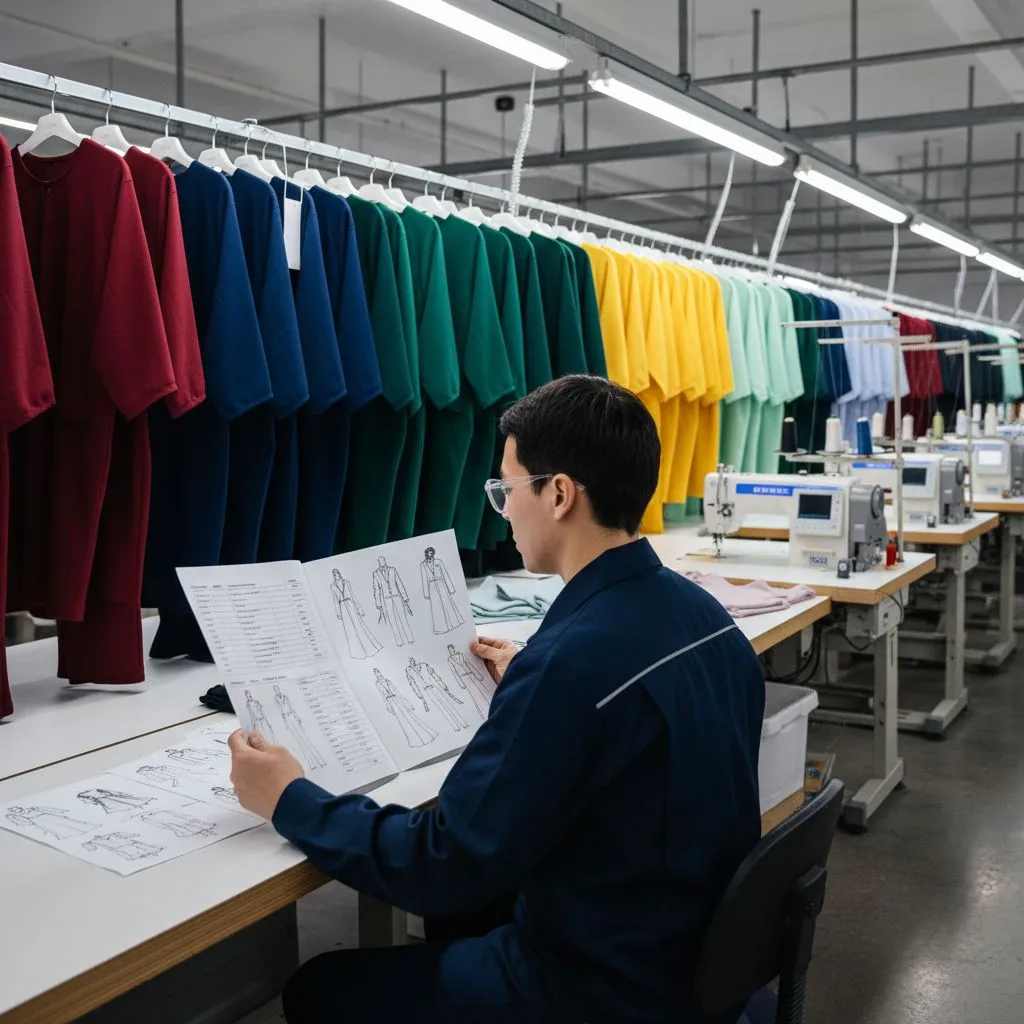
For every new style, the factory usually needs to create a production-ready “blueprint”. Before a factory can sew your style correctly, it needs a clear production plan. That plan usually starts with patterns, measurements, and construction details. Even a simple garment needs careful pattern work to fit well and sew consistently. When MOQ is low, this skilled work becomes a larger cost per unit. Getting this step right also reduces mistakes later, so it saves money in the long run.
What’s included:
- Tech review (checking design feasibility)
- Pattern making (digital pattern creation)
- Grading (multiple sizes, if needed)
- Measurement spec alignment
Why it costs more on low MOQ: Pattern work is skilled labor. The time is similar whether you produce 50 pieces or 500 pieces.
Common brand mistake: Sending incomplete or unclear tech packs leads to more back-and-forth, more corrections, and higher development cost.
Sampling and Prototype Development
Sampling is not just “making one garment.” It is a mini production process. Sampling is where your design becomes a real product. It takes time, materials, and skilled labor to create a sample that matches your fit and quality expectations. Many brands need more than one sample round, especially when the design is still changing. Each revision can add cost because the factory must cut, sew, and check again. With low MOQ, sample costs have a bigger impact on your total budget.
Typical sample steps:
- Material selection for the sample
- Cutting, sewing, and finishing
- Fit review and adjustments
- Final approval sample (sometimes called a pre-production sample)
Costs rise when:
- You request many revisions
- The design includes complex stitching
- You add printing, embroidery, or special trims
Some factories bundle sample cost into unit price, then “promise free samples.” That is not free. It is simply hidden.
Production Line Setup
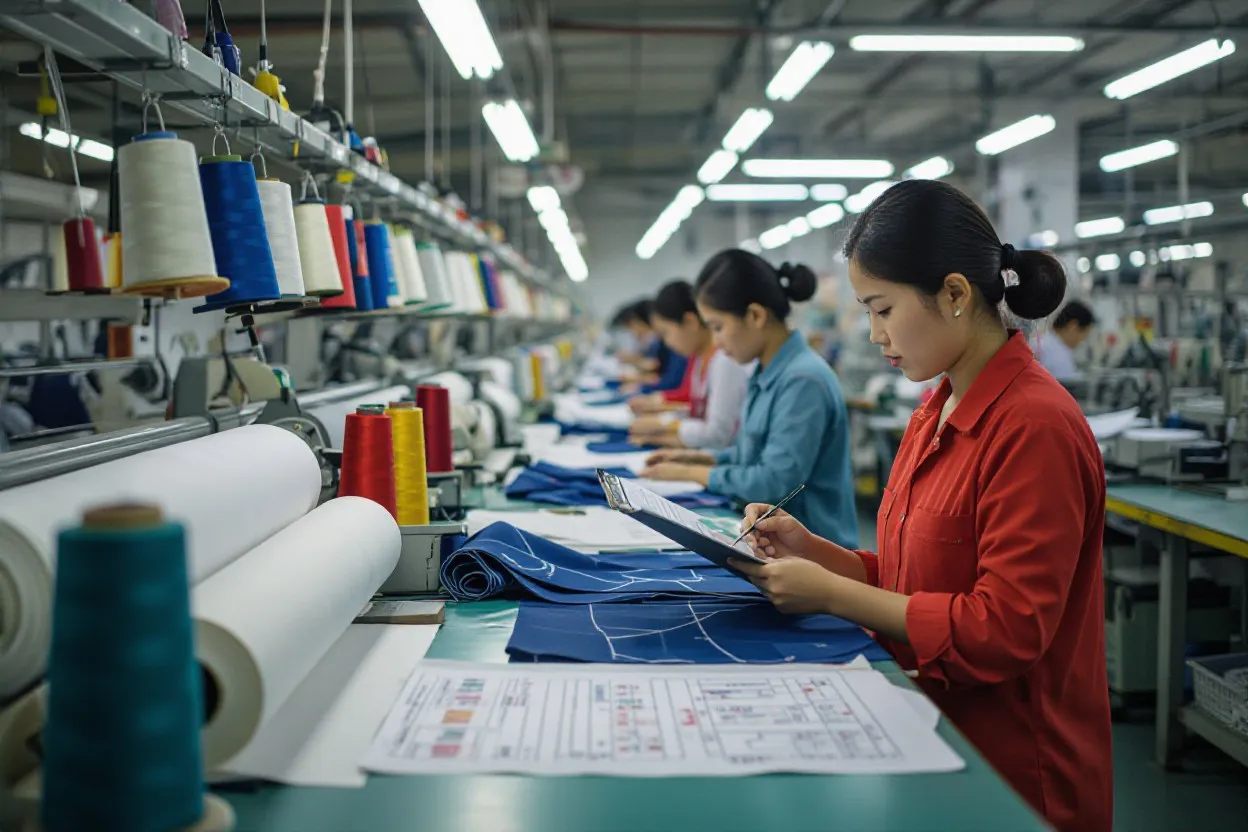
Even with a small run, factories must prepare the line. Even small runs need setup because machines must be adjusted for your fabric and construction. Operators may need a short learning period to sew your style smoothly and consistently. The factory also has to test stitches, adjust thread tension, and confirm the best sewing sequence. This setup work takes time whether you make 100 pieces or 1,000 pieces. That’s why low MOQ often carries a higher setup cost per garment.
Setup tasks can include:
- Machine adjustments for fabric type
- Changing needles and thread types
- Setting seam guides and attachments
- Stitch testing and tension calibration
- Training workers on special operations
This setup time costs money, and it does not shrink much for low MOQ.
3. Material Sourcing Costs for Small Orders
Material sourcing is often the most misunderstood cost in low MOQ production. Brands expect fabric pricing to be the same as large runs. It usually is not. Material sourcing gets tricky when quantities are small. Fabric mills and trim suppliers often have minimum purchase requirements that low MOQ orders cannot meet. When that happens, factories may need to buy from more expensive sources or pay higher prices for smaller quantities. This can raise fabric and trim costs quickly, which then raises your final unit price. Understanding sourcing limits helps you choose materials that fit your budget.
Fabric Minimums and Higher Fabric Prices
Many mills have minimum purchase requirements. If your order is small, you may not reach the mill’s minimum. Fabric is usually the largest cost inside a garment. But mills tend to reward big buyers with better pricing and require minimum yardage for production runs. If your order is small, you may not reach those minimums, so the cost per meter goes up. Sometimes the factory must buy extra fabric that you won’t fully use. For low MOQ, even a small fabric price increase can change your margin a lot.
So factories often must:
-
buy fabric from a local market at a higher price, or
-
purchase extra fabric you do not fully use, or
-
accept less favorable pricing for small quantities
Why it hurts low MOQ: Fabric is a major portion of unit cost, so even a small increase per meter can raise your unit price significantly.
Trims, Labels, and Packaging Minimums
Trims also have MOQ rules. Trims and branding details look small, but they can become big costs in low MOQ. Items like zippers, buttons, woven labels, hangtags, and custom packaging often have their own minimum order rules. If you want everything custom, you may have to buy more than you need or pay a premium. That extra cost gets divided across fewer garments, so it raises your unit price fast. Planning trims early helps you avoid last-minute expensive changes.
Examples:
- Buttons and snaps
- Zippers
- Woven labels and care labels
- Hangtags
- Custom polybags
- Custom cartons
If you want everything custom for a 150-piece run, suppliers may charge more per unit or require you to buy excess inventory. Brands often blame factories for trim cost, but the real reason is “custom branding on tiny quantities.” Customization is not wrong. It just has a price.
Color Matching, Dye Lots, and Consistency Risk
Small orders may require combining materials from multiple batches. That can cause slight differences. Low MOQ orders sometimes use materials from more than one batch. That can cause small differences in shade, texture, or finish, especially with darker colors. These differences may seem minor in the factory, but they can be noticeable to customers. If inconsistency leads to returns or rework, it becomes an extra cost you didn’t plan for. This is why material consistency is both a quality issue and a cost issue.
Common problems:
- Shade differences between fabric rolls
- Slight trim color mismatch
- Thread color variations that show under bright light
This is both a cost issue (rework, replacements) and a quality issue (inconsistency).
4. Extra Fees Beyond the Unit Price
Many low MOQ orders include extra fees that are not obvious at the beginning. These are common and normal, but you should know them early. The unit price is not always the full story. Low MOQ orders often include additional service fees that appear as separate line items. These fees usually come from extra support, extra revisions, or special processes. New brands are most at risk because they are still refining designs and learning the production process. If you know the common extra fees upfront, you can budget accurately and negotiate clearly.
Product Development and Revision Fees
Factories often include 1–2 sample rounds in a standard quote. After that, revisions may be billed. Development work can grow when a design keeps changing. Each new revision takes time for pattern updates, sewing adjustments, and quality checks. Many factories include only a limited number of revisions in the base quote. After that, extra rounds often come with extra charges. Clear decisions early reduce these costs and keep your timeline stable.
Extra costs can come from:
- Additional sample rounds
- Pattern revisions after approval
- Major design changes mid-process
- Extra meetings and technical support
Tip: Ask the factory upfront:
- How many sample rounds are included?
- What is the fee per additional revision?
- What counts as a “major change”?
Printing and Embroidery Setup Fees
Decoration often has setup charges that do not depend on quantity. Decoration is rarely “just add a logo.” Printing and embroidery often require setup work before production begins. This can include screen setup, digitizing, strike-offs, and technique testing. These setup steps cost money no matter how many pieces you order. With low MOQ, that setup cost becomes a bigger cost per unit, so decoration can feel expensive fast.
Possible costs include:
- Screen setup for screen printing
- Film output charges
- Embroidery digitizing fees
- Print strike-offs (test prints)
- Wash testing for print durability
Low MOQ means these setup fees are divided by fewer units, raising per-piece cost.
Testing, Compliance, and QA Costs
Testing and quality checks protect your brand, but they can add cost. Depending on your product and market, you may need wash tests, shrinkage tests, colorfastness tests, or third-party inspections. These services are often priced as fixed fees, not per unit. That means low MOQ orders feel the impact more strongly. Skipping testing may seem like savings, but it can be riskier than it looks. Depending on your market and product type, you may need:
- Shrinkage testing
- Colorfastness testing
- Seam strength tests
- Fabric composition verification
- Third-party inspection (AQL)
These costs may be optional, but skipping them can be riskier than paying them, especially for a new brand.
5. Logistics and Payment Costs That Hit Low MOQ Harder
Even after production, small orders can cost more to move and pay for. Shipping and payment choices can change your final cost a lot. Small orders usually cannot ship as efficiently as big ones, so the cost per unit is higher. You might also pay more handling fees because your goods move through consolidation and extra paperwork steps. On the payment side, secure methods can include bank fees that feel large on small totals. Planning logistics and payment early helps you avoid nasty surprises at the end.
Shipping: Why Small Orders Cost More Per Unit
Low MOQ orders often ship through LCL because they cannot fill a full container. LCL can cost more per cubic meter because you pay for shared space, handling, and consolidation. Small shipments also face higher “per unit” impact from documentation and warehouse fees. If your shipment splits into multiple batches, costs can rise again. That’s why shipping strategy matters as much as production price. Large orders can use full containers, which are efficient. Low MOQ orders usually ship as:
- LCL (Less-than-Container Load), or
- small air shipments
Why LCL costs more:
- You pay for shared space and handling
- More paperwork and consolidation fees
- Higher cost per cubic meter
If you split shipments (because trims arrive late), costs increase again.
Payment Method Fees
Factories often prefer secure payment methods for new clients, which can carry fees. Payment methods are not free. Bank transfers, currency exchange, and document handling can all add fees. Some factories prefer safer methods for new buyers, which can increase banking costs. On small orders, these fees take a bigger bite because the order total is lower. Choosing the right payment method is about balancing cost and risk, not just following habit.
Examples:
- Letter of Credit (L/C) banking fees
- Document handling charges
- Wire transfer fees
- Currency conversion costs
For very small orders, an L/C might be “too expensive for the security it provides.” It can still be the right move, but you should compare it with other secure methods.
6. Quality and Consistency Costs in Low MOQ Production
Low MOQ can create quality costs that are not written on the quote, but show up later as returns, complaints, or rework. Quality problems are not only a factory issue, they are a money issue too. If you face returns, replacements, delays, or discounts, your real cost climbs. Low MOQ runs can be harder to keep perfectly consistent because production is short and materials may come from multiple batches. Even small variations can stand out to customers, especially with color-sensitive products. Managing quality early protects both your reputation and your margin.
Material Batch Variation
With low MOQ, factories may not be able to source everything from one batch. In long production runs, operators get better through repetition. But in a short run, the learning curve happens while your order is being made. That means early pieces may not be as clean as later pieces, especially on complex designs. Strong in-line QC can control this, but it still adds time and attention. This is one reason some factories price low MOQ higher, because small runs need more supervision per unit. That can lead to:
- Shade variation in fabric
- Trim inconsistency
- Different texture or hand-feel
If customers notice, you may need replacements or discounts, which are real costs.
Worker Learning Curve
In long runs, workers get fast and consistent through repetition. In short runs:
- early pieces may have more minor issues
- later pieces are often better finished
Strong QC reduces this, but it cannot fully remove the learning curve effect.
7. How to Reduce Low MOQ Costs Without Killing Your Design
Low MOQ can still work well if you design and plan for it. Low MOQ can still be a smart move if you treat it like a strategy, not a shortcut. The key is to reduce waste, reduce revisions, and avoid expensive custom sourcing when you don’t need it. A good manufacturer can help you choose smarter materials, simpler construction, and efficient planning. Small changes in design and planning can cut costs without changing your brand identity. The goal is to launch lean, learn fast, then scale with better pricing.
Smarter Design Choices
Design decisions can either help your budget or attack it. Design has a direct price tag. Every extra panel, pocket, print placement, or special stitch adds steps, time, and risk. With low MOQ, those extra steps become more expensive per piece because you can’t spread costs across large volume. By simplifying construction and keeping decoration focused, you protect your margin. Smart design is not about making it boring, it’s about making it efficient.
Cost-saving strategies:
- Reduce the number of panels and components
- Use simpler seam constructions
- Avoid too many print placements
- Choose standard trims when possible
- Use factory stock fabric options
Example: A simple T-shirt with one chest print is usually cheaper than a shirt with sleeve print + back print + woven patch + custom dye.
Use Existing Patterns and In-Stock Materials
Ask your manufacturer:
-
Do you have base patterns we can adapt?
-
What stock fabrics can work for my style?
-
What trims do you already buy in volume?
This reduces:
-
pattern creation costs
-
fabric minimum issues
-
sourcing time and price premiums
Improve Communication and Documentation
Bad tech packs create expensive mistakes. Clear communication saves money in manufacturing. When tech packs are complete and feedback is precise, the factory can move faster with fewer mistakes. That reduces sample revisions, prevents rework, and protects your delivery timeline. Planning production slots in advance can also reduce setup waste and avoid rush fees. In low MOQ, good planning is one of the strongest cost-control tools you have.
To reduce cost:
- Provide complete measurements
- Include clear construction notes
- Use reference photos
- Give precise feedback during sampling
Fewer revisions usually means lower total development cost.
8. Bundle Production to Reduce Setup Costs
If you can group several low MOQ styles in one production slot, the factory may reduce setup waste.
Examples:
- same fabric base across multiple colors
- same trim set across different styles
- same line operations (similar garment types)
This is one of the most effective ways to lower low MOQ pricing.
Low MOQ Cost Checklist
Use this checklist before you approve a quote.
Fixed costs
- Pattern making and grading
- Sampling and revisions included
- Line setup
- Print/embroidery setup
Variable costs
- Fabric price per meter
- Trim price per unit
- Labor cost per garment
- Packaging cost
Extra service fees
- Additional sample rounds
- Testing
- Extra QC or inspections
- Rush fees
Logistics and finance
- LCL vs air shipping estimates
- Handling and consolidation fees
- Bank and payment method fees
- Currency conversion costs
Conclusion / Final Words
Low MOQ orders are great for testing the market, but they come with real costs that many brands do not see at first. The unit price is often higher because fixed costs like pattern making, sampling, and line setup get spread across fewer garments. Material sourcing can also be more expensive due to mill minimums and trim MOQs. On top of that, small orders often face extra development fees, less efficient shipping, and higher per-unit logistics and payment costs. The good news is you can manage low MOQ costs with the right strategy. Simplify design details, use in-stock materials, reduce sample revisions, and plan production in a way that lowers setup waste. Low MOQ works best when it is part of a clear growth plan, not just a “small order and hope” approach.
Our Contact Information – MEKONG GARMENT FACTORY
- Vietnam Phone: +84 947 729 829
- WeChat: +84 947 729 829
- WhatsApp: +84 947 729 829
- Email: hanh@kimmy.vn