
In custom apparel, most focus on fabric, fit, and print. But small details often decide whether a T-shirt feels basic or like a real brand product. One of the strongest details is the custom hem tag. It shapes how customers see your brand, making a shirt look more polished and intentional. This article explains why custom hem tags matter and how to use them the right way on T-shirts.
=> Related Article: T Shirts Manufacturing Vietnam | Mekong Garment Factory
What Exactly Is a Custom Hem Tag?
A custom hem tag is a small branded label attached to the hem or seam of a T-shirt as a finishing detail. It adds a professional touch that improves presentation and makes a garment feel retail-ready. Common placements include:
- Bottom hem (left or right).
- Sleeve hem.
- Side seam (flag label).
- Pocket edge.
Why Custom Hem Tags Matter for Your Brand
1) Strengthen Brand Identity
A custom tag gives your brand another place to communicate its identity.
You can use:
- Brand colors
- Logos
- Typography
- Symbols
- Slogans
- Visual patterns

Imagine two similar black T-shirts. One has no visible branding except a neck label. The other includes a clean woven hem tag, a custom swing tag, branded packaging, and consistent colors. Even if the garments are similar, the second product may feel much more complete. That is the power of consistent brand presentation.
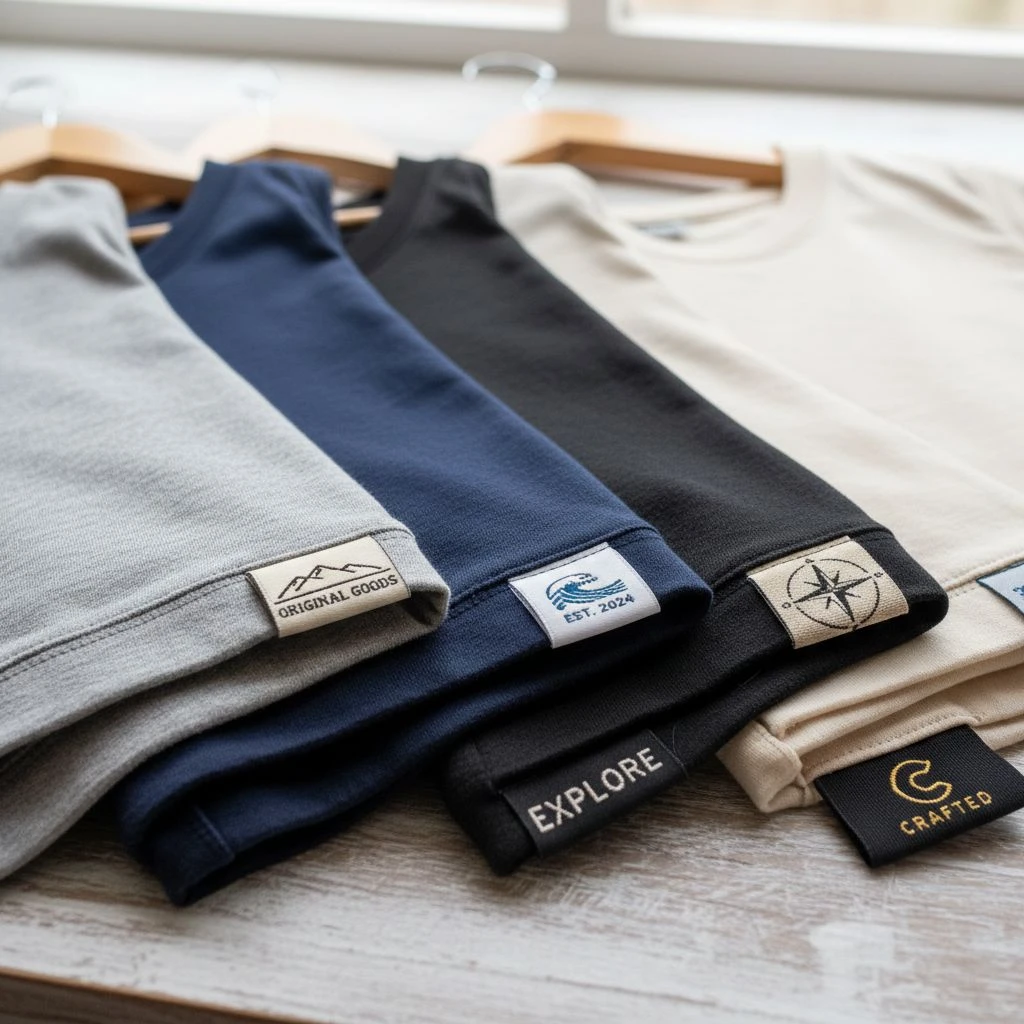
In a crowded market, a custom hem tag gives your product another brand touchpoint. It reinforces your logo subtly, making the garment feel brand-owned rather than a generic blank. This quiet brand marker helps build long-term recognition.
2) Increase Perceived Value and Professionalism
A plain T-shirt can be inexpensive to produce, but that does not mean it has to look cheap. Custom tags can improve perceived value.
For example, a heavyweight cotton T-shirt combined with:
- Thick matte swing tag
- Embossed logo
- Cotton cord
- Custom woven hem label
can create a much more premium impression. Customers are not only buying fabric and stitching. They are also buying the overall experience of the product. Small details help shape that experience.
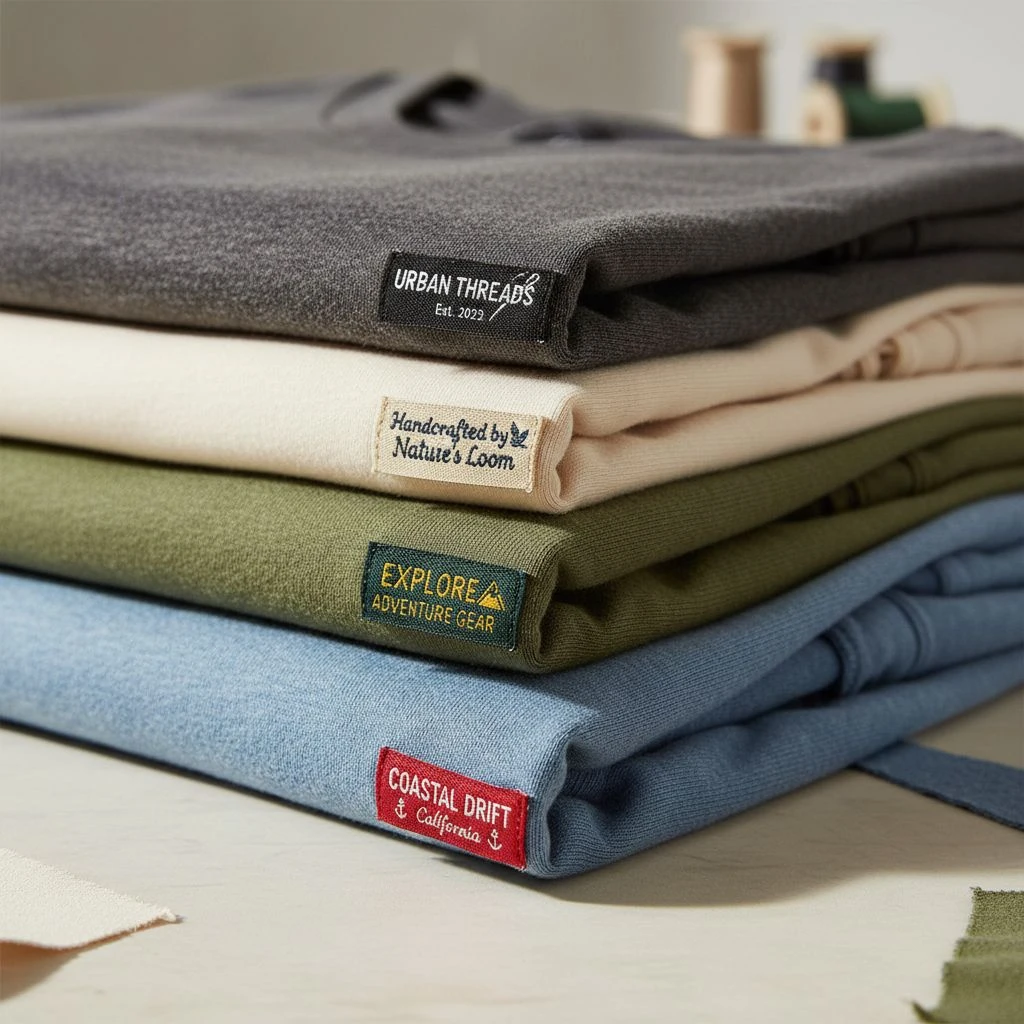
Perceived value isn’t only about fabric weight. A clean hem tag signals attention to detail and production care. Customers often judge quality based on these small finishes. Trust is built when a team cares about the final garment finishing.
3) Improve Brand Recognition
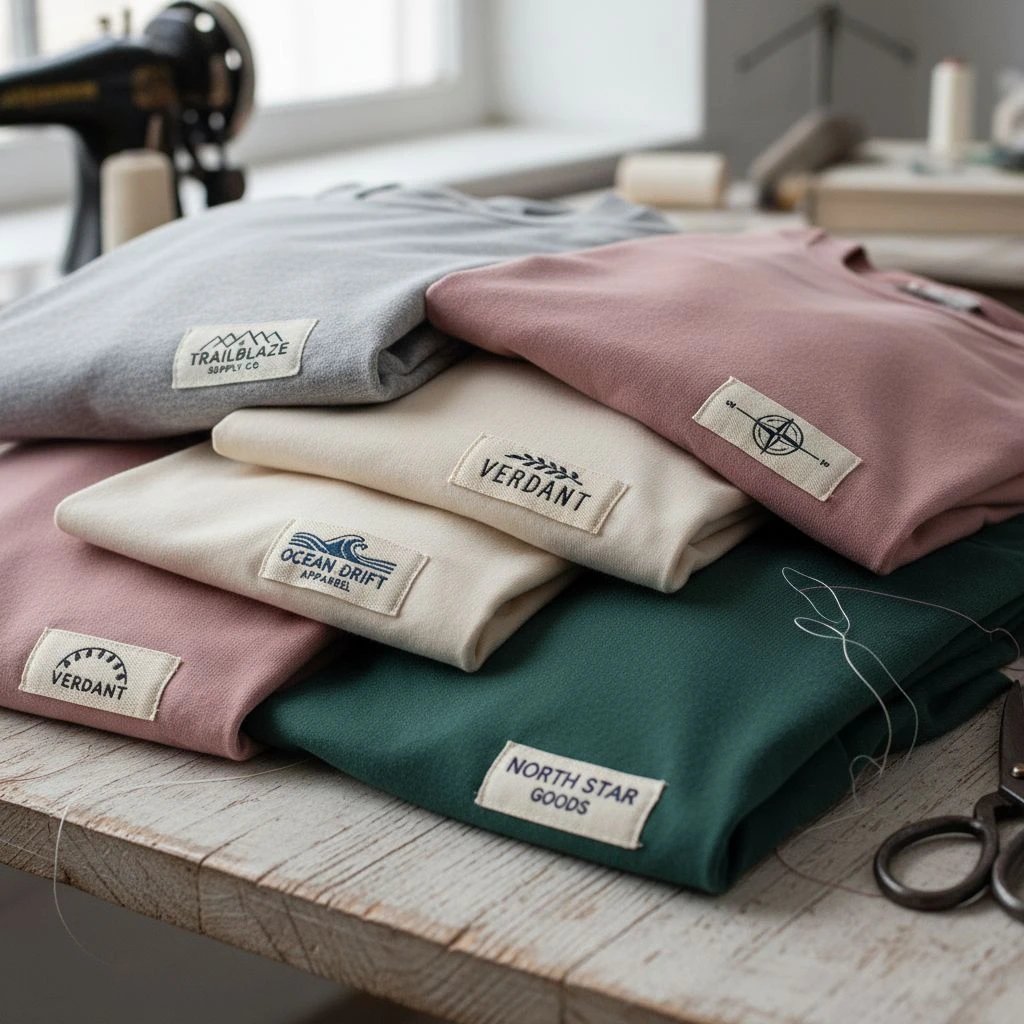
A hem tag can continue advertising your brand after the swing tag is removed. This is one of its biggest advantages. A small label on the lower hem or sleeve can become a recognizable visual signature. Some brands use the same label placement across many products. Over time, customers begin to associate that detail with the brand.

This can work especially well for:
- Streetwear brands
- Lifestyle brands
- Sportswear
- Casualwear
- Independent fashion labels
The branding is visible, but it does not need to dominate the garment. Repeat customers start recognizing signature details. A well-executed tag reflects high quality control and craftsmanship, separating average brands from trusted ones. It tells your brand story in a very small design space.
4) Provide Useful Product Information
Swing tags are useful because they can carry information that would otherwise be difficult to show clearly on the garment.
Typical details include:
- Product name
- Size
- Color
- Style code
- SKU
- Price
- Barcode
- Website
- QR code
- Material highlights
This helps both customers and retailers. For brands selling several T-shirt colors and sizes, accurate swing tags also make inventory management easier.
5) Tell the Story Behind the T-Shirt
Swing tags can do more than display numbers. They can also explain why the product is different. For example, you may highlight:
- Heavyweight cotton
- Organic cotton
- Recycled materials
- Garment dyeing
- Special washing
- Local manufacturing
- Limited-edition production
- Custom artwork
- Hand-finished details

A short message can help customers understand the value behind the product. The key is to keep it simple. A swing tag is not the place for a long essay. One or two clear messages usually work better.
6) Support a Better Unboxing Experience
T-shirts are increasingly sold online. That means packaging has become part of the customer experience.
When a buyer opens a package and sees:
- Neatly folded T-shirt
- Branded polybag or paper packaging
- Custom swing tag
- Woven hem label
- Thank-you card
the product can feel more thoughtful and professional. This matters because online customers cannot touch or try the garment before buying. Presentation helps build confidence.
Types of Hem Tags and Use Cases
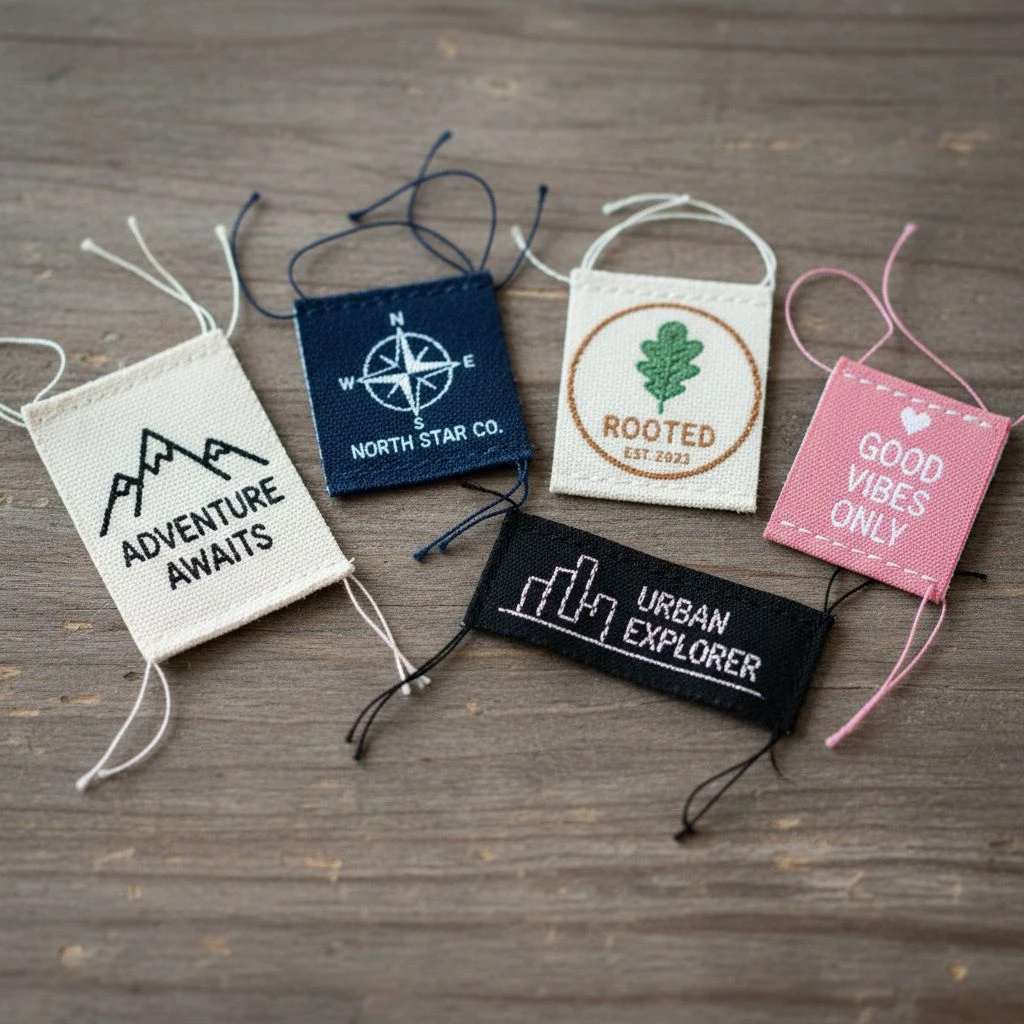
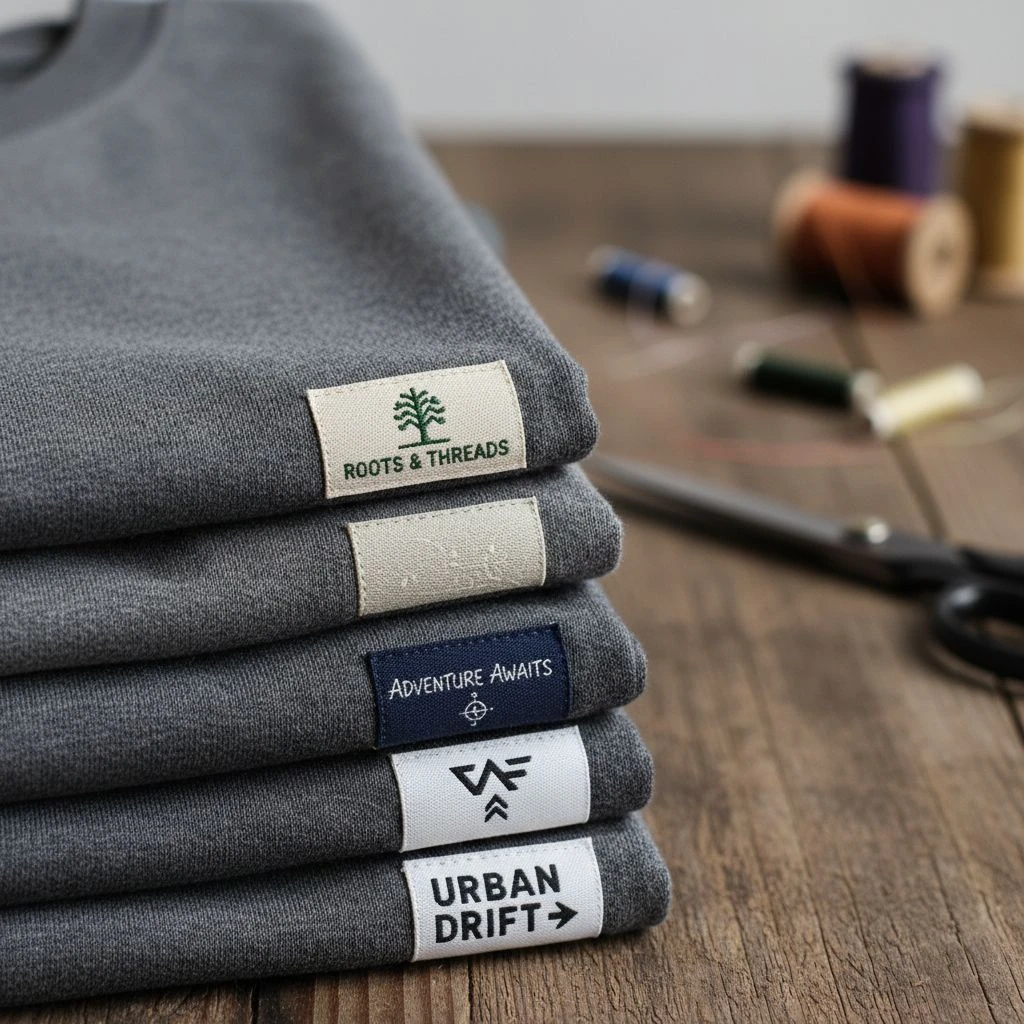
- Woven Labels: Most common for a premium, textured feel.
- Printed Labels: Better for fine text or detailed graphics.
- Fabric Patches: Bold and highly visible, often used in streetwear.
Common Mistakes to Avoid
Adding a tag is easy, but adding a good one takes thought. Avoid these common pitfalls:
- Sizing Issues: Tags that are too large look forced and awkward.
- Technical Failures: Low contrast designs that are unreadable in real life or poor stitching quality.
- Overbranding: Combining too many prints and tags creates visual noise.
When Are Custom Hem Tags Worth the Investment?
Hem tags are a smart investment for premium or retail-focused brands. They are especially useful for streetwear, boutique labels, and gym brands trying to look more established. If you have a tight budget or a very low order quantity, you might prioritize fit and fabric quality first.
Conclusion / Final Words
Custom hem tags help turn a basic T-shirt into a complete product. Execution is key: keep the design simple, ensure intentional placement, and maintain clean stitching. Treat hem tags as a strategic finishing detail to build a stronger, more recognizable brand signature.