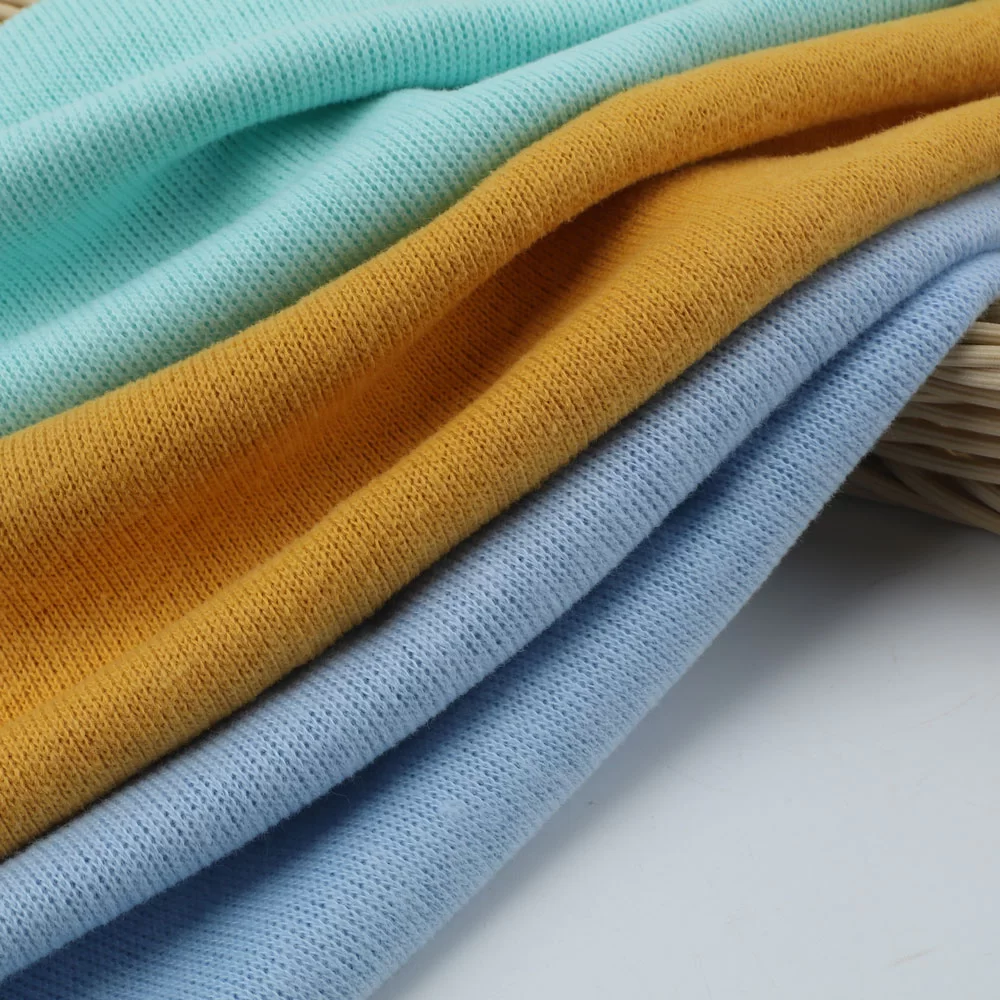


Synthetic fabrics have become one of the most widely used material groups in modern textiles. Strong, versatile, and easy to care for, they are essential in everything from everyday fashion to high-performance industrial gear. Because they are engineered through science, these fabrics offer specific benefits—like extreme stretch or water resistance—that natural fibers cannot always provide.
What Are Synthetic Fabrics?
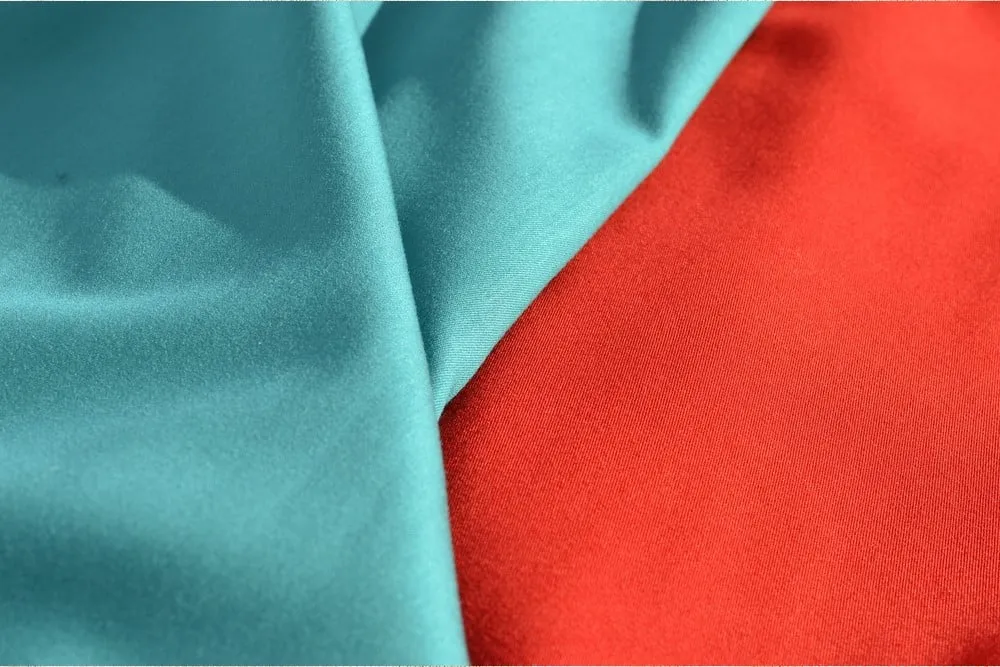
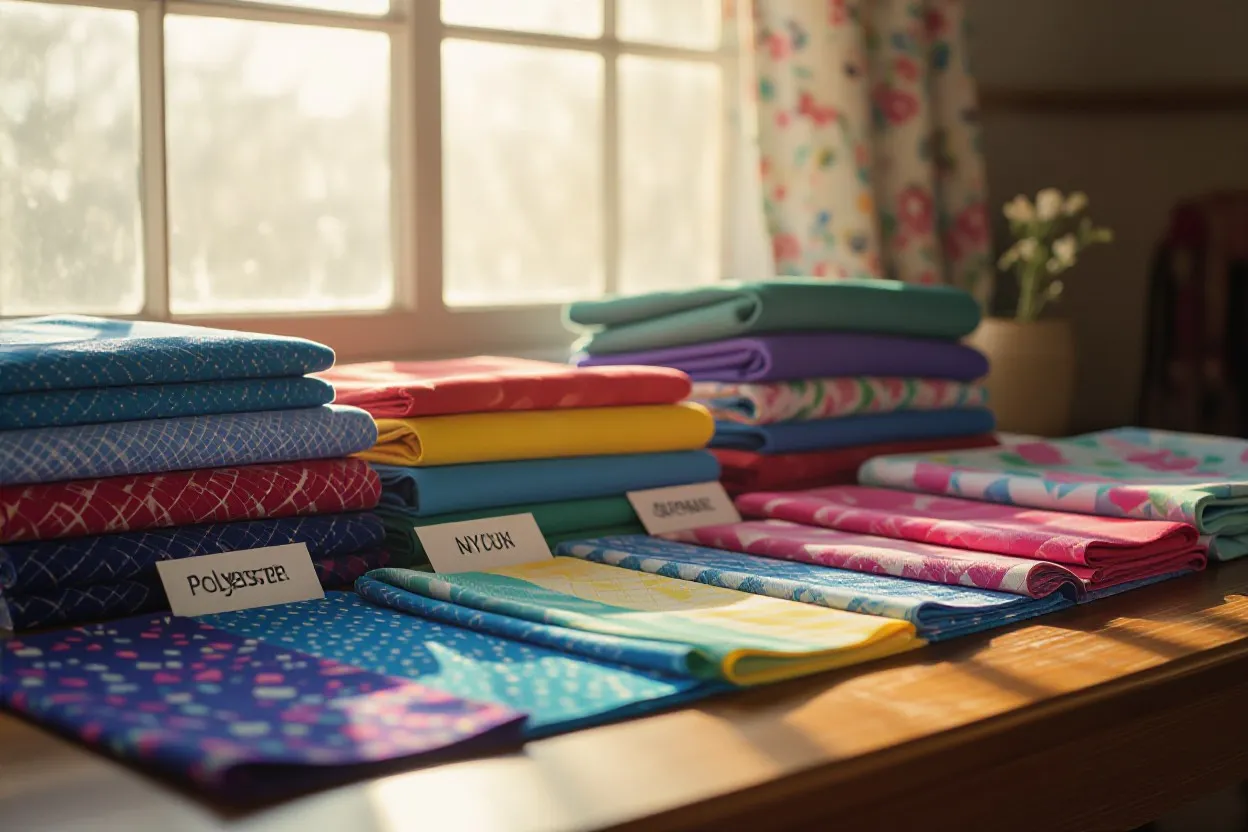
Synthetic fabrics are textiles made from manufactured fibers created through chemical processes rather than fibers obtained directly from plants or animals. Many commonly used synthetic fibers are produced from petrochemical-based polymers. Examples include:
- Polyester
- Nylon
- Acrylic
- Elastane
- Polypropylene
After the polymer is produced, it is converted into fibers or filaments that can be made into yarn and then knitted, woven, or otherwise formed into textile materials.
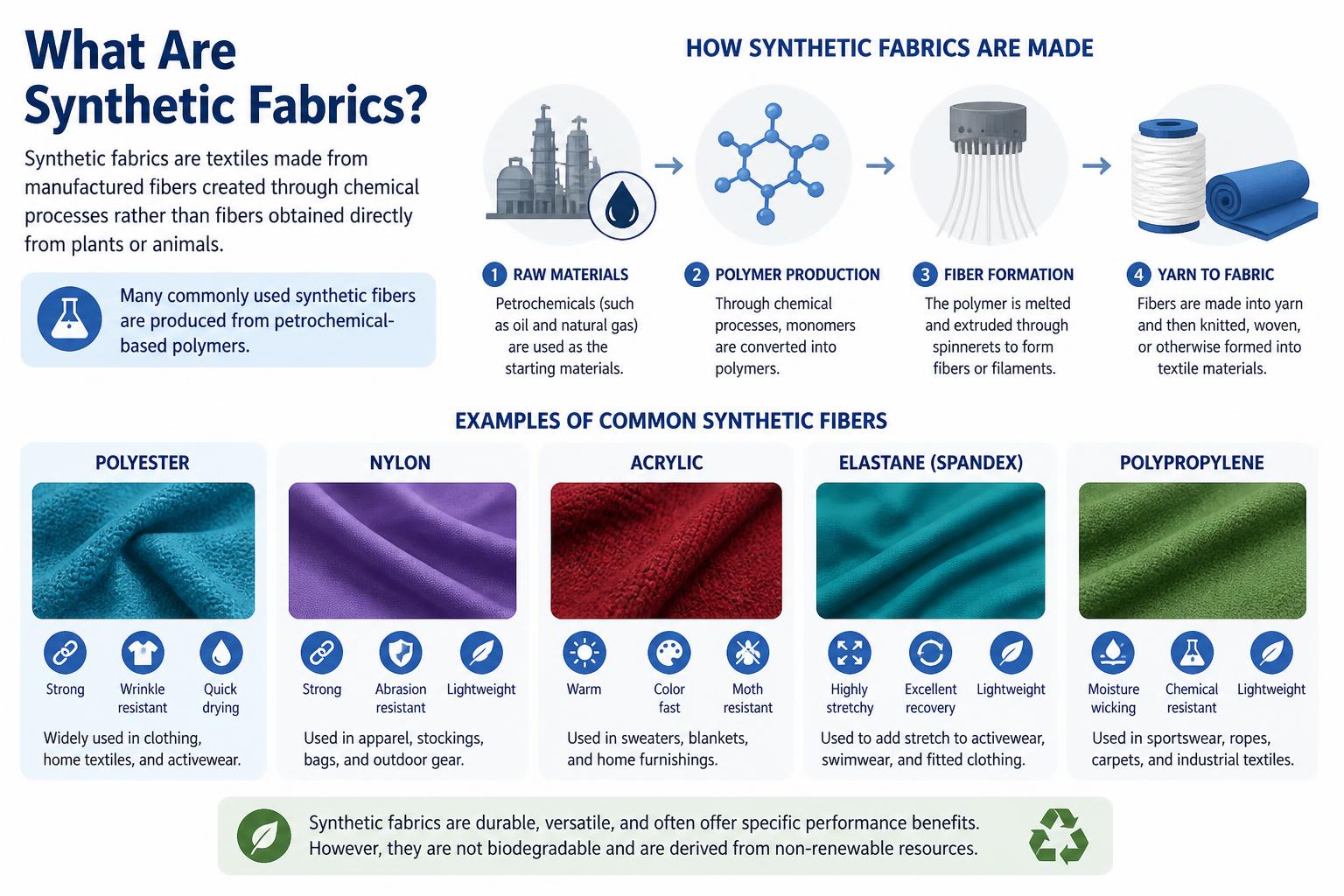
Synthetic fabrics are man-made textiles created through chemical processes, usually derived from petroleum-based compounds. Unlike natural fibers from plants or animals, synthetic fibers are engineered for specific performance needs. Manufacturers can precisely adjust strength, elasticity, and texture, resulting in durable and highly adaptable materials.
How Are Synthetic Fabrics Made?
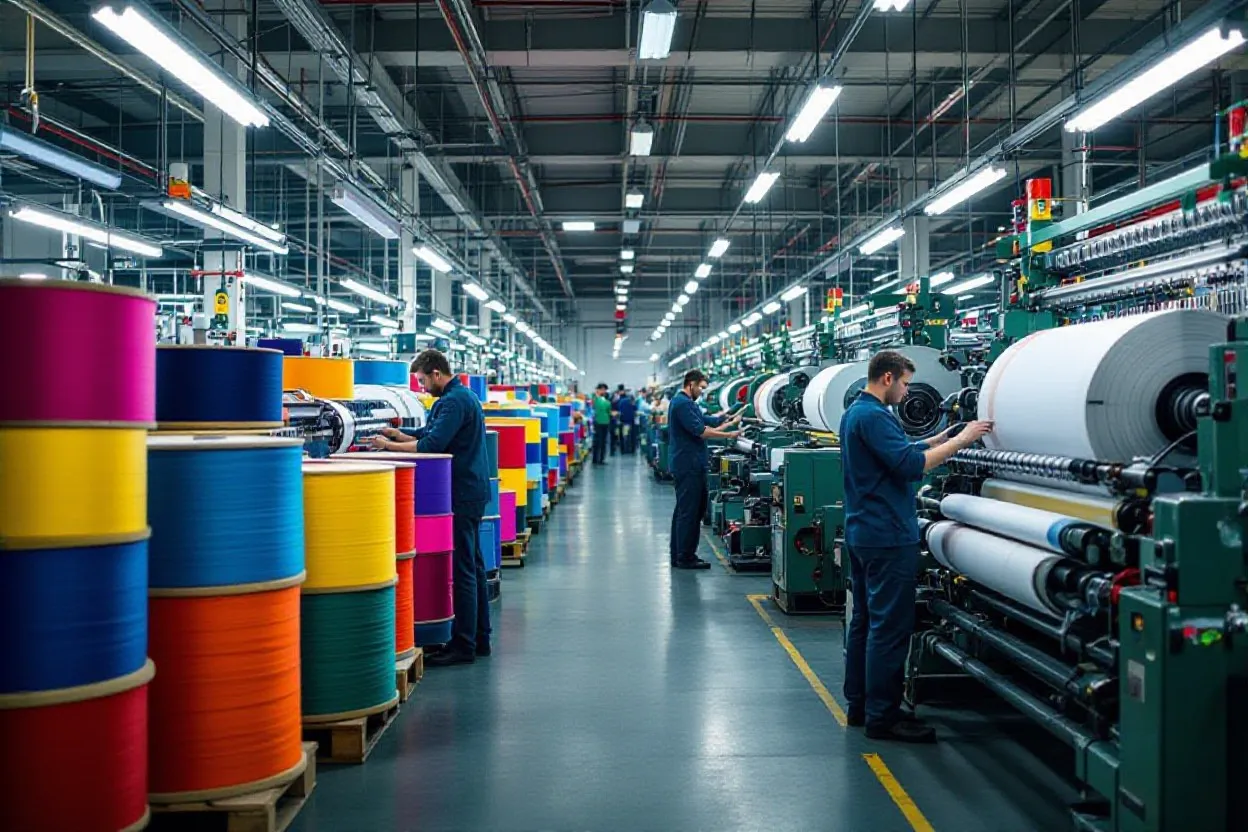
The creation of synthetic fabrics begins in chemical plants rather than farms. The production follows a rigorous four-stage process to ensure consistent quality and performance.
- Polymerization: Raw chemicals react to form long chains of molecules called polymers, appearing as chips or liquid.
- Spinning: Polymers are melted and pushed through a spinneret (a plate with tiny holes, often around 100 μm) to form thin filaments.
- Drawing: Filaments are stretched—usually 3 to 6 times their original length—to align molecules and significantly boost strength and durability.
- Finishing: Fibers are textured, dyed, or coated with water-repellent or anti-odor treatments to meet final design specifications.
Are All Man-Made Fibers Synthetic?
No. This distinction is useful. Some fibers are man-made but not fully synthetic. For example:
- Viscose
- Modal
- Lyocell
are manufactured fibers, but they are generally made from regenerated cellulose. Polyester and nylon, by contrast, are synthetic polymer fibers. So: Man-Made Fiber NOT Always Synthetic Fiber
Advantages and Disadvantages
| Pros | Cons |
|---|---|
| Durable | Can be sensitive to high heat |
| Easy to care for | Some fabrics may feel less breathable |
| Often quick drying | Some can retain odor |
| Excellent stretch options | Static may occur |
| Good abrasion resistance | Pilling can occur |
| Wide design flexibility | Environmental concerns |
| Consistent production | Microfiber shedding can occur |
| Suitable for technical finishes | Recycling can be difficult for complex blends |
Key Benefits:
- High Durability: Resistant to tearing, stretching, and daily wear and tear.
- Easy Maintenance: Most are machine washable and require little to no ironing.
- Affordability: Lower production costs compared to premium natural fibers.
Considerations:
- Breathability: Synthetics can trap heat, making them feel “stuffy” in humid climates.
- Heat Sensitivity: High temperatures from irons or dryers can melt the fibers.
- Environmental Impact: Derived from fossil fuels; however, recycled PET (from plastic bottles) is becoming a standard eco-friendly alternative.

The Common Types of Synthetic Fabrics
Each synthetic fiber serves a unique purpose based on its engineered characteristics:
- Polyester: The world’s most used synthetic. Wrinkle-resistant, quick-drying, and ideal for uniforms and sportswear.
- Nylon (Polyamide): Known for exceptional toughness and abrasion resistance. Perfect for swimwear, jackets, and ropes.
- Acrylic: Designed to mimic the warmth of wool. Lightweight and moth-resistant, used heavily in knitwear and blankets.
- Elastane (Spandex/Lycra): Famous for extreme stretch (up to 500%). Nearly always blended to improve garment fit.
- Polypropylene: Lightweight and moisture-repellent, commonly found in thermal base layers and medical disposables.
Polyester
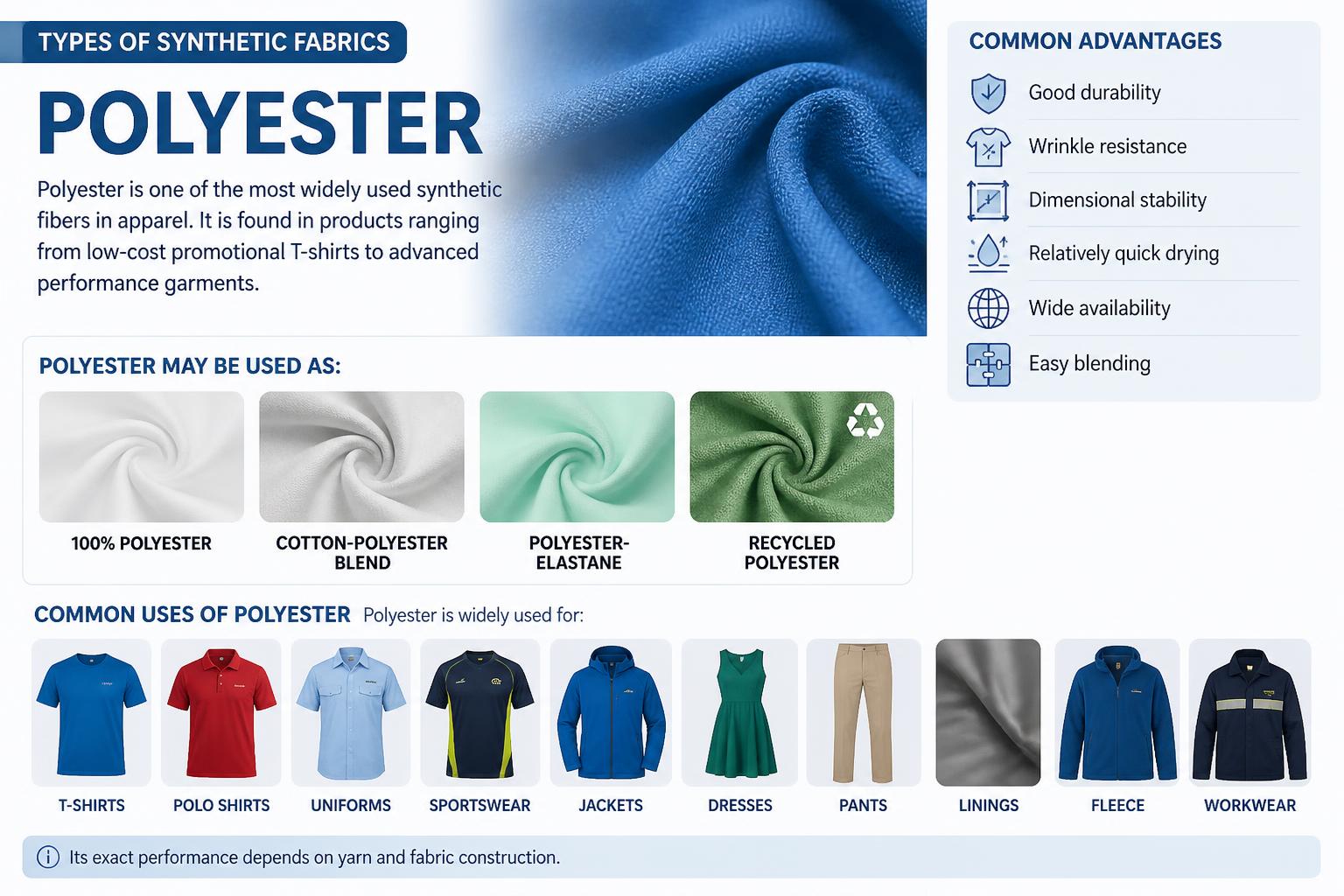
Polyester is one of the most widely used synthetic fibers in apparel. It is found in products ranging from low-cost promotional T-shirts to advanced performance garments.
Common advantages include:
- Good durability
- Wrinkle resistance
- Dimensional stability
- Relatively quick drying
- Wide availability
- Easy blending
Polyester may be used as:
- 100% polyester
- Cotton-polyester blend
- Polyester-elastane
- Recycled polyester
Common Uses of Polyester
Polyester is widely used for:
- T-shirts
- Polo shirts
- Uniforms
- Sportswear
- Jackets
- Dresses
- Pants
- Linings
- Fleece
- Workwear
Its exact performance depends on yarn and fabric construction.
Nylon
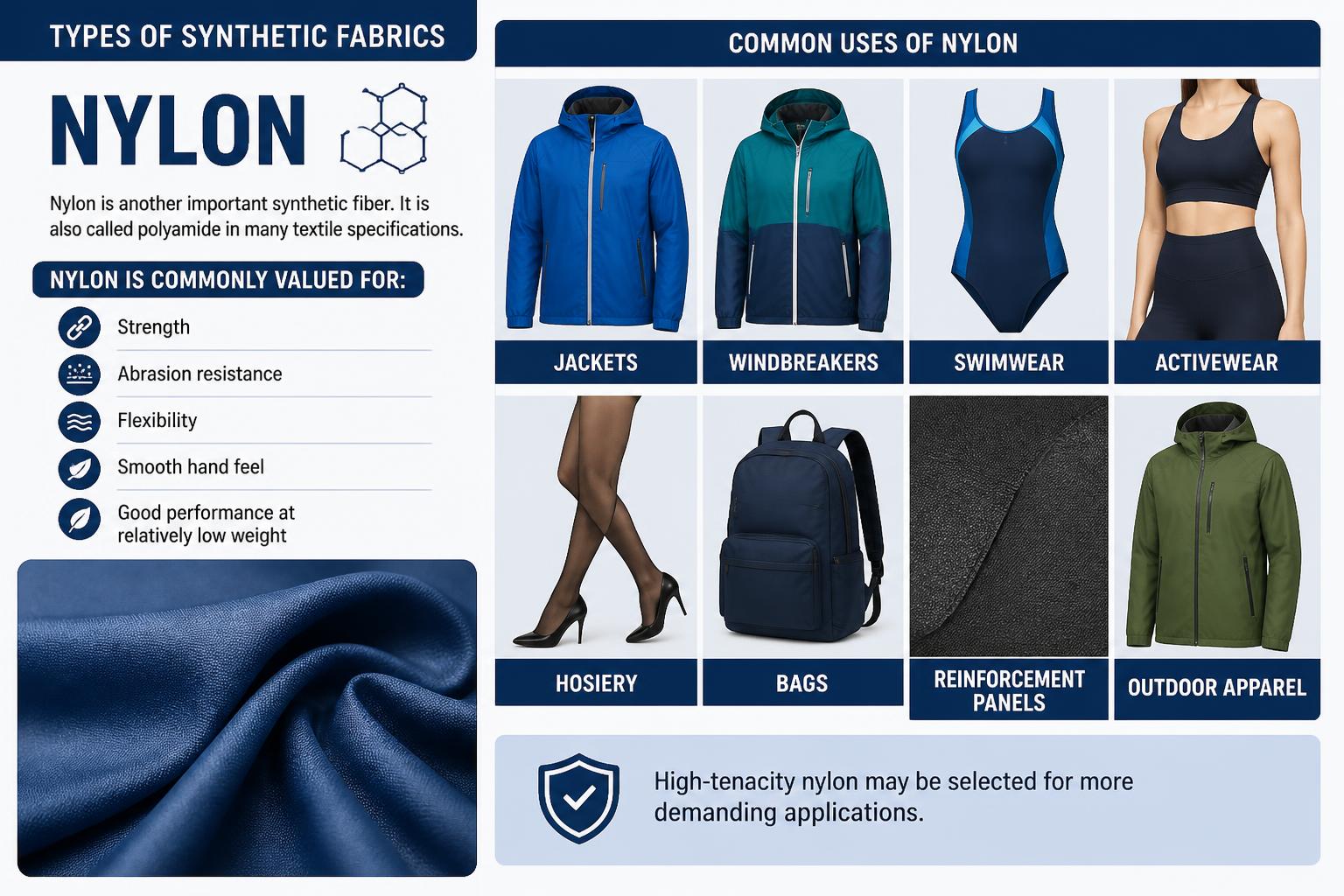
Nylon is another important synthetic fiber. It is also called polyamide in many textile specifications.
Nylon is commonly valued for:
- Strength
- Abrasion resistance
- Flexibility
- Smooth hand feel
- Good performance at relatively low weight
Common Uses of Nylon:
Nylon is commonly used for:
- Jackets
- Windbreakers
- Swimwear
- Activewear
- Hosiery
- Bags
- Reinforcement panels
- Outdoor apparel

High-tenacity nylon may be selected for more demanding applications.
Acrylic
Acrylic is a synthetic fiber commonly used in products where a soft, wool-like appearance or hand feel is desired.
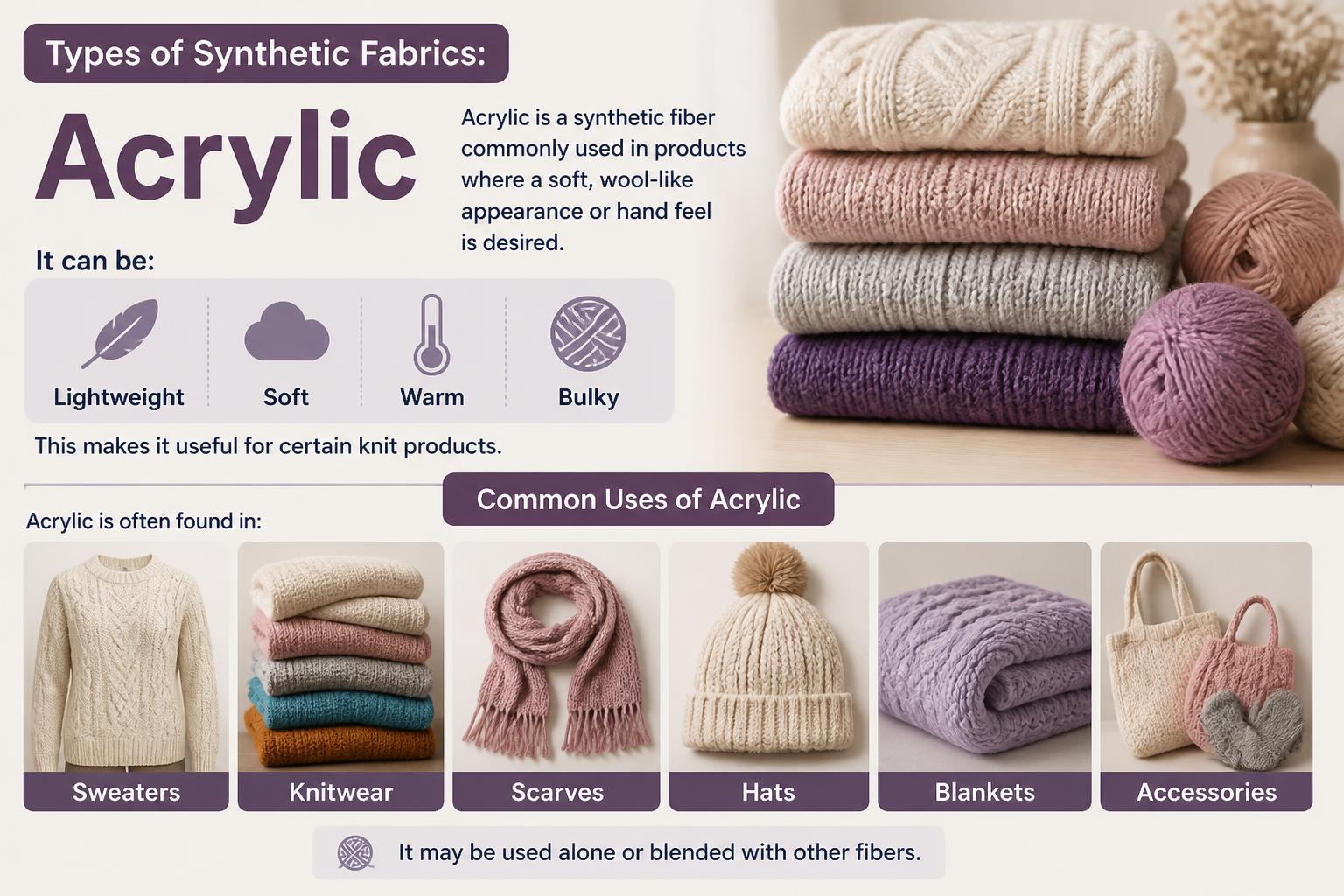
It can be:
- Lightweight
- Soft
- Warm
- Bulky
This makes it useful for certain knit products.
Common Uses of Acrylic
Acrylic is often found in:
- Sweaters
- Knitwear
- Scarves
- Hats
- Blankets
- Accessories
It may be used alone or blended with other fibers.
Elastane / Spandex
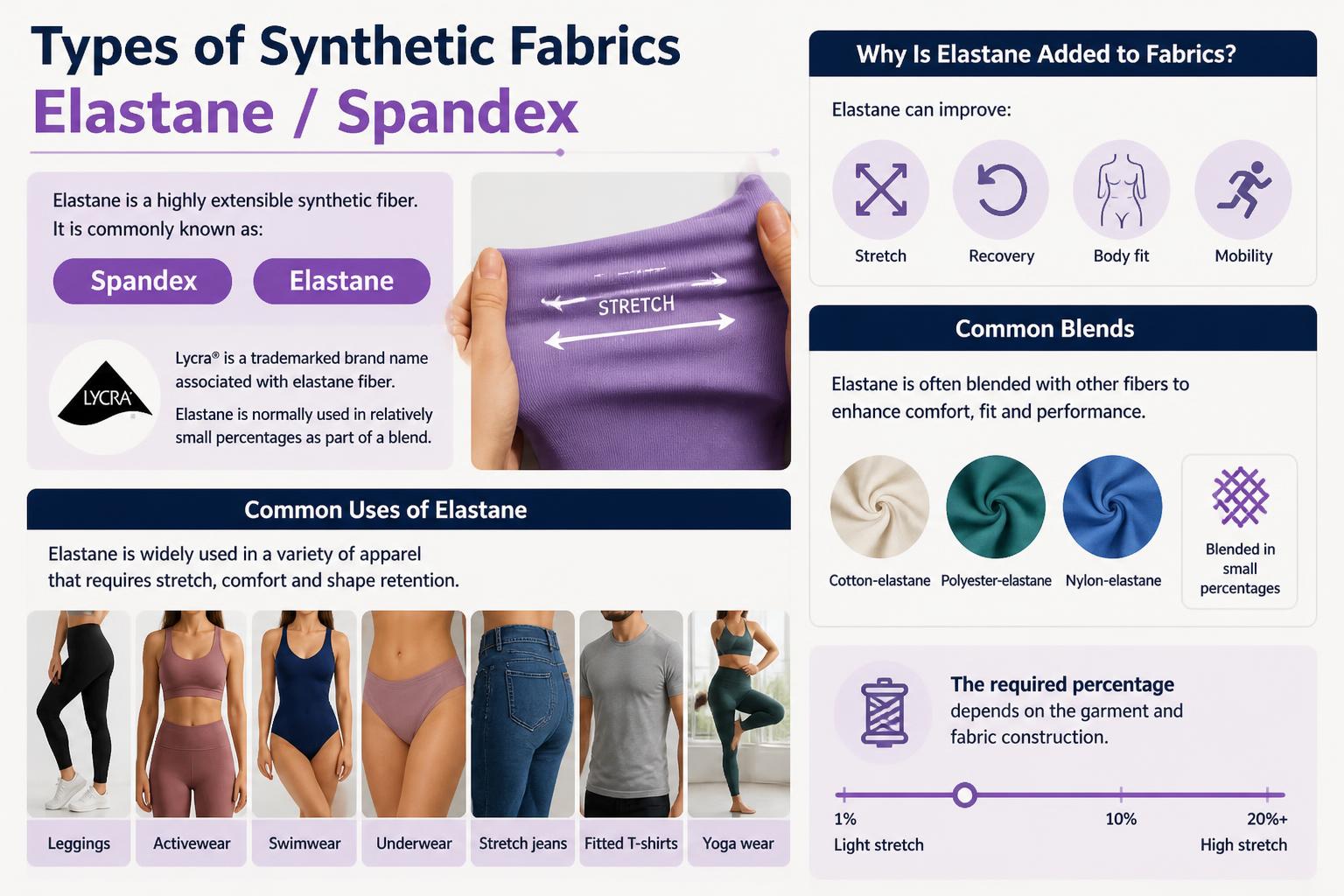
Elastane is a highly extensible synthetic fiber. It is commonly known as:
- Spandex
- Elastane
Lycra® is a trademarked brand name associated with elastane fiber. Elastane is normally used in relatively small percentages as part of a blend.
Why Is Elastane Added to Fabrics?
Elastane can improve:
- Stretch
- Recovery
- Body fit
- Mobility
Common blends include:
- Cotton-elastane
- Polyester-elastane
- Nylon-elastane
Common Uses of Elastane
Elastane is widely used in:
- Leggings
- Activewear
- Swimwear
- Underwear
- Stretch jeans
- Fitted T-shirts
- Yoga wear
The required percentage depends on the garment and fabric construction.
Polypropylene
Polypropylene is a very lightweight synthetic polymer used in apparel and technical textiles.
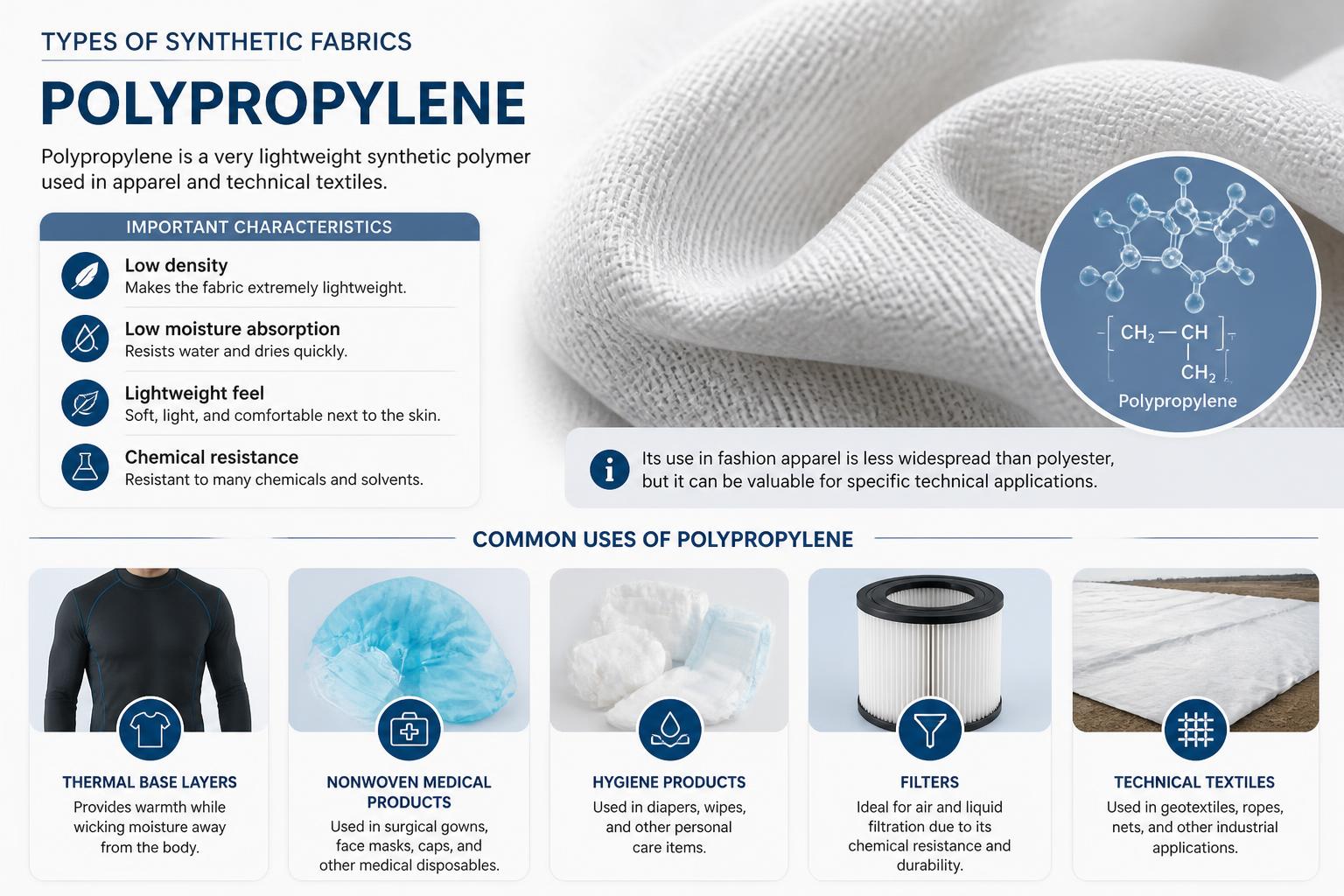
Important characteristics may include:
- Low density
- Low moisture absorption
- Lightweight feel
- Chemical resistance
Common Uses of Polypropylene
Applications may include:
- Thermal base layers
- Nonwoven medical products
- Hygiene products
- Filters
- Technical textiles
Its use in fashion apparel is less widespread than polyester, but it can be valuable for specific technical applications.
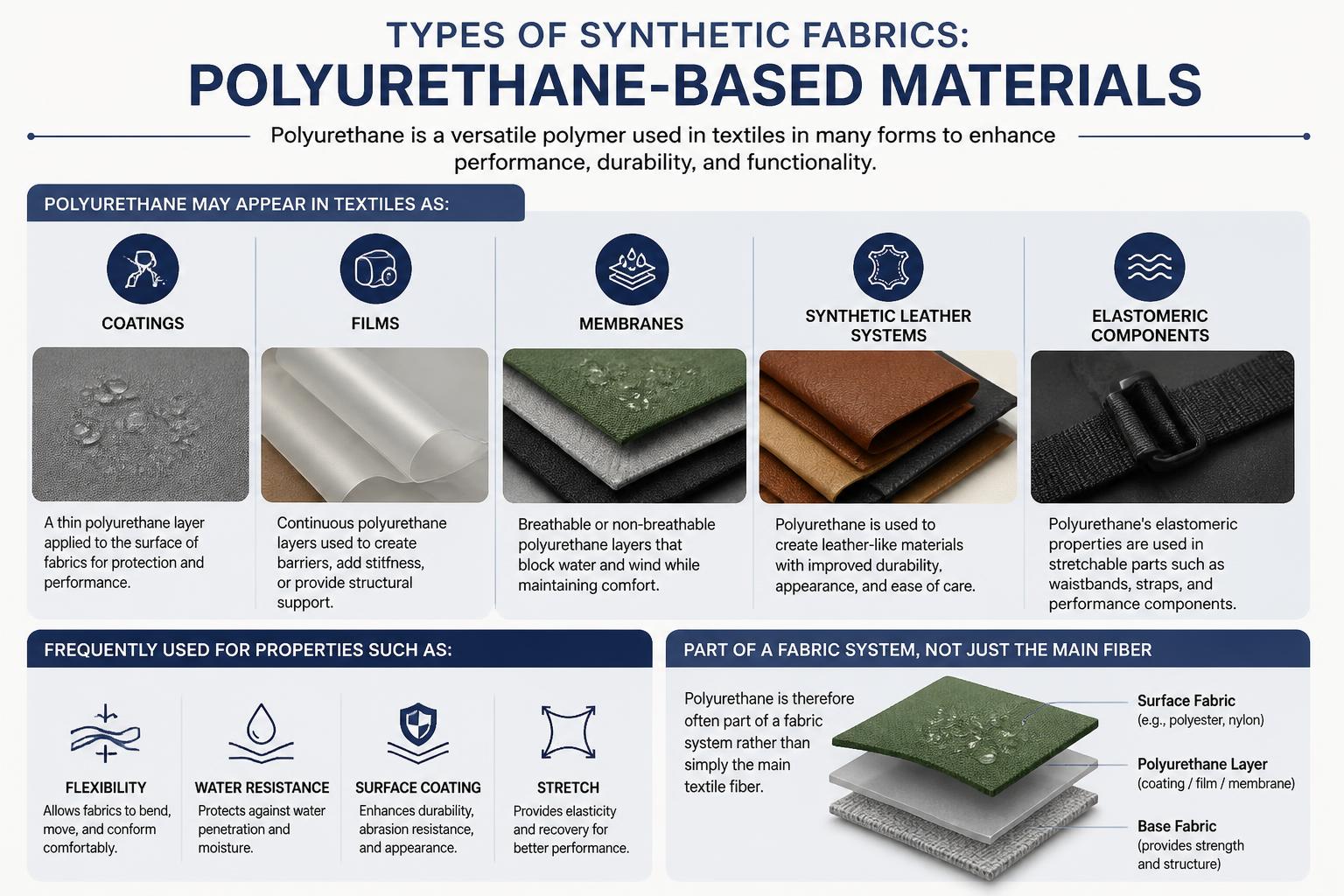
Polyurethane-Based Materials
Polyurethane may appear in textiles as:
- Coatings
- Films
- Membranes
- Synthetic leather systems
- Elastomeric components
It is frequently used when manufacturers need properties such as:
- Flexibility
- Water resistance
- Surface coating
- Stretch
Polyurethane is therefore often part of a fabric system rather than simply the main textile fiber.

Synthetic Microfibers
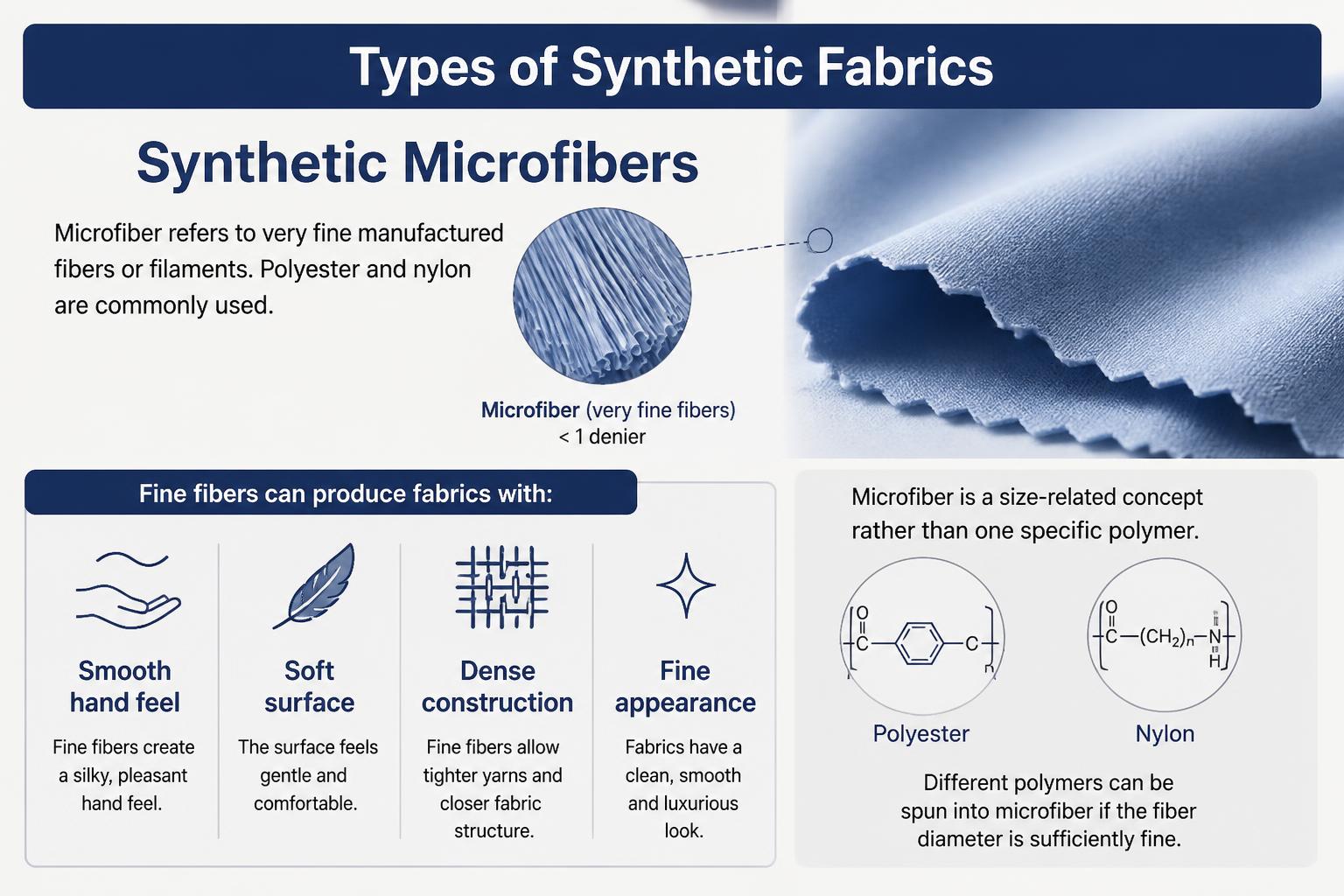
Microfiber refers to very fine manufactured fibers or filaments. Polyester and nylon are commonly used.
Fine fibers can produce fabrics with:
- Smooth hand feel
- Soft surface
- Dense construction
- Fine appearance
Microfiber is a size-related concept rather than one specific polymer.
Applications Across Industries
- Fashion: Sportswear, athleisure, outerwear, and durable everyday basics.
- Home Decor: Upholstery, curtains, and high-traffic rugs.
- Industrial: Medical textiles, seatbelts, filters, and protective safety equipment.

Synthetic Fabrics in T-Shirts
Synthetic fibers are widely used in T-shirts.
Polyester may be selected for:
- Sports T-shirts
- Uniforms
- Promotional tees
- Quick-dry products
Cotton-polyester blends may be used when brands want a balance of:
- Comfort
- Durability
- Dimensional stability

Synthetic Fabrics in Polo Shirts
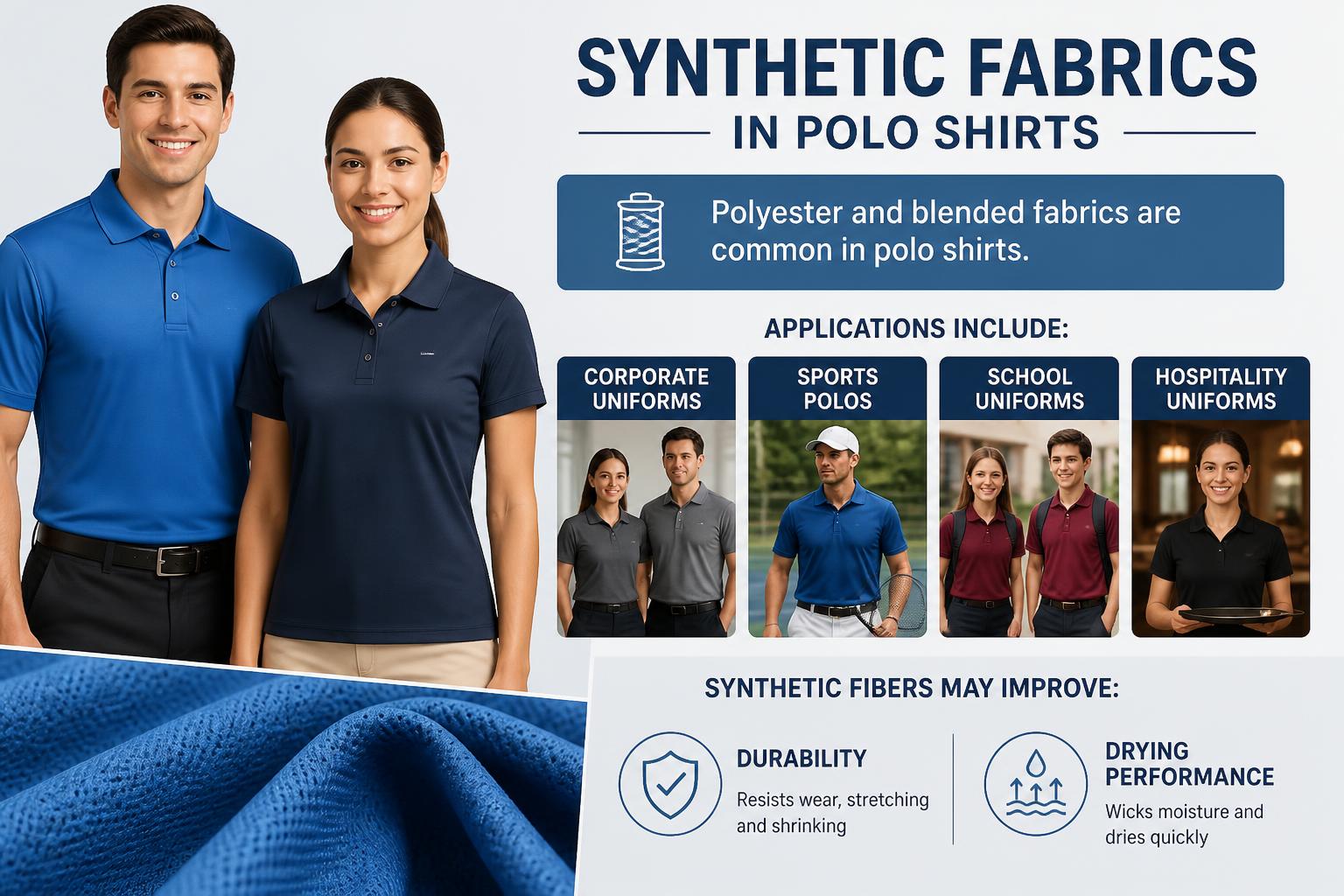
Polyester and blended fabrics are common in polo shirts.
Applications include:
- Corporate uniforms
- Sports polos
- School uniforms
- Hospitality uniforms
Synthetic fibers may improve durability and drying performance.
Synthetic Fabrics in Sportswear
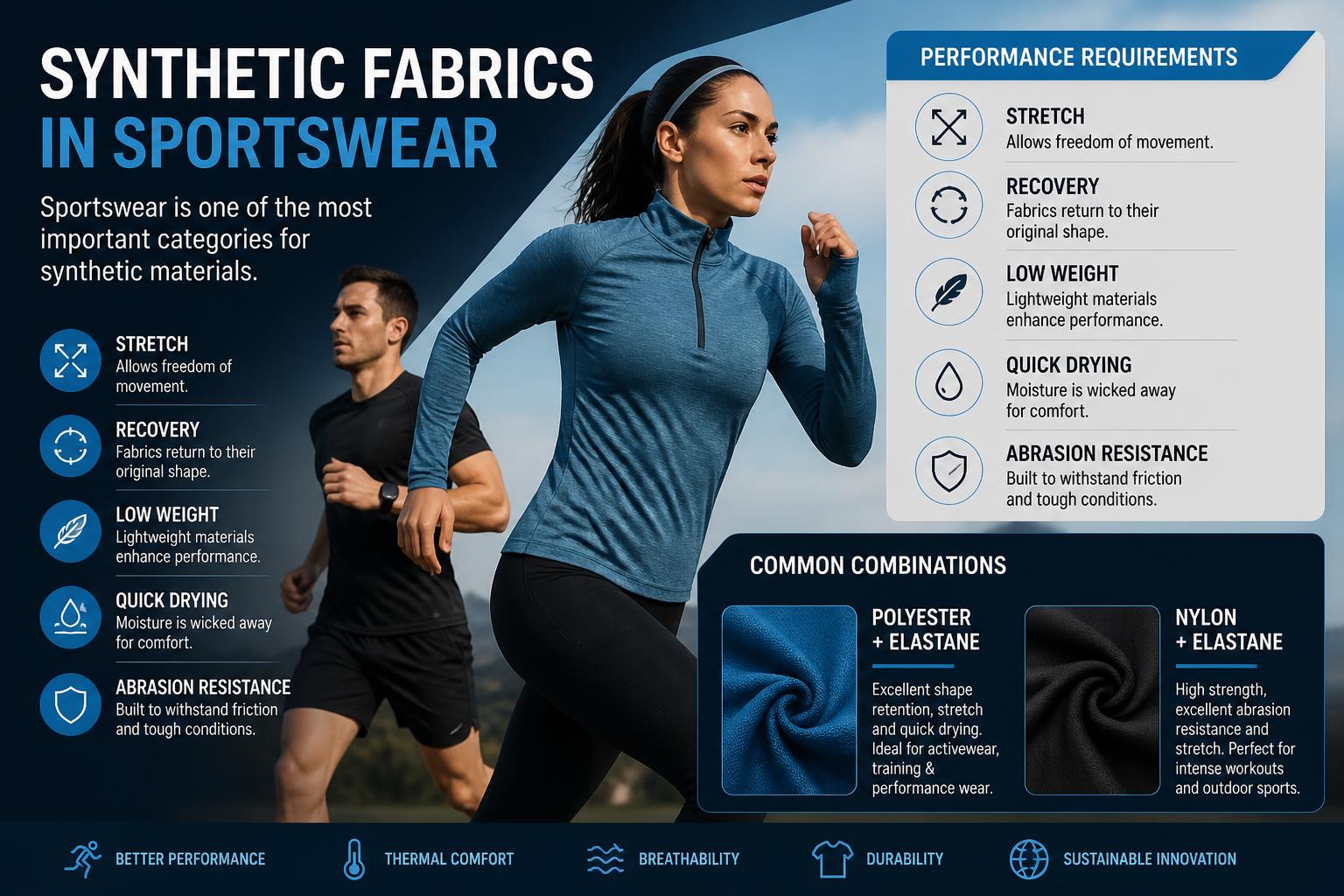
Sportswear is one of the most important categories for synthetic materials.
Performance requirements may include:
- Stretch
- Recovery
- Low weight
- Quick drying
- Abrasion resistance
Common combinations include:
- Polyester + Elastane
- Nylon + Elastane
Synthetic Fabrics in Leggings
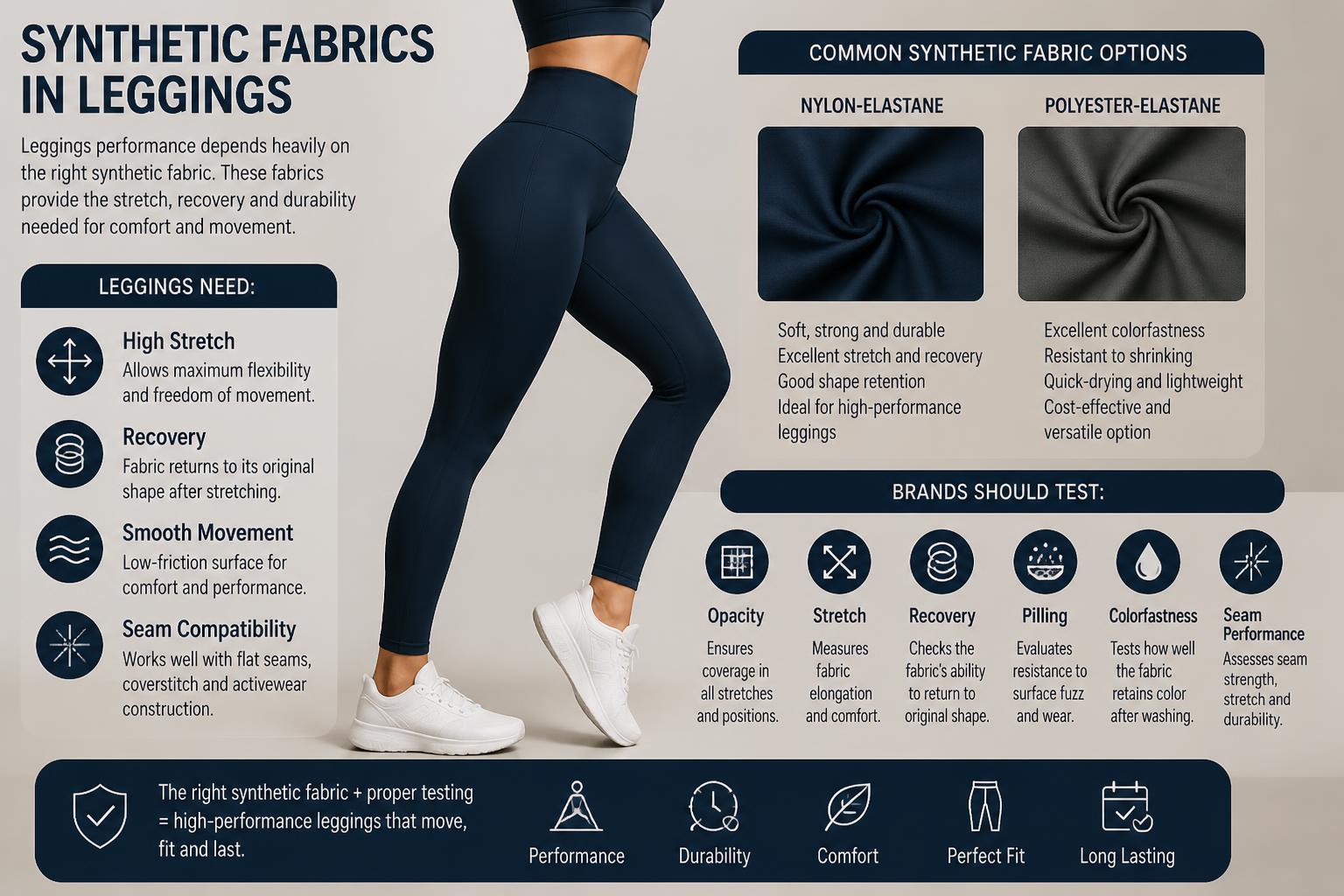
Leggings need:
- High stretch
- Recovery
- Smooth movement
- Seam compatibility
Nylon-elastane and polyester-elastane fabrics are common options.
However, brands should test:
- Opacity
- Stretch
- Recovery
- Pilling
- Colorfastness
- Seam performance
Synthetic Fabrics in Swimwear
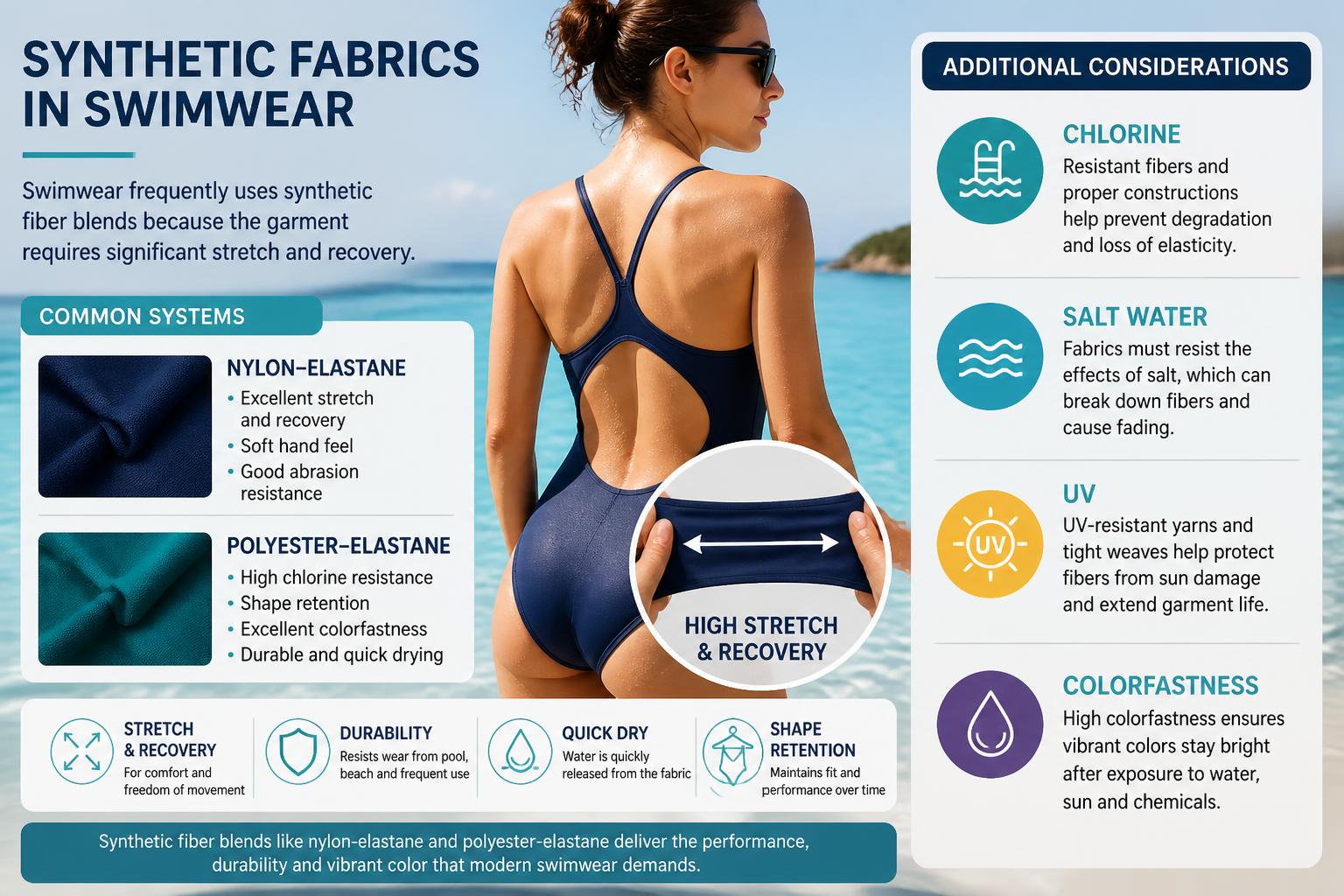
Swimwear frequently uses synthetic fiber blends because the garment requires significant stretch and recovery.
Common systems include:
- Nylon-elastane
- Polyester-elastane
Additional considerations include:
- Chlorine
- Salt water
- UV
- Colorfastness
- Recovery
Synthetic Fabrics in Jackets
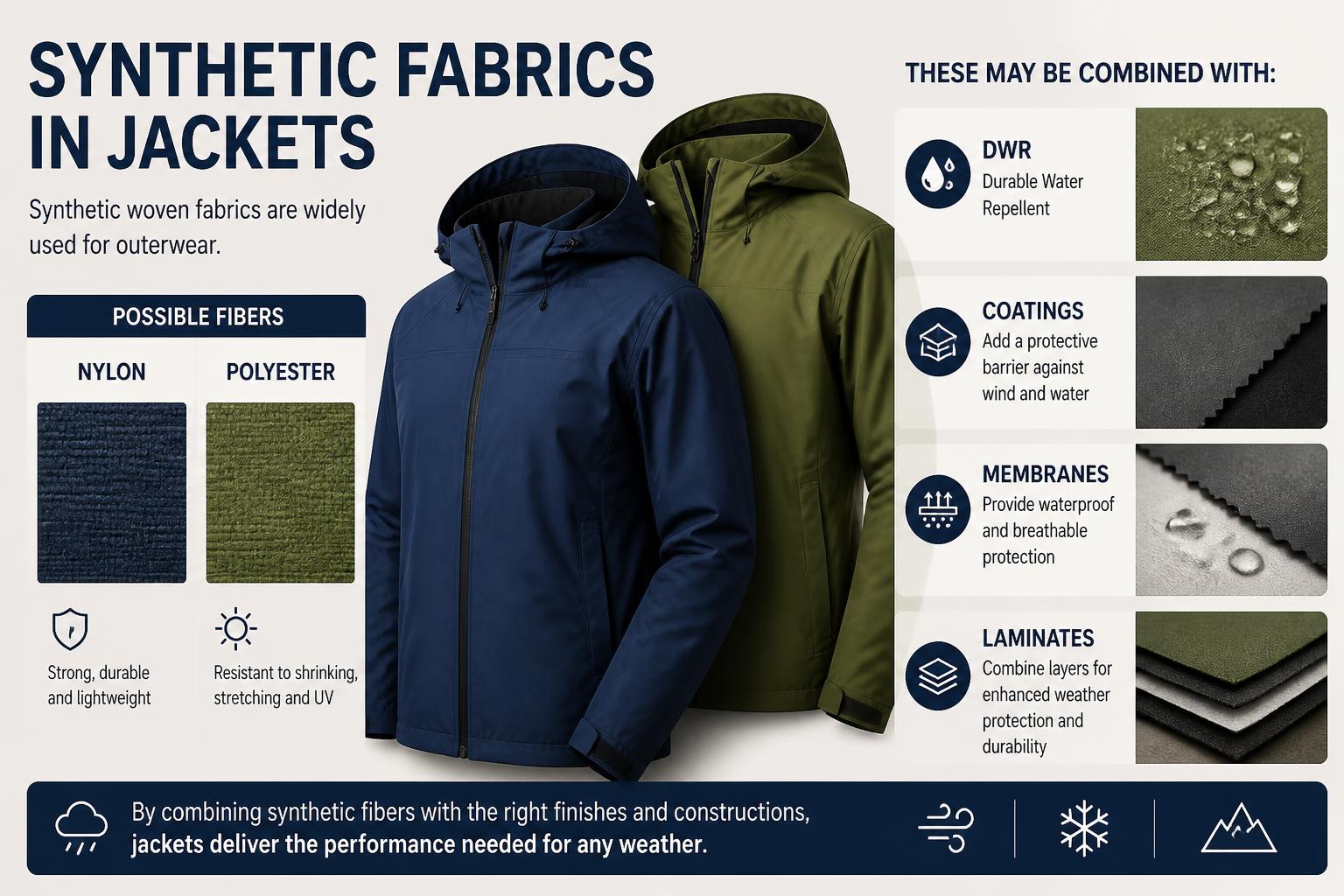
Synthetic woven fabrics are widely used for outerwear.
Possible fibers include:
- Nylon
- Polyester
These may be combined with:
- DWR
- Coatings
- Membranes
- Laminates
depending on the required weather protection.
Synthetic Fabrics in Workwear
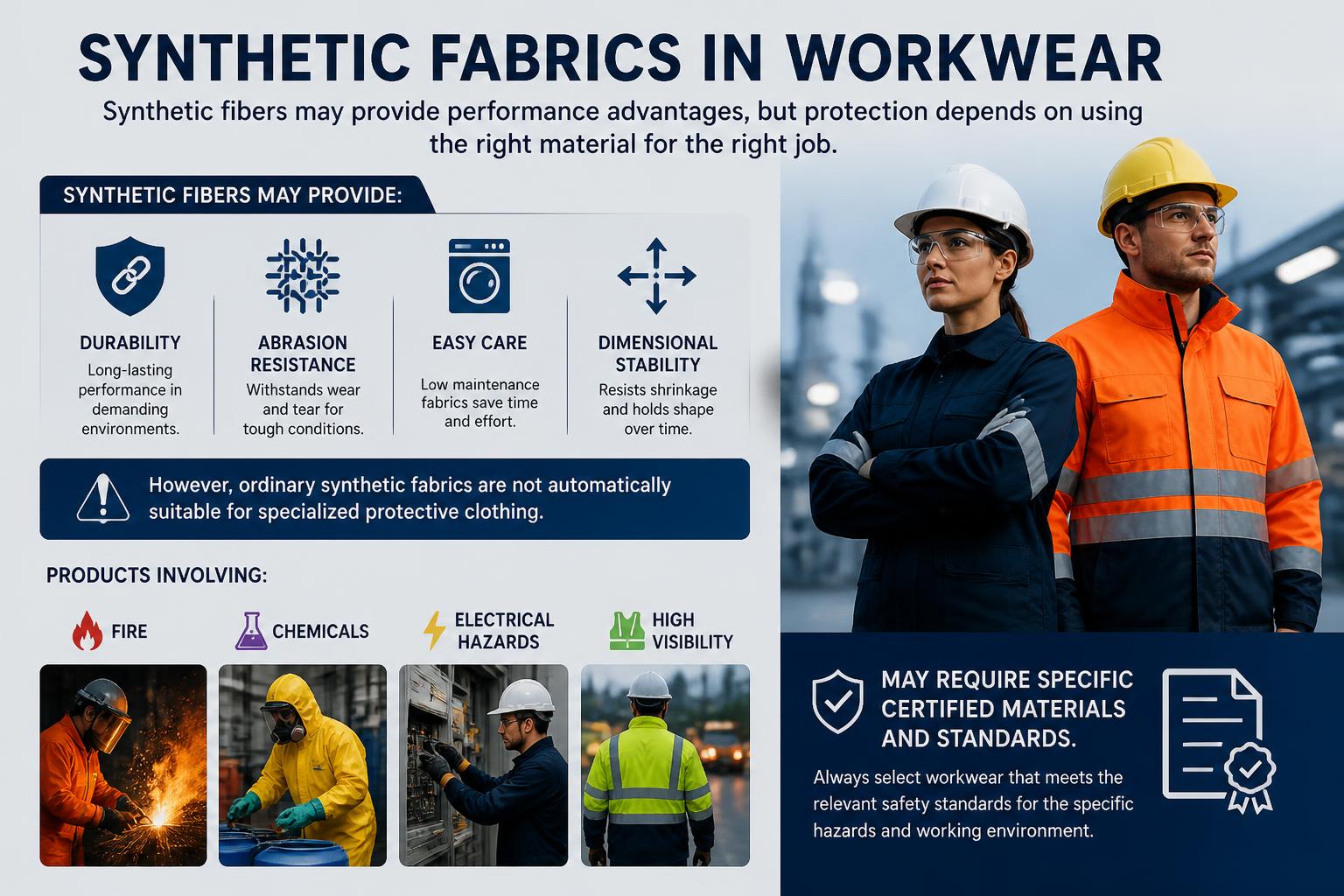
Synthetic fibers may provide:
- Durability
- Abrasion resistance
- Easy care
- Dimensional stability
However, ordinary synthetic fabrics are not automatically suitable for specialized protective clothing.
Products involving:
- Fire
- Chemicals
- Electrical hazards
- High visibility
may require specific certified materials and standards.
Synthetic Fabrics in Underwear
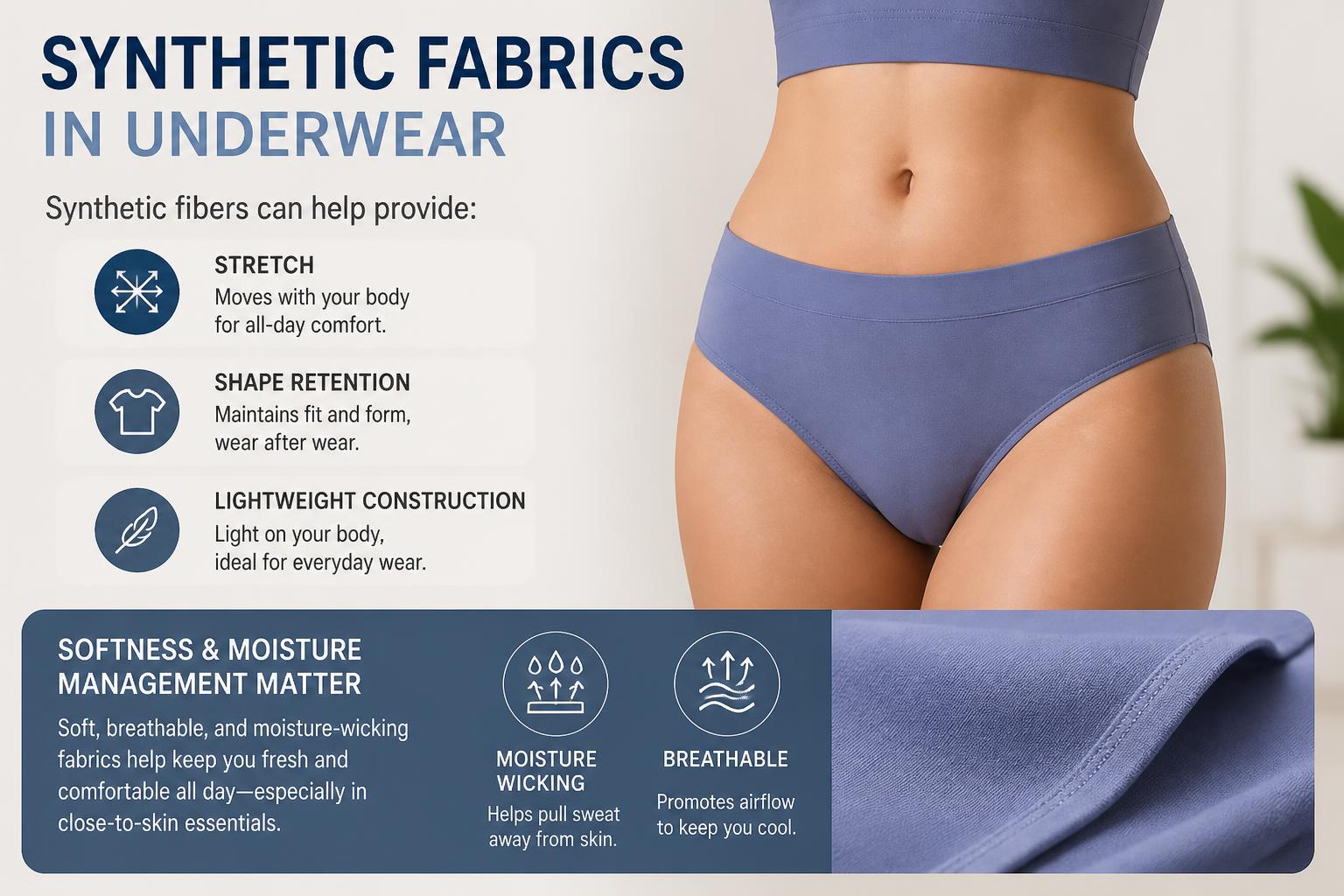
Synthetic fibers can help provide:
- Stretch
- Shape retention
- Lightweight construction
Softness and moisture management become especially important for close-to-skin products.
Synthetic Fabrics in Socks
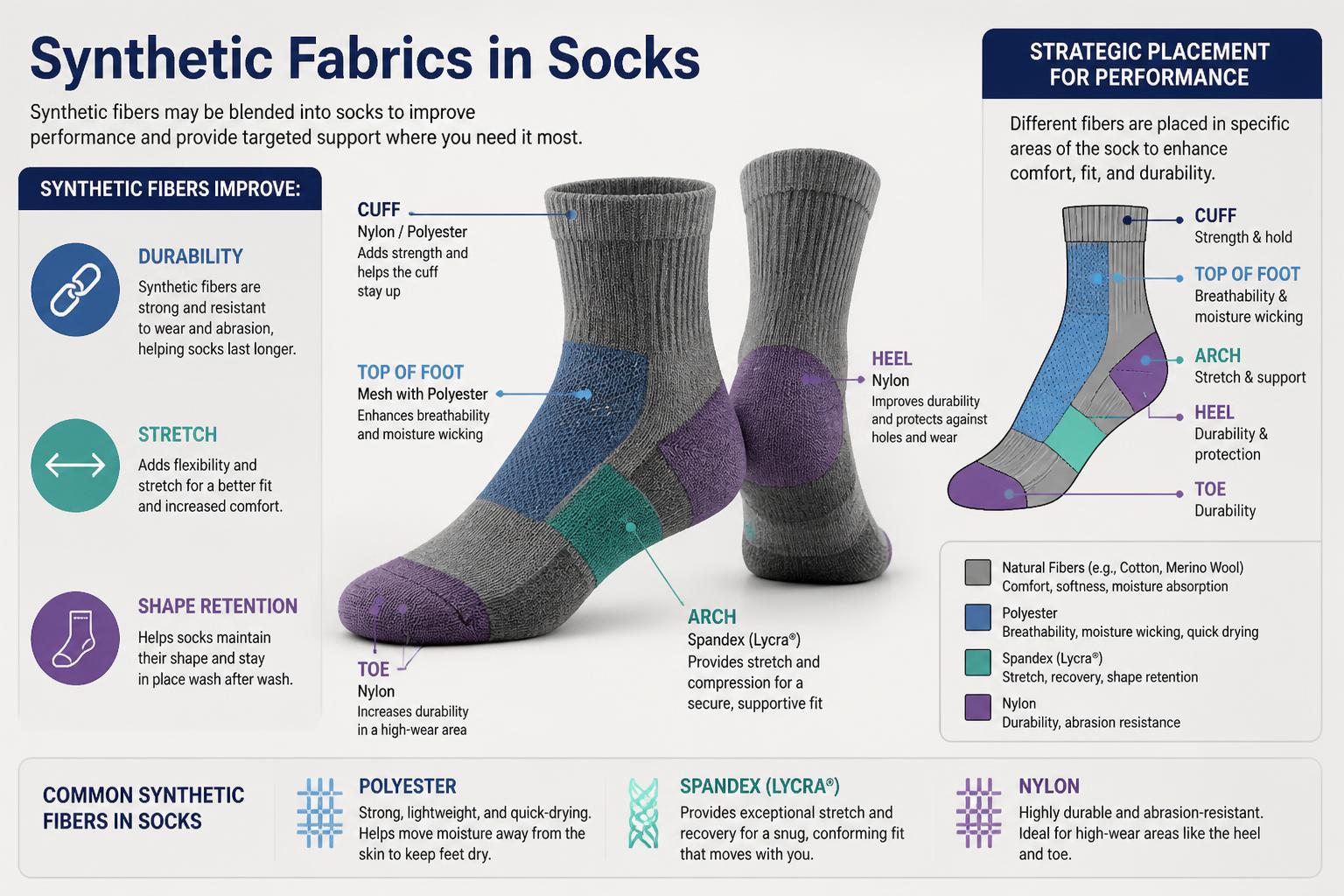
Synthetic fibers may be blended into socks to improve:
- Durability
- Stretch
- Shape retention
Different fibers may be placed strategically within different areas of the sock.
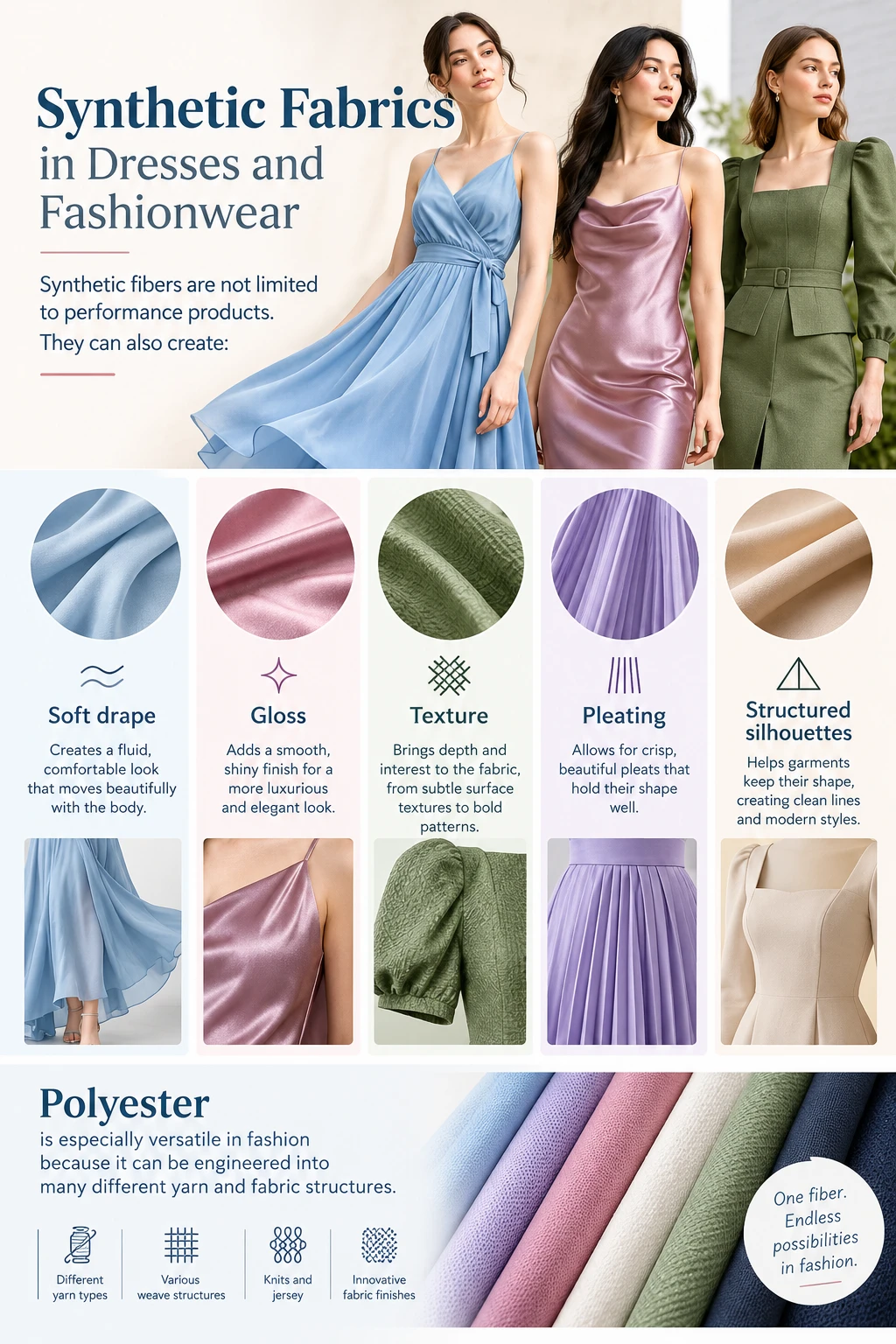
Synthetic Fabrics in Dresses and Fashionwear
Synthetic fibers are not limited to performance products.
They can also create:
- Soft drape
- Gloss
- Texture
- Pleating
- Structured silhouettes
Polyester is especially versatile in fashion because it can be engineered into many different yarn and fabric structures.
Synthetic Fabrics in Home Textiles
Synthetic materials are also widely used outside apparel.
Applications include:
- Curtains
- Upholstery
- Rugs
- Cushion covers
- Bedding fills
Durability and maintenance are common reasons for their use.

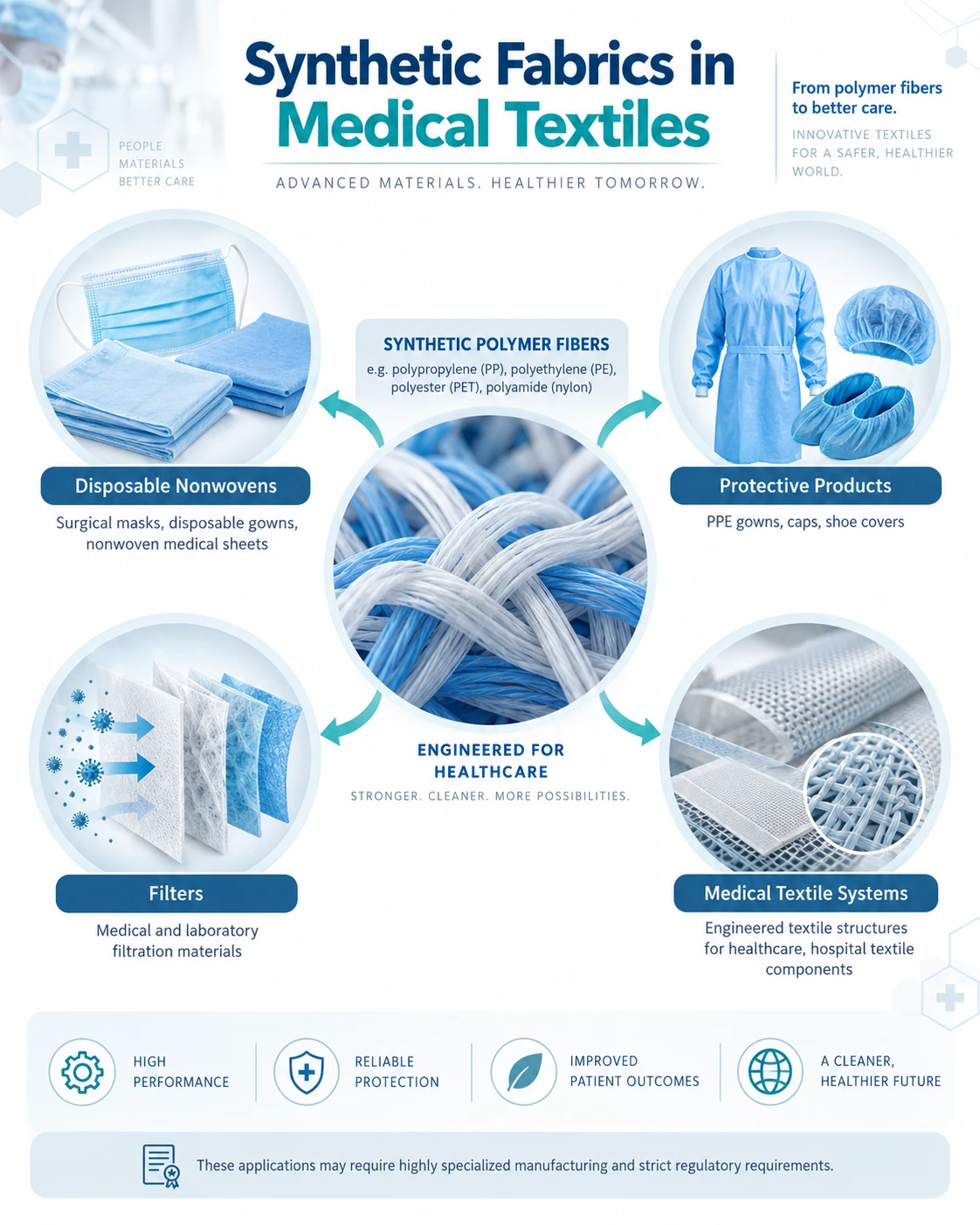
Synthetic Fabrics in Medical Textiles
Synthetic polymers may be used in:
- Disposable nonwovens
- Protective products
- Filters
- Medical textile systems
These applications can require highly specialized manufacturing and regulatory requirements.
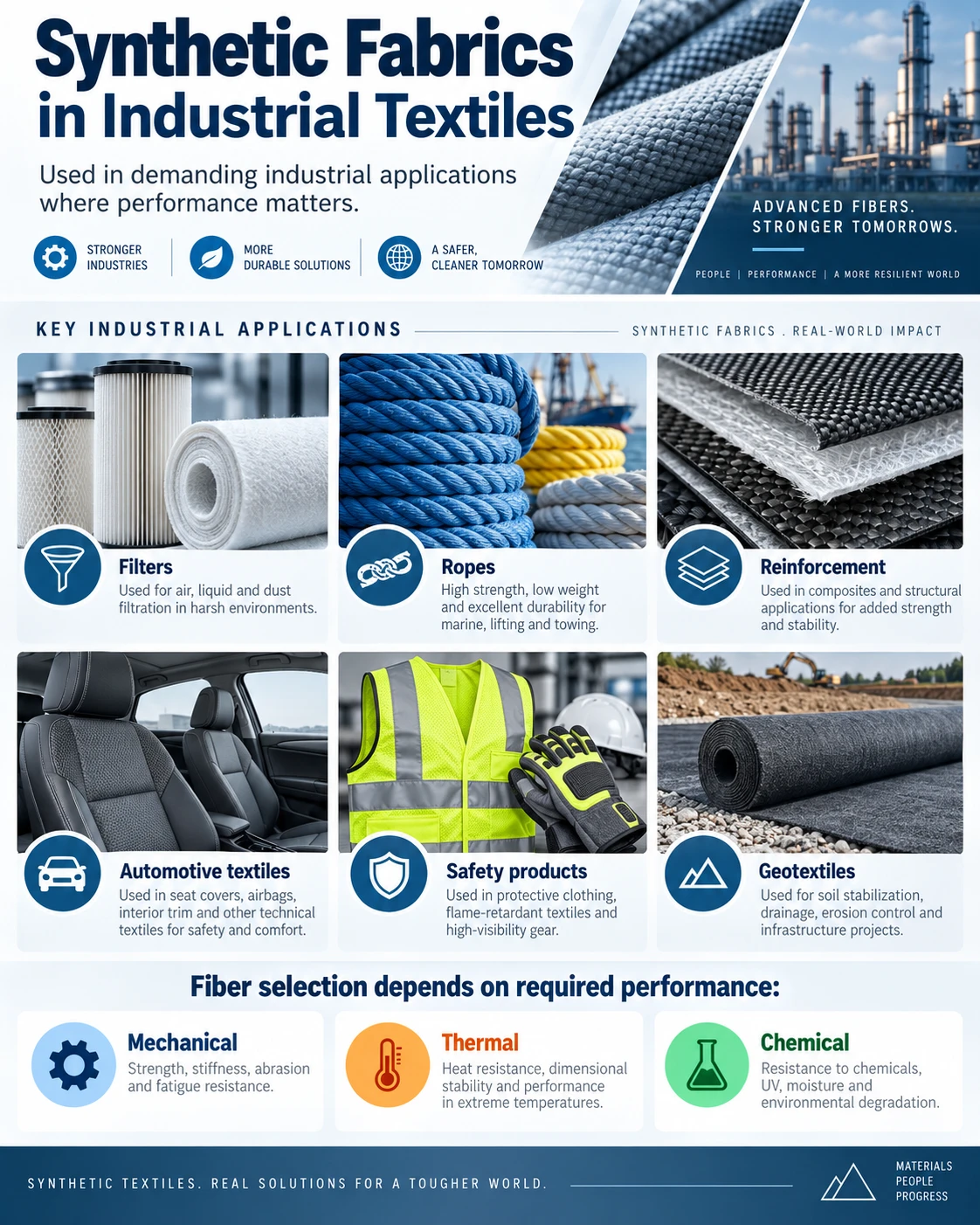
Synthetic Fabrics in Industrial Textiles
Industrial applications may include:
- Filters
- Ropes
- Reinforcement
- Automotive textiles
- Safety products
- Geotextiles
The fiber selection depends on the required mechanical, thermal, or chemical performance.
Conclusion / Final Words
Synthetic fabrics have shaped the modern textile industry through their unmatched strength and versatility. While natural fibers remain important, synthetics provide the technical features—like quick-drying and extreme elasticity—that modern lifestyles demand. At Mekong Garment, we utilize both virgin and recycled synthetic blends to help brands create durable, high-performance collections. Understanding these materials is the first step toward making smarter, more sustainable choices for your production line.
FAQs About Synthetic Fabrics: Types and Uses
In short, What are synthetic fabrics?

Synthetic fabrics are man-made materials created through chemical reactions, not grown from plants or animals. Most of them come from petroleum, which is turned into liquid polymers and then shaped into fibers. Because the process is controlled, manufacturers can decide how strong, stretchy, or smooth the fibers should be. This helps synthetic fabrics work well in many different products.
Are synthetic fabrics better than natural fabrics?
In some ways, yes. Synthetic fabrics are usually stronger, more wrinkle-resistant, and easier to wash. They also dry faster and often cost less. However, natural fabrics like cotton and linen breathe better and feel softer on the skin, which makes them more comfortable in hot weather.
Why are synthetic fabrics so common?
Synthetic fabrics are popular because they are versatile and affordable. They can be made in large quantities with consistent quality. Designers also like them because they can add special features, such as stretch, shine, water resistance, or a soft, fuzzy texture. This makes them useful for fashion, sportswear, furniture, and even medical products.
Do synthetic fabrics make you sweat more?
Some of them do, especially the cheaper types. Many synthetic fibers do not let air pass through easily, so heat and moisture stay close to the skin. This can make you feel warm or sticky. High-performance fabrics use special technology to pull sweat away from the skin, but not all garments include this feature.
Are synthetic fabrics bad for the environment?
They can have a negative impact. Synthetic fabrics take a very long time to break down in nature because they are made from plastic-like materials. When washed, they release tiny plastic fibers called microplastics, which can pollute rivers and oceans. However, recycled polyester and nylon are improving the situation by reducing waste.
Can synthetic fabrics cause skin irritation?
Yes, especially for people with sensitive skin. Some synthetic fabrics trap heat and sweat, which can lead to redness or itching. Certain chemical finishes, like dyes or coatings, may also irritate the skin. Washing new clothes before wearing them helps reduce these effects.
What clothes commonly use synthetic fabrics?
Many everyday items use synthetics because they are strong and flexible. You’ll find them in T-shirts, leggings, dresses, jackets, socks, swimsuits, and sportswear. They are also common in home products like curtains, pillow covers, and upholstery. Their durability makes them useful for both fashion and home living.
Do synthetic fabrics hold odors?
Yes. Synthetic fibers do not absorb moisture well, so sweat stays on the surface. Bacteria can grow in this warm, moist environment and cause bad smells. Some fabrics include anti-odor finishes, but many basic garments do not.
Are synthetic fabrics easy to wash?
Yes, very easy. Most synthetic fabrics resist shrinking and wrinkling, so they look good even after many washes. They dry quickly and often need no ironing. This makes them convenient for busy routines and travel.
Can synthetic fabrics be recycled?
Some types, like polyester and nylon, can be recycled and turned into new fibers. Recycling reduces waste and saves energy compared to creating new plastic. Many brands now use recycled polyester made from plastic bottles or old fabrics. However, not all cities or factories have the equipment needed for textile recycling.