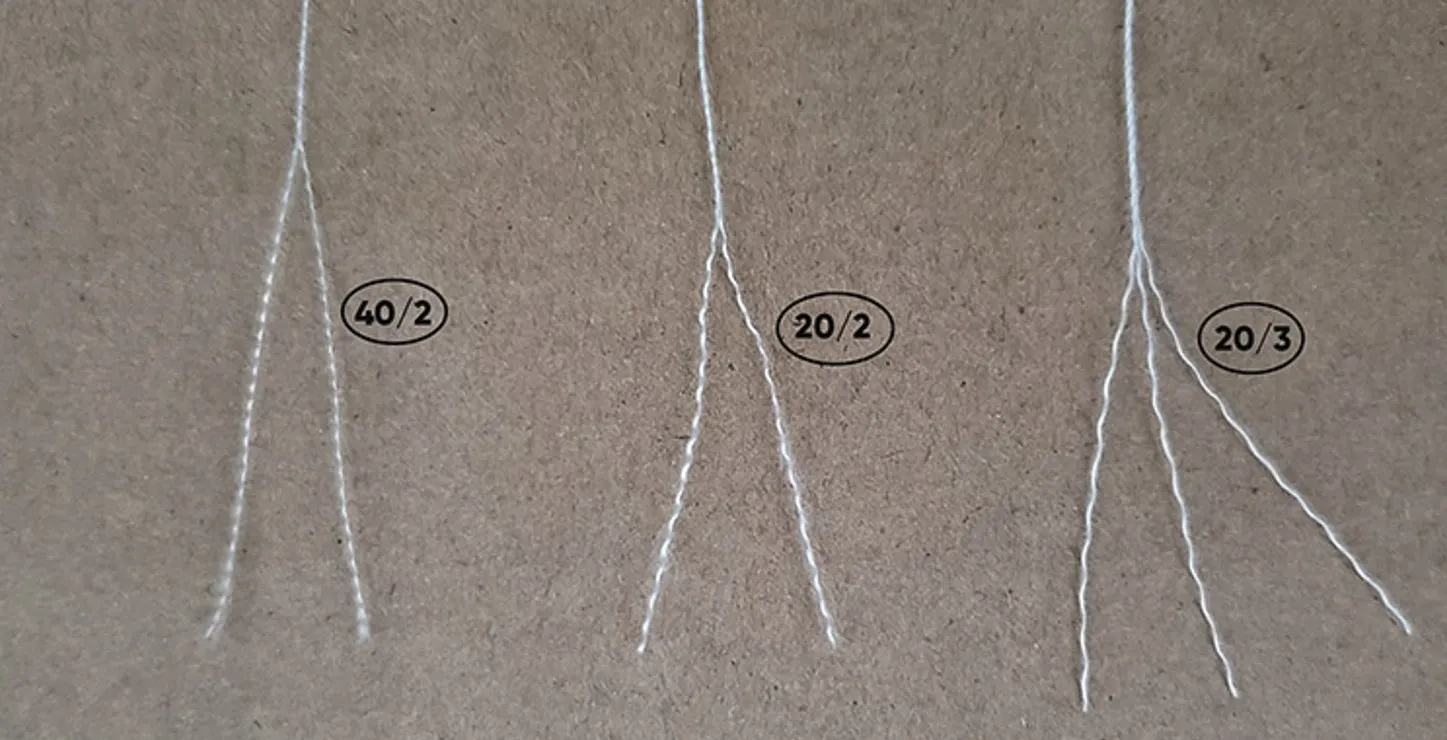

In the garment-manufacturing world, thread codes like 40/2 and 60/3 reflect important structural differences. Choosing the right one affects seam strength, appearance, and suitability for different fabrics. Understanding these technical shorthands allows you to optimize both quality and production costs.
| Thread Code | Filament Fineness | # of Filaments | Typical Use | Key Benefit |
|---|---|---|---|---|
| 40/2 | “40” (Moderate) | 2 | Standard apparel fabrics | Balanced thickness and strength |
| 60/3 | “60” (Fine) | 3 | Lighter fabrics / Fine seams | Stronger, smoother, and less bulky |
What Do 40/2 and 60/3 Mean?
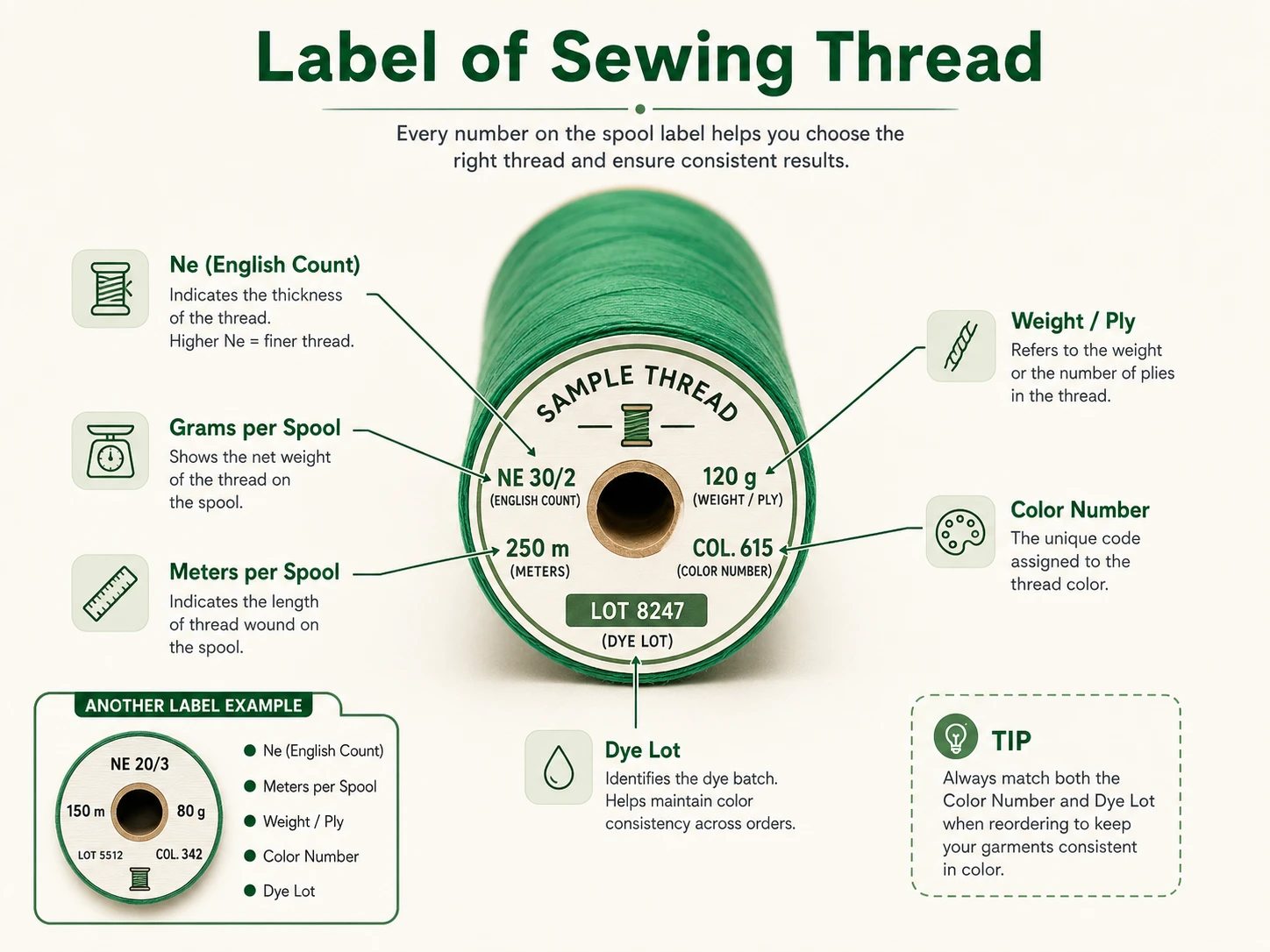
Every spool of sewing thread carries a code describing its internal structure. In a code like 40/2 or 60/3:
- The first number (40 or 60) represents the fineness of each single filament. A higher number means a finer filament.
- The second number (2 or 3) shows how many of those filaments are twisted together to form the finished thread.
Therefore, a 40/2 thread has two filaments of fineness 40, while 60/3 combines three finer filaments of fineness 60. This combination directly influences the thread’s tensile strength and visual profile.
Comparison: 40/2 vs 60/3
While the differences might seem small on paper, they result in distinct behaviors during the sewing process and in the finished garment:
| Factor | 40/2 | 60/3 |
|---|---|---|
| Single Yarn | Ne 40 | Ne 60 |
| Plies | 2 | 3 |
| Individual Singles | Coarser | Finer |
| Approx. Resultant Ne | 20 | 20 |
| Approx. Tex | 30 | 30 |
| Finished Thickness | Often similar | Often similar |
| Structure | Two-ply | Three-ply |
| Strength | Depends on manufacturer | Depends on manufacturer |
| Roundness | Construction-dependent | May be more rounded depending on design |
| Seam Appearance | Supplier/fabric-dependent | Supplier/fabric-dependent |
| Needle Requirement | Fabric-dependent | Fabric-dependent |
| General Apparel | Very suitable | Also suitable |
| Fine Fabric | Check actual Tex | Check actual Tex |
| Heavy Denim | May need stronger thread | May still need stronger thread |
| Cost | Often economical | May be higher |
| Best Selection Method | Technical data + sewing trial | Technical data + sewing trial |
Thread Strength
Strength is one of the most important factors when selecting sewing thread. However, 60/3 is not automatically stronger than 40/2 simply because it has three plies.
Actual strength depends on:
- Polyester fiber quality
- Fiber fineness
- Fiber length
- Yarn evenness
- Single-yarn twist
- Ply twist
- Finished thread size
- Thread finishing
- Manufacturing quality
A high-quality 40/2 thread may perform better than a lower-quality 60/3 thread.
The correct comparison should use actual values such as:
- Breaking force
- Tenacity
- Loop strength
- Elongation
Tensile Strength vs. Tenacity
Breaking strength tells you how much force is required to break the thread. Tenacity tells you the thread’s strength relative to its linear density. Tenacity is commonly expressed as: cN/tex. This is useful because a heavier thread may naturally have a higher breaking force simply because it contains more material. For a fair comparison between two threads, especially when their sizes differ, tenacity is more informative than breaking force alone.
Seam Appearance
Even when 40/2 and 60/3 have similar linear density, their different internal structures may create slightly different seam appearances.
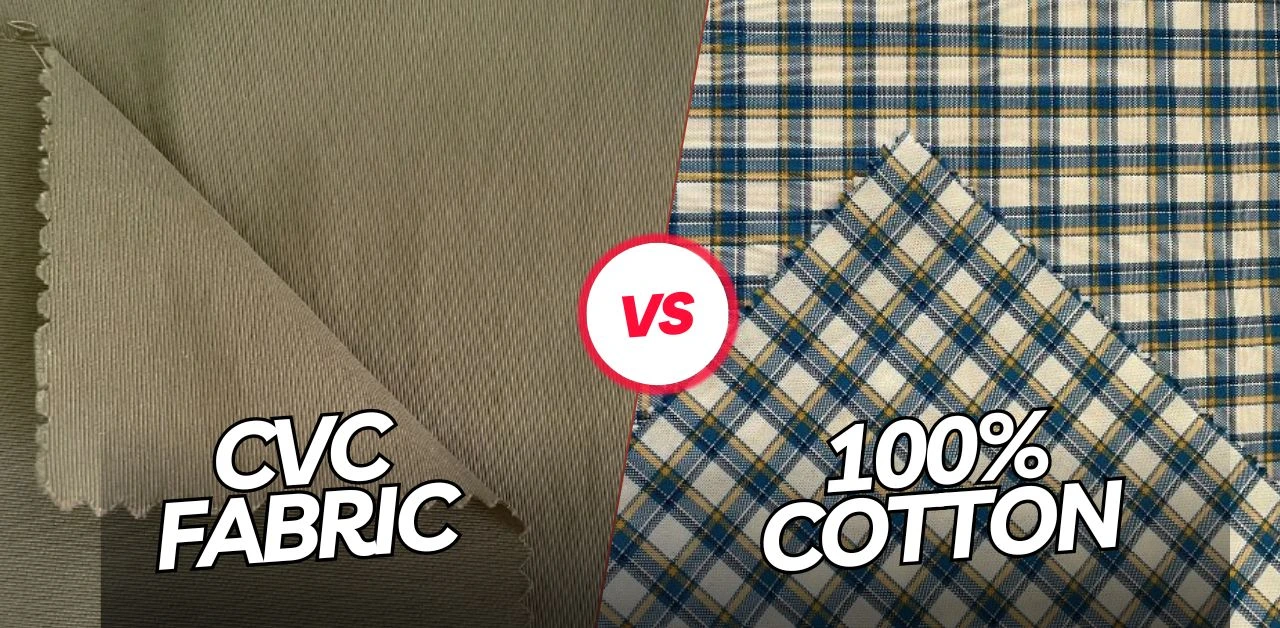
Differences may include:
- Stitch definition
- Surface smoothness
- Roundness
- Matte appearance
These differences can be especially important for:
- Visible topstitching
- Fine shirts
- Premium garments
- Light-colored fabrics
For hidden construction seams, the visual difference may be less important.
Do 40/2 and 60/3 Need Different Needle Sizes?
Not necessarily. If both are approximately Tex 30, they may work with a similar needle-size range.
However, needle size also depends on:
- Fabric thickness
- Fabric density
- Number of fabric layers
- Stitch type
- Machine type
For this reason, fixed rules such as:
- 40/2 = Needle 11–12
- 60/3 = Needle 10–11
should not be treated as universal. Always confirm the thread supplier’s recommendation and perform a sewing trial.
Practical Implications for Production
Translating these specs into real-world effects is key for factory management:
- Appearance and Seam Quality: Finer filaments like those in 60/3 produce less “bulk” in the seam, which is critical for luxury fashion and high-end finishing.
- Strength & Durability: Because 60/3 uses three plies (3 vs 2), it often offers improved performance and resistance to breakage in high-stress seams, provided the quality of the raw material is high.
- Machine Considerations: Using 60/3 typically requires adjustments in machine tension and smaller needle sizes to avoid puckering or skipped stitches on delicate fabrics.
How to Choose Based on Your Needs
Which thread should you pick for the job? Consider the following:
- Standard Garments: If you are manufacturing standard T-shirts or uniforms where cost-efficiency is a priority, 40/2 is usually the industry standard.
- Refined Aesthetics: If you are working with chiffon, silk, or fine cotton and need nearly invisible seams, 60/3 is the superior choice.
- The Golden Rule: Always perform a sample test to check machine compatibility and seam durability before starting mass production.
Conclusion / Final Words
Thread 40/2 and thread 60/3 are often described as if they belong to completely different thickness categories. In reality, when both codes use the English Cotton Count system, their finished linear densities can be remarkably similar. The fundamental difference is: 40/2 = Two Ne 40 Singles while: 60/3 = Three Ne 60 Singles Because: 40 ÷ 2 = Ne 20 and: 60 ÷ 3 = Ne 20 both can be roughly equivalent to Tex 30. This means 60/3 should not automatically be called thinner, stronger, more luxurious, or better for fine fabrics. Its individual yarns are finer, but the additional third ply changes the total finished size.