
If you’re making custom T-shirts for a brand, event, or company, you’ll usually choose between two popular methods: screen printing and embroidery. Both look great when used in the right situation, but they don’t solve the same problem. Choosing based on “vibes” alone is where orders go wrong. This guide breaks down the real differences.
Quick Pick Guide
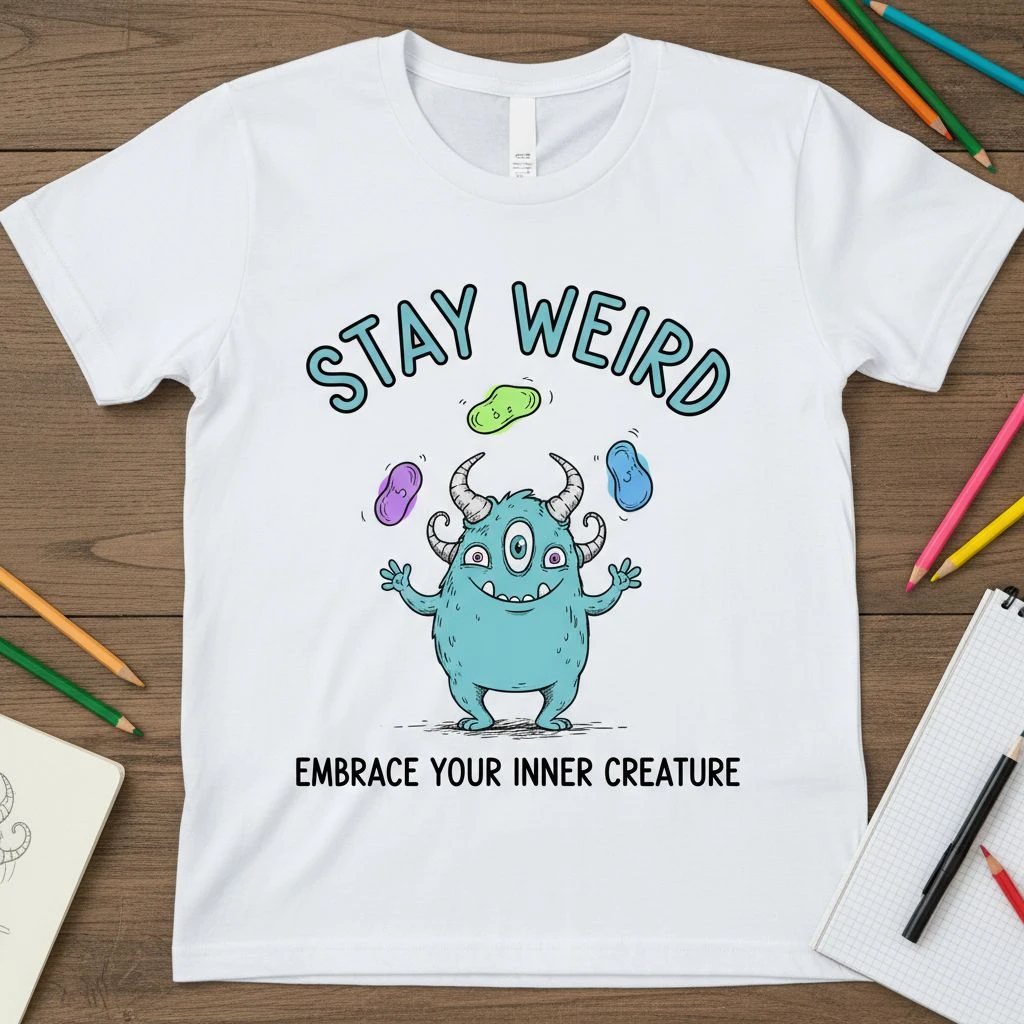
Choose screen printing if:
- Your design is large (full front or back).
- Your design features many colors or gradients.
- You want a classic graphic tee look.
- You’re ordering medium to large quantities.
Choose embroidery if:
- Your design is a small logo (left chest or sleeve).
- You want a raised, textured, and premium look.
- You’re decorating polos, jackets, or hats.
- You want a professional uniform or corporate vibe.
About Screen Printing & Embroidery
What Is Screen Printing?
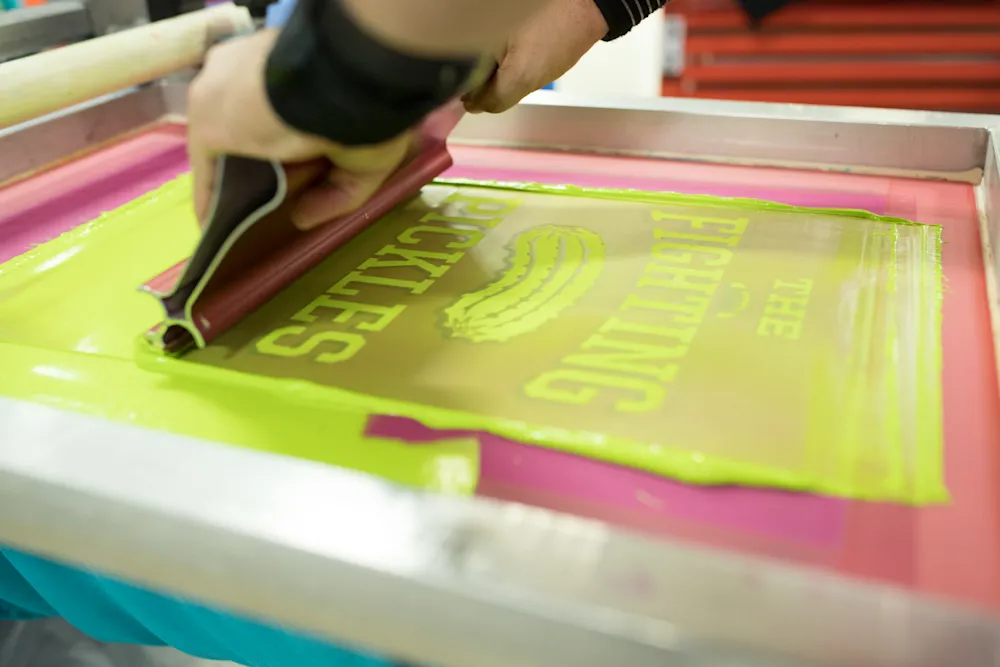
Screen printing presses ink through a mesh screen onto the fabric, building your design one color at a time. It’s the gold standard for graphic tees because it handles large prints and bold colors with consistent results across bulk orders. For custom T-shirts, screen printing is widely used because it works particularly well for:
- Front graphics
- Back graphics
- Merchandise designs
- Brand artwork
- Event T-shirts
- Promotional clothing

Its main strength is the ability to cover a relatively large printing area while maintaining a traditional graphic-T-shirt appearance.

How Screen Printing Works:
The basic process can be understood as: Artwork => Screen Preparation => Ink Application => Printing => Curing. Ink is transferred through the mesh onto the garment. After printing, proper curing is important because the ink must be set correctly for durability. This means: Good Print + Poor Curing = Poor Final.
Why Screen Printing Is Popular for T-Shirts:
Screen printing is especially practical when the design is visually dominant. For example, it may be used for:
- Large brand graphics
- Graphic tees
- Back prints
- Event artwork
- Promotional designs
- Merchandise collections
It can also provide consistent results across larger production quantities when the printing process is properly controlled.

What Is Embroidery?
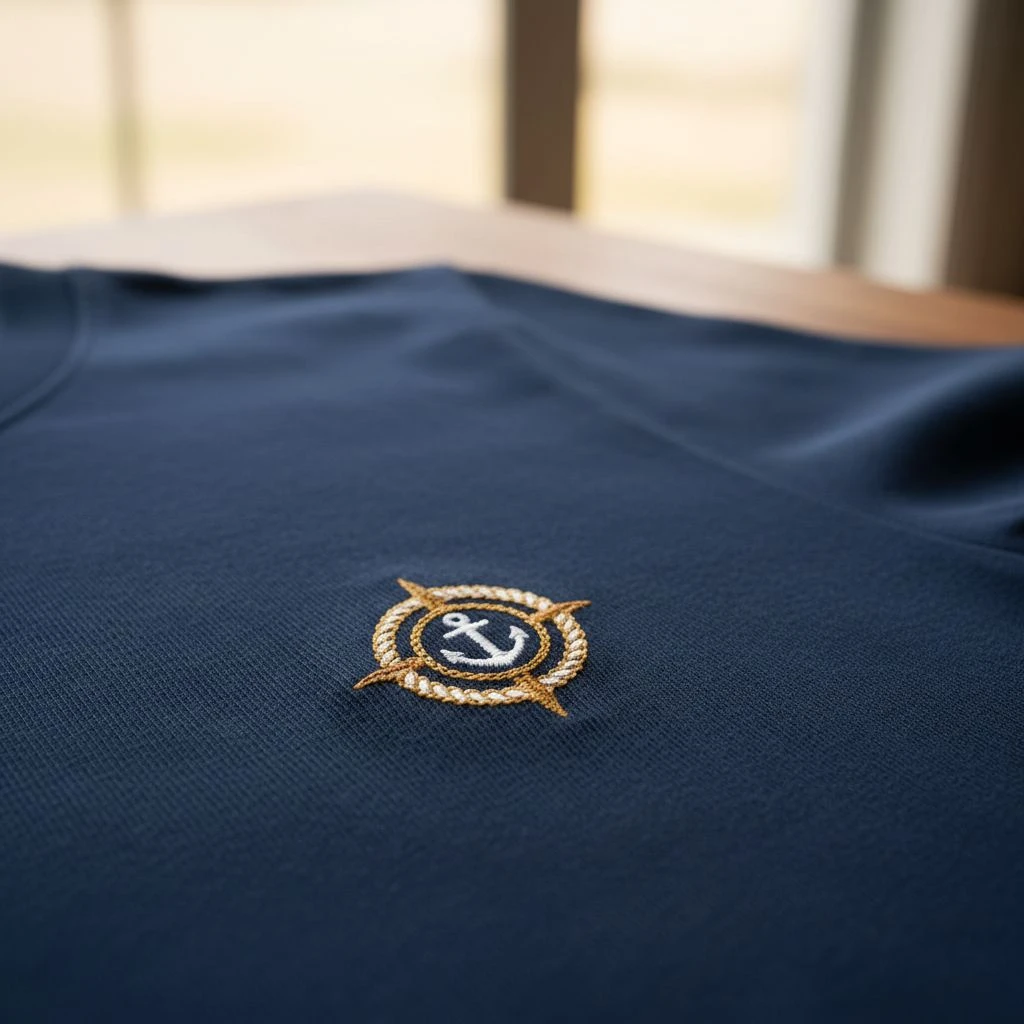
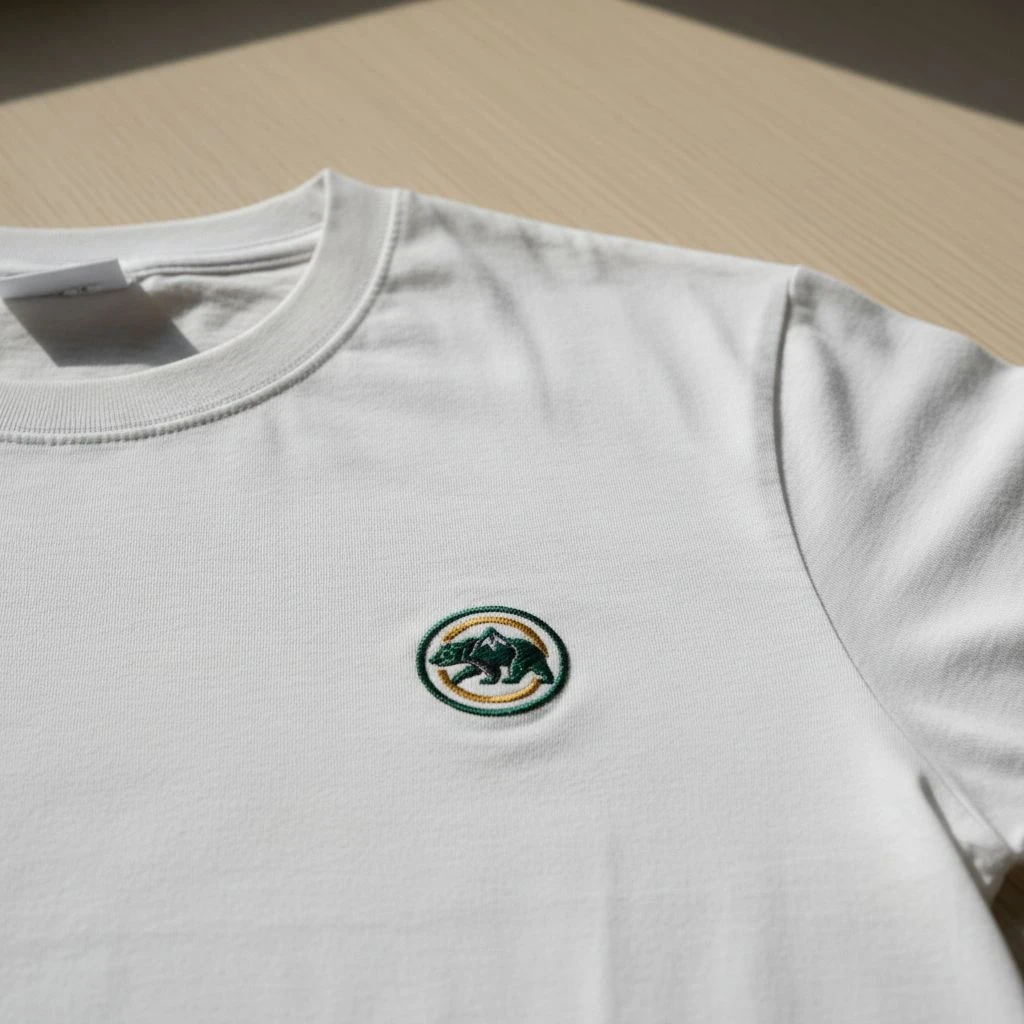
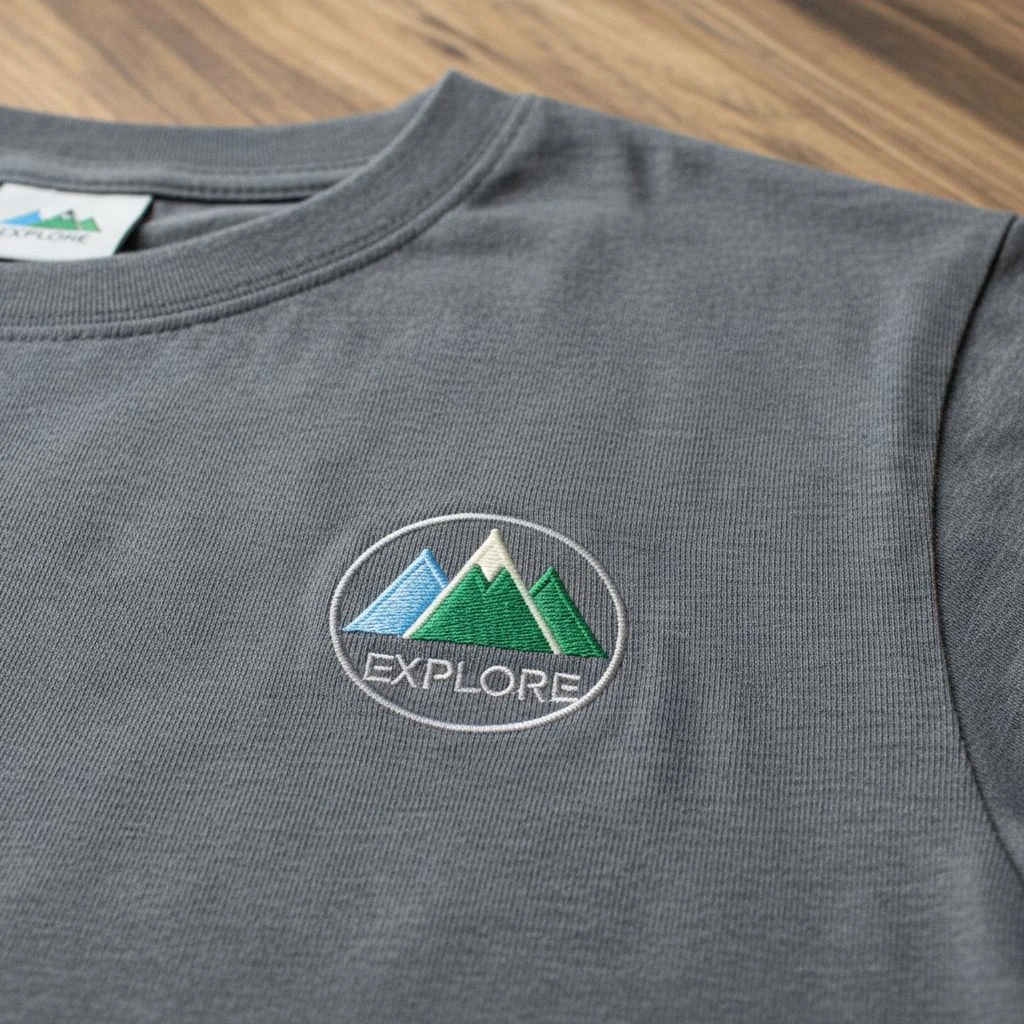
Embroidery stitches your design directly into the fabric using thread. The logo becomes part of the garment, giving it a raised, textured finish. While it looks high-end, using embroidery for large designs on thin T-shirts can cause the fabric to pucker or feel uncomfortably stiff.
How Embroidery Works:
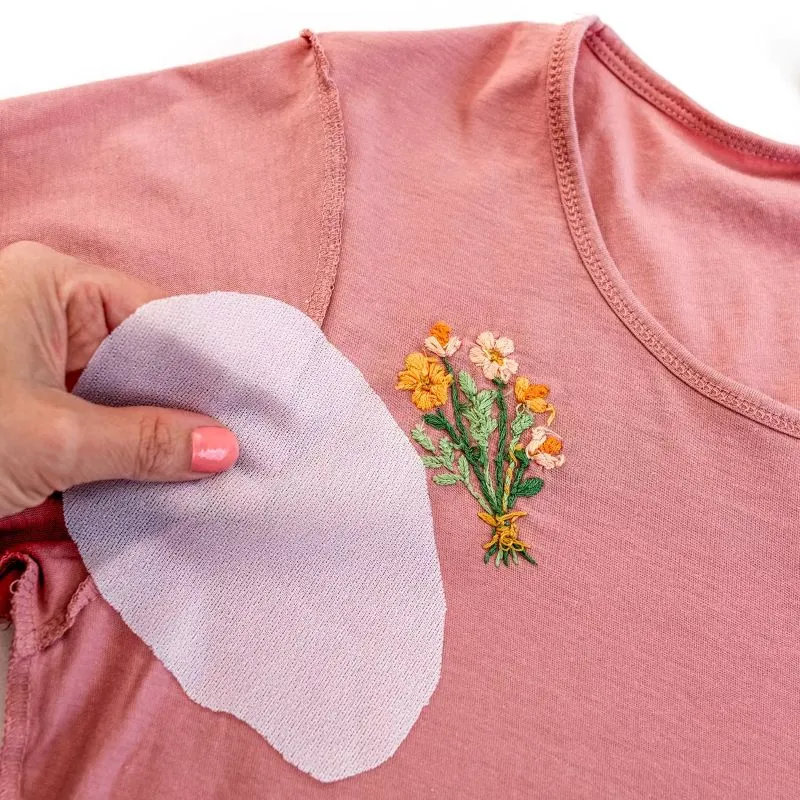
The process generally involves converting the artwork into a stitch-based file and then stitching the design into the garment. A simplified workflow is: Logo Artwork => Digitizing => Machine Setup => Stitching => Finishing. The quality of the final result depends heavily on how the design is prepared for embroidery.
Why Embroidery Looks Different from Printing:
Embroidery adds physical thread to the garment.
This gives the design:
- Height
- Texture
- Dimension
- A more structured appearance
Because of this, embroidery can make even a relatively simple logo feel more prominent. However, the same feature that makes embroidery feel premium can also become a disadvantage when the design is too large or the fabric is too lightweight.
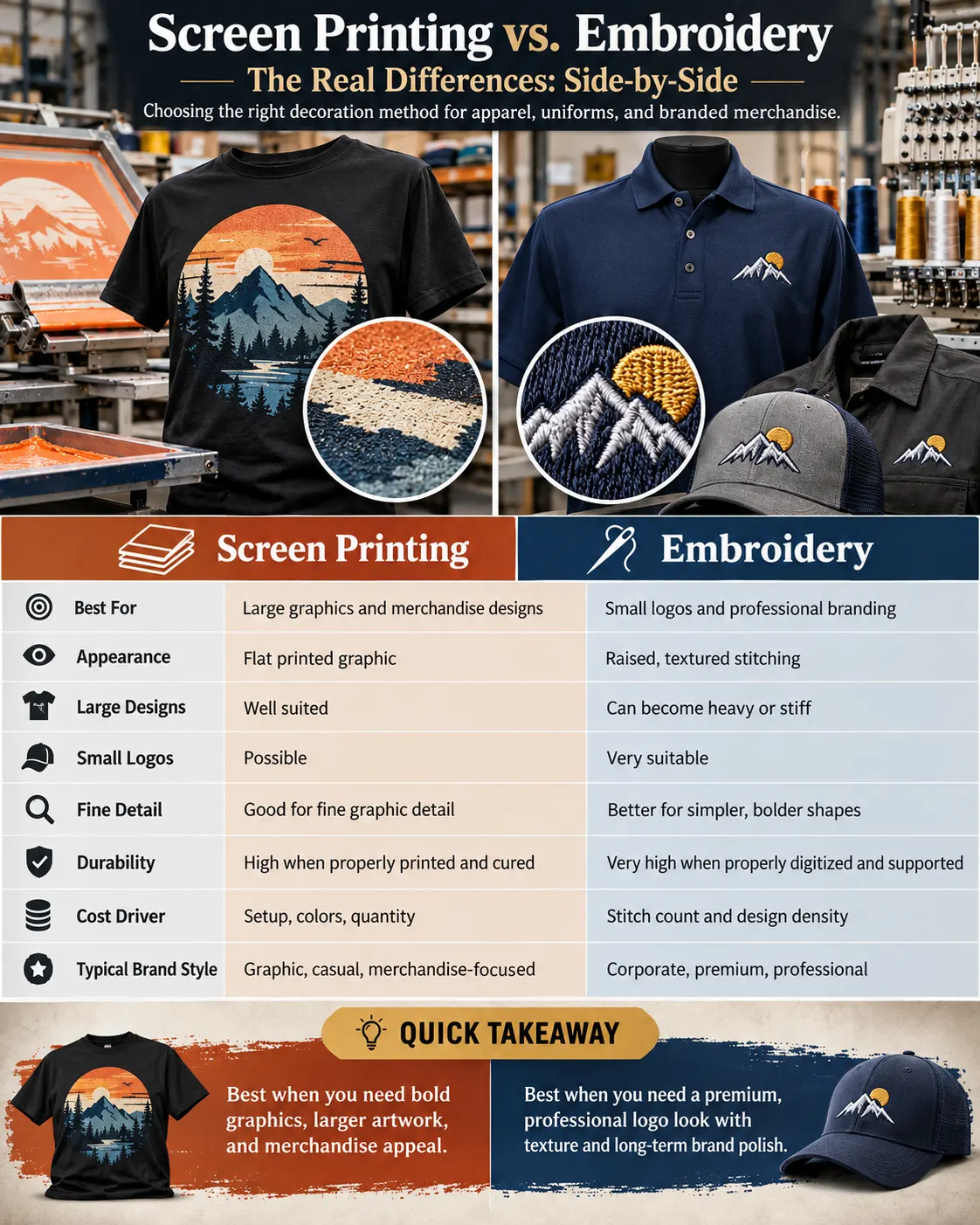
The Real Differences: Side-by-Side
| Factor | Screen Printing | Embroidery |
|---|---|---|
| Best For | Large graphics and merchandise designs | Small logos and professional branding |
| Appearance | Flat printed graphic | Raised, textured stitching |
| Large Designs | Well suited | Can become heavy or stiff |
| Small Logos | Possible | Very suitable |
| Fine Detail | Good for fine graphic detail | Better for simpler, bolder shapes |
| Durability | High when properly printed and cured | Very high when properly digitized and supported |
| Cost Driver | Setup, colors, quantity | Stitch count and design density |
| Typical Brand Style | Graphic, casual, merchandise-focused | Corporate, premium, professional |

=> Durability and Cost Realities: Both methods are durable. Screen printing depends on ink type and proper heat curing, while embroidery depends on digitizing quality and backing choice. For cost, screen printing is more economical for high-volume orders with few colors. Embroidery costs are driven by stitch count—the more dense the design, the higher the price.
Which Method Is Better for a Premium Brand?
Premium appearance can come from either method. Embroidery naturally creates:
- Texture
- Dimension
- Raised branding
This can suit a minimal premium logo. Screen printing can also support premium clothing when the design concept is graphic-focused. Therefore: Premium isn’t Embroidery Only. Brand identity matters. A premium graphic streetwear T-shirt may still be better suited to screen printing.
Which Method Is Better for Corporate Uniforms?
For small company logos, embroidery is often a practical choice. It provides a structured appearance and works naturally on:
- Polo shirts
- Jackets
- Uniform tops
However, very lightweight T-shirts still need to be evaluated carefully before embroidery. A small corporate logo does not automatically make every fabric embroidery-friendly.
Which Method Is Better for Event T-Shirts?
For event shirts with larger designs, screen printing is generally the more natural choice. Typical examples include:
- Event names
- Sponsor layouts
- Large front graphics
- Large back graphics
The flat printed design is more compatible with the traditional event T-shirt format.
Which Method Is Better for Merchandise?
For merchandise built around artwork, screen printing is usually a strong option. This is particularly true when customers are buying the garment partly because of the graphic itself. Examples include:
- Creator merchandise
- Band merchandise
- Fashion graphics
- Brand drops
Embroidery becomes more suitable when merchandise uses a smaller, understated logo.
Fabric Matters (A Lot)
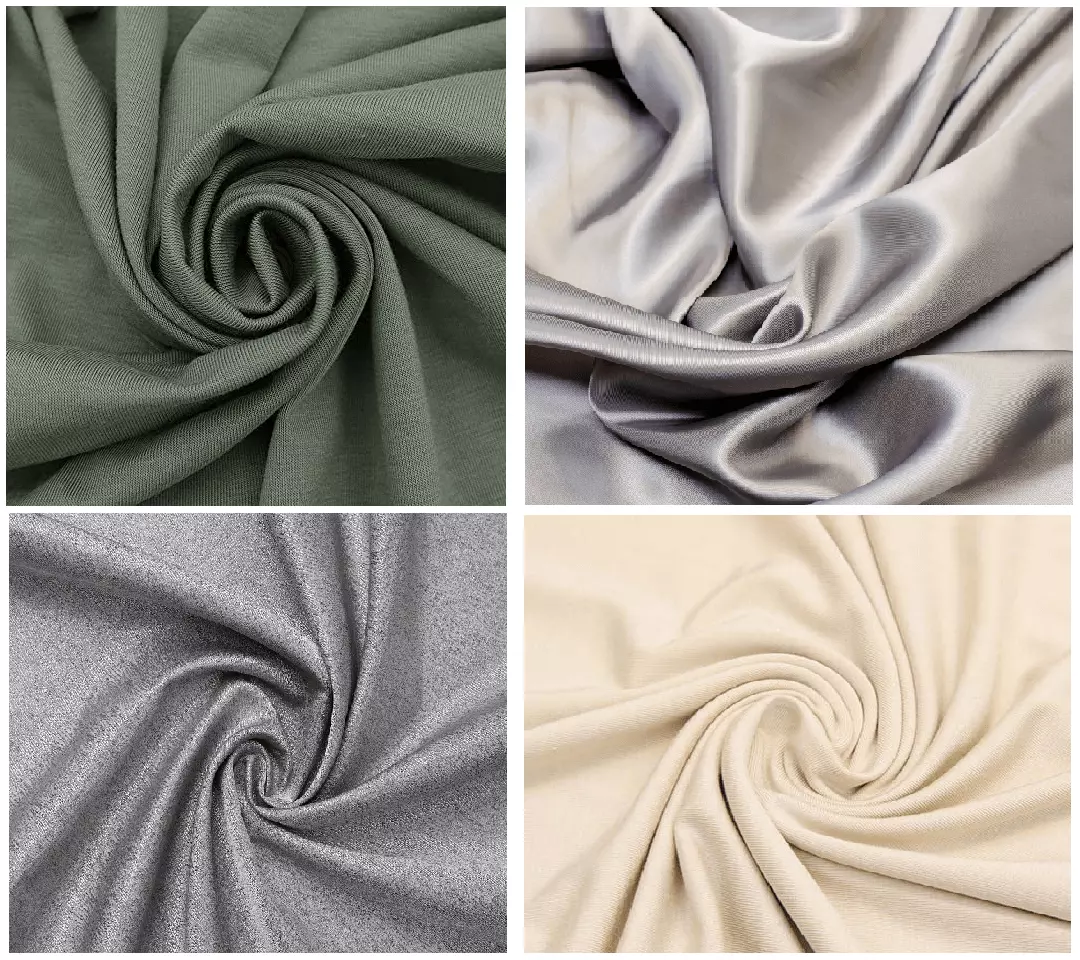
Even the best design fails on the wrong fabric. Lightweight or stretchy tees are safer with screen printing. Heavyweight cotton can handle embroidery much better without warping. If you aren’t sure about your shirt weight (GSM), ask your supplier before committing to a decoration method.
Final Recommendation
For most custom projects: Use screen printing for bold, colorful, large graphics. Choose embroidery for small logos and professional brand identification. Match your method to the design size and fabric for the most wearable result.
Screen printing works particularly well for:
- Large graphics
- Front and back artwork
- Graphic merchandise
- Event T-shirts
- Medium and larger production runs

Embroidery works particularly well for:
- Small logos
- Left-chest branding
- Corporate uniforms
- Polos
- Jackets
- Premium textured branding
The final decision should consider more than appearance.