Top 12 Fabric Options for T-Shirt Brands Production at Vietnam Garment Factories

Choosing the best fabric makes all the difference in a great T-shirt. It affects how soft the shirt feels, how long it lasts, how well it handles sweat, and even how easy it is to wash. While there are many options, five stand out for everyday wear, comfort, and performance. Here’s a clear guide to the Top 12 T-shirt fabrics you should know for your next collection.
Quick Fabric Selection Table
| Fabric Type | Main Advantage | Best For |
|---|---|---|
| Cotton | Natural softness | Everyday & premium tees |
| Linen | Airy summer feel | Resort & summer wear |
| CVC / TC | Comfort + durability | Uniforms & merchandise |
| Polyester | Fast drying & durability | Sportswear |
| Rayon / Modal | Soft, fluid drape | Fashion tops |
| Cotton-Elastane | Stretch & recovery | Fitted T-shirts |
| Tri-Blend | Soft vintage feel | Lifestyle & graphic tees |
| Lyocell | Smooth premium drape | Premium casualwear |
| Bamboo Viscose | Soft lightweight feel | Relaxed fashion tops |
| Hemp Blend | Natural texture & strength | Lifestyle collections |
| Recycled Polyester | Recycled-content performance option | Sports & corporate apparel |
| Polyester-Elastane | Performance stretch | Activewear |
| Interlock | Stability & structure | Premium basics |
| Rib Knit | High stretch | Fitted fashion tees |
| Merino Wool | Temperature regulation | Travel & outdoor tees |
List of Popular T-shirt Fabrics
1. Cotton: The Classic Everyday Fabric
Cotton is the global gold standard for T-shirts. As a natural fiber, it offers unmatched softness and breathability, making it the favorite choice for casual wear and sensitive skin.
- Soft & Breathable: Allows consistent airflow to keep you cool.
- Moisture Absorbent: Ideal for daily activities.
- Varieties: Includes Combed Cotton (smoother), Ring-spun (durable), and premium Pima/Supima.
=> Best For: Everyday casual tees, basics, and premium branding.
- 100% Cotton Fabric: Benefits, Drawbacks, and Common Uses (Pure Cotton Yarn, Naturally Soft)
- Which Cotton Fabrics Best Suited for Heavy‑Duty Items and Workwear

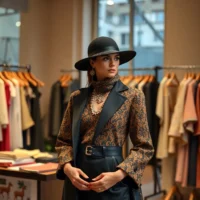
2. Linen: Breezy and Cool for Hot Weather
Made from the flax plant, linen is the ultimate “summer fabric.” Its unique structure allows for maximum ventilation, though it is known for its signature natural wrinkles.
- High Breathability: Superior air circulation in humid climates.
- Textured Look: Offers a relaxed, sophisticated resort-wear aesthetic.
- Fast Drying: Absorbs moisture and releases it quickly.
=> Best For: Summer tees, resort wear, and tropical climates.
- Different Types of Linen Fabric: Pros & Cons and Their Uses
- Linen Blends: Types, Pros, Cons, and Their Uses
- Linen Fabric Types by Weave: Everything You Need to Know
3. Poly-Cotton Blends (CVC & TC): Balance & Strength
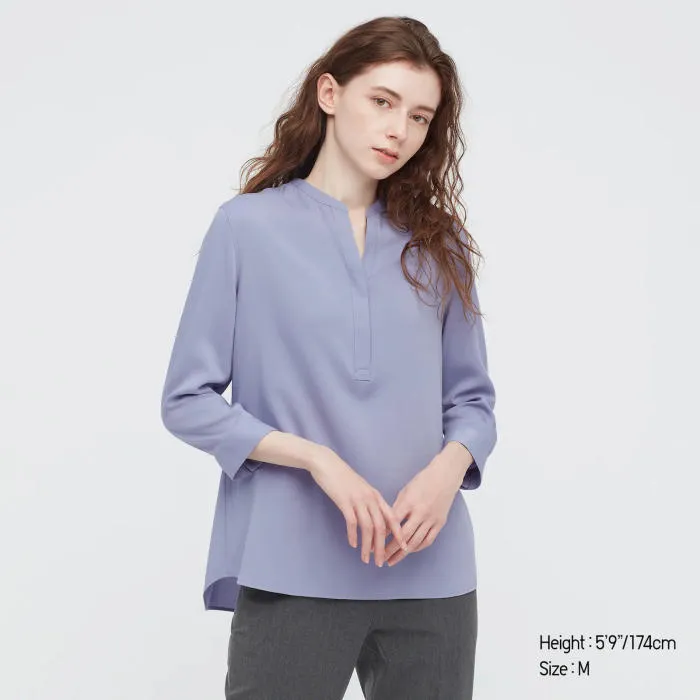
By mixing cotton with polyester, these blends offer the “best of both worlds.” They are incredibly popular for high-volume orders due to their durability and cost-efficiency.
- Shape Retention: Resists shrinking and wrinkling wash after wash.
- Durability: Stronger than 100% cotton, making them perfect for uniforms.
- Versatile: Available in various ratios like 60/40 (CVC) or 35/65 (TC).
=> Best For: Branded merchandise, staff uniforms, and bulk printing.
- Cotton CVC: Cotton and Polyester A Perfect Combination
- CVC Cotton vs 100% Cotton vs TC (Poly-Cotton): Balancing Comfort, Durability, and Care
4. Polyester: The Performance Workhorse
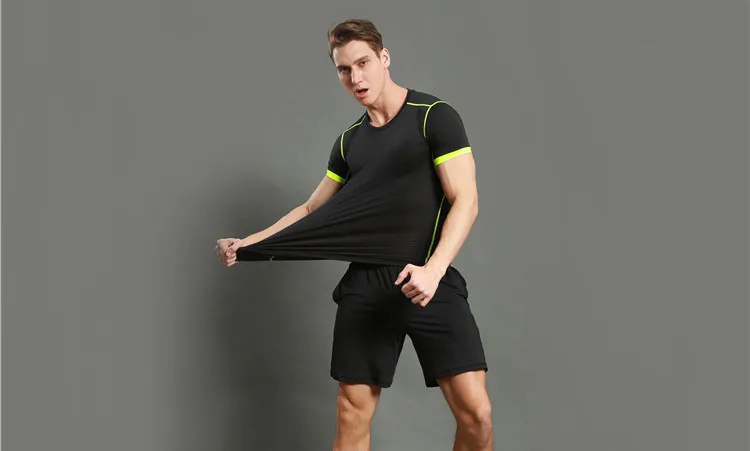
Polyester is a synthetic powerhouse designed for active use. It is the go-to material for “dry-fit” apparel and high-intensity sports.
- Quick-Drying: Wicks sweat away from the skin instantly.
- Tough: Highly resistant to tearing and abrasion.
- Wrinkle-Free: Ideal for travel and athletic gear.
=> Best For: Activewear, gym shirts, and performance gear.
- Polyester Fabric: Properties, Manufacturing, and Uses
- Polyester vs. Nylon Sewing Thread: What’s Different, and When to Use Each
5. Rayon & Modal: Silky Soft and Lightweight
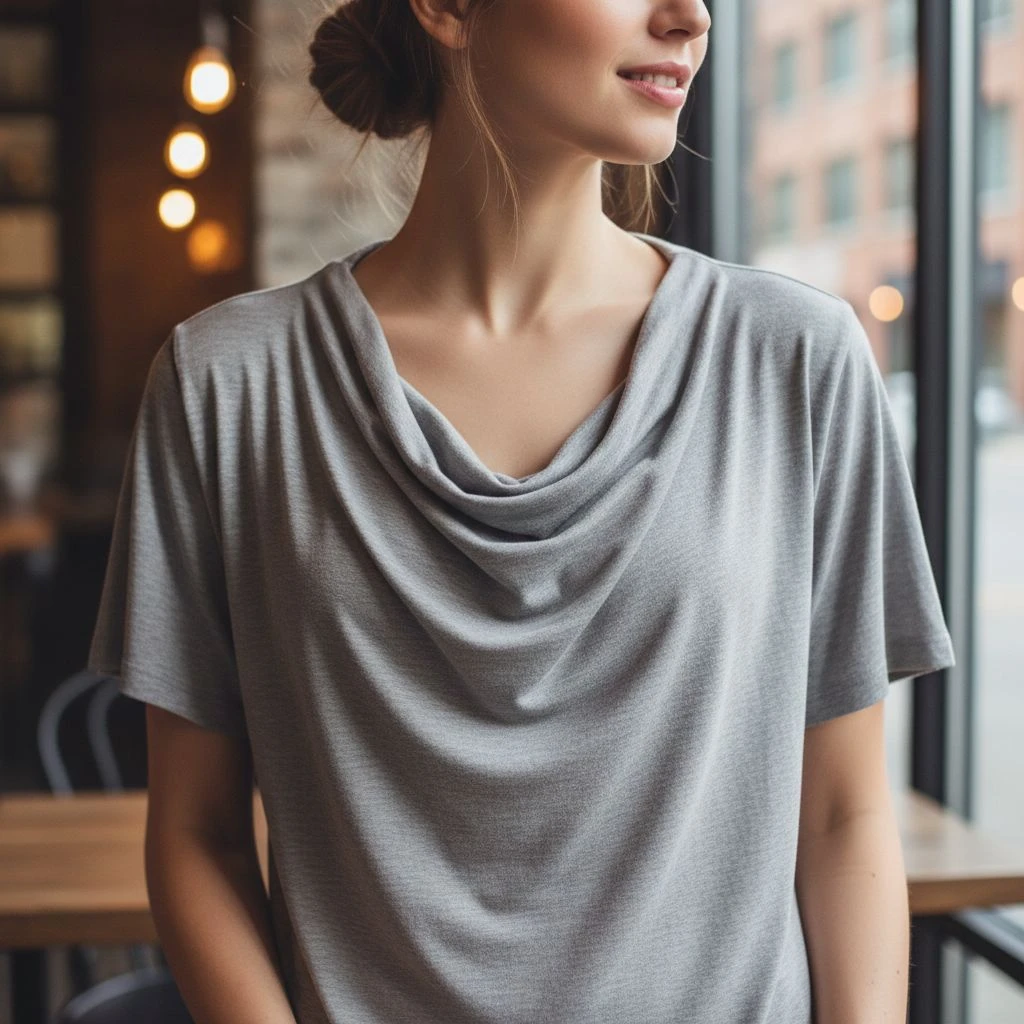
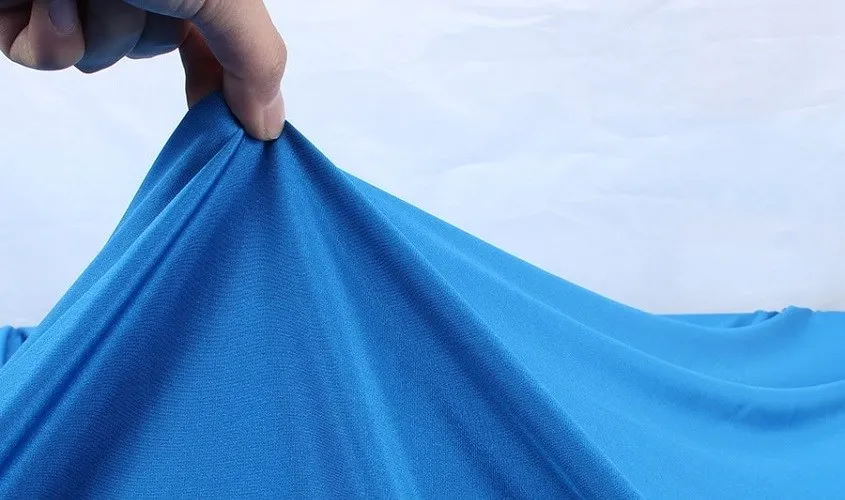
Rayon (and its upgraded version, Modal) is a semi-synthetic fiber made from wood pulp. It provides a luxurious drape and a cooling sensation similar to silk.
- Silky Texture: Feels incredibly smooth against the skin.
- Beautiful Drape: Hangs perfectly on the body, ideal for fashion-forward designs.
- Breathable: Very lightweight for high-end casual tops.
=> Best For: Premium fashion T-shirts and relaxed loungewear.
6. Cotton-Elastane: Soft With Added Stretch
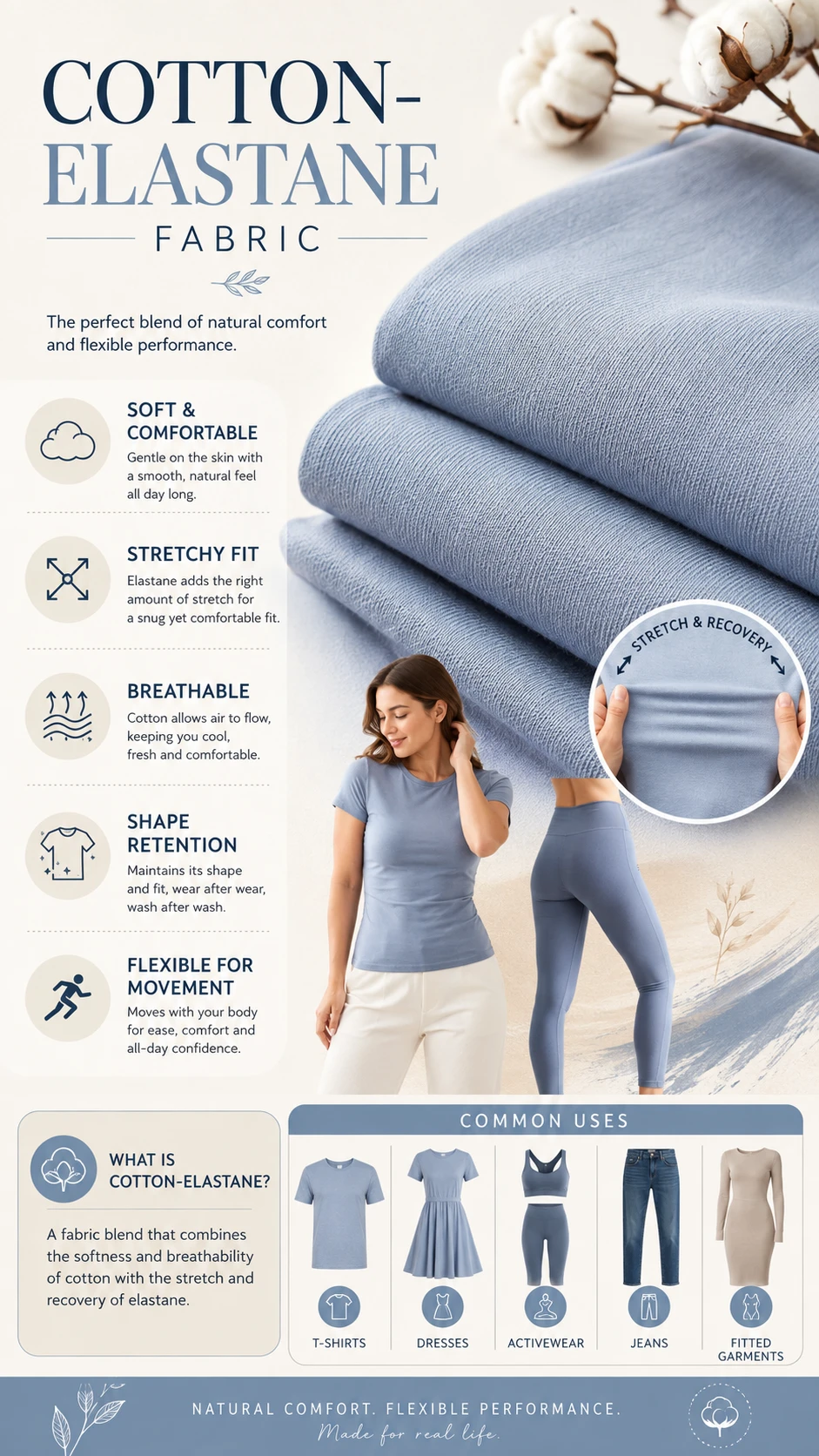
Cotton-elastane fabric combines the natural comfort of cotton with a small amount of elastane for stretch and recovery. It is especially popular for fitted T-shirts and fashion tops that need to move comfortably with the body.
- Stretchable: Provides better flexibility than standard cotton.
- Shape Recovery: Helps the garment return to its original shape after stretching.
- Comfortable Fit: Works well for slim and body-hugging designs.
- Common Ratios: Often available in blends such as 95% Cotton / 5% Elastane.
=> Best For: Fitted T-shirts, women’s tops, baby tees, stretch basics, and slim-fit collections.
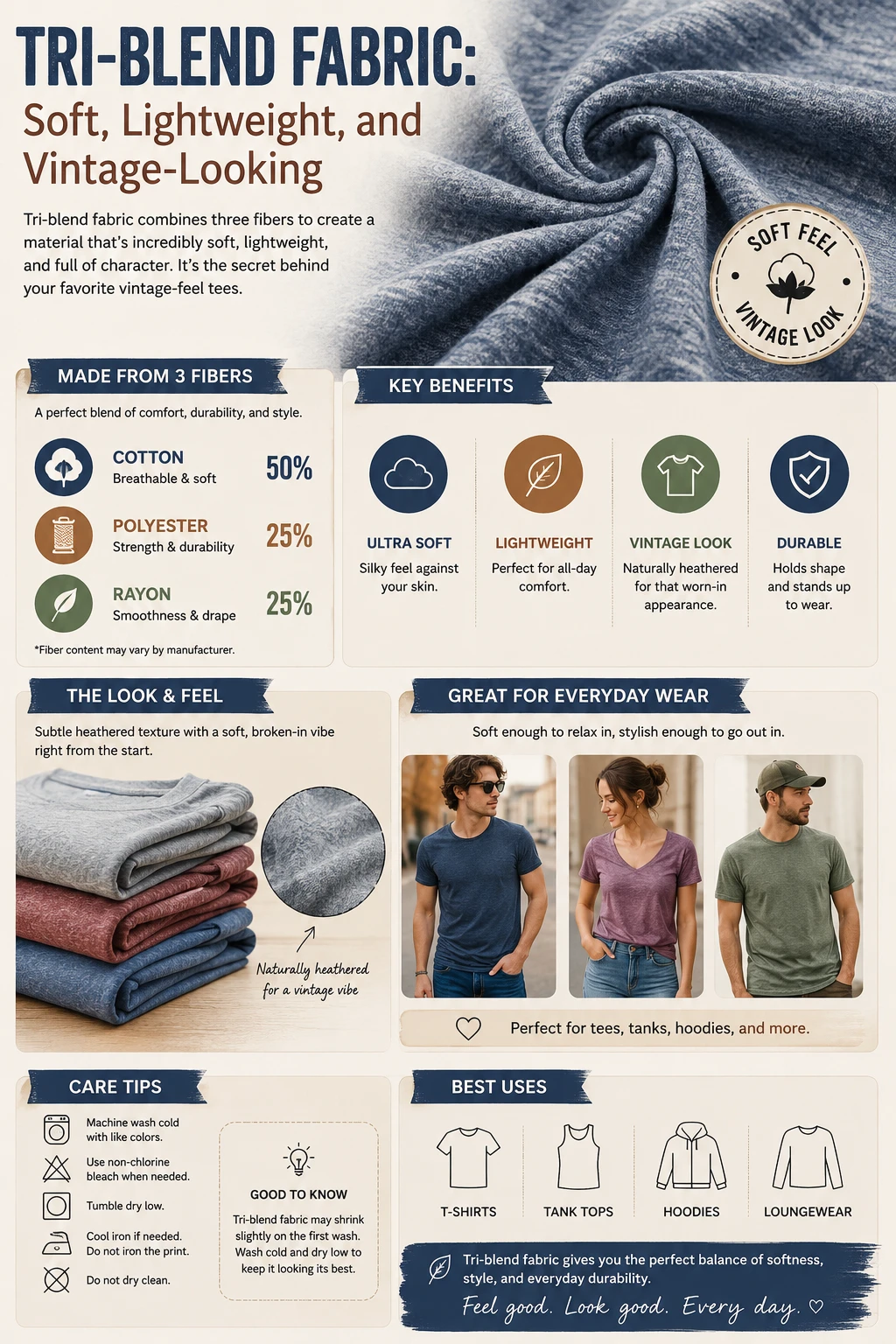
7. Tri-Blend: Soft, Lightweight, and Vintage-Looking
Tri-blend fabric usually combines three fibers, commonly cotton, polyester, and rayon or viscose. Each fiber contributes a different characteristic, creating a soft and relaxed T-shirt fabric.
- Very Soft Feel: Often softer than standard cotton-polyester blends.
- Lightweight: Comfortable for casual everyday wear.
- Relaxed Drape: Creates a softer, less structured silhouette.
- Vintage Appearance: Often used for heathered or retro-style T-shirts.
A common blend may look like: Cotton + Polyester + Rayon. However, the exact percentages can vary significantly between suppliers.
=> Best For: Lifestyle brands, vintage-style tees, graphic T-shirts, and branded merchandise.
8. Bamboo Viscose: Soft Regenerated Cellulosic Fabric
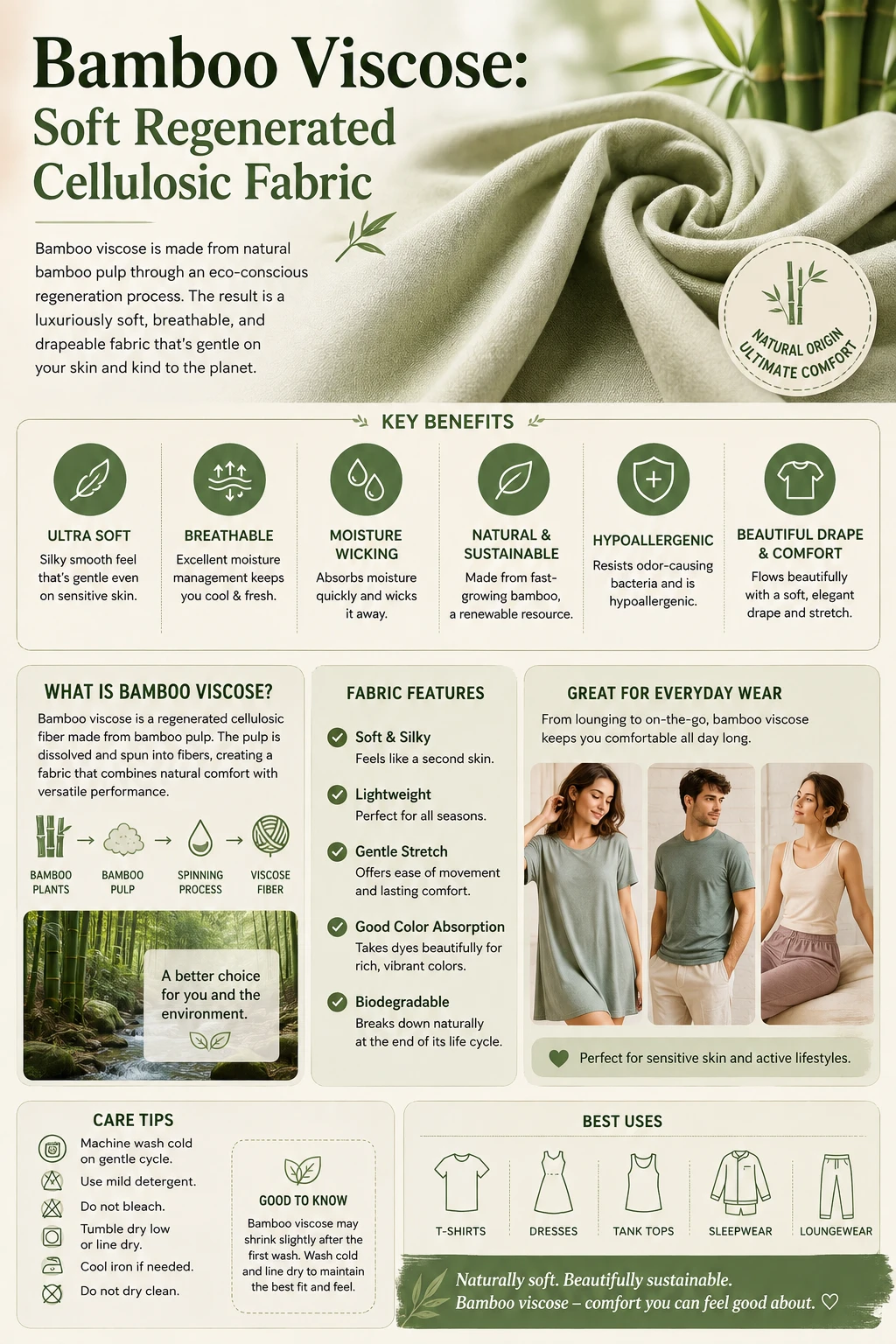
Many fabrics marketed as “bamboo fabric” are actually viscose or rayon made using bamboo as the cellulose source. This type of fabric can create a soft and lightweight T-shirt with good drape.
- Soft Hand Feel: Smooth and comfortable against the skin.
- Fluid Appearance: Works well for relaxed silhouettes.
- Lightweight: Suitable for casual and fashion tops.
- Blend-Friendly: Commonly combined with cotton or elastane.
Buyers should check the actual fiber label rather than assuming that all bamboo fabrics are untreated natural bamboo fibers.
=> Best For: Soft fashion T-shirts, loungewear, lightweight basics, and relaxed-fit tops.
9. Hemp and Hemp Blends: Natural Texture and Durability
Hemp is a natural plant-based fiber that can be used alone or blended with cotton and other fibers. For T-shirts, hemp blends are generally more common because blending can improve softness and make the fabric easier to wear.
- Strong Fiber: Hemp is naturally durable.
- Textured Appearance: Gives garments a more natural and casual look.
- Blend Versatility: Can be mixed with cotton for a softer hand feel.
- Distinctive Character: Suitable for brands looking for a natural or earthy aesthetic.
A common direction may be: Hemp + Cotton
=> Best For: Natural-style fashion, premium casual T-shirts, lifestyle brands, and outdoor-inspired collections.
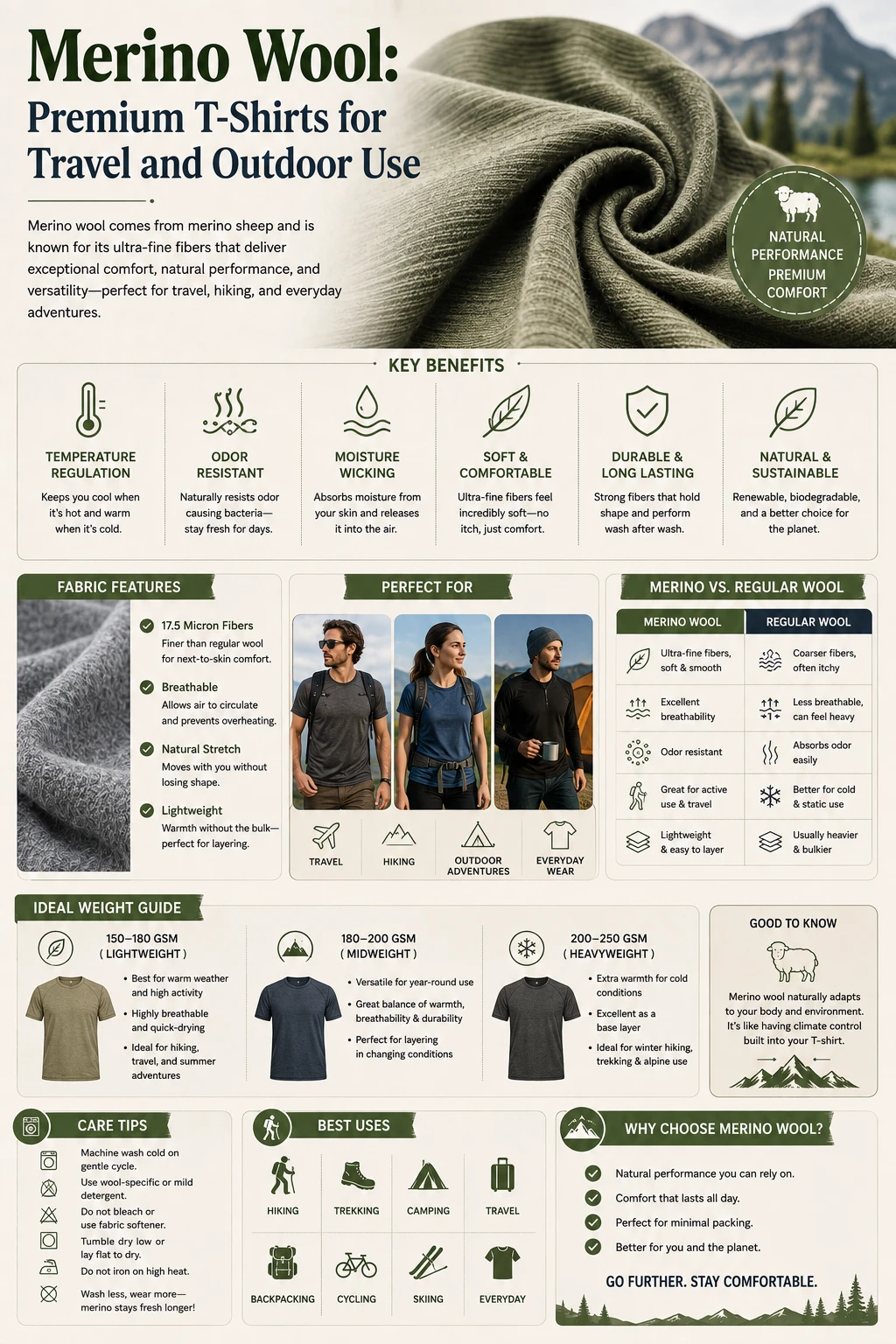
10. Merino Wool: Premium T-Shirts for Travel and Outdoor Use
Merino wool is less common than cotton or polyester for mainstream T-shirts, but it is an important premium option for travel and outdoor clothing. Fine merino fibers can create lightweight garments that feel much softer than traditional coarse wool.
- Moisture Management: Can absorb moisture vapor effectively.
- Temperature Regulation: Useful across different conditions.
- Soft Fine Fiber: High-quality merino can feel comfortable against the skin.
- Premium Positioning: Common in outdoor and travel collections.
Merino can also be blended with:
- Polyester
- Nylon
- Lyocell
to adjust durability and performance.
=> Best For: Travel T-shirts, hiking apparel, outdoor clothing, and premium performance basics.
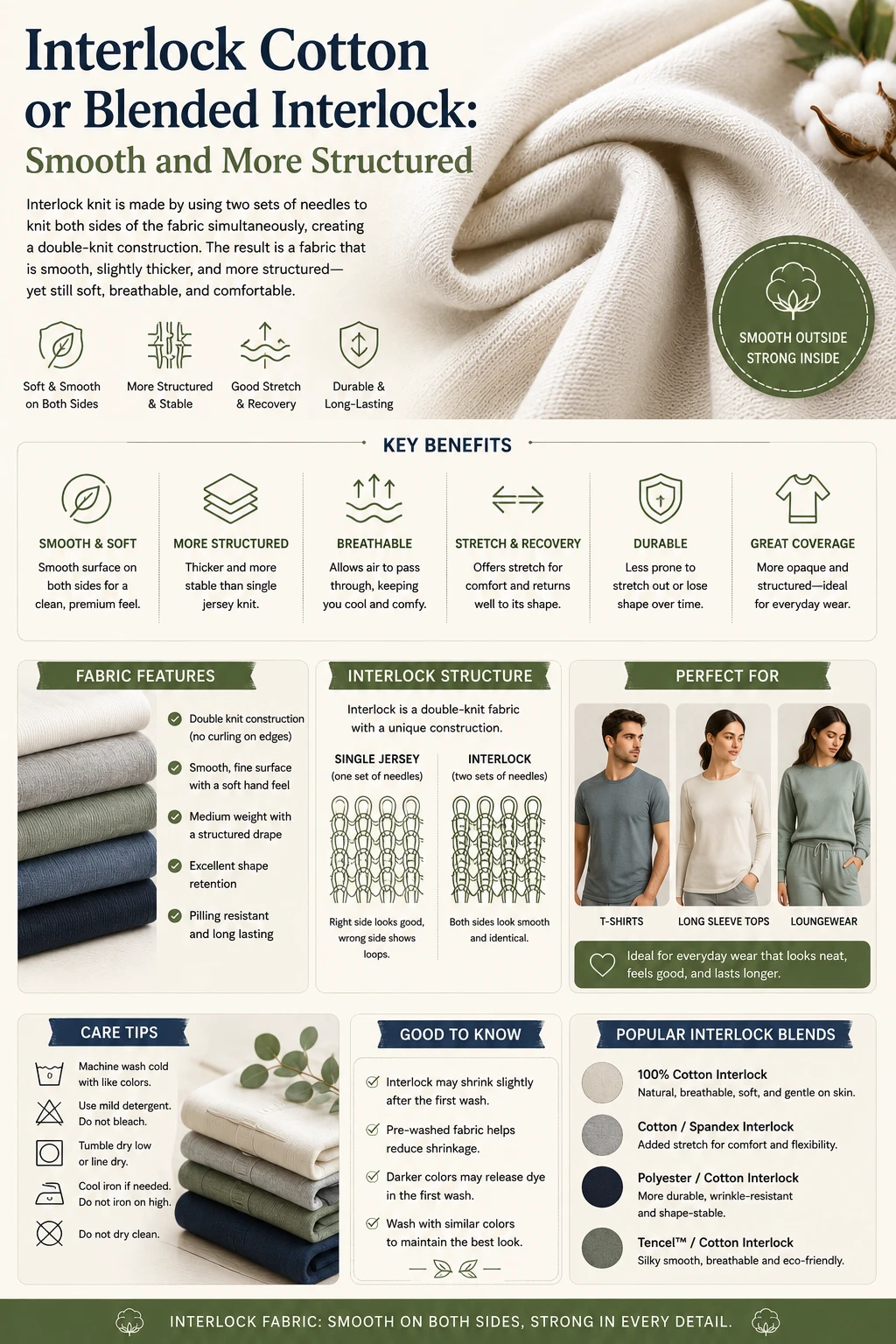
11. Interlock Cotton or Blended Interlock: Smooth and More Structured
Interlock is technically a knit construction rather than a fiber, but it is important when choosing T-shirt fabric because it behaves differently from ordinary single jersey. Interlock may be made from:
- Cotton
- CVC
- Polyester
- Cotton-elastane
- Other blends
Compared with basic single jersey, interlock is generally more substantial and stable.
- Smooth Surface: Clean appearance on both sides.
- More Stable: Holds its shape well.
- More Structured: Suitable for premium-looking tees.
- Good Coverage: Often feels more substantial than lightweight single jersey.
=> Best For: Premium basics, structured T-shirts, uniforms, and polished fashion tops.
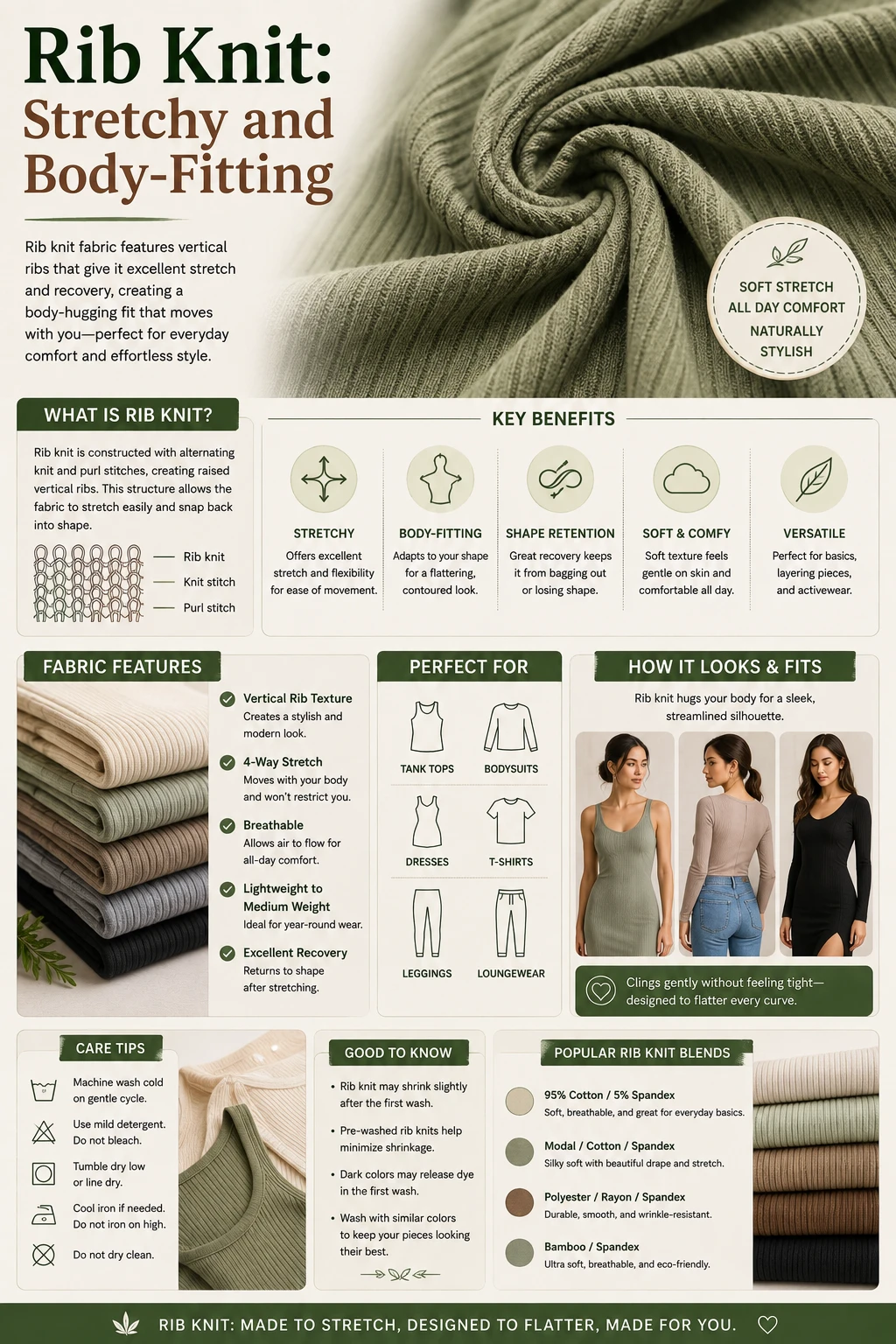
12. Rib Knit: Stretchy and Body-Fitting
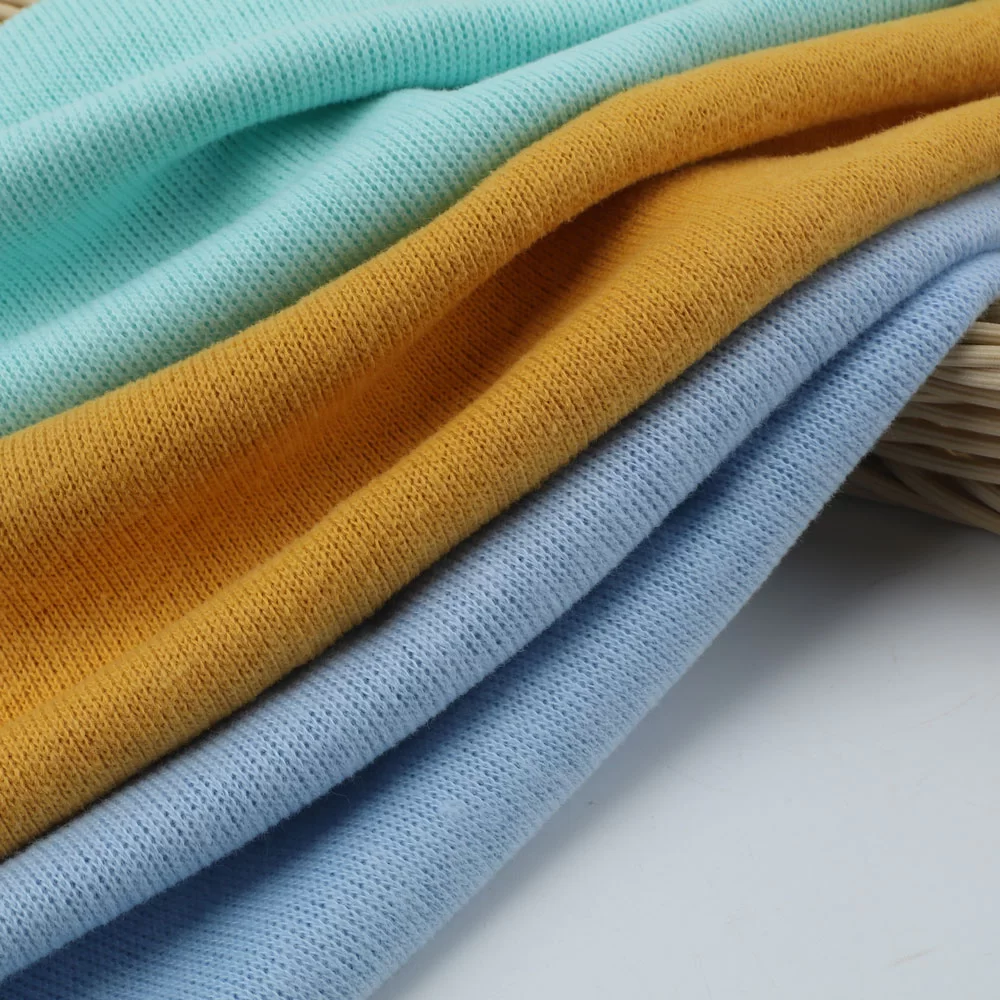
Rib is another knit construction commonly associated with neckbands, but it can also be used for the entire T-shirt. Rib fabrics naturally provide more stretch because of their knitted structure.
- High Stretch: Moves easily with the body.
- Textured Surface: Gives the garment a distinctive appearance.
- Close Fit: Works especially well for fitted designs.
- Versatile: Can be produced using cotton, cotton-elastane, modal blends, and other fibers.
=> Best For: Fitted women’s T-shirts, baby tees, tank tops, fashion basics, and layering tops.

Conclusion / Final Words
There is no single “best” fabric; the ideal choice depends on your brand’s purpose and your customer’s environment. Natural fibers like cotton and linen prioritize breathability, while synthetics like polyester offer rugged performance. At Mekong Garment, we help you navigate these choices to find the perfect blend for your gym shirts, summer collections, or premium fashion lines. Choose wisely, and your T-shirts will not only look great but feel amazing too.