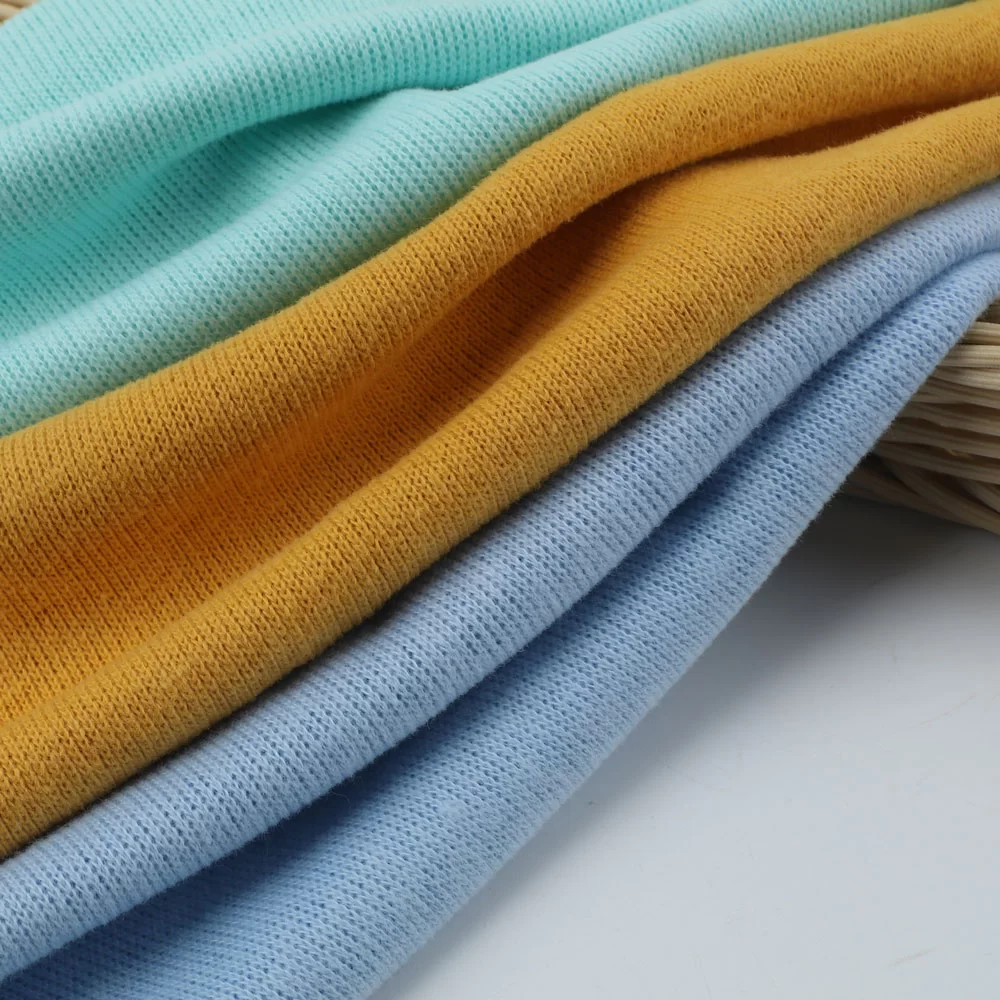


Polyester fabric stands at the heart of modern textile manufacturing—versatile, affordable, and remarkably durable. From everyday casual wear to high-performance sports gear, this synthetic fiber has become a foundational building block in the global apparel industry. This guide explores what polyester is, how it’s made, and its core properties to help brands and consumers make informed fabric decisions.
=> Related Article: Modal Fabric: Pros, Cons, and Applications
What Is Polyester Fabric?
Polyester is a synthetic fabric derived from polyethylene terephthalate (PET)—the same polymer used for drink bottles. Unlike natural fibers that grow on plants or animals, polyester is engineered in a laboratory to provide maximum strength and resistance to environmental factors. Today, it accounts for approximately 59% of total global fiber production.
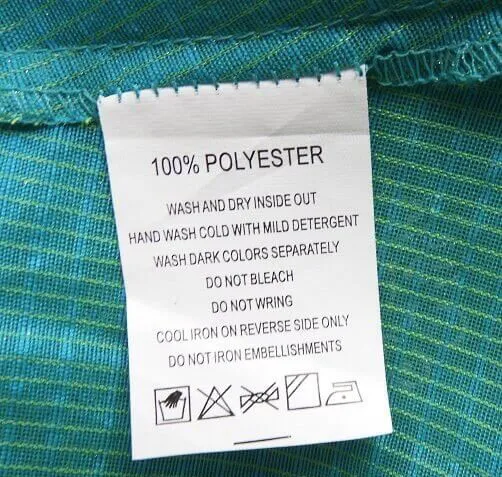
Polyester fabric is a textile material made from synthetic polymer fibers belonging to the polyester family. The most common polyester used in clothing is polyethylene terephthalate (PET).
What Is Polyester Made Of?
Most conventional apparel polyester is made from PET produced using fossil-derived chemical feedstocks. The principal chemical inputs commonly include:
- Terephthalic acid (PTA): An important raw material used to form PET polymer chains.
- Ethylene glycol (EG): A chemical component that reacts with terephthalic acid to produce PET.
- Polymer additives: Materials that may be incorporated to influence appearance, processing, or selected performance characteristics.
During polymerization, these substances form long polymer chains containing repeating ester linkages. The resulting polyester can be melted and extruded into fine fibers. Some polyester production uses recycled PET or alternative feedstocks rather than exclusively new fossil-derived materials.

How Polyester Fabric Is Made
The transformation from petroleum chemicals to soft fabric is a highly controlled industrial process. This stability is what gives polyester its famous durability.
- Polymerization: Ethylene glycol and terephthalic acid react to form long-chain polymers.
- Chip Formation: The molten polymer is cooled and cut into small “PET chips.”
- Melt Spinning: Chips are melted again and pushed through a spinneret (tiny holes).
- Filament Drawing: The resulting strands are stretched to align molecules, increasing strength and elasticity.
- Texturizing: Fibers are spun into yarn and then woven or knitted into fabric.
A Short History of Polyester
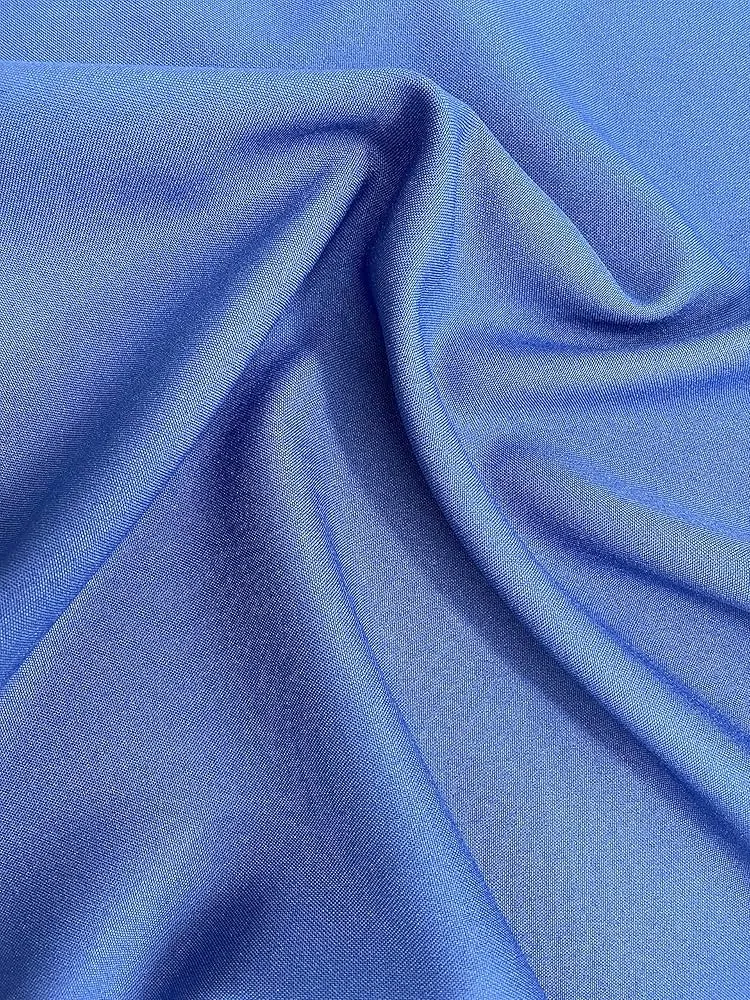
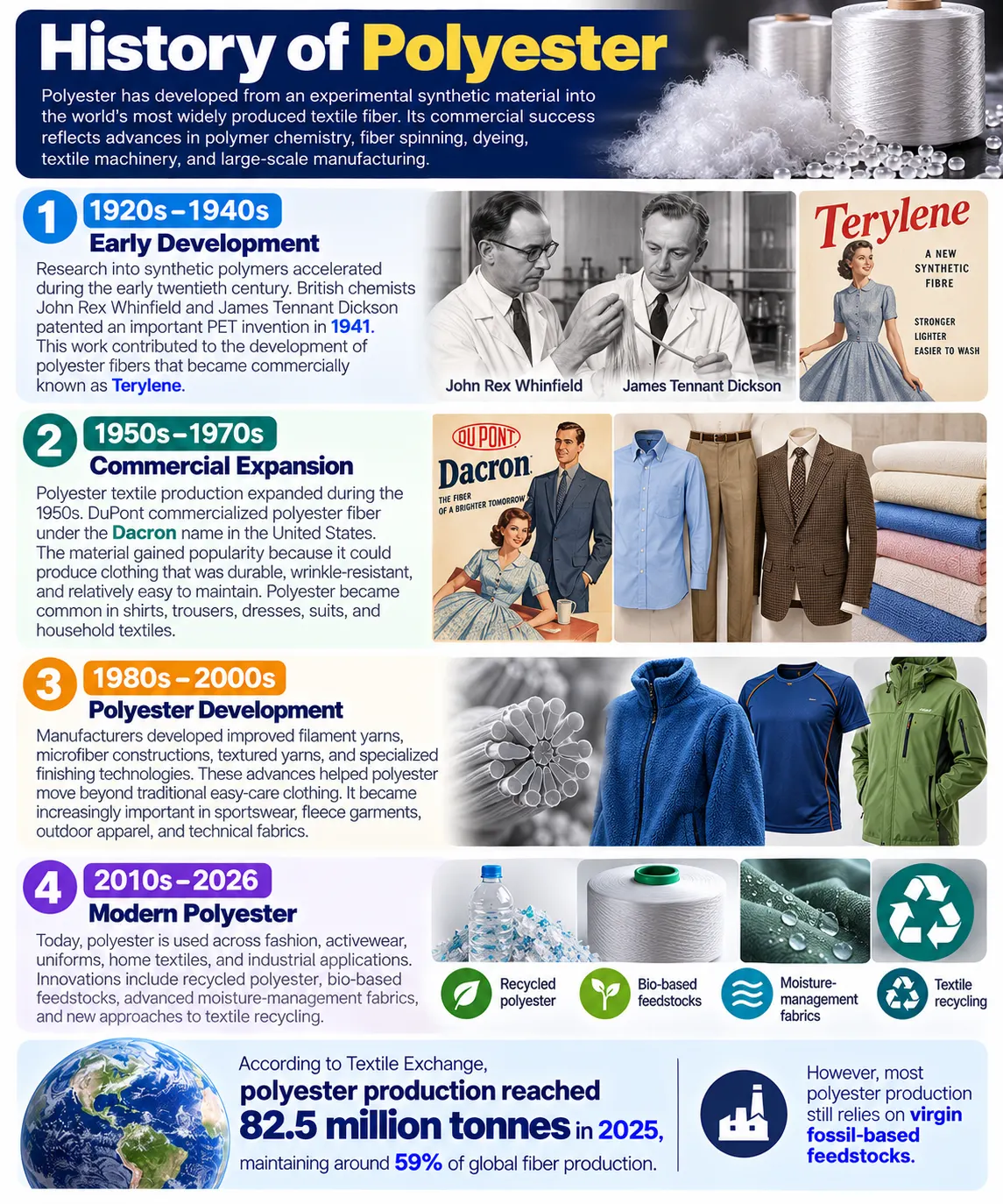
Polyester has developed from an experimental synthetic material into the world’s most widely produced textile fiber. Its commercial success reflects advances in polymer chemistry, fiber spinning, dyeing, textile machinery, and large-scale manufacturing.
Early Development: 1920s–1940s:
Research into synthetic polymers accelerated during the early twentieth century. British chemists John Rex Whinfield and James Tennant Dickson patented an important PET invention in 1941. This work contributed to the development of polyester fibers that became commercially known as Terylene.
Commercial Expansion: 1950s–1970s:
Polyester textile production expanded during the 1950s. DuPont commercialized polyester fiber under the Dacron name in the United States. The material gained popularity because it could produce clothing that was durable, wrinkle-resistant, and relatively easy to maintain. Polyester became common in shirts, trousers, dresses, suits, and household textiles.
Polyester Development: 1980s–2000s:
Manufacturers developed improved filament yarns, microfiber constructions, textured yarns, and specialized finishing technologies. These advances helped polyester move beyond traditional easy-care clothing. It became increasingly important in sportswear, fleece garments, outdoor apparel, and technical fabrics.
Modern Polyester: 2010s–2026
Today, polyester is used across fashion, activewear, uniforms, home textiles, and industrial applications. Innovations include recycled polyester, bio-based feedstocks, advanced moisture-management fabrics, and new approaches to textile recycling. According to Textile Exchange, polyester production reached approximately 82.5 million tonnes in 2025, maintaining around 59% of global fiber production. However, most polyester production still relies on virgin fossil-based feedstocks.
Common Types of Polyester
- PET Polyester: The standard type used in most apparel and home textiles.
- PCDT Polyester: Offers better elasticity and resilience; often used for heavy-duty upholstery or curtains.
- Recycled Polyester (rPET): Made from used plastic bottles and factory waste. It offers the same performance with a significantly lower environmental footprint.
1. PET Polyester
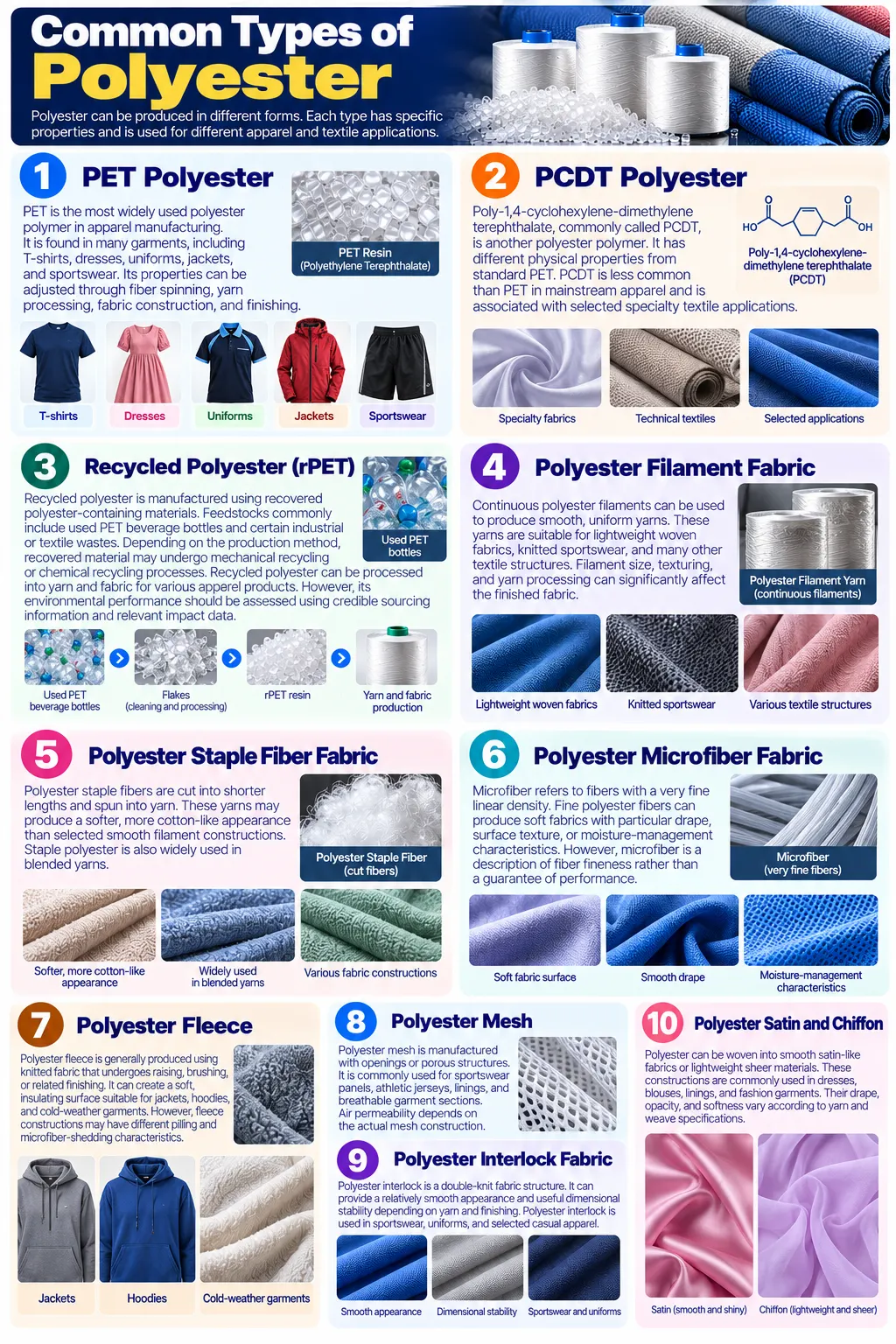
PET is the most widely used polyester polymer in apparel manufacturing. It is found in many garments, including T-shirts, dresses, uniforms, jackets, and sportswear. Its properties can be adjusted through fiber spinning, yarn processing, fabric construction, and finishing.
2. PCDT Polyester
Poly-1,4-cyclohexylene-dimethylene terephthalate, commonly called PCDT, is another polyester polymer. It has different physical properties from standard PET. PCDT is less common than PET in mainstream apparel and is associated with selected specialty textile applications.
3. Recycled Polyester (rPET)
Recycled polyester is manufactured using recovered polyester-containing materials. Feedstocks commonly include used PET beverage bottles and certain industrial or textile wastes. Depending on the production method, recovered material may undergo mechanical recycling or chemical recycling processes. Recycled polyester can be processed into yarn and fabric for various apparel products. However, its environmental performance should be assessed using credible sourcing information and relevant impact data.
4. Polyester Filament Fabric
Continuous polyester filaments can be used to produce smooth, uniform yarns. These yarns are suitable for lightweight woven fabrics, knitted sportswear, and many other textile structures. Filament size, texturing, and yarn processing can significantly affect the finished fabric.
5. Polyester Staple Fiber Fabric
Polyester staple fibers are cut into shorter lengths and spun into yarn. These yarns may produce a softer, more cotton-like appearance than selected smooth filament constructions. Staple polyester is also widely used in blended yarns.
6. Polyester Microfiber Fabric
Microfiber refers to fibers with a very fine linear density. Fine polyester fibers can produce soft fabrics with particular drape, surface texture, or moisture-management characteristics. However, microfiber is a description of fiber fineness rather than a guarantee of performance.
7. Polyester Fleece
Polyester fleece is generally produced using knitted fabric that undergoes raising, brushing, or related finishing. It can create a soft, insulating surface suitable for jackets, hoodies, and cold-weather garments. However, fleece constructions may have different pilling and microfiber-shedding characteristics.
8. Polyester Mesh
Polyester mesh is manufactured with openings or porous structures. It is commonly used for sportswear panels, athletic jerseys, linings, and breathable garment sections. Air permeability depends on the actual mesh construction.
9. Polyester Interlock Fabric
Polyester interlock is a double-knit fabric structure. It can provide a relatively smooth appearance and useful dimensional stability depending on yarn and finishing. Polyester interlock is used in sportswear, uniforms, and selected casual apparel.
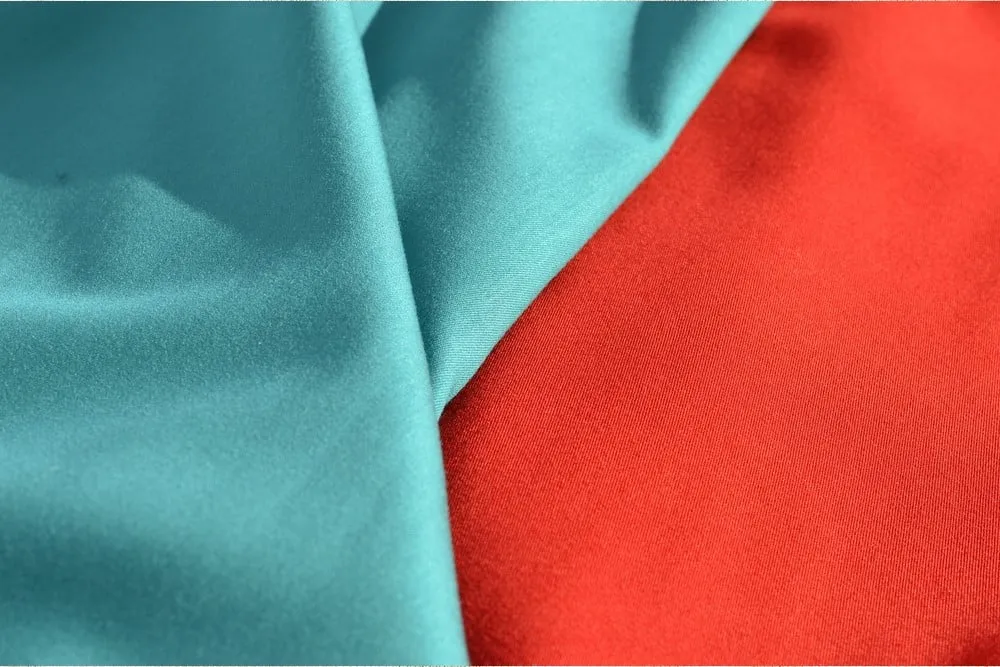
10. Polyester Satin and Chiffon
Polyester can be woven into smooth satin-like fabrics or lightweight sheer materials. These constructions are commonly used in dresses, blouses, linings, and fashion garments. Their drape, opacity, and softness vary according to yarn and weave specifications.
Core Properties and Performance
Polyester is valued for its ability to “remember” its shape, making it the king of wrinkle resistance.
| Property | Performance Level |
|---|---|
| Wrinkle Resistance | Very High (Requires minimal ironing) |
| Durability | High (Resistant to tearing and abrasion) |
| Moisture Wicking | Excellent (Moves sweat away from skin) |
| Drying Speed | Fast (Low absorbency <1%) |
| Shrinkage | Very Low (Maintains fit after washing) |


Advantages of Polyester Fabric
1. Long-Lasting Performance
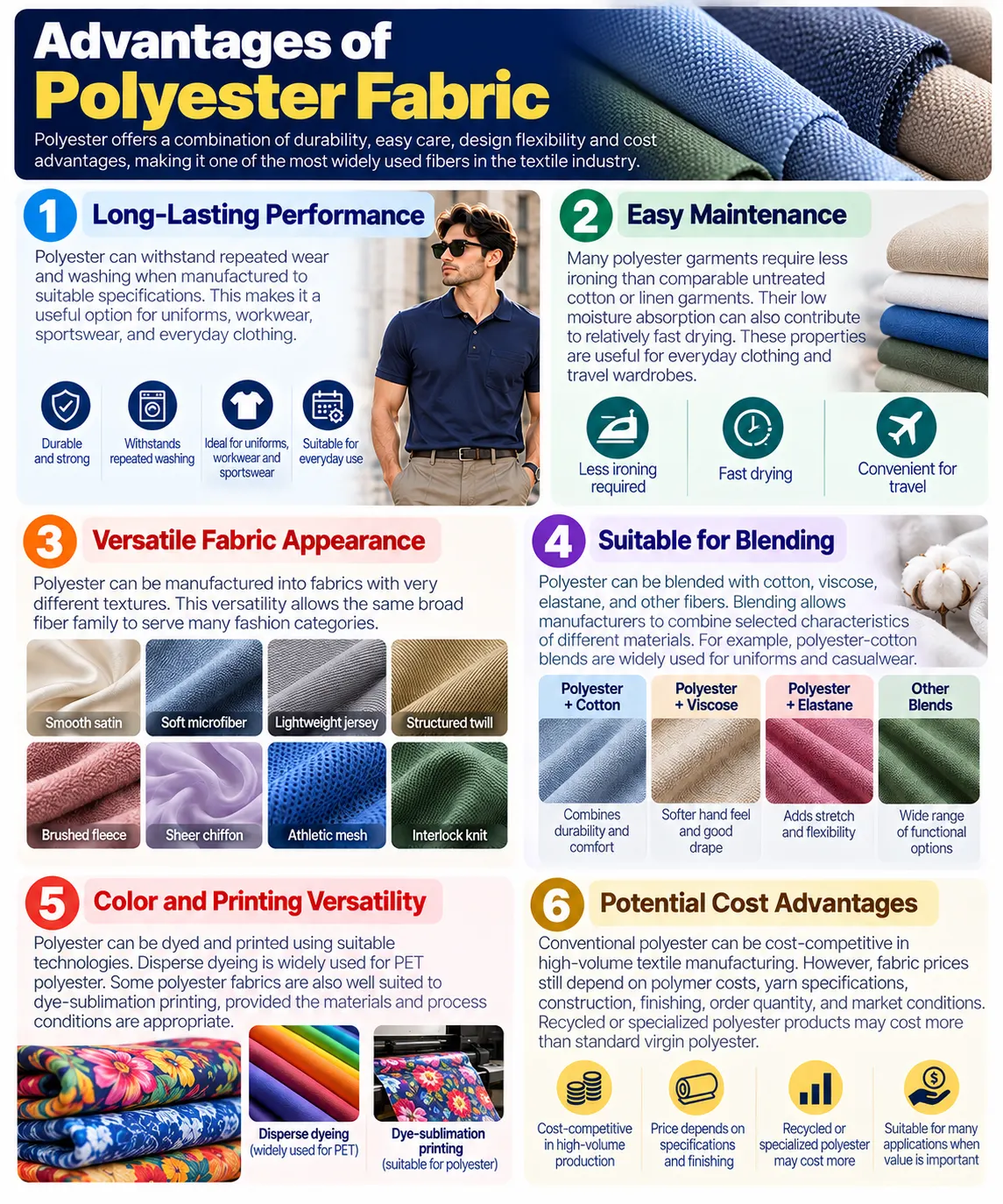
Polyester can withstand repeated wear and washing when manufactured to suitable specifications. This makes it a useful option for uniforms, workwear, sportswear, and everyday clothing.
2. Easy Maintenance
Many polyester garments require less ironing than comparable untreated cotton or linen garments. Their low moisture absorption can also contribute to relatively fast drying. These properties are useful for everyday clothing and travel wardrobes.
3. Versatile Fabric Appearance
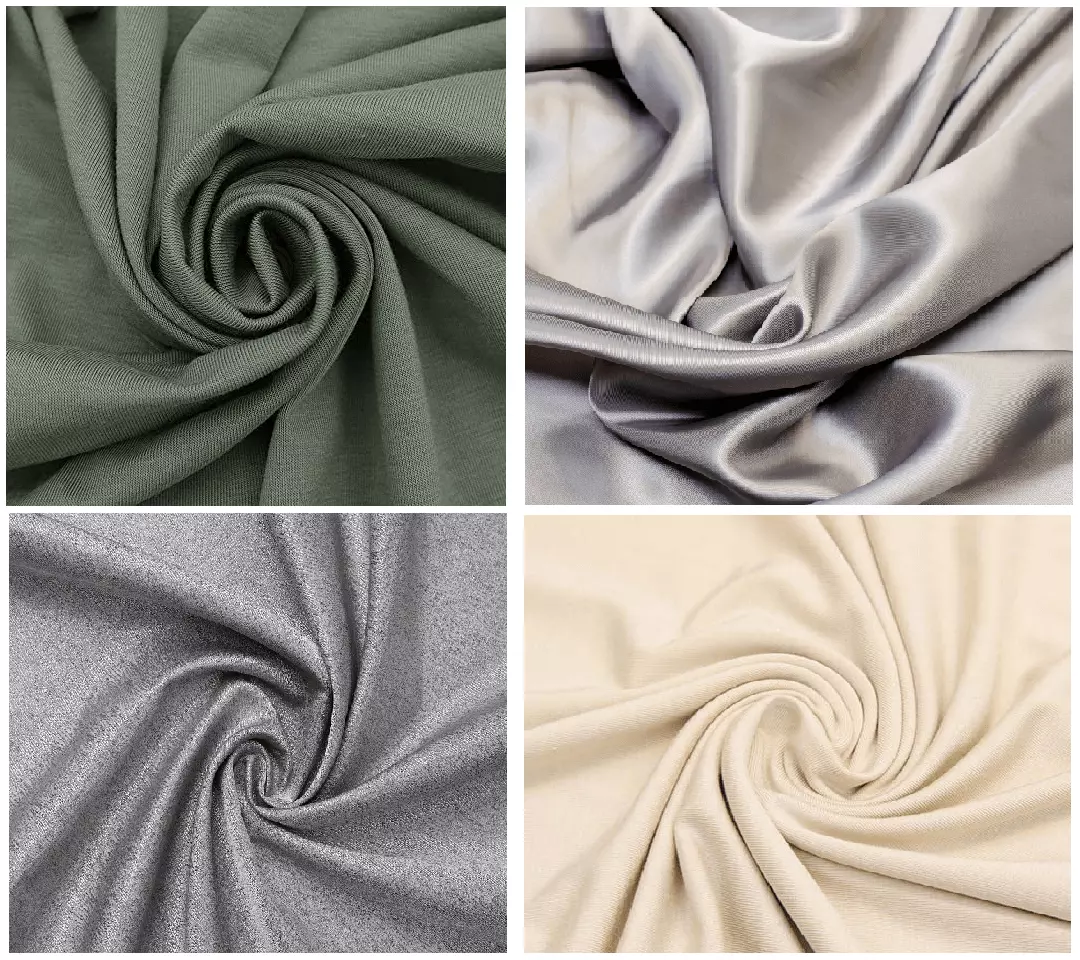
Polyester can be manufactured into fabrics with very different textures. Examples include: Smooth satin, Soft microfiber, Lightweight jersey, Structured twill, Brushed fleece, Sheer chiffon, Athletic mesh, Interlock knit. This versatility allows the same broad fiber family to serve many fashion categories.
4. Suitable for Blending
Polyester can be blended with cotton, viscose, elastane, and other fibers. Blending allows manufacturers to combine selected characteristics of different materials. For example, polyester-cotton blends are widely used for uniforms and casualwear.
5. Color and Printing Versatility
Polyester can be dyed and printed using suitable technologies. Disperse dyeing is widely used for PET polyester. Some polyester fabrics are also well suited to dye-sublimation printing, provided the materials and process conditions are appropriate.
6. Potential Cost Advantages
Conventional polyester can be cost-competitive in high-volume textile manufacturing. However, fabric prices still depend on polymer costs, yarn specifications, construction, finishing, order quantity, and market conditions. Recycled or specialized polyester products may cost more than standard virgin polyester.
Disadvantages of Polyester Fabric
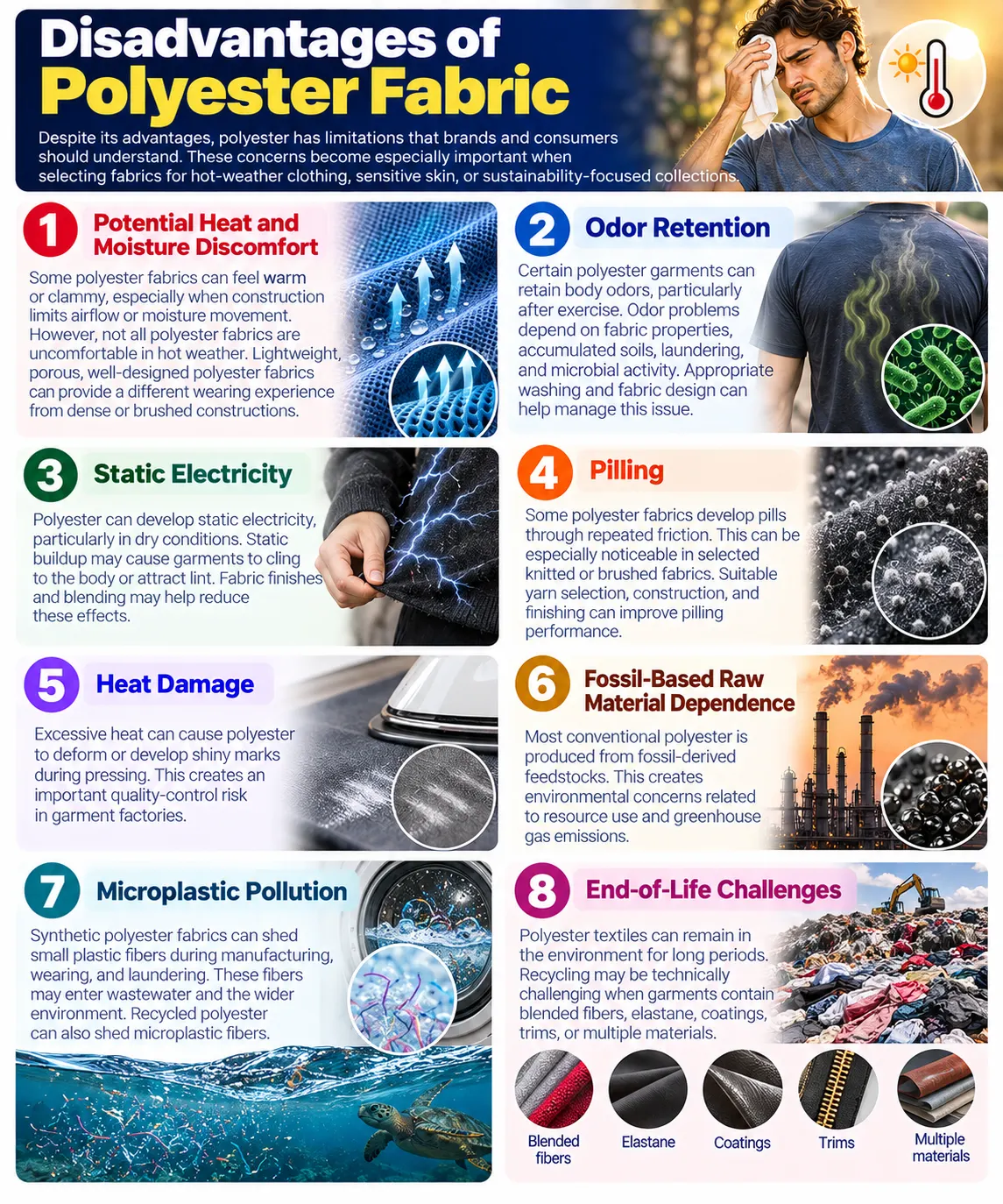
Despite its advantages, polyester has limitations that brands and consumers should understand. These concerns become especially important when selecting fabrics for hot-weather clothing, sensitive skin, or sustainability-focused collections.
1. Potential Heat and Moisture Discomfort
Some polyester fabrics can feel warm or clammy during wear. This may occur when fabric construction limits airflow or moisture movement. However, it is inaccurate to assume that every polyester garment is uncomfortable in hot weather. Lightweight, porous, well-designed polyester fabrics can provide a different wearing experience from dense or brushed constructions.
2. Odor Retention
Certain polyester garments can retain body odors, particularly after exercise. Odor problems depend on fabric properties, accumulated soils, laundering, and microbial activity. Appropriate washing and fabric design can help manage this issue.
3. Static Electricity
Polyester can develop static electricity, particularly in dry conditions. Static buildup may cause garments to cling to the body or attract lint. Fabric finishes and blending may help reduce these effects.
4. Pilling
Some polyester fabrics develop pills through repeated friction. This can be especially noticeable in selected knitted or brushed fabrics. Suitable yarn selection, construction, and finishing can improve pilling performance.
5. Heat Damage
Excessive heat can cause polyester to deform or develop shiny marks during pressing. This creates an important quality-control risk in garment factories.
6. Fossil-Based Raw Material Dependence
Most conventional polyester is produced from fossil-derived feedstocks. This creates environmental concerns related to resource use and greenhouse gas emissions.
7. Microplastic Pollution
Synthetic polyester fabrics can shed small plastic fibers during manufacturing, wearing, and laundering. These fibers may enter wastewater and the wider environment. Recycled polyester can also shed microplastic fibers.
8. End-of-Life Challenges
Polyester textiles can remain in the environment for long periods. Recycling may be technically challenging when garments contain blended fibers, elastane, coatings, trims, or multiple materials.
Polyester Fabric vs. Other Common Textile Materials
Polyester is often compared with natural and regenerated fibers. However, no single material performs best in every application. The right choice depends on the intended garment, climate, maintenance requirements, target price, and customer expectations.
| Comparison | Polyester | Other Material | Key Differences | Fabric Selection Considerations |
|---|---|---|---|---|
| Polyester vs. Cotton | Synthetic fiber with low moisture absorption, generally good wrinkle resistance, and relatively fast drying. | Natural cellulosic fiber with higher moisture absorption and a familiar natural-fiber feel. | Cotton absorbs more moisture into its fibers, while polyester retains less internal moisture and can dry faster under comparable conditions. | Both are suitable for T-shirts, polo shirts, uniforms, and casualwear. Consider fabric construction, comfort, maintenance, and intended use. |
| Polyester vs. Nylon | Synthetic fiber widely used for easy-care apparel, sportswear, and performance fabrics. | Synthetic fiber commonly selected for applications requiring toughness, flexibility, or abrasion resistance. | Both can provide durability, but their mechanical and moisture-related properties vary according to fiber grade and fabric construction. | Compare actual specifications and test results rather than assuming one fiber is always stronger or more durable. |
| Polyester vs. Viscose | Synthetic fiber with relatively low moisture absorption and useful wrinkle resistance. | Regenerated cellulosic fiber commonly associated with softness, fluid drape, and higher moisture absorption. | Viscose generally absorbs more moisture and offers a different drape, while polyester is commonly selected for easy-care properties. | Consider viscose for soft, flowing garments and polyester for selected easy-care applications. Blends can combine characteristics. |
| Polyester vs. Modal | Synthetic fiber valued for durability, low moisture absorption, and versatility in engineered fabrics. | Regenerated cellulosic fiber often selected for soft, comfortable fabrics and relatively high moisture absorption. | Modal is often chosen for softness and moisture absorption, while polyester offers different easy-care and engineered-performance possibilities. | Compare softness, fabric drape, moisture management, washing performance, and intended garment application. |
| Polyester vs. Linen | Synthetic fiber generally offering good wrinkle resistance and relatively low internal moisture absorption. | Natural flax fiber known for its distinctive texture, moisture absorption, and suitability for warm-weather clothing. | Linen wrinkles more readily and has a natural textured appearance, while polyester generally provides easier wrinkle management. | Consider linen for natural-texture summer clothing and polyester for garments requiring selected easy-care characteristics. |

Polyester vs. Cotton
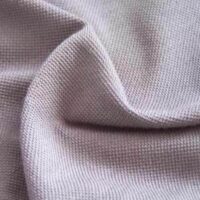
Cotton is a natural cellulosic fiber, while polyester is synthetic. Cotton generally absorbs more moisture into the fiber. Polyester absorbs relatively little internal moisture and can dry quickly under comparable conditions. Both materials can be suitable for T-shirts, polos, uniforms, and casual clothing. However, actual comfort and durability depend on fabric construction and finishing.
Polyester vs. Nylon
Polyester and nylon are synthetic fibers commonly used in apparel. Nylon is associated with certain applications requiring toughness, flexibility, or abrasion resistance. Polyester is widely used in easy-care clothing and performance textiles. However, durability cannot be determined from fiber names alone. Different nylon and polyester grades may produce different results.
Polyester vs. Viscose
Viscose is a regenerated cellulosic fiber, while polyester is synthetic. Viscose can provide soft drape and substantial moisture absorption. Polyester generally offers lower moisture absorption and useful wrinkle resistance. Blends combining these materials may be used to balance drape, feel, and maintenance characteristics.
Polyester vs. Modal
Modal is a regenerated cellulosic fiber. It is often selected for soft, comfortable fabrics. Polyester is valued for different characteristics, including low moisture absorption and versatility in engineered textile applications. For additional information, read Modal Fabric: Pros, Cons, and Everyday Applications.
Polyester vs. Linen
Linen is a natural fiber made from flax. It is known for its distinctive texture and suitability for warm-weather clothing. Polyester generally offers better resistance to certain types of wrinkling, while linen provides a different moisture-absorption and fabric-handling profile.
Common Uses of Polyester Fabric
Polyester is used in a broad range of products because it can be engineered into many textile structures.
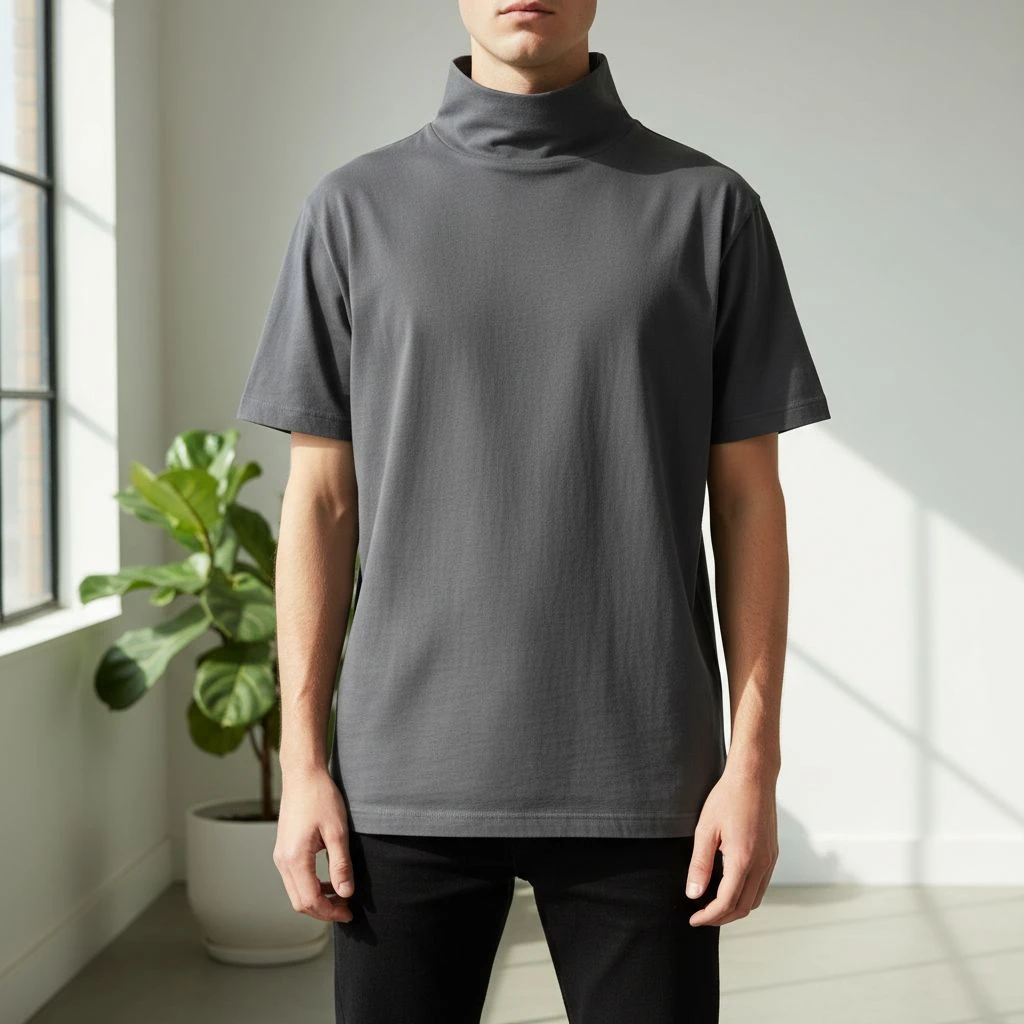
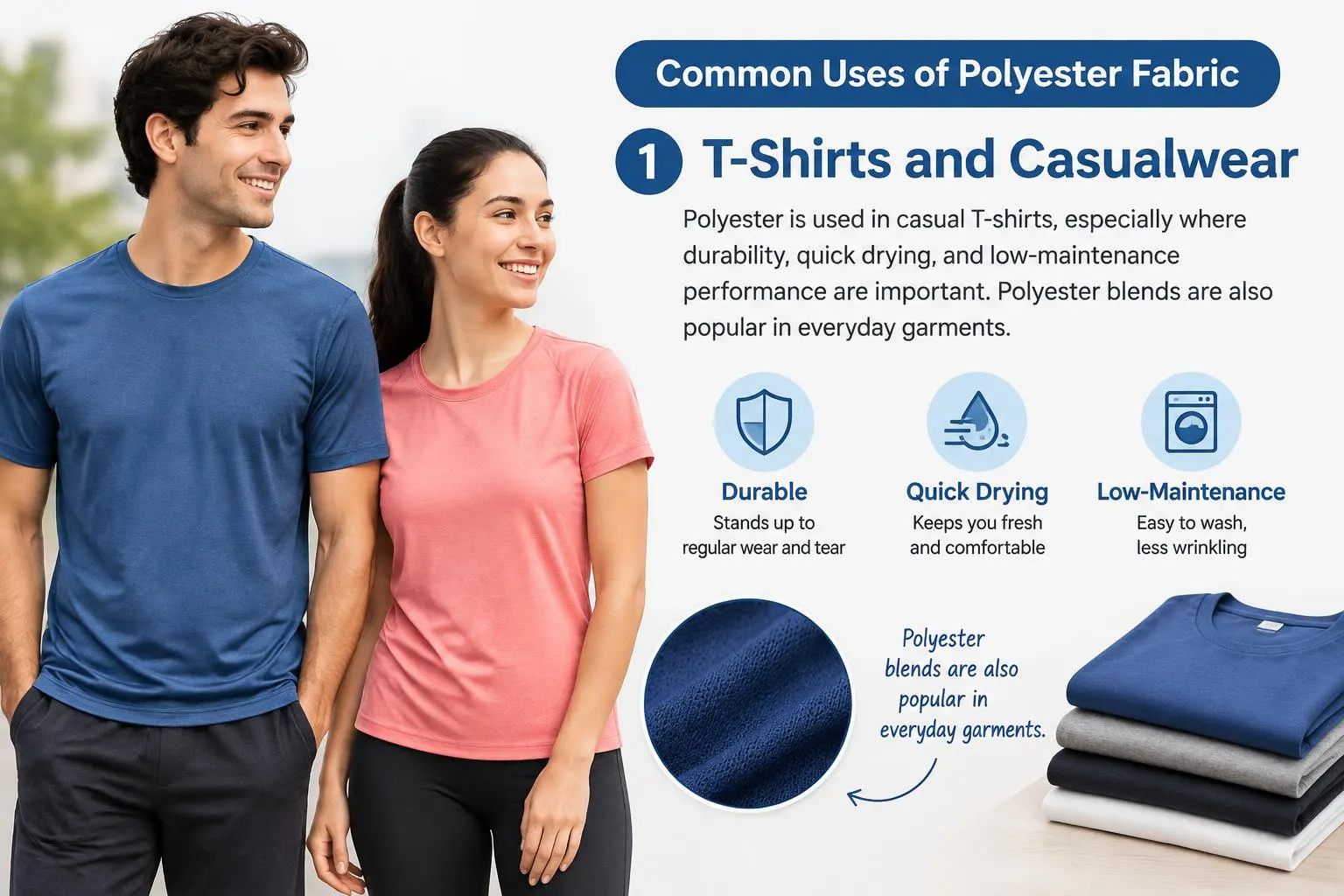
1. T-Shirts and Casualwear
Polyester is used in casual T-shirts, especially where durability, quick drying, and low-maintenance performance are important. Polyester blends are also popular in everyday garments.

2. Sportswear and Activewear
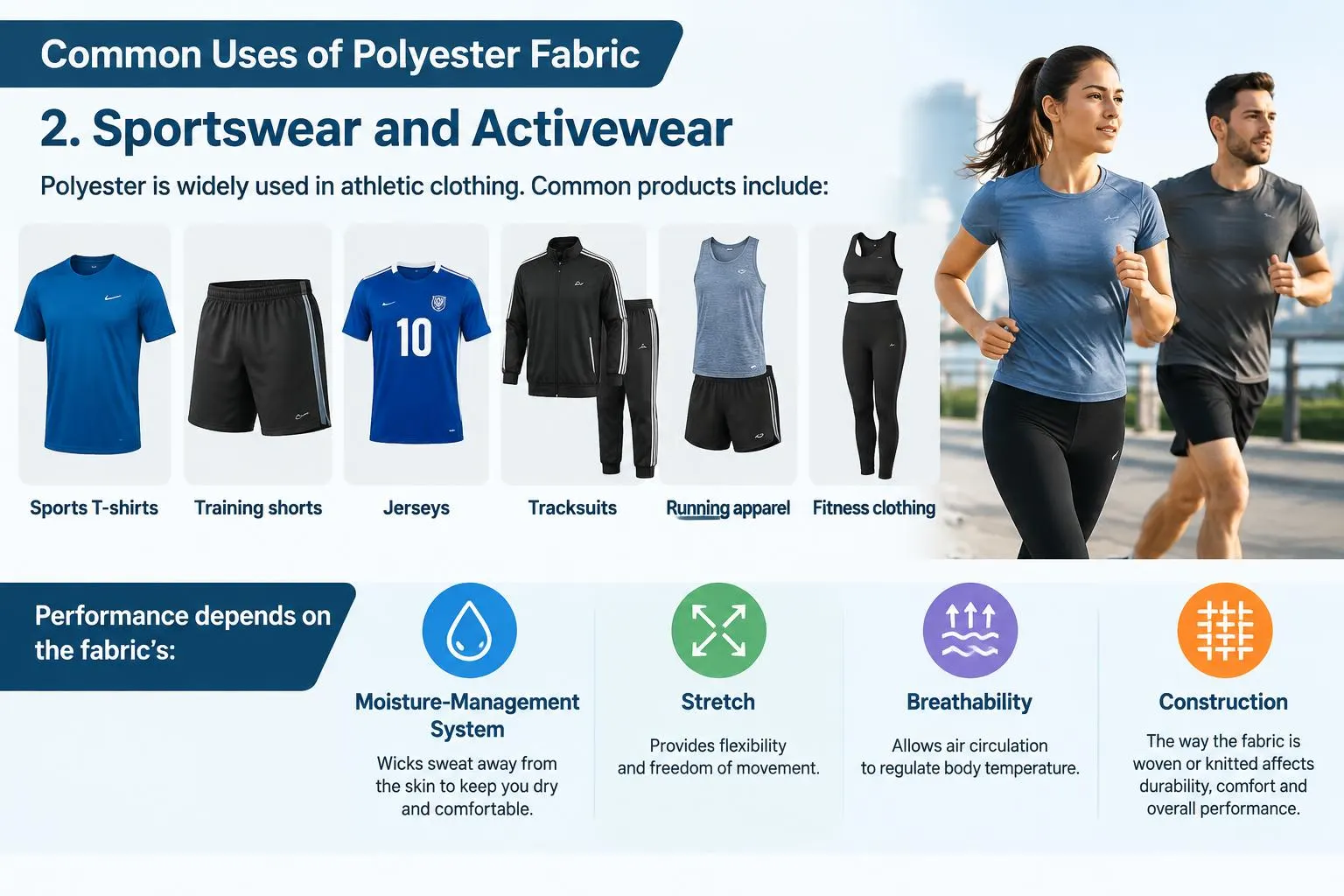
Polyester is widely used in athletic clothing. Common products include: Sports T-shirts, Training shorts, Jerseys, Tracksuits, Running apparel, Fitness clothing. Performance depends on the fabric’s moisture-management system, stretch, breathability, and construction.
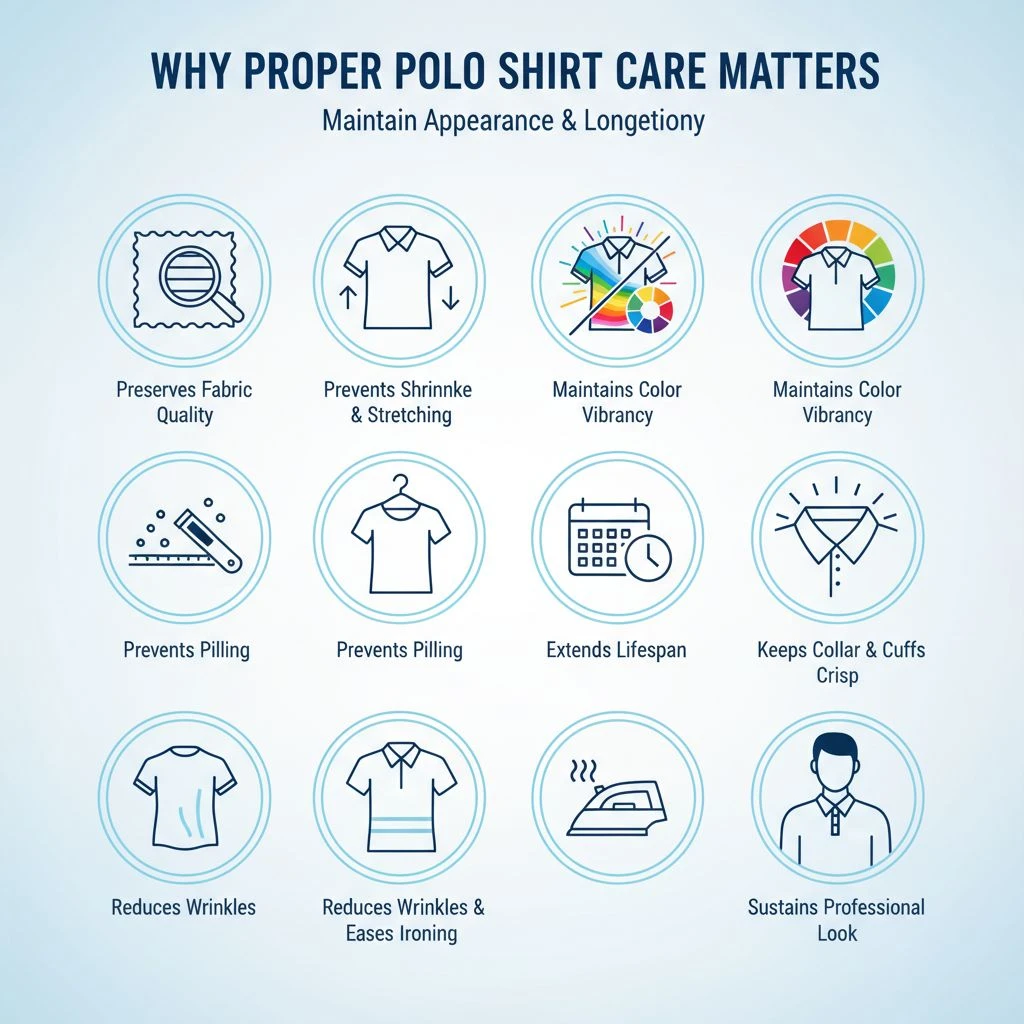
3. Polo Shirts
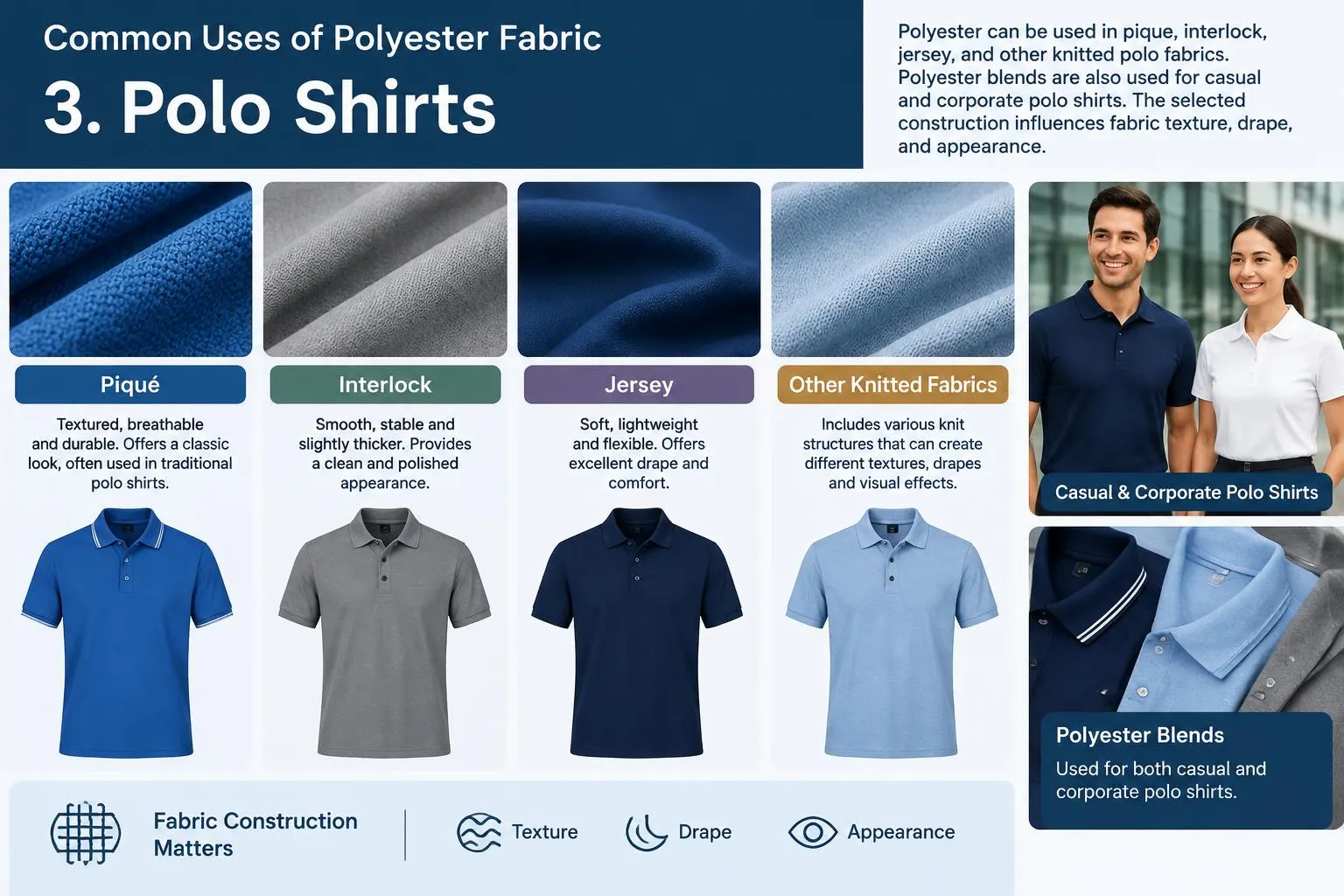
Polyester can be used in pique, interlock, jersey, and other knitted polo fabrics. Polyester blends are also used for casual and corporate polo shirts. The selected construction influences fabric texture, drape, and appearance.
4. School and Work Uniforms
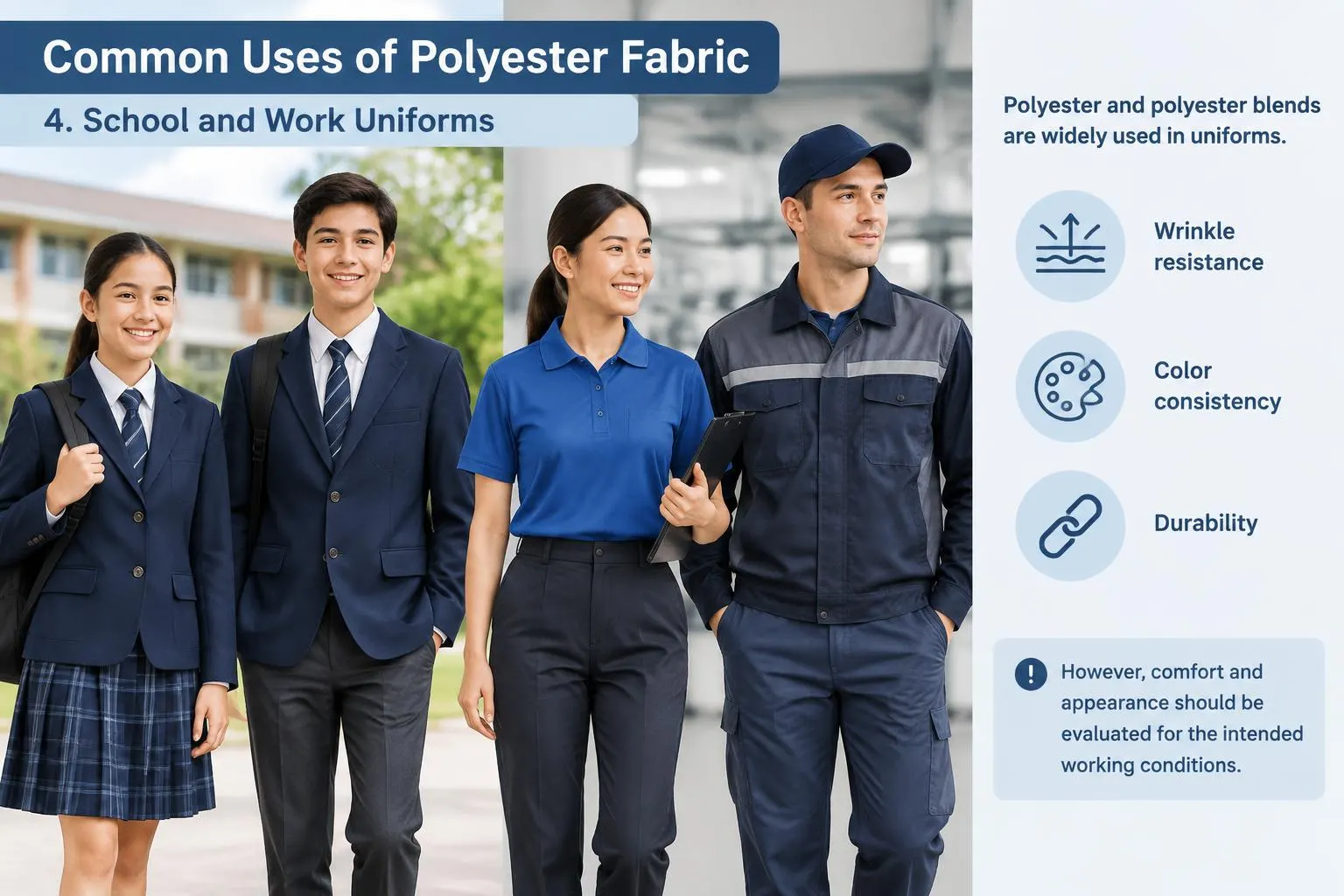
Polyester and polyester blends are widely used in uniforms. Their practical advantages may include wrinkle resistance, color consistency, and durability. However, comfort and appearance should be evaluated for the intended working conditions.
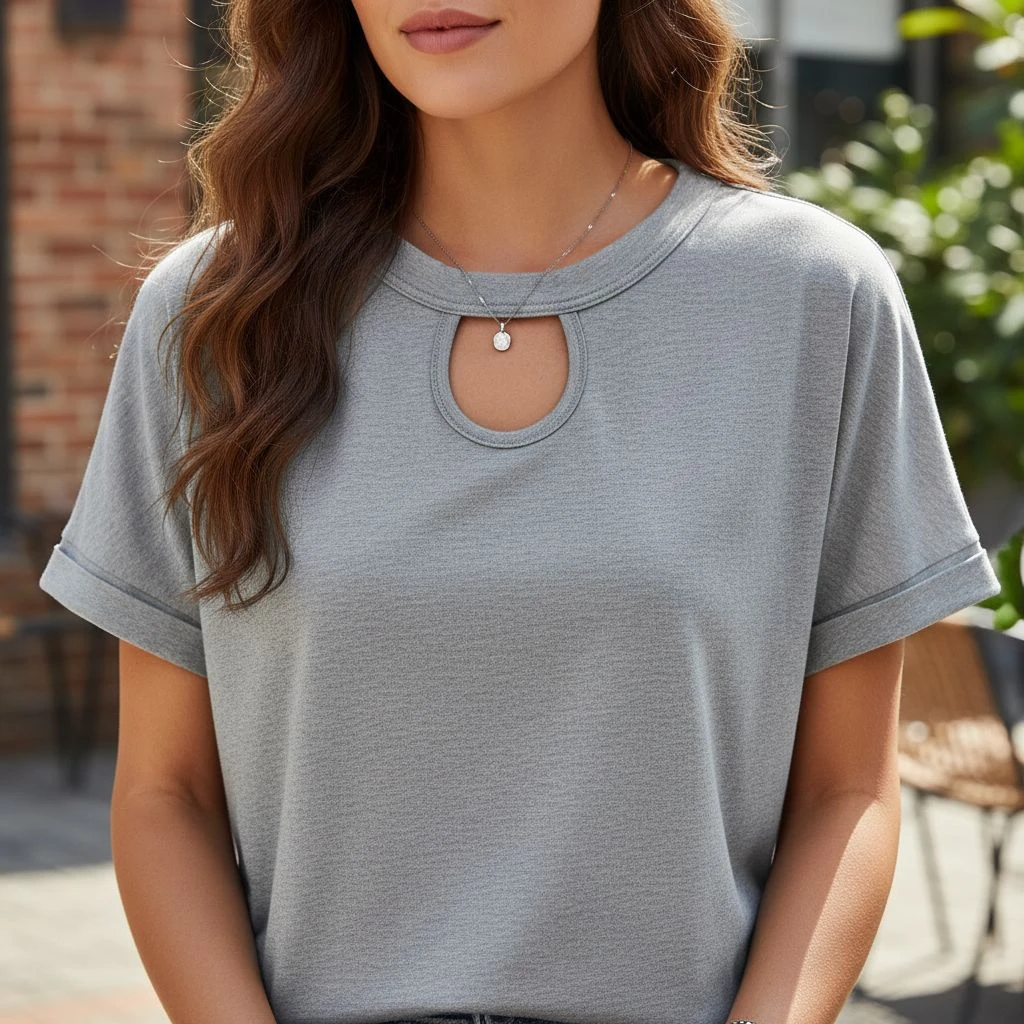
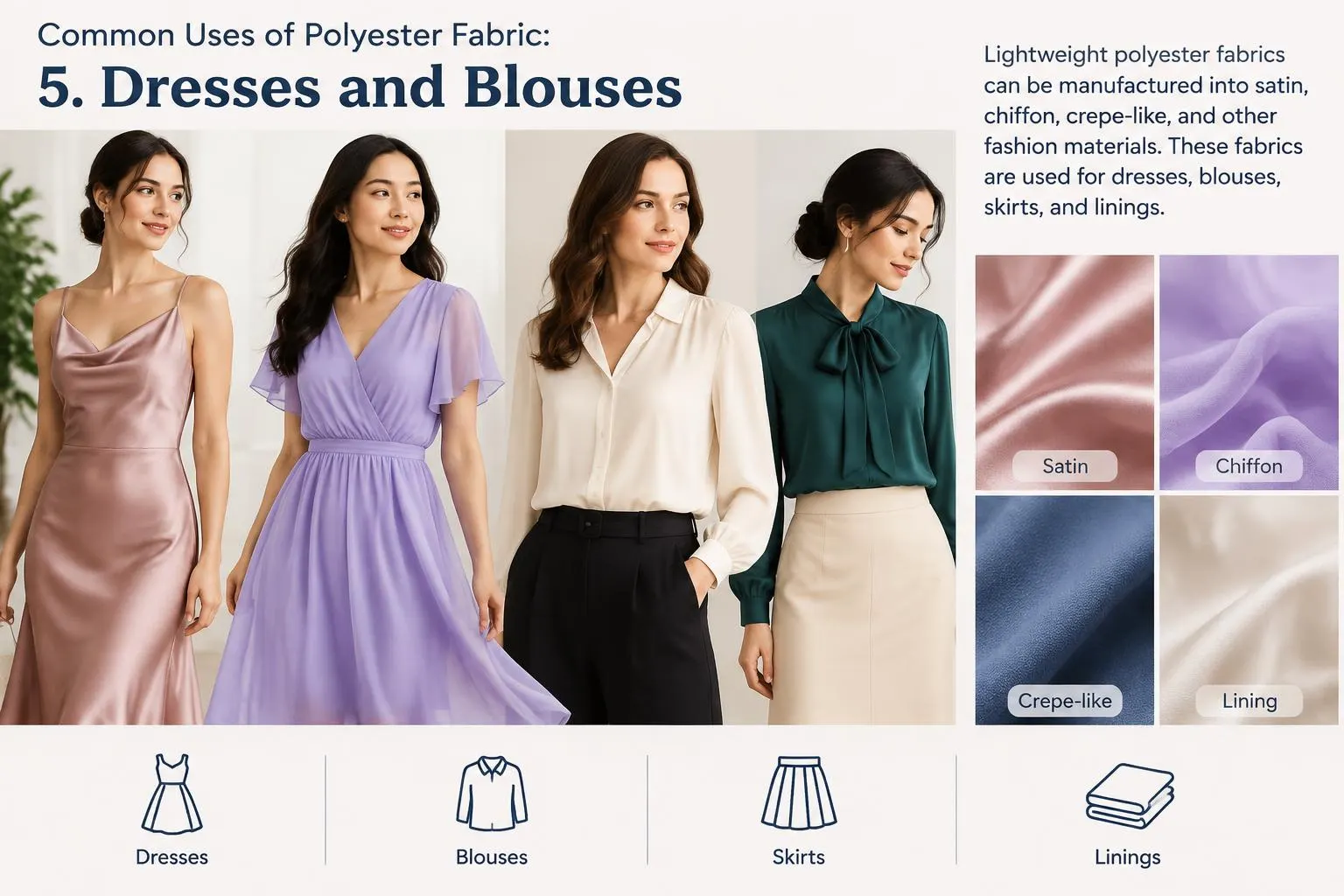
5. Dresses and Blouses
Lightweight polyester fabrics can be manufactured into satin, chiffon, crepe-like, and other fashion materials. These fabrics are used for dresses, blouses, skirts, and linings.
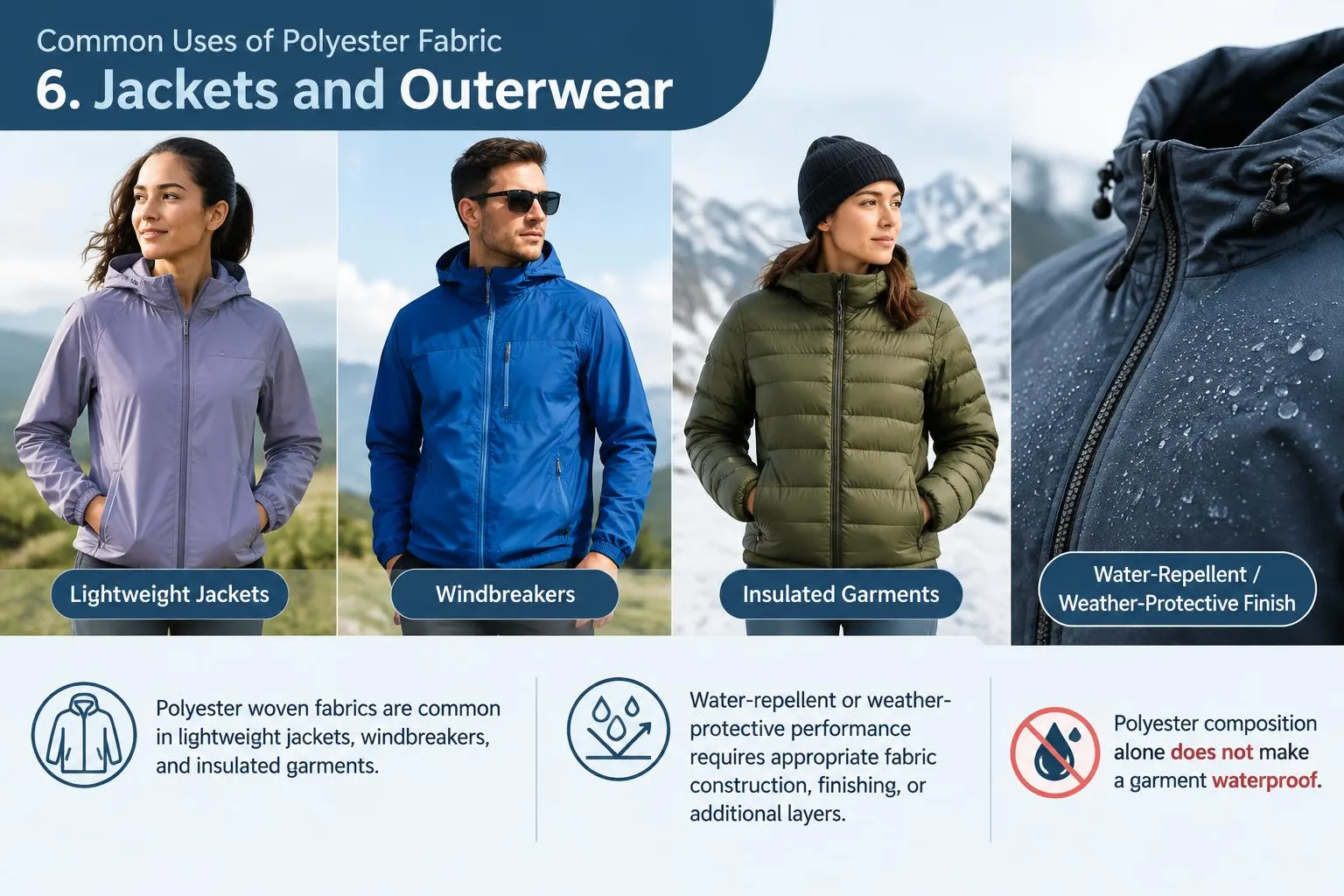
6. Jackets and Outerwear
Polyester woven fabrics are common in lightweight jackets, windbreakers, and insulated garments. Water-repellent or weather-protective performance requires appropriate fabric construction, finishing, or additional layers. Polyester composition alone does not make a garment waterproof.
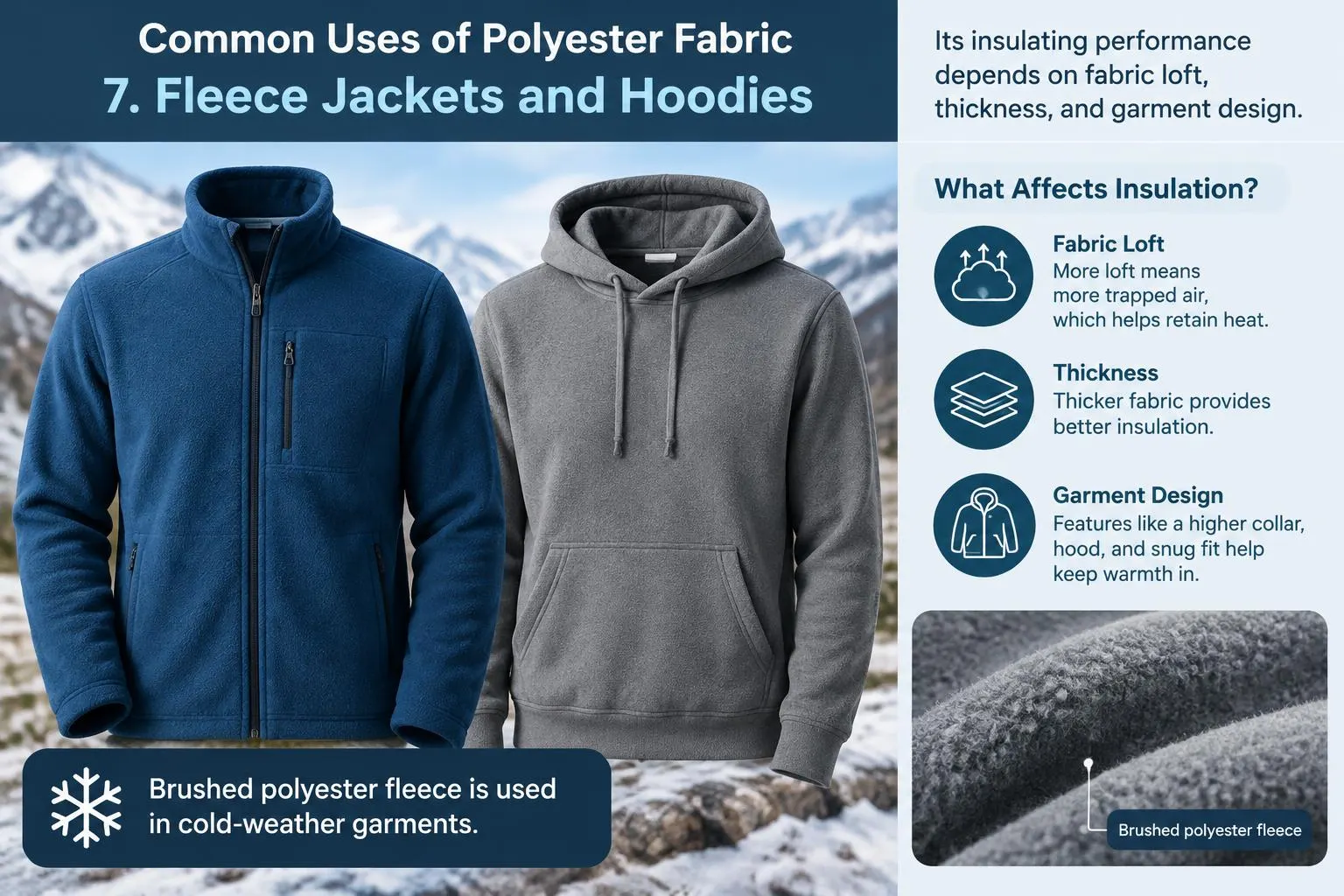
7. Fleece Jackets and Hoodies
Brushed polyester fleece is used in cold-weather garments. Its insulating performance depends on fabric loft, thickness, and garment design.
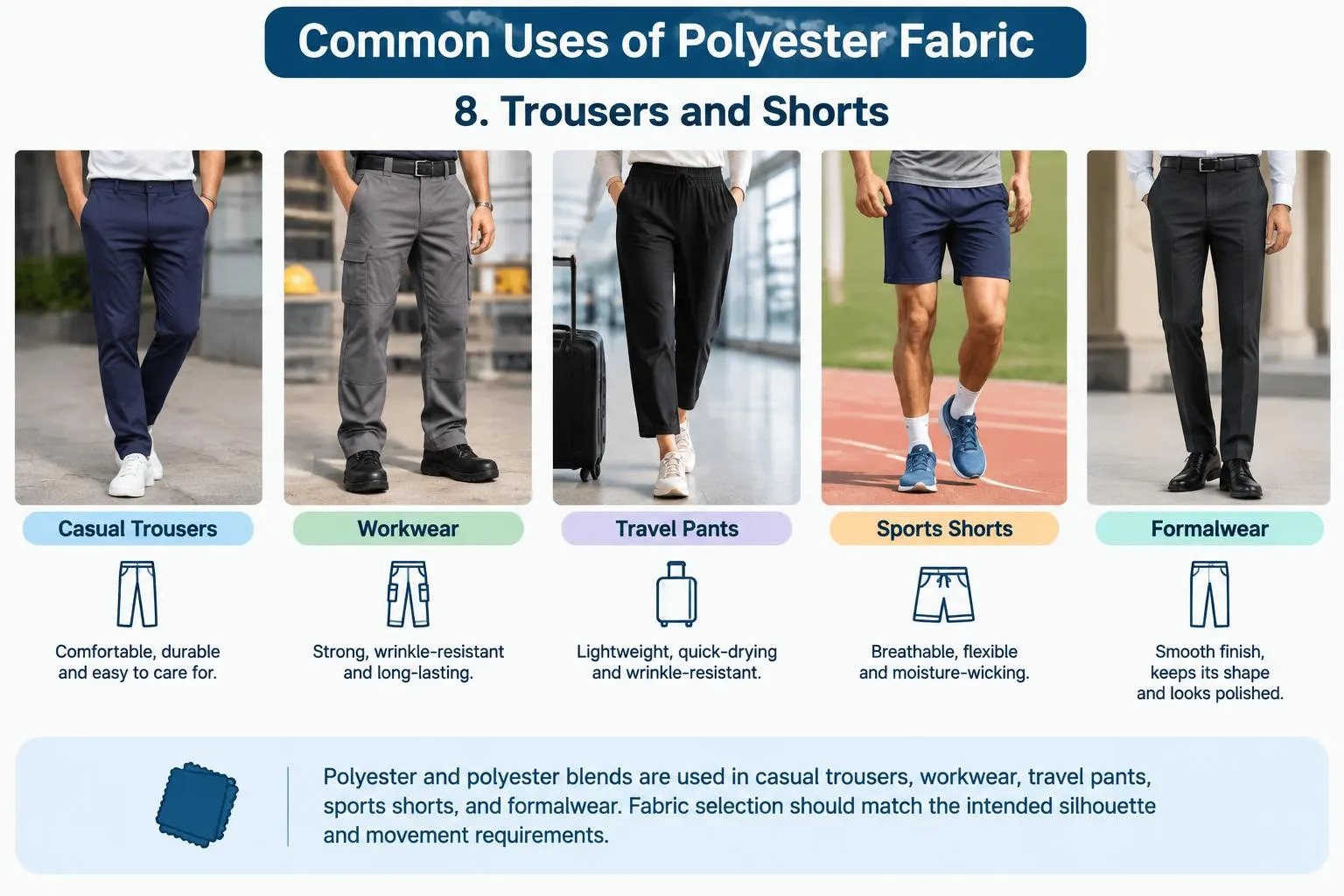
8. Trousers and Shorts
Polyester and polyester blends are used in casual trousers, workwear, travel pants, sports shorts, and formalwear. Fabric selection should match the intended silhouette and movement requirements.
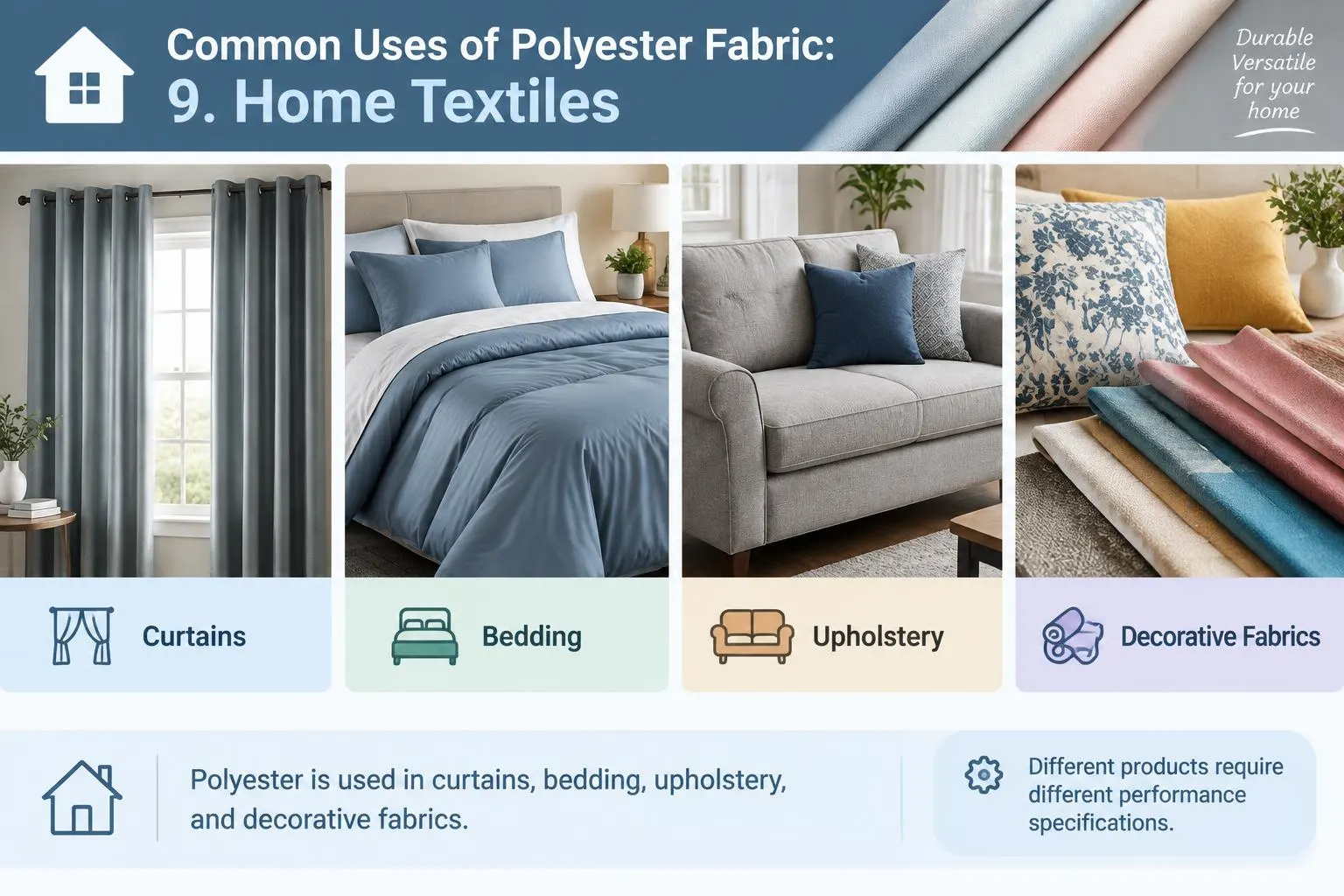
9. Home Textiles
Polyester is used in curtains, bedding, upholstery, and decorative fabrics. Different products require different performance specifications.
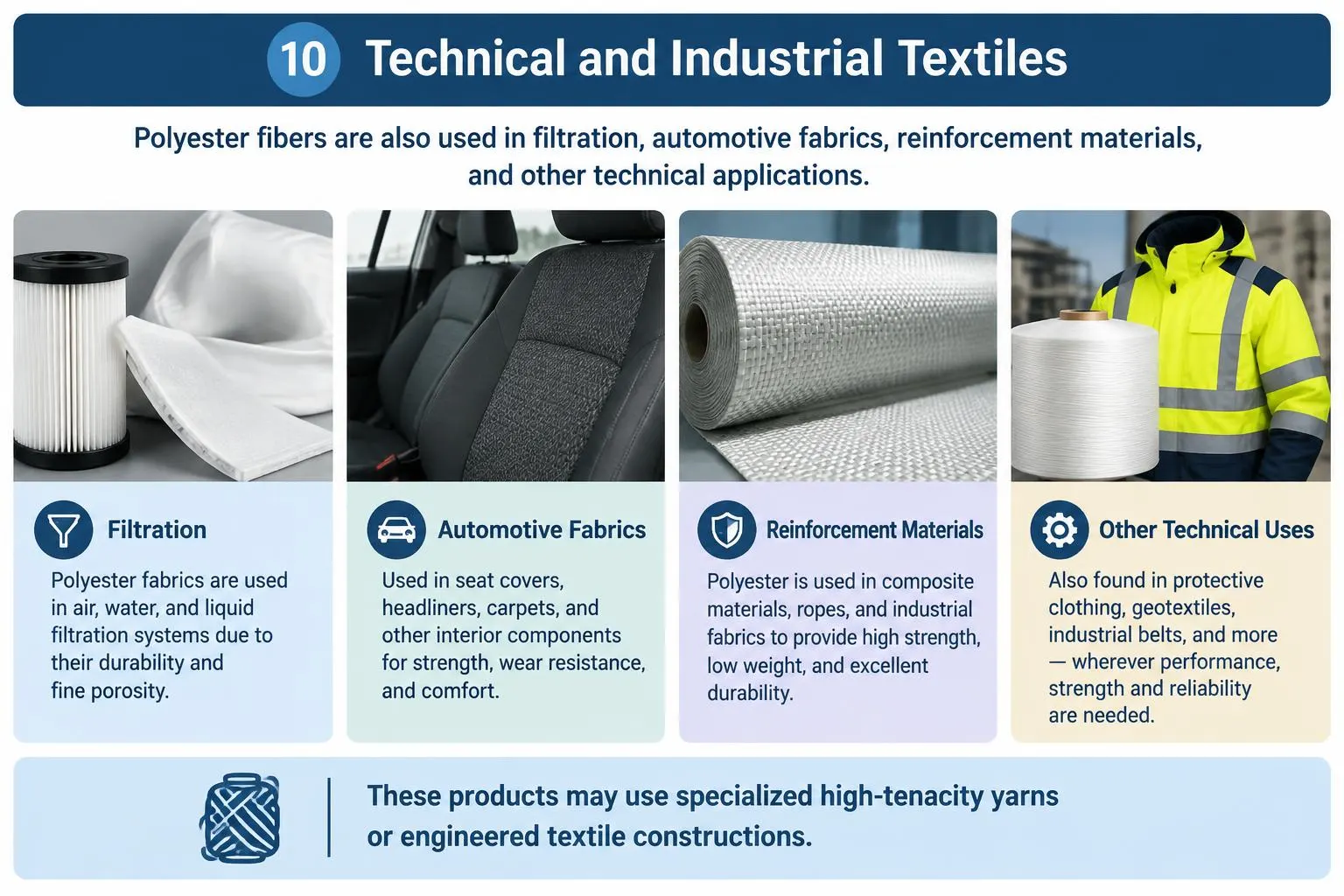
10. Technical and Industrial Textiles
Polyester fibers are also used in filtration, automotive fabrics, reinforcement materials, and other technical applications. These products may use specialized high-tenacity yarns or engineered textile constructions.
Conclusion / Final Words
Polyester remains the most influential fiber in the modern textile world. Its combination of strength, cost-efficiency, and versatility makes it essential for everything from school uniforms to professional mountaineering gear. While it carries environmental challenges, the industry’s shift toward recycled rPET is a promising step forward.
FAQs About Polyester Fabric
In short, what is polyester made of?
Polyester is created from long chains of chemicals, most often derived from petroleum. Factories process raw materials such as ethylene glycol and terephthalic acid at high temperatures, which combine into a molten polymer. This liquid polymer is later turned into thin fibres that become fabric. In recent years, some producers have begun using plant-based sources like sugarcane, but even in those cases the material remains fully synthetic because the chemical process is the same.
Is polyester breathable?
Polyester can breathe reasonably well, but the level of breathability depends much more on how the fabric is constructed rather than the fibre itself. A lightweight knitted fabric with open spaces allows air to move through easily, while a dense woven fabric holds heat. Activewear versions of polyester perform better because they are engineered to pull moisture away and improve airflow.
Why does polyester dry so quickly?
Polyester absorbs almost no water, which makes moisture sit on the surface instead of soaking into the fibres. Because the water stays on the outside, it evaporates much faster. This is why polyester T-shirts, sportswear and travel clothes tend to dry in a short amount of time after washing.
Why can polyester feel hot or sticky?
Polyester does not hold moisture inside the fibre, so sweat stays between the fabric and the skin. If the garment is thick or the weave is tight, heat becomes trapped and the fabric can feel warm, sticky or uncomfortable in humid weather. Technical polyester fabrics are designed to reduce this issue by spreading moisture outward more efficiently.
Can polyester irritate the skin?
Polyester rarely causes true allergies, but irritation can happen if someone has very sensitive skin, if the garment uses strong dyes or finishes, or if it traps sweat and bacteria during long wear. People who are prone to sensitivity often prefer natural fibres for clothing that sits close to the body.
Does polyester shrink or stretch?
Polyester holds its shape extremely well and does not shrink easily. It has a natural ability to recover after being stretched, although it is not highly elastic on its own. When blended with spandex, polyester can become very flexible and form-fitting.
How long does polyester last?
Polyester can last many years because of its strong molecular structure. It resists shrinking, wrinkling and weakening, even with frequent washing. This long lifespan benefits consumers but also makes discarded polyester garments stay in landfills for very long periods.
Can polyester be considered sustainable?
Polyester becomes more sustainable when it is recycled, when wastewater treatment is improved, and when garments are designed to last longer. Still, the fibre itself depends on chemistry and fossil resources, so it is not fully sustainable. A more balanced approach is to use polyester where it performs best but avoid unnecessary overuse.
Why is polyester so common in clothing?
Polyester is widely used because it solves practical problems. It is durable, light, affordable and adaptable to many textures. Manufacturers can create silky fabrics, cotton-like fabrics, fleece-like fabrics and stretchy sports fabrics from the same basic fibre. This flexibility makes polyester extremely attractive for mass production.