Thread Packages in the Garment Industry: Types, Features, and Uses

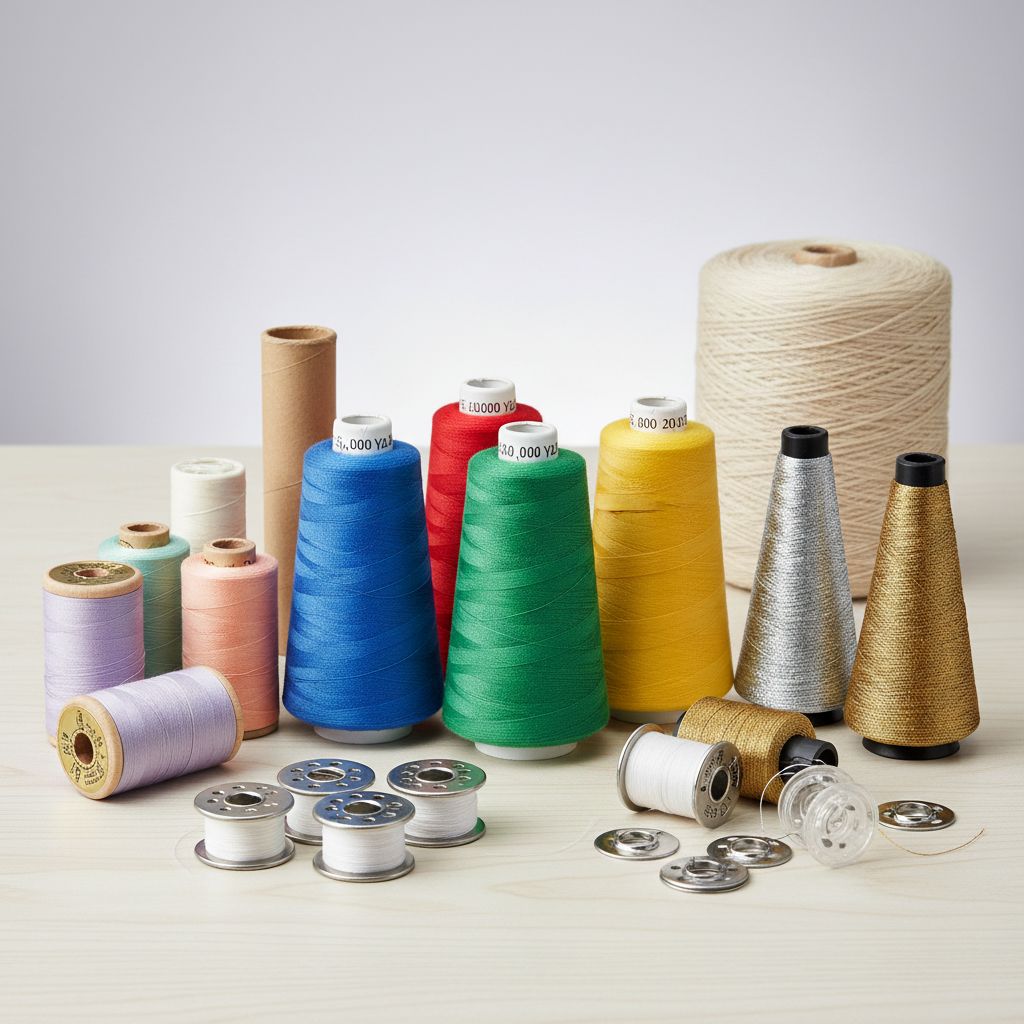
Thread package is one of the basic but very important elements in apparel manufacturing. Sewing thread is not only judged by fiber type, count, strength, or finish. The way the thread is wound also matters. A suitable thread package helps the thread run smoothly during sewing, reduces thread breakage, and supports better production flow. In the apparel industry, different sewing operations require different thread package forms. This article explains the main types of thread packages used in the industry, their features, and where each one is commonly used for industrial sewing.
=> Related Article: How Many Metres of Thread Are in a Roll?
What Is a Thread Package?
A thread package is the physical form in which sewing thread is wound for storage, transport, and use on a sewing machine.
The package may be designed around a:
- Tube
- Core
- Bobbin
- Spool
- Cone
The thread can also be wound in different patterns.

=> Related Article: Sewing Thread Properties: Strength, Stretch, Shrinkage… and More
These include:
- Parallel winding
- Cross winding
- Precision winding
The package design affects how the thread leaves the package during sewing.
=> Related Article: Sewing Thread Label Specifications: Tex, Thread Count, Strength,… and Needle Size Explained
A good package should provide:
- Smooth unwinding
- Stable tension
- Minimal tangling
- Low friction
- Adequate thread capacity
- Good compatibility with the machine
The package itself does not make a poor thread into a good thread, but poor winding can make even good thread perform badly.
=> Related Article: Cotton Thread (Sewing Thread): What It Is, Pros & Cons, and Best Uses
Why Thread Packages Matter
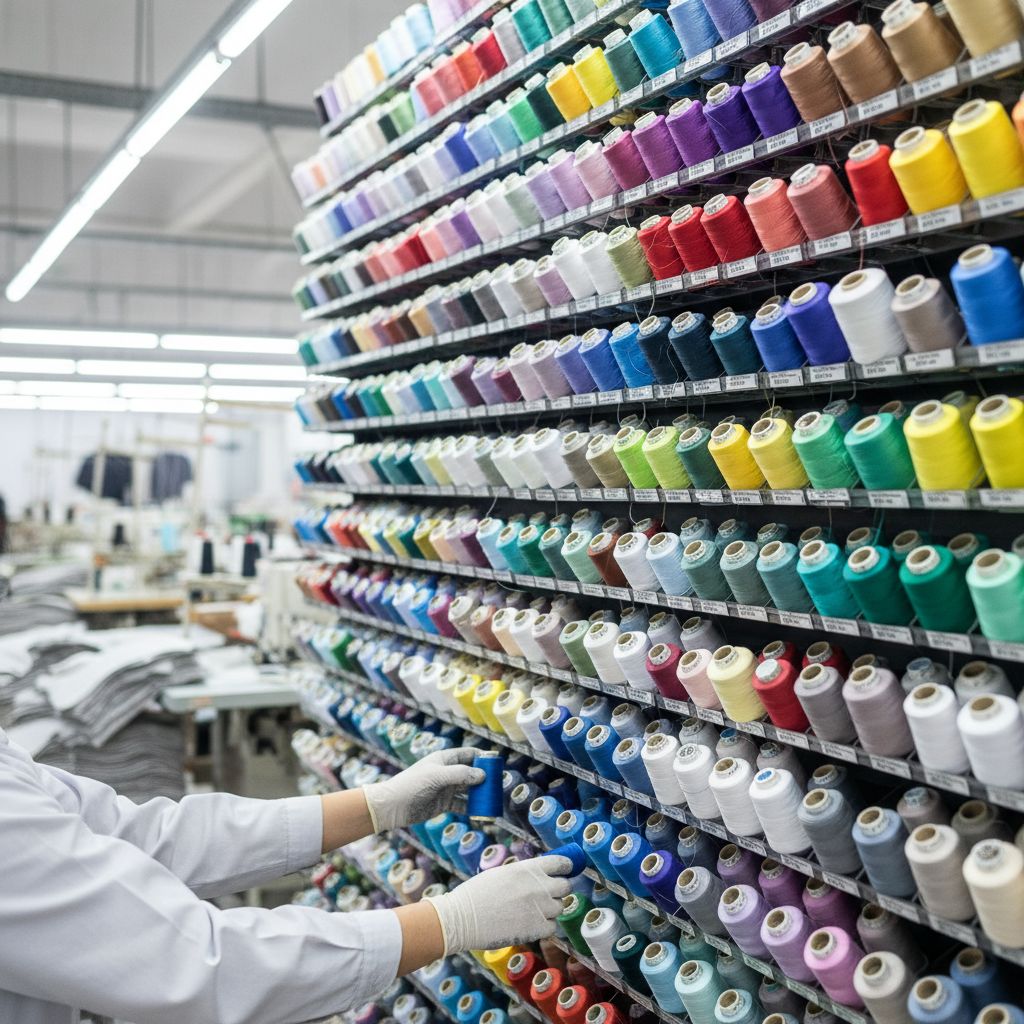
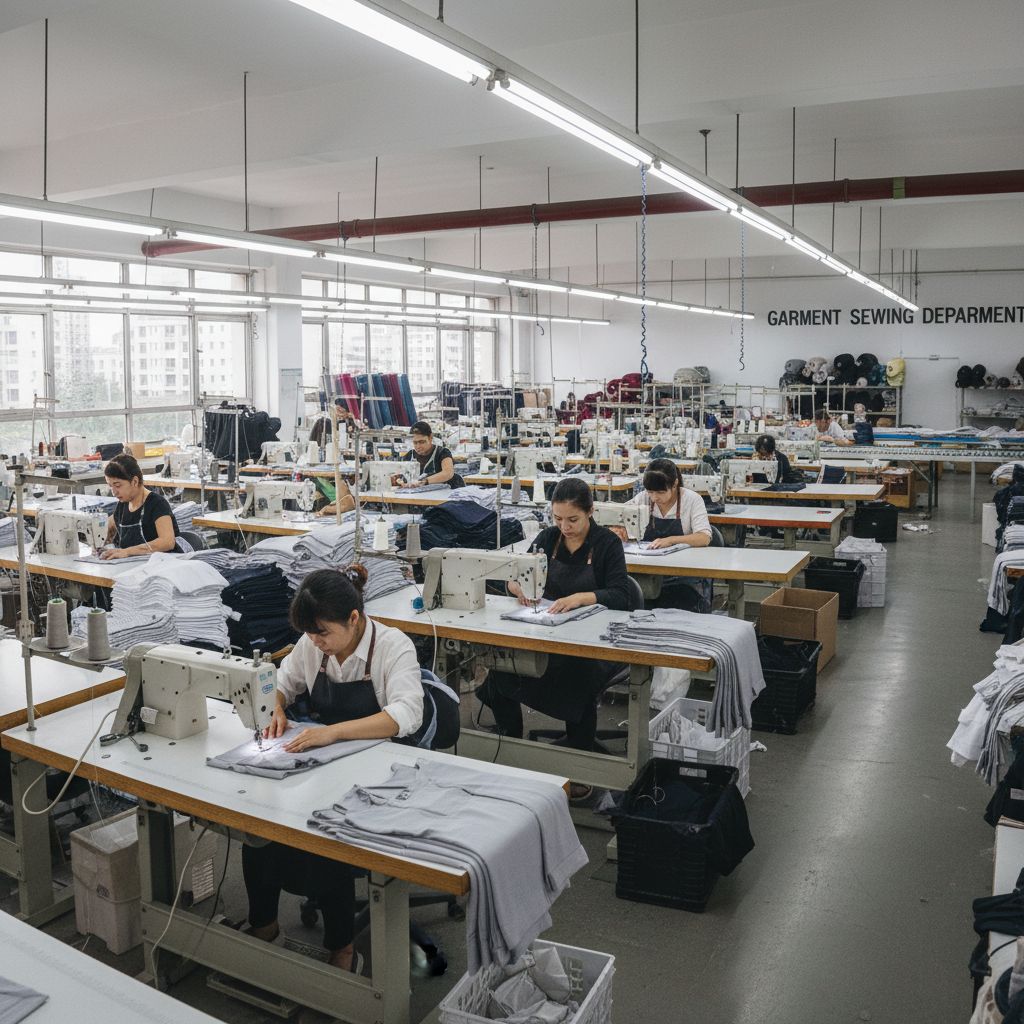
In a home sewing environment, changing a thread spool occasionally may not matter much. In an industrial factory, it matters a lot. A production line may use dozens or hundreds of sewing machines.
If operators have to stop frequently to:
- Replace thread
- Untangle packages
- Re-thread machines
- Correct tension
- Repair broken seams
the lost time quickly becomes significant. Thread packages therefore influence both sewing quality and production efficiency.
=> Related Article: Embroidery Thread Consumption Calculation in Garment Manufacturing
Thread Package Size Affects Productivity
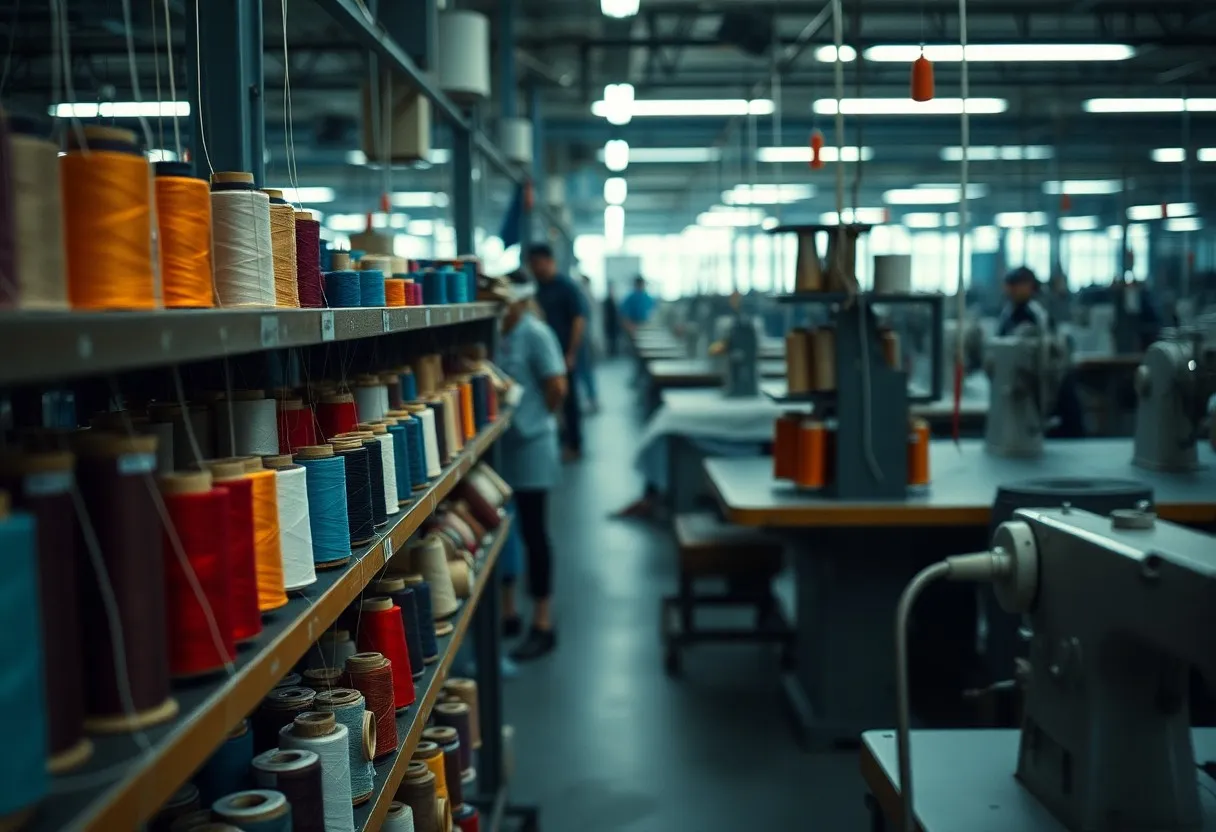
One of the simplest differences between thread packages is capacity. A small package needs to be replaced more often. A large package may allow an operator to sew for much longer without stopping. For high-volume garment manufacturing, this is one reason cones are commonly preferred. However, larger is not always better. Some machines or applications need:
- Compact packages
- Special unwinding behavior
- Frequent color changes
- Controlled bobbin capacity
The correct package depends on the sewing operation.
=> Related Article: Sewing Thread Consumption for Different Garments and Stitch Types
Main Types of Thread Packages
1. Spool
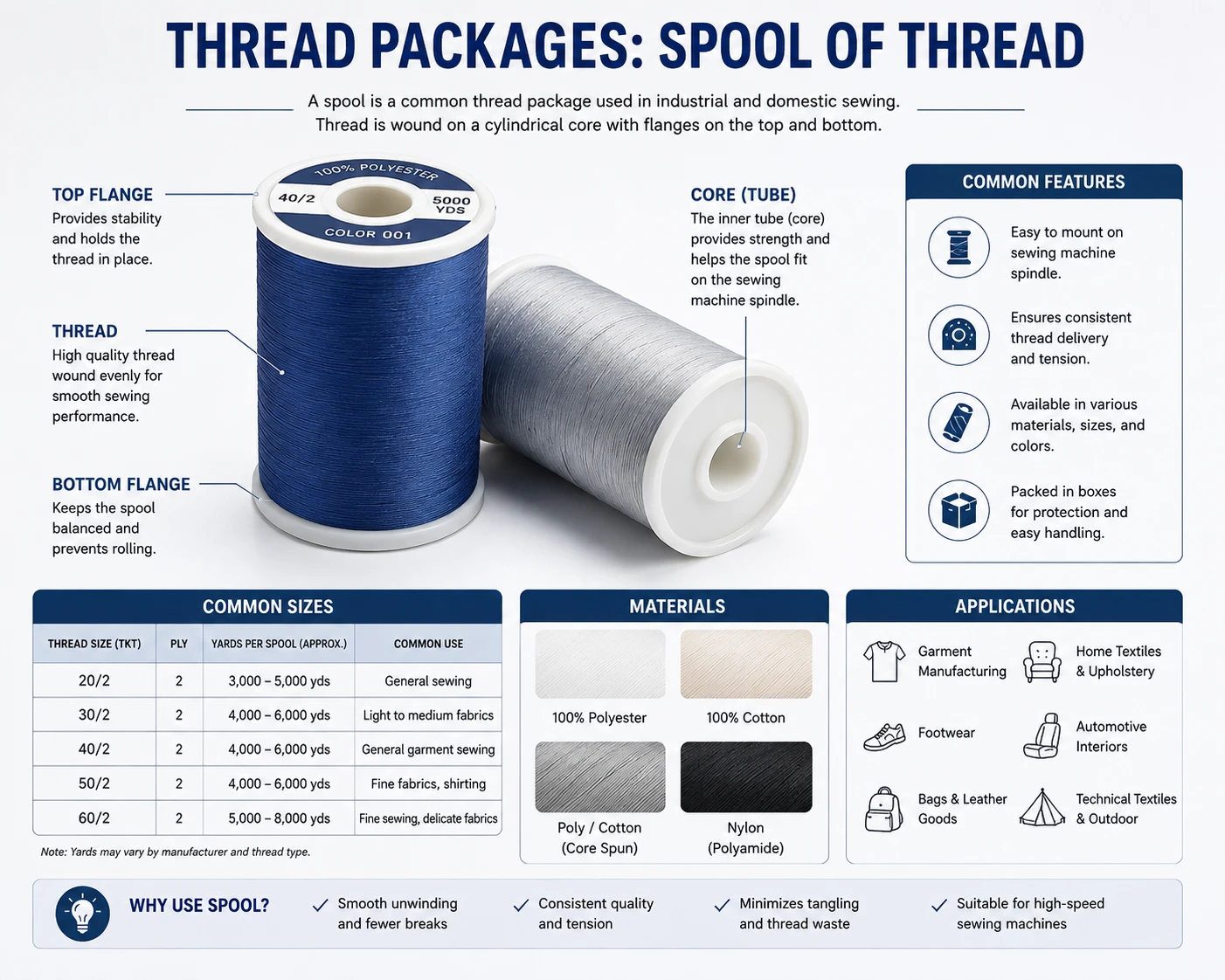
A spool is one of the most familiar thread packages. It usually consists of a central barrel with flanges at both ends. The flanges help prevent the thread from sliding off the package.
Main Features of a Spool
A spool is generally:
- Small or medium in size
- Easy to handle
- Suitable for lower thread quantities
- Convenient for frequent color changes

Spools may be wound in different ways depending on the thread and supplier.
=> Related Article: Sewing Thread Consumption in Garment Production: 15 Key Factors Explained
Common Uses
Spools are often used for:
- Sample rooms
- Tailoring
- Small production runs
- Domestic sewing
- Specialty operations
- Development samples
For large-volume industrial sewing, a small spool may require too many replacements compared with a cone.
Advantages
- Easy to store
- Convenient for small quantities
- Good for many color selections
- Practical for sampling
Limitations
- Lower capacity than large cones
- More frequent package changes
- Less efficient for long production runs
2. Cop
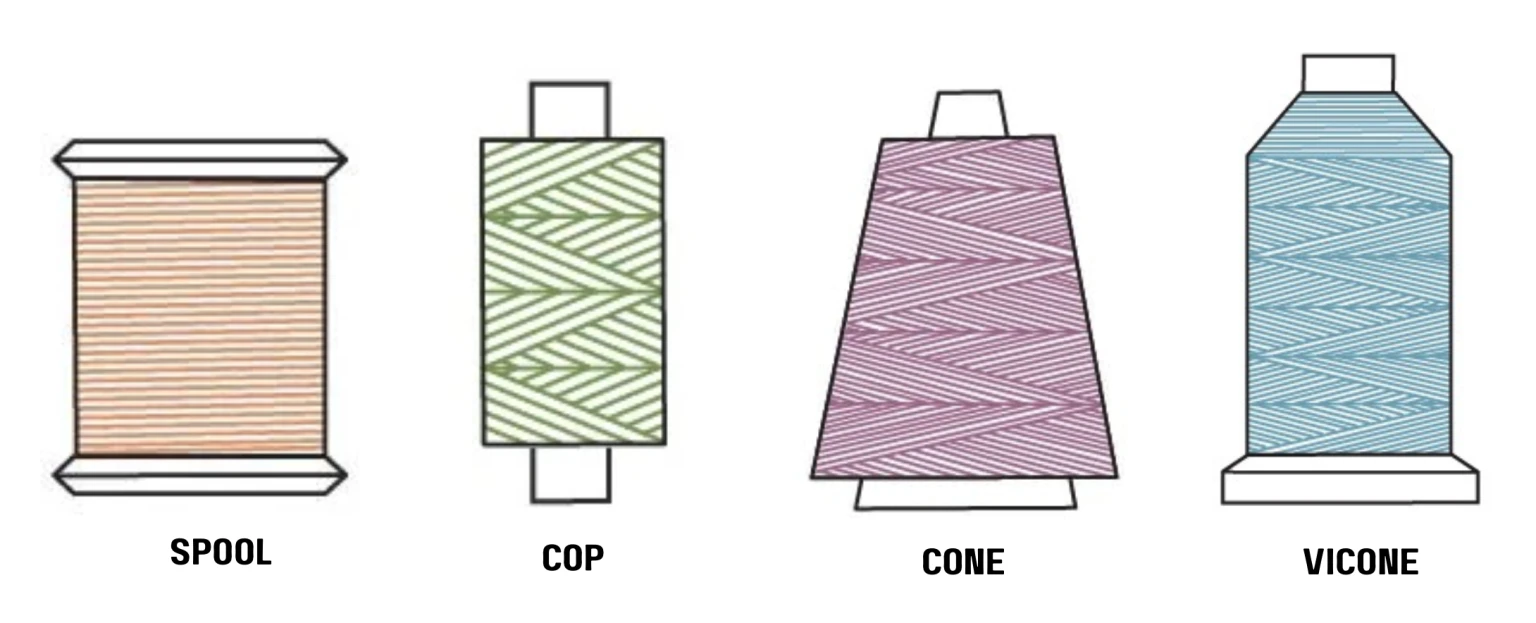
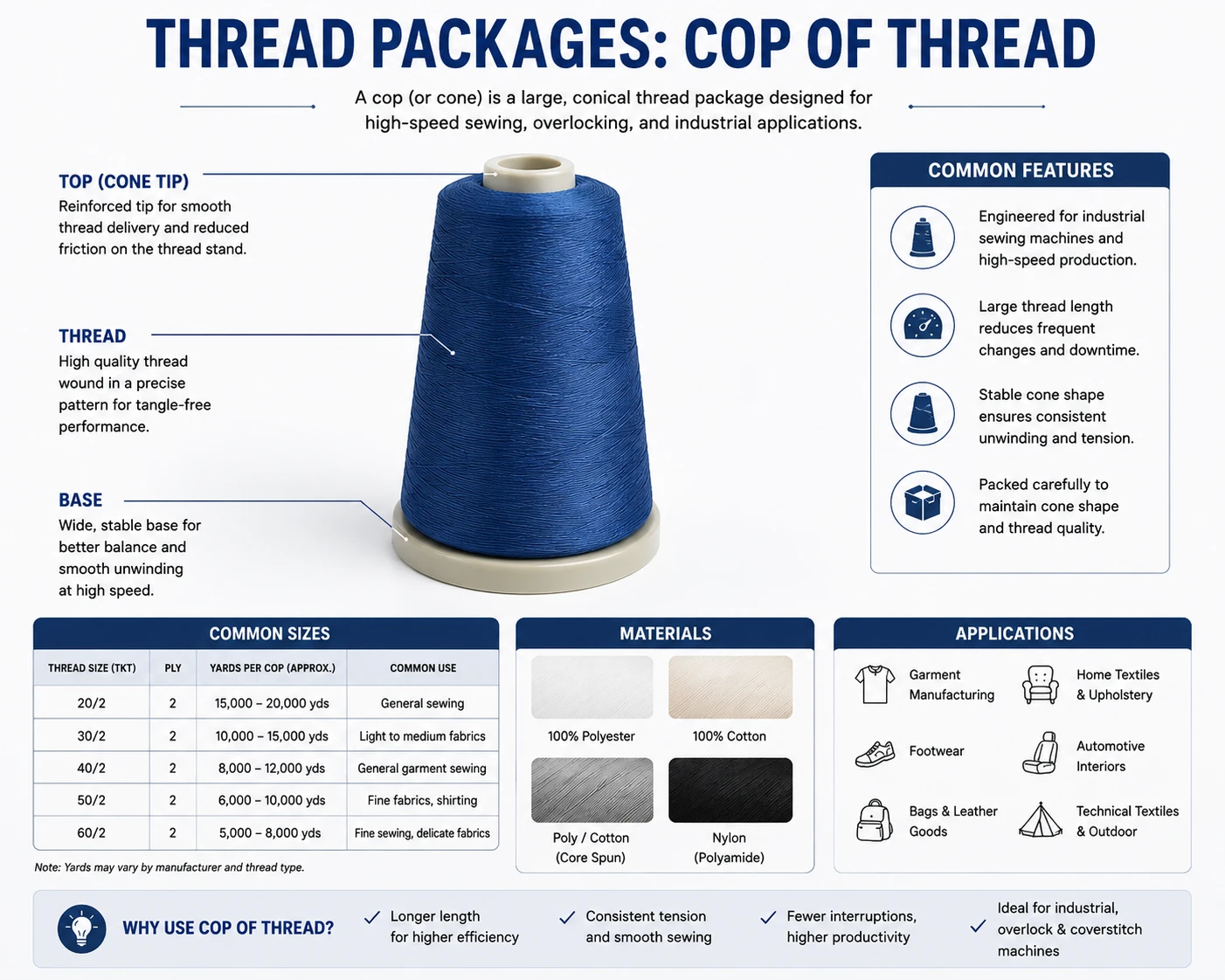
A cop is typically a cylindrical or slightly tapered thread package without large flanges. It is generally smaller than a full industrial cone. The exact construction and terminology may vary between thread manufacturers.
Main Features
A cop usually has:
- Cylindrical shape
- Compact size
- No large side flanges
- Controlled winding
Depending on the thread and application, it may be suitable where operators need a relatively small package.
=> Related Article: How the “Tex” System Measures Thread Thickness?
Common Uses
Possible uses include:
- Small-volume sewing
- Frequent color changes
- Specialty sewing
- Selected embroidery or decorative operations
It is less common than the standard cone in many modern garment factories.
3. Cone
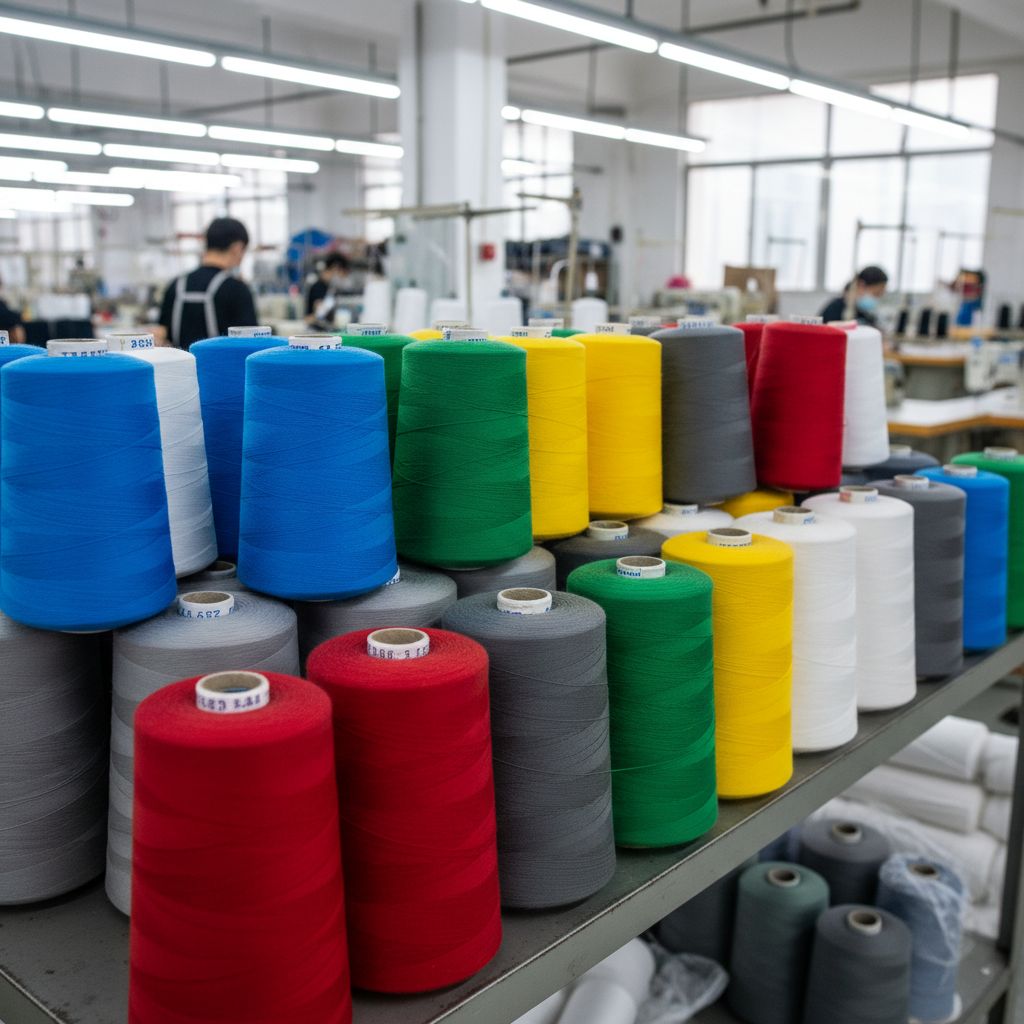
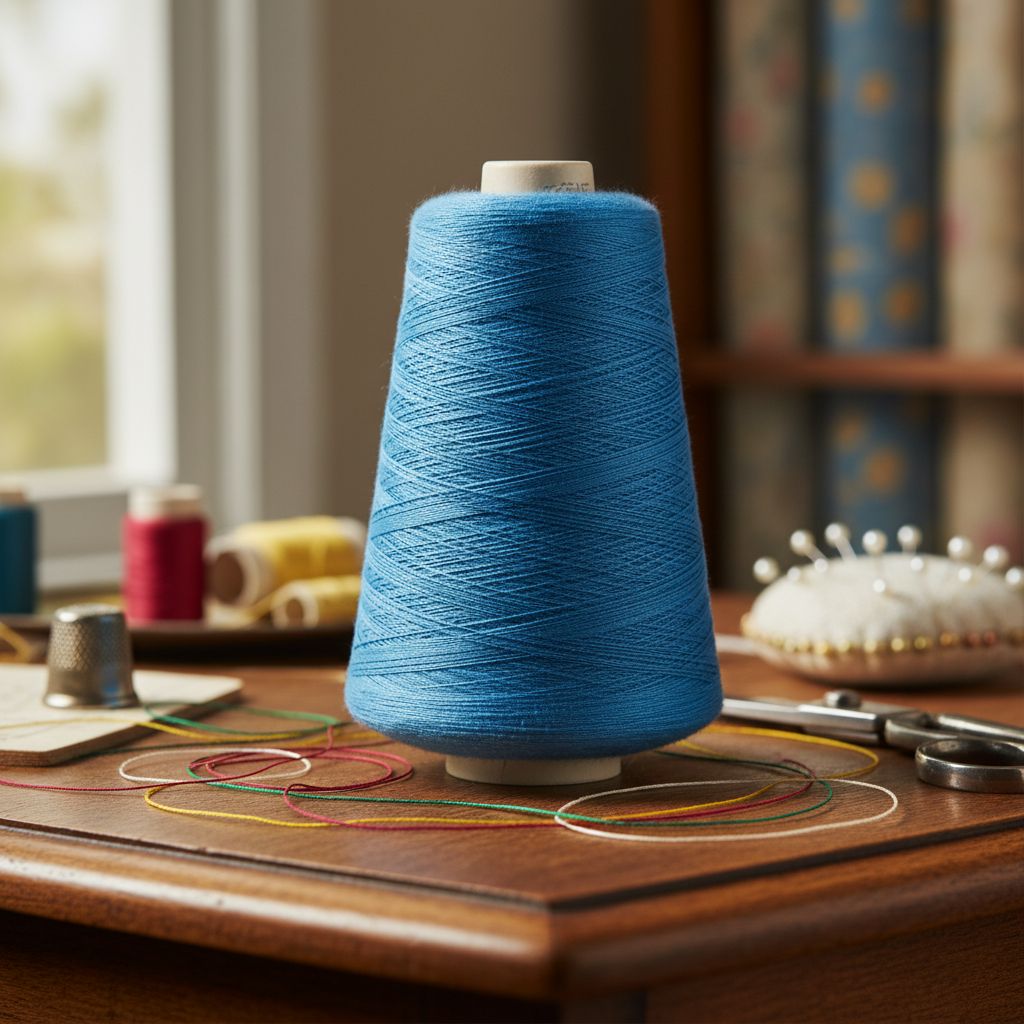
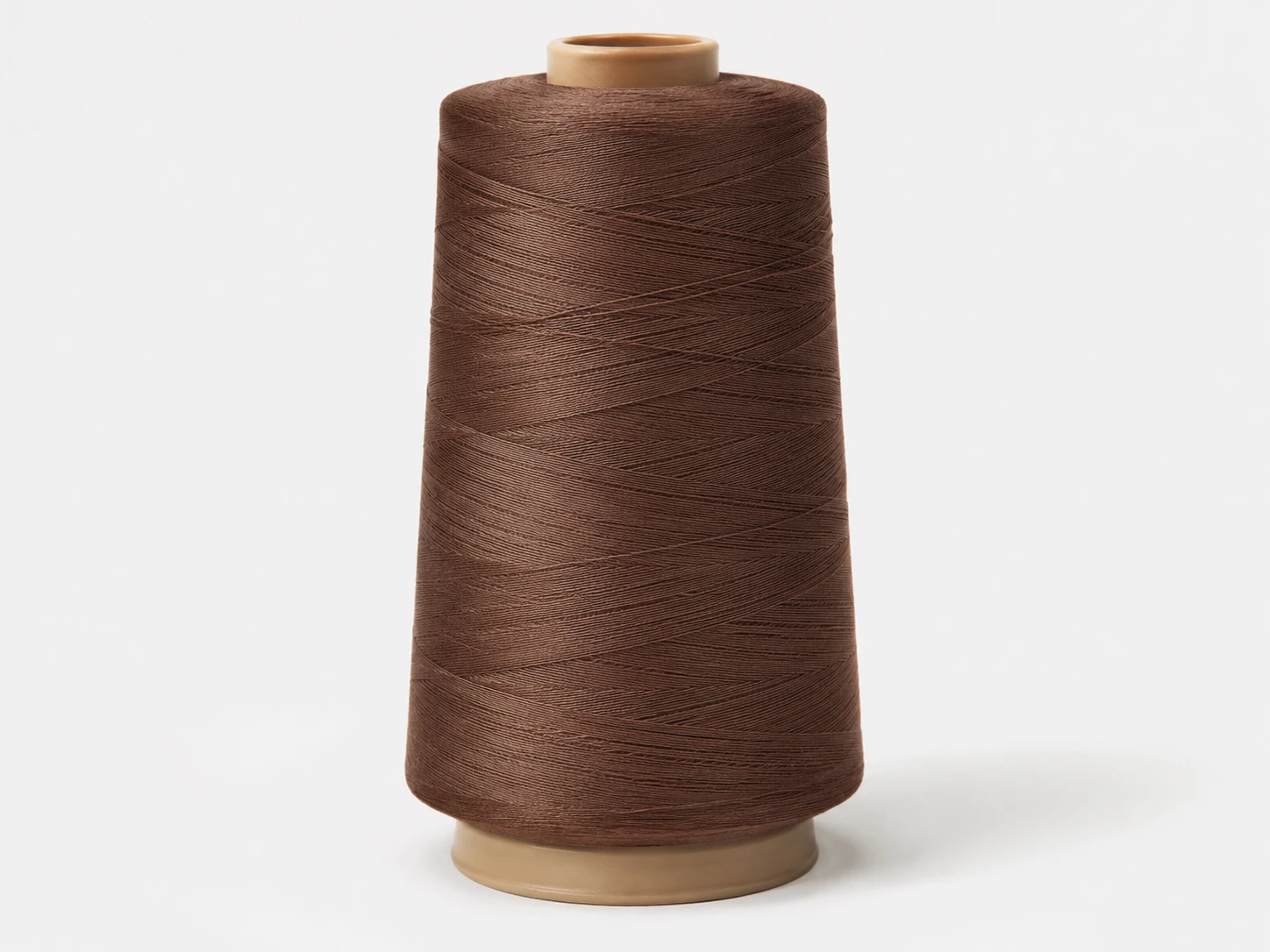
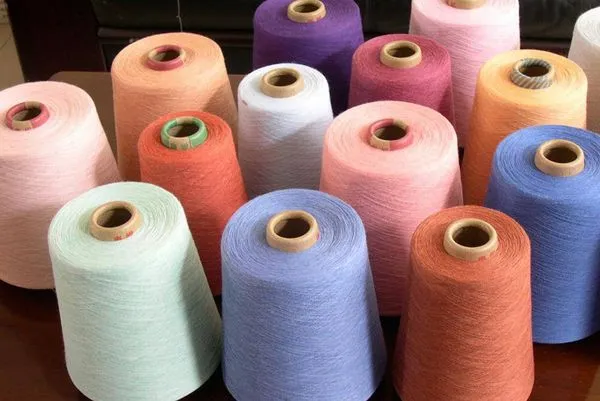
The cone is one of the most important thread packages in industrial garment production. If you walk through a large sewing factory, this is the package you are most likely to see. A cone uses a tapered tube or core and is usually cross-wound.. Why Cones Are So Common: The shape allows thread to unwind smoothly from the top at high speed. The package does not need to rotate continuously. This makes cones suitable for fast industrial machines.
=> Related Article: Silk Thread: Uses, Pros & Cons, Specs, and Benefits
Main Features
Industrial cones typically provide:
- Large thread capacity
- Smooth over-end unwinding
- Good high-speed performance
- Fewer package changes
- Efficient use in mass production
=> Related Article: Can Cotton Thread Be Used for Stretch Fabrics? (
Common Uses
Cones are widely used with:
- Lockstitch machines
- Overlock machines
- Chainstitch machines
- Coverstitch machines
- General assembly sewing
They are commonly used for thread types such as:
- Spun polyester
- Core-spun polyester
- Cotton
- Selected filament threads
Why Factories Prefer Cones
Imagine sewing 20,000 T-shirts. A package that needs replacement every hour creates much more downtime than one that runs for several hours.
Large cones reduce:
- Operator interruptions
- Re-threading
- Package handling
That can improve line productivity.
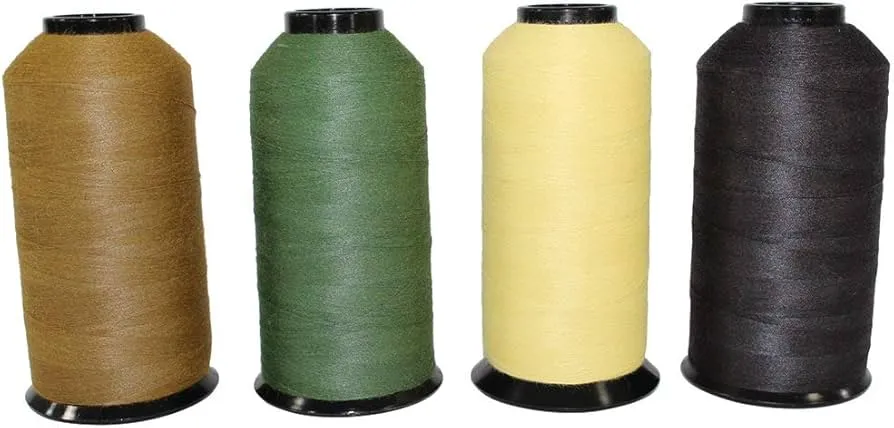
4. Vicone
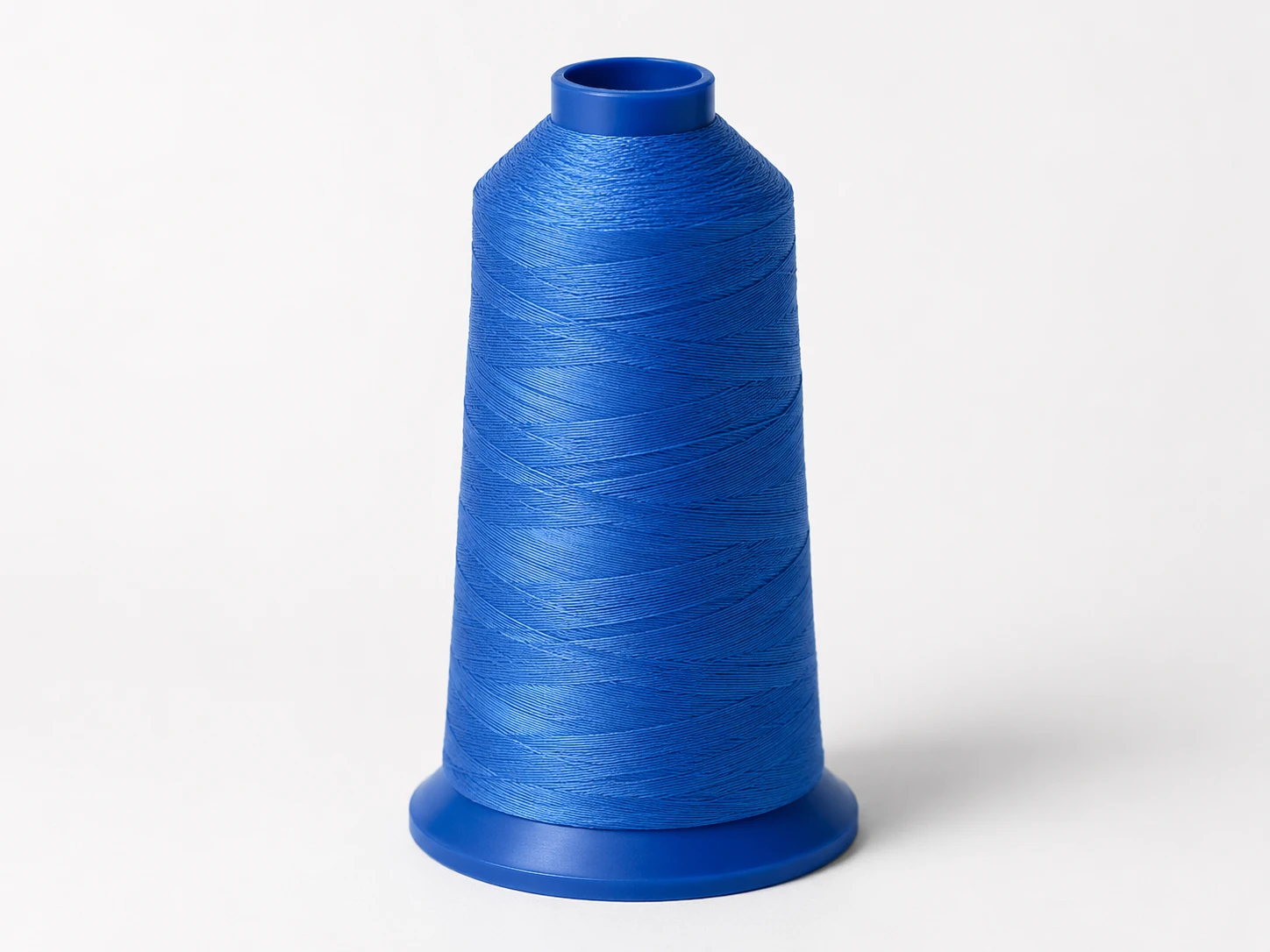
A vicone is a special conical package designed to improve control when handling certain slippery or smooth threads. It commonly has a more pronounced base or lip that helps control the package. The name and exact construction may differ between suppliers.
=> Related Article: Core Spun Sewing Thread: Structure, Performance, and Real-World Applications
Why Vicones Are Used
Some filament threads can be more difficult to control because they:
- Slip easily
- Unwind rapidly
- Form loops
- Tangle during feeding
A vicone can help improve package stability and thread delivery.
=> Related Article: Why Do We Still Use Cotton Thread If It’s Weaker Then Other Thread?
Common Applications
Vicones may be used for:
- Embroidery thread
- Continuous-filament thread
- Rayon thread
- Polyester filament
- Decorative sewing
They are especially useful when thread surface characteristics require more control than a standard package provides.
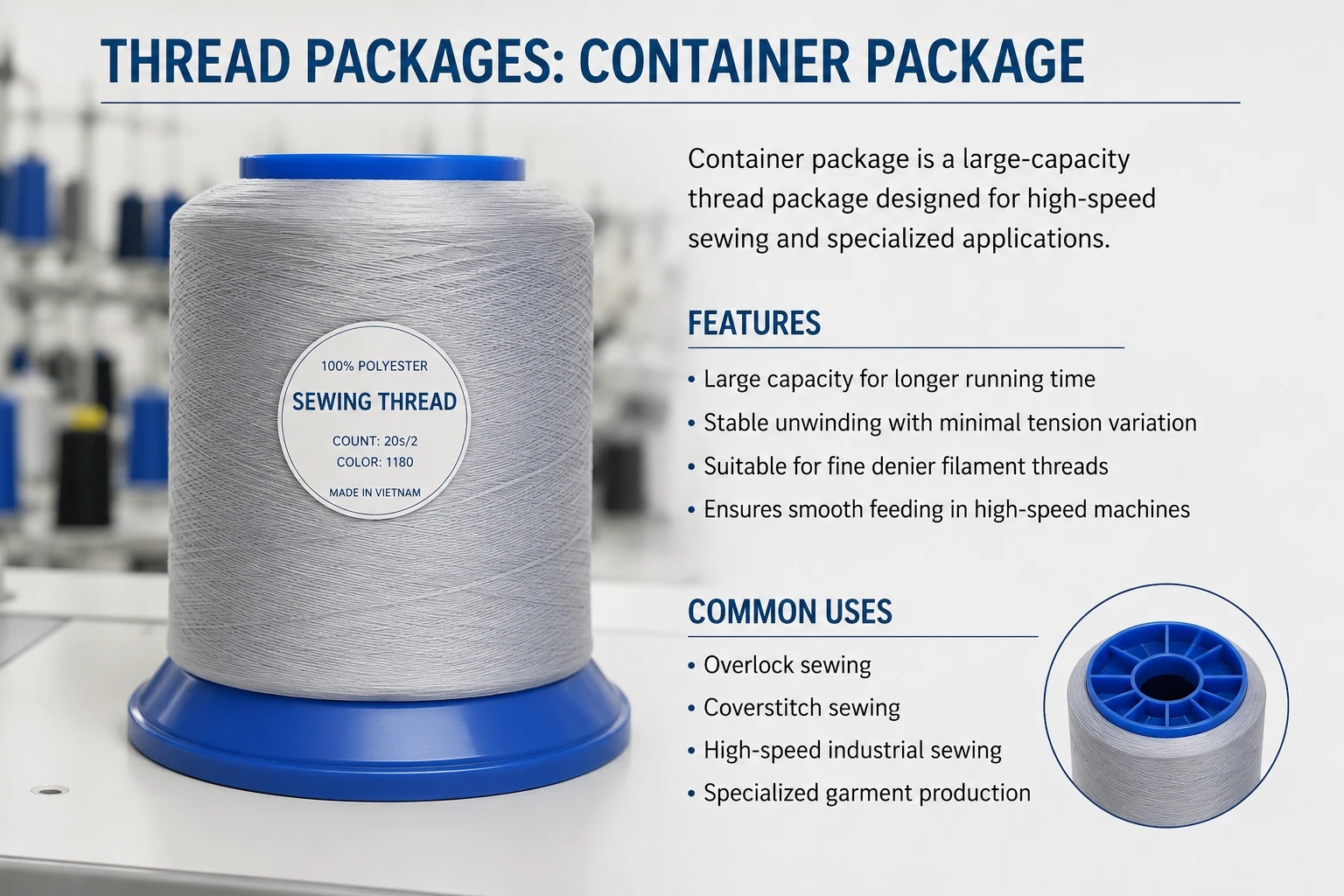
5. Container Package
A container package is generally associated with specialized filament-thread handling. It is designed to control thread movement and reduce unwanted slippage during unwinding. Depending on the supplier, the construction may involve a package held inside or supported by a container system.
=> Related Article: Polyester vs. Nylon Sewing Thread: What’s Different, and When to Use Each
Common Uses
Container-style packages may be used with:
- Fine filament threads
- High-speed specialty sewing
- Decorative threads
- Threads that tend to slip from normal packages
This package type is much less common in normal apparel assembly than the standard cone.
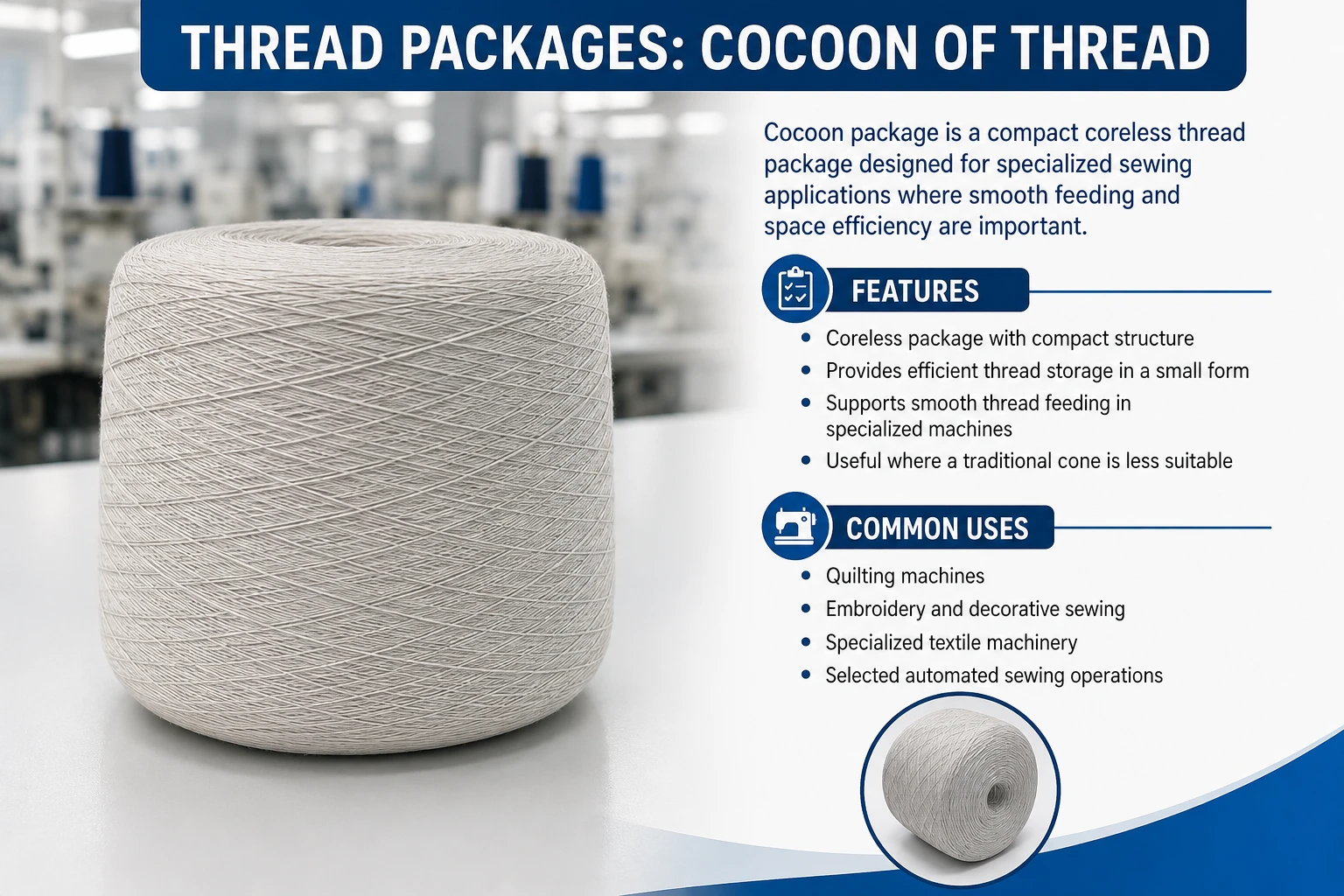
6. Cocoon
A cocoon package is a specialized thread package with little or no rigid center core. The thread itself forms the main body of the package. This design is mainly associated with specialized sewing rather than normal garment assembly.
=> Related Article: Spun Polyester Thread: Best Cost-To-Performance Ratio for Standard, Non-stretch Garments.
Common Applications
Cocoon packages may be found in:
- Quilting machines
- Multi-needle machines
- Specialized textile sewing systems
They allow a relatively compact amount of thread to be used where a conventional cone may not fit.
Important Note
Cocoon packages are not normally the first choice for standard garment sewing operations such as T-shirt side seams or shirt assembly.
7. Pre-Wound Bobbin
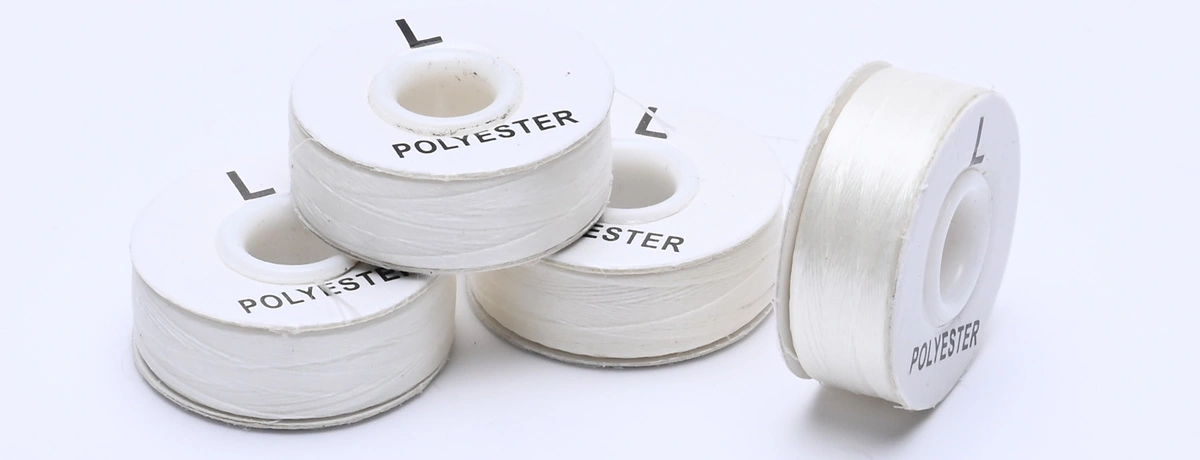
A pre-wound bobbin is one of the most useful thread packages for lockstitch sewing. Unlike a large thread cone feeding the needle thread from above, the bobbin supplies the lower thread inside the sewing machine. Factories can wind bobbins themselves, or they can purchase them already wound. A factory-supplied ready bobbin is called a pre-wound bobbin.
=> Related Article: 5 Types of Thread Structures: Spun Polyester, Core-Spun, Continuous Filament, Monofilament….
Why Pre-Wound Bobbins Are Useful
Traditional bobbin winding requires operators or machines to transfer thread from a larger package onto a small bobbin. Pre-wound bobbins eliminate this step. They arrive ready to install.
Advantages
Pre-wound bobbins can offer:
- Consistent winding
- Predictable thread quantity
- Faster bobbin replacement
- Less preparation time
- Reduced internal bobbin winding
In high-volume production, these small time savings can add up.
Common Applications
Pre-wound bobbins are widely used in:
- Lockstitch sewing
- Embroidery
- Automated sewing
- Quilting
- Decorative stitching
Comparison and Selection
Choosing the right package depends on thread type, machine speed, and production volume. Using the wrong package can cause tangling and poor stitch quality, affecting overall production costs.
=> Related Article: Thread Packages in the Garment Industry: Types, Features, and Uses
| Thread Package | Shape / Construction | Thread Capacity | Unwinding Method | Main Features | Common Uses | Best For |
|---|---|---|---|---|---|---|
| Spool | Cylindrical core with flanges at both ends | Low–Medium | Usually side or over-end, depending on design | Compact, easy to handle, easy color changes | Sampling, tailoring, domestic sewing, small runs | Sample rooms & low-volume production |
| Cop | Small cylindrical or slightly tapered package, usually without large flanges | Low–Medium | Mainly over-end | Compact package, convenient when smaller thread quantities are needed | Specialty sewing, small runs, frequent color changes | Short production runs |
| Cone | Tapered cone, normally cross-wound | High | Over-end | Smooth high-speed feeding, large capacity, fewer thread changes | Lockstitch, overlock, coverstitch, chainstitch, general garment sewing | Mass garment production |
| Vicone | Conical package with a pronounced base/flange or lip | Medium–High | Over-end with improved thread control | Helps control smooth or slippery threads and reduces unwanted slippage | Embroidery, filament polyester, rayon, decorative sewing | Filament & embroidery threads |
| Container Package | Thread package supported or controlled inside a specialized container system | High | Controlled over-end feeding | Stable unwinding, helps control fine/slippery filament thread | Specialized sewing, fine filament thread, high-speed applications | Specialized industrial machines |
| Cocoon | Compact package with little or no rigid center core | Medium | Specialized feeding | Coreless, compact, space-efficient | Quilting, multi-needle machines, specialized textile equipment | Special-purpose sewing systems |
| Pre-Wound Bobbin | Small ready-wound bobbin, with or without flanges depending on type | Very Low | Rotates inside bobbin system | Ready to use, consistent winding, saves bobbin-winding time | Lockstitch, embroidery, quilting, automated sewing | Lower thread in lockstitch machines |
Conclusion / Final Words
Thread packages may look like simple containers for sewing thread, but they play a practical role in garment manufacturing. A good package supports:
- Smooth unwinding
- Stable tension
- Fewer thread breaks
- Less machine downtime
- Better sewing consistency
For mass production, cones are widely used because they hold more thread and work well with high-speed industrial machines.
- Spools are useful for sampling and smaller quantities.
- Pre-wound bobbins improve convenience in lockstitch production.
- Vicones and other specialty packages help control certain filament and embroidery threads.
The important lesson is that the best package is not simply the biggest one. It must match: Thread Type + Machine + Sewing Speed + Thread Consumption + Production Volume.