Spun Polyester Thread: Best Cost-To-Performance Ratio for Standard, Non-stretch Garments.

Spun vs. Core-Spun Polyester: In garment production, specifying the right thread is crucial for both quality and cost-efficiency. Spun polyester is the industry workhorse, ideal for light to medium fabrics because it reduces needle heat and offers exceptional colorfastness. However, using it on heavy denim or workwear is a dangerous mistake that can cause seam failure. For high-stress applications, higher-tenacity core-spun or filament threads should always be the priority.
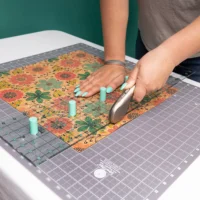
What Is Spun Polyester?
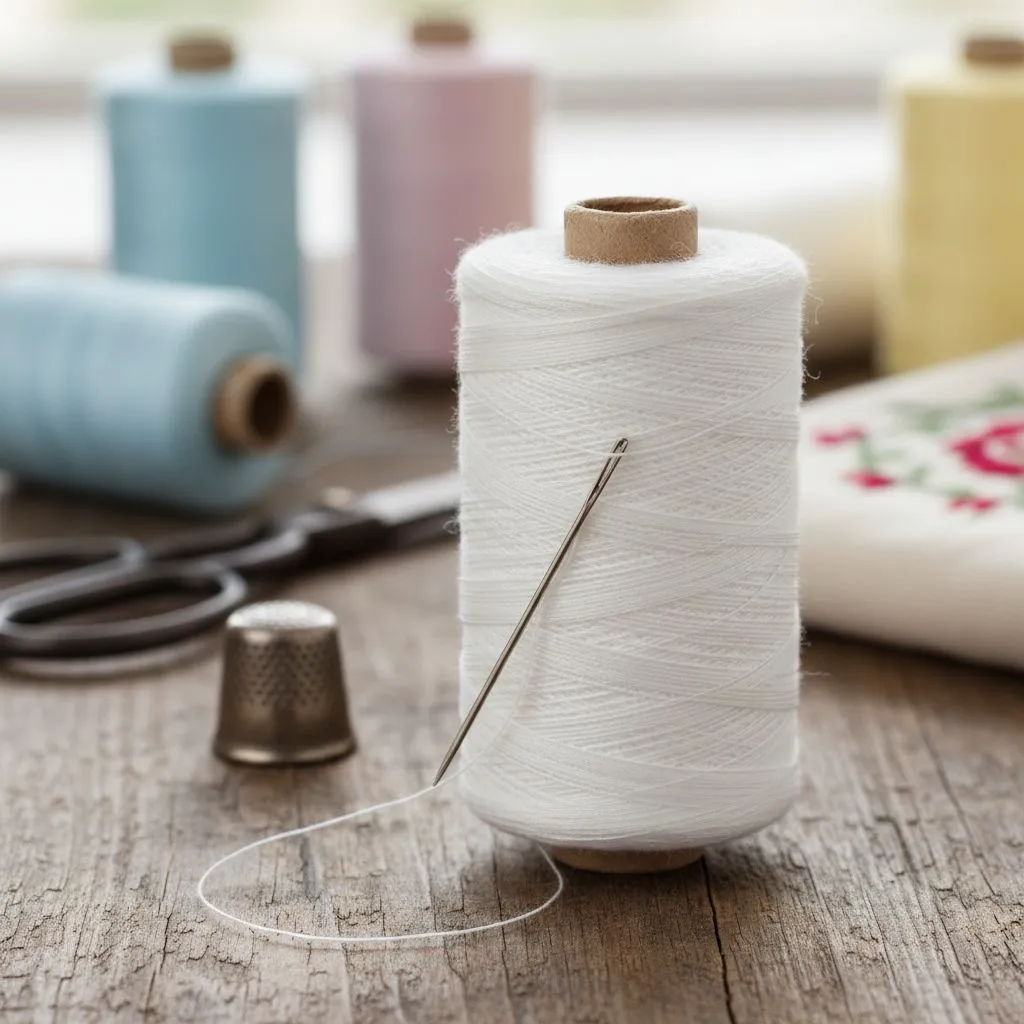
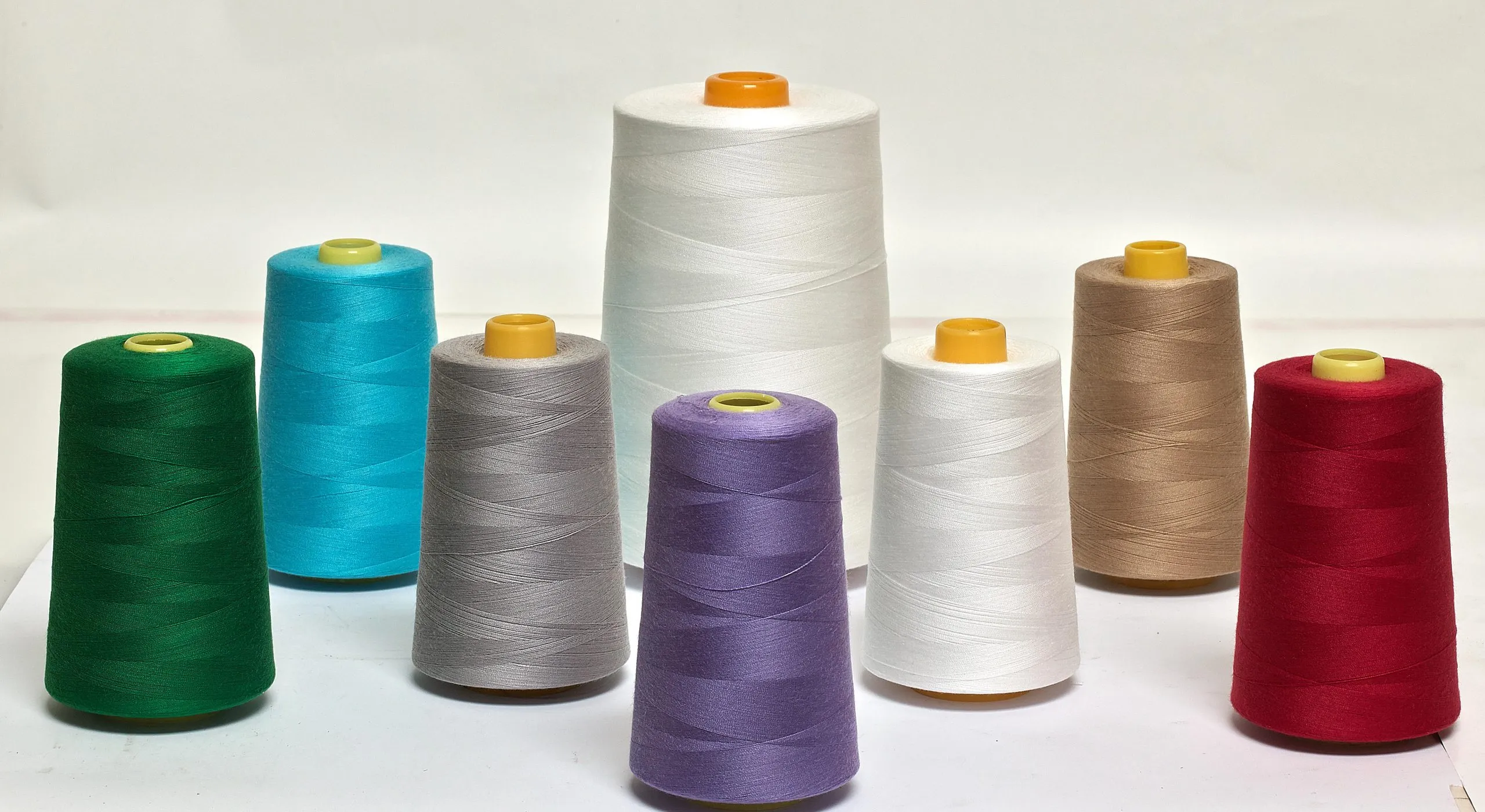
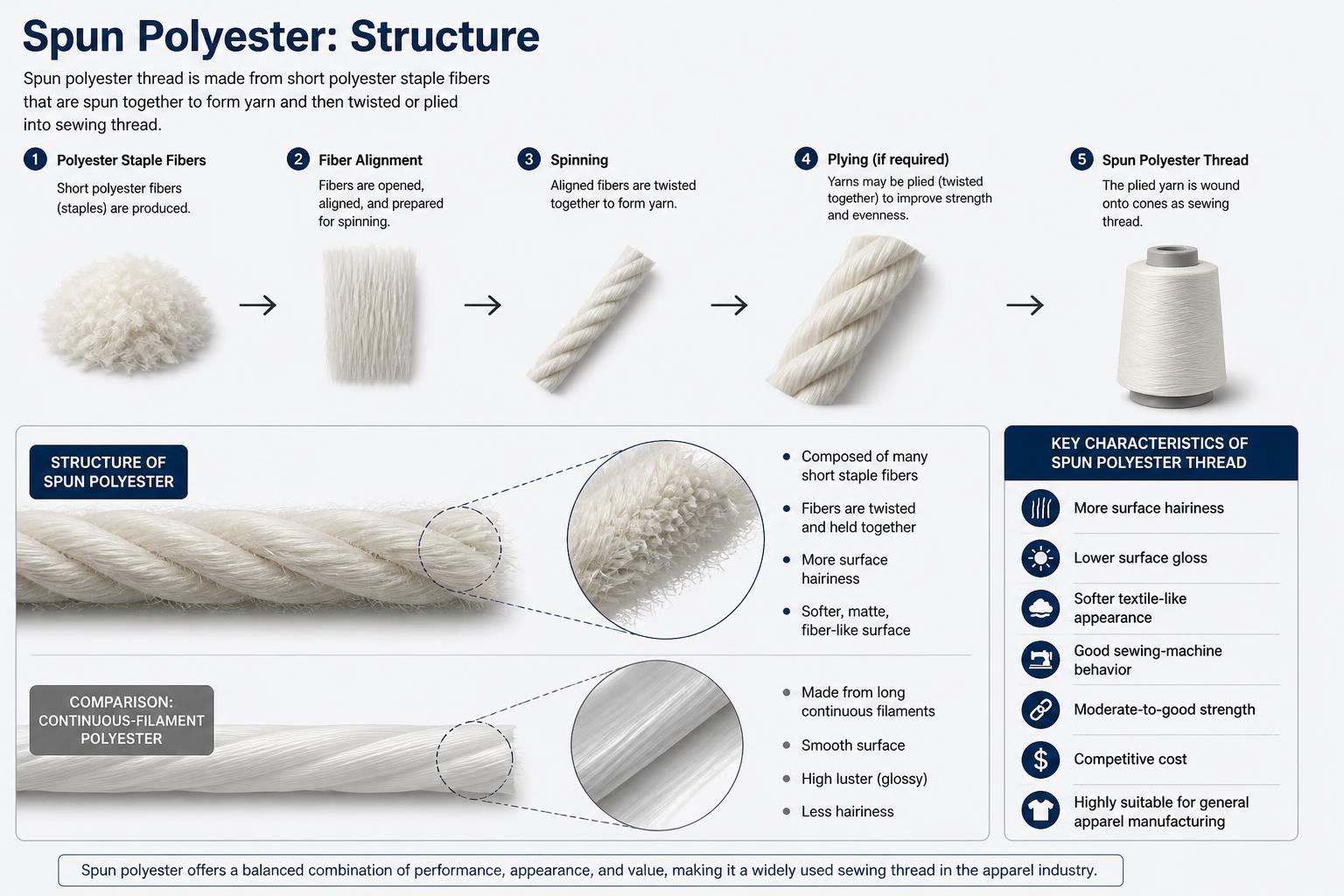
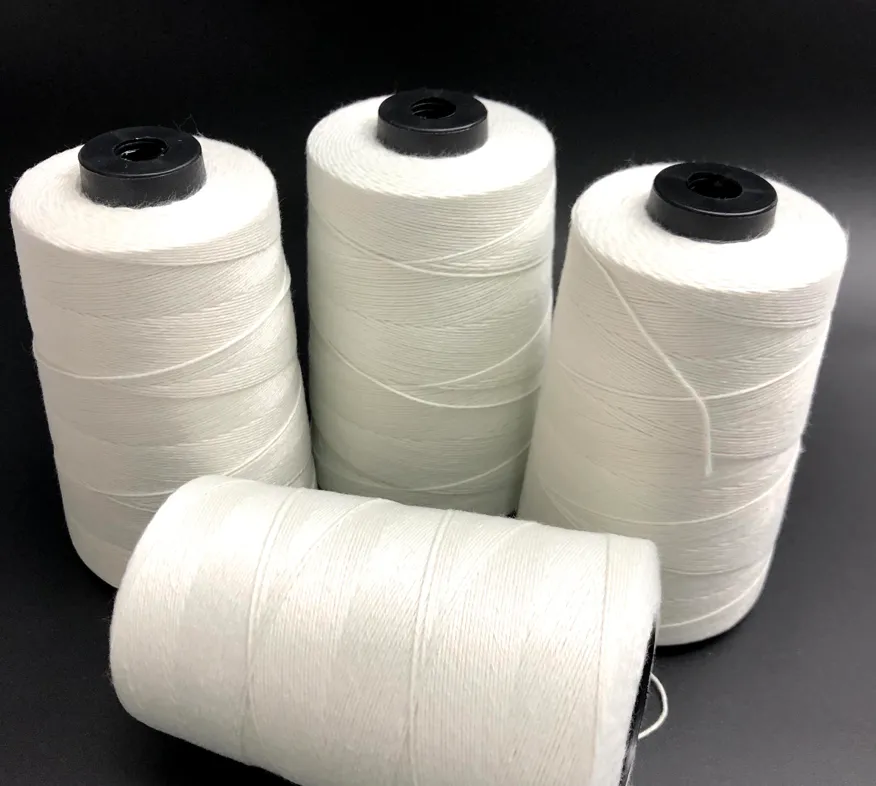
Spun polyester thread is made from short polyester staple fibers that are spun together to form yarn and then twisted or plied into sewing thread. Its construction is somewhat similar to traditional spun cotton yarn. Instead of using one long continuous polyester filament, many short polyester fibers are aligned, twisted, and held together. The result is a thread with a relatively soft, matte, fiber-like surface. Compared with smooth continuous-filament polyester, spun polyester generally has:
- More surface hairiness
- Lower surface gloss
- Softer textile-like appearance
- Good sewing-machine behavior
- Moderate-to-good strength
- Competitive cost
This makes it highly suitable for general apparel manufacturing.
Why Is It Called “Spun” Polyester?
The word spun refers to the process used to convert staple fibers into yarn. Polyester can exist in different physical forms.
- Polyester Staple Fiber: Short lengths of polyester fiber that are spun into yarn.
- Polyester Filament: Very long continuous polyester fibers. Spun polyester thread uses the first category. The short fibers are twisted together to produce a continuous yarn.
This is different from continuous-filament sewing thread, where the thread is constructed from long filaments that do not need to be spun from staple fibers in the same way.
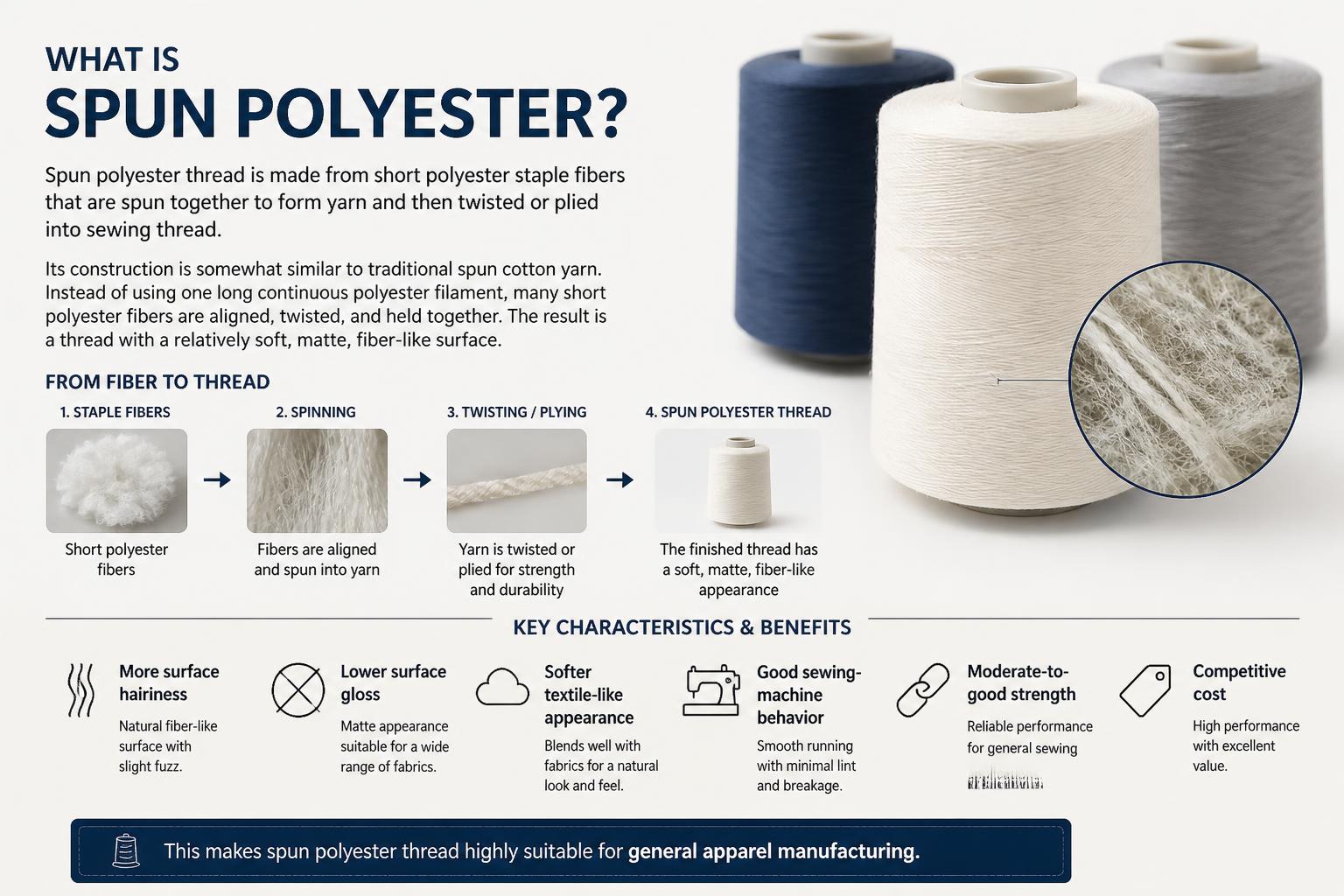
Spun polyester is created by spinning short staple fibers together, resulting in a hairy surface that mimics the texture of cotton while retaining the durability of synthetic polymers. This fuzzy exterior provides natural lubrication, effectively reducing needle heat during high-speed industrial sewing. It remains one of the most cost-effective options for mass production.
Basic Structure of Spun Polyester Thread
A simplified structure looks like this: Polyester Staple Fibers → Spun Yarn → Plied/Twisted Thread → Lubricated and Finished Sewing Thread The exact manufacturing method varies between thread manufacturers. Important variables include: Staple fiber quality, Fiber length, Fiber fineness, Yarn spinning method, Twist, Ply construction, Lubrication, Heat treatment, Dyeing, Final finishing. These details influence actual sewing performance.
The Manufacturing Process
The journey begins with polyester staple fibers (typically 32-38 mm) that are carded, combed, and then spun—usually via ring-spinning—into yarns. The twist is carefully adjusted to balance strength against hairiness. Ring-spinning combined with heat-setting ensures the thread remains dimensionally stable and provides consistent seam performance through repeated industrial laundering cycles.
Key Benefits for Garment Manufacturers
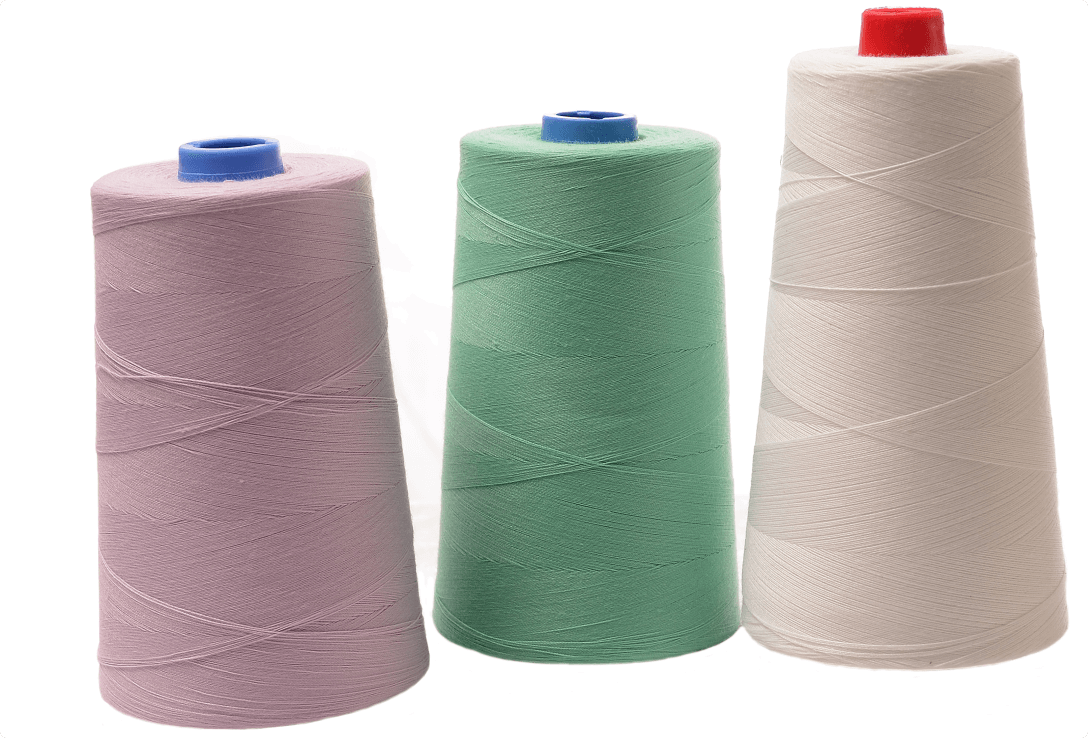
- Cost-Effectiveness: Spun polyester is typically 20–40% cheaper than core-spun options, making it the standard choice for side seams, hems, and overlocking in roughly 80% of conventional garments.
- Needle Heat Resistance: The “hairy” surface helps dissipate heat during high-speed sewing, preventing thread melting and skipped stitches.
- Chemical & Color Resilience: It exhibits high colorfastness to industrial washing and dry cleaning, outperforming many natural fibers even when exposed to harsh detergents or bleaching agents.
Can One Garment Use More Than One Thread Type?
Yes. And in many cases, it should. A garment might use:
- Core-spun for high-stress needle seams
- Spun polyester for general construction
- Textured polyester in overlock loopers
- Decorative thread for topstitching
There is no rule saying one garment must use the same thread everywhere. Different seam operations have different needs. This can be a smarter approach than over-specifying an expensive thread for every operation.
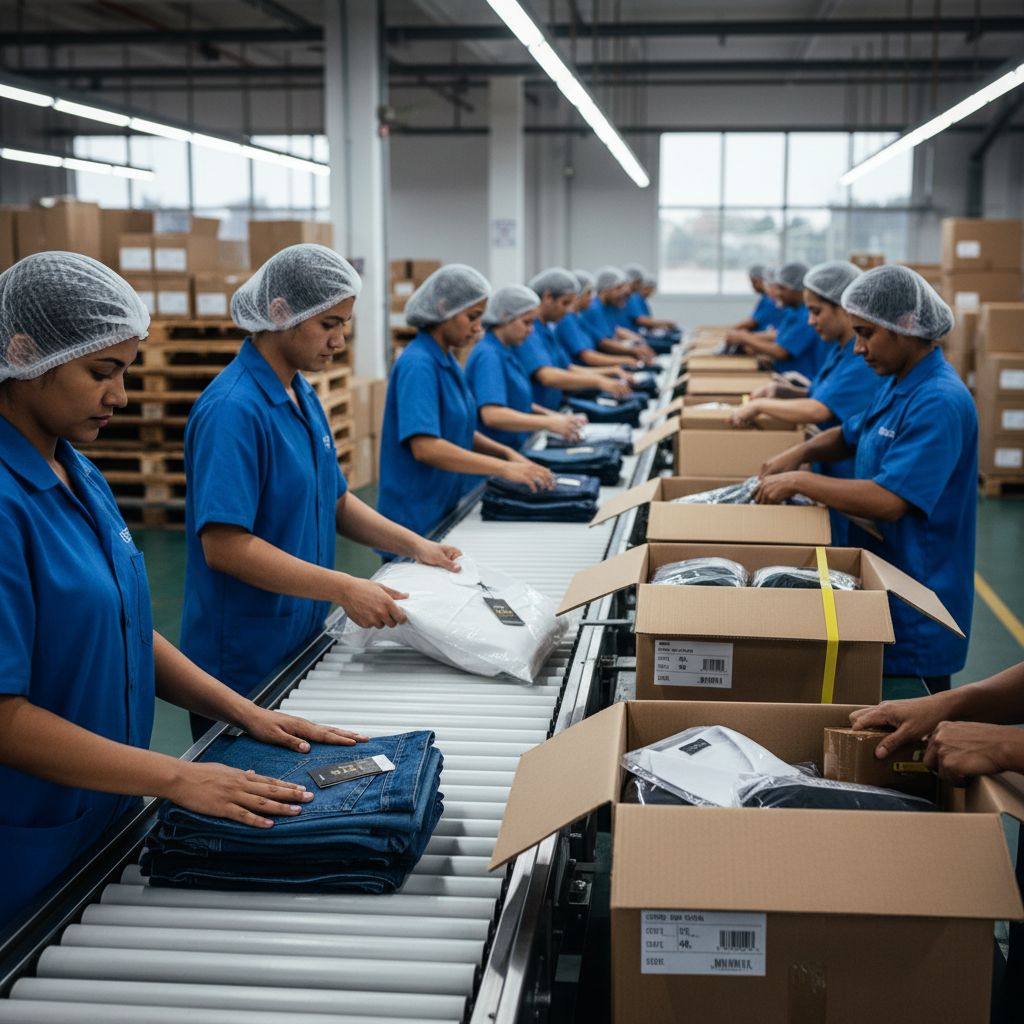
Applications in Mass Production
Manufacturers rely on spun polyester primarily for woven shirts, blouses, knit tops, and children’s wear. Its ability to “grip” the fabric creates a stable seam that resists slippage, particularly on synthetic materials. While it lacks the extreme tenacity of continuous filament, it provides more than enough holding power for general apparel assembly.
| Garment Type | Spun Polyester Suitability | Main Consideration |
|---|---|---|
| Woven Shirt | Excellent | Fine seam appearance |
| Blouse | Excellent | Fine thread size |
| Dress | Very Good | Seam stress |
| T-Shirt | Very Good | Stitch extensibility |
| Polo Shirt | Very Good | Knit construction and stretch |
| Uniform Shirt | Excellent | Wash durability |
| Casual Trouser | Good | Stress points |
| Light Workwear | Possible | Check seam load |
| Heavy Denim | Limited / Operation-dependent | Core-spun often preferred |
| Heavy Workwear | Limited | Higher-strength thread may be needed |
| High-Stretch Activewear | Application-dependent | Seam extension |
T-Shirts
Spun polyester may be used for general T-shirt sewing operations such as:
- Shoulder seams
- Sleeve attachment
- Side seams
- Neckline operations
- Hemming
The final thread selection depends on the knit fabric, machine type, seam stretch, and required appearance. For highly extensible knit seams, factories may use textured polyester or another thread in selected looper operations instead.
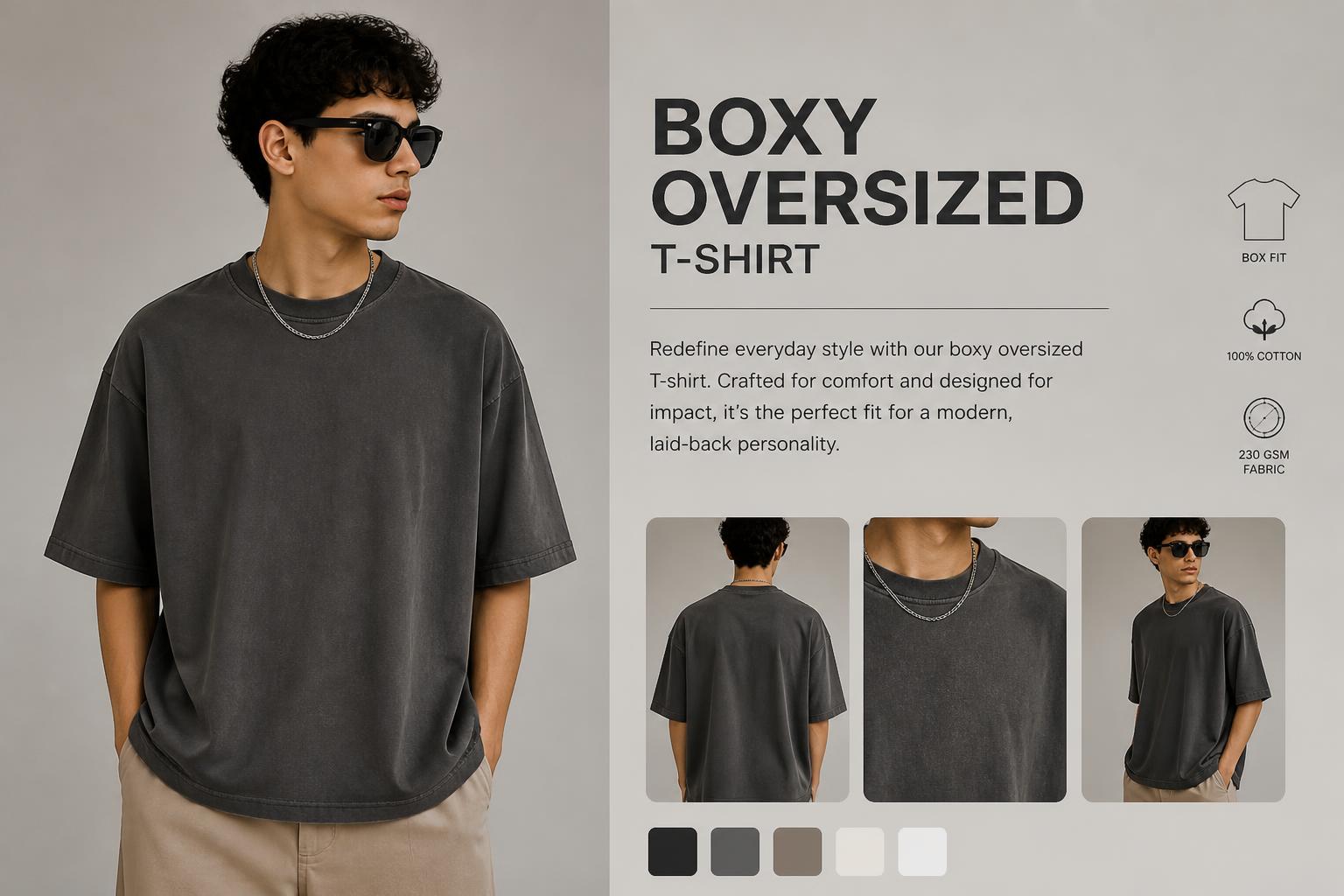
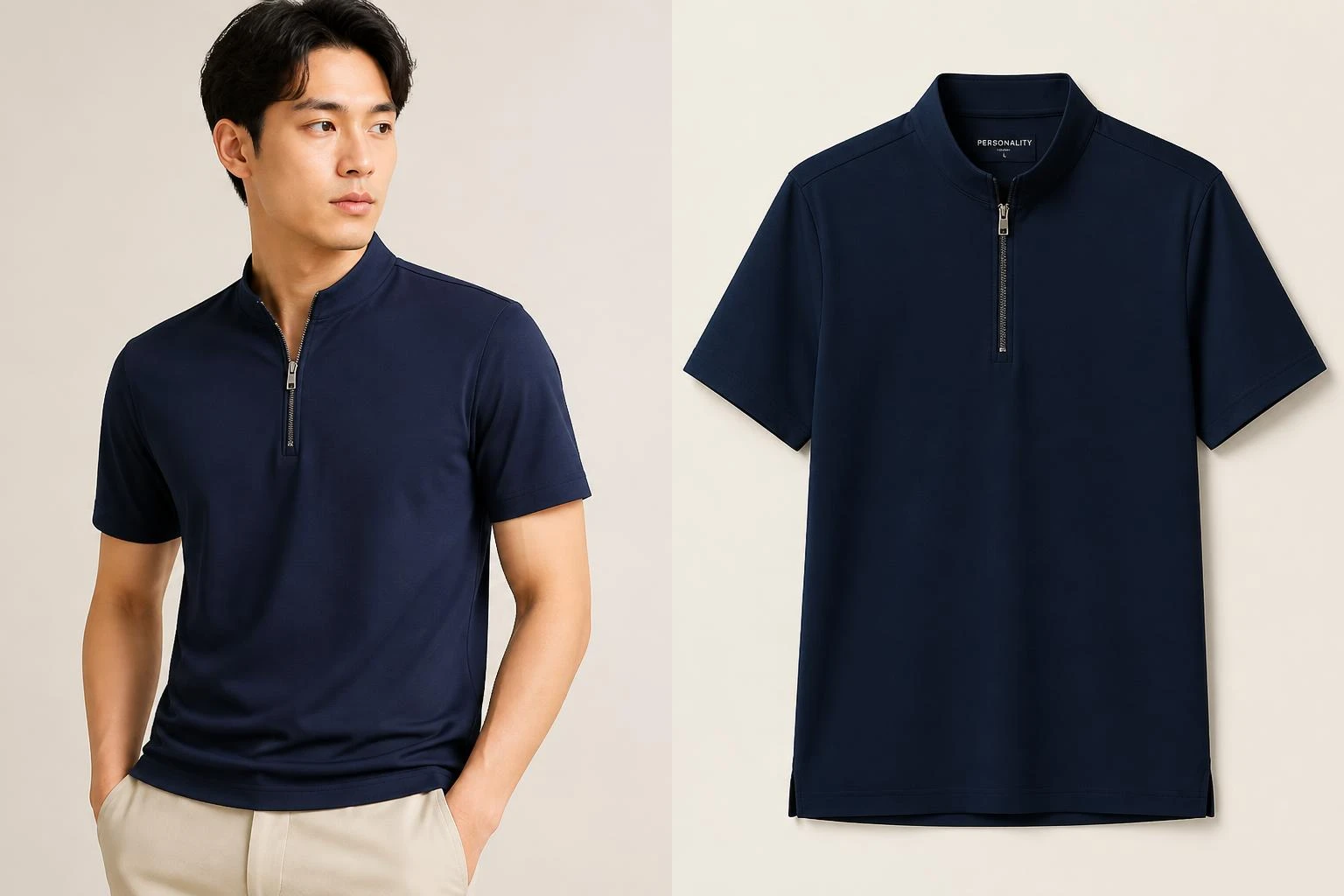
Polo Shirts
Typical applications can include:
- Shoulder seams
- Sleeve seams
- Side seams
- Collar assembly
- Placket construction
- Hemming
Thread selection around the placket and collar may require more attention because these areas can experience higher stress.
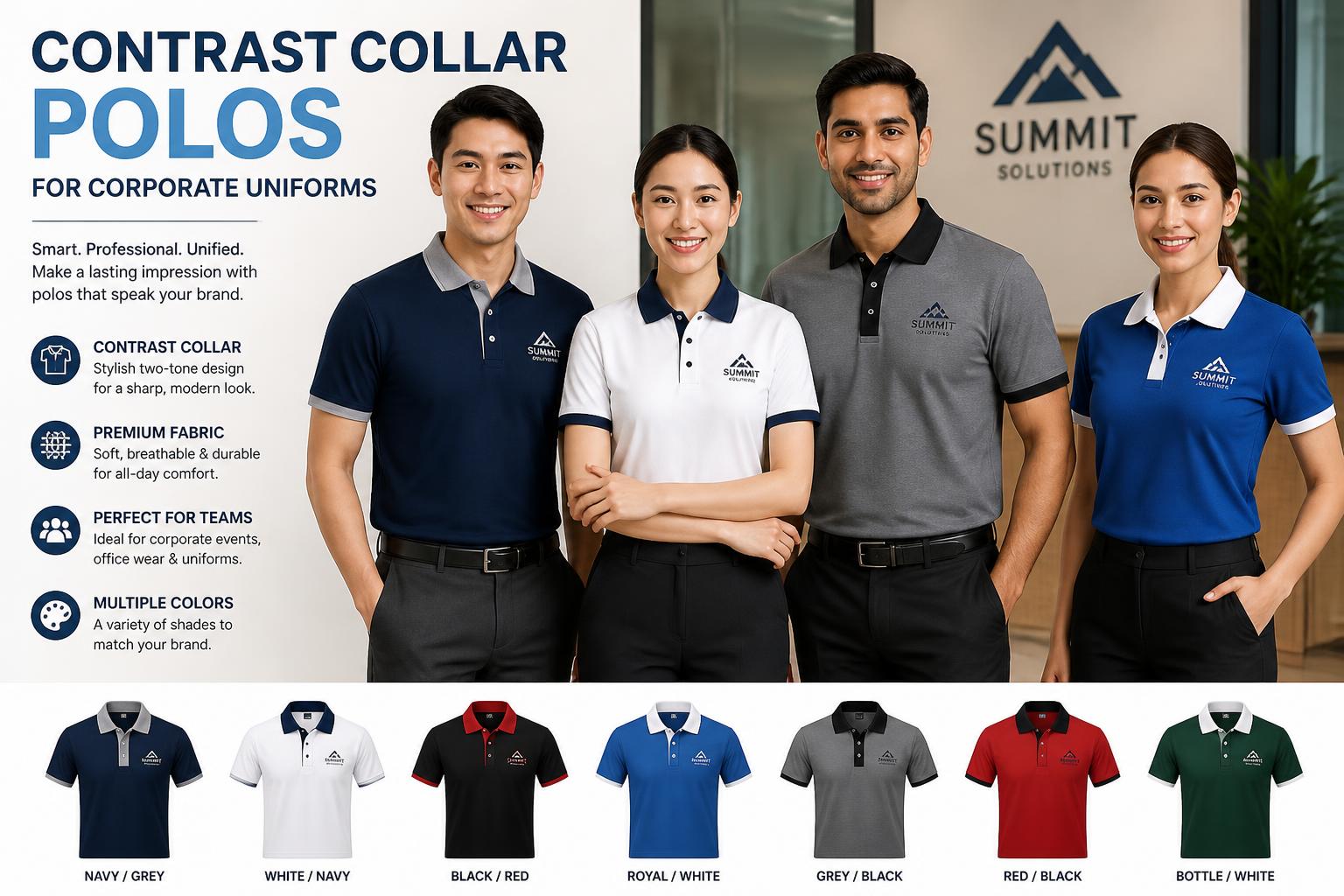
Woven Shirts
Spun polyester is often suitable for:
- Side seams
- Sleeve seams
- Yoke construction
- Collar construction
- Cuff assembly
- General topstitching
For very fine shirts, thread size should be selected carefully to avoid creating heavy-looking seams.
Dresses and Blouses
Light- and medium-weight garments may use spun polyester where:
- Soft appearance
- Cost control
- General seam performance
are important.. Needle and thread size must be matched to delicate fabrics to reduce seam puckering or fabric damage.

Casual Trousers
Spun polyester can be used in many general assembly operations.
However, high-stress areas such as:
- Seat seams
- Crotch seams
- Waistband attachment
- Pocket reinforcement
may benefit from a stronger thread depending on garment construction and performance requirements.

Uniforms and Workwear
Spun polyester may work well for lighter uniforms and general-purpose garments. Heavy workwear is a different case. Products exposed to high mechanical stress may require stronger core-spun or filament thread constructions. This is a good example of why one thread should not automatically be specified for every operation.

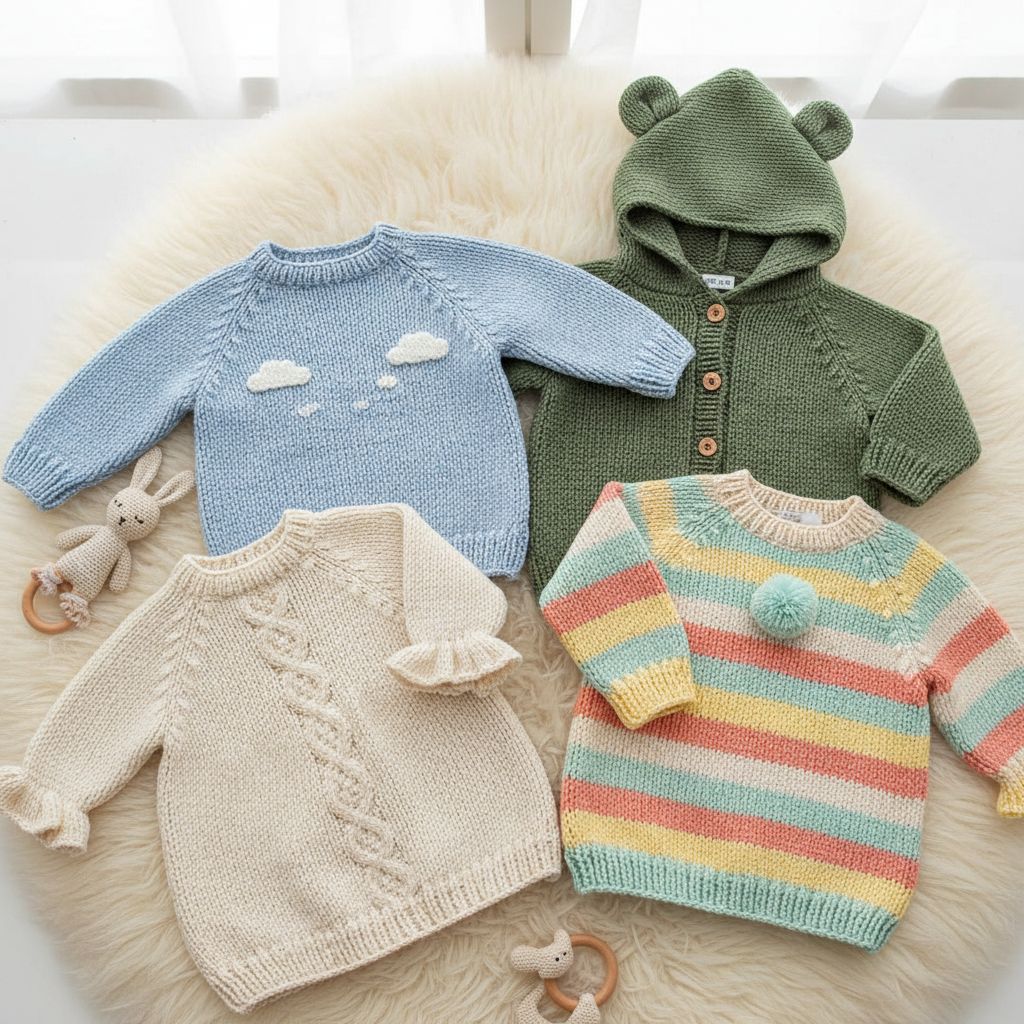
Children’s Clothing
Spun polyester is widely suitable for many children’s garments due to its:
- Versatility
- Durability
- Color range
- Cost efficiency
However, children’s products may have additional safety and compliance requirements unrelated to thread construction.
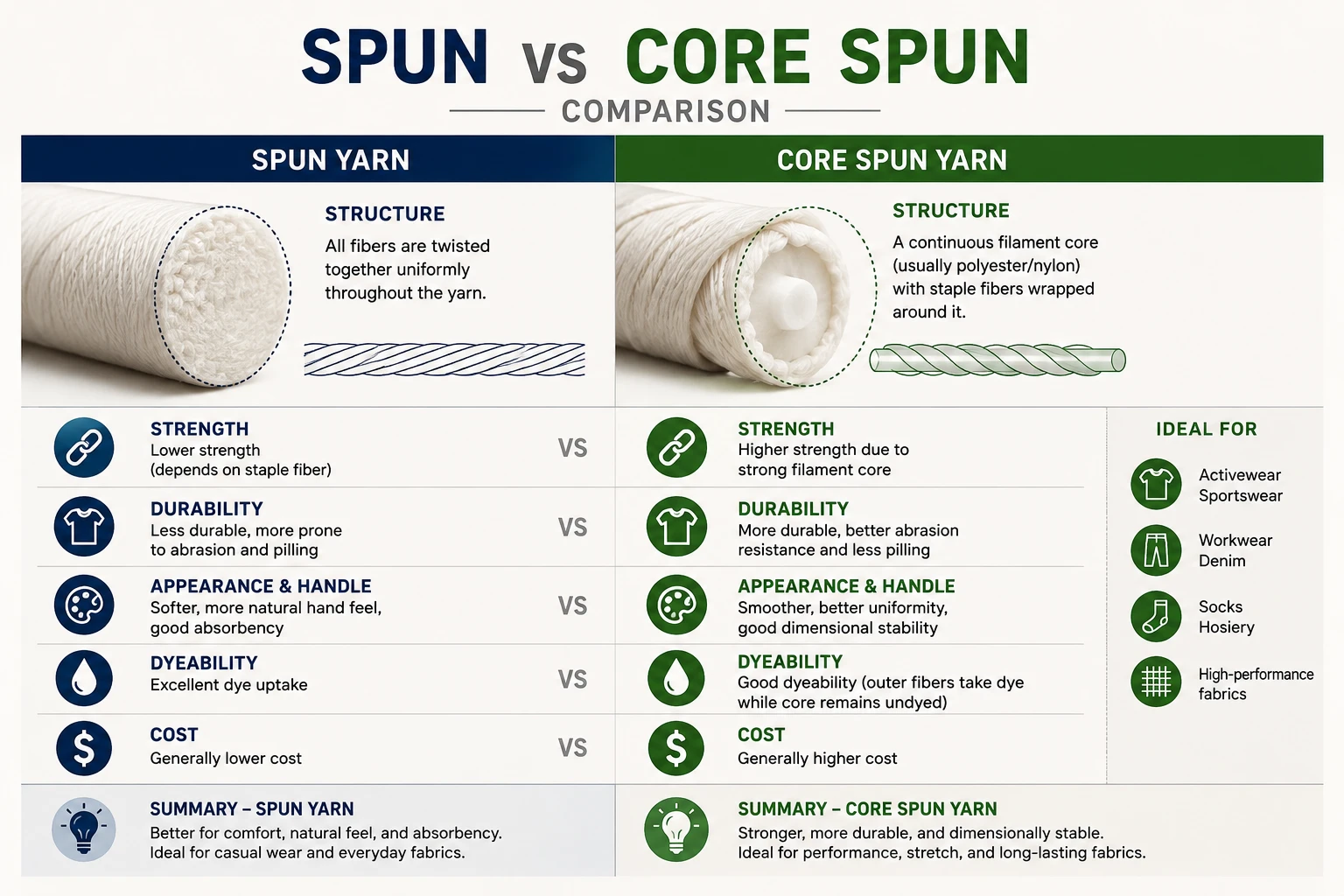
Comparison: Spun vs. Core-Spun
Recognizing the trade-offs between price and performance allows you to optimize your production budget without sacrificing garment integrity.
| Feature | Spun Polyester | Core-Spun Polyester |
|---|---|---|
| Construction | Polyester staple fibers spun together | Continuous polyester core wrapped with staple fibers |
| Strength per Size | Good | Generally higher |
| Abrasion Resistance | Good | Generally higher |
| Surface | Fibrous, matte | Fibrous, matte |
| Sewability | Good with suitable quality and setup | Excellent for demanding production |
| Thread Uniformity | Good | Generally more uniform |
| Seam Durability | Good for general apparel | Better for higher-stress applications |
| Thread Size Needed | May require larger size for equivalent strength | Smaller size can often achieve greater strength |
| Cost | Usually more economical | Usually more expensive |
| Typical Use | General apparel | Premium, high-stress, demanding seams |
Why Is Core-Spun Stronger?
The main reason is the continuous-filament core. In spun polyester, strength depends on many short fibers being held together by twist. In core-spun thread, continuous filaments run through the center of the thread. These long filaments provide a stronger load-bearing structure. That can result in:
- Higher tenacity
- Better seam durability
- Fewer thread failures
- Greater strength at a smaller thread diameter
This can be valuable in demanding sewing operations.
Does That Mean Core-Spun Is Always Better?
No. This is where thread selection often gets oversimplified. Core-spun may offer higher performance, but that does not mean every T-shirt seam needs it. If spun polyester already meets:
- Seam strength requirements
- Sewing efficiency targets
- Appearance requirements
- Durability requirements
paying for a higher-performance thread may provide little practical benefit.
- For a cost-sensitive basic garment produced in huge quantities, good spun polyester can be the more sensible choice.
- For a premium or high-stress product, core-spun may justify its higher price.
The correct question is not: “Which thread is better?” It is: “Which thread gives this garment the required performance at the best total production cost?”
Quick Decision Guide To Choose: spun polyester or core-spun polyester
Choose spun polyester when your priority is:
- General apparel sewing
- Good performance
- Cost efficiency
- Matte appearance
- Broad availability
Choose core-spun polyester when your priority is:
- Higher strength per thread size
- Better abrasion resistance
- Higher seam durability
- Demanding sewing conditions
- High-stress garment areas
Neither is automatically correct for every product.
The correct choice depends on the garment.
Conclusion / Final Words
Spun polyester sewing thread remains one of the most practical thread choices in modern garment manufacturing because it offers something factories need every day: balanced performance at an economical cost.For standard shirts, blouses, dresses, uniforms, T-shirts, polo shirts, children’s garments, and many other everyday apparel products, extremely high thread strength is often unnecessary. What matters more is achieving reliable sewing, stable seams, acceptable durability, good color matching, and consistent production at the correct cost. That is where spun polyester performs particularly well.
Its staple-fiber construction gives it a soft, textile-like surface and relatively matte appearance, while polyester provides useful strength, abrasion resistance, and laundering durability. Combined with proper industrial lubrication and manufacturing control, it can run efficiently on a wide range of garment-sewing machines. However, spun polyester should not be treated as a universal thread. Heavy denim, heavy workwear, highly abrasive seams, technical garments, safety-critical products, and high-stretch apparel may require stronger or more specialized constructions such as core-spun polyester, continuous-filament thread, or textured thread. The best thread-selection strategy is therefore: Garment Type → Fabric → Seam Function → Required Strength → Stitch Type → Thread Construction → Thread Size → Needle → Sewing Trial → Wash Test → Bulk Approval