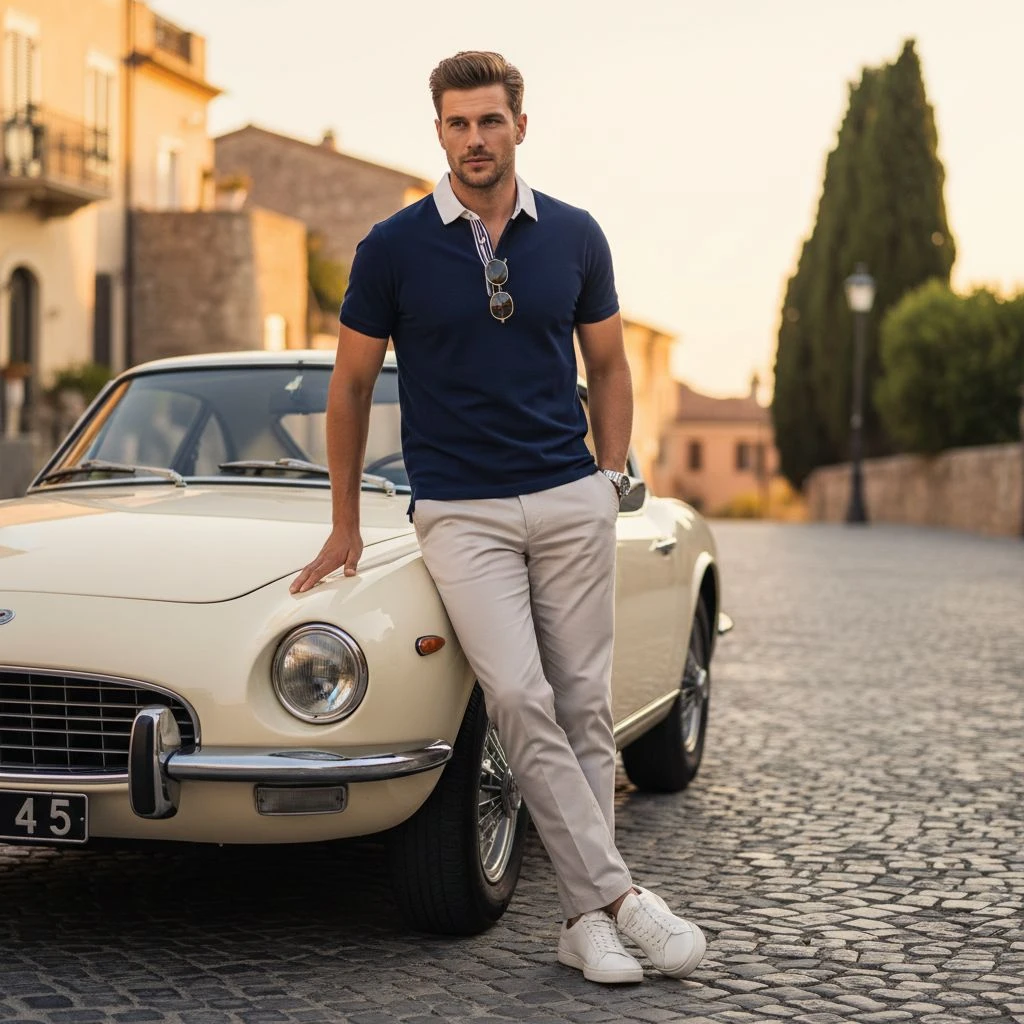


People often treat a polo as “dressier” and a T-shirt as “casual” That’s often true, but it’s not a rule. A cheap polo can look sloppy, and a premium T-shirt can look sharp. Here’s the clean, practical breakdown.
=> Related Article:
- T Shirts Manufacturing Vietnam | Mekong Garment Factory
- Polo Shirts Manufacturing Vietnam | Mekong Garment Factory
| Feature | Polo Shirt | T-Shirt |
|---|---|---|
| Neck | Collar + buttons | Crew / V-neck |
| Fabric | Piqué / Jersey knit | Jersey knit |
| Look | Smart casual, structured | Casual, minimal |
| Branding | Embroidery, small logo | Big prints, graphics |
| Complexity | Higher | Lower |
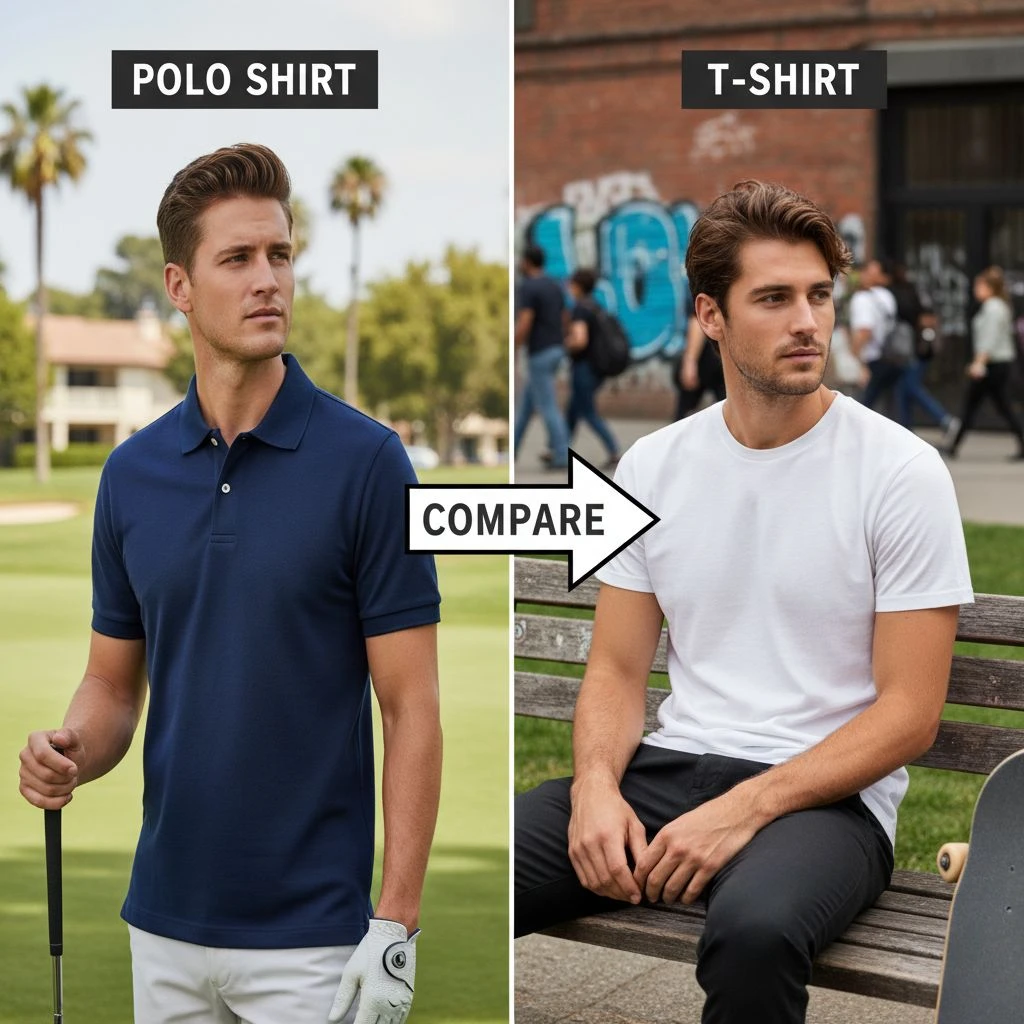
Visual comparison between a polo shirt and a classic T-shirt – Polo shirts and T-shirts are two of the most popular tops in modern wardrobes. Both are comfortable, easy to style, and suitable for many types of clothing collections.
The Biggest Visual Difference: Collar + Placket
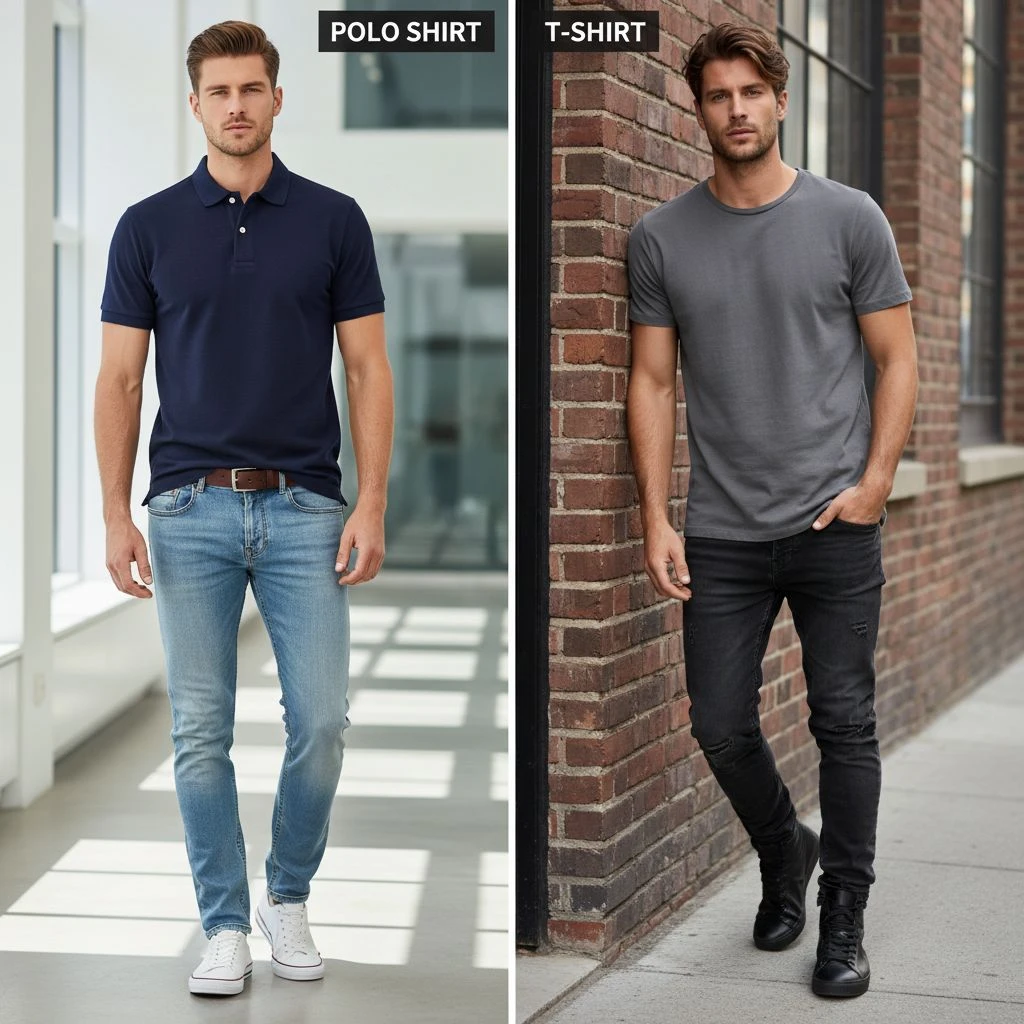
The easiest way to tell a polo from a T-shirt is the collar and buttons. That structure changes the whole vibe. However, a weak collar can make a polo look cheap fast. The collar instantly makes a polo feel more “put together,” even if the fabric is similar to a tee.

The neckline is the easiest way to identify a polo shirt or a T-shirt – Structured polo collar and placket details.

A polo shirt normally has:
- A fold-down collar
- A short two- or three-button placket
- Ribbed or plain sleeve cuffs
- Side vents on many styles

The collar gives a polo shirt more structure around the neck and face. This small detail can make the shirt look more polished, even when it is worn with jeans or casual trousers.
A T-shirt usually has:
- A crew neck, V-neck, or scoop neck
- No front button placket
- A simple ribbed neckline
- Plain sleeve and body hems

T-shirts have simpler necklines, but quality still matters. A weak rib band may become loose, wavy, or stretched over time.
The polo collar adds structure around the face and neck. It helps the shirt look more polished, even when worn with casual trousers or jeans. However, the collar is also one of the polo shirt’s weakest points. If it curls, stretches, twists, or collapses after washing, the shirt can quickly look untidy. A T-shirt has fewer structural parts, but its neckline still matters. A stretched or wavy neck rib can make a T-shirt look old, even when the body fabric remains in good condition.
Fabric Truths: Both Polo Shirts and T-Shirts Are Usually Knitted
A common misconception is that polos are always woven. In reality, both polos and T-shirts are usually knit fabrics. The difference lies in the knit type and weight.
- Polo (Piqué knit): Textured, slightly thicker, and holds shape better.
- T-shirt (Jersey knit): Smoother, softer, and more drapey.
A common misconception is that polo shirts are woven while T-shirts are knitted. In reality, both garments are usually made from knitted fabric. The main difference is often the knit structure – Pique fabric texture vs jersey fabric smoothness
Piqué Knit for a Traditional Polo Look

Piqué is one of the most common fabrics used for classic polo shirts. It has a raised texture that may look like small honeycombs or geometric patterns. Piqué fabric usually:
- Feels more structured
- Sits slightly away from the body
- Allows airflow through its textured surface
- Supports collars and embroidery well
- Creates a traditional polo appearance
Cotton piqué is popular for casualwear, uniforms, golf shirts, schoolwear, and hospitality clothing.
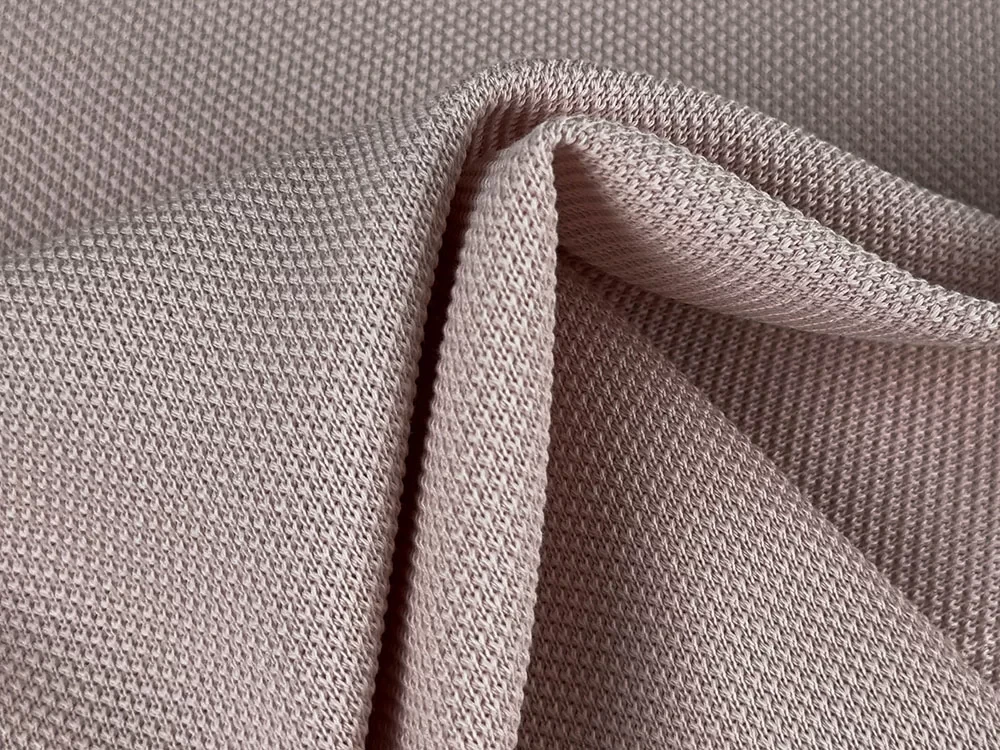
Piqué is one of the most familiar fabrics used for polo shirts. It has a raised texture that may resemble small honeycombs or geometric patterns.
Jersey Knit for a Soft T-Shirt Feel
Jersey is the most common fabric used for T-shirts. It has a smooth surface and usually feels softer than piqué. Jersey fabric generally:
- Drapes closer to the body
- Feels soft and lightweight
- Stretches naturally
- Works well for printing
- Creates a relaxed appearance
Jersey is not limited to T-shirts. Many lightweight fashion polos are also made from cotton jersey.
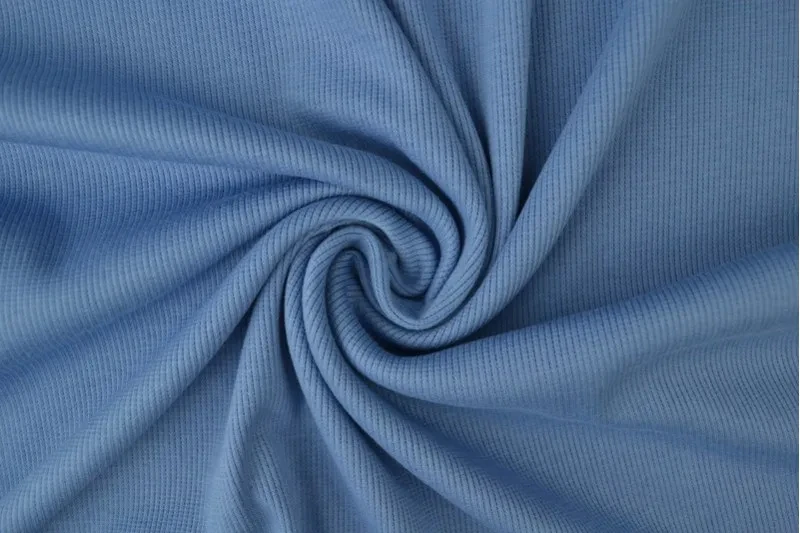
Jersey is smooth, soft, and flexible. It is the fabric most commonly associated with everyday T-shirts.
Other Fabrics Used for Both Shirts
Polo shirts and T-shirts can also be made from:
- Cotton-polyester blends
- CVC fabric
- TC fabric
- Interlock knit
- Polyester performance fabric
- Cotton-spandex
- Recycled polyester
- Merino wool blends
The garment name does not tell you everything about comfort or quality. Fabric composition, knit structure, weight, yarn quality, and finishing are equally important.
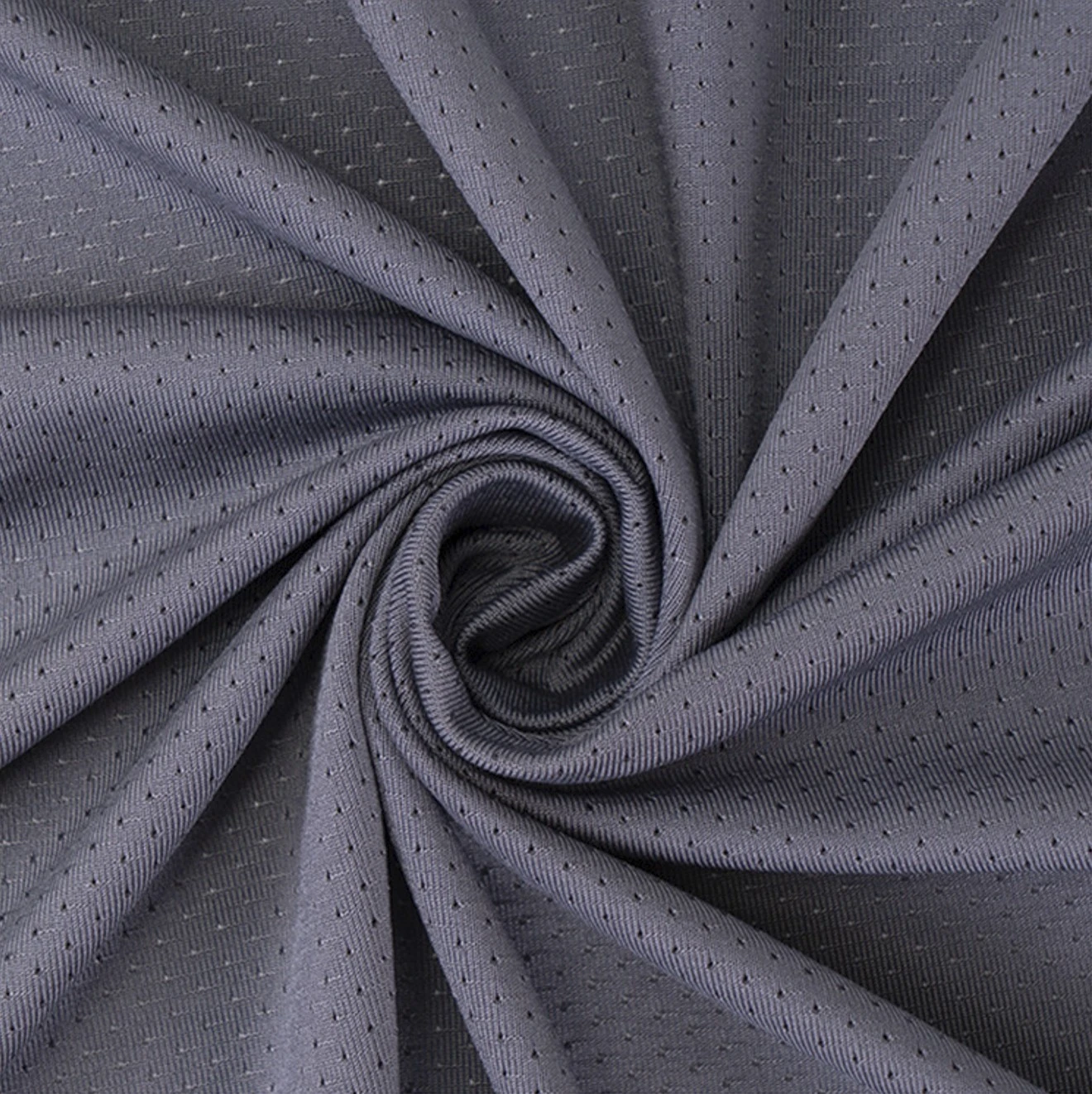

The shirt type alone does not determine quality. Fiber content, yarn, knitting, fabric weight, dyeing, finishing, and sewing all affect the final garment.
Structure & Fit: Polos vs. Tees
Fit often matters more than the shirt type. A polo usually looks sharper because it has more structure at the shoulders and chest. A T-shirt’s look depends heavily on fabric weight (GSM) and neck rib quality. If a T-shirt’s neck rib is weak, it will wave or curl, making it look cheap fast.
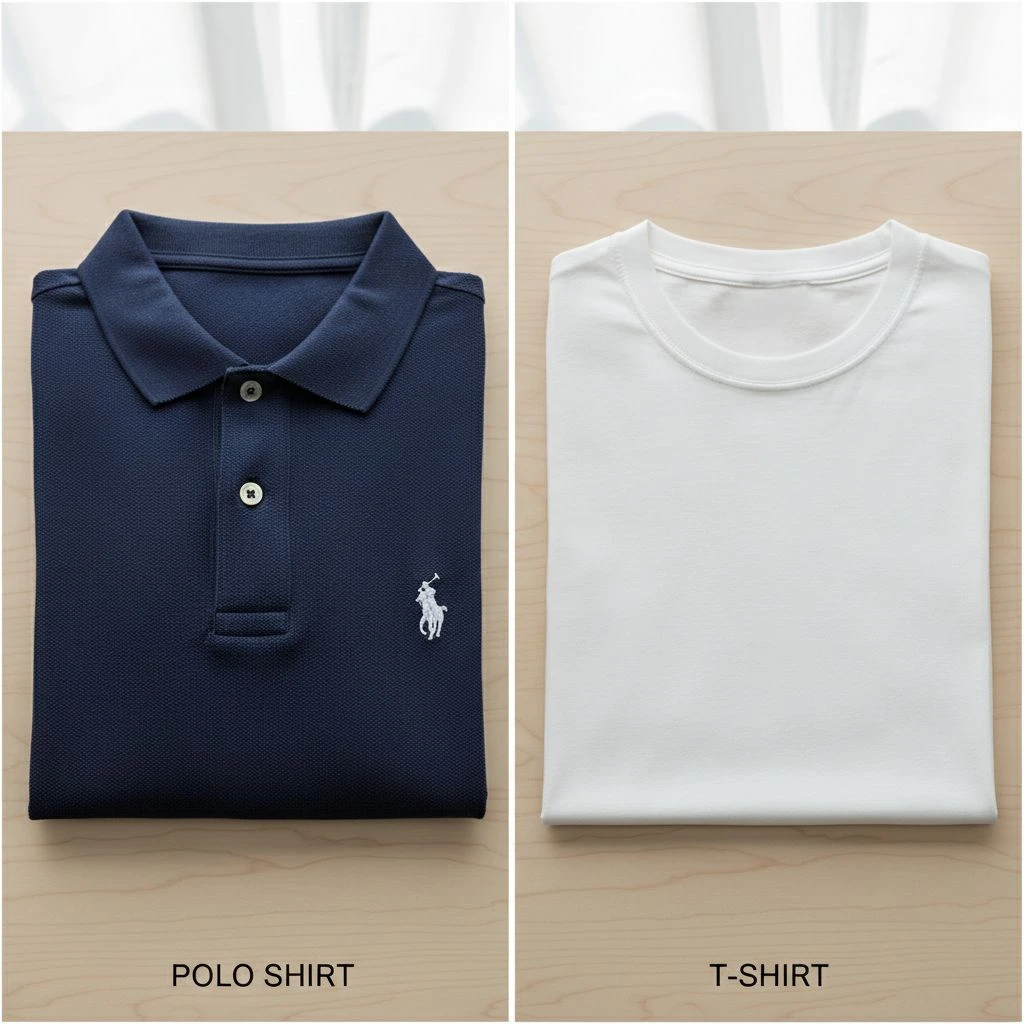
A polo shirt includes several parts that help it hold a defined shape. T-shirts have fewer structural components. Their shape depends more heavily on the fabric weight, pattern, shoulder fit, body width, sleeve cut, and neck rib.
Polo shirts usually have more structure around the neck, chest, sleeves, and hem. The collar, placket, cuffs, and side vents give the garment a defined shape. This often makes a polo look more suitable for smart-casual outfits. A T-shirt has a simpler construction and usually creates a softer silhouette. Its appearance depends heavily on: Shoulder placement, Chest width, Sleeve shape, Body length, Fabric weight, Neck rib quality
How a Polo Shirt Should Fit
A well-fitting polo should:
- Sit correctly at the shoulders
- Follow the chest without pulling
- Have sleeves ending near the middle of the upper arm
- Hold a flat, clean placket
- Allow comfortable movement
- End at a suitable length for tucked or untucked wear

How a T-Shirt Should Fit
A well-fitting T-shirt should:
- Have balanced shoulder seams
- Lie smoothly across the chest
- Avoid excessive fabric around the waist
- Have a neckline that lies flat
- Keep its shape after washing
- Match the intended slim, regular, or oversized style
Fit often matters more than the garment category. A clean, well-fitted T-shirt can look more refined than an oversized polo shirt.
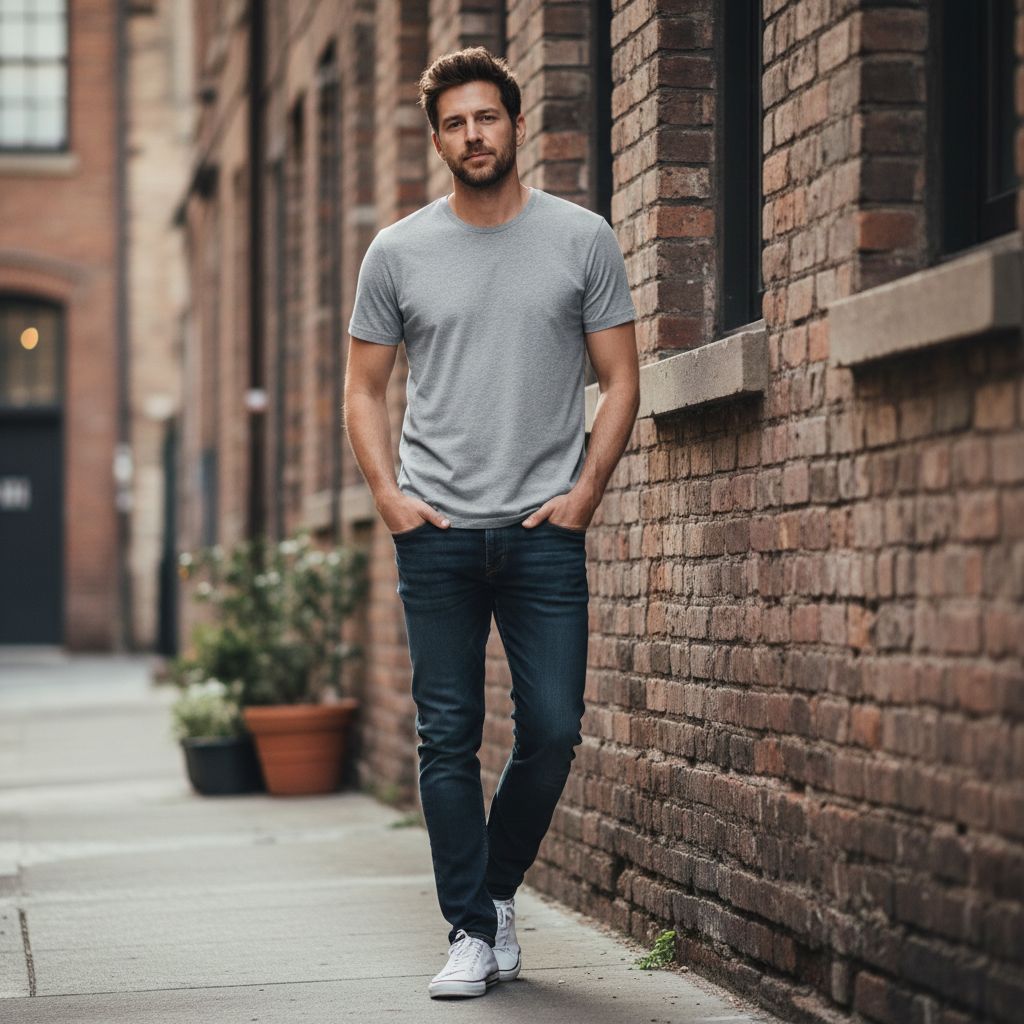
Fit often matters more than garment type. A good T-shirt can look sharper than a polo that is too tight, too long, or too loose.
Styling: Where Each One Wins
Polos lean toward smart casual, while T-shirts offer maximum flexibility. A heavy cotton tee can look clean and minimal, while a polo is an easy upgrade for office settings or meetings without needing a full button-up shirt.
Where Polo Shirts Work Best
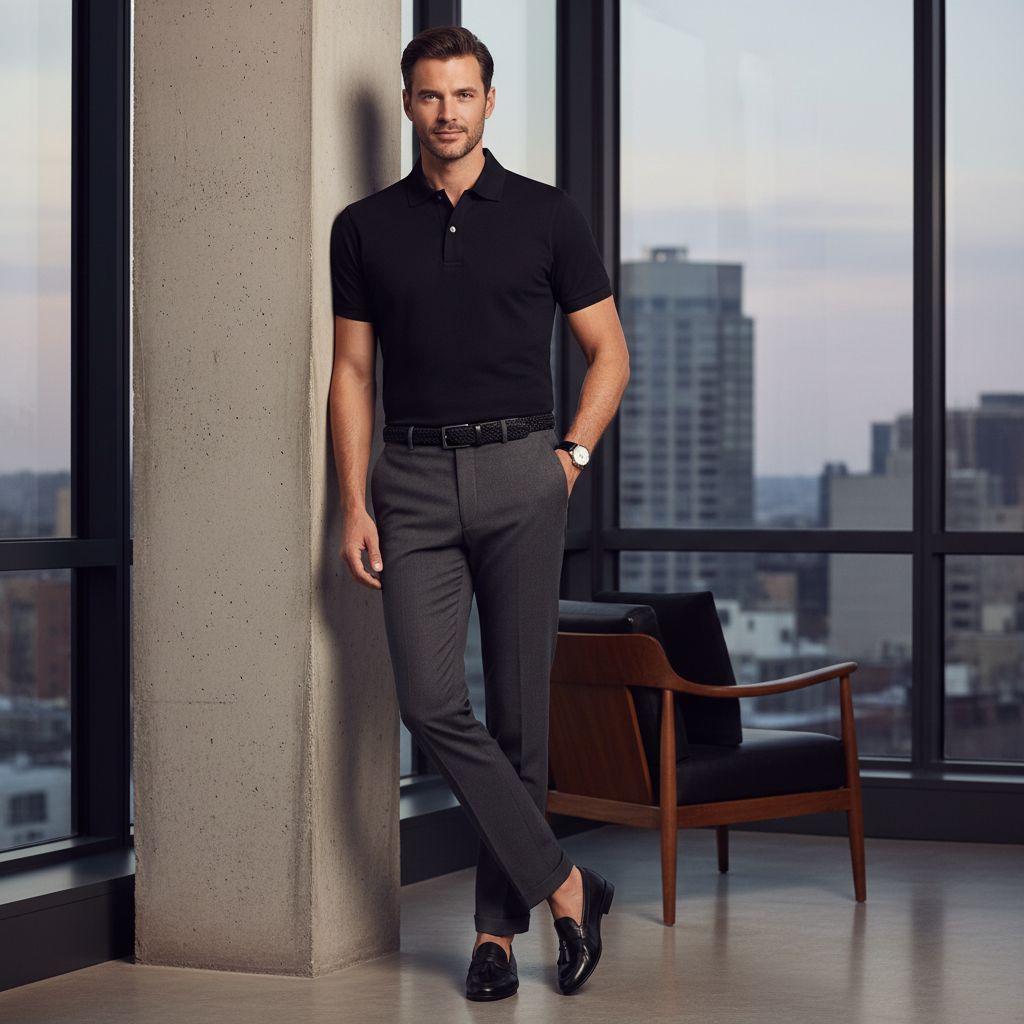
Polo shirts are useful when you want comfort with a more polished appearance. They are often suitable for:
- Business-casual offices
- Corporate uniforms
- Hospitality teams
- Retail staff
- School uniforms
- Golf and tennis
- Business travel
- Casual dinners
- Networking events
- Promotional clothing
A polo is a practical choice when a T-shirt feels too relaxed but a dress shirt feels too formal.

In most situations, a polo shirt looks more formal than a T-shirt.
Where T-Shirts Work Best
T-shirts offer greater freedom for casual styling, graphics, and layering. They work especially well for:
- Everyday casualwear
- Streetwear
- Sports and fitness
- Work-from-home outfits
- Travel
- Concert merchandise
- Promotional campaigns
- Graphic fashion collections
- Uniform base layers
- Warm-weather clothing
A plain T-shirt is also easier to layer under shirts, jackets, sweaters, and coats.
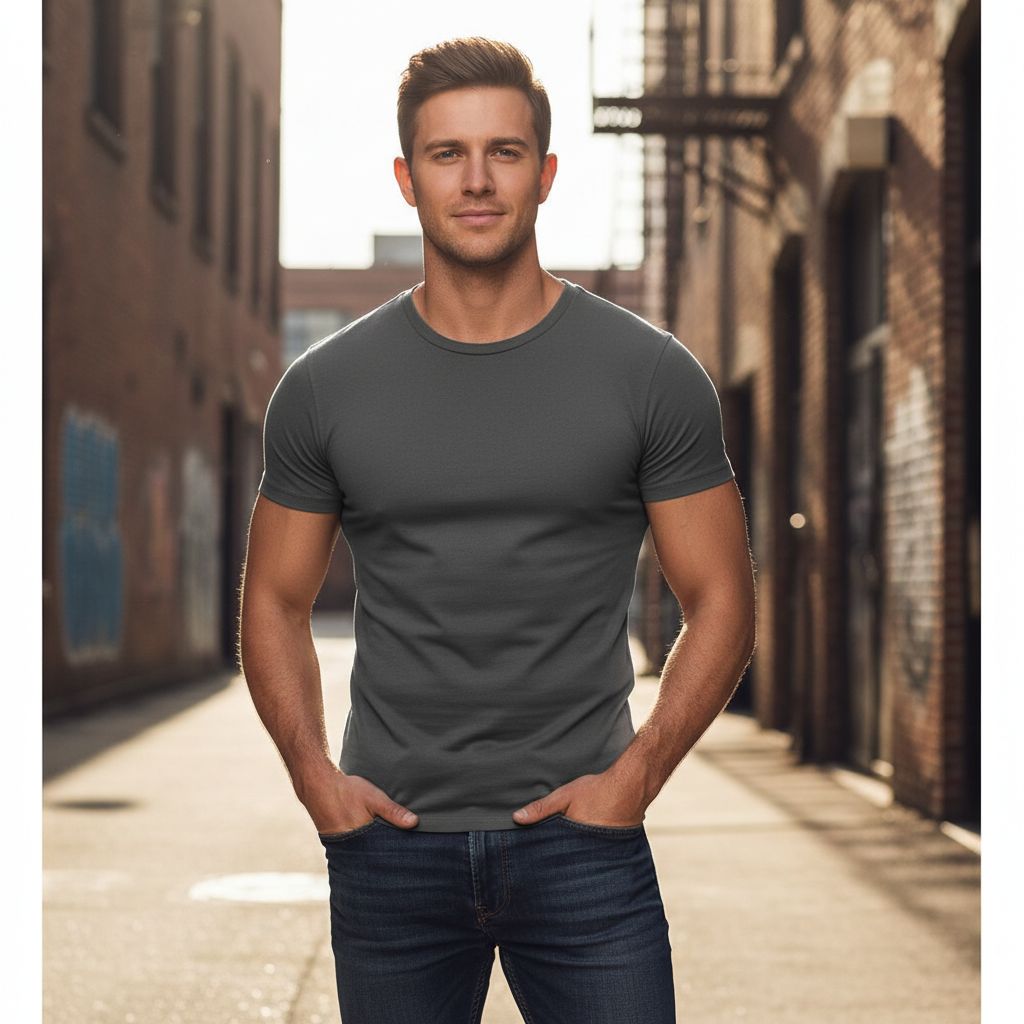

A premium plain T-shirt under a relaxed blazer can create a clean smart-casual outfit.
Branding: Embroidery vs. Printing
How you decorate the shirt changes the final perception. Polos usually look best with embroidery or small chest logos. T-shirts act as a blank canvas, handling large graphics and bold designs much more naturally.
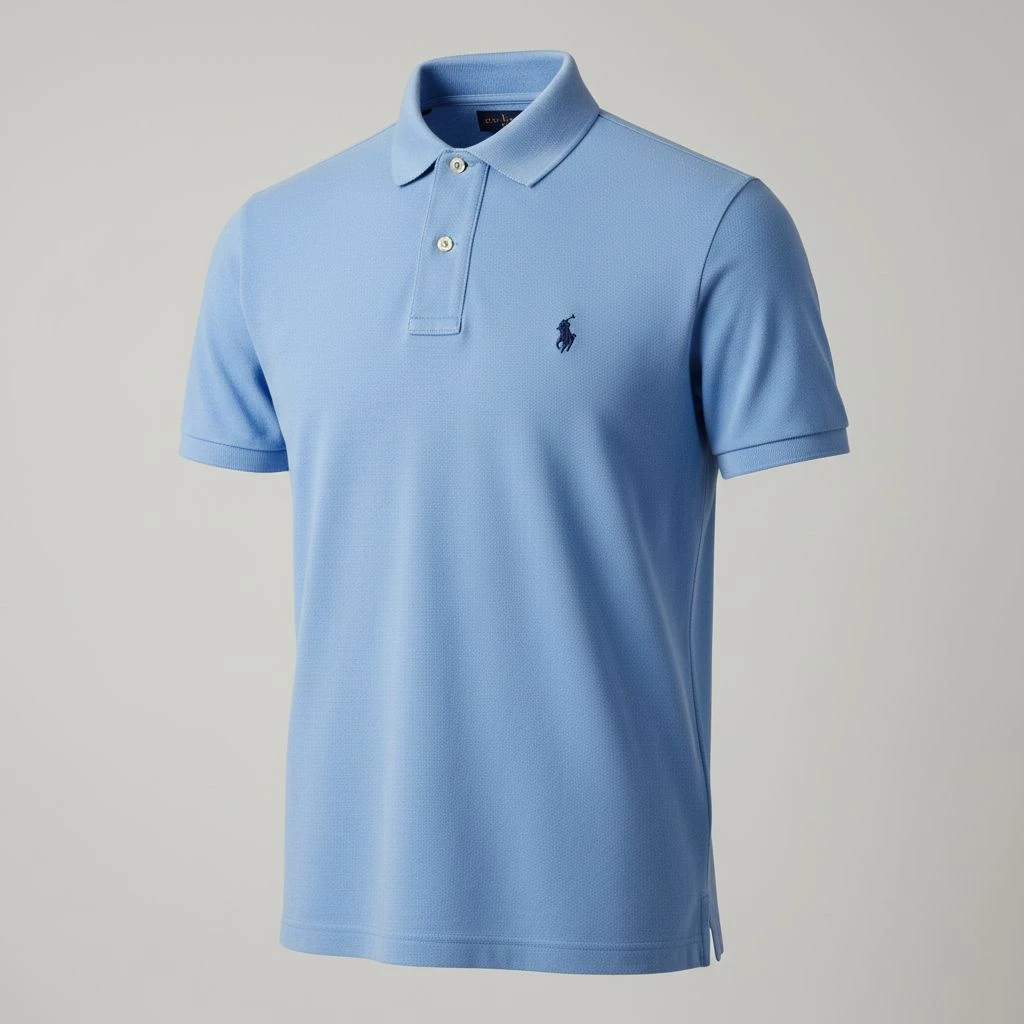
Branding on Polo Shirts
Polo shirts often look best with controlled and professional branding.
Common options include:
- Small chest embroidery
- Company logos
- School badges
- Sleeve embroidery
- Tonal logos
- Small heat-transfer marks
Embroidery works well because the collar and structured shape already give the shirt a professional feel. However, heavy embroidery can distort thin fabric. The backing, thread density, and logo size must suit the material.

Branding on T-Shirts
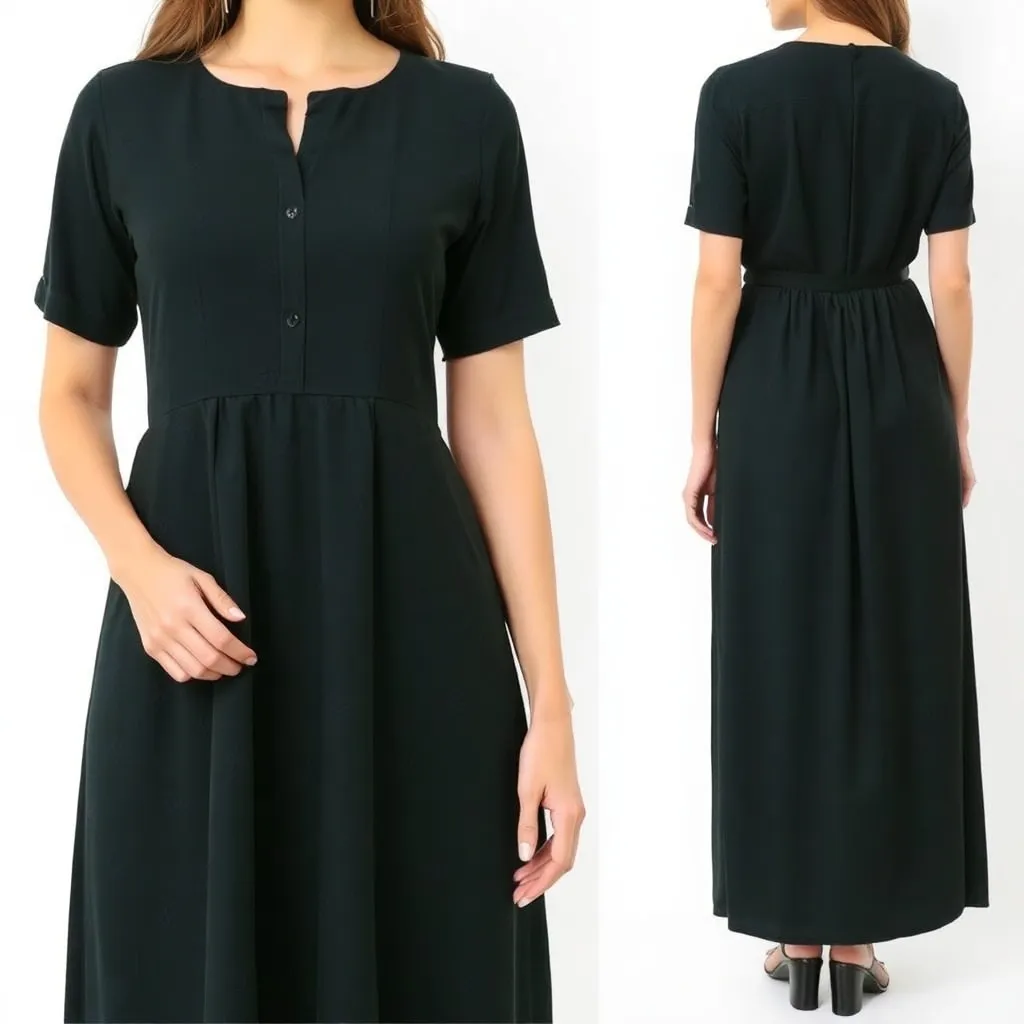
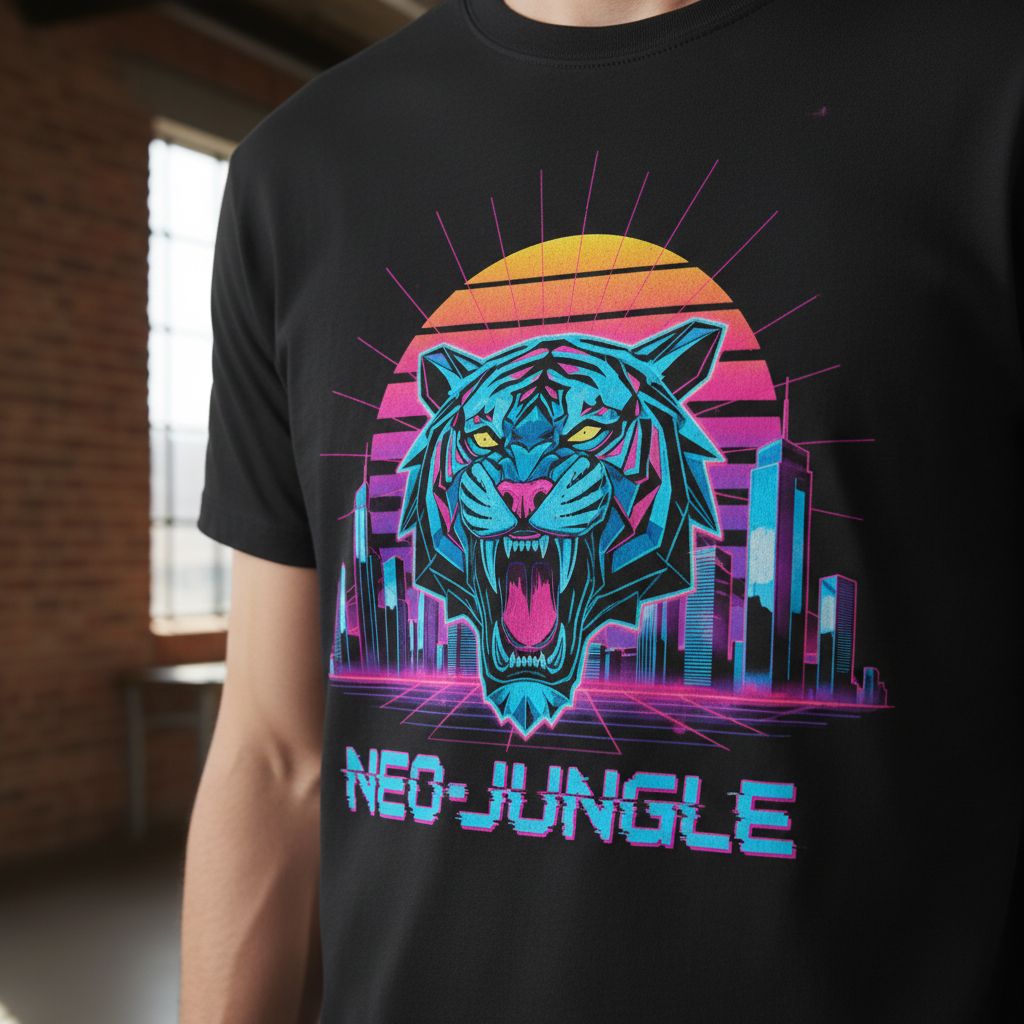
T-shirts provide a larger and flatter surface for visual designs.
They can support:
- Large front graphics
- Back prints
- Photography
- Slogans
- All-over prints
- Screen printing
- Direct-to-garment printing
- Heat transfers
This makes T-shirts a stronger choice for fashion graphics, events, merchandise, and promotional campaigns.
Reality: Which One Is More Comfortable?
Comfort depends more on fabric, fit, climate, and activity than on the shirt type. A lightweight cotton T-shirt may feel cooler and softer than a thick piqué polo. A performance polo may feel more comfortable than a cotton T-shirt during outdoor work or sports.
A Polo May Be More Comfortable When:
- You need a structured work shirt
- The fabric has moisture-wicking properties
- You want a collar for sun protection
- You need a smart shirt without formal stiffness
- The workplace requires a uniform
A T-Shirt May Be More Comfortable When:
- You want the simplest neckline
- You are layering under another garment
- You prefer soft jersey fabric
- You are dressing casually
- You need maximum freedom around the neck

Conclusion / Final Words
The difference isn’t just about the collar; it’s about structure and the message your outfit sends. A cheap polo with a floppy collar can look worse than a premium T-shirt with a strong neckline. Focus on fit, fabric weight, and construction quality to pick the right tool for the occasion. Neither one is automatically better. A low-quality polo with a weak collar may look worse than a premium T-shirt with a strong neckline and clean fit. The best choice depends on the occasion, climate, fabric, branding, comfort, and image you want to create. Choose a polo when you need comfort with a professional edge. Choose a T-shirt when you want simplicity, casual style, or a larger space for graphic design.