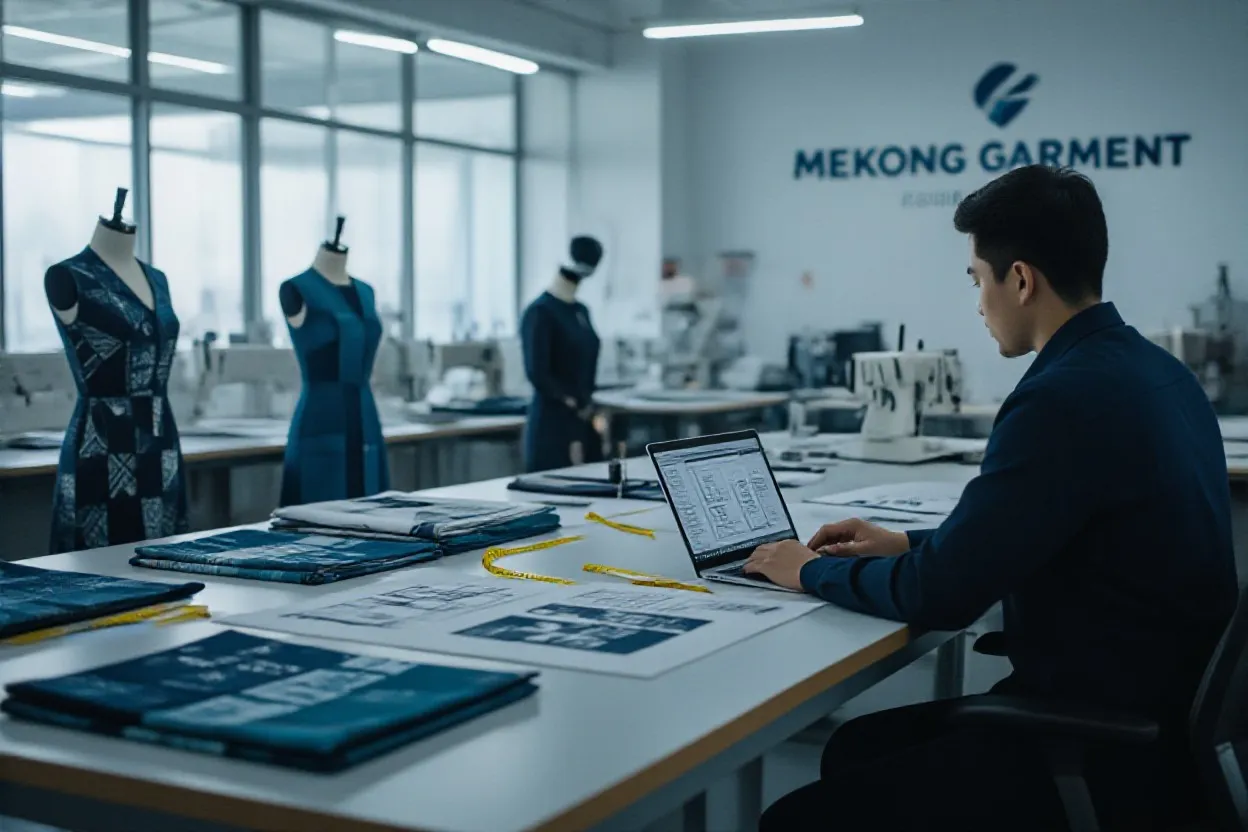
How to Review a Tech Pack With Your Clothing Manufacturer
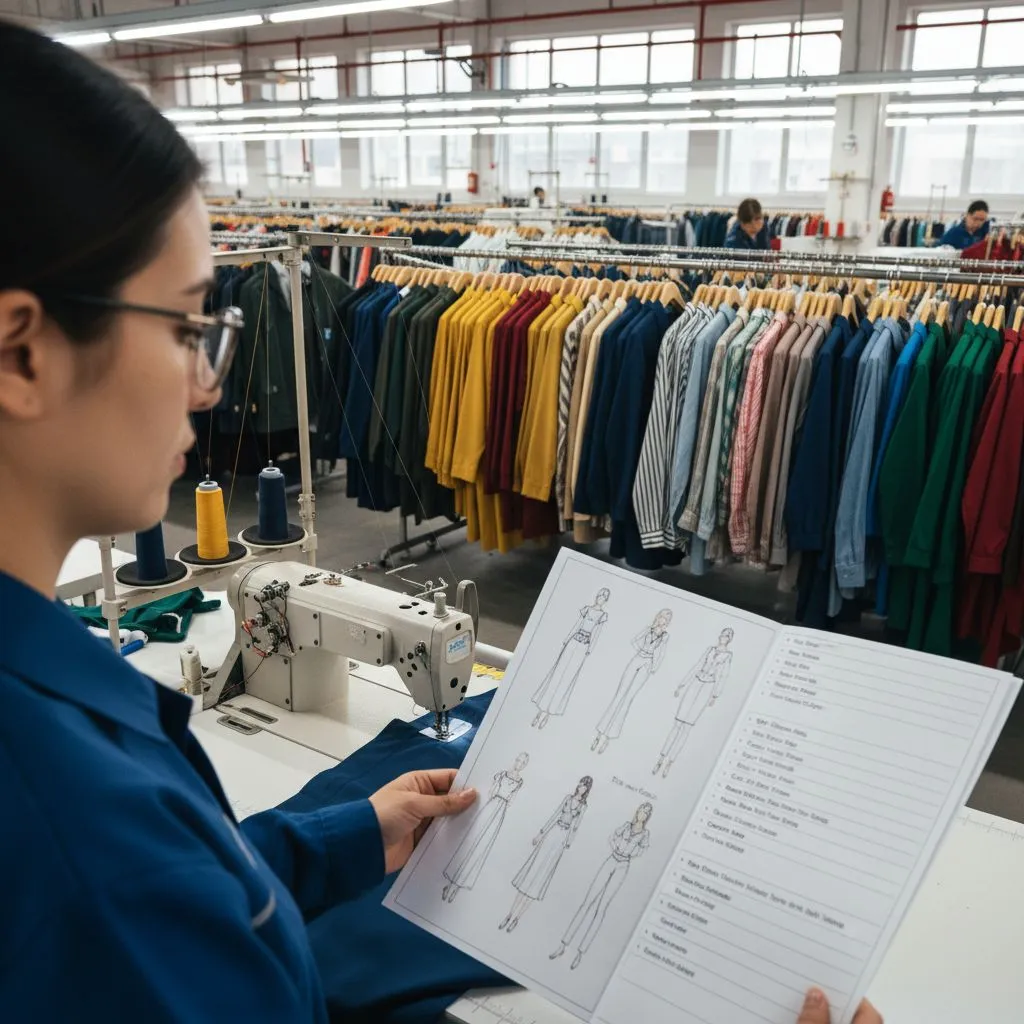
Techpack review is your last safety checkpoint before production; when you align specs with the factory you avoid costly errors, protect your lead times, and ensure quality. Prepare clear questions, physical samples, and a checklist so you catch measurement mismatches, material risks, and construction issues early – these are the most dangerous problems to miss. Use written decisions to lock agreements and keep production on track. A strong tech pack review is not about blaming mistakes. It is about alignment. When both brand and factory clearly understand the same details, production becomes faster, cheaper, and far less stressful. This guide breaks the process into simple, repeatable steps you can use for every style.
Why the Tech Pack Review Matters So Much
A tech pack looks complete on paper, but paper does not sew garments. The review is where theory meets real production limits. This stage allows both sides to confirm that the design can actually be made as planned, at the right quality level, within the target cost and timeline. Problems found here are cheap to fix. Problems found after cutting fabric are expensive.
A good review helps you:
- Prevent fit and sizing errors
- Avoid material mismatches
- Reduce sample revisions
- Protect your production schedule

Cost Implications and Error Prevention
Financial safety is the primary benefit of this stage. Changing a number on a spreadsheet is free; re-cutting fabric is not. The review acts as a safeguard, catching discrepancies in material consumption or construction methods that would otherwise inflate your unit price. Identifying these issues early protects your profit margins. If you skip this detailed check, you risk paying for unusable inventory or expensive air freight to make up for lost time due to avoidable rework.

Consider the math of a simple oversight. If a tech pack lists the wrong zipper length and it goes unnoticed until bulk production, you are not just paying for new zippers. You are paying for the labor to remove the old ones, the wasted thread, potential fabric damage, and the delay in shipping. A thorough review highlights specific risks, such as checking if a pocket placement interferes with a seam allowance or if a fabric’s shrinkage rate was calculated correctly. Catching a grading error here means you avoid producing an entire size run that does not fit, saving you thousands of dollars in unsellable stock.
What to Prepare Before the Review Meeting
Preparation turns the review from a passive call into a productive working session. When you arrive prepared, the factory can focus on solutions instead of basic corrections.
Review the Tech Pack Internally First
Walking into a review without checking your own work is a recipe for wasted time. Before scheduling the call, comb through every page to ensure the bill of materials (BOM) matches the technical sketches. If the sketch shows a zipper but the BOM lists buttons, fix it immediately. Spotting these contradictions yourself prevents the factory from losing confidence in your technical standards and keeps the conversation focused on high-level production solutions rather than basic typos.

Look for:
- Missing measurements
- Inconsistent specs between pages
- Conflicts between drawings and written notes
- Use comments or highlights to mark anything unclear.
This saves time and shows the factory you take the process seriously.
Prepare Clear Questions and Decisions
Write down specific questions instead of vague concerns. Passive listening rarely uncovers hidden production risks. Instead, prepare a list of targeted questions regarding construction feasibility and cost implications. Ask specific things like, “Will this seam construction pucker on this specific silk blend?” or “Can we achieve this print clarity within the target price?” Simultaneously, define your “red lines”-the non-negotiable design elements-versus the areas where you are willing to compromise for the sake of efficiency or budget.

Good examples:
- “Is this sleeve opening achievable with this fabric weight?”
- “Does this stitch type affect wash durability?”
- Also decide in advance what you are flexible on and what is non-negotiable.
Entering the meeting with pre-made decisions on potential trade-offs speeds up the process significantly. For instance, if you know your target FOB price is strict, decide beforehand if you are willing to swap a custom zipper pull for a standard one to save costs. Having these “Plan B” options ready prevents the “let me get back to you” delays that often stall production by days or weeks. Being decisive shows the manufacturer that you understand the balance between design vision and commercial reality.
Gather Physical and Visual References
Bring anything that helps explain your intent clearly. Words and 2D sketches often fail to convey tactile details like hand-feel or drape. Always have your physical references on hand during the video call or meeting. This includes approved fabric swatches, trim cards, or a “gold sample” from a previous production run. If you are referencing a specific finishing technique, holding up a physical garment to the camera eliminates ambiguity and ensures the factory understands exactly what standard you expect them to match.
Useful references include:
- Fabric swatches and trims
- Existing garments for fit or construction reference
- Competitor products showing do’s and don’ts

Physical samples reduce interpretation errors far better than descriptions alone. When sharing visual references digitally, ensure your photos include a scale reference, such as a measuring tape placed next to the detail. A close-up photo of a stitch without context can be misleading regarding size. Furthermore, if you are referencing a competitor’s product for fit, clearly mark the specific areas you like and dislike with tape or pins before the meeting starts. This visual clarity prevents the factory from guessing your intent and reduces the likelihood of receiving a first prototype that completely misses the mark.
How to Do a Preliminary Tech Pack Review
A solo review before the meeting helps you catch basic issues early and keeps the joint review focused on real decisions.
Check Consistency Across the Document
Compare related sections carefully. Cross-reference every section carefully, as updates to sketches often fail to make it to the Bill of Materials (BOM). You need to confirm that the fabric code in the BOM matches the placement instructions on the technical flat. Verify that stitch lines on drawings align strictly with written construction notes. A discrepancy as simple as a zipper listed as 15cm in specs but drawn as 20cm causes immediate production delays or sampling errors. Catching these internal contradictions now prevents the factory from guessing your intent later.
For example:
- Measurements vs. grade rules
- Bill of materials vs. construction notes
- Technical flats vs. written specs
Even small mismatches can cause confusion once production starts.

Use a Simple Checklist
Create a repeatable checklist you can use for every style. Relying on memory guarantees missed details, so use a standardized quality assurance checklist to scan every page. Ensure every size grade is populated, label font sizes are specified, and all Pantone references are valid. A missing trim code or undefined hem width forces the merchandiser to stop working and email you for clarification. Incomplete data is the primary cause of stalled lead times during the development phase.
Your checklist might include:
- All sizes listed
- All materials fully specified
- All stitches defined
- All colors clearly named

This habit alone can cut review time dramatically. Your checklist should evolve based on the specific garment category. For complex outerwear, you must specifically verify lining attachment points and pocket depth measurements, whereas a t-shirt checklist focuses heavily on neck rib stretch and print placement coordinates. If you frequently encounter specific questions from the factory-such as “what is the thread color for the inside overlock?”-add that item permanently to your list. Treating your tech pack as a living document that requires a final “pass/fail” grade before submission ensures you are not paying for samples simply to check if you filled out the form correctly.
Focus Areas During the Review
Attempting to tackle the entire document simultaneously invites oversight. Instead, prioritize the specific components that directly dictate the garment’s physical reality and cost structure. By isolating these high-risk sections, you ensure that the most expensive and technically complex elements receive the scrutiny they require before a single yard of fabric is cut.
Measurements and Grade Rules
Measurements control fit. Grade rules control consistency across sizes. Verify your base size measurements first, as these serve as the foundation for the entire production run. You must confirm that the factory’s understanding of your “Points of Measure” (POM) diagrams aligns exactly with your intent; for instance, ensure everyone is measuring the chest 1 inch below the armhole rather than at the pit. Discuss the tolerance limits immediately-if a factory cannot hold a +/- 0.5cm tolerance on a critical seam, you need to adjust the design or the expectation. Additionally, review the grade rules to ensure the sizing scales proportionally, preventing distortion in sizes XS or XXL.
During the review:
- Confirm every measurement point
- Clarify where each point is taken
- Ask how patterns will achieve the numbers
If something looks odd, question it early. Small measurement issues can multiply across sizes.

Construction Details
Construction defines how the garment is built, not just how it looks. This review phase determines the garment’s durability and price point. Walk through specific seam types using ISO standard codes (e.g., 401 chainstitch vs. 301 lockstitch) to eliminate ambiguity. Clarify the machinery required for each operation; if you specify a flatlock seam but the factory relies on overlock machines, this mismatch must be resolved now. Confirm thread weight and tension settings, especially for high-stretch fabrics, to prevent seams from popping under stress. A clear agreement here prevents samples from arriving with the wrong finish.
Review:
- Stitch types
- Seam finishes
- Assembly order

Make sure the construction method matches the garment’s use, durability needs, and cost target. Dive deeper into the Stitches Per Inch (SPI) requirements, as this directly impacts production speed and cost. A higher SPI creates a refined look and stronger seam but increases sewing time; requesting 14 SPI on a budget-friendly t-shirt might unnecessarily inflate your unit cost. Discussing the assembly order is equally valuable. Changing the sequence of operations-such as attaching a sleeve before closing the side seam-can sometimes save 10-15% on labor time without altering the visual result. Use this opportunity to ask the manufacturer if specific design features, like complex pocket placements, are creating bottlenecks, as minor adjustments here often yield significant efficiency gains.
Material Specifications
Material specs should go beyond fabric composition. Your Bill of Materials (BOM) must correspond exactly with the physical inventory the factory will receive. Cross-reference specific fabric codes, Pantone (TCX) color standards, and trim dimensions against the factory’s internal records. Discuss fabric shrinkage rates immediately; if a cotton fleece shrinks 5% and the pattern does not account for it, the final garment will be out of spec after a single wash. Verify that zipper tape lengths match the garment opening precisely to avoid unsightly puckering or waving along the closure.
Confirm details such as:
- Fabric weight
- Fabric width
- Stretch or performance requirements
A correct fiber blend with the wrong weight can completely change the final product.

How to Structure the Review Meeting
A clear structure keeps the meeting efficient and avoids looping back to the same topics.
Follow a Logical Review Sequence
Jumping randomly between pages creates confusion and increases the risk of conflicting instructions. You should enforce a strict, linear agenda that mirrors the actual production flow. Start with the technical flats and design overview to set the context, then move to the Bill of Materials (BOM) to confirm ingredients, followed by construction methods, and finally, the specific measurements and grading. This logical progression ensures that a decision made about a fabric weight in step two does not accidentally invalidate a seam allowance discussed in step three, keeping the meeting focused and efficient.
A proven order works best:
- Overall design and technical flats
- Materials and trims
- Construction methods
- Measurements and grading
- Labels, packaging, and special notes
This mirrors the real production flow and builds understanding step by step.

Encourage Two-Way Discussion
A review is not a lecture. Invite the factory to explain risks, alternatives, or cost impacts. Factories often see issues brands cannot see from the design side. Listening here saves money later. Treat this session as a collaborative workshop rather than a lecture where you simply list demands. Your manufacturer likely produces thousands of garments annually and spots efficiency bottlenecks that a designer might miss on paper. Explicitly ask questions like, “Do you see any risks with this assembly?” or “Is there a faster way to achieve this finish?” When you invite their technical expertise early, you often discover smarter production methods that maintain your design integrity while significantly reducing the cost per unit.

Factories often hesitate to critique a client’s design unless specifically invited, fearing they might offend you or overstep. By actively creating a safe space for technical feedback, you uncover physical realities that a 2D drawing cannot show. For instance, a factory might warn you that your chosen lightweight jersey will twist if sewn with the specific hem tension you requested, or that a complex pocket placement will slow down the sewing line by 15%, raising your labor costs. Listening to these insights prevents the common scenario where a factory makes exactly what you asked for, but the result is unwearable or unprofitable.
How to Document Decisions and Changes
If it is not written down, it did not happen. Verbal agreements made during a meeting often evaporate once the call ends. Unless you capture every adjustment in writing, you risk receiving a sample that reflects the old specs rather than the new solutions. To ensure your production stays on track, treat the documentation process as the final, binding step of the review.
Use a Shared Review Document
Open a live, editable document-like a Google Sheet or a cloud-based Excel file-that everyone can see during the call. As you discuss each point, type the decision directly into a dedicated “Action Items” column next to the relevant spec. Real-time documentation prevents ambiguity because the factory representative sees exactly what you are writing as you speak. If you note a change from a 2cm hem to a 2.5cm hem and they disagree, you can correct it instantly rather than discovering the error weeks later.
During the meeting, record:
- What was decided
- What was changed
- Who is responsible
- Deadlines
A simple table works well and prevents memory-based disputes later.

Confirm After the Meeting
Send a summary after the review and ask for written confirmation. This ensures both sides leave with the same understanding. Immediately following the review, compile your notes into a formal summary email or an updated version of the tech pack. Request a specific written reply from your manufacturer acknowledging these updates. This step creates a binding record of the agreed-upon changes. Silence is not confirmation; you need an explicit “received and understood” to ensure the production team has accepted the new direction and is ready to proceed.

Without this final sign-off, manufacturers often revert to the original file simply because it is already printed and circulating on the production floor. By enforcing a confirmation step, you establish a clear cutoff point where the old tech pack becomes obsolete. This practice also provides you with leverage if a dispute arises regarding quality or specs later in the process. If a sample arrives with the wrong stitching, pointing to a signed confirmation email resolves the issue much faster than arguing about who said what during a video call.
Common Tech Pack Review Mistakes to Avoid
Even experienced brands fall into these traps. Even experienced brands fall into specific traps that derail the production process. Identifying these pitfalls before you start the meeting ensures you walk away with a production-ready plan rather than a list of open questions.
Rushing Through Measurements
Measurements deserve your undivided attention because they serve as the absolute blueprint for fit. Rushing through this data often leads to conflicting proportions that look acceptable on a spreadsheet but fail completely when sewn. If you skim over these numbers, you risk missing errors that force a full pattern rework later, costing you weeks of development time. Slow down the process, verify that the grade rules make sense for every size-not just the sample size-and ask questions immediately if a number does not align with your vision.
Rushing can lead to:
- Conflicting proportions
- Fit problems
- Full pattern rework later
Slow down and ask questions when something feels off.

Assuming Everyone Uses the Same Terminology
Manufacturing terms can mean different things in different factories or regions. Never assume your manufacturing vocabulary matches the factory’s internal dictionary. Industry terms often vary significantly by region or factory culture; what you consider a “standard” finish might mean something entirely different to a technician in Vietnam. Always clarify specific stitch names and construction phrases during the review. When verbal descriptions feel risky or open to interpretation, rely on photos or technical sketches to remove doubt. This visual confirmation acts as a universal language that bridges any gap in terminology.
Always clarify:
- Stitch names
- Finish terms
- Construction phrases
When needed, add photos or sketches to remove doubt. Misunderstandings here result in samples that are technically “correct” based on the factory’s interpretation but wrong for your brand. For instance, asking for a “clean finish” is dangerous because standards change based on machinery availability and fabric weight. Instead of relying on jargon, provide specific visual standards. If you want a specific seam, describe exactly how the raw edge is handled-whether it is bound, taped, or double-folded. Being over-specific with diagrams prevents the frustration of receiving a sample that requires immediate correction due to a simple translation error.

Leaving Out Production Decision-Makers
A review meeting is ineffective if the people who actually execute the work are not present. Decisions regarding stitch feasibility, machinery limitations, or fabric handling often require input from the technical manager or floor supervisor, not just a merchandiser. If you agree on changes without their buy-in, those decisions often get reversed later due to production realities. Ensure the right technical experts are in the room to validate that your design requests are actually possible within your target price.

This alignment is particularly vital when discussing cost implications and strict timelines. A sales representative might agree to a complex pocket construction to please you, only for the production manager to flag it later as a bottleneck that raises the unit price or pushes delivery back. By involving technical decision-makers early, you get immediate feedback on the trade-offs between design complexity and manufacturing efficiency. This direct line of communication allows you to solve problems on the spot rather than waiting for an email chain to deliver bad news weeks later.
Final Thoughts / Conclusion
A tech pack review is not just a technical task. It is a collaboration between design vision and manufacturing reality. When done well, it prevents mistakes, builds trust, and creates a smoother production journey. The most successful brands treat the review as an investment, not a hurdle. They prepare carefully, ask clear questions, document decisions, and work with their manufacturer as a partner. That mindset leads to better garments, fewer surprises, and stronger long-term relationships.
Our Contact Information – MEKONG GARMENT FACTORY
- Vietnam Phone: +84 947 729 829
- WeChat: +84 947 729 829
- WhatsApp: +84 947 729 829
- Email: hanh@kimmy.vn
FAQs About Review a Tech Pack With Your Clothing Manufacturer
Why is the tech pack review considered the final financial checkpoint before production?
Conducting a thorough assessment at this stage is the last opportunity to make changes without incurring significant costs. Once this review is complete, money, materials, and production schedules are locked in. If errors are discovered after this point-such as after fabric has been cut-the cost to fix them rises dramatically. This meeting ensures that the theoretical design on paper matches the practical reality of manufacturing, securing alignment on quality, cost, and feasibility before the heavy investment begins.
What steps should be taken internally before meeting with the manufacturer?
Preparation transforms the meeting from a passive listening session into a productive collaboration. Before speaking with the factory, review the tech pack with your internal team to identify missing measurements, inconsistent specs, or conflicts between drawings and notes. Mark any unclear areas with comments. Additionally, prepare specific questions rather than vague concerns. For example, ask if a specific stitch type affects durability or if a sleeve opening is achievable with the chosen fabric. Knowing exactly what is non-negotiable versus where you are flexible helps streamline the process.
How does bringing physical references improve the review outcome?
Visual and tactile references reduce interpretation errors significantly better than written descriptions alone. Bringing fabric swatches, trims, and existing garments allows the manufacturer to see exactly what you intend regarding fit or construction. Competitor products can also be useful to demonstrate specific “do’s and don’ts.” These physical items bridge the gap between abstract specs and the final physical product, ensuring that the factory understands your quality and aesthetic standards.
What is the most effective sequence for structuring the review meeting?
Structuring the conversation logically prevents the team from missing details or looping back to previous topics. A proven approach is to follow the natural production flow: start with the overall design and technical flats, then move to materials and trims, followed by construction methods. After those are settled, review measurements and grading in detail, and finish with labels and packaging. This step-by-step method builds a comprehensive understanding and keeps the meeting efficient.
Why is it dangerous to rush through the measurement and grading section?
Measurements dictate the fit, and grade rules ensure consistency across all sizes. Rushing through this section often leads to conflicting proportions or fit problems that require full pattern rework later. If a measurement looks odd, it must be questioned immediately. A small error in the base size can multiply across the size range, ruining the fit for larger or smaller garments. Taking the time to confirm every measurement point and how it is achieved is crucial for a successful production run.
How should decisions and changes be documented to prevent disputes?
Documenting every decision is the only way to ensure accountability. Use a shared review document during the meeting to record what was decided, what was changed, who is responsible for the action, and the deadline. A simple table works well for this purpose. After the meeting, send a summary to the manufacturer and request written confirmation. This prevents memory-based disagreements later and ensures that both the brand and the factory are working from the same set of approved instructions.
Why is clarifying terminology a major focus during the review?

Manufacturing vocabulary can vary depending on the region or the specific factory. Terms for stitches, finishes, or construction methods might mean different things to different people. Assuming that everyone uses the same terminology can lead to unexpected results. It is best to clarify all technical terms and, when necessary, use photos or sketches to remove any doubt. This ensures that the instructions in the tech pack are interpreted exactly as intended, regardless of linguistic differences.