
Cotton Oxford fabric is a popular woven textile known for its distinctive texture, comfortable feel, and timeless appearance. It is widely used in button-down shirts, casual clothing, uniforms, and smart-casual fashion. Its balanced combination of structure and comfort makes it a practical choice for both everyday wear and garment manufacturing. Unlike the smooth surface of cotton poplin, traditional Oxford cloth has a more noticeable woven texture. This gives clothing a relaxed yet polished appearance. Depending on its yarns, weave, and finishing process, cotton Oxford can feel soft and casual or refined enough for dressier shirts. In this guide, we explain what cotton Oxford fabric is, how it is made, its main characteristics, different types, advantages, disadvantages, and common applications.
=> Related Article: The 20 Different Types of Cotton Fabric: Most Popular and How They’re Used
What Is Cotton Oxford Fabric?
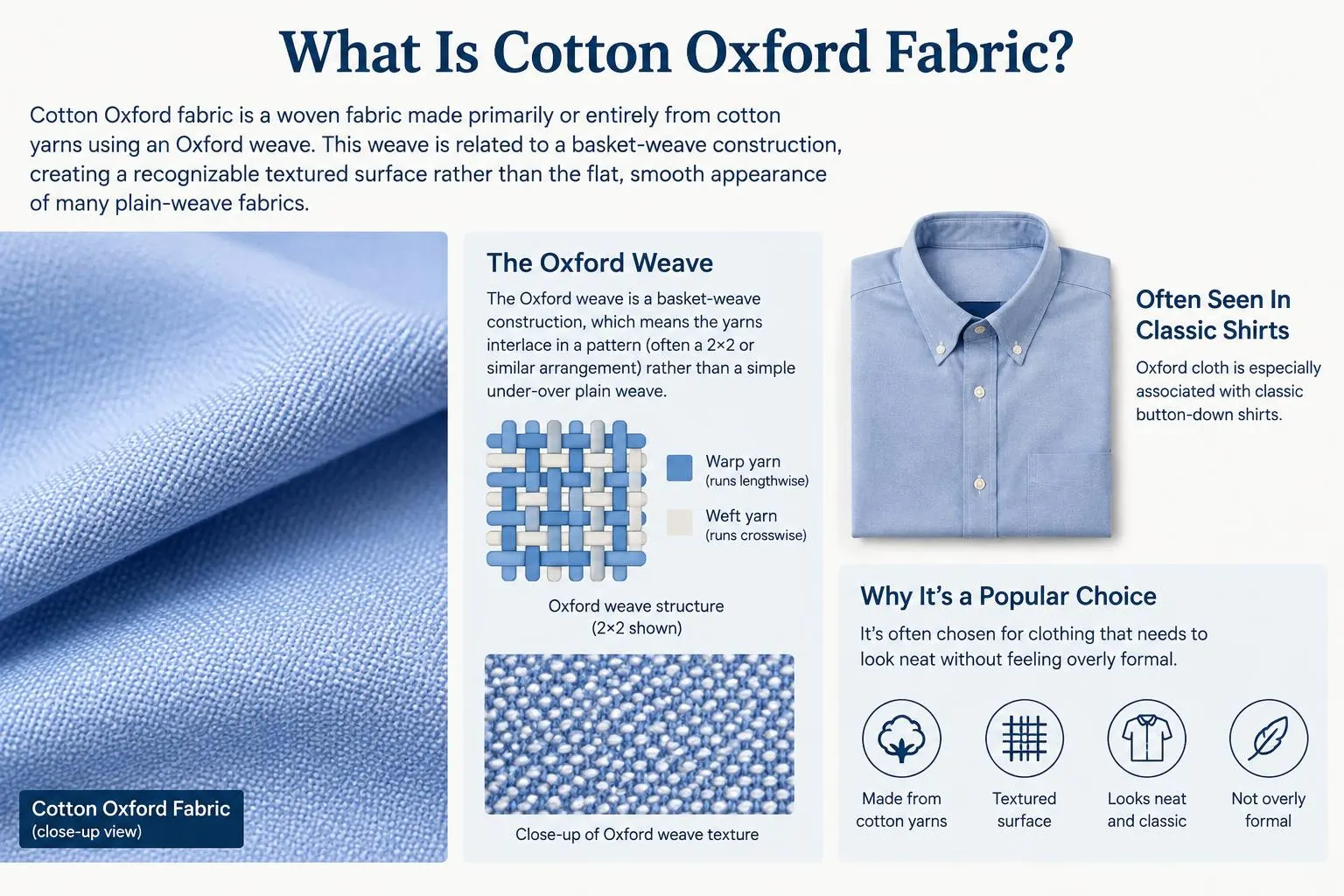
Cotton Oxford fabric is a woven fabric made primarily or entirely from cotton yarns using an Oxford weave. This weave is related to a basket-weave construction, creating a recognizable textured surface rather than the flat, smooth appearance of many plain-weave fabrics. Oxford cloth is especially associated with classic button-down shirts. It is often chosen for clothing that needs to look neat without feeling overly formal.
=> Read More: Cambric Cotton Fabric: The Fine, Smooth Fabric for Everyday Elegance
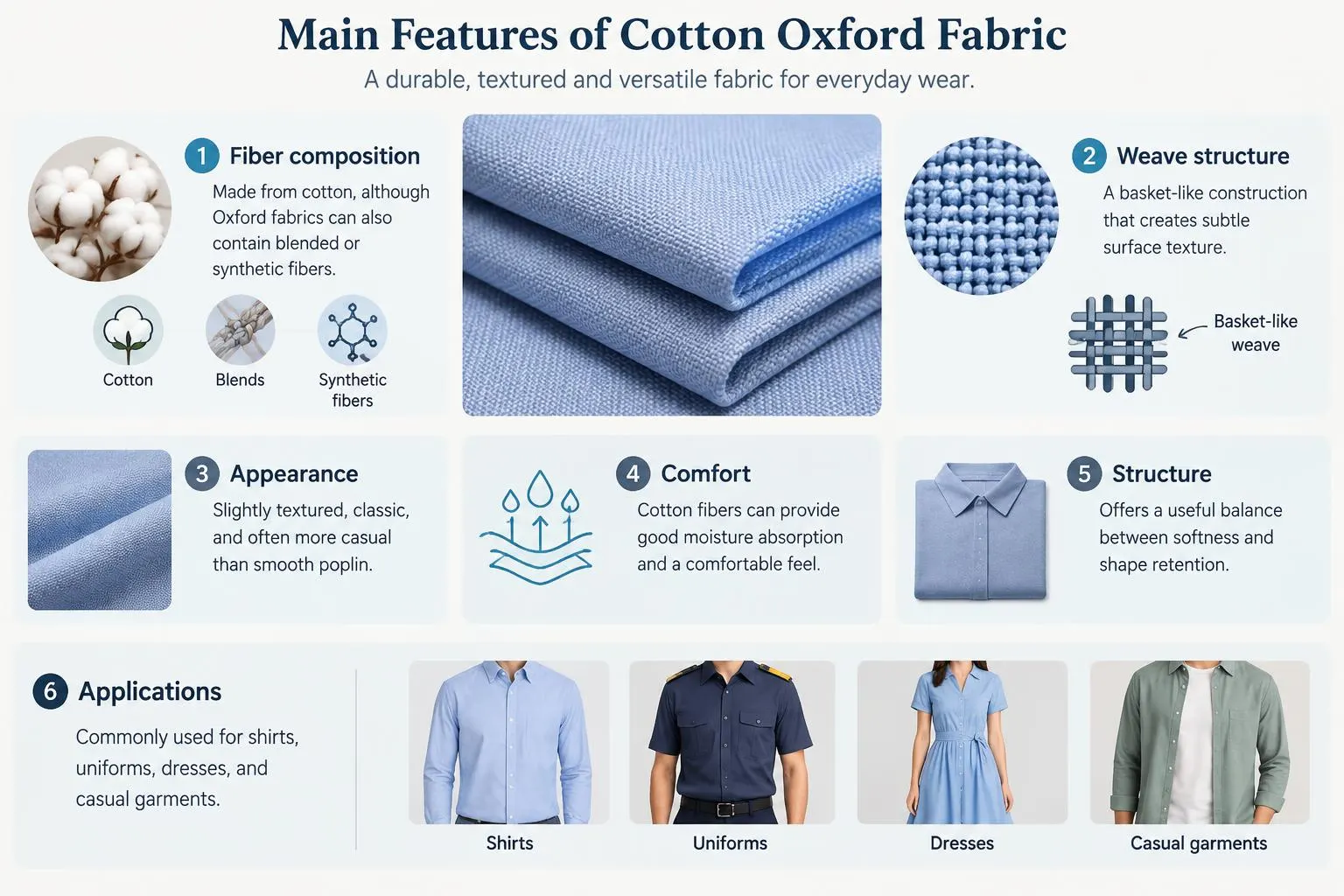
Main Features of Cotton Oxford Fabric:
- Fiber composition: Made from cotton, although Oxford fabrics can also contain blended or synthetic fibers.
- Weave structure: A basket-like construction that creates subtle surface texture.
- Appearance: Slightly textured, classic, and often more casual than smooth poplin.
- Comfort: Cotton fibers can provide good moisture absorption and a comfortable feel.
- Structure: Offers a useful balance between softness and shape retention.
- Applications: Commonly used for shirts, uniforms, dresses, and casual garments.
=> Read More: Canvas Fabric: Definition, Types, Properties, and Uses Explained
Is Oxford Fabric Always Made From Cotton?
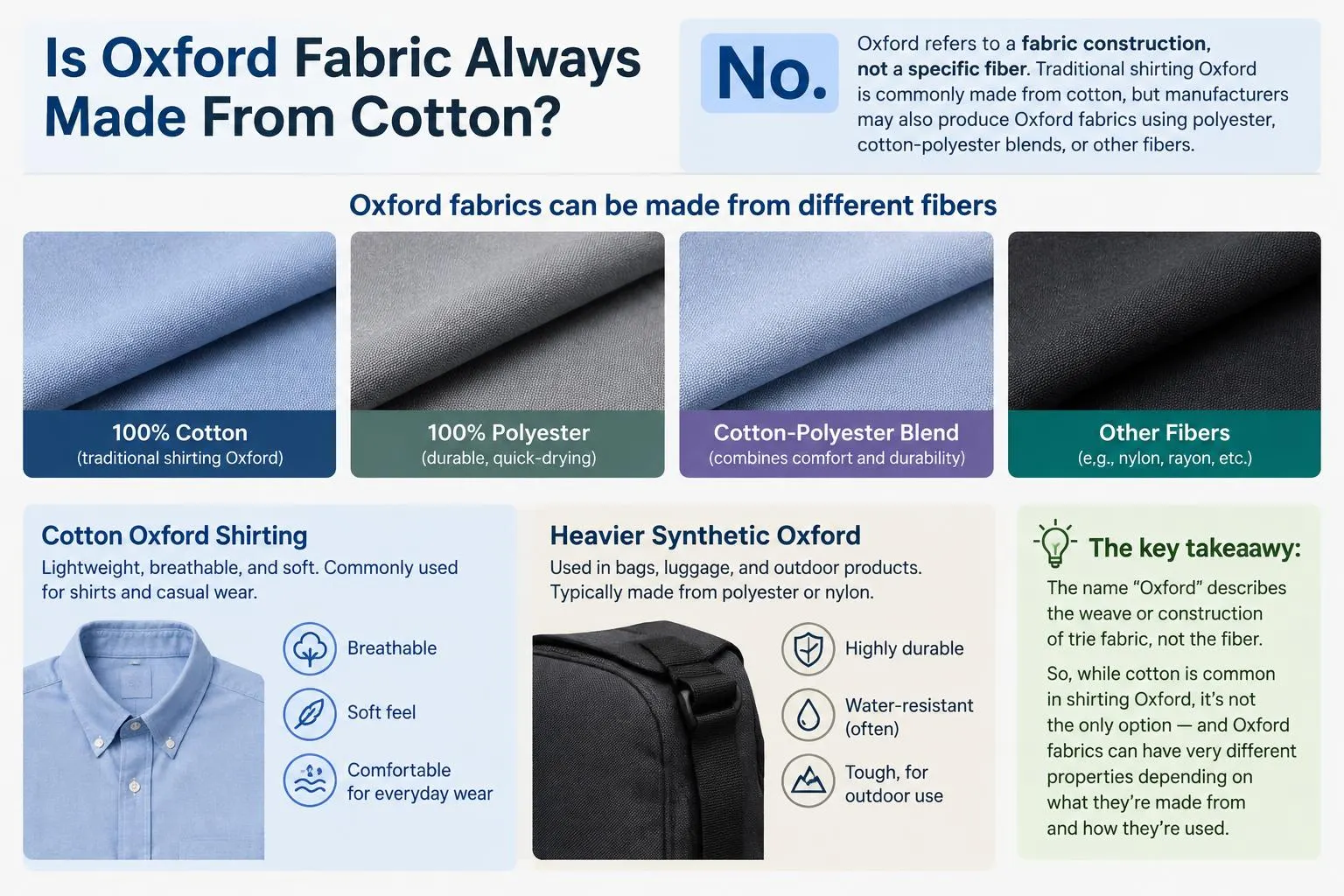
No. Oxford refers to a fabric construction, not a specific fiber. Traditional shirting Oxford is commonly made from cotton, but manufacturers may also produce Oxford fabrics using polyester, cotton-polyester blends, or other fibers. It is important to distinguish cotton Oxford shirting from heavier synthetic Oxford fabrics used in bags, luggage, and outdoor products. These materials can have very different properties despite sharing the Oxford name.
=> Read More: Corduroy Fabric: The Timeless Textured Classic of Comfort and Style
The Unique Qualities of Cotton Oxford Fabric
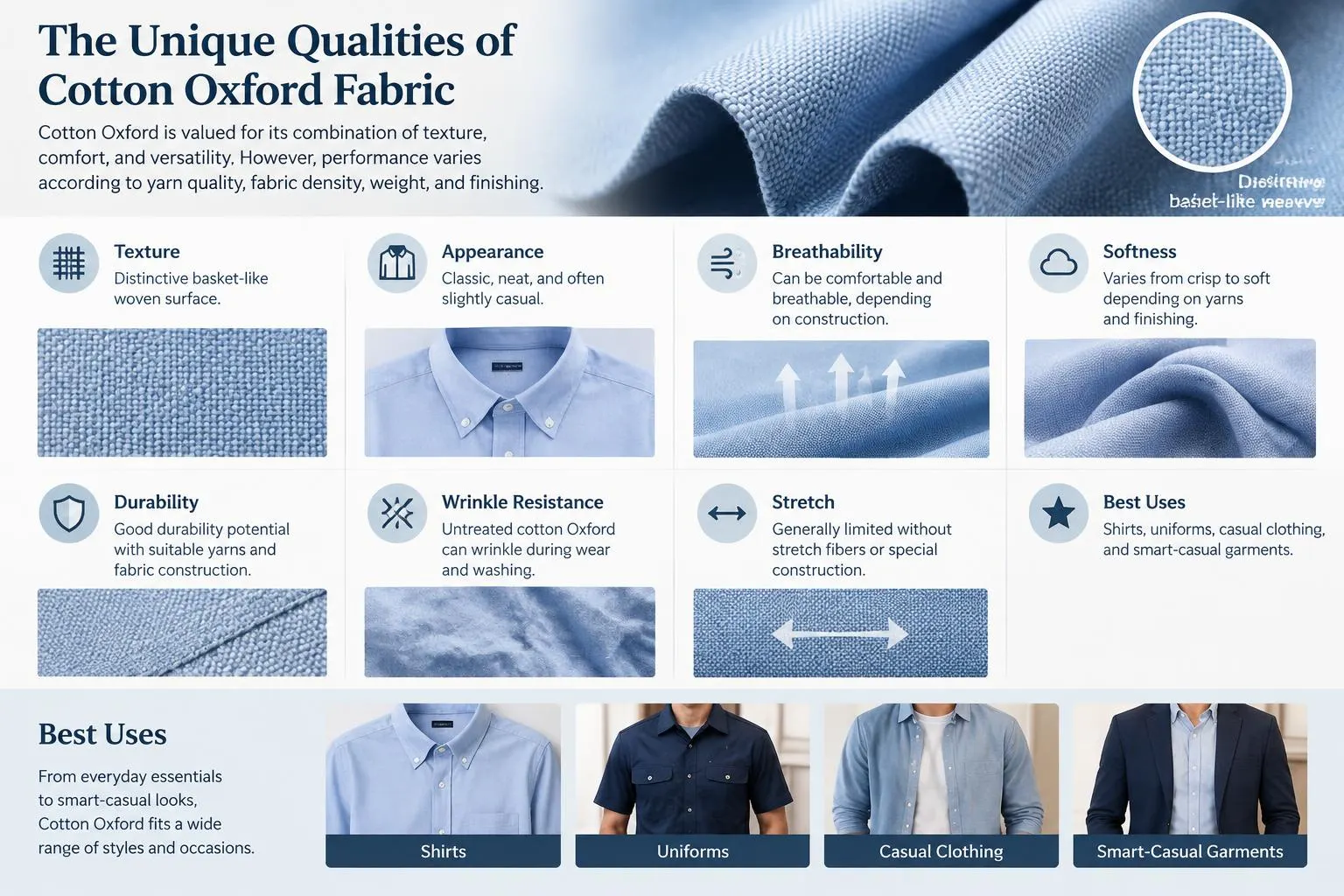
Cotton Oxford is valued for its combination of texture, comfort, and versatility. However, performance varies according to yarn quality, fabric density, weight, and finishing.
| Characteristic | Description |
|---|---|
| Texture | Distinctive basket-like woven surface |
| Appearance | Classic, neat, and often slightly casual |
| Breathability | Can be comfortable and breathable, depending on construction |
| Softness | Varies from crisp to soft depending on yarns and finishing |
| Durability | Good durability potential with suitable yarns and fabric construction |
| Wrinkle Resistance | Untreated cotton Oxford can wrinkle during wear and washing |
| Stretch | Generally limited without stretch fibers or special construction |
| Best Uses | Shirts, uniforms, casual clothing, and smart-casual garments |
How Is Cotton Oxford Fabric Made?
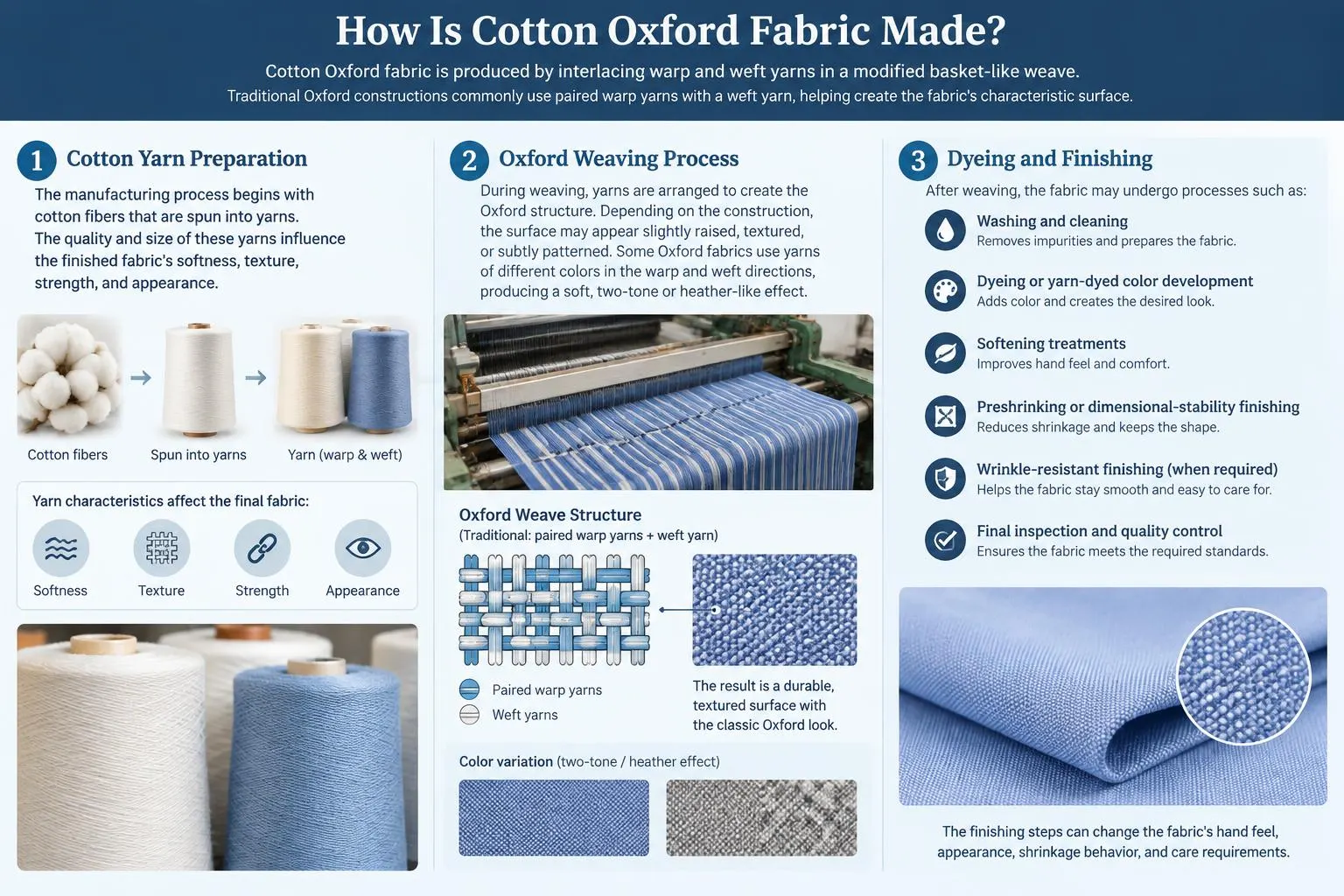
Cotton Oxford fabric is produced by interlacing warp and weft yarns in a modified basket-like weave. Traditional Oxford constructions commonly use paired warp yarns with a weft yarn, helping create the fabric’s characteristic surface.
- Cotton Yarn Preparation: The manufacturing process begins with cotton fibers that are spun into yarns. The quality and size of these yarns influence the finished fabric’s softness, texture, strength, and appearance.
- Oxford Weaving Process: During weaving, yarns are arranged to create the Oxford structure. Depending on the construction, the surface may appear slightly raised, textured, or subtly patterned. Some Oxford fabrics use yarns of different colors in the warp and weft directions, producing a soft, two-tone or heather-like effect.
- Dyeing and Finishing – After weaving, the fabric may undergo processes such as: Washing and cleaning, Dyeing or yarn-dyed color development, Softening treatments, Preshrinking or dimensional-stability finishing, Wrinkle-resistant finishing, when required, Final inspection and quality control. These finishing steps can change the fabric’s hand feel, appearance, shrinkage behavior, and care requirements.
=> Read More: What Is Denim Fabric? Types of Denim Fabrics and Their Pros and Cons
Different Types of Cotton Oxford Fabric
Not all Oxford fabrics have the same texture or appearance. Several related constructions are used in shirting, each offering a different balance of softness, surface detail, and formality.
| Oxford Type | Typical Appearance | Common Applications |
|---|---|---|
| Traditional Oxford | Noticeable texture, casual character | Button-down shirts, casual uniforms |
| Pinpoint Oxford | Finer texture, more polished | Business shirts, office clothing |
| Royal Oxford | Decorative, refined woven pattern | Dress shirts, premium shirting |
| Cotton-Blend Oxford | Varies by fiber blend and finish | Uniforms, easy-care and stretch shirts |
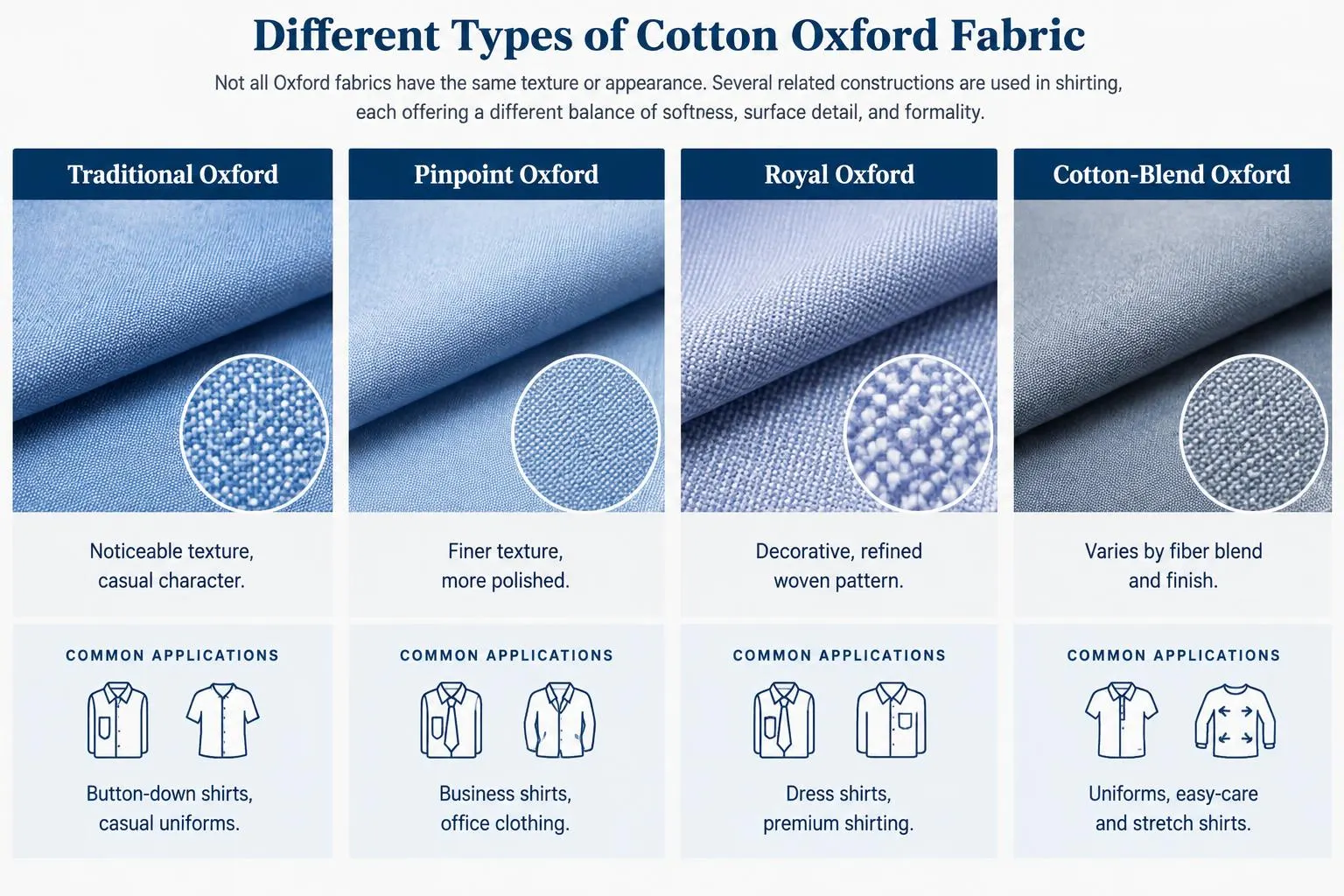
- Traditional Oxford Cloth: Traditional Oxford cloth has a recognizable woven texture and is commonly associated with Oxford cloth button-down shirts, often called OCBD shirts. It is especially suitable for casual and smart-casual clothing.
- Pinpoint Oxford: Pinpoint Oxford generally uses finer yarns and a tighter construction than traditional Oxford cloth. It tends to have a finer texture and a more refined appearance.This makes it a popular choice for business shirts and clothing that needs a neat, professional look.
- Royal Oxford: Royal Oxford is a more decorative shirting construction with a distinctive textured pattern. It often has a refined appearance and is used for dressier shirts. Its visual character differs from both traditional Oxford and pinpoint Oxford.
- Cotton-Blend Oxford: Some manufacturers combine cotton with polyester or elastane to achieve specific performance goals. Depending on the blend, these fabrics may offer easier care, different drying behavior, or added stretch.
Pros and Cons of Cotton Oxford Fabric
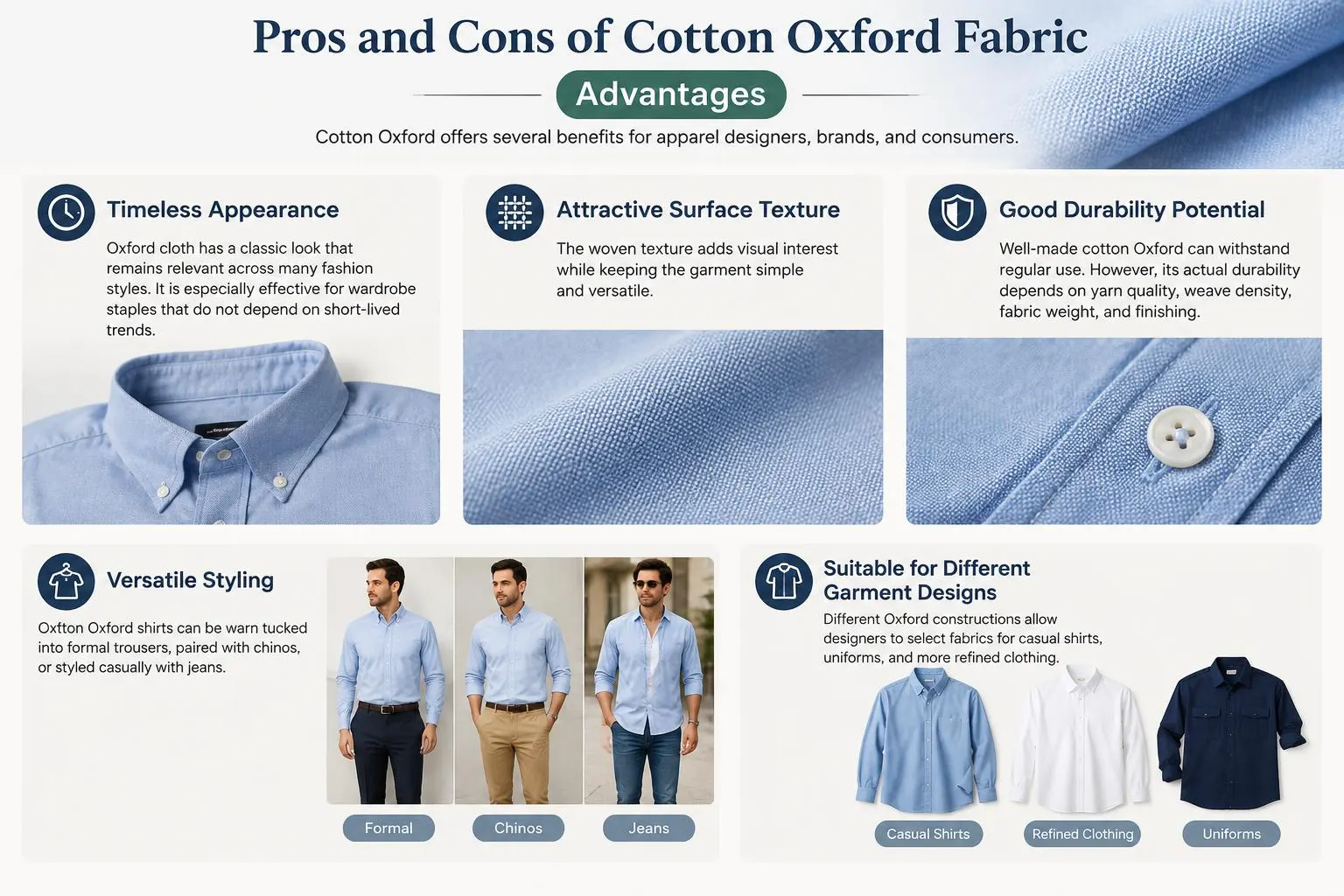
Advantages:
Cotton Oxford offers several benefits for apparel designers, brands, and consumers.
- Timeless Appearance: Oxford cloth has a classic look that remains relevant across many fashion styles. It is especially effective for wardrobe staples that do not depend on short-lived trends.
- Attractive Surface Texture: The woven texture adds visual interest while keeping the garment simple and versatile.
- Good Durability Potential: Well-made cotton Oxford can withstand regular use. However, its actual durability depends on yarn quality, weave density, fabric weight, and finishing.
- Versatile Styling: Cotton Oxford shirts can be worn tucked into formal trousers, paired with chinos, or styled casually with jeans.
- Suitable for Different Garment Designs: Different Oxford constructions allow designers to select fabrics for casual shirts, uniforms, and more refined clothing.
=> Read More: Cotton Gauze Fabric: Features, Advantages, and Applications
Disadvantages:
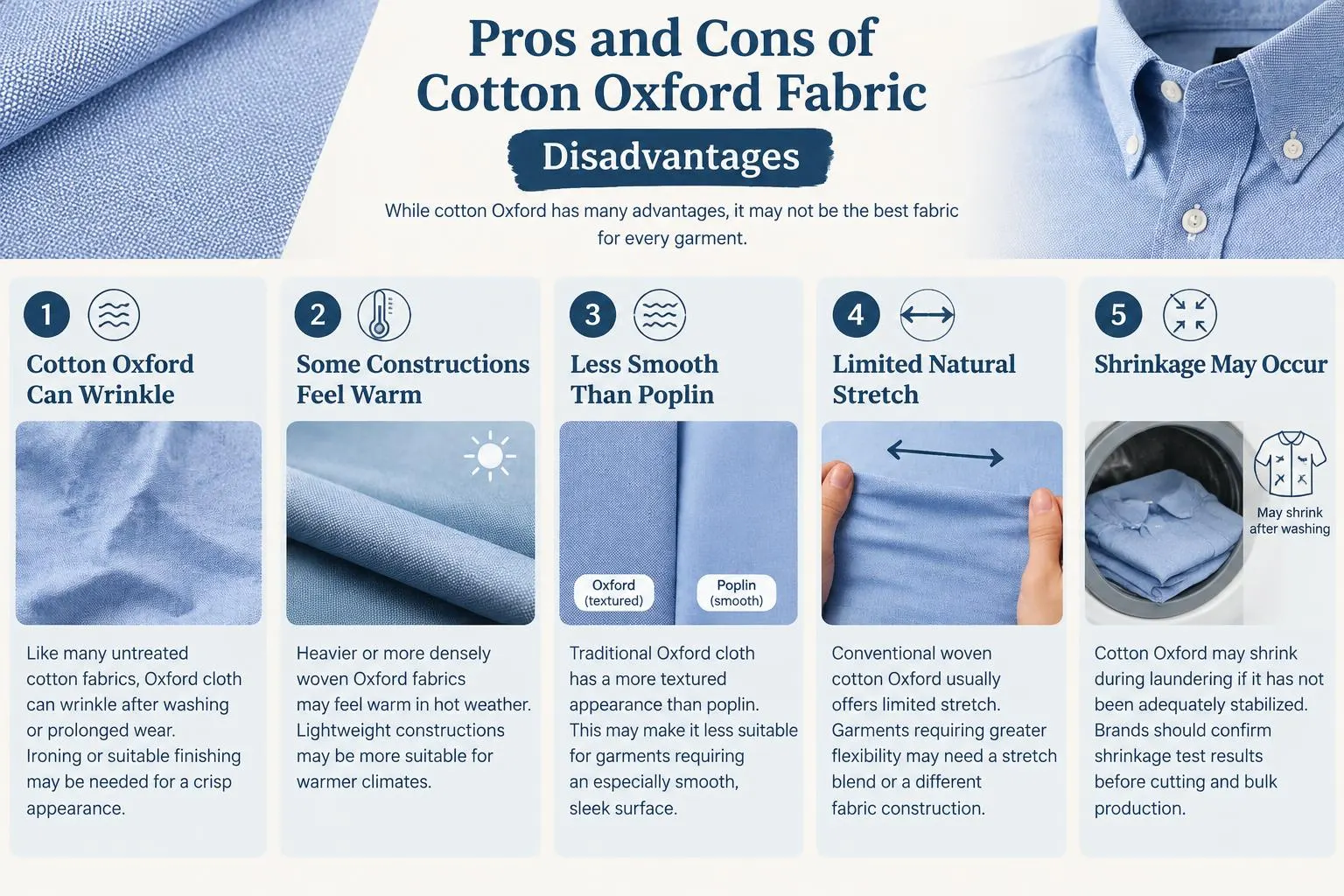
Although cotton Oxford has many advantages, it may not be the best fabric for every garment.
- Cotton Oxford Can Wrinkle: Like many untreated cotton fabrics, Oxford cloth can wrinkle after washing or prolonged wear. Ironing or suitable finishing may be needed for a crisp appearance.
- Some Constructions Feel Warm: Heavier or more densely woven Oxford fabrics may feel warm in hot weather. Lightweight constructions may be more suitable for warmer climates.
- Less Smooth Than Poplin: Traditional Oxford cloth has a more textured appearance than poplin. This may make it less suitable for garments requiring an especially smooth, sleek surface.
- Limited Natural Stretch: Conventional woven cotton Oxford usually offers limited stretch. Garments requiring greater flexibility may need a stretch blend or a different fabric construction.
- Shrinkage May Occur: Cotton Oxford may shrink during laundering if it has not been adequately stabilized. Brands should confirm shrinkage test results before cutting and bulk production.
=> Read More: Cotton Lawn Fabric: Properties, Types, Benefits, and Uses
Common Uses of Cotton Oxford Fabric
Cotton Oxford is most closely linked to shirting, but it can also be used for several other garment categories.
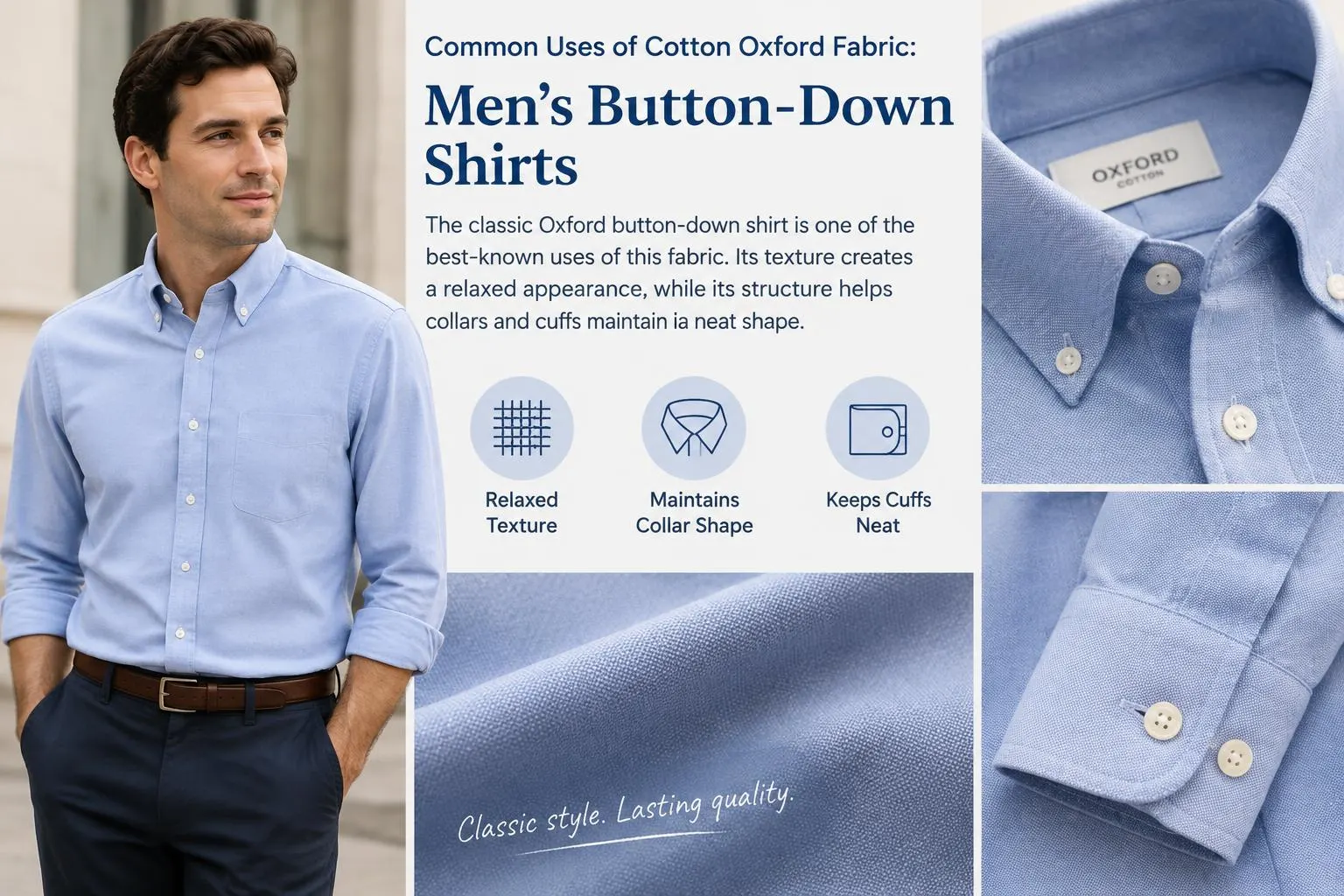
Men’s Button-Down Shirts
The classic Oxford button-down shirt is one of the best-known uses of this fabric. Its texture creates a relaxed appearance, while its structure helps collars and cuffs maintain a neat shape.
=> Read More: Cotton Muslin Fabric for Clothing: Benefits and Limitations
Women’s Shirts and Blouses
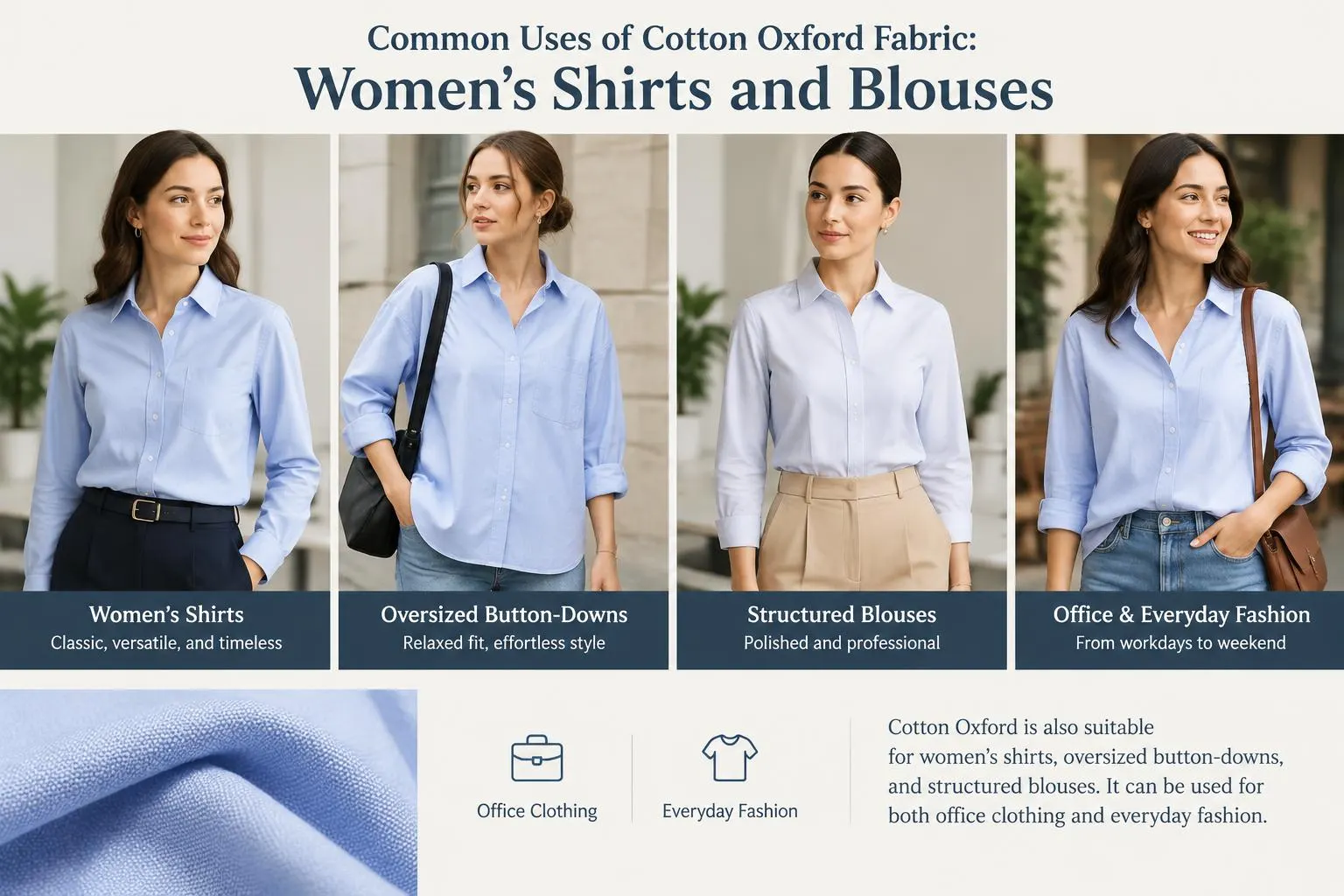
Cotton Oxford is also suitable for women’s shirts, oversized button-downs, and structured blouses. It can be used for both office clothing and everyday fashion.
Corporate Uniforms
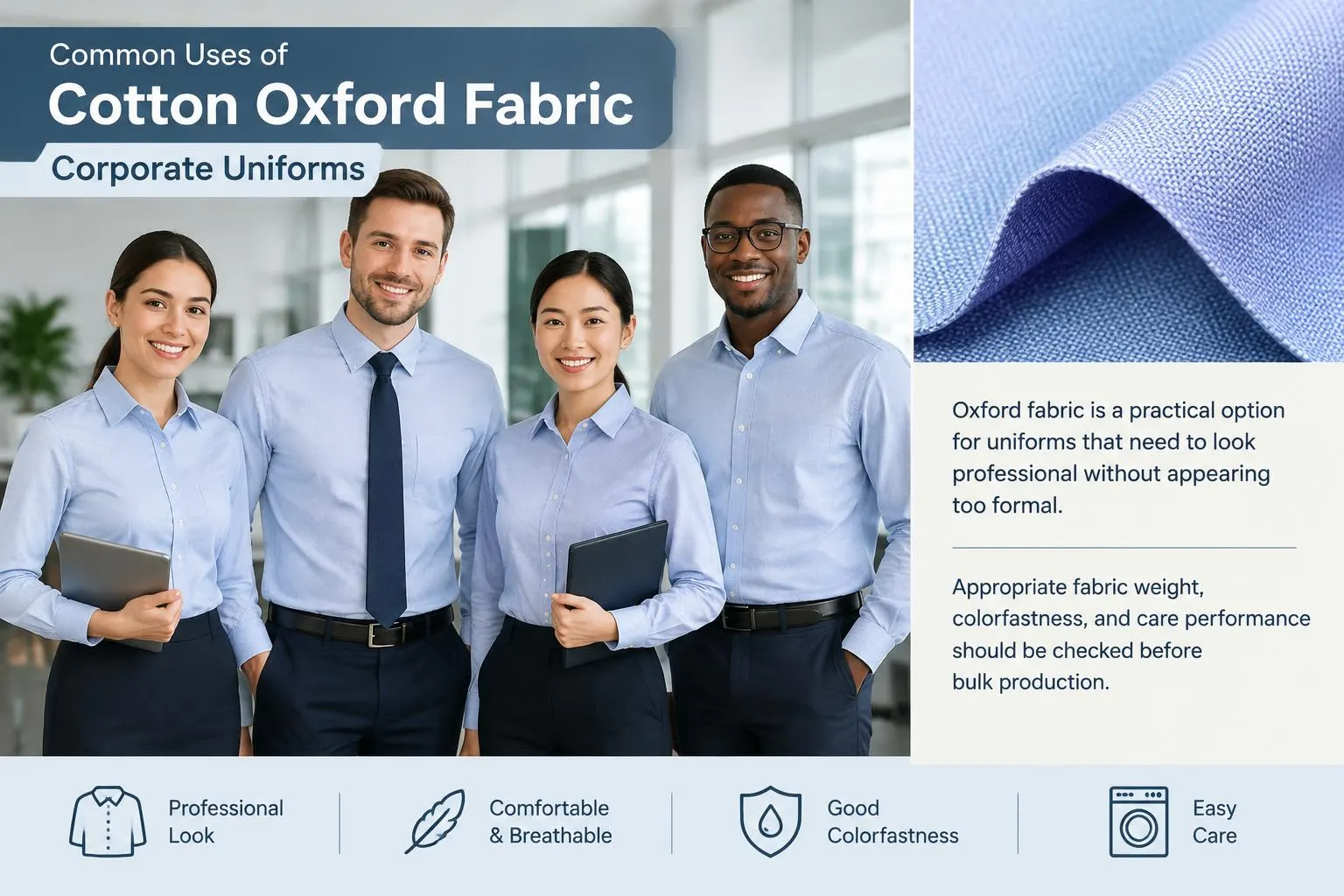
Oxford fabric is a practical option for uniforms that need to look professional without appearing too formal. Appropriate fabric weight, colorfastness, and care performance should be checked before bulk production.
=> Read More: Cotton Poplin Fabric for Clothing: Features, Benefits, and Care
School Uniforms
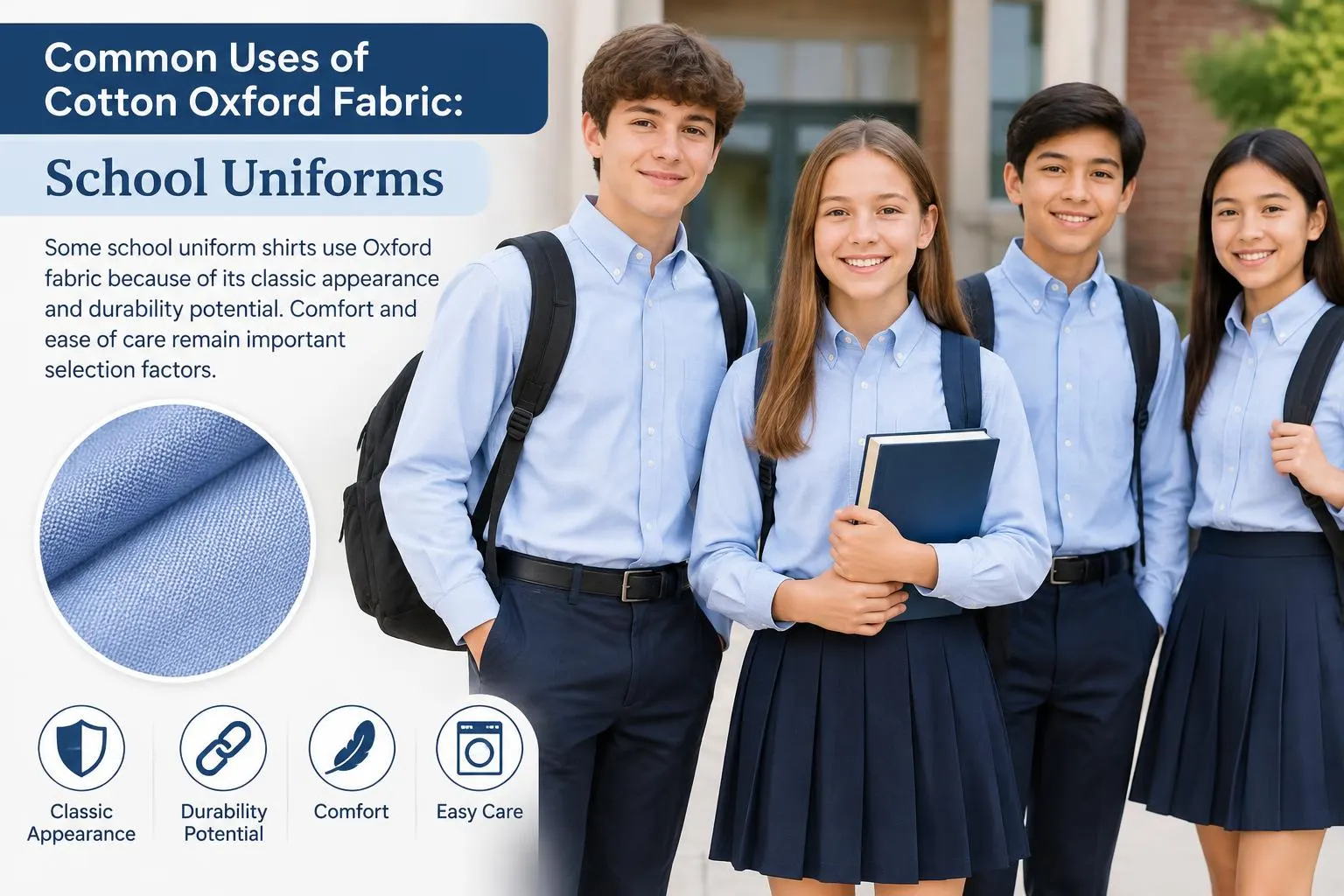
Some school uniform shirts use Oxford fabric because of its classic appearance and durability potential. Comfort and ease of care remain important selection factors.
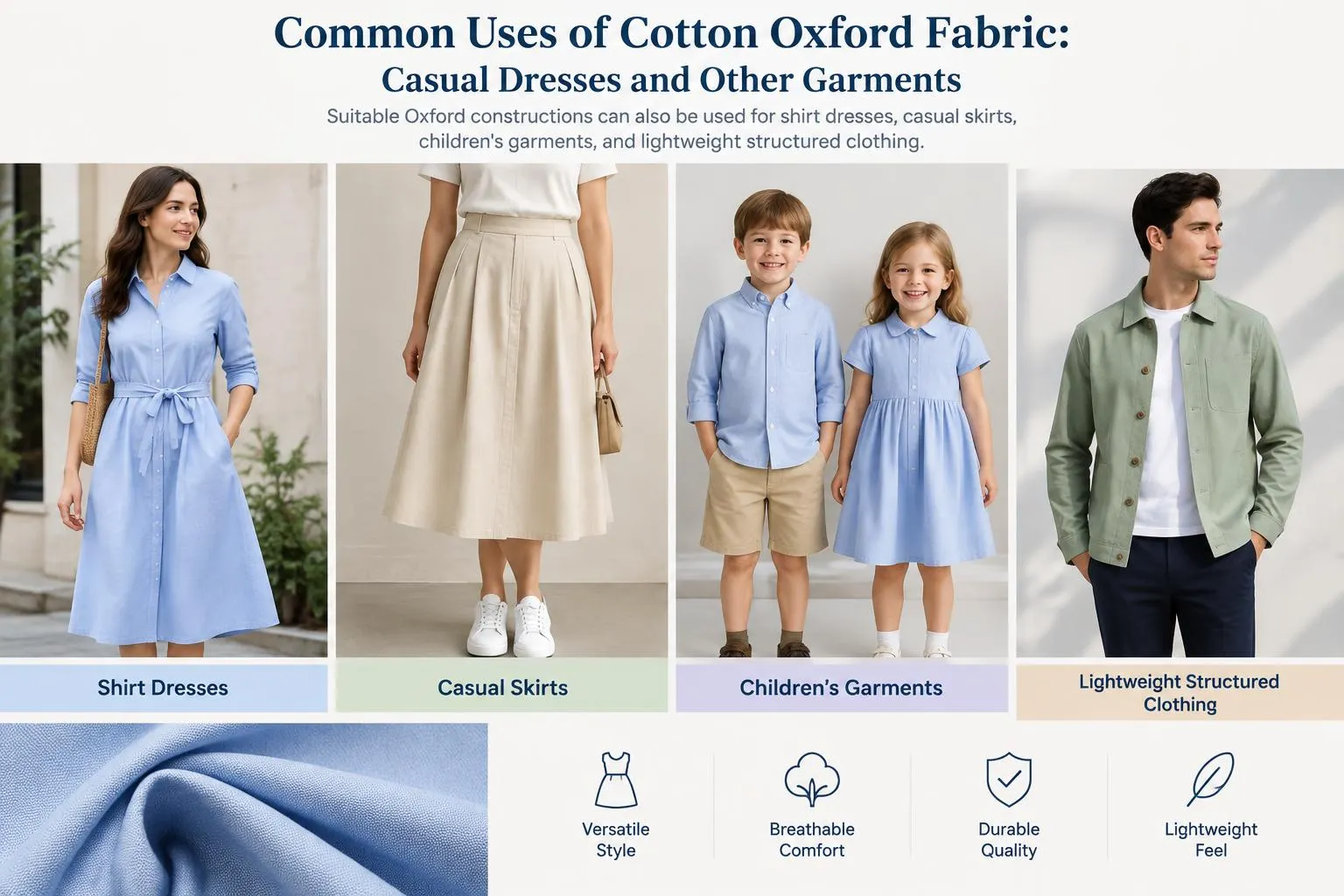
Casual Dresses and Other Garments
Suitable Oxford constructions can also be used for shirt dresses, casual skirts, children’s garments, and lightweight structured clothing.
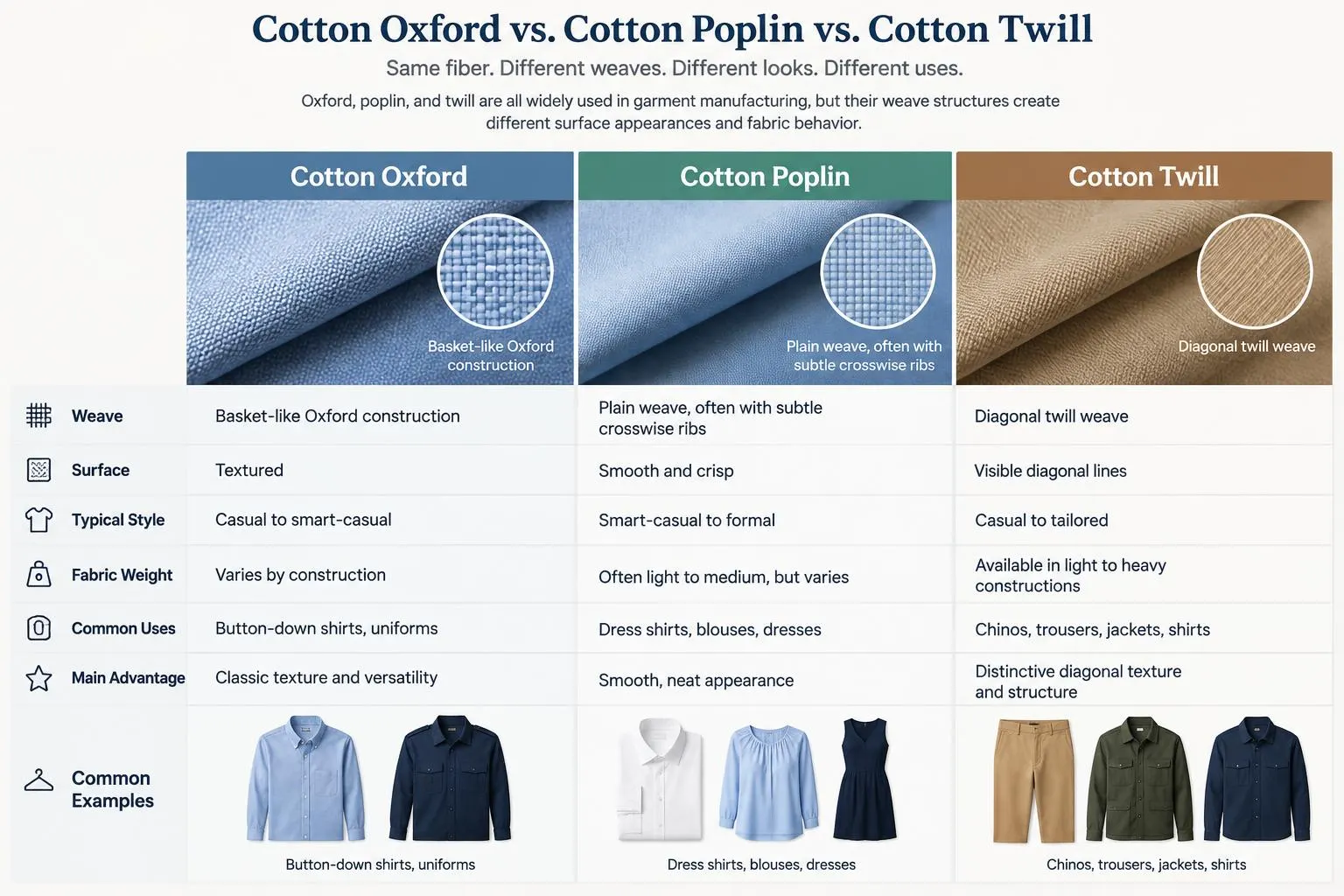
Cotton Oxford vs. Cotton Poplin vs. Cotton Twill
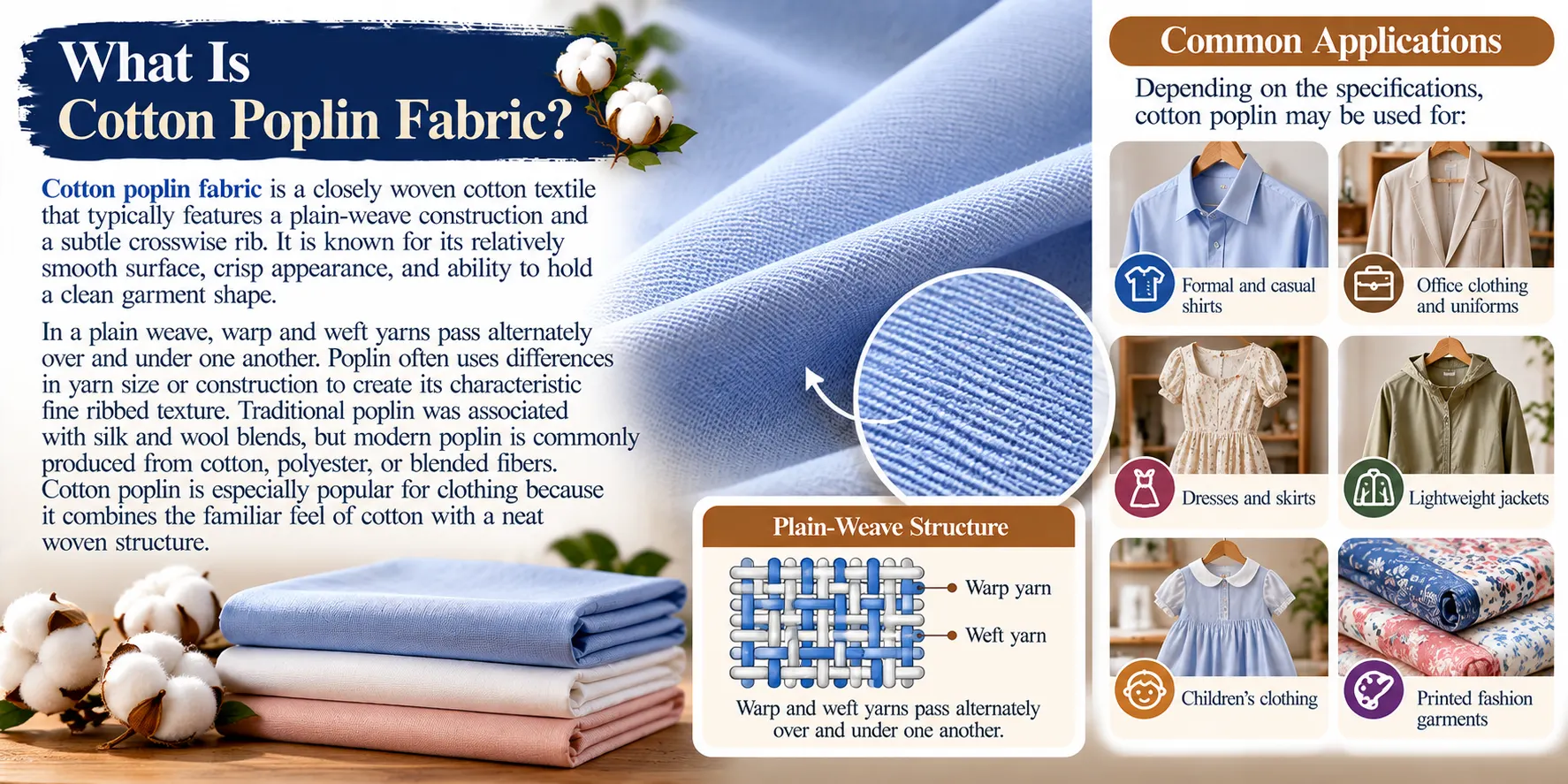
Oxford, poplin, and twill are all widely used in garment manufacturing, but their weave structures create different surface appearances and fabric behavior.
| Feature | Cotton Oxford | Cotton Poplin | Cotton Twill |
|---|---|---|---|
| Weave | Basket-like Oxford construction | Plain weave, often with subtle crosswise ribs | Diagonal twill weave |
| Surface | Textured | Smooth and crisp | Visible diagonal lines |
| Typical Style | Casual to smart-casual | Smart-casual to formal | Casual to tailored |
| Fabric Weight | Varies by construction | Often light to medium, but varies | Available in light to heavy constructions |
| Common Uses | Button-down shirts, uniforms | Dress shirts, blouses, dresses | Chinos, trousers, jackets, shirts |
| Main Advantage | Classic texture and versatility | Smooth, neat appearance | Distinctive diagonal texture and structure |
How to Care for Cotton Oxford Fabric
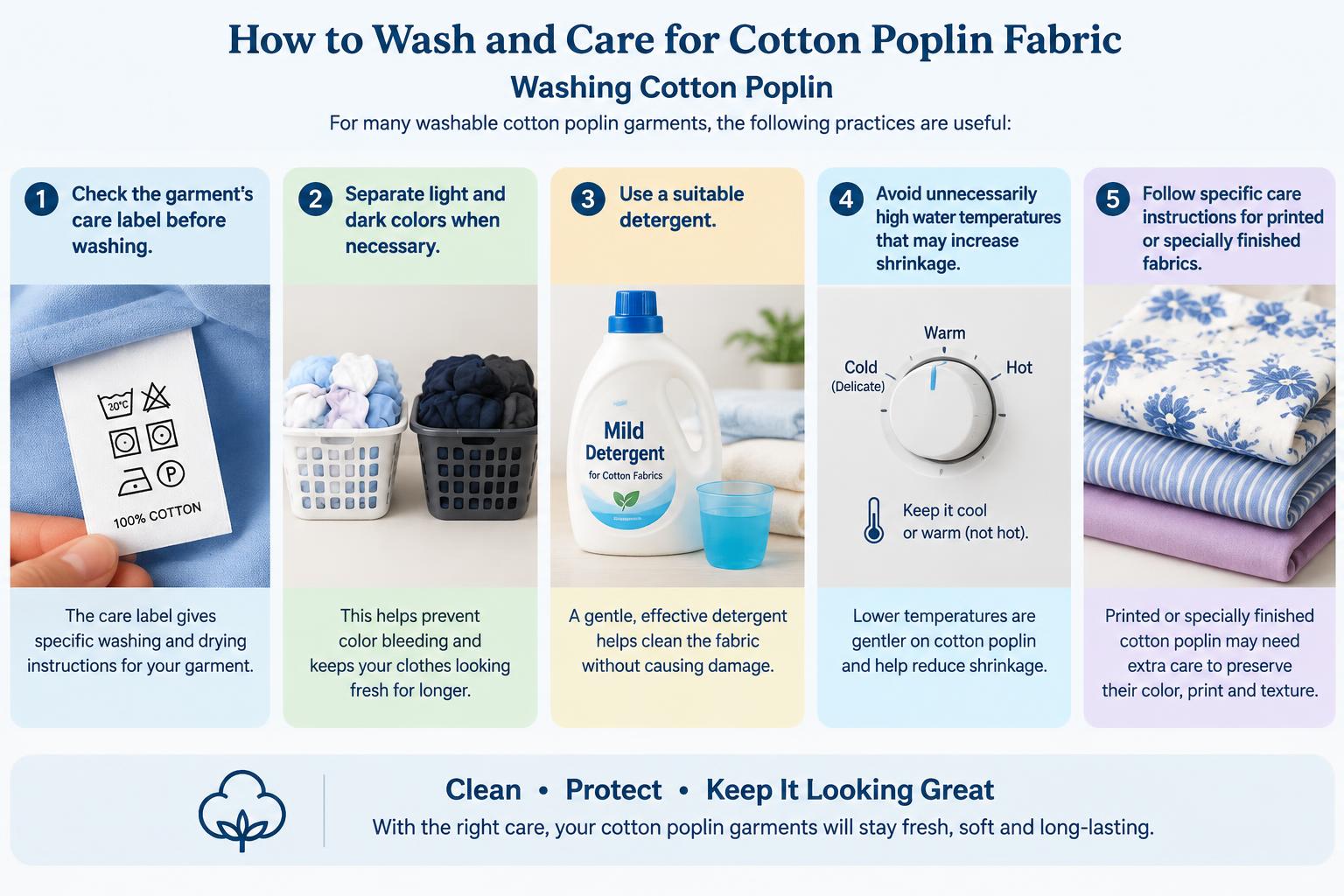
Proper care can help cotton Oxford garments maintain their appearance and comfort over time. Always follow the care label because finishing treatments and fabric blends can affect washing requirements.
Washing:
- Follow the garment’s recommended washing temperature.
- Separate dark and light colors when needed.
- Use a suitable mild detergent.
- Avoid harsh washing conditions that may cause excess wear.
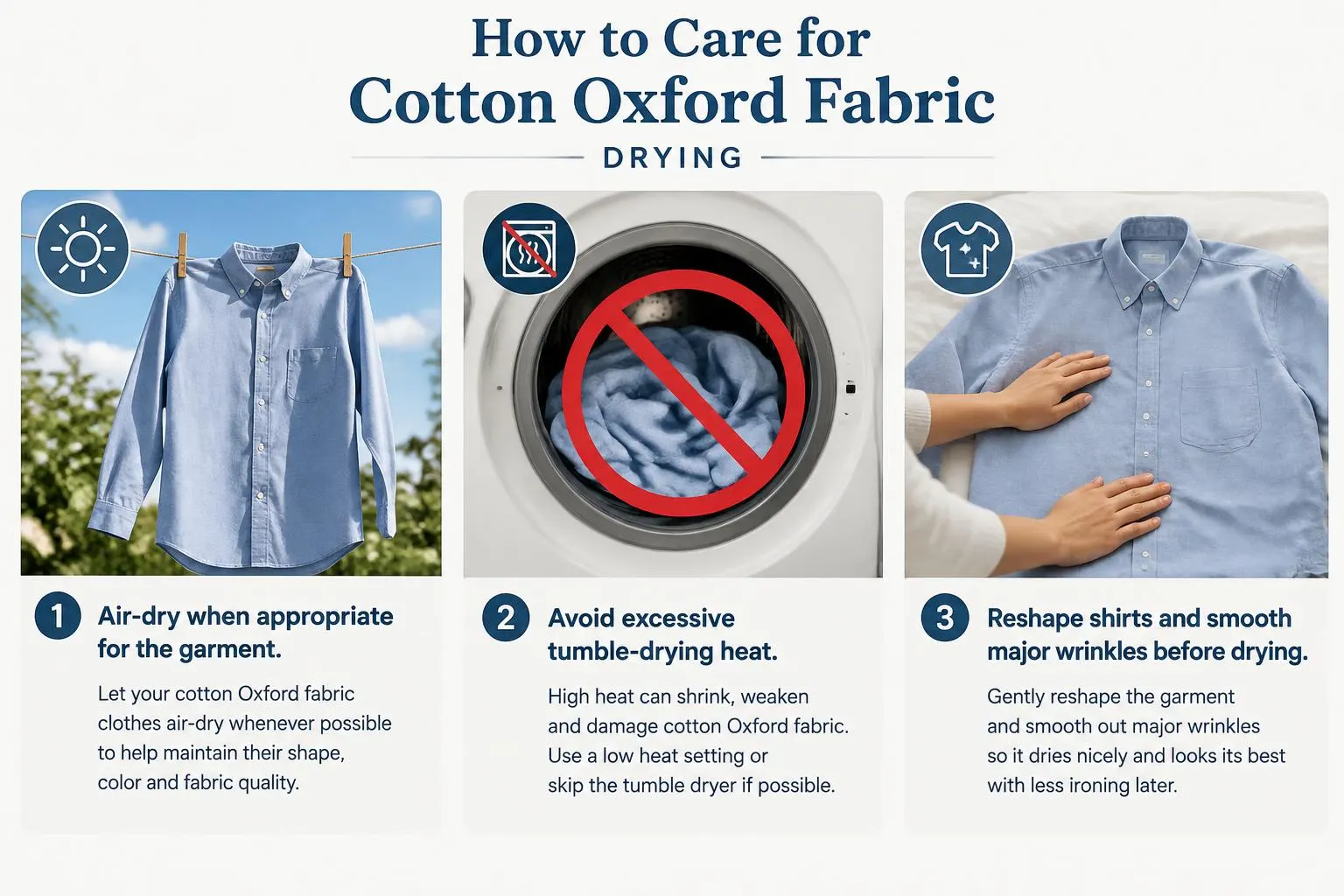
Drying:
- Air-dry when appropriate for the garment.
- Avoid excessive tumble-drying heat.
- Reshape shirts and smooth major wrinkles before drying.
Ironing:
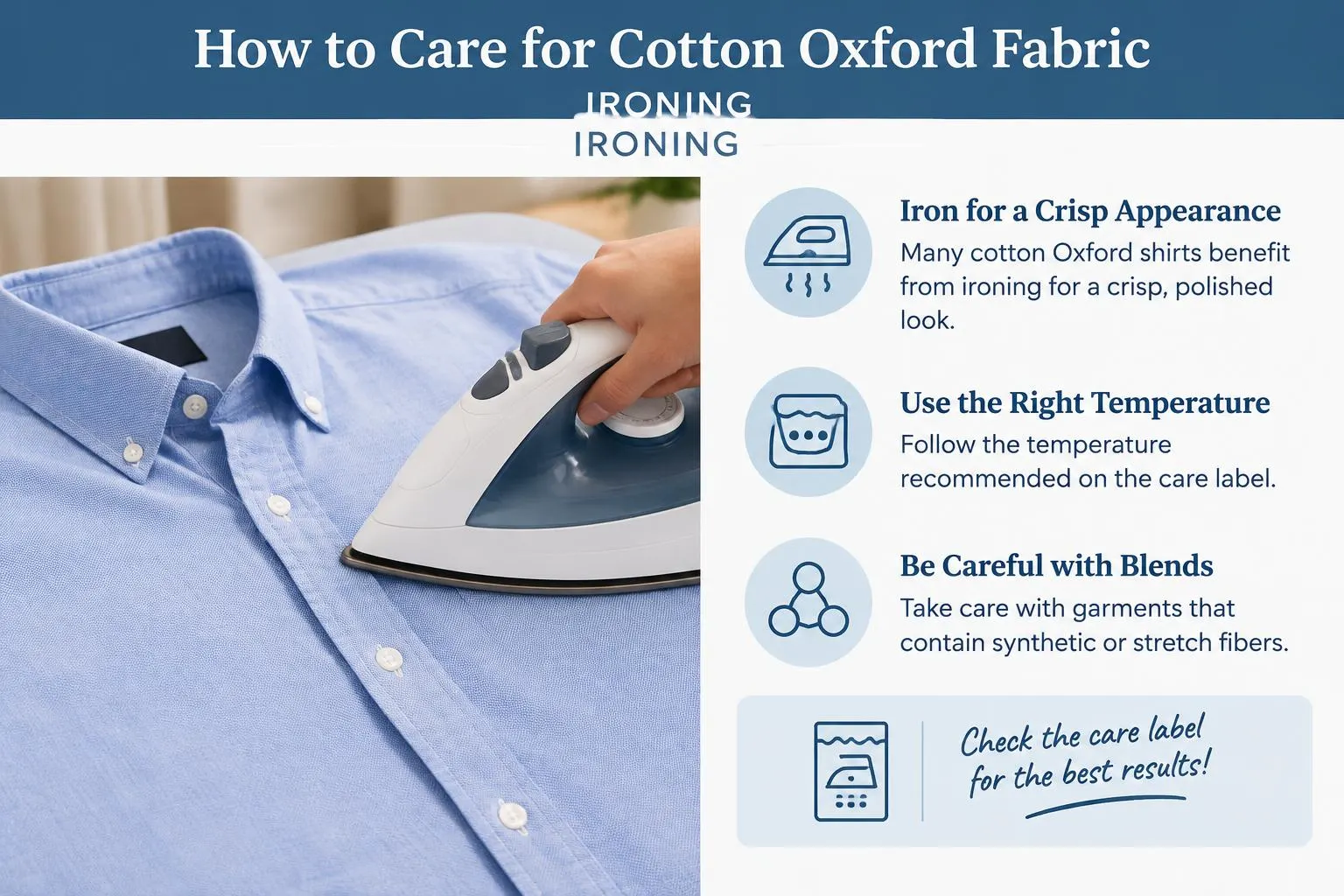
Many cotton Oxford shirts benefit from ironing for a crisp appearance. Use the temperature recommended on the care label and take care with garments that contain synthetic or stretch fibers.
Storage:
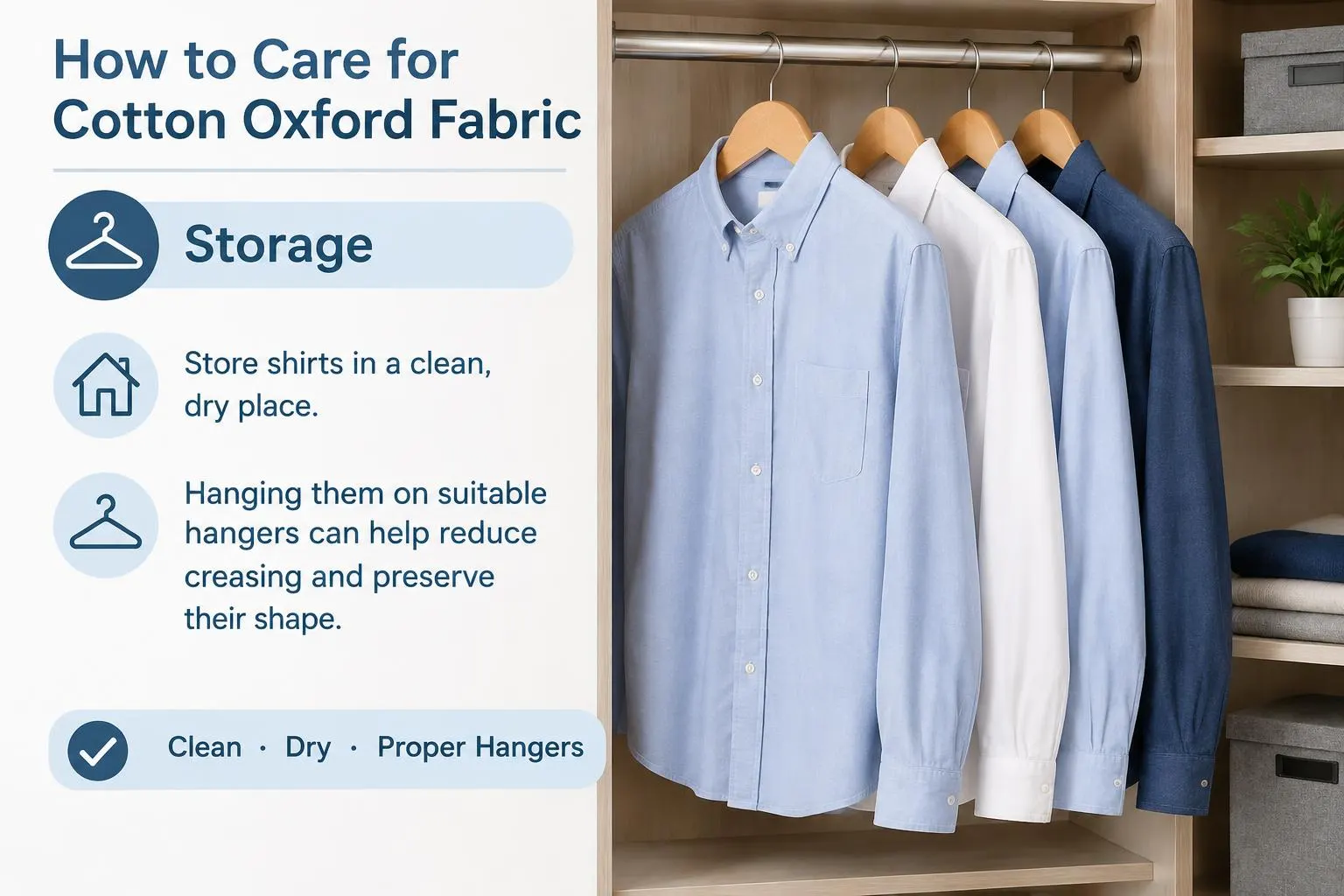
Store shirts in a clean, dry place. Hanging them on suitable hangers can help reduce creasing and preserve their shape.
Conclusion: Is Cotton Oxford Fabric the Right Choice?
Cotton Oxford fabric remains a dependable choice for classic shirts and versatile everyday clothing. Its recognizable woven texture, comfortable feel, and balanced structure make it suitable for casual and smart-casual designs. However, not all Oxford fabrics are the same. Fabric composition, weave construction, weight, and finishing can significantly affect comfort, appearance, and performance.
For clothing brands and manufacturers, selecting the right cotton Oxford fabric requires careful attention to garment design, target market, quality standards, and production needs. Looking for garment manufacturing solutions? Visit Mekong Garment to explore apparel manufacturing services and discuss your clothing production requirements.
Frequently Asked Questions About Cotton Oxford Fabric
Is Cotton Oxford Fabric Good for Shirts?
Yes. Cotton Oxford is widely used for shirts because it offers a classic appearance, useful structure, and comfortable wear. Traditional Oxford is especially popular for button-down shirts.
Is Cotton Oxford Fabric Breathable?
Cotton Oxford can be breathable, but airflow depends on fabric weight, weave density, and finishing. A lightweight construction may feel cooler than a heavy, densely woven version.
Does Cotton Oxford Fabric Wrinkle Easily?
Untreated cotton Oxford can wrinkle. Easy-care finishes and cotton blends may reduce wrinkling, but their performance varies.
Is Oxford Fabric Better Than Poplin?
Neither fabric is universally better. Oxford is often preferred for textured, casual-to-smart-casual shirts, while poplin is useful for smoother, crisper clothing.
Is Cotton Oxford Fabric Suitable for Summer?
Lightweight cotton Oxford may be suitable for summer shirts. However, heavier or tightly woven versions can feel warmer, especially in humid conditions.
Is Cotton Oxford Fabric Durable?
Good-quality cotton Oxford can offer reliable durability for everyday clothing. Actual performance depends on fiber quality, yarns, weave construction, finishing, and garment care.
What Is the Difference Between Oxford and Pinpoint Oxford?
Traditional Oxford generally has a more pronounced texture and casual appearance. Pinpoint Oxford usually has a finer construction and a smoother, more refined look.
Can Cotton Oxford Fabric Be Used for Uniforms?
Yes. Cotton Oxford is a suitable option for certain office, school, and corporate uniforms. Fabric weight, wrinkle behavior, shrinkage, and colorfastness should be evaluated before production.