Cotton Poplin Fabric for Clothing: Features, Benefits, and Care

Cotton poplin fabric is a popular woven textile known for its smooth surface, neat appearance, and versatile applications. It is widely used in shirts, uniforms, dresses, and other garments that require a clean, structured look. Its closely woven construction makes it a practical choice for both everyday clothing and professional apparel.
- One of the main reasons clothing manufacturers choose cotton poplin is its balance of comfort, durability, and appearance. Depending on the yarn quality, fabric weight, and finishing process, poplin can feel crisp and firm or soft and lightweight.
- However, not all poplin fabrics perform in the same way. Some varieties are ideal for tailored shirts, while others are better suited to casual clothing, lightweight dresses, or printed garments.
In this guide, we explore what cotton poplin fabric is, how it is made, its main characteristics, common uses, advantages, disadvantages, and how to choose the right fabric for garment production.
What Is Cotton Poplin Fabric?
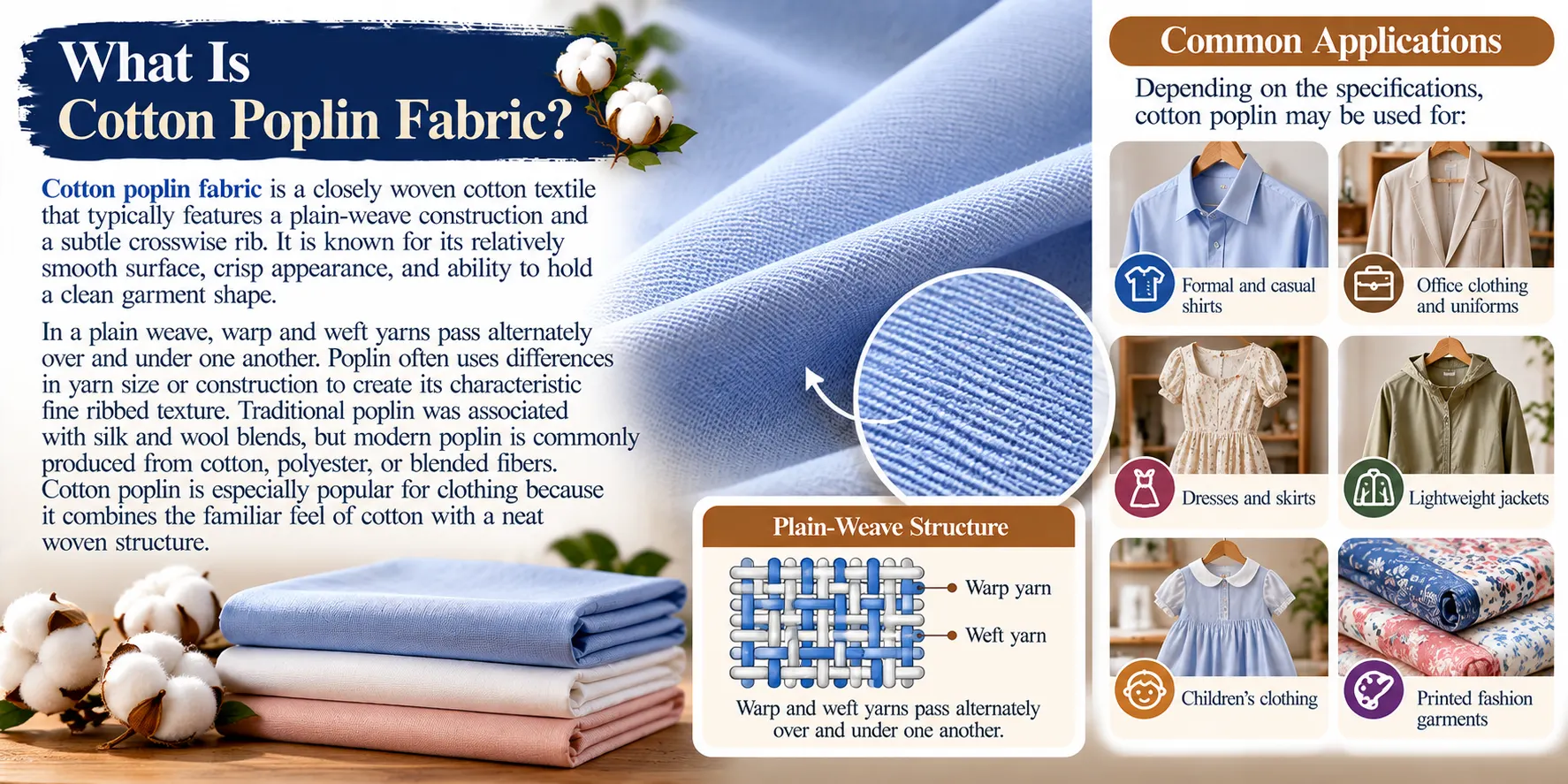
Cotton poplin fabric is a closely woven cotton textile that typically features a plain-weave construction and a subtle crosswise rib. It is known for its relatively smooth surface, crisp appearance, and ability to hold a clean garment shape. In a plain weave, warp and weft yarns pass alternately over and under one another. Poplin often uses differences in yarn size or construction to create its characteristic fine ribbed texture. Traditional poplin was associated with silk and wool blends, but modern poplin is commonly produced from cotton, polyester, or blended fibers. Cotton poplin is especially popular for clothing because it combines the familiar feel of cotton with a neat woven structure.
Depending on the specifications, cotton poplin may be used for:
- Formal and casual shirts
- Office clothing and uniforms
- Dresses and skirts
- Lightweight jackets
- Children’s clothing
- Printed fashion garments
How Is Cotton Poplin Made?
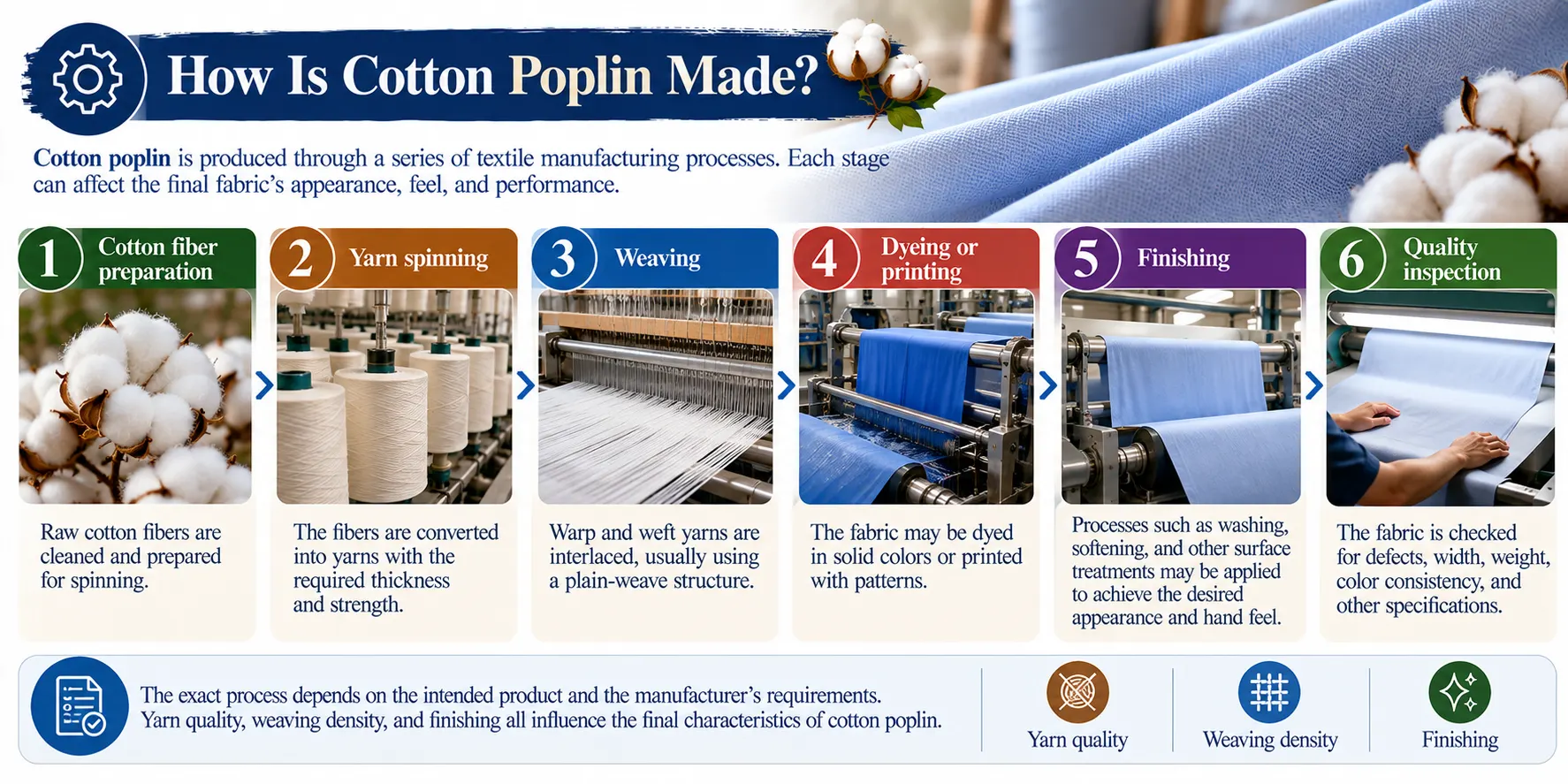
Cotton poplin is produced through a series of textile manufacturing processes. Each stage can affect the final fabric’s appearance, feel, and performance.
- Cotton fiber preparation: Raw cotton fibers are cleaned and prepared for spinning.
- Yarn spinning: The fibers are converted into yarns with the required thickness and strength.
- Weaving: Warp and weft yarns are interlaced, usually using a plain-weave structure.
- Dyeing or printing: The fabric may be dyed in solid colors or printed with patterns.
- Finishing: Processes such as washing, softening, and other surface treatments may be applied to achieve the desired appearance and hand feel.
- Quality inspection: The fabric is checked for defects, width, weight, color consistency, and other specifications.
The exact process depends on the intended product and the manufacturer’s requirements. Yarn quality, weaving density, and finishing all influence the final characteristics of cotton poplin.
What Makes Poplin Different from Other Cotton Fabrics?
The main distinguishing feature of poplin is its smooth surface combined with a subtle crosswise rib. It generally has a cleaner, more structured appearance than loosely woven cotton fabrics. Compared with soft, open-weave fabrics, poplin often provides better coverage and a more defined silhouette. However, its actual stiffness and drape depend on its weight, yarn construction, and finishing.
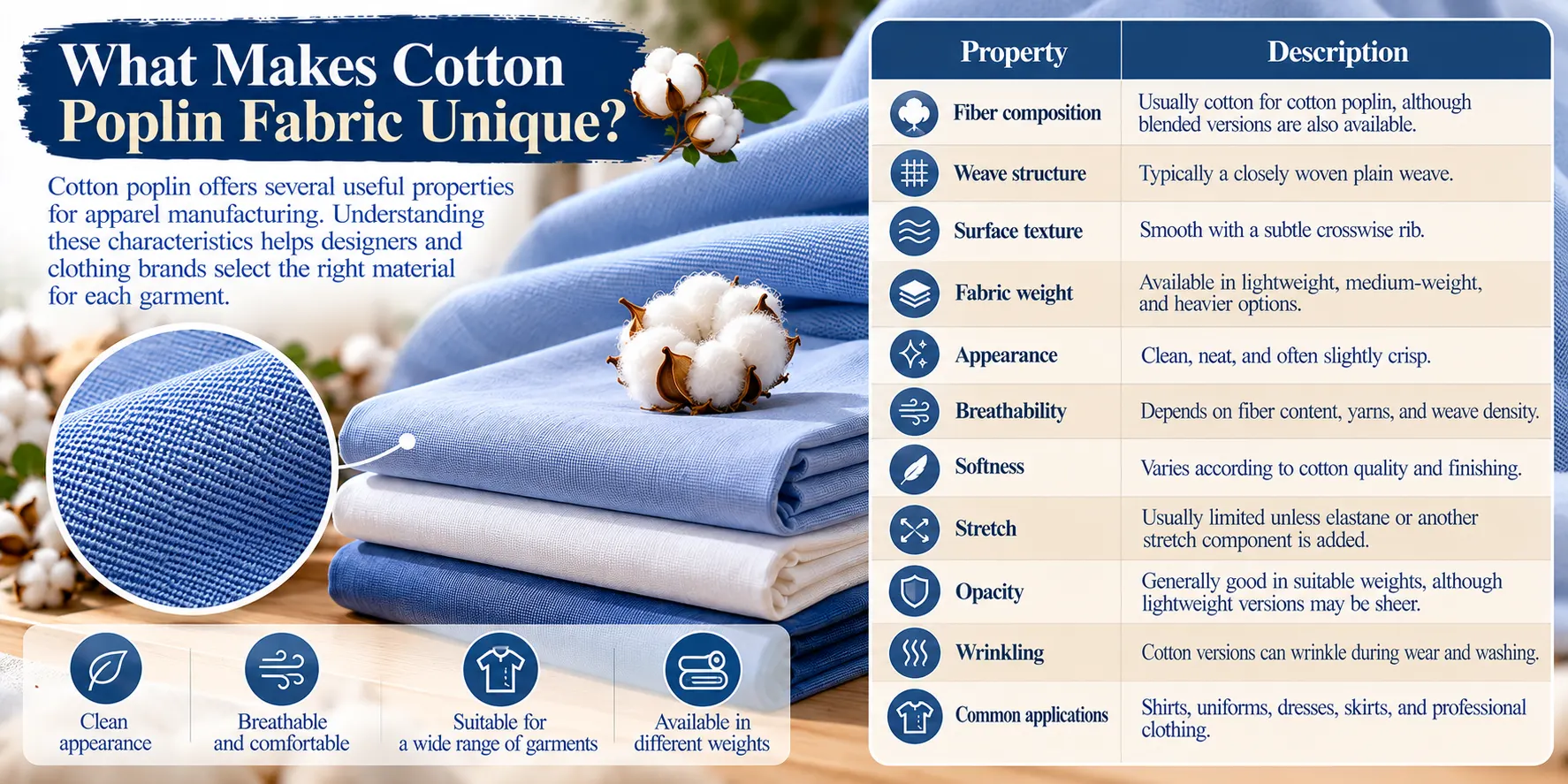
What Makes Cotton Poplin Fabric Unique?
Cotton poplin offers several useful properties for apparel manufacturing. Understanding these characteristics helps designers and clothing brands select the right material for each garment.
| Property | Description |
|---|---|
| Fiber composition | Usually cotton for cotton poplin, although blended versions are also available |
| Weave structure | Typically a closely woven plain weave |
| Surface texture | Smooth with a subtle crosswise rib |
| Fabric weight | Available in lightweight, medium-weight, and heavier options |
| Appearance | Clean, neat, and often slightly crisp |
| Breathability | Depends on fiber content, yarns, and weave density |
| Softness | Varies according to cotton quality and finishing |
| Stretch | Usually limited unless elastane or another stretch component is added |
| Opacity | Generally good in suitable weights, although lightweight versions may be sheer |
| Wrinkling | Cotton versions can wrinkle during wear and washing |
| Common applications | Shirts, uniforms, dresses, skirts, and professional clothing |
1. Smooth and Clean Surface
Cotton poplin is valued for its relatively smooth surface and neat appearance. The closely woven construction helps create a consistent fabric face that works well with solid colors and printed designs. This makes poplin a practical option for clothing that needs a polished finish, such as office shirts, workwear, and everyday uniforms.
2. Crisp and Structured Appearance
Many poplin fabrics have enough body to maintain a clean silhouette without feeling as heavy as some twill or canvas fabrics. This characteristic is useful for garments with collars, cuffs, button plackets, and other details that benefit from a more defined shape. However, not every poplin is stiff. Lightweight or specially finished versions may feel softer and drape more naturally.
3. Breathability and Comfort
Cotton poplin can be comfortable for everyday wear because cotton fibers absorb moisture and many poplin constructions allow air to pass through the fabric. Breathability varies with fabric density, thickness, and finishing. A tightly woven or heavier poplin may feel warmer than a lightweight version. For warm-weather clothing, buyers should evaluate the fabric’s actual weight and comfort rather than relying on the name alone.
4. Versatility in Colors and Prints
Cotton poplin is available in many solid colors and printed designs. Its smooth surface can provide a suitable base for different garment styles and visual effects. Common options include:
- White and other neutral shades for professional shirts
- Solid colors for uniforms and workwear
- Floral prints for dresses and blouses
- Geometric patterns for contemporary fashion
- Custom colors for clothing brands
Color consistency and print quality depend on the dyeing or printing process and the quality requirements of the final product.
Pros and Cons of Cotton Poplin Fabric
| Advantages | Disadvantages |
|---|---|
| Smooth and clean surface | Can wrinkle during wear and washing |
| Neat, professional appearance | Lightweight versions may be sheer |
| Suitable for tailored shirts | Limited natural stretch |
| Available in many weights | May feel less fluid than softer fabrics |
| Suitable for solid colors and prints | May shrink during washing |
| Useful for many apparel designs | Quality varies by specification and supplier |
Advantages:
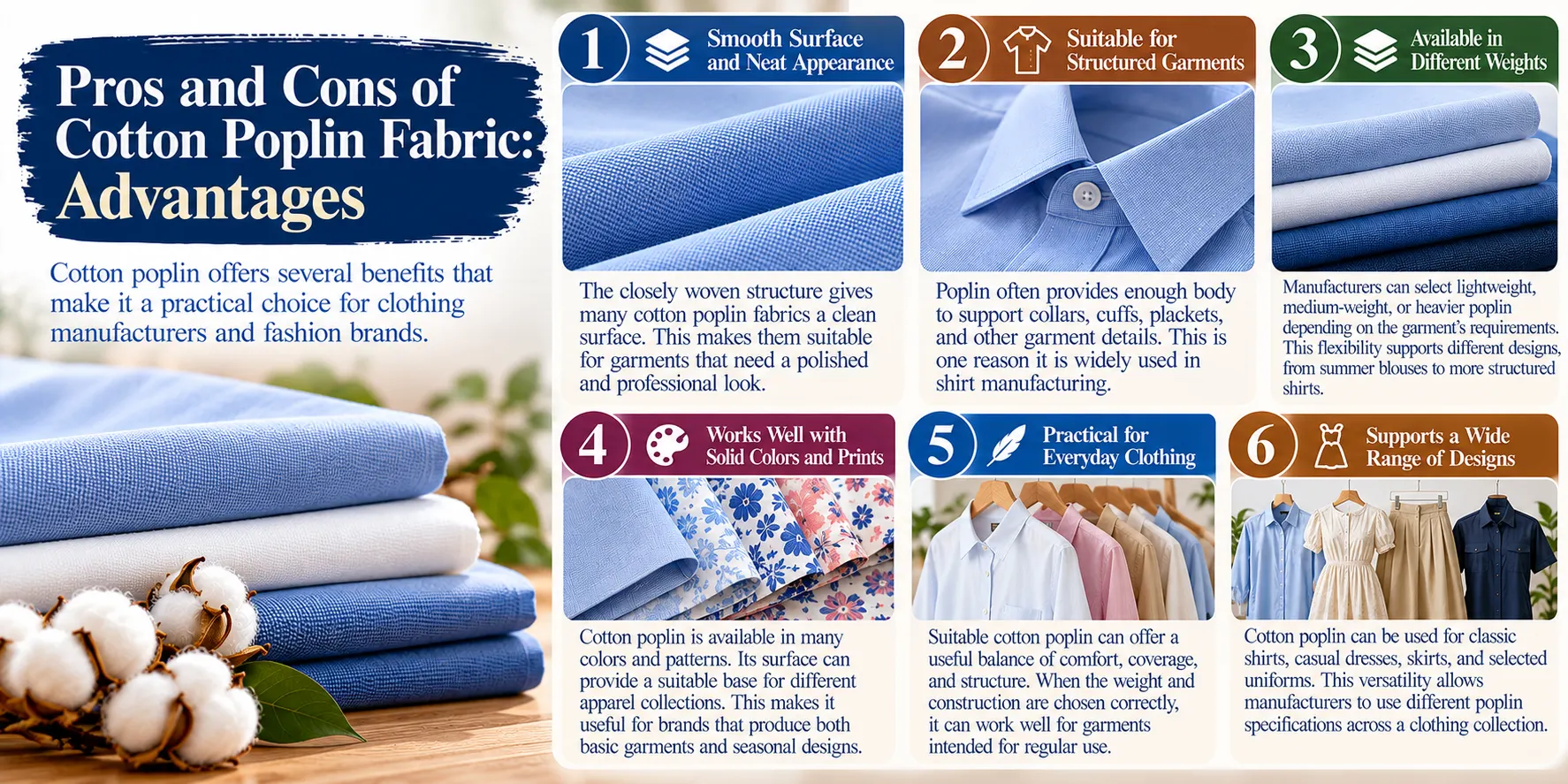
Cotton poplin offers several benefits that make it a practical choice for clothing manufacturers and fashion brands.
- 1. Smooth Surface and Neat Appearance: The closely woven structure gives many cotton poplin fabrics a clean surface. This makes them suitable for garments that need a polished and professional look.
- 2. Suitable for Structured Garments: Poplin often provides enough body to support collars, cuffs, plackets, and other garment details. This is one reason it is widely used in shirt manufacturing.
- 3. Available in Different Weights: Manufacturers can select lightweight, medium-weight, or heavier poplin depending on the garment’s requirements. This flexibility supports different designs, from summer blouses to more structured shirts.
- 4. Works Well with Solid Colors and Prints: Cotton poplin is available in many colors and patterns. Its surface can provide a suitable base for different apparel collections. This makes it useful for brands that produce both basic garments and seasonal designs.
- 5. Practical for Everyday Clothing: Suitable cotton poplin can offer a useful balance of comfort, coverage, and structure. When the weight and construction are chosen correctly, it can work well for garments intended for regular use.
- 6. Supports a Wide Range of Designs: Cotton poplin can be used for classic shirts, casual dresses, skirts, and selected uniforms. This versatility allows manufacturers to use different poplin specifications across a clothing collection.
Disadvantages:
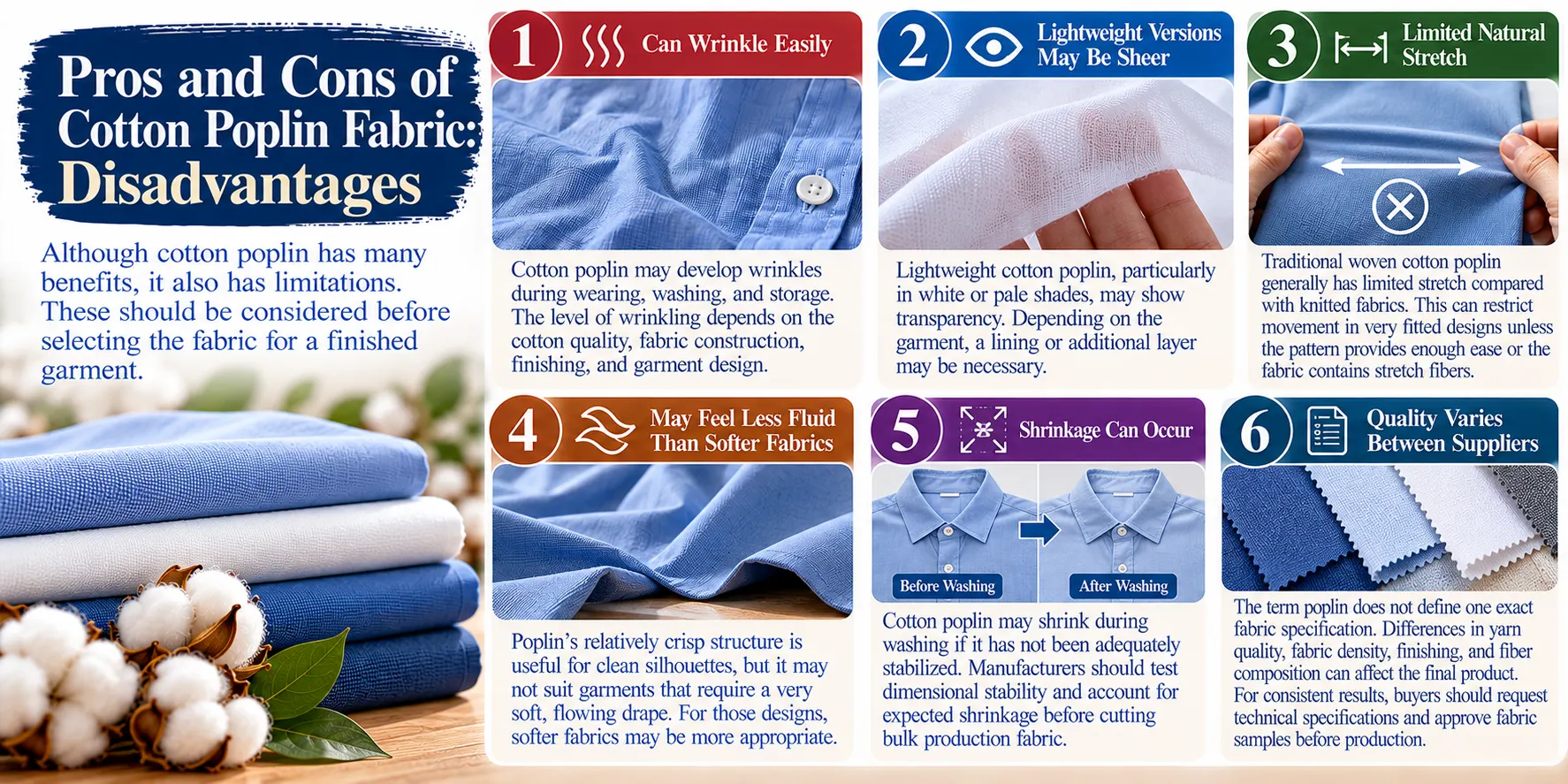
Although cotton poplin has many benefits, it also has limitations. These should be considered before selecting the fabric for a finished garment.
- 1. Can Wrinkle Easily: Cotton poplin may develop wrinkles during wearing, washing, and storage. The level of wrinkling depends on the cotton quality, fabric construction, finishing, and garment design. Some blends or wrinkle-resistant finishes may improve performance, but they can also change the fabric’s feel and care requirements.
- 2. Lightweight Versions May Be Sheer: Lightweight cotton poplin, particularly in white or pale shades, may show transparency. Depending on the garment, a lining or additional layer may be necessary.
- 3. Limited Natural Stretch: Traditional woven cotton poplin generally has limited stretch compared with knitted fabrics. This can restrict movement in very fitted designs unless the pattern provides enough ease or the fabric contains stretch fibers.
- 4. May Feel Less Fluid Than Softer Fabrics: Poplin’s relatively crisp structure is useful for clean silhouettes, but it may not suit garments that require a very soft, flowing drape. For those designs, softer fabrics may be more appropriate.
- 5. Shrinkage Can Occur: Cotton poplin may shrink during washing if it has not been adequately stabilized. Manufacturers should test dimensional stability and account for expected shrinkage before cutting bulk production fabric.
- 6. Quality Varies Between Suppliers: The term poplin does not define one exact fabric specification. Differences in yarn quality, fabric density, finishing, and fiber composition can affect the final product. For consistent results, buyers should request technical specifications and approve fabric samples before production.
Different Types of Cotton Poplin Fabric
Cotton poplin is available in different weights, finishes, and fiber combinations. Choosing the right variety depends on the garment design, expected performance, and target market.
| Type | Main Characteristics | Common Uses |
|---|---|---|
| Lightweight poplin | Light feel, flexible construction | Summer shirts, blouses, lightweight dresses |
| Medium-weight poplin | Balanced coverage and structure | Office shirts, uniforms, casual clothing |
| Heavyweight poplin | More body and coverage | Structured shirts, shirt dresses, selected outerwear |
| Stretch poplin | Added stretch, depending on blend | Fitted shirts, dresses, close-fitting garments |
| Printed poplin | Decorative patterns and colors | Fashion shirts, dresses, children’s clothing |
1. Lightweight Cotton Poplin
Lightweight cotton poplin is designed for garments that require a lighter feel and a more flexible drape. It may be suitable for:
- Summer shirts
- Lightweight blouses
- Casual dresses
- Children’s clothing
- Lightweight skirts
One limitation is that very lightweight poplin may show transparency, especially in white or pale colors. A lining or additional layer may be needed for some designs.
2. Medium-Weight Cotton Poplin
Medium-weight cotton poplin offers a balance between coverage, comfort, and structure. It is commonly considered for:
- Everyday shirts
- Office wear
- Casual dresses
- School uniforms
- Lightweight workwear
For many apparel applications, this type provides enough body to create a neat appearance without making the garment unnecessarily heavy.
3. Heavyweight Cotton Poplin
Heavier cotton poplin provides more body and coverage than lightweight versions. It may be useful for garments that need a firmer appearance or a more substantial feel. Potential applications include:
- Structured shirts
- Uniform components
- Shirt dresses
- Skirts
- Selected lightweight outerwear
Heavier poplin should still be assessed for comfort, stiffness, and ease of movement before it is approved for production.
4. Stretch Cotton Poplin
Stretch cotton poplin usually combines cotton with a small amount of elastane or another stretch fiber. The added stretch can improve comfort and movement in garments that need a closer fit. It may be suitable for:
- Fitted shirts
- Close-fitting dresses
- Waist-fitted skirts
- Selected uniforms
Stretch performance depends on the fiber blend and fabric construction. Manufacturers should check recovery, dimensional stability, and care requirements before choosing this option.
5. Printed Cotton Poplin
Printed cotton poplin features patterns applied to the fabric surface through a suitable printing process. It is widely used for fashion collections that require color, pattern, and visual variety. Common applications include floral dresses, patterned shirts, children’s clothing, and seasonal apparel. For production, buyers should evaluate print alignment, color consistency, colorfastness, and pattern placement.
What Is Cotton Poplin Fabric Used For?
Cotton poplin is widely used in apparel because it combines a neat surface with a versatile woven structure. Its exact application depends on fabric weight, color, construction, and finishing.
1. Shirts and Blouses
Shirts are among the best-known applications of cotton poplin. The fabric’s smooth surface and relatively crisp structure help create clean lines around collars, cuffs, button plackets, and shirt fronts. Cotton poplin is commonly used for:
- Formal business shirts
- Office shirts
- Casual button-down shirts
- Women’s blouses
- Short-sleeve summer shirts
For formal shirts, fabric weight, opacity, and wrinkle behavior should be considered together to achieve the desired appearance.
2. Workwear and Uniforms
Cotton poplin can be used for selected workwear and uniforms that require a clean, professional appearance. Potential applications include office uniforms, service uniforms, and lightweight work shirts. However, poplin is not automatically suitable for every industrial environment. Heavy-duty workwear may require stronger fabrics, reinforced construction, or specialized protective materials. When selecting poplin for uniforms, manufacturers should consider:
- Expected wear and washing frequency
- Fabric strength and seam performance
- Colorfastness
- Comfort during long working hours
- Required workplace safety standards
3. Dresses and Skirts
Cotton poplin is a useful option for dresses and skirts that need a clean shape. Its structure can help garments maintain their form, while lighter varieties may offer a softer drape. Common styles include:
- Shirt dresses
- A-line dresses
- Casual summer dresses
- Structured skirts
- Everyday fashion separates
Designers should consider the fabric’s stiffness and drape when choosing a pattern. A crisp poplin may create a more defined silhouette than a soft, fluid fabric.
4. Children’s Clothing
Selected cotton poplin fabrics are used for children’s shirts, dresses, skirts, and other everyday garments. Lightweight versions may provide comfort in warm conditions, while medium-weight versions can offer greater coverage. For children’s clothing, manufacturers should assess softness, shrinkage, colorfastness, seam durability, and relevant product safety requirements.
5. Printed Fashion Garments
The smooth surface of cotton poplin makes it suitable for many printed apparel designs. Designers can use solid colors, floral patterns, geometric prints, and custom artwork to create different looks. Before bulk production, it is important to review print quality, color matching, pattern alignment, and the fabric’s behavior after washing.
Cotton Poplin vs. Other Cotton Fabrics
Cotton poplin is often compared with cotton twill, Oxford cloth, cotton lawn, and cotton muslin. Although these fabrics may all be used in clothing, their structures and performance can differ.
| Fabric | Typical Surface | Structure | Common Applications |
|---|---|---|---|
| Cotton poplin | Smooth with a subtle rib | Closely woven, typically plain weave | Shirts, uniforms, dresses |
| Cotton twill | Visible diagonal lines | Twill weave | Trousers, jackets, workwear |
| Oxford cloth | Textured, often basket-like | Basket weave | Casual shirts, business-casual shirts |
| Cotton lawn | Fine and smooth | Lightweight plain weave | Blouses, lightweight dresses |
| Cotton muslin | Coarse to fine | Primarily plain weave | Prototypes, sewing samples, casual clothing |
Cotton Poplin vs. Cotton Twill
Cotton poplin is typically made with a plain-weave construction and a subtle crosswise rib. Cotton twill uses a diagonal weave pattern that creates visible diagonal lines. Twill often provides a more substantial feel and is commonly used for trousers, jackets, and workwear. Poplin is frequently chosen for shirts and garments that need a smooth, clean surface.
Cotton Poplin vs. Oxford Fabric
Oxford fabric is known for its basket-weave appearance, which often creates a more textured surface than poplin. Oxford cloth is popular for casual and business-casual shirts. Poplin generally offers a smoother and more refined surface, making it suitable for many formal and professional shirts.
Cotton Poplin vs. Cotton Lawn
Cotton lawn is usually lightweight and made with fine yarns, giving it a smooth, delicate feel. Cotton poplin is often more structured, although lightweight poplin can also feel soft. Lawn is commonly used for lightweight blouses and dresses, while poplin is widely used for shirts, uniforms, and structured casual clothing.
Cotton Poplin vs. Cotton Muslin
Cotton muslin covers a broad range of plain-woven fabrics, from coarse sampling cloth to finer lightweight varieties. Basic muslin is widely used for garment prototypes and fitting samples. Cotton poplin is more commonly selected for finished garments that require a neat surface and a relatively structured appearance.
How to Wash and Care for Cotton Poplin Fabric
Proper care can help cotton poplin garments maintain their appearance and service life. The correct method depends on the fiber composition, dyeing process, finishing, and garment construction.
Washing Cotton Poplin
For many washable cotton poplin garments, the following practices are useful:
- Check the garment’s care label before washing.
- Separate light and dark colors when necessary.
- Use a suitable detergent.
- Avoid unnecessarily high water temperatures that may increase shrinkage.
- Follow specific care instructions for printed or specially finished fabrics.
Drying Cotton Poplin
Air drying can help reduce unnecessary heat exposure and may be suitable for many cotton poplin garments. If machine drying is permitted, follow the care label to help control shrinkage and maintain the garment’s shape. Remove garments promptly after drying to help limit the formation of deep wrinkles.
Ironing Cotton Poplin
Cotton poplin often benefits from ironing because cotton fibers can wrinkle during wear and washing. Use a suitable temperature for the garment’s fiber content and finishing. When needed, iron the garment while it is slightly damp or use steam according to the care instructions. For blended or stretch poplin, avoid assuming that the highest cotton ironing temperature is appropriate.
Should Cotton Poplin Be Prewashed Before Sewing?
Prewashing may be useful when sewing garments from cotton poplin, particularly if the finished garment will be washed regularly. It can reveal potential shrinkage before the fabric is cut. For commercial garment manufacturing, controlled shrinkage testing and appropriate fabric preparation are more reliable than relying only on informal prewashing.
Final Thoughts: Is Cotton Poplin Fabric the Right Choice?
Cotton poplin is a versatile woven textile that combines a smooth surface with a neat, structured appearance. It is widely used for shirts, uniforms, dresses, skirts, and other garments that benefit from a clean finish. Its main advantages include versatility, a professional appearance, and availability in different weights and colors. However, potential wrinkling, limited natural stretch, and differences in fabric quality should be considered before production. The best cotton poplin is not necessarily the heaviest or most expensive option. It is the fabric that meets the garment’s requirements for comfort, appearance, durability, and care.
At Mekong Garment, choosing suitable materials is an important part of garment development and manufacturing. Understanding fabric properties helps clothing brands make informed decisions about product design, sample development, and production quality. If you are developing a clothing collection or looking for a garment manufacturing partner in Vietnam, visit Mekong Garment to learn more about apparel manufacturing and garment production services.
Frequently Asked Questions About Cotton Poplin Fabric
Is Cotton Poplin 100% Cotton?
Cotton poplin can be made from 100% cotton, but poplin is also available in polyester, cotton-polyester blends, and stretch blends. Check the fabric specification to confirm the exact fiber composition.
Is Cotton Poplin a Good Fabric for Shirts?
Yes. Cotton poplin is widely used for shirts because it offers a smooth surface and a neat appearance. The right weight and construction can work well for formal shirts, casual shirts, and office clothing.
Is Cotton Poplin Breathable?
Cotton poplin can be breathable, especially when made from cotton and produced in a suitable weight. However, breathability varies with fabric density, thickness, finishing, and fiber composition.
Does Cotton Poplin Wrinkle Easily?
Cotton poplin can wrinkle because cotton fibers crease during wear and washing. Suitable finishing, careful drying, and ironing can help manage wrinkles.
Is Cotton Poplin Stretchy?
Traditional cotton poplin usually has limited natural stretch. Stretch poplin contains elastane or another stretch component, which can improve flexibility and comfort.
Is Cotton Poplin Suitable for Summer?
Yes. Lightweight cotton poplin can be suitable for summer shirts, blouses, and dresses. Buyers should check the fabric’s weight, airflow, and opacity to ensure it provides the desired comfort and coverage.
Does Cotton Poplin Shrink?
Yes, cotton poplin may shrink during washing, particularly if the fabric has not been adequately stabilized. The amount depends on its construction, finishing, and washing conditions.
Is Cotton Poplin Better Than Cotton Twill?
Neither fabric is universally better. Cotton poplin is often chosen for shirts and garments with a smooth, neat appearance. Cotton twill has a diagonal weave and is commonly used for trousers, jackets, and selected workwear. The right option depends on the design and performance requirements.
Is Cotton Poplin Suitable for Uniforms?
Cotton poplin can be suitable for office uniforms, service uniforms, and lightweight work shirts. For demanding industrial environments, the fabric must also meet the required durability and safety standards.
How Can You Identify Good-Quality Cotton Poplin?
Look for consistent weaving, an even surface, suitable fabric weight, stable color, and a hand feel that matches the intended garment. For production, also check shrinkage, colorfastness, and other relevant test results.