


The Clothing Production Process Explained Simply
Many assume manufacturing is straightforward, but transforming raw materials into high-quality apparel requires meticulous planning and skilled execution. You need to understand that behind every garment lies a detailed workflow involving precise pattern making, cutting, and assembly. By mastering these stages, you ensure your final products meet strict quality standards and customer expectations. This guide breaks down the entire production cycle to help you navigate the industry with confidence.
The Clothing Production Process: Step By Step
Garment Design
Everything starts with design. This is where ideas become real clothing concepts. Designers think about who will wear the garment, when it will be worn, and how it should feel on the body. They also decide on details such as shape, size, color, and style. At the same time, the design must be realistic to produce. If a design is too complex or too expensive to make, it may not be suitable for mass production. Good design always balances creativity and practicality.
=> Related Article: Factors Considered During the Garment Design Phase

Fabric Selection
After the design is ready, the next step is choosing the right fabric. Fabric affects how the garment looks, feels, and performs. Designers and manufacturers consider softness, durability, stretch, breathability, and cost. Cotton, polyester, wool, denim, and blends are common choices. Picking the right fabric helps ensure the garment meets customer expectations and lasts longer.
=> Related Article: What Are International Tolerances?

Selecting the correct material determines the success or failure of your final product. Fabric typically accounts for 60% to 70% of the total cost of a garment, making this decision financially significant for your budget. Beyond the price tag, the textile dictates how the clothing hangs on the body, how it withstands washing, and how comfortable it feels against the skin. If you select a low-quality material, even the most skilled sewing techniques cannot save the garment from poor performance.
- Natural fibers like cotton and wool are biodegradable and comfortable.
- Synthetic fibers such as polyester are durable and cost-effective.
- Cellulosic fibers like rayon offer a silky feel but require delicate care.
=> Related Article: How to Care for Your Winter Clothing (The Smart Way)

| Fiber Category | Fabric Type | Key Characteristics | Typical Uses | Notes |
|---|---|---|---|---|
| Natural | Cotton | Soft, breathable, high absorbency | T-shirts, shirts, underwear | Comfortable but may shrink |
| Natural | Wool | Warm, insulating, moisture-regulating | Sweaters, coats, suits | Requires careful washing |
| Natural | Linen | Lightweight, breathable | Summer clothing, casual wear | Wrinkles easily |
| Synthetic | Polyester | Durable, wrinkle-resistant, quick-dry | Sportswear, uniforms | Low breathability |
| Synthetic | Nylon | Strong, lightweight, abrasion-resistant | Activewear, outerwear | Very durable |
| Synthetic | Spandex (Elastane) | Extremely elastic, stretch recovery | Leggings, fitted garments | Used in small percentages |
| Semi-Synthetic | Rayon / Viscose | Soft, smooth, silk-like | Dresses, blouses | Prone to shrinking |
| Semi-Synthetic | Modal | Stronger than rayon, breathable | T-shirts, underwear | Holds shape well |
| Semi-Synthetic | Lyocell (TENCEL™) | Moisture-wicking, eco-friendly | Premium apparel | Gentle care needed |
Fabric Relaxing
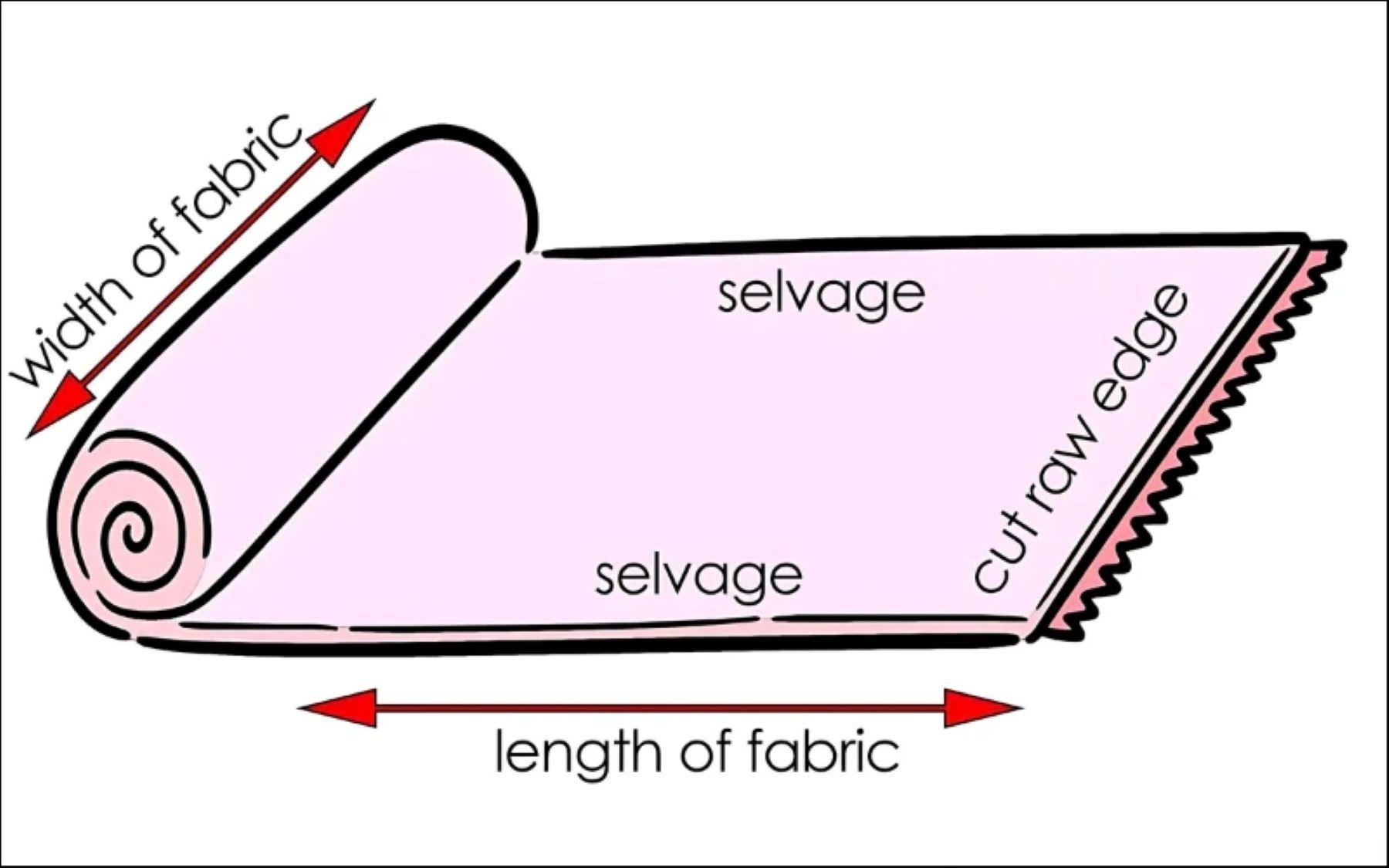
Before cutting, fabric needs time to relax. Fabric relaxing allows the material to return to its natural shape after being rolled or stretched during transport. This step helps prevent shrinking, twisting, or size changes later. Relaxing may take several hours or even days, depending on the fabric type. It is a small step, but it makes a big difference in fit and consistency.
=> Related Article: The Best Fabric for Hoodies: Top 10 Materials You Should Know

Pattern Making
Patterns act as the blueprint of a garment. A pattern shows the exact shape and size of each fabric piece needed. It is usually made on paper or using digital software. Patterns ensure that all garments in a production run are consistent. Any mistake at this stage can affect the final fit, so accuracy is very important.
=> Related Article: Clothing Measurement Basics Every New Brand Should Know

Marking
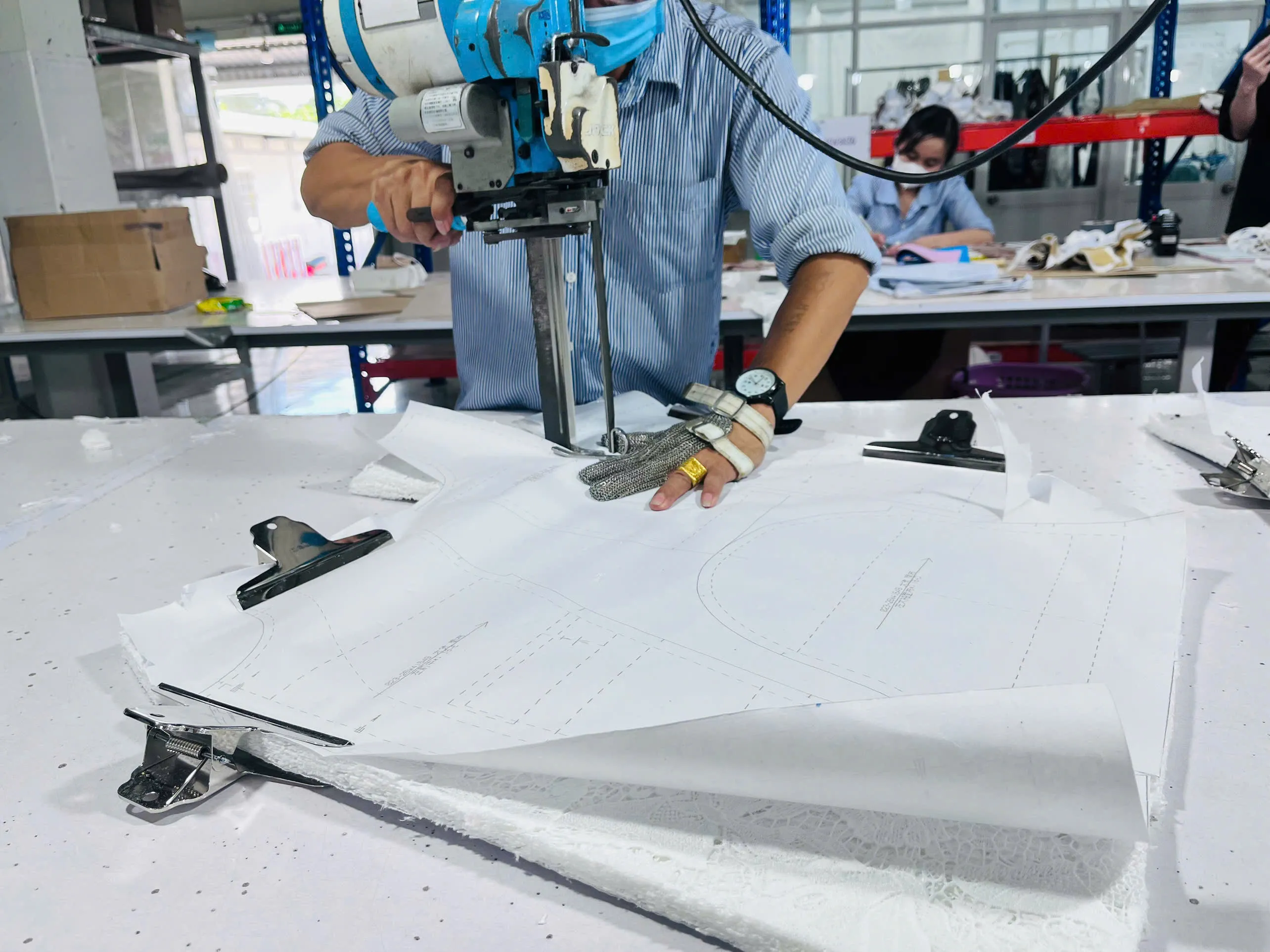
Marking transfers the pattern onto the fabric. Using chalk or washable pens, workers outline pattern shapes on the fabric. Markings guide the cutting and sewing process. Clear and precise marking helps avoid errors and fabric waste, especially when producing large quantities.
=> Related Article: Vietnam Garment Factory Lead Time Explained: From Order to Shipment

Laying
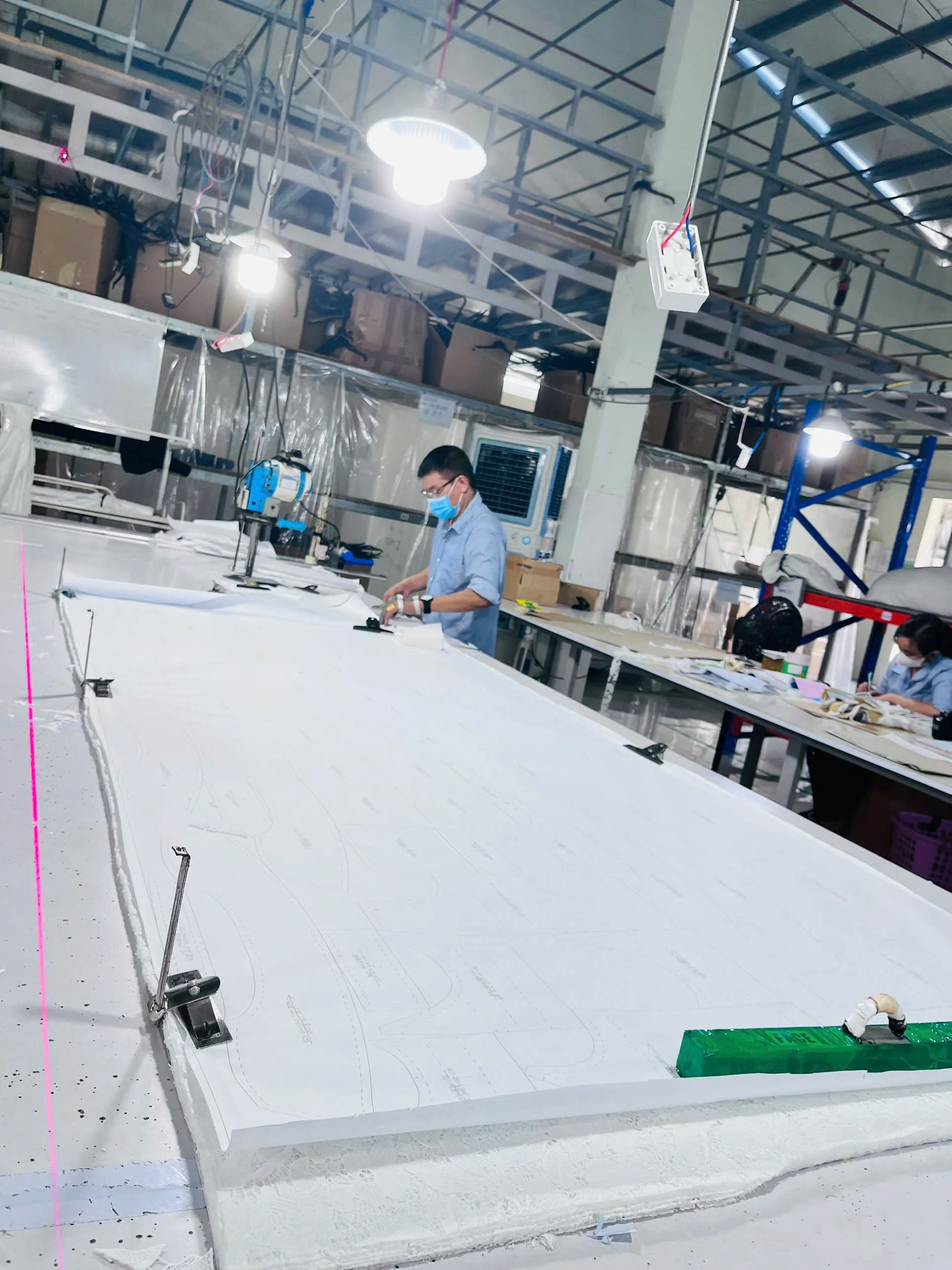
Laying is the process of spreading fabric layers flat on a cutting table. The fabric must be smooth and aligned correctly. Multiple layers are often stacked together to save time during cutting. Proper laying ensures all pieces are cut evenly and match the intended size.
=> Related Article: Top 5 Best Fabrics for T-Shirts in Vietnam Garment Industry

Cutting
Cutting separates the fabric into garment pieces. Depending on production scale, cutting can be done by hand, machine, or automated systems. Hand cutting is flexible but slow, while machine cutting is fast and accurate for large orders. Clean and precise cutting helps garments fit well and reduces material waste.
=> Related Article: Tech Pack to Finished Garments: A Complete Production Timeline Guide (8–16 Weeks)

Embroidery and Printing
If the garment includes logos, patterns, or decorations, these are added at this stage. Embroidery uses thread to stitch designs into the fabric. Printing methods, such as screen printing, apply ink to create images or text. These processes add style, branding, and visual appeal to the garment.
=> Related Article: How Does a Prototype Sample Affect My Clothing Production Cost?

Sewing and Assembly
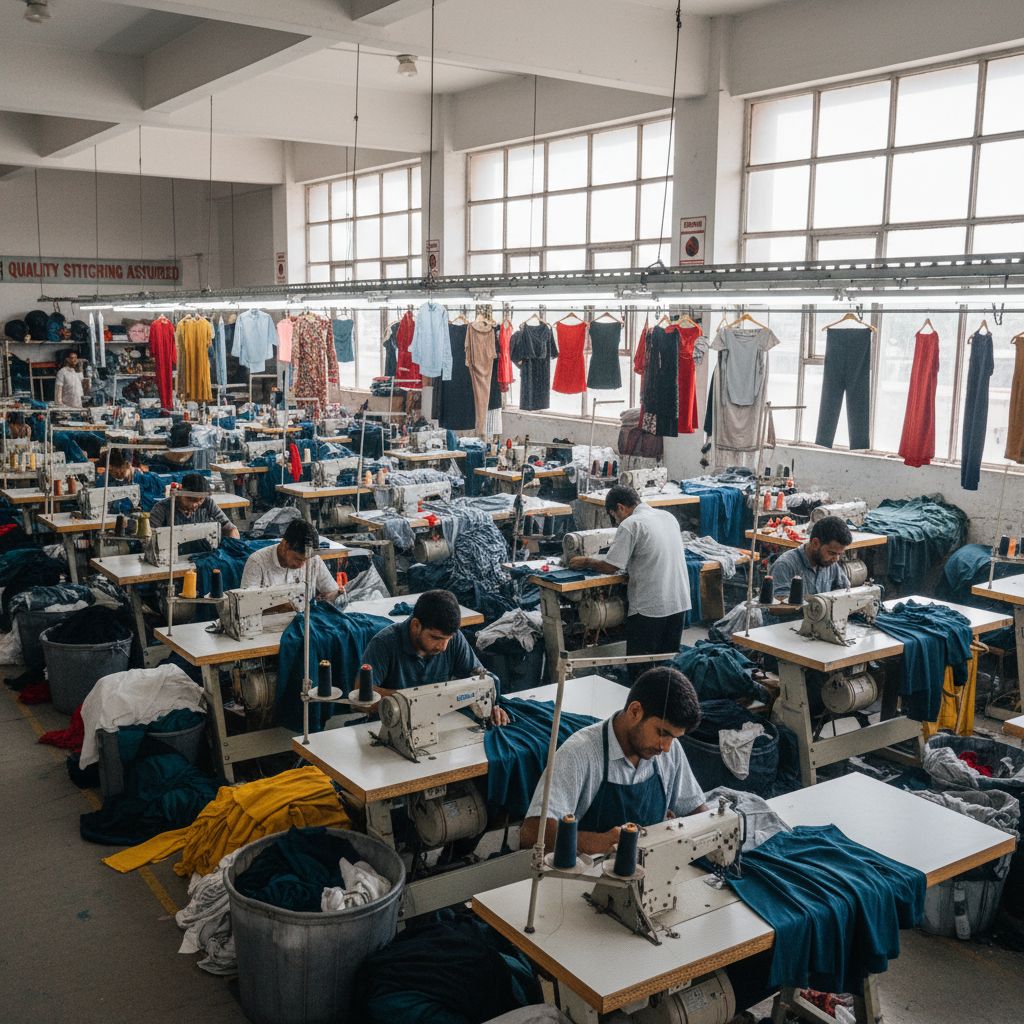
Sewing brings all the pieces together. Workers or machines stitch fabric pieces according to the design and pattern. This step shapes the garment and determines its strength and durability. Skilled sewing ensures clean seams, proper alignment, and comfort when worn.

Quality Checking
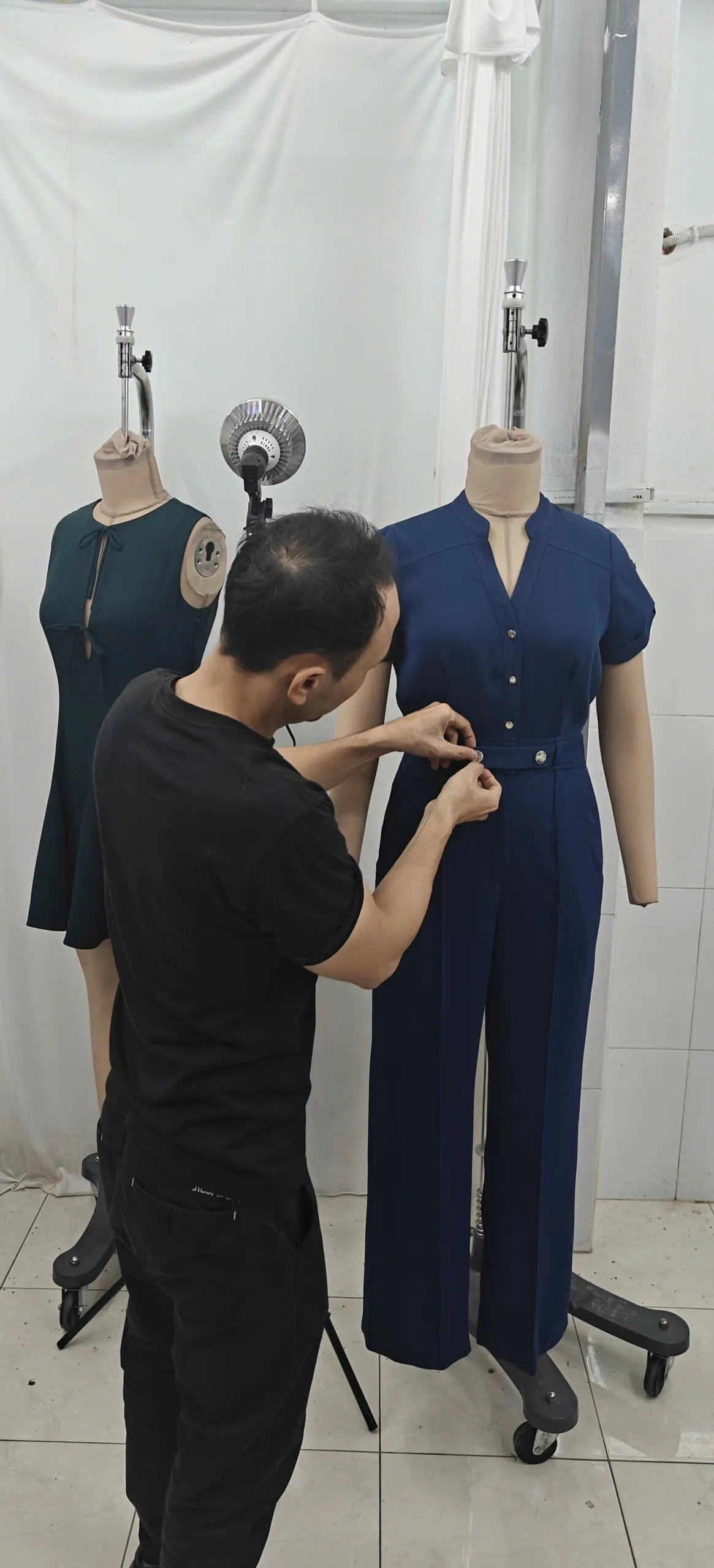
After sewing, garments go through quality control. Inspectors check measurements, stitching, fabric defects, and overall appearance. Any problems are fixed or removed before moving forward. Quality checking helps maintain brand standards and customer trust.

Washing and Spot Cleaning
Garments may be washed or spot-cleaned to remove stains, dust, or marks from production. Spot cleaning treats small areas, while full washing cleans the entire garment. This step also helps improve softness and removes leftover chemicals from manufacturing.

Fusing and Pressing
Fusing uses heat and adhesive to bond fabric layers, often for collars or cuffs. Pressing smooths wrinkles and gives garments a polished, professional look. Heat and pressure help garments hold their shape and look neat on store shelves.

Final Inspection
Once the garments are pressed and folded, your team must perform one last rigorous examination to ensure every piece matches the approved sample. This stage goes beyond spotting loose threads; inspectors verify that measurements fall within specific tolerance limits (usually +/- 0.5 cm) and that all accessories like buttons and zippers function perfectly. Many factories utilize the Acceptable Quality Limit (AQL) 2.5 standard here to statistically validate that the batch is ready for retail, ensuring you don’t ship defective products to your warehouse.

Packaging and Shipping
Your packaging choices directly impact how the product survives transit and how it looks upon arrival. Standard procedure involves placing garments into individual polybags (usually PE or PP material) with silica gel packets to prevent moisture damage and mold growth during ocean freight. You must also ensure that hangtags, price stickers, and size labels are perfectly aligned, as incorrect barcoding can cause expensive delays or rejection at fulfillment centers like Amazon FBA.

Beyond basic protection, the way you pack for bulk shipment defines your logistics costs and environmental footprint. Using 5-ply corrugated cartons is standard practice to prevent boxes from crushing under the weight of stacking pallets, which can ruin the pressed garments inside. Furthermore, many modern brands are shifting toward recycled LDPE bags or compostable alternatives to meet consumer demand for sustainability. Optimizing your carton dimensions to fit perfectly on standard 100x120cm pallets can reduce your shipping volume by up to 15%, saving significant money on freight charges.

Final Words / Conclusion
Taking this into account, you can appreciate that garment manufacturing is a detailed journey requiring strict oversight at every stage. From selecting the right materials to the final inspection, your understanding of this workflow ensures a better end product. By recognizing the value of steps like fabric relaxing and precise pattern making, you are better equipped to manage production expectations. Ultimately, familiarizing yourself with these procedures allows you to collaborate more effectively with manufacturers, ensuring your design concepts are executed with precision and care.
Our Contact Information – MEKONG GARMENT FACTORY
- Vietnam Phone: +84 947 729 829
- WeChat: +84 947 729 829
- WhatsApp: +84 947 729 829
- Email: hanh@kimmy.vn
FAQs About Clothing Production Process
What factors are considered during the Garment Design phase?
The design phase is the foundation where ideas are transformed into tangible concepts. Designers must evaluate who the target wearer is, the intended occasion for the garment, and how the material should feel against the body. Specific details such as shape, size, color, and style are determined at this stage. However, creativity must be balanced with practicality; designers must ensure the concept is realistic and cost-effective for mass production rather than being too complex to manufacture. => Read More: Factors Considered During the Garment Design Phase
Why is Fabric Relaxing performed before the cutting stage?
Fabric relaxing is a necessary step that allows the material to return to its natural state after being rolled or stretched during transportation. This process can take several hours or even days, depending on the material type. By letting the fabric rest, manufacturers prevent issues such as shrinking, twisting, or unexpected size changes later in the production line. This step ensures consistency and a proper fit in the final product.
How do Pattern Making and Marking contribute to production accuracy?
Pattern making creates the blueprint for the garment, defining the exact shape and size of every piece required, whether done on paper or digitally. Once the patterns are finalized, the marking process transfers these outlines onto the fabric using chalk or washable pens. These markings serve as a precise guide for cutting and sewing. Accurate execution in these stages is necessary to avoid errors, minimize fabric waste, and ensure all garments in a batch are consistent.
What is involved in the Laying and Cutting steps of manufacturing?
Laying involves spreading the fabric flat on a cutting table, ensuring it is smooth, aligned, and often stacked in multiple layers to improve efficiency. Once prepared, the cutting process separates the fabric into individual garment pieces. This can be achieved through hand cutting for flexibility or automated machines for speed and precision on large orders. Clean cutting is vital for ensuring the pieces fit together correctly during assembly.
When are decorative elements added, and how is the garment assembled?
Logos, patterns, or specific branding are typically added after cutting but before final assembly. This is done through embroidery, which stitches designs with thread, or printing methods like screen printing that apply ink. Following this, the sewing and assembly phase joins the fabric pieces together. Skilled workers or machines stitch the components according to the pattern, shaping the garment and establishing its durability and strength.
What measures are taken to maintain quality and cleanliness throughout production?

Quality control is integrated at multiple points, particularly after sewing. Inspectors examine the garments for stitching errors, measurement accuracy, and fabric defects. To ensure cleanliness, garments may undergo spot cleaning to treat specific marks or a full wash to remove dust and chemical residues while improving softness. A final inspection occurs before packaging to verify that the item meets all standards and looks pristine.
How are garments prepared for sale through Fusing, Pressing, and Packaging?
Before the product is ready for the customer, fusing is used to bond fabric layers with heat and adhesive, which is common for stiffening collars or cuffs. Pressing follows to remove wrinkles and give the clothing a polished, professional appearance. Finally, the garments are folded, tagged, and placed in protective bags or boxes. This packaging protects the items during shipping to warehouses or customers, ensuring they arrive looking new.