What’s the Difference Between a Tech Pack and a Spec Sheet?
Getting a sample that feels wrong is frustrating. The fit is off. The fabric is not what you imagined. The finish looks cheap. In many cases, the problem is not the factory. It’s the documents. Brands often confuse a tech pack with a spec sheet, and that small mistake leads to big production issues. A tech pack and a spec sheet serve very different purposes. One explains everything about the garment. The other focuses only on size and measurement control. When you understand how they work together, production becomes faster, cleaner, and far less risky. This article breaks the difference down in simple terms, with clear structure and real production logic.
What Is a Tech Pack in Garment Manufacturing?
A tech pack is the main instruction file for your garment. It turns a design idea into something a factory can actually make. Without it, the factory must guess your intentions, and guessing always costs time and money. Think of a tech pack as the single source of truth. Everyone uses it: designers, pattern makers, sourcing teams, production managers, and QC.
=> Related Article: Are Tech Packs Necessary For Custom Clothing Manufacturers?

What Does a Tech Pack Usually Include?
A complete tech pack covers both visuals and technical details.
Common sections include:
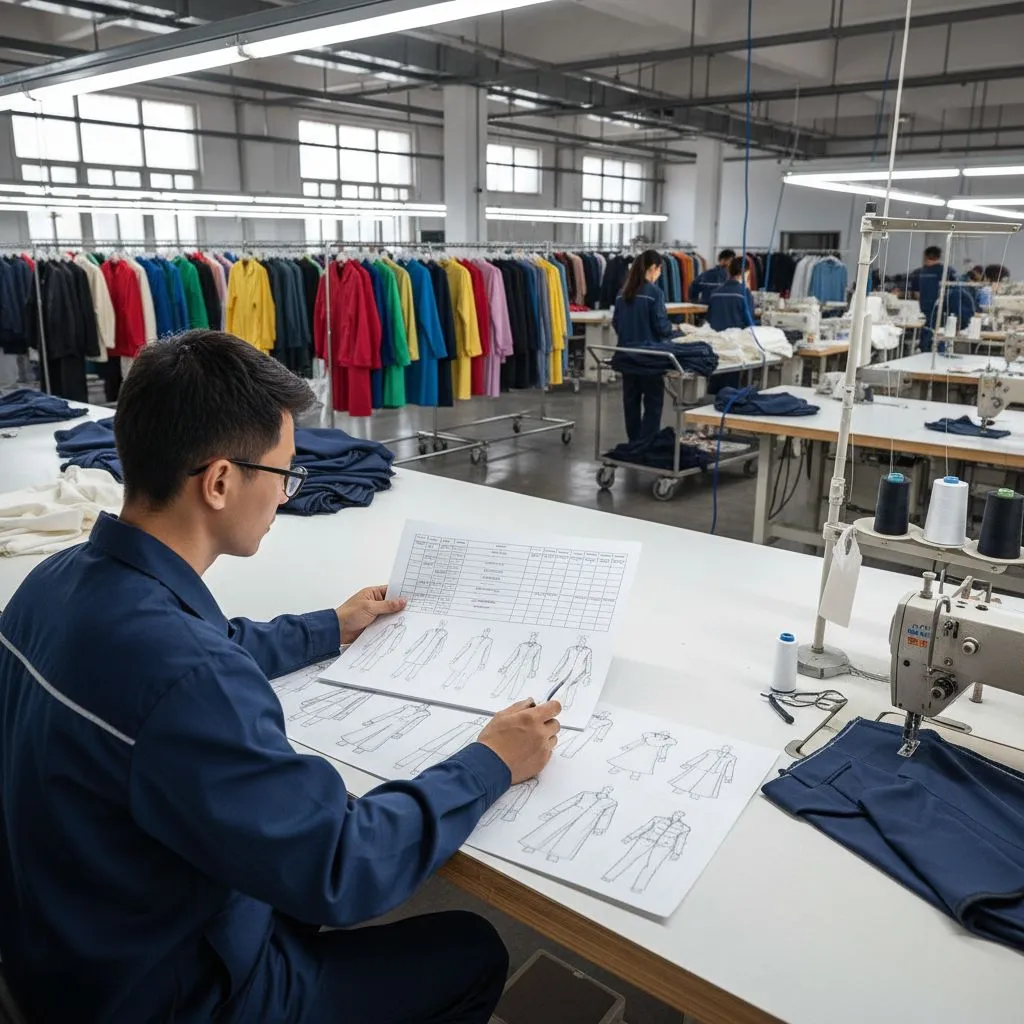
- Flat sketches (front, back, details)
- Colorways and artwork placement
- Bill of Materials (BOM)
- Construction and stitching notes
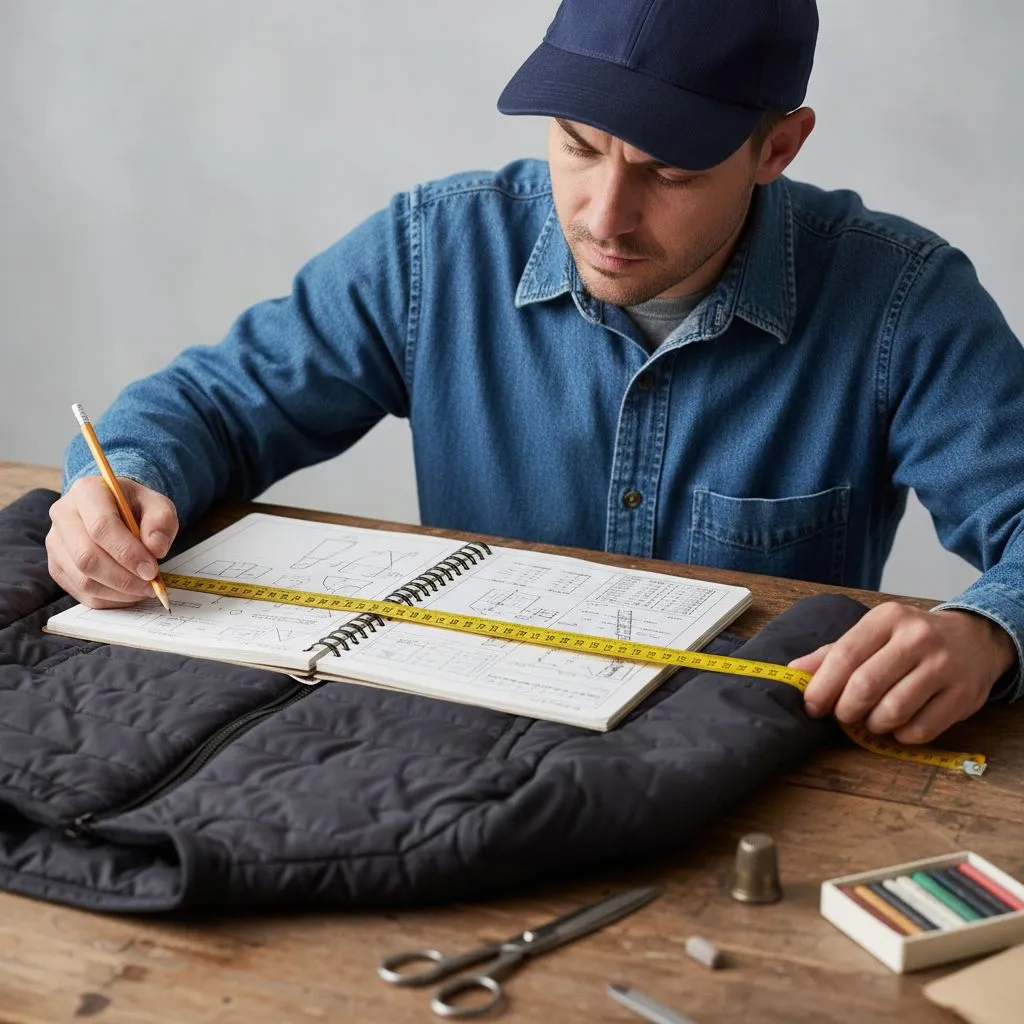
- Measurement spec sheet
- Labels, trims, and packaging notes
- Quality and testing requirements
When all of this lives in one document, the factory does not need to ask basic questions again and again.
=> Related Article: How Do Tech Packs Improve Your Apparel Quality Control?

Why the Bill of Materials (BOM) Matters
The BOM is the material checklist for your garment. It defines exactly what must be sourced and used. A vague BOM creates risk. Saying “polyester fabric” is not enough. That could mean dozens of qualities with different costs and performance.
A Strong BOM Clearly States:
- Fabric composition and weight
- Weave or knit type
- Finish or treatment
- Trim type (buttons, zippers, elastic, thread)
- Color codes and supplier references (if required)
A detailed BOM protects consistency. Every unit looks, feels, and performs the same.
=> Related Article: Are Digital Tech Packs Shaping the Future of Apparel Manufacturing?

How Construction Details Reduce Production Errors
Construction notes explain how the garment is built. They remove interpretation and prevent shortcuts.
This section answers practical questions such as:
- What stitch type is used?
- How many stitches per inch?
- How seams are finished?
- How parts are attached and reinforced?
Why This Section Is Critical: Two garments can look the same on paper but perform very differently in real life. Clear construction instructions improve durability, comfort, and overall quality. Small details here often decide whether a garment feels “cheap” or “premium.”
=> Related Article: How to Turn a Clothing Idea into a Professional Tech Pack (

What Is the Primary Purpose of a Spec Sheet?
A spec sheet focuses on one thing only: measurements.
It defines:
- Measurement points
- Base size dimensions
- Size grading rules
- Allowed tolerances
This is the document quality control teams rely on to check finished goods.
=> Related Article: No Tech Pack, No Scale: How Big Brands Really Produce

What a Spec Sheet Does Well
- Keeps sizing consistent across bulk orders
- Reduces customer returns
- Protects your size chart reputation
- Aligns pattern making and QC checks
Unlike a tech pack, a spec sheet is data-driven and structured, usually in table form.
=> Related Article: What Is the Biggest Misconception About Tech Packs?

How Are Tolerances Set in a Spec Sheet?
Tolerances define how much variation is allowed. They are not random.
Factors That Affect Tolerances:
- Fabric type (knit vs woven)
- Stretch and recovery
- Garment function (fashion vs activewear)
- Industry standards
Stretch garments usually allow wider tolerances. Rigid fabrics require tighter control. The goal is balance: wearable comfort without size chaos.
=> Related Article: Updating a Tech Pack: A Step-by-Step Guide for New Seasons

Why Graded Spec Sheets Are Essential
Grading explains how a garment changes across sizes. It ensures proportions stay correct, not just width.
Without proper grading:
- Larger sizes may feel short
- Sleeves may be too narrow
- Neck openings may feel wrong
Professional grading keeps fit consistent from XS to XL and beyond.
=> Related Article: How Tech Packs Help Brands and Manufacturers Speak the Same Language

Tech Pack vs. Spec Sheet: The Real Difference
While a spec sheet is part of a tech pack, it can’t replace the full document. A tech pack covers design, materials, construction, and more, while a spec sheet deals only with fit and sizing. The tech pack supports the whole production process; the spec sheet makes sure sizes stay correct. Together, they reduce guesswork, save time, and protect product quality.
| Feature | Tech Pack | Spec Sheet |
|---|---|---|
| Purpose | Full production guide | Size and fit control |
| Scope | Design + materials + construction | Measurements only |
| Users | Designers, developers, factories | Pattern makers, QC |
| Format | Visual + technical | Table-based data |
| Lifecycle | Evolves during development | Locked for production |

What Happens If You Only Send a Spec Sheet?
Sending only a spec sheet leaves out many critical details needed for production. Without the full tech pack, factories may make decisions on fabric quality, stitch types, or trims that don’t match your vision. That can lead to garments that measure right but feel wrong or look cheap. Tests and material standards may also be missed, raising quality risks.
That means:
- Fabric quality may be downgraded
- Stitch types may be simplified
- Trims may be substituted
- Overall feel may miss your brand standard
The garment may measure correctly but still feel wrong. Fit alone does not define quality.
=> Related Article: Garment Details That Are Often Missing From Tech Packs

Can a Spec Sheet Be Used Without a Tech Pack?
Yes, but only in limited cases. In limited cases, like reordering the same style with no design changes you might use just a spec sheet. But for new styles or any change, a spec sheet alone doesn’t give enough guidance for accurate production. Relying only on measurements increases the chances of mistakes or misunderstanding. A full tech pack is the safer foundation for development and manufacturing.
When It Can Work:
- Exact reorders
- No design or material changes
- Same factory, same reference sample
For new styles or changes, sending only a spec sheet is risky and often expensive.
=> Related Article: How to Review a Tech Pack With Your Clothing Manufacturer

How to Create Effective Tech Packs and Spec Sheets
Good documents save far more money than they cost to create. Good documentation makes production smoother and protects your investment. For tech packs, clear flat sketches and precise notes reduce ambiguity and support quality control. For spec sheets, locking in measurement points and agreed tolerances before bulk helps keep sizing consistent. Using digital tools and consistent terminology improves clarity for everyone involved.
Best Practices for Tech Packs
- Use clear, labeled sketches
- Avoid vague terms like “standard”
- Write exact stitch codes and SPI
- Update the tech pack after every approved change
- Keep version control clean

Best Practices for Spec Sheets
- Define clear measurement points
- Lock base size before grading
- Agree tolerances before bulk
- Use consistent terminology
Digital tools like Illustrator, spreadsheets, or PLM systems help keep everything aligned and easy to share.

Common Mistakes Need to Avoid
- Missing details in BOMs
- Forgetting to update documents after sampling
- Using inconsistent names for the same garment part
- Assuming factories “will know what you mean”
Clarity is not optional in manufacturing. It is protection.

Conclusion / Final Words
A tech pack and a spec sheet are not interchangeable. They solve different problems and work best together. The tech pack delivers the full picture: design, materials, and construction. The spec sheet protects fit, sizing, and consistency. When used correctly, these documents remove guesswork, shorten timelines, reduce costs, and protect your brand. In apparel manufacturing, clarity is not extra work. It is the foundation of success.
Contact Information – Mekong Garment Factory:
- Vietnam Phone: +84 947 729 829
- WeChat: +84 947 729 829
- WhatsApp: +84 947 729 829
- Email: hanh@kimmy.vn