


In the garment manufacturing industry, understanding sewing thread specifications is extremely important. These values help you choose the right thread for each product, from lightweight apparel to heavy-duty gear. In this guide, you will learn how to analyze values like “60/3”, “40/2”, “20/6”, and understand how they influence fineness, strength, and production performance.
Construction of Sewing Thread
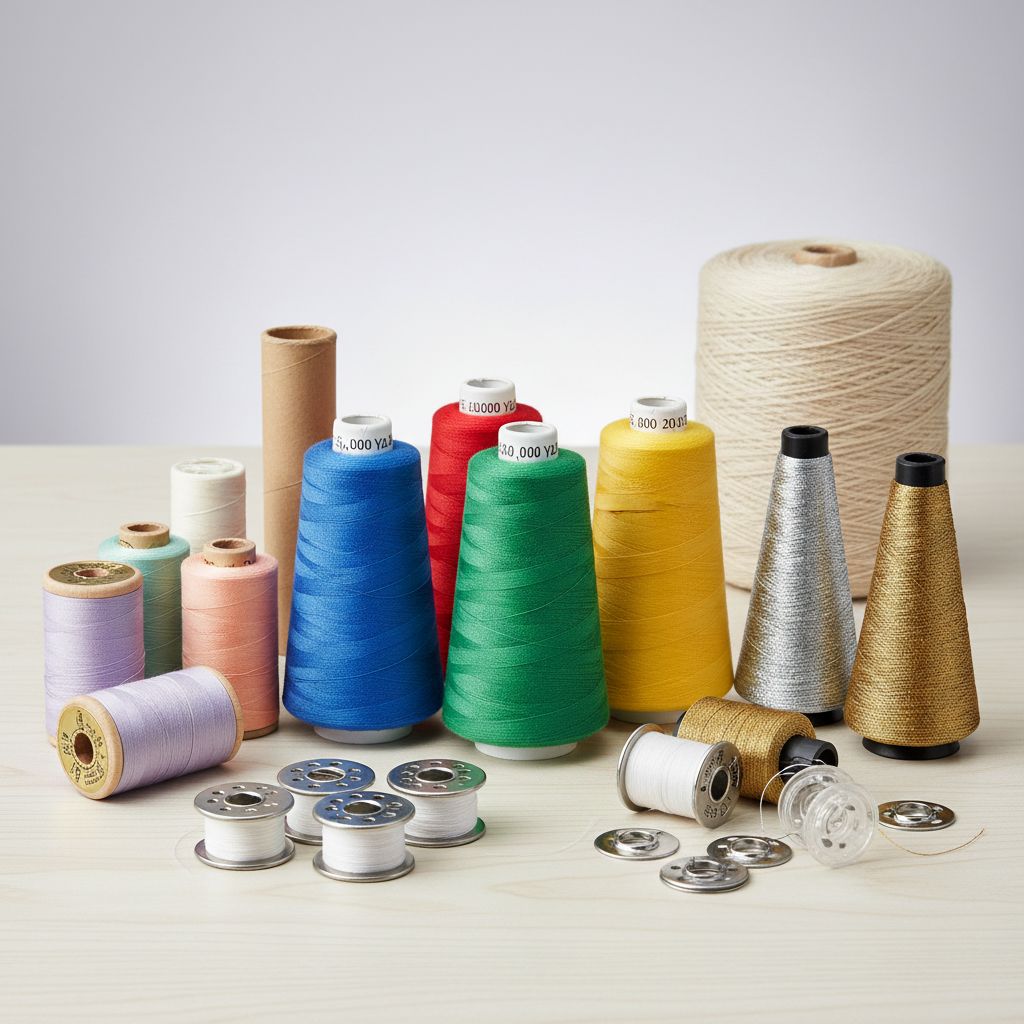
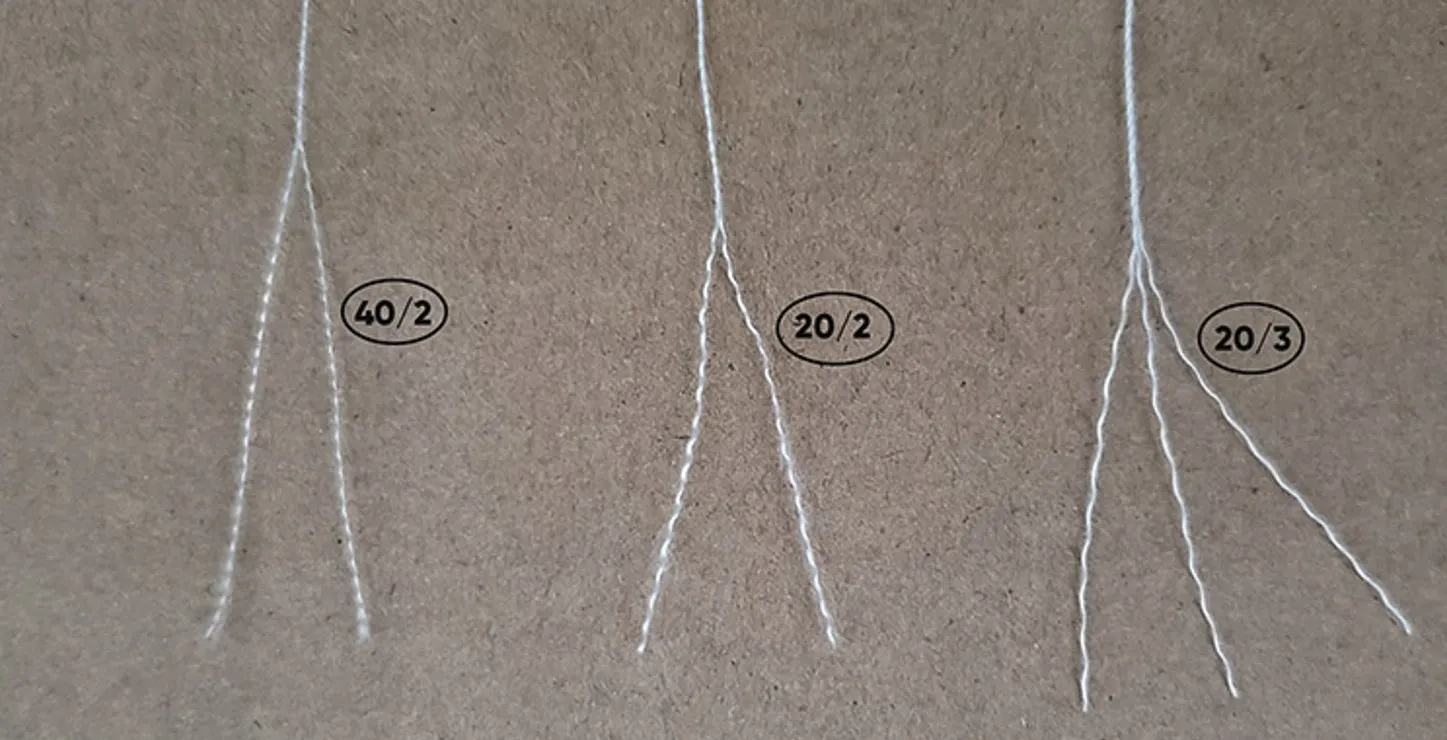
Sewing thread is made up of multiple single filaments twisted together. The number of filaments directly determines the strength and robustness of the thread. For example, a “40/2” thread means that two filaments (of a fineness rating of 40) are twisted together. This is a common standard in general garment manufacturing.

Common Thread Specifications Table
Below is a summary of how Tex, Ne construction, and needle sizes correlate to ensure seam quality:
| Tex | Ne (Construction) | Tensile Strength (cN) | Elongation (%) | Singer Needle Size |
|---|---|---|---|---|
| 18 | 60/2 | 555 | 19 | 9-10 |
| 27 | 40/2 | 850 | 20 | 11-12 |
| 40 | 40/3 | 1355 | 20 | 13-14 |
| 60 | 20/2 | 1889 | 21 | 14-16 |
| 80 | 20/3 | 2875 | 21 | 16-18 |
| 180 | 20/6 | 5975 | 22 | 22-23 |
Key Metrics Explained
1. Tex – Thread Thickness
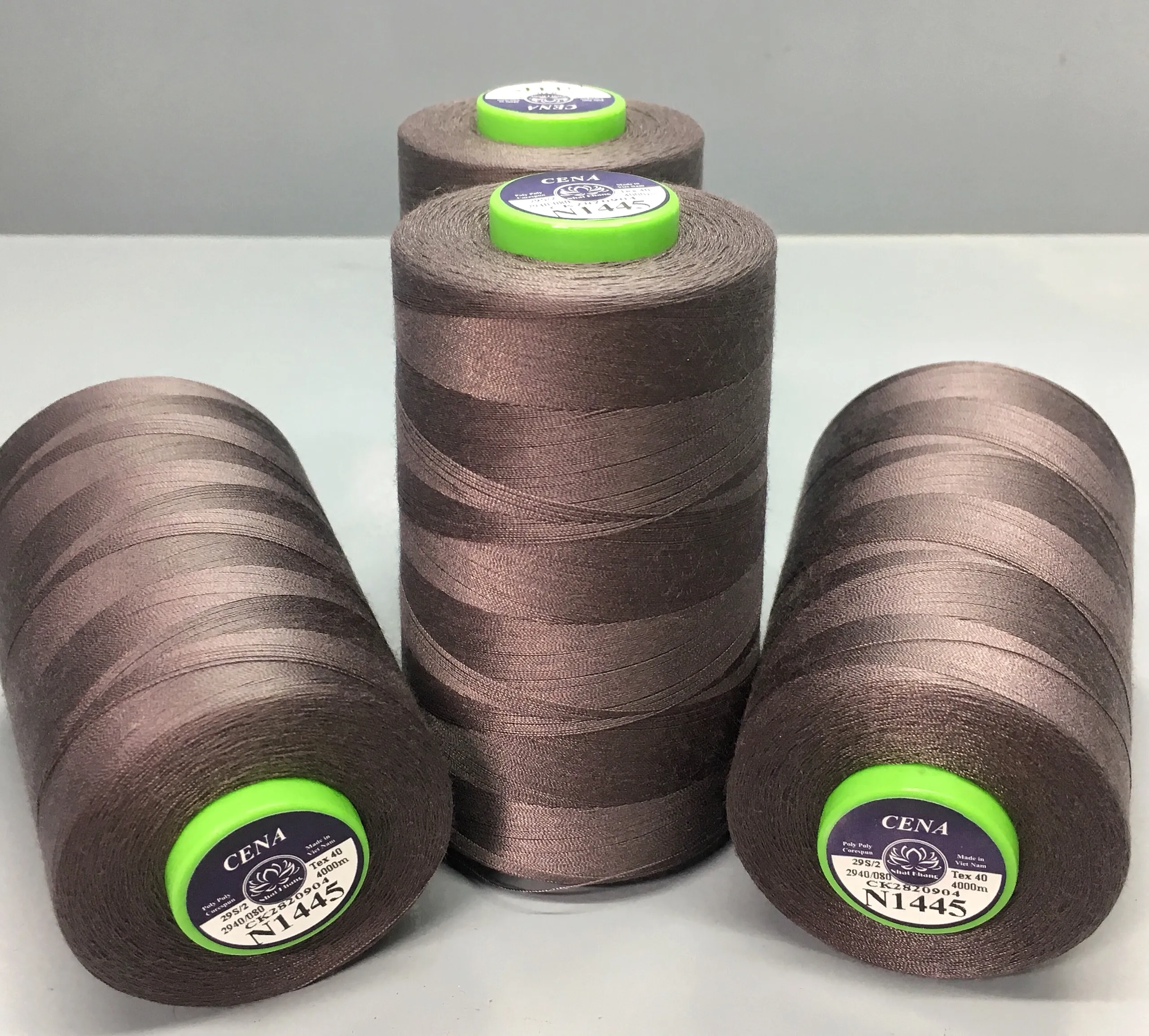
“Tex” measures the weight in grams of 1,000 meters of thread.
- Lower Tex (18, 21, 27): Finer thread for precision items like lingerie or lightweight apparel.
- Higher Tex (70, 80, 150+): Thicker thread for heavy-duty products like jackets, bags, or leather goods.
2. Thread Construction (Ne – 40/2, 60/3)
A specification like “40/2” tells you:
- First number (40): The fineness of each single filament (higher = finer).
- Second number (2): How many filaments are twisted together.
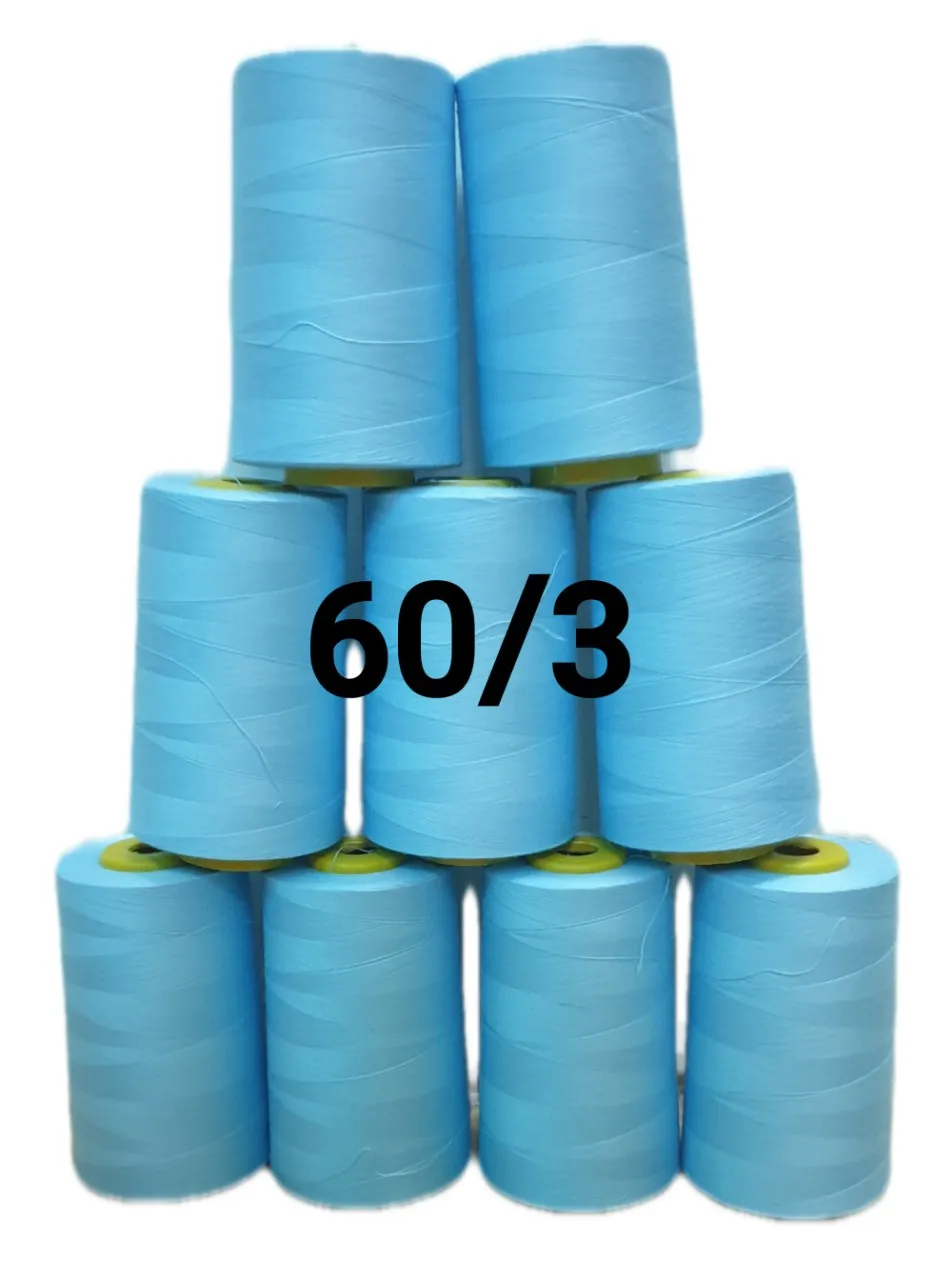
Note: A 60/3 thread can be stronger than a 40/2 because it uses three plies, even though the individual fibers are thinner.
3. Tensile Strength (cN) & Elongation (%)
Tensile Strength indicates the force a thread withstands before breaking. Elongation measures how much it stretches. For activewear or underwear, a higher elongation (20-22%) is essential to prevent seam bursting during movement.
How to Read a Label: An Example
If you see a label: “Tex 40 – 40/3 – 1355 cN – 20% – 3,000 m – Needle 12–13”, here is the interpretation:
- Tex 40: Medium thickness for jackets or trousers.
- 40/3: Three filaments twisted for extra durability.
- 1355 cN: Strong enough for high-stress seams.
- 20%: Good flexibility for movement.
- Needle 12-13: The correct size to ensure smooth sewing without skipped stitches.
Conclusion
Understanding thread specifications allows you to optimize your production process and ensure seam durability. Whether you are aiming for the precision of 60/3 or the heavy-duty strength of 20/6, choosing the right thread is a vital part of high-quality garment manufacturing. At Mekong Garment, we pay attention to these technical details to help you produce perfect finished garments.
FAQs About Sewing Thread Specifications
In Short, What do the numerical values in thread construction, such as “40/2” or “60/3”, actually represent?
These numbers refer to the thread’s physical structure and composition. The first number (e.g., 40 or 60) indicates the fineness of the single filament; a higher number generally implies a finer, thinner filament. The second number (after the slash, e.g., 2 or 3) represents the number of these single filaments twisted together to form the final thread. Therefore, a “40/2” thread consists of two filaments with a fineness rating of 40 twisted together. A “60/3” thread comprises three filaments of fineness 60. This construction directly influences the thread’s thickness and durability, with a higher number of twisted filaments typically resulting in greater tensile strength.
In short, How is the “Tex” system used to measure thread thickness?
The “Tex” system is a standard unit of measure used to determine the weight and thickness of a thread. Specifically, it indicates how many grams 1,000 metres of that thread weigh. For instance, if a thread is labeled as “27 Tex,” it means that 1,000 metres of that specific thread weighs exactly 27 grams. Because this is a direct numbering system, the relationship is straightforward: the higher the Tex value, the heavier and thicker the thread is. Manufacturers use this value to categorize threads, ranging from fine threads (Tex 18 or 21) to much thicker options (Tex 60 or 80). => Read More: How the “Tex” System Measures Thread Thickness ?
Why is Tensile Strength (cN) a vital metric for product quality?
Tensile strength measures the maximum force a thread can withstand before it snaps, expressed in centiNewtons (cN). This metric is imperative for ensuring the longevity and durability of the final garment. A higher cN figure indicates a stronger thread capable of enduring significant stress. For example, a fine thread (Tex 18) might have a tensile strength of around 555 cN, whereas a heavy-duty thread (Tex 60) can withstand up to 2,085 cN. selecting a thread with adequate tensile strength prevents seam failure during the garment’s use.
How does “Elongation at Break” affect the suitability of thread for different garments?
Elongation at break is measured as a percentage and indicates how much a thread can stretch relative to its original length before breaking. This characteristic is particularly significant when manufacturing flexible items such as sportswear, underwear, or activewear. If a garment is designed to stretch with the wearer’s movement, the sewing thread must possess high elongation properties to expand along with the fabric. If the thread lacks sufficient elongation, the seams are likely to snap when the fabric is stretched, compromising the garment’s integrity.
How do I determine the correct Singer Needle Size for a specific thread specification?
The Singer needle size must be compatible with the thickness of the thread to ensure smooth production and high-quality seams. Using the wrong needle size can lead to thread breakage or skipped stitches. Generally, finer threads (like Tex 18-24) require smaller needles, such as sizes 9-11, to maintain precision. Conversely, thicker, heavy-duty threads (like Tex 60-80) require larger needles, typically sizes 16-18, to accommodate the thread’s diameter without friction. Matching the needle size to the thread specification ensures the production process remains efficient and the seam finish is clean.
Can you provide examples of thread specifications used for heavy-duty versus light-duty applications?
For heavy-duty applications like jeans, workwear, or jackets, manufacturers typically use threads with specifications such as Tex 60 or Tex 80. These might appear as “20/2” or “20/3” in construction, offering high tensile strength (e.g., 2,085 cN or higher) to withstand rough usage. In contrast, for light-duty applications like shirts, blouses, or lightweight fashion items, finer threads are selected. These generally fall in the Tex 18 to Tex 24 range, with constructions like “60/2” or “50/2,” and lower tensile strengths (around 555 cN to 800 cN) to ensure the seams are unobtrusive and delicate.
Aside from technical specifications, what other factors should be considered when selecting thread?
While specs like Tex and tensile strength are foundational, you must also consider the compatibility of the thread with the fabric material. The weight of the thread should align with the weight of the fabric; heavy fabrics require stronger threads, while delicate fabrics need finer threads to avoid puckering. Additionally, properties such as color fastness are imperative to ensure the thread does not fade or bleed during washing. Shrinkage is another factor; the thread should have a shrinkage rate similar to the fabric to prevent the seams from distorting after the garment is laundered.