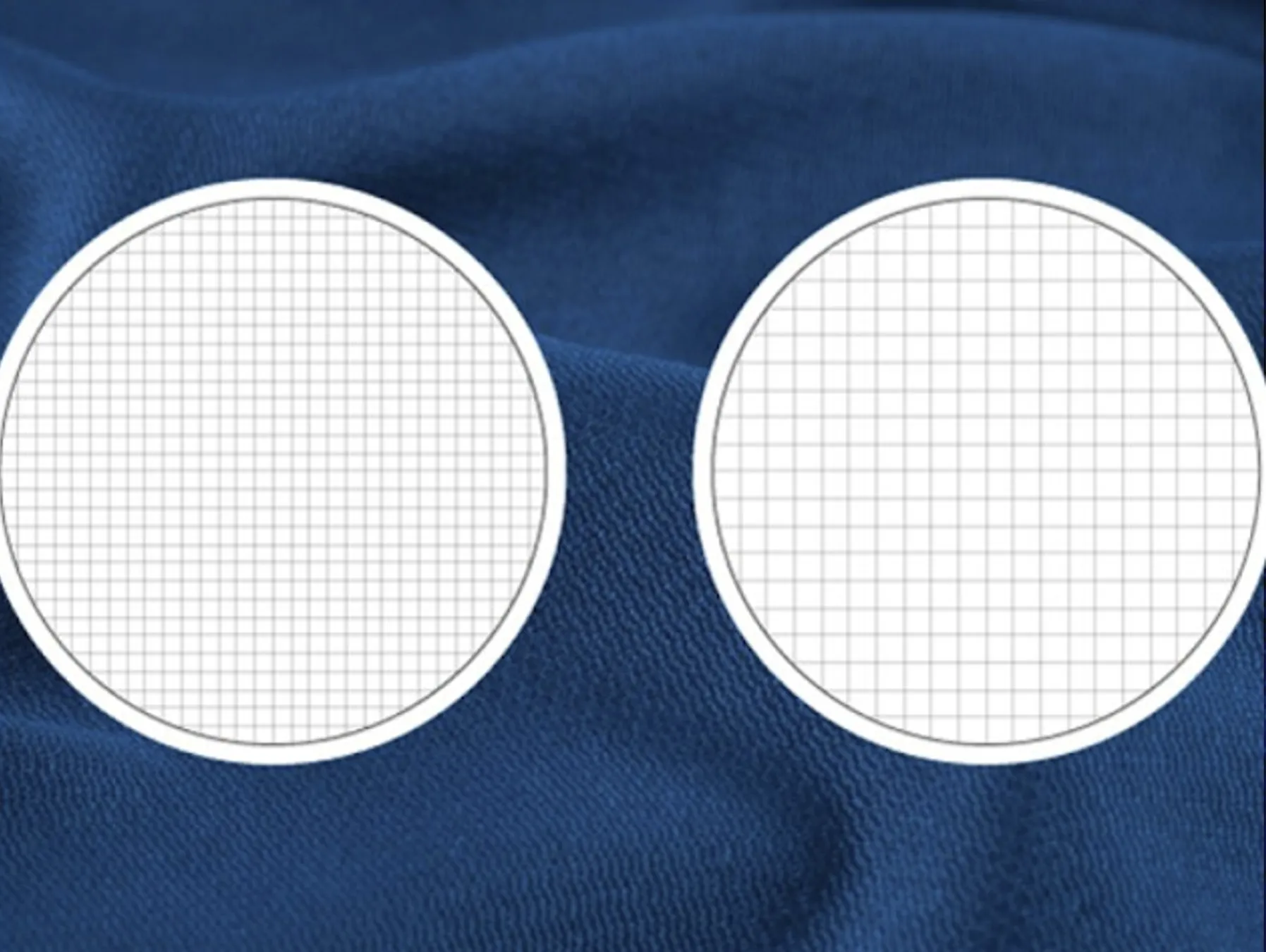
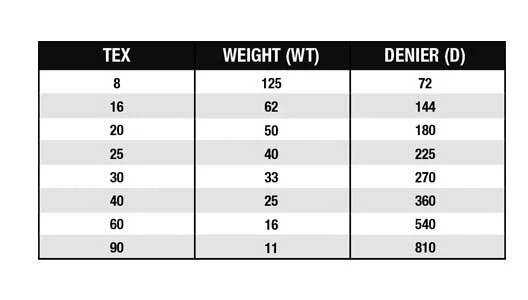
Comparison of Thread Thickness by Tex Values

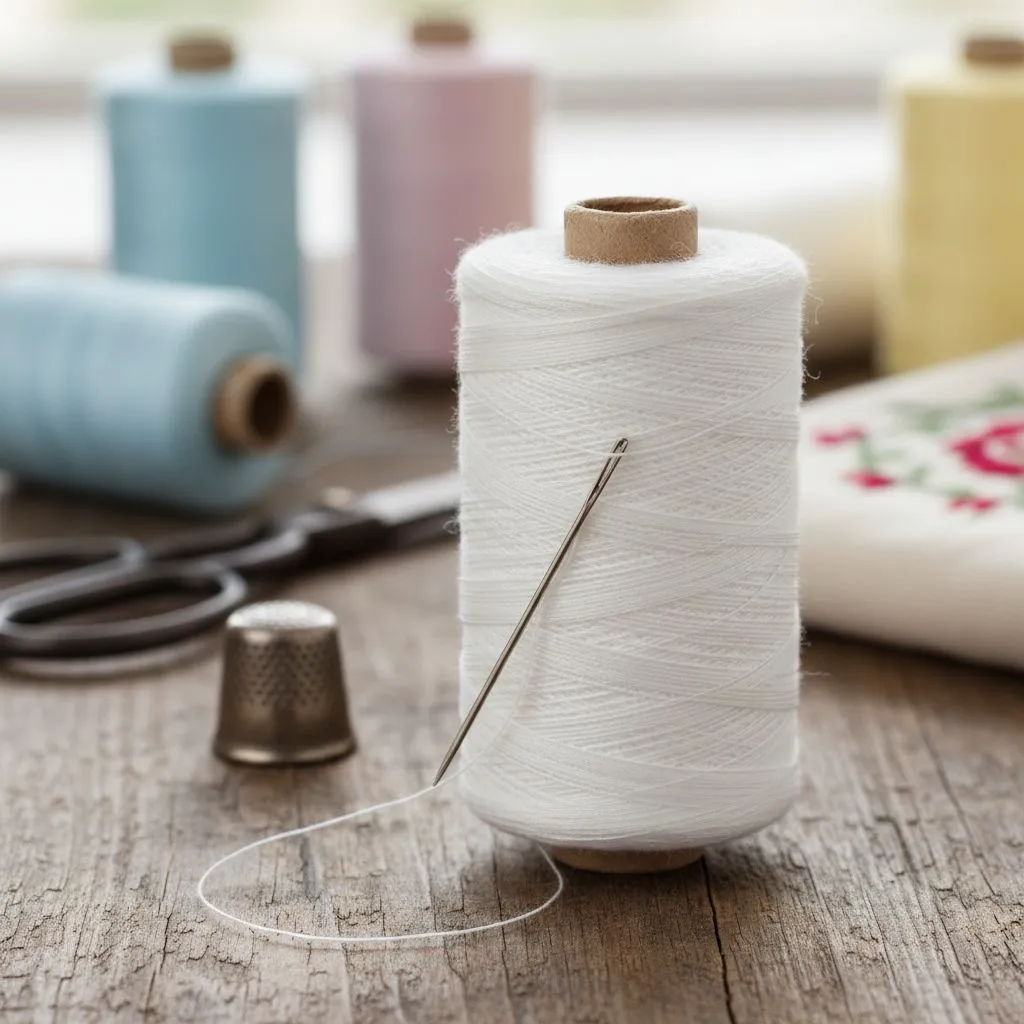
The Tex system provides a consistent, direct method to quantify thread mass, eliminating the confusion often caused by variable count systems. Simply put, the Tex value represents the weight in grams of 1,000 meters of thread. A higher Tex number indicates a heavier, thicker thread, making it the preferred metric for technical specifications in modern garment manufacturing.
=> Related Article: Spun Polyester Thread: Best Cost-To-Performance Ratio
Comparison of Thread Thickness
Common Tex Value Classifications
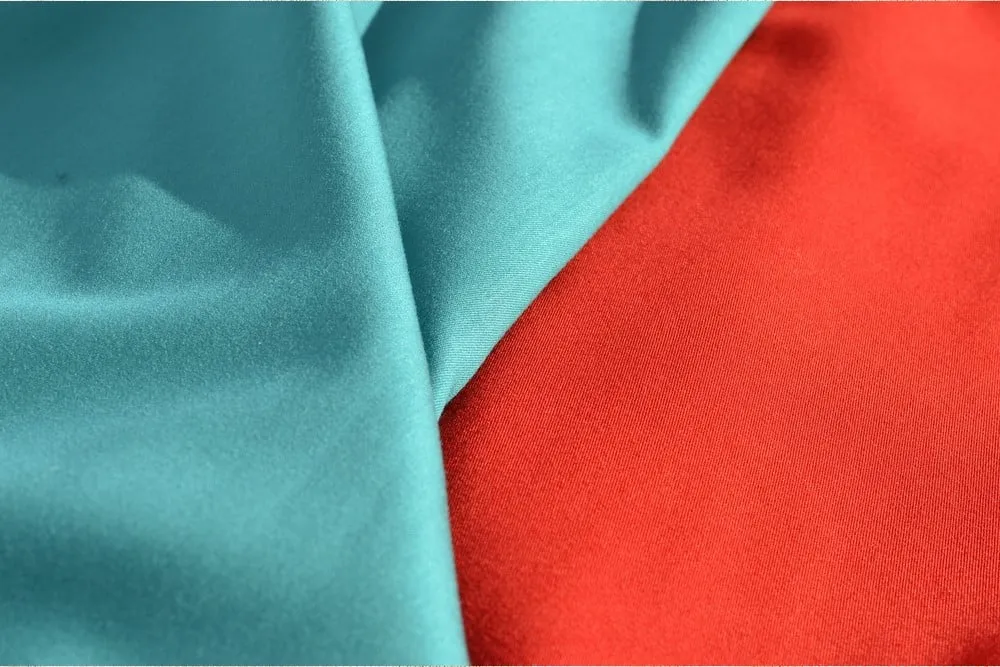
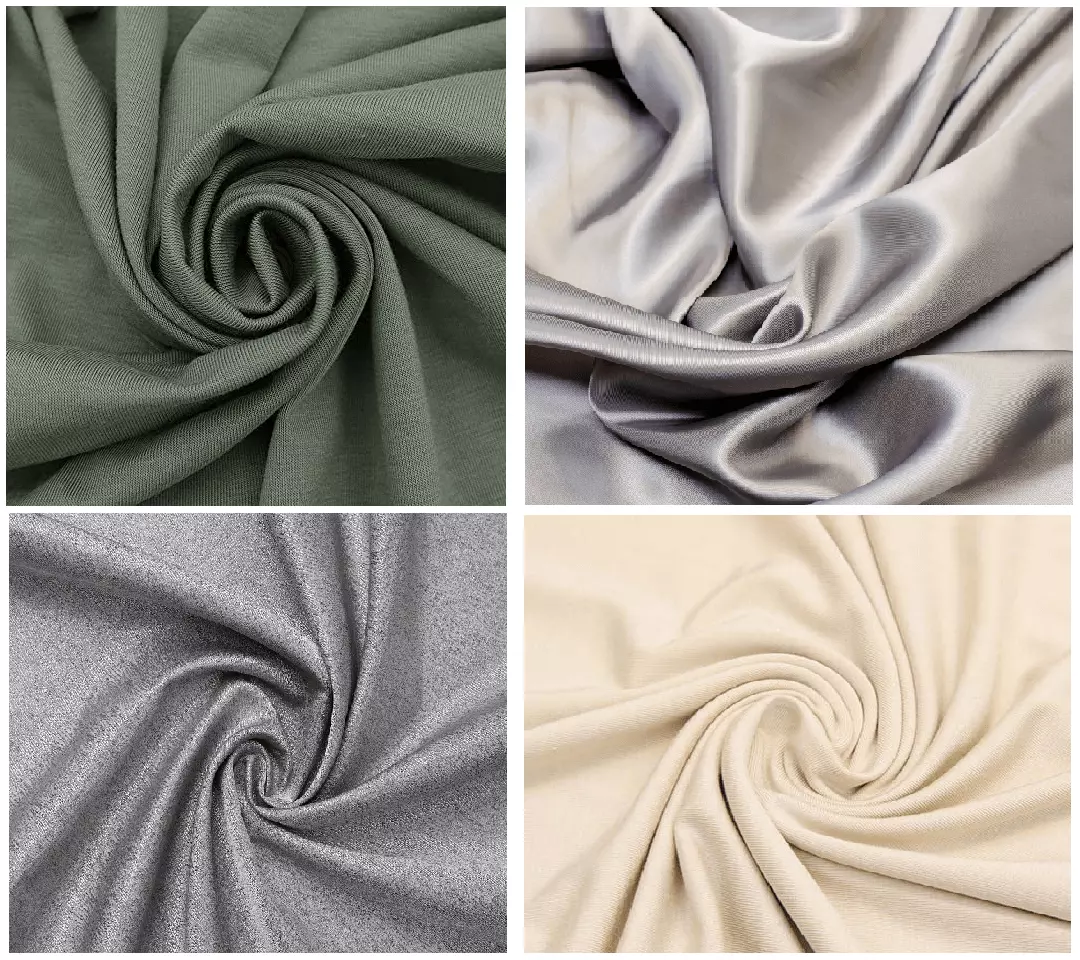
Utilizing Tex values as your primary guide ensures you pair the right thread with the right fabric. Recognizing these distinctions prevents issues like puckering or fabric damage caused by using overly heavy thread on delicate materials.
| Thread Category | Tex Range | Fabric Weight Suitability |
|---|---|---|
| Fine / Lightweight | Tex 16 – Tex 24 | Silk, linings, lightweight blouses. |
| Medium / General Purpose | Tex 30 – Tex 40 | Trousers, knitwear, casual wear. |
| Heavy / Heavy Duty | Tex 60 – Tex 105+ | Denim, workwear, leather goods. |
Detailed Application by Tex Value
To achieve the best aesthetic and structural result, follow these industry benchmarks:
- Tex 18: Ideal for overlocking and blind stitching on very fine fabrics.
- Tex 24: The standard for dress shirts and lightweight wovens.
- Tex 40: The “workhorse” for general apparel and trousers.
- Tex 60 & 80: Reserved for heavy denim and decorative topstitching.
Impact of Tex on Machine Performance
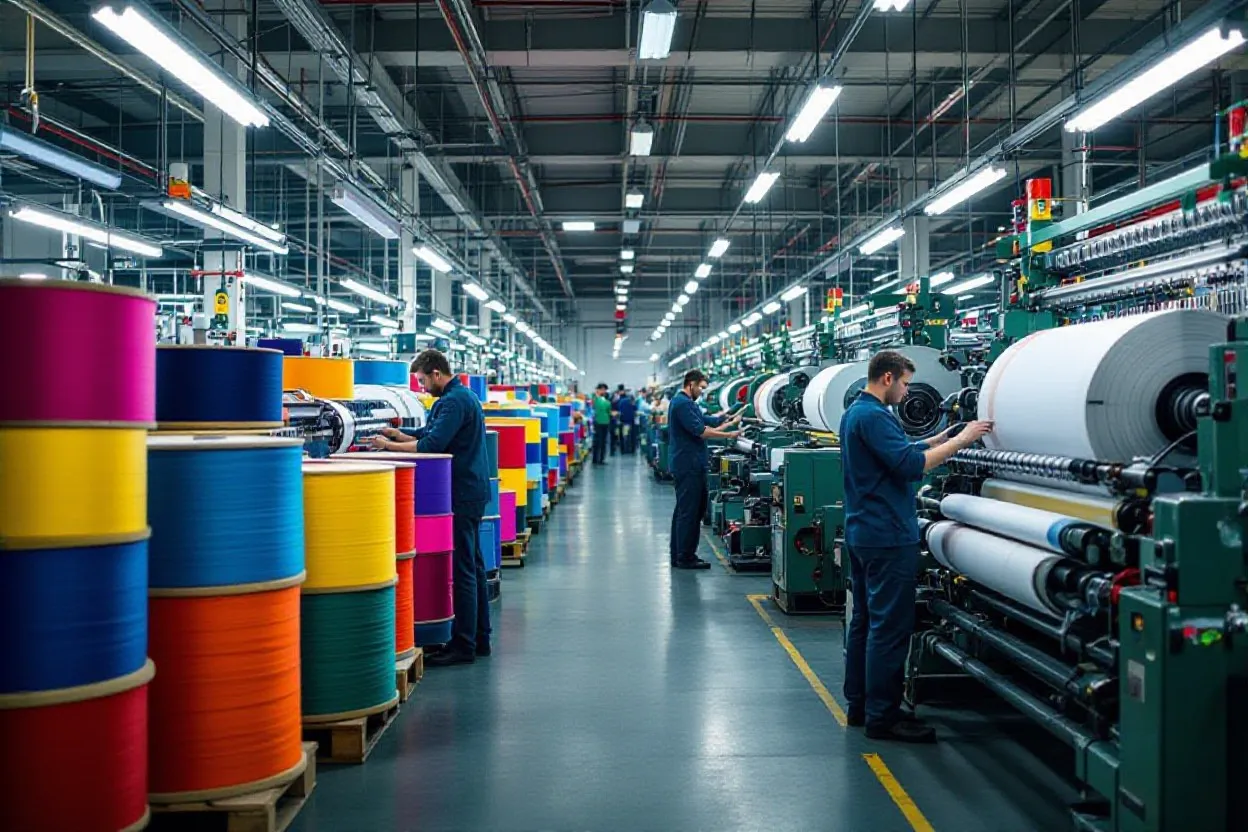
Selecting the correct Tex value directly dictates machine performance. Using a thread that is too thick for the fabric risks seam puckering, while a thread that is too fine may lead to seam failure under tension. Additionally, the thread’s mass must match your needle size to prevent shredding and friction-induced breakage.
Technical Note: For Tex 40 thread, a size 90/14 needle is typically recommended to ensure the thread passes through the eye without friction.

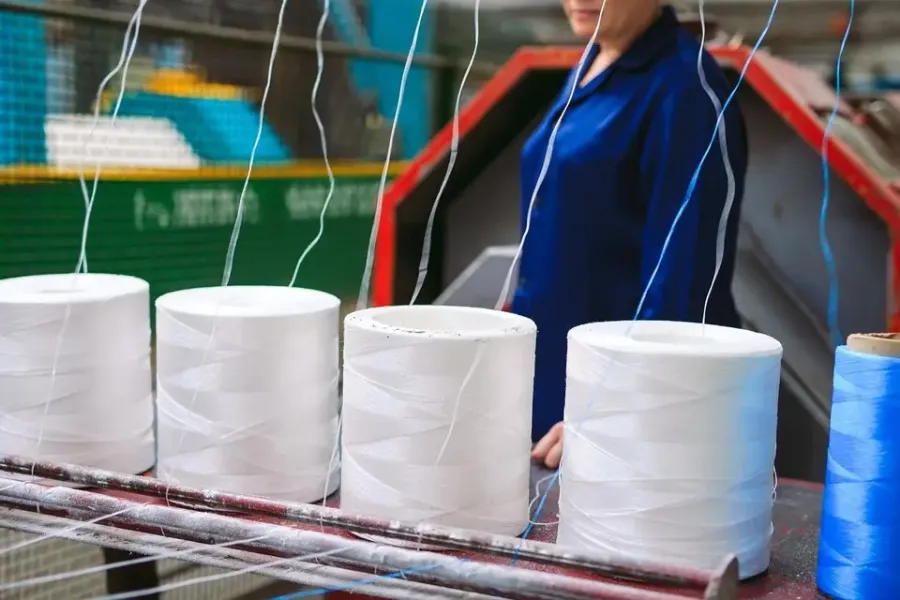
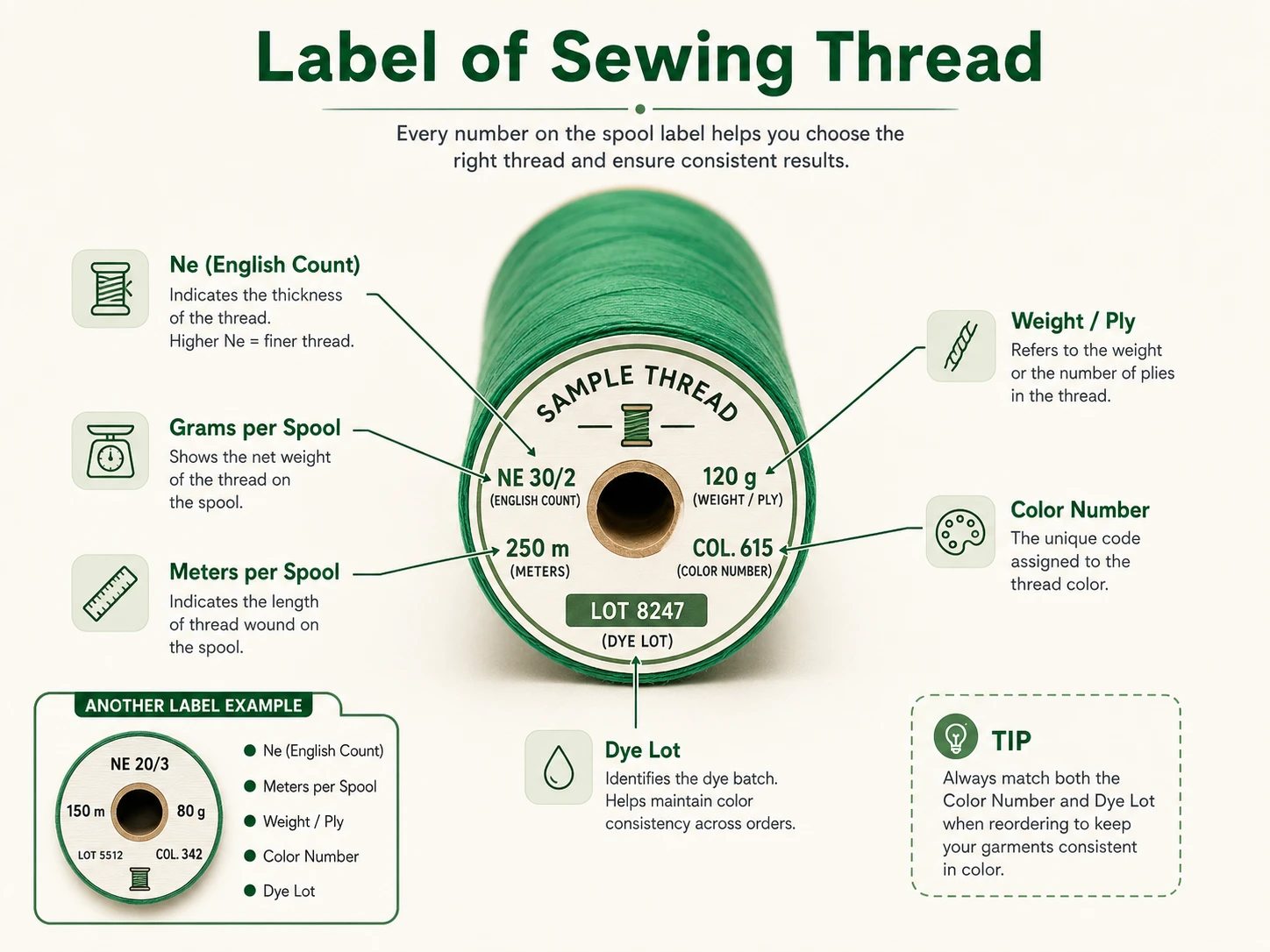
What Thread Construction Labels Mean (e.g., 40/2, 60/3)
Labels like “40/2” or “60/3” describe the physical build of the thread. The first number represents the yarn fineness, while the second indicates the ply (the number of strands twisted together).
- 40/2: Two filaments of size 40 twisted together.
- 60/3: Three filaments of size 60 twisted together. This is generally stronger and more robust than a 2-ply thread, providing the durability needed for high-stress seams.
Conclusion
Choosing the right thread thickness is one of the most important decisions in garment production. When you understand Tex values and how they relate to strength and appearance, you can match every seam perfectly to the fabric it supports. This attention to technical detail ensures your products look cleaner, last longer, and pass quality checks with fewer issues. At Mekong Garment, we prioritize matching thread specifications to fabric weight to ensure the highest quality finish for every order.