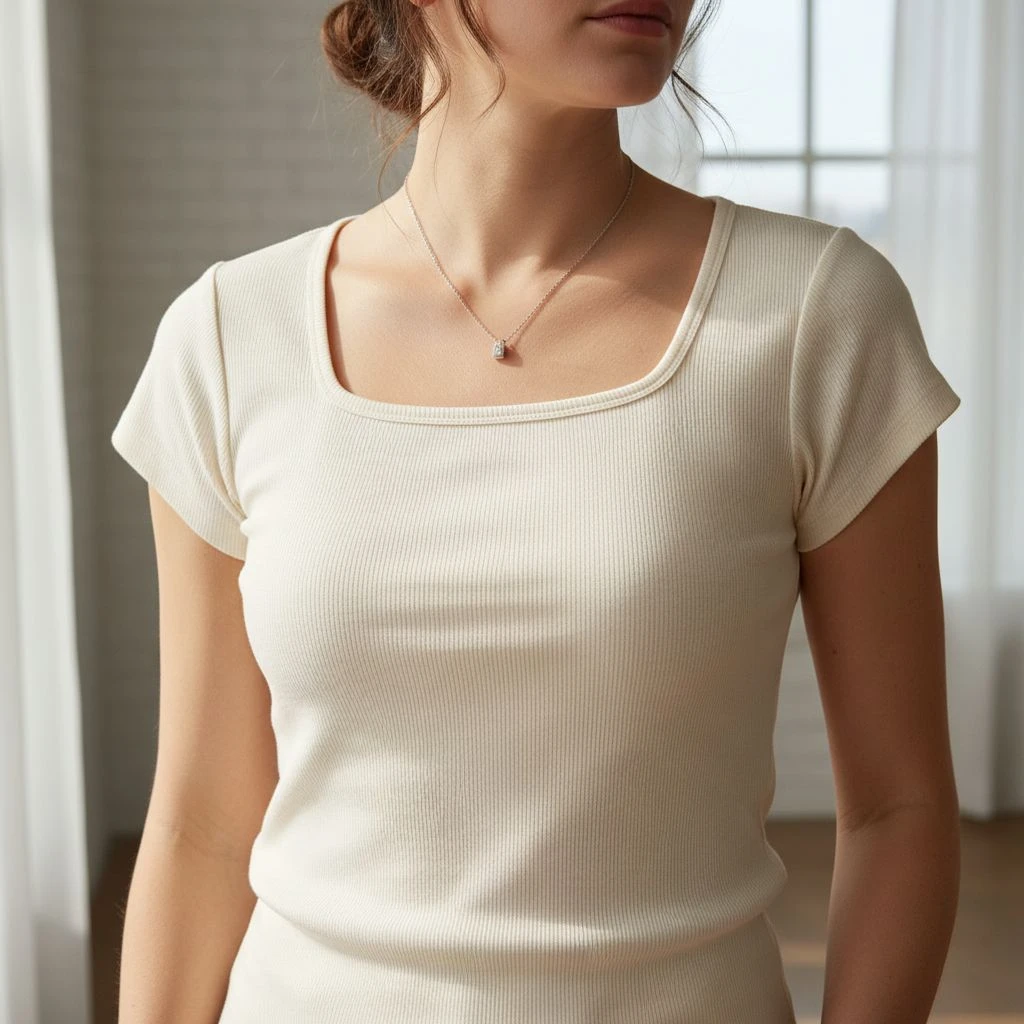
Scoop Neck (U-Neck) T-Shirts: Pros, Cons, and What Brand Owners Should Know

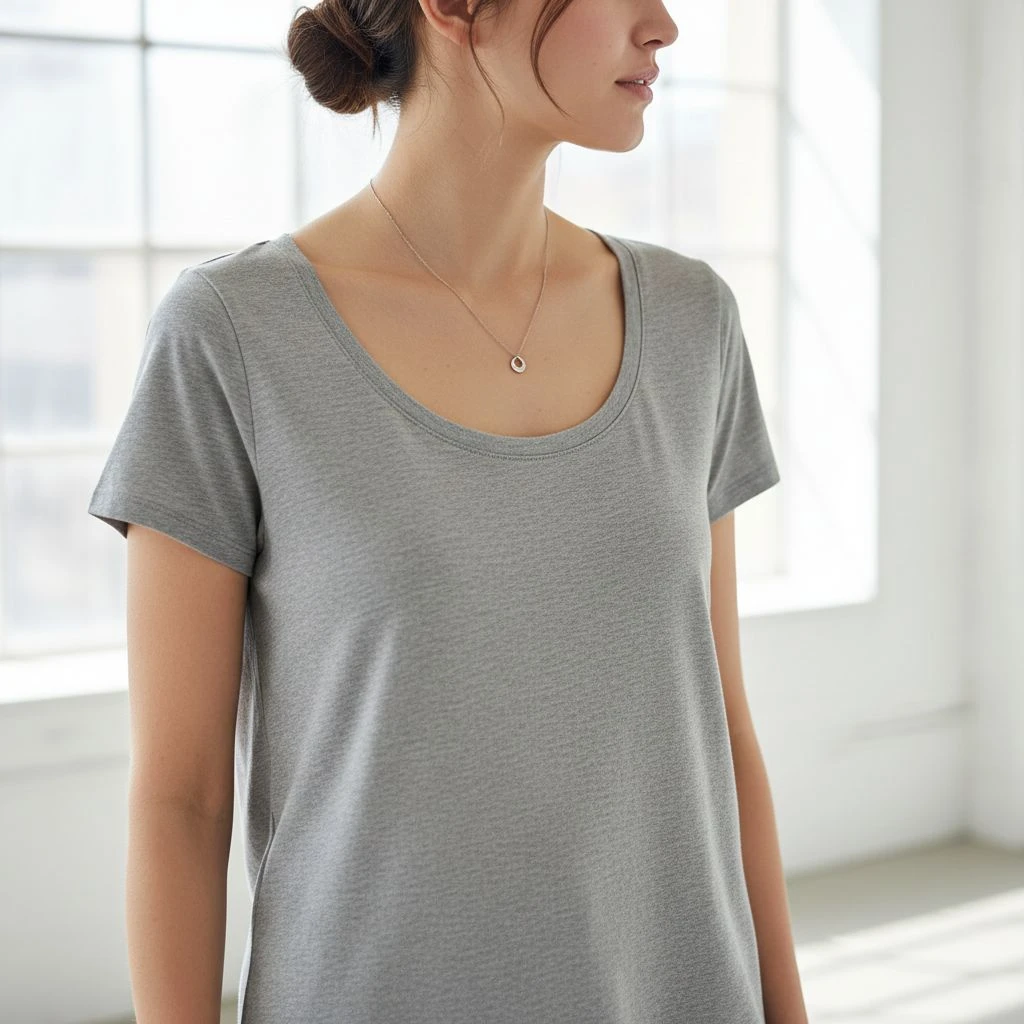
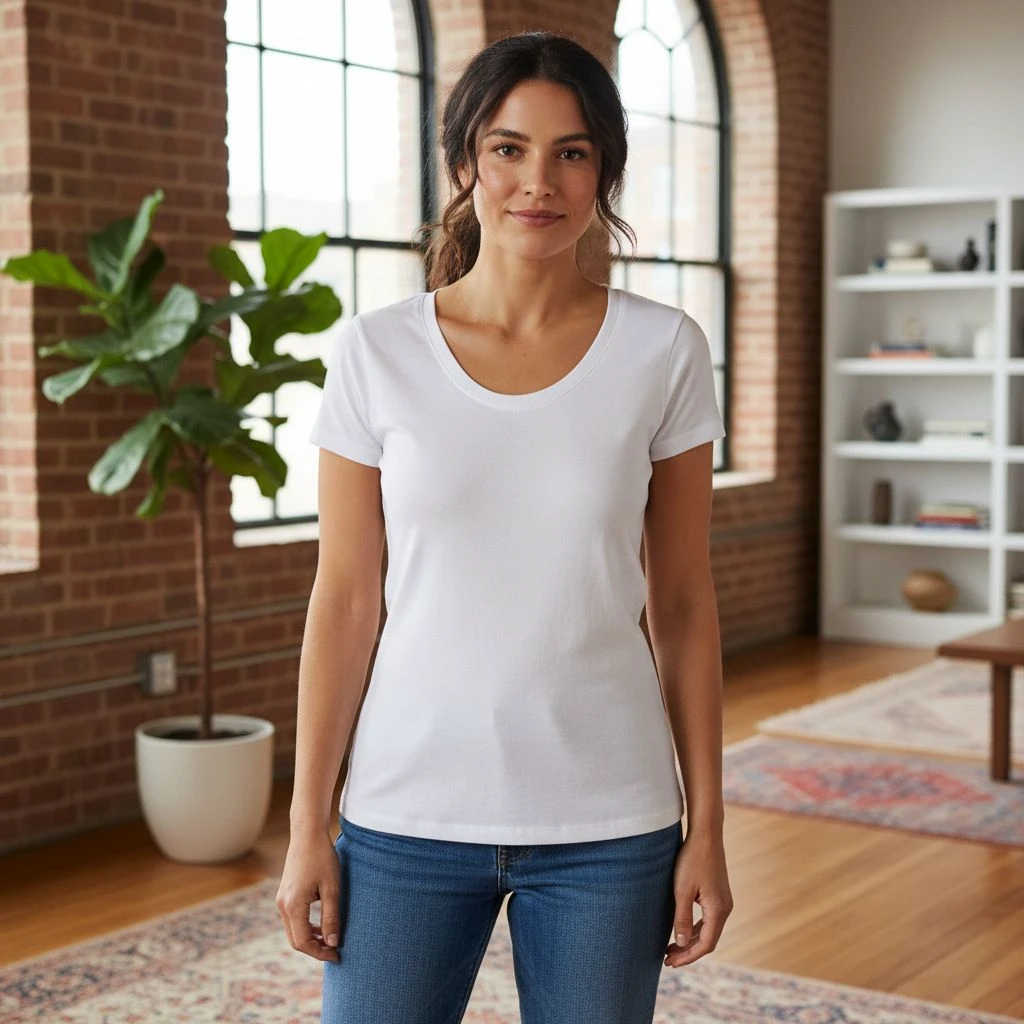
A scoop neck (U-neck) T-shirt has a rounded neckline that sits lower and wider than a standard crew neck. The result is a softer, more open frame around the neck and collarbone. It’s a common choice for women’s basics, summer drops, and “elevated tee” lines because it can make a simple jersey T-shirt look more styled without changing the body silhouette. But here’s the part brand owners sometimes underestimate: a scoop neck is more sensitive to construction and fit than a crew neck. If the opening isn’t stabilized and the pattern isn’t graded carefully, the neckline can stretch, wave, or gape after wear and washing. That’s where returns start.
=> Read More: T Shirts Manufacturing Vietnam | Mekong Garment Factory
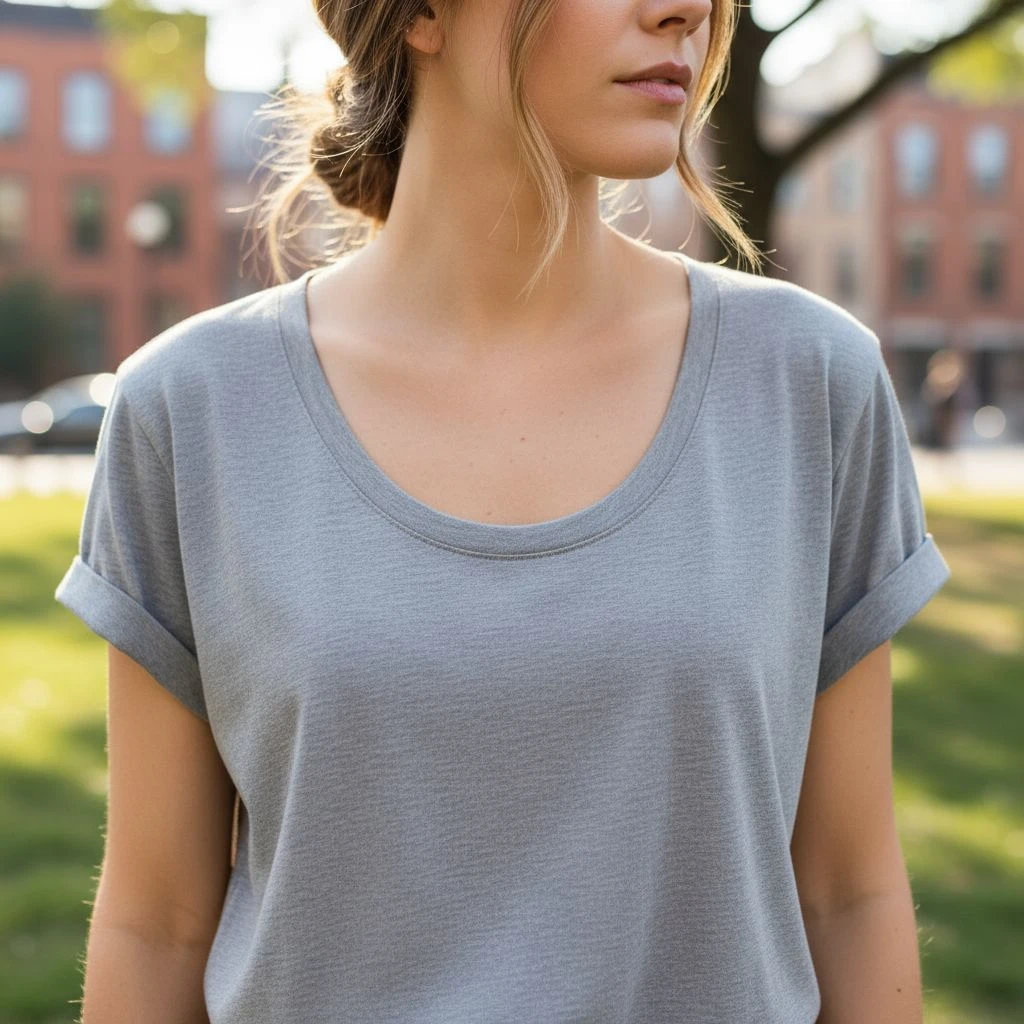
What Exactly Is a Scoop Neck (U-Neck) T-Shirt?
A scoop neck T-shirt has a rounded neckline that sits lower and usually wider than a classic crew neck. The front opening generally drops farther than the back neckline, creating a U-shaped frame around the:
- Neck
- Collarbone
- Upper chest
The visual effect is usually softer than a crew neck and less angular than a V-neck.
In simple terms:
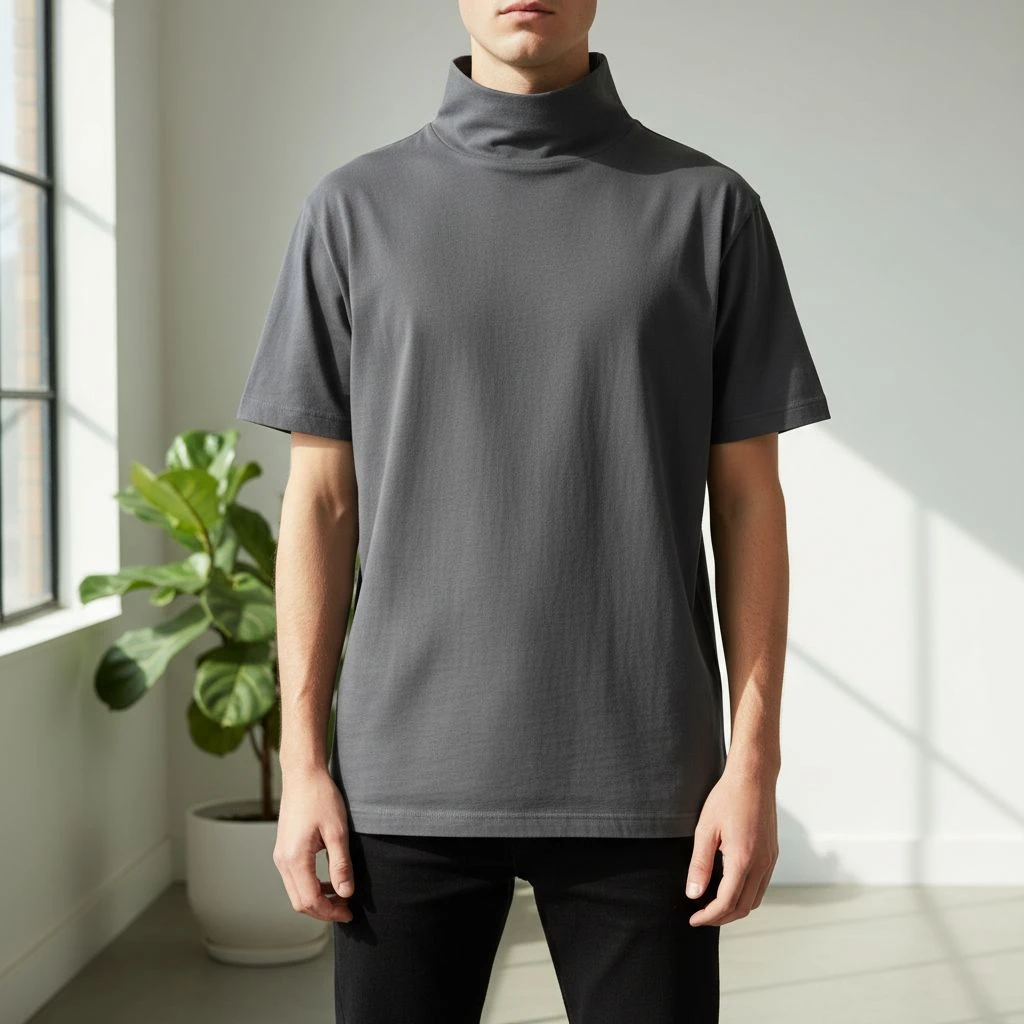
- Crew Neck = Higher + More Closed
- Scoop Neck = Lower + Wider + More Open

Common depths available:
- Shallow scoop (mainstream),
- Classic scoop (standard for women’s basics),
- Deep scoop (fashion-forward with higher coverage risk).
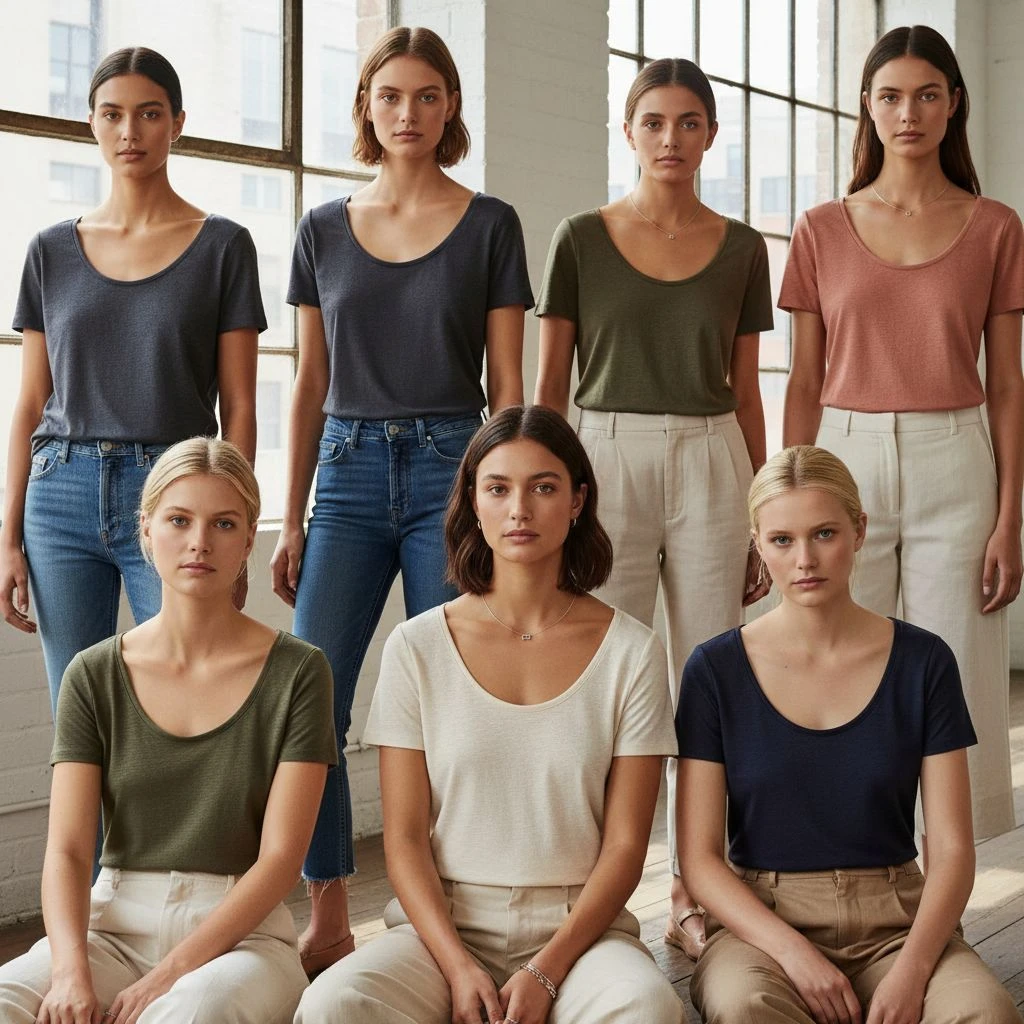
A scoop neck (U-neck) T-shirt is a tee with a rounded neckline that’s wider and lower than a classic crew neck. The front curve usually drops more than the back, creating a softer, more open frame around the neck and collarbone. comparison
Why Is It Called a U-Neck?
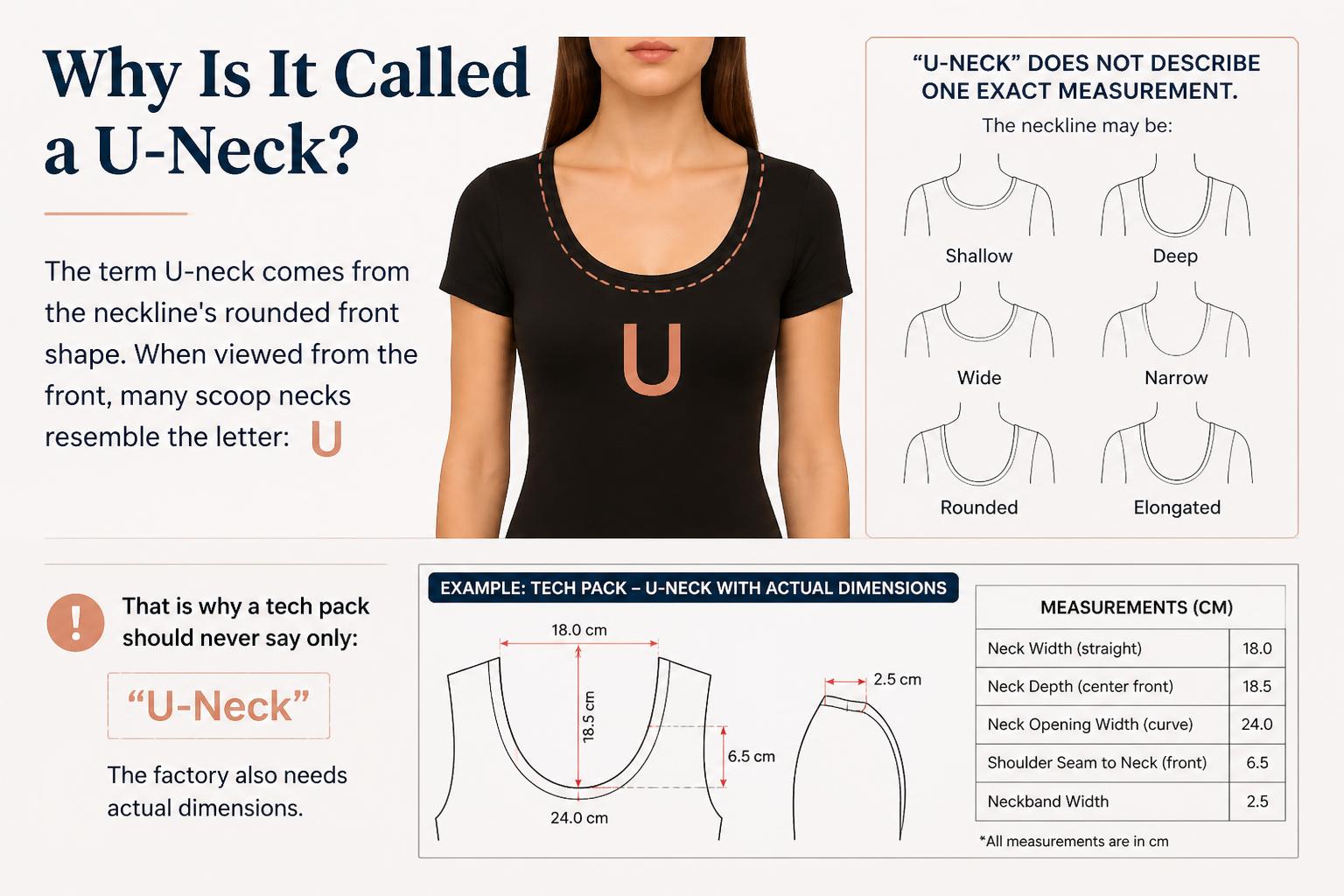
The term U-neck comes from the neckline’s rounded front shape. When viewed from the front, many scoop necks resemble the letter: U However, “U-neck” does not describe one exact measurement. The neckline may be:
- Shallow
- Deep
- Wide
- Narrow
- Rounded
- Elongated
That is why a tech pack should never say only: “U-Neck” The factory also needs actual dimensions.
Why Brands Like to Sell Scoop Necks
Scoop necks are a small pattern change that creates a big style shift. With just a wider, lower neckline, a basic tee instantly looks more “designed” and more feminine without changing the body fit or overall silhouette. This allows brands to expand a core range efficiently while keeping production simple.
Visible styling difference with minimal cost impact:
- You don’t need new trims like plackets or expensive collars.
- You can keep the same body block and adjust only the neckline curve.
- The tee moves from “basic” to “fashion basic” in the buyer’s mind.

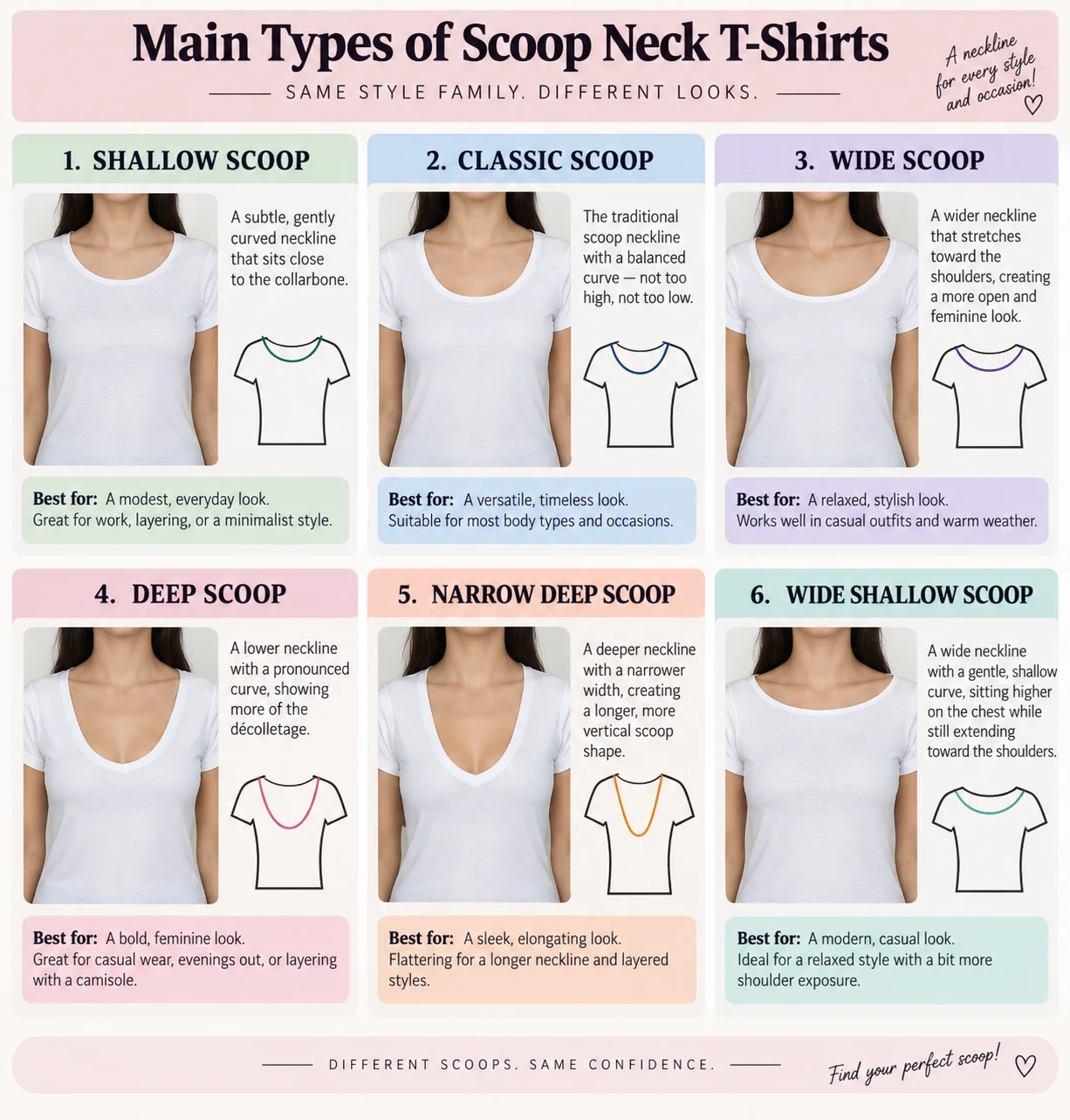
Main Types of Scoop Neck T-Shirts
Not every scoop neck has the same depth or width. Brands should first define which direction they want.
| Scoop Type | Appearance | Typical Use |
|---|---|---|
| Shallow Scoop | Slightly lower than crew neck | Everyday basics |
| Classic Scoop | Balanced open U-shape | Women’s core T-shirts |
| Wide Scoop | More collarbone exposure | Relaxed fashion basics |
| Deep Scoop | Stronger fashion look | Fashion tops |
| Narrow Deep Scoop | Long vertical U-shape | Fitted tops |
| Wide Shallow Scoop | Open but controlled | Summer / layering tees |
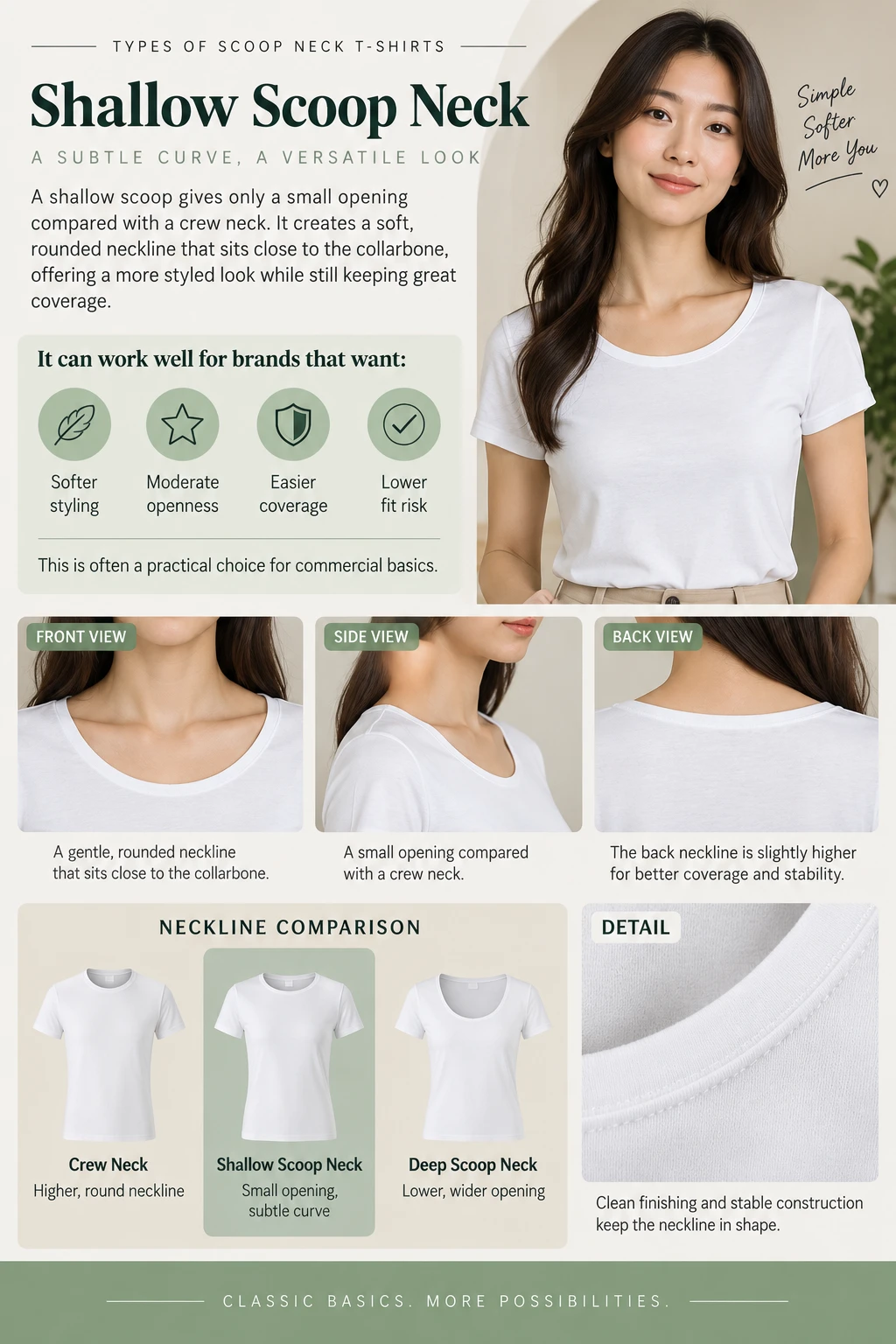
Shallow Scoop Neck
A shallow scoop gives only a small opening compared with a crew neck.
It can work well for brands that want:
- Softer styling
- Moderate openness
- Easier coverage
- Lower fit risk
This is often a practical choice for commercial basics.
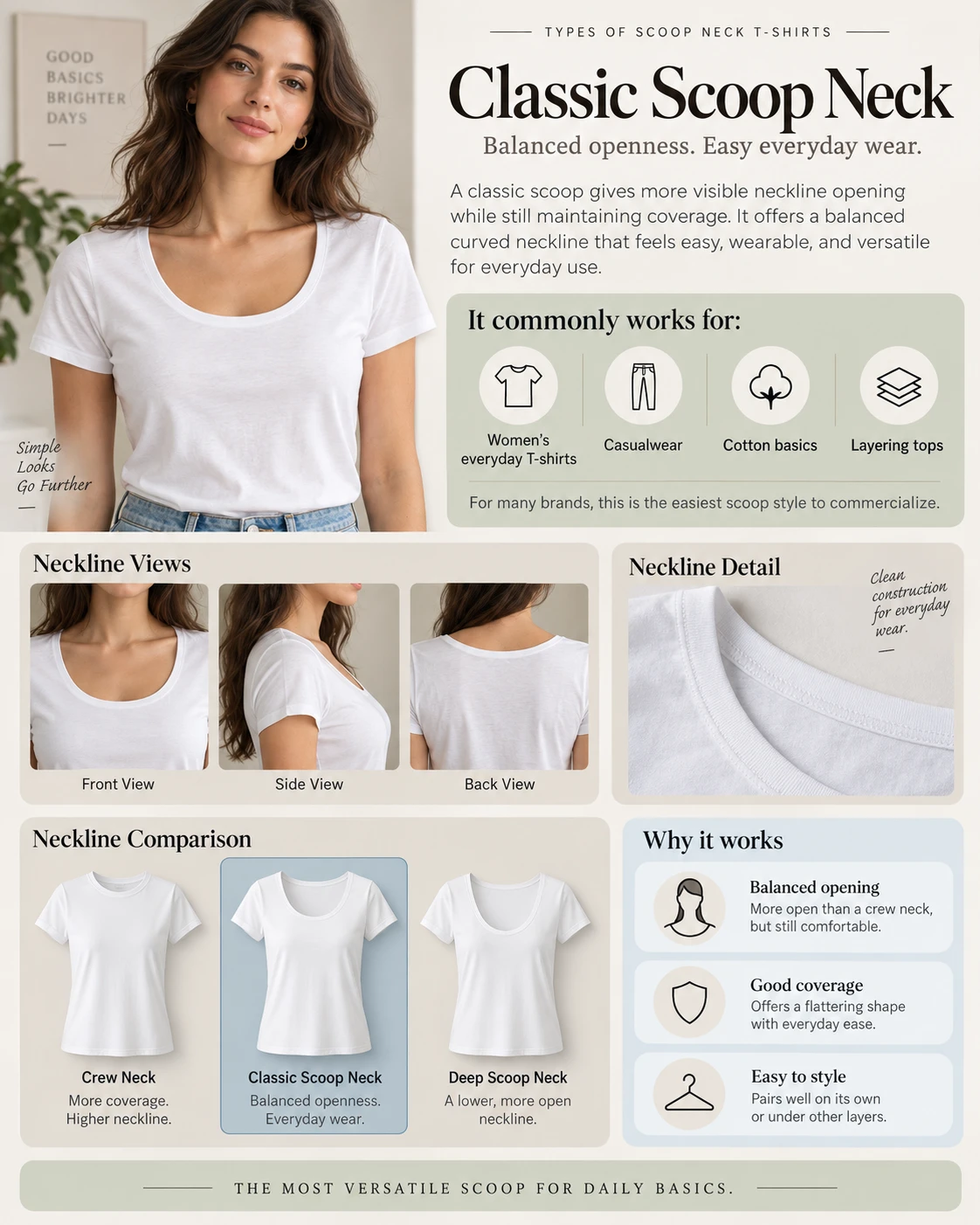
Classic Scoop Neck
A classic scoop gives more visible neckline opening while still maintaining coverage.
It commonly works for:
- Women’s everyday T-shirts
- Casualwear
- Cotton basics
- Layering tops
For many brands, this is the easiest scoop style to commercialize.
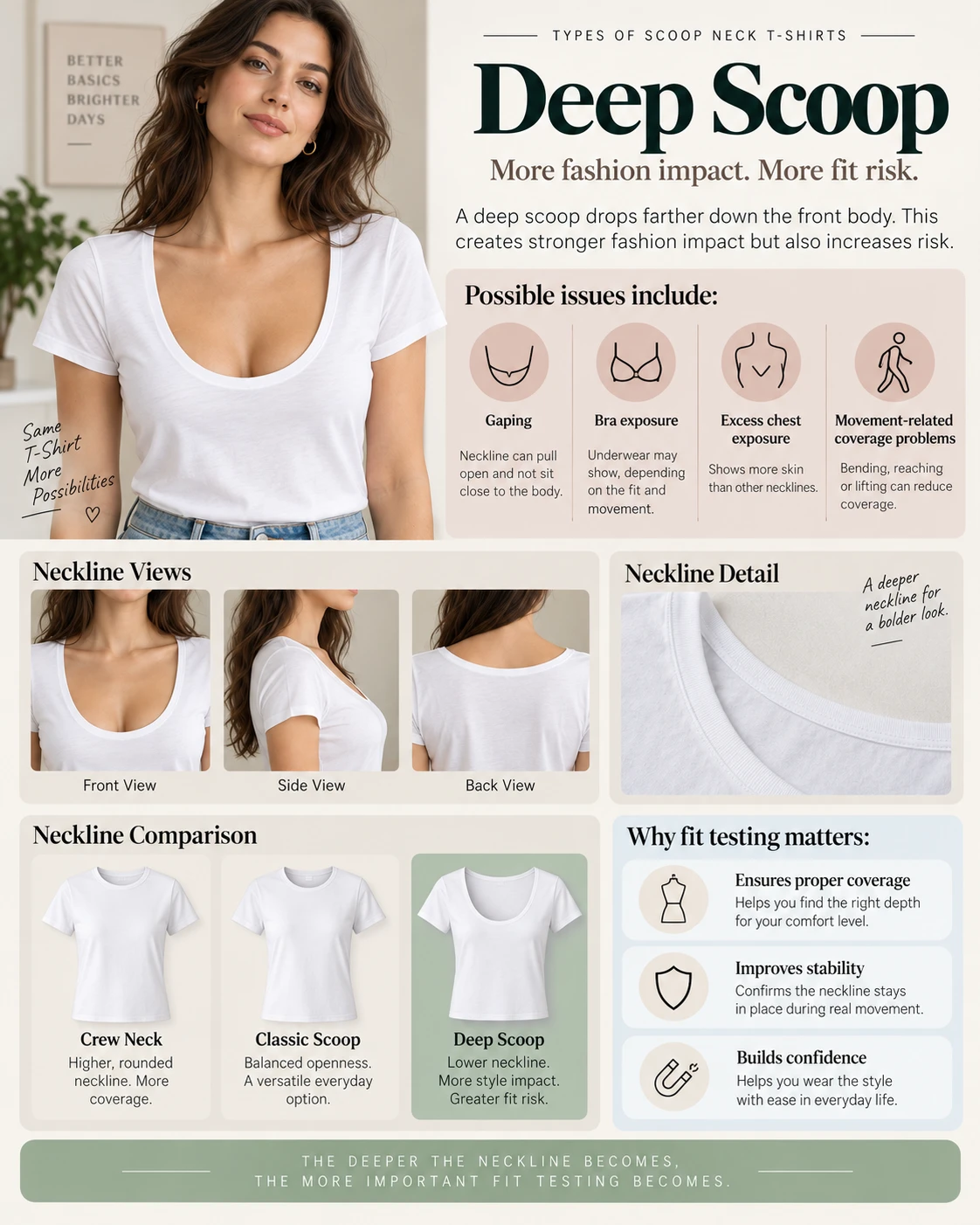
Deep Scoop Neck
A deep scoop drops farther down the front body. This creates stronger fashion impact but also increases risk.
Possible issues include:
- Gaping
- Bra exposure
- Excess chest exposure
- Movement-related coverage problems
The deeper the neckline becomes, the more important fit testing becomes.
Pros and Cons of Scoop Neck T-Shirts
Understanding both sides helps you choose the right scoop depth and deliver a neckline that looks clean even after repeated washing.
| Pros | Cons |
|---|---|
| Softer visual appearance | More sensitive to stretching |
| Easy basic-to-fashion update | Can become wavy |
| Comfortable open neckline | Can gape |
| Works well for layering | Deep styles reduce coverage |
| Jewelry-friendly | Bra straps may become visible |
| Good for women’s basics | Grading needs more control |
| Works with many knit fabrics | Fabric recovery matters |
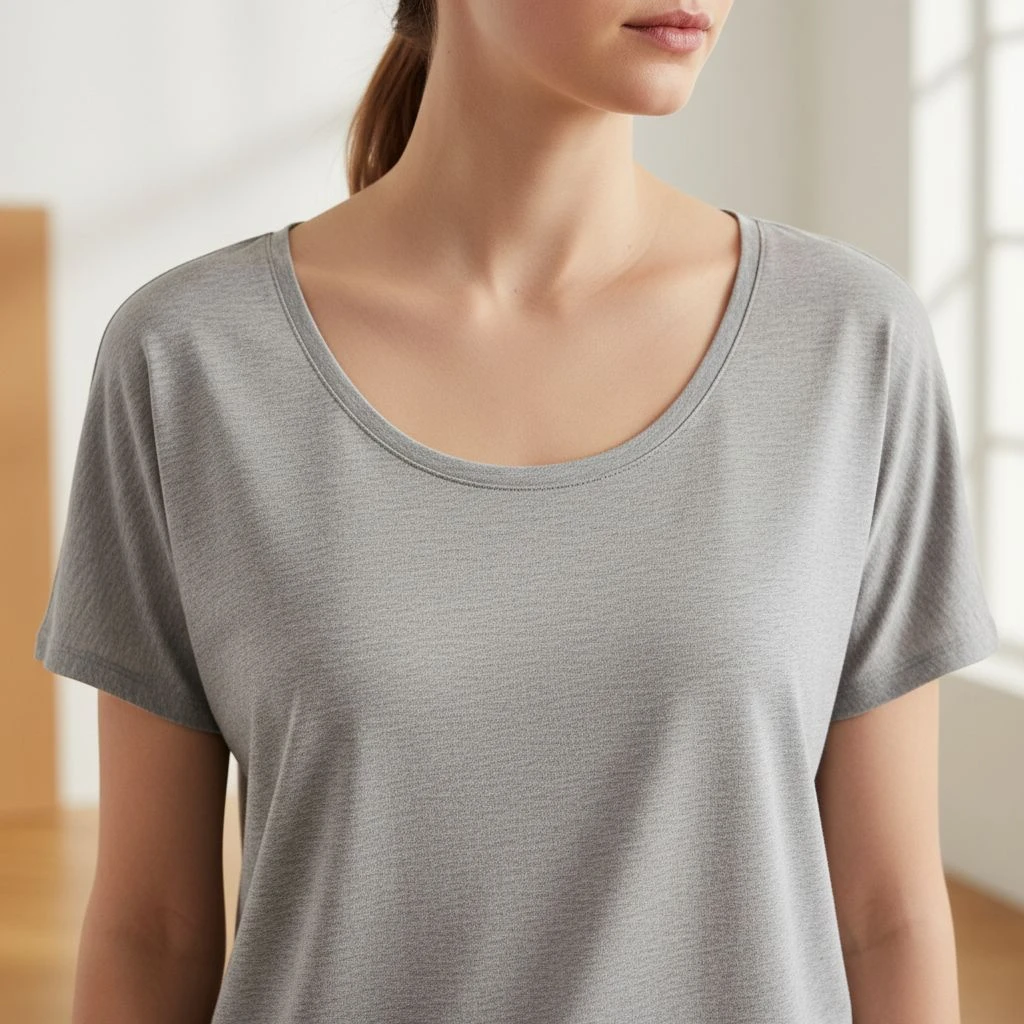
Pros:
- 1) More flattering framing: Softens the overall look and is perceived as more feminine.
- 2) Enhanced Comfort: Feels less restrictive, which is ideal for hot climates.
- 3) Efficient Expansion: Expands a core line without adding complex new SKUs.
- 4) Photogenic Styling: Jewelry-friendly and easy to layer, improving e-commerce conversion.

Cons:
- 1) Stretching Risk: The wider curve is prone to “waviness” if rib recovery is weak.
- 2) Gaping Issues: Higher fit risk if grading rules scale width too aggressively between sizes.
- 3) Modesty Concerns: Deeper scoops may show bra straps or more chest than conservative markets prefer.
- 4) Fabric Sensitivity: Poor fabric recovery increases the risk of neckline growth.
Best Use for Scoop Neck T-Shirts
Scoop necks are particularly useful when the brand wants a more open and fashion-oriented basic. Common applications include:
- Women’s everyday T-shirts
- Premium basics
- Fitted tops
- Summer collections
- Loungewear
- Layering pieces
The exact neckline should still match the intended consumer.
Scoop Neck T-Shirts for Summer Collections
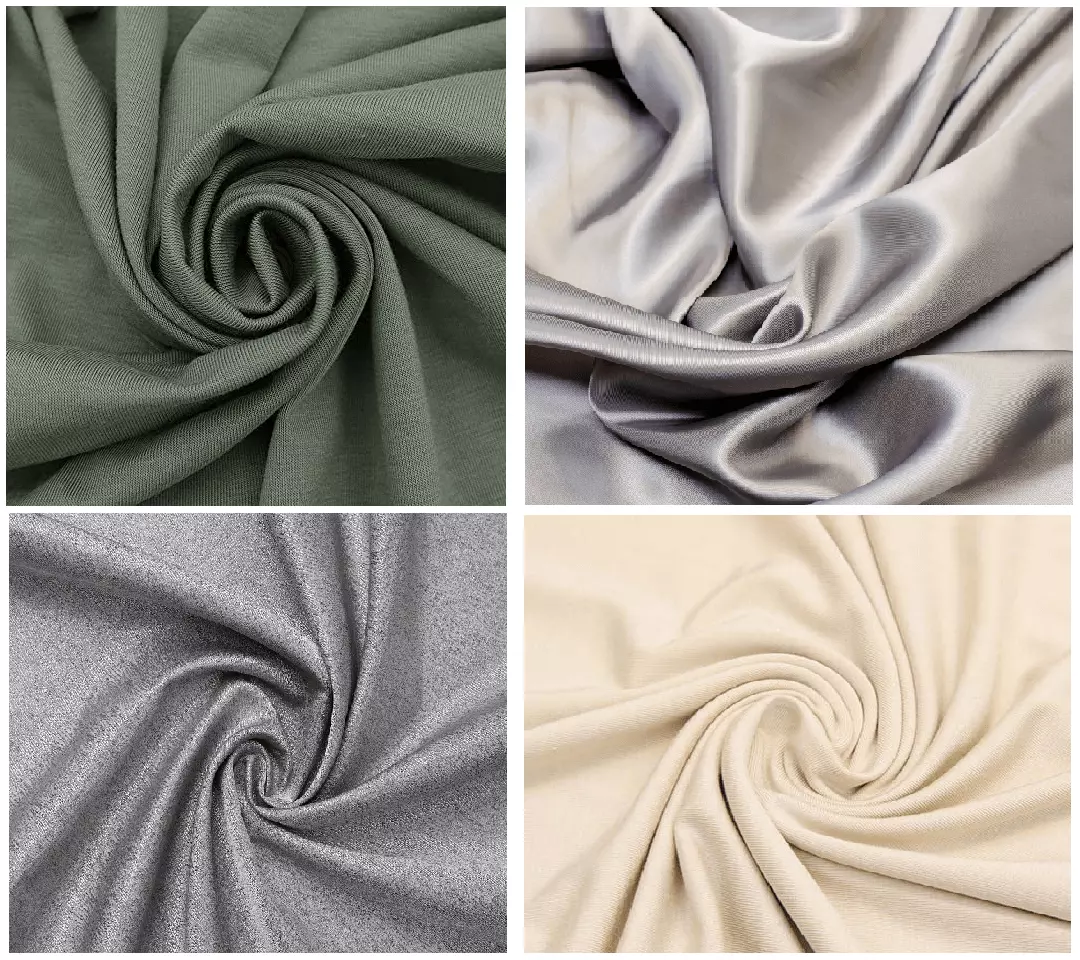
The open neckline can support a lighter summer aesthetic. Possible fabric directions include:
- Cotton jersey
- Cotton-elastane
- Modal blends
- Viscose blends
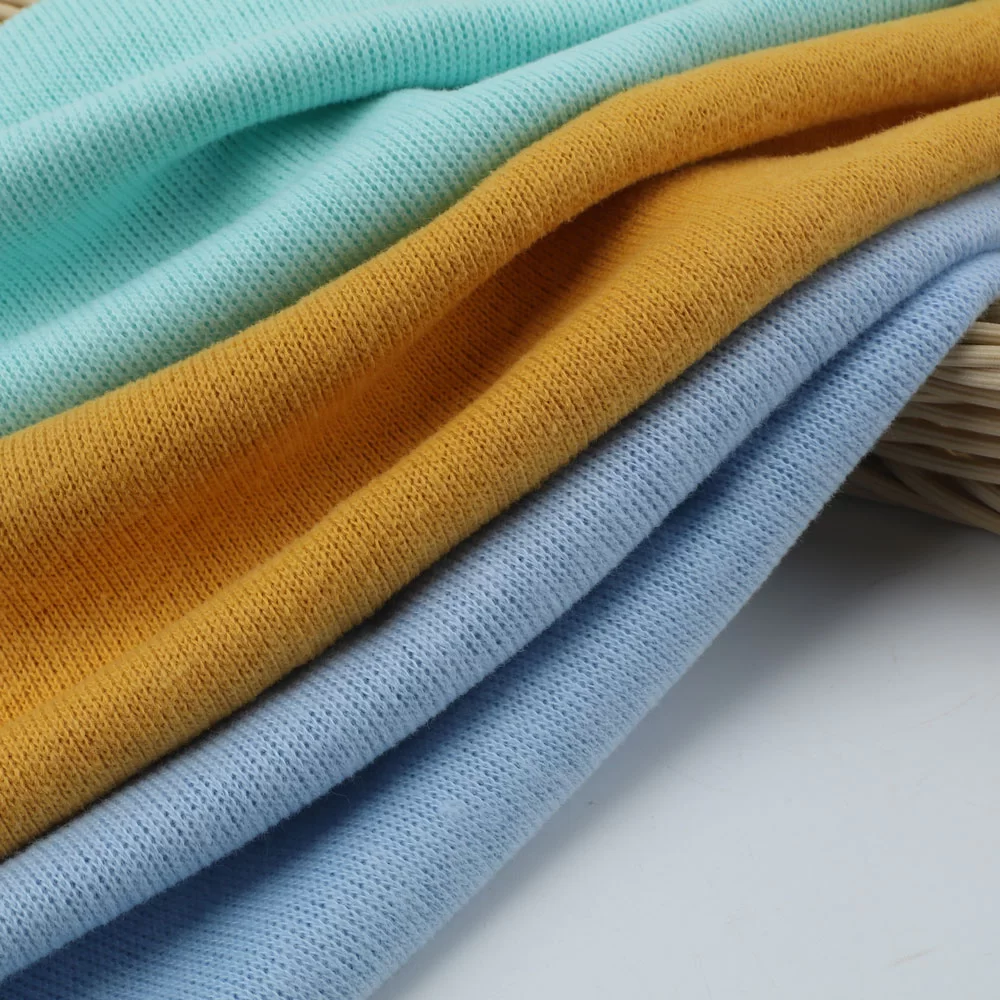
- Fine rib
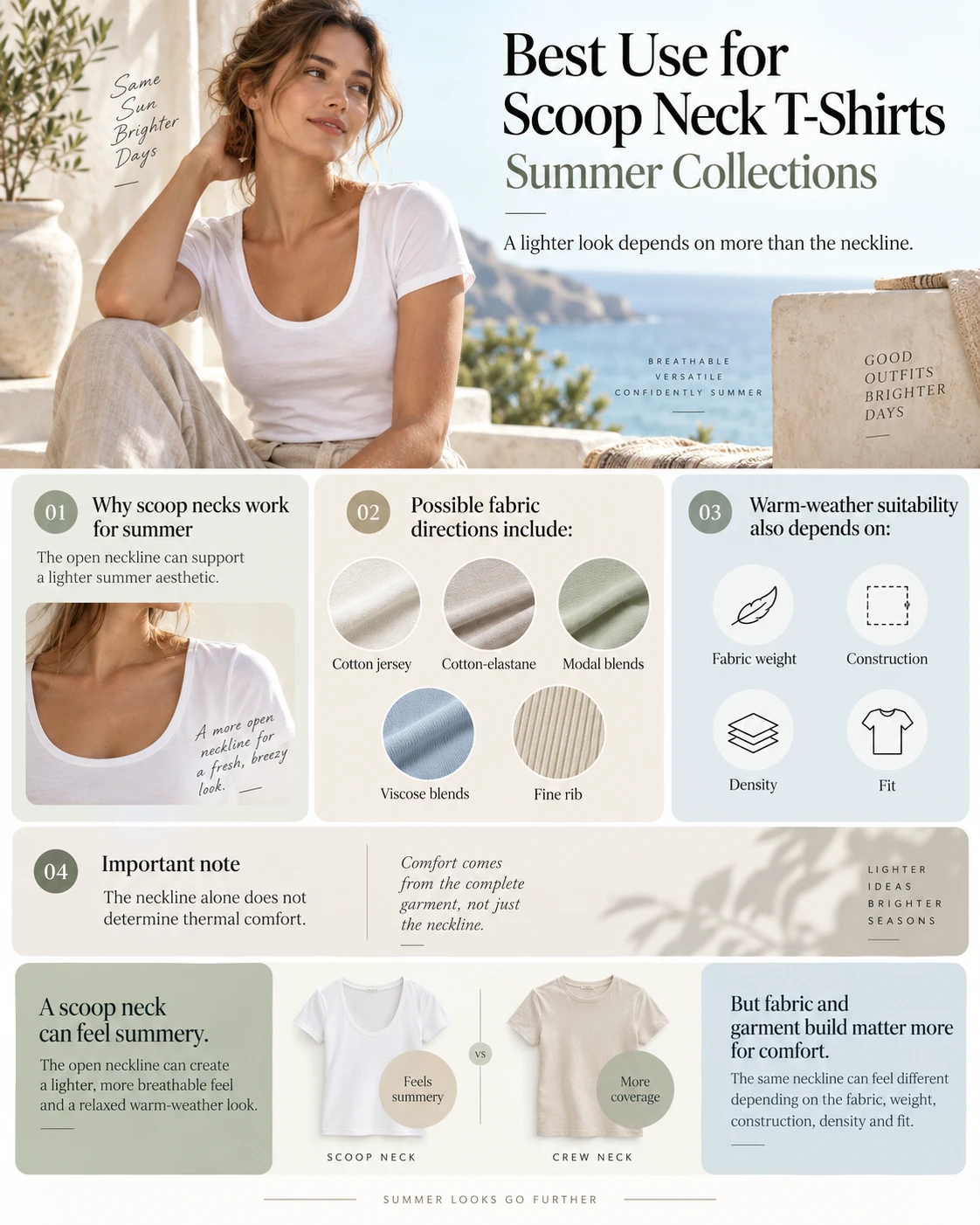
However, warm-weather suitability also depends on:
- Fabric weight
- Construction
- Density
- Fit

The neckline alone does not determine thermal comfort.
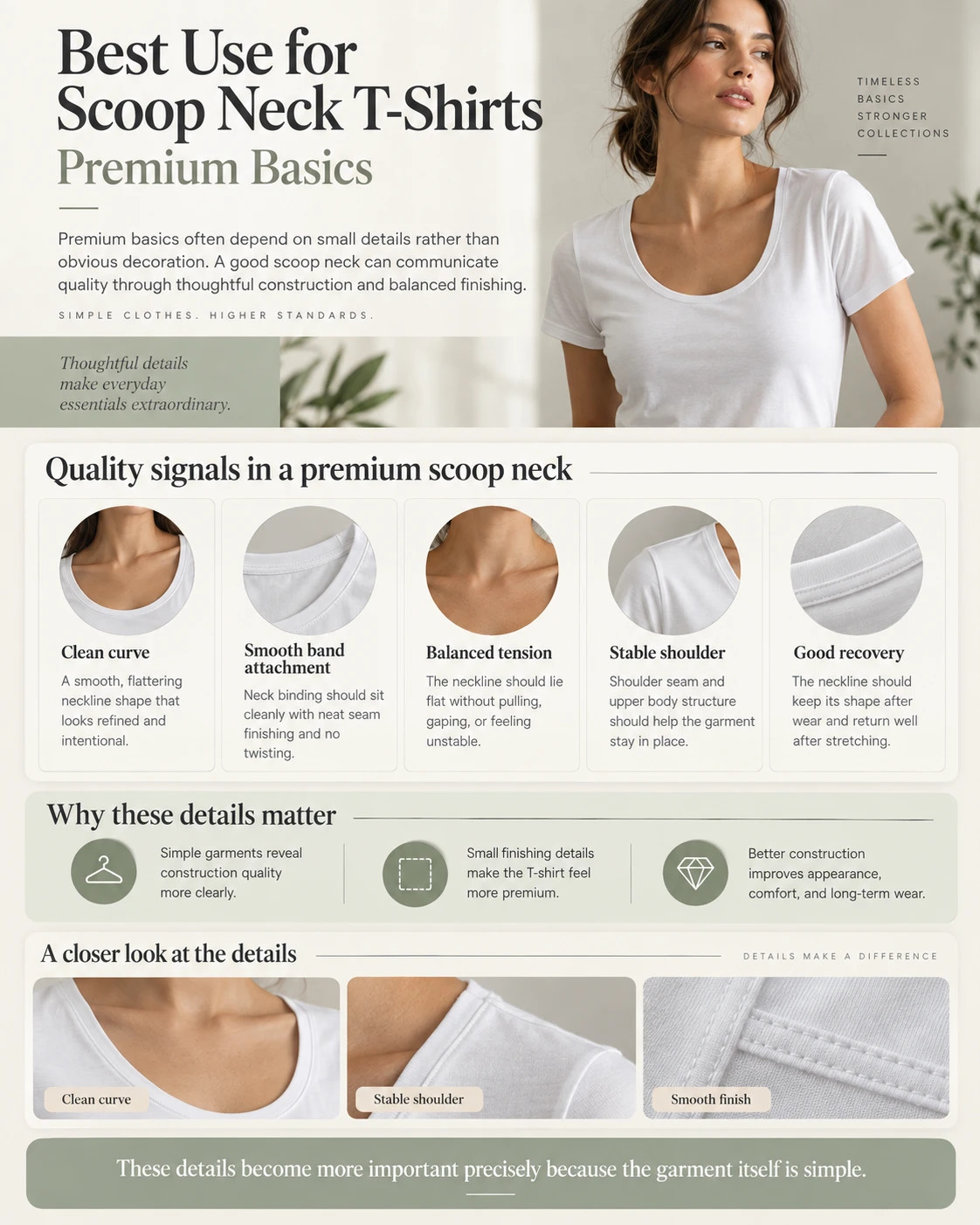
Scoop Neck T-Shirts for Premium Basics
Premium basics often depend on small details rather than obvious decoration. A good scoop neck can communicate quality through:
- Clean curve
- Smooth band attachment
- Balanced tension
- Stable shoulder
- Good recovery
These details become more important precisely because the garment itself is simple.
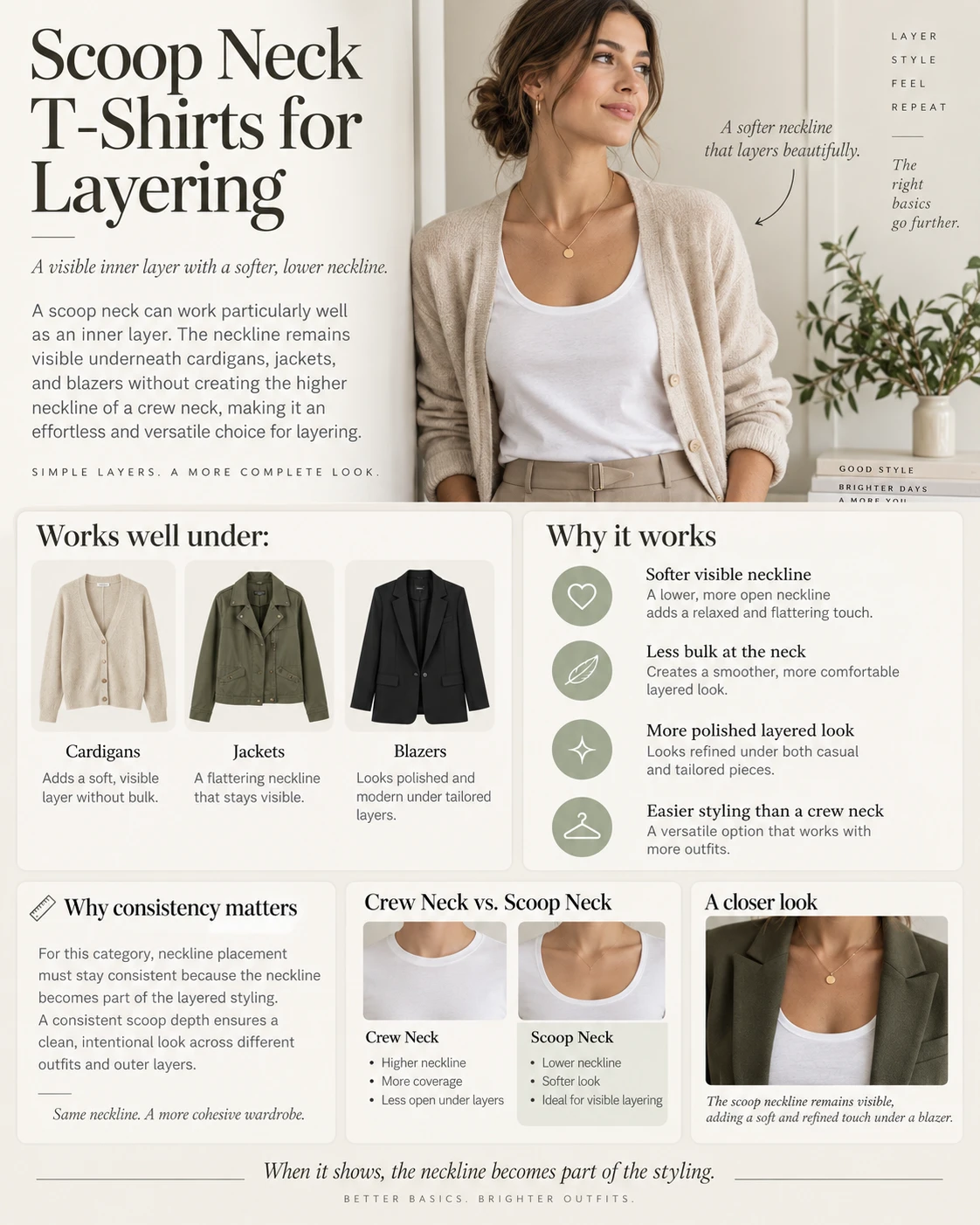
Scoop Neck T-Shirts for Layering
A scoop neck can work particularly well as an inner layer. The neckline can remain visible underneath:
- Cardigans
- Jackets
- Blazers
without creating the higher neckline of a crew neck. For this category, consistent neckline placement is particularly important because the neckline becomes part of the layered styling.
Scoop Neck vs. Crew Neck, V-Neck, Cowl Neck: Comparison Table
For clothing brands, the neckline affects more than appearance. It can also change fabric requirements, pattern development, sewing difficulty, fit risk, grading, and QC control. The table below compares a scoop neck with several common T-shirt neckline styles.
| Factor | Scoop Neck | Crew Neck | V-Neck | Cowl Neck |
|---|---|---|---|---|
| Shape | Rounded, low, wide | Round, high | V-shaped | Draped folds |
| Look | Soft, feminine | Classic, basic | Sharp, open | Elegant, fashion |
| Best For | Women’s basics, layering | Core T-shirts, uniforms | Casual, premium basics | Fashion, loungewear |
| Pattern Difficulty | Medium | Low | Medium | High |
| Main Risk | Gaping, waviness | Stretching | Uneven V point | Sagging, twisting |
| Fabric Sensitivity | High | Medium | Medium | Very High |
| QC Difficulty | Medium | Low | Medium | High |
| Production Ease | 3/5 | 5/5 | 3/5 | 2/5 |
Build Quality Checkpoints for Brand Owners
A scoop neck can look perfect on a hanger and still fail in real life. Focus on these technical details:
- Neckline Stabilization: Always use stay tape along the neckline seam or clean binding with controlled tension. Do not rely on “vibes”—ensure wash testing is performed to check rib recovery.
- Neckband Ratio and Tension: The neckband needs negative ease (shorter than the opening). Too long causes waves; too short causes puckering. The correct ratio depends on fabric stretch and curve length.
- Pattern Grading Rules: Neck width and front drop should not increase at the same rate. Confirm the specific grading rules for larger sizes to avoid extreme gaping at the bust.
Conclusion / Final Words
A scoop neck (U-neck) T-shirt is a great style builder, but it demands better technical control than a crew neck. Waviness and gaping are the most common reasons for returns. For brand owners, this means treating the scoop neck as a deliberate technical spec to ensure it becomes a bestseller rather than a liability.