Ringer Tee T-Shirts: Pros, Cons… and Guild for Brand Owners

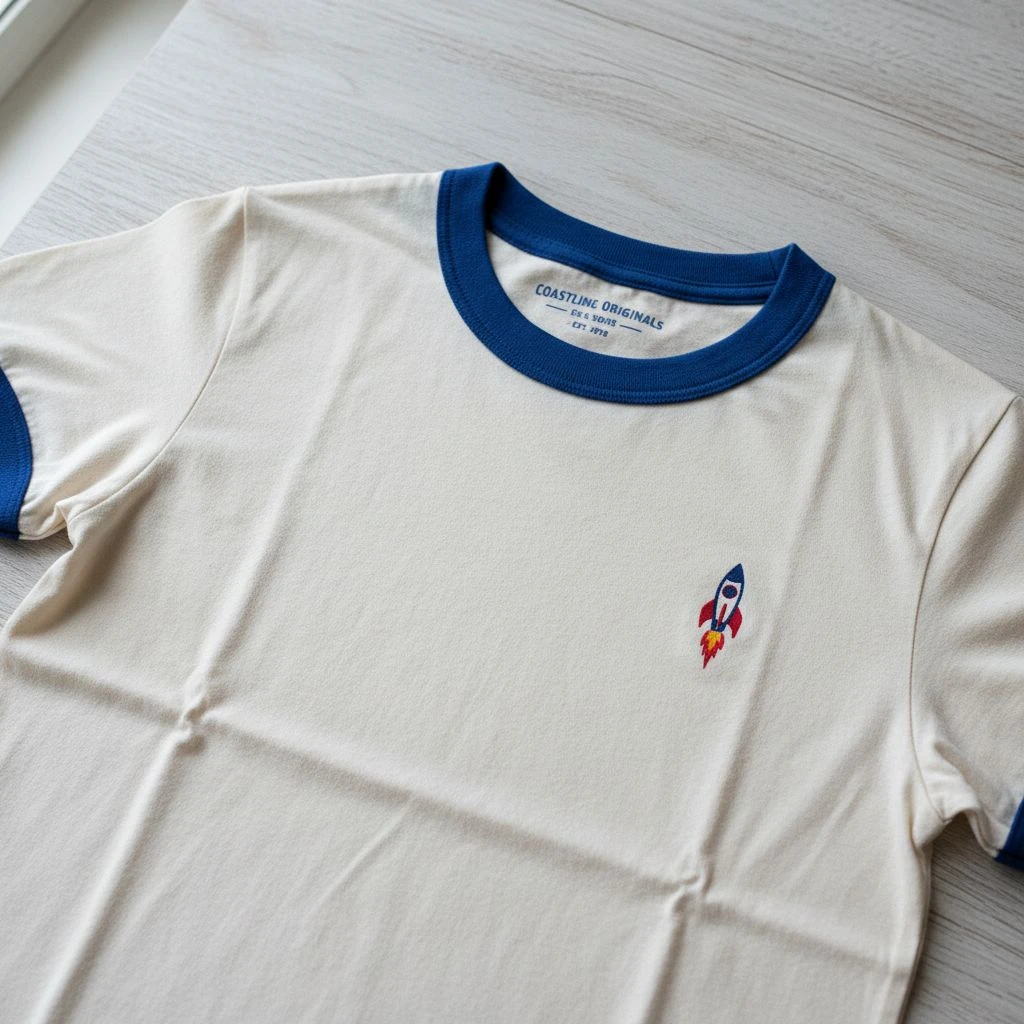
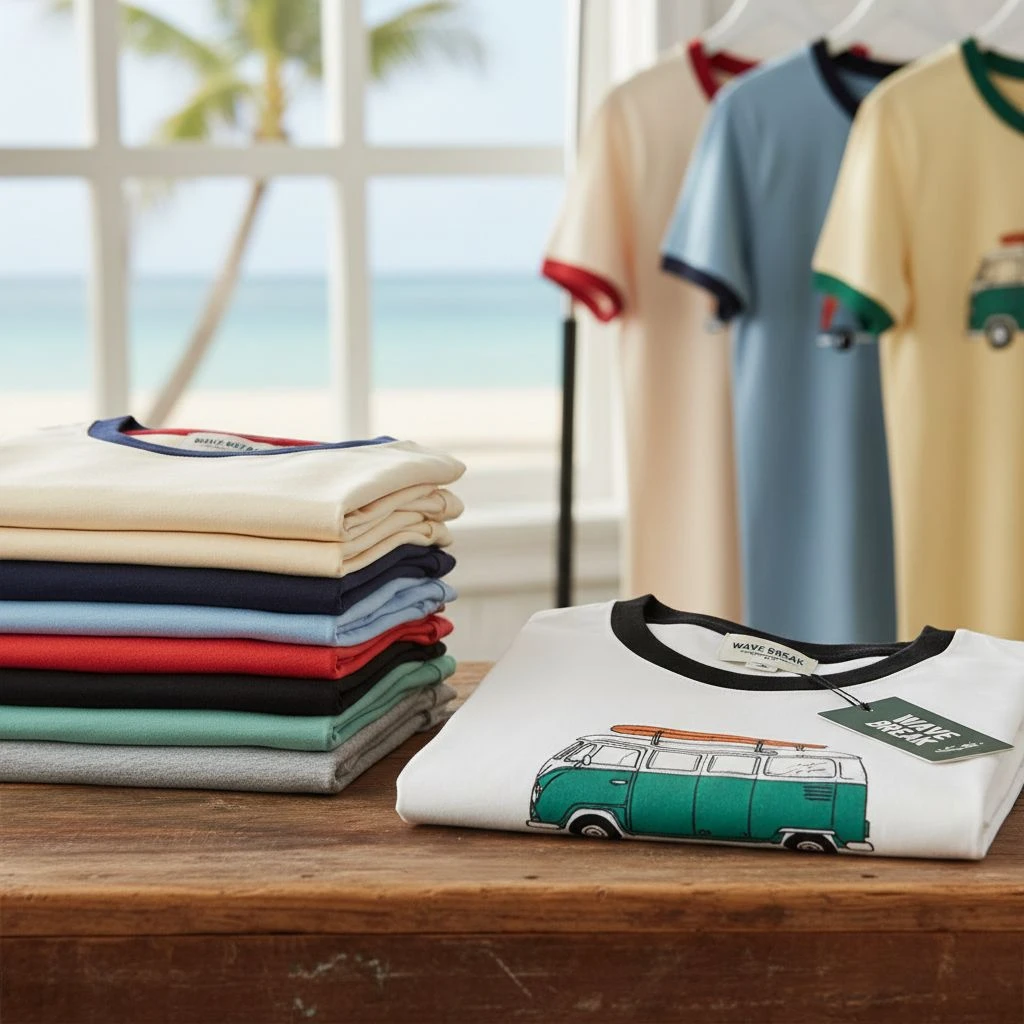
A ringer tee is a simple T-shirt with contrast rib trim at the neckline (and sometimes the sleeves), creating a clean retro, sporty look with minimal design changes. It’s a popular choice for vintage-inspired drops, campus merch, and casual streetwear because it stands out on rack without changing the core fit. But that contrast detail also leaves no room for mistakes. If the rib shrinks, stretches, or the color match is off, the tee can quickly look cheap. This article breaks down the real pros and cons of ringer tees, plus key production tips to help brands get them right.
=> Read More: T Shirts Manufacturing Vietnam | Mekong Garment Factory
What Exactly Is a Ringer Tee T-Shirt?
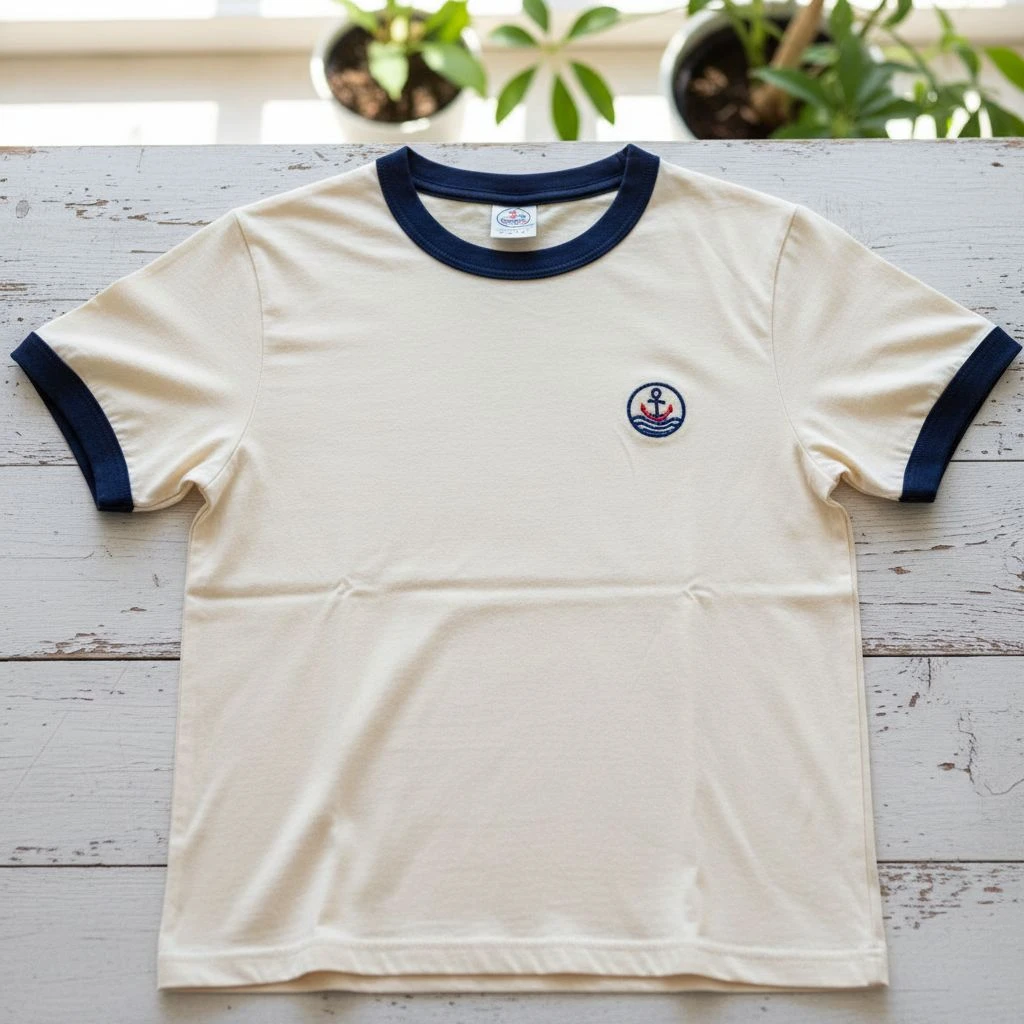
A ringer tee is a T-shirt with contrast rib trim on the neckline (and often the sleeve cuffs). It’s a simple detail, but it changes the whole look. Here’s the honest take: ringer tees are high-reward, high-exposure. The contrast trim sits right by the face. So if the collar waves, twists, or the color is slightly off, customers notice fast. This guide is written for brand owners who want ringer tees that feel intentional and premium.
=> Related Article: Polo Shirts and T-Shirts Compared: Fabrics, Fit, Style, Comfort,…
The body may be:
- White
- Black
- Heather grey
- Cream
- Navy
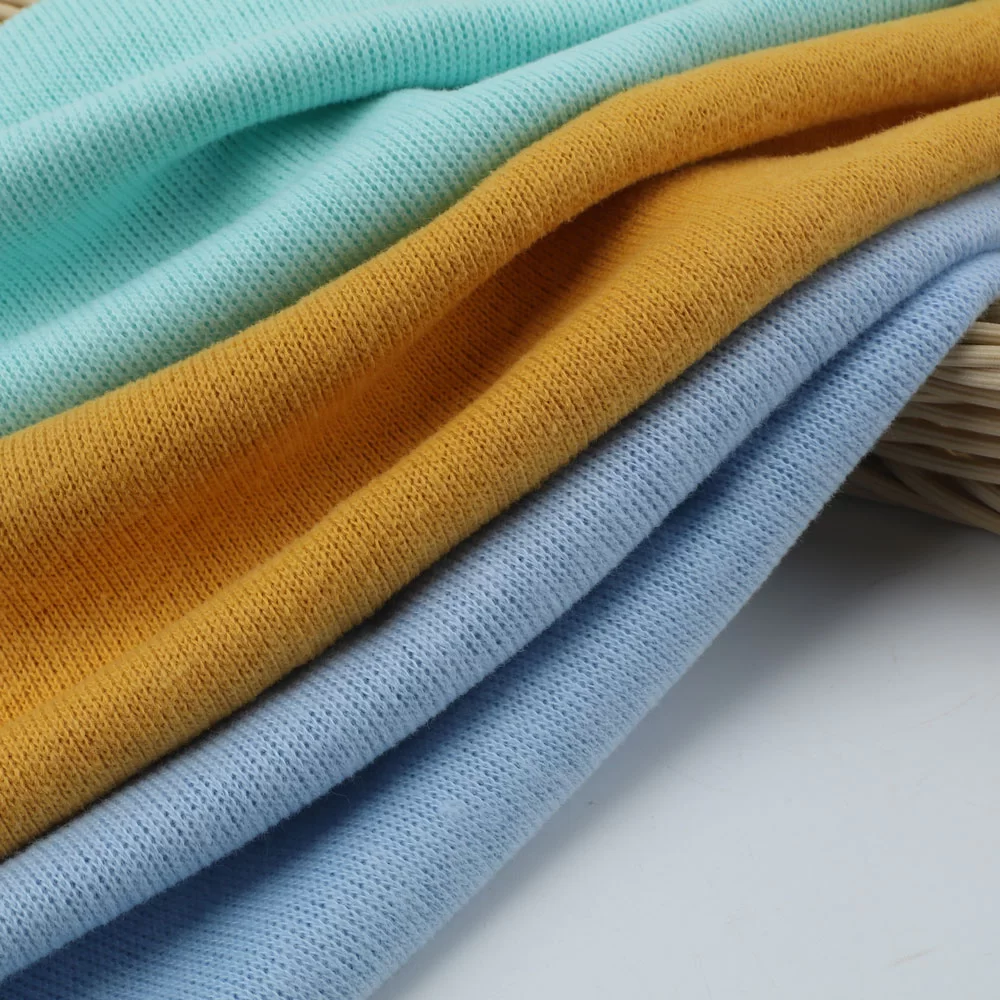
- Pastel
- Vintage-washed
- Printed
- Solid dyed
while the rib trim is produced in a different color.
- For example: White Body + Navy Neck Rib
- or: Cream Body + Burgundy Neck and Sleeve Rib
The contrast is what gives the garment its recognizable “ringer” appearance.
Is Every Contrast-Collar T-Shirt a Ringer Tee?
Not necessarily. A ringer tee usually refers to the classic T-shirt design where the contrasting trim forms a visible ring around the neckline and often the sleeves. A garment with a completely different collar construction may simply be considered a contrast-collar T-shirt rather than a traditional ringer tee. The exact terminology can vary between brands and markets, so a technical drawing is more reliable than the product name alone when developing the garment with a factory.
=> Related Article: Popular Types of T-Shirts for Men in Summer: Features and Applications
Why Ringer Tees Keep Coming Back
Ringer tees have roots in sporty, retro styling and keep cycling into fashion again and again. If your brand identity is clean minimal, loud contrast rings can feel off-brand. However, you can easily adapt this by going tone-on-tone or using a muted contrast to stay within your brand’s aesthetic.
=> Related Article: The Ways to Use T-Shirts for New Customer Acquisition

What Makes a Ringer Tee Feel Premium?
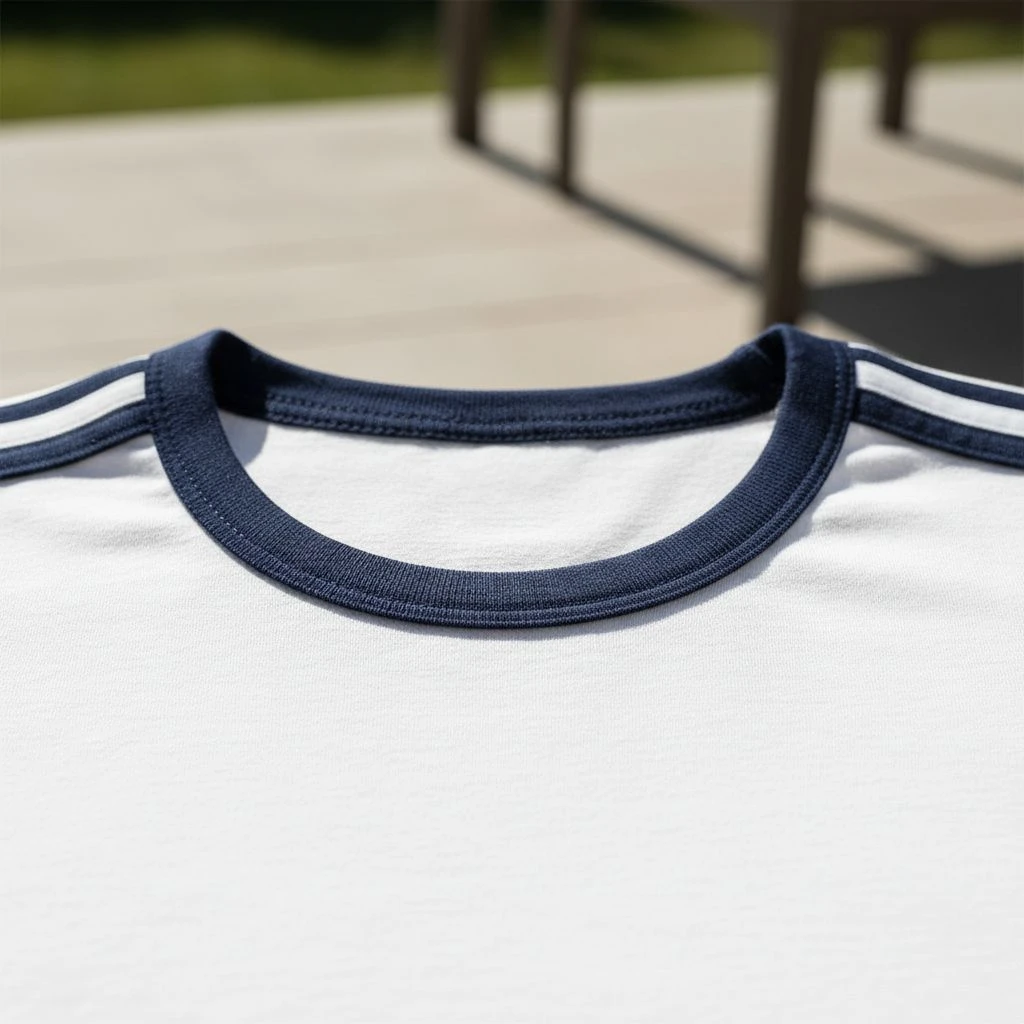
A ringer tee feels premium when the details are controlled. The contrast trim puts the neckline in focus, so any flaw—wavy collar, weak rib, or off color—shows instantly. When the rib lies flat and recovers well, the garment feels high quality.
Premium signals:
- Clean, flat neckline (no ripples).
- Strong collar recovery (doesn’t stretch out).
- Perfect shade match (contrast looks deliberate).
- Even stitching (contrast makes wobbles obvious).
=> Related Article: The Dos & Don’ts of Oversized Screen Printing T-Shirts
Best Uses by Brand Type
Ringer tees work best when the sporty contrast fits your brand story. Best for: Vintage-inspired drops, sporty streetwear, team/campus merch, and kidswear. Not ideal for: Ultra-minimal luxury brands (unless using muted tones) or brands with weak trim quality control.
=> Related Article: Classic vs Premium T-Shirts: Which Is Best for Your Custom Apparel Needs?
Design Options That Sell Well
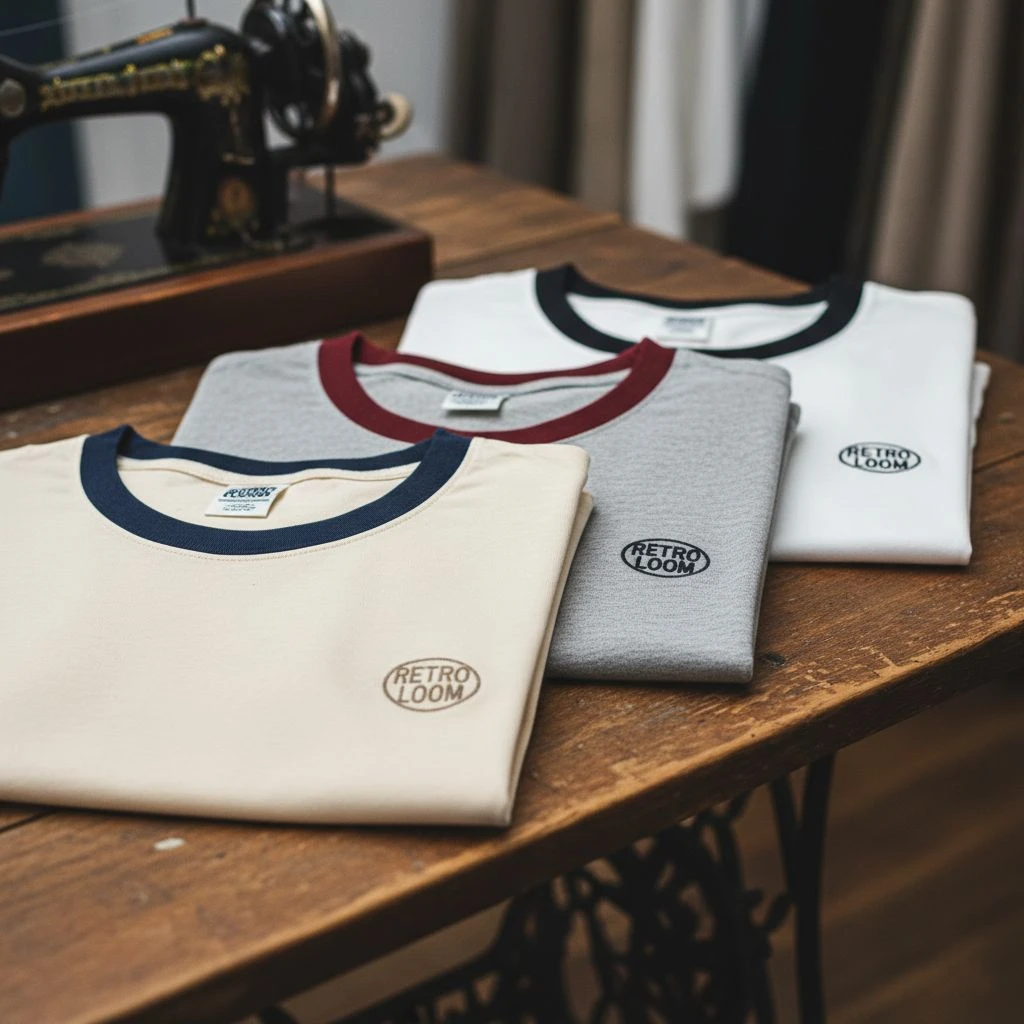
- Option A: Neck ringer only (Safest): Most wearable and lowest QC risk.
- Option B: Neck + sleeve rings (True retro): Strongest identity but requires careful cuff tension management.
- Option C: “Soft contrast” (Premium): Muted color families like off-white with heather gray trim for a subtle look.
Pros & Cons of Ringer Tees
Adding contrast rib trim is a quick way to upgrade a basic tee, but it makes quality issues very obvious. Below is the real breakdown for brand owners:

Pros:
- 1) Low development cost: Usually keeps the same body block with just a change in trim.
- 2) Strong shelf appeal: The contrast reads instantly from a distance, great for social media marketing.
- 3) Perfect for capsules: Easily fits themes like retro, band merch, or tour-inspired graphics.
- 4) Easy color stories: Simple to build a cohesive collection across different styles using the same trim colors.
Cons:
- 1) Shrinkage mismatch: Different shrink rates between rib and body can cause puckering after washing.
- 2) Sourcing complexity: Matching dye lots between jersey and rib fabric is technically challenging.
- 3) High-visibility stitching: Contrast frames every stitch; any unevenness is instantly noticeable.
- 4) Inventory planning: Requires managing extra SKUs for different rib colors and trims.
Who Should Consider Ringer Tees?
Ringer tees can work for many apparel businesses, but they are especially suitable for certain product categories.
Streetwear Brands
A streetwear brand can use:
- Strong contrast colors
- Oversized graphics
- Vintage washes
- Heavy jersey bodies
to create a more fashion-driven ringer tee.

Campus and Team Merchandise
Ringer tees naturally work with:
- School colors
- Team colors
- Club graphics
- College-style typography
For example: White Body + Red Rib + Red Collegiate Print, creates a clear visual theme.
Music and Event Merchandise
Ringer tees can support:
- Tour graphics
- Band artwork
- Festival collections
- Retro promotional merchandise
because the trim already gives the blank garment more personality.
Kidswear
Contrast trims can make children’s T-shirts feel more playful. However, comfort, trim softness, recovery, and applicable product-safety requirements should still be carefully controlled.

Lifestyle and Casual Brands
Brands that want a subtle version can use low-contrast combinations such as:
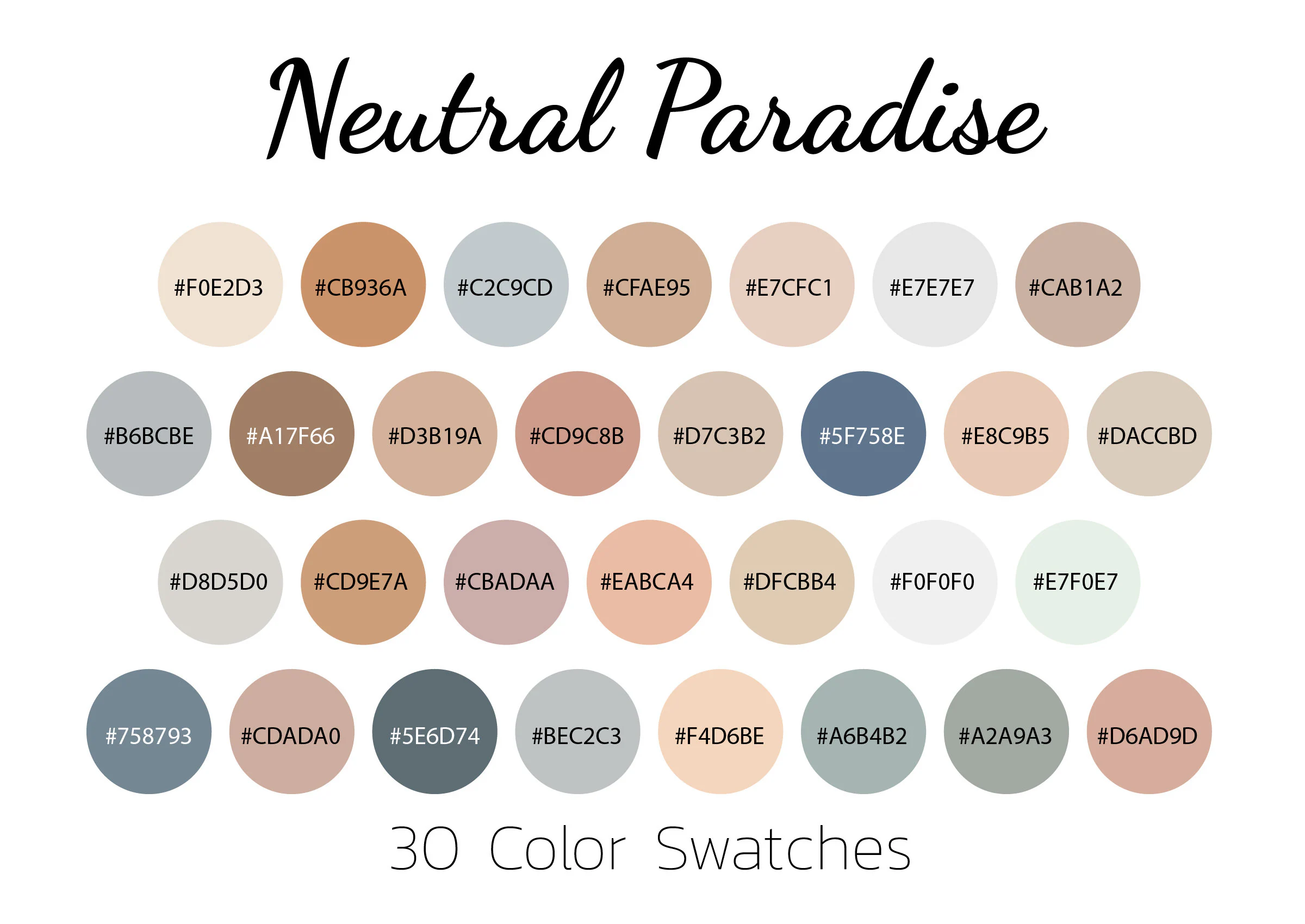
- Cream + beige
- White + light grey
- Navy + muted blue
- Stone + brown
The result can feel more refined than the classic high-contrast sports look.
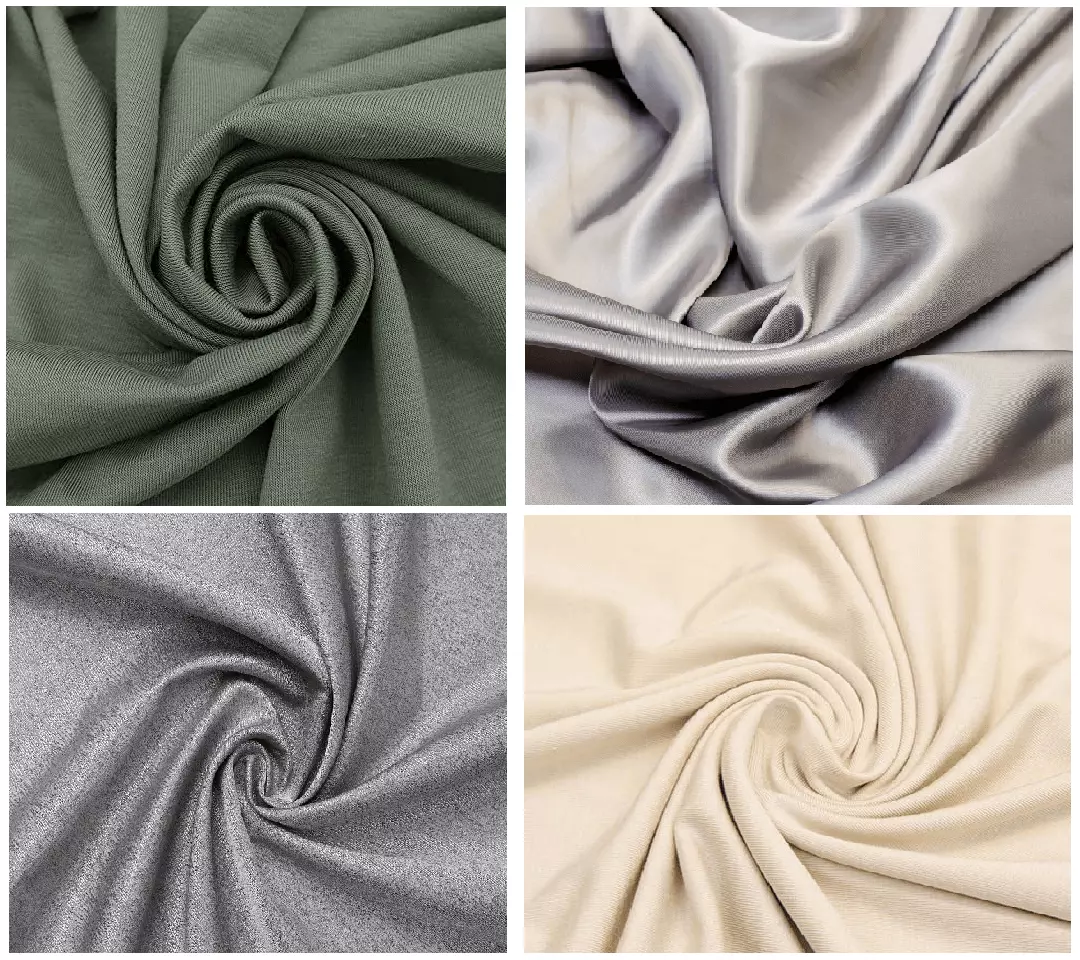
The Right Body Fabric For Ringer Tee T-Shirts
The body fabric should be selected based on the brand’s intended look and customer use.
Cotton Jersey
100% cotton jersey is a common choice.
It can provide:
- Natural hand feel
- Good moisture absorption
- Familiar T-shirt appearance
However, shrinkage and dimensional stability still depend on:
- Yarn
- Knit construction
- Finishing
- Compaction
- Washing
100% cotton does not automatically mean premium quality.
Cotton/Polyester Blends
Cotton/polyester blends may provide:
- Faster drying
- Better dimensional stability in some constructions
- Reduced wrinkling
- Different hand feel
The final performance depends on the blend ratio and fabric construction.
CVC Fabric
CVC is generally a cotton-dominant cotton/polyester blend. It can be useful when a brand wants a balance between:
- Cotton-like hand
- Dimensional stability
- Drying performance
- Durability
But the actual fabric still needs testing.
Vintage or Heather Fabrics
Heather and mélange bodies can work especially well with ringer designs. They naturally support:
- Retro styling
- Campus looks
- Casual collections
The brand should still check whether the rib color visually works with the body after production and washing.
Conclusion / Final Words
Ringer tees are one of the simplest ways to make a basic T-shirt look more “designed,” but they’re also one of the easiest styles to mess up. To get re-orders, treat the trim like a key technical component. Start with a clean neck-only ringer, ensure your rib has stable recovery, and always conduct a wash test before bulk production. Done right, a ringer tee becomes a recognizable, high-margin piece for your brand.