What Is Heat Transfer Printing for T-Shirts: Pros, Cons, Benefits,…

If you’re exploring ways to print designs on T-shirts, heat transfer printing might already be on your radar. It’s often praised as easy, fast, and great for detailed graphics. But does it really live up to that especially for brands aiming for quality and longevity? This guide explains not just what heat transfer printing is, but also the real strengths and limitations you need to know before choosing it for your apparel line.
=> Read More: T Shirts Manufacturing Vietnam | Mekong Garment Factory
T-Shirt Printing Methods Comparison:
- Screen Printing for T-Shirts: What It Is, Pros, Cons, Costs, and When to Use It
- Direct-to-Garment (DTG) Printing for T-Shirts: Pros, Cons, and What Brands Must Know
- Direct-to-Film (DTF) Printing for T-Shirts: Pros, Cons
- What Is Heat Transfer Printing for T-Shirts: Pros, Cons, Benefits,…
- Sublimation Printing for T-Shirts: Pros, Cons and Guide for Brand Owners
- Puff Printing for T-Shirts: Pros, Cons, Benefits and Guide for Brand Owners
- Heat Transfer Vinyl (HTV) Printing: Pros, Cons and Benefits
- What Is Embroidery for T-Shirts? A Brand Owner’s Guide
What Heat Transfer Printing Actually Means
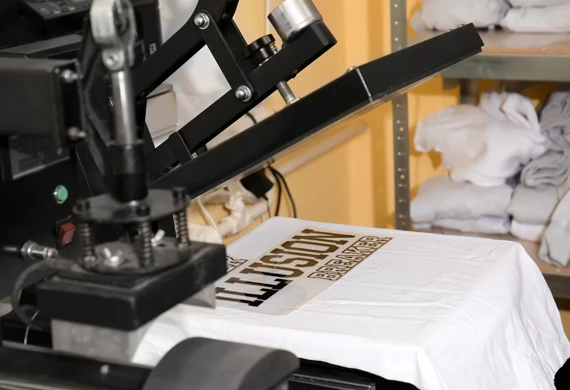
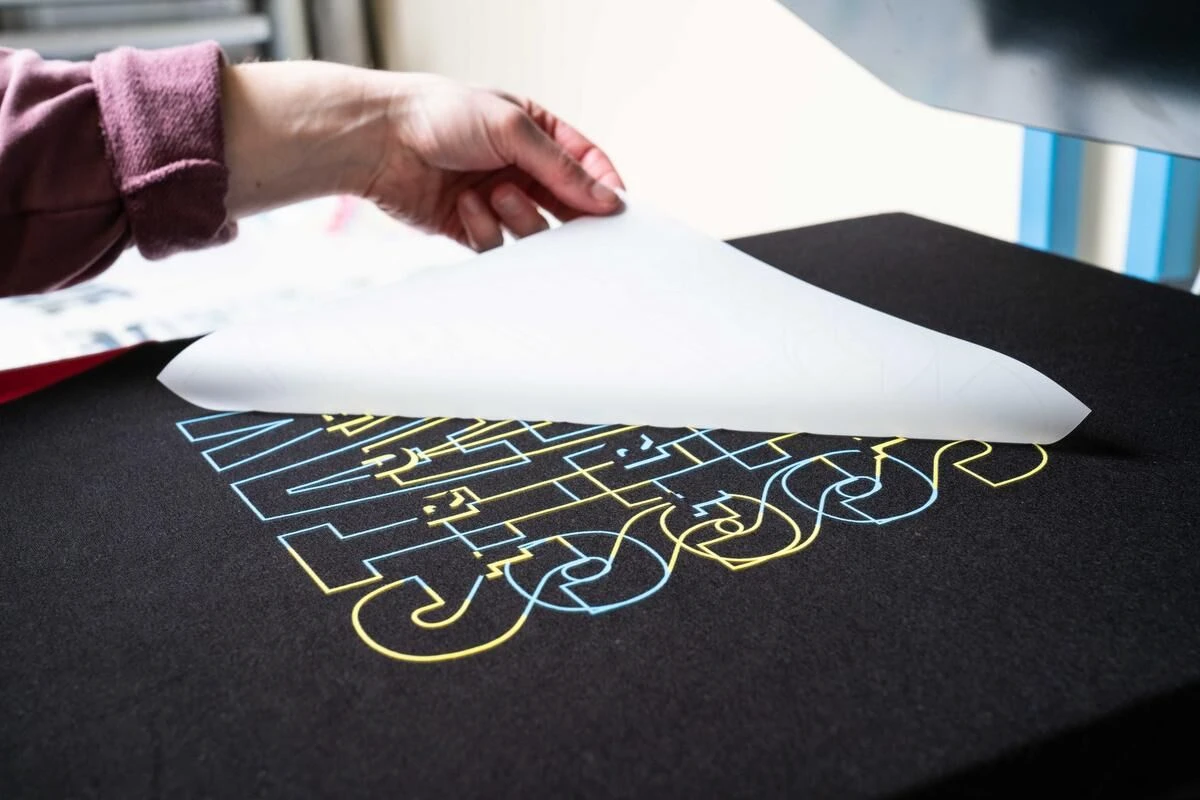
Heat transfer printing is a method where a design is first printed onto a special transfer medium (like paper or film), then pressed onto fabric using heat and pressure. The key detail many articles gloss over: the ink or material sits on top of the fabric, instead of being absorbed into the fibers. That one fact affects everything from feel and durability to cost and customer satisfaction.
There are several popular ways to do it:
- Heat Transfer Paper – printed with a standard or specialized printer.
- Heat Transfer Vinyl (HTV) – cut vinyl pieces pressed onto fabric.
- Direct-to-Film (DTF) – designs printed on film, then transferred with adhesive powder and heat.
- …

How Does Heat Transfer Printing Work?
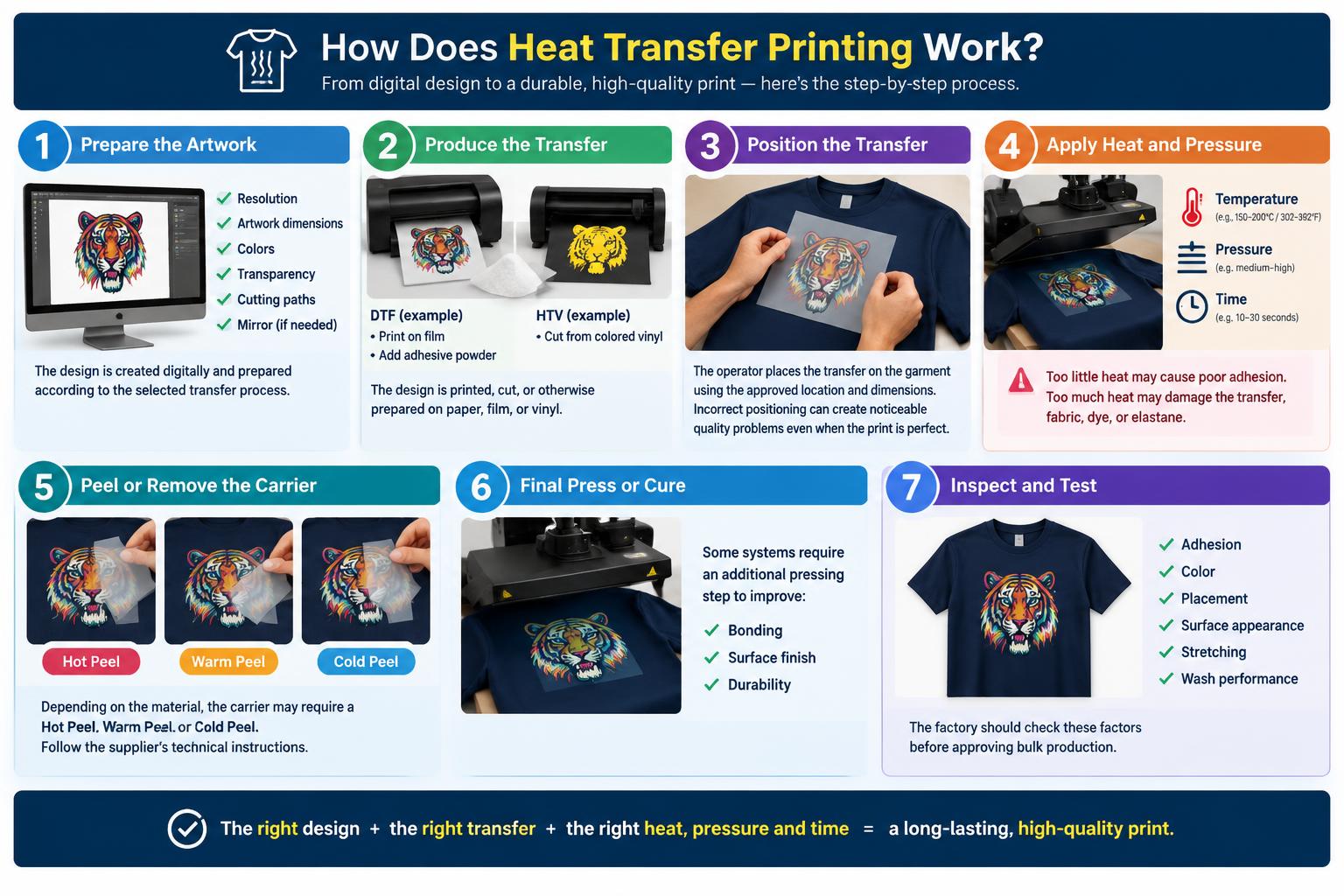
Although each technology has its own process, the basic workflow is similar.
- Step 1: Prepare the Artwork: The design is created digitally and prepared according to the selected transfer process. Important considerations include resolution, artwork dimensions, colors, transparency, cutting paths, and whether the image must be mirrored before production.
- Step 2: Produce the Transfer: The design is printed, cut, or otherwise prepared on paper, film, or vinyl. For DTF, for example, the artwork is printed onto film and combined with adhesive powder. For HTV, the design is usually cut from colored vinyl.
- Step 3: Position the Transfer: The operator places the transfer on the garment using the approved location and dimensions. Incorrect positioning can create noticeable quality problems even when the print itself is technically perfect.
- Step 4: Apply Heat and Pressure: A heat press closes over the garment. The correct combination of: Temperature + Pressure + Time is essential. Too little heat may cause poor adhesion. Too much heat may damage the transfer, fabric, dye, or elastane.
- Step 5: Peel or Remove the Carrier: Depending on the material, the carrier may require a: Hot Peel, Warm Peel, or Cold Peel The supplier’s technical instructions should be followed.
- Step 6: Final Press or Cure: Some systems require an additional pressing step to improve bonding, surface finish, or durability.
- Step 7: Inspect and Test: The factory should check adhesion, color, placement, surface appearance, stretching, and wash performance before approving bulk production.
Pros and Cons of Heat Transfer Printing For T Shirts
Pros (What It Does Well)
- Excellent for Detailed Designs: Heat transfer can reproduce complex graphics, gradients, and photos clearly. But be aware, high detail doesn’t mean lasting detail.
- Easy Setup & Fast Turnaround: You don’t need screens or costly plates, making it appealing for prototypes and small batches.
- Works on Many Fabrics: Cotton, polyester, and blends can all be printed, though performance varies by material.
- Great for Personalization: Fast and adaptable for names, numbers, or one-off designs.
Cons (Real Risks for Brands)
- Durability Concerns: Heat transfer prints can peel, crack, or fade sooner than screen-printed or high-quality DTF prints, especially after repeated washing.
- Heavy Hand Feel: Transfers can feel like a plastic layer on top of the fabric, which may feel stiff and less breathable for the customer.
- Inefficient for Large runs: Manual heat pressing becomes time-intensive and less cost-effective than screen printing at high volumes.
- Dark Fabric Challenges: Often requires a white backing layer, adding extra thickness and a noticeable feel.
Comparison of T-Shirt Printing Methods
| Method | Best Strength | Typical Quantity Direction | Important Limitation |
|---|---|---|---|
| Heat Transfer Paper | Fast personalization | Small runs | Durability and hand feel vary |
| HTV | Names, numbers, simple graphics | Small runs | Cutting and weeding time |
| DTF | Detailed full-color artwork | Small to medium, also scalable in some workflows | Film-like hand and pressing control |
| Screen Printing | Repeated bulk artwork | Medium to large | Setup for each design/color |
| DTG | Detailed digital printing | Small to medium | Fabric and pretreatment dependency |
| Sublimation | Soft polyester decoration | Variable | Mainly suitable for polyester-rich light substrates |
| Embroidery | Premium dimensional branding | Small to large | Cost rises with stitch count and complexity |
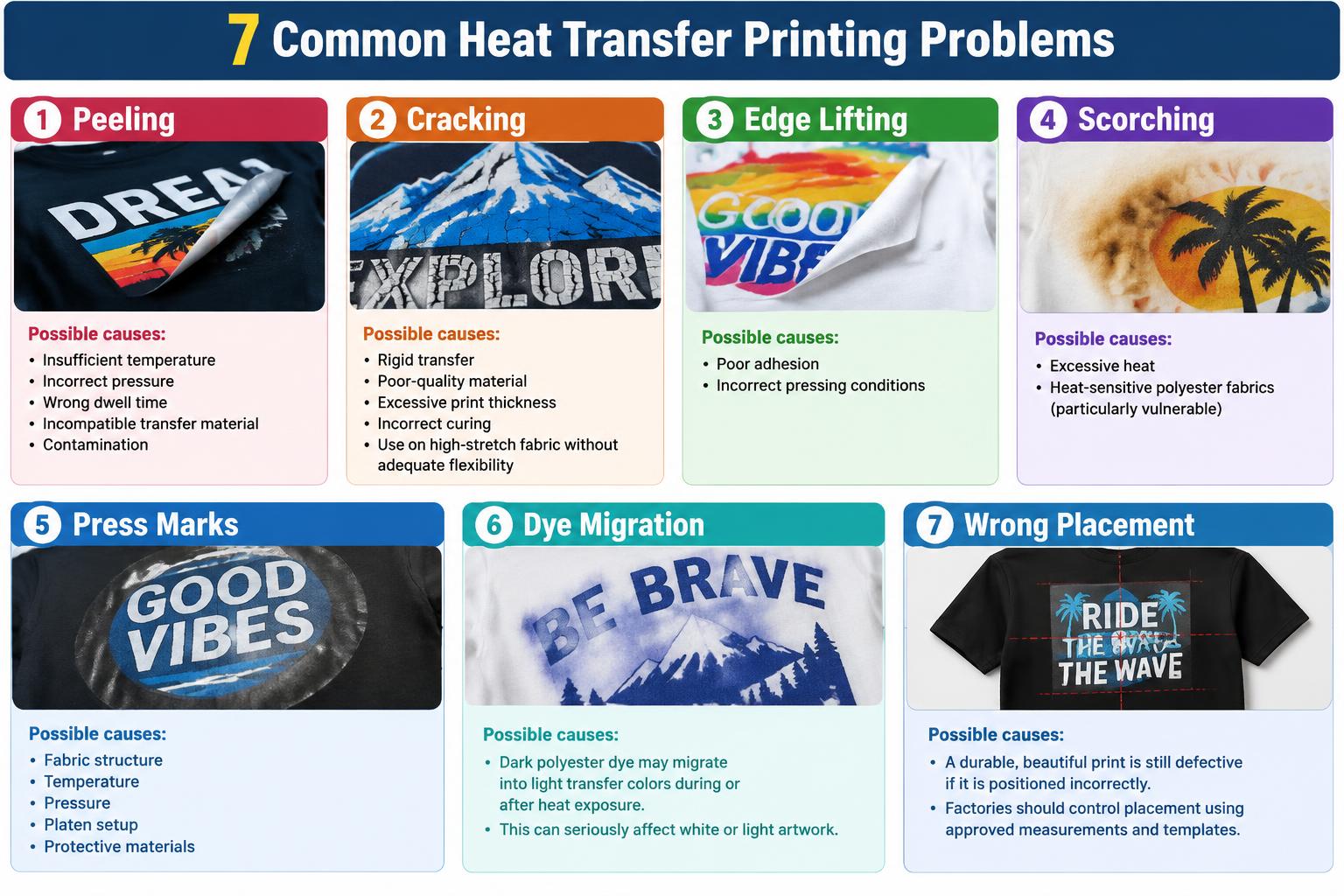
Common Heat Transfer Printing Problems
- Peeling: Peeling can occur when the transfer does not bond properly. Possible causes include insufficient temperature, incorrect pressure, wrong dwell time, incompatible transfer material, or contamination.
- Cracking: Cracking may appear after stretching or repeated washing. Possible causes include a rigid transfer, poor-quality material, excessive print thickness, incorrect curing, or use on high-stretch fabric without adequate flexibility.
- Edge Lifting: Corners or edges may begin separating from the garment. This can indicate poor adhesion or incorrect pressing conditions.
- Scorching: Excessive heat can discolor or damage the fabric. Heat-sensitive polyester fabrics can be particularly vulnerable.
- Press Marks: The heat press may leave visible impressions or shiny areas around the transfer. This can depend on fabric structure, temperature, pressure, platen setup, and protective materials.
- Dye Migration: Dark polyester dye may migrate into light transfer colors during or after heat exposure. This can seriously affect white or light artwork.
- Wrong Placement: A durable, beautiful print is still defective if it is positioned incorrectly. Factories should control placement using approved measurements and templates.
Common Misconceptions Brand Owners Should Question
- “Heat transfer is always cheaper.”: Not always. Screen printing can be more affordable for large orders once setup costs are amortized.
- “It works the same on all fabrics.”: Adhesion and performance vary; polycotton often handles it differently than 100% polyester.
- “Heat transfer prints are as durable as screen prints.”: Real-world wear often shows peeling or cracking unless the transfer type is top-tier.
When Heat Transfer Makes Sense
- Use it if: You offer customized shirts, need fast turnaround for prototypes, or your orders are short and quantity is low.
- Avoid it if: You need daily-wear durability, your customers demand premium softness, or you’re printing large-scale runs where breathability is a priority.
Conclusion / Final Words
Heat transfer printing is a smart tool when you use it for the right job. It’s perfect for sampling, personalization, and quick drops. However, if your customers expect a premium T-shirt that stays soft after many washes, match the printing method to your product promise. For repeat-wear staples at scale, consider screen printing or DTF for a more consistent customer experience.