
Direct-to-Garment (DTG) printing has changed how custom T-shirts are made especially for small orders and print-on-demand businesses. It promises photo-quality prints, unlimited colors, and zero setup costs. But here’s the uncomfortable truth: DTG is easy to sell, but hard to do well. This guide breaks down what DTG printing really is, how it works, its advantages and limitations, and when it makes sense or absolutely doesn’t for T-shirt production.
=> Read More: T Shirts Manufacturing Vietnam | Mekong Garment Factory
T-Shirt Printing Methods Comparison:
- Screen Printing for T-Shirts: What It Is, Pros, Cons, Costs, and When to Use It
- Direct-to-Garment (DTG) Printing for T-Shirts: Pros, Cons, and What Brands Must Know
- Direct-to-Film (DTF) Printing for T-Shirts: Pros, Cons
- What Is Heat Transfer Printing for T-Shirts: Pros, Cons, Benefits,…
- Sublimation Printing for T-Shirts: Pros, Cons and Guide for Brand Owners
- Puff Printing for T-Shirts: Pros, Cons, Benefits and Guide for Brand Owners
- Heat Transfer Vinyl (HTV) Printing: Pros, Cons and Benefits
- What Is Embroidery for T-Shirts? A Brand Owner’s Guide
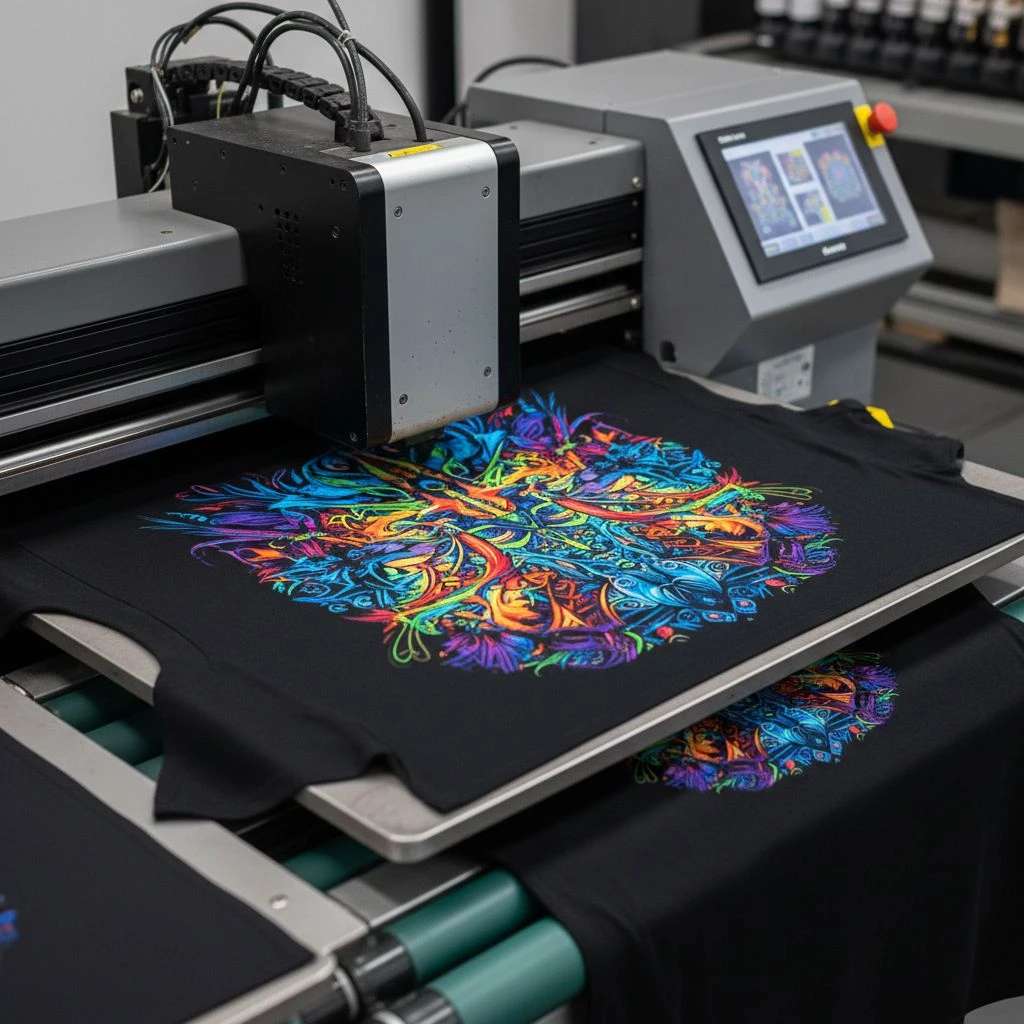
What Is Direct-to-Garment (DTG) Printing?
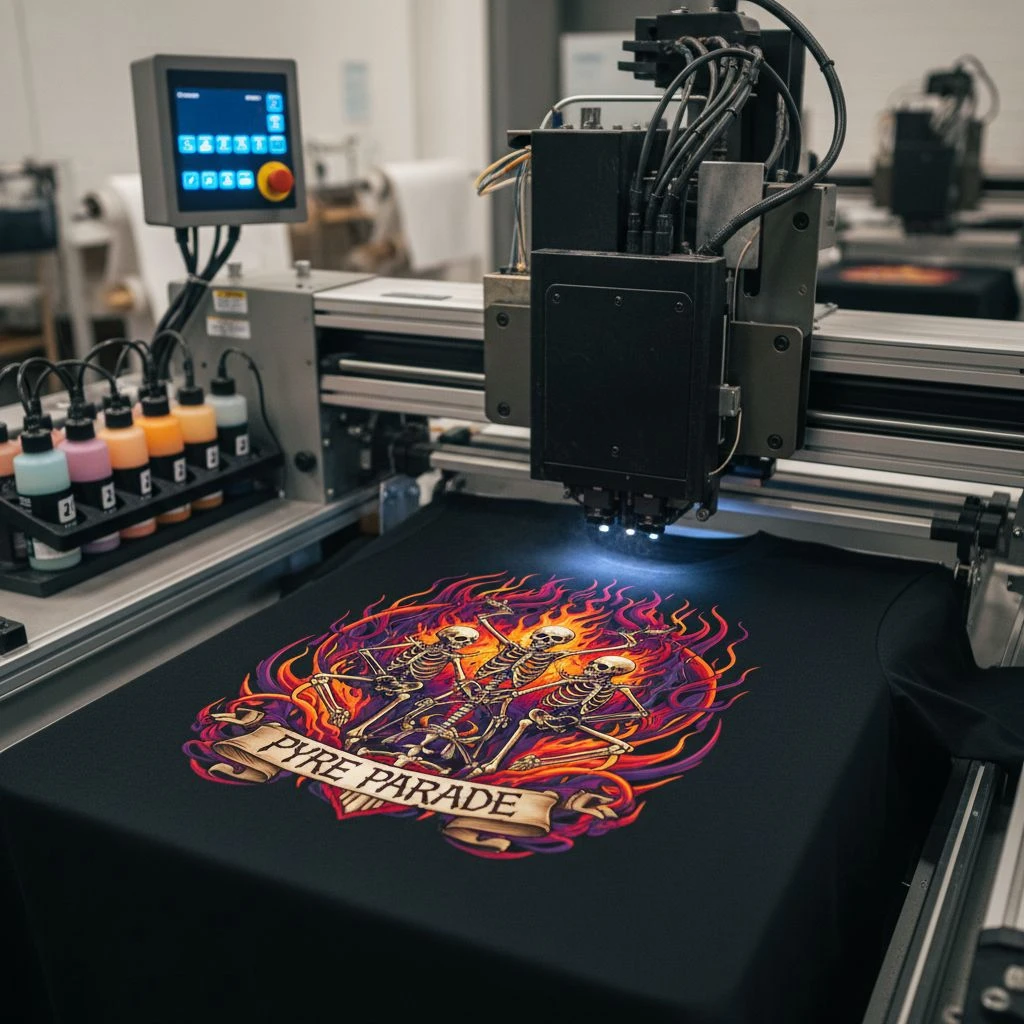
DTG printing is a digital method that uses inkjet technology to spray water-based textile inks directly onto fabric. The process is similar to how a paper printer works, but instead of paper, the printer prints directly onto a T-shirt. Unlike screen printing, DTG:
- Does not use screens or stencils
- Does not limit the number of colors
- Prints designs directly from a digital file
Because the ink soaks into the fibers, DTG prints usually feel soft and breathable.

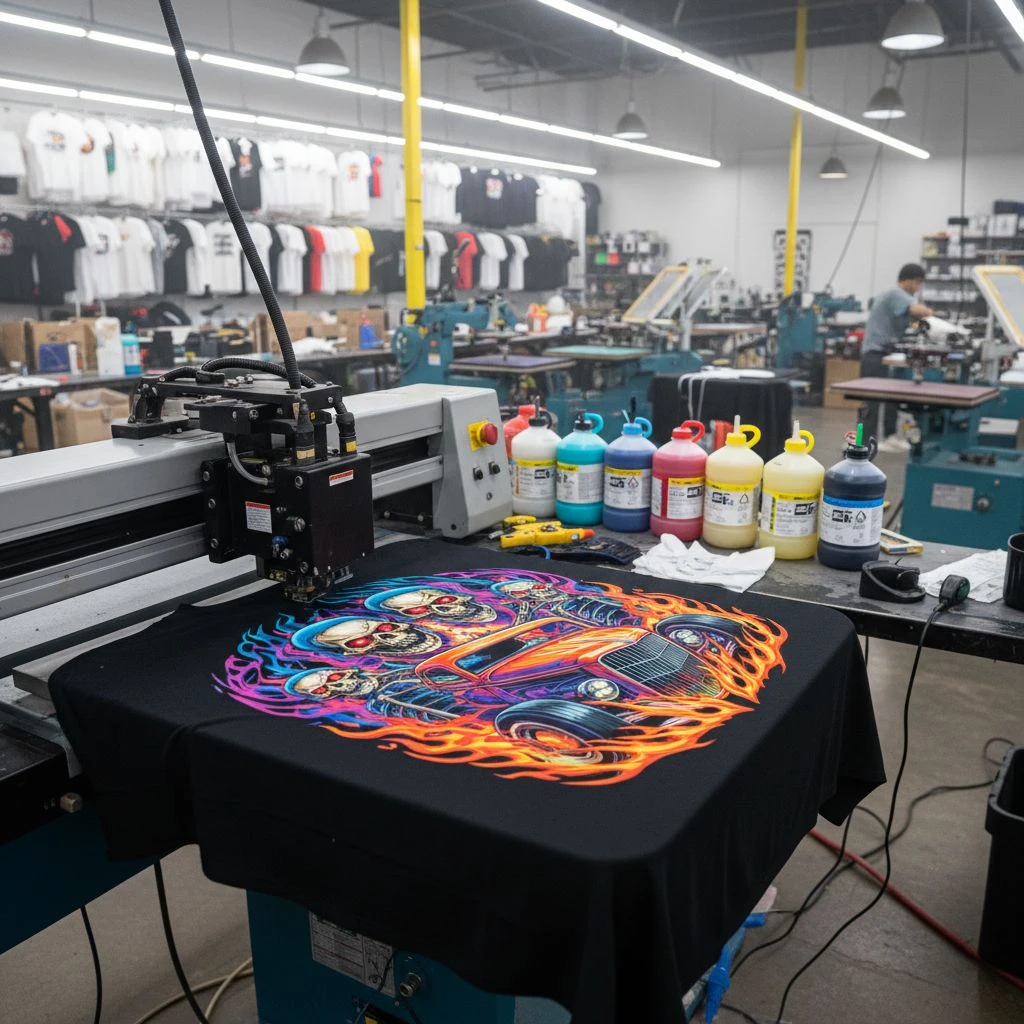
How DTG Printing Works (Step by Step)
DTG printing is often marketed as “simple,” but in reality, it involves several critical steps:
- Pretreatment: A special liquid is applied to the garment. This helps white ink bond to the fabric and prevents fading
- Drying the Pretreatment: Usually done with a heat press or conveyor dryer
- Digital Printing: The printer sprays CMYK inks and white ink directly onto the shirt
- Final Curing: Heat sets the ink into the fabric so it can survive washing
If any of these steps are rushed or skipped, the print may look fine at first but will fail after washing.
Best Fabrics for DTG Printing
Fabric choice matters more than the printer.
Best options:
- 100% cotton (ringspun preferred)
- Combed cotton
- Organic cotton (with correct pretreatment)
Acceptable with compromises

Cotton blends (up to ~80% cotton)
Poor choices:
- Polyester
- Performance fabrics
- Treated or water-resistant materials
DTG struggles on polyester because water-based inks do not bond well to synthetic fibers. Claims of “great DTG on polyester” usually involve heavy chemicals that reduce softness and durability.
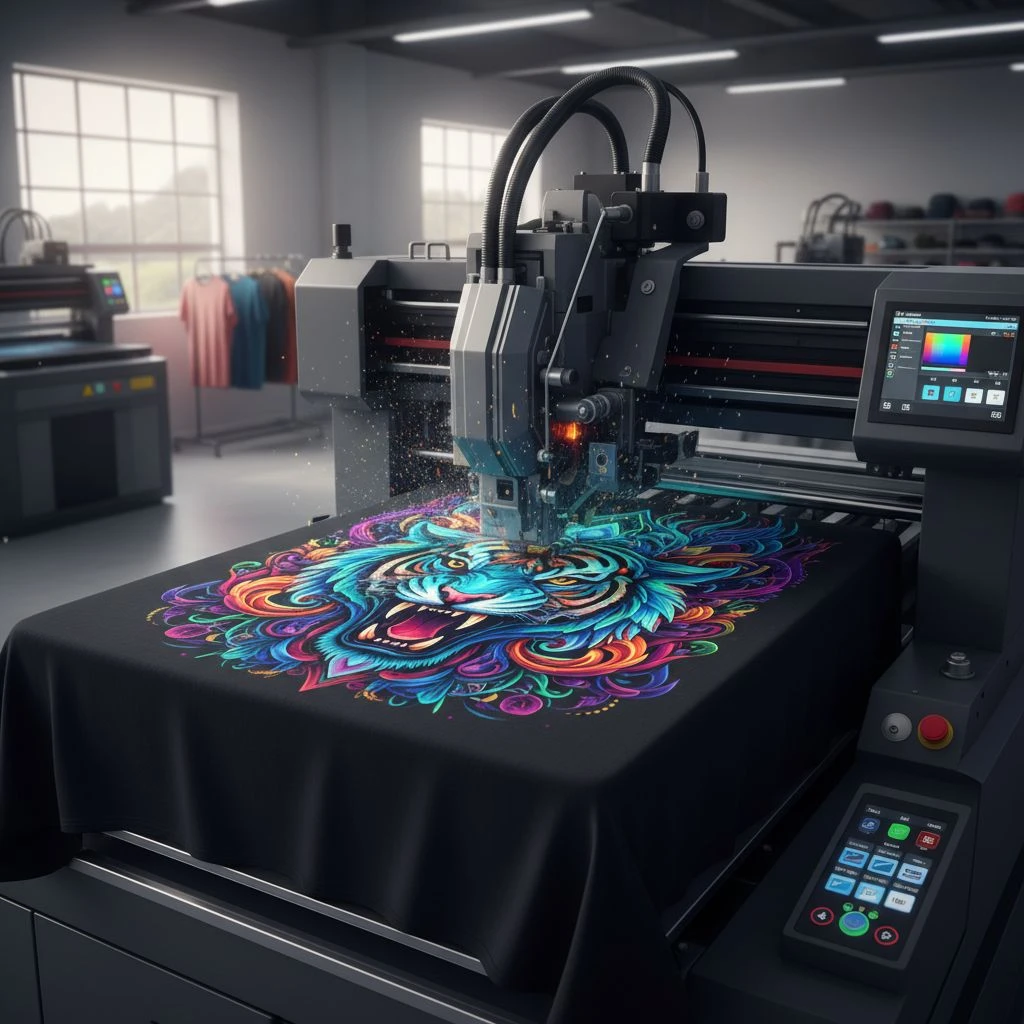
Pros & Cons DTG Printing for T-Shirts
DTG (Direct-to-Garment) printing is often pitched as the “easy” way to print T-shirts—upload the design, press print, done. And for small runs and high-detail, full-color artwork, it can be a smart choice. But here’s the catch: DTG isn’t a magic upgrade over screen printing. The final result depends heavily on fabric type (cotton matters), pretreatment quality, and the print shop’s process—and when those are weak, DTG can look dull, wash out faster, or feel inconsistent.
In this section, we’ll break down the real pros and cons of DTG so you know when it’s the best option (samples, one-offs, photo prints) and when DTG is the wrong tool for the job—especially if you’re printing on dark shirts, polyester blends, or trying to hit a low cost per unit.
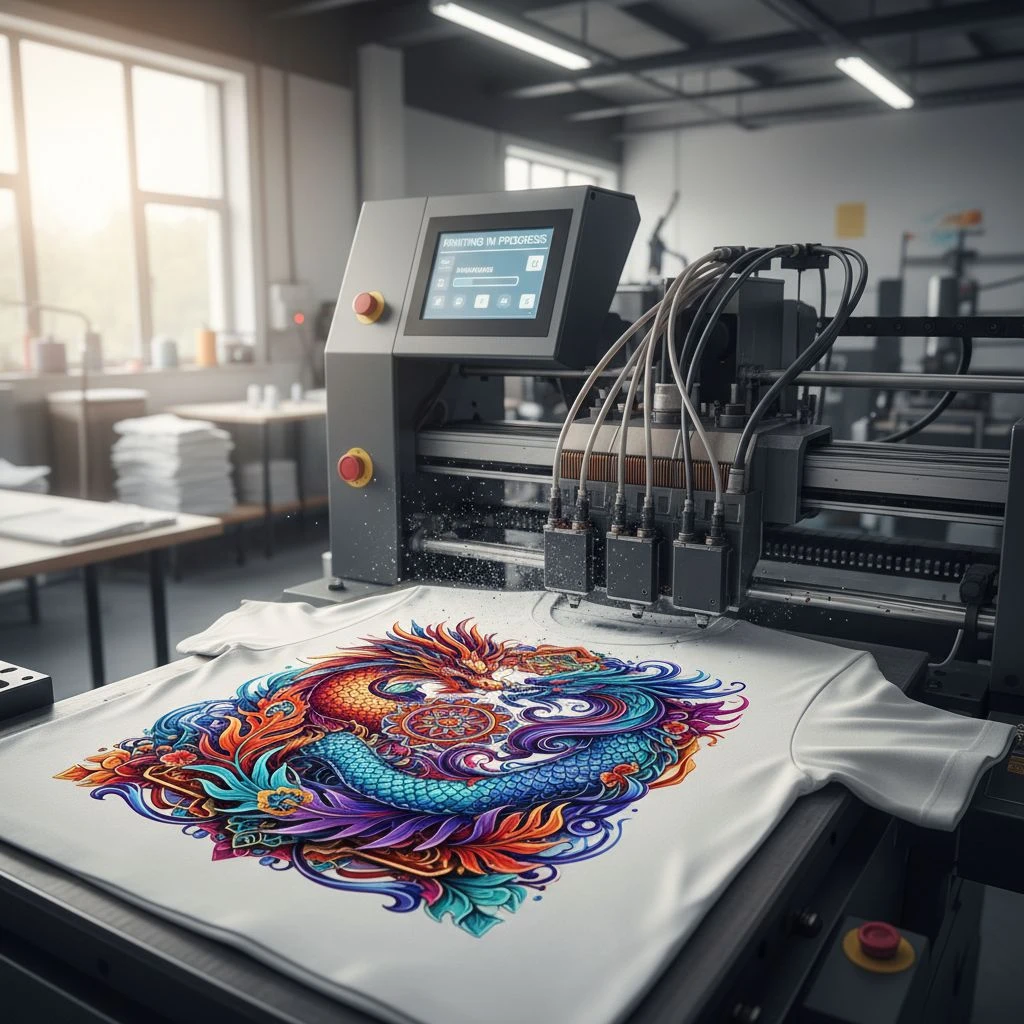
Pros:
1. Excellent print detail DTG is unmatched for:
- Photorealistic images
- Fine lines and small text
- Smooth gradients and shading
This makes it ideal for artwork, portraits, and complex designs.
2. Soft hand feel. Because the ink penetrates the fibers instead of sitting on top, DTG prints:
- Feel soft
- Remain breathable
- Do not create a thick print layer
This is a major advantage over vinyl or heavy transfers.
3. No setup or screen costs. DTG requires:
- No screens
- No plates
- No color separations
This makes it cost-effective for one-off prints or very small runs.
4. Unlimited colors at no extra cost:

Unlike screen printing, DTG allows full-color designs without increasing setup costs. This is perfect for artwork that uses many colors.
Cons of DTG Printing
1. Lower durability than screen printing or DTF. DTG prints typically last:
- 20–40 washes (good production)
- Much less with poor pretreatment or curing
Screen printing and DTF usually last significantly longer.
2. Highly dependent on pretreatment quality. Pretreatment quality affects:
- Color vibrancy
- Wash durability
- Ink bonding
Many low-cost suppliers under-pretreat to save time and money, leading to fast fading.
3. Poor performance on polyester
DTG is not ideal for sportswear or synthetic garments. Results are often dull, inconsistent, or short-lived.
4. Slow for bulk production
DTG prints one shirt at a time. That means:
- Small orders = fine
- Medium orders = slow
- Large orders = inefficient and expensive
DTG is one of the slowest methods for mass production.
5. High operating and maintenance costs. Hidden DTG costs include:
- Expensive white ink
- Daily nozzle cleaning
- Pretreatment chemicals
- Wasted test prints
- Machine downtime
DTG has low setup cost. but high cost per shirt.
DTG Printing vs Other T-Shirt Printing Methods
| Factor | DTG Printing | Screen Printing | DTF Printing | Sublimation |
|---|---|---|---|---|
| Best for | Small runs, POD, detailed artwork | Bulk orders, logos, uniforms | Medium runs, mixed fabrics | Polyester sportswear |
| Order quantity | 1–20 pcs ideal | 50+ pcs ideal | 10–200 pcs | Any (poly only) |
| Print detail | Excellent (photo-quality) | Good (limited by screens) | Very good | Good |
| Color gradients | Excellent | Limited / costly | Very good | Good |
| Hand feel | Very soft | Medium to thick | Slightly rubbery | No feel (ink bonds to fiber) |
| Durability (wash life) | Low–Medium | Very high | High | Very high |
| Fabric compatibility | Cotton only (best) | Most fabrics | Almost all fabrics | Polyester only |
| Polyester performance | Poor | Good | Excellent | Excellent |
| Setup cost | None | High | Low | Low |
| Cost per shirt (bulk) | High | Very low | Medium | Low |
| Production speed | Slow | Very fast | Medium | Fast |
| Operator skill needed | Very high | Medium | Medium | Medium |
| Common failure | Fading after washes | Ink cracking (rare) | Peeling if pressed wrong | Color limits on dark fabric |
| POD friendly | Excellent | Poor | Good | Limited |
| Branding consistency | Hard across factories | Very consistent | Consistent | Very consistent |
Conclusion / Final Words
Direct-to-Garment (DTG) printing is best for small orders, detailed artwork, and print-on-demand T-shirts. It delivers excellent print detail and a soft hand feel, but it is less durable, struggles on polyester, and becomes inefficient for bulk production.
DTG quality depends heavily on pretreatment and curing, not just the printer. When used correctly, it produces beautiful results but when rushed or misused, prints fade quickly. In short, DTG is a precision tool, not a universal solution. Choose it for flexibility and detail, and choose other methods when durability, speed, or scale matter more.