Which T Shirts Necklines Are the Most Difficult to Produce?

At first glance, a neckline seems like a small design detail. In reality, it is one of the highest-risk construction areas in garment production. Many quality issues—stretching, curling, tearing, or shape loss after washing—start at the neckline. This article explains which necklines are the most difficult to produce, why they cause problems, and what brands often misunderstand when choosing them.
=> Read More: T Shirts Manufacturing Vietnam | Mekong Garment Factory
Why Necklines Fail in Production
Neckline difficulty is not determined by shape alone. A simple neckline can become difficult when the fabric is unstable. A complicated neckline can sometimes be produced successfully when the:
- Pattern is correct
- Fabric is suitable
- Reinforcement is appropriate
- Sewing method is controlled
The real challenge comes from the relationship between: Shape + Stress + Fabric + Construction. A useful principle is: A Neckline Becomes Difficult When the Design Demands More Stability Than the Fabric and Construction Can Provide.

Before listing difficult necklines, it’s important to challenge a common belief: Neckline difficulty is not about shape alone.
What Creates Stress Around a T-Shirt Neckline?
The neckline moves whenever the wearer:
- Pulls the T-shirt over the head
- Turns the neck
- Raises the arms
- Bends
- Wears the garment for long periods
- Washes and dries the garment repeatedly
This creates both temporary and repeated stress.
=> Related Article: Which T-Shirt Necklines Work Best in Hot or Humid Climates?
The stress may be concentrated at:
- A sharp V point
- The end of a split
- A wide shoulder opening
- A long curved edge
- A tall collar
Different neckline styles therefore fail in different ways.
Stress comes from: Large or deep openings, body movement, and repeated washing. Structure comes from: Fabric stability, reinforcement (stay tape, facing), and proper stitch choice. When stress exceeds structure, failure is guaranteed.
Main Factors That Make a Neckline Difficult to Produce
Several factors increase production risk.
| Risk Factor | Why It Matters |
|---|---|
| Deep opening | More fit and stability risk |
| Wide opening | Greater risk of growth and gaping |
| Sharp corner | Stress can concentrate at one point |
| Long curved edge | More difficult to sew without stretching |
| Small circular opening | Requires high sewing precision |
| Tall collar | Needs structure and recovery |
| Lightweight knit | Less support for complex shapes |
| Poor recovery | Neckline may grow after wear |
| Complex grading | Shape may change between sizes |
| Weak reinforcement | Stress areas may tear or distort |

Which T-Shirt Neckline Is the Most Difficult?
There is no universal ranking for every fabric and factory. However, some neckline styles generally require more technical control than a standard crew neck. Among the more difficult styles are:
- Deep V-Neck
- Keyhole Neck
- Cowl Neck
- Split / Notch Neck
- Boat / Bateau Neck
- Deep Scoop Neck
- Mock Neck / High Neck
Each is difficult for a different reason.
Deep V-Neck: One of the Highest-Risk Necklines
A deep V-neck is one of the most technically sensitive T-shirt necklines. The main problem is the V point. Unlike a round neckline, the V shape concentrates construction accuracy and stress into a very small area.
If the V point is poorly sewn, the result may include:
- Tearing
- Puckering
- Twisting
- Uneven left and right sides
- A blunt or rounded V point
- Neckband distortion
The deeper the V becomes, the more visually obvious small errors can become.
=> Related Article: Deep V-Neck T-Shirts: Specs, Production, and Pros & Cons
Deep V-necks concentrate stress at a single sharp point. This point absorbs vertical pulling, horizontal stretch, and washing tension. Common issues: Tearing at the V tip, wavy shapes, or asymmetrical angles.
Why the V Point Is Difficult:
The V tip changes sewing direction sharply.
The operator has to control:
- Stitch placement
- Band tension
- Seam allowance
- Symmetry
at the same time.
- If the neckline is stretched during sewing, the V may become distorted.
- If reinforcement is too heavy, the point may look bulky.
- If reinforcement is insufficient, the point may weaken.
So: Deep V-Neck Difficulty = Sharp Geometry + Stress Concentration + Precision Sewing

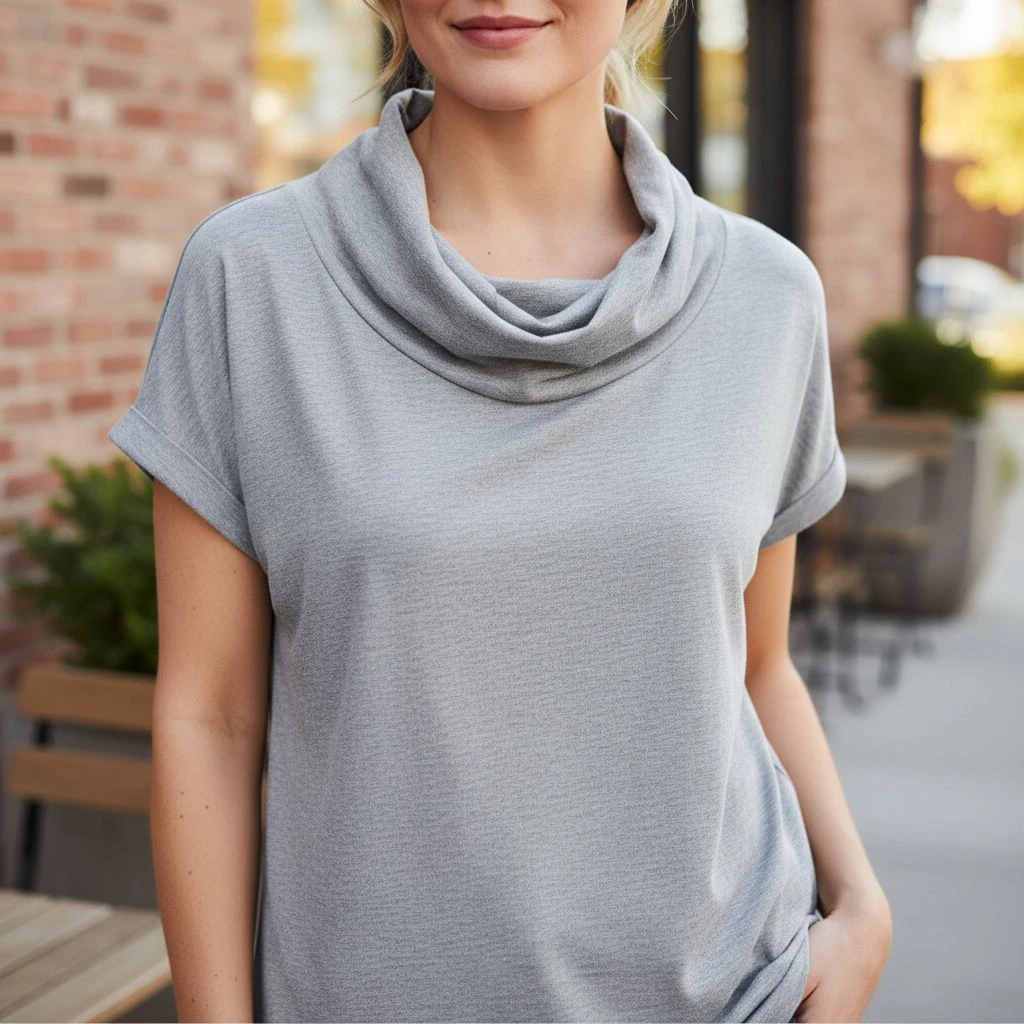
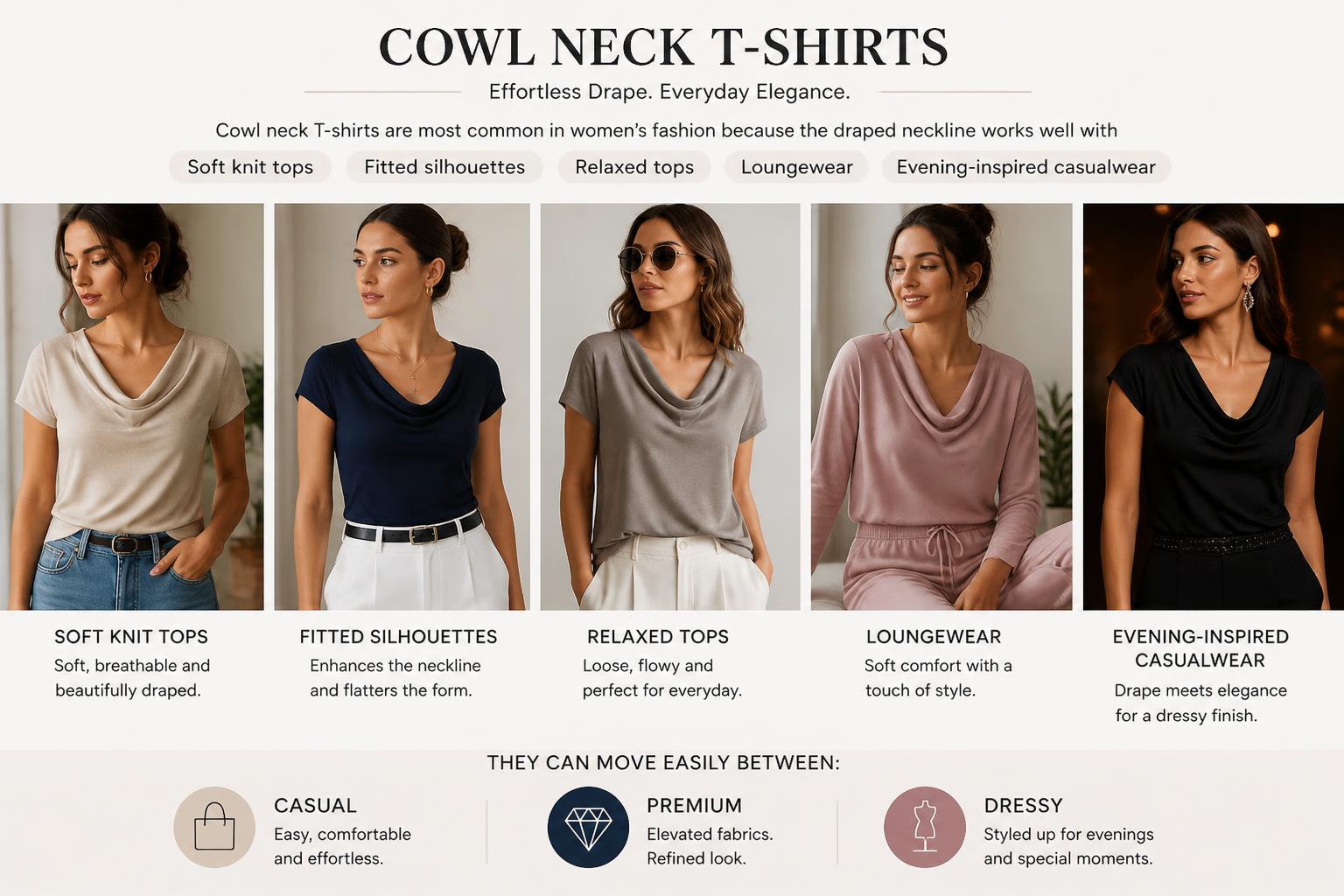
Cowl Neck: Difficult Because the Final Shape Depends on Drape
A cowl neck is different from most other necklines. Its appearance is created by extra fabric volume that falls into folds.
That means the final result depends heavily on:
- Pattern volume
- Fabric drape
- Fabric weight
- Stretch
- Recovery
- Grain direction
- Shoulder balance
The neckline cannot be controlled only by measuring the opening.

=> Related Article: Cowl Neck T-Shirts: Pros, Cons, and What Brands Must Know Before Using Them
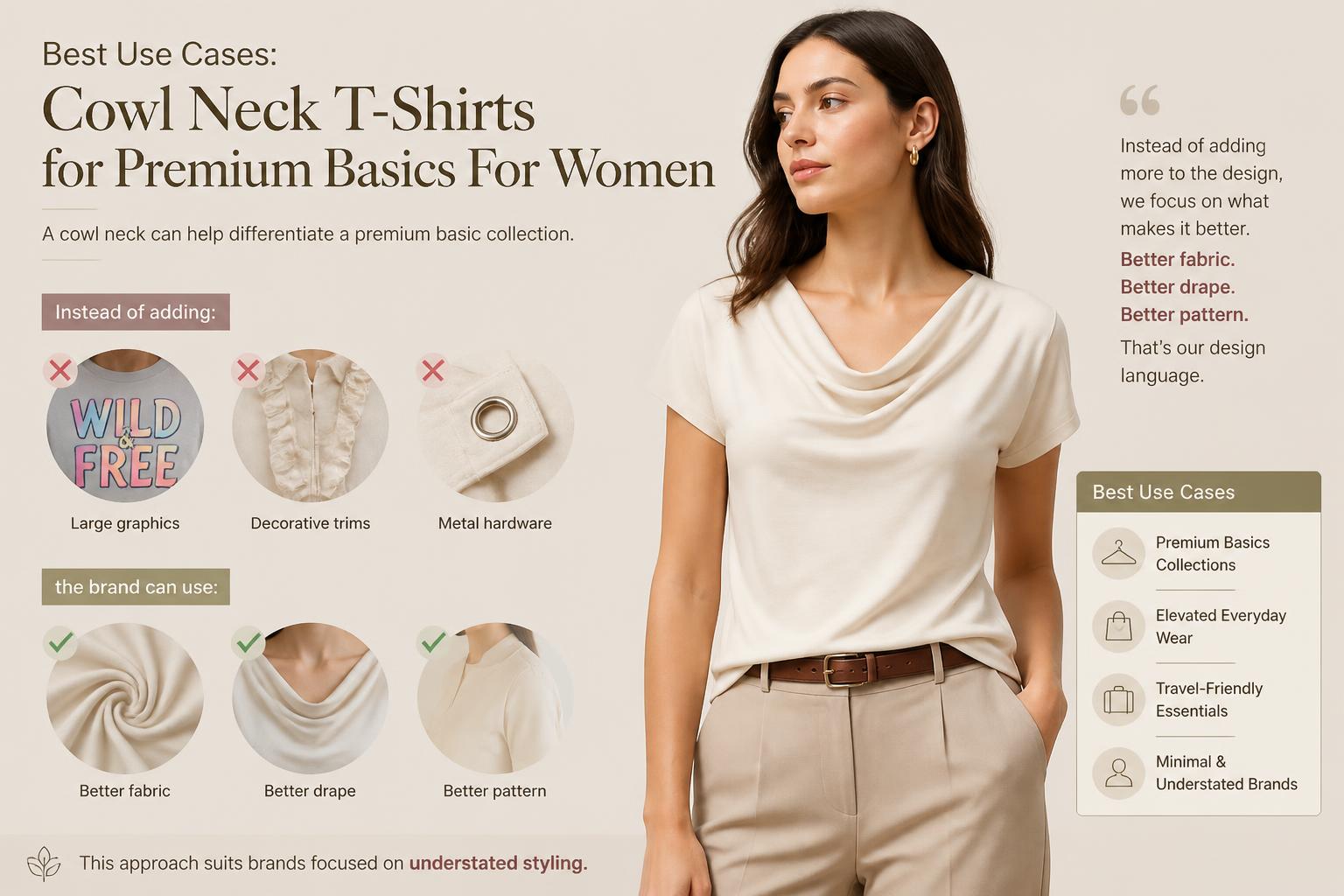
Why Cowl Neck Production Is Difficult:
Two garments can have exactly the same pattern measurements but still look slightly different if the fabric falls differently. Possible problems include:
- Too much sagging
- Too little drape
- Bulky folds
- Twisting
- Uneven left/right appearance
- Collapse after washing
This makes cowl-neck QC more subjective than standard crew-neck QC. A useful formula is: Cowl Pattern + Fabric Drape + Volume + Shoulder Balance = Final Cowl Appearance.
Scoop Neck: Difficult Because of the Long Curved Opening
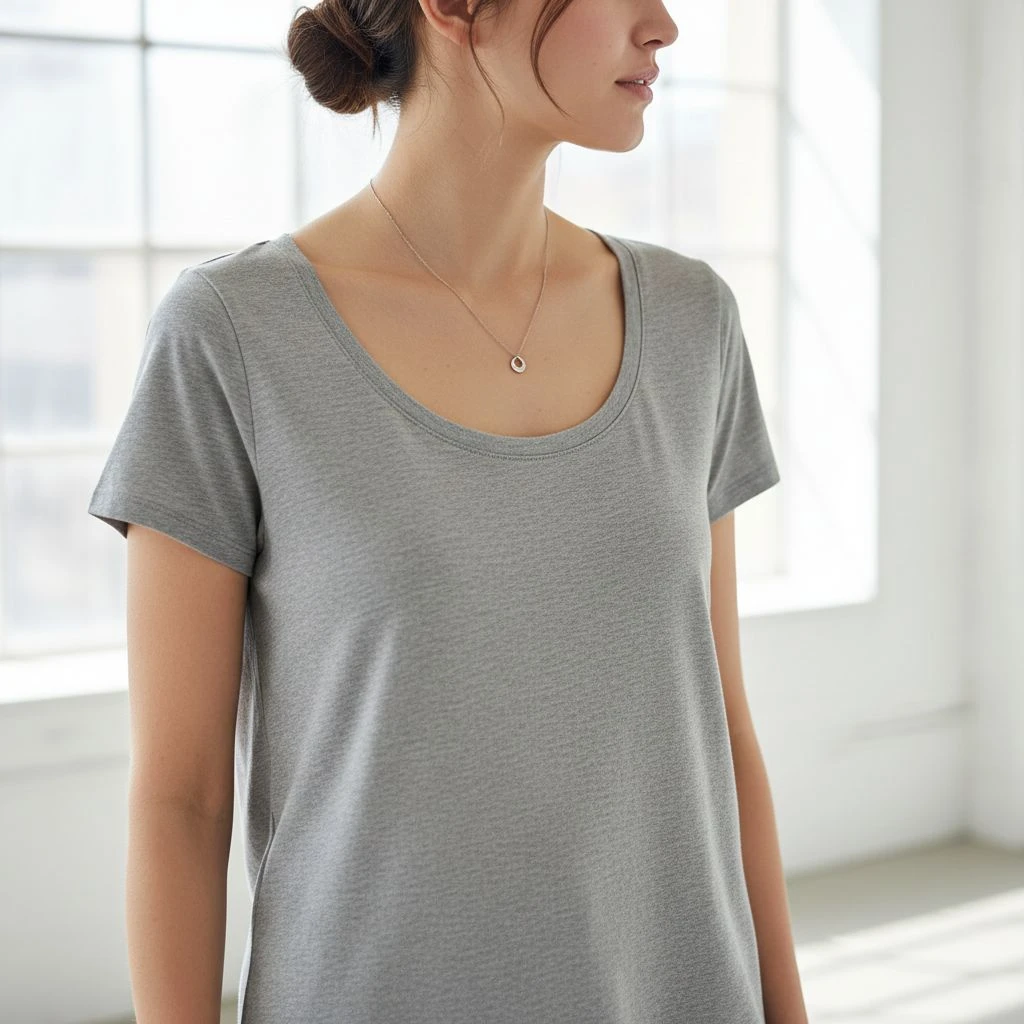
A scoop neck has a wider and lower rounded opening than a standard crew neck. The main challenge is the long curved edge. During sewing, this edge can easily be stretched. Possible results include:
- Waviness
- Gaping
- Neckline growth
- Uneven curve

Deep scoop necks are generally more sensitive than shallow scoops.
=> Related Article: Scoop Neck (U-Neck) T-Shirts: Pros, Cons, and What Brand Owners Should Know
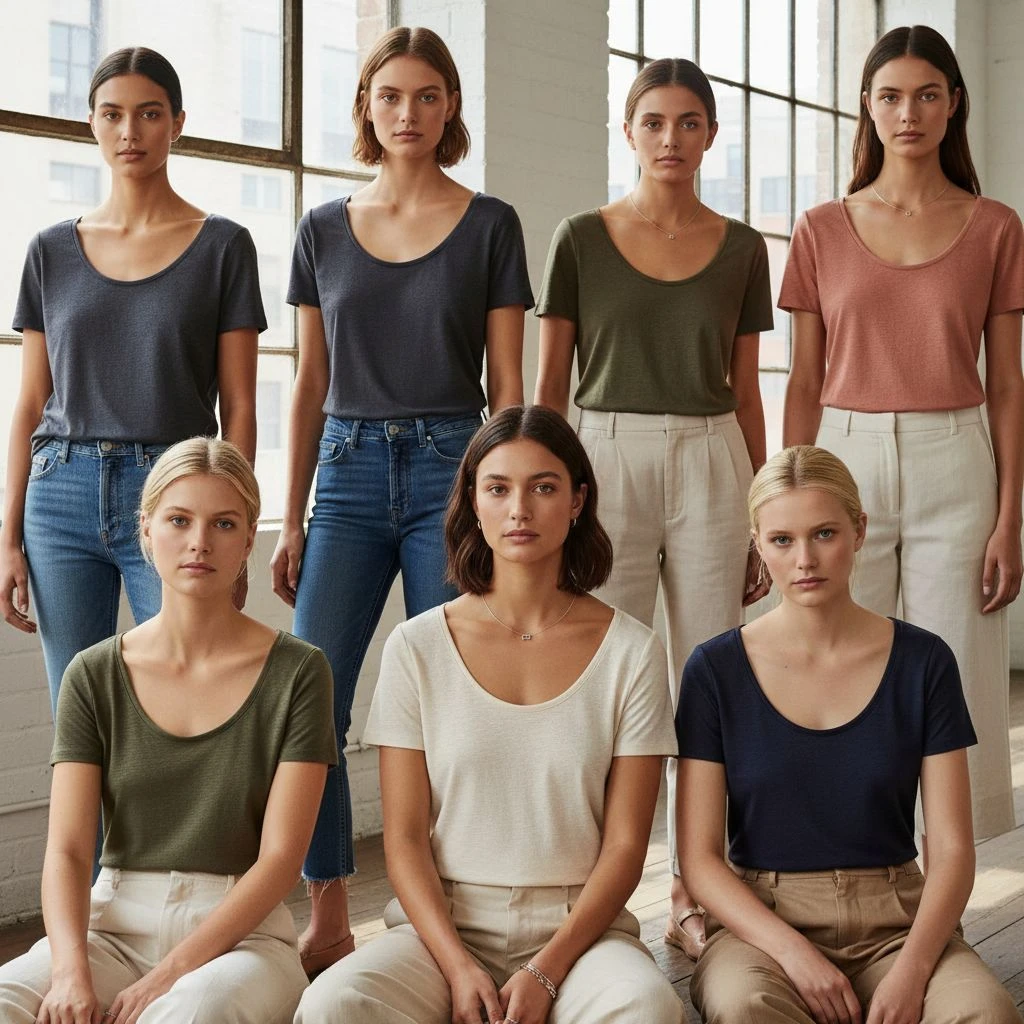
Scoop necks are deceptively risky. The long curved edge creates a constant gravity pull. Without a corner to lock the shape, the neckline slowly stretches wider and the front dips lower over time, making the garment look “tired.” – Scoop neck stretching and sagging risks in bulk production
Scoop Neck Waviness
A scoop neckline should lie smoothly against the body. If the:
- Neckband is too long
- Fabric recovery is weak
- Sewing stretches the opening
- Differential feed is incorrect
the edge may develop waves. The problem may become even more visible after washing.
Scoop Neck Gaping
Gaping happens when the neckline stands away from the body. Possible causes include:
- Excessive neck width
- Excessive front drop
- Poor grading
- Weak fabric recovery
- Pattern imbalance
This is why scoop necks need both good sewing and good pattern development.

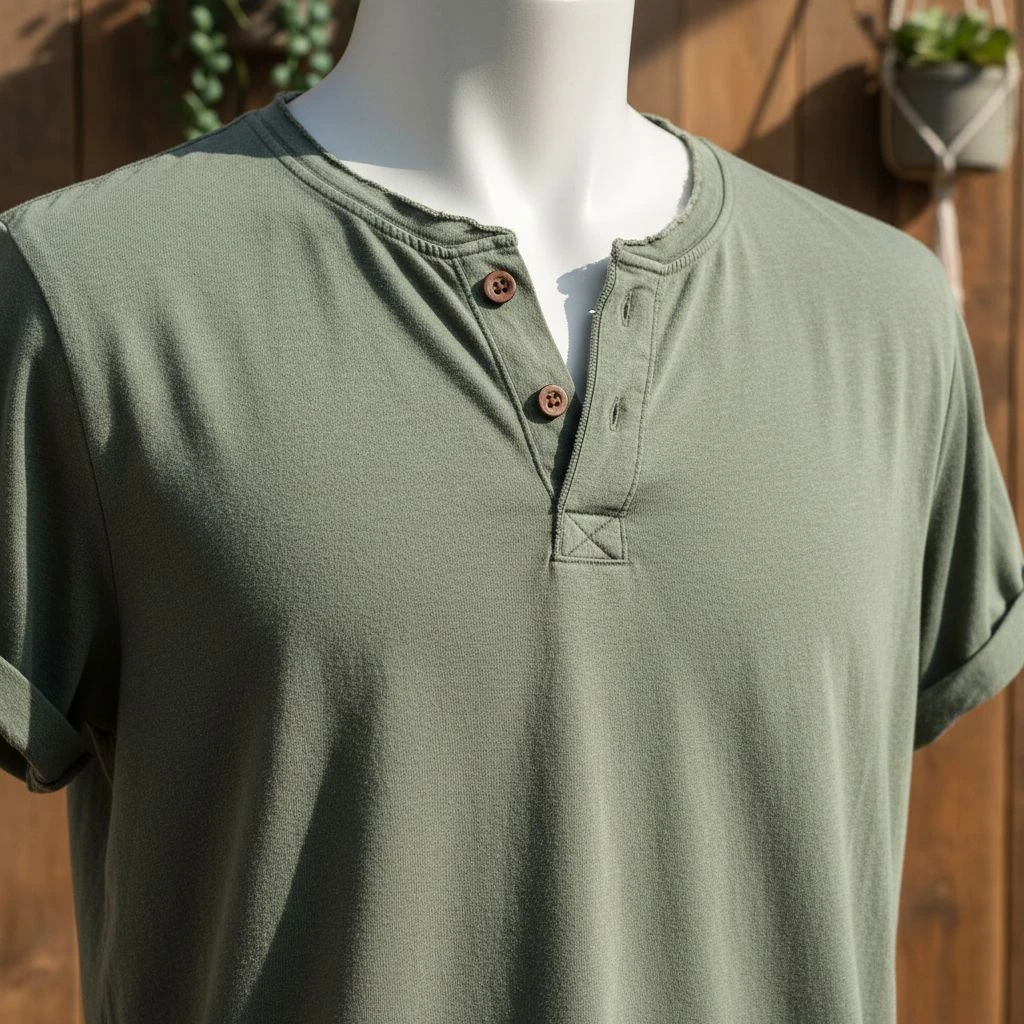
Split / Notch Neck: Stress Concentrates at the End of the Opening
A split or notch neckline creates a vertical opening at the center front or another position. The end of that split becomes a stress point. During wear, the opening can be pulled apart. If the area is not engineered correctly, problems may include:
- Split extending farther
- Tearing
- Curling
- Uneven opening width
- Loss of symmetry
=> Related Article: Split / Notch Neck T-Shirts: Pros, Cons, and How to Produce Them Right
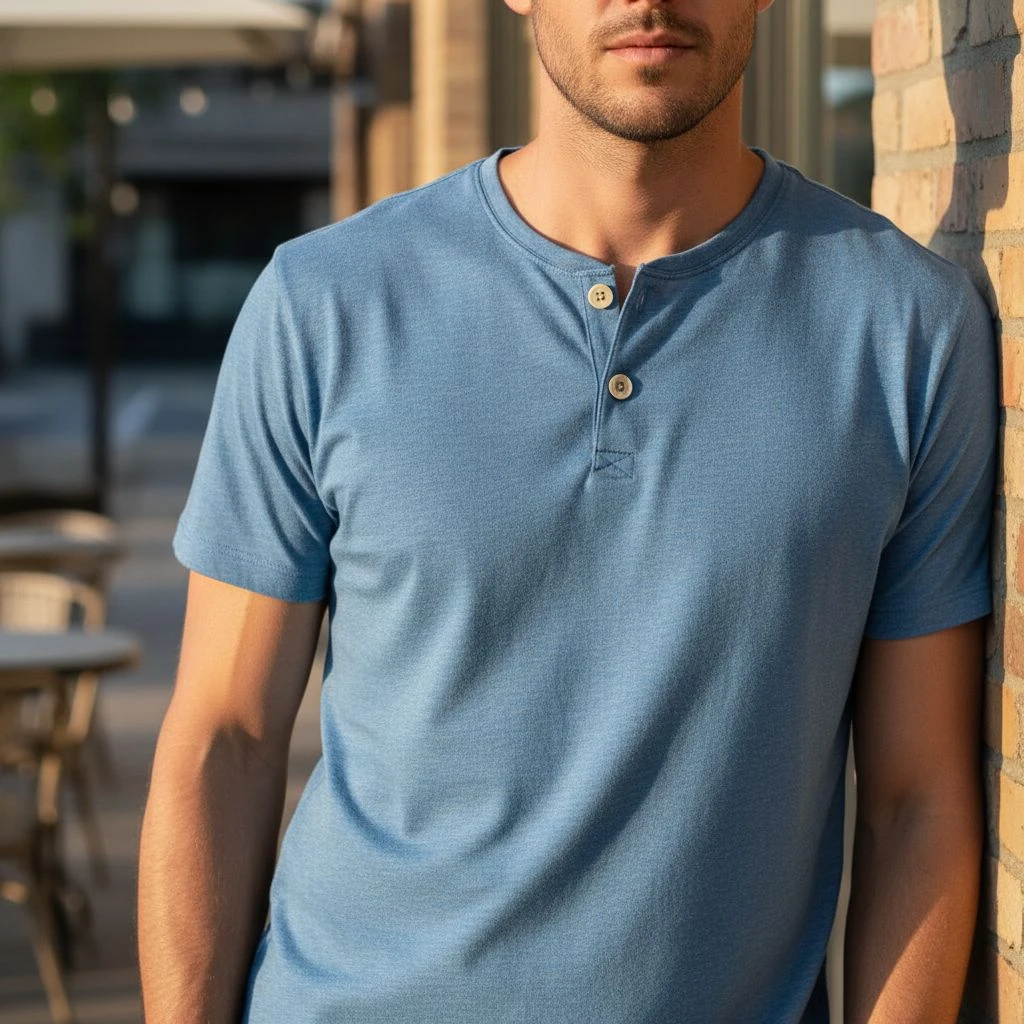
A notch creates two stress points at the end of the split. Without proper reinforcement (like a bartack), the split will spread wider, the edges will curl, and the neckline will lose symmetry. This style fails fast if under-engineered with soft fabrics.
Reinforcement Is Important for Split Necklines
Depending on the design, reinforcement may involve:
- Bartack
- Facing
- Binding
- Reinforcement tape
- Appropriate stitch construction
But more reinforcement is not automatically better.
Too much reinforcement can create:
- Bulk
- Stiffness
- Visible distortion
The goal is: Enough Strength Without Destroying the Intended Appearance
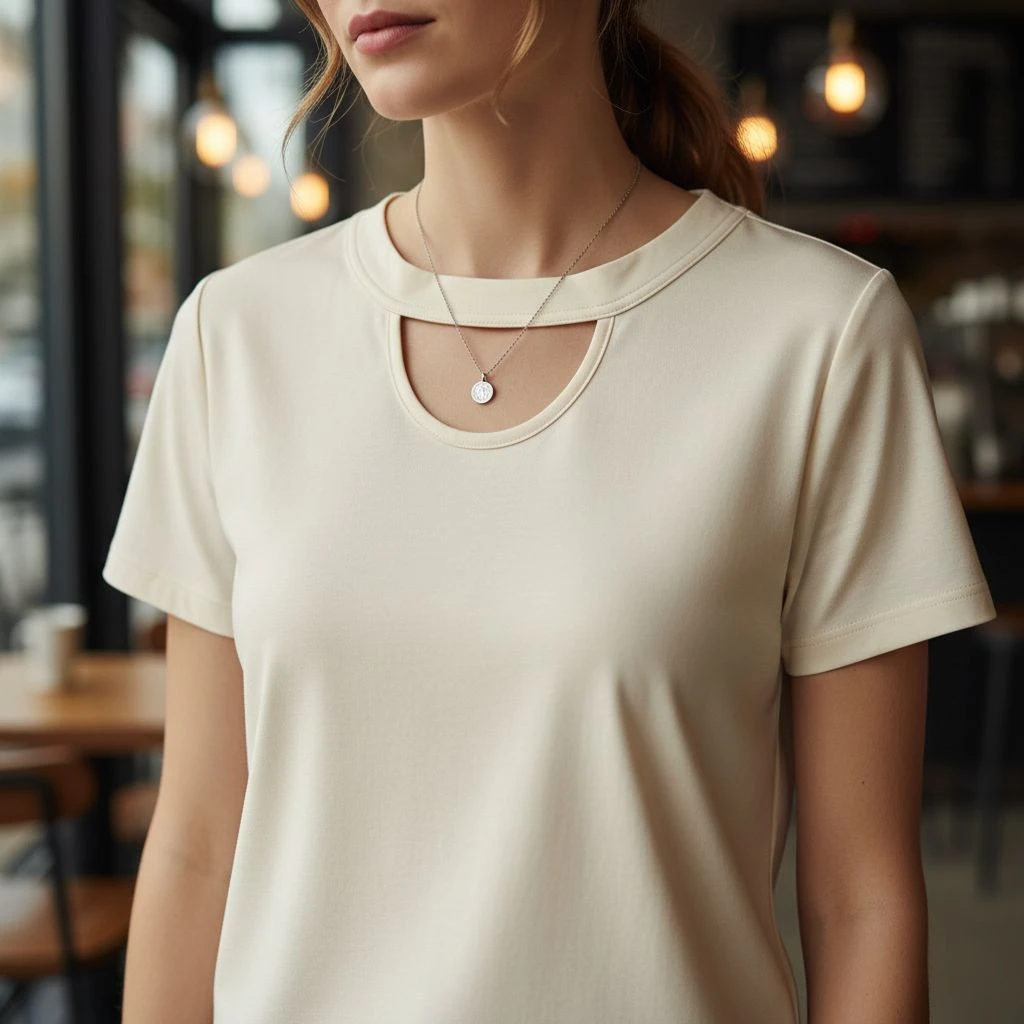
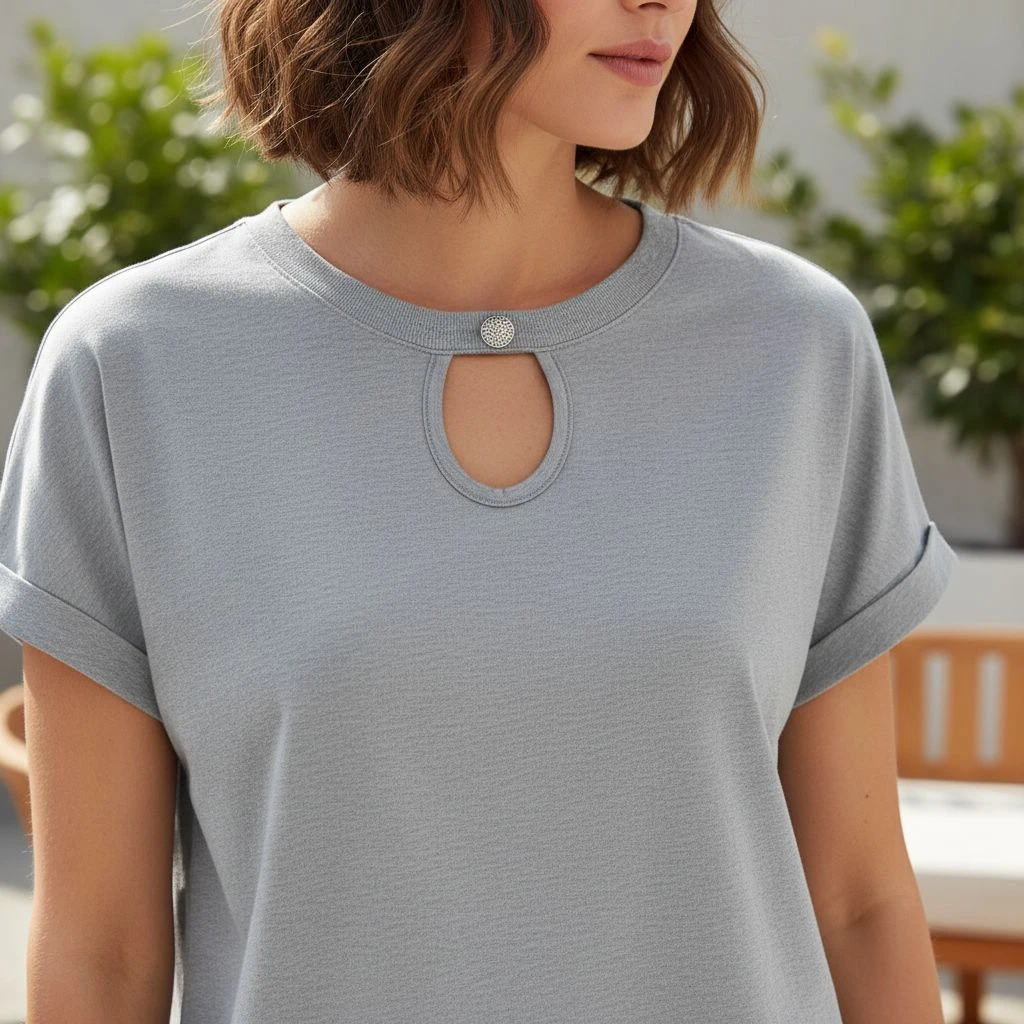
Keyhole Neck: Small Detail, High Precision
A keyhole neckline may look small and decorative, but it can be surprisingly difficult to produce.
The keyhole usually requires a controlled:
- Circle
- Oval
- Teardrop
- Small slit with rounded end
Small inaccuracies become very visible.
=> Related Article: Keyhole Neck T-Shirts: Pros, Cons,… and What Brand Owners Must Know
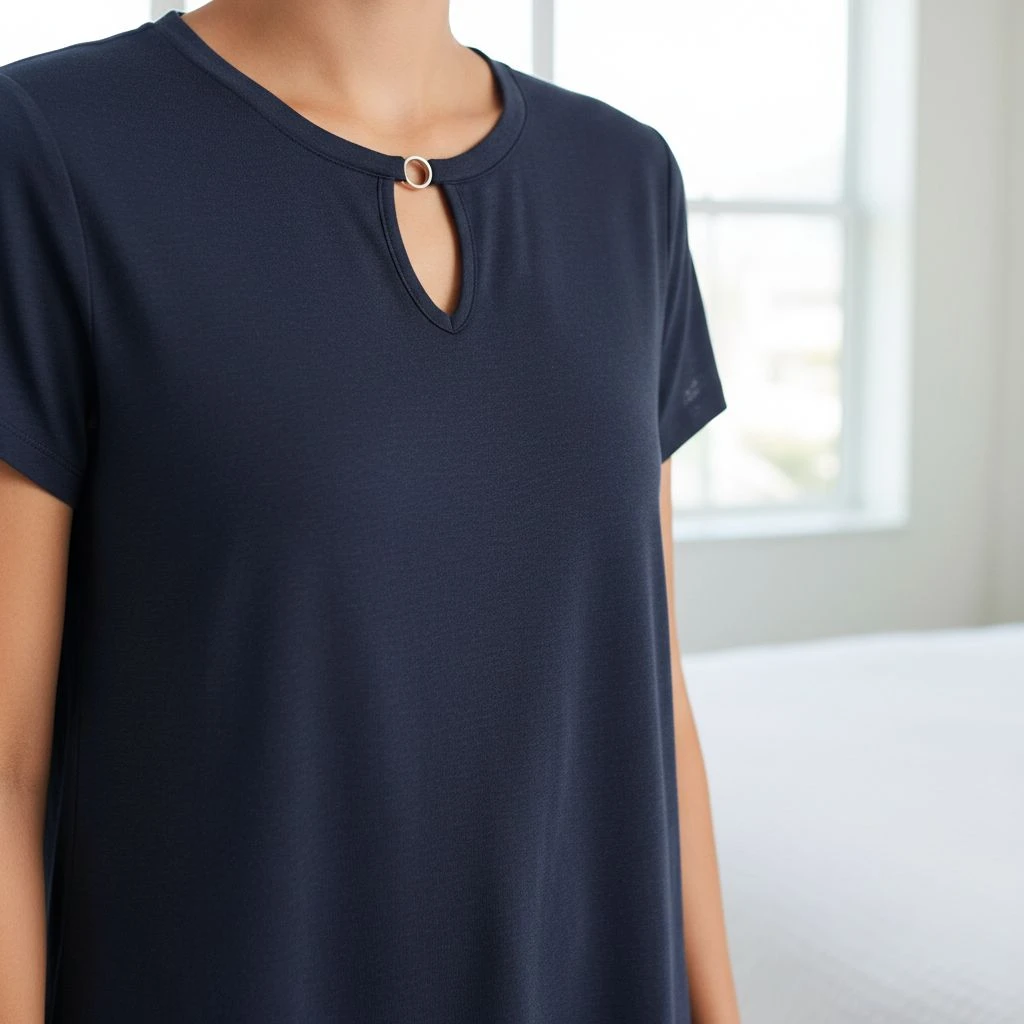
Keyhole necklines require precise circular control. Maintaining a clean round shape and preventing distortion during sewing is difficult on stretch knits. Small inaccuracies in stitching become obvious immediately.
Possible problems include:
- Uneven shape
- Distorted circle
- Twisting
- Puckering
- One side larger than the other

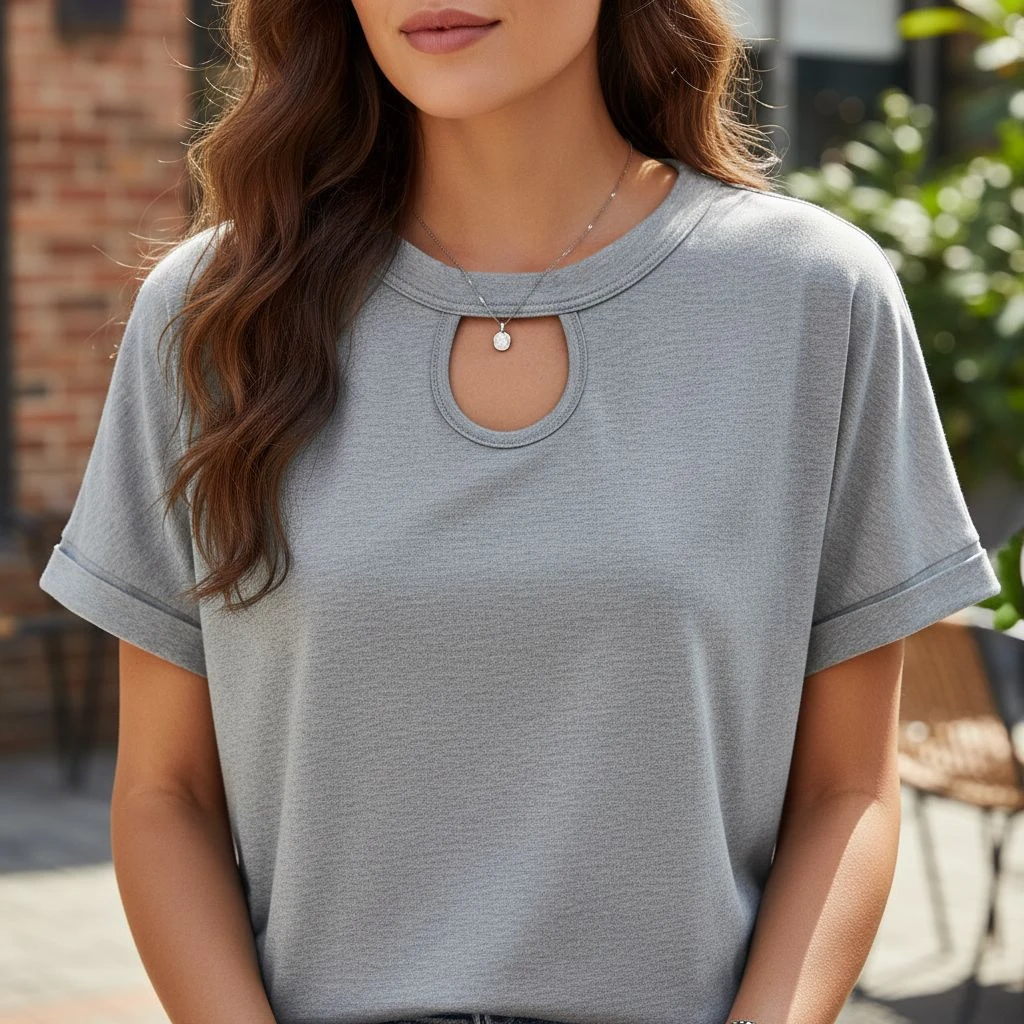
Why Keyhole Necklines Are Difficult on Knits:
Stretch knit fabrics can change shape easily during sewing. The smaller the opening, the more important sewing accuracy becomes. A slight difference in:
- Seam allowance
- Stitching line
- Clipping
- Turning
can noticeably change the final keyhole shape. So: Small Opening is not Easy Construction. In many cases, the opposite is true.
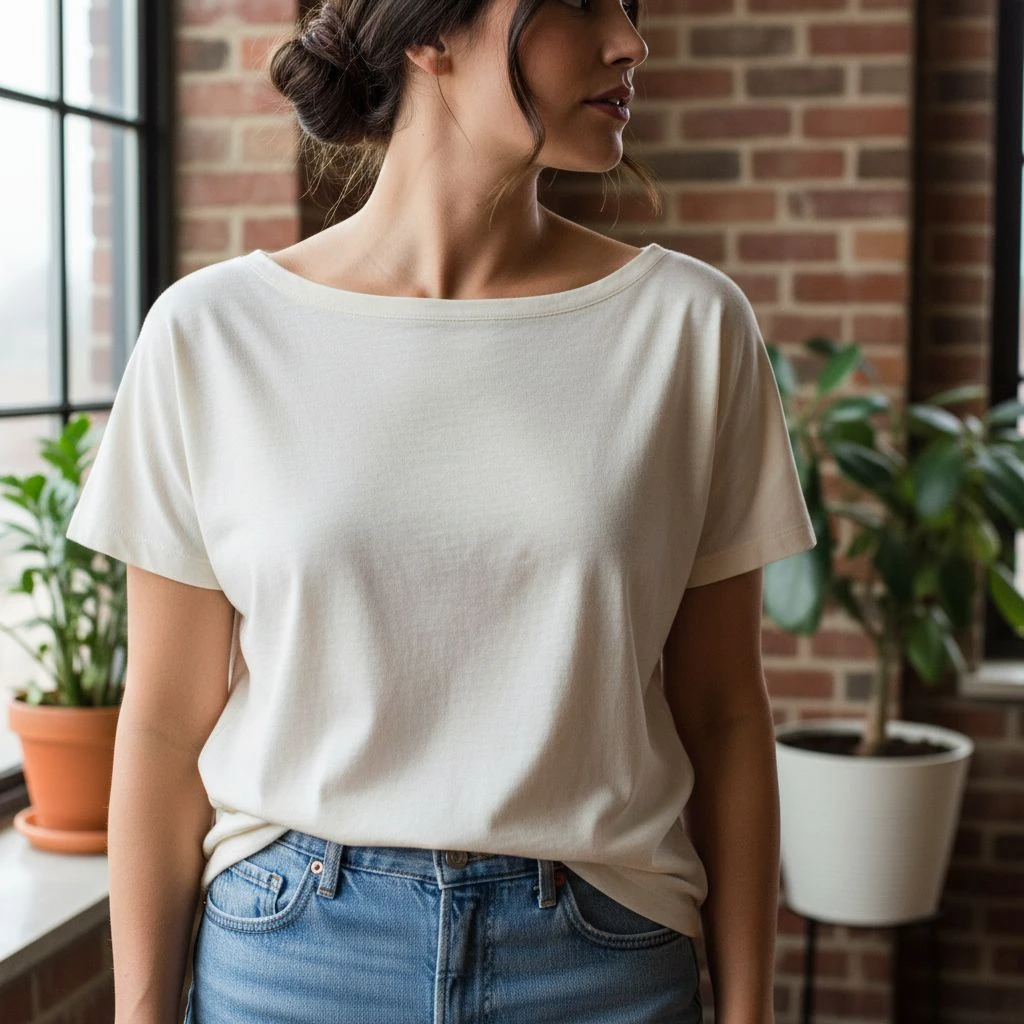
Boat Neck / Bateau Neck: Difficult Because the Opening Is Wide
A boat neck extends horizontally toward the shoulders. This creates a much wider opening than a crew neck. The design can look elegant and simple, but the wider opening increases several risks. These may include:
- Shoulder slipping
- Neckline growth
- Edge waviness
- Gaping
- Poor recovery
=> Related Article: Boat Neck (Bateau) T-Shirts: Pros, Cons, Specs, and What Brand Owners Must Control
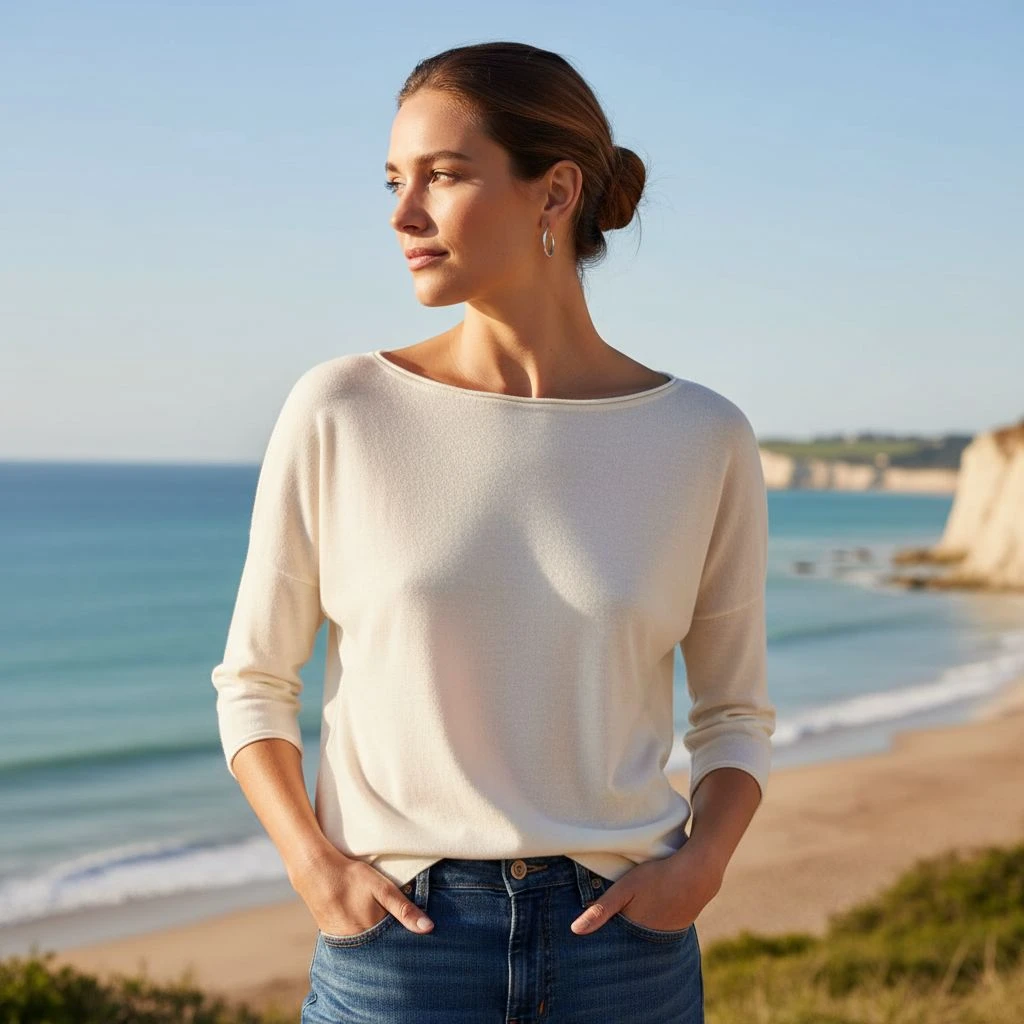
Boat necks create strong horizontal tension. Because they sit so close to the shoulders, there is a high risk of shoulder slip and fast stretch-out if fabric recovery is weak. They expose every weakness in fabric and construction.
Why Boat Necks Depend Strongly on Fabric Recovery
The neckline has relatively little vertical depth but a lot of horizontal width. If the fabric has weak recovery, the opening may gradually become wider. That can cause the garment to:
- Slip toward one shoulder
- Sit lower than intended
- Lose symmetry
So: Wide Opening + Weak Recovery = High Boat-Neck Risk
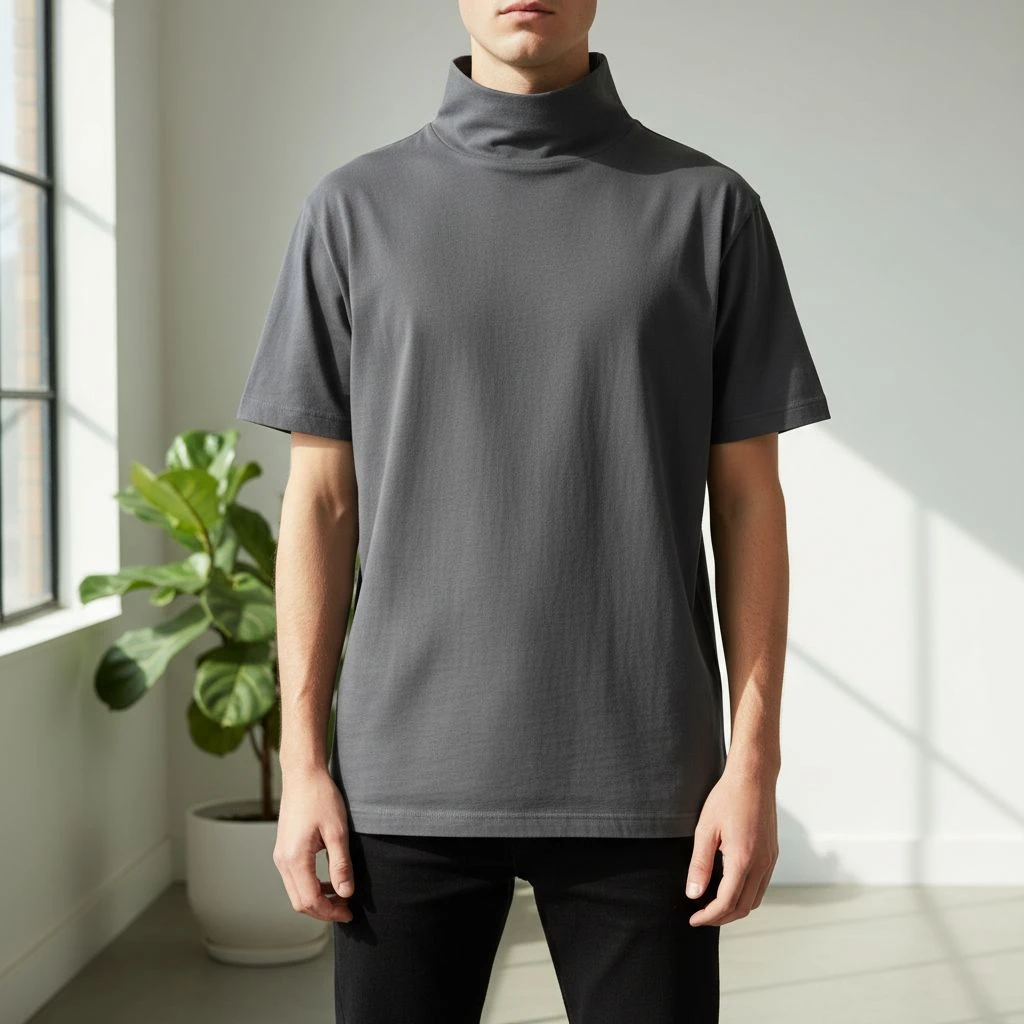
Mock Neck: Difficult Because the Collar Must Stand Vertically
A mock neck introduces another challenge: Vertical structure Unlike a regular neckband, a mock-neck collar has enough height to become a visible part of the garment silhouette. The collar needs to:
- Stand correctly
- Stretch enough for dressing
- Recover after wearing
- Remain comfortable
That is a difficult balance.
=> Related Article: Mock Neck T-Shirts: Pros, Cons, Specs,…, and Brand Owner Guide

Mock necks require vertical structure. If the fabric is too soft or height isn’t controlled, you get the “bacon” edge or a collapsed collar that loses its premium look after one wash. Wavy bacon neck effect on poor quality mock neck collars
Common Mock-Neck Problems
Typical problems include:
- Collar collapse
- Wavy or “bacon” edge
- Rolling
- Flaring
- Tightness
- Uneven collar height
These problems may come from:
- Rib too soft
- Collar too tall
- Incorrect circumference
- Weak recovery
- Sewing distortion
Comparison: Neckline Difficulty & Production Risk
| Neckline | Difficulty | Main Risk |
|---|---|---|
| Deep V-Neck | Very High | V-point tearing / distortion |
| Keyhole Neck | Very High | Shape and symmetry |
| Cowl Neck | Very High | Drape and twisting |
| Split / Notch Neck | High | Split-end tearing |
| Boat Neck | High | Stretch-out / shoulder slip |
| Deep Scoop Neck | High | Waviness / gaping |
| Mock Neck | High | Collapse / tightness |
| High Crew Neck | Medium | Tightness / recovery |
| Standard Crew Neck | Low–Medium | Rib stretching |
Conclusion / Final Words
Neckline problems start with design choices. Complex styles like deep V-necks or notch necks demand strong engineering. Treating necklines as a technical decision—matching opening size, fabric behavior, and construction—leads to better quality and fewer returns. Choose necklines based on durability, not just appearance.