Heat Transfer Vinyl (HTV) Printing: Pros, Cons and Benefits

Heat Transfer Vinyl (HTV) printing is one of the most talked-about apparel decoration methods out there. It sounds simple: cut vinyl, press it to a shirt, boom, custom tee. But for brand owners, the real question isn’t “what it is”, it’s “should I use it for my brand?” Today we cut through the marketing hype and give you a grounded, experience-based look at HTV printing: how it works, where it shines, where it struggles, and how it compares to other methods.
=> Read More: T Shirts Manufacturing Vietnam | Mekong Garment Factory
T-Shirt Printing Methods Comparison:
- Screen Printing for T-Shirts: What It Is, Pros, Cons, Costs, and When to Use It
- Direct-to-Garment (DTG) Printing for T-Shirts: Pros, Cons, and What Brands Must Know
- Direct-to-Film (DTF) Printing for T-Shirts: Pros, Cons
- What Is Heat Transfer Printing for T-Shirts: Pros, Cons, Benefits,…
- Sublimation Printing for T-Shirts: Pros, Cons and Guide for Brand Owners
- Puff Printing for T-Shirts: Pros, Cons, Benefits and Guide for Brand Owners
- Heat Transfer Vinyl (HTV) Printing: Pros, Cons and Benefits
- What Is Embroidery for T-Shirts? A Brand Owner’s Guide
What Is Heat Transfer Vinyl (HTV) Printing?
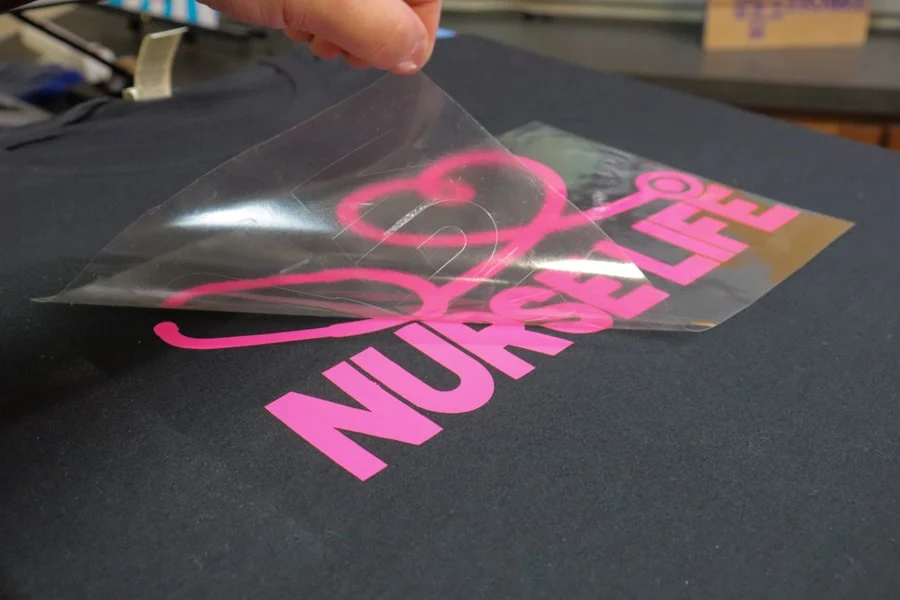
Heat Transfer Vinyl (HTV) printing is a garment decoration method where a pre-colored vinyl film is cut into a design and then bonded onto a T-shirt using heat and pressure. Unlike ink-based printing, HTV sits on top of the fabric as a thin layer, making it a practical option for simple logos, names, and small custom runs.
At its core, HTV is not “printing ink”, it’s a plastic film cut into shapes that get bonded to fabric using heat and pressure. The process flow is:
- Create or import a design
- Cut it from colored vinyl sheets
- Weed out excess material
- Heat-press the vinyl onto the garment
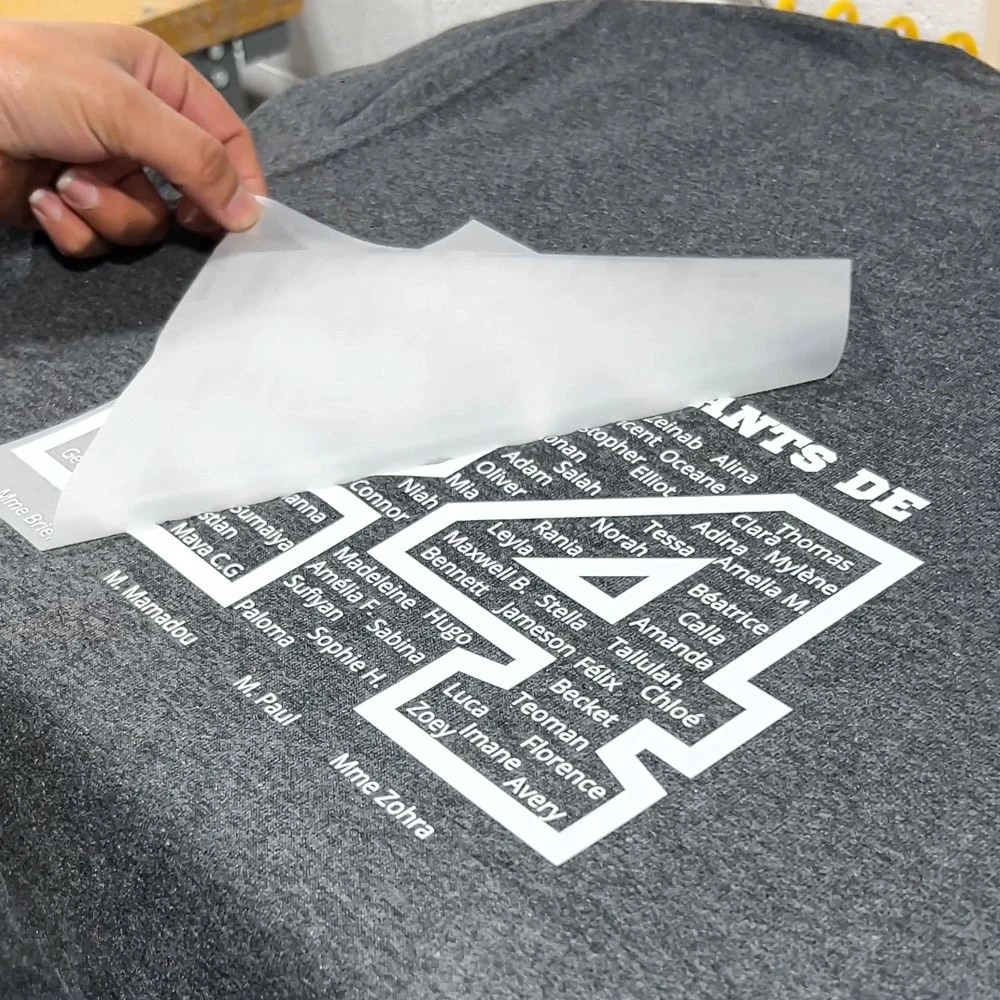
- Remove the carrier sheet once it cools
Best Fabrics for HTV
HTV can bond well to many T-shirt fabrics, but results aren’t equal across all materials. Fabric surface, heat tolerance, and stretch all affect adhesion and durability. HTV works well on:
- Cotton & cotton blends (classic choice)
- Polyester & sports fabrics with correct temp control
- Smooth surfaces (textured fabrics can reduce adhesion)

Avoid HTV on delicate knits or fabrics that can’t tolerate required press temperatures.
Pros and Cons of Heat Transfer Vinyl (HTV) Printing
HTV is popular because it’s simple to produce and works well for small runs and bold designs. Before choosing it for your T-shirt line, weigh the trade-offs.
Pros: When HTV Makes Sense
- Low Startup Cost: No screens or high-end printers needed. A cutter and a heat press are enough for prototypes.
- Highly Customizable: Names, numbers, and limited editions are easy to personalize at small scale.
- Special Effects: Matte, gloss, glitter, puff, and holographic effects help a brand stand out visually.
- Durable If Applied Correctly: Can last 30–50 washes without peeling if the process is disciplined.
Cons: The Hard Truths
- Limited Detail: Struggles with fine lines and gradients. Not ideal for photographic imagery.
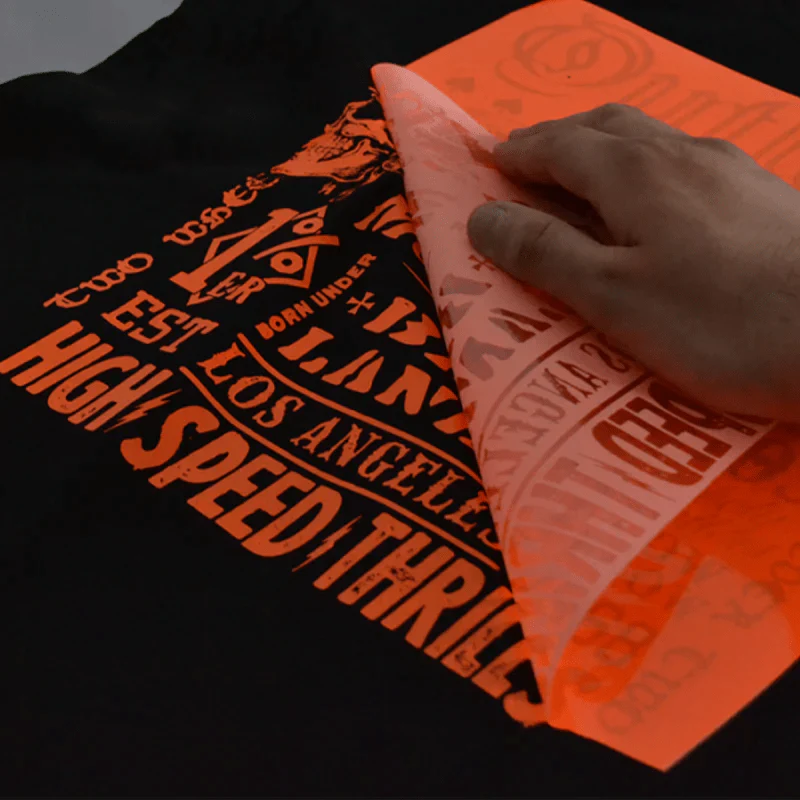
- Adds a Noticeable Layer: The vinyl sits on top of the fabric, which can be felt by the customer.
- Labor Intensive: Weeding and layering is manual, introducing higher labor costs at scale.
- Temperature Sensitivity: Incorrect heat can cause warping or poor adhesive bonding.
HTV vs Other Methods
| Method | Best For | Fabric Feel | Scalability |
|---|---|---|---|
| HTV | Personalization, simple logos | Noticeable layer | Low to medium |
| Screen Printing | Bulk orders, solid graphics | Soft (absorbs in) | Very high |
| DTF | Complex artwork, gradients | Thin printed layer | Medium to high |
Practical Tips for Brand Owners
HTV results vary by factory skill. Small changes in heat or fabric type can affect durability.
- Always test before scaling to ensure vinyl and fabric interact correctly.
- Pre-press garments to remove moisture and improve bonding.
- Match vinyl type to wear goals—don’t sacrifice comfort for glitter.
- Standardize press settings to ensure consistent quality across every batch.
When to Choose HTV
Use it if you want customization without high setup costs, are testing designs, or value special visual effects in small to moderate volumes.
Final Thought: Don’t Choose HTV by Default
HTV is a tool with defined strengths. If your brand’s identity depends on detail and premium hand feel, take a look at screen printing or DTF. Use HTV strategically for what it does best: personalization and bold effects.