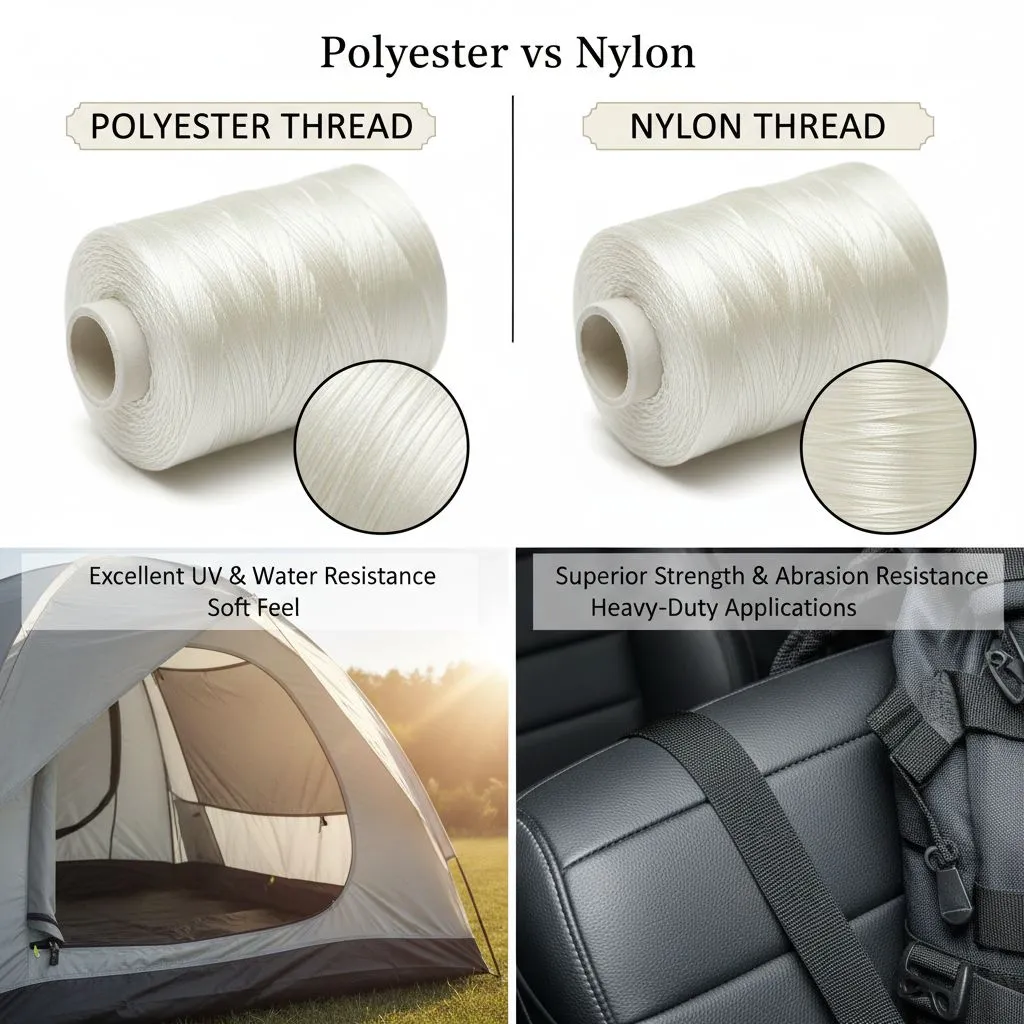
Polyester vs. Nylon Sewing Thread: What’s Different, and When to Use Each

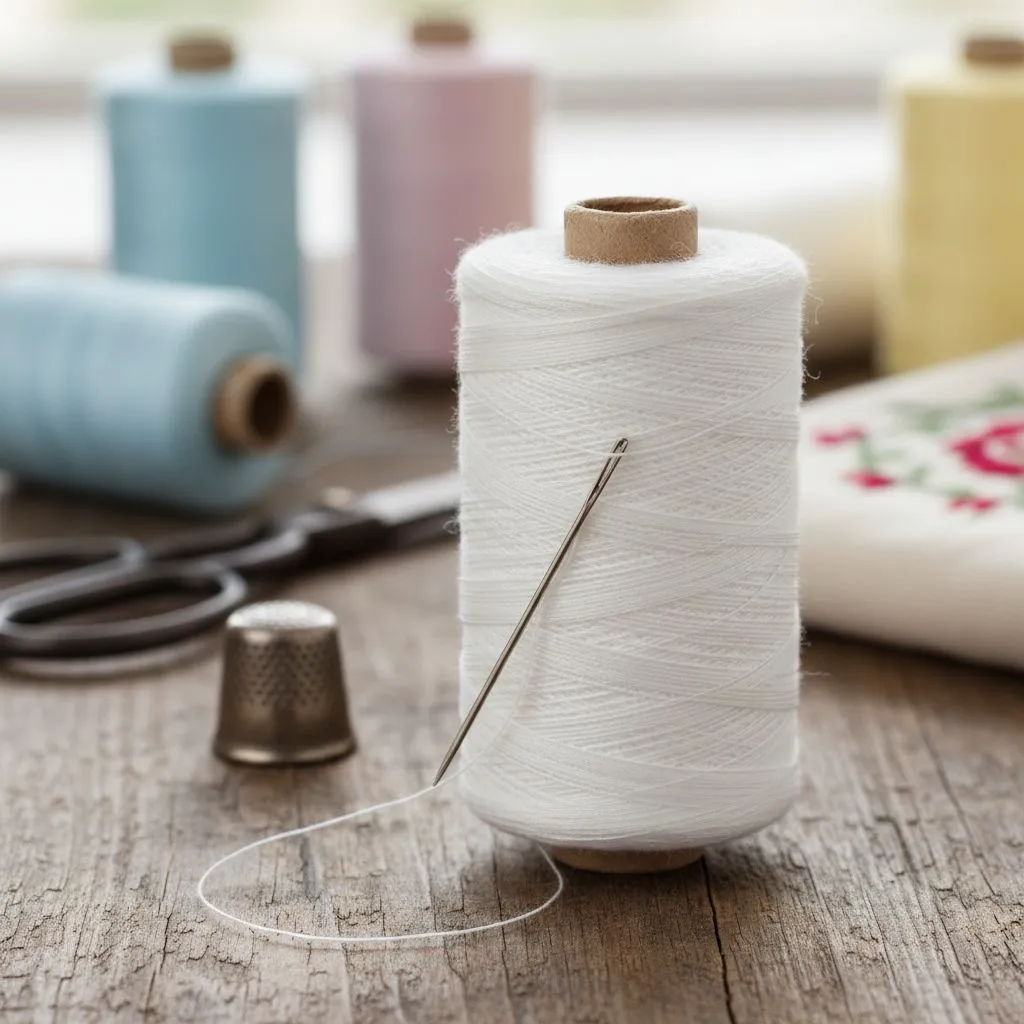
Polyester and nylon threads can look identical on a cone, but they behave vastly differently once they are stitched, pressed, washed, and worn. Choosing the wrong thread can lead to puckered seams, melted fibers, or structural failure under stress. A smart choice ensures your seams remain smooth, strong, and stable throughout the garment’s lifecycle. This guide provides a clear, factory-tested method to select the right thread based on performance requirements rather than guesswork.
Quick Compare: Polyester vs. Nylon Sewing Thread
One is engineered for dimensional stability and clean aesthetics, while the other is built for extreme toughness and elastic recovery. Understanding these core differences is essential for maintaining production quality.
| Technical Factor | Polyester Thread | Nylon Thread |
|---|---|---|
| Tensile Strength | High | Very High |
| Elasticity (Stretch) | Low to Moderate | High |
| Seam Stability | Excellent | Medium |
| Abrasion Resistance | Good | Excellent |
| UV & Weather Resistance | Excellent | Moderate |
| Heat Tolerance | Better (High) | Lower |
| Seam Appearance | Clean and Flat | Can be wavy (elastic pull) |
1. Dimensional Stability vs. Elastic Recovery
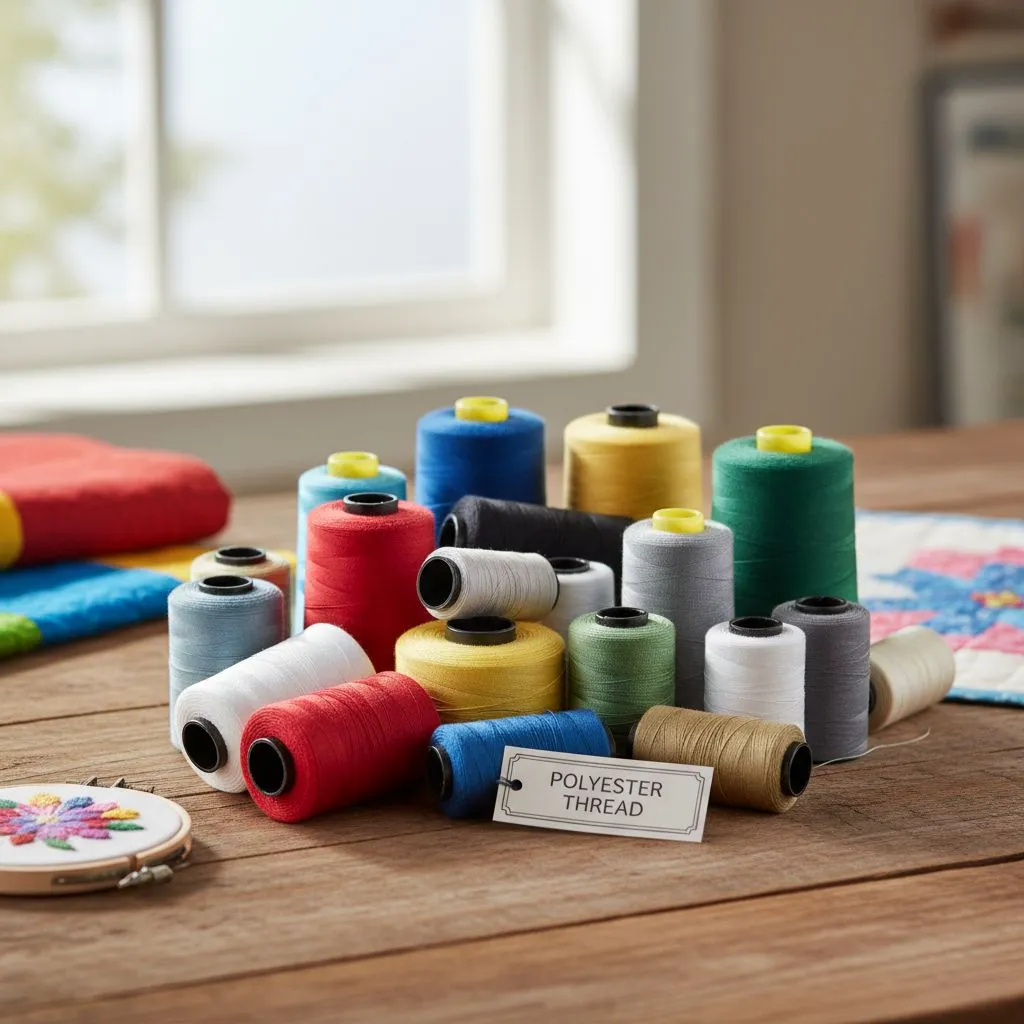
Polyester thread (PET) is favored for its exceptional dimensional stability. It resists stretching and shrinking, making it the industry default for woven shirts, trousers, and uniforms where a crisp, flat seam is mandatory. Nylon thread (Polyamide), however, is significantly springier. While this elasticity is a weakness for crisp shirts, it is a massive win for performance gear and luggage, as it allows the seam to absorb shock and flexing without snapping.
2. Abrasion and Friction Resistance
Nylon is the undisputed champion of abrasion resistance. In areas of constant rubbing—such as backpack straps, belt loops, or heavy-duty tactical gear—nylon thread survives long after others would have frayed. At Mekong Garment, we prioritize nylon for gear that faces physical scraping against hardware or ground surfaces, while reserving polyester for the primary body seams of apparel.

3. UV, Heat, and Chemical Behavior
Technical performance extends beyond strength. Polyester provides superior resistance to UV radiation, making it the safer choice for outdoor gear and workwear exposed to direct sunlight. It also tolerates higher temperatures during industrial pressing and heat-fusing. Nylon can be more sensitive to chemicals and moisture absorption, which may slightly alter seam tension in humid environments. For high-heat finishing lines, polyester is the more “repeatable” and lower-risk option.
Strategic Best-Use Guide
Choose Polyester Thread For:
- Woven shirts, blouses, and dresses requiring sharp seam lines.
- Outdoor apparel and workwear exposed to heavy UV light.
- Garments requiring high-heat industrial pressing or fusing.
- Uniform programs where stability and wash-fastness are critical.
Choose Nylon Thread For:
- Backpacks, luggage, and heavy-duty gear.
- Straps, webbing, and belt loops requiring high flex.
- Performance items needing shock resistance and “give.”
- Tactical equipment where abrasion is the primary enemy.
Conclusion
There is no “better” thread—only the right thread for the technical job. Polyester is your workhorse for stability and aesthetics, while Nylon is your specialist for toughness and flex. At Mekong Garment, we consult with our partners to match thread specifications with fabric behavior and end-use stress. Don’t choose by strength alone; choose by how the seam needs to act in the real world. Precision in material selection is the foundation of a garment that lasts.
Contact Mekong Garment Factory
- VN Phone/WhatsApp/WeChat: +84 947 729 829
- Email: hanh@kimmy.vn