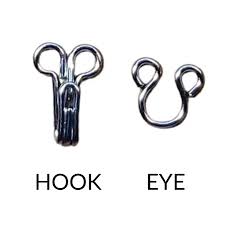

A sew-on hook and eye is one of the smallest components in a garment, yet it plays a critical role in fit, comfort, and durability. This simple metal fastener is widely used to secure garment edges where visible closures would disrupt the design aesthetic. From stabilizing waistbands to securing delicate necklines, it ensures that garments sit flat and remain closed under tension. Understanding how to select and apply them correctly is essential for premium garment construction.
What is a Sew-On Hook and Eye?
A sew-on hook and eye is a classic two-part fastener consisting of a small curved metal hook and a corresponding loop (the eye). They are typically sewn by hand onto fabric to join two edges discreetly. Often found at the top of zippers, on waistbands, or inside lingerie, they provide an inconspicuous but high-strength closure capable of handling significant stress without popping open.
How It Works: Tension vs. Shape
Unlike snaps that rely on pressure, this fastener works by shape and fabric tension. The curved hook catches inside the metal eye, and once fastened, the natural pull of the garment keeps it locked. Because it lacks moving parts or springs, it remains highly reliable over long-term use, especially in areas under constant pulling force.
Choosing the Right Type of Eye
The secret to a professional finish lies in choosing the correct eye shape. Selecting the wrong type can lead to discomfort or a closure that refuses to stay flat.

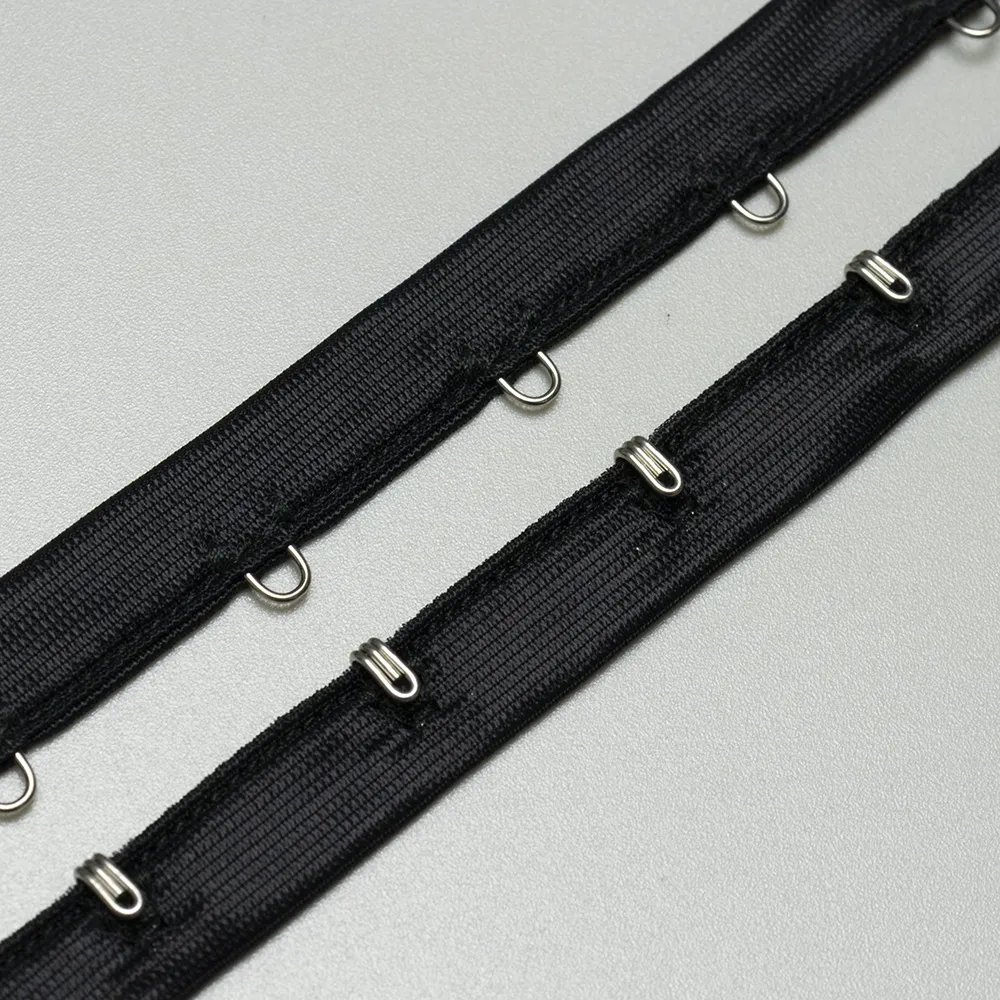
- Straight Eye: Best for overlapping edges. This is the standard choice for waistbands on skirts and trousers or lapped zipper tops where one side of the fabric sits over the other.
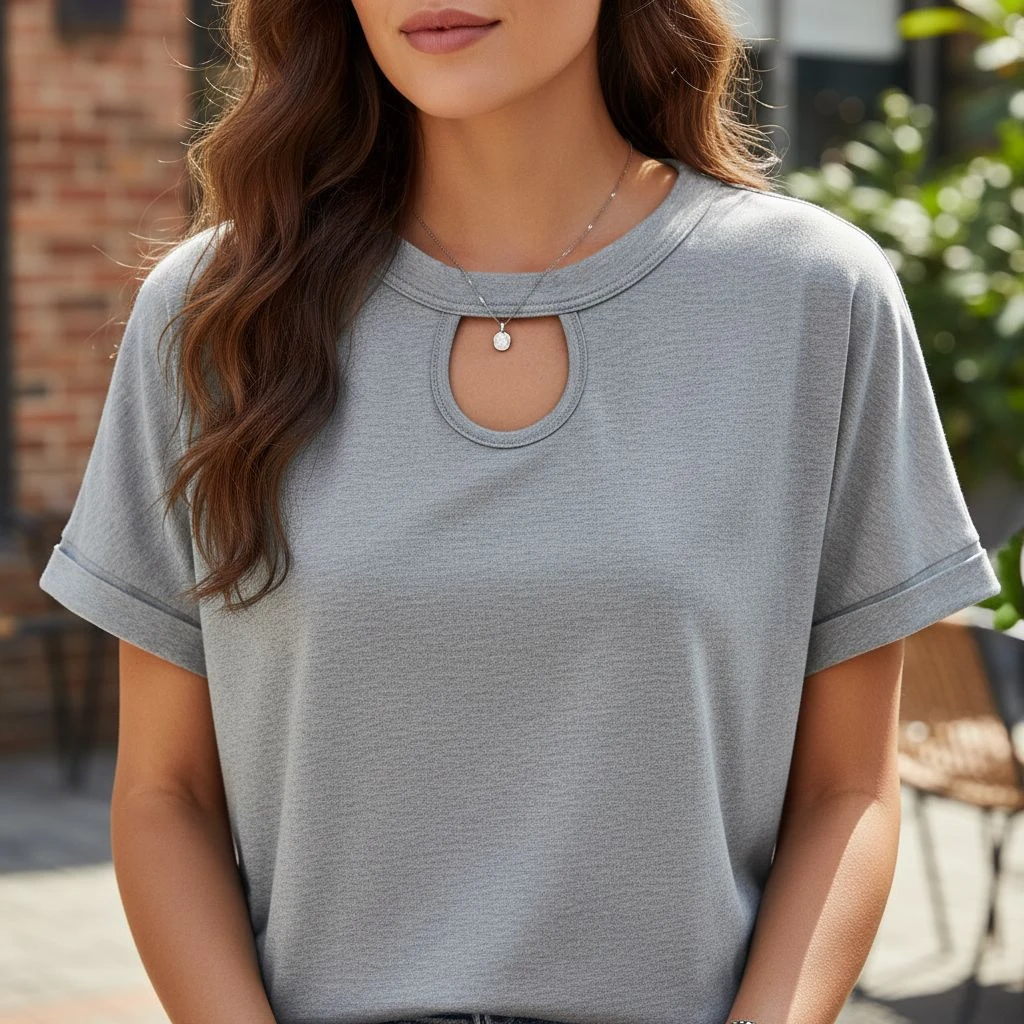
- Round Eye: Ideal for abutting edges (edges that meet exactly without overlapping). Common on necklines, collars, or delicate lace closures where a seamless look is required.
Common Technical Issues and Solutions
In high-volume production, poor hook and eye application can lead to quality rejections. Here are the common pitfalls:
- Misalignment: If the hook and eye are not perfectly centered, the edge will twist or gape. Solution: Always fasten the set together before sewing the second half to mark the exact placement.
- Visible Stitches: Occurs when the needle pierces the outer fabric layer. Solution: Stitches should only anchor into the facing or underlay to keep the exterior clean.
- Structural Loosening: The loop may bend or pull away if not secured with enough “buttonhole” stitches at the base.
Conclusion
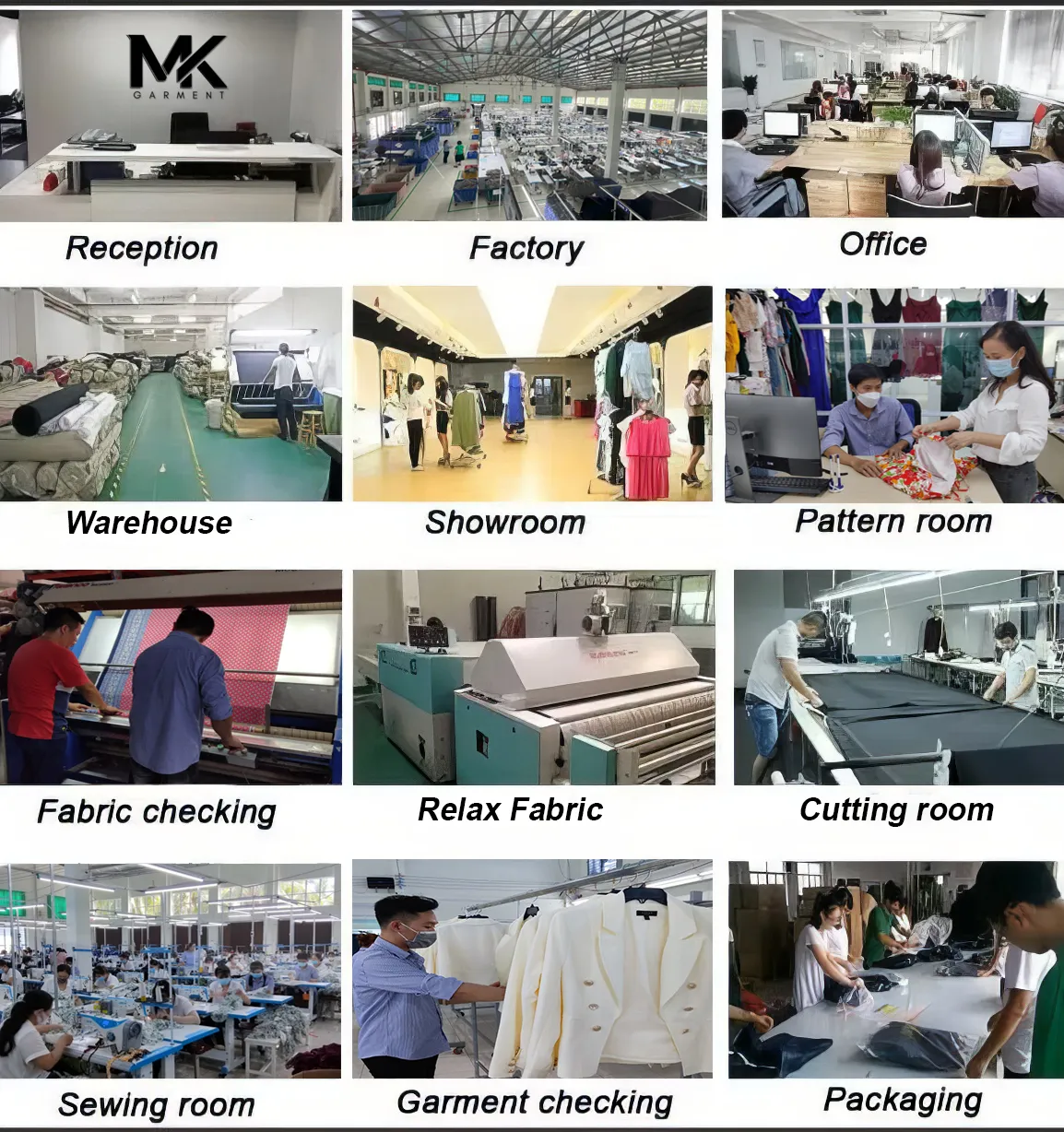
The sew-on hook and eye is a testament to the fact that details matter. When selected correctly and sewn with precision, it provides stability and a flawless finish that zippers alone cannot achieve. At Mekong Garment, we focus on these technical nuances—ensuring that every fastener, no matter how small, contributes to the overall longevity and premium feel of your brand’s apparel.
Contact Mekong Garment Factory
- VN Phone/WhatsApp/WeChat: +84 947 729 829
- Email: hanh@kimmy.vn