
20 Factors Every Brand Should Consider During the Garment Design Phase

The garment design phase is where an idea transforms into a real, marketable product. It is not just about aesthetics; it is about ensuring the design can be produced efficiently and sold successfully. Every decision made at this stage affects cost, quality, production speed, and customer satisfaction. Below are the key factors designers and manufacturers must prioritize during the design phase.
=> Related Article: The Clothing Production Process Explained Simply
Simple Garment Design Process
A practical design-development flow can be: Target Customer → Product Purpose → Fabric → Fit → Cost → Construction → Trims → Sample → Testing → Quality Approval → Bulk Production Each stage affects the next. For example, changing the fabric may also change:
- Fit
- Sewing
- Cost
- Wash behavior
- Final appearance
That is why early design decisions matter so much.
20 Critical Factors in Garment Design (Garment Design Guide)
1. Target Customer and End User
Every successful design starts with the wearer. You must define the age group, lifestyle, and cultural background of your audience. A design for tropical regions requires vastly different fabrics and fits than one meant for cold climates. When the target customer is clear, the design becomes focused and relevant. Brands should consider:
- Age group
- Lifestyle
- Cultural background
- Climate
- Location
- Intended use

A garment designed for a hot tropical market may require a very different fabric, fit, and construction from one intended for cold weather. When the end user is clear, design decisions become more focused and practical. – Targeting breathable fabrics for tropical climates
2. Fabric Selection and Material Behavior
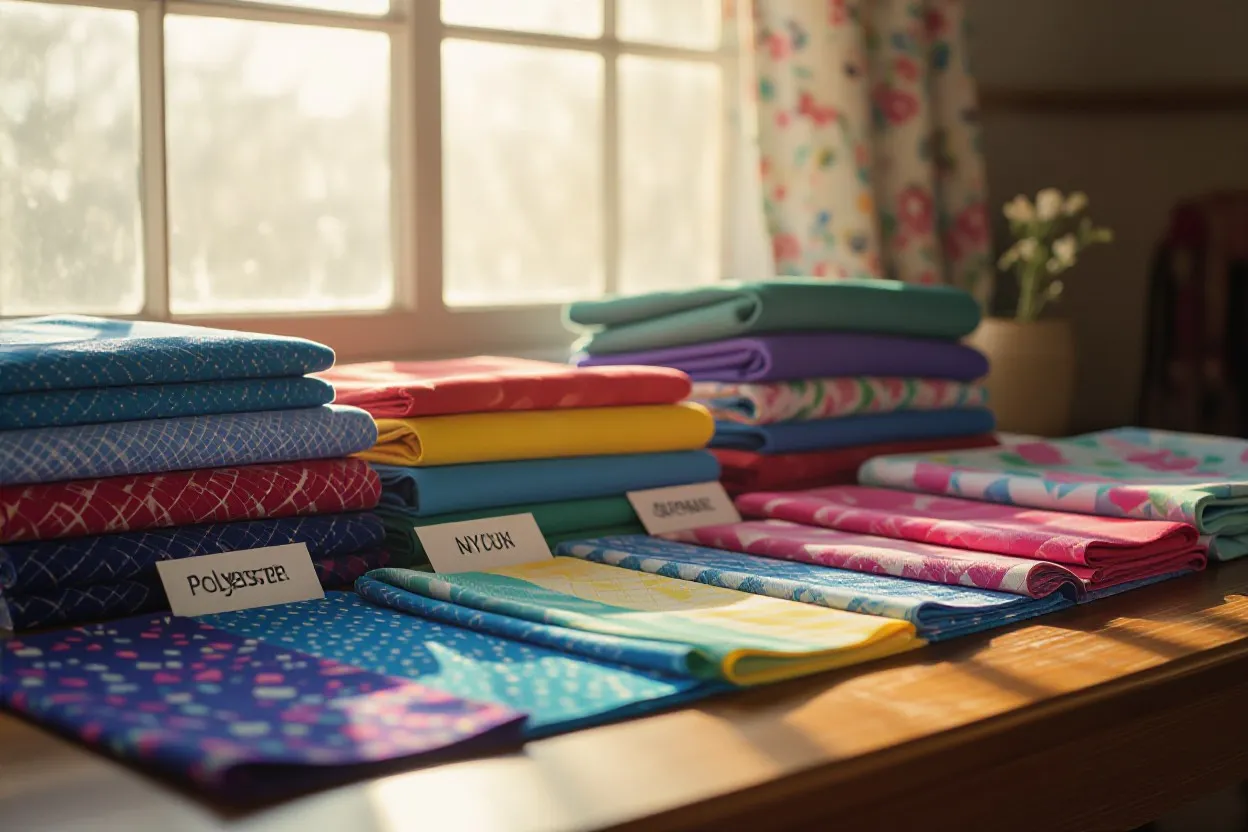
Fabric typically accounts for 60% to 70% of the total cost. Beyond cost, you must consider how the material drapes, stretches, and reacts to washing. A design that looks perfect on paper can fail in production if paired with the wrong textile. Choosing the right material is both a creative and a financial necessity. Brands should evaluate:
- Drape
- Stretch
- Hand feel
- Shrinkage
- Wash behavior
- Weight
- Surface appearance

3. Fit, Silhouette, and Construction
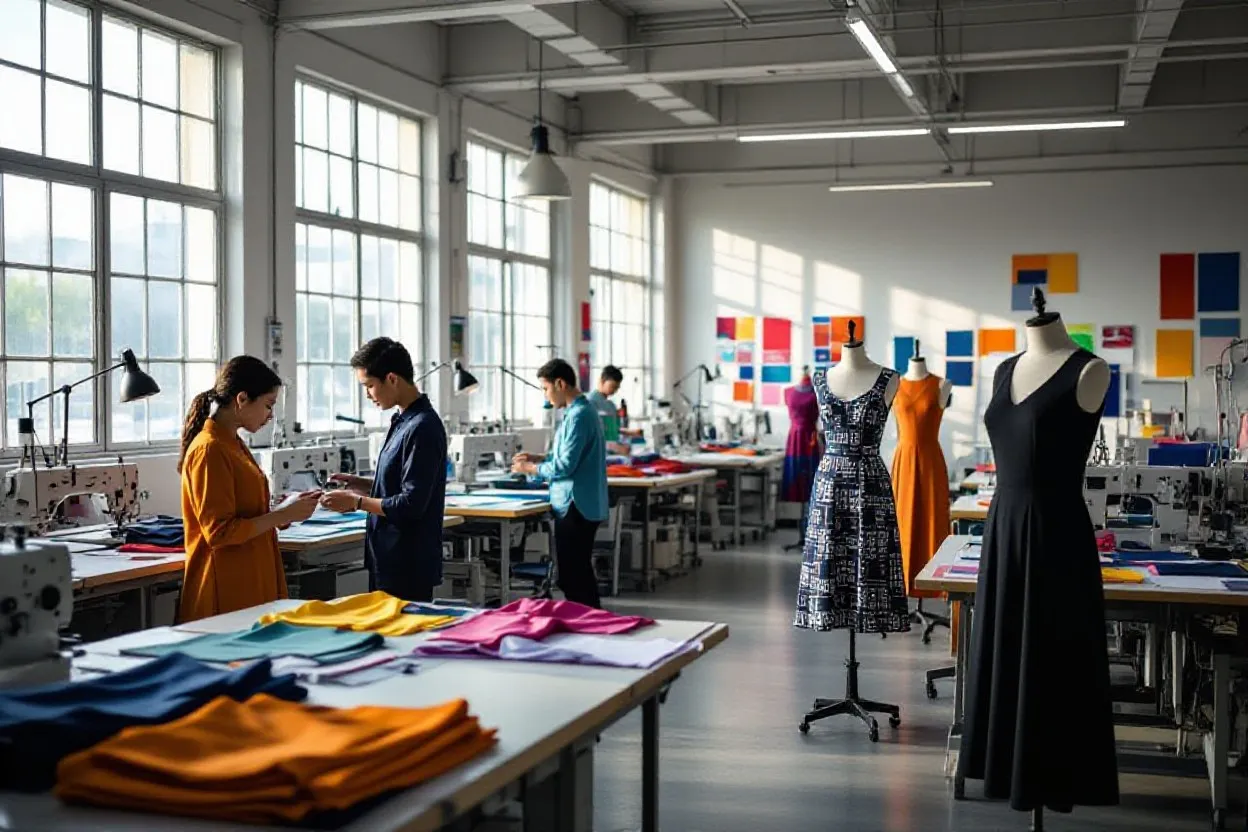
Proportions and size ranges directly impact return rates. You must consider body movement and “ease allowance” to ensure comfort. A professional design considers seam placement and structural support so the garment looks as good on a real body as it does on a hanger. Designers need to consider:
- Body movement
- Ease allowance
- Garment proportions
- Seam placement
- Structural support
- Size range
4. Cost and Budget Constraints
Smart designers create high-end looks while staying within strict budget limits. During design, you must estimate labor costs, trims, and production complexity. If the final retail price does not match customer expectations, even the most creative product may fail commercially. During the design phase, brands should estimate:
- Fabric cost
- Trim cost
- Labor
- Sewing complexity
- Finishing
- Packaging
- Additional production operations

5. Production Feasibility
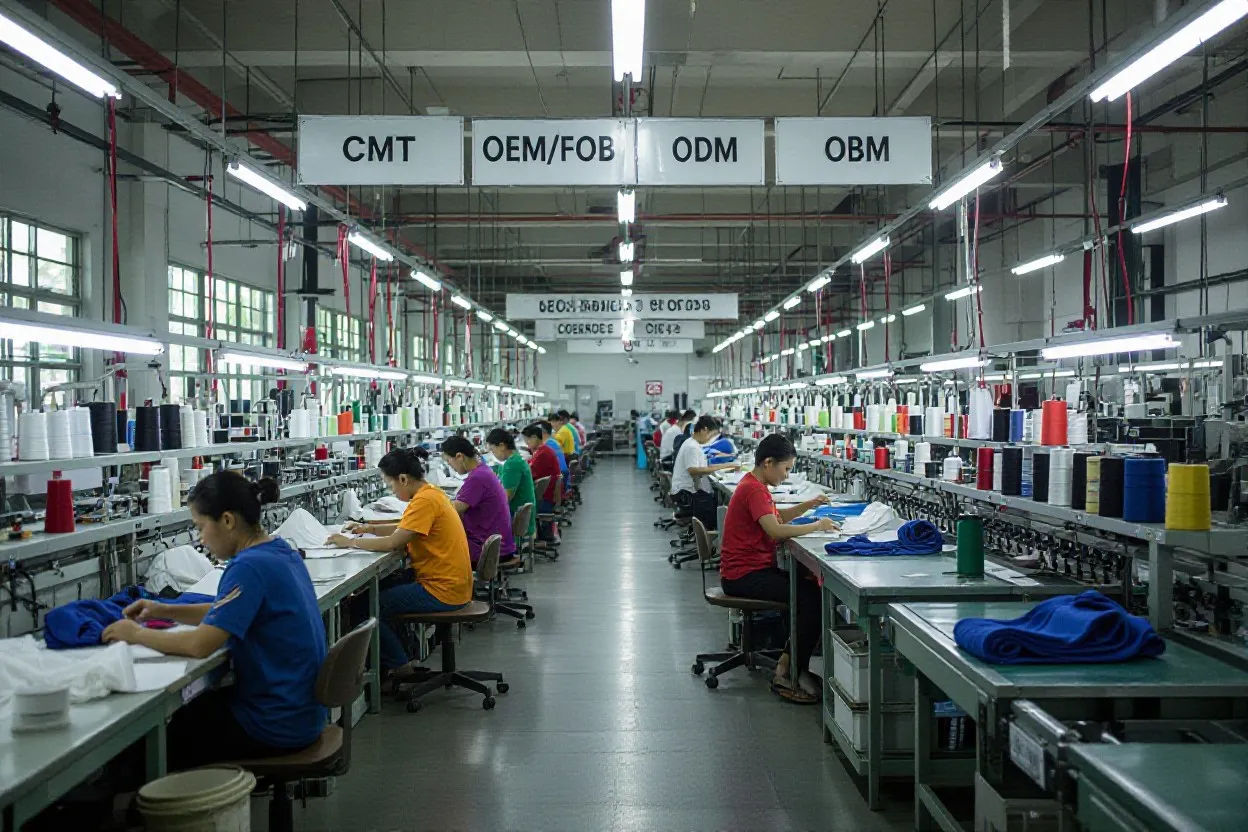
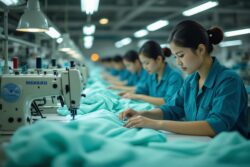
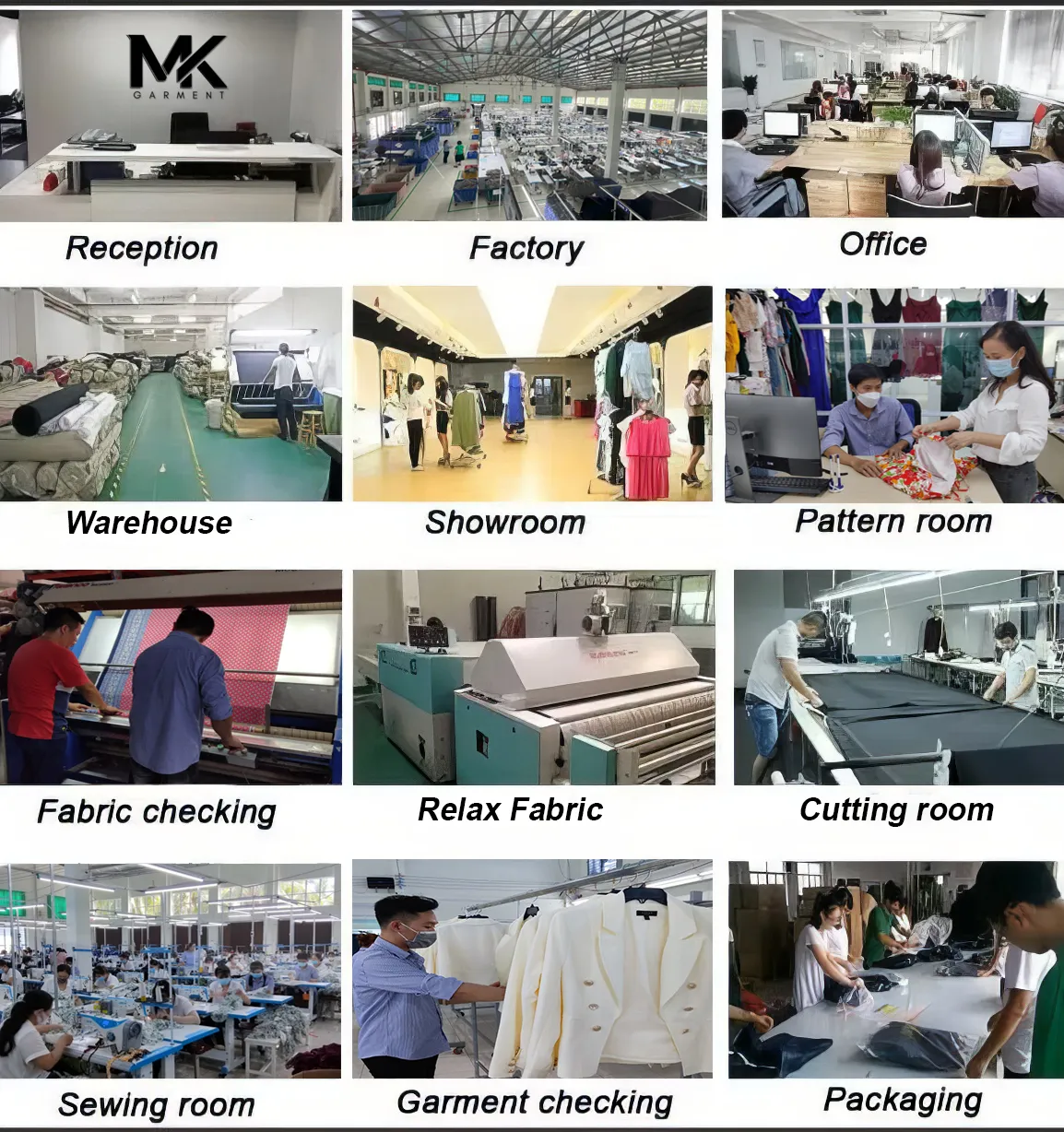
Not every sketch can be mass-produced efficiently. You must align your design with factory capabilities, machinery, and skilled labor. Early collaboration with the production team at Mekong Garment helps avoid expensive changes during bulk manufacturing. Before finalizing the design, consider:
- Factory machinery
- Production methods
- Worker skill level
- Sewing operations
- Available technology
- Production capacity
6. Compliance, Safety, and Sustainability
For international markets, adhering to fabric regulations and child safety rules is non-negotiable. Modern brands also prioritize eco-friendly fabrics and waste reduction. Sustainable design protects the environment while significantly boosting brand reputation.

7. Color, Print, and Visual Balance
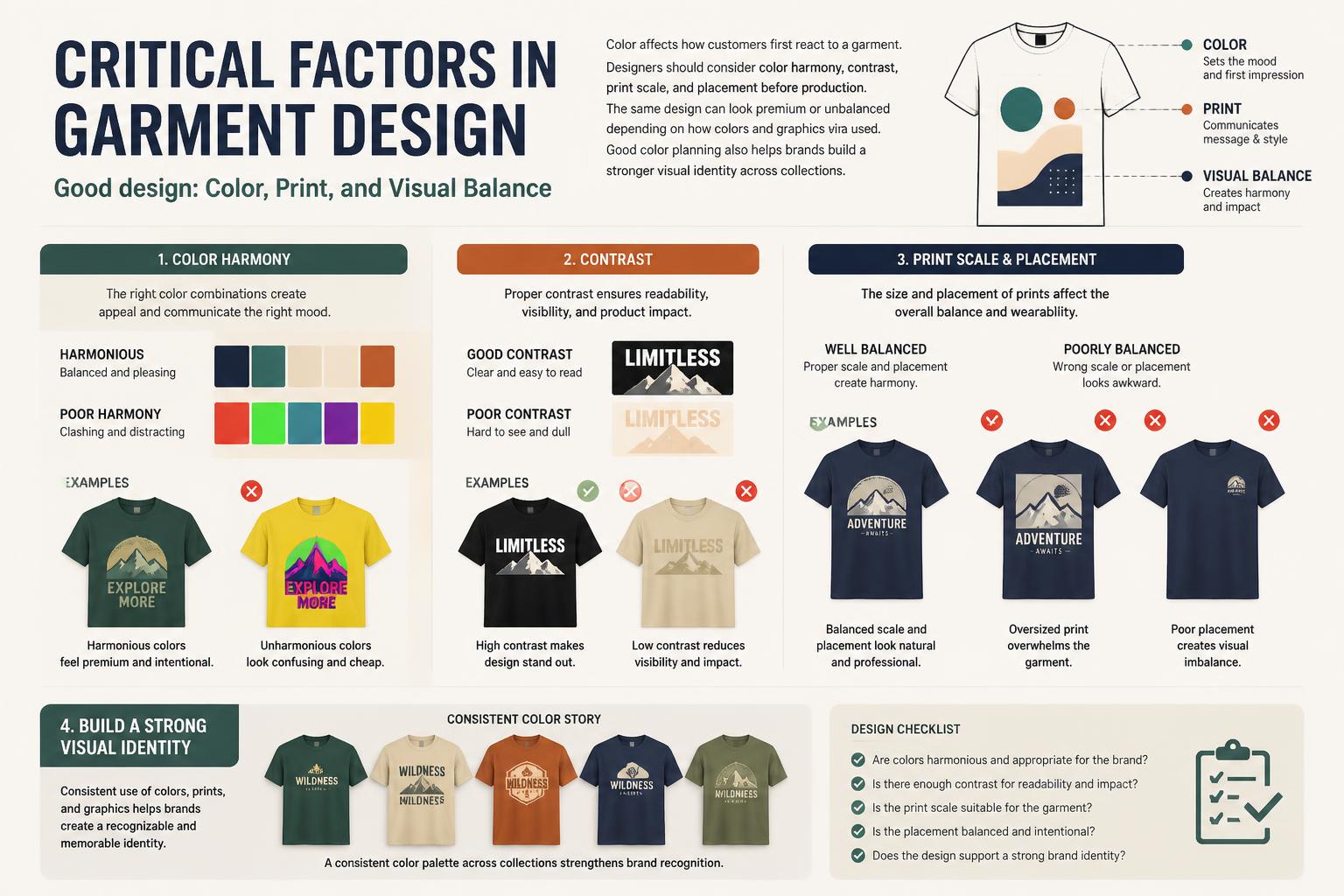
Color affects how customers first react to a garment. Designers should consider color harmony, contrast, print scale, and placement before production. The same design can look premium or unbalanced depending on how colors and graphics are used. Good color planning also helps brands build a stronger visual identity across collections. Designers should think about:
- Color harmony
- Contrast
- Print scale
- Print placement
- Overall visual balance
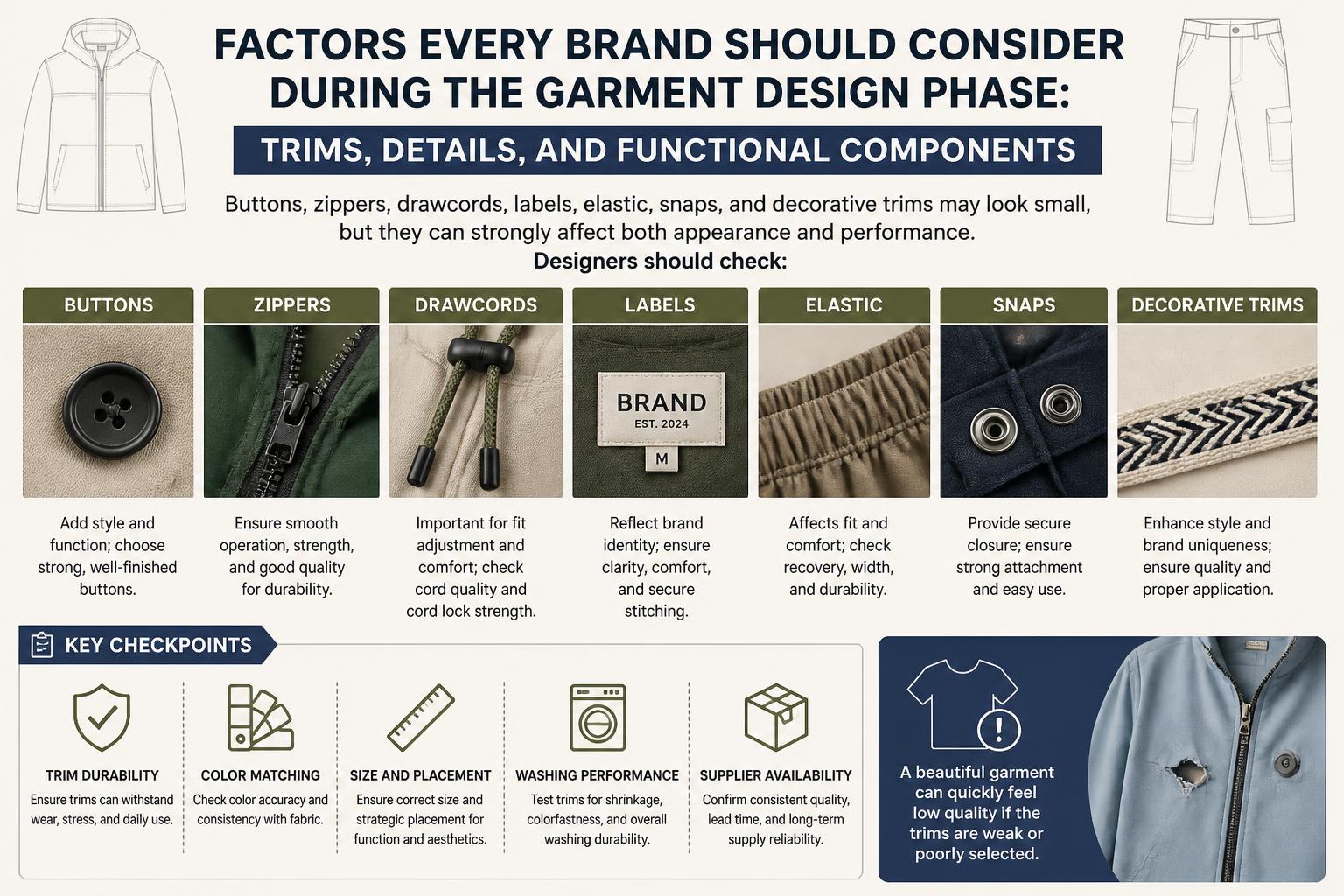
8. Trims, Details, and Functional Components
Buttons, zippers, drawcords, labels, elastic, snaps, and decorative trims may look small, but they can strongly affect both appearance and performance. Designers should check:
- Trim durability
- Color matching
- Size and placement
- Washing performance
- Supplier availability
A beautiful garment can quickly feel low quality if the trims are weak or poorly selected.
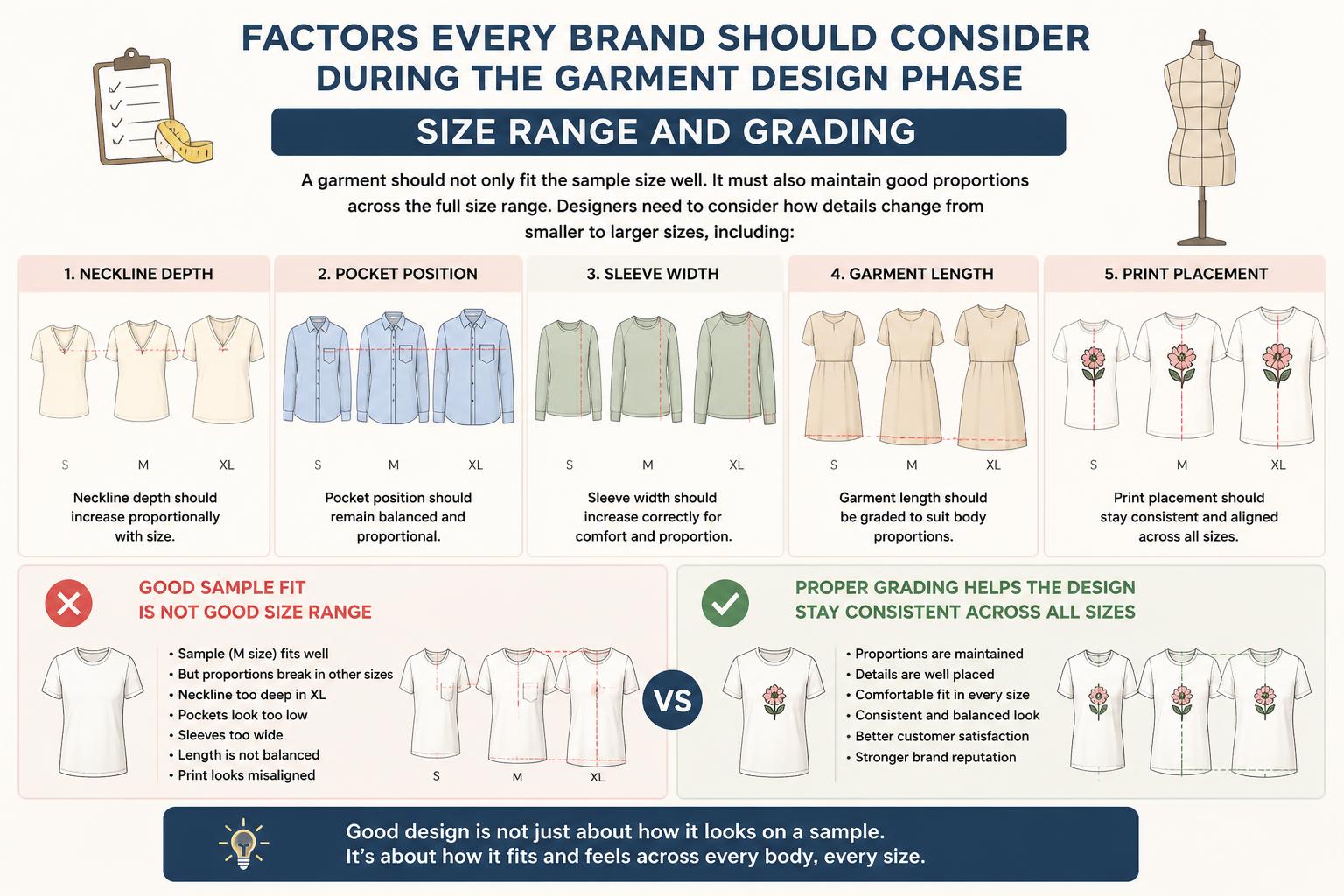
9. Size Range and Grading
A garment should not only fit the sample size well. It must also maintain good proportions across the full size range. Designers need to consider how details change from smaller to larger sizes, including:
- Neckline depth
- Pocket position
- Sleeve width
- Garment length
- Print placement
Good Sample Fit is not Good Size Range. Proper grading helps the design stay consistent across all sizes.
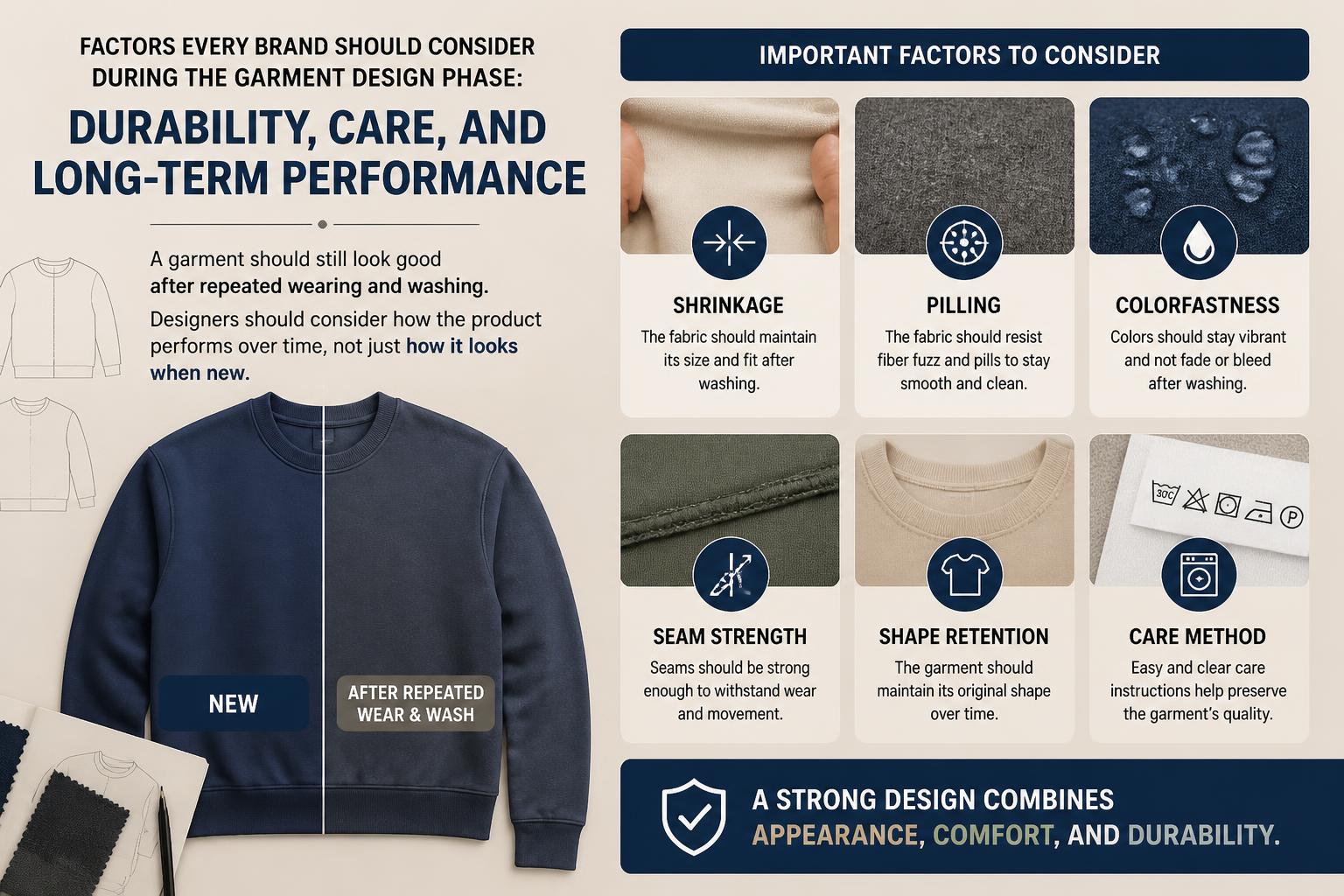
10. Durability, Care, and Long-Term Performance
A garment should still look good after repeated wearing and washing. Designers should consider how the product performs over time, not just how it looks when new. Important factors include:
- Shrinkage
- Pilling
- Colorfastness
- Seam strength
- Shape retention
- Care method
A strong design combines appearance, comfort, and durability.
11. Branding and Product Identity
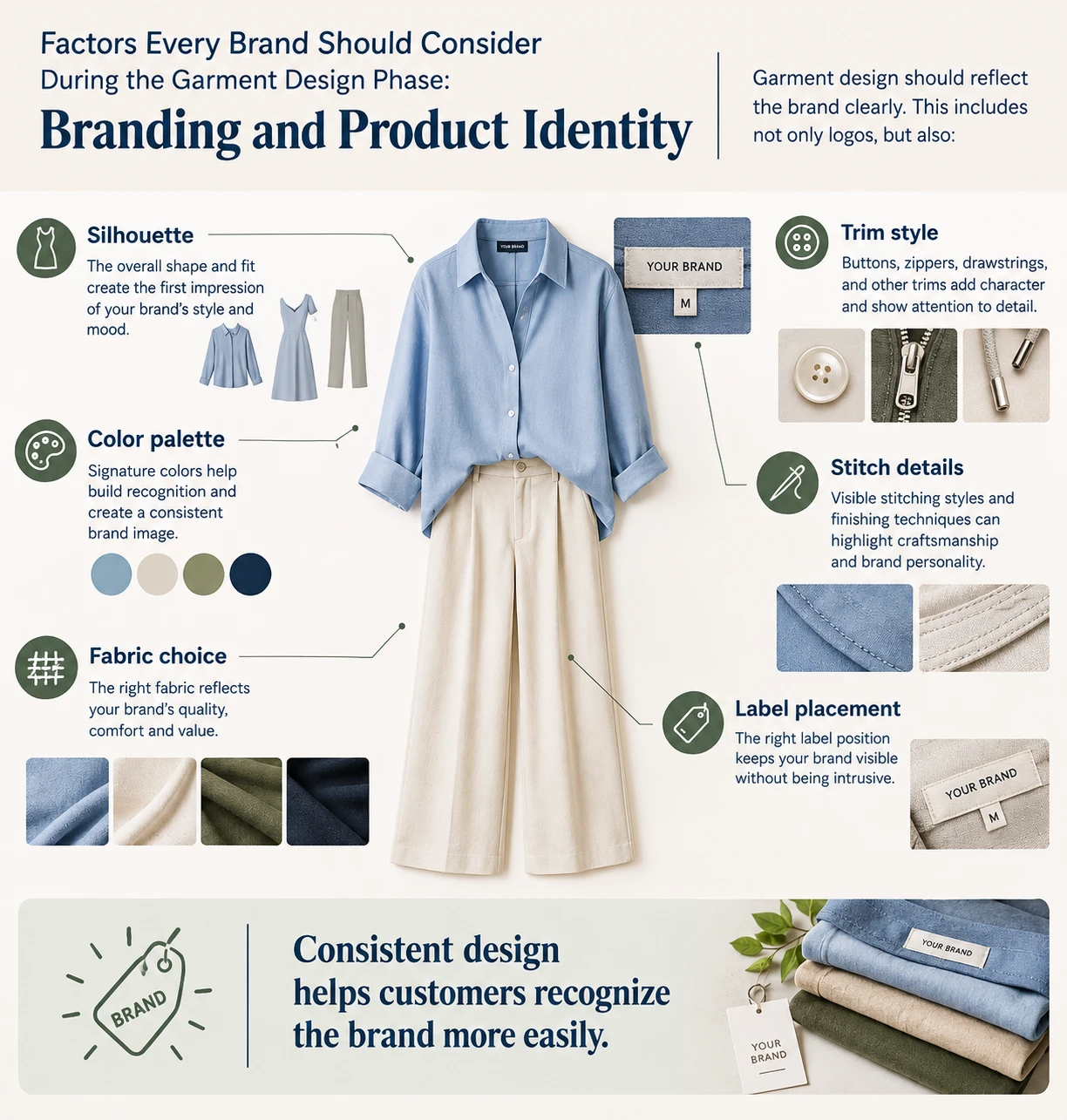
Garment design should reflect the brand clearly. This includes not only logos, but also:
- Silhouette
- Color palette
- Fabric choice
- Trim style
- Stitch details
- Label placement
Consistent design helps customers recognize the brand more easily.
12. Market Position and Retail Price
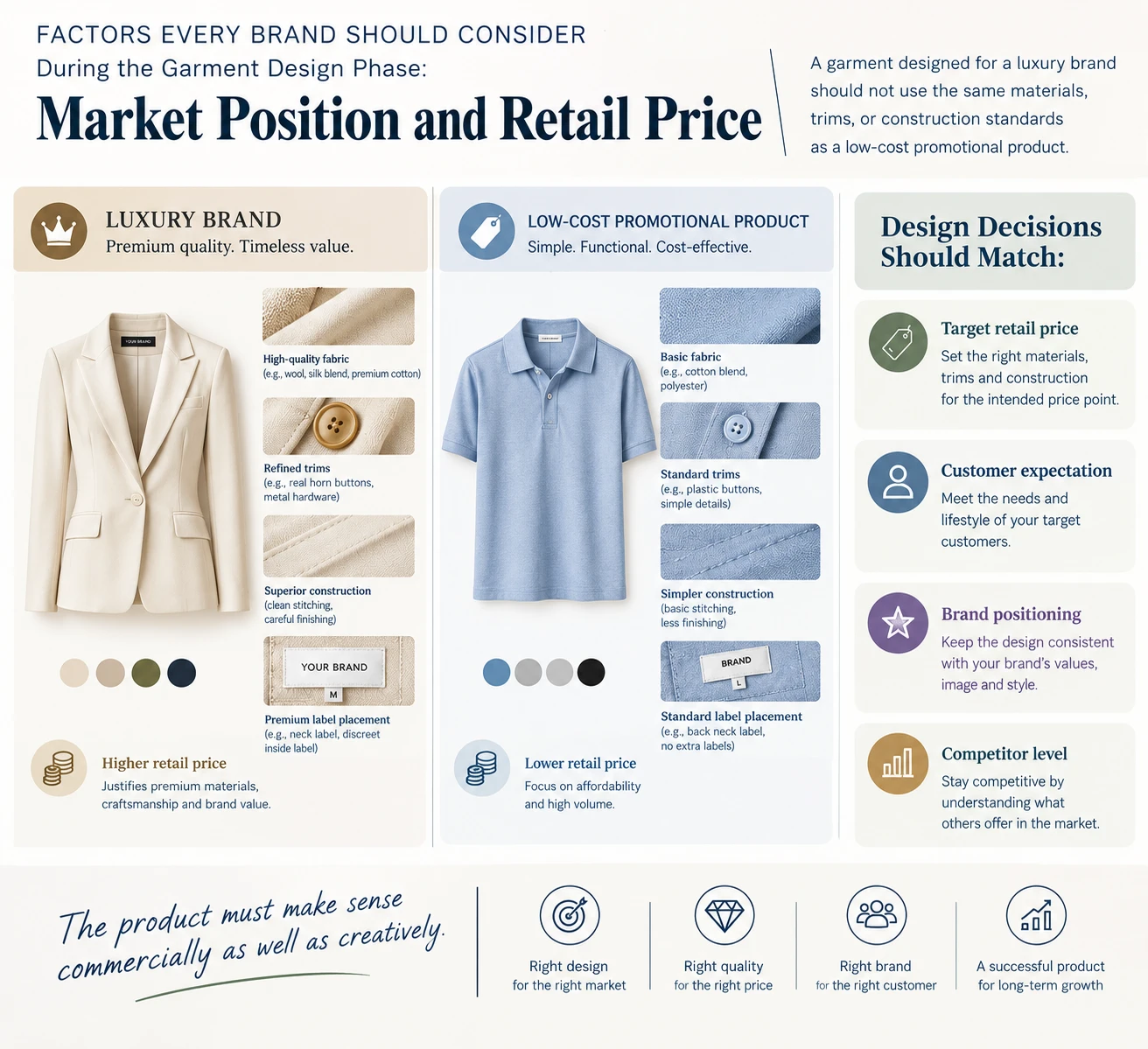
A garment designed for a luxury brand should not use the same materials, trims, or construction standards as a low-cost promotional product. Design decisions should match:
- Target retail price
- Customer expectation
- Brand positioning
- Competitor level
The product must make sense commercially as well as creatively.
13. Comfort and Wearability
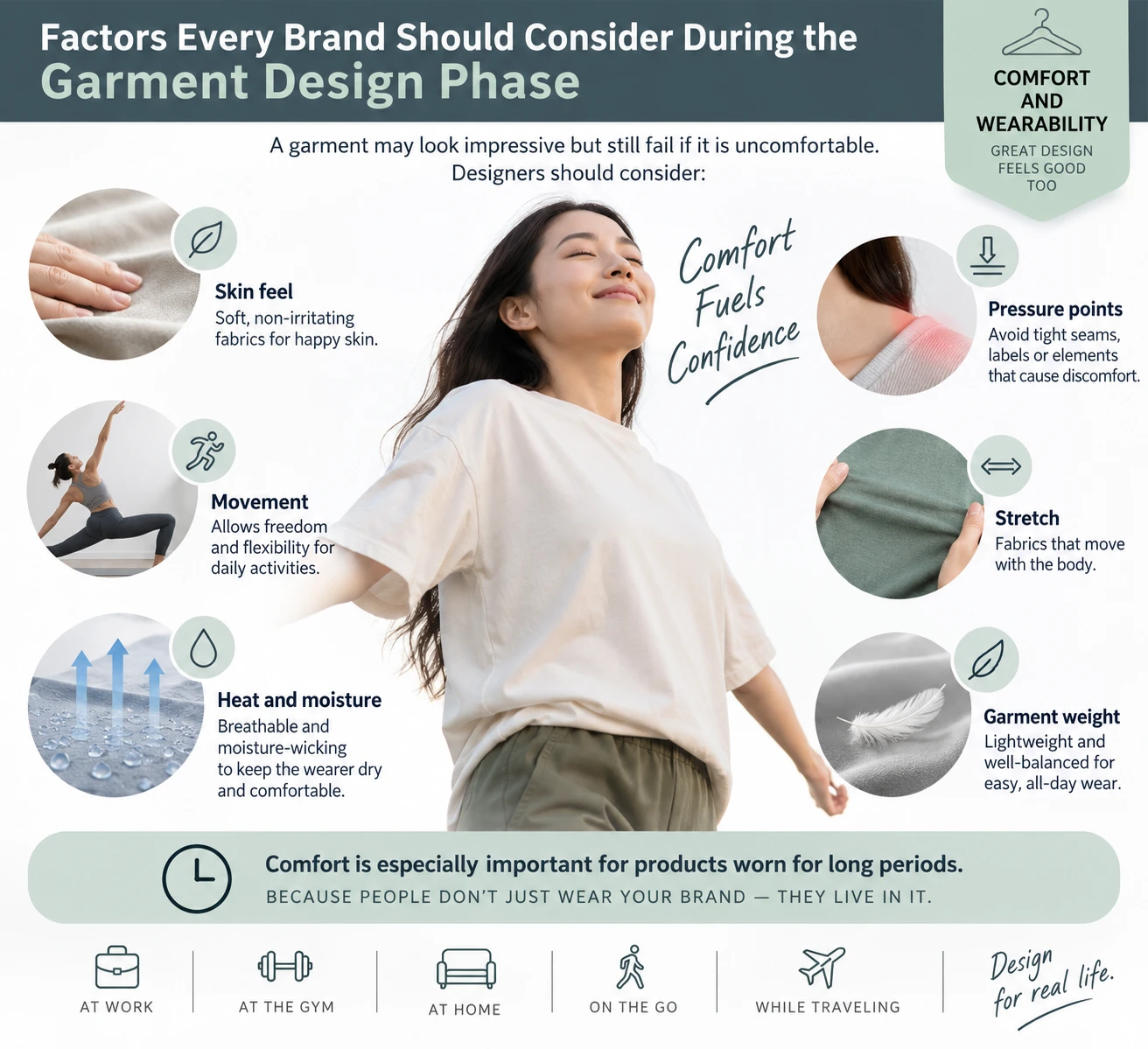
A garment may look impressive but still fail if it is uncomfortable. Designers should consider:
- Skin feel
- Movement
- Heat and moisture
- Pressure points
- Stretch
- Garment weight
Comfort is especially important for products worn for long periods.
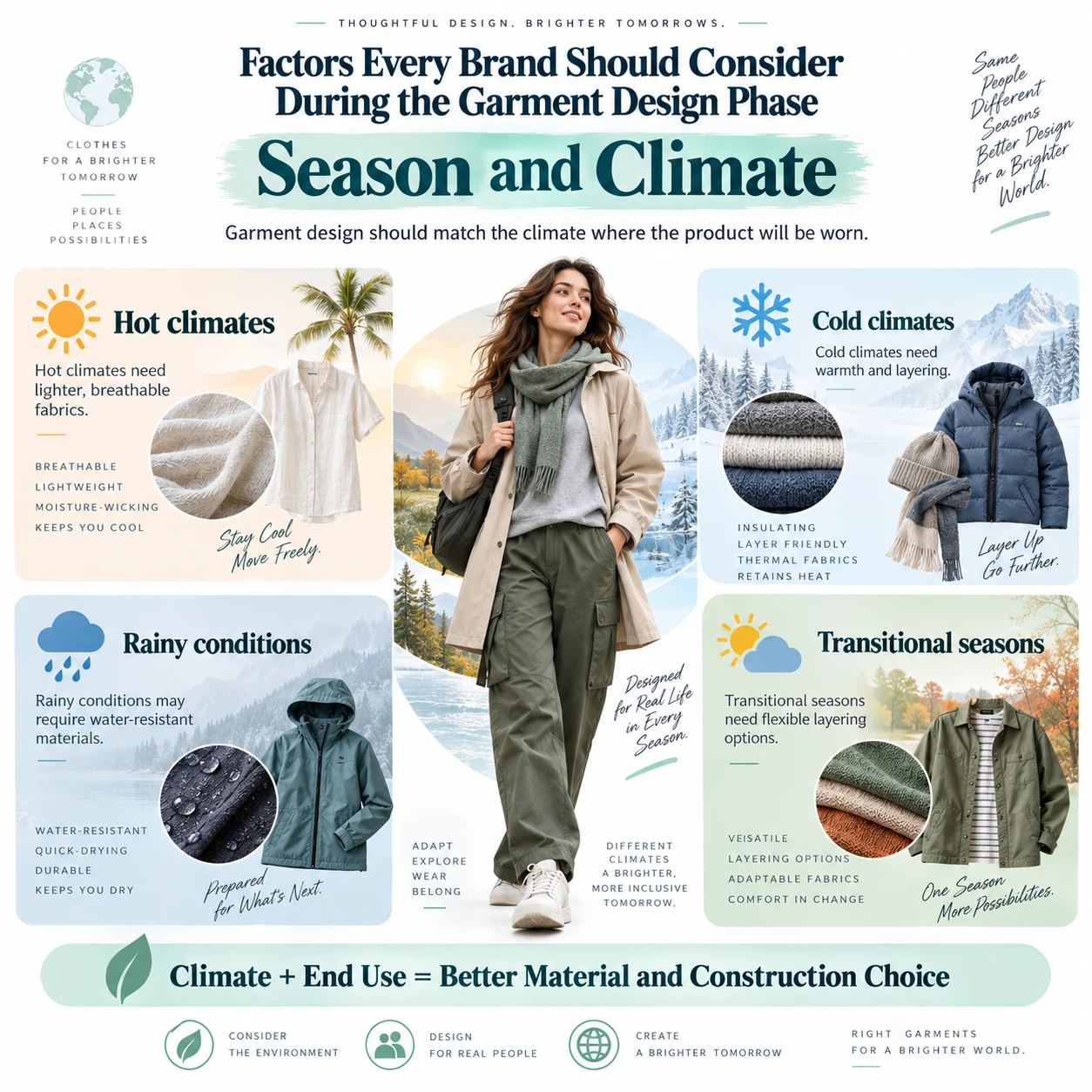
14. Season and Climate
Garment design should match the climate where the product will be worn.
For example:
- Hot climates need lighter, breathable fabrics
- Cold climates need warmth and layering
- Rainy conditions may require water-resistant materials
- Transitional seasons need flexible layering options
Climate + End Use = Better Material and Construction Choice
15. Sample Testing and Design Validation
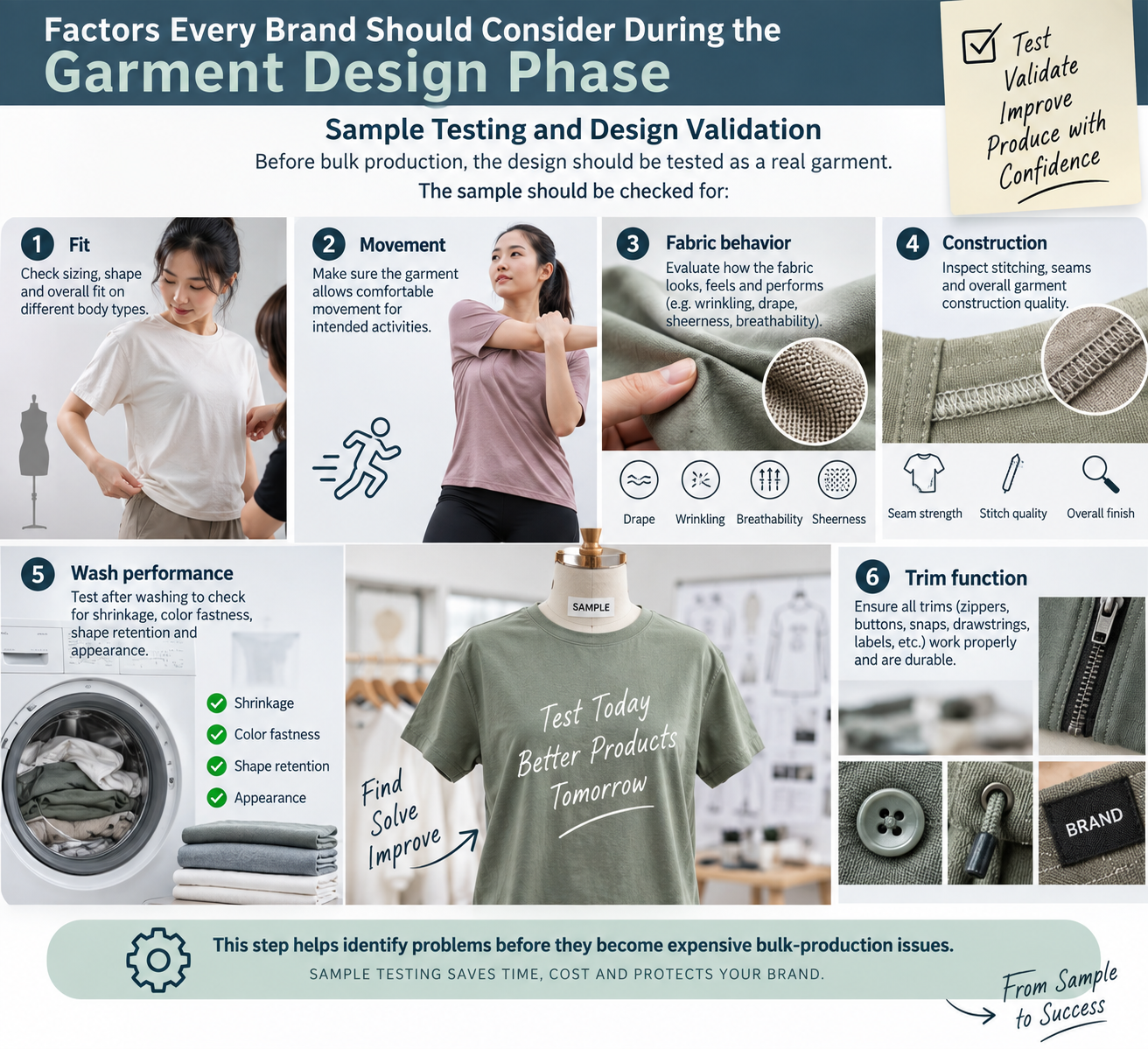
Before bulk production, the design should be tested as a real garment. The sample should be checked for:
- Fit
- Movement
- Fabric behavior
- Construction
- Wash performance
- Trim function
This step helps identify problems before they become expensive bulk-production issues.
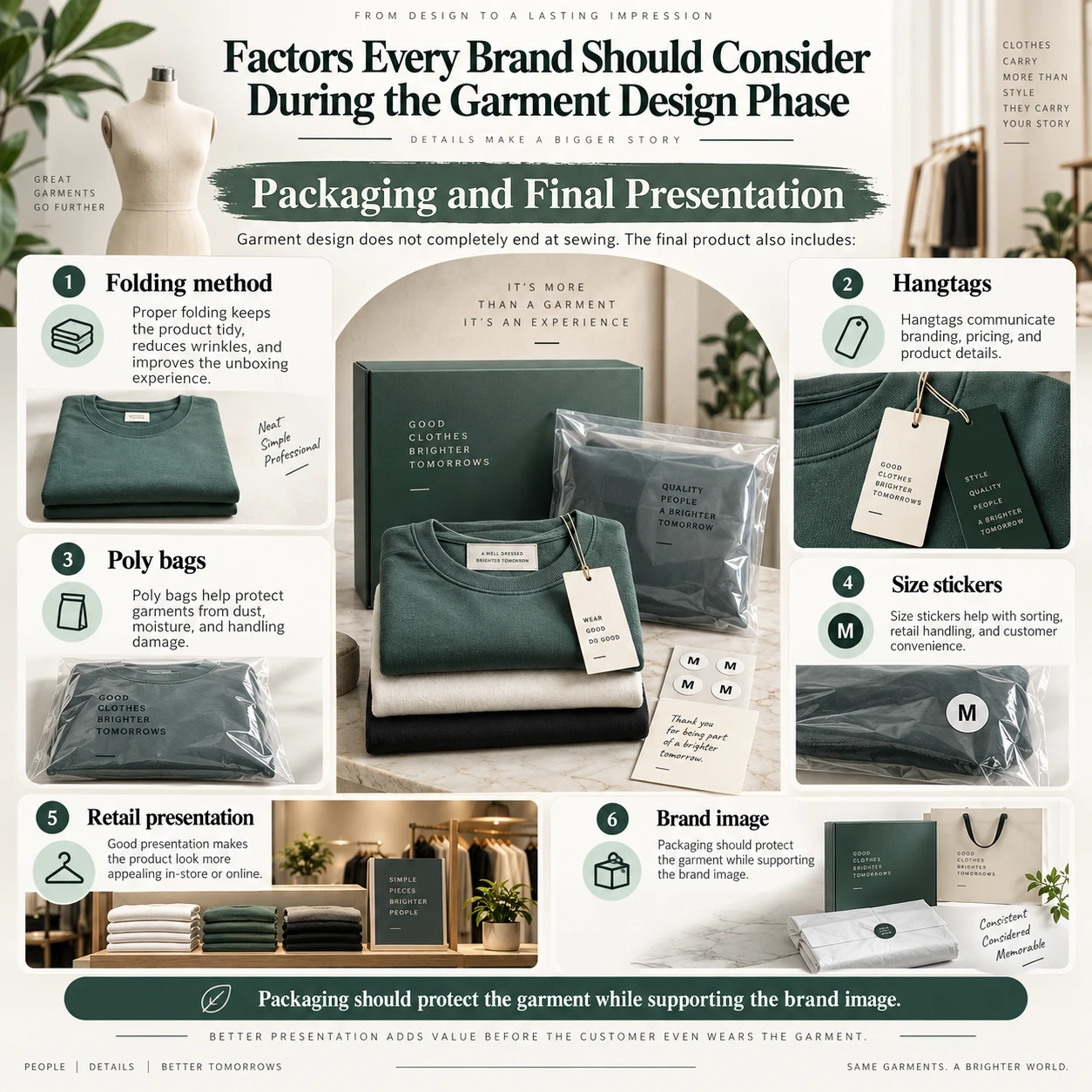
16. Packaging and Final Presentation
Garment design does not completely end at sewing. The final product also includes:
- Folding method
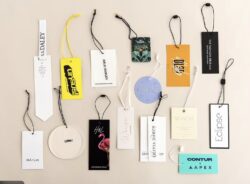
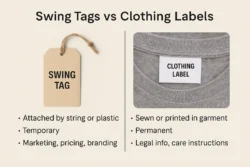
- Hangtags
- Poly bags
- Size stickers
- Retail presentation
Packaging should protect the garment while supporting the brand image.
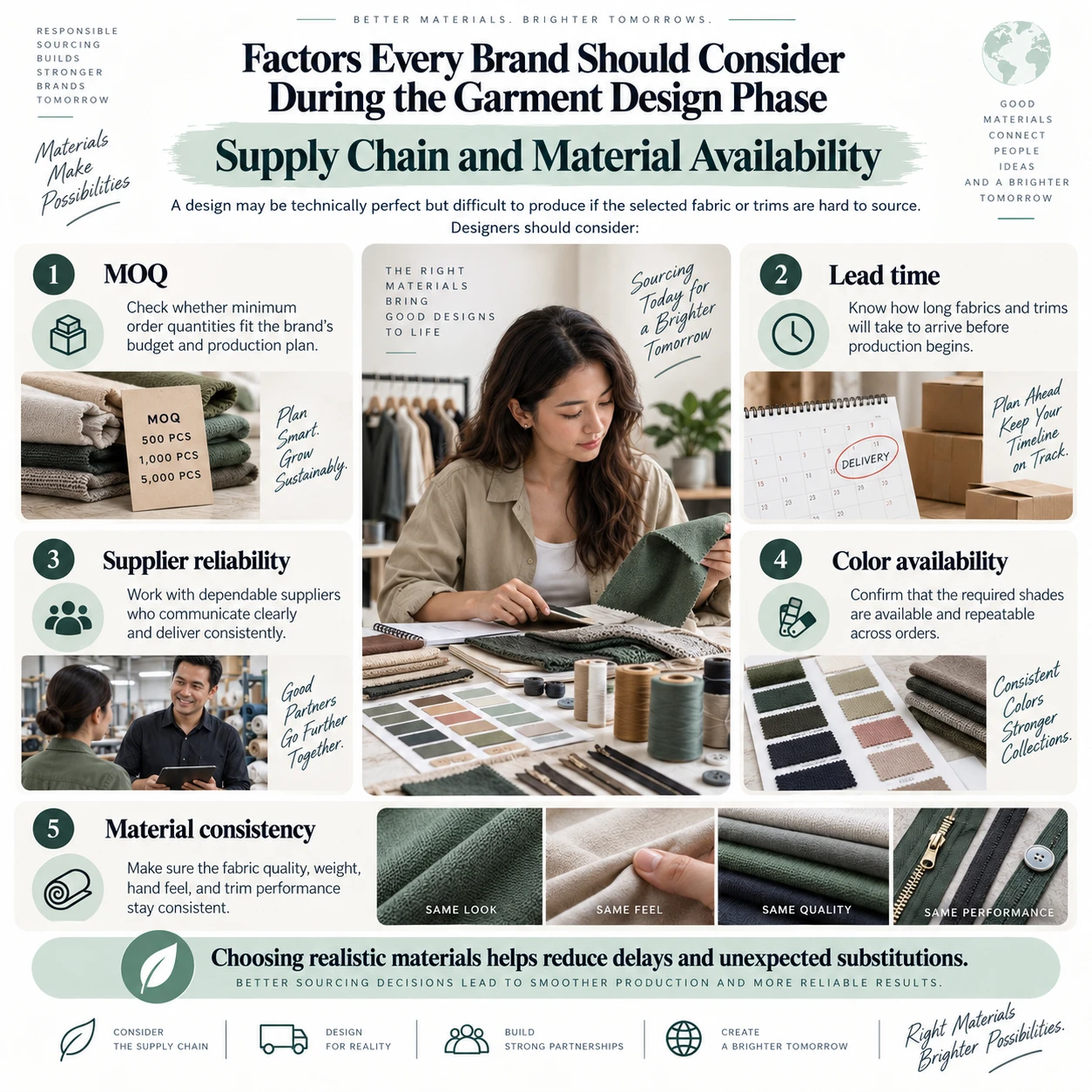
17. Supply Chain and Material Availability
A design may be technically perfect but difficult to produce if the selected fabric or trims are hard to source. Designers should consider:
- MOQ
- Lead time
- Supplier reliability
- Color availability
- Material consistency
Choosing realistic materials helps reduce delays and unexpected substitutions.
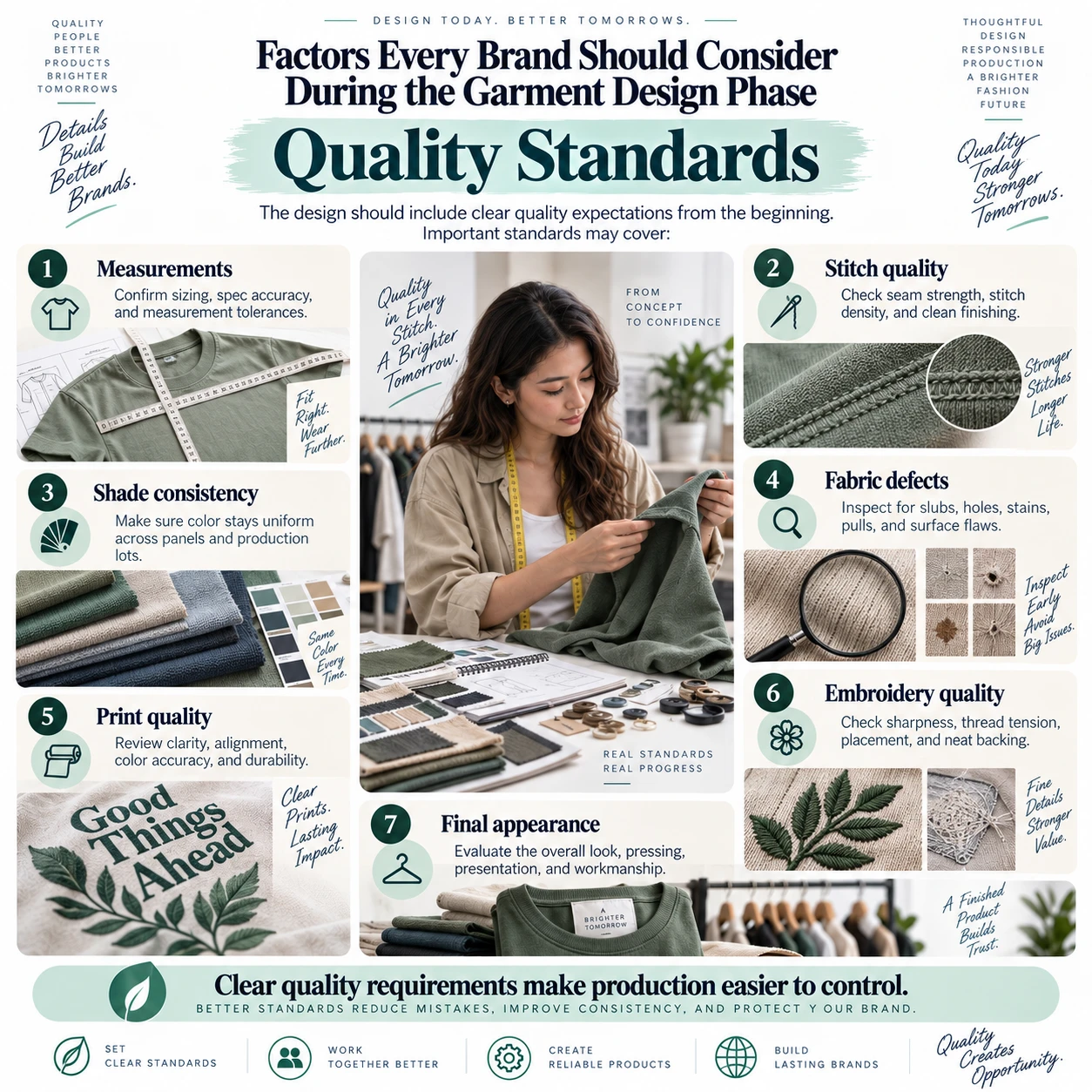
18. Quality Standards
The design should include clear quality expectations from the beginning. Important standards may cover:
- Measurements
- Stitch quality
- Shade consistency
- Fabric defects
- Print quality
- Embroidery quality
- Final appearance
Clear quality requirements make production easier to control.

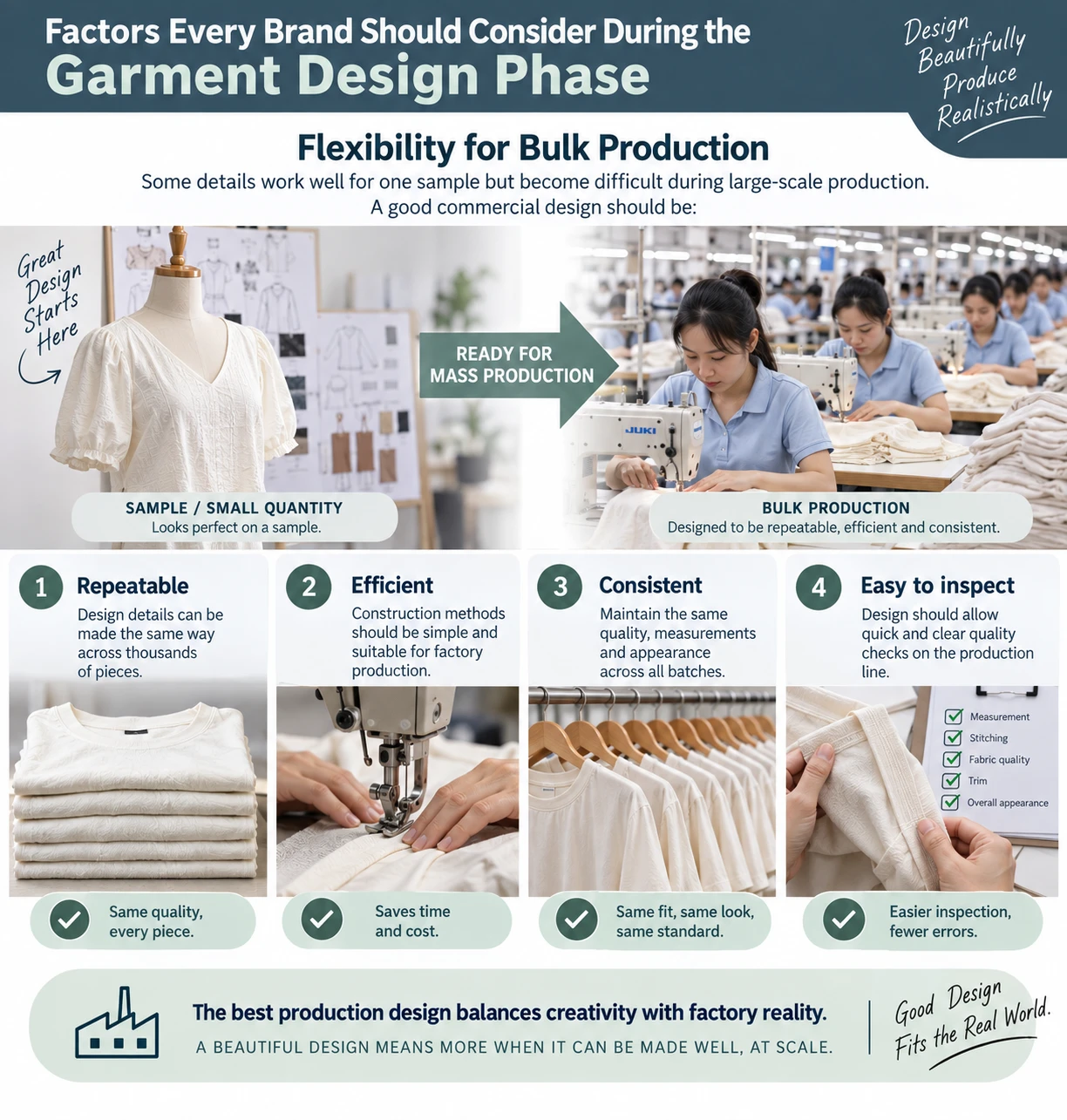
19. Flexibility for Bulk Production
Some details work well for one sample but become difficult during large-scale production. A good commercial design should be:
- Repeatable
- Efficient
- Consistent
- Easy to inspect
The best production design balances creativity with factory reality.
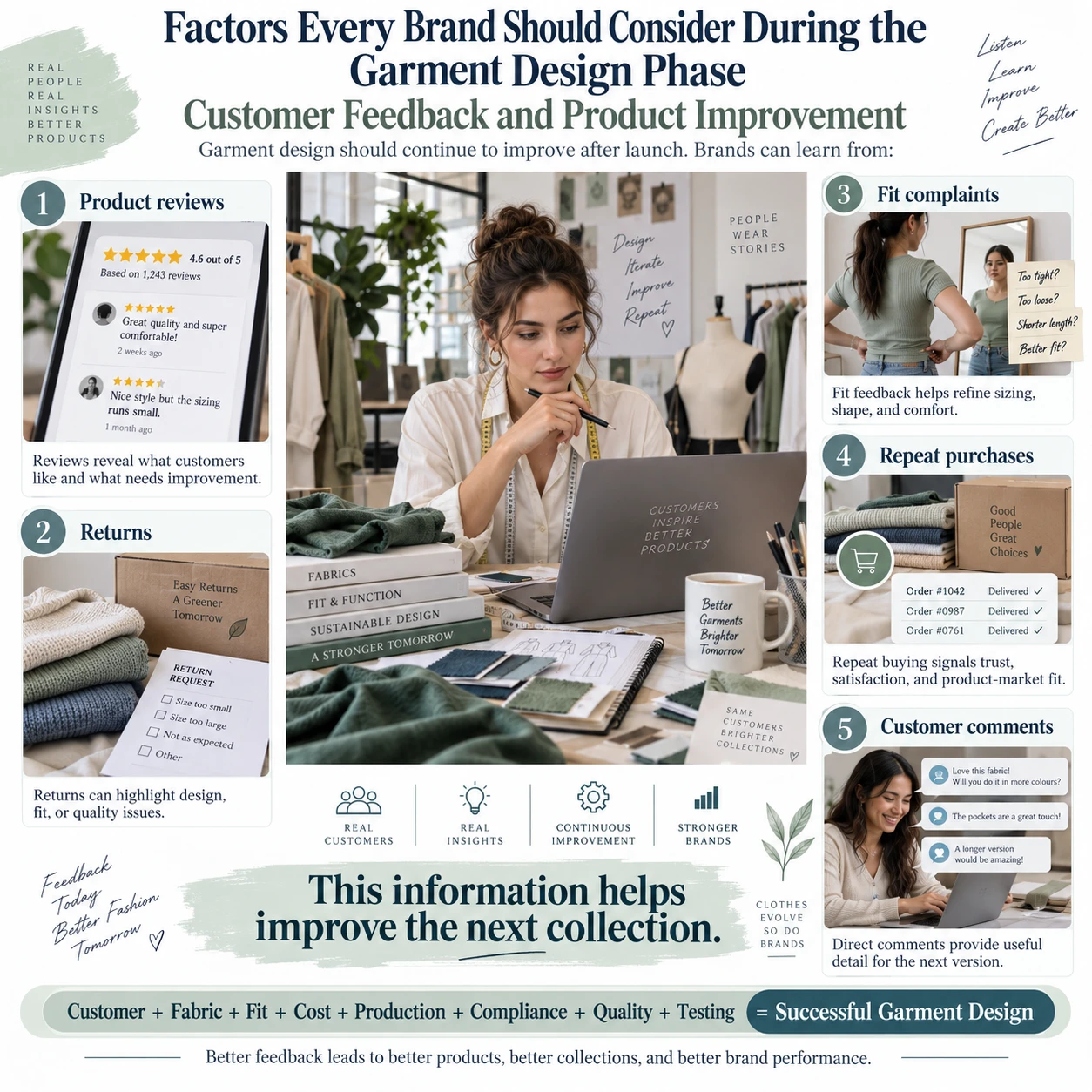
20. Customer Feedback and Product Improvement
Garment design should continue to improve after launch.
Brands can learn from:
- Product reviews
- Returns
- Fit complaints
- Repeat purchases
- Customer comments
This information helps improve the next collection. A useful final formula is: Customer + Fabric + Fit + Cost + Production + Compliance + Quality + Testing = Successful Garment Design
Design Meeting Checklist
- What is the specific occasion/purpose for this garment?
- Does the fabric choice match the real-life performance requirements?
- Are the trims and prints repeatable and safe for bulk production?
- What is the target retail price vs. estimated production cost?
- Does the design meet the compliance rules of the target market (EU/US)?
Conclusion / Final Words
The garment design phase is a strategic process that balances creativity with market demand and manufacturing reality. By considering these 10 factors early, you lay the foundation for a product that is high-quality, cost-effective, and loved by customers. At Mekong Garment, we help you bridge the gap between design and production with precision and care.
Contact Mekong Garment Factory
- VN Phone/WhatsApp/WeChat: +84 947 729 829
- Email: hanh@kimmy.vn
FAQs: Key Factors in Garment Design
In Short, What is the garment design phase
It’s the step where an idea becomes a real garment. You don’t only think about beauty. You also check if people can wear it with comfort, and if a factory can make it well. Choices made here affect cost, quality, speed, and how happy customers feel.
Why do small design choices matter so much?
Because one small choice can change many things. For example, changing fabric can change fit, sewing method, cost, and wash results. If you wait until production to fix it, it often becomes slow and expensive.
What does “target customer and end user” mean?
It means knowing who will wear it before you even sketch. Think age, gender, lifestyle, income, culture, plus climate and location.
Why does “purpose and occasion” matter so much?
A garment must match how it will be used. Sportswear needs flexibility and breathability, while formal wear focuses more on structure and appearance.
Why is fabric selection called a “critical factor”?
Fabric changes comfort, durability, appearance, cost, and even how you produce the item. Designers also need to think about drape, stretch, shrink, and wash behavior
Is it true fabric can be most of the garment cost?
Yes. The article notes fabric can be about 60–70% of the total garment cost, so the choice is both creative and financial