Viscose Fabric: How It’s Made, How It Feels, and Why It’s Everywhere

Viscose fabric, also called rayon, is one of the most versatile materials used today. It feels soft and cool like cotton, flows beautifully like silk, and keeps prices friendly for everyday fashion. Made from natural cellulose extracted from wood pulp, viscose is a smooth, breathable fiber that has become a staple in modern apparel. This guide explains what viscose is, how it’s produced, and how it compares to other common fabrics.
What Is Viscose Fabric?
Viscose belongs to a special group called “regenerated cellulose fibers.” This means it begins as a natural material (trees) but is transformed through a chemical process. This unique foundation allows viscose to offer the smoothness and elegant drape of luxury fabrics while remaining affordable for mass production.
Viscose at a Glance:
- Natural origin: Derived from wood pulp (pine, beech, or eucalyptus).
- Chemical processing: Transformed into a liquid “viscose” solution before being spun.
- Result: A soft, silky, and highly breathable textile used in fashion and home decor.
How Viscose Is Made: The Production Process
The journey from wood chip to finished garment involves several technical stages. Because it requires significant chemical intervention, it is classified as a semi-synthetic fiber.
- Cellulose Extraction: Wood chips are purified into chemical pulp.
- Alkali Treatment: Pulp is treated with sodium hydroxide to form alkali cellulose.
- Pressing & Shredding: The material is turned into “white crumbs.”
- Xanthation: Mixed with carbon disulfide to become “yellow crumbs.”
- Dissolving: Dissolved into a thick, honey-like viscose liquid.
- Extruding: Pushed through spinnerets into an acid bath to harden the filaments.
=> Related Article: 100% Cotton Fabric: Benefits, Drawbacks, and Common Uses (Pure Cotton Yarn, Naturally Soft)
Why Is Viscose Called a Regenerated Cellulose Fiber?
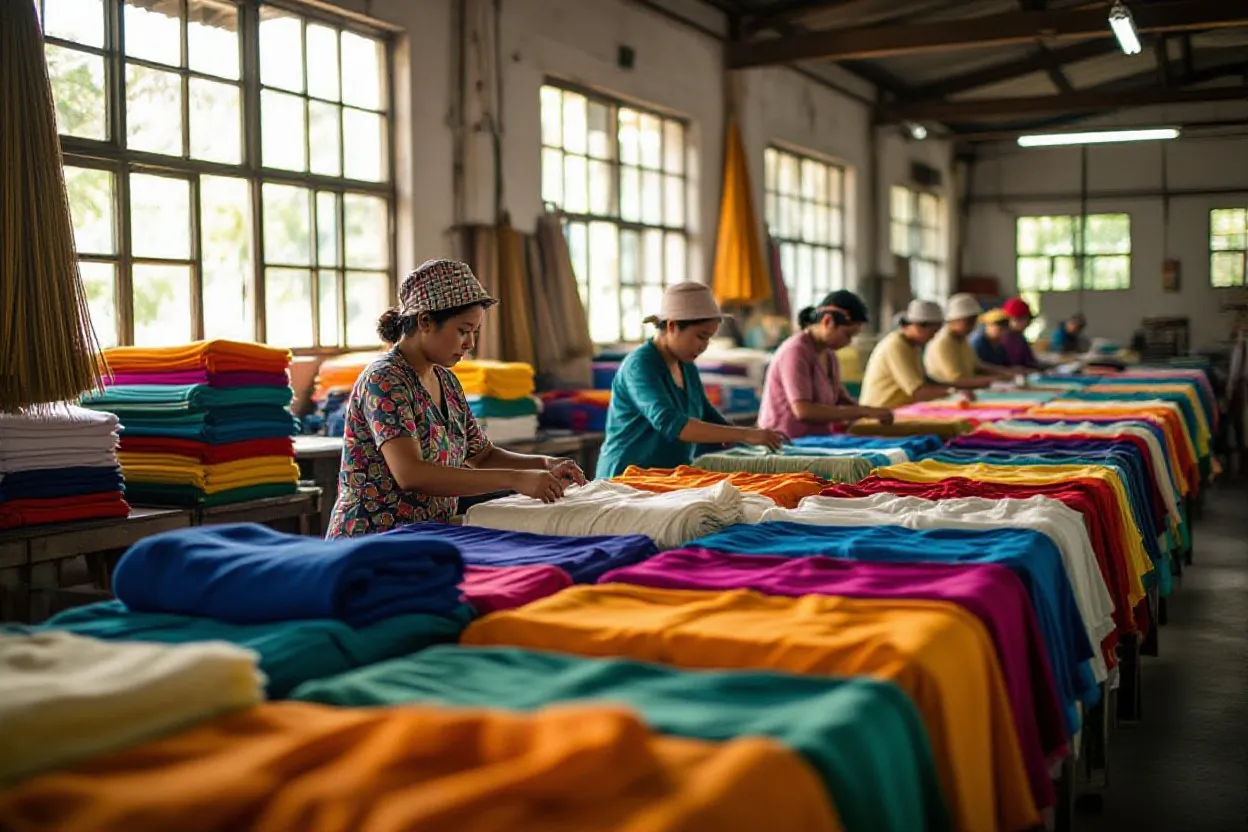
Viscose begins with cellulose that already exists in plant material. The cellulose is extracted, chemically treated, dissolved, and then formed again into fiber. The cellulose is therefore not simply spun directly from the plant in the same way cotton fibers are processed. Instead, it is regenerated. That process can be summarized as: Natural Cellulose => Dissolved Cellulose => Regenerated Cellulose Fiber. This is one of the defining characteristics of viscose.
Key Properties of Viscose
Manufacturers and designers favor viscose for its specific technical advantages:
- Highly Breathable: Allows air to circulate, making it ideal for summer dresses and shirts.
- Superior Moisture Absorption: Absorbs sweat better and dries faster than standard cotton.
- Silky Smooth: Offers a luxurious feel against the skin without the high cost of silk.
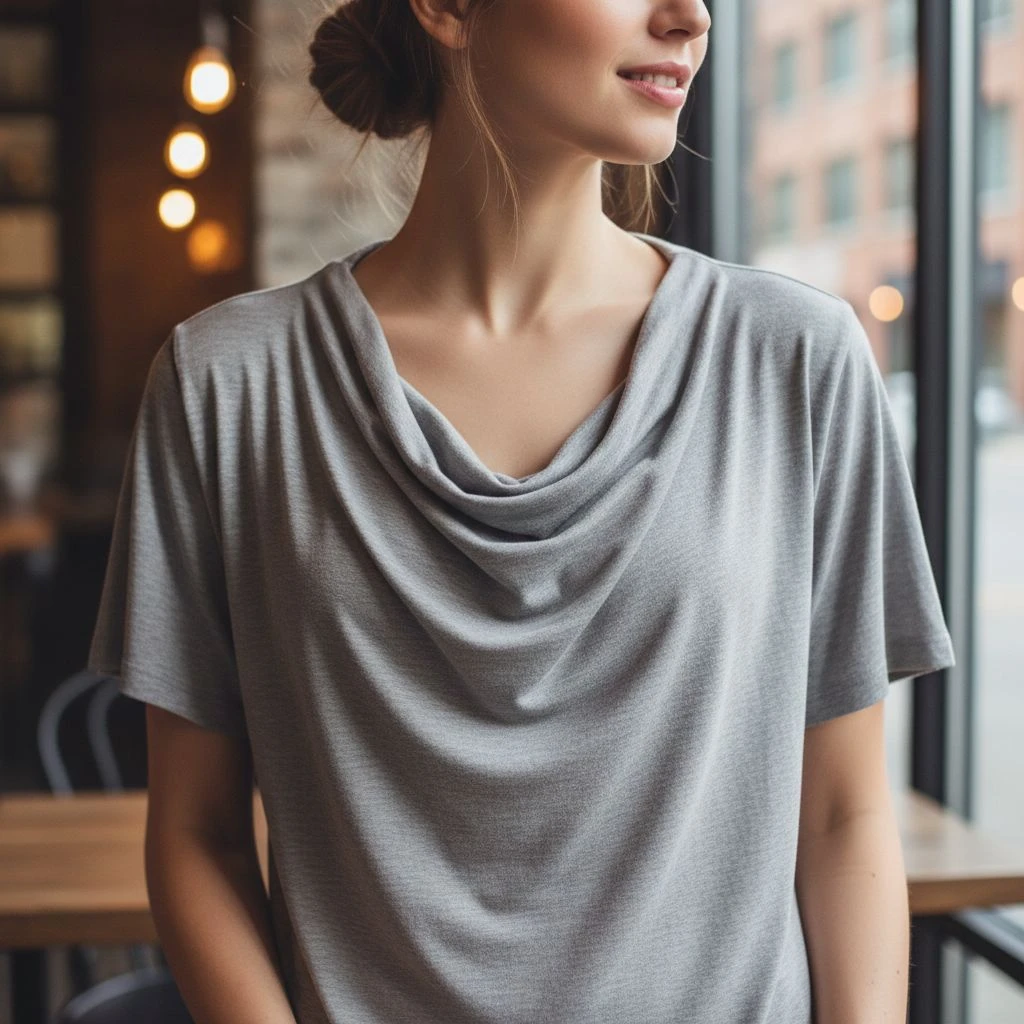
- Excellent Drape: It hangs naturally and flows with movement, creating a beautiful silhouette.
- Vivid Colors: Viscose holds dyes effectively, producing rich and vibrant hues.
What Does Viscose Fabric Feel Like?
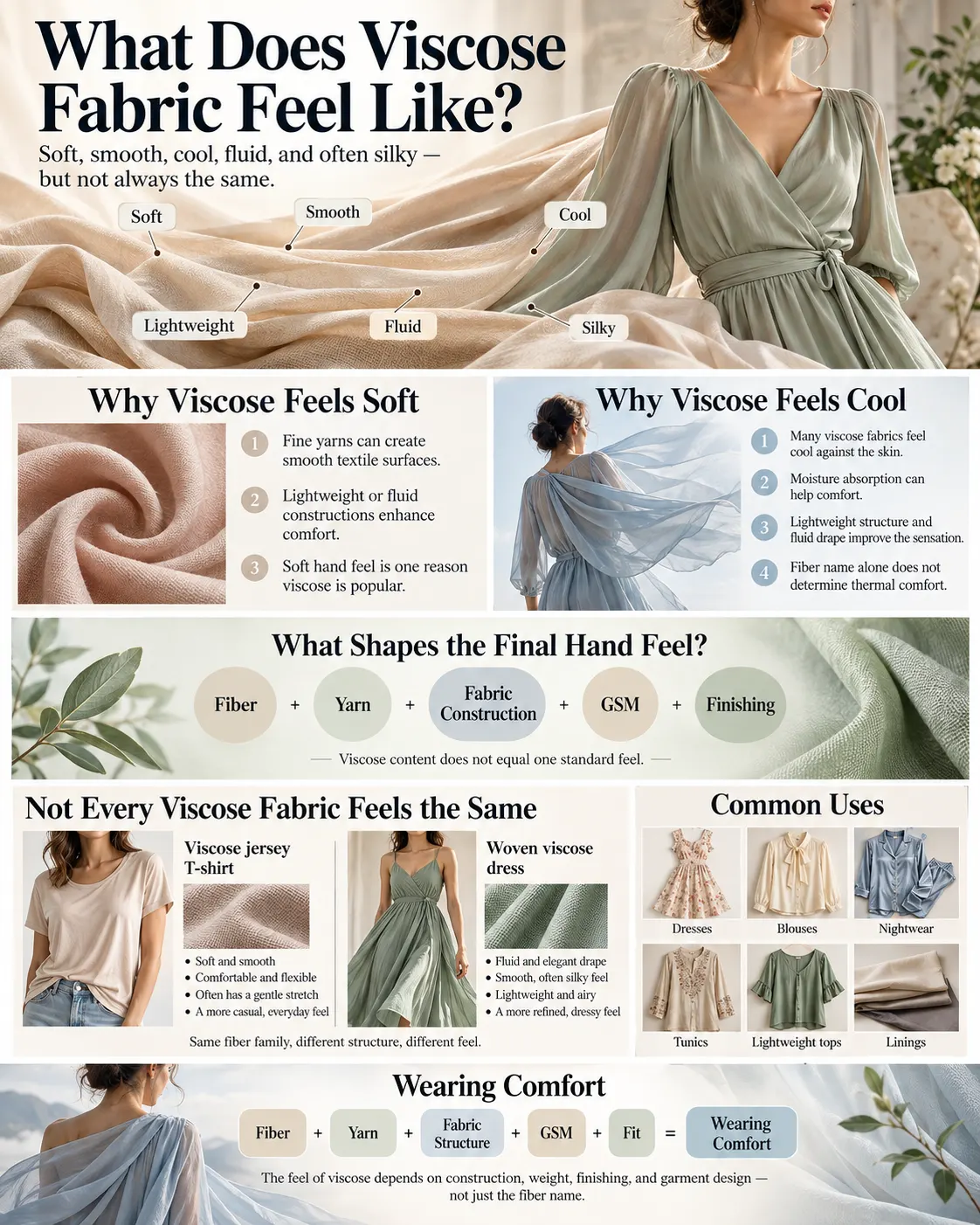
One reason viscose is so popular is its hand feel. Depending on fabric construction and finishing, viscose can feel:
- Soft
- Smooth
- Cool
- Fluid
- Lightweight
- Silky
This makes it attractive for garments that are designed to move naturally around the body. The final hand feel depends on: Fiber + Yarn + Fabric Construction + GSM + Finishing
Viscose Feel Soft?
Viscose fibers can be processed into fine yarns that produce smooth textile surfaces. When combined with lightweight or fluid fabric constructions, this can create a soft and comfortable hand feel. That softness is one reason viscose is widely used in:
- Dresses
- Blouses
- Nightwear
- Tunics
- Lightweight tops
- Linings
Viscose Feel Cool?
Viscose is commonly used in warm-weather garments because many viscose fabrics feel cool and comfortable against the skin. This effect is related to several factors, including:
- Moisture absorption
- Fabric construction
- Lightweight structure
- Fluid drape
However, the fiber name alone does not determine thermal comfort. A more complete formula is: Fiber + Yarn + Fabric Structure + GSM + Fit = Wearing Comfort.
Key Properties of Viscose
Manufacturers and designers favor viscose for its specific technical advantages:
- Highly Breathable: Allows air to circulate, making it ideal for summer dresses and shirts.
- Superior Moisture Absorption: Absorbs sweat better and dries faster than standard cotton.
- Silky Smooth: Offers a luxurious feel against the skin without the high cost of silk.
- Excellent Drape: It hangs naturally and flows with movement, creating a beautiful silhouette.
- Vivid Colors: Viscose holds dyes effectively, producing rich and vibrant hues.
Types of Viscose & Rayon
Over time, different variations were developed to improve durability and sustainability:
- Standard Viscose: The most common, affordable version used in everyday fashion.
- Modal: A high-tenacity version that is stronger, less prone to pilling, and incredibly soft—perfect for underwear and bedsheets.
- Lyocell (TENCEL™): An eco-friendly version produced in a closed-loop system with minimal waste.
- Acetate: A shiny, lightweight variant frequently used for garment linings.
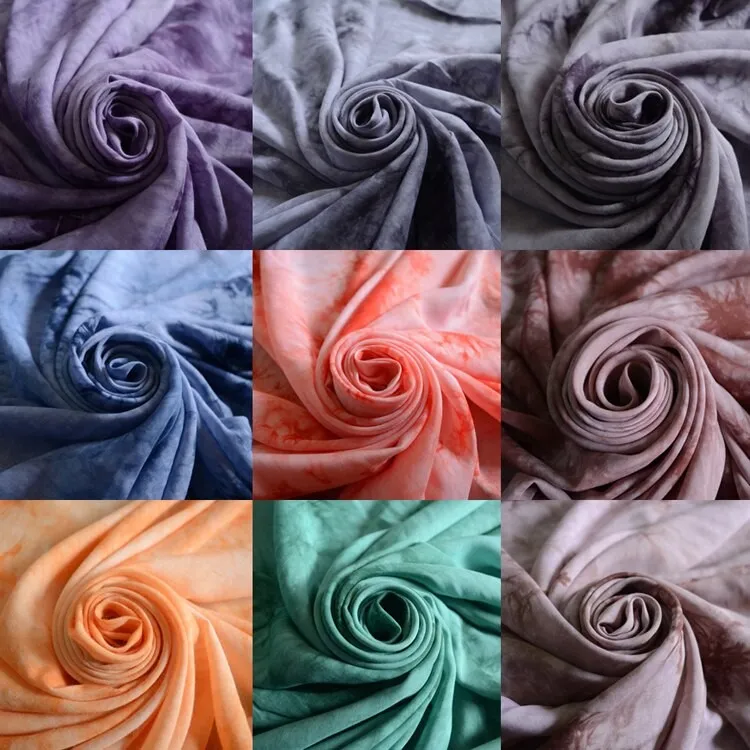
1. Standard Viscose Rayon
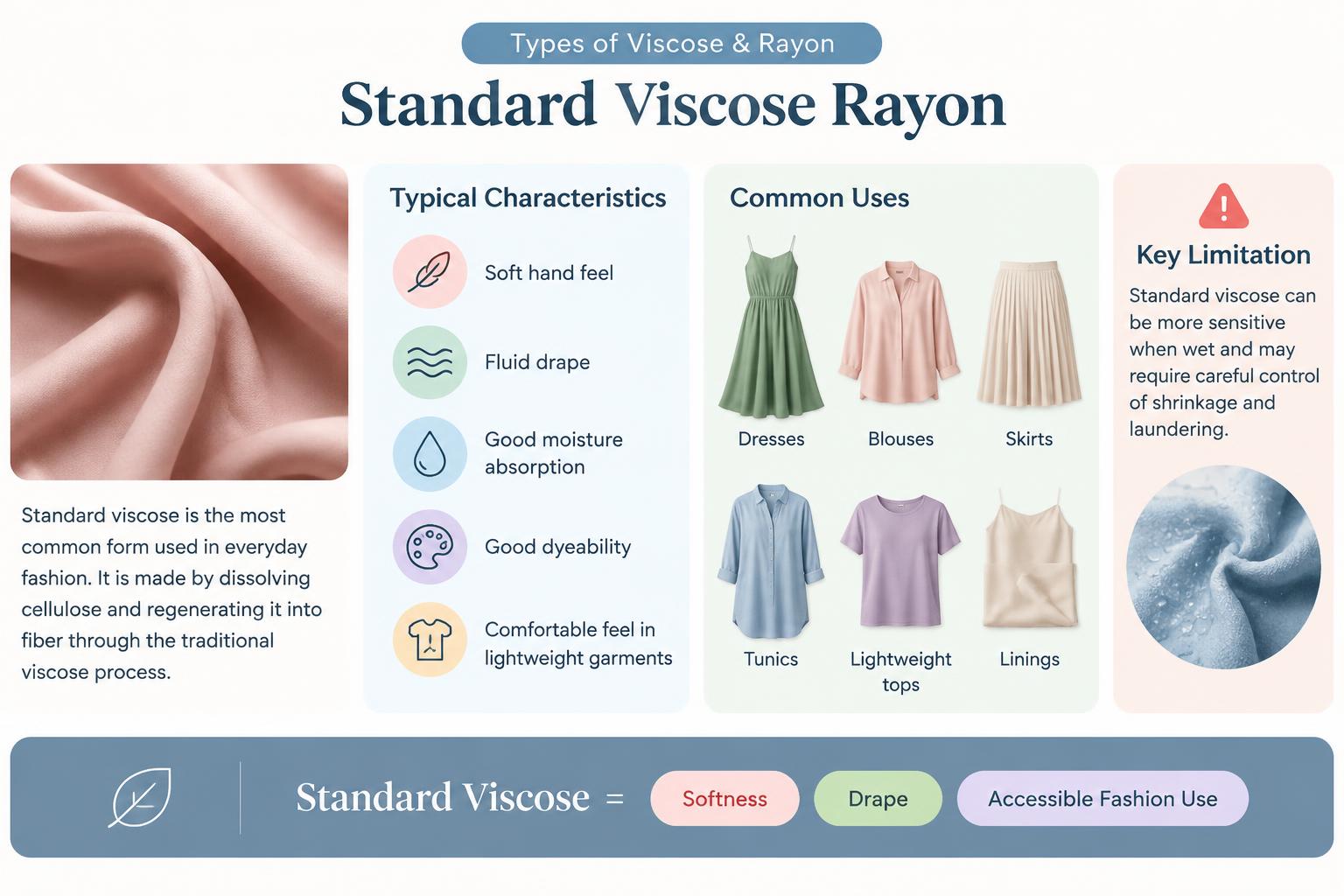
Standard viscose is the most common form used in everyday fashion. It is made by dissolving cellulose and regenerating it into fiber through the traditional viscose process.
Typical characteristics include:
- Soft hand feel
- Fluid drape
- Good moisture absorption
- Good dyeability
- Comfortable feel in lightweight garments
Common uses include:
- Dresses
- Blouses
- Skirts
- Tunics
- Lightweight tops
- Linings
Its main limitation is that standard viscose can be more sensitive when wet and may require careful control of shrinkage and laundering. Standard Viscose = Softness + Drape + Accessible Fashion Use
2. Modal
Modal is a regenerated cellulose fiber related to rayon and developed for improved performance compared with conventional viscose.
=> Realted Article: Modal Fabric: Pros, Cons, and Everyday Applications
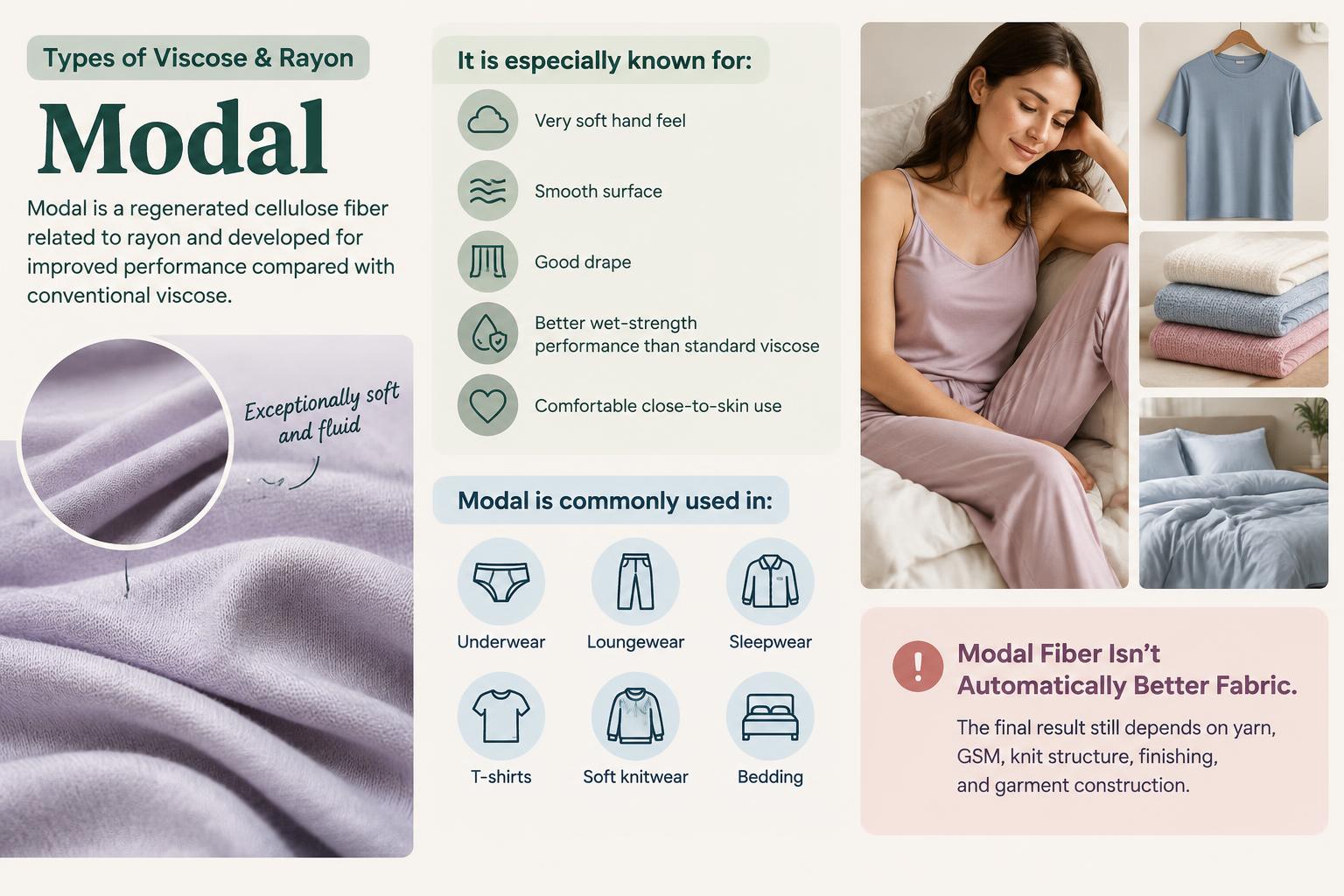
It is especially known for:
- Very soft hand feel
- Smooth surface
- Good drape
- Better wet-strength performance than standard viscose
- Comfortable close-to-skin use
Modal is commonly used in:
- Underwear
- Loungewear
- Sleepwear
- T-shirts
- Soft knitwear
- Bedding
Because it is often used in fine knit fabrics, modal can feel exceptionally soft and fluid. However: Modal Fiber isn’t Automatically Better Fabric. The final result still depends on yarn, GSM, knit structure, finishing, and garment construction.
3. Lyocell
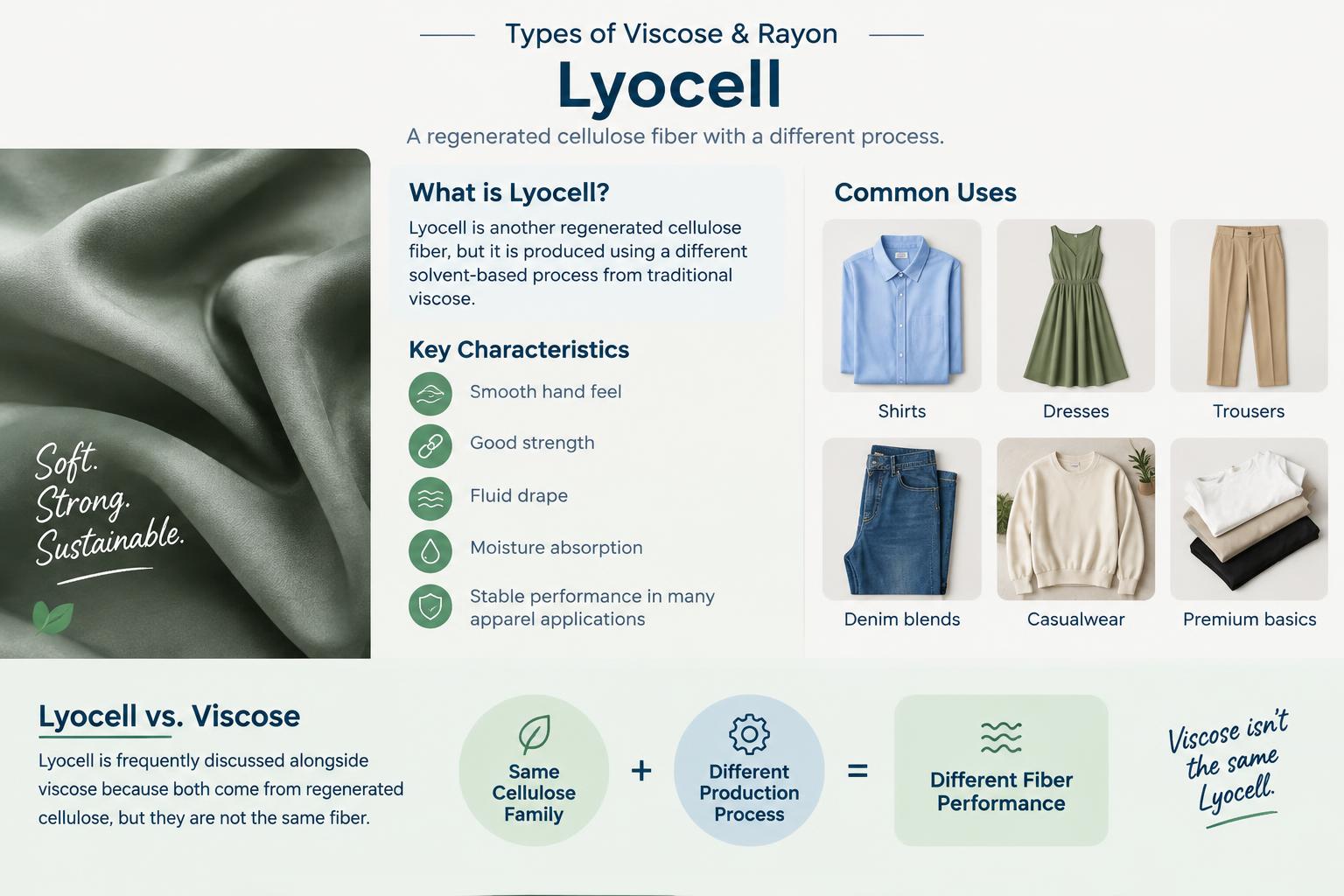
Lyocell is another regenerated cellulose fiber, but it is produced using a different solvent-based process from traditional viscose.
=> Related Article: Lyocell Fabric: How It’s Made, How It Feels, and Why It’s Everywhere
It is often associated with:
- Smooth hand feel
- Good strength
- Fluid drape
- Moisture absorption
- Stable performance in many apparel applications
Common uses include:
- Shirts
- Dresses
- Trousers
- Denim blends
- Casualwear
- Premium basics
Lyocell is frequently discussed alongside viscose because both come from regenerated cellulose, but they are not the same fiber. Viscose isn’t the same Lyocell. A better way to think about them is: Same Cellulose Family + Different Production Process = Different Fiber Performance
4. High-Wet-Modulus Rayon
High-wet-modulus, or HWM rayon, was developed to improve some of the weaknesses of standard viscose, especially its wet strength and dimensional stability.
=> Related Article: Rayon Fabric: From Wood Pulp to Clothing
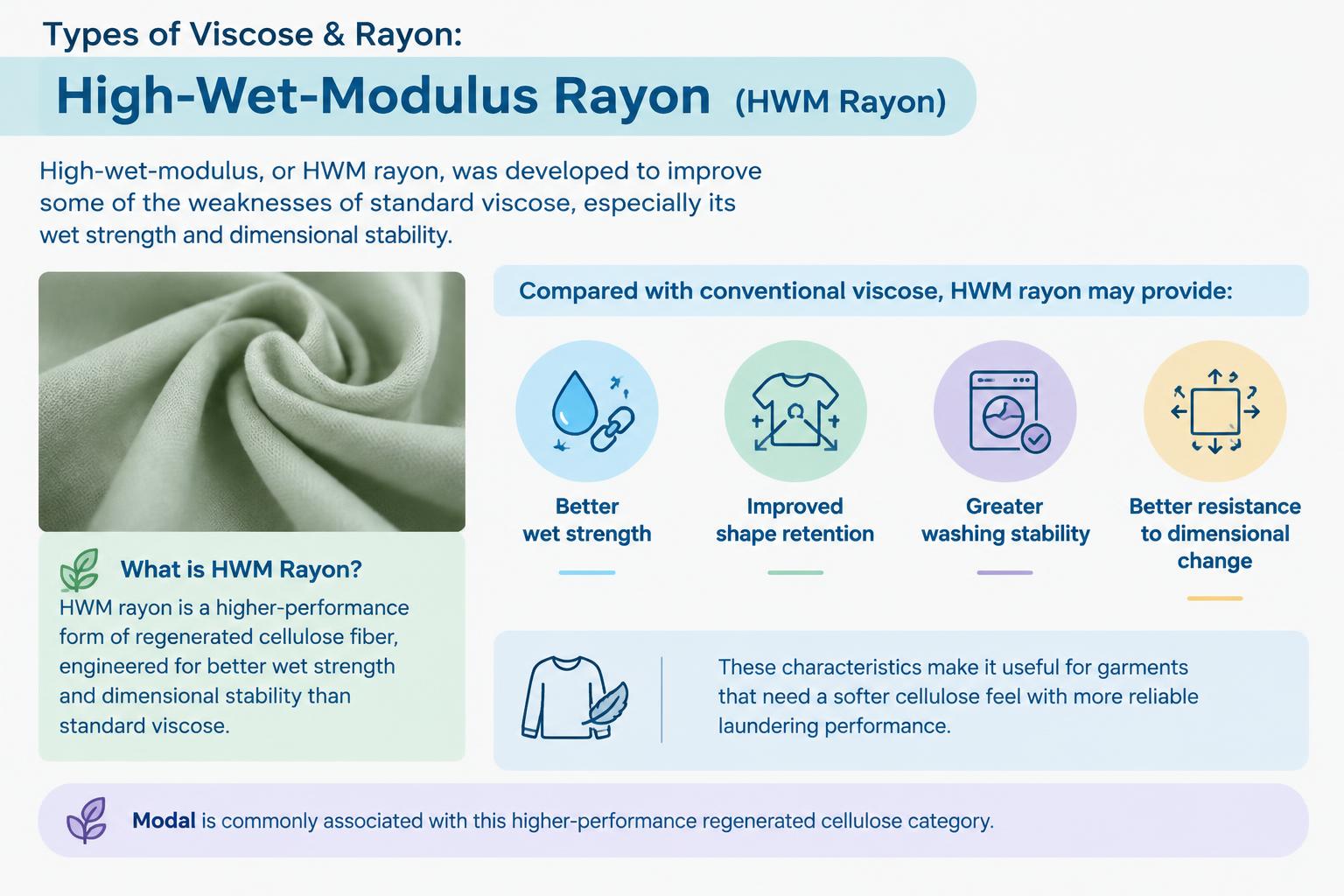
Compared with conventional viscose, HWM rayon may provide:
- Better wet strength
- Improved shape retention
- Greater washing stability
- Better resistance to dimensional change
These characteristics make it useful for garments that need a softer cellulose feel with more reliable laundering performance. Modal is commonly associated with this higher-performance regenerated cellulose category.
5. Bamboo Viscose
Bamboo viscose starts with cellulose obtained from bamboo. The bamboo is not usually spun directly into textile fiber. Instead, the cellulose is extracted and processed using a viscose-type regeneration system. The typical route is: Bamboo => Cellulose Pulp => Viscose Processing => Regenerated Fiber. This means the finished textile behaves primarily as a regenerated cellulose fiber rather than as mechanically processed bamboo.
=> Related Article: Bamboo Fabric: Soft, Sustainable, and Changing Fashion Than You Think
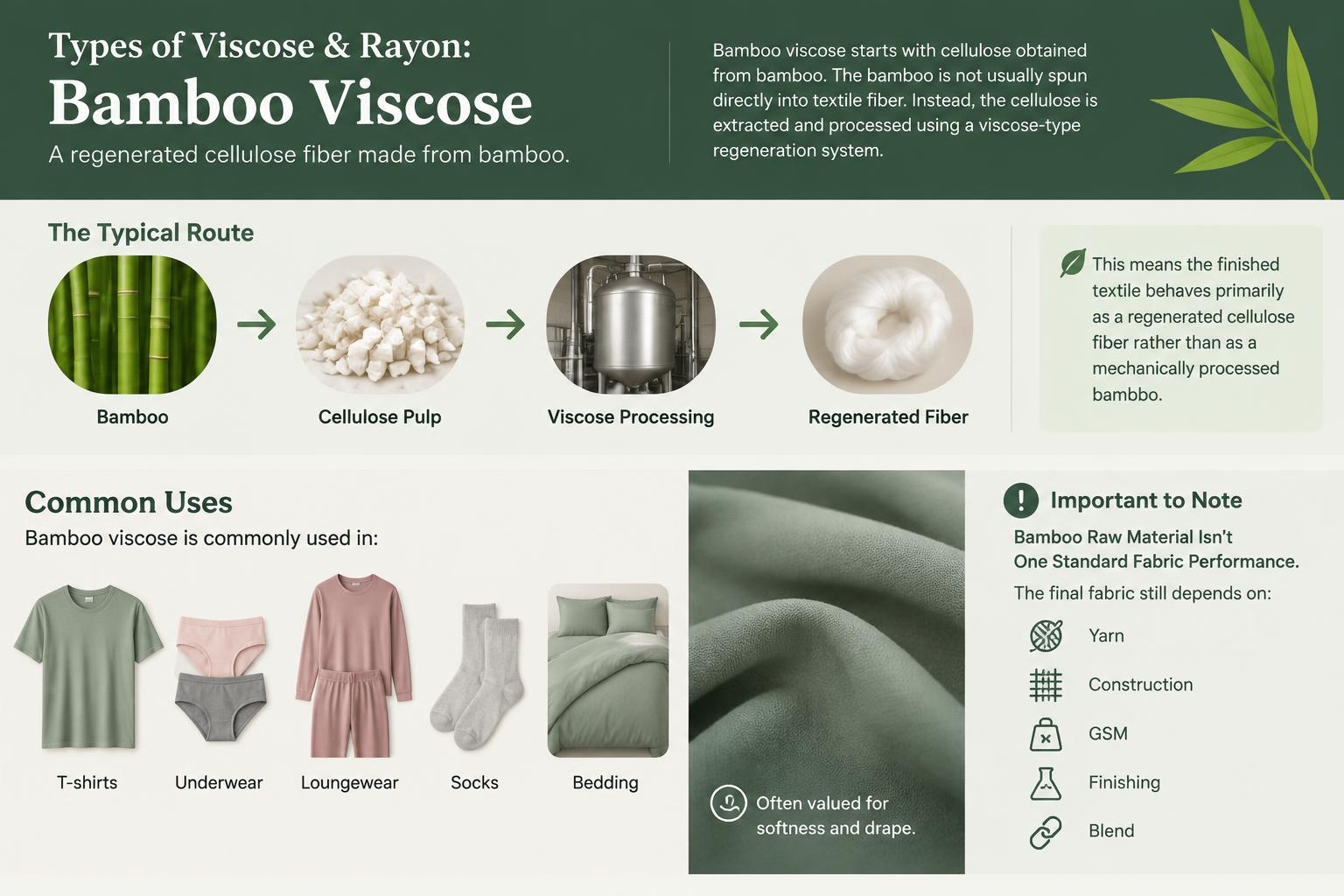
Bamboo viscose is commonly used in:
- T-shirts
- Underwear
- Loungewear
- Socks
- Bedding
It is often valued for softness and drape. However: Bamboo Raw Material isn’t One Standard Fabric Performance. The final fabric still depends on yarn, construction, GSM, finishing, and blend.
6. Cuprammonium Rayon
Cuprammonium rayon is another regenerated cellulose fiber produced through a different chemical process. It is often used for very fine and fluid fabrics.
=> Related Article: Rayon Fabric: From Wood Pulp to Clothing
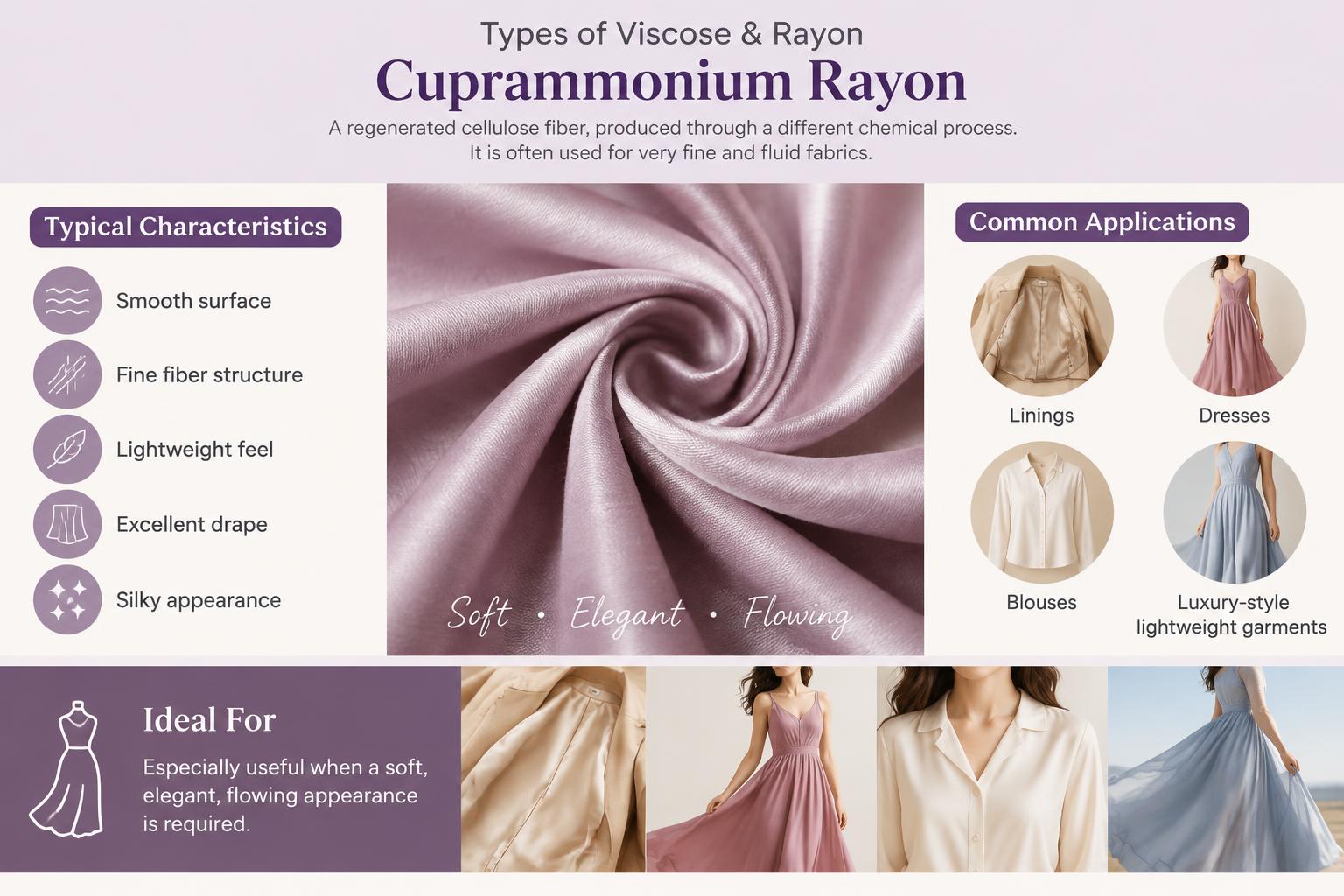
Typical characteristics may include:
- Smooth surface
- Fine fiber structure
- Lightweight feel
- Excellent drape
- Silky appearance
Common applications include:
- Linings
- Dresses
- Blouses
- Luxury-style lightweight garments
It is especially useful when a soft, elegant, flowing appearance is required.
Is Acetate a Type of Rayon?
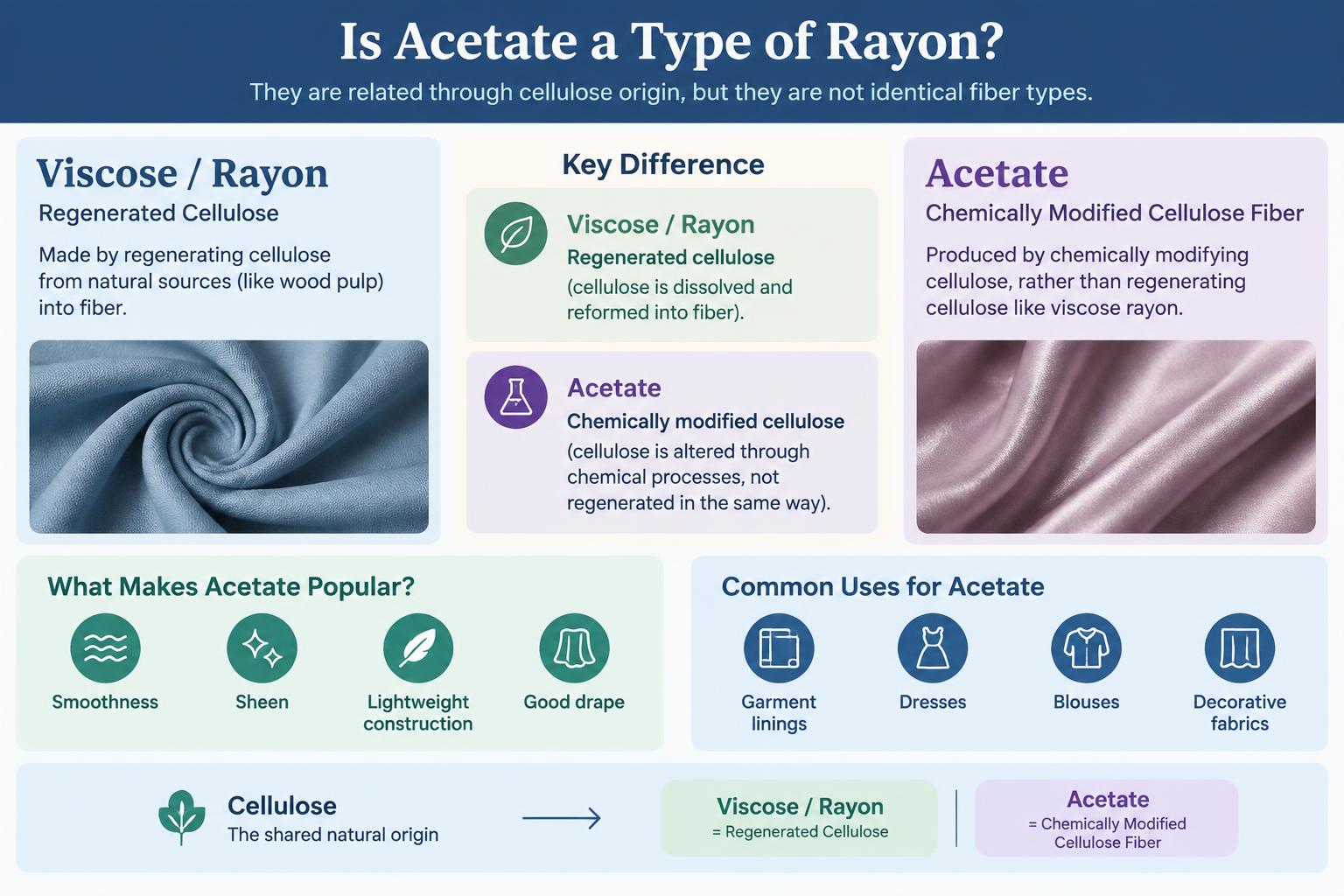
Acetate is often grouped with cellulose-based manufactured fibers, but it should not be treated as the same material as viscose rayon. Acetate is produced by chemically modifying cellulose rather than regenerating cellulose in the same way as viscose.
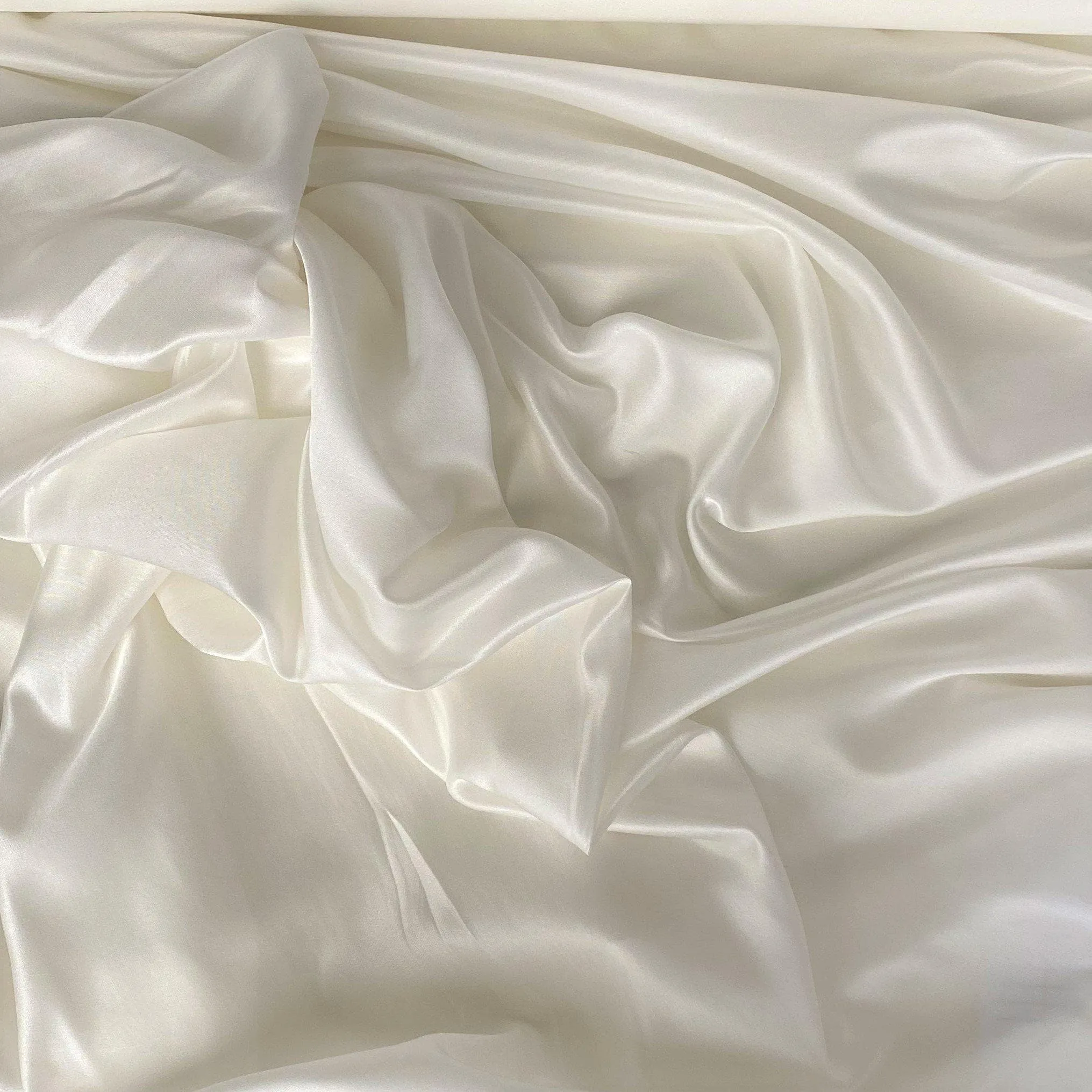
It is commonly known for:
- Smoothness
- Sheen
- Lightweight construction
- Good drape
Common uses include:
- Garment linings
- Dresses
- Blouses
- Decorative fabrics
So: Viscose / Rayon = Regenerated Cellulose while: Acetate = Chemically Modified Cellulose Fiber. They are related through cellulose origin but are not identical fiber types.
Pros and Cons of Viscose Fabric
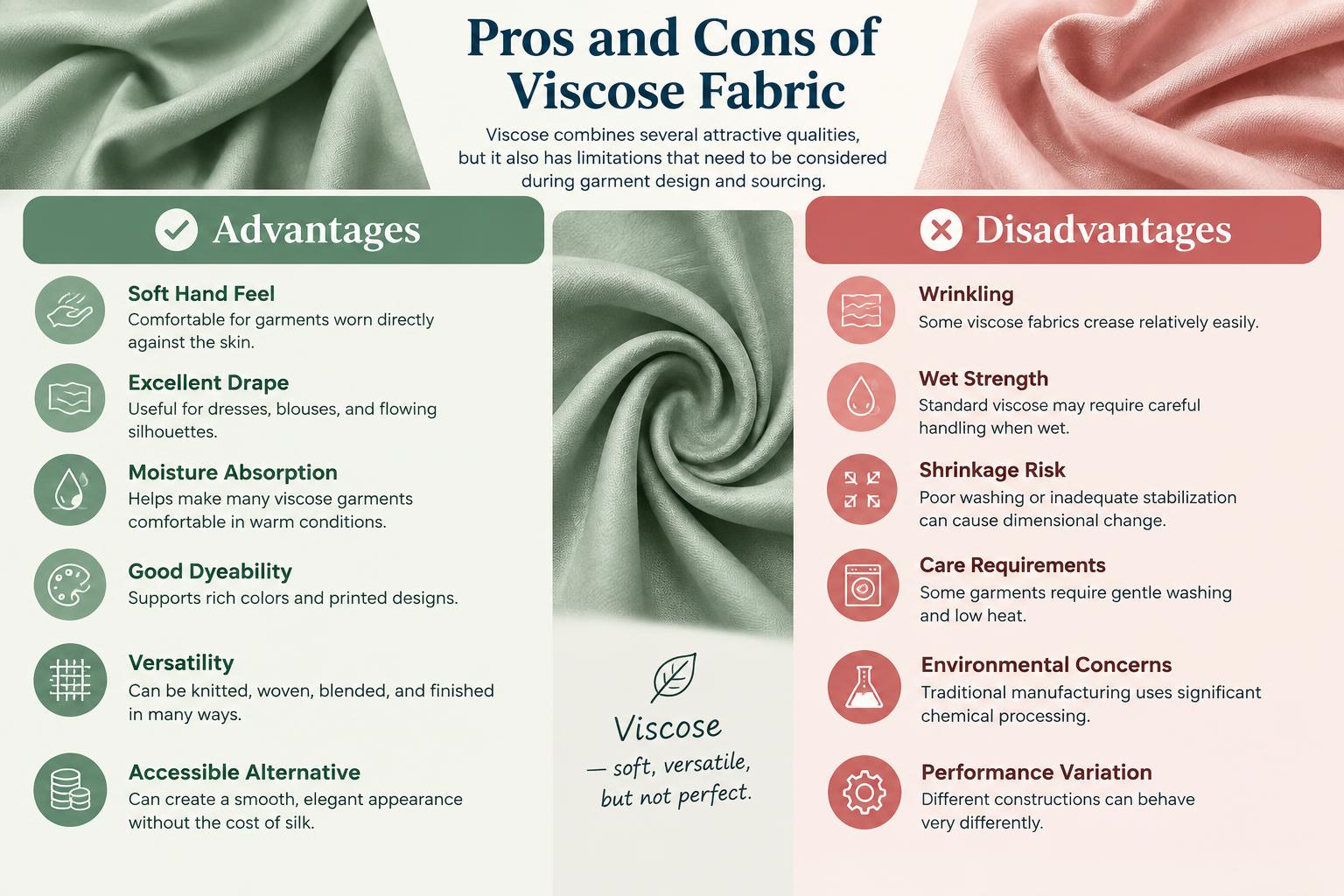
Viscose combines several attractive qualities, but it also has limitations that need to be considered during garment design and sourcing.
Advantages
- Soft Hand Feel: Comfortable for garments worn directly against the skin.
- Excellent Drape: Useful for dresses, blouses, and flowing silhouettes.
- Moisture Absorption: Helps make many viscose garments comfortable in warm conditions.
- Good Dyeability: Supports rich colors and printed designs.
- Versatility: Can be knitted, woven, blended, and finished in many ways.
- Accessible Alternative: Can create a smooth, elegant appearance without the cost of silk.
Disadvantages
- Wrinkling: Some viscose fabrics crease relatively easily.
- Wet Strength: Standard viscose may require careful handling when wet.
- Shrinkage Risk: Poor washing or inadequate stabilization can cause dimensional change.
- Care Requirements: Some garments require gentle washing and low heat.
- Environmental Concerns: Traditional manufacturing uses significant chemical processing.
- Performance Variation: Different constructions can behave very differently.
Common Applications
- Fashion: Summer dresses, flowing blouses, tunics, cardigans, and premium nightwear.
- Home Textiles: Luxury bedsheets, curtains, and decorative tablecloths.
- Industrial: Specialized tyre cords and performance fabrics.
Viscose Fabric for Dresses
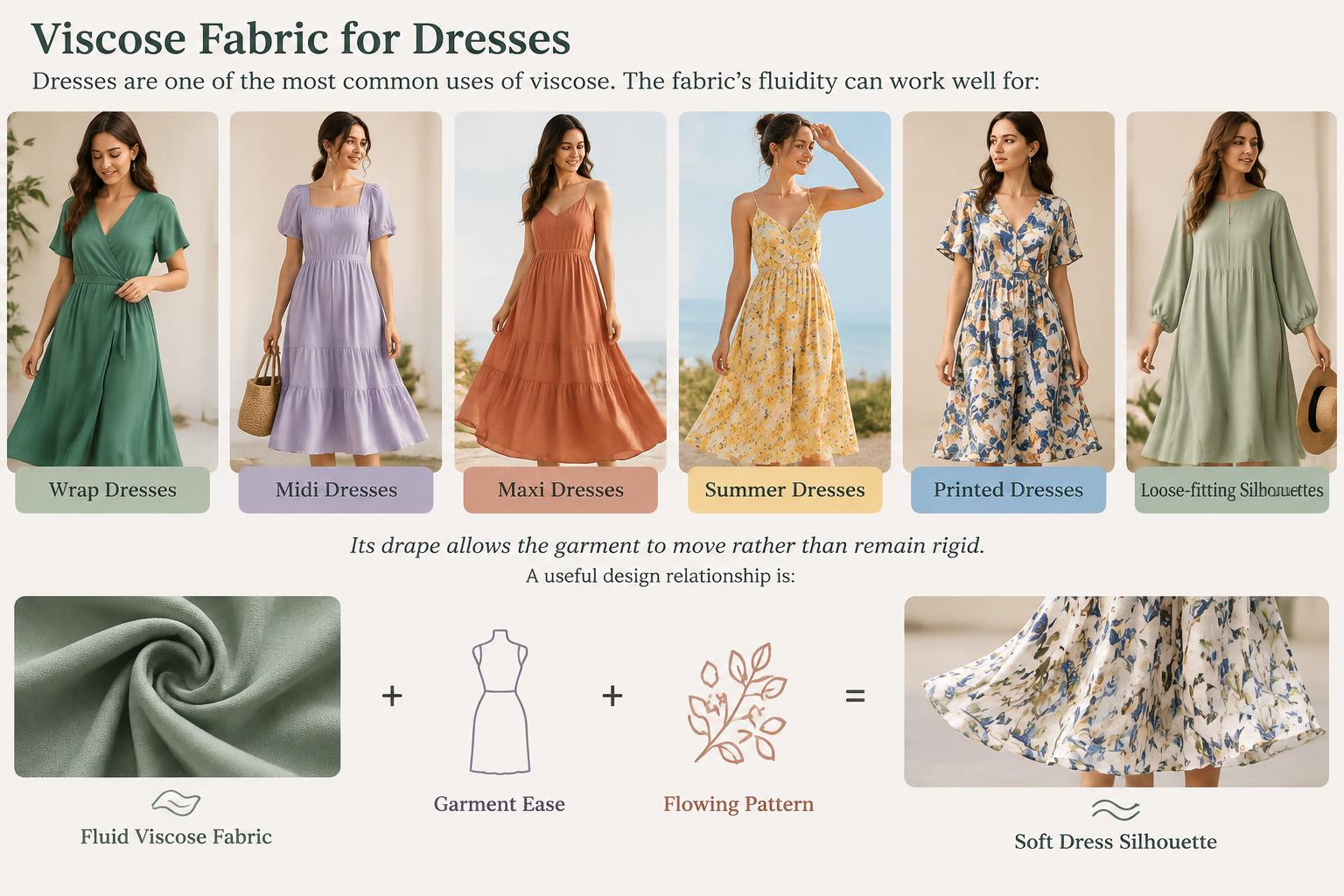
Dresses are one of the most common uses of viscose. The fabric’s fluidity can work well for:
- Wrap dresses
- Midi dresses
- Maxi dresses
- Summer dresses
- Printed dresses
- Loose-fitting silhouettes
Its drape allows the garment to move rather than remain rigid. A useful design relationship is: Fluid Viscose Fabric + Garment Ease + Flowing Pattern = Soft Dress Silhouette.
Viscose Fabric for Blouses
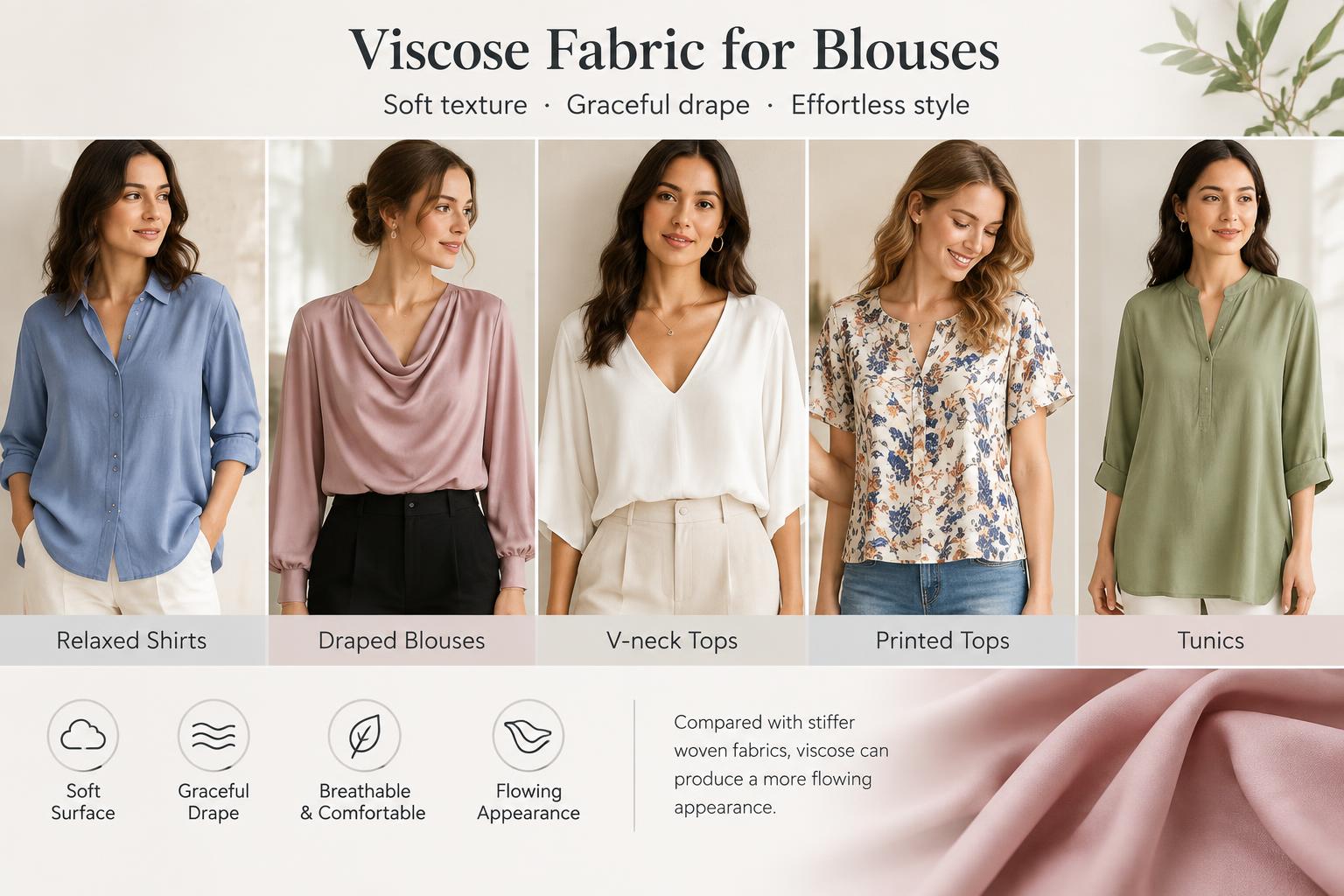
Viscose is also widely used for blouses because it can create a soft surface and graceful drape. It works especially well for:
- Relaxed shirts
- Draped blouses
- V-neck tops
- Printed tops
- Tunics
Compared with stiffer woven fabrics, viscose can produce a more flowing appearance.
Viscose Fabric for Summer Clothing
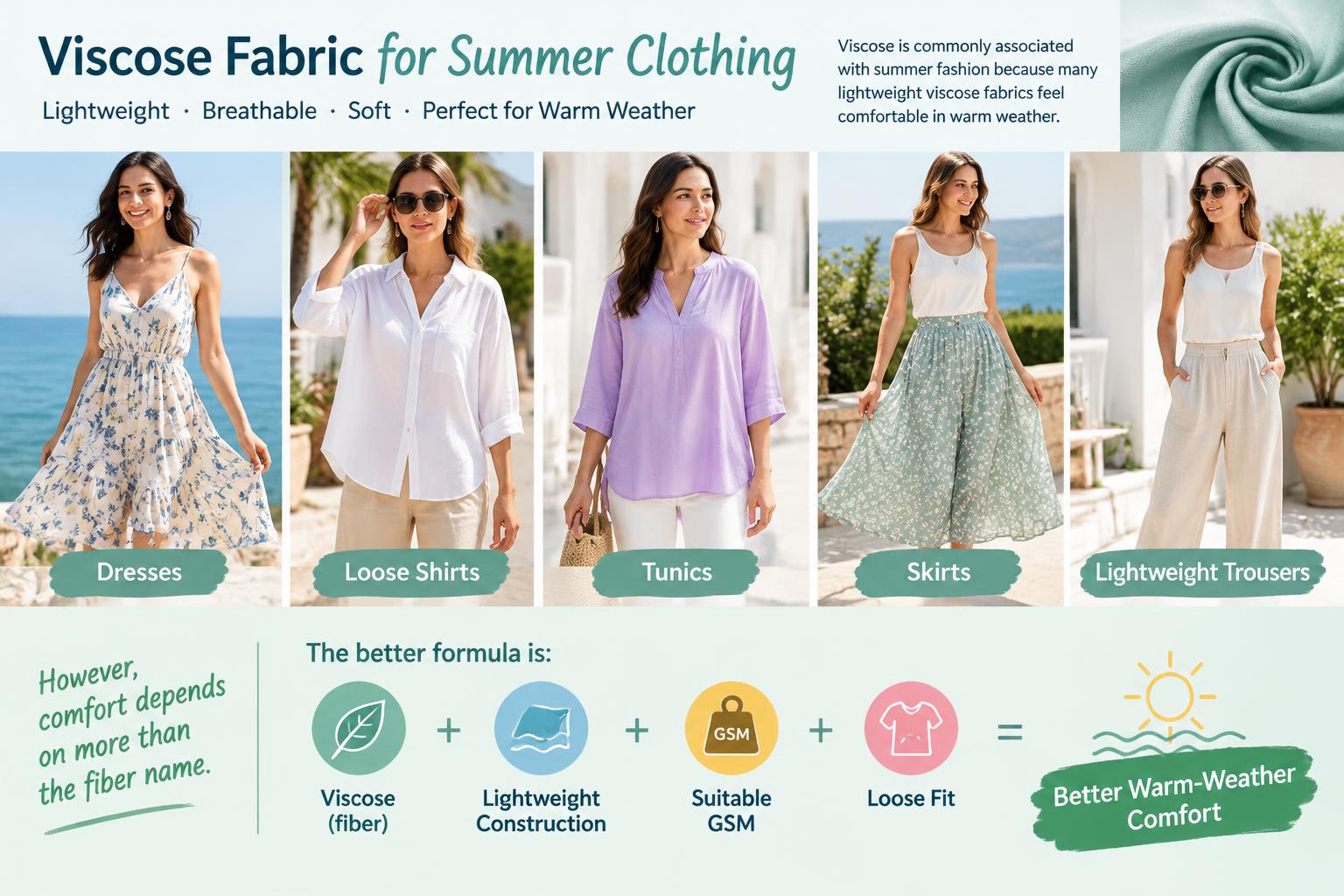
Viscose is commonly associated with summer fashion because many lightweight viscose fabrics feel comfortable in warm weather. Typical products include:
- Dresses
- Loose shirts
- Tunics
- Skirts
- Lightweight trousers
However, comfort depends on more than the fiber name. The better formula is: Viscose + Lightweight Construction + Suitable GSM + Loose Fit = Better Warm-Weather Comfort.
Viscose in Nightwear and Loungewear
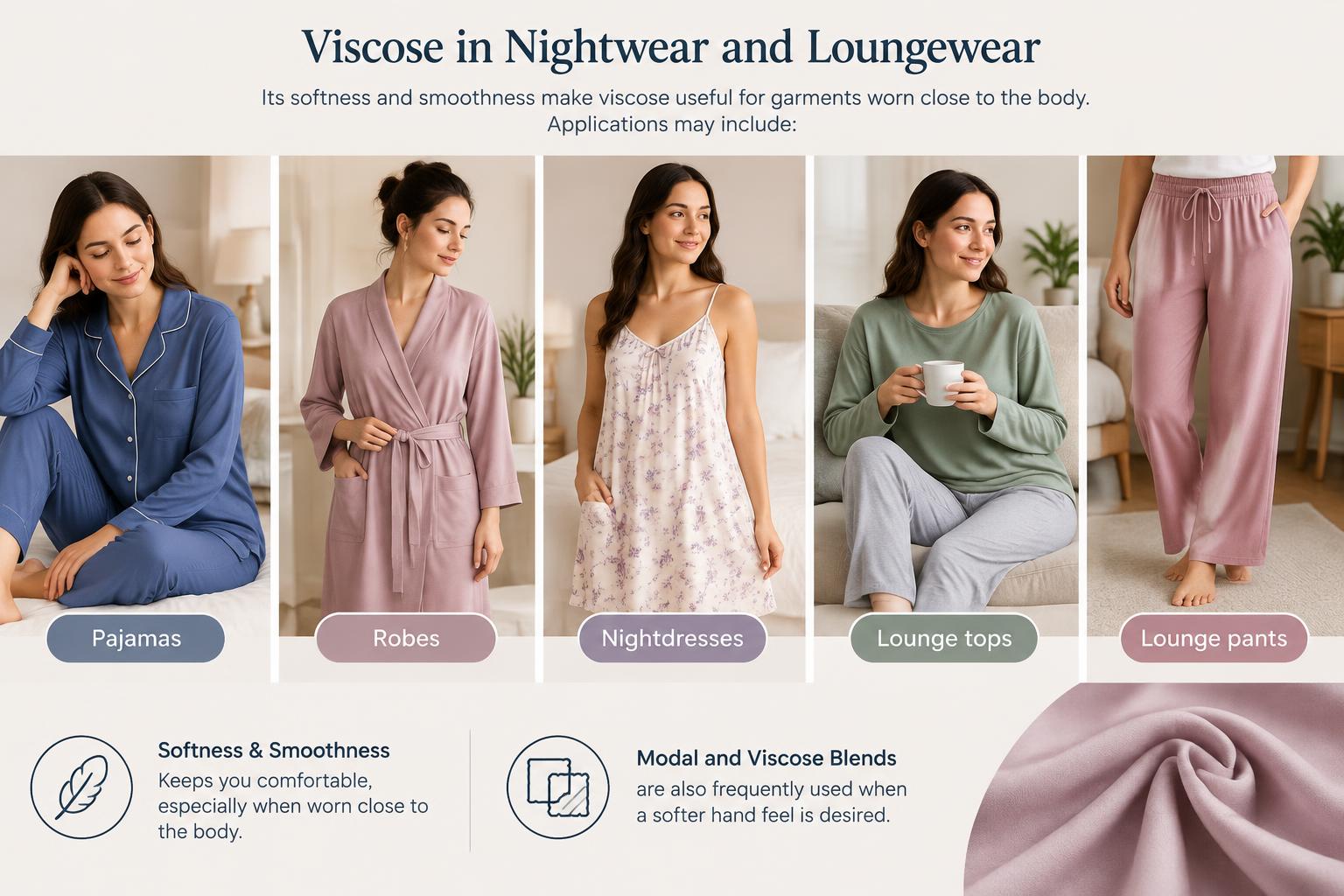
Its softness and smoothness make viscose useful for garments worn close to the body. Applications may include:
- Pajamas
- Robes
- Nightdresses
- Lounge tops
- Lounge pants
Modal and viscose blends are also frequently used when a softer hand feel is desired.
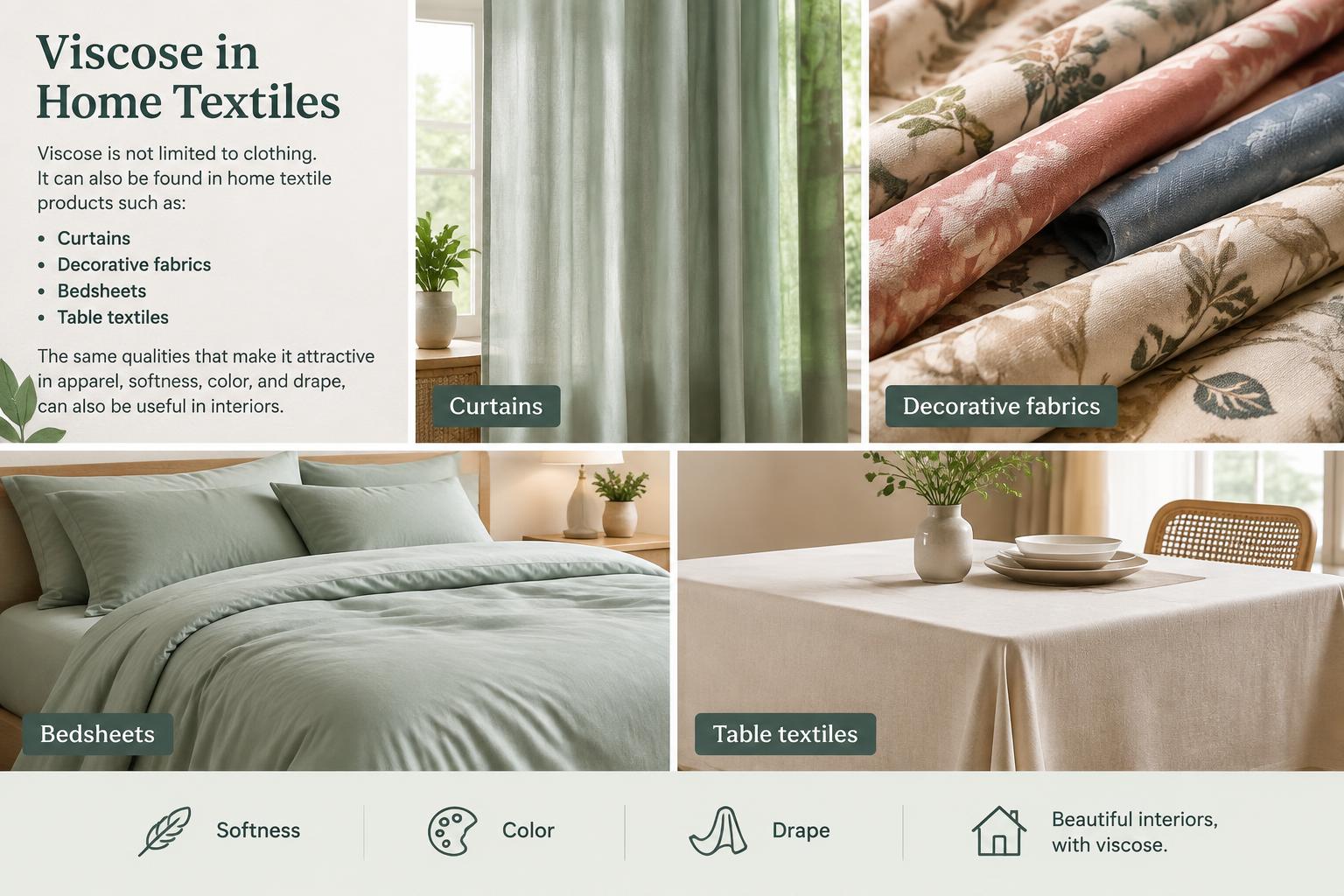
Viscose in Home Textiles
Viscose is not limited to clothing. It can also be found in home textile products such as:
- Curtains
- Decorative fabrics
- Bedsheets
- Table textiles
The same qualities that make it attractive in apparel, softness, color, and drape, can also be useful in interiors.
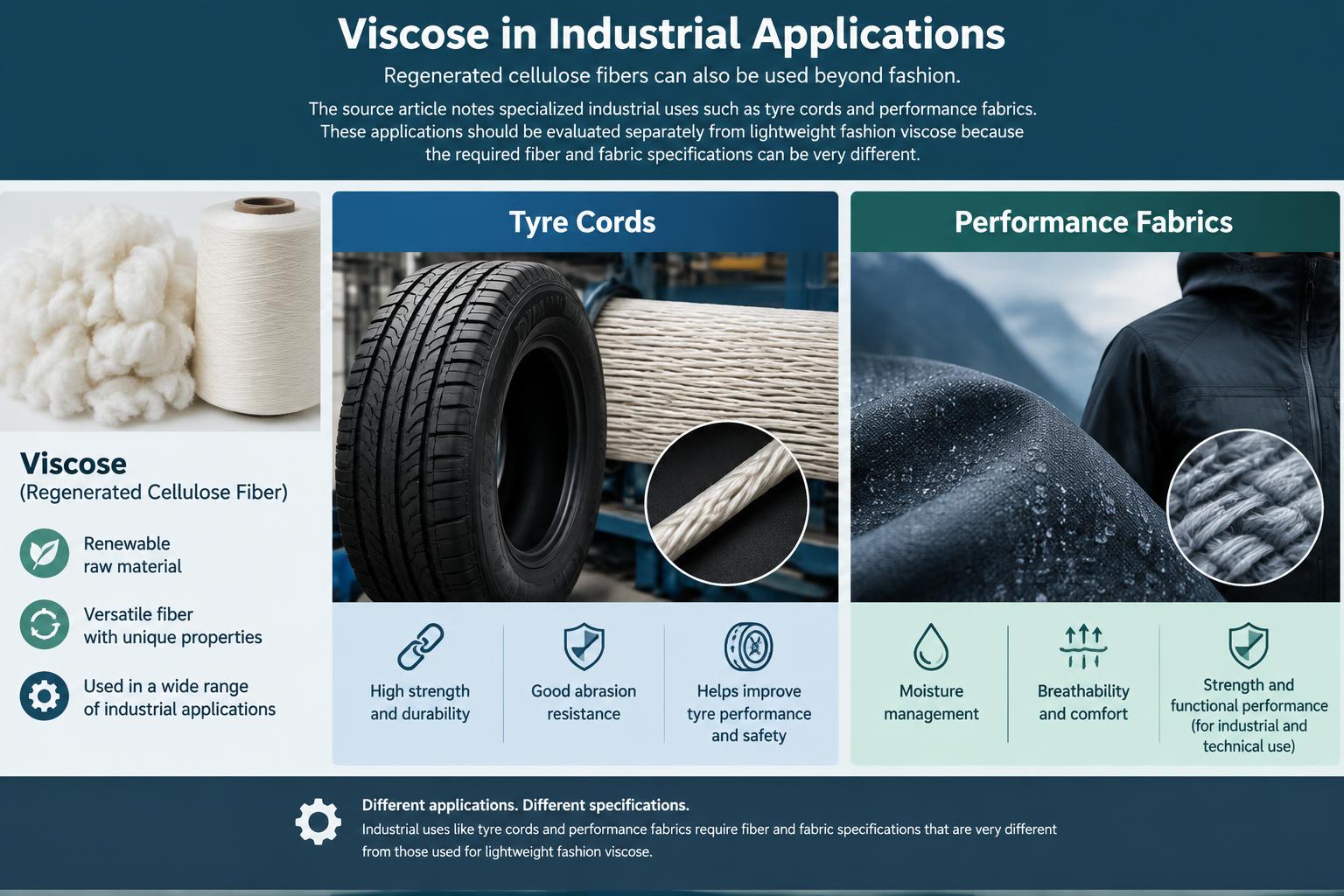
Viscose in Industrial Applications
Regenerated cellulose fibers can also be used beyond fashion. The source article notes specialized industrial uses such as tyre cords and performance fabrics. These applications should be evaluated separately from lightweight fashion viscose because the required fiber and fabric specifications can be very different.
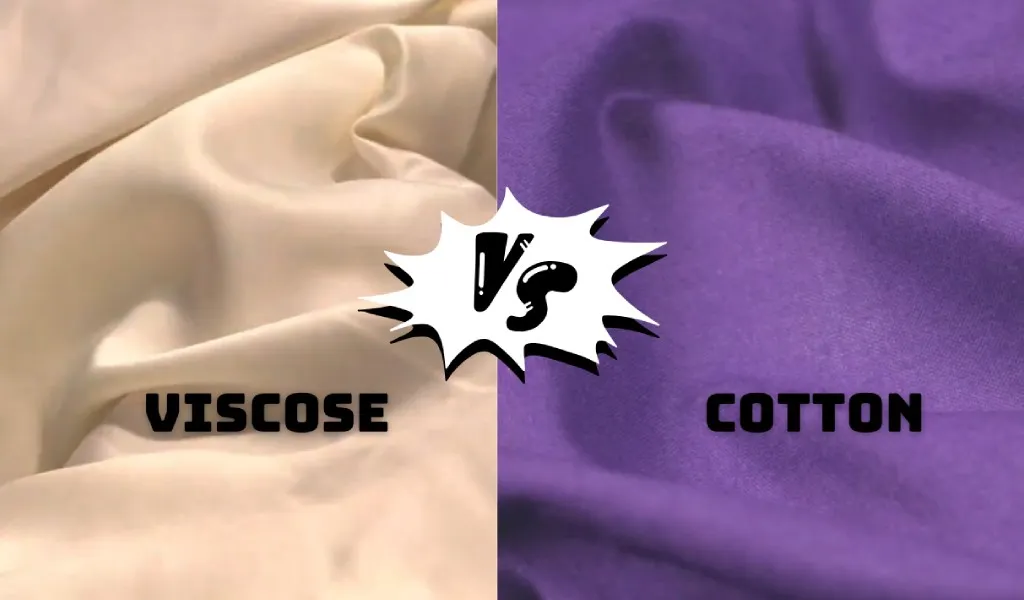
Comparison: Viscose vs. Other Fabrics
| Feature | Viscose | Cotton | Polyester | Silk |
|---|---|---|---|---|
| Breathability | Excellent | Good | Low | Excellent |
| Softness | Very Soft | Medium | Smooth | Luxury Soft |
| Drape | Excellent | Medium | Medium | Excellent |
| Price | Affordable | Moderate | Low | High |
Conclusion / Final Words
Viscose fabric offers the comfort of natural fibers and the elegance of silk at an accessible price point. While traditional production has environmental considerations, modern innovations like Lyocell provide sustainable alternatives. For brands looking for soft, breathable, and beautifully draping garments, viscose remains a top-tier choice. At Mekong Garment, we specialize in sourcing and manufacturing high-quality viscose collections that meet international fashion standards.

FAQs About Viscose Fabric
In Short, what is viscose fabric?
Viscose, often called rayon, is a regenerated cellulose fibre made from wood pulp. It combines natural origin with chemical processing, producing a soft, breathable fabric that drapes like silk and feels cool like cotton. Viscose is widely used in apparel and home textiles because it balances comfort, appearance, and cost.
In short, how is viscose made?
The viscose process begins with cellulose from wood pulp. The pulp is treated with sodium hydroxide to form alkali cellulose, then reacted with carbon disulfide to make cellulose xanthate. This is dissolved in caustic soda to create a viscous solution, filtered and aged, then spun into fibres by regenerating cellulose in an acidic bath. The fibres are washed, bleached, and finished; the process uses significant chemicals and requires careful effluent handling.
In short, why is viscose described as semi-synthetic?
Viscose is semi-synthetic because its raw material is natural cellulose, but it undergoes heavy chemical transformation to become fibre. It is not a wholly natural fibre like cotton, nor a fully synthetic polymer like polyester; it is a regenerated cellulose fibre that sits between those categories.
How does viscose feel and perform in clothing?
Viscose feels soft, smooth, and cool against the skin, with excellent drape and a silk-like sheen. It breathes well and is comfortable in warm weather, but it wrinkles easily, can lose strength when wet, and may shrink or stretch if not handled properly. It is ideal for flowing dresses, blouses, linings, and lightweight garments where drape and hand feel matter more than heavy wear resistance.
What types or variations of viscose are available?
Variants include standard viscose (regular rayon), high-wet-modulus (HWM) viscose often marketed as modal, and specialty forms like bamboo-derived viscose and cuprammonium rayon. Modal is stronger and more dimensionally stable, while lyocell is a related regenerated cellulose fibre produced in a cleaner closed-loop process (not technically viscose but functionally similar). Different grades target strength, softness, shrinkage control, or sustainability.
How should I care for viscose garments?
Follow the garment label; when washing, use a gentle cycle or hand wash in cold water with mild detergent. Avoid wringing—squeeze or roll in a towel to remove water, reshape while damp, and dry flat or hang to dry away from direct sun. Use low-to-medium iron or steam inside out for wrinkles, and consider dry cleaning for structured or lined pieces. Avoid tumble drying to prevent shrinkage and distortion.
Is viscose environmentally friendly and are there sustainable options?
Traditional viscose production can have environmental impacts: chemical use (notably carbon disulfide), water consumption, and risks from unsustainably sourced wood. More sustainable options include viscose from certified forests (FSC/PEFC), manufacturers with closed-loop chemical recovery, modal improvements, recycled regenerated cellulose, and lyocell produced via solvent recovery. Choosing certified suppliers and newer technologies reduces environmental and social risks associated with viscose.