Women’s Dress Styles: 7 Popular Types You Should Know

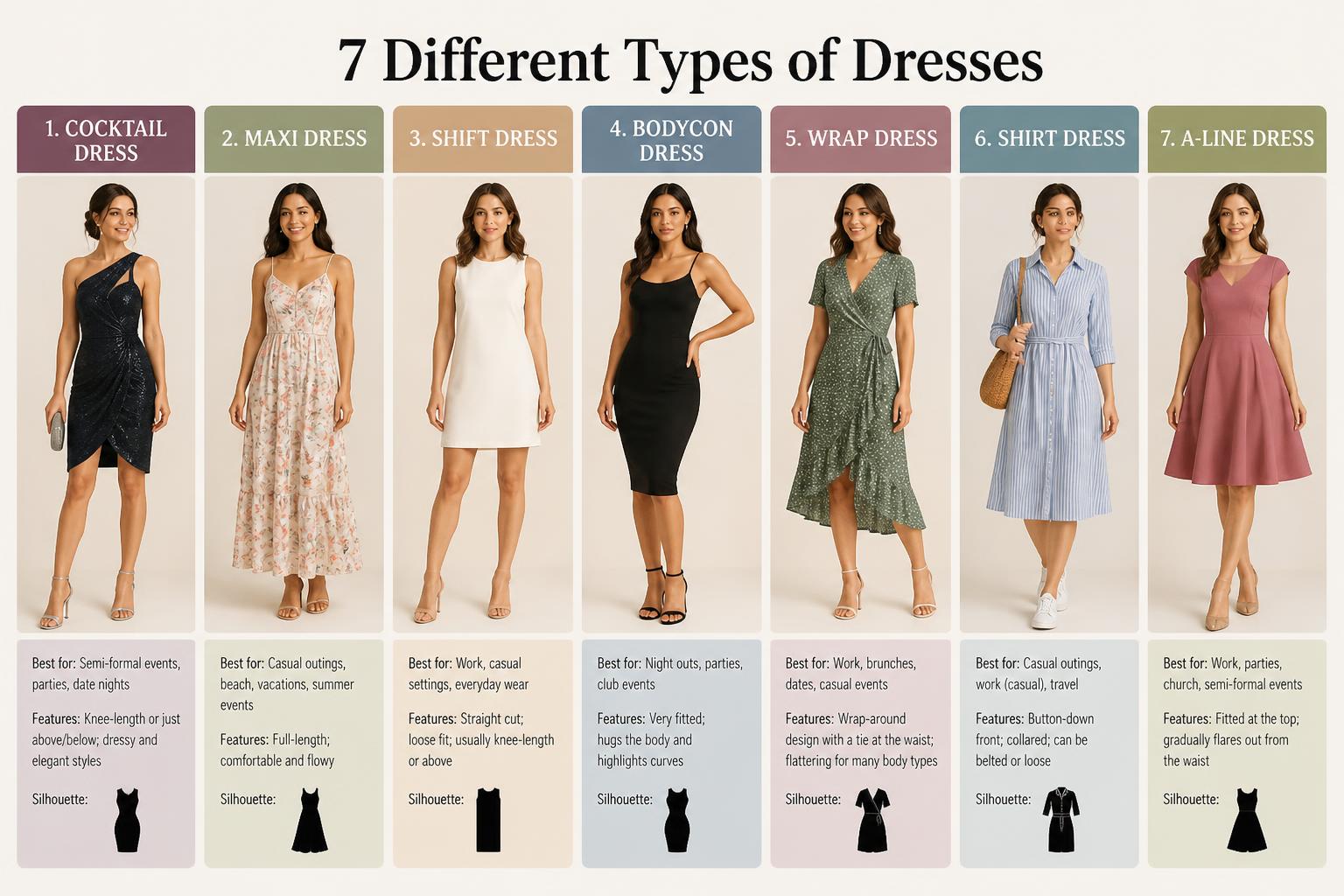
Fashion is a language we speak without words, and dresses are some of its most expressive phrases. From the comfort of casual wear to the elegance of formal gowns, every style carries meaning and purpose. Knowing the different types of dresses helps you dress with confidence for any event or mood. Let this guide be your roadmap to building a versatile, stylish wardrobe.
Types of Women Dresses
Women’s dresses are more than just clothing—they’re a way to showcase personality, confidence, and taste. While fashion changes over time, dresses remain a staple in wardrobes everywhere, suited to different occasions, seasons, and body shapes.
1. A-Line Dress
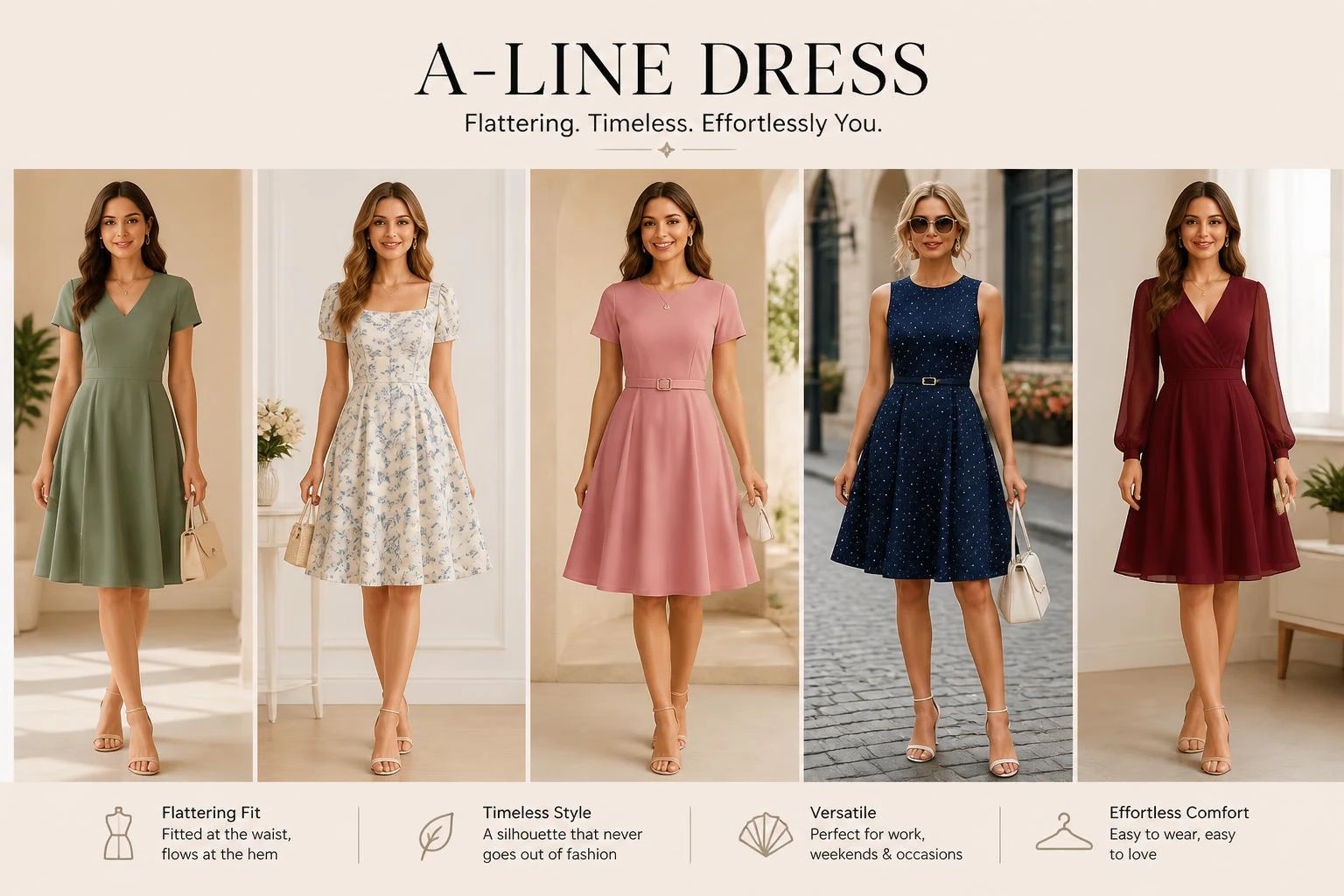
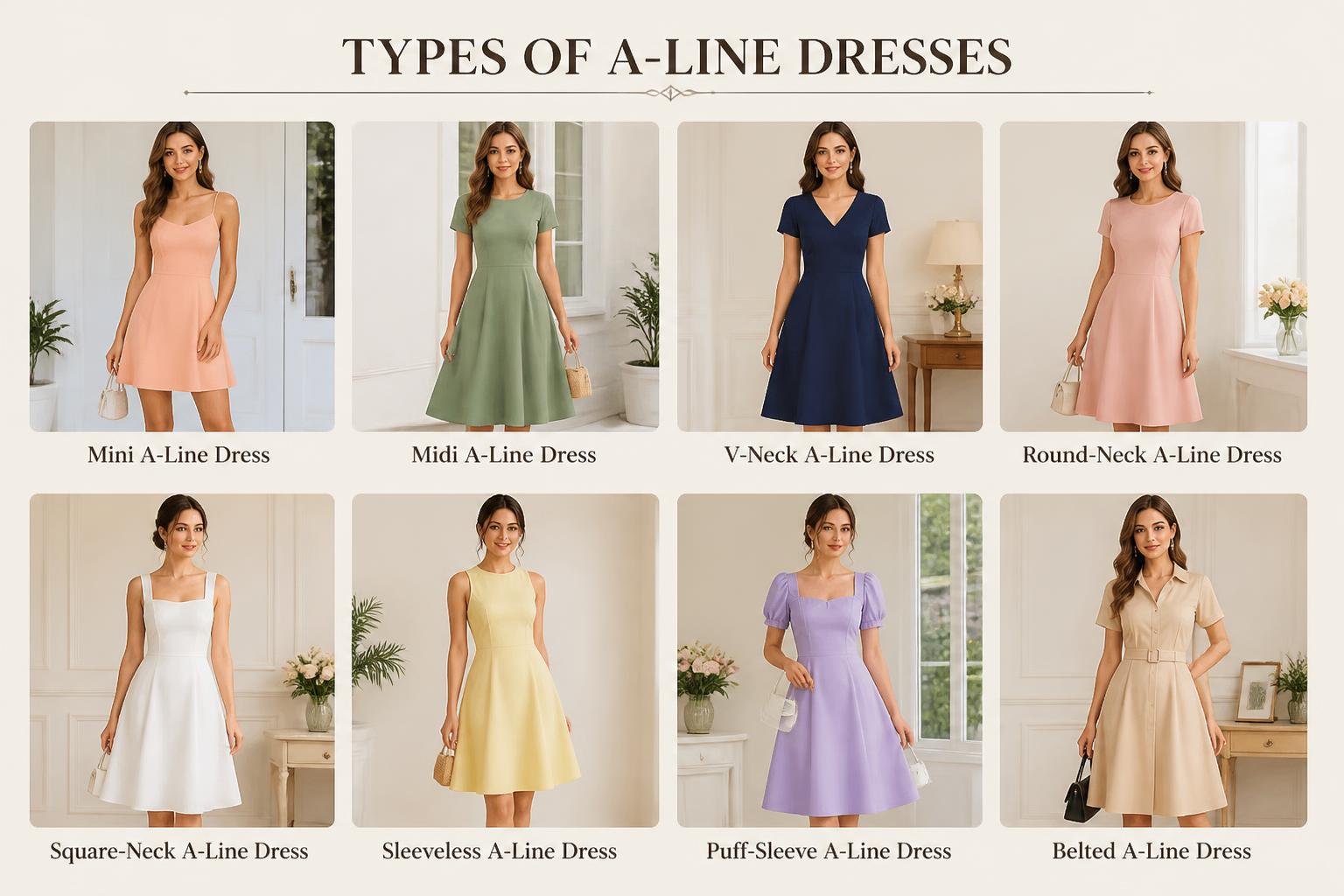
The A-line dress is one of the most classic and versatile dress styles. It is usually narrower around the shoulders or waist and gradually becomes wider toward the hem, creating a shape similar to the letter “A.” Because the lower part of the garment does not fit tightly around the hips and legs, an A-line dress can provide both comfort and a clean silhouette.
=> Related Article: A-Line Dress: Style, Fit for Every Body Type
Main Features of an A-Line Dress
Typical characteristics include:
- Fitted or semi-fitted upper body
- Defined waist or natural waist shaping
- Gradually flared skirt
- Comfortable movement around the hips
- Clean, balanced silhouette

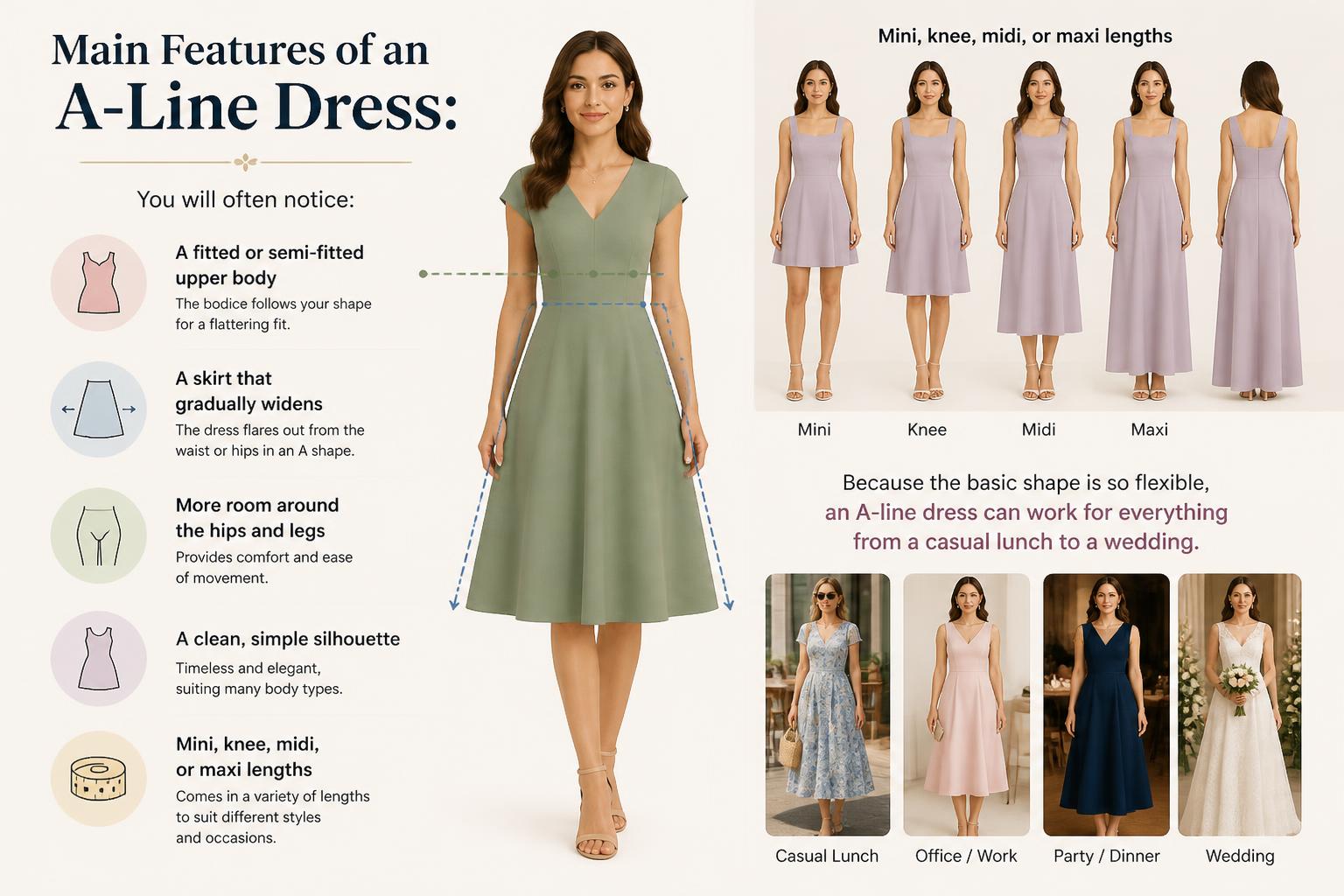
A-line dresses may be:
- Mini
- Knee-length
- Midi
- Maxi
- …
depending on the design.
Common Fabrics
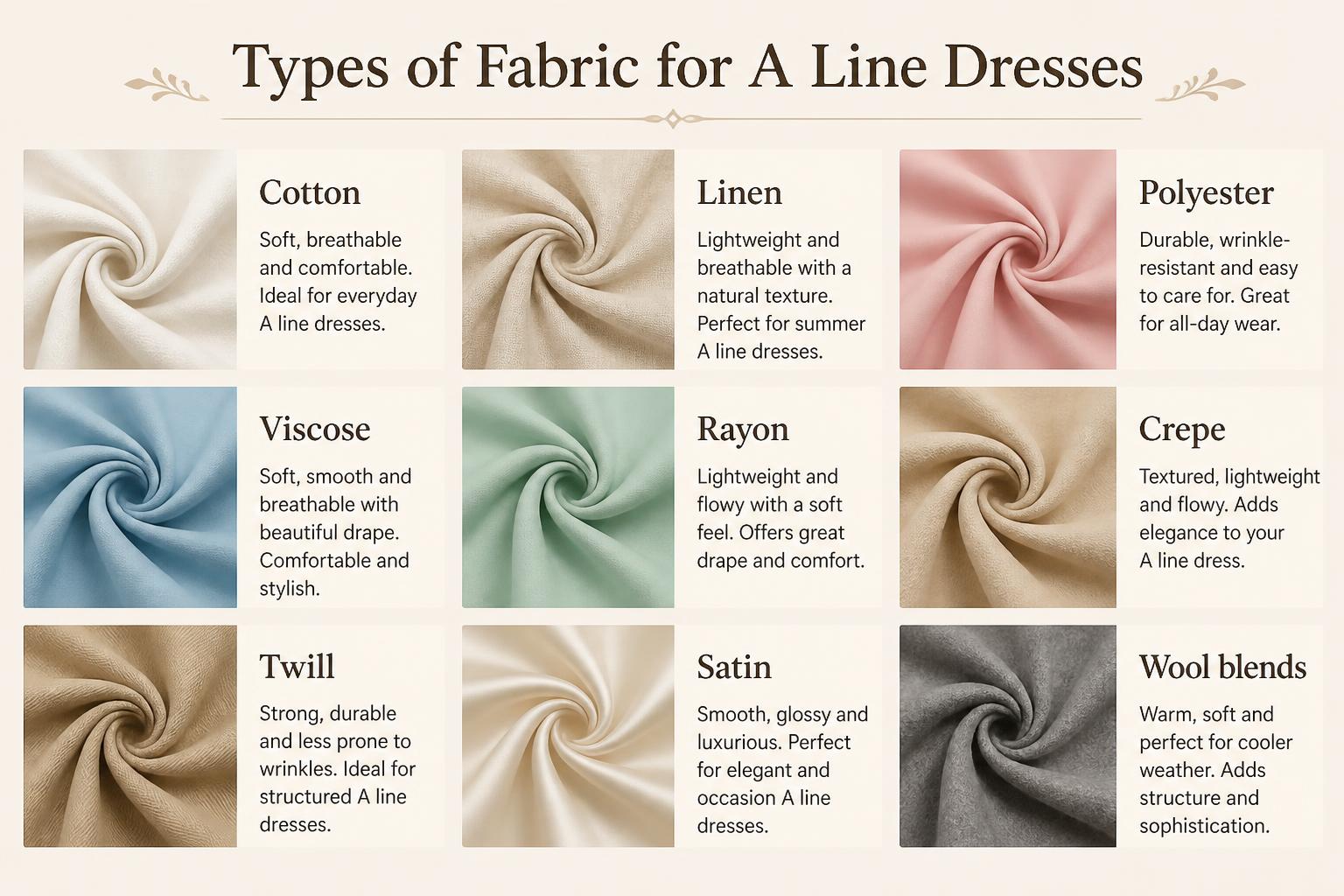
A-line dresses can be made from many materials, including:
- Cotton
- Linen
- Polyester
- Viscose
- Rayon
- Crepe
- Twill
- Satin
- Wool blends
Fabric choice changes the character of the garment. For example, cotton or linen can create a casual summer dress, while structured crepe or satin can make the same basic silhouette suitable for more formal occasions.
Best Occasions
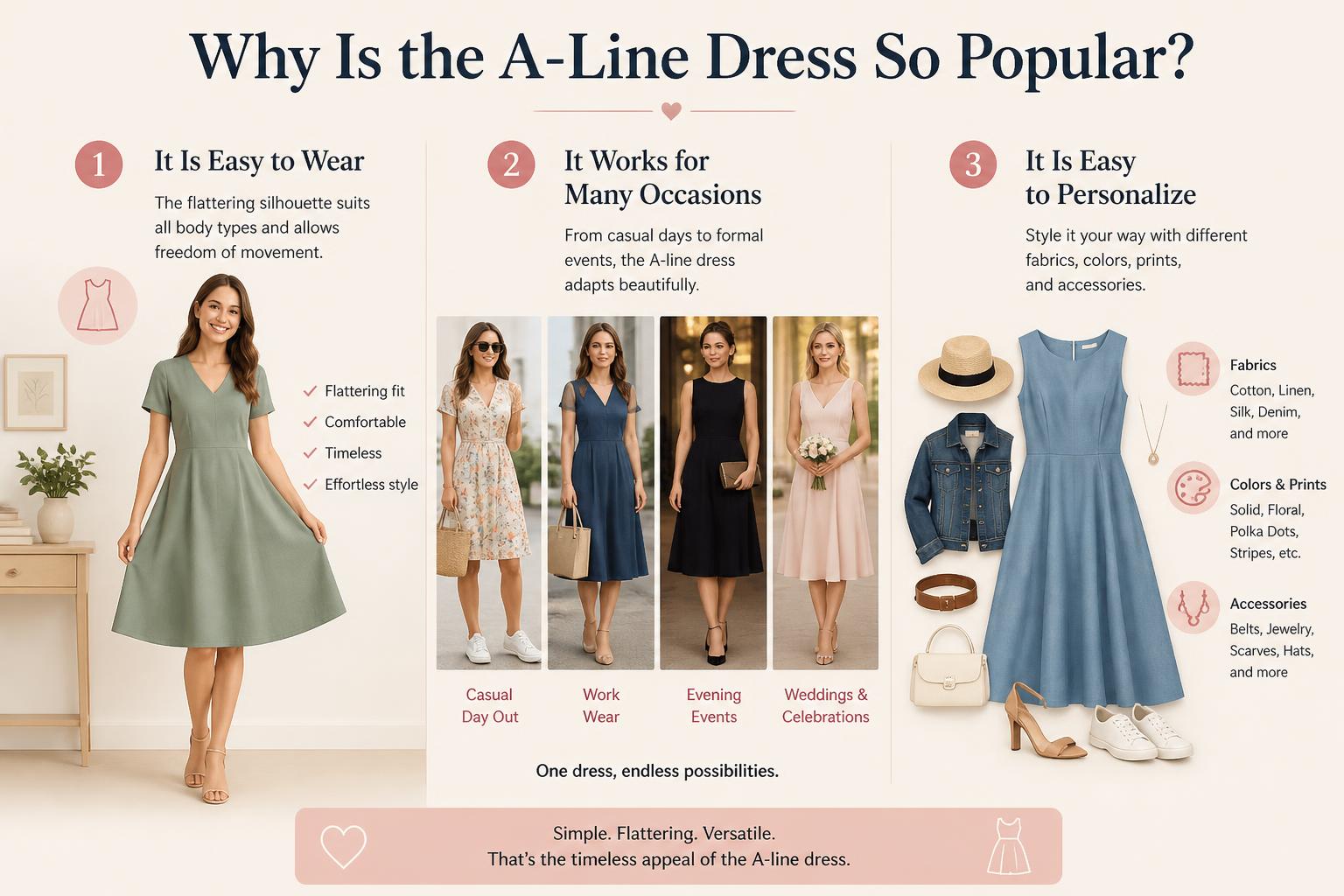
A-line dresses are suitable for:
- Office wear
- Casual wear
- Lunch
- Travel
- Weddings
- Semi-formal events
- Everyday fashion
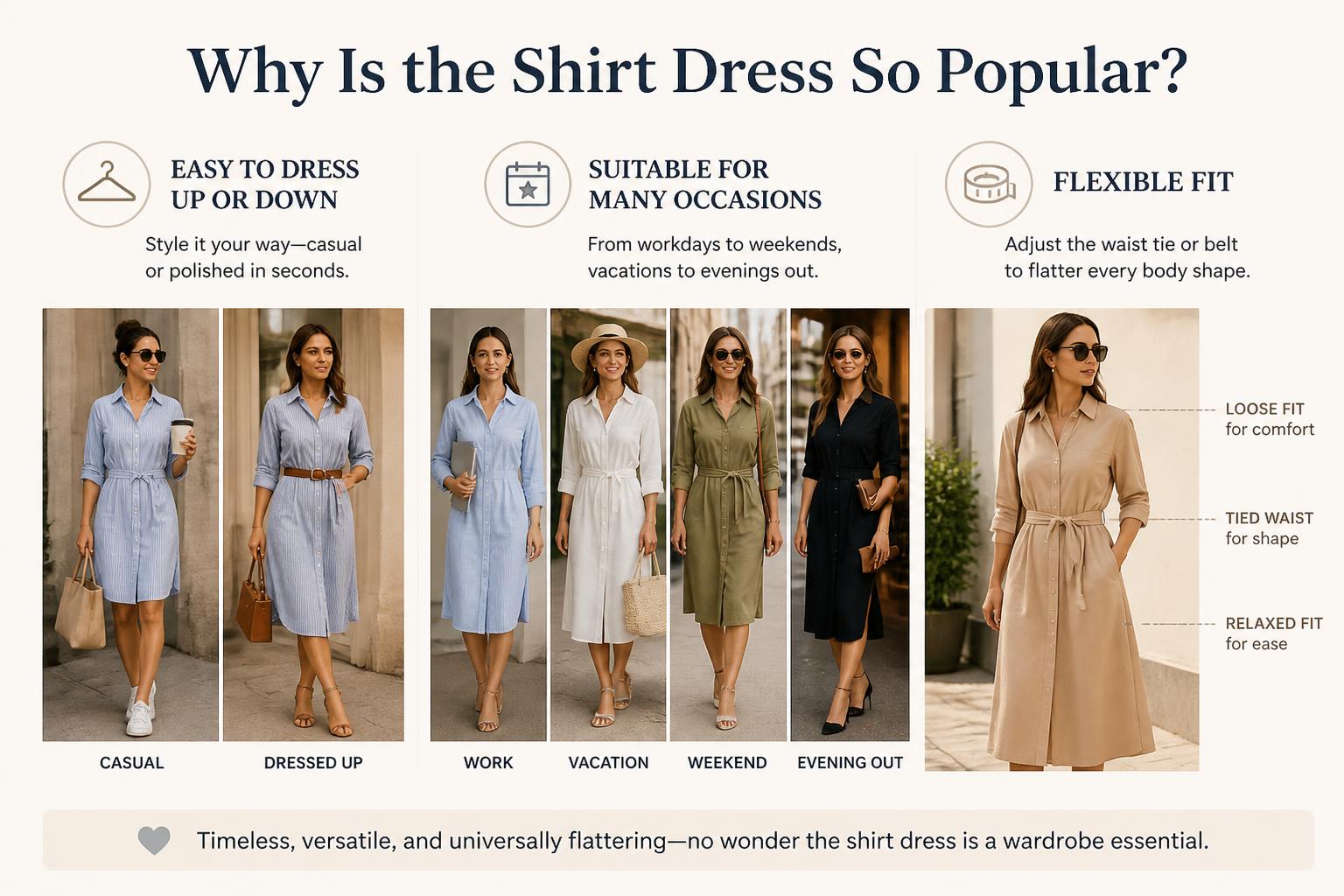
2. Shirt Dress
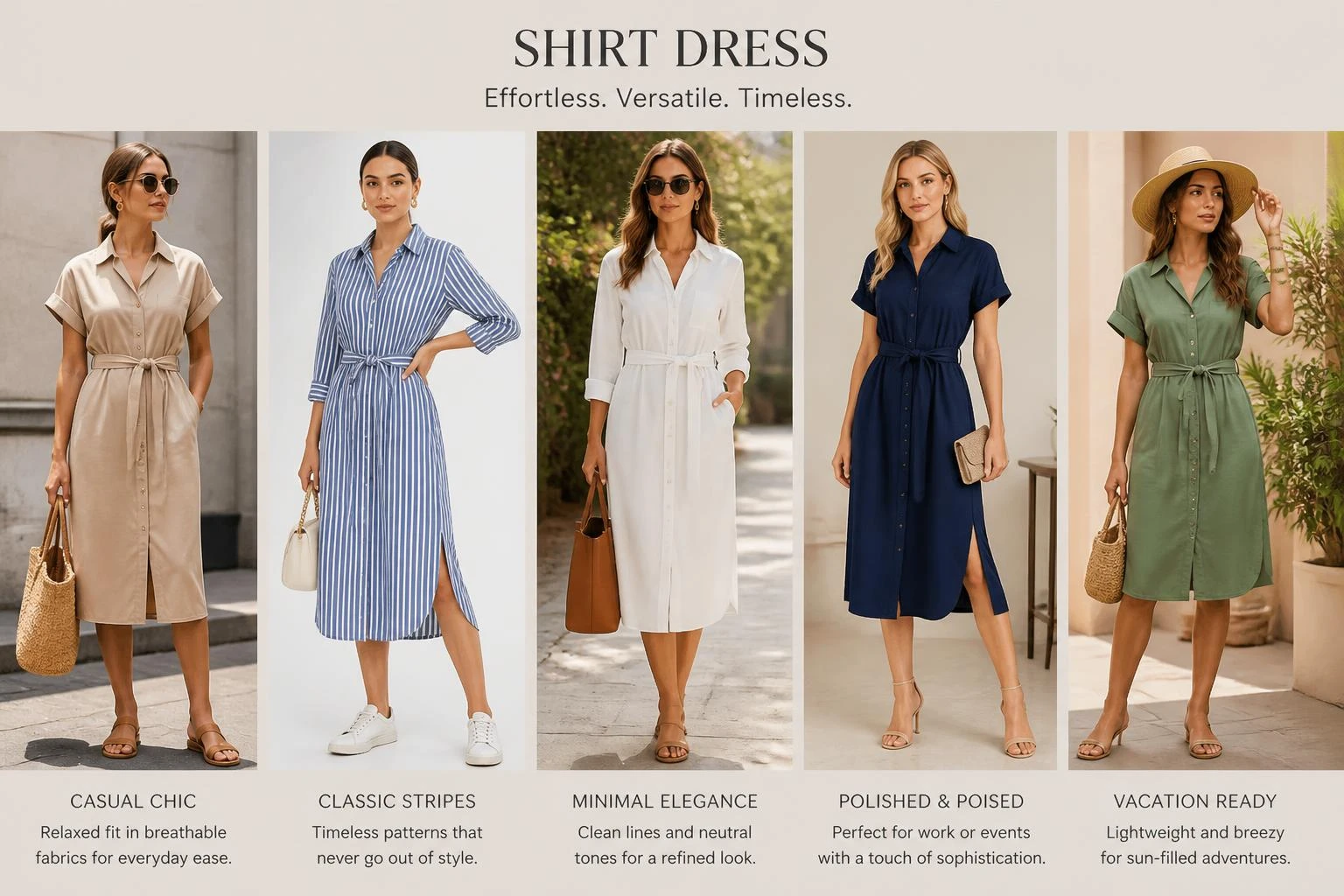
A shirt dress combines elements of a traditional shirt with the shape and length of a dress. It commonly includes details such as:
- Shirt collar
- Front button placket
- Cuffs
- Sleeves
- Yoke
- Chest pockets
- Waist belt
The overall appearance can range from relaxed and casual to polished and professional.
=> Related Article: Shirt Dress: Style, Fit for Every Body Type
Main Features of a Shirt Dress
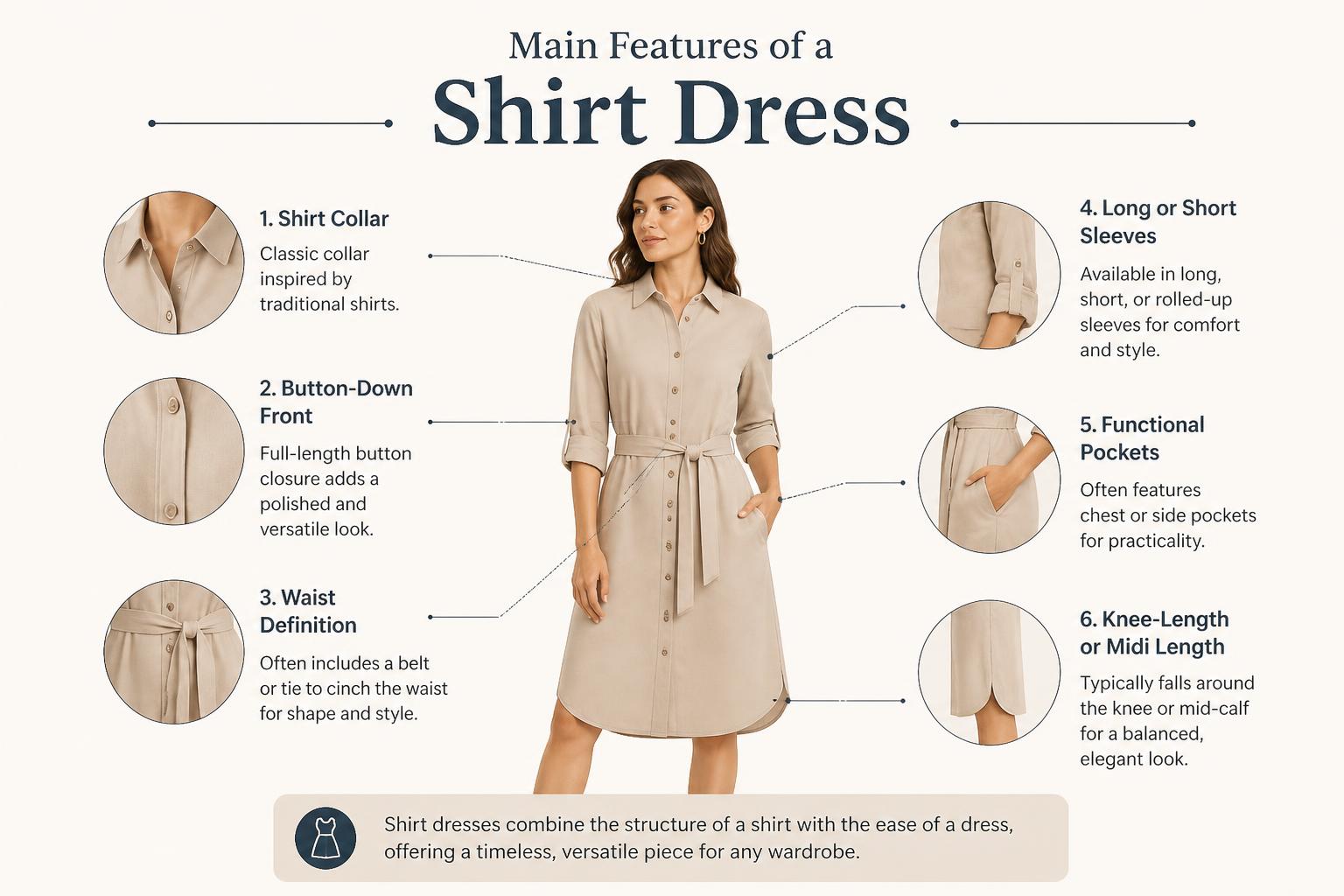
A typical shirt dress may have:
- Button-front opening
- Shirt-style collar
- Long, short, or rolled sleeves
- Straight or shaped body
- Optional waist belt
- Side pockets
Some shirt dresses are loose and oversized, while others use darts, princess seams, or belts to create a more fitted waist.
Common Fabrics
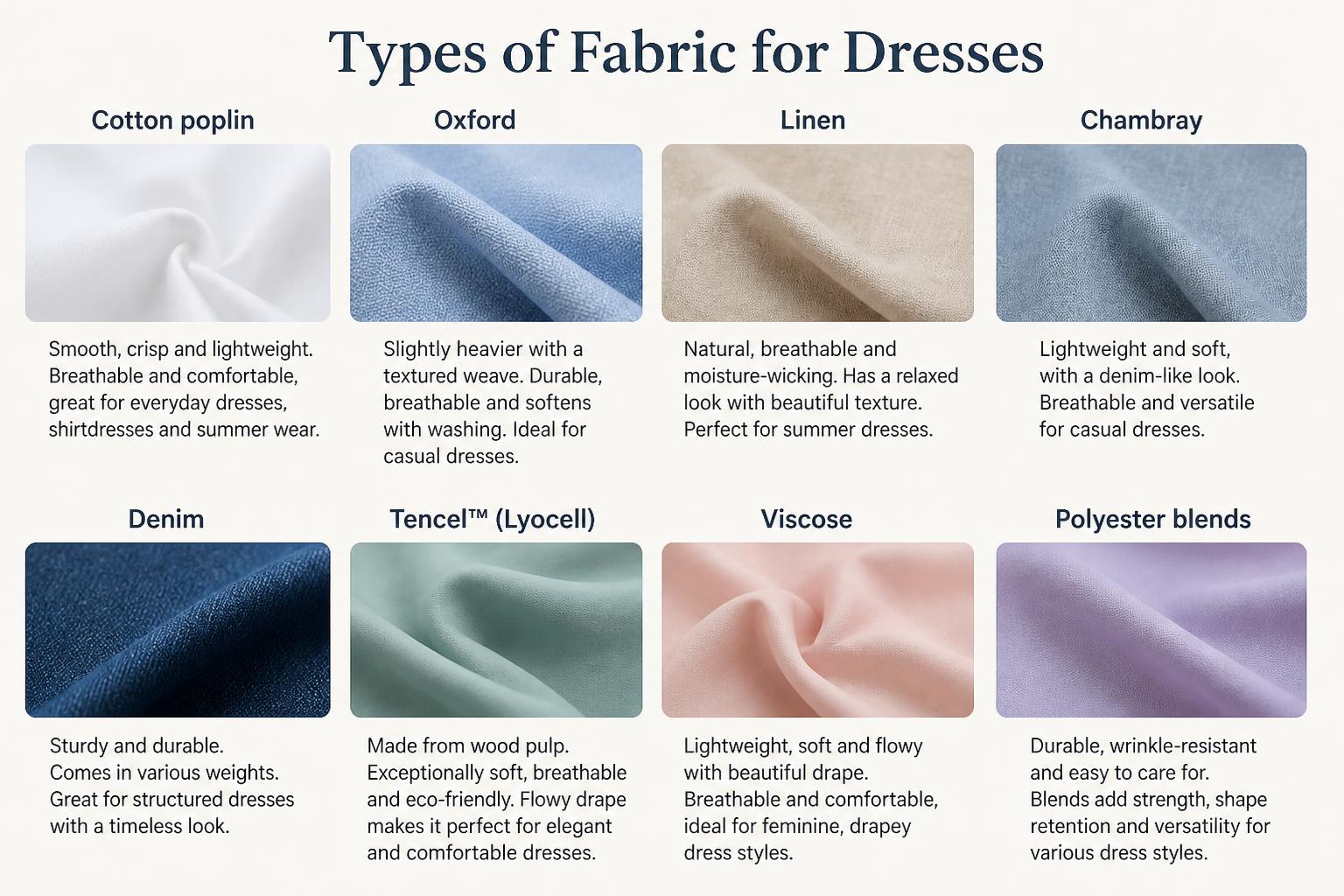
Popular fabrics include:
- Cotton poplin
- Oxford
- Linen
- Chambray
- Denim
- Tencel-type lyocell fabrics
- Viscose
- Polyester blends
Crisp woven fabrics create a more tailored appearance, while softer fabrics produce greater drape.
Best Occasions
Shirt dresses work well for:
- Office wear
- Smart-casual outfits
- Travel
- Weekend wear
- Summer fashion
- Resort wear
3. Wrap Dress
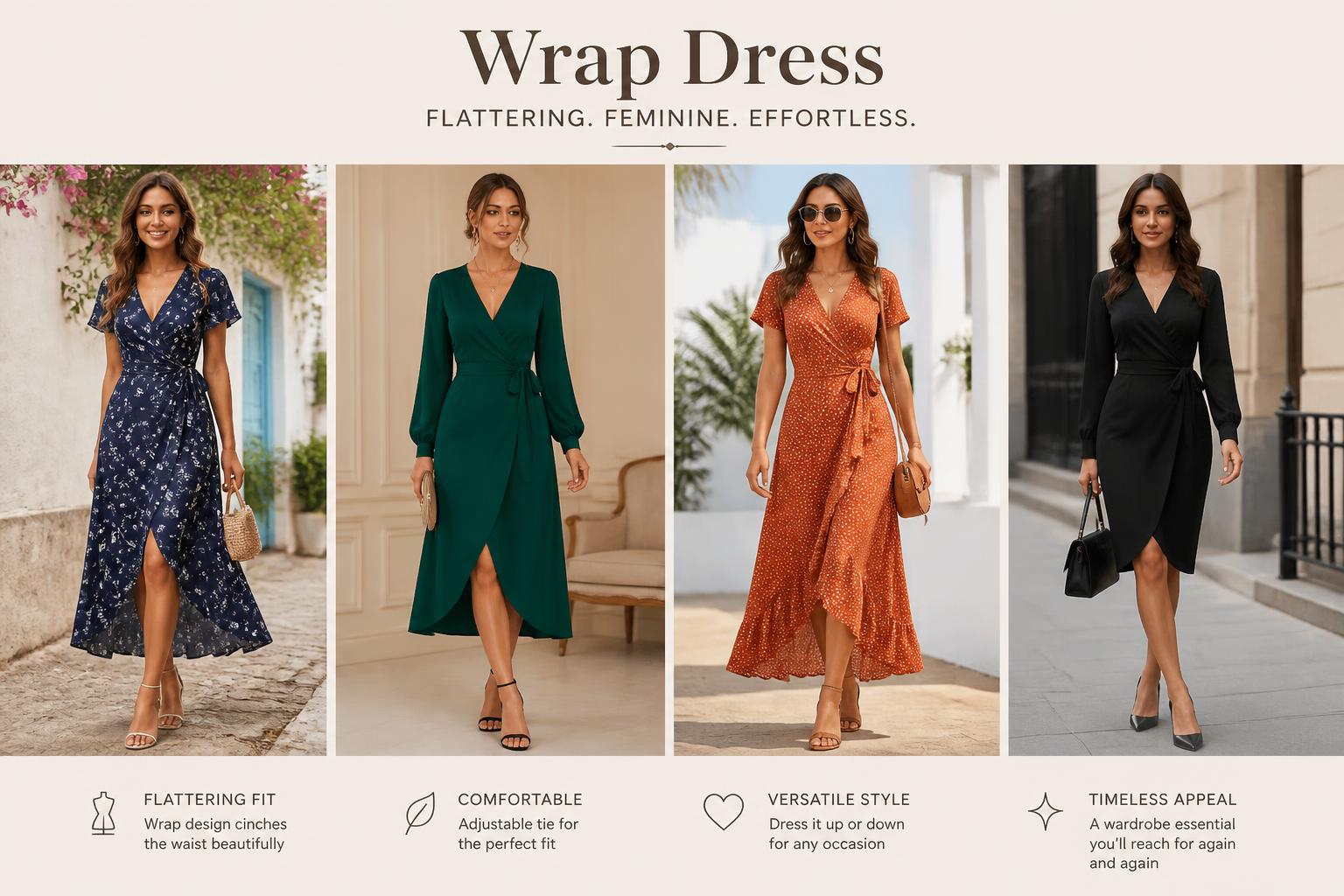
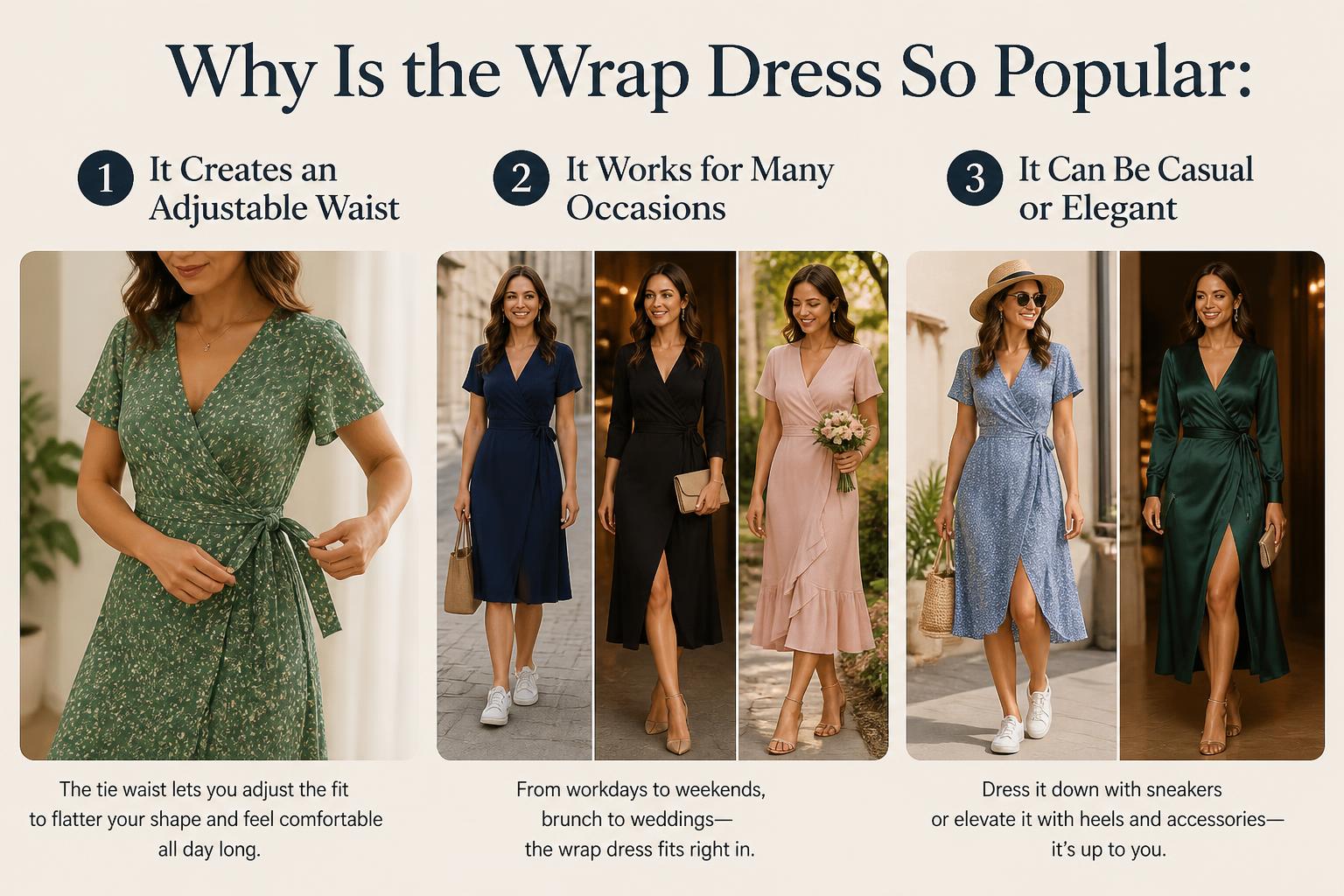
A wrap dress is designed so one side of the garment crosses over the other and is secured around the waist.
The closure may use:
- Fabric ties
- Internal ties
- Buttons
- Snaps
The overlapping front commonly creates a V-shaped neckline. Wrap dresses are popular because the adjustable waist can provide a flexible and flattering fit.
=> Related Article: Wrap Dress: Style, Fit for Every Body Type
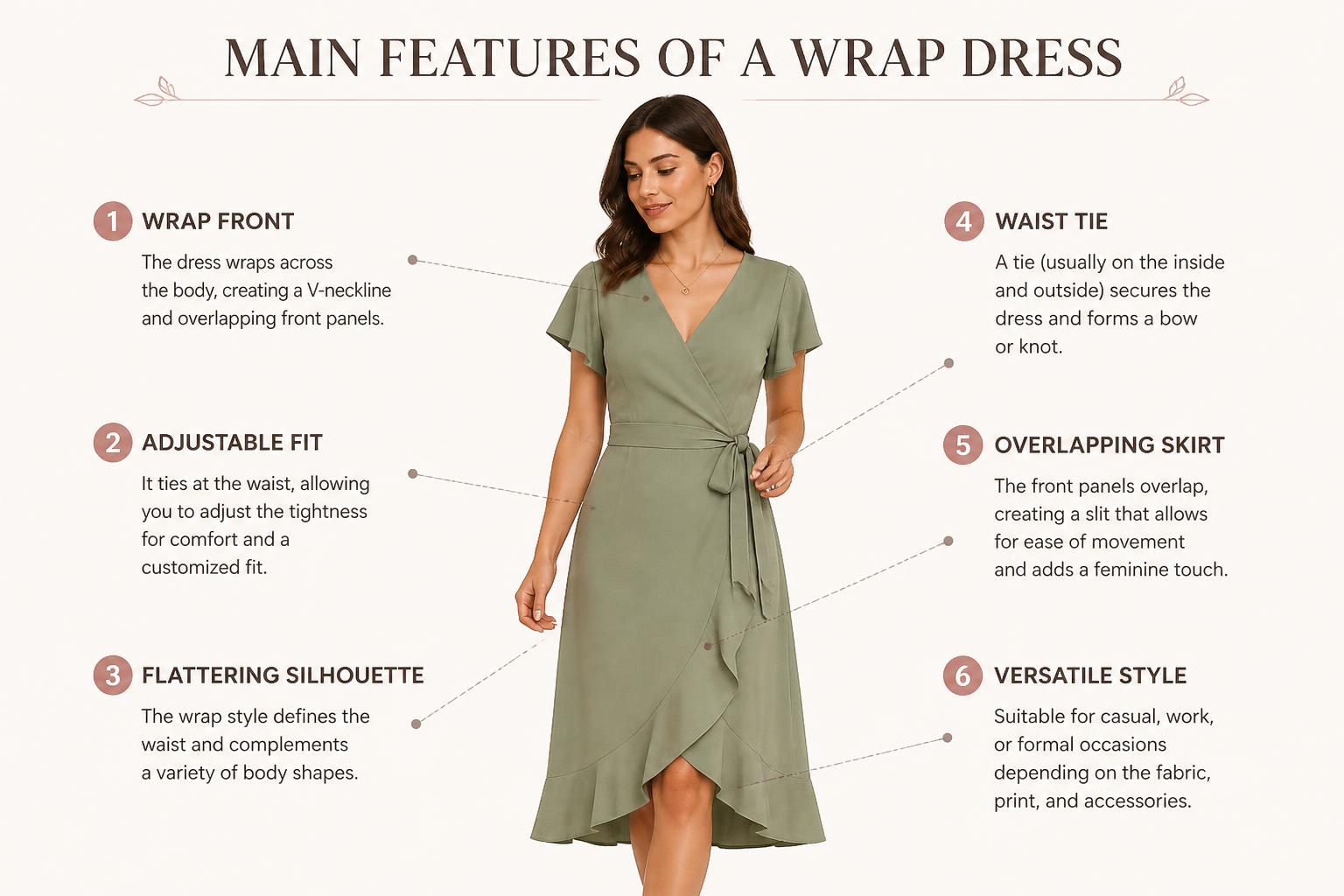
Main Features of a Wrap Dress
Common characteristics include:
- Overlapping front panels
- V-neckline
- Waist tie
- Adjustable fit
- Soft drape
- Straight or flared skirt
There are also faux-wrap dresses, which create the visual appearance of a wrap but do not completely open at the front.
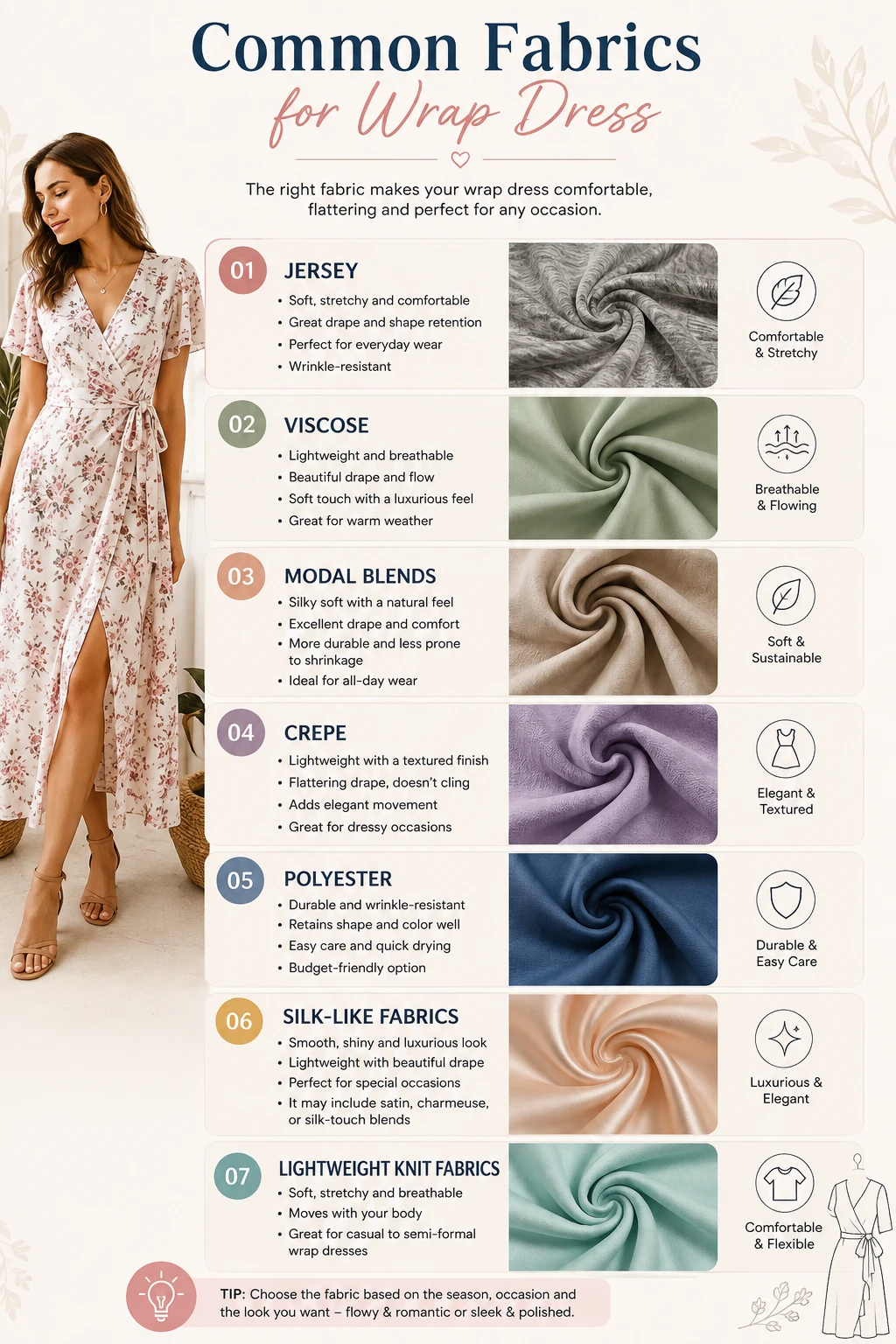
Common Fabrics
Wrap dresses often work well in fabrics with good drape, such as:
- Jersey
- Viscose
- Modal blends
- Crepe
- Polyester
- Silk-like fabrics
- Lightweight knit fabrics
Very stiff materials may not create the same flowing appearance.
Best Occasions
Wrap dresses can be worn for:
- Work
- Dinner
- Casual outings
- Travel
- Weddings
- Semi-formal occasions
The final level of formality depends greatly on fabric, length, color, and finishing.
4. Bodycon Dress
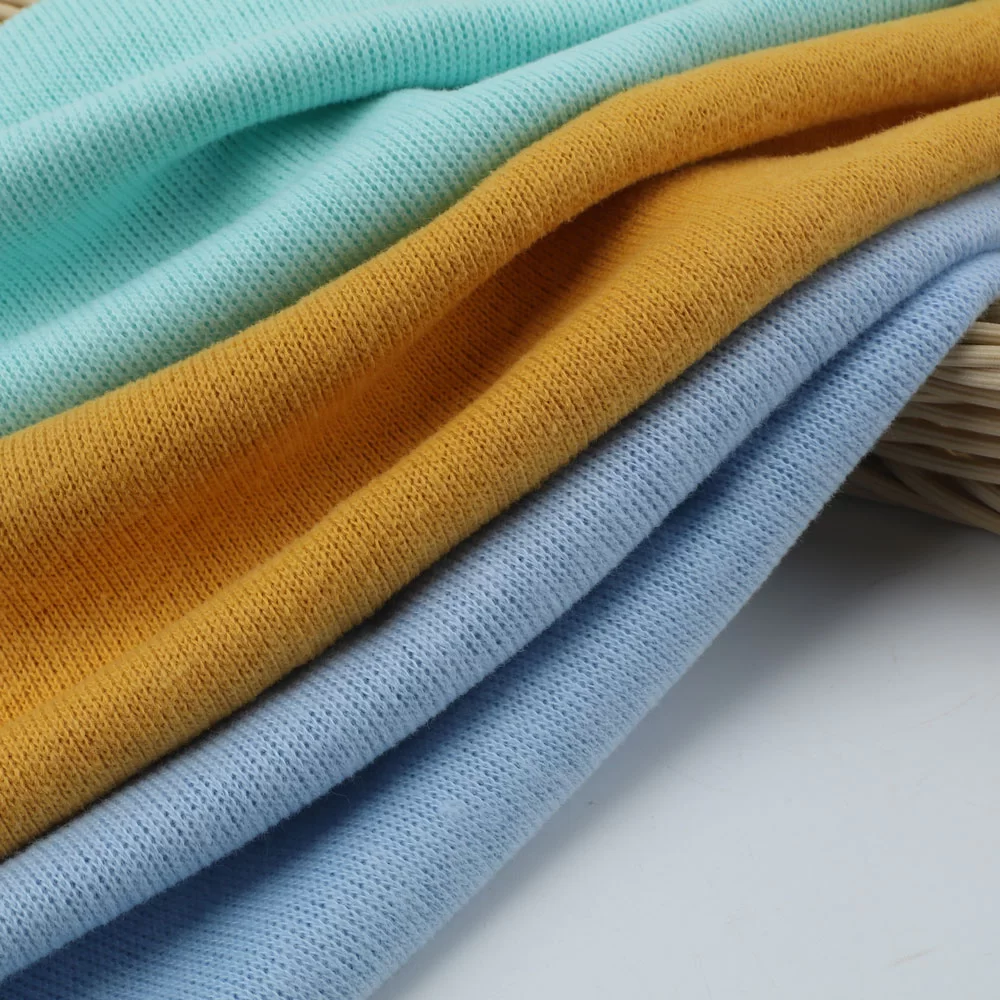
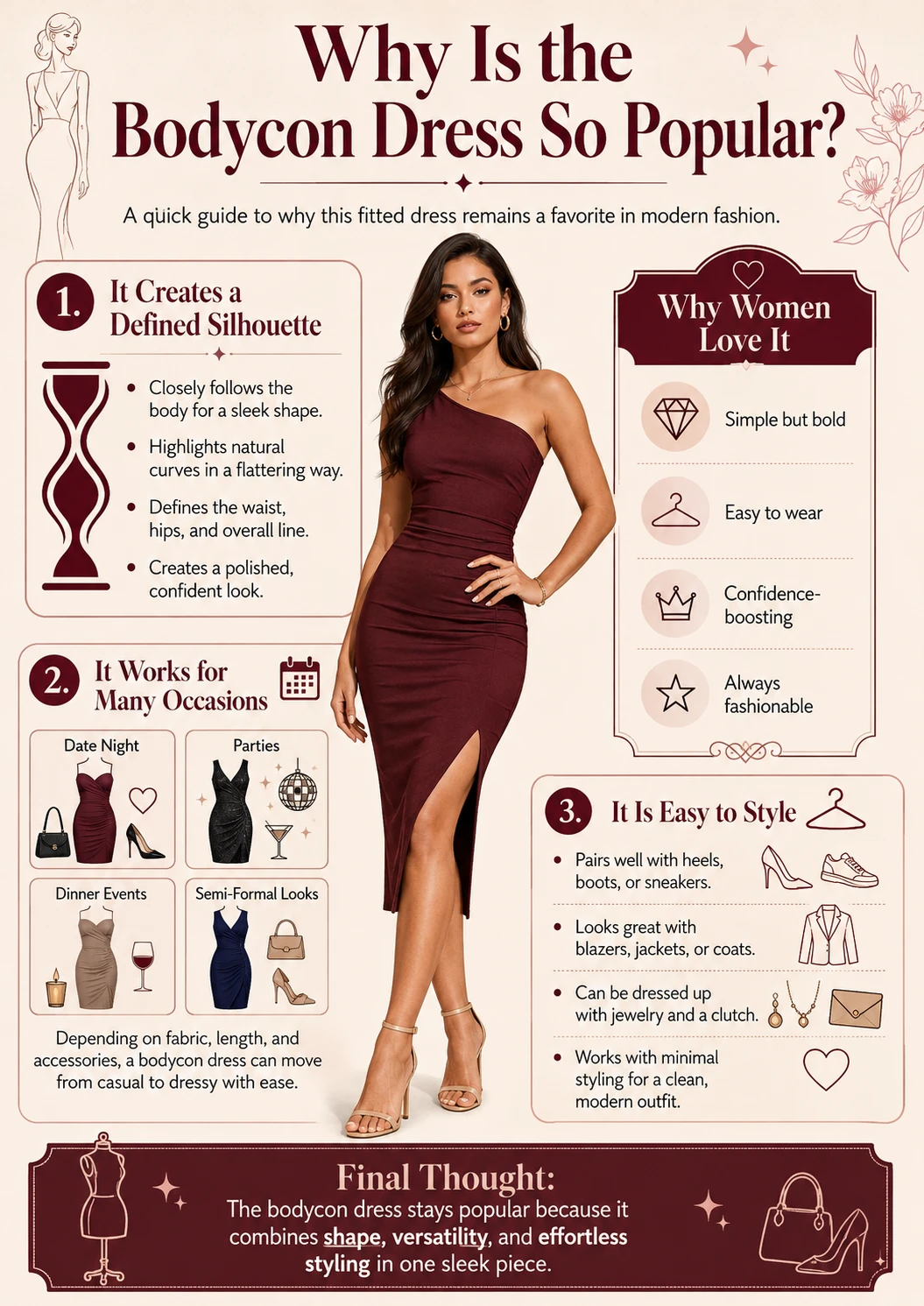
A bodycon dress is designed to fit closely around the body. The term comes from “body conscious,” referring to a silhouette that follows the shape of the wearer. Unlike loose dresses, bodycon styles depend strongly on: Stretch, Recovery, Pattern fit, Seam quality.
=> Related Article: Bodycon Dress: Style, Fit for Every Body Type
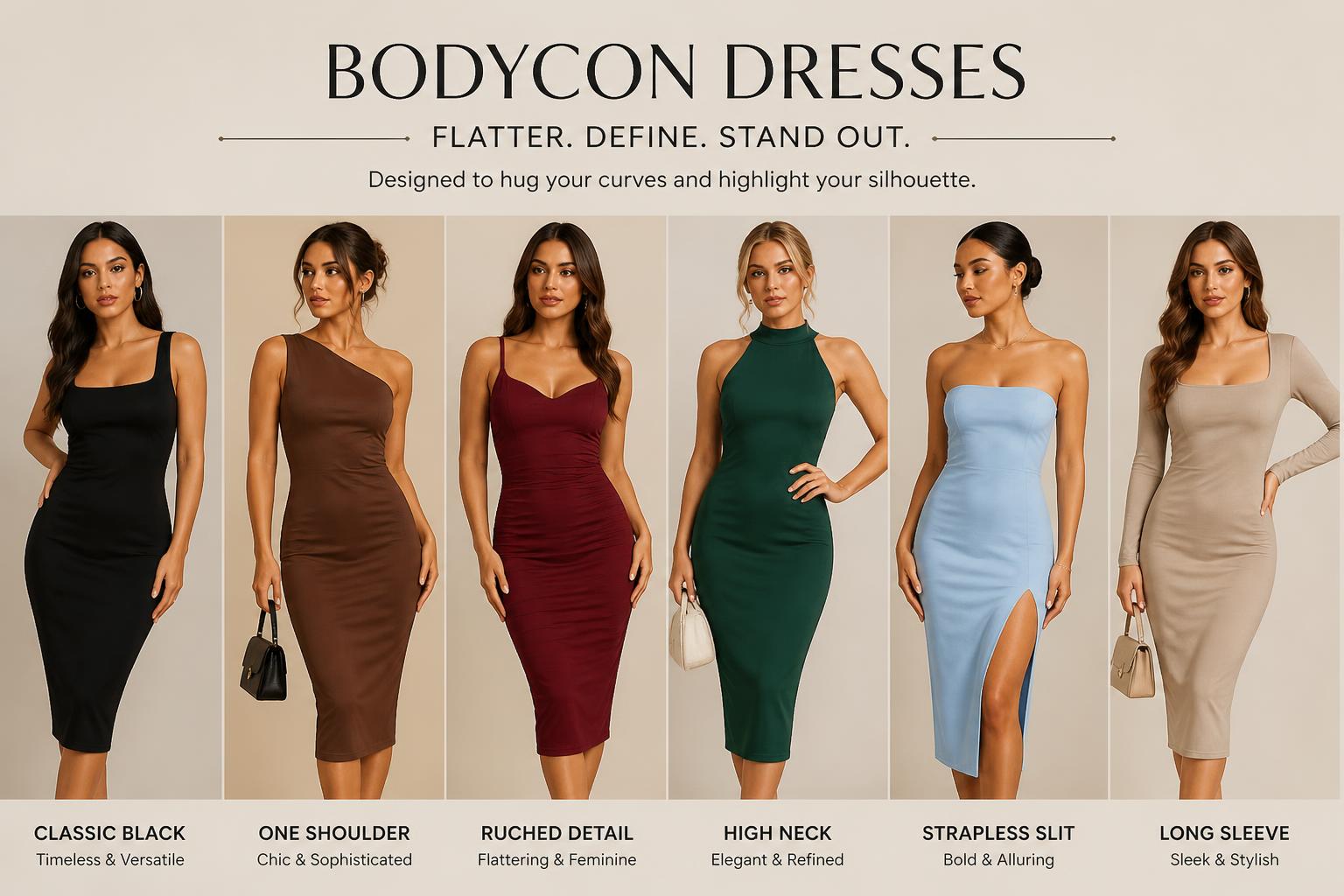
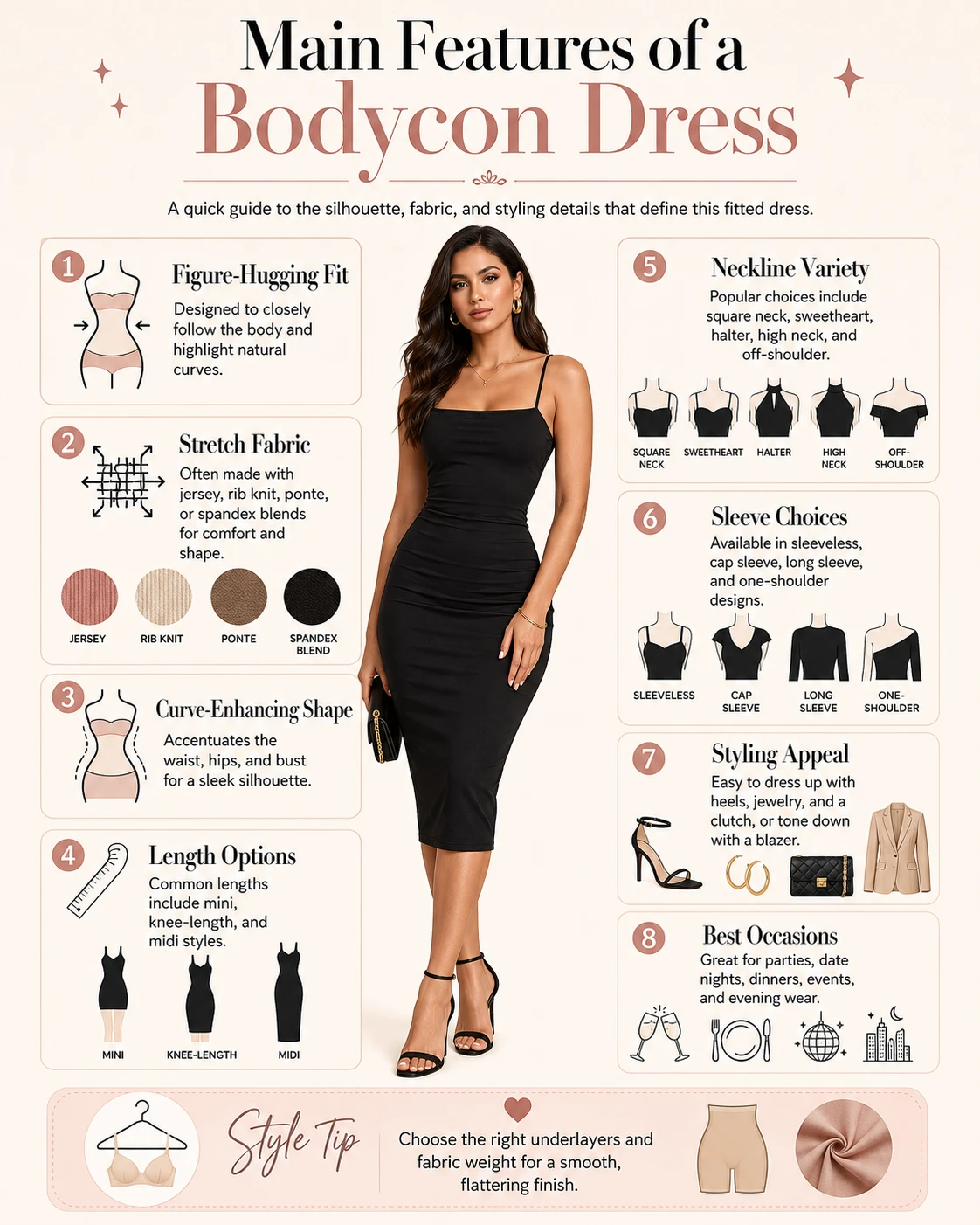
Main Features of a Bodycon Dress
Typical characteristics include:
- Close-fitting silhouette
- Minimal ease
- Strong body shaping
- Stretch fabric
- Mini, midi, or knee length
Some bodycon dresses may also include:
- Ruching
- Cut-outs
- Side slits
- Mesh panels
- Adjustable straps
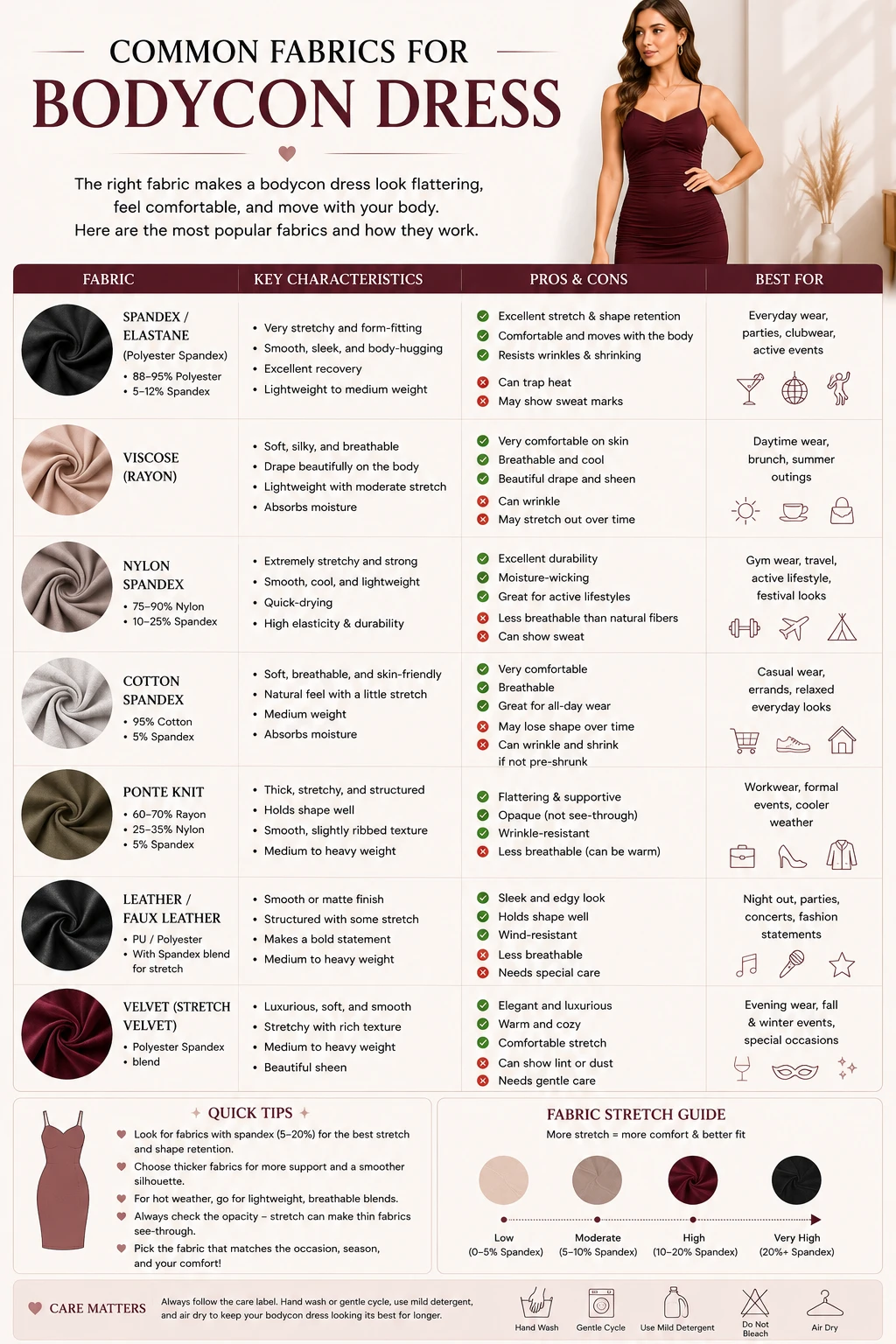
Common Fabrics
Suitable fabrics often include:
- Polyester/elastane
- Nylon/elastane
- Cotton/elastane
- Viscose/elastane
- Rib knit
- Ponte knit
- Stretch jersey
The fabric needs adequate recovery so the garment can return toward its original shape after stretching.
Best Occasions
Bodycon dresses are often associated with:
- Parties
- Evening wear
- Nightlife
- Fashion events
- Casual fashion
More structured versions can also be designed for polished or semi-formal use.
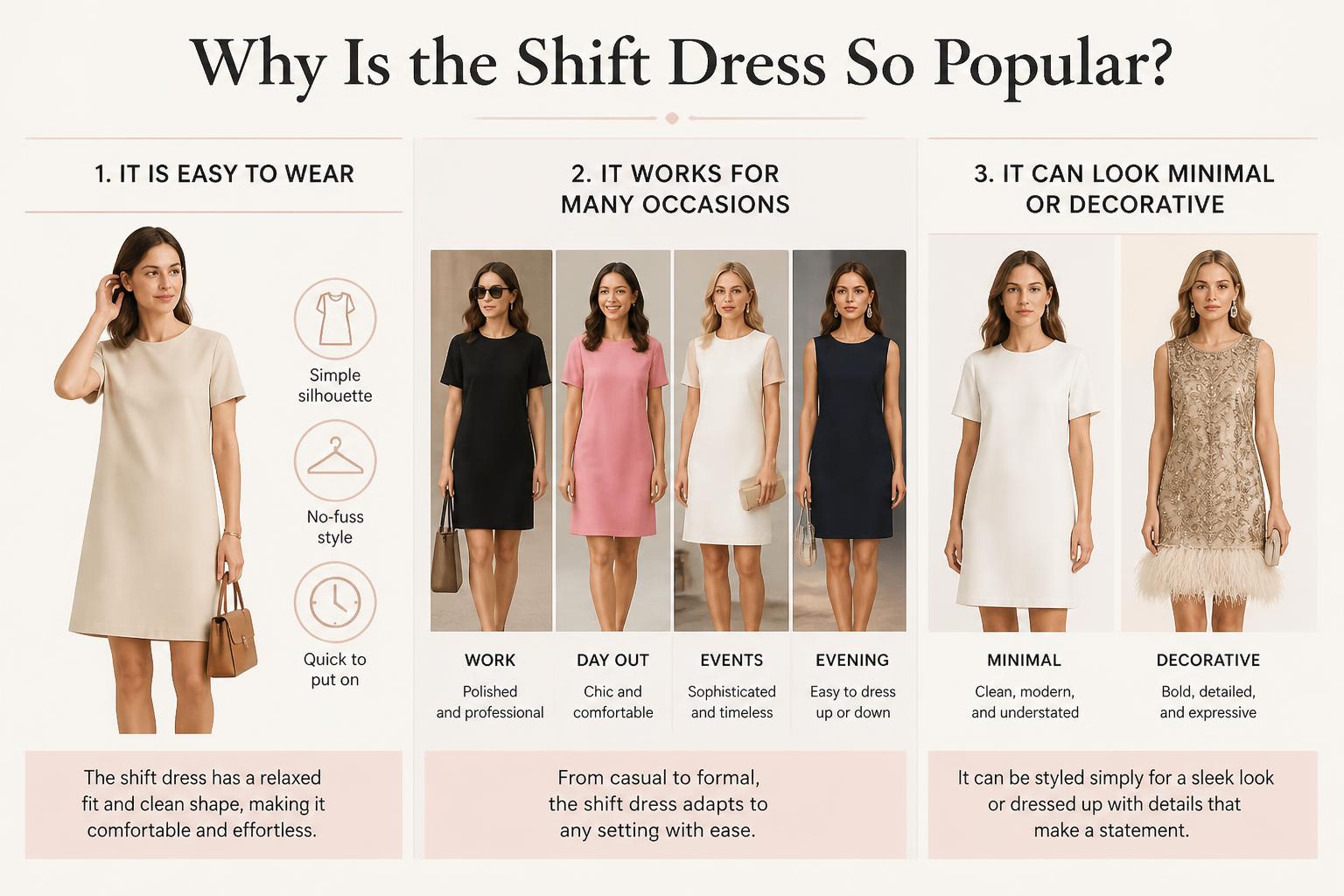
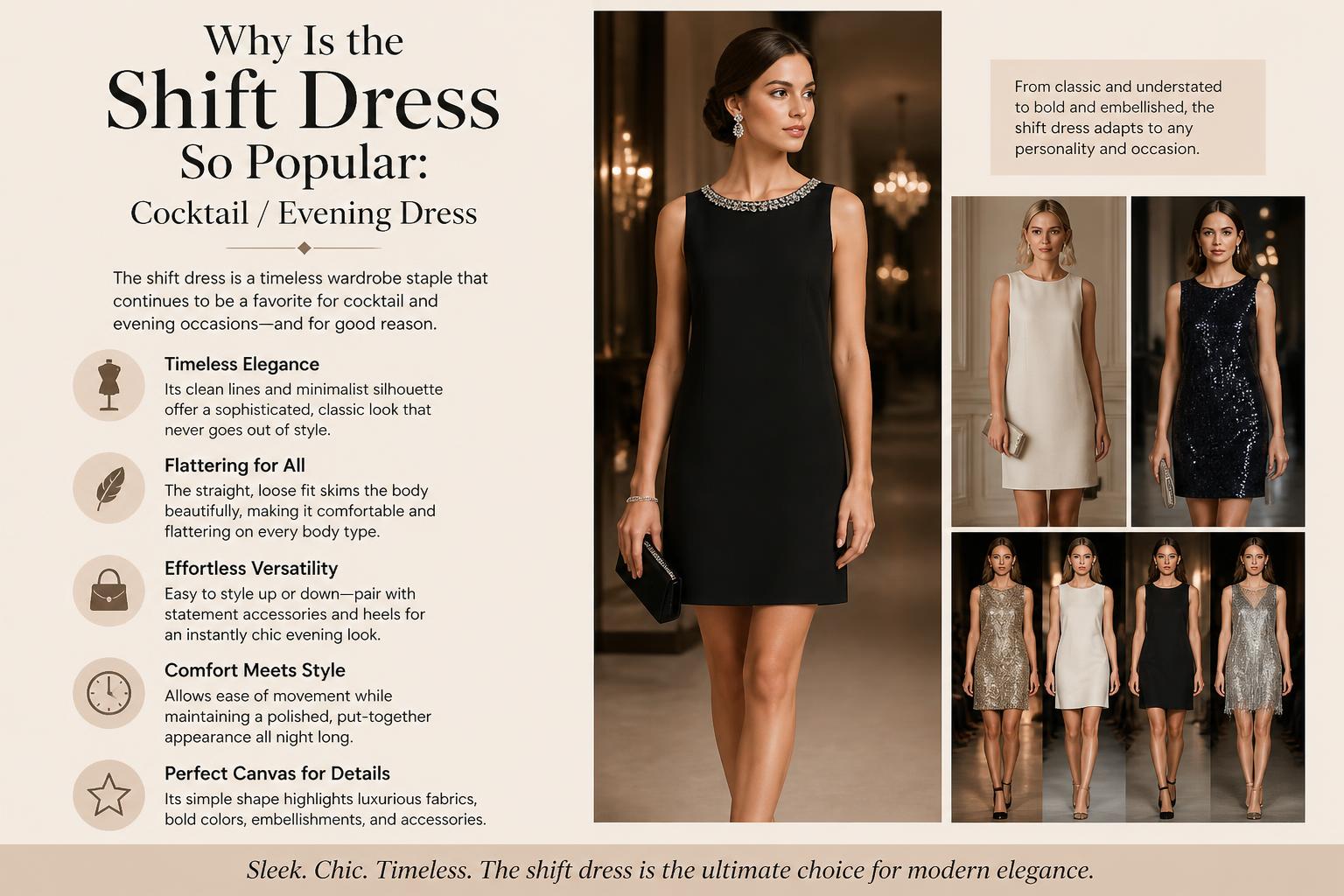
5. Shift Dress
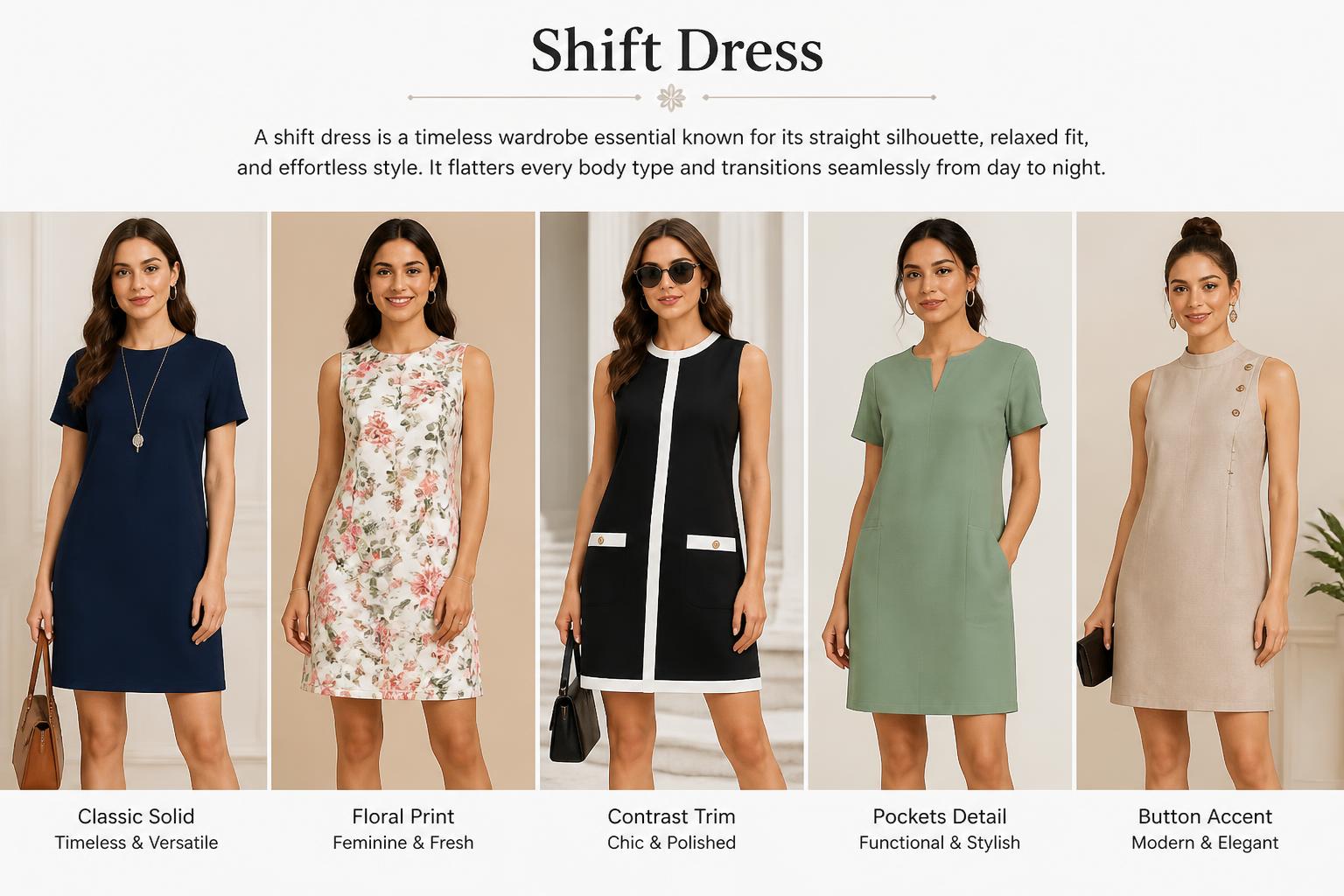
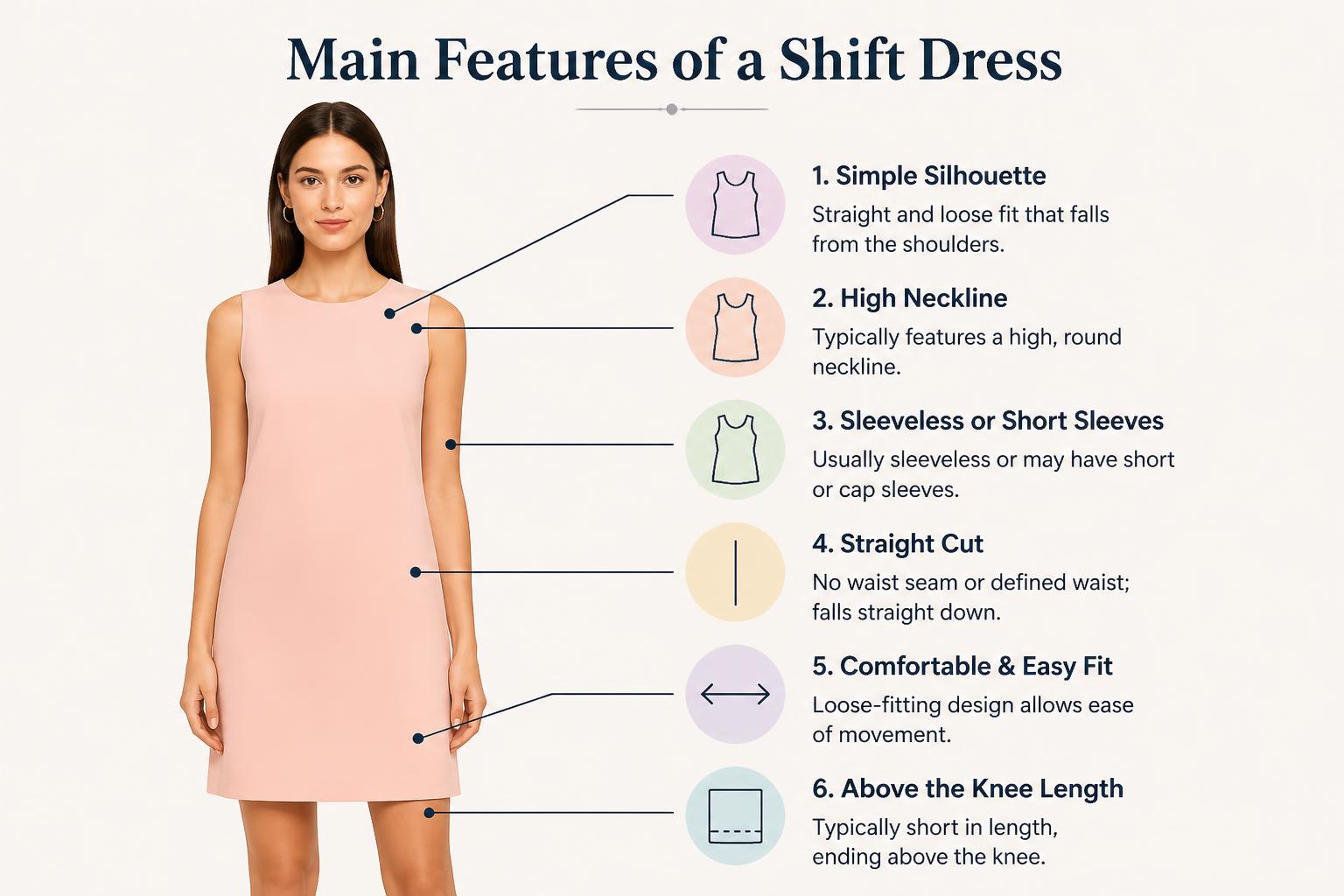
A shift dress has a relatively straight silhouette that falls from the shoulders with limited waist shaping. Compared with a fitted dress, the body normally has more ease and less emphasis on the waist. This makes the shift dress simple, comfortable, and easy to style.
=> Related Article: Shift Dress: Style, Fit for Every Body Type
Main Features of a Shift Dress
Common characteristics include:
- Straight body
- Minimal waist shaping
- Simple construction
- Short or sleeveless design
- Knee, mini, or midi length

Some designs may include:
- Darts
- Pockets
- Side slits
- Decorative seams
- Contrast panels
Common Fabrics
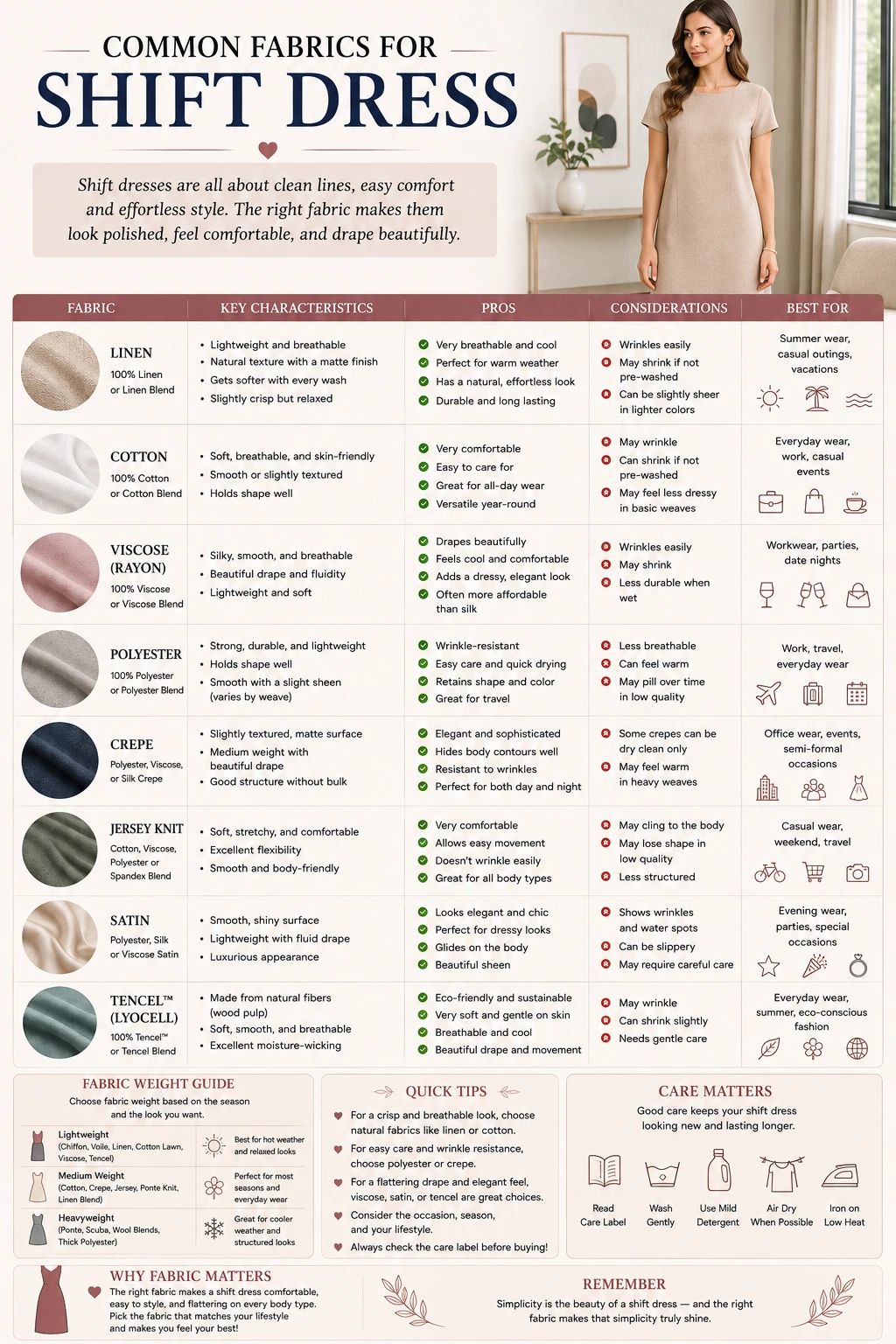
Shift dresses can be made from:
- Cotton
- Linen
- Crepe
- Polyester
- Twill
- Jacquard
- Wool blends
- Structured woven fabrics
A firmer fabric provides more shape, while a softer fabric creates a more relaxed silhouette.
Best Occasions
Shift dresses are suitable for:
- Office wear
- Casual wear
- Summer outfits
- Business-casual dressing
- Simple event dressing
6. Maxi Dress
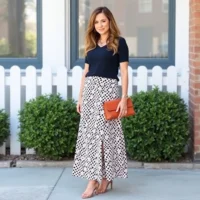
A maxi dress is a long dress that normally reaches the ankles or close to the floor. “Maxi” mainly describes the length, not one specific silhouette.
=> Related Article: Maxi Dress: Style, Fit for Every Body Type
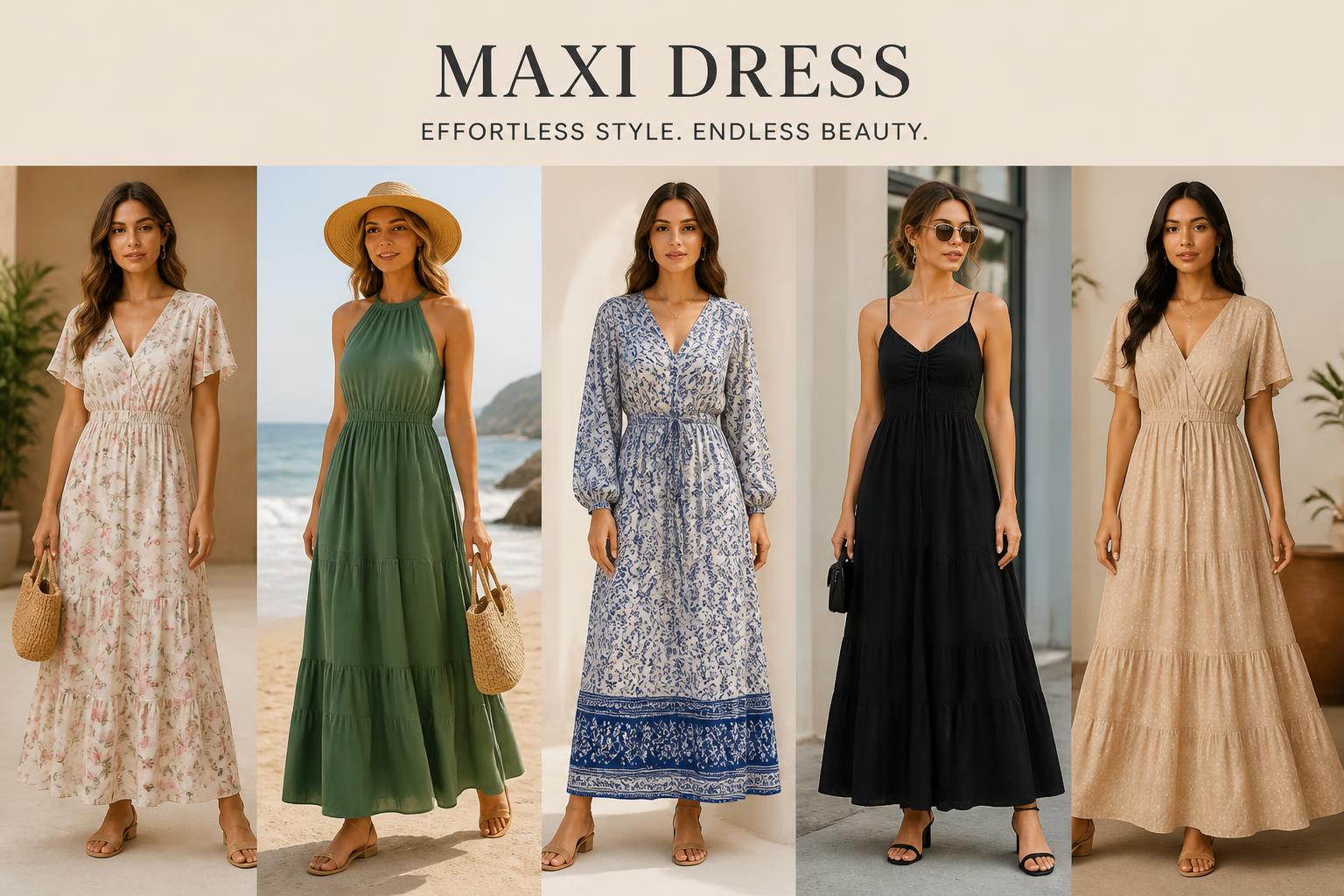
A maxi dress can be:
- A-line
- Wrap
- Empire waist
- Bodycon
- Tiered
- Pleated
- Slip-style
This is an important distinction in fashion terminology.
Main Features of a Maxi Dress
Typical features include:
- Long length
- Flowing silhouette
- Large visual area
- Comfortable movement
- Casual or formal styling
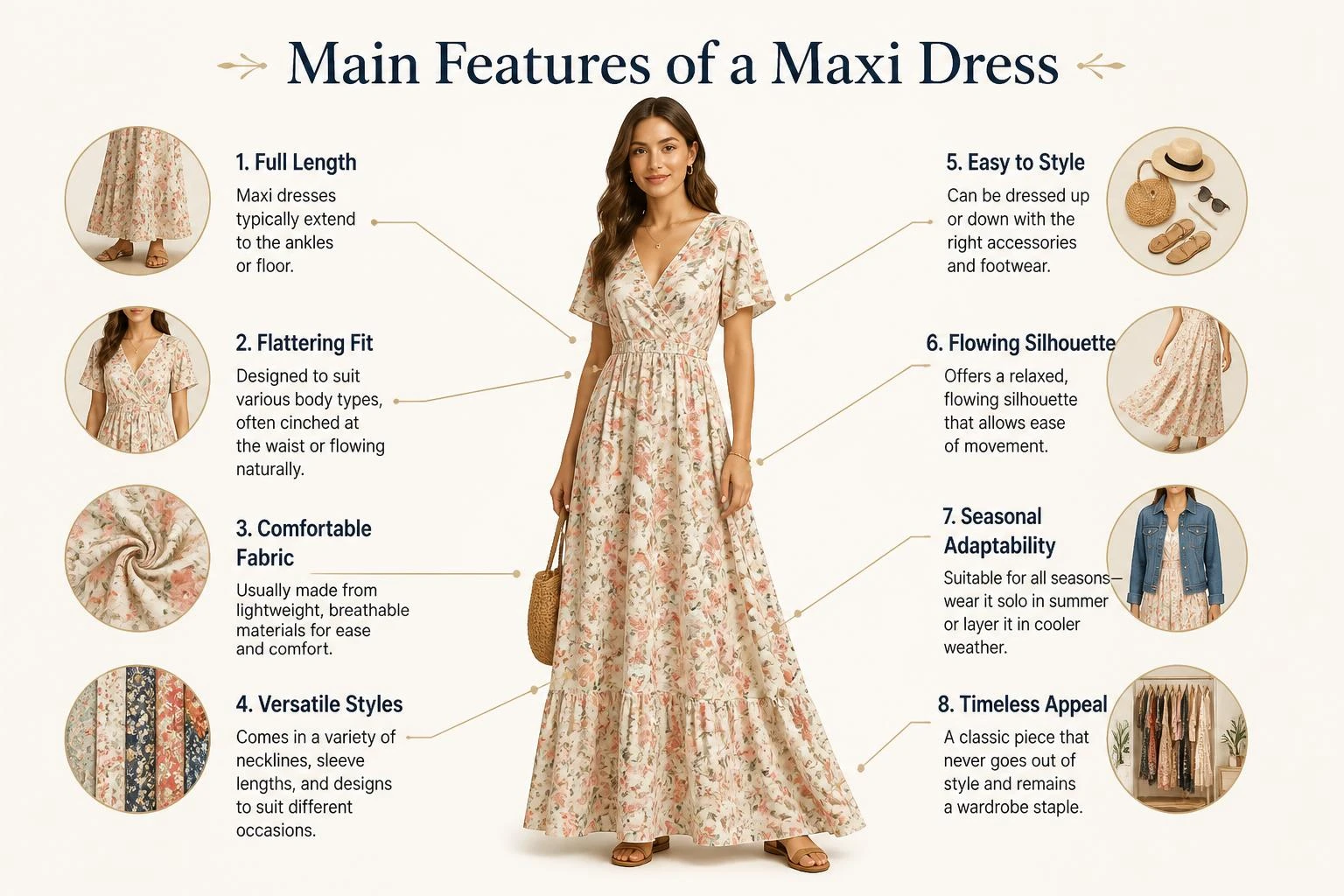
Many maxi dresses are designed with:
- Side slits
- Tiered skirts
- Elastic waist
- Adjustable straps
- Ruffles
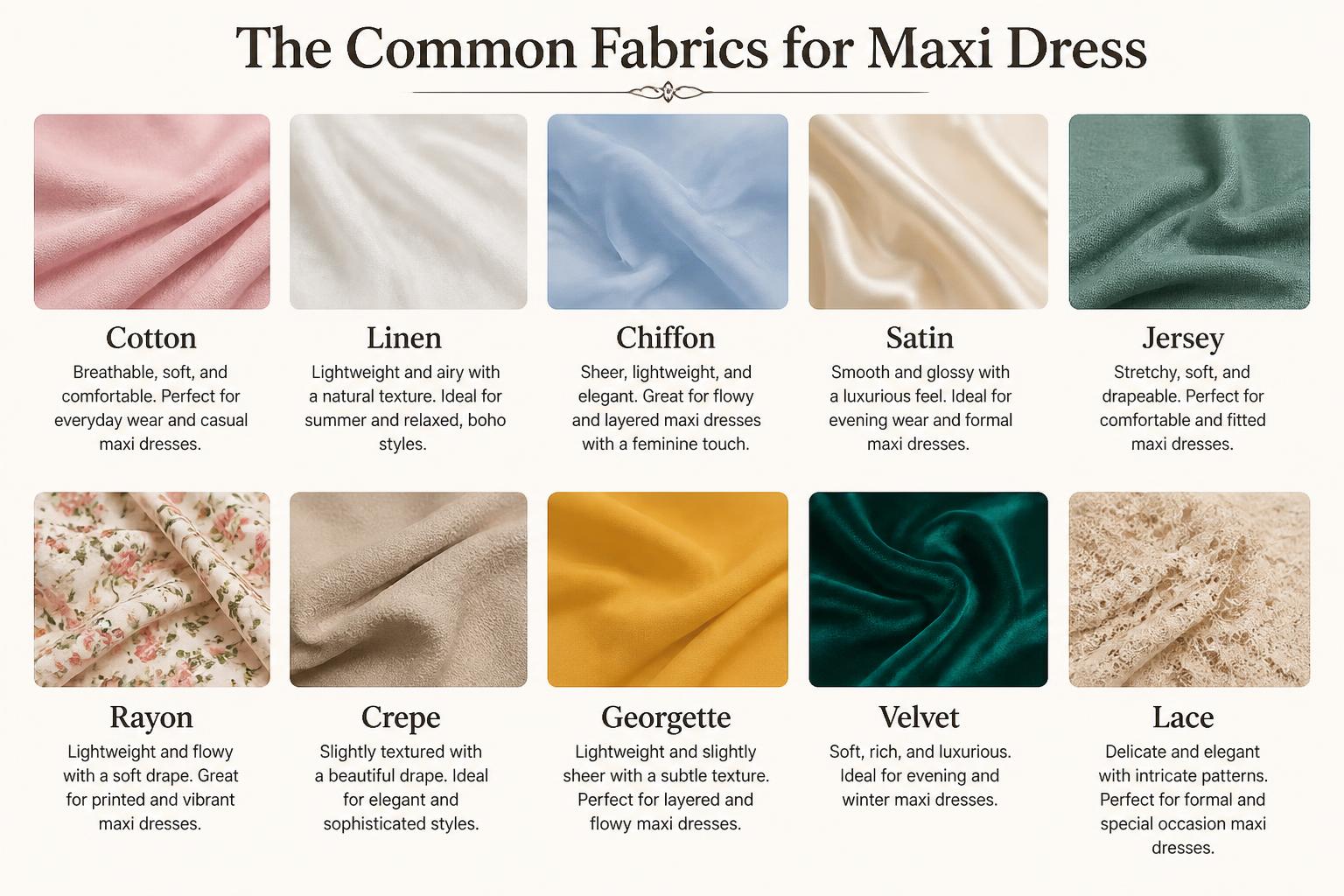
Common Fabrics
Popular materials include:
- Viscose
- Rayon
- Cotton
- Linen
- Chiffon
- Crepe
- Jersey
- Satin
Lightweight fabrics can create a flowing resort look, while satin or chiffon can make a maxi dress more formal.
Best Occasions
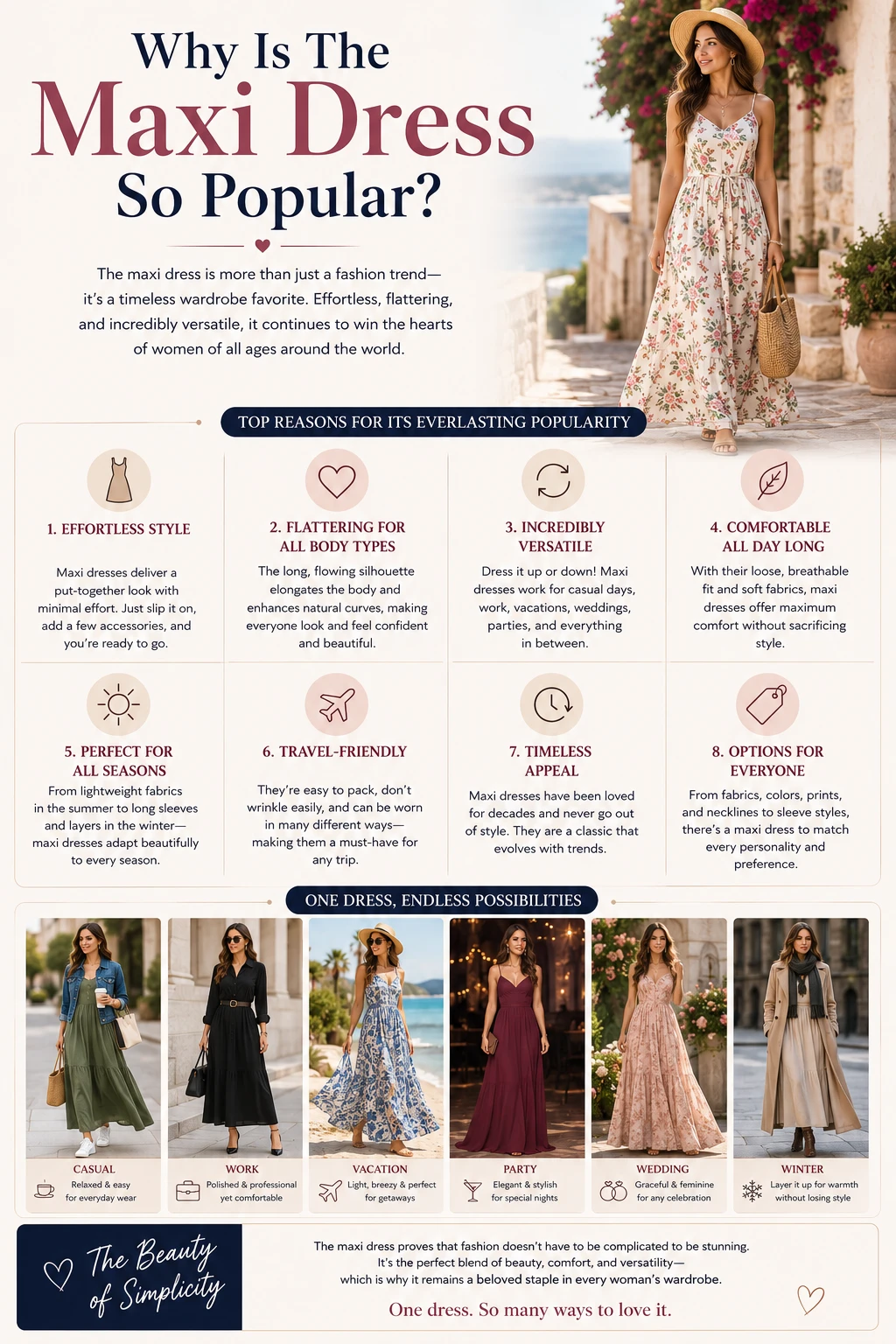
Maxi dresses are commonly used for:
- Summer wear
- Resort wear
- Beachwear
- Travel
- Weddings
- Evening events
- Casual weekends
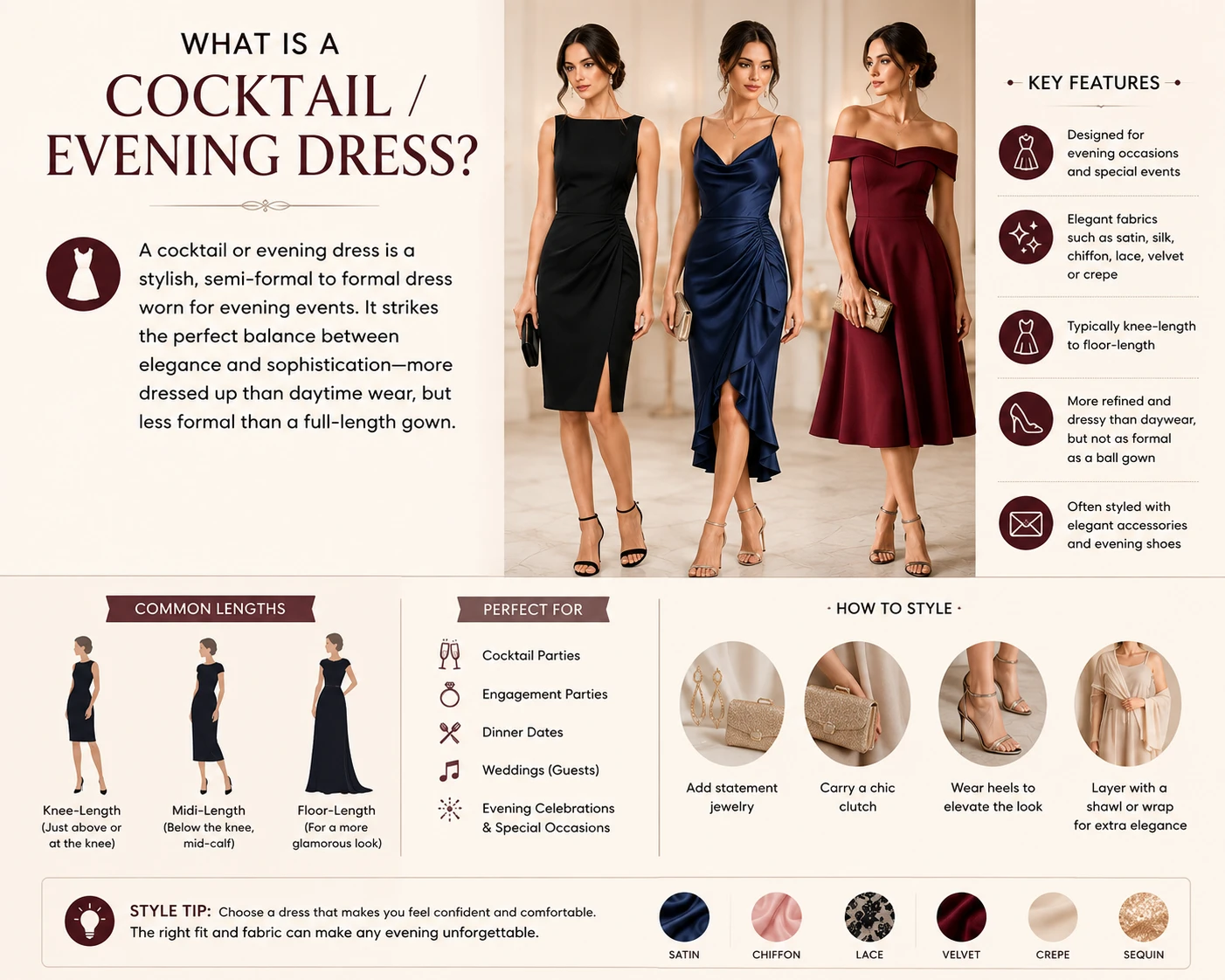
7. Cocktail / Evening Dress
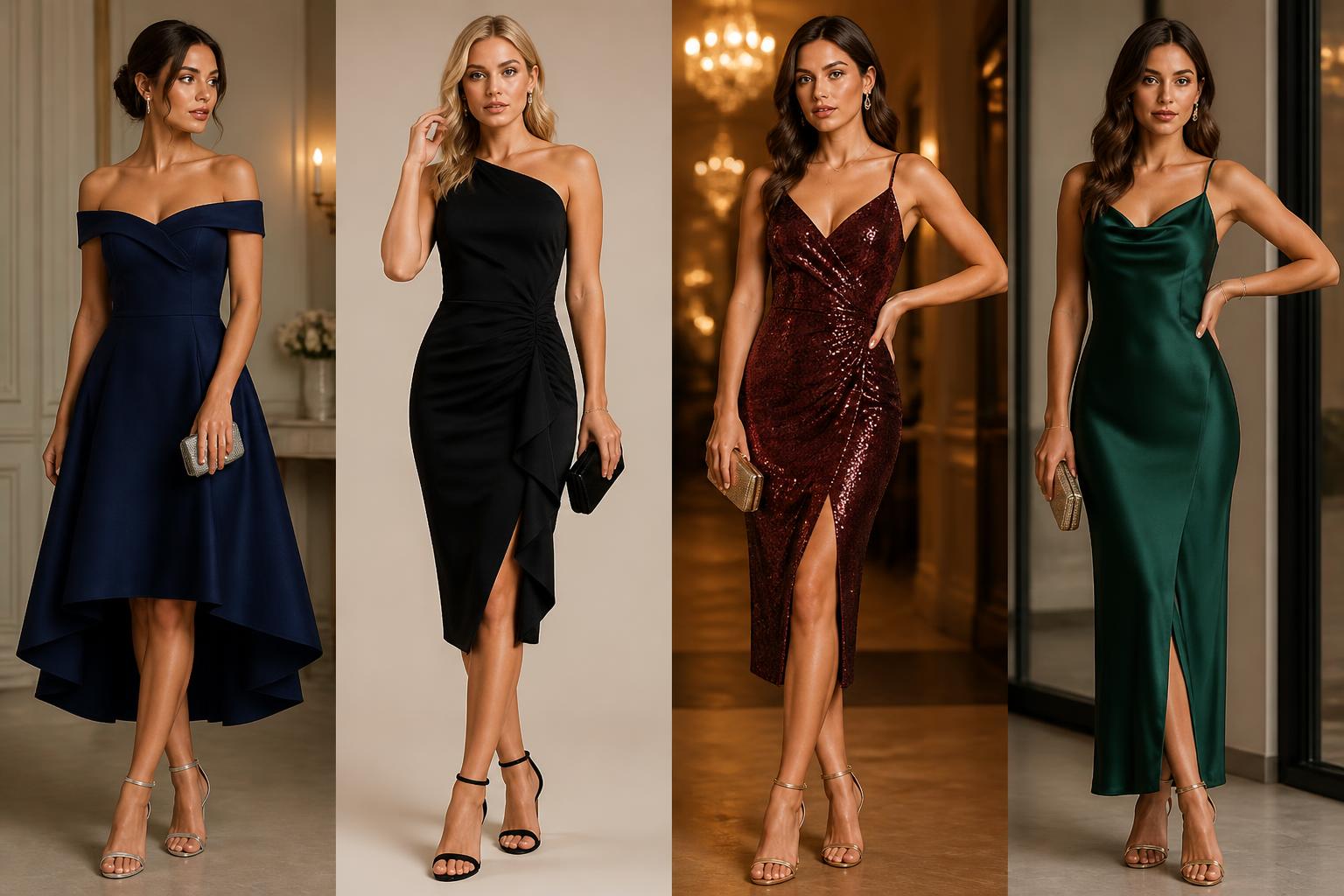
A cocktail or evening dress is designed for more formal social occasions. Cocktail dresses are commonly shorter than full evening gowns, while evening dresses can be midi, ankle-length, or floor-length.
=> Related Article: Cocktail / Evening Dress: Style, Fit for Every Body Type
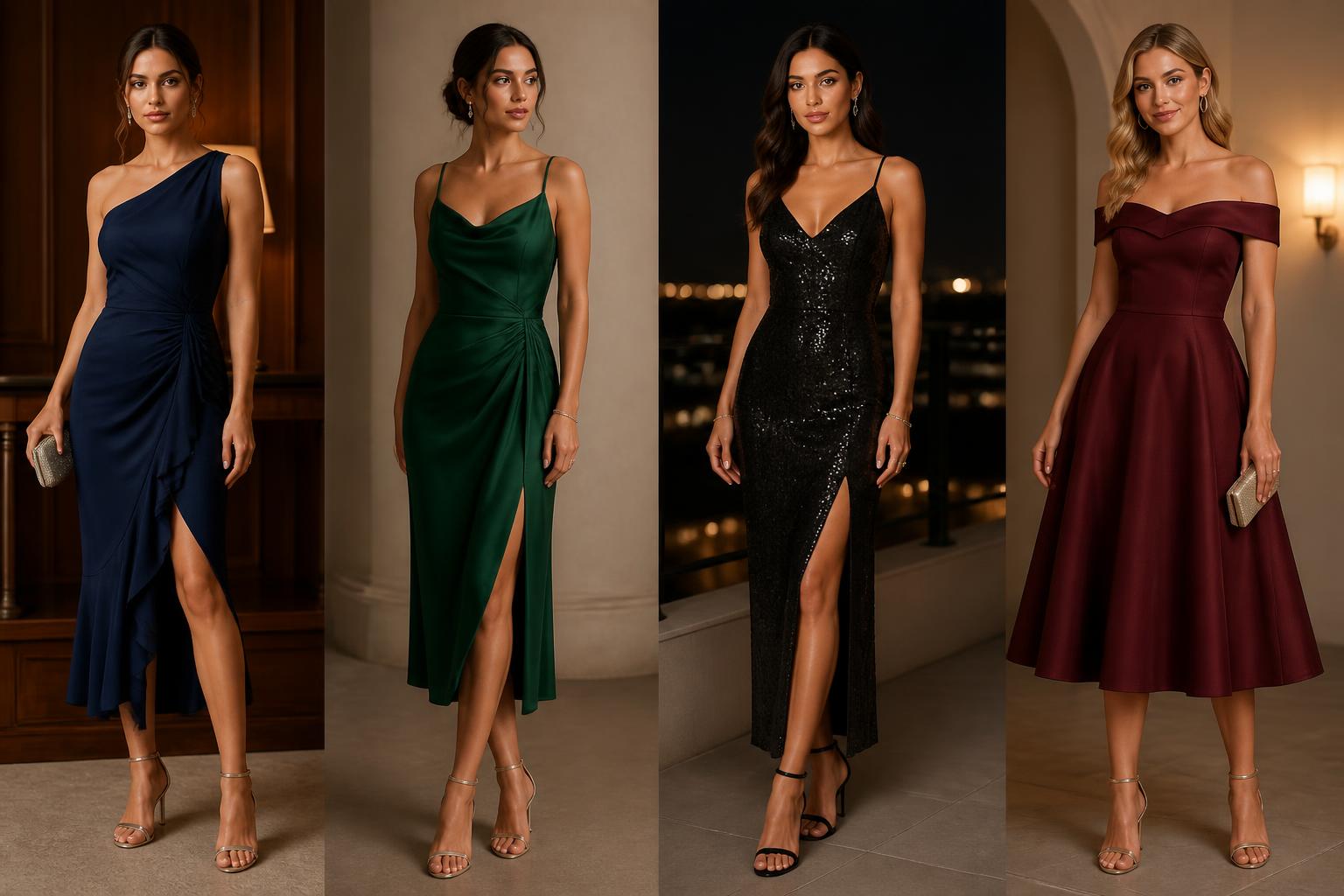
These garments often use more sophisticated:
- Fabrics
- Construction
- Lining
- Decoration
- Finishing
than everyday dresses.
Main Features
Possible design elements include:
- Fitted bodice
- Draping
- Pleats
- Ruffles
- Lace
- Beading
- Sequins
- Embroidery
- Slits
- Structured waist
- Off-shoulder neckline
- Strapless bodice
There is no single silhouette that defines all cocktail dresses.
Common Fabrics
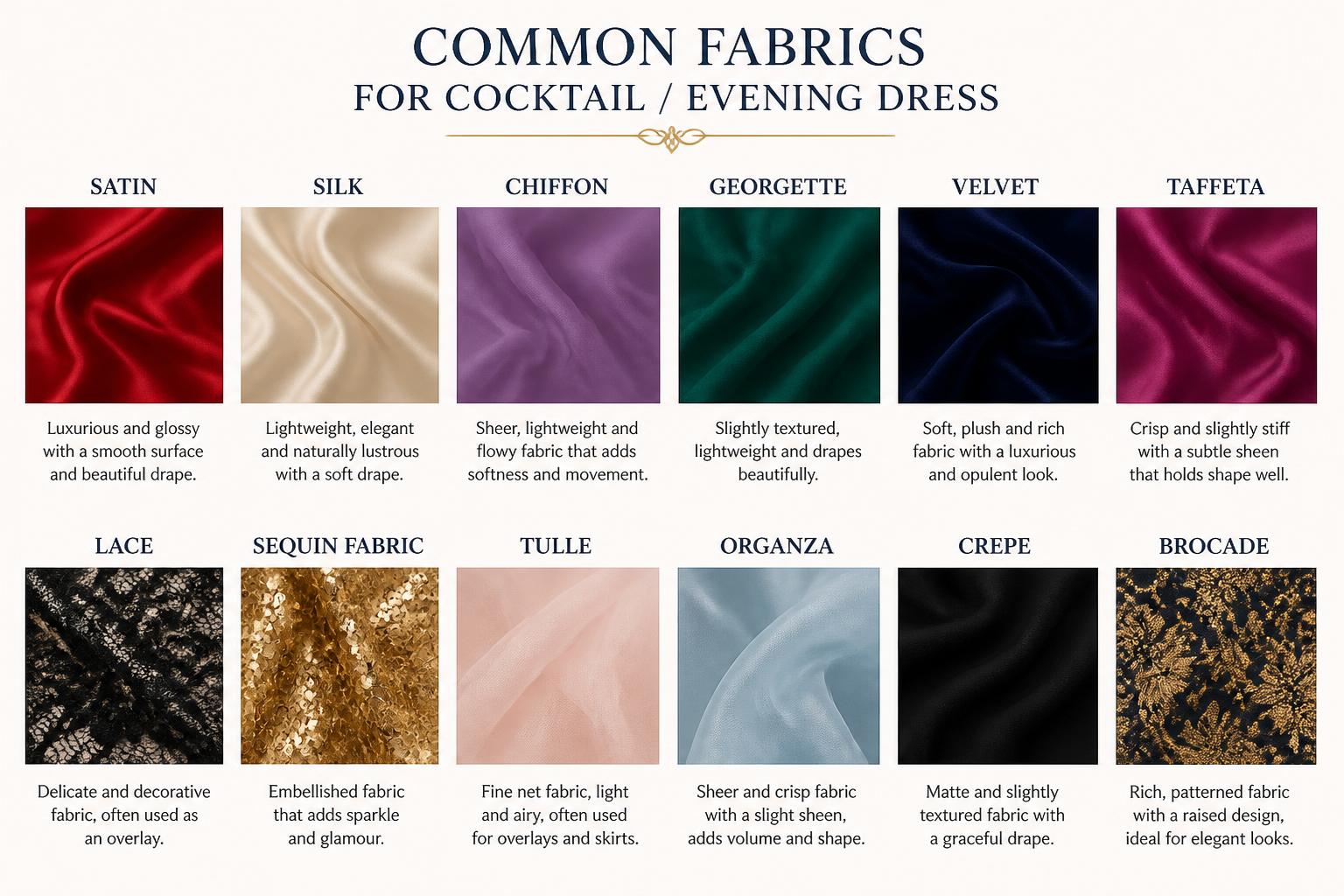
Typical materials include:
- Satin
- Chiffon
- Lace
- Organza
- Velvet
- Crepe
- Taffeta
- Mesh
- Sequined fabric
Many formal dresses also require lining.
Best Occasions
Cocktail and evening dresses are designed for:
- Weddings
- Formal dinners
- Galas
- Parties
- Celebrations
- Receptions
- Special events
Comparison of 7 Different Types of Dresses
| Dress Type | Main Shape | Common Fabrics | Typical Occasion | Production Difficulty |
|---|---|---|---|---|
| A-Line Dress | Fitted upper body, flared lower body | Cotton, linen, crepe, satin | Casual to semi-formal | Low to Medium |
| Shirt Dress | Shirt-inspired, straight or belted | Poplin, linen, denim, viscose | Work, casual | Medium |
| Wrap Dress | Overlapping front, tied waist | Jersey, viscose, crepe | Work, casual, events | Medium |
| Bodycon Dress | Close-fitting | Stretch jersey, ponte, poly/elastane | Party, fashion | Medium |
| Shift Dress | Straight, loose waist | Cotton, linen, crepe, twill | Casual, work | Low to Medium |
| Maxi Dress | Long, variable silhouette | Viscose, cotton, chiffon, satin | Casual to formal | Medium |
| Cocktail / Evening Dress | Variable, often fitted or flowing | Satin, lace, chiffon, velvet | Formal events | Medium to High |
The production difficulty shown above is only a general guide. Actual complexity depends on the design, fabric, trims, finishing, and quality requirements.
How Dress Silhouette Affects Appearance
The silhouette is one of the most important characteristics of a dress.
- A-Line: Creates gradual volume below the waist.
- Bodycon: Closely follows the body.
- Shift: Creates a straighter shape with limited waist definition.
- Wrap: Creates diagonal lines through the overlapping front.
- Maxi: Refers primarily to length, so the silhouette can vary widely.
The same fabric can look completely different when used in a different silhouette.
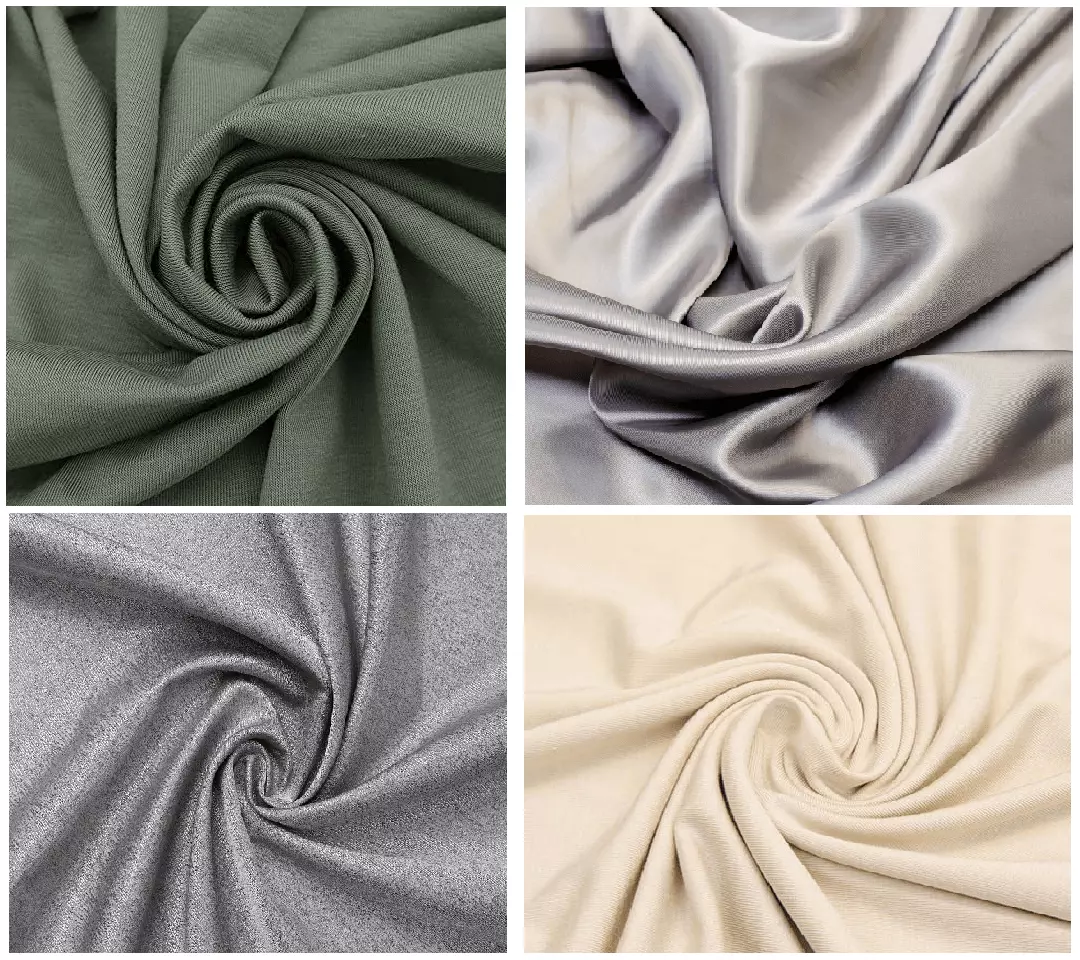
How Fabric Changes a Dress
Dress style is not determined by pattern alone. Fabric has a major influence on:
- Drape
- Structure
- Comfort
- Stretch
- Opacity
- Movement
- Formality
For example, an A-line dress made from structured cotton twill will look very different from an A-line dress made from lightweight viscose. A useful development formula is: Dress Design + Fabric Behavior = Final Silhouette
Dress Length Categories
Dress names can also describe length.
- Mini Dress: Usually finishes above the knee.
- Knee-Length Dress: Finishes around the knee area.
- Midi Dress: Generally finishes between the knee and ankle.
- Maxi Dress: Typically reaches around the ankle or lower. These are fashion descriptions rather than universal technical measurements.
A brand should specify the actual finished garment length in its size specification.
Conclusion / Final Words
Women’s dresses cover a huge range of styles, but understanding a few major categories makes the fashion landscape much easier to navigate. The seven useful dress types discussed in this guide are:
- A-Line Dress
- Shirt Dress
- Wrap Dress
- Bodycon Dress
- Shift Dress
- Maxi Dress
- Cocktail / Evening Dress
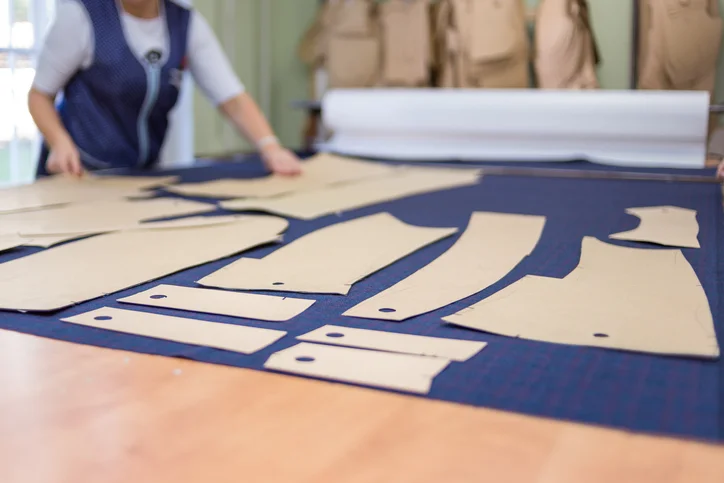
Each style creates a different combination of: Fit + Silhouette + Comfort + Movement + Formality But the dress name is only part of the story. The final garment is also shaped by: Fabric + Construction + Length + Details + Finishing For garment manufacturers and apparel brands, this distinction is particularly important. Two dresses with the same basic silhouette can require completely different production methods if one is made from simple cotton while the other uses chiffon, lace, stretch jersey, or lined satin.
FAQs About 7 Different Types of Dresses for Women
In Short, What are the main types of women’s dresses?
Women’s dresses usually fall into big groups like casual dresses, workwear, formal dresses, activewear, sleepwear, outerwear, and uniforms. Each group fits a different purpose — from daily comfort to special events.
Why do dresses come in so many styles?
Dresses are made for different needs. Some are for comfort, some for movement, some for work, and some for parties. Each style helps women feel good and dress right for the moment.
What is the difference between casual dresses and workwear dresses?
Casual dresses feel relaxed and soft. They’re great for daily life and weekends. Workwear dresses look more polished and neat. They help you look professional at the office.
What makes formal dresses special?
Formal dresses use nicer fabrics, smoother cuts, and extra details. They’re made for weddings, galas, proms, or fancy dinners. These dresses make you stand out and feel elegant.
Are activewear dresses the same as sportswear?
Not exactly. Activewear dresses focus on movement, stretch, and breathability. Sportswear is more casual and laid-back. It looks sporty but may not be suitable for heavy exercise.
What is included in lingerie and sleepwear?
This group includes soft pieces you wear under clothing or at home, like nightgowns, robes, camisoles, and slips. They focus on comfort and skin-friendly fabrics.