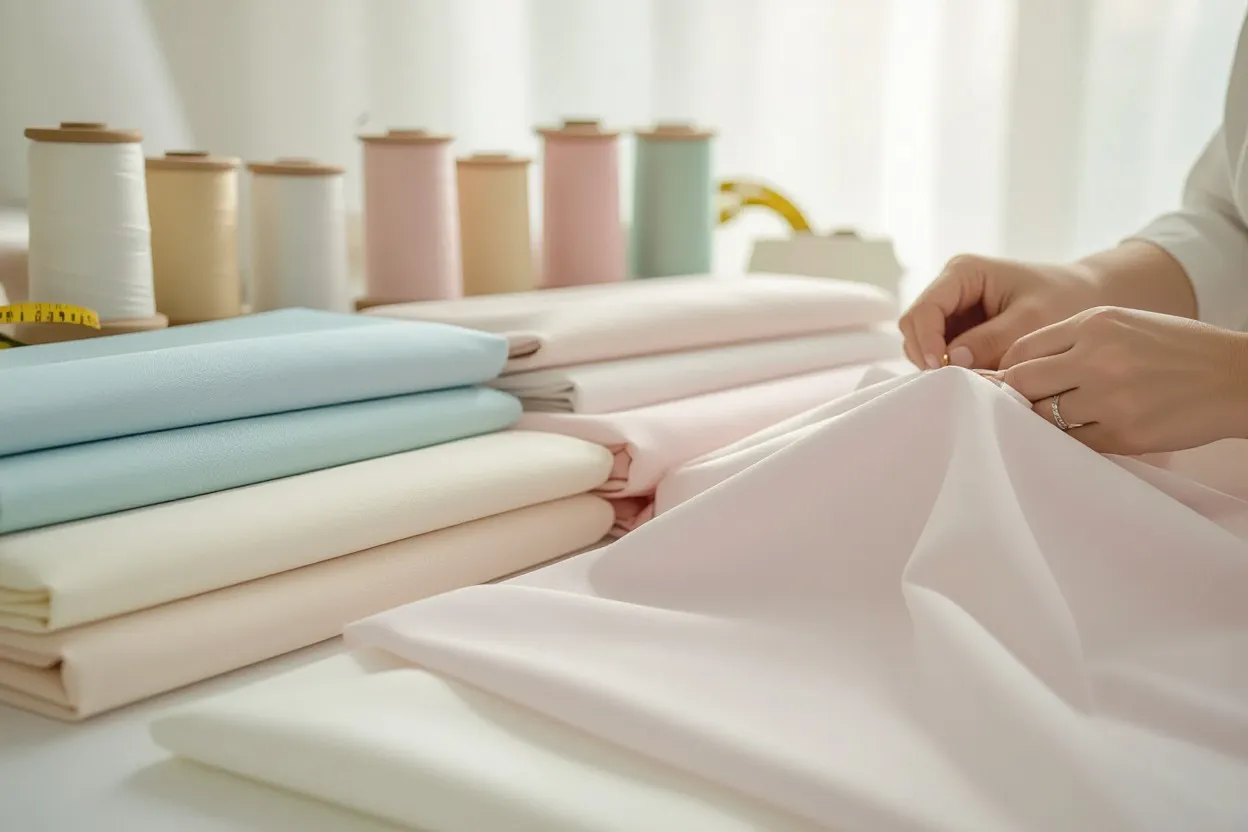

- Unlike heavier shirting fabrics, cotton voile creates a delicate appearance without adding much bulk. It can be used alone when sufficient coverage is available or combined with a lining or additional fabric layers for greater opacity.
- However, cotton voile is not suitable for every garment. Its lightweight structure can make it vulnerable to snagging, shifting during sewing, and showing through under strong light. Understanding these limitations is important for fashion brands, designers, and garment manufacturers.
In this guide, we explain what cotton voile fabric is, how it is made, its main properties, different varieties, advantages, disadvantages, common uses, and important considerations for garment production.
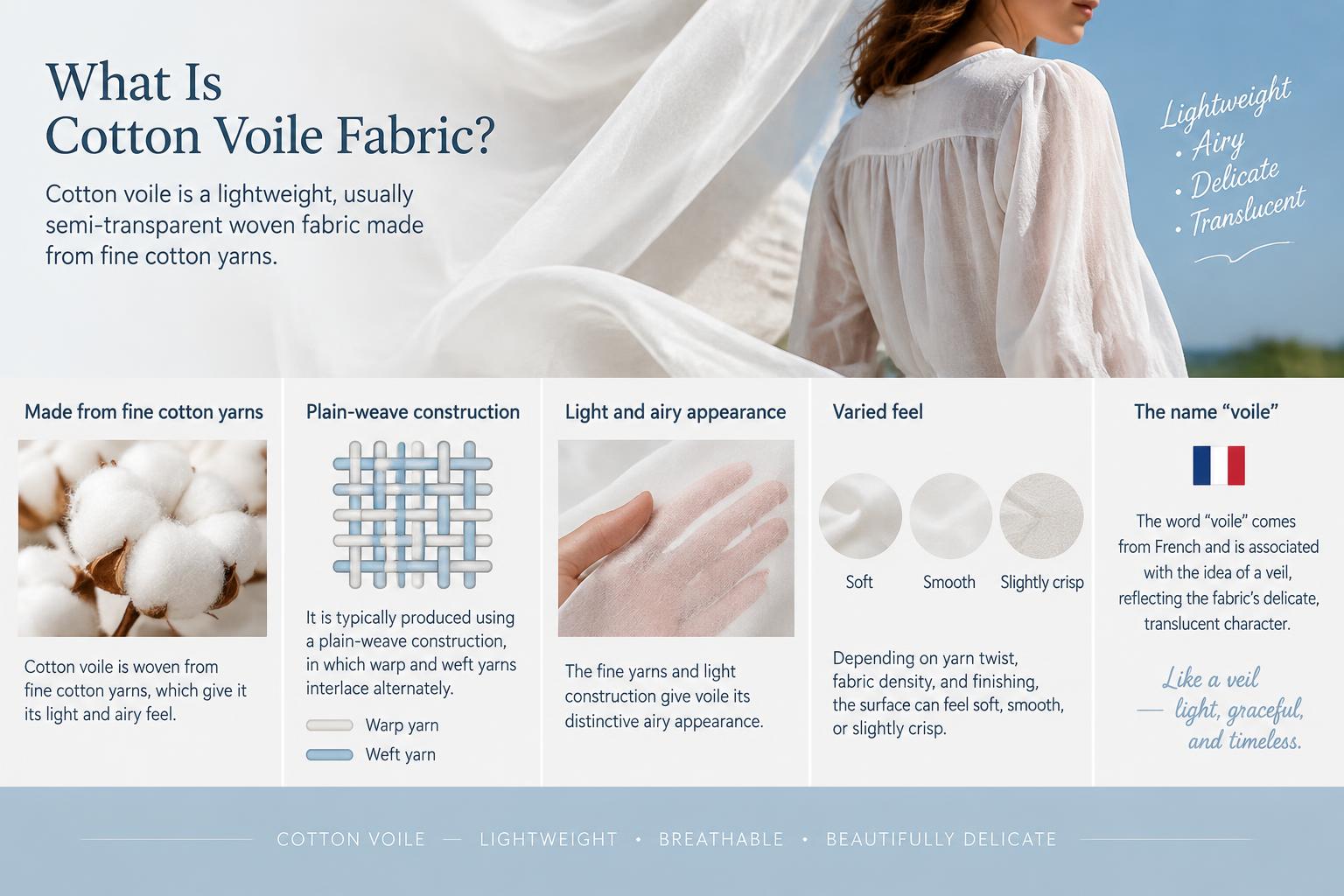
What Is Cotton Voile Fabric?
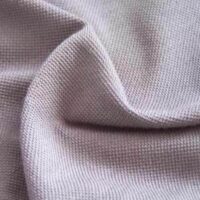
Cotton voile is a lightweight, usually semi-transparent woven fabric made from fine cotton yarns. It is typically produced using a plain-weave construction, in which warp and weft yarns interlace alternately. The fine yarns and light construction give voile its distinctive airy appearance. Depending on yarn twist, fabric density, and finishing, the surface can feel soft, smooth, or slightly crisp. The word “voile” comes from French and is associated with the idea of a veil, reflecting the fabric’s delicate, translucent character.
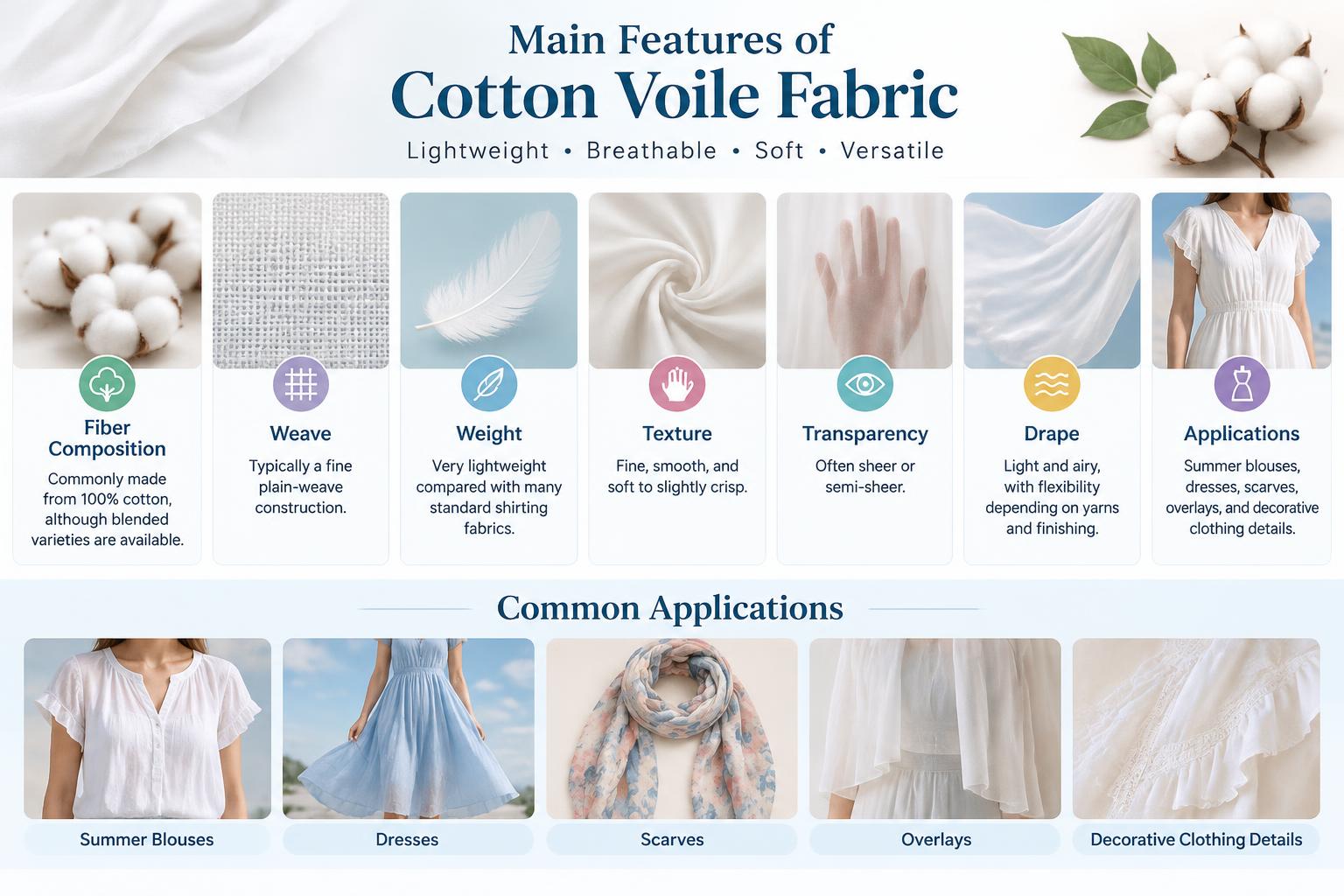
Main Features of Cotton Voile Fabric
- Fiber composition: Commonly made from 100% cotton, although blended varieties are available.
- Weave: Typically a fine plain-weave construction.
- Weight: Very lightweight compared with many standard shirting fabrics.
- Texture: Fine, smooth, and soft to slightly crisp.
- Transparency: Often sheer or semi-sheer.
- Drape: Light and airy, with flexibility depending on yarns and finishing.
- Applications: Summer blouses, dresses, scarves, overlays, and decorative clothing details.
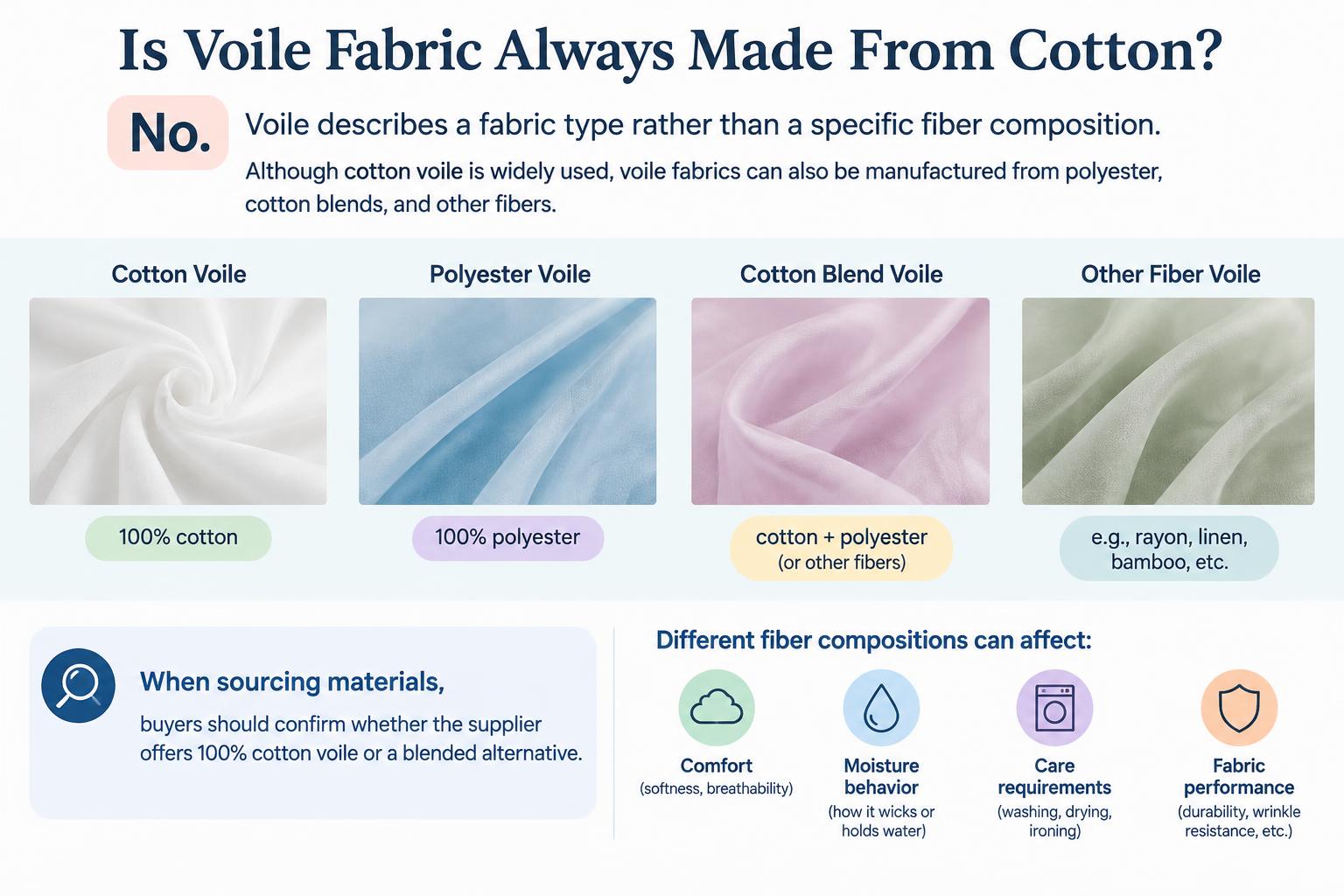
Is Voile Fabric Always Made From Cotton?
No. Voile describes a fabric type rather than a specific fiber composition. Although cotton voile is widely used, voile fabrics can also be manufactured from polyester, cotton blends, and other fibers. When sourcing materials, buyers should confirm whether the supplier offers 100% cotton voile or a blended alternative. Different fiber compositions can affect comfort, moisture behavior, care requirements, and fabric performance.
Is Cotton Voile See-Through?
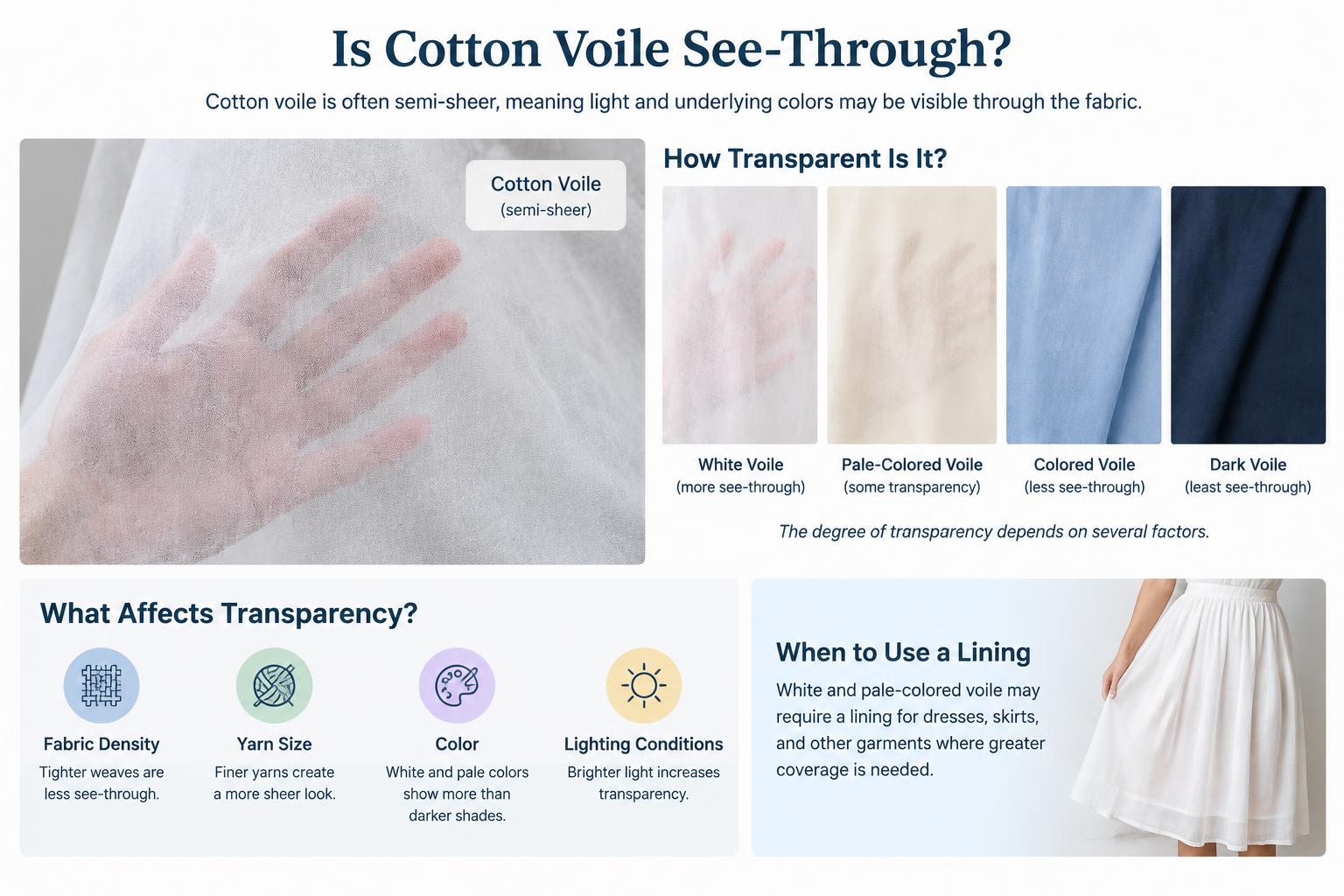
Cotton voile is often semi-sheer, meaning light and underlying colors may be visible through the fabric. The degree of transparency depends on fabric density, yarn size, color, and lighting conditions. White and pale-colored voile may require a lining for dresses, skirts, and other garments where greater coverage is needed.
How Is Cotton Voile Fabric Made?
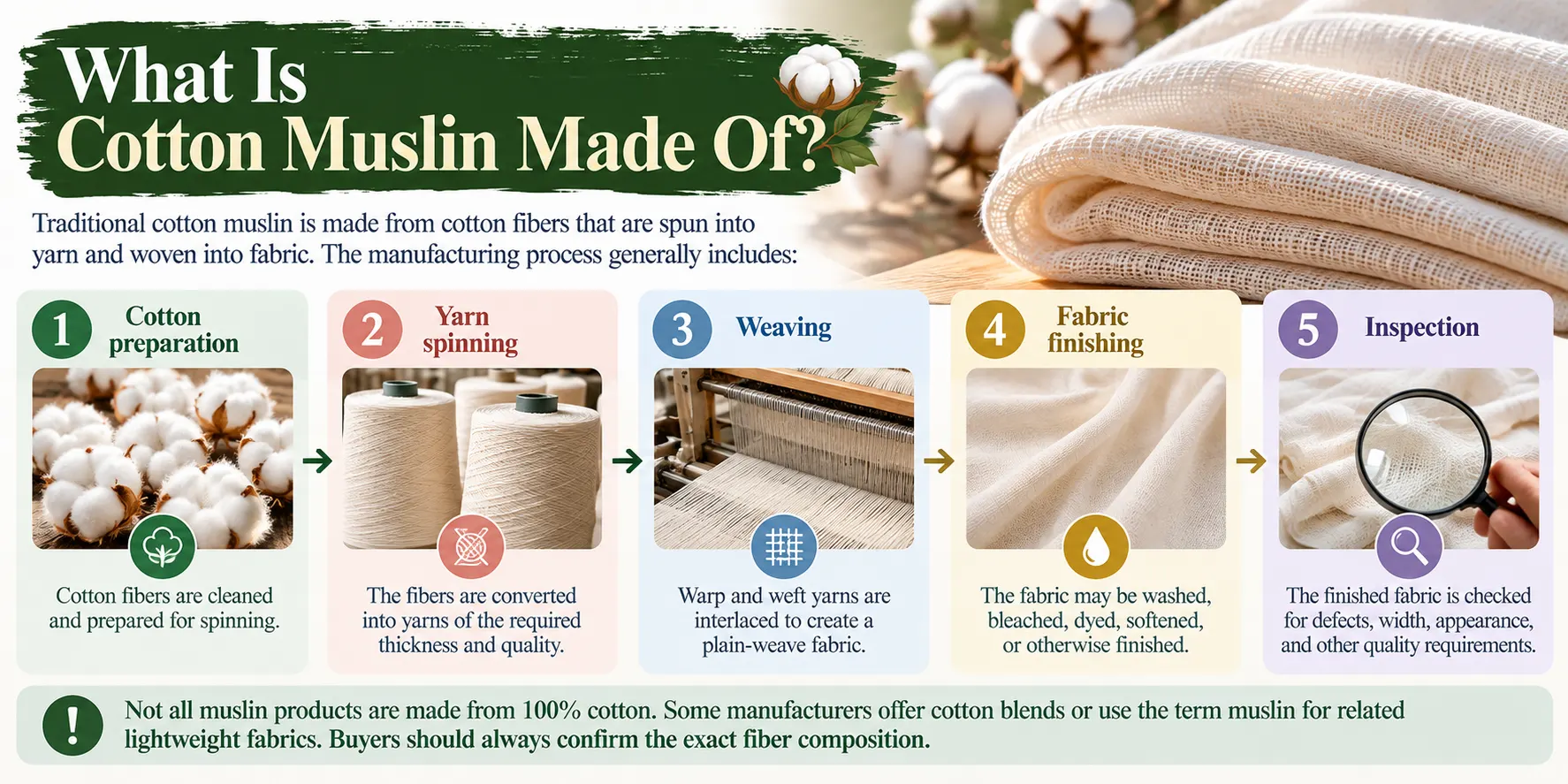
The production of cotton voile involves yarn preparation, weaving, dyeing or printing, finishing, and quality inspection. Each stage influences the final fabric’s appearance and performance.
- Fine Cotton Yarn Preparation: Cotton voile is commonly produced using fine yarns. Relatively high yarn twist is often associated with traditional voile constructions, helping create a light fabric with a characteristic feel. Yarn quality is important because imperfections can become more noticeable in a fine, semi-transparent fabric.
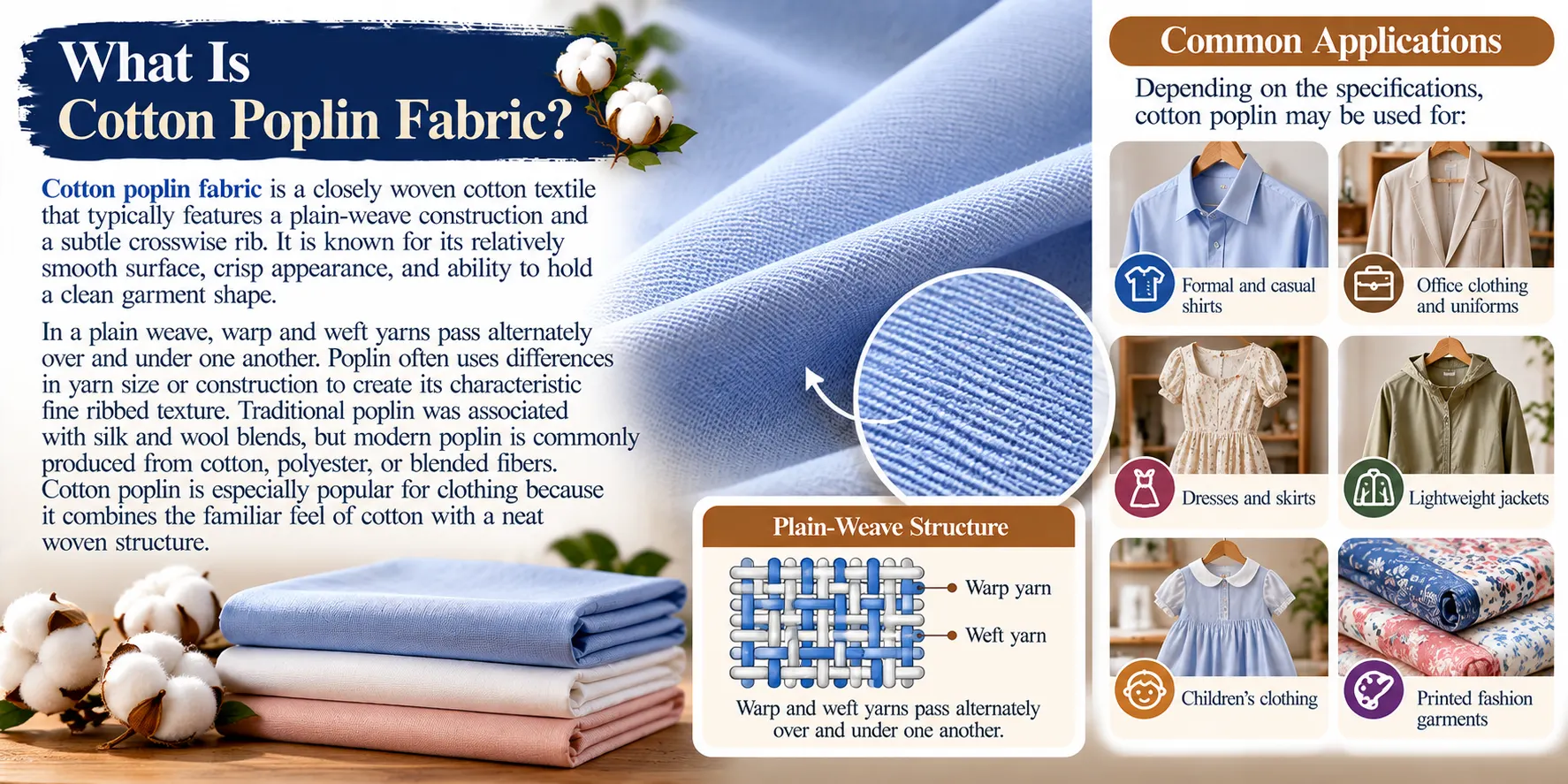
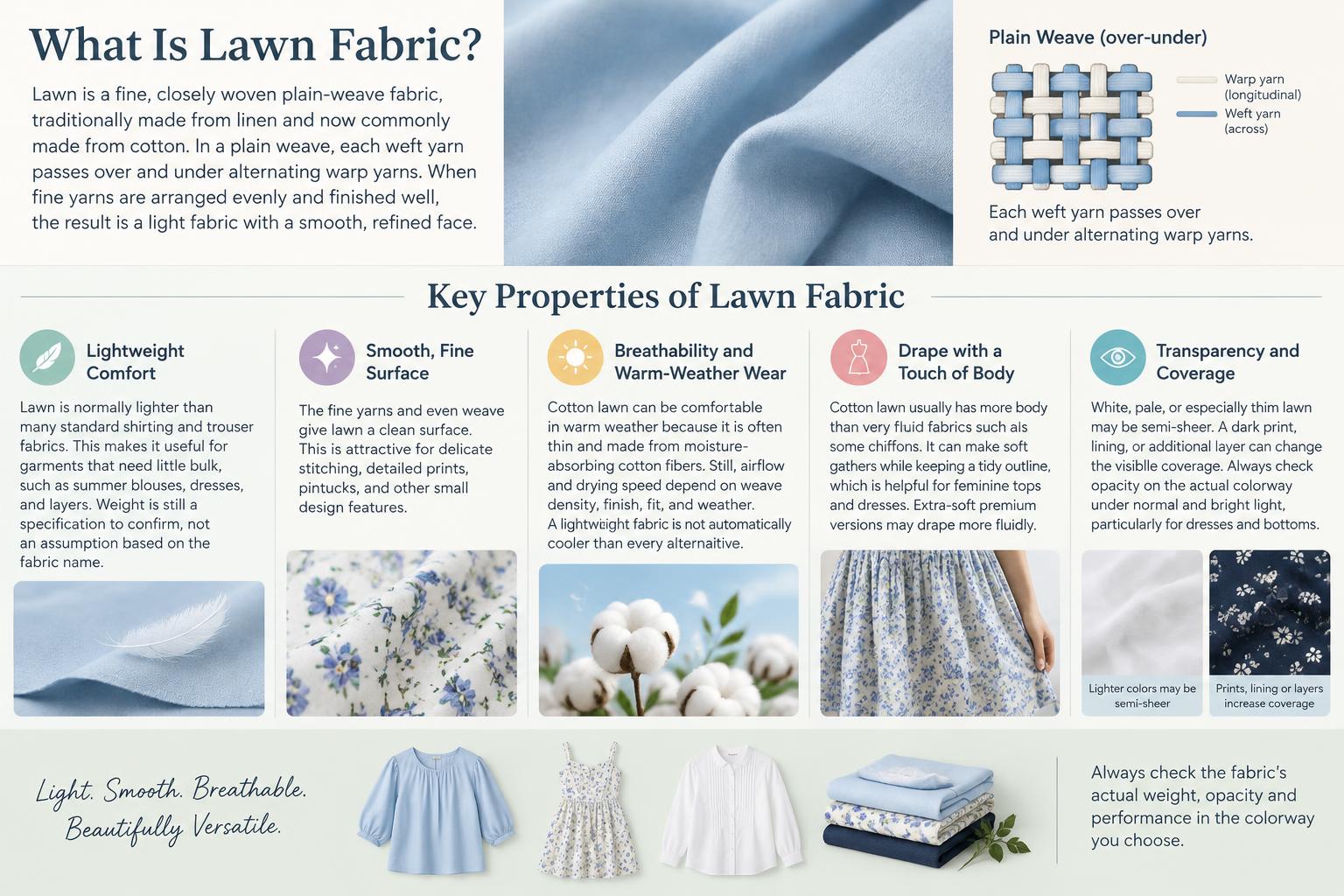
- Plain-Weave Construction: In a plain weave, each weft yarn passes alternately over and under the warp yarns. This creates a simple, balanced woven structure. For voile, fine yarns and an appropriate fabric density help produce a lightweight material that allows light to pass through.
- Dyeing and Printing: Cotton voile may be produced in solid colors, yarn-dyed designs, or printed patterns. Floral prints, small geometric designs, and delicate decorative patterns are common choices for summer fashion.
- Fabric Finishing – Depending on the desired result, manufacturers may apply: Washing and cleaning treatments, Softening finishes, Dimensional-stability treatments, Printing or color finishing, Special surface finishes, Final fabric inspection. Finishing can influence softness, drape, shrinkage, and overall fabric appearance. Two cotton voile fabrics with similar fiber compositions may behave differently because of their construction and finishing.
Different Types of Cotton Voile Fabric
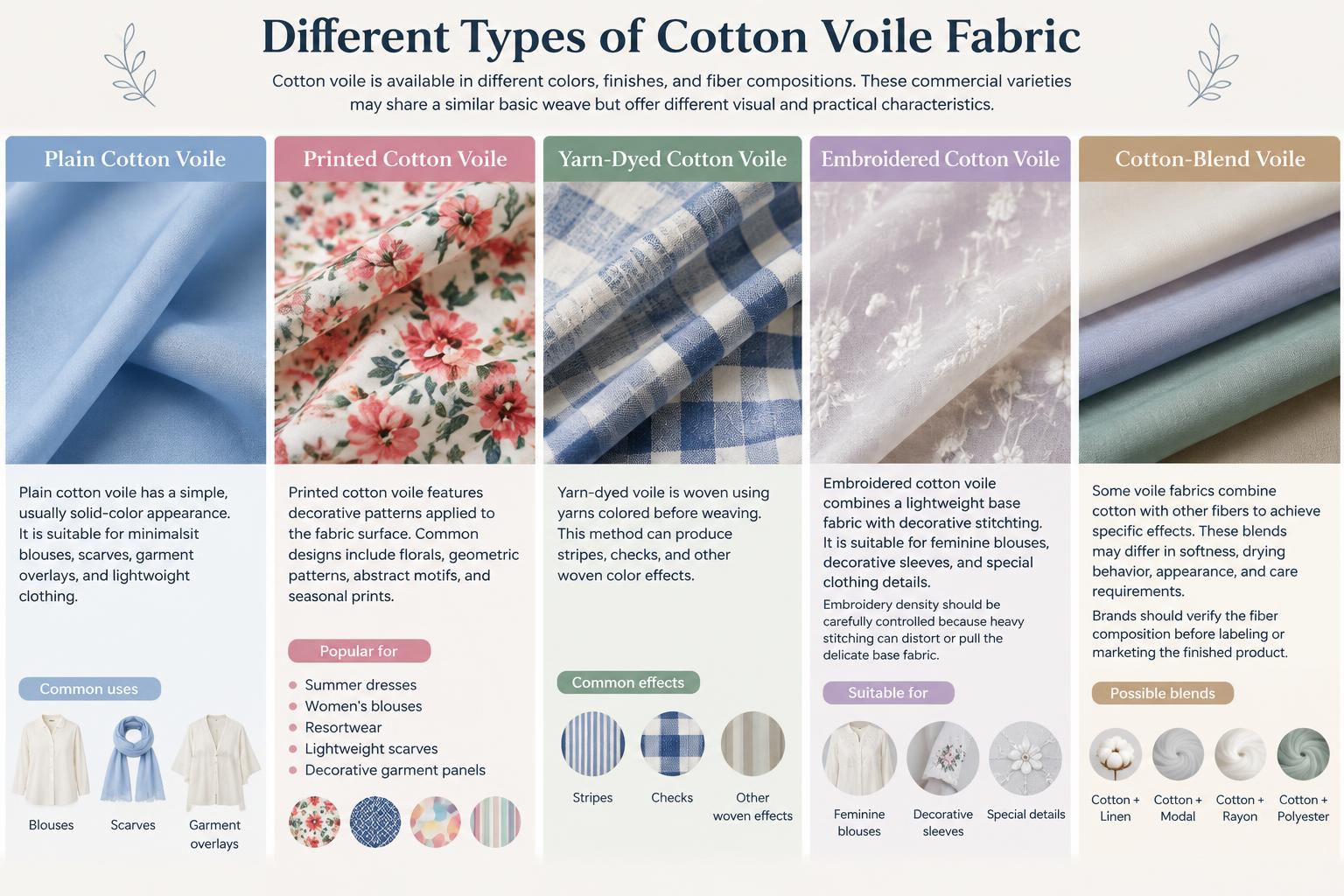
Cotton voile is available in different colors, finishes, and fiber compositions. These commercial varieties may share a similar basic weave but offer different visual and practical characteristics.
- Plain Cotton Voile: Plain cotton voile has a simple, usually solid-color appearance. It is suitable for minimalist blouses, scarves, garment overlays, and lightweight clothing.
- Printed Cotton Voile: Printed cotton voile features decorative patterns applied to the fabric surface. Common designs include florals, geometric patterns, abstract motifs, and seasonal prints. It is popular for: Summer dresses, Women’s blouses, Resortwear, Lightweight scarves, Decorative garment panels.
- Yarn-Dyed Cotton Voile: Yarn-dyed voile is woven using yarns colored before weaving. This method can produce stripes, checks, and other woven color effects.
- Embroidered Cotton Voile: Embroidered cotton voile combines a lightweight base fabric with decorative stitching. It is suitable for feminine blouses, decorative sleeves, and special clothing details. Embroidery density should be carefully controlled because heavy stitching can distort or pull the delicate base fabric.
- Cotton-Blend Voile: Some voile fabrics combine cotton with other fibers to achieve specific effects. These blends may differ in softness, drying behavior, appearance, and care requirements. Brands should verify the fiber composition before labeling or marketing the finished product.
Pros and Cons of Cotton Voile Fabric
Advantages
Cotton voile offers several benefits for designers and clothing brands seeking lightweight fabrics with an elegant appearance.
- Very Lightweight: Its fine construction allows garments to feel light and less bulky than many conventional woven fabrics.
- Comfortable for Warm-Weather Clothing: Appropriately constructed cotton voile can provide a comfortable option for loose summer garments, particularly when airflow and low fabric weight are priorities.
- Soft Hand Feel: Fine cotton yarns and suitable finishing can create a pleasant, soft surface that works well for clothing worn close to the skin.
- Attractive for Layered Designs: The semi-sheer surface can add depth to garments when placed over another fabric. This makes voile useful for decorative layers and elegant fashion details.
- Delicate and Graceful Appearance: Cotton voile can create a refined visual effect in loose silhouettes, soft gathers, and lightweight garments.
- Suitable for Printing and Decoration: Printed and embroidered cotton voile offers design flexibility for fashion collections. Print quality and embroidery performance should be evaluated using the actual fabric.
Disadvantages
Despite its attractive appearance, cotton voile has limitations that should be considered during garment design and production.
- Often Semi-Sheer: Transparency is one of the most important considerations. Some garments may need a lining, additional layers, or carefully selected undergarments.
- Limited Structural Body: Cotton voile is generally not the first choice for sharply tailored garments, structured collars, or clothing that requires a firm silhouette.
- Requires Careful Sewing: The fabric can shift or distort during cutting and stitching. Fine needles, suitable thread, controlled feeding, and appropriate seam finishes may be necessary.
- Can Be Vulnerable to Snagging: Fine yarns may catch on rough surfaces or sharp objects. Fabric strength and snagging resistance depend on the specific construction.
- Cut Edges May Fray: Depending on yarn and weave density, voile edges can fray during handling. Appropriate seam finishing helps improve garment quality.
- Cotton Shrinkage May Occur: Like other cotton fabrics, cotton voile can shrink after washing if it has not been adequately stabilized. Pre-production laundering tests are important.
Common Uses of Cotton Voile Fabric in Clothing
Cotton voile is especially useful in garments where lightness, softness, and a delicate appearance are important.
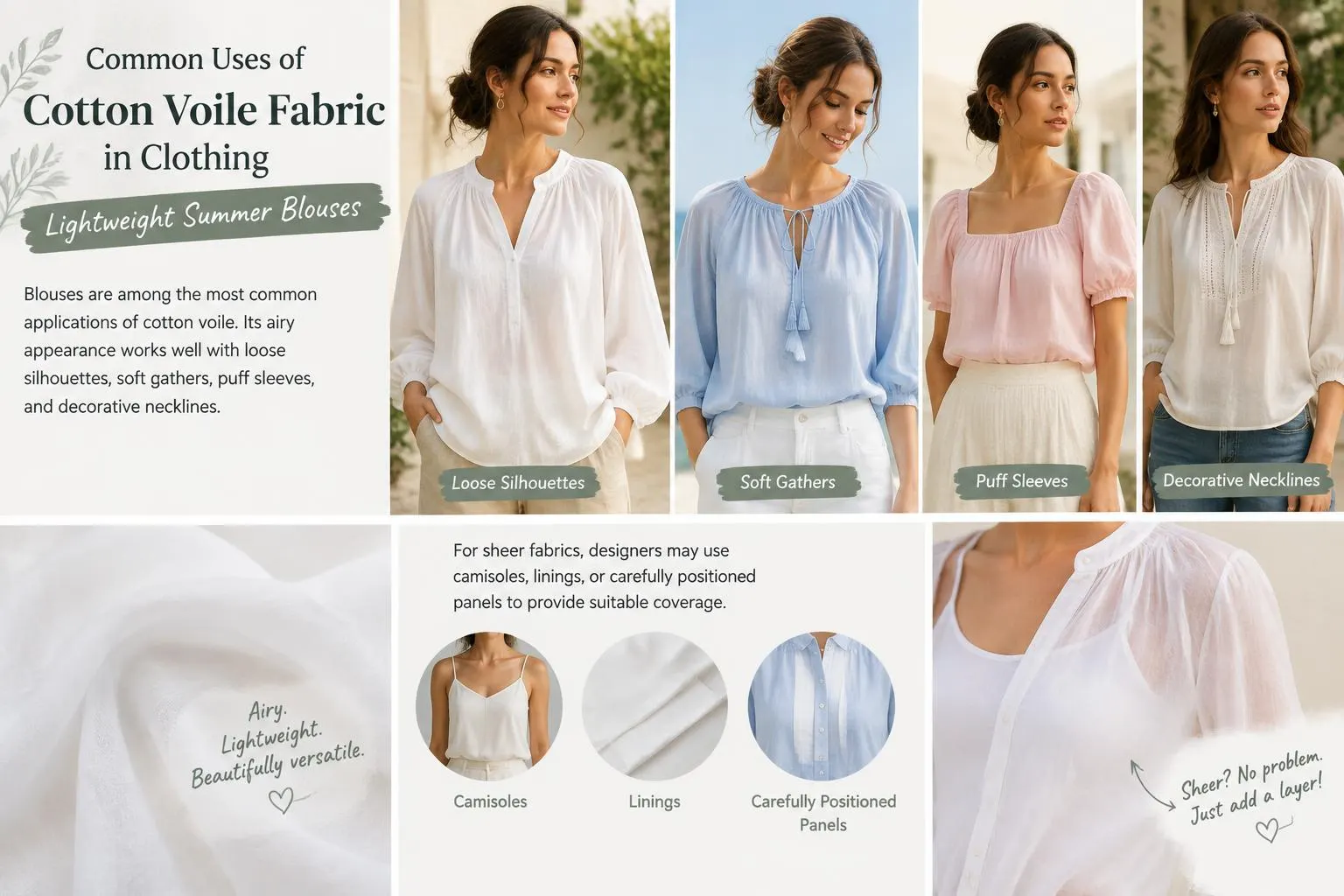
Lightweight Summer Blouses:
Blouses are among the most common applications of cotton voile. Its airy appearance works well with loose silhouettes, soft gathers, puff sleeves, and decorative necklines. For sheer fabrics, designers may use camisoles, linings, or carefully positioned panels to provide suitable coverage.
Summer Dresses:
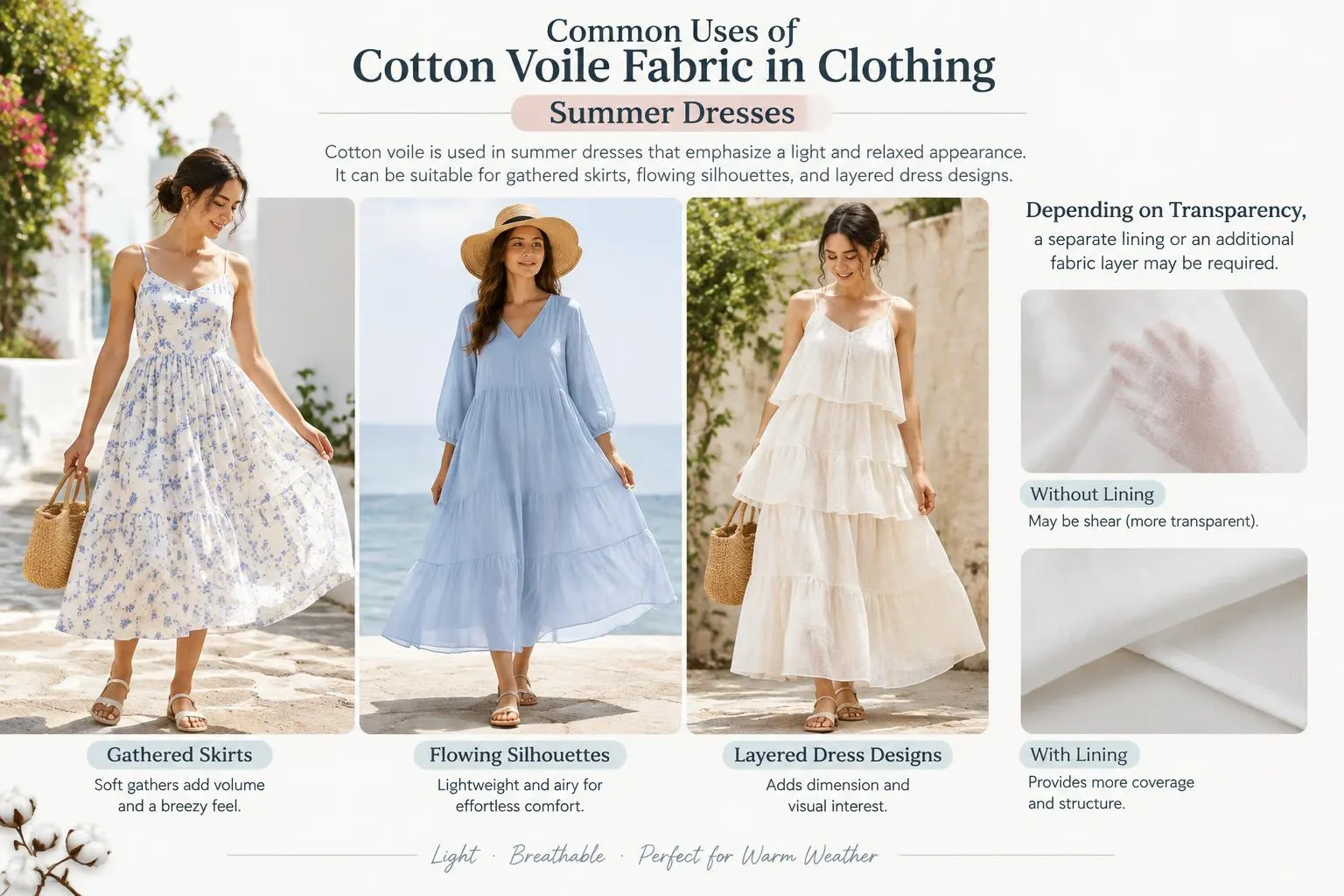
Cotton voile is used in summer dresses that emphasize a light and relaxed appearance. It can be suitable for gathered skirts, flowing silhouettes, and layered dress designs. Depending on transparency, a separate lining or an additional fabric layer may be required.
Lightweight Skirts:
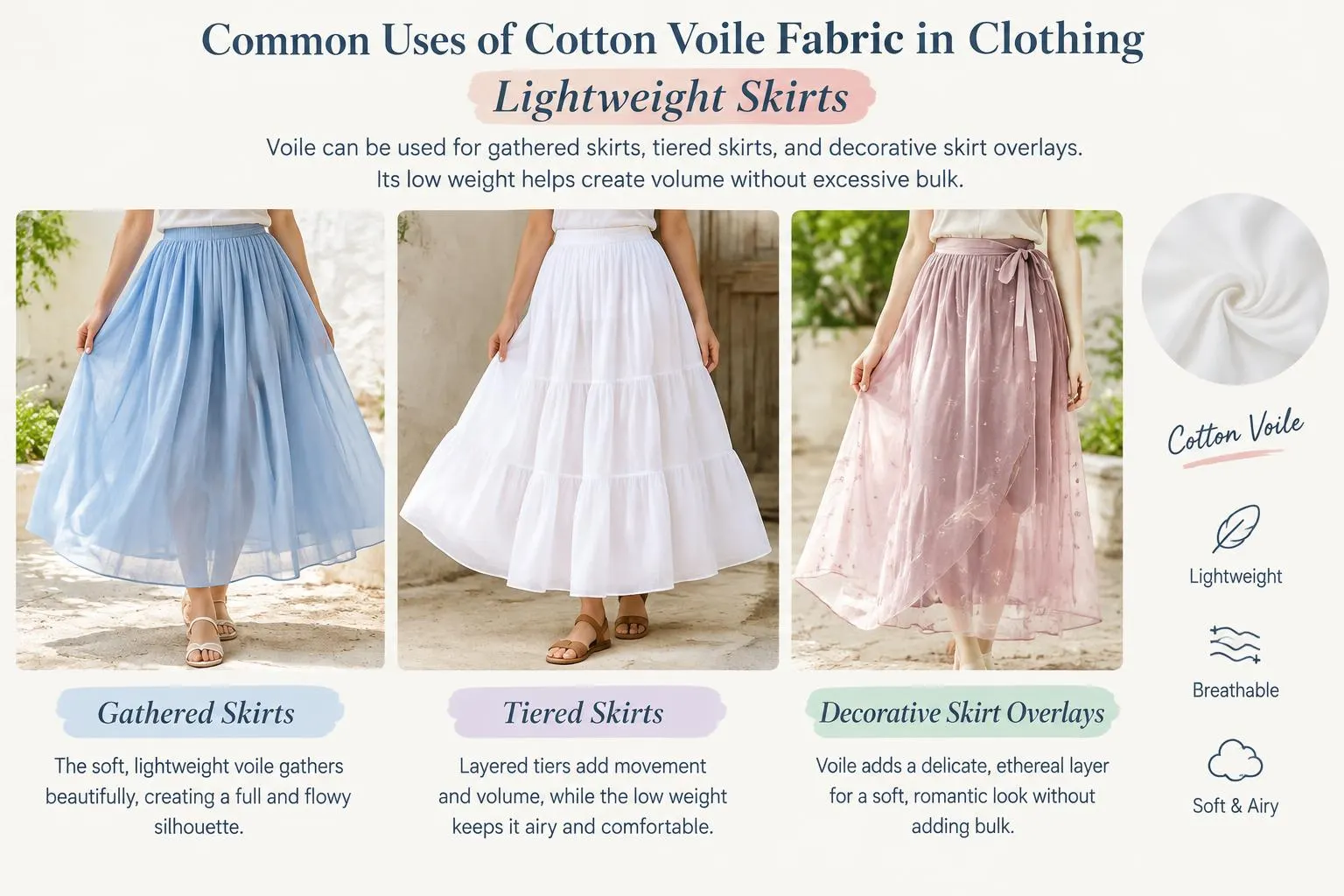
Voile can be used for gathered skirts, tiered skirts, and decorative skirt overlays. Its low weight helps create volume without excessive bulk.
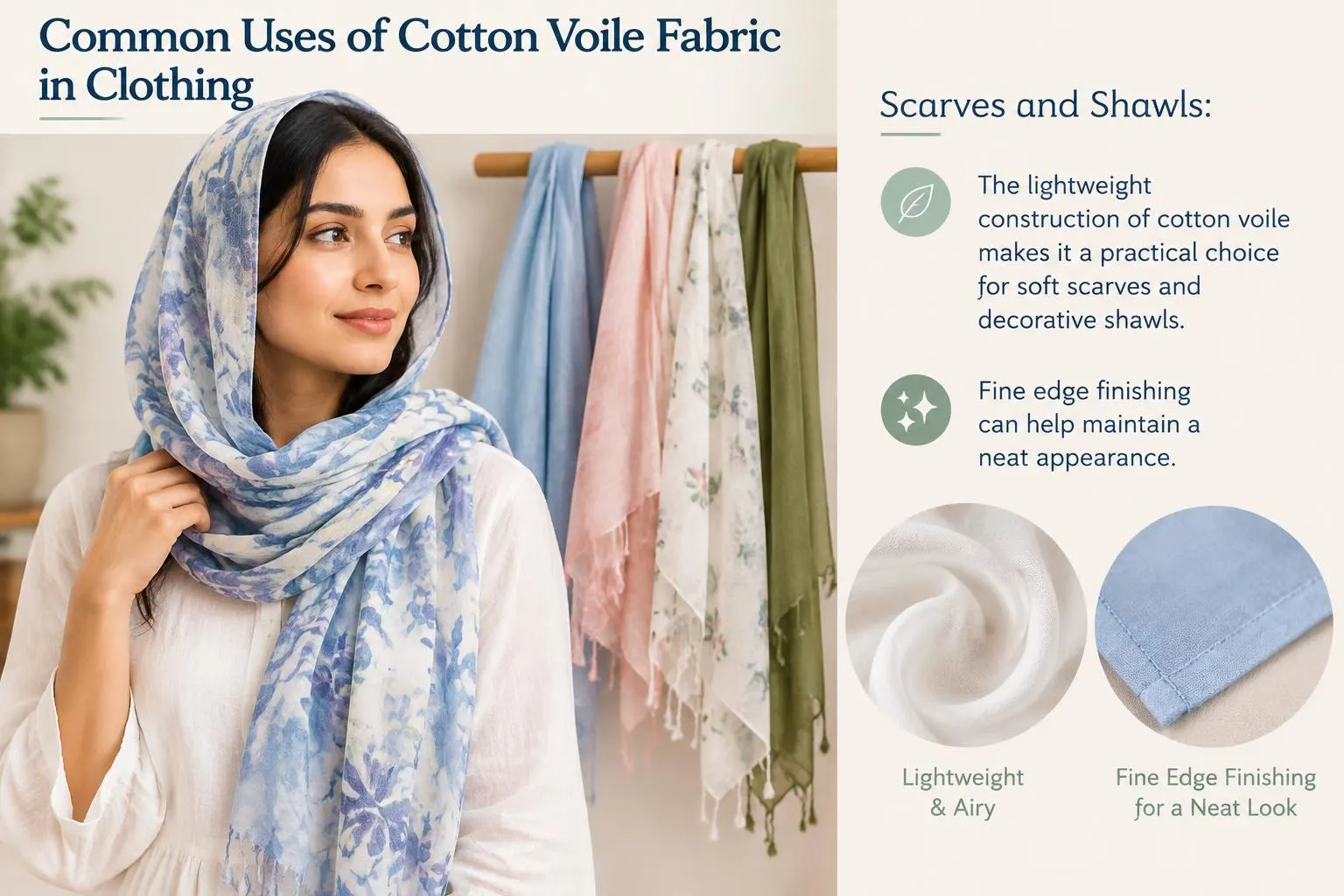
Scarves and Shawls:
The lightweight construction of cotton voile makes it a practical choice for soft scarves and decorative shawls. Fine edge finishing can help maintain a neat appearance.
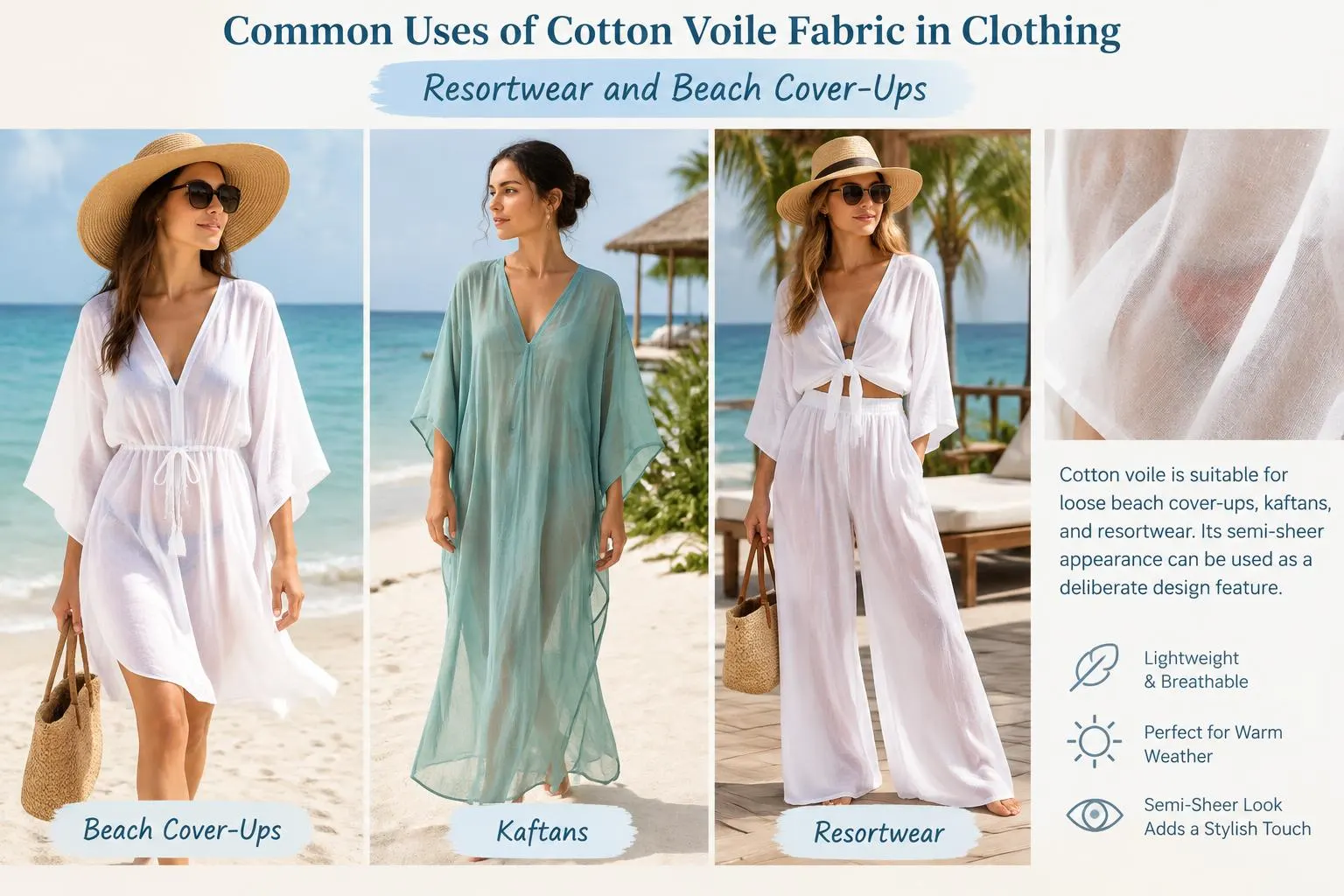
Resortwear and Beach Cover-Ups
Cotton voile is suitable for loose beach cover-ups, kaftans, and resortwear. Its semi-sheer appearance can be used as a deliberate design feature.
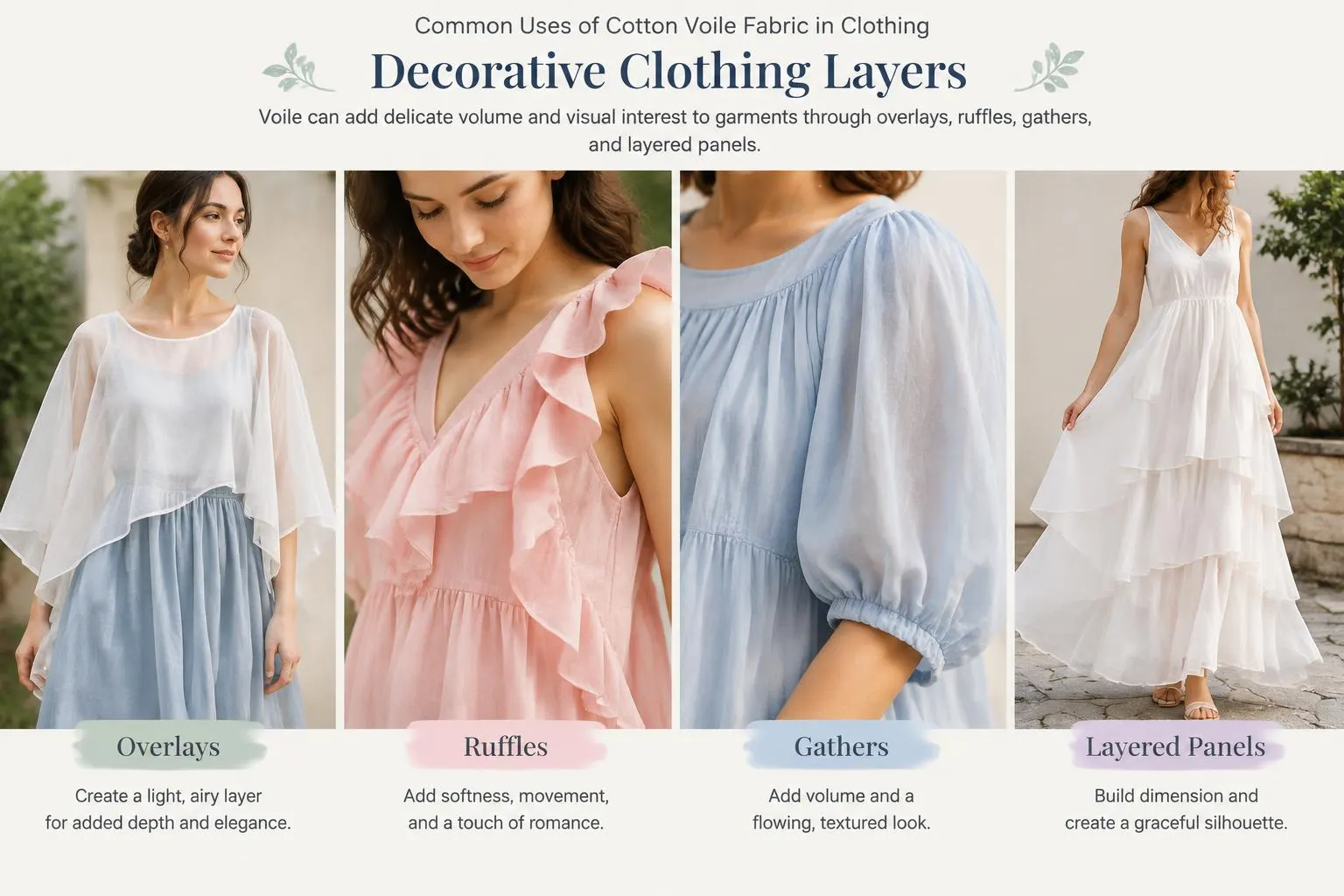
Decorative Clothing Layers
Voile can add delicate volume and visual interest to garments through overlays, ruffles, gathers, and layered panels.
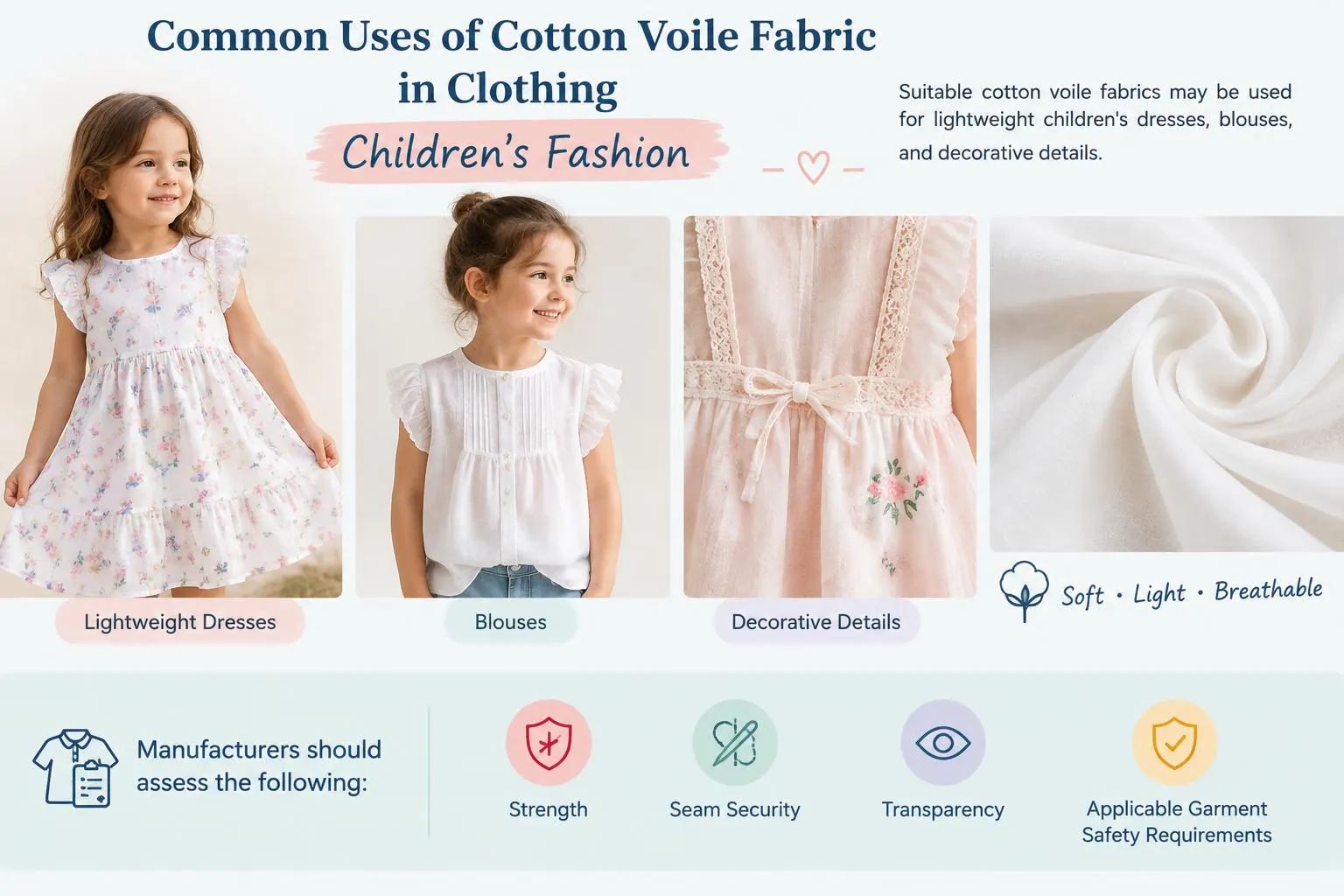
Children’s Fashion
Suitable cotton voile fabrics may be used for lightweight children’s dresses, blouses, and decorative details. Manufacturers should assess strength, seam security, transparency, and applicable garment safety requirements.
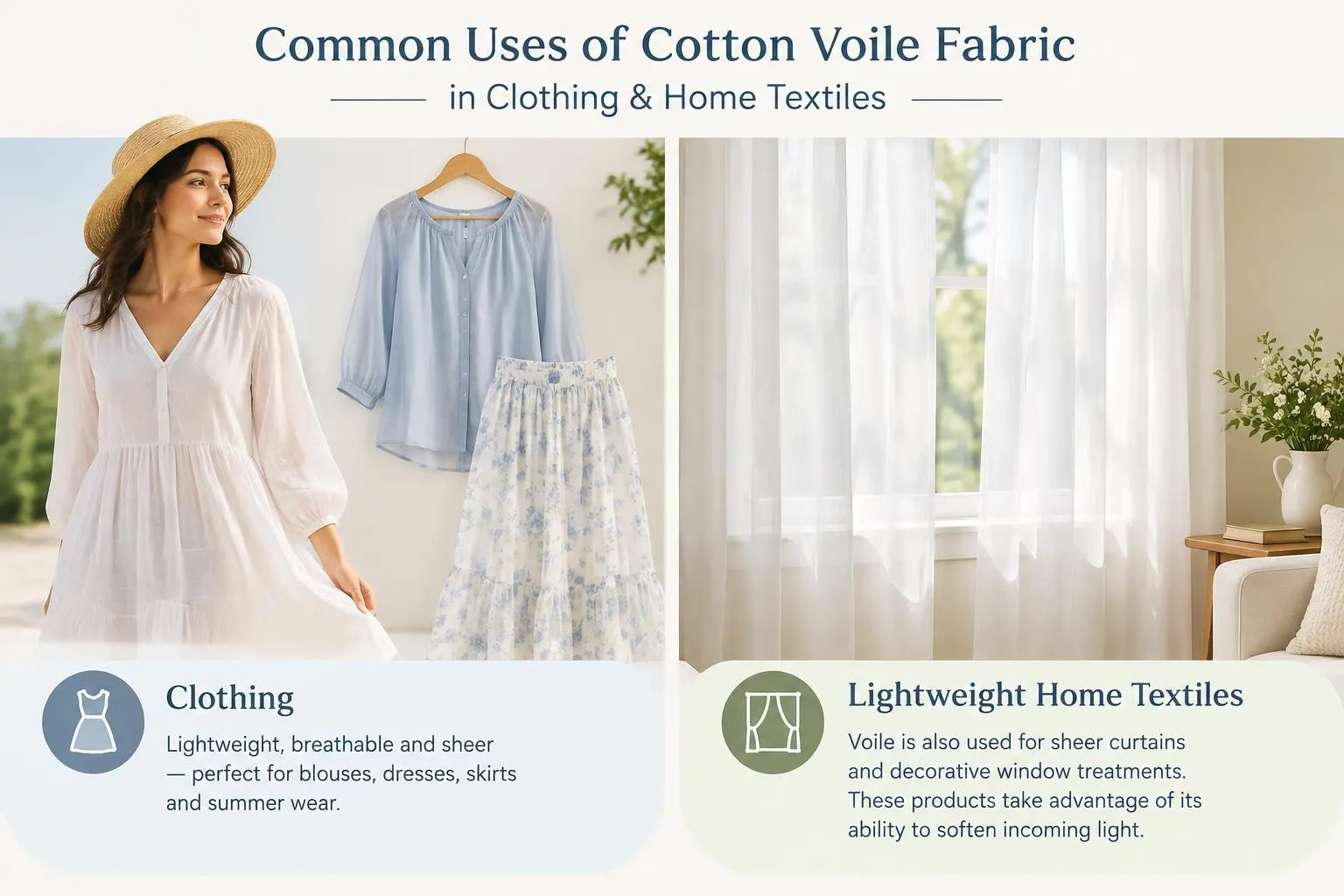
Lightweight Home Textiles
Outside clothing, voile is also used for sheer curtains and decorative window treatments. These products take advantage of its ability to soften incoming light.
Cotton Voile vs. Other Lightweight Fabrics
Cotton voile is often compared with lawn, batiste, chiffon, gauze, and poplin. These fabrics may overlap in some applications, but their structures and appearances are not identical.
| Fabric | Typical Surface | Transparency | Common Uses |
|---|---|---|---|
| Cotton Voile | Fine, airy, soft to slightly crisp | Often sheer or semi-sheer | Blouses, dresses, scarves, overlays |
| Cotton Lawn | Fine, smooth, often slightly more structured | Varies from semi-sheer to more covered | Blouses, shirts, summer dresses |
| Cotton Batiste | Fine, soft, delicate | Varies by construction | Blouses, linings, delicate garments |
| Chiffon | Light, often fluid with a subtle crepe feel | Usually sheer | Eveningwear, scarves, overlays |
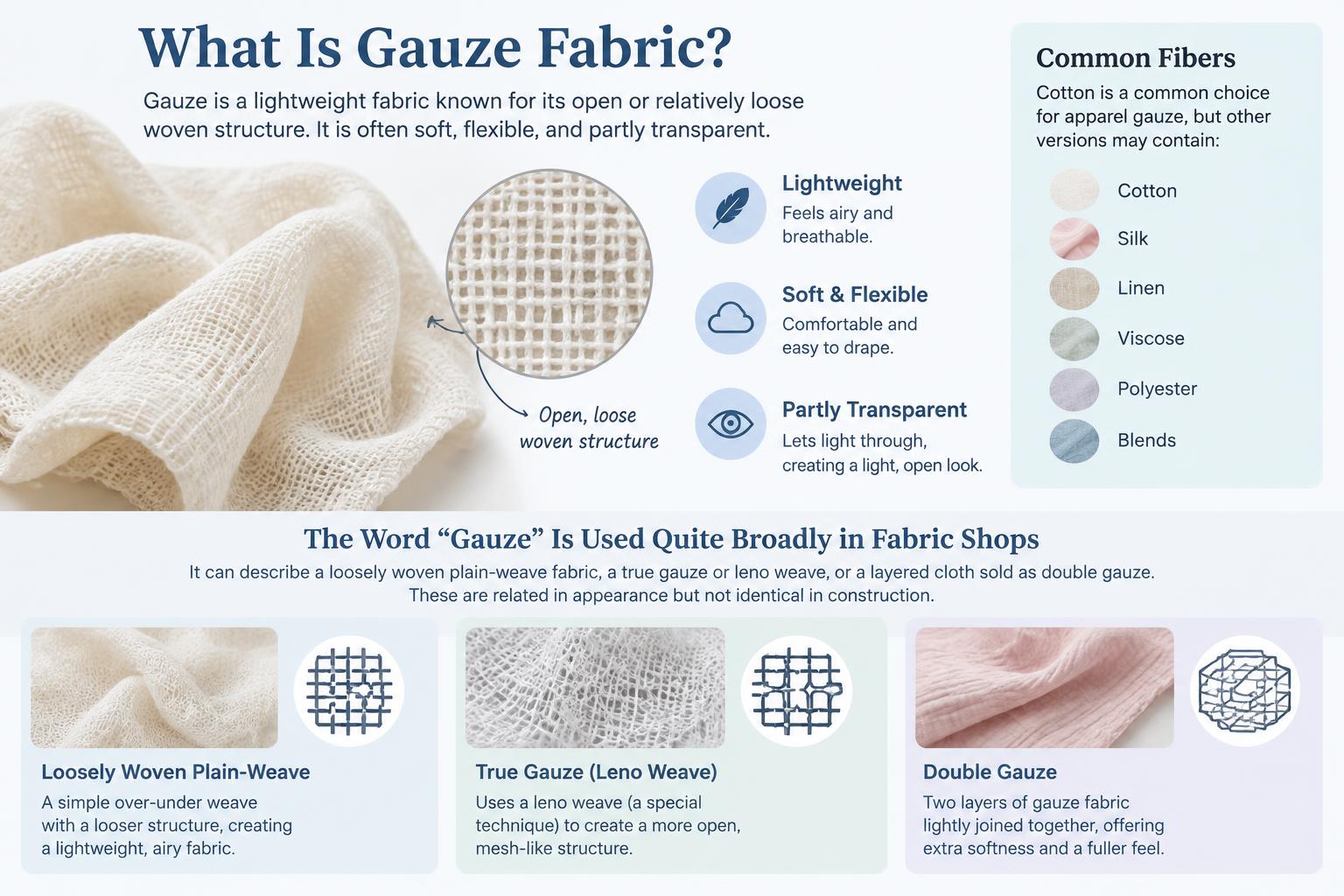
| Cotton Gauze | Open, soft, often textured or crinkled | Varies by number of layers | Casual dresses, tops, baby textiles |
| Cotton Poplin | Smooth, crisp, relatively structured | Usually offers more coverage | Shirts, uniforms, structured dresses |
How to Care for Cotton Voile Fabric
Proper care can help preserve the fabric’s delicate appearance. Always follow the garment’s care label because washing requirements vary according to composition, finishing, and decoration.
Washing Cotton Voile
- Use a gentle washing method when recommended.
- Follow the temperature specified on the care label.
- Separate dark and light colors when necessary.
- Avoid harsh agitation and unnecessary friction.
- Use a suitable mild detergent.
Drying Cotton Voile
Air-drying is often appropriate for delicate cotton voile garments. Avoid excessive heat and rough handling that may affect fabric dimensions or appearance.
Ironing Cotton Voile
Use an ironing temperature suitable for the garment’s fiber composition and care label. A pressing cloth may help protect delicate finishes or embroidery.
Storing Cotton Voile Garments
Store garments in a clean, dry place away from rough surfaces and sharp accessories that may snag the fabric.
Conclusion: Is Cotton Voile Fabric the Right Choice?
Cotton voile fabric is an attractive option for garments that require a lightweight feel, delicate appearance, and comfortable styling. Its fine woven construction makes it particularly suitable for summer blouses, dresses, scarves, resortwear, and decorative clothing layers.
- However, its semi-sheer appearance and limited structural body mean that it is not the best choice for every garment. Designers and manufacturers should consider opacity, fabric strength, shrinkage, lining requirements, and sewing methods before selecting it for production.
- For fashion brands, the right cotton voile fabric should balance visual appeal, comfort, durability, and manufacturing efficiency. Careful material testing and sample development can help achieve consistent results in finished garments.
Looking for a garment manufacturing partner in Vietnam? Visit Mekong Garment to explore garment manufacturing information and discuss your apparel production requirements.
Frequently Asked Questions About Cotton Voile Fabric
Is Cotton Voile Fabric Good for Summer?
Yes. Cotton voile is often suitable for summer clothing because of its lightweight construction and airy feel. Comfort also depends on garment design, climate, and fabric density.
Is Cotton Voile Fabric Transparent?
Many cotton voile fabrics are sheer or semi-sheer. The level of transparency depends on yarns, weave density, color, and lighting.
Does Cotton Voile Need a Lining?
Not always. However, dresses, skirts, and certain blouses may require lining or additional layers when more coverage is needed.
Is Cotton Voile Soft?
Cotton voile is often soft and fine, although some constructions have a slightly crisp feel because of yarn twist and finishing.
Is Cotton Voile the Same as Chiffon?
No. Both are lightweight fabrics, but their yarns, surface textures, drape, and fiber compositions can differ.
Does Cotton Voile Shrink After Washing?
It can. Cotton voile may shrink if it has not been adequately stabilized. Fabric testing and suitable care are important.
Is Cotton Voile Difficult to Sew?
It can be more challenging than heavier woven cotton fabrics because it is fine and lightweight. Careful cutting, suitable needles, controlled stitching, and appropriate seam finishes can improve results.
Is Cotton Voile Suitable for Dresses?
Yes. It is suitable for lightweight dresses, gathered designs, and layered garments. Lining requirements should be evaluated during design development.
Is Cotton Voile Better Than Cotton Lawn?
Neither fabric is universally better. Voile is often preferred for a more airy, translucent appearance, while lawn may be more suitable for garments requiring a smoother surface and slightly greater body.
What Should Clothing Brands Check Before Buying Cotton Voile?
Brands should confirm composition, GSM, opacity, shrinkage, colorfastness, fabric strength, sewing performance, usable width, and consistency with approved samples.