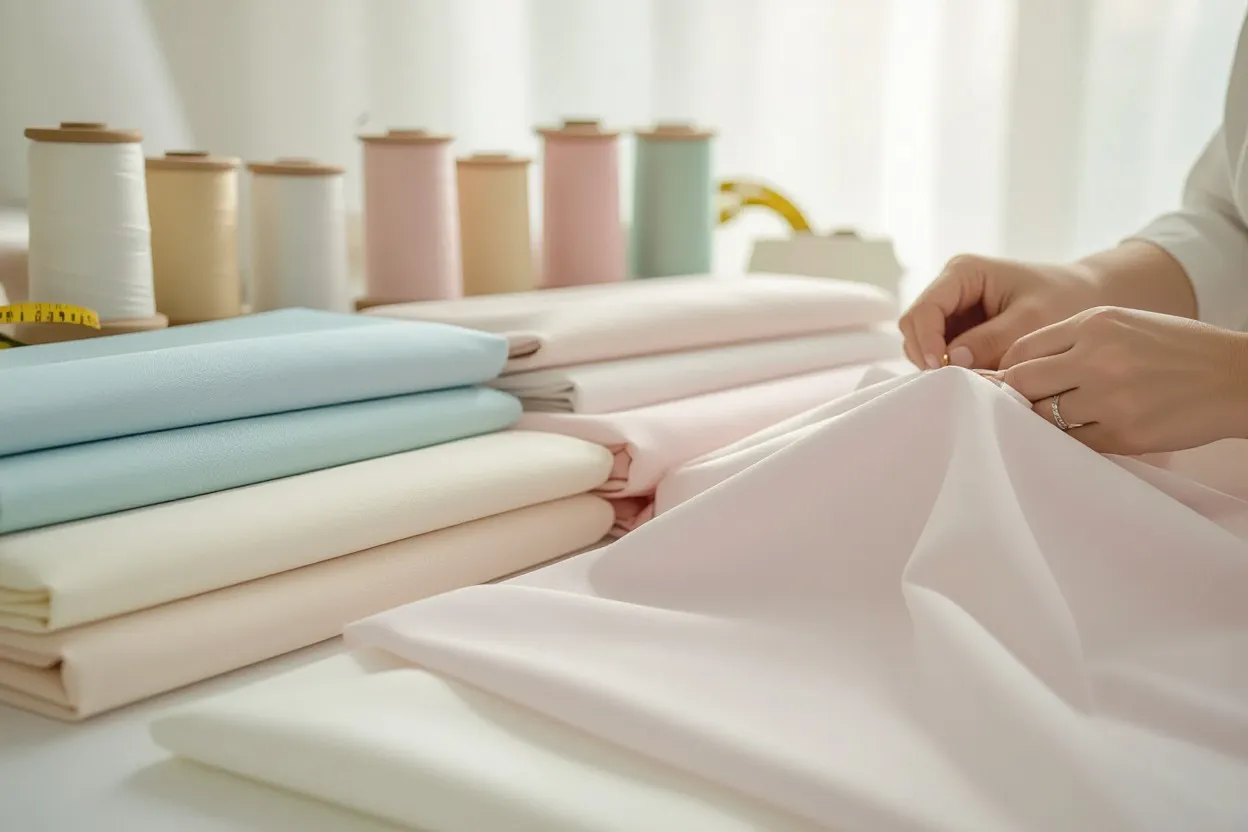

Lawn fabric is a fine, lightweight woven material valued for its smooth surface, soft feel, and neat appearance. It is a popular choice for summer dresses, blouses, shirts, skirts, nightwear, and delicate clothing details. Unlike heavier shirting fabrics, cotton lawn can feel light on the body while still holding a clean shape. For fashion brands, however, the word lawn is only the starting point. Two fabrics sold as cotton lawn may differ in weight, opacity, drape, printing quality, and shrinkage. This guide explains what lawn fabric is, how it is made, its benefits and drawbacks, how it compares with other lightweight cotton fabrics, and what garment manufacturers should check before bulk production.
What Is Lawn Fabric?
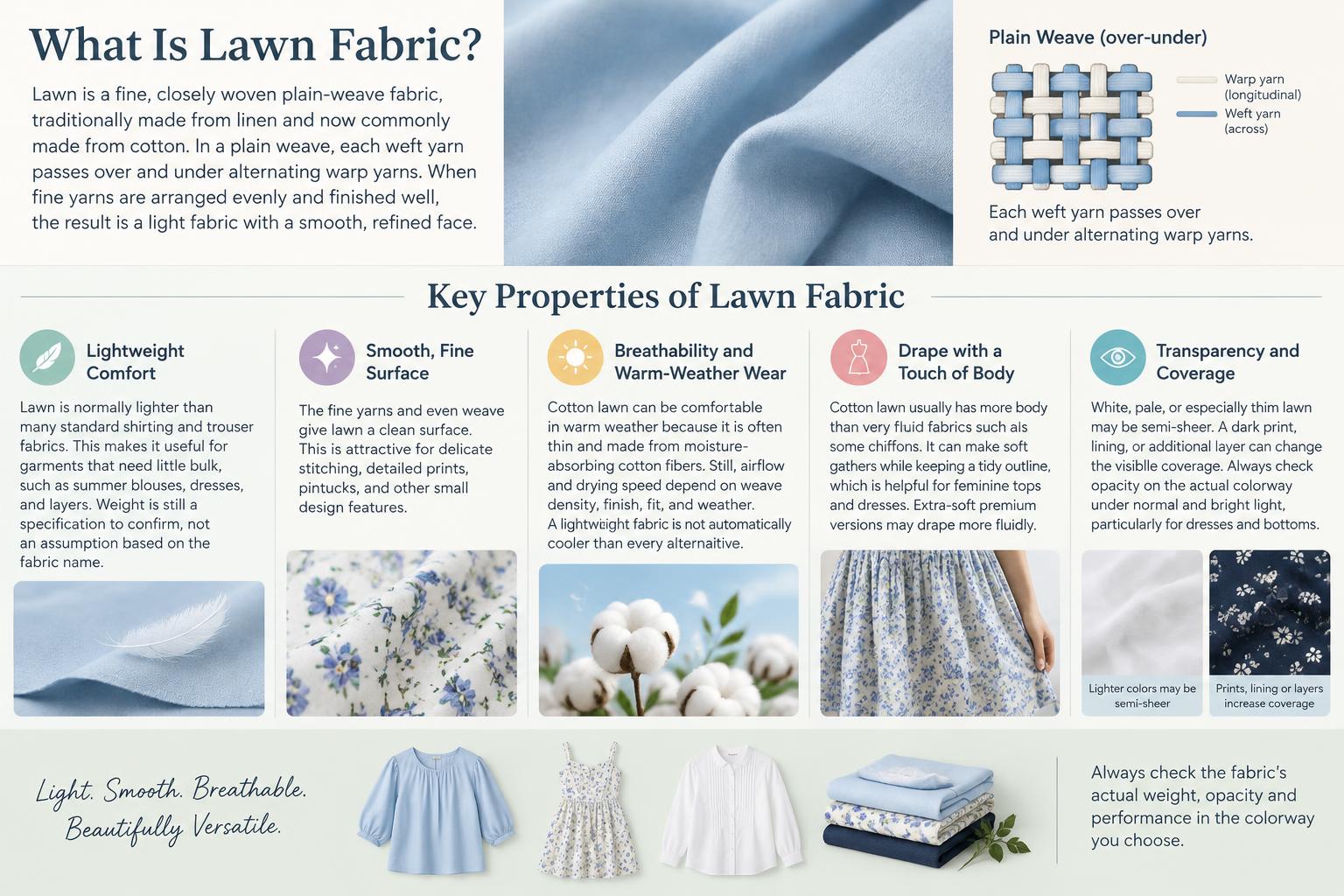
Lawn is a fine, closely woven plain-weave fabric, traditionally made from linen and now commonly made from cotton. In a plain weave, each weft yarn passes over and under alternating warp yarns. When fine yarns are arranged evenly and finished well, the result is a light fabric with a smooth, refined face.
Key Properties of Lawn Fabric:
- Lightweight Comfort: Lawn is normally lighter than many standard shirting and trouser fabrics. This makes it useful for garments that need little bulk, such as summer blouses, dresses, and layers. Weight is still a specification to confirm, not an assumption based on the fabric name.
- Smooth, Fine Surface: The fine yarns and even weave give lawn a clean surface. This is attractive for delicate stitching, detailed prints, pintucks, and other small design features.
- Breathability and Warm-Weather Wear: Cotton lawn can be comfortable in warm weather because it is often thin and made from moisture-absorbing cotton fibers. Still, airflow and drying speed depend on weave density, finish, fit, and weather. A lightweight fabric is not automatically cooler than every alternative.
- Drape with a Touch of Body: Cotton lawn usually has more body than very fluid fabrics such as some chiffons. It can make soft gathers while keeping a tidy outline, which is helpful for feminine tops and dresses. Extra-soft premium versions may drape more fluidly.
- Transparency and Coverage: White, pale, or especially thin lawn may be semi-sheer. A dark print, lining, or additional layer can change the visible coverage. Always check opacity on the actual colorway under normal and bright light, particularly for dresses and bottoms.
Wrinkling and Limited Stretch
Like many woven cotton fabrics, lawn can crease with wear. Standard 100% cotton lawn has little mechanical stretch, so fitted garments need enough ease or a different fabric construction. If the design needs stretch, test a suitable blend and recovery after wear.
What Does Cotton Lawn Feel Like?
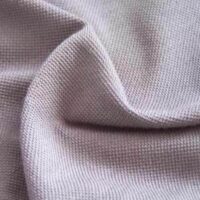
Good cotton lawn often has a soft, clean touch with a little crispness. It is lighter and finer than many everyday cotton shirting fabrics, yet it can hold pleats, gathers, collars, and neat seams. Its drape depends on the yarn, weave density, and finishing process: some lawns feel fresh and slightly structured, while premium soft-finished lawns feel fluid and almost silky.
Is Lawn Fabric Always Made from Cotton?
No. Cotton lawn is the best-known apparel type, but lawn-like fabrics can also be made from other fibers or blends. Check the supplier’s fiber composition rather than treating “lawn” as proof of 100% cotton. A pure cotton lawn and a polyester-cotton lawn may look similar but behave differently during washing, pressing, and wear.
Where Did Lawn Fabric Originate?
Lawn has a long history as a fine, light cloth used in clothing and household textiles. The name is often associated with Laon in France, although modern commercial lawn covers many fiber qualities and manufacturing regions. Today, mills produce both simple everyday lawn and premium printed versions for fashion collections.
Advantages and Disadvantages of Lawn Fabric
Advantages
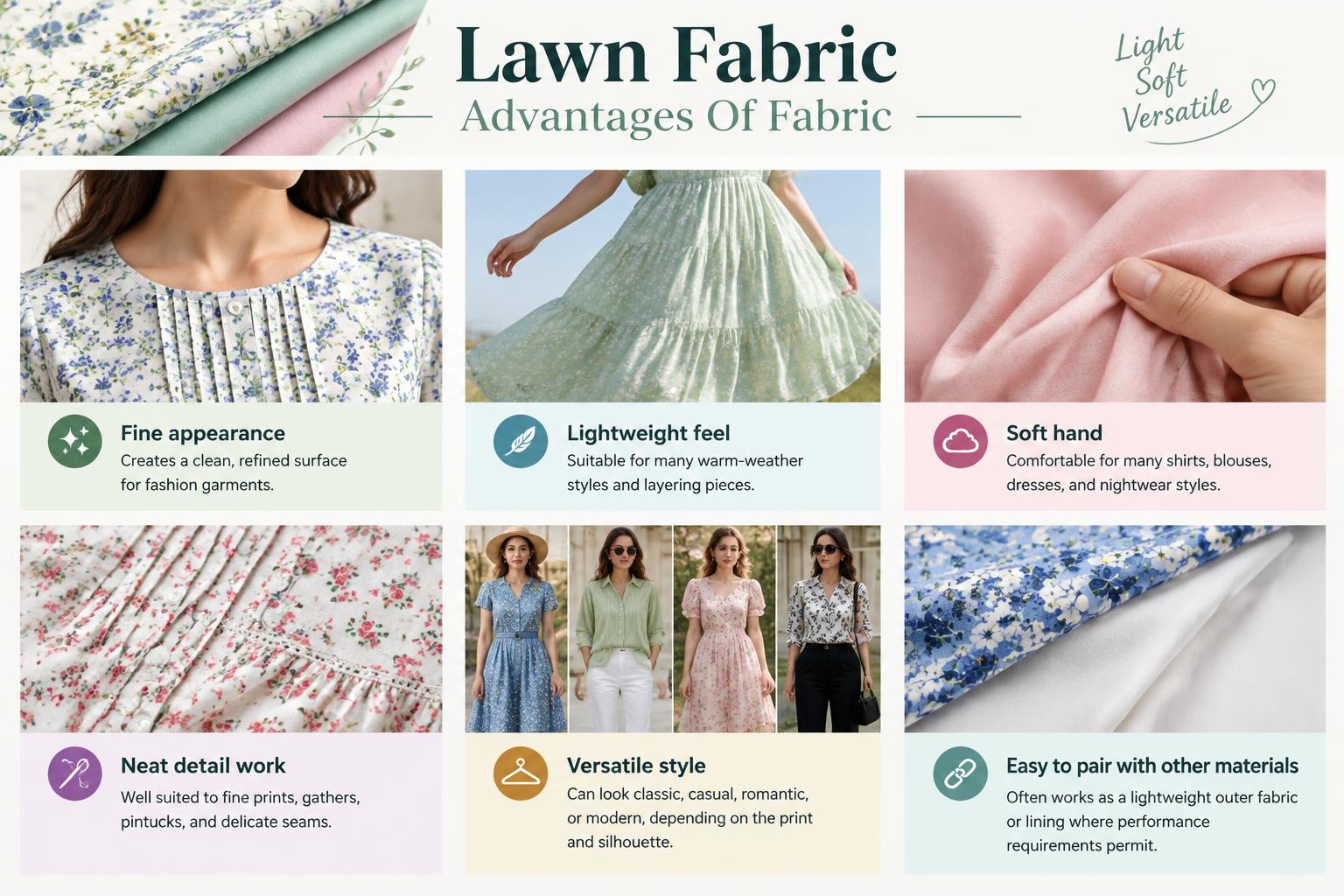
- Fine appearance: Creates a clean, refined surface for fashion garments.
- Lightweight feel: Suitable for many warm-weather styles and layering pieces.
- Soft hand: Comfortable for many shirts, blouses, dresses, and nightwear styles.
- Neat detail work: Well suited to fine prints, gathers, pintucks, and delicate seams.
- Versatile style: Can look classic, casual, romantic, or modern depending on the print and silhouette.
- Easy to pair with other materials: Often works as a lightweight outer fabric or lining where performance requirements permit.
Disadvantages
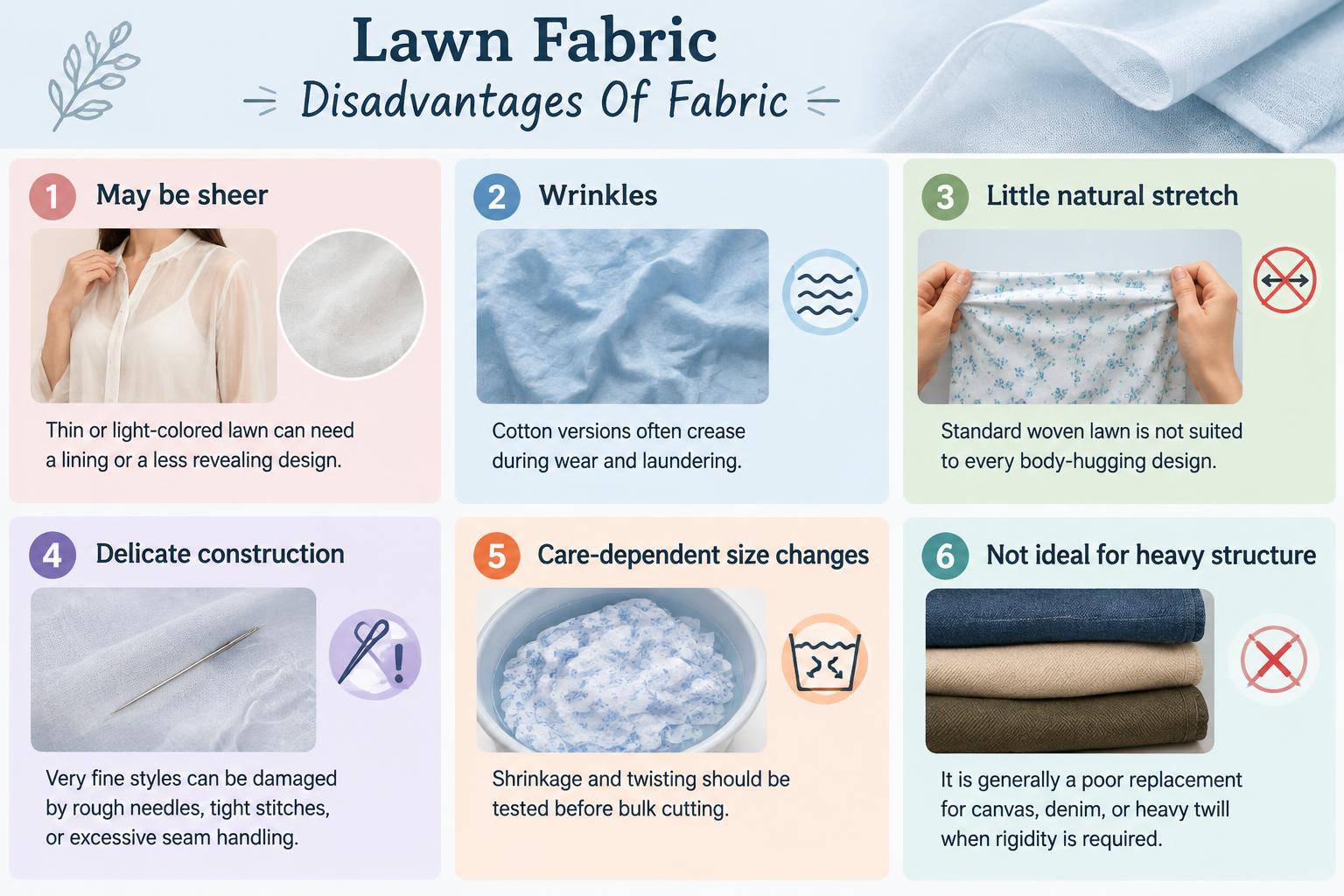
- May be sheer: Thin or light-colored lawn can need a lining or a less revealing design.
- Wrinkles: Cotton versions often crease during wear and laundering.
- Little natural stretch: Standard woven lawn is not suited to every body-hugging design.
- Delicate construction: Very fine styles can be damaged by rough needles, tight stitches, or excessive seam handling.
- Care-dependent size changes: Shrinkage and twisting should be tested before bulk cutting.
- Not ideal for heavy structure: It is generally a poor replacement for canvas, denim, or heavy twill when rigidity is required.
Main Types of Lawn Fabric
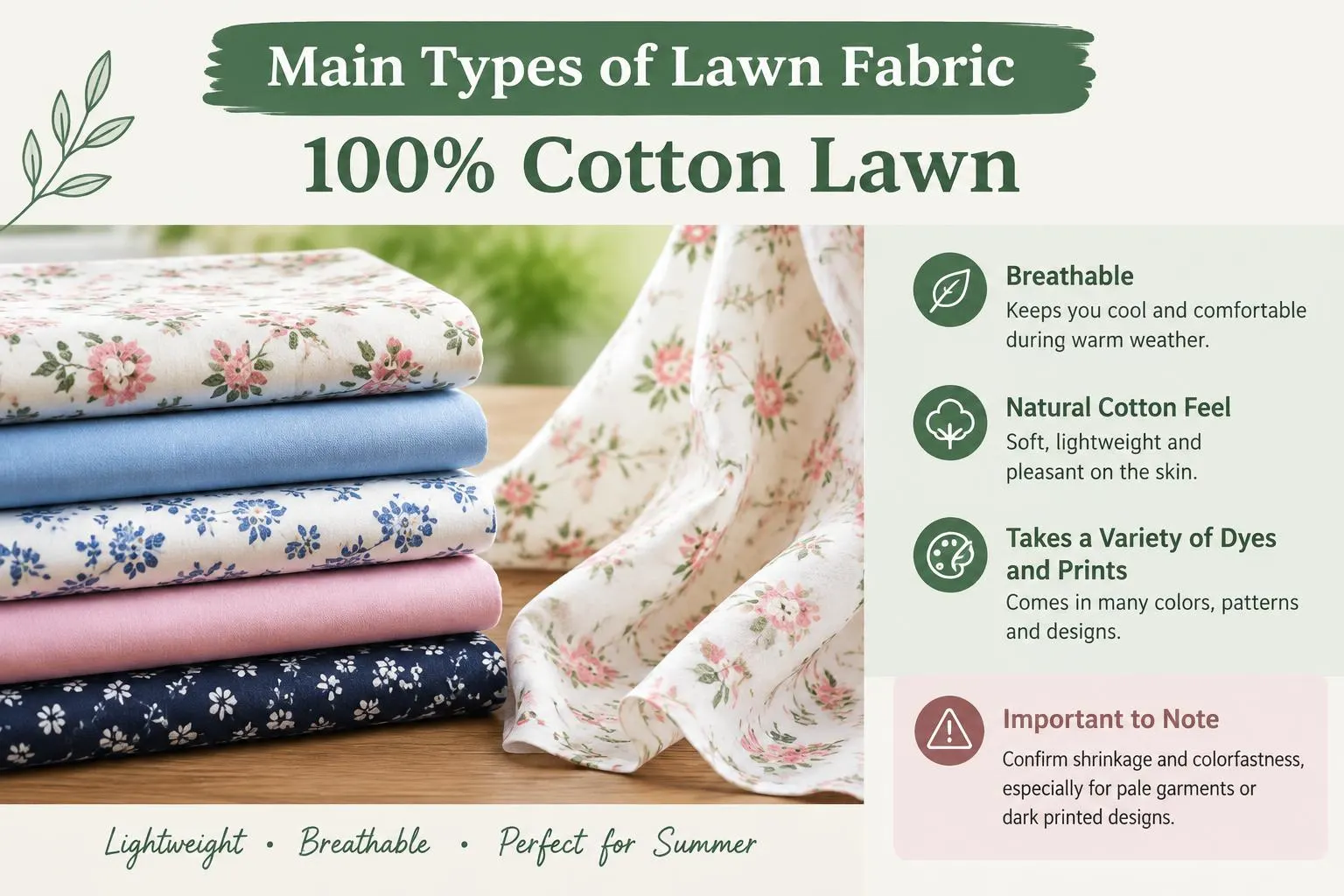
100% Cotton Lawn
This is the classic choice for breathable-looking summer clothing. It offers a natural cotton feel and takes a variety of dyes and prints. Confirm shrinkage and colorfastness, especially for pale garments or dark printed designs.
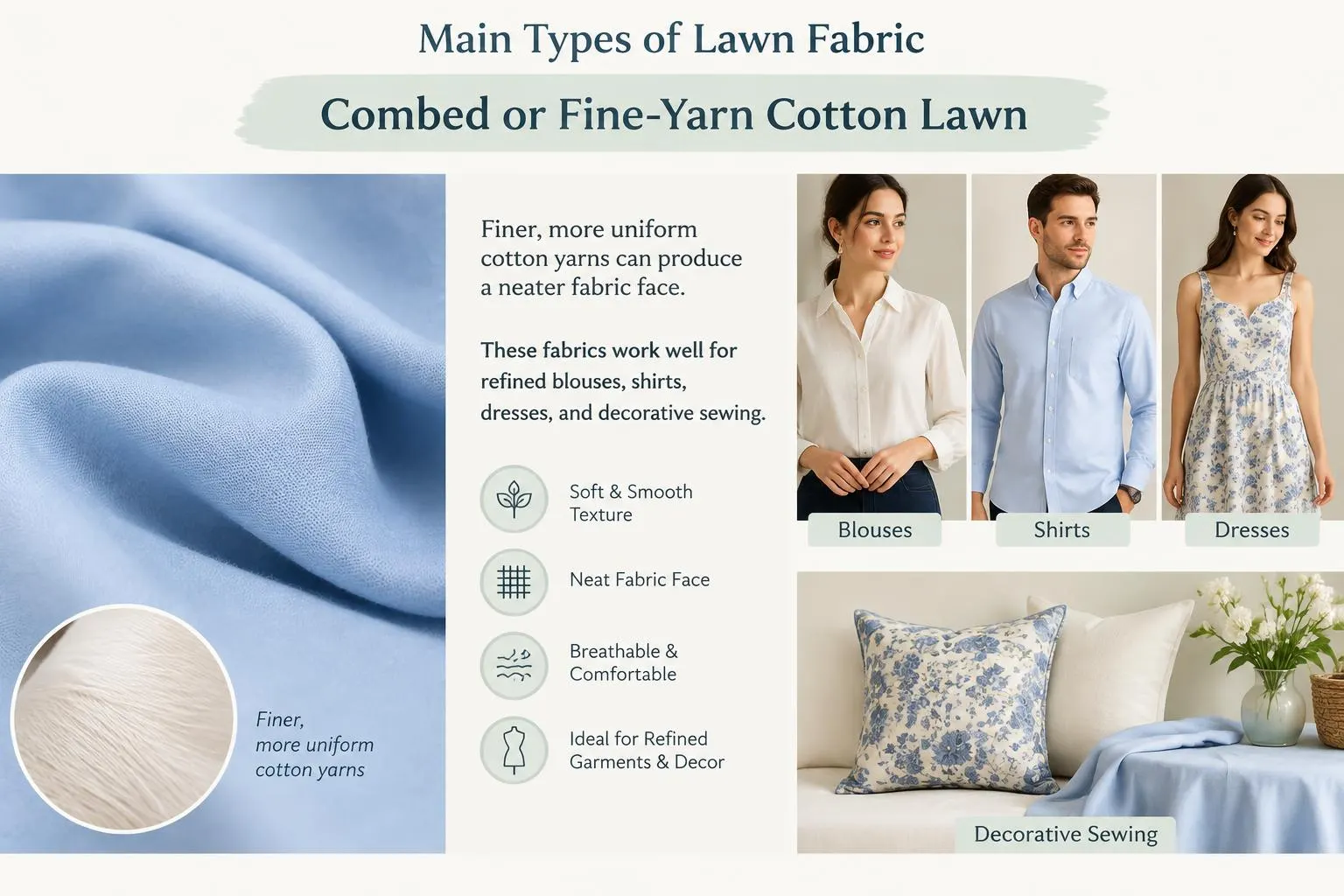
Combed or Fine-Yarn Cotton Lawn
Finer, more uniform cotton yarns can produce a neater fabric face. These fabrics work well for refined blouses, shirts, dresses, and decorative sewing.
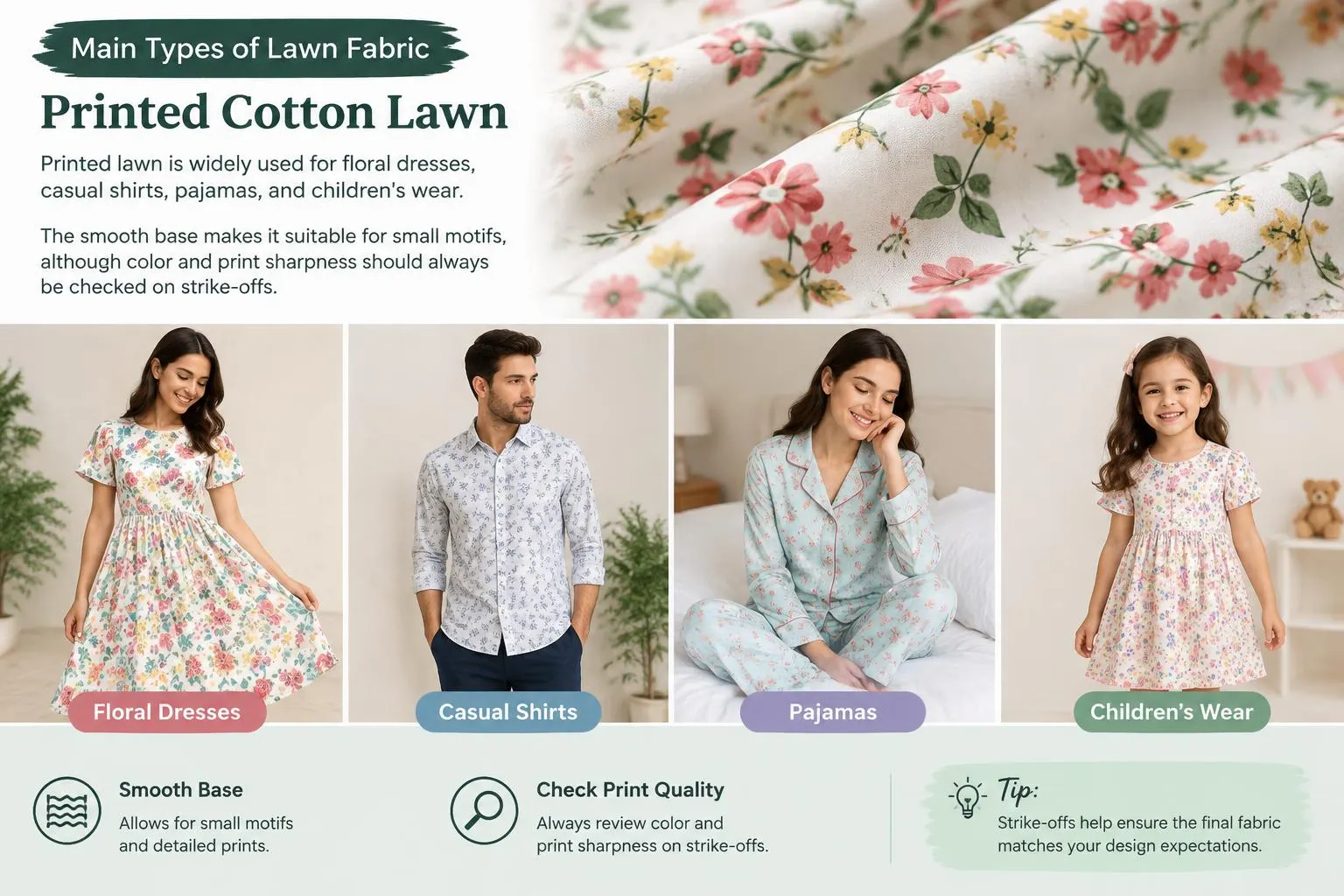
Printed Cotton Lawn
Printed lawn is widely used for floral dresses, casual shirts, pajamas, and children’s wear. The smooth base makes it suitable for small motifs, although color and print sharpness should always be checked on strike-offs.
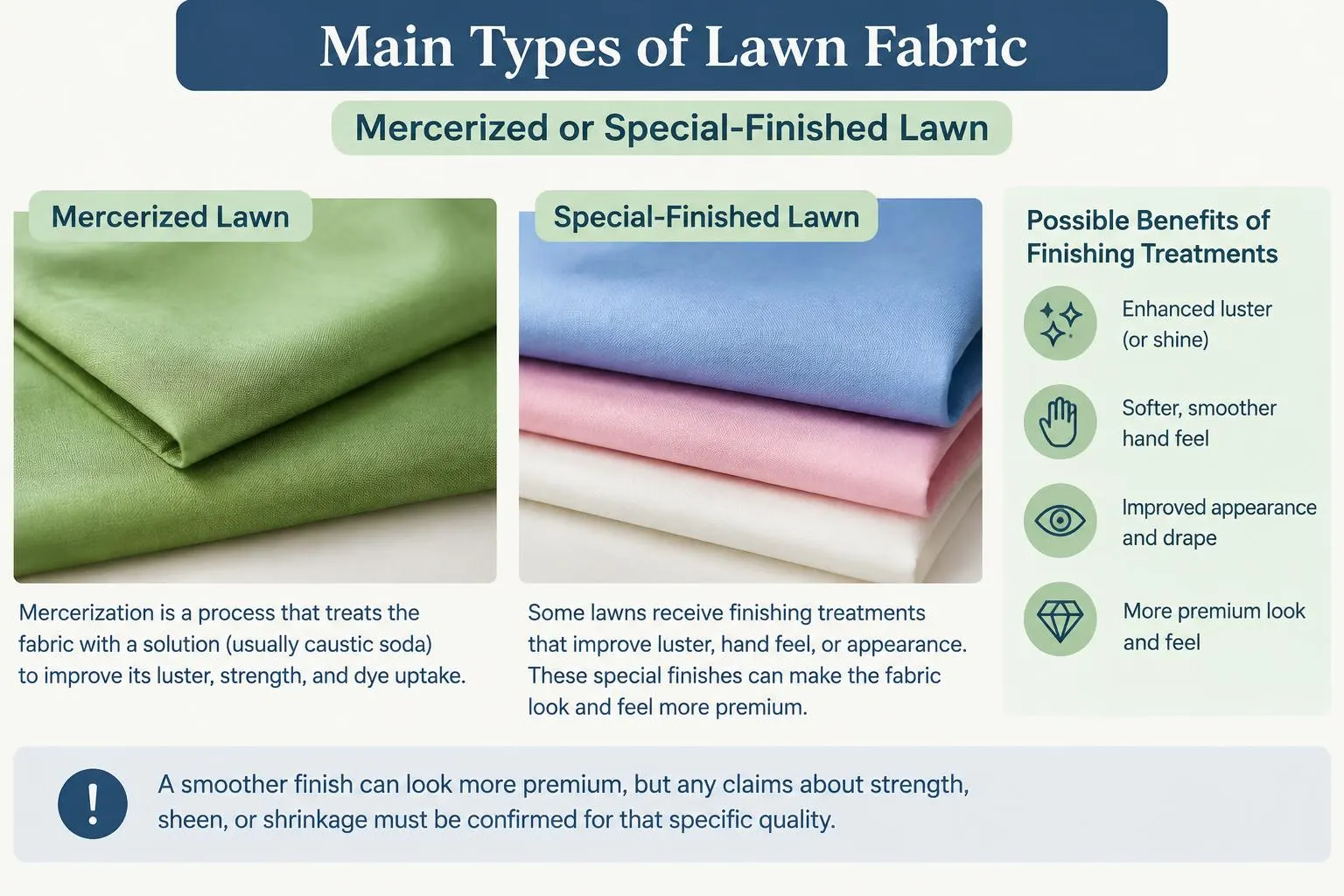
Mercerized or Special-Finished Lawn
Some lawns receive finishing treatments that improve luster, hand feel, or appearance. A smoother finish can look more premium, but any claims about strength, sheen, or shrinkage must be confirmed for that specific quality.
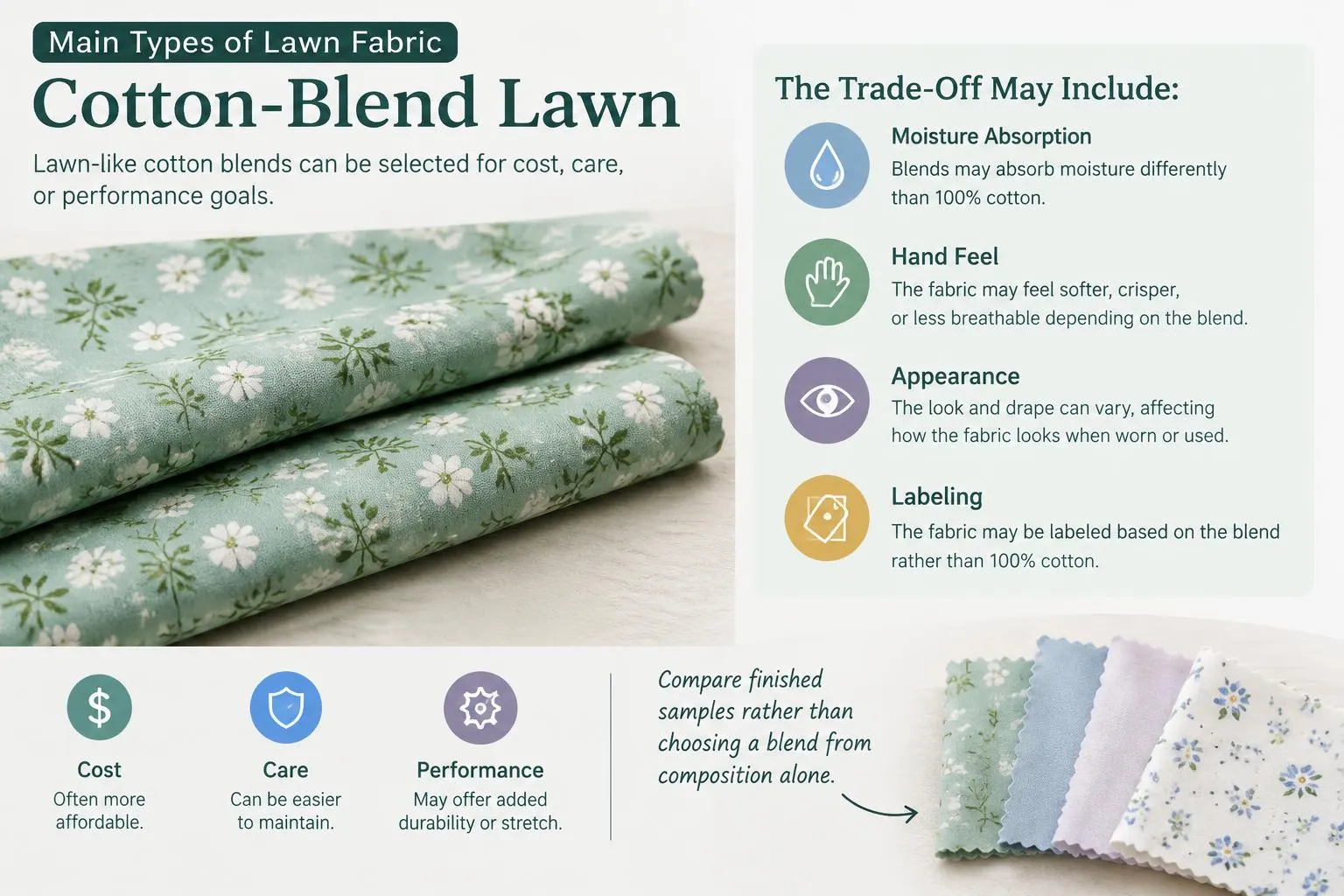
Cotton-Blend Lawn
Lawn-like cotton blends can be selected for cost, care, or performance goals. The trade-off may include changes in moisture absorption, hand feel, appearance, and labeling. Compare finished samples rather than choosing a blend from composition alone.
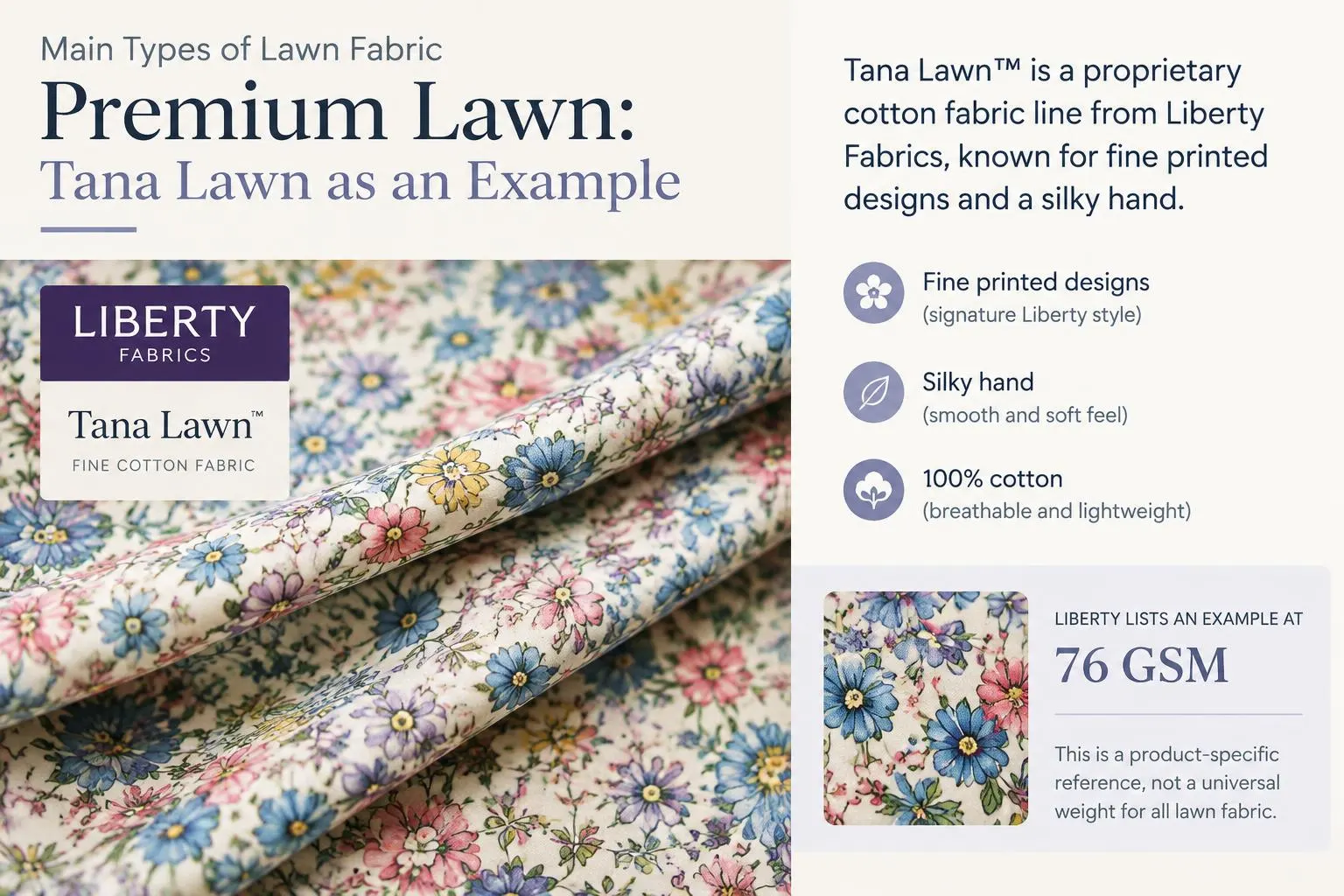
Premium Lawn: Tana Lawn as an Example
Tana Lawn is a proprietary cotton fabric line from Liberty Fabrics, known for fine printed designs and a silky hand. Liberty lists an example at 76 GSM. This is a product-specific reference, not a universal weight for all lawn fabric.
Lawn vs. Voile, Batiste, Cambric, Poplin, and Gauze
These fabric names overlap in some markets. The table describes common tendencies rather than universal technical standards.
| Fabric | Typical surface and hand | Relative coverage | Popular clothing uses | Main distinction |
|---|---|---|---|---|
| Cotton lawn | Very fine, smooth, soft-to-crisp | Semi-sheer to fairly covered | Blouses, dresses, shirts, nightwear | Refined surface with light body |
| Cotton voile | Very light, airy, often more open | Often sheer | Overlays, scarves, summer tops | Sheerness and floaty appearance |
| Cotton batiste | Fine, soft, delicate | Varies from sheer to moderate | Delicate blouses, linings, heirloom garments | Often softer and more delicate in hand |
| Cotton cambric | Smooth, fairly close-woven | Varies; often more cover | Everyday shirts, dresses | Often a little firmer in commercial ranges |
| Cotton poplin | Smooth, crisp, often more substantial | Usually more covered | Shirts, uniforms, structured dresses | More body and a firmer shirting look |
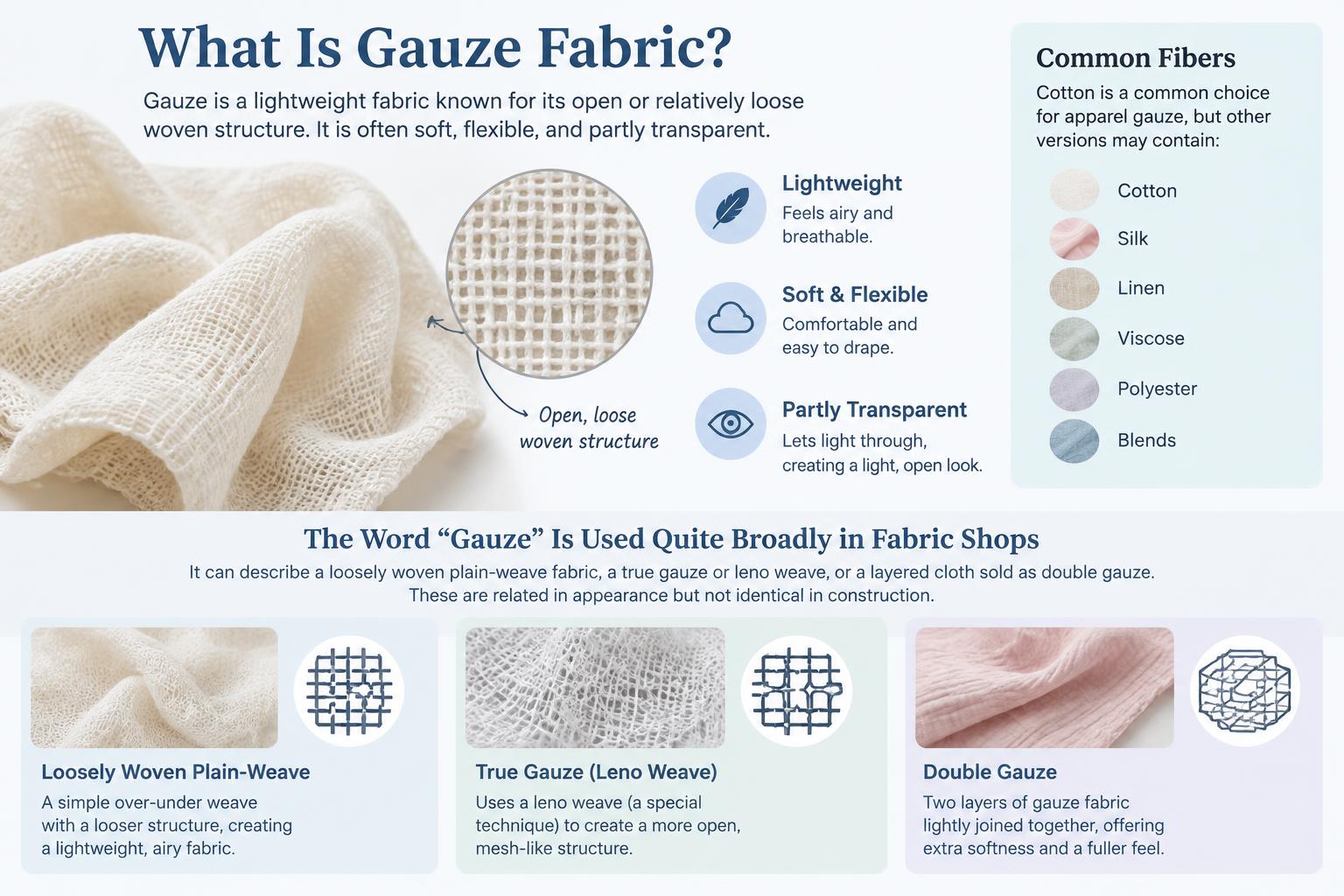
| Cotton gauze | Loose or open, often crinkled | Sheer to moderate; layers matter | Relaxed dresses, resortwear, casual tops | Softer, more textured casual look |
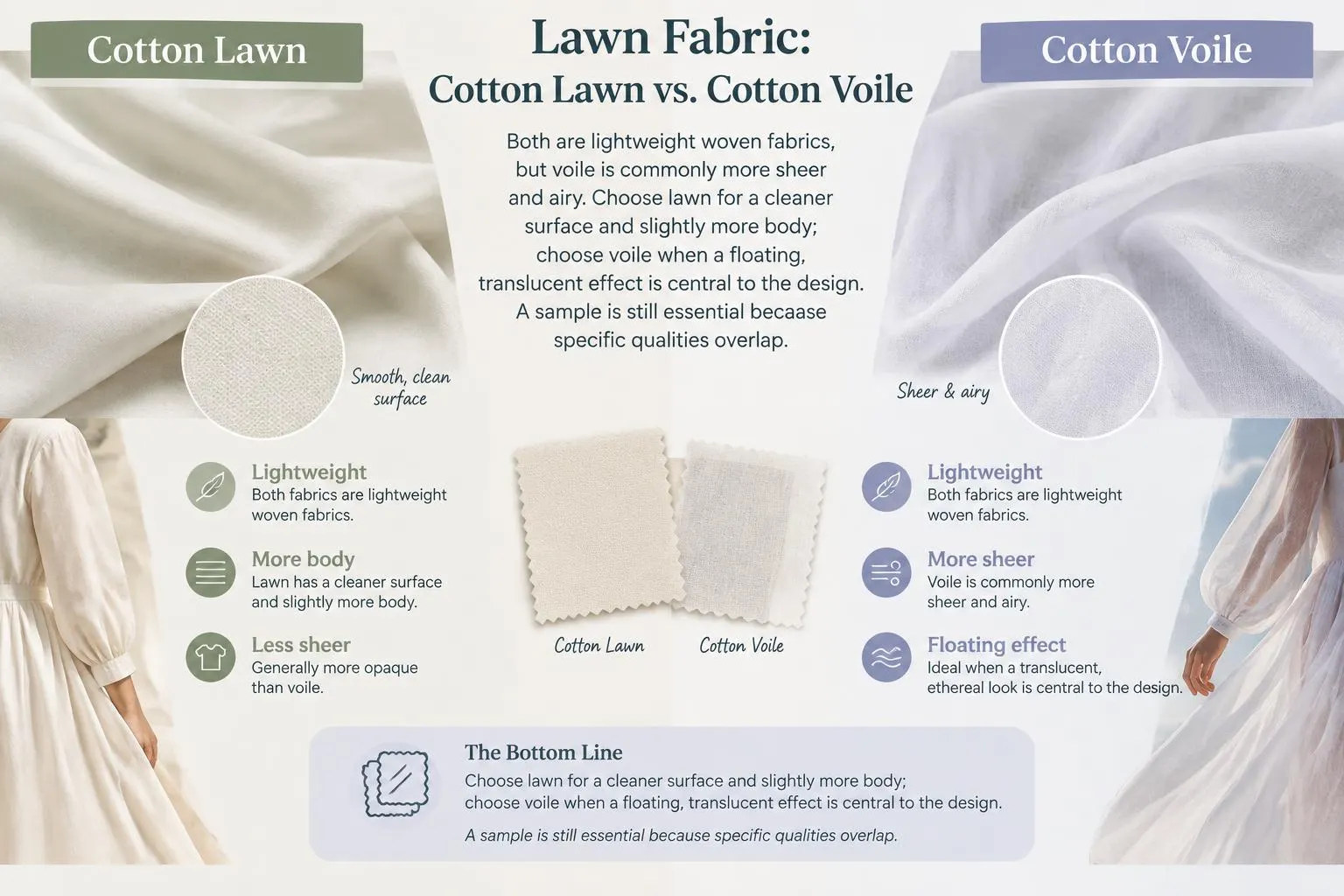
Cotton Lawn vs. Cotton Voile
Both are lightweight woven fabrics, but voile is commonly more sheer and airy. Choose lawn for a cleaner surface and slightly more body; choose voile when a floating, translucent effect is central to the design. A sample is still essential because specific qualities overlap.
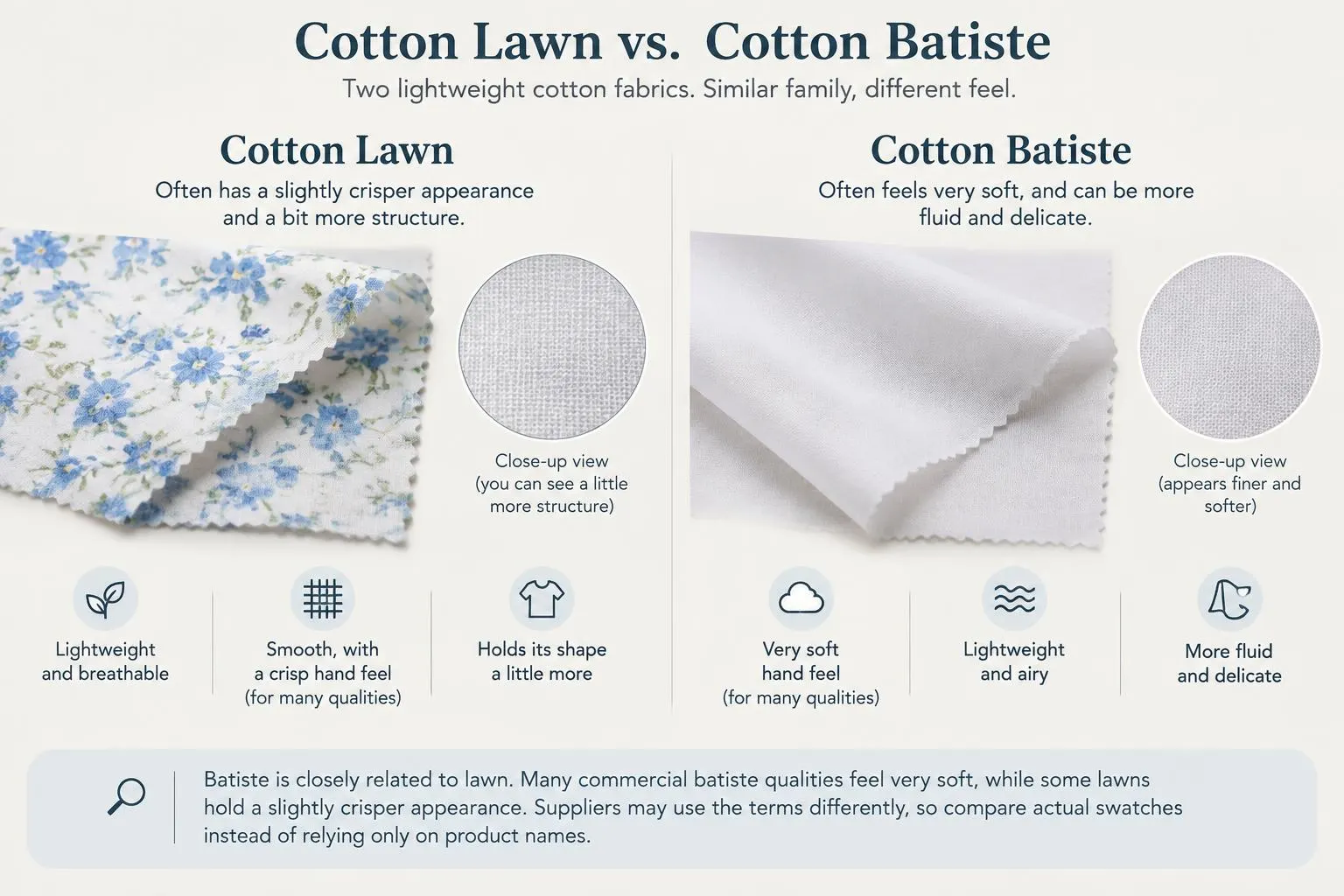
Cotton Lawn vs. Cotton Batiste
Batiste is closely related to lawn. Many commercial batiste qualities feel very soft, while some lawns hold a slightly crisper appearance. Suppliers may use the terms differently, so compare actual swatches instead of relying only on product names.
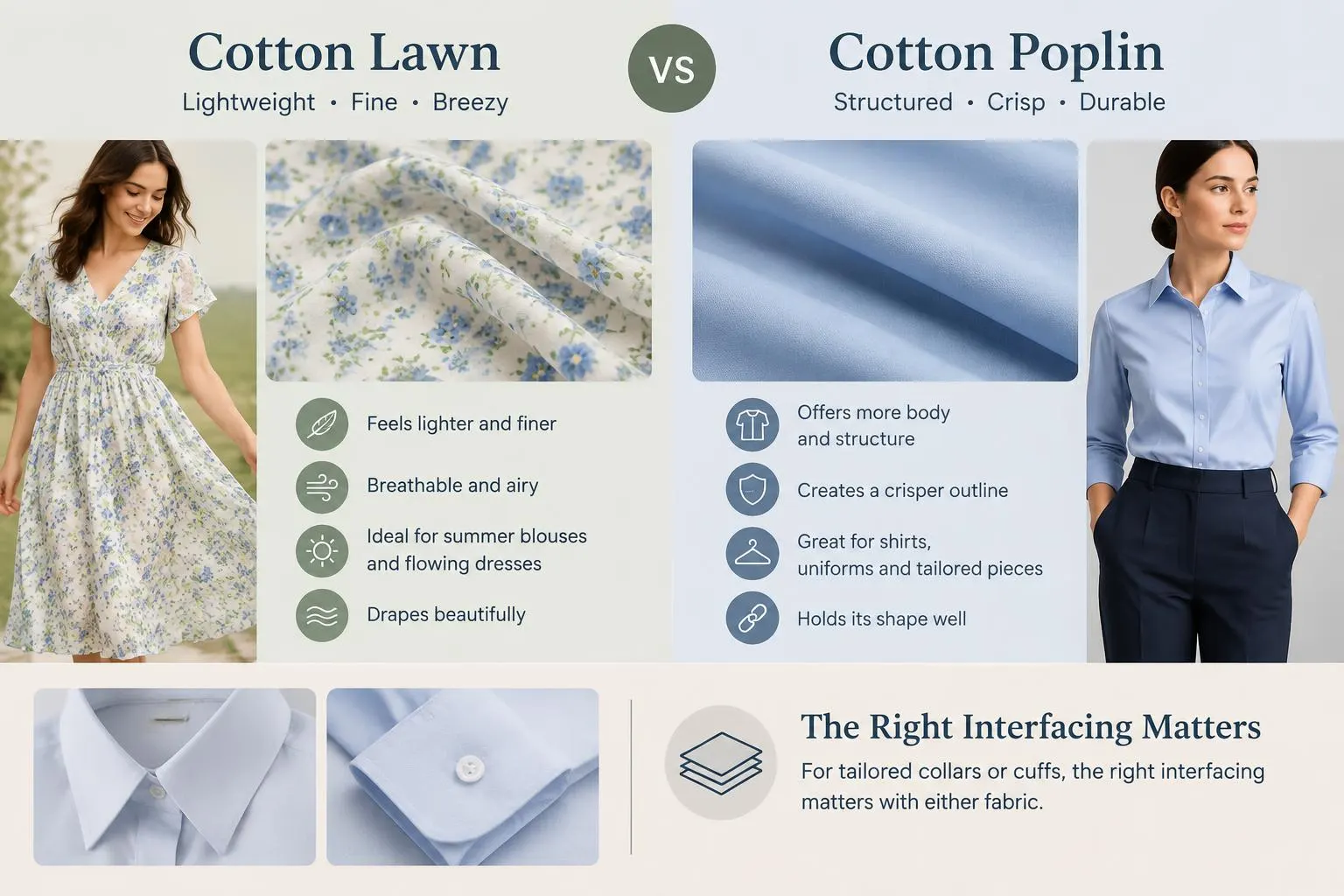
Cotton Lawn vs. Cotton Poplin
Poplin is often used when a shirt or uniform needs more body and a crisper outline. Lawn usually feels lighter and finer, making it attractive for summer blouses and flowing dresses. For tailored collars or cuffs, the right interfacing matters with either fabric.
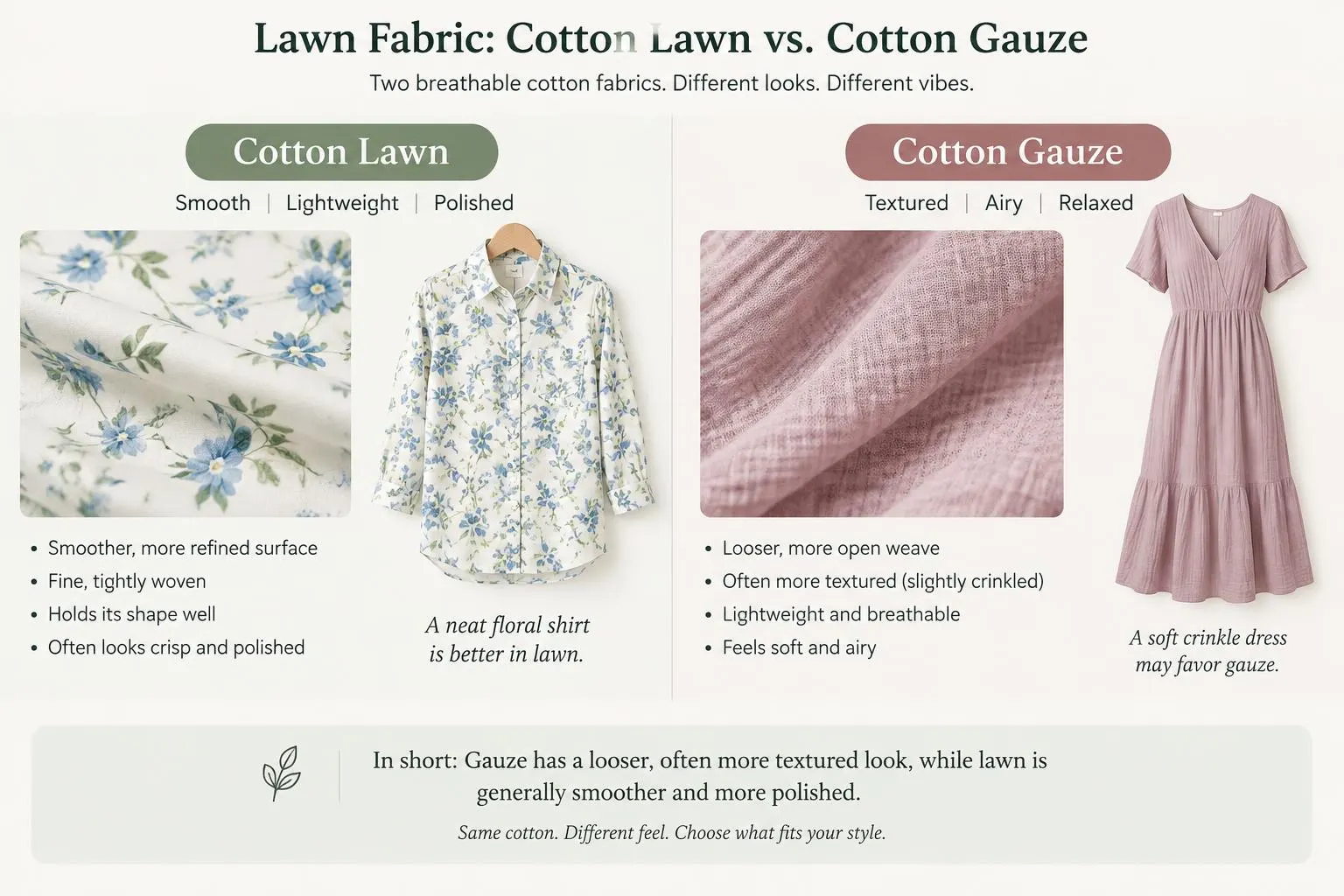
Cotton Lawn vs. Cotton Gauze
Gauze has a looser, often more textured look, while lawn is generally smoother and more polished. A soft crinkle dress may favor gauze; a neat floral shirt may be better in lawn.
Common Uses of Lawn Fabric in Clothing
Summer Dresses and Skirts
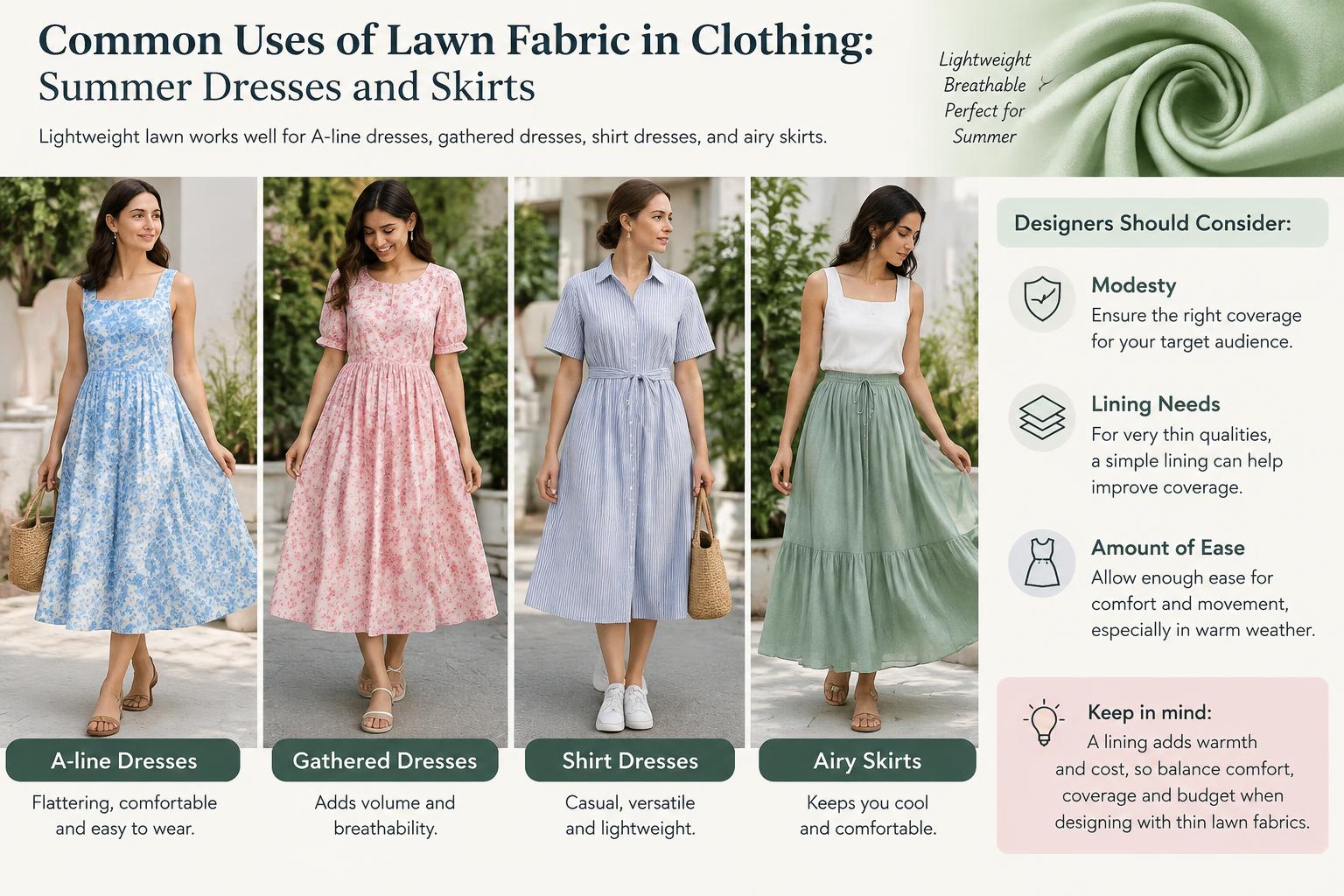
Lightweight lawn works well for A-line dresses, gathered dresses, shirt dresses, and airy skirts. Designers should consider modesty, lining needs, and the amount of ease. For very thin qualities, a simple lining can help improve coverage, but it also adds warmth and cost.
Blouses, Shirts, and Tunics
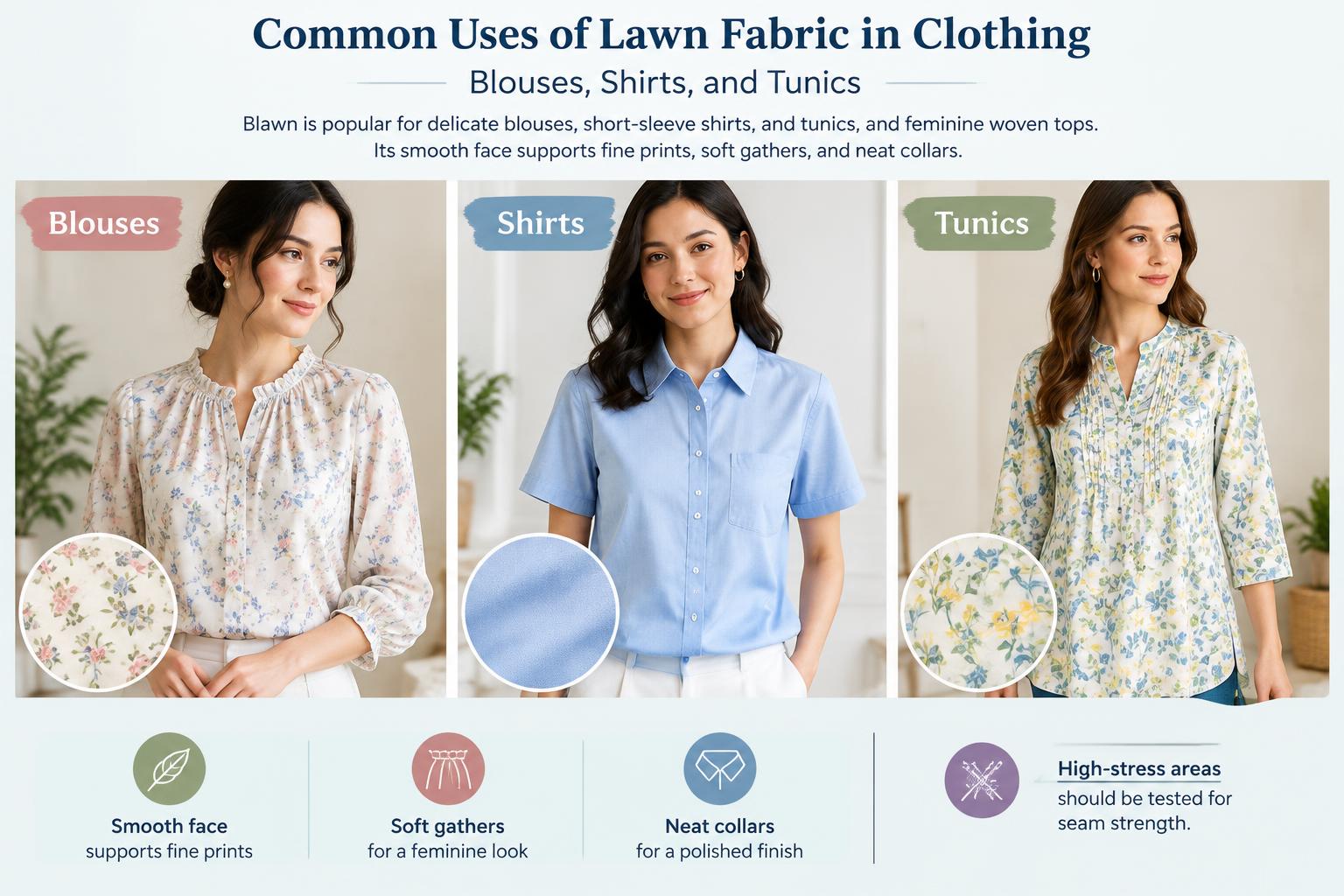
Lawn is popular for delicate blouses, short-sleeve shirts, tunics, and feminine woven tops. Its smooth face supports fine prints, soft gathers, and neat collars. High-stress areas should be tested for seam strength.
Sleepwear and Loungewear
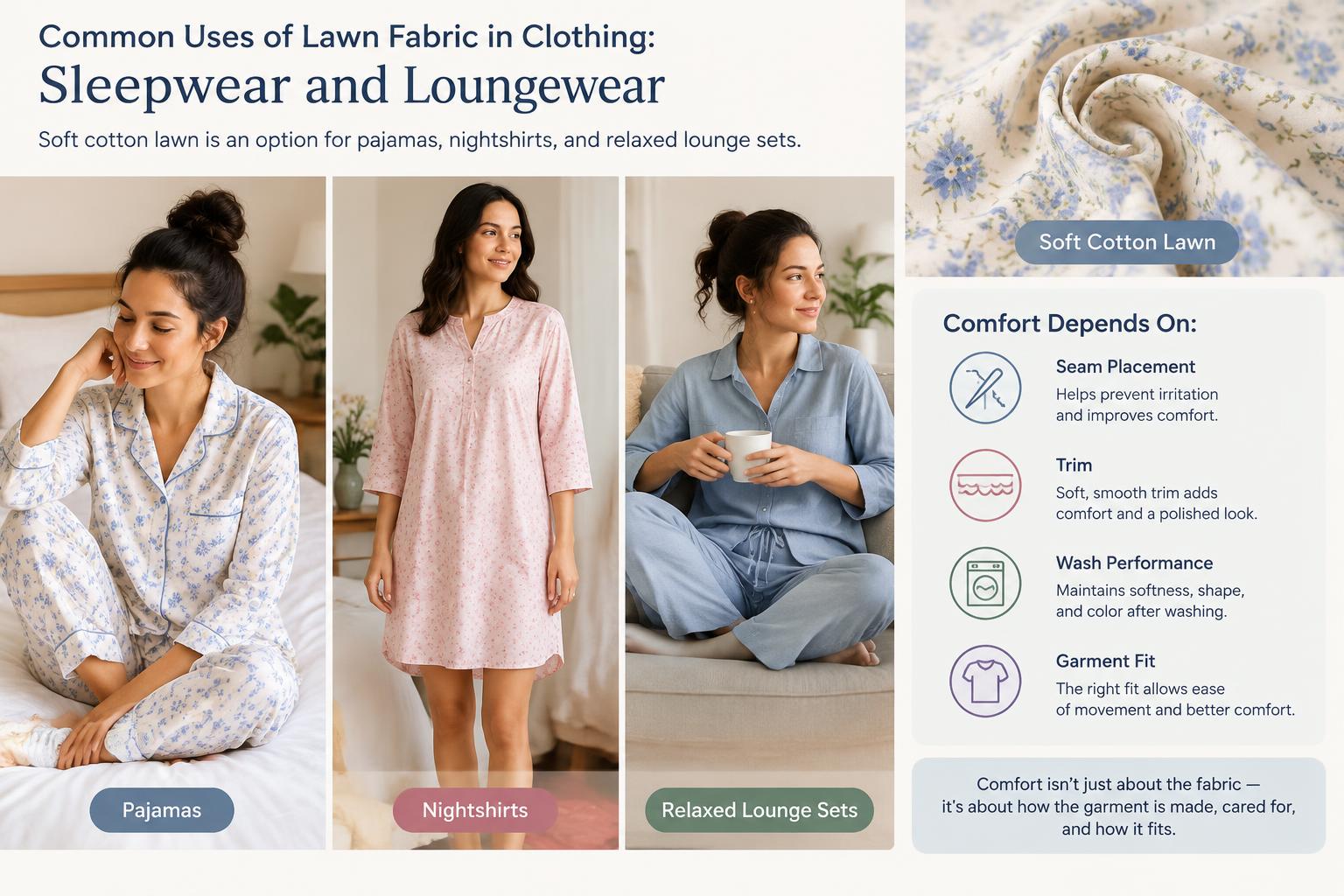
Soft cotton lawn is an option for pajamas, nightshirts, and relaxed lounge sets. Comfort depends on seam placement, trim, wash performance, and garment fit—not on the fabric alone.
Children’s Clothing
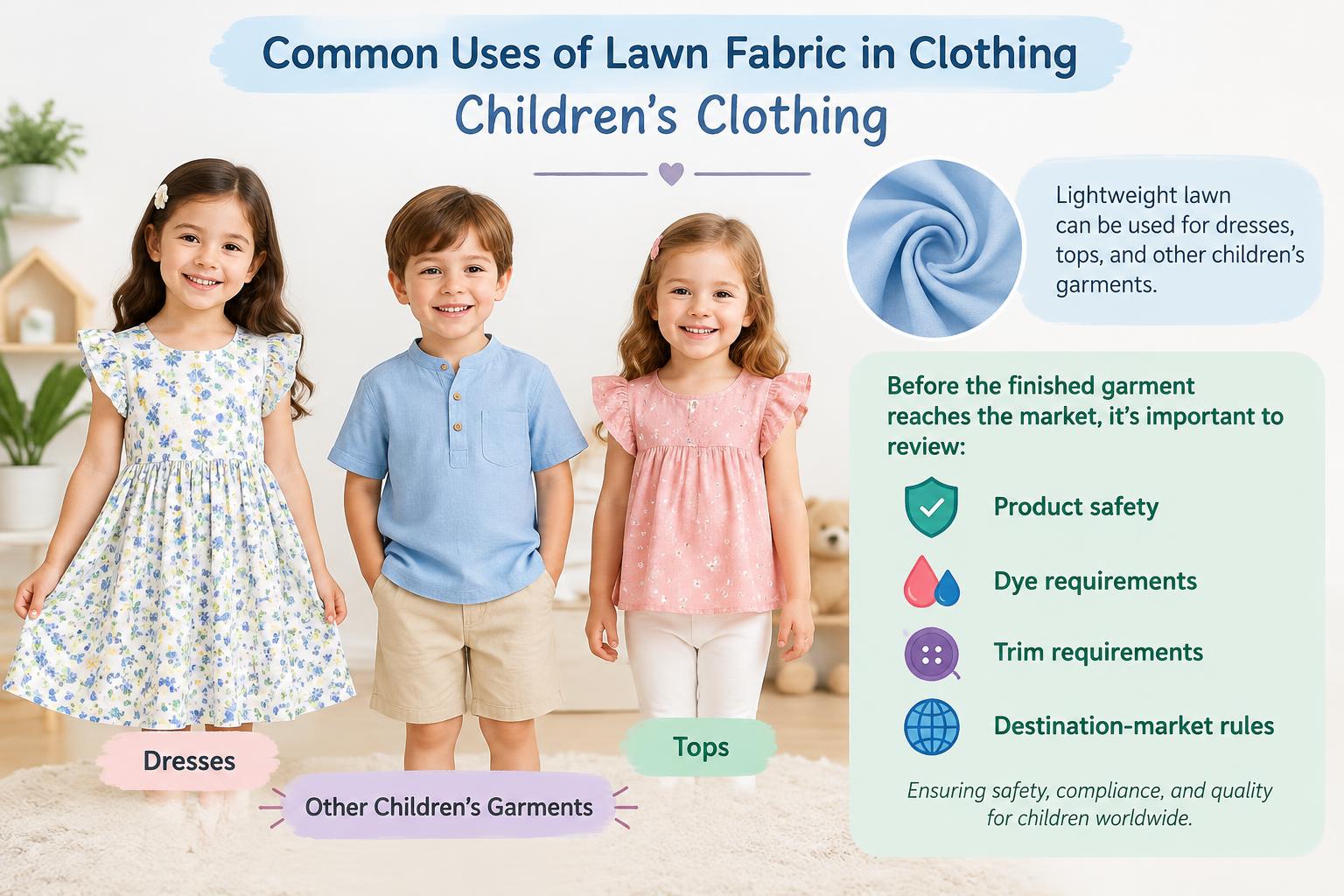
Lightweight lawn can be used for dresses, tops, and other children’s garments. Product safety, dye and trim requirements, and destination-market rules must be reviewed for the finished garment.
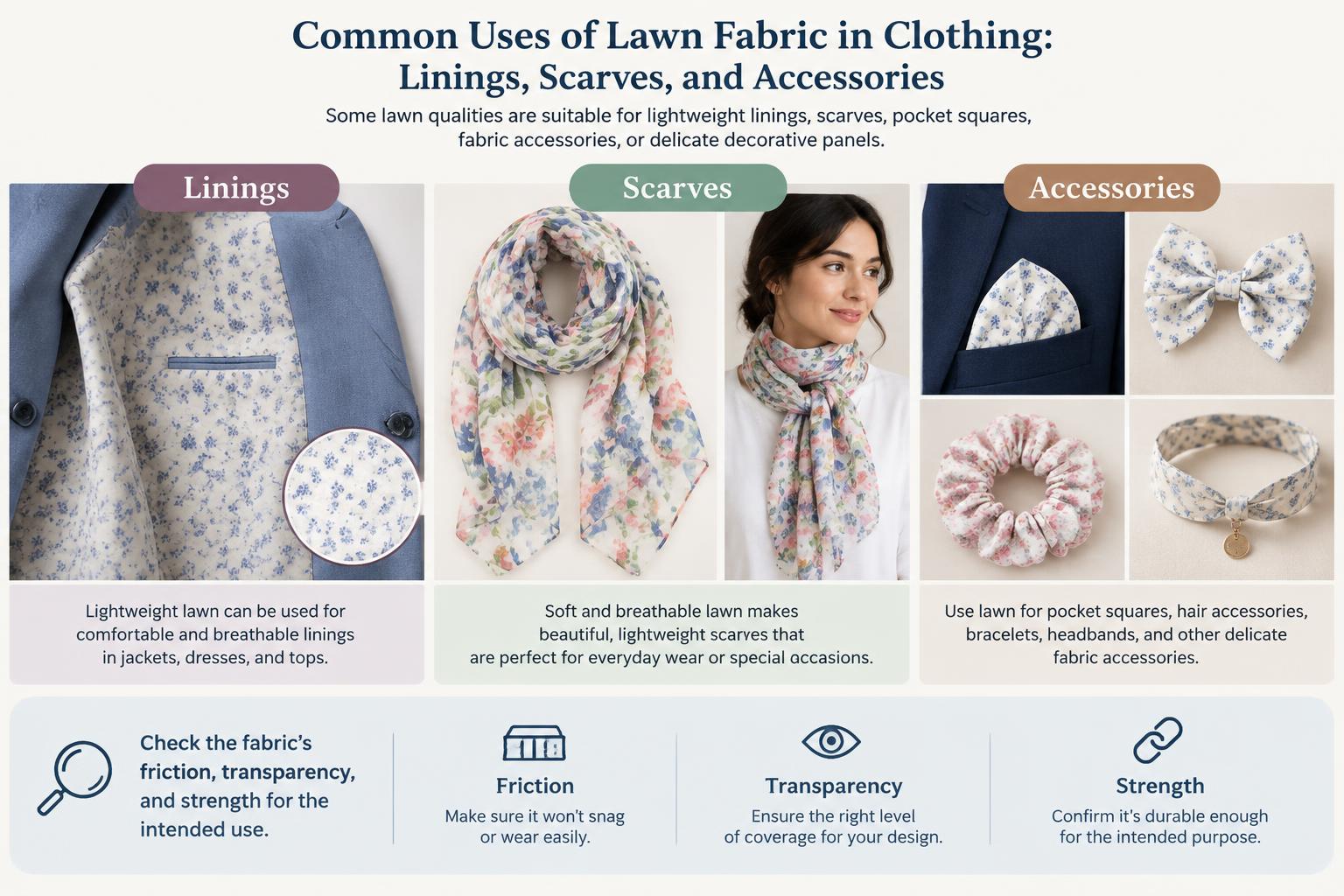
Linings, Scarves, and Accessories
Some lawn qualities are suitable for lightweight linings, scarves, pocket squares, fabric accessories, or delicate decorative panels. Check friction, transparency, and strength for the intended use.
Final Thoughts: Choosing the Right Lawn Fabric
Lawn fabric offers a fine balance of softness, light weight, smooth texture, and refined style. It can be an excellent material for summer dresses, lightweight shirts, blouses, and detailed feminine designs. Yet successful production depends on more than a fabric name: confirm the actual weave, weight, opacity, finish, shrinkage, and sewing performance.
=> Related reading: Full-Service Woven Garment Manufacturing in Vietnam · How Tech Packs Help Brands and Manufacturers Speak the Same Language.