Garments Sewing Department Workflow: Planning, Production, and Quality Control

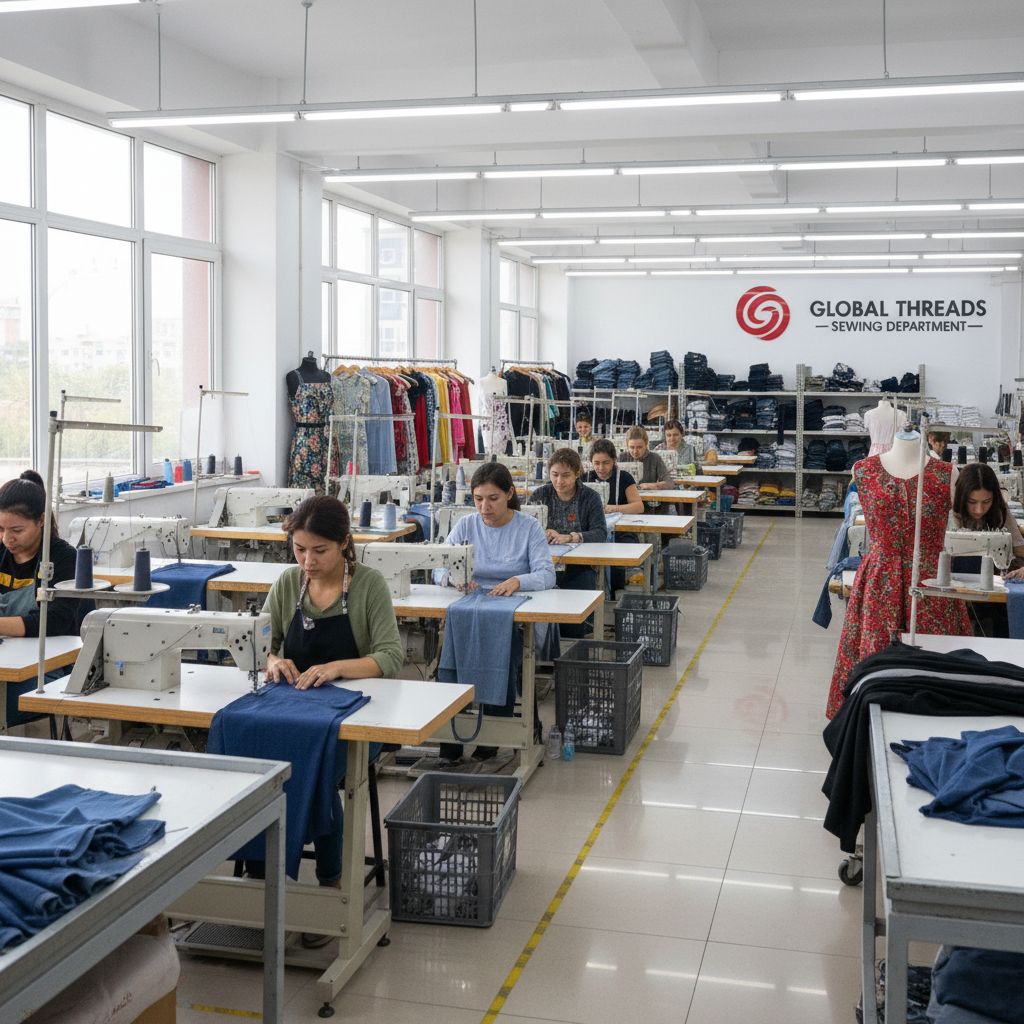
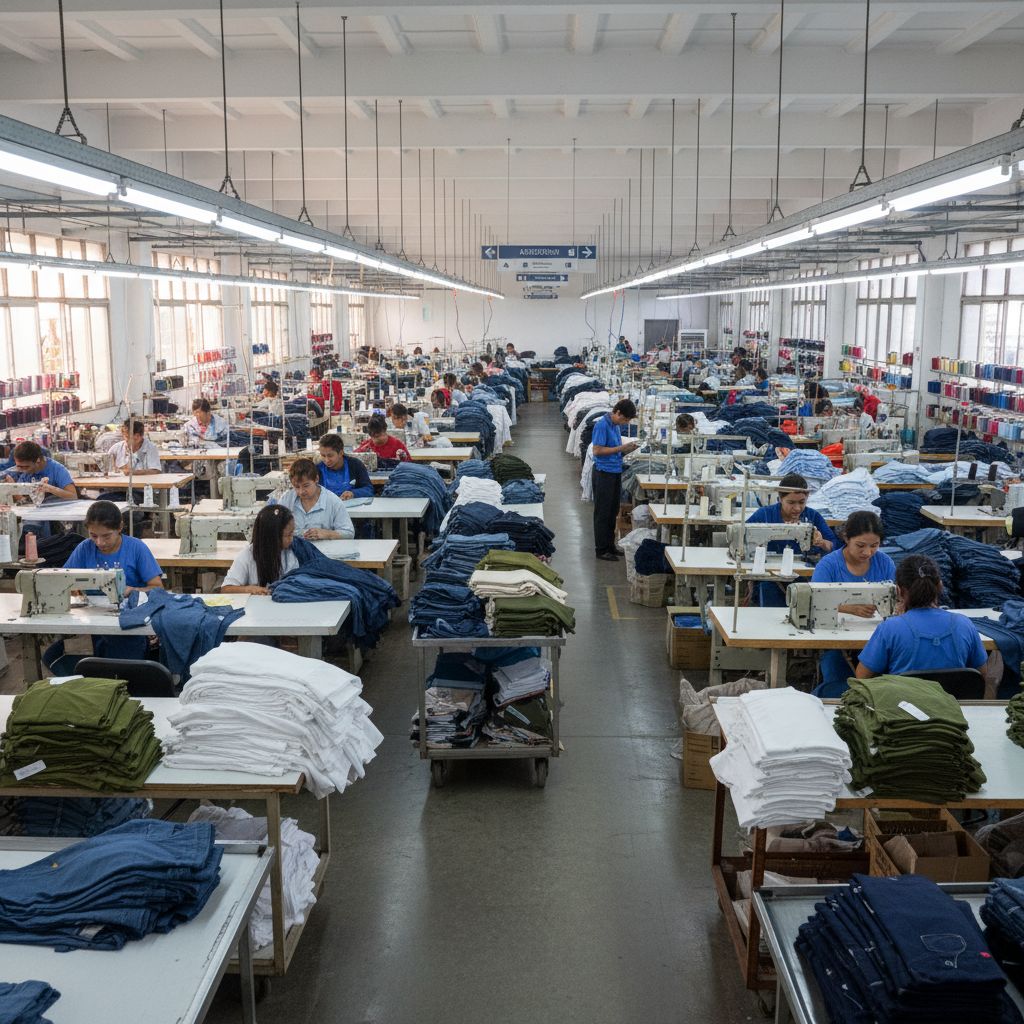
The sewing department is one of the most important sections in garment manufacturing. It is the place where cut fabric parts are joined together with stitches to turn separate components into a complete garment. A well-organized sewing process helps factories control quality, improve productivity, reduce delays, and meet shipment deadlines. A clear process flow chart is very useful for the sewing department because it shows each step in order. It helps the production team, supervisors, and operators understand what needs to be done before, during, and after sewing. In this article, we will explain the process flow chart for the garments sewing department and the role of each step in the workflow.
What Is Sewing in Garment Manufacturing?
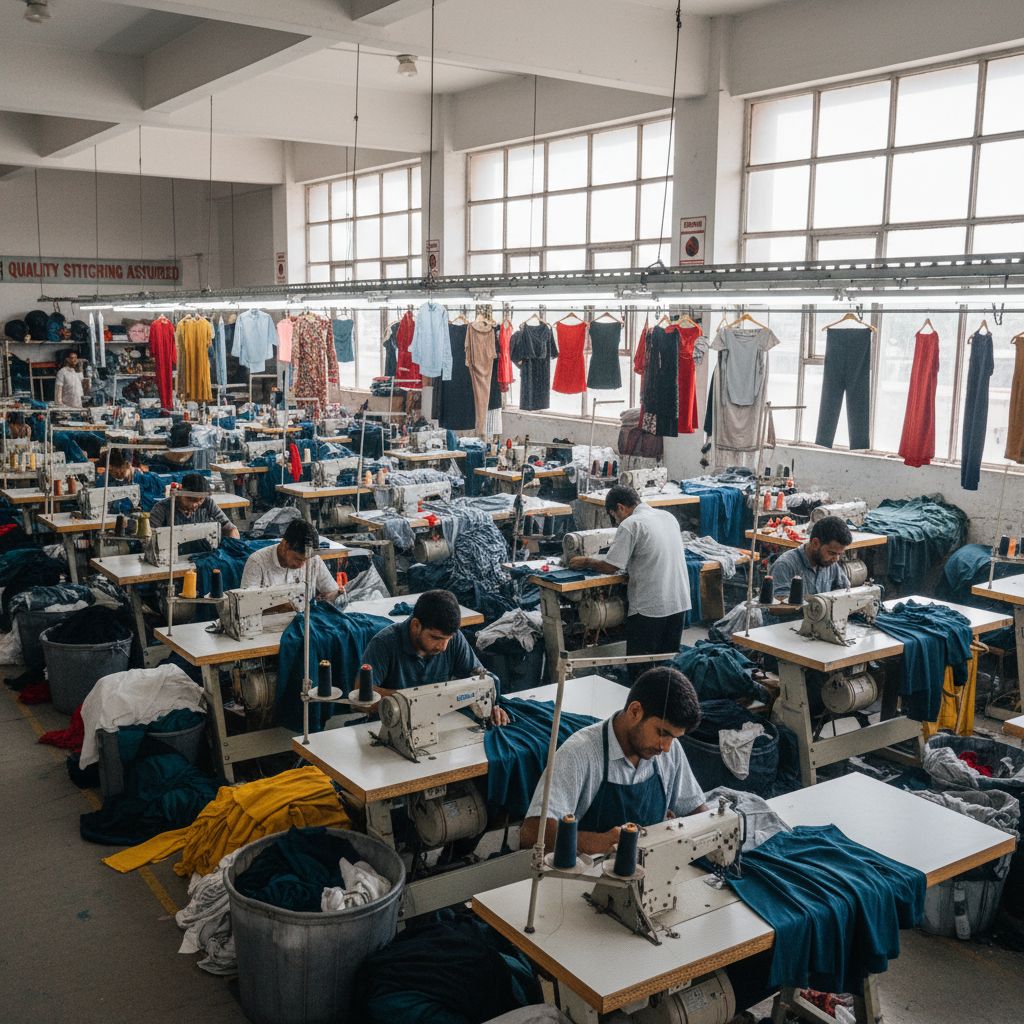
Sewing is the process of joining two or more garment parts together by using needle, thread, and sewing machines. The sewing department does not only involve machine operation; it also includes product analysis, line planning, machine setup, manpower arrangement, and quality checking before garments move to finishing.
Cut parts such as front panels, back panels, sleeves, collars, cuffs, pockets, and waistbands are assembled according to the approved construction method. Each operator usually performs one or more specific sewing operations before passing the garment to the next workstation. The sewing department may also handle:
- Product and operation analysis
- Sewing line planning
- Machine arrangement
- Operator allocation
- Attachment and folder preparation
- Line balancing
- Bundle distribution
- In-line quality inspection
- Production output monitoring
- Final sewing quality checks
For this reason, the sewing department requires close coordination among production managers, supervisors, industrial engineers, mechanics, quality controllers, line leaders, and sewing operators.
Why the Sewing Process Flow Chart Is Important
A sewing process flow chart shows the correct order of production activities from product analysis to final sewing inspection. Following a structured workflow helps garment factories:
- Helps achieve production targets on time
- Reduces bottlenecks and supports line balancing
- Improves in-line quality monitoring and reduces defects
- Ensures machine and operator utilization are maximized

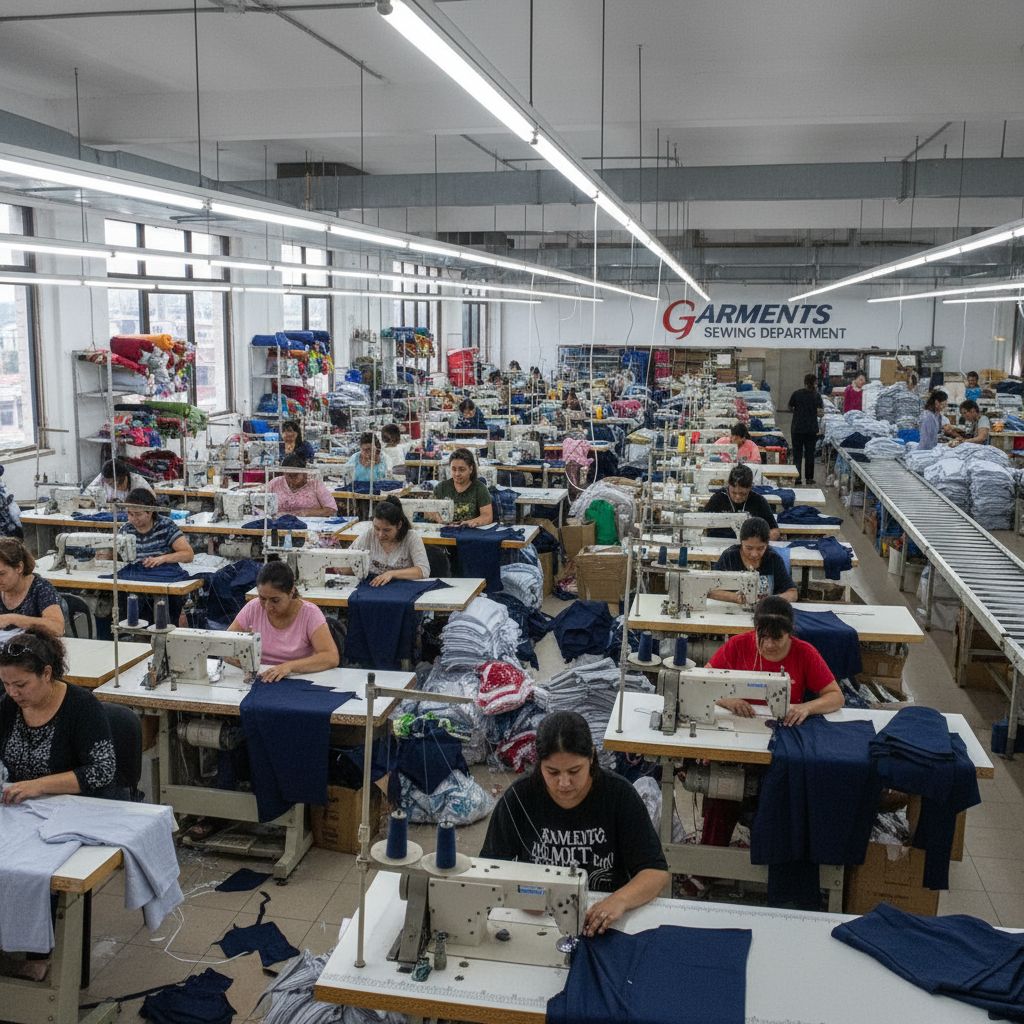
Process Flow Chart for Garments Sewing Department
A typical sewing department follows this sequence: Product Analysis → Production Target Setting → Machine Layout Setup → Operator Layout Setup → Product Quality Review → Line Balancing → Line Setup → Process Distribution → Cutting Parts Received → Parts Distribution → Garment Sewing → Online QC Check → Online Quality Audit → Output Monitoring → Final Sewing Quality Check
The exact workflow may vary depending on the garment style, factory size, production system, and buyer requirements. However, these core steps are commonly followed in industrial garment production.

Process Flow Chart for Garments Sewing Department
The structured sequence for sewing production activities involves 15 critical steps to maintain a controlled production environment:
| S/L | Process Step | Purpose / Job Description |
|---|---|---|
| 1 | Product Analysis | Study design, construction, and sequence before starting. |
| 2 | Set Up Production Target | Fix targets based on quantity, deadline, and complexity. |
| 3 | Machine Layout Setup | Arrange machines in sequence according to operations. |
| 4 | Operator Layout Setup | Assign manpower according to skill level and machines. |
| 5 | QC Check of Product | Review workmanship and stitch quality standards. |
| 6 | Line Balancing | Distribute work evenly to reduce bottlenecks. |
| 7 | Line Setup | Prepare attachments, folders, and bundles for bulk start. |
| 8 | Distribution of Processes | Divide all sewing operations clearly among the team. |
| 9 | Cutting Parts Received | Verify bundle identity, size, and color from Cutting. |
| 10 | Parts Distribution | Issue cut parts to correct workstations in sequence. |
| 11 | Garment Sewing | Sew components step by step until fully assembled. |
| 12 | Online QC Check | Inspect during sewing to detect defects early. |
| 13 | Online Quality Audit | Systematic review of workmanship and compliance. |
| 14 | Output Monitoring | Count output and check against planned targets. |
| 15 | Final Sewing Quality Check | Final inspection of each garment before finishing. |
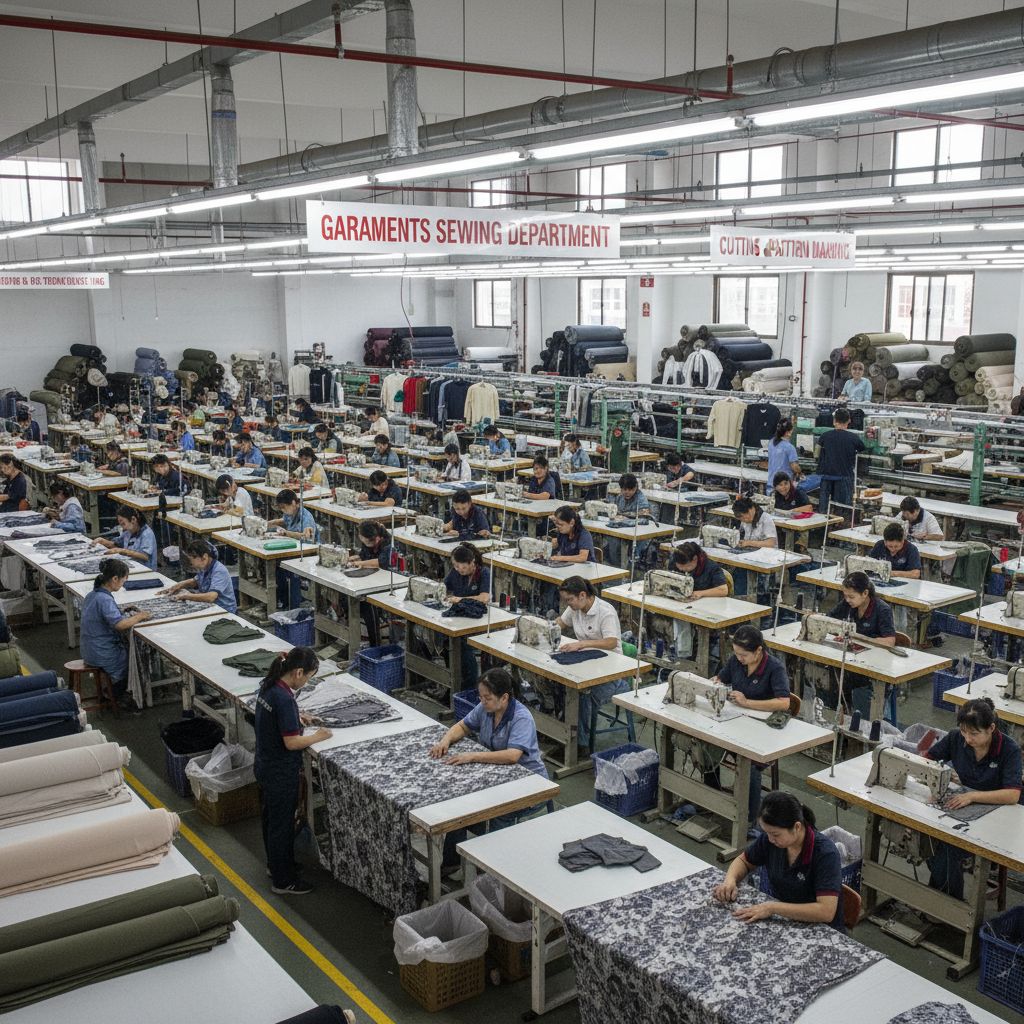
1. Product Analysis
Product analysis is the first step before setting up a sewing line. The production team studies the approved garment sample, technical package, pattern details, operation breakdown, and construction requirements.
The analysis should cover:
- Garment design
- Fabric characteristics
- Stitch and seam requirements
- Sewing operation sequence
- Special attachments
- Machine requirements
- Quality standards
- Measurement tolerances
- Difficult or critical operations
Product analysis helps the factory understand how the garment should be assembled and what resources are required. A detailed analysis also allows industrial engineers to identify operations that may create bottlenecks during bulk production.
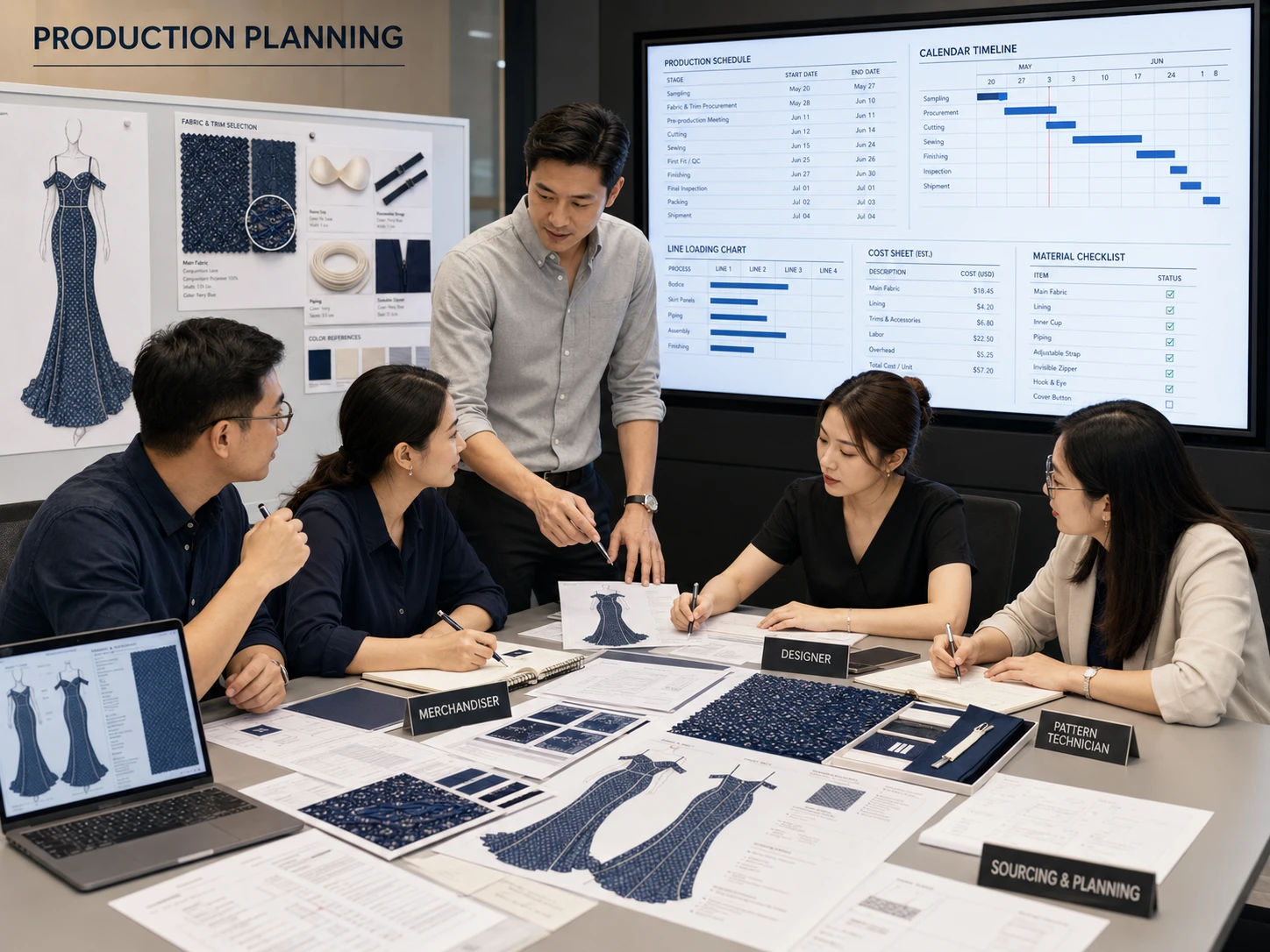
2. Set Up the Production Target
After analyzing the product, the production team establishes the expected daily and hourly output.
The target is generally based on:
- Order quantity
- Shipment deadline
- Standard Allowed Minutes
- Number of operators
- Available working time
- Expected sewing line efficiency
- Style complexity
- Operator skill level
The basic daily production formula is:
Daily Production Target = (Number of Operators × Net Working Minutes × Expected Efficiency) ÷ SAM
The target should be realistic and achievable. Setting an excessively high target may increase defects, pressure, and rework, while setting a low target may waste available production capacity.

3. Machine Layout Setup
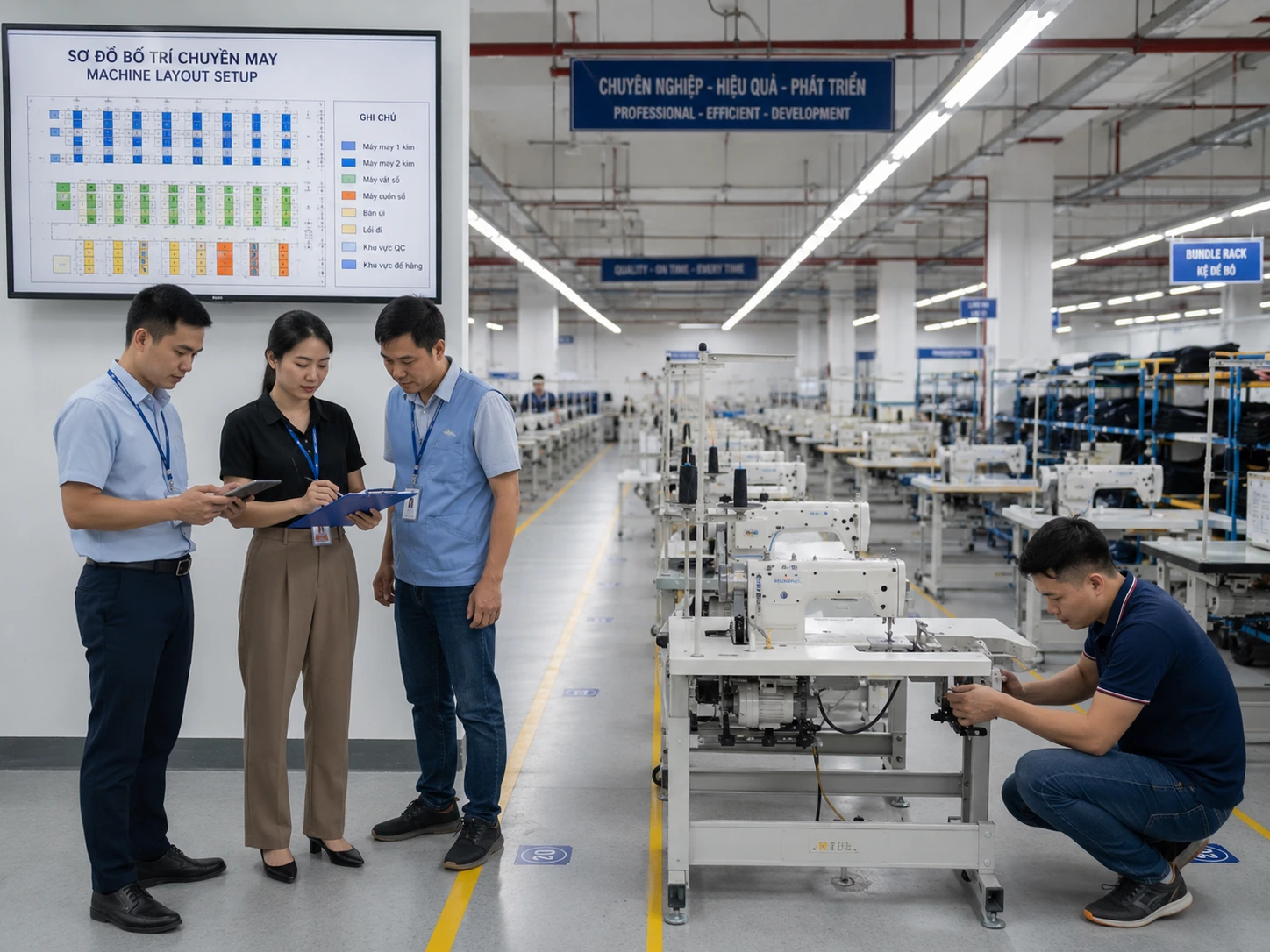
The machine layout determines how sewing machines are arranged according to the garment operation sequence. Machines should be positioned so that garment components move smoothly from one workstation to the next. The required equipment may include:
- Single-needle lockstitch machines
- Overlock machines
- Flatlock machines
- Buttonhole machines
- Button-sewing machines
- Bartack machines
- Feed-of-the-arm machines
- Elastic attaching machines
- Special-purpose machines
A good machine layout reduces unnecessary movement, material handling, operator waiting time, and work-in-progress accumulation. The layout should also provide sufficient space for operators, helpers, quality inspectors, bundle racks, and production materials.
4. Operator Layout Setup
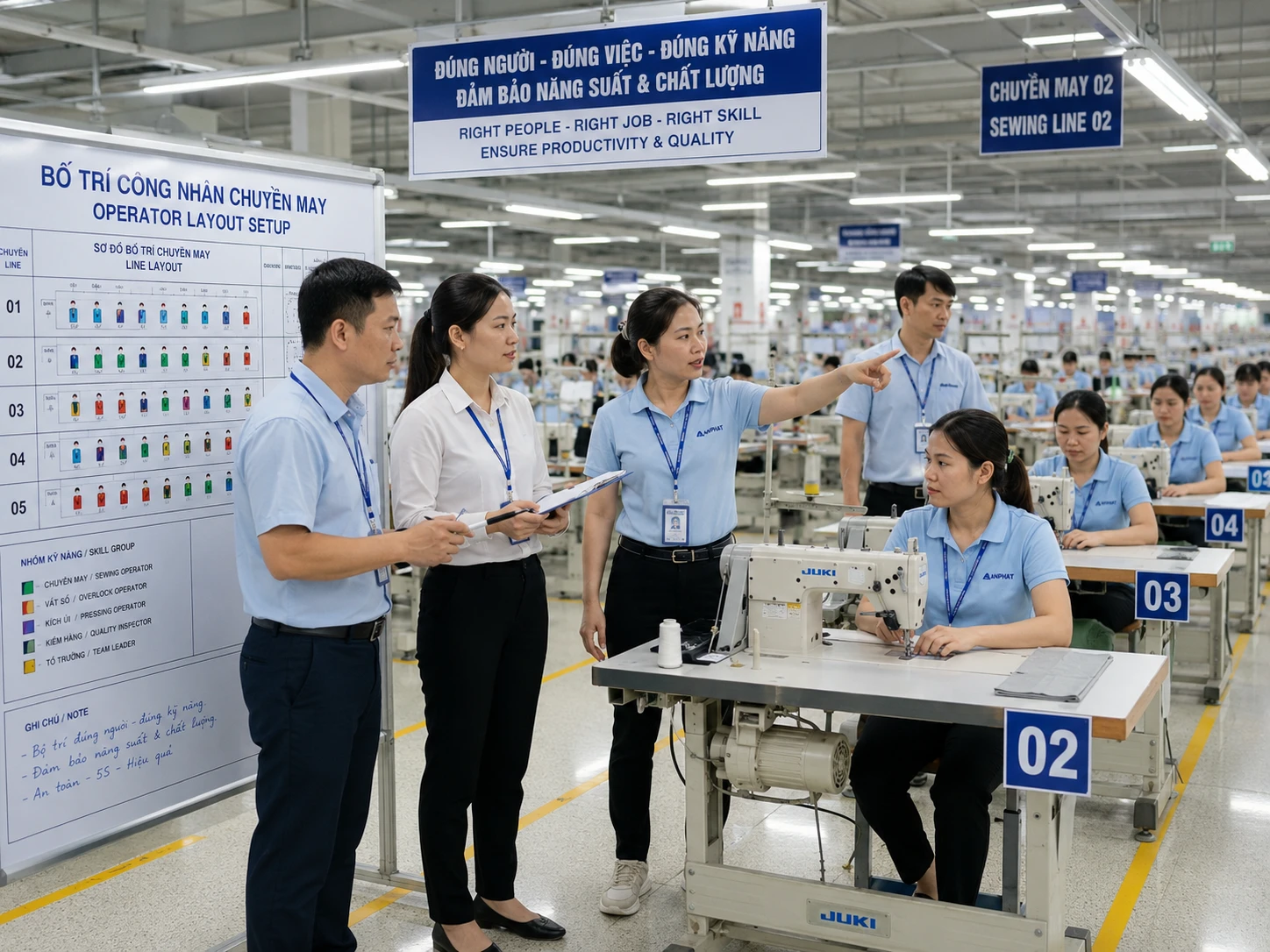
Once the machines are arranged, operators are assigned according to their skills and experience. The production team should consider:
- Operator skill level
- Experience with similar garment styles
- Ability to operate special machines
- Speed and quality performance
- Multi-skill capability
- Complexity of each operation
Critical or difficult operations should be assigned to experienced operators. New or less experienced operators may be placed on simpler operations until they become familiar with the style. Proper operator allocation improves both production efficiency and sewing quality.

5. QC Check of the Product
Before bulk production begins, the quality team reviews the approved garment and production requirements.
The QC team checks:
- Stitch type
- Seam construction
- Stitch density
- Seam allowance
- Measurements
- Label placement
- Trimming requirements
- Workmanship standards
- Critical quality points
This review ensures that supervisors, operators, and inspectors follow the same approved standards. It also helps prevent misunderstandings after bulk sewing has already started.
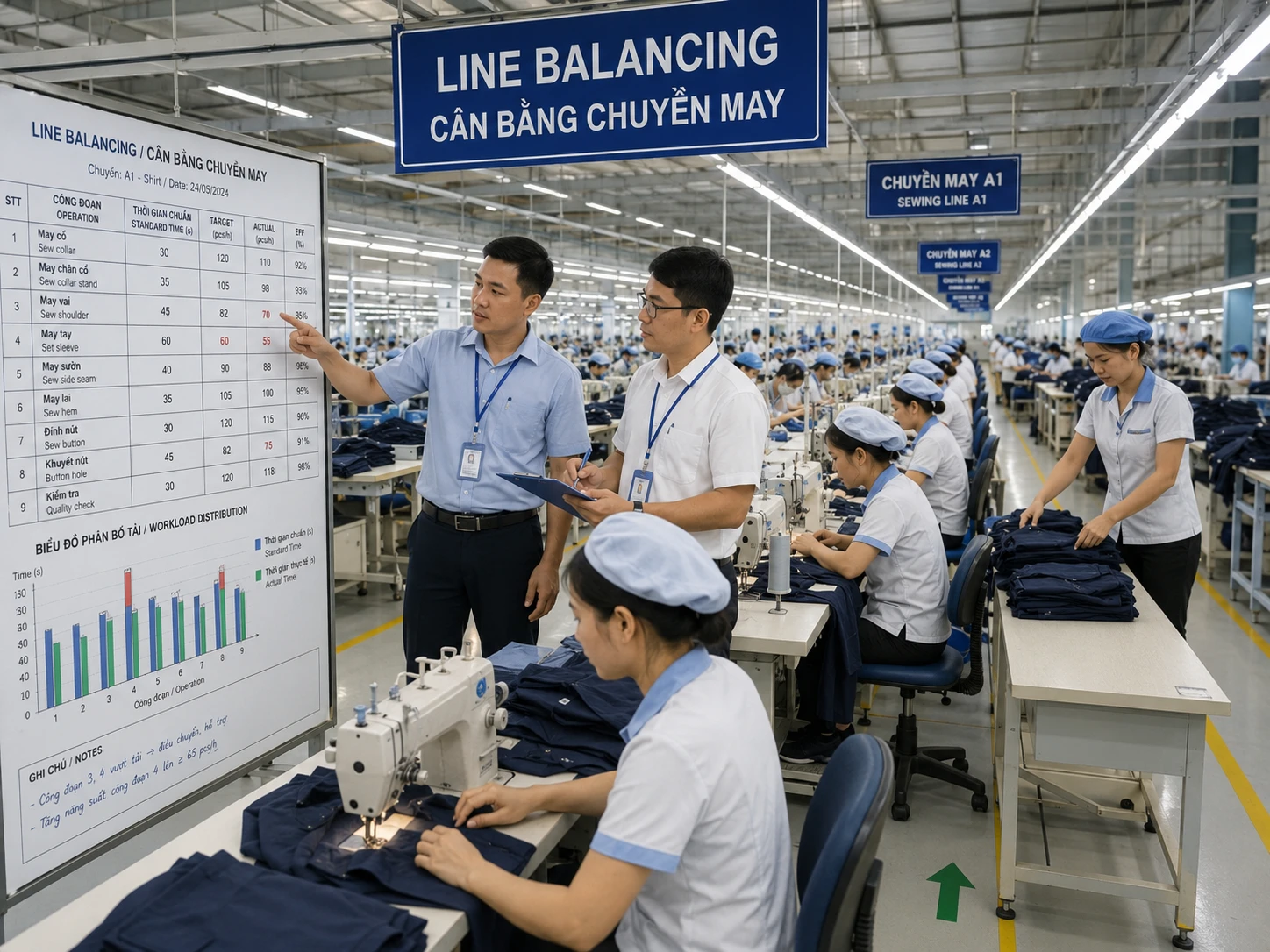
6. Line Balancing
Line balancing is the process of distributing sewing operations evenly among operators. Each operation requires a different amount of time. When one operation takes significantly longer than the others, bundles begin to accumulate at that workstation, creating a bottleneck.
Effective line balancing may involve:
- Moving operators between operations
- Dividing a long operation into smaller tasks
- Combining short operations
- Adding a helper or additional machine
- Improving the working method
- Using folders or attachments
- Training operators
- Changing the bundle quantity
The objective is to maintain a smooth production flow with minimum waiting time and balanced workloads.
7. Line Setup
Line setup prepares the sewing line for bulk production. This stage includes:
- Installing required machines
- Adjusting machine settings
- Preparing folders and attachments
- Checking needles and threads
- Setting stitch density
- Preparing bundle racks
- Displaying approved samples
- Providing operation instructions
- Conducting pilot sewing
A trial or pilot run may be completed before full production. This allows the team to identify machine, method, construction, or quality problems early. Bulk sewing should begin only after the line is fully prepared and approved.
8. Distribution of Sewing Processes
The complete garment is divided into individual sewing operations. Each operator receives a clear responsibility based on the operation breakdown. For example, shirt production may include:
- Pocket preparation
- Pocket attachment
- Shoulder joining
- Collar preparation
- Collar attachment
- Sleeve setting
- Side-seam joining
- Hemming
- Buttonholing
- Button attachment
Clear process distribution ensures that every operation is completed in the correct sequence. Operation sheets, workstation guides, and visual samples can help operators understand their tasks.
9. Cutting Parts Received
The sewing department receives cut garment components from the cutting department. Before accepting the bundles, the receiving team should verify:
- Style number
- Purchase order number
- Color
- Size
- Bundle number
- Quantity
- Cut-part quality
- Shade grouping
- Required panels and components
- Printing or embroidery status
Incorrect or incomplete bundles can interrupt sewing production and cause size, color, or shade mixing. Therefore, bundle information must be carefully checked before distribution.
10. Parts Distribution
After receiving and verifying cut parts, bundles are distributed to the correct sewing line and workstation. The distribution team should ensure that:
- Bundles follow the correct sewing sequence
- Sizes and colors are not mixed
- Operators receive the required components
- Bundle quantities are controlled
- Excessive work-in-progress is avoided
Smooth parts distribution prevents operators from waiting for materials and helps maintain continuous production.
11. Garment Sewing
Garment sewing is the main production stage. Operators assemble cut parts step by step according to the approved operation sequence and construction method. During sewing, the production team should monitor:
- Stitch quality
- Seam strength
- Measurements
- Machine performance
- Operator efficiency
- Bundle movement
- Work-in-progress
- Hourly production
- Rework levels
Each completed operation should meet the required quality standard before the garment moves forward. Good sewing quality depends on correct machine settings, suitable needles and threads, trained operators, and regular supervision.
12. Online QC Check
Online quality control is performed while garments are moving through the sewing line. Inspectors check partially assembled garments at selected operations to detect defects early. Common sewing defects include:
- Skipped stitches
- Broken stitches
- Open seams
- Uneven stitching
- Seam puckering
- Incorrect stitch density
- Incorrect component placement
- Measurement variation
- Needle damage
- Oil stains
- Raw edges
When a repeated defect is found, the inspector should inform the operator, supervisor, and line leader immediately. Early correction prevents the same defect from spreading across a large quantity of garments.
13. Online Quality Audit
An online quality audit is a more systematic review of the sewing line. Unlike routine inspection at individual workstations, the audit evaluates overall compliance with approved quality and production standards. The auditor may check:
- Workmanship
- Measurements
- Construction
- Operation methods
- Defect frequency
- Corrective actions
- Bundle control
- Machine condition
- Approved sample availability
- Operator understanding
The audit results help management identify recurring problems and improve process control.
14. Output Monitoring
Production output must be monitored throughout the working day.
The line team usually records:
- Hourly output
- Cumulative production
- Target versus actual output
- Operator performance
- Work-in-progress
- Defect quantity
- Rework quantity
- Machine downtime
- Lost production minutes
Hourly monitoring allows supervisors to respond quickly when the line falls behind target.
Corrective actions may include:
- Rebalancing the line
- Adding an operator
- Repairing a machine
- Improving bundle supply
- Correcting quality problems
- Providing additional training
Waiting until the end of the shift to review output is too late to solve many production problems.
15. Final Sewing Quality Check
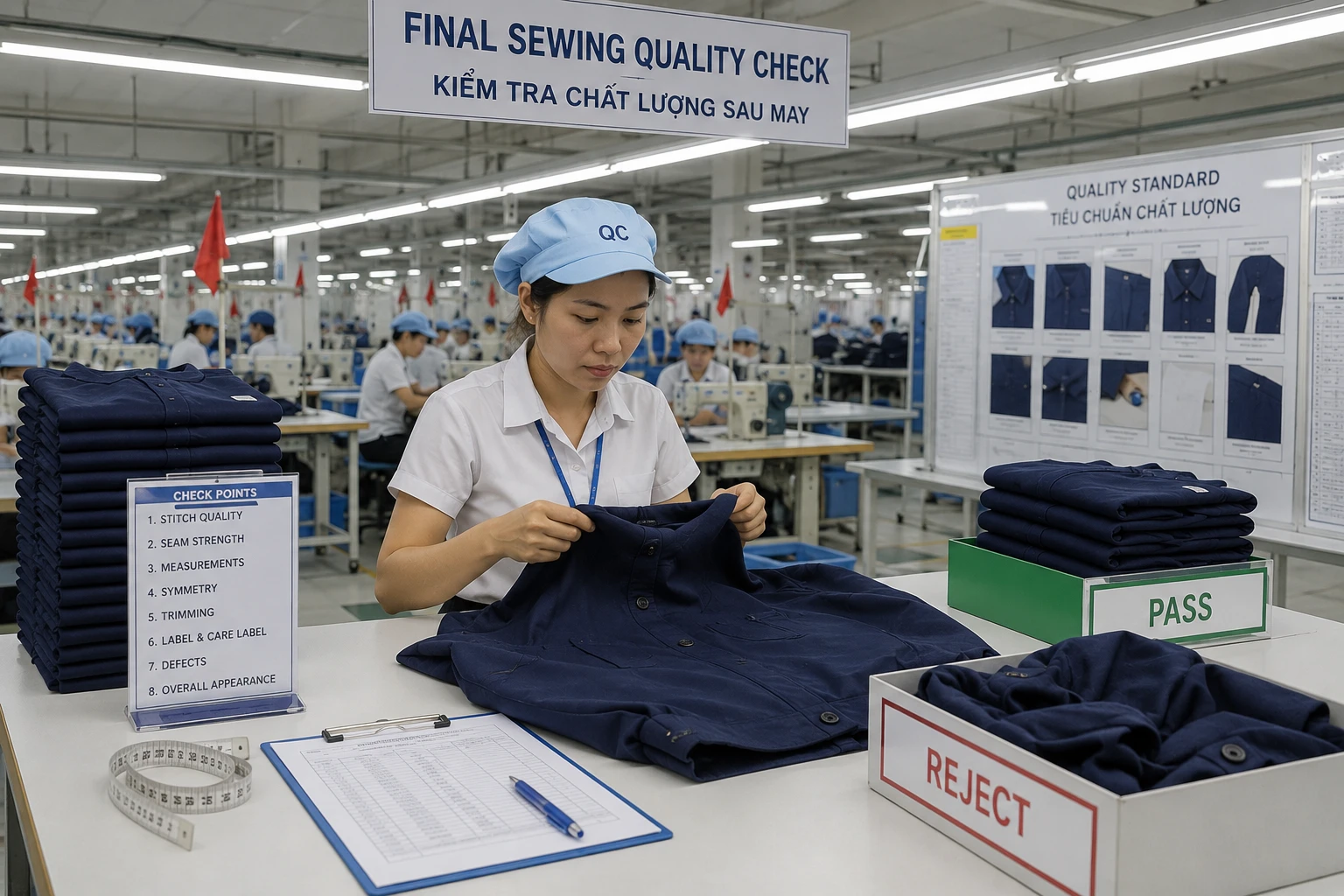
After sewing is completed, each garment undergoes a final sewing quality inspection before moving to finishing.
Inspectors verify:
- Overall construction
- Stitch appearance
- Seam security
- Garment measurements
- Shape and symmetry
- Pocket position
- Collar and sleeve alignment
- Zipper or button function
- Label placement
- Loose threads
- Visible defects
Garments that fail inspection are separated for repair. Only approved garments should be transferred to the finishing department for thread trimming, cleaning, pressing, final inspection, and packing.
Key Success Factors and Common Problems
To ensure a smooth operation, factories must focus on Skilled Operators, Proper Machine Maintenance, and Effective Communication. Even with a flow chart, common problems like high rework percentages or machine breakdowns can occur. Continuous monitoring and correct work studies are essential to improve both efficiency and output.
Conclusion / Final Words
The sewing department is the heart of garment assembly. A proper process flow chart helps organize all major steps, from product analysis to final quality checking. By following a clear sequence, garment factories can reduce errors, improve efficiency, and deliver high-quality products within the required shipment deadlines.