
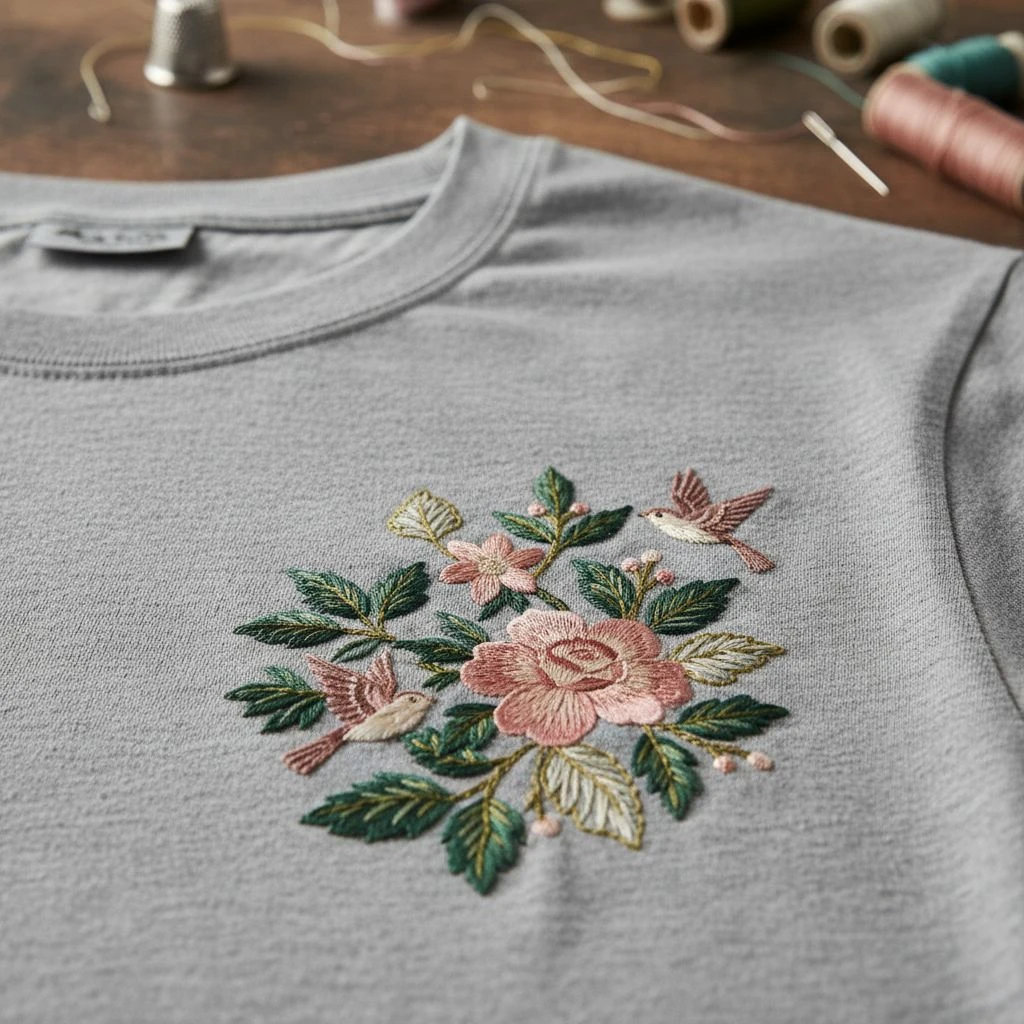
Embroidery sounds cool. Thread, texture, raised logo, it feels “premium.” But when you’re buying T-shirts for a brand, the real question is: Does it actually fit your product, audience, and budget? Let’s break it down in plain terms, not just hype.
=> Read More: T Shirts Manufacturing Vietnam | Mekong Garment Factory
T-Shirt Printing Methods Comparison:
- Screen Printing for T-Shirts: What It Is, Pros, Cons, Costs, and When to Use It
- Direct-to-Garment (DTG) Printing for T-Shirts: Pros, Cons, and What Brands Must Know
- Direct-to-Film (DTF) Printing for T-Shirts: Pros, Cons
- What Is Heat Transfer Printing for T-Shirts: Pros, Cons, Benefits,…
- Sublimation Printing for T-Shirts: Pros, Cons and Guide for Brand Owners
- Puff Printing for T-Shirts: Pros, Cons, Benefits and Guide for Brand Owners
- Heat Transfer Vinyl (HTV) Printing: Pros, Cons and Benefits
- What Is Embroidery for T-Shirts? A Brand Owner’s Guide
What Is Embroidery on a T-Shirt?
Embroidery means stitching thread directly into the T-shirt fabric to form a design: usually a logo, name, or short wordmark. Instead of ink sitting on top of the fabric, embroidery becomes part of the cloth itself. That makes it durable, textured, and often perceived as higher quality, but that doesn’t mean it’s the best choice for every T-shirt.
How Embroidery Actually Works on T-Shirts
T-shirts are usually soft, stretchy, and lightweight. Embroidery threads and stitching patterns are denser and more rigid. Here’s the problem most guides ignore: “When you put firm stitching on soft knit fabric, the fabric reacts — it can stiffen, pull, or even pucker.” That means embroidery isn’t just “better” the fabric choice and design details decide whether it looks great or not.
Pros and Cons of Embroidery for T Shirts
Embroidery can make a T-shirt feel more premium but it’s not always the smartest choice. Unlike printing, embroidery stitches thread directly into soft knit fabric, so you get a textured, durable logo that often looks more “high-end.” At the same time, that stitching can add stiffness, limit fine detail, and even cause puckering on lightweight tees if the setup isn’t right. Before you commit, it helps to weigh the real pros and cons based on your logo size, fabric weight, comfort goals, and budget.

Pros, Why Brands Choose Embroidery
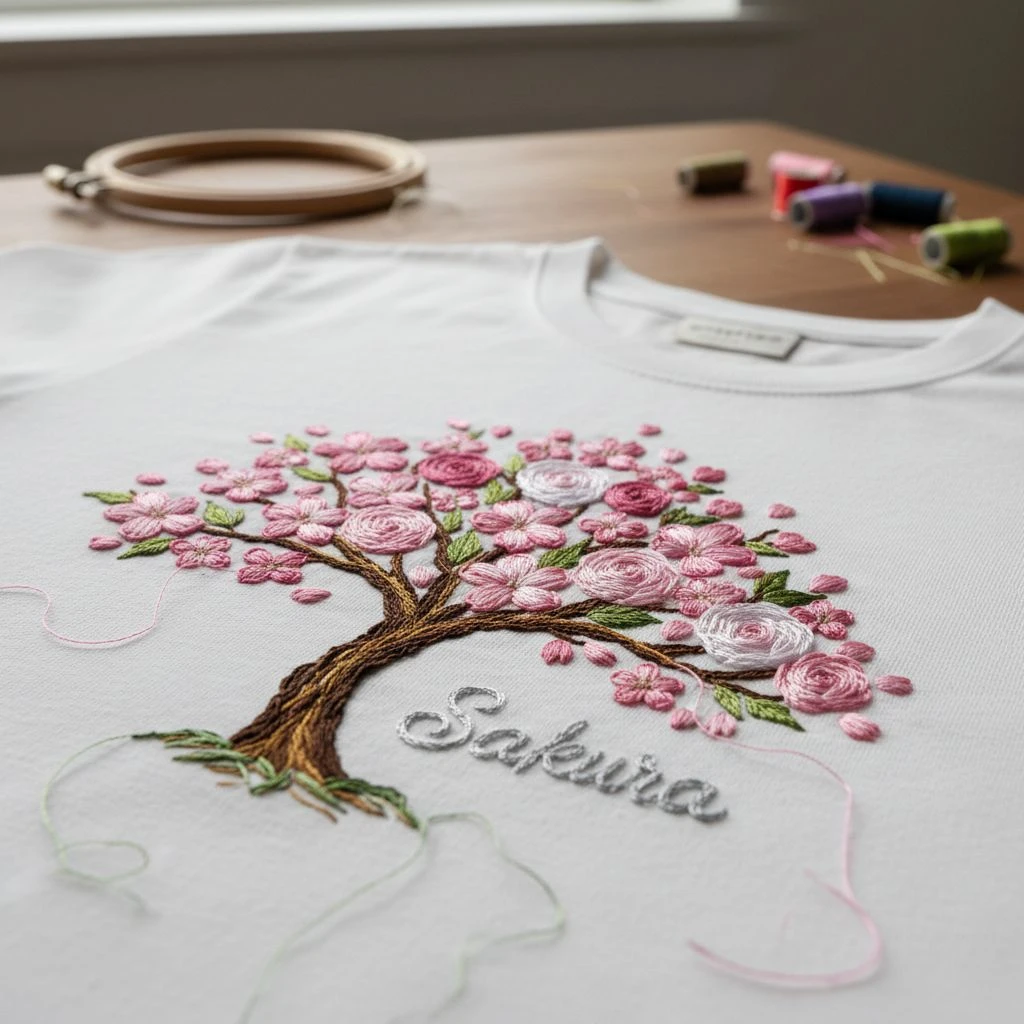
- Premium Look and Feel: Embroidery gives texture and depth, not just a flat print. Customers often associate it with higher quality. But challenge this: Premium doesn’t always equal appropriate. If your brand voice is soft and relaxed, heavy stitching might feel out of place.
- Long-Lasting Branding: Thread doesn’t peel like some prints can. It usually survives washing and wear very well. That said, you still need good backing and proper stitch setup, poor embroidery can fail too.
- Great for Simple Logos: Solid shapes and bold logos look sharp when stitched. Tiny text, thin lines, and fine gradients often turn into a blur in thread. This isn’t a flaw, it’s a physical limitation of thread thickness.
- Texture Boosts Perceived Value: On a product page or in person, embroidered logos feel real. For corporate wear and merch that needs to feel worth it, embroidery often succeeds.
Cons, When Embroidery Can Backfire
- Higher Cost Than Some Prints: Embroidery cost depends on stitch count (how many stitches the design uses), not just size. Two logos of the same size can cost very different amounts based on complexity. So cheap samples don’t always mean cheap bulk pricing.
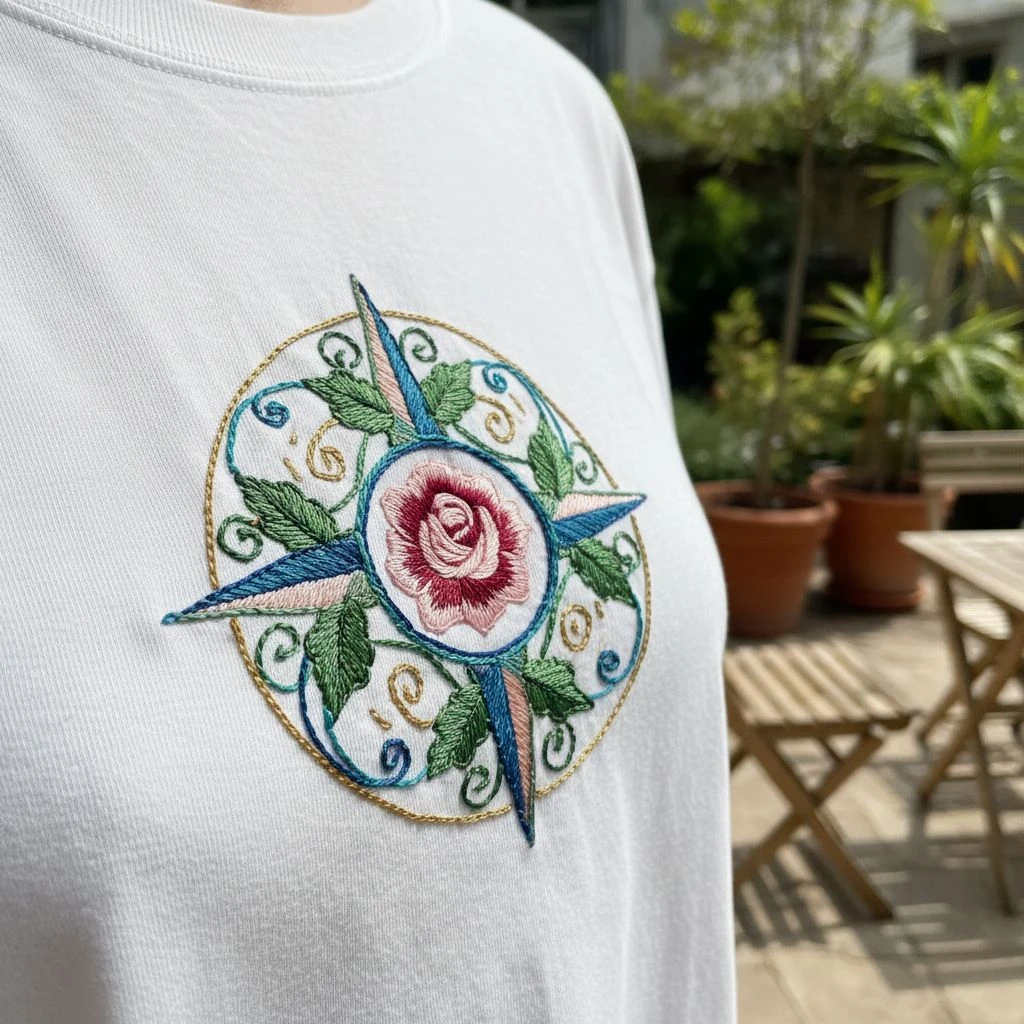
- Not Great for Fine Detail: Embroidery doesn’t reproduce, gradients, tiny fonts, photo-like images. If your design has these, print methods (screen, DTG) usually work better.
- Can Change How the Shirt Feels: Stitched areas are less stretchy and a bit stiff. On a heavyweight tee, this can feel solid and intentional. On a thin, soft tee, it can feel uncomfortable or awkward after wear. Most “premium” articles don’t mention this, but your customers will feel it.
- Fabric Matters More Than You Think: Embroidery adds dense, non-stretch stitching, while T-shirt fabrics are soft and stretchy. When the fabric is too light or too elastic, embroidery can cause puckering, distortion, or stiffness. Heavier T-shirts support stitching better and keep logos looking clean after wear and washing. In embroidery, fabric choice often matters more than the design itself.

How to Decide: Embroidery vs Printing
Deciding between embroidery and printing comes down to how you want your T-shirt to look, feel, and perform in real use. Embroidery delivers a textured, long-lasting logo that often feels premium, but it can add stiffness and limit fine detail on soft knit fabrics. Printing, on the other hand, offers greater design flexibility and comfort, though durability varies by method. This section helps brand owners compare both options clearly and select the decoration method that fits their fabric, design, and budget goals.
| Factor | Embroidery | Screen Printing | DTG Printing |
|---|---|---|---|
| How it’s applied | Thread stitched into fabric | Ink pressed onto fabric through screens | Ink printed directly onto fabric |
| Look & texture | Raised, textured, structured | Flat, smooth | Flat, very smooth |
| Durability | Very high, resists washing and wear | Medium to high, depends on ink and care | Medium, may fade over time |
| Design detail | Limited; not suitable for very fine lines or gradients | Good for bold, flat designs | Excellent for detailed or photo designs |
| Comfort on T-shirt | Can feel stiff in stitched areas | Comfortable if ink layer is thin | Very comfortable, soft hand feel |
| Fabric suitability | Best on medium to heavy T-shirts | Works on most cotton T-shirts | Best on cotton or cotton-rich blends |
| Cost structure | Based on stitch count and setup | Cost drops at higher quantities | Higher cost per piece, no setup |
| Best use cases | Small logos, chest badges, sleeves | Large graphics, solid designs | Complex artwork, photos |
| Brand perception | Professional, premium, corporate | Casual, bold, expressive | Modern, artistic, fashion-forward |

Pro Tips for Better T-Shirt Embroidery
T-shirt embroidery can look amazing when it’s planned like a production decision, not treated as a quick “premium upgrade.” Because tees are soft and stretchy, small changes in stitch density, backing, thread choice, and logo size can make the difference between a clean, professional result and a stiff, puckered patch. The tips below help brand owners reduce sampling mistakes, control cost, and get embroidery that looks sharp and feels right on the final garment.
- Ask for Stitch Count, Not Just Size: Size alone doesn’t tell you cost, stitch count does.
- Test on the Actual Fabric: A sample on the exact shirt material is worth it. Pictures lie.
- Check Backing & Stabilizer: Proper backing keeps the knit stable and prevents puckering.
- Rate Digitizing Quality: A good digitizer makes a huge difference. Cheap files look cheap on fabric.
When Embroidery Wins on T-Shirts
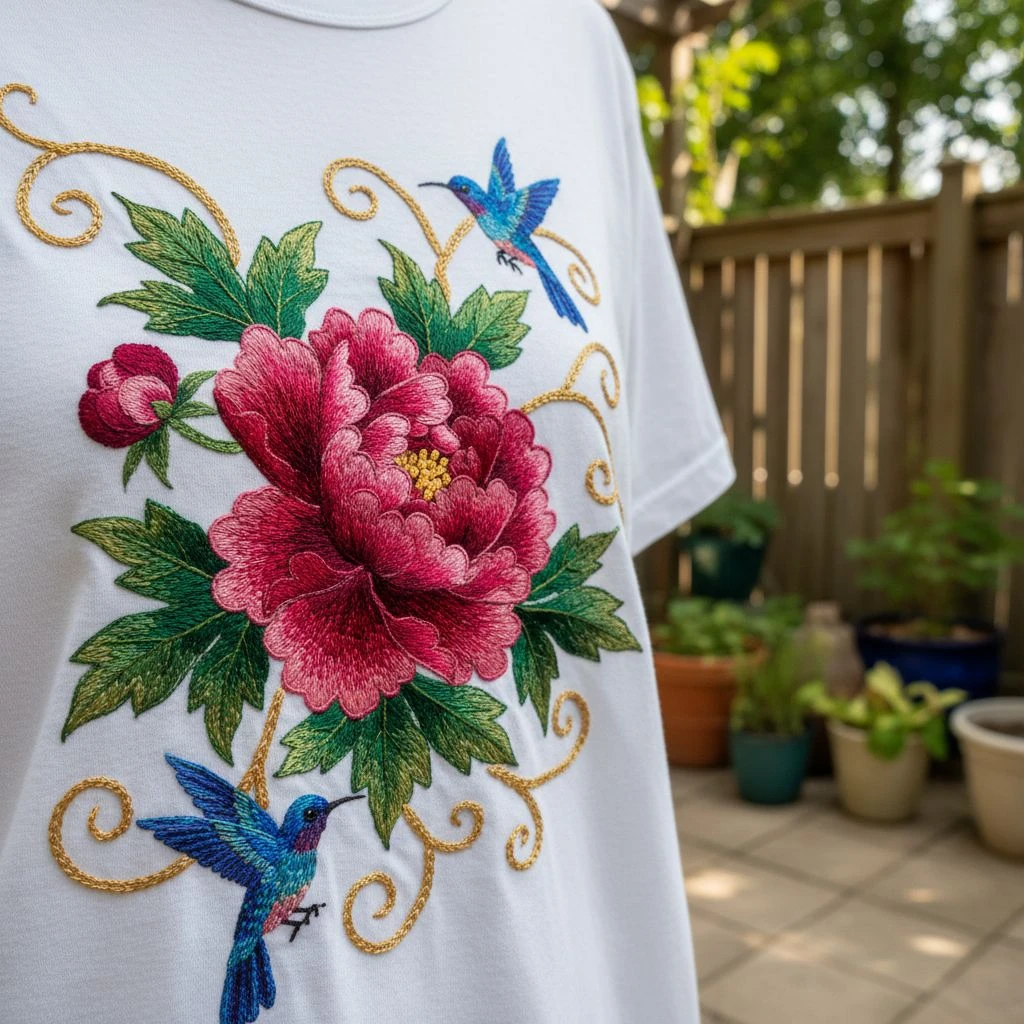
- Small logos (left chest, sleeve)
- Heavy or mid-weight shirts
- Corporate or team apparel
- Minimalist brand identity
- Merchandise where durability matters
When to Avoid Embroidery on T-Shirts
- Big graphics covering the chest
- Designs with tiny lines or text
- Very soft, lightweight shirts
- Budget collections where price matters more than permanence
Final Thoughts for Brand Owners

Embroidery on T-shirts can boost perceived value and durability, when used in the right places with the right fabrics. But it’s not a universal upgrade. Sometimes printing gives better comfort, detail, and cost efficiency. Your choice should come from design goals, fabric selection, and audience preferences, not just trend or “premium buzz.”