If you’re making custom T-shirts for a brand, event, team, or company, you’ll usually land on two popular decoration methods: screen printing and embroidery. They both look great when used in the right situation. But they don’t solve the same problem. A lot of customers choose based on vibes (“embroidery feels premium”) or price guesses (“printing is cheaper”). That’s where orders go wrong.
Quick Pick Guide (fast decision)
Choose screen printing if:
- Your design is big (front/back)
- Your design has many colors
- You want a classic graphic tee look
- You’re ordering medium to large quantities

Choose embroidery if:
- Your design is a small logo (left chest / sleeve)
- You want a raised, textured look
- You’re decorating polos, jackets, hats, or thicker items
- You want a uniform / corporate vibe

Still unsure? Keep reading. The details matter.
About Screen Printing & Embroidery
What is Screen Printing?
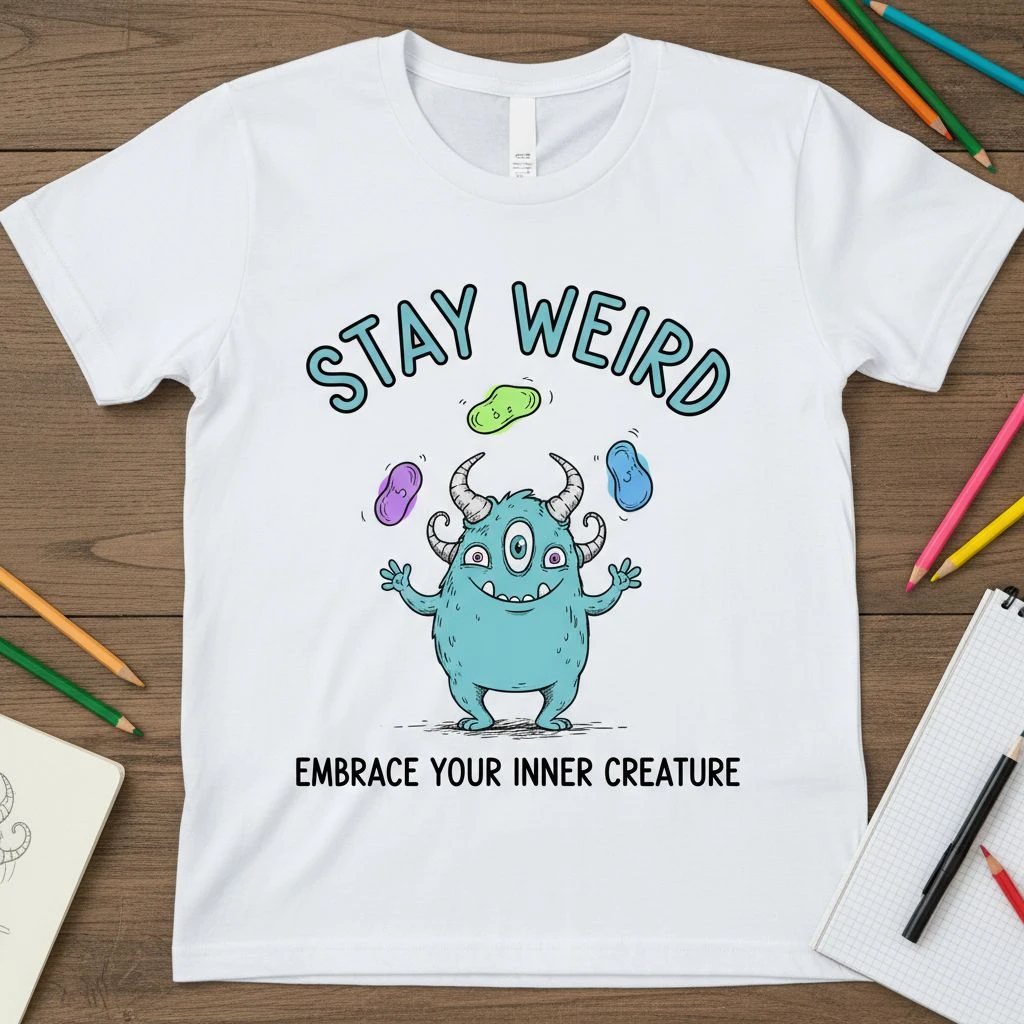
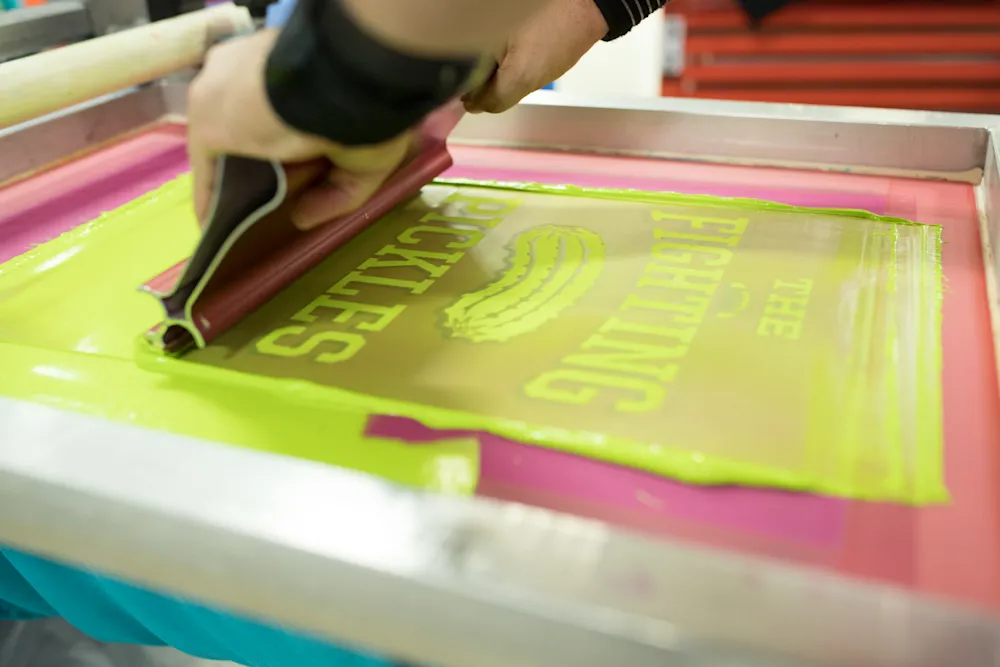
Screen printing is one of the most common ways to decorate custom T-shirts because it creates bold, clean designs that hold up well over time. In simple terms, it works by pressing ink through a special screen onto the fabric, building your design one color at a time. This method is especially popular for graphic tees, event shirts, and brand merch because it can handle large prints, strong colors, and consistent results across many shirts.
- Screen printing applies ink onto fabric through a mesh screen.
- Most designs use one screen per color.

Why screen printing is popular for T-shirts
- Great for large prints: full front, full back, big graphics
- Bold, eye-catching color: strong blocks of color and clean shapes
- Works well for detailed artwork: when your file is prepared correctly
- Better value at higher quantities: cost per shirt drops as quantity goes up

When screen printing is not the best match
Screen printing may not be ideal if:
- Your design uses many colors but you only need a small quantity
- You want photo-style shading/gradients (it’s possible, but needs the right print setup)
- You need the design to feel almost invisible on the shirt (ask about ink type and print style)

What is embroidery?
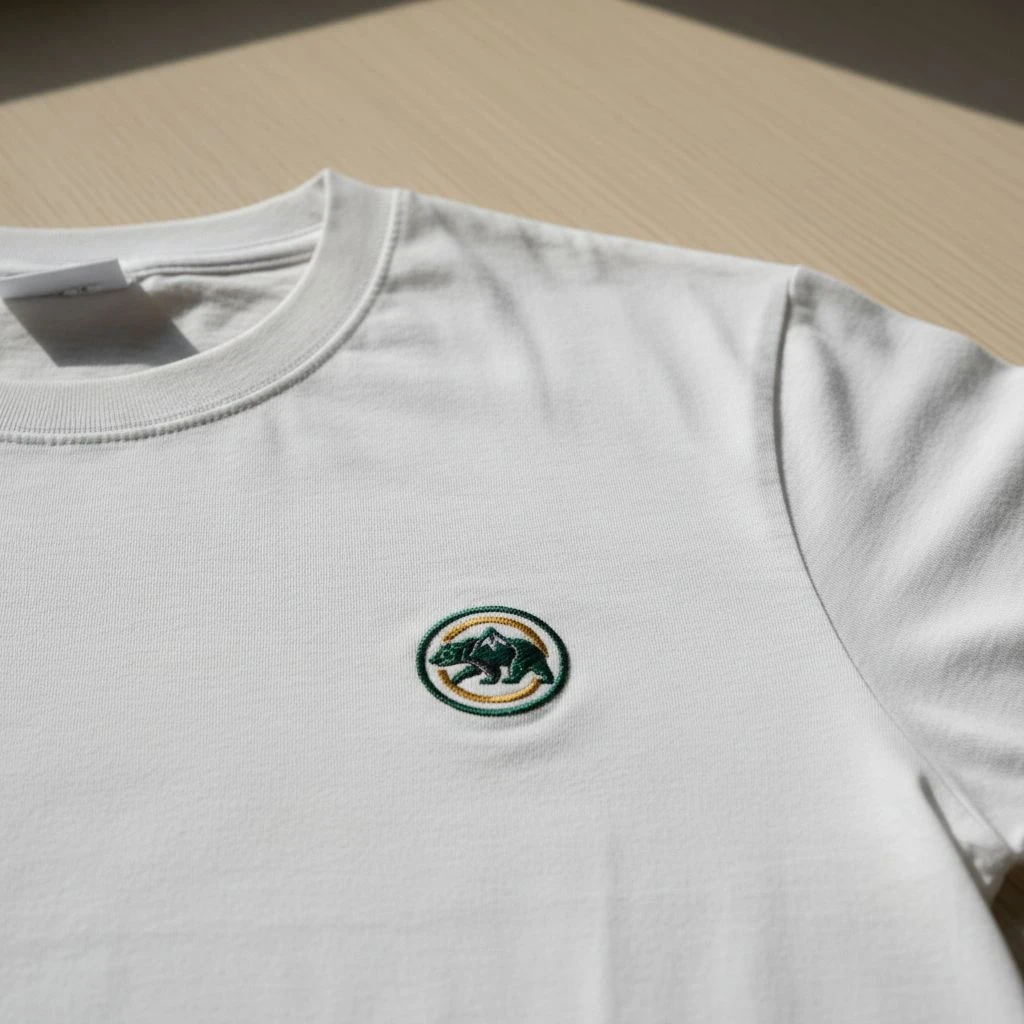
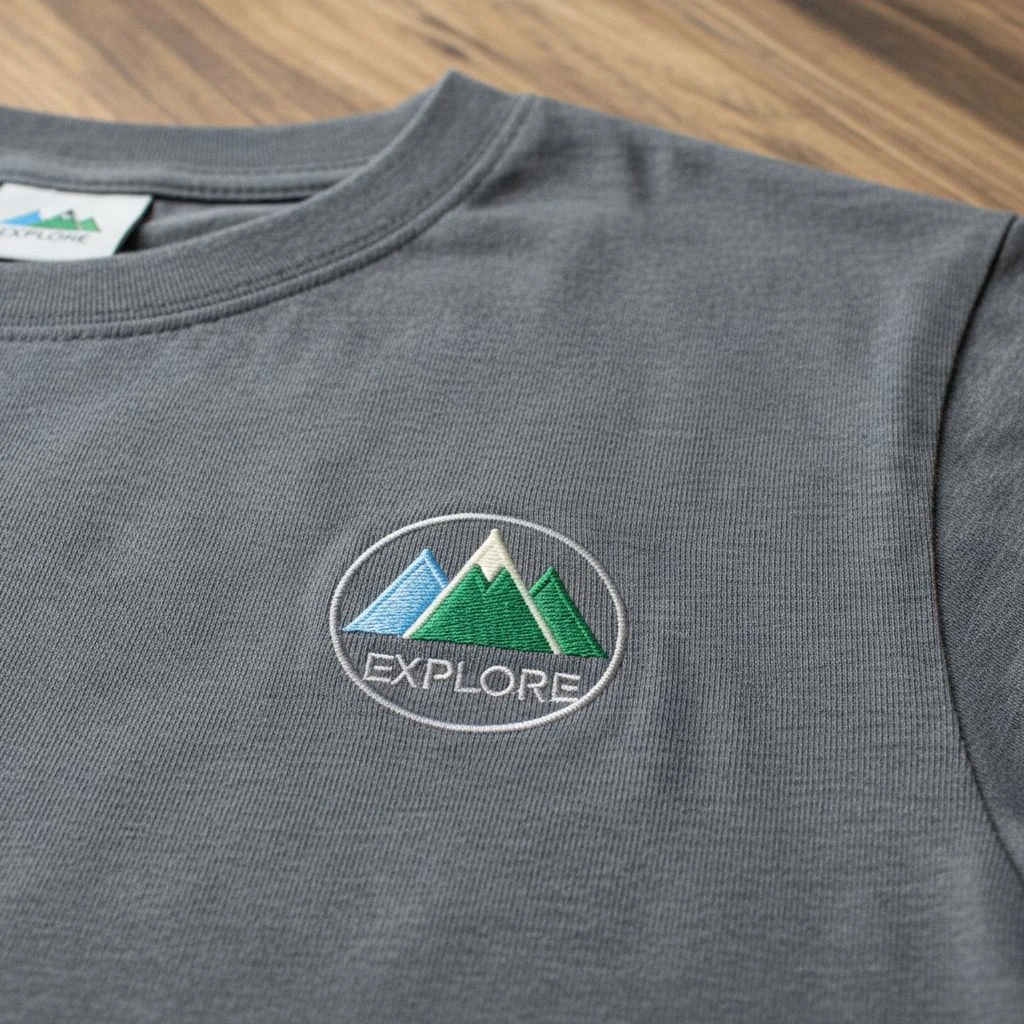
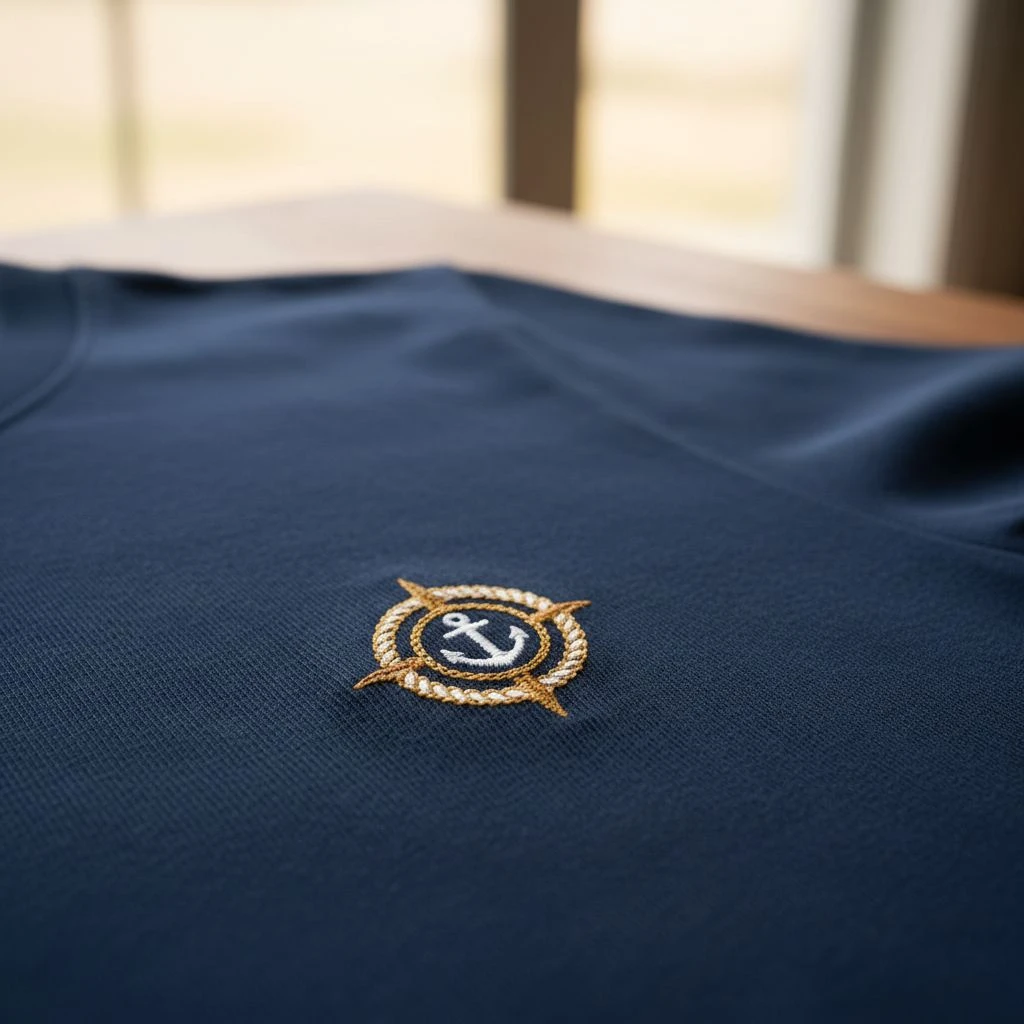
Embroidery is a decoration method that stitches your design directly into the fabric using thread. Instead of ink sitting on top of the shirt, the logo becomes part of the garment, giving it a raised, textured finish. That’s why embroidery is often used when you want a clean, professional look especially for small logos on the left chest, sleeves, or on items like polos, hats, and jackets. Embroidery stitches your design into the garment using thread. It creates a raised, textured finish.

Why embroidery looks “premium”
- Texture + depth: the logo stands out and feels more finished
- Strong durability: great for repeated wear
- Best for small branding: left chest logos, sleeve marks, simple text
- Works well on thicker fabrics: polos, jackets, hats, bags

When embroidery can be a bad idea on T-shirts
A common mistake is choosing embroidery for a large design on a thin tee. That can lead to:
- a stiff feel (especially on lightweight shirts)
- puckering/waviness around the logo (knit fabric moves)
- tiny text becoming hard to read (thread has limits)
For tees, embroidery is usually safest when it’s small and simple.

Screen Printing vs. Embroidery: the real differences
Screen printing and embroidery can both make your custom T-shirts look professional, but they behave very differently once they’re on real fabric. One method uses ink for bold, graphic results, while the other uses thread for a textured, stitched finish. In this section, we’ll compare them side by side so you can quickly see which option fits your design size, detail level, comfort needs, durability goals, and budget.
| Factor | Screen Printing | Embroidery |
|---|---|---|
| Best for custom T-shirts | Very good for most T-shirt designs | Best for small logos on T-shirts |
| Best for large designs | Works well for big front/back prints | Not ideal; can feel heavy and stiff |
| Best for small chest logos | Works, but looks flat | Excellent; raised, textured look |
| Detail level | Great for detailed artwork (with good files) | Best for simple shapes; tiny details can blur |
| Color handling | Strong for multi-color graphics | Solid thread colors; no smooth gradients |
| Look | Flat, graphic finish | Raised, textured finish |
| Comfort on lightweight tees | Usually comfortable | Can feel thicker; backing may irritate |
| Best garment types | T-shirts, hoodies, casual wear | Polos, hats, jackets, bags, uniforms |
| Durability | Durable when printed and cured properly | Very durable; handles heavy use well |
| Pricing pattern | Setup per color; cost per piece drops with quantity | Based on stitch count and size; higher per piece |
| Setup needs | Screens/separations for each color | Digitizing (often a one-time fee) |
| Turnaround complexity | Faster for simple, few-color jobs | More time if stitch count is high |
Which looks better on a T-shirt?
This depends on the style you want.
If you want a “graphic tee” look – Go with screen printing. It’s perfect for:
- merch drops
- events
- brand graphics
- big back prints
If you want a “uniform” look – Go with embroidery, especially for:
- left chest logos
- staff shirts
- corporate branding
=> Key point: “Premium” isn’t the method. It’s the match. A small, clean embroidered logo can look premium. A large embroidered design on a soft tee can look (and feel) wrong.

Durability: which lasts longer?
Both can last a long time when made correctly.
Screen printing durability depends on
- ink type
- curing (heat setting)
- wash habits
Embroidery durability depends on
- digitizing quality
- stitch density
- backing choice
- fabric stability
If your shirts are for hard daily wear (workwear), embroidery is often a strong choice, as long as the fabric can support it.

Cost: what affects the price
Screen printing cost usually depends on
- number of colors
- number of print locations (front/back/sleeve)
- quantity
=> More shirts usually = lower cost per shirt.
Embroidery cost usually depends on
- design size
- stitch count (more stitches = more machine time)
- placement
- digitizing (often a one-time setup)
Embroidery often costs more per piece than screen printing, especially when the design is large or dense.
Fabric Matters (a lot)
Even the best design can look “wrong” if the fabric isn’t a good match for the decoration method. A thick, stable T-shirt can handle stitching and heavy prints much better than a thin, stretchy tee where the same design might wrinkle, feel stiff, or lose clarity. That’s why fabric choice isn’t a small detail; it directly affects how your print or embroidery looks, feels on the body, and holds up after washing. Two shirts can look the same online but behave very differently in production.
Lightweight / stretchy tees
- Screen printing: usually the safe choice
- Embroidery: keep it small and supported
Heavyweight tees
- Screen printing: great
- Embroidery: works better than on thin tees
If you don’t know your shirt weight yet, ask your supplier. It changes the result.

Final Recommendation
By now, you’ve seen that screen printing and embroidery can both look great, but only when they match the design size, shirt fabric, quantity, and the purpose of the T-shirt. If you pick the wrong method, the result can feel off (too stiff, too flat, too costly, or not as clear as expected). So instead of guessing, use the simple recommendations below to choose the option that fits your project and gives you the best-looking, most wearable custom tees. For most custom T-shirt projects:
- Screen printing is best for bold, colorful, large graphics.
- Embroidery is best for small logos and professional branding.