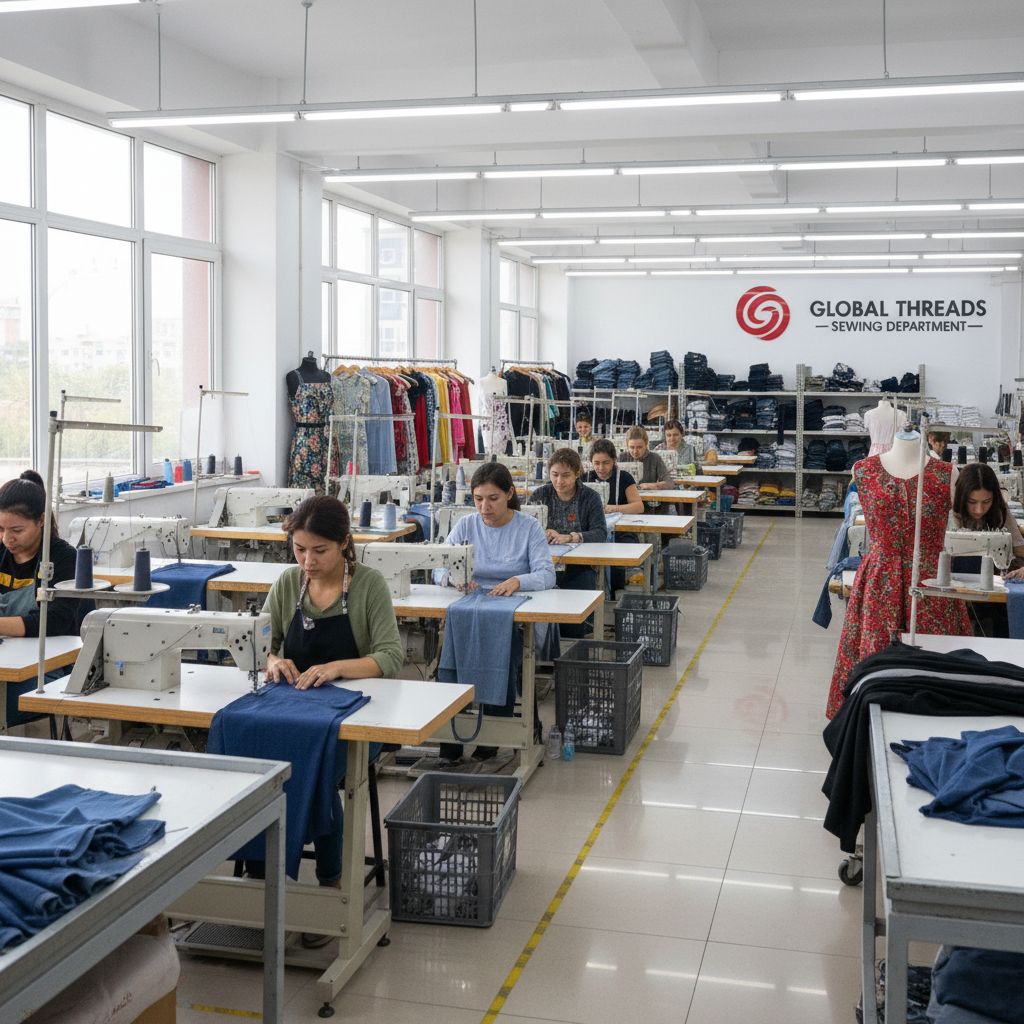
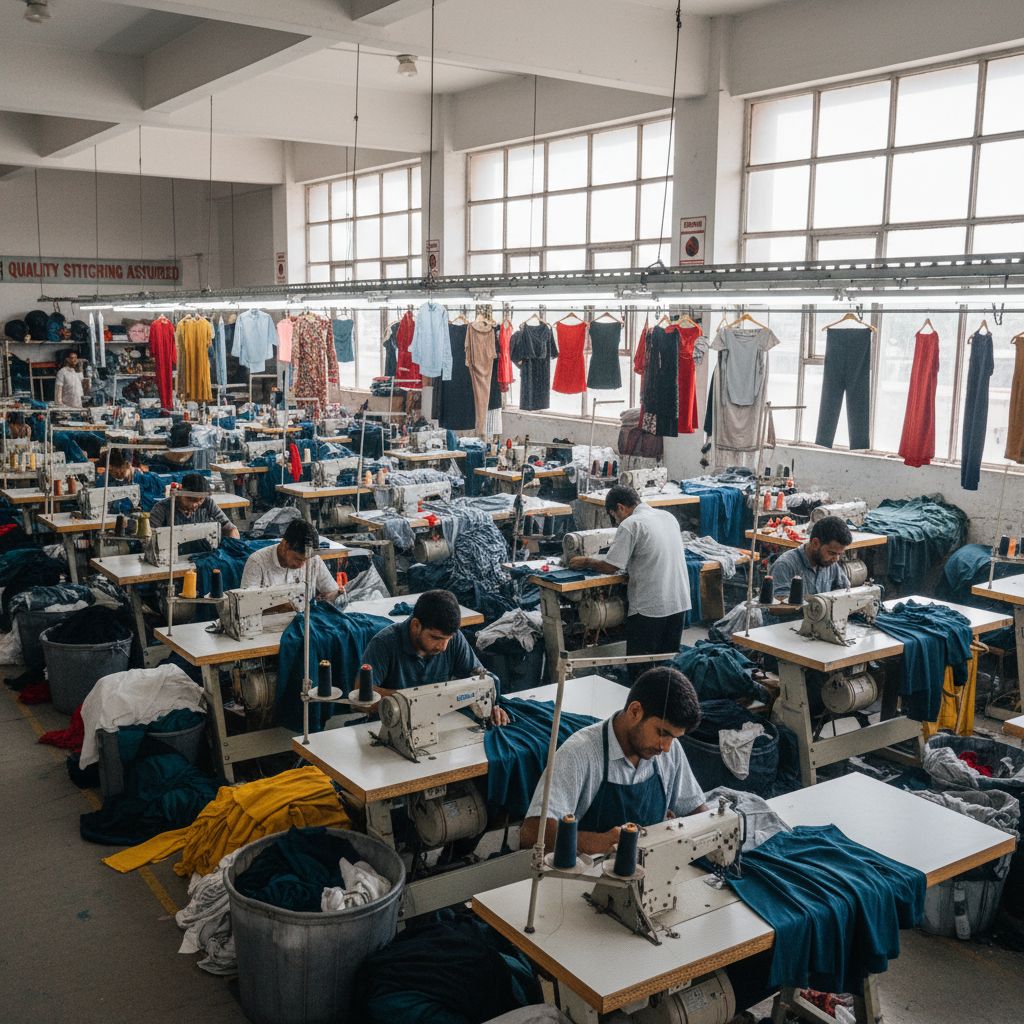

In the garment industry, production calculation is one of the most important tools for planning delivery, loading sewing lines, and controlling output. If the production estimate is wrong, the shipment plan can fail, labor can be underused, and costing decisions can become unreliable.
=> Quick Answer: To calculate the daily output of a sewing line, use the following formula: Daily Sewing Line Output (pcs) = (Number of Operators × Available Working Minutes × Line Efficiency) ÷ Standard Allowed Minutes (SAM)
The good news is that garment production calculation is not difficult when the right inputs are available. Once you know the standard time for one garment, the number of operators, and the average line efficiency, you can estimate daily production correctly. This article explains the formula and key factors involved. This guide explains how to estimate daily garment production accurately, step by step.
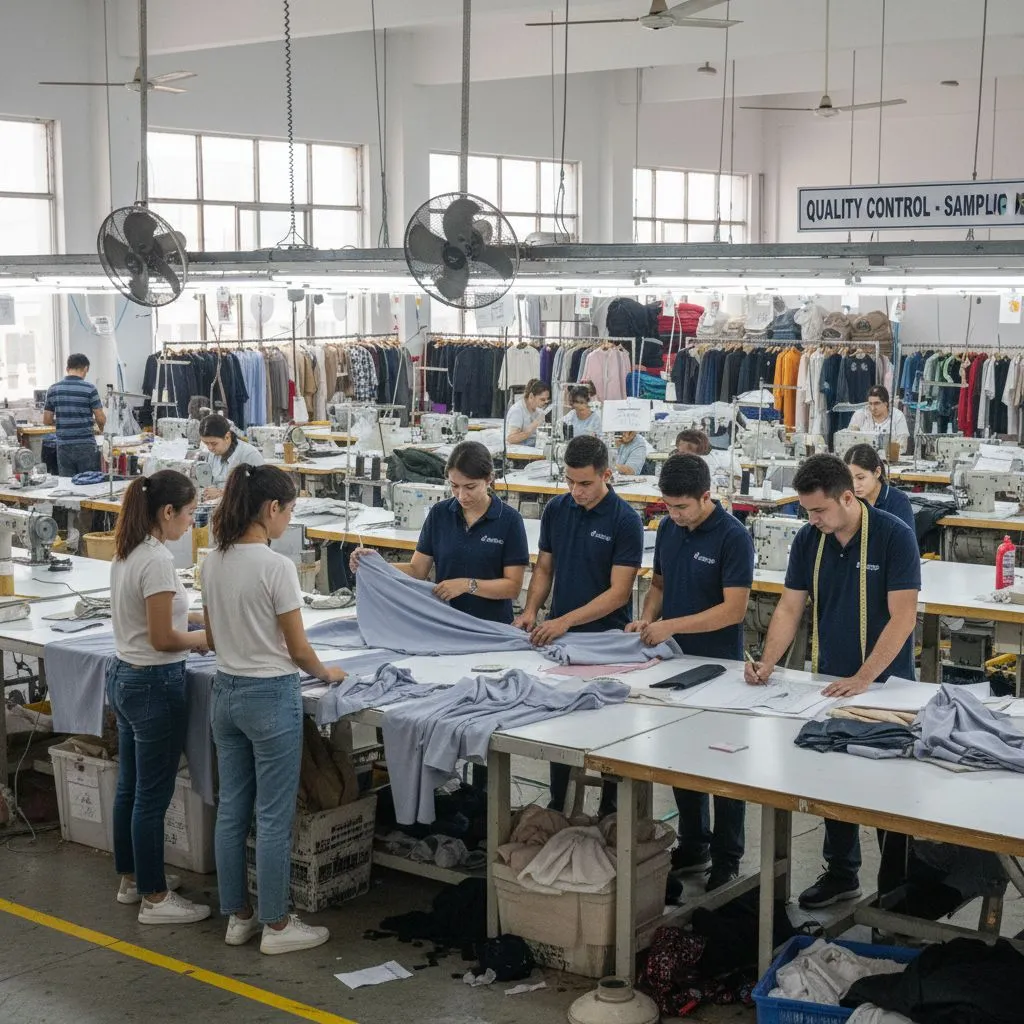
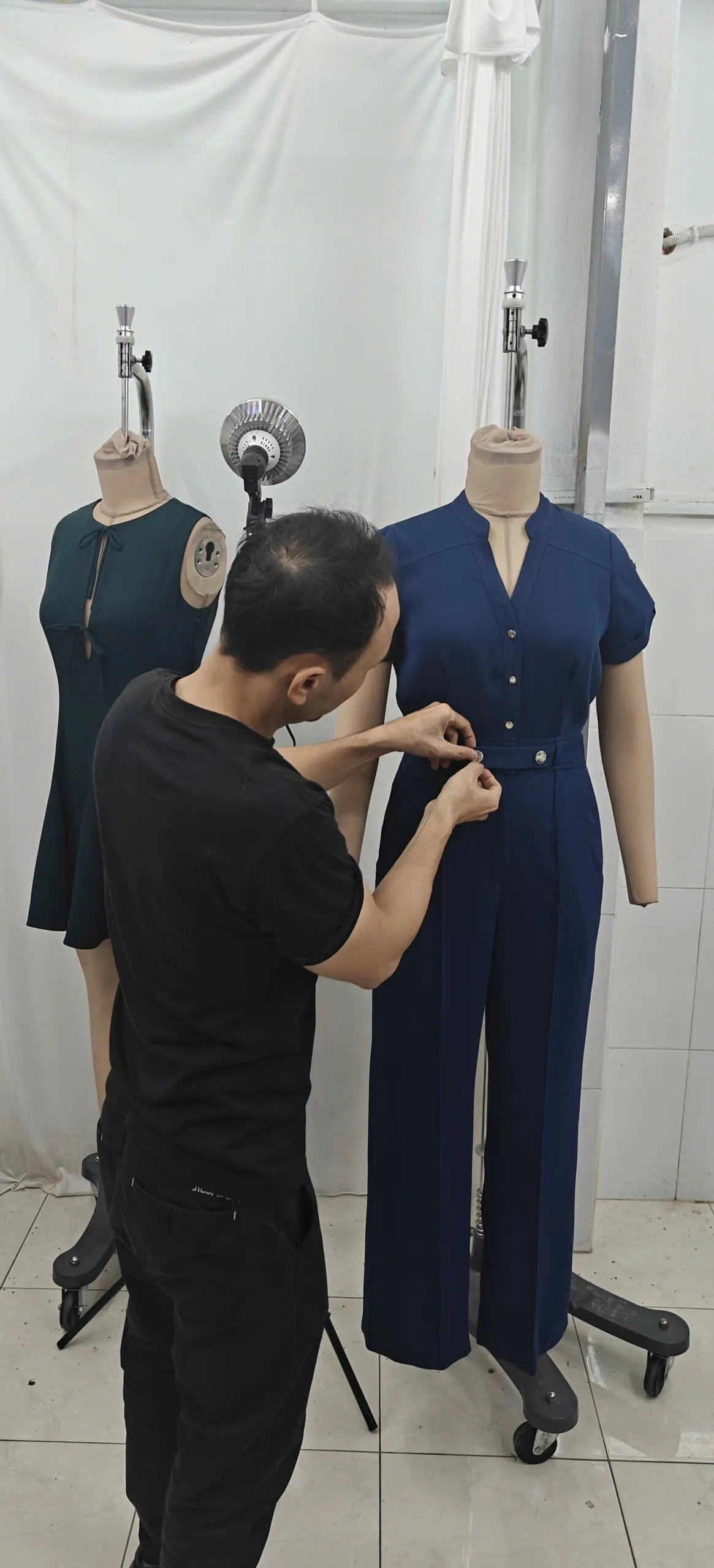
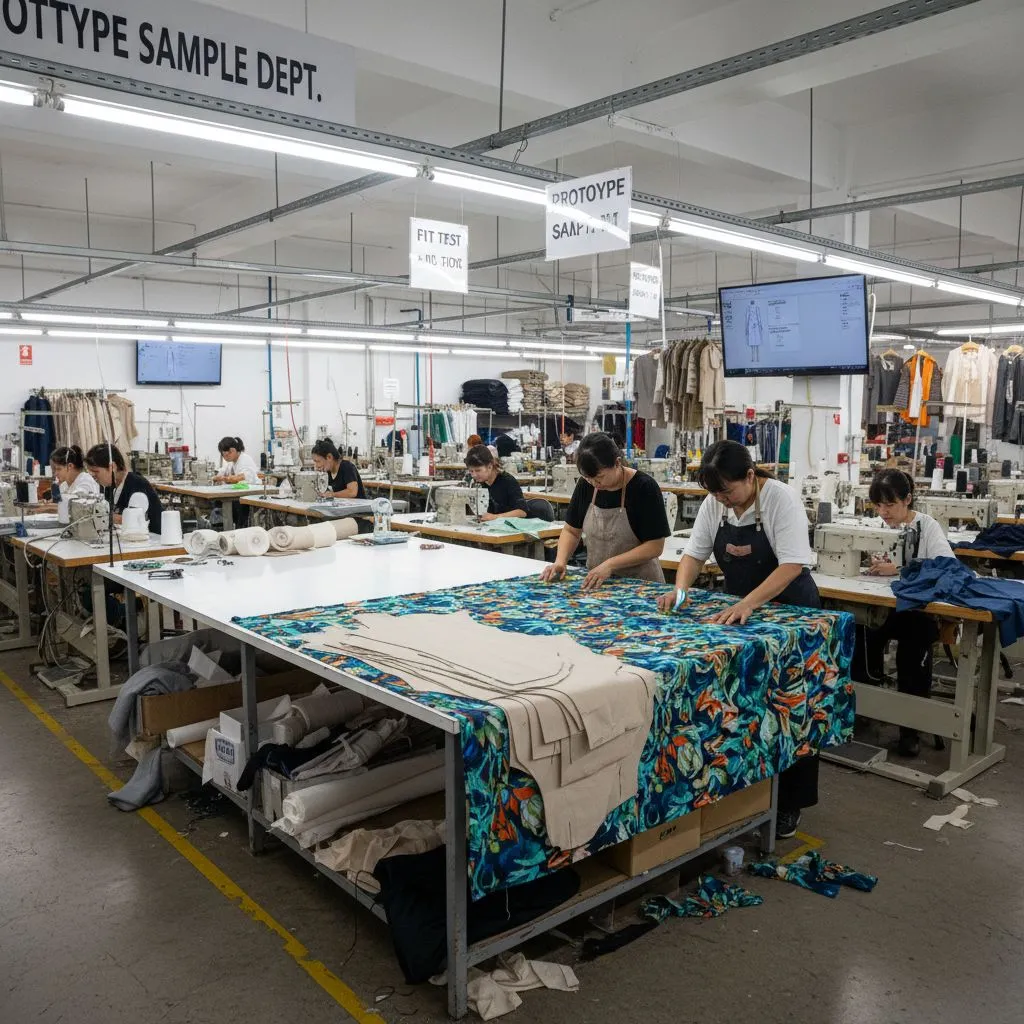
Accurate production estimation is essential in garment manufacturing. It helps factories plan sewing lines, set realistic daily targets, calculate delivery schedules, allocate workers, and monitor whether an order is progressing as expected – Production planning and sampling in garment factory.
What Is Daily Garment Production Estimation?
Daily garment production estimation is the process of calculating how many completed garments a sewing line is expected to produce during one working day. The result gives production managers a practical target for planning and monitoring. It can also help determine whether the available line capacity is sufficient to complete an order before the shipment deadline.
This calculation is usually based on:
- Standard Allowed Minutes (SAM)
- Number of operators in the line
- Working hours per day
- Total break time
- Average line efficiency
When these inputs are accurate, the production estimate becomes more realistic and useful.
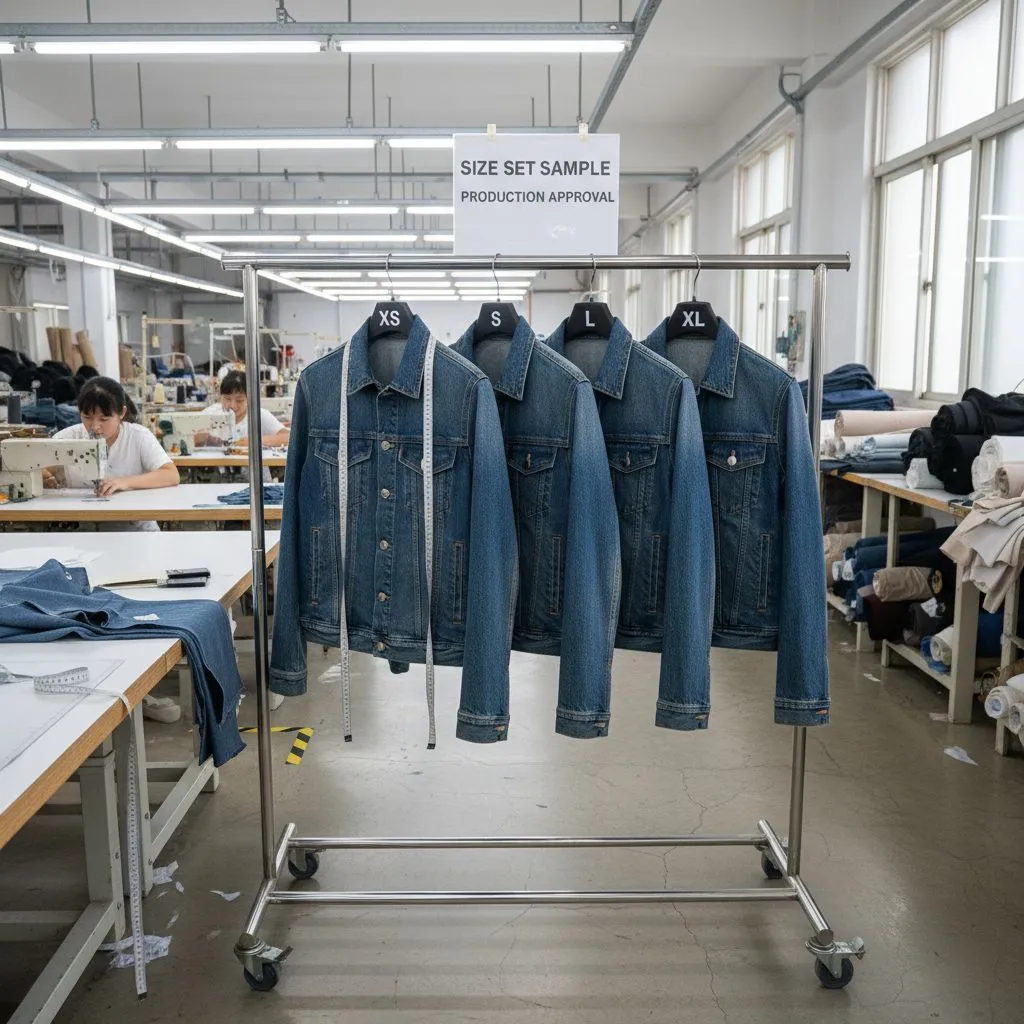

Daily garment production estimation is the process of calculating how many completed garments a sewing line is expected to produce during one working day.
Why accurate production estimation matters:
Production calculation is more than a mathematical exercise. It supports many important factory decisions. An accurate estimate helps manufacturers:
- Set achievable daily production targets
- Plan order completion dates
- Allocate operators and machines
- Load sewing lines correctly
- Estimate production capacity
- Control labor utilization
- Identify performance gaps
- Reduce unnecessary overtime
- Improve shipment planning
- Support accurate garment costing
Without a reliable estimate, production teams may make decisions based on assumptions rather than actual line capacity.
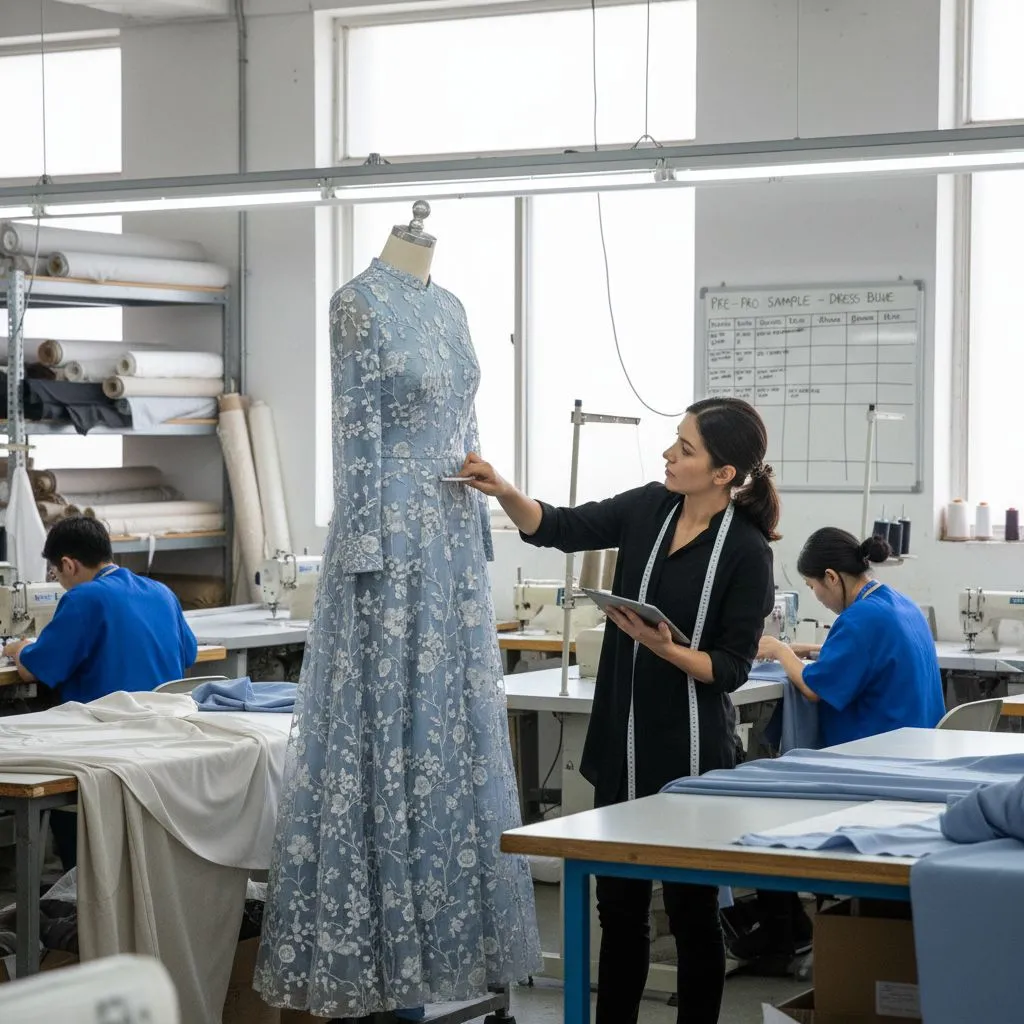
Production calculation is supports many important factory decisions.
Key Inputs for Estimating Garment Production
- 1. Standard Allowed Minutes (SAM): The standard time required to produce one complete garment (e.g., 25 minutes for a polo shirt).
- 2. Working Hours and Break Time: Total minutes minus lunch, tea, and cleaning pauses to get actual available production time.
- 3. Average Line Efficiency: Shows how well the line performs compared to its ideal capacity (e.g., 60% efficiency).
- …
=> Read more: 5 Factors Affecting Estimation of Garments Production
1. Standard Allowed Minutes
Standard Allowed Minutes, commonly known as SAM, represent the standard time required to complete one garment under defined working conditions. For example, if the SAM of a polo shirt is 25 minutes, it means the total standard time required to complete one polo shirt is 25 minutes.
SAM may include the time needed for:
- Sewing operations
- Material handling
- Machine handling
- Allowances for fatigue
- Personal needs
- Unavoidable delays
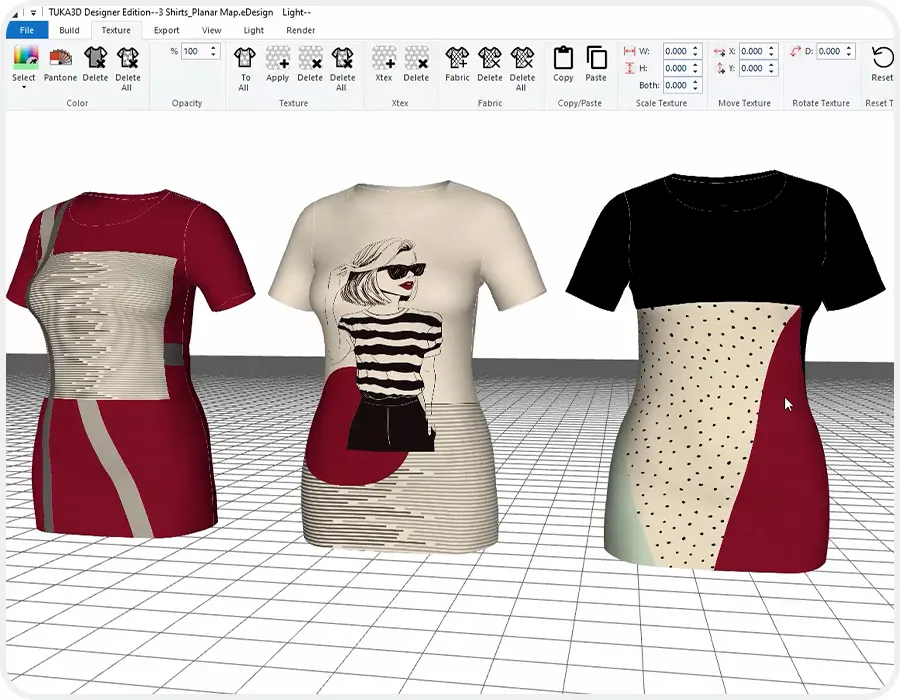
The SAM value should be approved and realistic. An incorrect SAM will produce an inaccurate production target, even when the rest of the formula is correct.

Standard Allowed Minutes, commonly known as SAM, represent the standard time required to complete one garment under defined working conditions.
2. Number of Operators
The number of operators refers to the workers directly involved in producing garments on the sewing line. A line with more operators has more total production minutes available. However, adding workers does not automatically guarantee higher output.
Production can still remain low when:
- The line is poorly balanced
- Operators lack the required skills
- Machines are unavailable
- Materials arrive late
- Bottlenecks occur at difficult operations
The number used in the calculation should reflect the actual operators available for production.
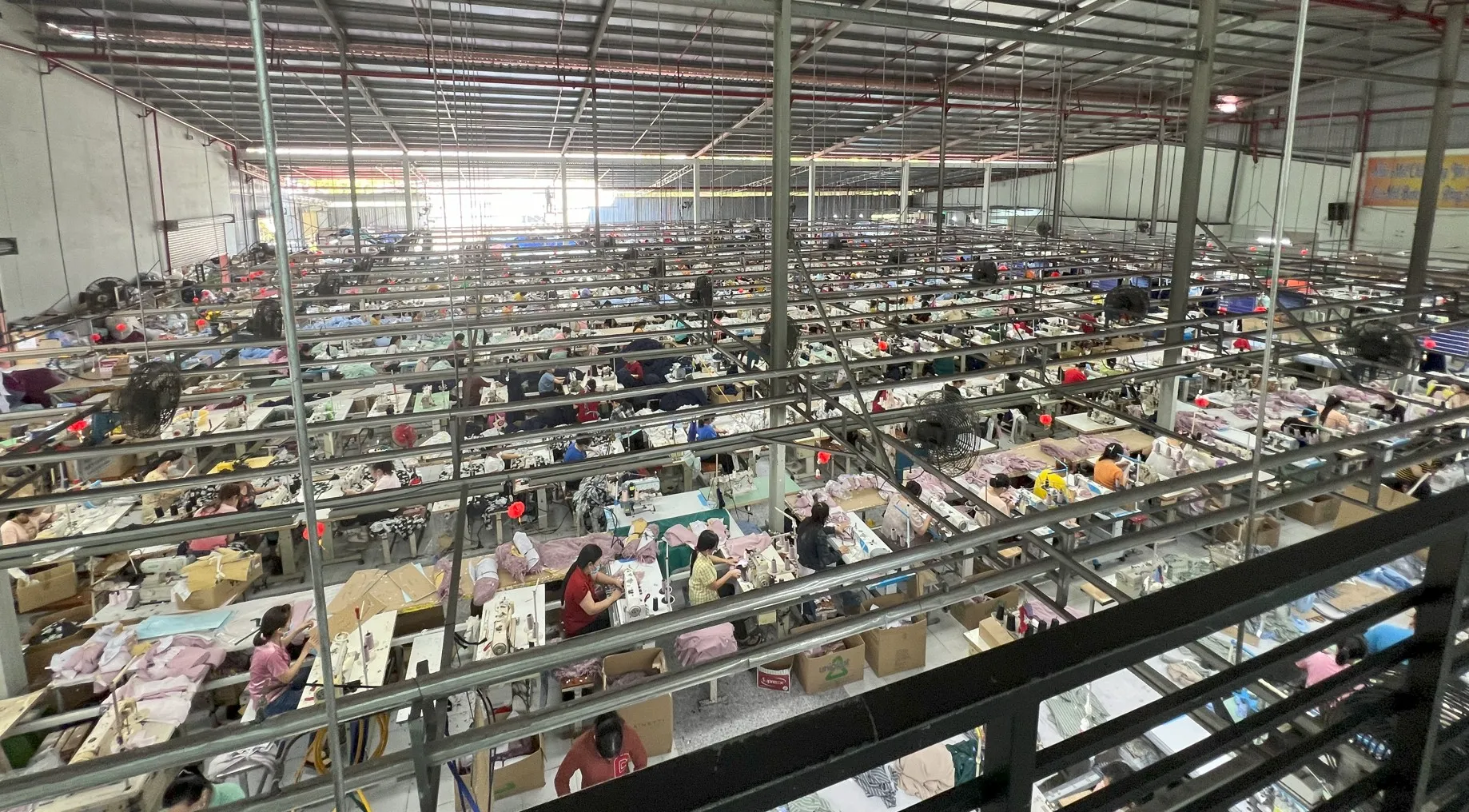
The number of operators refers to the workers directly involved in producing garments on the sewing line.
3. Working Hours
Working hours represent the total scheduled time of the production shift. For production calculation, hours must be converted into minutes. For example: 8 working hours × 60 minutes = 480 minutes. However, the full 480 minutes may not be available for actual production because workers also require breaks and time for non-production activities.
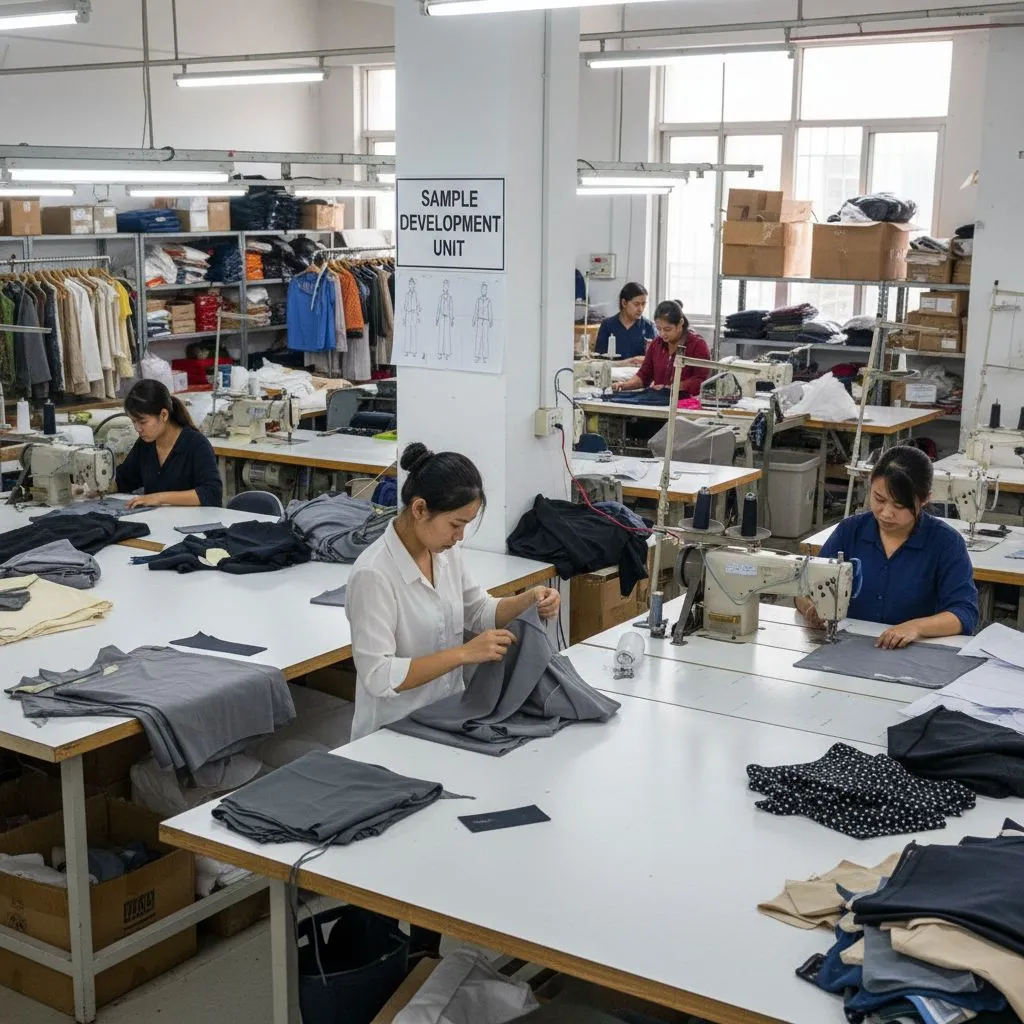
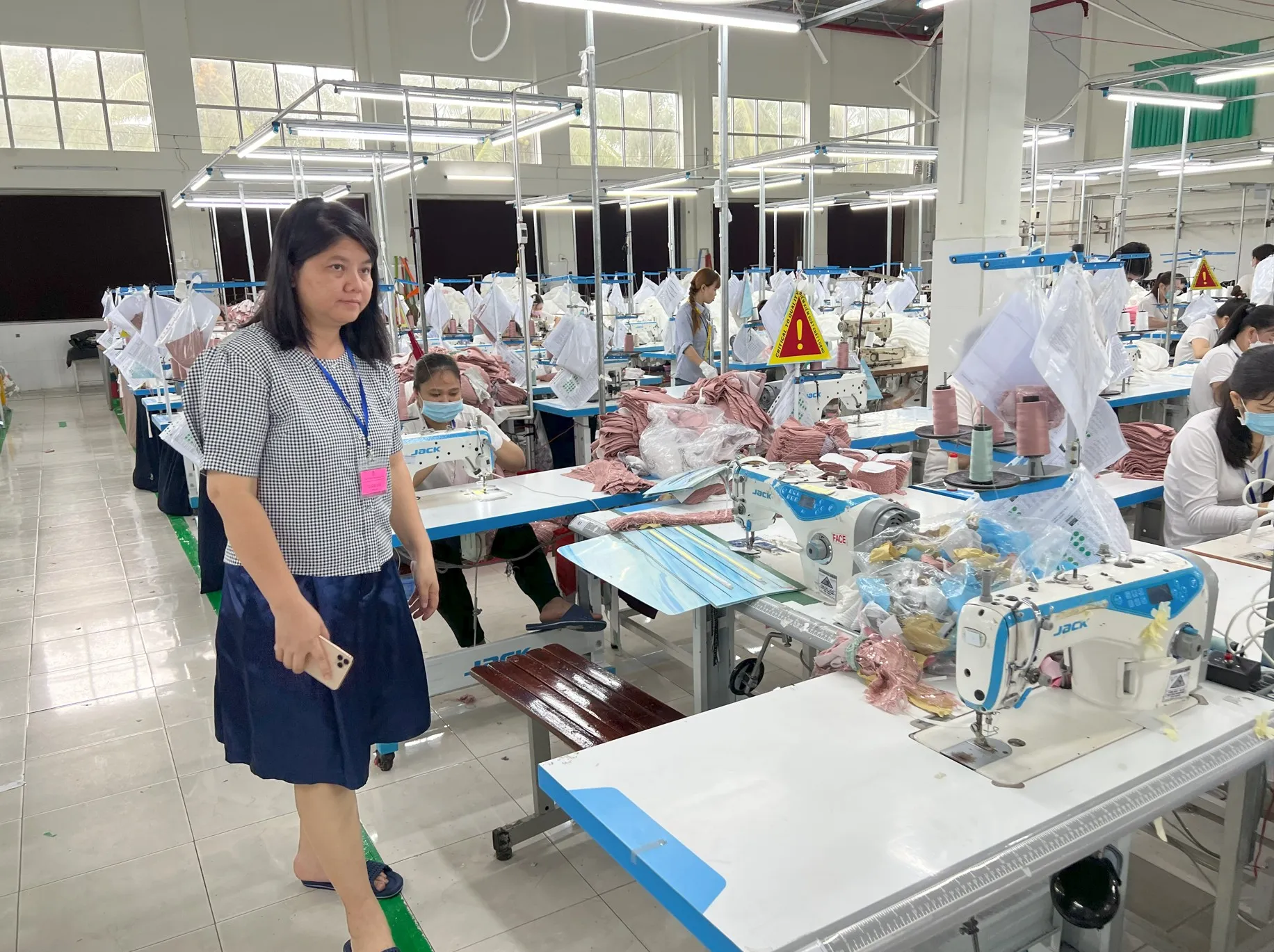
Working hours represent the total scheduled time of the production shift.
4. Break Time
Break time includes scheduled periods when production is not running. This may include:
- Lunch breaks
- Tea breaks
- Rest breaks
- Cleaning time
- Daily meetings
- Machine setup
- Planned line stoppages
Break time must be deducted from total working minutes to determine the actual available production time. For example:
- 480 total minutes − 60 minutes of breaks = 420 available minutes
- Using total shift time without subtracting breaks will create an unrealistic production estimate.

Break time includes scheduled periods when production is not running.
5. Line Efficiency
Line efficiency shows how effectively the sewing line uses its available production time. A line operating at 100% efficiency would produce at its full theoretical capacity. However, most sewing lines operate below 100% because of operator variation, machine delays, bundle handling, quality checks, and other normal production losses. For example, a line working at 60% efficiency achieves 60% of its theoretical production capacity. New styles may begin at a lower efficiency and improve as operators become familiar with the operations.
=> Read more: Thread Packages in the Garment Industry: Types, Features, and Uses
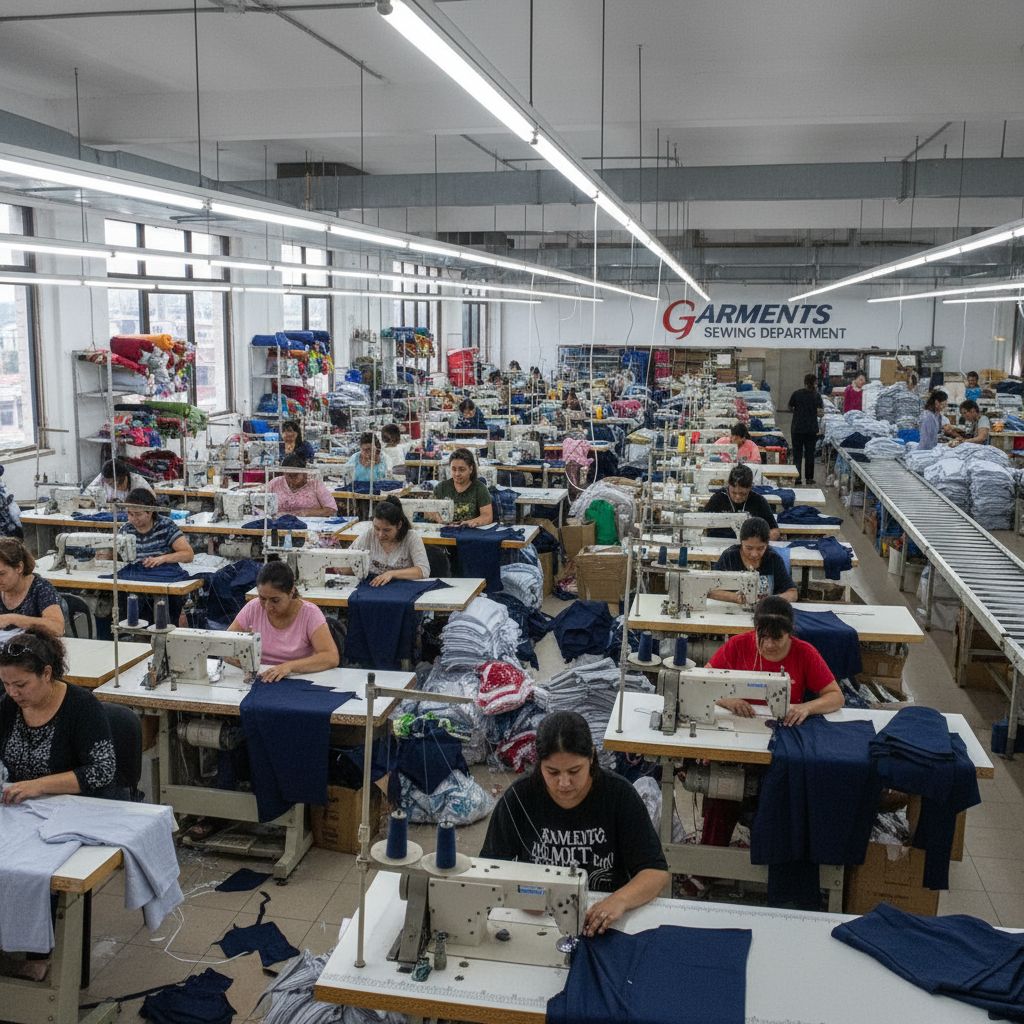
Line efficiency shows how effectively the sewing line uses its available production time.
Formula for Calculating Garments Production
The full formula is:
Daily Production (pcs) = {Number of Operators × [(Working Hours × 60) − Break Time] ÷ SAM} × Line Efficiency
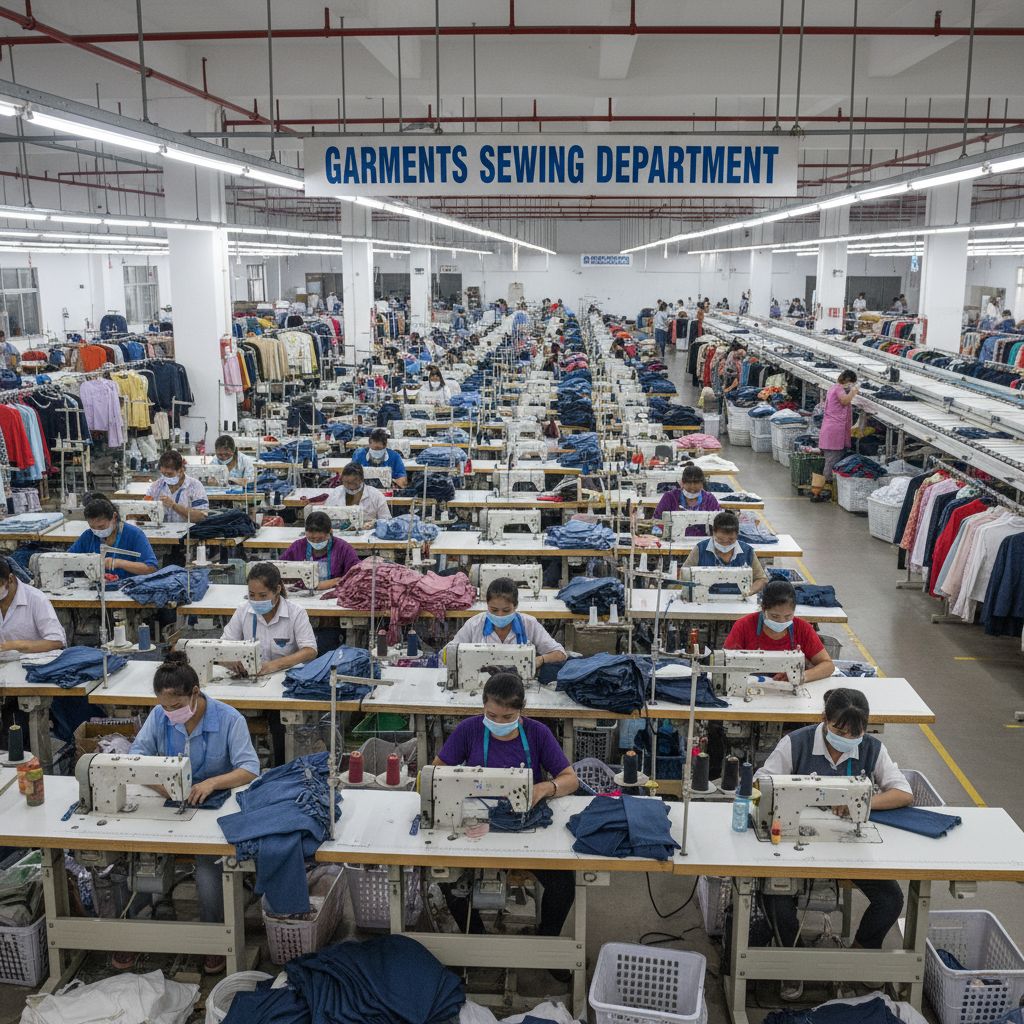
Step-by-Step Method:
- Convert hours to minutes: (e.g., 8 hours = 480 mins).
- Deduct Break Time: (480 – 60 mins = 420 actual mins).
- Calculate Total Man-Minutes: Multiply available minutes by the number of operators (e.g., 20 ops × 420 mins = 8,400).
- Divide by SAM: (8,400 ÷ 25 SAM = 336 pcs at 100% efficiency).
- Apply Efficiency: (336 × 60% = 202 pieces per day).
=> Read more: Types of Stitch Used in Garments Industry

Step-by-Step Production Calculation Example
Suppose a sewing line has the following information:
- Number of operators: 20
- Working hours: 8 hours
- Total break time: 60 minutes
- Garment SAM: 25 minutes
- Expected line efficiency: 60%
The daily production can be estimated as follows. Quick Production Calculation Table:
| Calculation Item | Result |
|---|---|
| Working hours | 8 hours |
| Total shift minutes | 480 minutes |
| Break time | 60 minutes |
| Available minutes per operator | 420 minutes |
| Number of operators | 20 |
| Total available man-minutes | 8,400 minutes |
| Garment SAM | 25 minutes |
| Capacity at 100% efficiency | 336 pieces |
| Expected line efficiency | 60% |
| Estimated daily production | 202 pieces |
Step 1: Convert Working Hours into Minutes
8 hours × 60 = 480 minutes
Each operator is scheduled for 480 minutes during the shift.
Step 2: Deduct Break Time
480 − 60 = 420 available minutes
Each operator has 420 minutes available for production.
Step 3: Calculate Total Available Man-Minutes
20 operators × 420 minutes = 8,400 man-minutes
The sewing line has a total of 8,400 available production minutes.
Step 4: Calculate Production at 100% Efficiency
8,400 ÷ 25 SAM = 336 pieces. At 100% efficiency, the theoretical production capacity is 336 garments per day.
Step 5: Apply the Expected Line Efficiency
336 × 60% = 201.6 pieces The estimated daily production is approximately: 202 garments per day. Because partial garments are not normally counted as completed production, the final result may be rounded according to the factory’s reporting method.
How to Make Production Estimates More Accurate
- Use an Approved SAM: The SAM should be based on an approved sample, correct construction method, suitable machinery, and realistic work conditions. Avoid using estimated values that have not been verified.
- Use Net Working Minutes: Always deduct planned breaks and known non-production time. Using gross shift minutes may overstate the line’s actual capacity.
- Apply Realistic Efficiency: Efficiency should be based on actual factory performance, garment complexity, and operator experience. Do not automatically apply a high efficiency percentage to every style.
- Consider the Learning Curve: Use lower efficiency during the first production days and gradually increase the target as the line stabilizes. This creates a more realistic loading and delivery plan.
- Review Actual Output Daily: Compare the planned production target with actual production every day. When output is below target, investigate the cause immediately. Possible causes may include: Line imbalance Machine downtime Operator absence Quality defects Material delays Incorrect SAM Unplanned style changes
- Update the Estimate When Conditions Change: Production estimates should not remain fixed when the factory situation changes. If the operator count, working hours, efficiency, or production method changes, the calculation should be updated.
- Monitor First-Quality Output: Completed garments that require repair should not be treated the same as accepted garments. Factories should track: Total sewn output, Defective pieces, Repaired pieces, First-quality output. This provides a clearer view of real factory performance.
=> Read more: 12 Important Properties of Sewing Thread in the Garment Industry
Conclusion / Final Words
Estimating daily garment production accurately is one of the most important responsibilities in apparel manufacturing. It helps factories plan capacity, assign workers, establish realistic targets, and protect delivery schedules. The basic calculation depends on four key elements: available working minutes, number of operators, garment SAM, and expected line efficiency. However, accurate planning also requires an understanding of actual factory conditions, including operator skill, line balance, machine availability, quality performance, and the production learning curve. A good production estimate is not simply the result of a formula. It is a realistic forecast supported by reliable data and regular shop-floor monitoring. When factories calculate capacity carefully and update their plans based on actual performance, they can improve efficiency, reduce production risk, and complete orders more consistently.