How a Brand Should Choose the Right T-Shirt Neckline Without Regrets

Picking a neckline sounds simple… until you get returns, warped collars, or a tee that looks “cheap” on-body. Most brands choose necklines based on taste (“crew is safe,” “V-neck sells,” “scoop feels cooler”). That’s how you end up with a neckline that:
- looks good in a mockup but bad on real customers
- fights your logo placement
- fails QC (wavy neck, stretched opening, twisted seams)
- creates higher returns than you expected
Here’s a real-world, brand-first system to choose the right neckline, based on customer, fabric behavior, price point, and production reality.
=> Read More: T Shirts Manufacturing Vietnam | Mekong Garment Factory
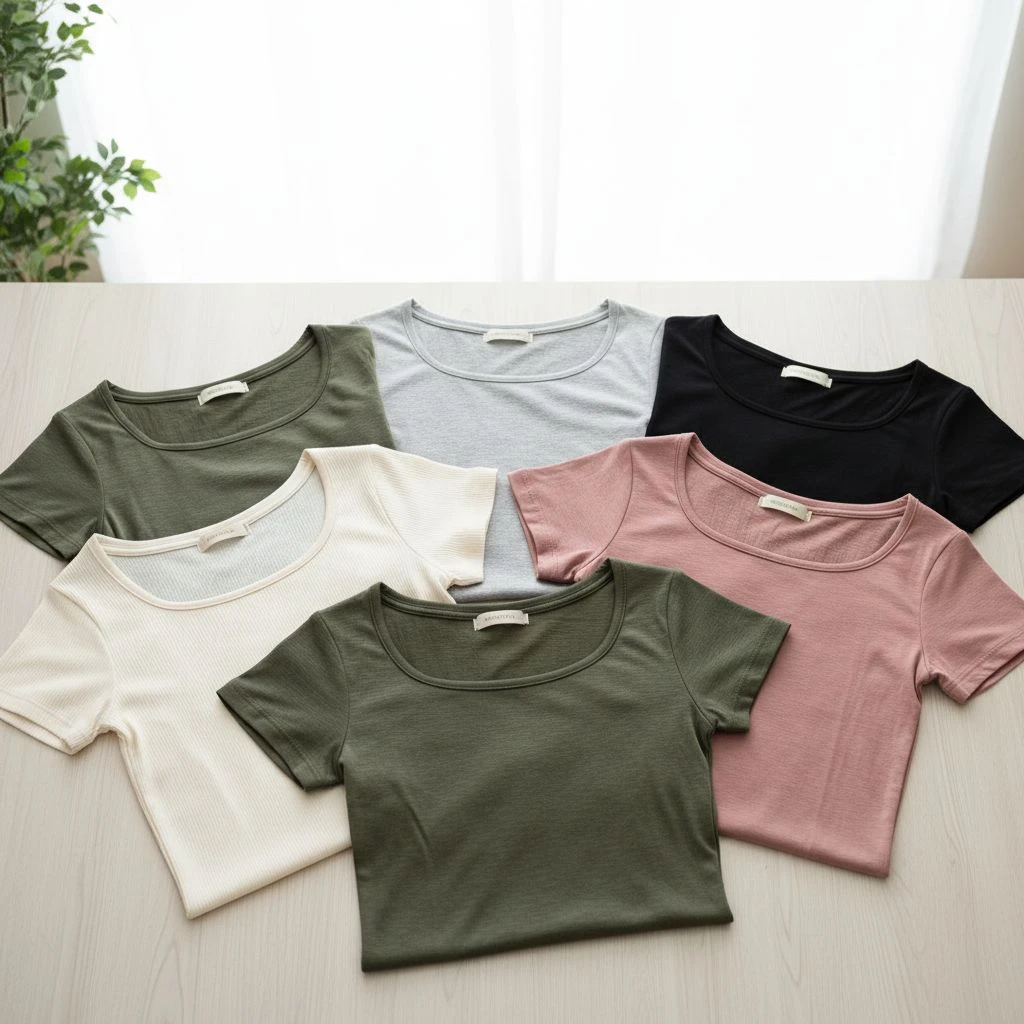
Why Necklines Matter More than Brands Think
The neckline is the “frame” of the face and chest. It decides:
- First impression: premium vs basic vs fashion vs sporty
- Comfort: tightness, heat, irritation, movement
- Durability: how fast it stretches, curls, or warps
- Fit perception: even if the body fit is the same
- Print/branding balance: where the eye lands
You can nail fabric + fit + color… and still lose customers because the collar feels wrong or looks sloppy after washing.
Step by Step to Choose the Right T-Shirt Neckline Without Regrets
Step 1: Define the job of the T-shirt (not the neckline)
Before naming styles, decide the tee’s job:
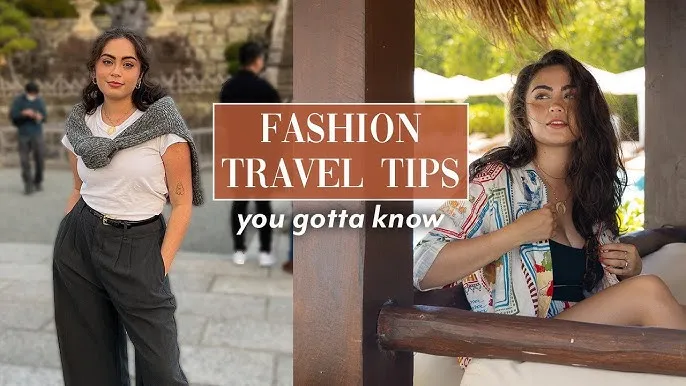
A) “Daily uniform” tee
A “daily uniform” tee is the T-shirt people grab without thinking. It’s the one they wear to school, work, travel, coffee, errands anywhere. For brands, this type of tee isn’t about being flashy. It’s about being the most dependable item in the closet.
- Goal: repeat purchase, low returns, broad audience
- Neckline must be: stable, easy, comfortable
B) “Premium basic” tee
A “premium basic” tee is a simple T-shirt that looks and feels expensive even with no big graphics. The goal isn’t to be loud. The goal is to feel clean, confident, and intentional the moment someone wears it.
- Goal: minimal branding, elevated look
- Neckline must be: clean, structured, intentional

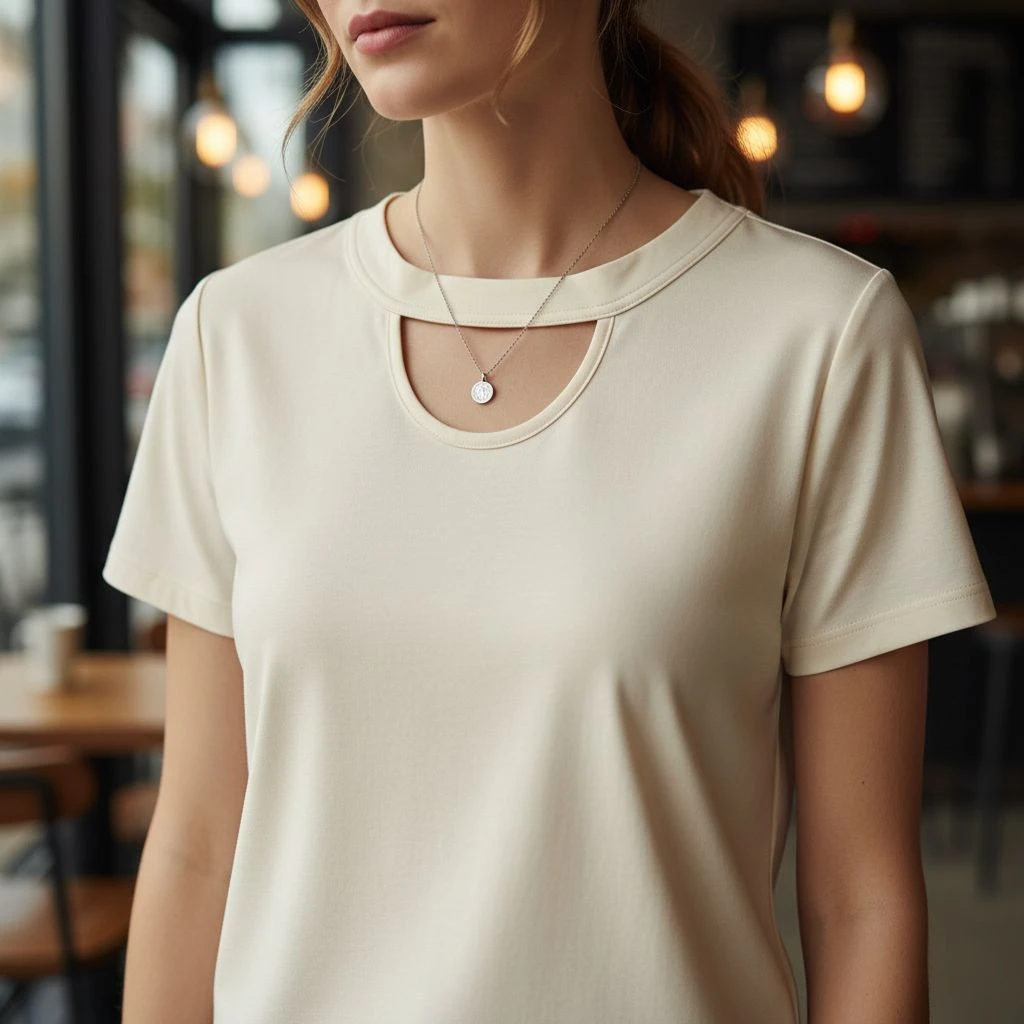
C) “Fashion statement” tee
A “fashion statement” tee is a T-shirt designed to be noticed. The neckline isn’t just a functional opening it’s part of the silhouette, the attitude, and the styling message. People buy it because it looks different, not because it’s the safest choice.
- Goal: silhouette and styling
- Neckline can be: more open, detailed, or unusual—but higher risk
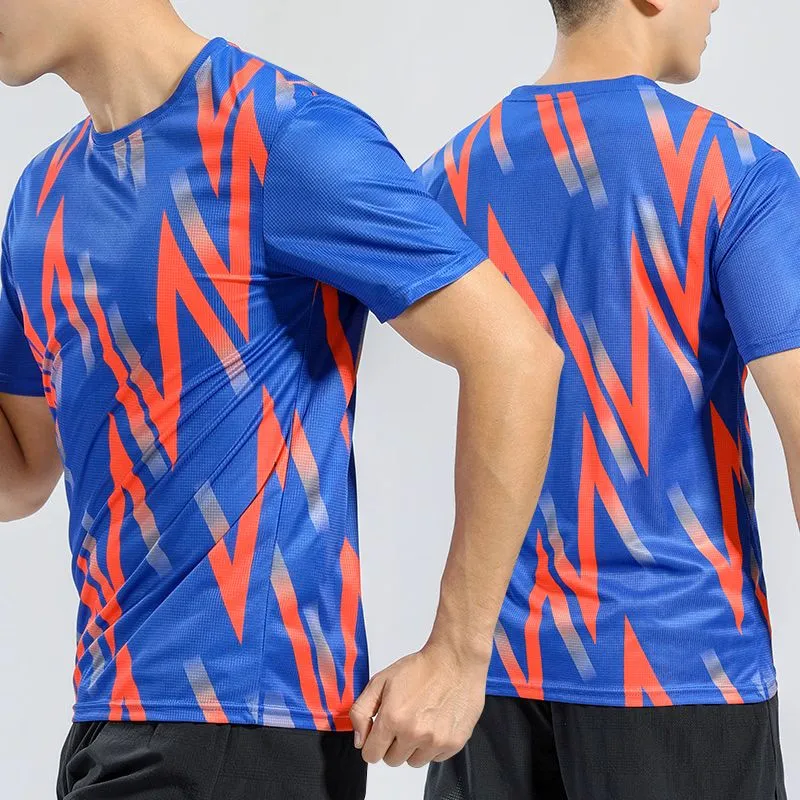
D) “Merch / graphic tee”
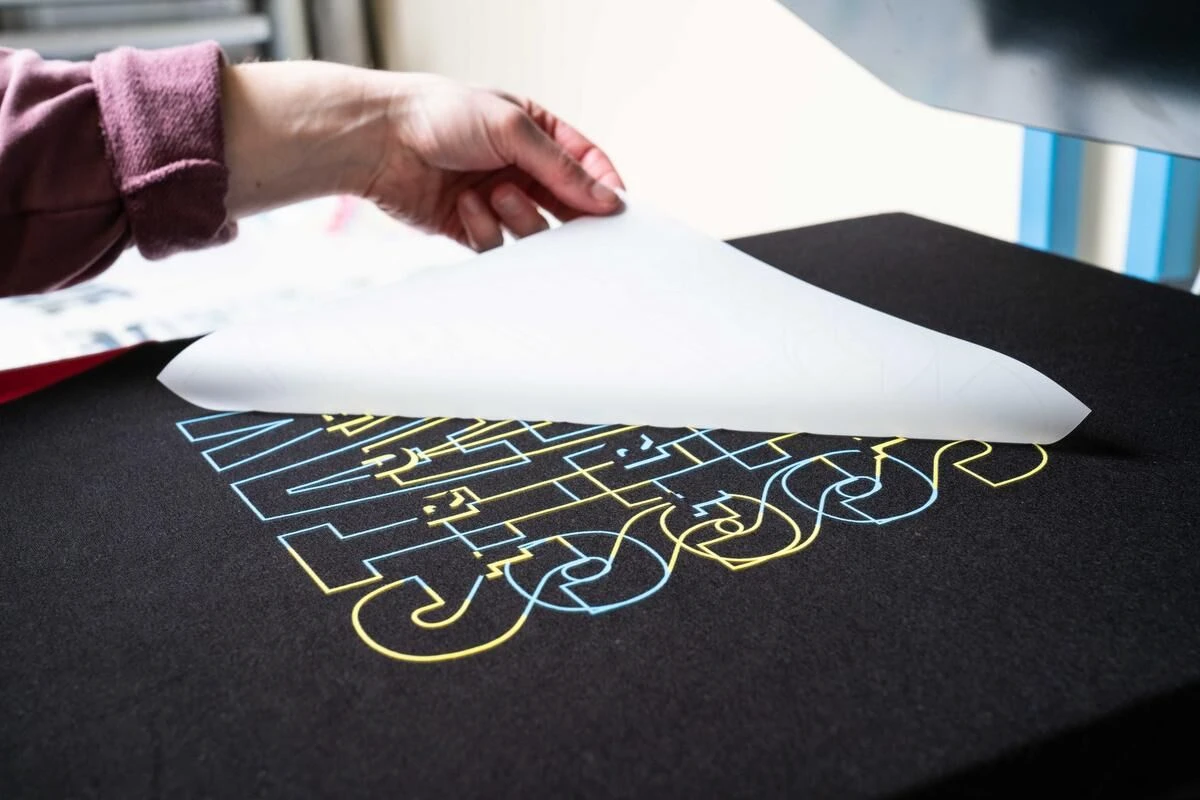
A “merch / graphic tee” is a T-shirt where the print is the hero. People buy it for the message, the artwork, the band/brand identity not for a fancy cut. So the neckline’s job is simple: support the graphic, not compete with it.
- Goal: make the print look strong
- Neckline must not compete with the graphic

If you don’t define the job, your neckline choice becomes random.
Step 2: Customer clarity (make it specific)
“Who is the customer?” is correct—but too vague. Make it measurable:
Ask these instead:
- Neck comfort tolerance: do they hate tight collars?
- Styling habits: jewelry, scarves, hijab, layering?
- Fit preference: oversized vs fitted (changes neckline feel a lot)
- Age + cultural preference: some markets want more coverage
- Use case: workwear, streetwear, gym, lounge, travel
Example flaw: A “streetwear customer” might love oversized tees but hate a tight high neck. If you pick a high neck because it looks premium, you’ll get “feels choking” reviews.
Step 3: Climate is important—but fabric behavior is the real boss
Hot/humid climate doesn’t automatically mean “open neckline.” A crew neck in a breathable fabric can feel cooler than a scoop neck in a heavier fabric that traps heat or sticks to the skin.
Fabric behaviors that decide neckline success:
- Recovery: does it snap back after stretching?
- Shrink risk: will the neck opening tighten after washing?
- Drape: does it collapse and look messy?
- Weight (GSM): too light can make open necklines look weak
- Surface feel: irritation at the neck = instant dislike
Rule of thumb:
- Weak recovery / very light fabric → safer necklines (crew, mild V)
- Good recovery / medium weight → more freedom (scoop, high neck, details)
Step 4: Price point decides how “fussy” you can be
Price point quietly controls everything about neckline execution. The higher the retail price, the more you can afford “fussy” details extra reinforcement, cleaner finishing, slower stitching, better trims, and more QC time. At lower price points, those same steps get cut first, which is why some necklines that look great in samples fail in bulk production.
If your tee is priced low, you need:
- fewer sewing steps
- lower QC sensitivity
- lower defect risk
- stable repeatability
Practical reality:
- Budget tees: basic crew / mild V is usually best
- Mid-tier: you can explore more variations safely
- Premium: you can justify stabilization, better rib, tighter tolerances
A “cool neckline” that increases defects by even a few percent can erase your profit faster than you think..
Step 5: Logo + graphic placement (it’s not just “where,” it’s how it reads)
Most brands think logo placement is a simple rule: left chest, center chest, back print. But the truth is: the neckline changes how your design is perceived even if you never move the artwork. Why? Because the neckline creates a visual frame. It guides the viewer’s eyes and sets the “center” of the shirt. A print that looks perfect on a flat mockup can look wrong on-body when the neckline shape pulls attention, cuts into the space, or shifts the focus upward.
- Most brands think: “Logo goes left chest.” Done. But the neckline changes the visual center and how the graphic feels.
- Quick branding rules – Big centered graphic. Best: crew. Risky: deep V / keyhole (cuts the design area)
- Small chest logo / minimal branding – Best: high neck / raised crew / clean crew (looks intentional)
- Typography-heavy designs – Best: crew (stable “frame”)
- Vertical artwork flow – Avoid: anything that interrupts the center line (deep V, keyhole)
Step 6: Production reality (the part that saves you money)
This is the step that protects your margin. A neckline can look perfect on paper and still fail in production because real factories deal with speed targets, operator skill variation, fabric lot differences, and machine setup limits. “Production reality” means designing and approving necklines based on what can be made consistently, not what looks best in a single sample. A neckline is a QC magnet. Before you commit, ask your factory:
Can you repeat these consistently?
- neck opening measurement per size
- rib stretch % and recovery
- seam stability (no twisting)
- neckline lay-flat after wash
- stitch consistency around curves
Typical failure points:
- Wavy neckline (rib stretched during sewing)
- Collar “baconing” (rippling after wash)
- Neck opening grows (insufficient stabilization)
- Edges curl (wrong construction for the fabric)
- Collar collapses (rib too soft or mismatched)

If a neckline requires “perfect execution,” it’s not a good choice for mass production unless you can control it tightly.
Neckline Options: What They Signal + When They Fail
1) Crew neck (classic)
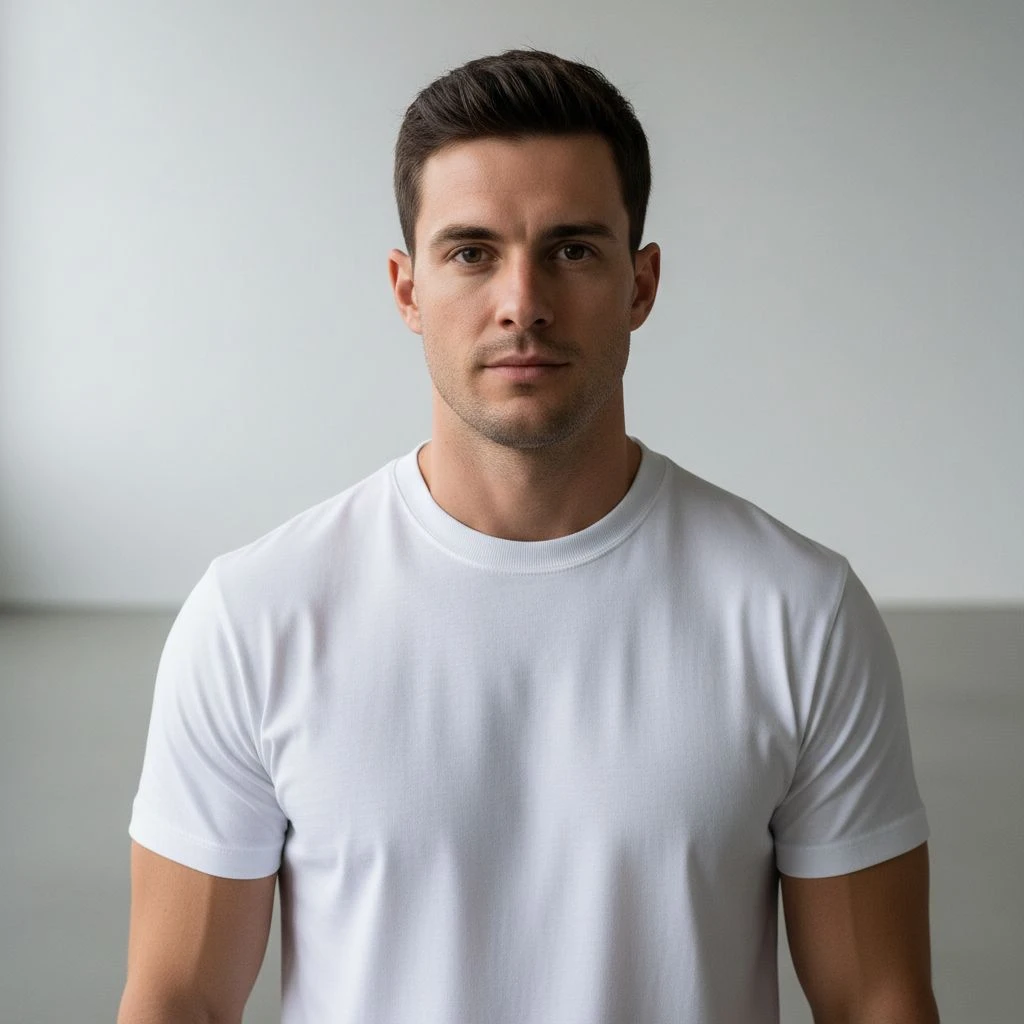
- Best for: everyday tees, merch, broad fit range
- Signals: timeless, safe, reliable
- Main risks: looks basic if rib is cheap; can feel hot/tight if opening is small
Choose crew if you want:
- lowest return risk
- best print compatibility
- easy grading and production
2) V-neck (moderate, not deep)
- Best for: warm climates, sharper styling, layering
- Signals: lighter, a bit more “styled”
- Main risks: deep V looks dated or “too much”; point can stretch and wave
Choose V if:
- you need a slightly cooler/leaner look
- your audience likes open neck comfort
- you can control the V point finishing cleanly

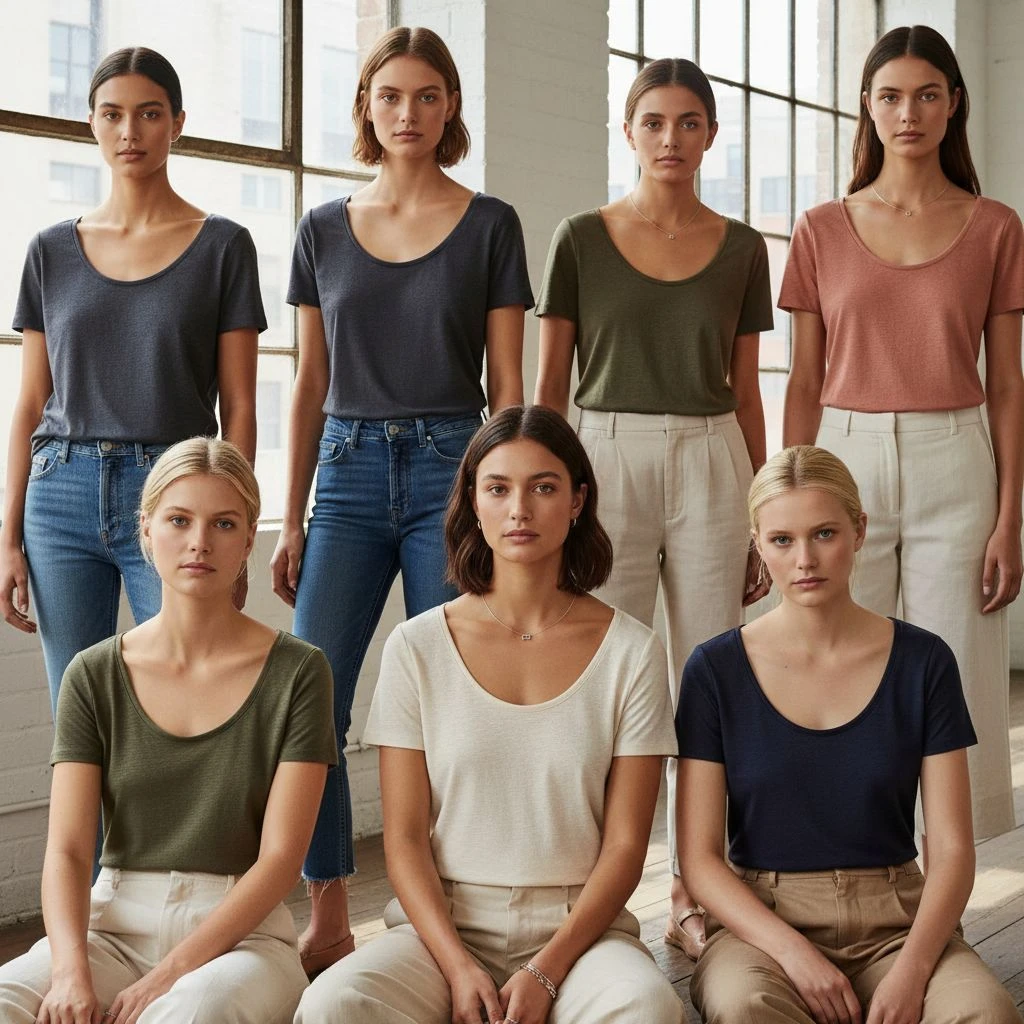
3) Scoop neck
- Best for: fashion basics, softer looks
- Signals: relaxed, feminine-leaning, airy
- Main risks: can look sloppy if fabric is light; neckline can grow fast
Choose scoop if:
- fabric has strong recovery
- you accept higher QC sensitivity
- your styling goal is “soft and casual”
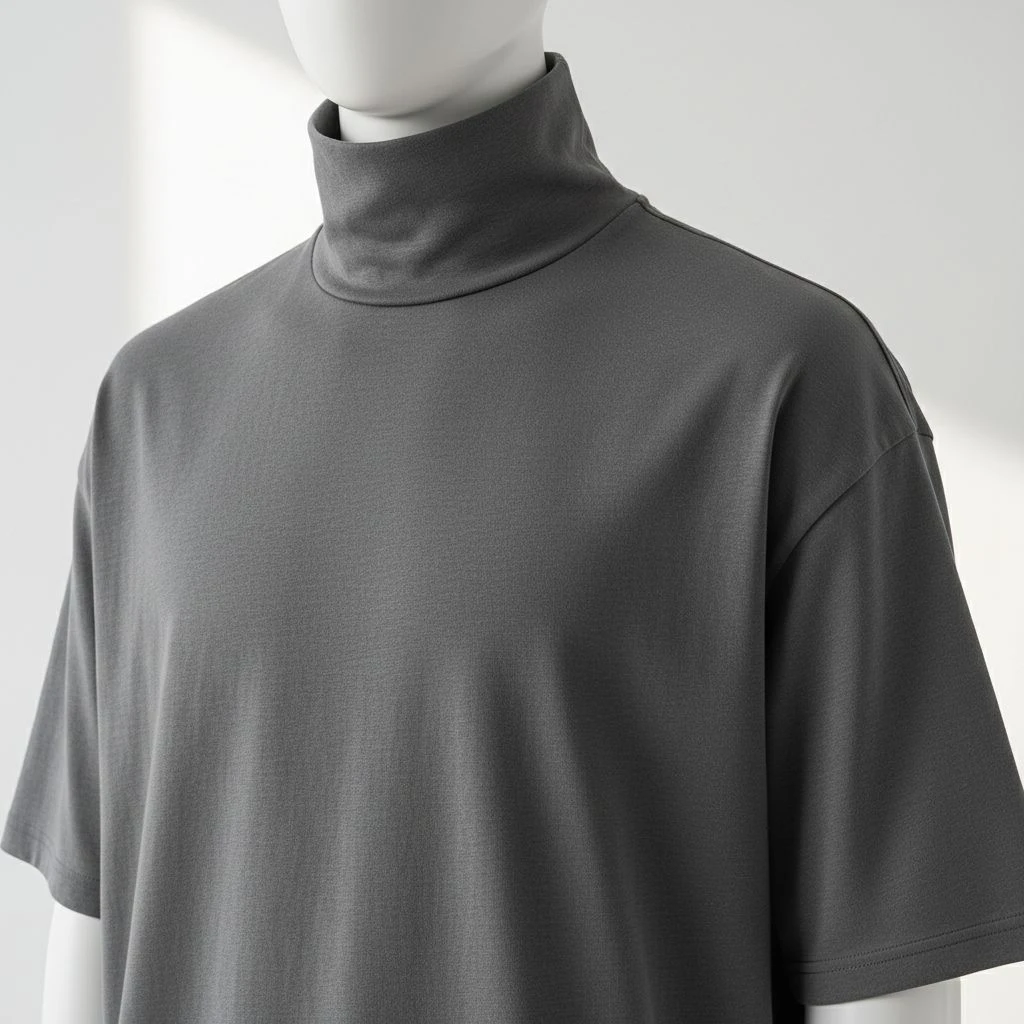
4) High neck / raised crew
- Best for: premium basics, athleisure, modern minimal
- Signals: clean, structured, elevated
- Main risks: comfort complaints (“choking”), collar warping if rib is wrong
Choose high neck if:
- you want “premium” without graphics
- your rib quality is strong
- you test comfort across neck sizes
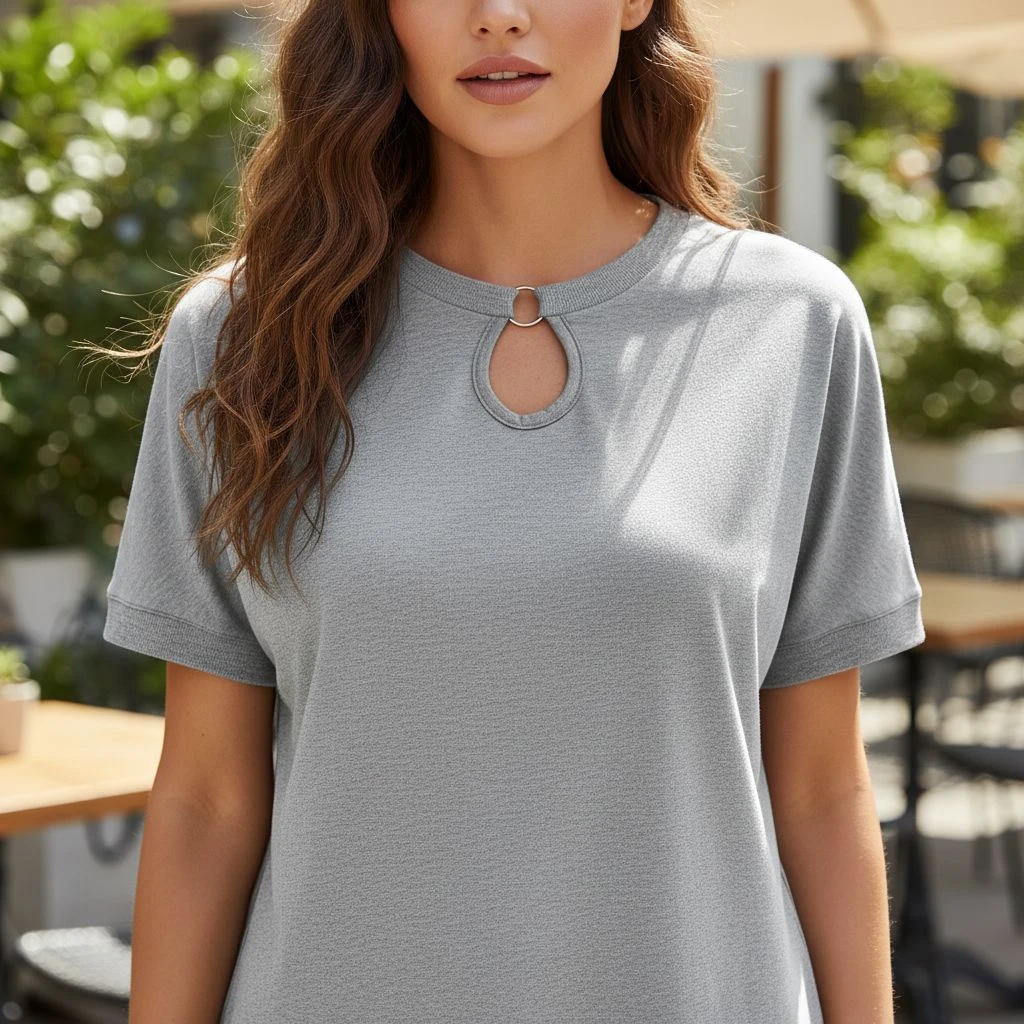
5) Notch / keyhole / other “detail” necklines
- Best for: fashion drops, boutique lines
- Signals: intentional, standout detail
- Main risks: high defect visibility (tiny asymmetry looks bad), reinforcement needed
Choose detail necklines if:
- your customer expects fashion detail
- your price supports higher QC + time
- you’re okay with slightly higher returns risk
A Simple Decision Map (fast but accurate)
| Your main goal (pick 1) | Best neckline choice | Why it works (fast logic) | Watch-outs (devil’s advocate) |
|---|---|---|---|
| Lowest risk + widest audience | Crew neck | Most familiar, easiest to fit, best for repeat sales | Can look “basic” if rib quality is weak; can feel hot/tight if neck opening is too small |
| Cooler feel + slightly sharper style | Moderate V-neck | More airflow + looks a bit more styled than crew | Deep V looks outdated/awkward; V point can stretch/wave if finishing is poor |
| Soft fashion vibe | Scoop neck | Feels open/relaxed and reads “softer” | High risk of stretching out if fabric recovery is weak; can look sloppy on thin fabric |
| Premium modern basic | High neck / Raised crew | Looks intentional, structured, “premium basic” | Comfort complaints if too tight; needs good rib + accurate grading to avoid choking feel |
| Standout detail for a drop | Notch / Keyhole | Adds visual identity without changing whole tee body | More QC sensitive (symmetry matters); needs reinforcement; higher defect/return risk |
| Graphic-heavy merch tee | Crew neck | Best “frame” for centered prints and chest graphics | If collar collapses, print looks cheaper; avoid too-thick rib that steals attention |
| Minimal branding (tiny chest logo) | High neck / Clean crew | Neckline becomes the “design,” looks elevated | High neck can annoy some customers; crew may feel too ordinary if not well built |
| Hot + humid + very lightweight fabric | Crew or mild V | Safest shapes when fabric is prone to stretching | Scoop/detail necklines can grow fast; you may need stabilization tape to control stretch |
| Budget price (must be repeatable) | Crew (or mild V) | Lowest sewing complexity + stable QC | Fancy necklines increase steps + defects and can destroy margin |
| Premium price (you can afford upgrades) | High neck / Notch / Scoop (controlled) | You can justify better rib, stabilization, tighter tolerances | Don’t assume “premium” means tight; comfort still wins returns battles |
Conclusion / Final Words
Choosing the right T-shirt neckline isn’t a “style pick.” It’s a business decision that affects comfort, perceived quality, QC risk, and returns. Your decision map makes it simple:
- If you want lowest risk + widest audience, go crew neck.
- If you want cooler + a bit sharper, choose a moderate V.
- If you want a soft fashion vibe, use scoop—but only when fabric recovery is strong.
- If you want premium modern basic, a high neck/raised crew can look expensive fast—if it’s not tight.
- If you want standout detail, notch/keyhole works, but it costs more in QC and consistency.
Here’s the key pushback: customer + climate + GSM + price + logo placement is not enough unless you also check two “make-or-break” things:
- Fabric recovery (will the neck stretch, wave, or collapse?)
- Factory repeatability (can they hit the same neck opening and finish every time?)
If you choose a neckline your fabric can’t hold or your factory can’t repeat your “best-looking” design becomes the most expensive mistake. The winning neckline is the one that matches your customer and survives real wear, real washing, and real production at scale.