
Direct-to-Film (DTF) printing has exploded in popularity in recent years, especially among print-on-demand businesses, small apparel brands, and e-commerce sellers. It promises vibrant colors, wide fabric compatibility, and low setup costs. But is DTF really the “best” T-shirt printing method? The honest answer: sometimes yes, sometimes no. This article breaks down what DTF printing is, how it works, its advantages and disadvantages, and most importantly when it actually makes sense to use it for T-shirts.
=> Read More: T Shirts Manufacturing Vietnam | Mekong Garment Factory
T-Shirt Printing Methods Comparison:
- Screen Printing for T-Shirts: What It Is, Pros, Cons, Costs, and When to Use It
- Direct-to-Garment (DTG) Printing for T-Shirts: Pros, Cons, and What Brands Must Know
- Direct-to-Film (DTF) Printing for T-Shirts: Pros, Cons
- What Is Heat Transfer Printing for T-Shirts: Pros, Cons, Benefits,…
- Sublimation Printing for T-Shirts: Pros, Cons and Guide for Brand Owners
- Puff Printing for T-Shirts: Pros, Cons, Benefits and Guide for Brand Owners
- Heat Transfer Vinyl (HTV) Printing: Pros, Cons and Benefits
- What Is Embroidery for T-Shirts? A Brand Owner’s Guide
What Is Direct-to-Film (DTF) Printing?
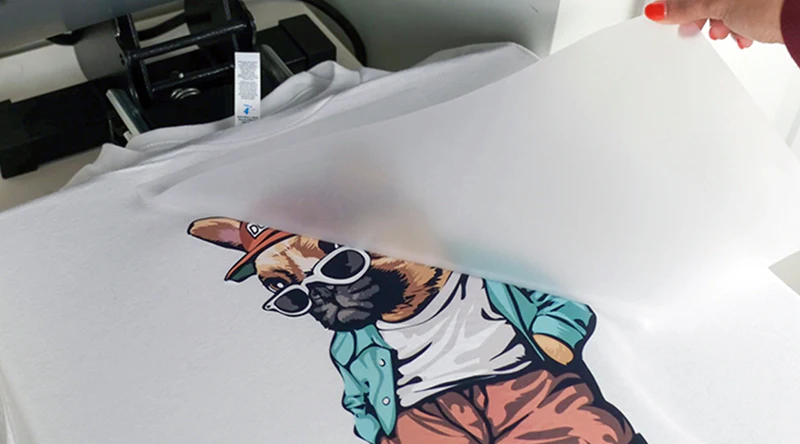
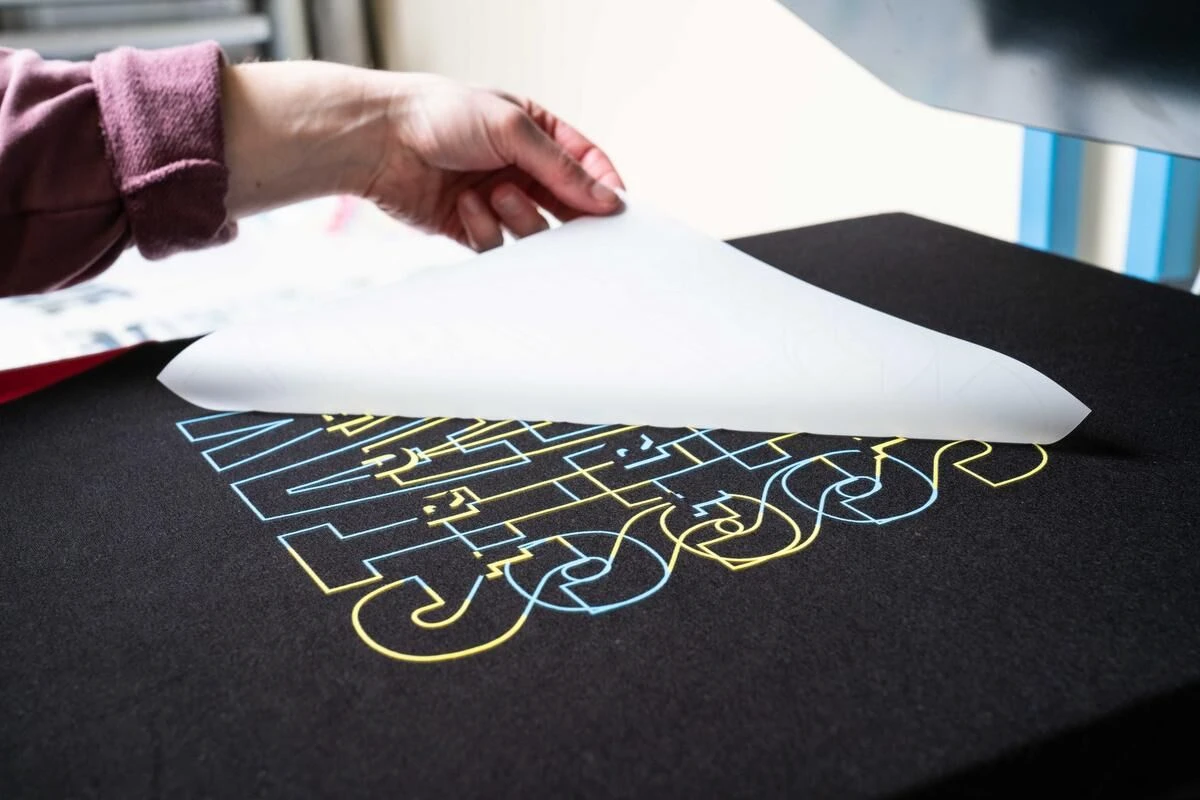
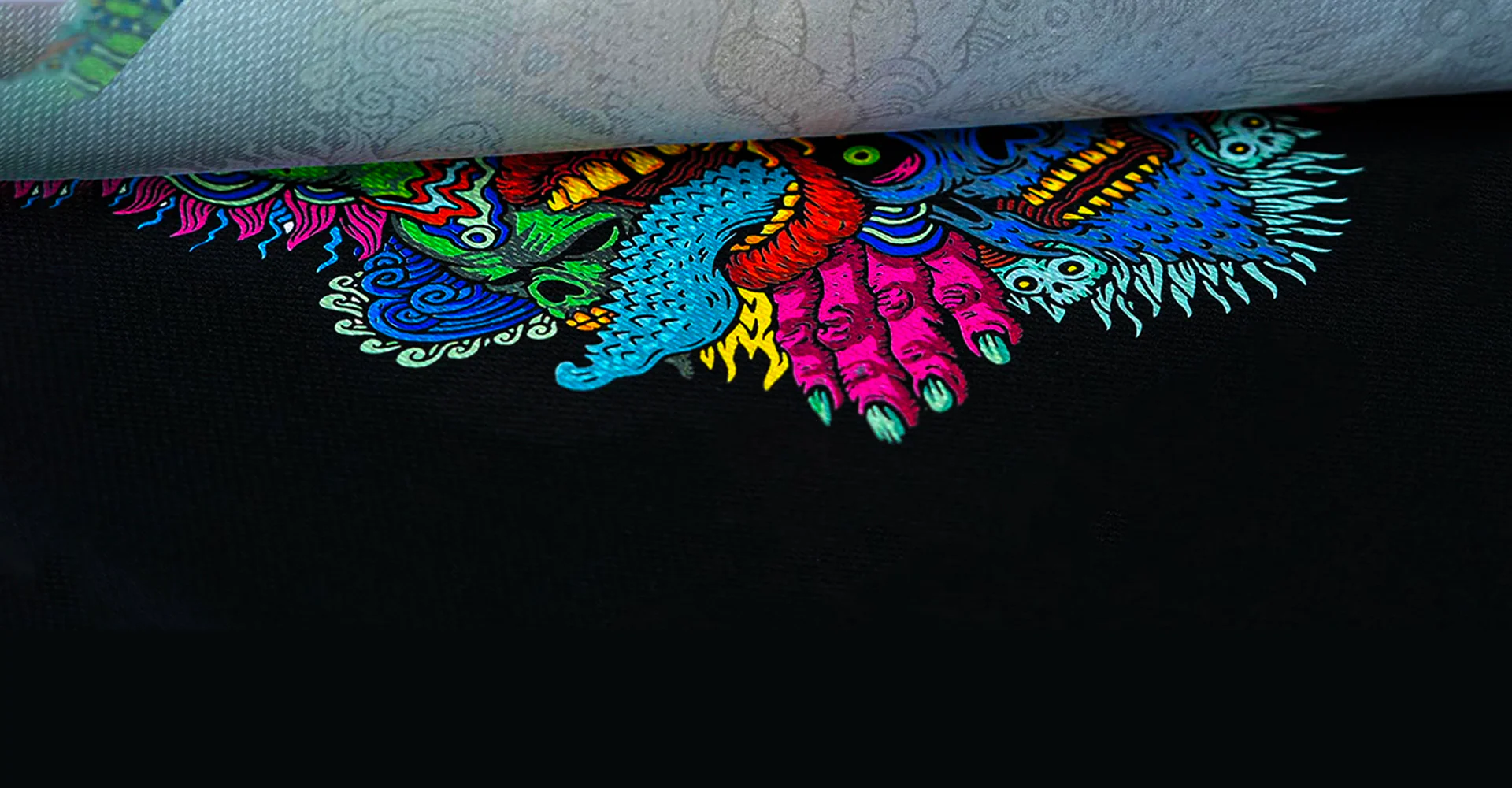
DTF printing is a transfer-based printing method. Instead of printing directly onto a T-shirt, the design is first printed onto a special PET film, then transferred onto the garment using heat and adhesive powder.
That distinction matters.
- DTF is not “printing on fabric.”
- It is printing on film, then bonding the print to fabric.

This is why DTF behaves very differently from methods like DTG or screen printing.
How the DTF Printing Process Works
Here is the real, step-by-step workflow used in production:
- 1. Artwork Preparation The design is prepared digitally (usually CMYK + white). DTF handles: Full-color images, Gradients, Photos, Fine lines
- 2. Printing on PET Film. A DTF printer prints: Color layers first, White ink on top (acts as a base layer)
- 3. Adhesive Powder Application. While the ink is still wet: Hot-melt adhesive powder is applied, Excess powder is shaken off
- 4. Curing the Film. The film is heated so the powder melts and bonds with the ink.
- 5. Heat Press Transfer. The cured film is pressed onto the T-shirt using: Heat, Pressure, Time
- 6. Film Peeling. Depending on the film type, it is peeled hot or cold, leaving the print on the shirt.
Best Applications of DTF Printing for T-Shirts
DTF works best when flexibility matters more than “luxury feel”. Ideal use cases include:
- Multi-color or photo-heavy designs
- Cotton, polyester, and blended fabrics
- Small to medium production runs
- Print-on-demand (POD) businesses
- E-commerce brands with many SKUs
If your business model needs speed and variety, DTF fits well.
Pros & Cons Direct-to-Film (DTF) Printing
Pros:
- 1. Works on Almost Any Fabric – DTF adheres to: Cotton, Polyester, Cotton-poly blends, Nylon and synthetic fabrics. This is a huge advantage over DTG, which struggles with polyester.
- 2. High Color Vibrancy – DTF prints use a solid white ink base, which: Keeps colors bright on dark shirts, Preserves gradients and contrast. For graphic-heavy designs, DTF clearly outperforms many methods.
- 3. No Fabric Color Limitation – Black shirts, colored shirts, light shirts: DTF handles all of them without changing the workflow.
- 4. Better Durability Than DTG (Usually) – When done correctly: Prints resist cracking, Colors hold up well after washing. However, durability depends heavily on proper curing and pressing.
- 5. Low Setup Cost per Design – No screens, No plates, No pretreatment. This makes DTF ideal for: Small orders, Custom designs Frequent artwork changes
Cons:
This is where many sellers get burned.
- 1. Print Feel Is Thicker – DTF prints sit on top of the fabric, not inside it. This can result in: A rubbery or plastic feel, Reduced breathability, Heat retention on large prints. For fashion brands focused on comfort, this is a serious drawback.
- 2. Less Eco-Friendly – DTF relies on: Plastic PET films, Hot-melt adhesive powders. Compared to water-based screen printing or DTG, DTF is less sustainable.
- 3. More Equipment Than It Sounds – A real DTF setup requires: DTF printer with white ink system, PET films, Adhesive powder, Curing oven or heater, Heat press. This is not a single-machine solution.
- 4. Inconsistent Results Without Skill – DTF has a learning curve: Too much powder = stiff prints, Under-curing = peeling, Over-pressing = damaged fabric, Bad DTF looks cheap very fast.
DTF vs Other T-Shirt Printing Methods (Comparison Table)
| Printing Method | Best For | Fabric Compatibility | Print Feel | Color & Detail | Durability | Setup Cost | Cost per Shirt | Key Weakness |
|---|---|---|---|---|---|---|---|---|
| DTF (Direct-to-Film) | Small–medium runs, complex designs, POD | Cotton, polyester, blends, nylon | Medium–thick, raised | Very high (photos, gradients) | High (if done right) | Low–Medium | Medium | Less breathable, plastic feel |
| DTG (Direct-to-Garment) | Soft feel, fashion tees, short runs | Best on cotton | Very soft | High (but weaker on dark fabric) | Medium | Medium | High | Limited fabric range |
| Screen Printing | Bulk orders, simple graphics | Cotton, blends | Soft (best at scale) | Medium (limited colors) | Very high | High | Low at volume | Expensive for small runs |
| Sublimation | Sportswear, all-over prints | Polyester only (light colors) | No feel (ink bonds) | High | Extremely high | Medium | Medium | Fabric & color limits |
| Heat Transfer Vinyl (HTV) | Names, numbers, small custom jobs | Most fabrics | Very thick | Low–Medium | Medium | Low | High | Cracks, poor comfort |
| Embroidery | Logos, premium branding | Most fabrics | Raised stitching | Low (no gradients) | Very high | Medium–High | High | Not for large designs |
Common Mistakes Brands Make with DTF Printing
- Assuming DTF is “premium” by default
- Using large solid prints without considering breathability
- Ignoring wash testing
- Overusing DTF when screen printing would be better
DTF is powerful, but misuse kills brand perception.
When You SHOULD Use DTF Printing

DTF is a strong choice if you:
- Run a POD or e-commerce brand
- Sell graphic-heavy designs
- Offer many colors and fabrics
- Produce small to mid-size orders
When You Should NOT Use DTF Printing
Avoid DTF if you:
- Sell minimalist fashion
- Prioritize ultra-soft hand feel
- Produce very large bulk orders
- Market sustainability as a core value
In these cases, screen printing or DTG may serve you better.
Conclusion / Final Words
DTF is a powerhouse for colorful, detailed T-shirt prints with low setup and wide fabric compatibility. But it can feel thicker, breathe less, and isn’t the most eco-friendly option. If you’re doing POD or small-to-mid runs, DTF is often the right tool. If you’re chasing ultra-soft “premium fashion” feel or massive bulk orders, DTG or screen printing may be a better match.