

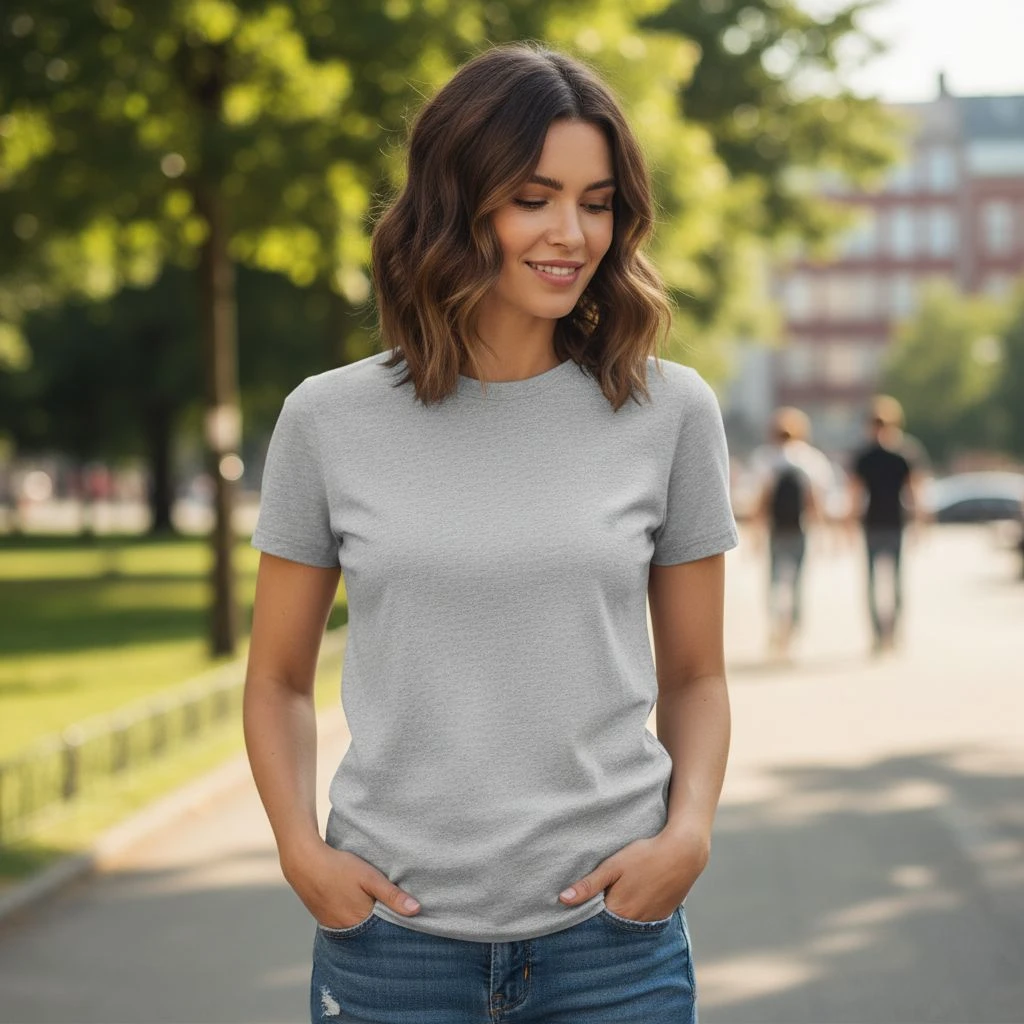
A regular fit T-shirt is the “default” tee shape: not tight, not oversized, and meant to feel easy all day. It’s usually cut straight through the body, with enough room in the chest and waist to move, breathe, and layer. “Regular fit” is not a real standard. Some brands make regular fit boxy, some make it slim-ish. So don’t trust the label trust the shape on your body.
=> Related Article: T Shirts Manufacturing Vietnam | Mekong Garment Factory
What “Regular Fit” T Shirt Actually Means?
Regular fit is the middle ground that works for almost everyone. It’s designed to sit comfortably on the body, with a clean shape that doesn’t cling. The goal is a T-shirt that looks natural and feels effortless good alone, and even better for layering.

A regular fit tee has moderate ease (extra space) around your torso and arms.
- More room than slim fit
- Less room than oversized
- Should look clean, not baggy
Typical regular-fit shape:
- Shoulder seam sits near your shoulder edge
- Chest has room without pulling
- Body falls fairly straight (not aggressively tapered)
- Sleeve is comfortable, not tight around biceps
- Length usually covers belt line and sits around hip level
Why Regular Fit is a Wardrobe Cheat Code?
Regular fit is a wardrobe cheat code because it solves the biggest style problem: you want to look good without thinking too hard. It sits in the sweet spot comfortable but still clean so it works by itself, layers easily, and matches almost any pants and shoes you already own. The best part is it doesn’t force a trend; it just makes everything else in your outfit easier.


1) Comfort you don’t have to think about
Regular fit gives you room to move without constantly adjusting the shirt. Good for:
- sitting long hours
- walking, commuting
- hot weather (more airflow)
2) Works for almost every body type
Because it doesn’t cling, it’s more forgiving specially around the midsection. But: forgiving doesn’t mean shapeless. A regular tee can still look sharp if shoulder + sleeve + length are right.
3) Easiest fit to style
Regular fit is the easiest T-shirt to style because it sits in the “middle zone”: not tight, not oversized. That balance makes it work with almost any outfit jeans, chinos, shorts, jackets, even a blazer without looking like you’re forcing a trend. And honestly, that’s why it’s a wardrobe workhorse: you can change the vibe just by switching pants, shoes, or layers, while the tee still looks natural. Regular fit is the easiest base layer:
- under jackets
- over tanks
- tucked or untucked
4) Least risky to buy online
Buying a T-shirt online is basically a guessing game: you can’t feel the fabric, you can’t see how it drapes, and you can’t test movement. That’s why regular fit is usually the safest choice it has a little extra room, so small sizing errors don’t ruin the whole look. Slim and skinny fits can fail fast if measurements are off. Regular fit has more tolerance.
When Regular Fit is The Best Choice
Regular fit is the best choice when you want a T-shirt that feels easy, looks normal (in a good way), and works in real life workdays, weekends, travel, and quick outfits. It’s the “no drama” fit: enough room to move, enough structure to stay clean. But it’s not always the right pick, so this section shows when regular fit makes the most sense and when another fit will actually look better.


Regular fit is best when you want:
- all-day comfort
- easy movement
- a safe, versatile silhouette
- the most “normal” tee for work and life
Regular fit may NOT be best when:
- you want a very sharp waist shape (slim might suit)
- you’re styling a very oversized outfit (oversized tee may match better)
- you want a tight, fashion-forward silhouette (skinny/super slim)
How a Regular Fit T-Shirt Should Fit?
A regular fit T-shirt should feel easy and natural not tight like slim fit, and not loose like oversized. The goal is simple: it should sit clean on your shoulders, give your chest and waist a bit of breathing room, and hang straight without clinging. If you notice pulling lines, twisting seams, or the shirt constantly riding up, that’s not “your body” that’s the wrong cut or size.
| Fit Area | Should look/feel like | Red flags (wrong fit) | Quick check (easy test) |
|---|---|---|---|
| Shoulders | Shoulder seam sits near the shoulder edge | Seam drops down upper arm, looks sloppy | Stand relaxed: seam should not hang far past shoulder bone |
| Chest | Smooth, slight room; no pulling | Tight across chest, “X” stress lines, buttons pulling (if any) | Hug yourself: if it feels tight, it’s not regular fit |
| Body / Waist | Falls straight, doesn’t cling to belly | Clings, shows tension lines, rides up | Twist your torso: shirt shouldn’t tug hard |
| Sleeves | Comfortable on bicep, not squeezing | Sleeves choke arm or flare out like a cape | Raise arms: sleeves shouldn’t pinch or expose too much side |
| Armhole | Armhole sits close but not tight | Too low (baggy look) or too high (restricts movement) | Reach forward: if it bites your armpit, too tight |
| Length | Covers waistband; ends around mid-hip | Too short (rides up), too long (looks like sleepwear) | Lift arms: it shouldn’t expose your stomach |
| Neckline | Lies flat, sits comfortably | Collar waves, gaps, feels tight, stretches out | Pull collar slightly: it should bounce back, not stay loose |
| Drape (overall hang) | Hangs cleanly with light natural folds | Stiff like cardboard or clingy like undershirt | Walk 10 steps: it should move naturally, not stick |
Regular vs Slim vs Skinny vs Oversized
These four fits are really just four different amounts of room around the body. Regular fit is the balanced “default,” slim fit is cleaner and closer, skinny fit is tight and most demanding, and oversized is intentionally roomy and relaxed. The tricky part is that brands don’t label them consistently so instead of trusting the tag, compare how each fit changes your silhouette, comfort, and movement.

| Factor | Regular Fit | Slim Fit | Skinny Fit | Oversized |
|---|---|---|---|---|
| Overall vibe | Balanced, everyday | Clean, sharp | Tight, bold | Relaxed, trendy |
| Room (ease) | Medium | Low | Very low | Very high |
| Silhouette | Straight / natural | Slightly tapered | Close to body | Boxy / wide (often dropped) |
| Comfort (all-day) | High | Medium–high (depends on fabric) | Medium–low (needs stretch) | Very high |
| Breathability | Good | Medium | Low–medium | Very good |
| Movement | Easy | Usually fine | Can feel restrictive | Easiest |
| Best for | Daily wear, work, travel | Smart casual, clean outfits | Statement looks, boots/high tops | Streetwear, layering, comfort-first |
| Layering | Great base layer | Great under fitted jackets | Works under big layers | Great over long sleeves/hoodies |
| If size is slightly wrong | Still looks okay | Looks tight fast | Looks/feels wrong fast | Can look sloppy if not intentional |
| Fabric that works best | Most fabrics | Better with slight stretch or good cut | Usually needs stretch + strong recovery | Medium/heavy fabric holds shape best |
| Common mistake | Buying too big → looks plain/boxy | Choosing too small → pulling lines | Wearing stiff fabric → uncomfortable | Just sizing up regular → weird proportions |
| Who should pick it | Want “safe + easy” | Want “neat + modern” | Want “tight + edgy” | Want “relaxed + fashionable” |
Common Mistakes When Regular Buy T Shirts (And How to Avoid Them)
Regular fit T-shirts seem like the “safe choice,” but they’re also where people make the most sneaky mistakes. The label sounds simple, so you buy fast and end up with a tee that looks boxy, feels weird, or loses shape after a few washes. In this section, we’ll break down the most common buying mistakes and the easy fixes, so your regular fit tee actually looks clean, feels comfortable, and works with your outfits.
- Mistake 1: Sizing up for comfort makes the shirt look boxy and sloppy. Fix: Buy your true size. If you want roomy, choose a relaxed/oversized cut (not a bigger size).
- Mistake 2: Wrong shoulder fit ruins the whole look. Fix: The shoulder seam should sit near the shoulder edge, not drop down the arm.
- Mistake 3: Wrong length looks awkward (too long or too short). Fix: Aim for mid-hip length and do the “arms up” test to check ride-up.
- Mistake 4: Confusing regular fit with boxy fit. Fix: Check photos and the size chart. Very wide chest with short length is usually boxy/oversized.
- Mistake 5: Ignoring fabric weight (GSM) leads to thin or overly hot tees. Fix: For everyday wear, 170–200 GSM is the safest range for balance.
- Mistake 6: Poor collar quality causes stretching and waves after washing. Fix: Choose a tee with a firm rib collar and avoid products with “collar gets loose” reviews.
- Mistake 7: Trusting labels across brands causes surprise sizing. Fix: Compare measurements in cm (chest, shoulder, length) to a tee you already own.
- Mistake 8: Not thinking about tucked vs untucked makes it look wrong in real use. Fix: If you tuck often, choose slightly longer length. If you never tuck, keep it around mid-hip.
Conclusion / Final Words
Regular fit T-shirts are popular for a reason: they’re comfortable, easy to wear, and work with almost any outfit. But the label “regular fit” isn’t a guarantee brands use it differently, and small details like shoulder fit, length, collar quality, and fabric weight decide whether the tee looks clean or messy. If you remember one rule, make it this: don’t trust the tag, trust the fit on your body. Choose a balanced shape, pick fabric that matches your weather and lifestyle, and avoid the common mistakes that turn “regular” into “wrong.” When you get those basics right, a regular fit tee becomes the simplest piece in your closet and one of the best.